Category Archives: Chinese Military Characteristics & Development Trends of Cognitive Domain Operations and Warfare

[Chinese National Defense] Establishing Correct Awareness to Contain China and Conduct Cognitive Warfare Operations

[中國國防]建立正確的意識,以遏制中國並進行認知戰爭行動

現代英語:

As the world continued to actively combat the COVID-19 pandemic, the British newspaper The Guardian reported in late May 2021 that Fazze, a public relations and marketing agency with close ties to Russian officials, was accused of providing funding to influential YouTubers, bloggers, and other opinion leaders in France, Germany, and other European countries to spread false information claiming that vaccines like Pfizer (BNT) and AstraZeneca (AZ) had caused hundreds of deaths. The false information also criticized the EU vaccine procurement system for harming public health in European countries, with the goal of sowing public distrust of Western vaccines and shifting public acceptance toward Russia’s Sputnik V vaccine. This is the most significant example of “perception warfare” in recent international history.

 In fact, human society has always adhered to the principle of “conquering the enemy without fighting” as the guiding principle for optimal military operations. While traditional warfare still primarily takes place in physical space, victory requires the physical capture of cities and territories, as well as the destruction of enemy forces. However, as humanity’s understanding of the nature of war deepens, the use of information technology has become a new trend in warfare, enabling the achievement of traditional combat effectiveness without the need for physical engagement. Given the increasing attention paid to “information warfare” and “hybrid warfare,” this article discusses the closely related concept of “cognitive warfare,” exploring the emerging threats facing our country and our national defense response strategy.

 Whether it’s what the US calls “hybrid warfare” or what Russia calls “information warfare,” the implications are quite similar: centered on the cognitive realm, the use of information to influence and manipulate targets, encompassing both peacetime public opinion and wartime decision-making. The rise of Nazi Germany after World War I was arguably the first modern regime to master the use of information to shape perceptions within its own country and even abroad. Its successful use of propaganda and lies, delivered through various communication technologies, was highly successful. Principles such as “repetition is power” and “negative information is more easily accepted and remembered than positive information” would later profoundly influence authoritarian governments, including Russia.

 Using information capabilities to subvert national regimes

 At the beginning of the 21st century, Russia began to pay attention to the situation where international discourse power was completely controlled by Western countries. It successively put forward theories such as “Information Warfare Theory” and “Sixth Generation Warfare Theory”, arguing that the sixth generation of warfare is a non-contact war that uses precision weapons and information warfare to traverse the battlefield. The purpose of war is no longer a devastating global war, but to achieve effects that cannot be achieved through traditional warfare by exploiting the enemy’s information capabilities to exploit its weaknesses, including changing social and cultural orientations and values, and thus subverting national regimes.

 In 2005, Russia established the international news channel “Russia Today.” Initially focused on soft power propaganda, it shifted its focus after the 2008 Georgian War to attacking negative aspects of Western society and fostering conspiracy theories. The 2014 Ukraine crisis became a training ground for Russian information warfare forces. Using electronic jamming and cyber theft, they intercepted Ukrainian communications, inferring subsequent Ukrainian actions and releasing damaging information at critical moments. They also targeted sensitive issues in eastern Ukraine, including the status of ethnic Russians and economic downturn, distributing a large amount of carefully selected, targeted information to resonate with the public, influencing their perceptions and behavior and gaining control of media opinion. In terms of “cognitive warfare,” Russia’s approach has been successful, and has become a model for the Chinese Communist Party.

 Manipulating “brain control” to control the public

 In 2014, the Chinese Communist Party (CCP) proposed the cognitive operational concept of “brain control,” building on its past “three warfares” of psychological warfare, legal warfare, and public opinion warfare, as well as Russia’s theoretical framework of “information warfare.” It states that a nation’s cognitive space is composed of the superposition of countless individuals, and that “brain control” uses national languages, propaganda media, and cultural products as weapons to comprehensively infiltrate and control the cognition, emotions, and consciousness of the general public and national elites, ultimately distorting, disintegrating, and reshaping their national spirit, values, ideology, history, and culture, thereby achieving the strategic goal of winning without fighting.

 Therefore, the CCP’s “cognitive operations” fall under the broad category of psychological warfare. In the era of information globalization, it integrates information warfare, psychological warfare, and public opinion warfare, becoming the core of the CCP’s overall strategy. Since the 2016 military reform, it has been led by the newly formed “Strategic Support Force” and implemented at all political and military levels. On the one hand, the PLA has adopted American operational thinking in the field of “cognitive operations,” using units such as the 311 Base, the National University of Defense Technology, and the Academy of Military Sciences to develop tactics such as “psychological operations,” “ideological operations,” “consciousness manipulation,” and “strategic communication” to strengthen the “cognitive operations” capabilities jointly constructed by military-civilian integration and joint combat systems. On the other hand, it uses professional personnel to operate media platforms, shape the public opinion environment, and introduce “cognitive operations” into the actual combat application stage.

 The CCP’s recent “cognitive warfare” offensive against Taiwan reveals its methods and tactics. First, the CCP primarily uses the internet to collect personal data from Taiwanese citizens, using big data databases to categorize information by target group, based on political leanings, age, occupation, and other factors. Second, it leverages intelligence gathering to launch targeted cognitive attacks on specific social media platforms, influencing the psychology of the targeted groups, particularly by releasing disinformation to weaken and distract Taiwanese society. Third, it employs online virtual organizations to set up fake social media accounts, infiltrate online communities, and disguise themselves as whistleblowers, deliberately spreading fabricated information to create confusion. Cybertroopers then massively repost and discuss this information, manipulating audience perceptions and creating a cycle of disrupting information retention, manipulating cognitive psychology, and altering thinking patterns.

 Identify fake news and fight back together

 At this stage, the CCP’s campaign for “brain control” over Taiwan aims to influence Taiwanese society’s cognition, distorting public opinion, devaluing democratic values, intensifying opposition, disrupting political conditions, and undermining public trust in the government. The following preventive measures can be taken within the national defense system:

 1. Strengthening educational functions

 Through national defense education in schools, institutions, and society, we will raise the public’s awareness of the threat posed by the CCP’s “cognitive warfare” and their ability to identify false information, and cultivate the habit of rationality, verification, and calmness.

 2. Follow the constraints

 Although there are currently no internationally accepted legal rules that can clearly define the extent to which cognitive warfare constitutes an act of war, making it even more difficult to hold people accountable, media platforms can still strengthen the review of their own reporting content in accordance with existing regulations, and the public can also refrain from spreading suspicious information and following the trend of tennis melee, so as to facilitate the establishment of information verification measures and mechanisms.

 3. Combining Military and Civilian Strength

 Incorporate information and communication-related institutions and industries into the national defense mobilization mechanism, coordinate in peacetime the review, analysis, and disposal of fake news, strengthen talent training and research cooperation, and enhance the capabilities of professional units of the government and the national army; in wartime, cooperate with the overall national actions and carry out countermeasures.

 Currently, Taiwan already has the National Security Bureau’s National Security Operations Center responsible for responding to controversial information from hostile foreign forces. There’s also the non-profit Taiwan Fact-Checking Center. Facing the challenges of cognitive warfare, we must continue to integrate various sectors, strive for international intelligence exchange and experience sharing, optimize the media environment, collaborate across multiple channels, and instantly identify the authenticity and source of information, jointly building our offensive capacity to respond to cognitive warfare.

 Conclusion

 In reality, all countries around the world face threats related to cognitive warfare and information-based psychological warfare. However, democratic and free societies are by no means vulnerable to cognitive warfare attacks and must instead rely on diverse strategies and methods to protect them. We aim to establish a more comprehensive and substantive framework, build a powerful counterforce, and enhance the quality and discernment of our citizens, thereby gaining immunity from the CCP’s cognitive warfare campaign to seize control of our minds.

(The author is a PhD candidate at the Institute of Strategic Studies, Tamkang University)

現代國語:

在全球持續積極對抗新冠疫情之際,英國《衛報》2021年5月下旬報道,與俄羅斯官員關係密切的公關和營銷機構Fazze被指控向法國、德國和其他歐洲國家頗具影響力的YouTube用戶、博主和其他意見領袖提供資金,用於傳播虛假信息,聲稱輝瑞(BNTAZ)和阿斯特利康(BNTAZ)和阿斯特疫苗已導致數百人死亡。這些假訊息也批評歐盟疫苗採購體系損害了歐洲國家的公共衛生,目的是挑起大眾對西方疫苗的不信任,並促使大眾接受俄羅斯的Sputnik V疫苗。這是近代國際史上最顯著的「感知戰」案例。

事實上,人類社會自古以來,均以「不戰而屈人之兵」作為最佳軍事行動指導原則,儘管傳統戰爭主要仍在物理空間進行,需透過實際攻城掠地、消滅敵有生力量,才能獲得勝利。然隨人類對戰爭本質認知深化,利用資訊科技,於不需實體短兵相接的情況下,卻能達到傳統戰爭效果,已成為新型態戰爭趨勢。鑑於「資訊戰」、「混合戰」日益受重視,謹就與其密切相關的「認知作戰」概念進行論述,並探討我國所面臨的新型威脅及全民國防因應策略。

無論是美國所稱的「混合戰」,或俄國所說的「資訊戰」,其實指涉意涵很相似,即以認知領域為核心,利用訊息影響、操控對象目標涵蓋承平時期輿論及戰時決策的認知功能。一戰後,逐漸興起的納粹德國,可謂當代首個擅長運用資訊形塑本國,甚至外國民眾認知的政權,其透過各種傳播技術的政治宣傳與謊言包裝,相當成功;而所謂「重複是一種力量」、「負面訊息總是比正面訊息,更容易讓人接受和印象深刻」等實踐原則,日後更深刻影響專制極權政府與現在的俄羅斯。

藉資訊能力 顛覆國家政權

俄國於進入21世紀初,開始注意國際話語權遭西方國家完全掌控的情形,陸續提出「資訊戰理論」、「第6代戰爭理論」等論述,主張第6代戰爭是以精確武器及資訊戰,縱橫戰場的非接觸式戰爭,戰爭目的不再是毀滅性的全球大戰,而是藉利用敵方弱點的資訊能力,達成傳統戰爭無法實現的效果,包括改變社會文化取向、價值觀,進而顛覆國家政權等。

2005年,俄國成立國際新聞頻道「Russia Today」,起初主要是軟實力宣傳,2008年「喬治亞戰爭」後,轉為攻擊西方社會負面問題與製造陰謀論;2014年「烏克蘭危機」,成為俄軍資訊戰部隊的練兵場,透過電子干擾、網路竊密等手段,截收烏國對外通聯訊息,依此推判烏方後續舉動,並選擇在關鍵時機,釋放對烏國政府不利消息;另選定烏東地區敏感議題,包括俄裔民族地位、經濟不振等,投放大量經篩選的特定資訊,引發民眾共鳴,從而影響烏東人民認知與行為,取得媒體輿論主動權。就「認知作戰」言,俄國作法是成功的,更成為中共的效法對象。

操弄「制腦權」 控制社會大眾

中共2014年於過去心理戰、法律戰、輿論戰等「三戰」基礎,以及俄國「資訊戰」理論架構上,提出「制腦權」認知操作概念,指國家認知空間係由無數個體疊加而成,「制腦」是以民族語言、宣傳媒體、文化產品為武器,全面滲透、控制社會大眾與國家精英之認知、情感與意識,最終扭曲、瓦解、重塑其民族精神、價值觀念、意識形態、歷史文化等,達致不戰而勝的戰略目標。

是以,中共「認知作戰」屬於廣義心理戰範疇,是資訊全球化時代,融合資訊戰、心理戰及輿論戰的戰法,成為中共整體戰略主軸,並自2016年「軍改」後,由新組建的「戰略支援部隊」操盤,在各政略、軍事層次開展執行。一方面,共軍擷取美國在「認知作戰」領域的操作思維,以311基地、國防科技大學、軍事科學院等單位研提「心理作戰」、「思想作戰」、「意識操縱」、「戰略傳播」等戰法,以加強軍民融合及聯戰體系共同建構的「認知作戰」能力;另一方面,則以專業人員操作媒體平臺,形塑輿論環境,將「認知作戰」導入實戰運用階段。

從近年中共對臺進行的「認知作戰」攻勢,可拆解其途徑與手段。首先,中共主要係以網路蒐集國人個資,透過大數據資料庫,劃分政治傾向、年齡、職業等不同目標族群資訊;其次,配合情報偵蒐,針對個別社群媒體展開認知精準打擊,影響目標群眾心理,尤其釋放假訊息,以削弱、分散臺灣社會注意力;再次,則運用網路虛擬組織設置社群媒體假帳號,打入網路族群,偽裝成揭密者、吹哨者,刻意傳散變造資訊,製造混亂,再由網軍大量轉傳、討論,操弄受眾認知,進入阻斷資訊記憶、操縱認知心理、改變思考模式的運作循環。

識別假訊息 全民齊反制

基於現階段,中共對臺「制腦權」作戰,影響臺灣社會認知的目的,在於扭曲輿論、貶低民主價值、激化對立、擾亂政情、減損民眾對政府信任等,於全民國防體系可採取的防制辦法包括:

一、強化教育功能

分別透過全民國防之學校教育、機關教育、社會教育途徑,提高公眾對中共「認知作戰」威脅的認識,與對假訊息識別能力,養成理性、查證、冷靜習慣。

二、遵循約束規範

儘管目前尚無國際通用的法律規則,可明確定義何種程度的認知作戰已構成戰爭行為,更難以究責;然各媒體平臺仍可按既有規範,對自身報導內容加強審查,民眾也可做到不傳播可疑訊息、不跟風網壇混戰,俾利訊息查證措施與機制建立。

三、結合軍民力量

將資訊與傳播相關機構、產業,納入全民防衛動員機制,平時協調因應假訊息審查、分析、處置,加強人才培訓、研究合作,提升政府、國軍專業單位能力;戰時則配合國家整體作為,執行反制任務。

目前我國已有國安局「國家安全作業中心」執行對境外敵對勢力爭議訊息應處有關工作,民間亦有非營利組織成立的「臺灣事實查核中心」。面對「認知作戰」挑戰,仍應持續整合各界力量,爭取國際情報交流與經驗共享,優化媒體環境,多管道合作,即時辨識訊息真偽與來源,共同建設應處「認知作戰」攻勢能量。

結語

事實上,世界各國都同樣面臨「認知作戰」、「資訊心理戰」等相關威脅,然民主自由的社會環境,絕非易受「認知作戰」攻擊的溫床,更需仰賴多元策略與方式守護。期以更完善周全的實質架構,建構強而有力的反制力量,並提升我國公民素質及識別能力,於中共奪取「制腦權」的認知作戰中,獲得免疫。

(作者為淡江大學戰略研究所博士)

中國原創軍事資源:https://www.ydn.com.tw/news/newsInsidePage?chapterID=1431550

Chinese Military Exercises Focused on Taiwan Conclude Signaling Joint Containment Strategy

中國軍事演習的重點是台灣結束信號的聯合遏制策略

現代英語:

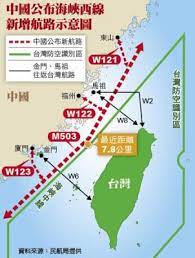
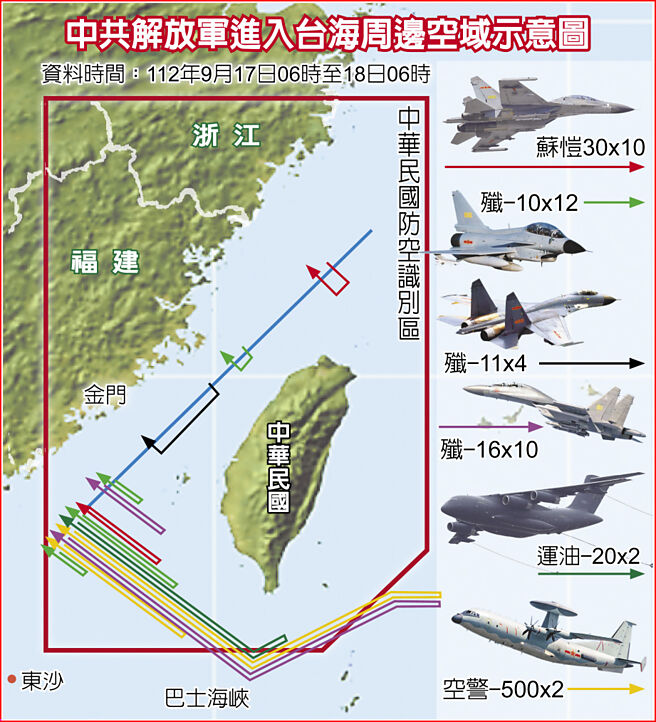
The Chinese Communist Party announced the “Strait Thunder-2025A” exercise on the 2nd. The Ministry of National Defense detected 13 Chinese warships, 10 Coast Guard ships, and 8 ships from the Shandong aircraft carrier formation.

(Central News Agency reporter Wu Shuwei, Taipei, 2nd) The two-day Chinese Communist Party military exercise has concluded. Military scholars analyzed that the Chinese Communist Party’s military exercise is still led by politics, using a 70% political and 30% military approach to put pressure on Taiwan, raising the strategic level of “joint blockade” and enhancing the mission role of the Chinese Coast Guard.

The Eastern Theater Command of the People’s Liberation Army of China announced yesterday that it would organize the army, navy, air force, and rocket force to conduct joint exercises around Taiwan. Today, it said that the army will conduct long-range live-fire exercises in relevant waters of the East China Sea in accordance with the “Strait Thunder-2025A” exercise plan.

Regarding the characteristics of the CCP’s military exercise that are worthy of Taiwan’s attention, Chen Wenjia, a senior consultant at the National Policy Research Institute, told a Central News Agency reporter that the PLA’s exercise mobilized the army, navy, air force and rocket force to conduct joint combat drills to test the PLA’s coordinated combat capabilities and enhance the overall effectiveness of operations against Taiwan. Secondly, it is an operational practice exercise, including precision strikes on key infrastructure, blockades of ports and other practical subjects, and simulates scenarios of actual military operations against Taiwan, showing that the PLA’s combat preparations against Taiwan are becoming increasingly mature.

Chen Wenjia said that the Chinese Coast Guard also participated in the military exercise and carried out law enforcement patrols and other operations. The purpose was to exert pressure on Taiwan through gray zone harassment and increase the effectiveness of the “three warfares” of public opinion warfare, psychological warfare, and legal warfare against Taiwan.

Su Ziyun, director of the Institute of Defense Strategy and Resources at the National Defense Security Research Institute, said that the CCP’s military exercise this time is still 70% political and 30% military. Compared with the past “Joint Sword” military exercises against Taiwan, this time the CCP has raised the status of the coast guard and the implementation of “joint blockade” to a strategic level, and announced today that the exercises will practice verification and identification, warning and expulsion, and interception and detention. It is to think about non-war military actions with strategic thinking, and when necessary, cut off Taiwan’s sea transportation lines through isolation to force Taiwan to surrender.

Regarding the warning that the CCP’s military exercises send to Taiwan, Chen Wenjia said that as the PLA continues to conduct high-intensity military exercises around Taiwan, it shows that the military threat to Taiwan is escalating, and Taiwan needs to strengthen its own defense capabilities to ensure the security of the Taiwan Strait; secondly, the pressure in the gray zone is increasing, especially the participation of the coast guard force, which means that China is exerting more pressure in the gray zone. Taiwan needs to increase its vigilance against this non-traditional security threat and should formulate corresponding strategies as soon as possible.

Su Ziyun stated that the Chinese Communist Party’s military exercises highlight the importance of “air defense being the most urgent of all.” Whether the CCP intends to attack Taiwan’s ports or energy facilities, it will need to resort to air strikes, such as missile attacks. This means Taiwan’s air defense capabilities need to be strengthened. In response to Chinese Communist Party gray zone harassment, the Navy currently relies on destroyers and frigates as its main combat vessels. The Navy should emulate the British Navy’s deployment of surveillance vessels, such as River-class patrol vessels, to counter gray zone harassment and preserve the availability and capacity of its main combat vessels. (Editor: Yang Lanxuan) 1140402

現代國語:

中共2日宣布「海峽雷霆-2025A」演練,國防部偵獲共艦13艘、海警船10艘及山東號航艦編隊8艘。 (中央社製圖)

(中央社記者吳書緯台北2日電)中共兩天軍演落幕,軍事學者分析,中共此次軍演仍以政治掛帥,採7分政治、3分軍事的方式對台施壓,拉高「聯合封控」的戰略位階,提升中國海警的任務角色。

中國人民解放軍東部戰區昨天稱組織陸海空軍與火箭軍等兵力,在台灣週邊展開聯合演訓,今天則是稱陸軍部隊按「海峽雷霆-2025A」演練計畫,在東海相關海域實施遠程火力實彈射擊演練。

針對中共此次軍演值得台灣關注的特點,國策研究院資深顧問陳文甲告訴中央社記者,共軍此次演習動用了陸海空軍與火箭軍進行聯合作戰演練,測試共軍的協同作戰能力,提升對台作戰的整體效能,其次是操作實戰化科目演練,包括對關鍵基礎設施的精確打擊、封鎖港口等實戰化科目,並模擬對台灣進行實際軍事行動的場景,顯示共軍針對台灣的作戰整備日益成熟。

陳文甲表示,中國海警也參與此次軍演,並進行執法巡查等行動,目的在透過灰色地帶襲擾施加對台灣的壓力,增加對台灣進行輿論戰、心理戰、法律戰的「三戰」效果。

國防安全研究院國防戰略與資源研究所長蘇紫雲說,中共此次軍演仍是7分政治、3分軍事,和過去對台「聯合利劍」軍演相比,這次中共將海警與執行「聯合封控」的位階提高至戰略位階,並在今天宣稱演習演練查證識別、警告驅離及攔截扣押等課目,就是以戰略思維來思考非戰爭的軍事行動,在必要的時候透過隔離手段,切斷台灣的海上運輸線,來逼迫台灣投降。

對於中共此次軍演對台灣的警訊,陳文甲表示,隨著共軍持續在台灣週邊進行高強度軍事演習,顯示對台灣的軍事威脅不斷升級,台灣需強化自身防衛能力確保台海安全;其次是灰色地帶壓力增加,尤其是海警力量的參與,意味著中國在灰色地帶施加更多壓力,台灣需提高對此非傳統安全威脅的警覺,應盡速制定相應的策略。

蘇紫雲表示,中共軍演凸顯「萬事莫如防空急」,無論是中共要攻擊台灣港口或能源設施,都需要透過飛彈攻擊等空襲手段,代表台灣的防空能力還需加強,而在應對中共灰色地帶襲擾活動,海軍目前仍是以驅逐艦、巡防艦等主戰艦艇應對,應仿效英國海軍建置河級巡邏艦(River-class patrol vessel)等監視性質的艦艇,來應對共軍灰色地帶襲擾,保存主戰艦艇的妥善率和能量。 (編輯:楊蘭軒)1140402

中國原創軍事資源:https://www.cna.com.tw/news/aipl/202504020405.aspx

China’s Weaponized Communication in International Public Opinion Warfare: Scenarios and Risk Responses

中國在國際公眾輿論戰爭中的武器交流:場景和風險回應

現代英語:

【Abstract】 In the international public opinion war, weaponized communication has penetrated into military, economic, diplomatic and other fields, bringing imagination and practice “everything can be weaponized”. Weaponized communication manipulates public perception through technology, platforms, and policies, reflecting the complex interaction of power distribution and cultural games. Driven by globalization and digitalization, cognitive manipulation, social fragmentation, emotional polarization, digital surveillance, and information colonization have become new means of influencing national stability, which not only exacerbates competition between information-powerful and weak countries, but also provides information-weak countries with the opportunity to achieve reversal through flexible strategies and technological innovation. Under the global asymmetric communication landscape, how to find a point of convergence and balance between technological innovation and ethical responsibility, strategic goals and social balance will be key elements that will influence the future international public opinion landscape.

【Keywords】 Public opinion warfare; weaponized communication; information manipulation; asymmetric communication; information security

If “propaganda is a rational recognition of the modern world” [1], then weaponized communication is a rational application of modern technological means. In the “public opinion war”, each participating subject achieves strategic goals through different communication methods, making them superficially reasonable and concealed. Unlike traditional military conflicts, modern warfare involves not only physical confrontation, but also competition in several fields, including information, economics, psychology, and technology. With the advancement of technology and globalization, the shape of war has changed profoundly, and traditional physical confrontations have gradually shifted to multi-dimensional and multi-field integrated warfare. In this process, weaponized communication, as a modern form of warfare, becomes an invisible means of violence that affects the psychology, emotions and behavior of the opposing enemy or target audience by controlling, guiding and manipulating public opinion, thereby achieving political, military or strategic ends.》 “On War” believes that war is an act of violence that makes the enemy unable to resist and subservient to our will. [ 2] In modern warfare, the realization of this goal not only relies on the confrontation of military forces, but also requires support from non-traditional fields such as information, networks, and psychological warfare. Sixth Generation Warfare heralds a further shift in the shape of warfare, emphasizing the application of emerging technologies such as artificial intelligence, big data, and unmanned systems, as well as comprehensive games in the fields of information, networks, psychology, and cognition. The “frontline” of modern warfare has expanded to include social media, economic sanctions, and cyberattacks, requiring participants to have stronger information control and public opinion guidance capabilities.

At present, the spread of weaponization has penetrated into the military, economic, diplomatic and other fields, bringing with it the apprehension that “everything can be weaponized”. In the sociology of war, communication is seen as an extended tool of power, with information warfare penetrating deeply and accompanying traditional warfare. Weaponized communication is precisely under the framework of information control, by shaping public perceptions and emotions, consolidating or weakening the power of states, regimes or non-state actors. This process not only occurs in wartime, but also affects power relations within and outside the state in non-combatant states. In international political communication, information manipulation has become a key tool in the great power game, as countries try to influence global public opinion and international decision-making by spreading disinformation and launching cyberattacks. Public opinion warfare is not only a means of information dissemination, but also involves the adjustment of power games and diplomatic relations between countries, directly affecting the governance structure and power pattern of the international community. Based on this, this paper will delve into the conceptual evolution of weaponized communication, analyze the social mentality behind it, elaborate on the specific technical means and the risks they entail, and propose multidimensional strategies to deal with them at the national level.

1. From weaponization of communication to weaponization of communication: conceptual evolution and metaphor

Weapons have been symbols and tools of war throughout human history, and war is the most extreme and violent form of conflict in human society. Thus, “weaponized” refers to the use of certain tools for confrontation, manipulation or destruction in warfare, emphasizing the way in which these tools are used.“ Weaponization ”(weaponize) translated as“ makes it possible to use something to attack an individual or group of people”. In 1957, the term “weaponization” was proposed as a military term, and Werner von Braun, leader of the V-2 ballistic missile team, stated that his main work was “weaponizing the military’s ballistic missile technology‘ [3].

“Weaponization ”first appeared in the space field, during the arms race between the United States and the Soviet Union, and the two major powers tried to compete for dominance in outer space.“ Weaponization of space ”refers to the process of using space for the development, deployment or use of military weapons systems, including satellites, anti-satellite weapons and missile defense systems, etc., with the purpose of conducting strategic, tactical or defensive operations. From 1959 to 1962, the United States and the Soviet Union proposed a series of initiatives to ban the use of outer space for military purposes, especially the deployment of weapons of mass destruction in outer space orbit. In 2018, then-U.S. President Trump signed Space Policy Directive-3, launching the construction of the “Space Force” and treating space as an important combat area on the same level as land, air, and ocean. In 2019, the “Joint Statement of the People’s Republic of China and the Russian Federation on Strengthening Contemporary Global Strategic Stability” proposed “prohibiting the placement of any type of weapons in outer space” [4].

In addition to weaponization in the space sector, there is also a trend towards weaponization in the military, economic and diplomatic fields.“ Military weaponization” is the use of resources (such as drones, nuclear weapons, etc.) for military purposes, the deployment of weapons systems, or the development of military capabilities. During the Russo-Ukrainian War in 2022, a report from the Royal United Services Institute showed that Ukraine lost approximately 10,000 drones every month due to the impact of Russian jamming stations. [ 5] “weaponization” also often appears in expressions such as “financial war ”“diplomatic battlefield”. In the economic sphere, weaponization usually refers to the use of shared resources or mechanisms in the global financial system by countries or organizations; diplomatic weaponization is manifested in countries pursuing their own interests and exerting pressure on other countries through economic sanctions, diplomatic isolation, and manipulation of public opinion. Over time, the concept of “weaponization” has gradually expanded into the political, social, cultural and other fields, especially in the information field, and since the 2016 United States presidential election, manipulation of public opinion has become a universal tool in political struggles. David Petraeus, a former director of the CIA in the United States, once said at a National Institute for Strategic Studies conference that the time has come for “the weaponization of everything”.[ 6]

As a metaphor, “weaponization” not only refers to the use of actual physical tools, but also symbolizes the transformation of adversarial and aggressive behavior, emphasizing how the concept of “weapons” permeates daily life, cultural production, and political strategies, showing how social actors use various tools to achieve strategic goals. Nowadays, many areas that should remain neutral, such as the media, law and government agencies, are often described as “weaponized” to criticize their excessive politicization and improper use, highlighting their illegality and negative impact on society. Influence. Through this metaphor, one unconsciously contrasts the current political environment with an idealized and seemingly more moderate past, making one think that the political climate of the past was more rational and civilized, while the present appears too extreme and oppositional.[ 7] Therefore, the essence of “weaponization” is the process of political mediation, which is the use of various means and channels by political forces to influence or control areas that should remain neutral, making them political purposes and tools of political struggle.

In the field of information, the weaponization of communication is a long-standing and strategic means. During World War I and II, propaganda and public opinion warfare were widely used in various countries, and means of communication were used as a psychological tactic. Weaponized communication is the embodiment of the weaponization of communication in the modern information society. It uses algorithms and big data analysis to accurately control the speed and scope of information dissemination, and then controls public opinion and emotions. It reflects the combination of technology, platforms and strategies, making Political forces can more accurately and efficiently control the public perception and public opinion environment. As the ontology of public opinion, information is “weaponized” and used to influence social cognition and group behavior, and the concept of “war” has changed accordingly, no longer just traditional military confrontation, but also includes psychological warfare and cognitive warfare through information dissemination and public opinion manipulation. This shift has led to a range of new terms such as unrestricted warfare, new generation warfare, asymmetric warfare, and irregular warfare. Almost all of these terms are borrowed from “warfare” (warfare) to emphasize diverse conflicts in the information field, and information becomes the core content of “weaponization”.

Although there is some view that the term “war” does not apply to situations where hostilities are not formally declared [8], weaponized communication extends the concept of “war” by weakening the traditional political attributes of war and treating overt or covert forces and forms in various fields in general terms. as an act of communication. It is important to note that in English terms “weaponization” there are two formulations: one is “weaponized noun ”noun“, which means that something has been ”weaponized“ with a weapon function or purpose, and the other is ”weaponization of noun, which refers to the process of converting something into a weapon or having the nature of a weapon. In the academic sphere, Chinese translations differ, although weaponized communication and weaponization of communication are not yet strictly distinguished.“ Weaponized communication ”which focuses more on the means of communication or the message itself“ being weaponized” in order to achieve a certain strategic goal, and “weaponization of communication”, which emphasizes the process of communication itself as a transformation process of weapons. When discussing specific technical means, most academic papers adopt weaponized or weaponizing as a prefix to modify specific means of dissemination.

This article focuses on specific communication strategies in the international public opinion war, focusing on describing the weaponization phenomenon that has occurred, so unified use “weaponized communication” is a method of using communication means, technical tools and information platforms to accurately control information flow, public cognition and emotional response, a strategic communication method to achieve specific military, political or social purposes. Weaponized communication is also not a simple state of war or wartime, but a continuous communication phenomenon. It reflects the interaction and game between various subjects and is the flow of information sharing and meaning space.

2. Application scenarios and implementation strategies of weaponized communication

If at the end of the 1990s, weaponization in the information field was still a “dead topic”, and countries were mainly chasing upgrading competitions for physical weapons such as missiles and drones, then entering the 21st century, cyber wars have truly entered the public eye, and deeply embedded in people’s daily lives, through social media and smart devices, the public will inevitably be involved in the war of public opinion and unconsciously become participants or communication nodes. With the spread of technology, weaponized means gradually expanded from state-led instruments of war to socialized and politicized areas, and control over individuals and society shifted from explicit state apparatus to more covert conceptual manipulation. The exposure of Project Prism (PRISM) has raised strong global concerns about privacy breaches, highlighting the potential for states to use advanced technology for surveillance and control, seen as a new type of weaponization. Since Trump was elected President of the United States in 2016, the large-scale application of information weapons such as social robots has become a common phenomenon in the global political game. Information warfare ——including electronic warfare, computer network warfare, psychological warfare, and military deception—— is widely used to manipulate the flow of information and influence the landscape of public opinion. Not only do these methods work in military wars and political elections, but they also gradually permeate cultural conflicts, social movements and transnational games, perpetuating the traditional logic of information warfare. Nowadays, weaponized communication, as a socio-political tool, profoundly affects the ecology of public opinion, international relations and the daily lives of individuals.

(1) Information manipulation warfare in the military field

Information flow can directly influence the direction of military conflicts, shaping public and military perceptions and decisions, which in turn affects morale, strategic judgment, and social stability. In modern warfare, information is no longer a mere aid, and the field of information has become a central battleground. By manipulating the flow of information, the enemy’s situation assessment may be misled, the will to fight is weakened, and the trust and support of the people are shaken, which in turn affects the decision-making process and continuity of the war.

The Gulf War is regarded as the beginning of modern information warfare. In this war, the United States carried out systematic strikes against Iraq through high-tech means ——including electronic warfare, air strikes, and information operations——. The U.S. military used satellites and AWACS early warning aircraft to monitor the battlefield situation in real time, and induced the Iraqi army to surrender from a psychological level by airdropping leaflets and radio stations to convey to Iraqi soldiers the advantages of the U.S. military and its preferential treatment policy after surrender. The war marked the key place of information control in military conflicts, demonstrating the potential of information warfare in modern warfare. In the 21st century, cyberwarfare has become an important part of information warfare. Cyberwarfare involves not only the dissemination and manipulation of information, but also control over enemy social functions through attacks on critical infrastructure. In 2007, Estonia suffered a large-scale DDoS (Distributed Denial of Service Attack) attack, demonstrating a trend towards the fusion of information manipulation and cyberattacks. In the WannaCry ransomware incident in 2017, attackers used a Windows system vulnerability (EternalBlue) to encrypt the files of approximately 200,000 computers in 150 countries around the world and demanded a ransom, seriously affecting the British National Health Service (NHS) and causing the interruption of emergency services. and hospital system paralysis, further revealing the threat of cyber warfare to critical infrastructure. In addition, in long-term conflicts, infrastructure control is widely used to undermine the strategic capabilities of adversaries to compete for public information space due to its ability to directly determine the speed, scope, and direction of information dissemination. Israel has effectively weakened Palestinian communications capabilities by restricting the use of radio spectrum, controlling Internet bandwidth and disrupting communications facilities. At the same time, Israel also restricts the development of the Palestinian telecommunications market through economic sanctions and legal frameworks, suppresses Palestinian competitiveness in the flow of information, and consolidates its own strategic advantage in the conflict [9] in order to maintain the unequal flow of information.

Social media provides an immediate and extensive channel for information manipulation, allowing it to cross borders and influence global public sentiment and political situations, as well as shifting the focus of war from mere physical destruction to manipulation of public opinion. During the Russo-Ukrainian War, deepfake technology was used as a visual weapon, which significantly interfered with public perception and public opinion about the war. On March 15, 2022, a fake video of Ukrainian President Volodymyr Zelenskyy was circulated on Twitter, in which he “called” Ukrainian soldiers to lay down their weapons, triggering public confusion for a short period of time. Similarly, fake videos of Russian President Vladimir Putin have been used to confuse the public. Although the videos were promptly annotated “Stay informed” by the platform (pending instructions on understanding the situation), they still caused obvious interference to public emotions and perceptions within a short period of time. These events highlight the critical role of social media in modern information warfare, where state and non-state actors can exert interference in military conflicts through disinformation, emotional manipulation, and other means.

The complexity of information manipulation warfare is also reflected in its dual nature ——both a tool for attack and a means of defense. In the military sphere, states ensure national security, protect critical infrastructure, maintain military secrets, and in some cases influence adversary combat effectiveness versus decision-making by defending against and countering cyberattacks. In 2015 and 2017, Russian hackers launched large-scale cyber attacks against Ukraine (such as BlackEnergy and NotPetya). Ukraine successfully resisted some attacks and took countermeasures by quickly upgrading its cyber defense systems, avoiding larger-scale infrastructure paralysis. In addition, units such as the NATO Center of Excellence for Strategic Communications and the British 77th Brigade focus on researching public opinion shaping in peacetime [10], using strategic communications, psychological warfare, and social media monitoring to expand strategic control in the information field and strengthen defense and public opinion shaping capabilities, further increasing the strategic height of information warfare.

Today, information manipulation warfare is a key link in modern military conflicts. Through the high degree of integration of information technology and psychological manipulation, it not only changes the rules of traditional warfare, but also profoundly affects public perception and the global security landscape. By taking control of critical infrastructure and social media platforms, countries, multinational corporations or other actors can gain strategic advantages in the global information ecosystem by restricting the flow of information and manipulating communication paths.

(2) Public opinion intervention in political elections

Political elections are the most direct field of competition for power in democratic politics, and the dissemination of information has an important influence on voter decision-making in the process. By calculating propaganda and other means, external forces or political groups are able to manipulate the sentiments of voters and mislead the public, thereby influencing the results of elections, destabilizing politics or weakening the democratic process, and elections are thus the most effective application scenario for weaponized communication.

In recent years, global political elections have shown a trend towards polarization, with large ideological differences between groups with different political affiliations. Polarization leads the public to selectively accept information that is consistent with their own views, while excluding other information, and this “echo chamber effect” intensifies the public’s one-sided perception of positions, giving greater scope for public opinion intervention. And the rise of information dissemination technology, especially computational propaganda, has enabled external forces to more accurately manipulate public opinion and influence voter decision-making. Computational Propaganda refers to the use of computing technology, algorithms and automated systems to control the flow of information to disseminate political information, interfere with election results and influence public opinion. Its core characteristics are algorithm-driven accuracy and the scale of automated communication. By breaking through The limitations of traditional manual communication have significantly enhanced the effect of public opinion manipulation. In the 2016 U.S. presidential election, the Trump team analyzed Facebook user data through Cambridge Analytica and pushed customized political advertisements to voters, accurately affecting voters’ voting intentions [11]. This incident was seen as a classic case of computational propaganda interfering in elections, and also provided an operational template for other politicians, driving the widespread use of computational propaganda worldwide. In the 2017 French presidential election, candidate Emmanuel Macron’s team was hacked, and internal emails were stolen and made public, claiming that Macron had secret accounts overseas and was involved in tax evasion in an attempt to discredit his image. During the 2018 Brazilian presidential election, the team of candidate Jair Bolsonaro used WhatsApp groups to spread inflammatory political content, targeting and pushing a large number of images, videos and inflammatory messages to influence voter sentiment. According to statistics, from 2017 to 2019, the number of countries using computing for propaganda worldwide increased from 28 to 70, and in 2020 this number rose to 81. This suggests that computational propaganda is redefining the rules of public opinion in global elections through technical means and communication strategies.

Computational propaganda is also an important tool for state actors in the war of public opinion intervention. In 2011, the U.S. Defense Advanced Research Projects Agency (DARPA) launched Operation “Voice of Ernest” in the Middle East to distort conversations on Arabic-language social media by establishing and managing multiple false identities (sockpuppets). Russia also frequently uses computational propaganda to intervene, operating about 200,000 social media accounts in Canada, using far-right and far-left movements to spread pro-Russian rhetoric, create false social hot spots, and try to undermine Canada’s support for Ukraine [12]. As an important part of computing propaganda, social robots create the heat of public opinion through automation and scale, increase the exposure of information on social platforms through specific tags, and control the priority of issues. During the 2016 U.S. election, Russia used social robots to post content supporting Putin and attacking the opposition, covering up the opposition’s voice through information overload, and strengthening the pro-Putin public opinion atmosphere. [ 13] During the 2017 Gulf crisis, Saudi Arabia and Egypt used Twitter bots to create anti-Qatar hashtags#AlJazeeraInsultsKingSalman, which made it a hot topic and fictionalized the peak of anti-Qatar sentiment, which in turn affected global public opinion attitudes towards Qatar. [ 14] Deepfake technology further improves the accuracy and concealment of computing propaganda. In 2024, a fake video of U.S. President Joe Biden went viral on X (formerly Twitter), showing him using offensive language in the Oval Office, sparking controversy in public opinion and influencing voter sentiment. According to a survey by cybersecurity firm McAfee, 63% of respondents had watched a political deepfake video within two months, and nearly half said the content influenced their voting decisions.[ 15]

Globally, computing propaganda has infiltrated public opinion wars in various countries, affecting social stability and national security. The Israel Defense Forces waged a public opinion war against Palestine through digital weapons, Turkey cultivated “a patriotic troll army” to manipulate public opinion at home and abroad, and the Mexican government used botnets to influence public opinion. Computational propaganda is changing the landscape of global political communication as an important means of modern public opinion intervention warfare. With the development of technologies such as artificial intelligence and quantum computing, computing propaganda may also interfere with electoral processes through more covert and efficient means, or even directly threaten the core operating logic of democratic institutions.

(3) Symbolic identity war in the cultural field

Weaponized communication attempts to influence the public’s thoughts, emotions, and behaviors by manipulating information, symbols, and values, which in turn shapes or changes society’s collective cognition and cultural identity. This mode of communication consists not only in the transmission of information, but also in promoting the transmission and identification of a specific ideological or political idea through a specific narrative framework, cultural symbols and emotional resonance. Through the manipulation of cultural symbols, social emotions and collective memory, weaponized communication interferes with social structure and cultural identity in the cultural field, becoming a core means of symbolic identity warfare.

Memes, as a cultural symbol that combines visual elements and concise words, stimulate the emotional response of the audience in a humorous, satirical or provocative way, affecting their political attitudes and behaviors. Pepe the Frog began as a harmless comic book character that was repurposed and weaponized by far-right groups to spread hate speech, gradually evolving into a racist and anti-immigrant symbol. Memes transform complex political sentiments into easy-to-spread visual symbols that quickly stir up public distrust and anger over policy, seen as “weaponized iconoclastic weaponization” (Iconoclastic Weaponization). This process, by manipulating cultural symbols in order to achieve the purpose of political or social struggle [16], aggravates the public’s division of society and politics. For example, during Brexit, memes bearing the words “Take Back Control” Take Back Control spread rapidly, reinforcing nationalist sentiments.

In addition to the manufacture of cultural symbols, the screening and shielding of symbols are equally capable of shaping or deepening a certain cultural identity or political stance. Censorship has been an important means for power to control information since ancient times, and as early as the ancient Greek and Roman periods, governments censored public speeches and literary works to maintain social order and power stability. Entering the digital age, the rise of the Internet and social media has driven the modernization of censorship, and platform censorship has gradually replaced traditional censorship methods as a core tool for contemporary information control and public opinion guidance. Algorithm review detects sensitive topics, keywords, and user behavior data through artificial intelligence, automatically deletes or blocks content deemed “violations”, and the review team of social media manually screens user-generated content to ensure its compliance with platform policies and laws and regulations. The role of platform censorship is not only to limit the dissemination of certain content, but also to guide public opinion and shape the public perception framework through push, deletion and blocking. Although mainstream social platforms control the spread of information through strict content moderation mechanisms, some edge platforms such as Gab, Gettr, Bitchute, and others have become hotbeds of extreme speech and malicious information due to the lack of effective censorship. These platforms do not place sufficient restrictions on content publishing, allowing extreme views and disinformation to spread wantonly. For example, Gab has been repeatedly criticized for its extremist content and is accused of promoting violence and hatred. In the “echo chamber”, users can only access information that is consistent with their own views. This information environment further strengthens extreme ideas and leads to increased antagonism among social groups.[ 17]

Language, as a carrier and tool for information dissemination, can profoundly influence group behavior and cultural identity through emotional manipulation, symbolic politics, and social mobilization. The weaponization of language focuses on how language forms and cultural contexts affect the way information is received, emphasizing how language can be used to manipulate, guide or change people’s cognition and behavior. This involves not only the use of specific lexical and rhetorical devices, but also the construction of specific social meanings and cultural frameworks through linguistic representations. As another important tool of symbolic identity warfare, language shapes the narrative framework “of antagonism between the enemy and the enemy”. The Great Translation Movement spread the nationalist rhetoric of Chinese netizens to international social media platforms through selective translation, triggering negative perceptions of China. This language manipulation amplifies controversial content through emotional expression and deepens the cultural bias of the international community.

The deep logic of the weaponization of language lies in emotional and inflammatory forms of language. Western countries often justify acts of intervention by using the labels of justice such as “human rights” and “democracy”, legitimizing political or military action. White supremacists reshape ideologies using vague labels such as “alt-right”, transforming traditional “white supremacist” with strongly negative connotations into a more neutral concept, reducing the vocabulary’s social resistance, broadening the base of its supporters with a broad “umbrella” identity. Through the infiltration of secular discourse, hate politics and extreme speech are justified, gradually creating a political normality. Language is truly weaponized after the public routineizes this politics.[ 18] In Nigeria, hate-mongering content spreads through racial, religious and regional topics, profoundly deteriorating social relations. [ 19] Linguistic ambiguity and reasonable denial strategies have also become powerful tools for communicators to circumvent their responsibilities and spread complex social and political issues in simplified narratives. Through negative labeling and emotional discourse, Trump’s America First policy deliberately puts forward views that are opposed to mainstream opinions by opposing globalization, questioning climate change science, and criticizing traditional allies, stimulating public distrust of globalization, reshaping the cultural identity of national interests first. [ 20]

III Risks and challenges of weaponized dissemination: legitimacy and destructiveness

Although weaponized communication poses a great risk to the international public opinion landscape, it may be given some legitimacy by certain countries or groups through legal, political or moral frameworks in specific situations. For example, after the “9/11” incident, the United States passed the Patriot Act to expand the surveillance authority of intelligence agencies and implement extensive information control in the name of “anti-terrorism”. This “legitimacy” is often criticized as undermining civil liberties and eroding the core values of democratic society.

In the international political game, weaponized transmission is more often seen as a means of “Gray Zone” (Gray Zone). Confrontations between countries are no longer limited to economic sanctions or diplomatic pressure, but are waged through non-traditional means such as information manipulation and social media intervention. Some States use “the protection of national interests” as a pretext to disseminate false information, arguing that their actions are compliant and, although they may be controversial under international law, are often justified as necessary means “to counter external threats”. In some countries where the regulation of information lacks a strict legal framework, interference in elections is often tolerated or even seen as a “justified” political exercise. At the cultural level, certain countries attempt to shape their own cultural influence on a global scale by disseminating specific cultural symbols and ideologies. Western countries often promote the spread of their values in the name of “cultural sharing” and “communication of civilizations”, but in actual operations, they weaken the identity of other cultures by manipulating cultural symbols and narrative frameworks, leading to global cultural ecology. imbalance. The legal framework also provides support, to a certain extent, for the justification of weaponized dissemination. In the name of “counter-terrorism” and “against extremism”, some countries restrict the dissemination of so-called “harmful information” through information censorship, content filtering and other means. However, this justification often pushes moral boundaries, leading to information blockades and suppression of speech. Information governance on the grounds of “national security”, although internally recognized to a certain extent, provides space for the proliferation of weaponized communications.

Compared to legitimacy, the spread of weaponization is particularly devastating. At present, weaponized communication has become an important tool for power structures to manipulate public opinion. It not only distorts the content of information, but also profoundly affects public perception, social emotions, and international relations through privacy violations, emotional mobilization, and cultural penetration.

(1) Information distortion and cognitive manipulation

Distortion of information means that information is deliberately or unintentionally distorted during dissemination, resulting in significant differences between what the public receives and the original information. On social media, the spread of disinformation and misleading content is rampant, and generated content from artificial intelligence models (such as GPT) may be exacerbated by bias in training data. Gender, race, or social bias may be reflected in automatically generated text, amplifying the risk of information distortion. The fast-spreading nature of social media also makes it difficult for traditional fact-checking mechanisms to keep up with the spread of disinformation. Disinformation often dominates public opinion in a short period of time, and cross-platform dissemination and anonymity complicate clarification and correction. The asymmetries in communication undermine the authority of traditional news organizations, and the public’s preference for trusting instantly updated social platform information over in-depth coverage by traditional news organizations further diminishes the role of news organizations in resisting disinformation.

In addition to the distortion of the information itself, weaponized communication makes profound use of the psychological mechanisms of cognitive dissonance. Cognitive dissonance refers to the psychological discomfort that occurs when an individual is exposed to information that conflicts with their pre-existing beliefs or attitudes. By creating cognitive dissonance, communicators shake the established attitudes of their target audience and even induce them to accept new ideologies. In political elections, targeted dissemination of negative information often forces voters to re-examine their political positions or even change their voting tendencies. Weaponized communication further intensifies the formation of “information cocoon houses” through selective exposure, allowing audiences to tend to access information consistent with their own beliefs, ignoring or rejecting opposing views. This not only reinforces the cognitive biases of individuals, but also allows disinformation to spread rapidly within the group, making it difficult to be broken by external facts and rational voices, and ultimately forming a highly homogeneous ecology of public opinion.

(2) Privacy leakage and digital monitoring

In recent years, the abuse of deepfakes has exacerbated the problem of privacy violations. In 2019, the “ZAO” face-changing software was removed from the shelves due to default user consent to portrait rights, revealing the risk of overcollection of biometric data. Photos uploaded by users that have been processed through deep learning can either generate an accurate face-changing video or become a source of privacy leaks. What’s more, techniques such as deepfakes are abused for gender-based violence, the faces of multiple European and American actresses are illegally planted with fake sex videos and widely distributed, and although the platforms remove this content in some cases, the popularity of open-source programs makes it easy for malicious users to copy and share forged content. In addition, when users use social media, they tend to authorize the platform by default to access their devices’ photos, cameras, microphones and other app permissions. Through these rights, the platform not only collects a large amount of personal data, but also analyzes users’ behavioral characteristics, interest preferences, and social relationships through algorithms, allowing it to accurately deliver ads, recommend content, and even implement information manipulation. This large-scale data acquisition drives global discussion of privacy protections. In Europe, the General Data Protection Regulation attempts to strengthen the protection of individuals’ right to privacy through strict regulations on data collection and use. However, due to “implicit consent” or complex user agreements, platforms often bypass regulations that make the data-processing process less transparent, making it difficult for regular users to understand what the data is actually used for. Section 230 of the U.S. Communications Decency Act provides that online platforms are not legally responsible for user-generated content, a provision that has fueled the development of content moderation on platforms but has also left them with little incentive to respond to privacy infringements. Platforms, motivated by commercial interests, often lag behind in dealing with disinformation and privacy issues, leading to ongoing shelving of audit responsibilities.

In terms of digital surveillance, social platforms work with governments to make user data a core resource “of surveillance capitalism”. The National Security Agency (NSA) implements mass surveillance through phone records, Internet communications, and social media data, and works with large enterprises such as Google and Facebook to obtain users’ online behavioral data for intelligence gathering and behavioral analysis worldwide. The abuse of transnational surveillance technologies is what pushes privacy violations to an international level. Pegasus spyware developed by the Israeli cybersecurity company NSO, which compromises target devices through “zero-click attacks”, can steal private information and communication records in real time. In 2018, in the case of the murder of Saudi journalist Jamal Khashoggi, the Saudi government monitored its communications through Pegasus, revealing the profound threat this technology poses to individual privacy and international politics.

(3) Emotional polarization and social division

Emotions play a key role in influencing individual cognition and decision-making. Weaponized communication influences rational judgment by inciting feelings of fear, anger, sympathy, etc., and pushes the public to react irrationally, driven by emotions. War, violence and nationalism often become the main content of emotional mobilization. Through carefully designed topics, communicators implant elements such as patriotism and religious beliefs into information dissemination, quickly arousing public emotional resonance. The widespread adoption of digital technologies, particularly the combination of artificial intelligence and social media platforms, further amplifies the risk of emotional polarization. The rapid spread of disinformation and extreme speech on the platform comes not only from the sharing behavior of ordinary users, but is also driven by algorithms. Platforms tend to prioritize the push of emotional and highly interactive content, which often contains inflammatory language and extreme views, thus exacerbating the spread of hate speech and extreme views.

Social media hashtags and algorithmic recommendations play a key role in emotional polarization. After the Charlie Hebdo incident, the #StopIslam hashtag became a communication tool for hate speech, with the help of which users posted messages of hatred and violent tendencies. During the 2020 presidential election in the United States, extreme political rhetoric and misinformation on social platforms were also amplified in a bitter partisan struggle. Through precise emotional manipulation, weaponized communication not only tears apart public dialogue, but also greatly affects the democratic process of society. Another particular extremist mobilization tactic is “Weaponized Autism”, where far-right groups use the technical expertise of autistic individuals to implement emotional manipulation. These groups recruit technically competent but socially challenged individuals, transforming them into enforcers of information warfare by giving them a false sense of belonging. These individuals, guided by extremist groups, are used to spread hate speech, carry out cyberattacks and promote extremism. This phenomenon reveals not only the deep-seated mechanisms of emotional manipulation, but also how technology can be exploited by extremist groups to serve the larger political and social agenda.[ 21]

(4) Information colonization and cultural penetration

“Weaponized Interdependence” theory Weaponized Interdependence Theory reveals how states use key nodes in political, economic, and information networks to exert pressure on other states. [ 22] Especially in the field of information, developed countries further consolidate their cultural and political advantages by controlling the implementation of information flows “information colonization”. Digital platforms became the vehicles of this colonial process, the countries of the Global South were highly dependent on Western-dominated technology platforms and social networks for information dissemination, and in sub-Saharan Africa, Facebook has become synonymous with “the Internet”. This dependence not only generates huge advertising revenues for Western businesses, but also has a profound impact on indigenous African cultures and values through algorithmic recommendations, especially in terms of gender, family, and religious beliefs, making cultural penetration the norm.

Digital inequality is another manifestation of information colonization. The dominance of developed countries in digital technology and information resources has increasingly marginalized countries of the South in the economic, educational and cultural fields. Palestine’s inability to effectively integrate into the global digital economy due to inadequate infrastructure and technological blockade both limits local economic development and further weakens its voice in global information dissemination. Through technological blockades and economic sanctions, the world’s major economies and information powers restrict other countries’ access to key technological and innovation resources, which not only hinders the development of science and technology in target countries, but also exacerbates the rupture of the global technology and innovation ecosystem. Since withdrawing from the Iran Nuclear Deal in 2018, U.S. economic sanctions on Iran have blocked its development in the semiconductor and 5G sectors, and the asymmetry between technology and innovation has widened the gap in the global technology ecosystem, putting many countries at a disadvantage in information competition.

IV Reflection and discussion: the battle for the right to speak in the asymmetric communication landscape

In the competitive landscape of “Asymmetric Communication”, strong parties often dominate public opinion through channels such as mainstream media and international news organizations, while weak parties need to use innovative communication technologies and means to make up for their disadvantages and compete for the right to speak. At the heart of this communication landscape lies Information Geopolitics, the idea that the contest of power between states depends not only on geographical location, military power, or economic resources, but also on control over information, data, and technology. The game between the great powers is no longer limited to the control of physical space, but extends to the competition for public opinion space. These “information landscapes” involve the right to speak, information circulation and media influence in the global communication ecosystem. In this process, the country continuously creates landscapes to influence international public opinion and shape the global cognitive framework, thereby achieving its strategic goals. The strategy of asymmetric communication is not only related to the transmission of information content, but more importantly, how to bridge the gap between resources and capabilities with the help of various communication technologies, platforms and means. The core of information communication is no longer limited to the content itself, but revolves around the right to speak. The competition unfolds. With the rise of information warfare and cognitive warfare, whoever has the information will have a head start in global competition.

(1) Technology catching up under the advantage of latecomers

Traditional large countries or strong communicators control the dominance of global public opinion, and by contrast, weak countries often lack communication channels to compete with these large countries. The theory of latecomer advantage advocates that latecomer countries can rapidly rise and circumvent inefficient and outdated links in early technological innovation by leaping forward and bypassing traditional technological paths and introducing existing advanced technologies and knowledge. In the context of weaponized communication, this theory provides information-weak countries with a path to break through the barriers of communication in large countries through emerging technologies, helping them to catch up at the technical level. Traditional media are often constrained by resources, influence and censorship mechanisms, with slow dissemination of information, limited coverage and vulnerability to manipulation by specific countries or groups. The rise of digital media has brought about a fundamental change in the landscape of information dissemination, enabling disadvantaged countries, with the help of globalized Internet platforms, to directly target international audiences without having to rely on traditional news organizations and mainstream media. Through emerging technologies, disadvantaged countries can not only transmit information more precisely, but also rapidly expand their influence in international public opinion through targeted communication and emotional guidance. Later-developing countries can use advanced technologies (such as big data, artificial intelligence, 5G networks, etc.) to achieve precise information dissemination and create efficient communication channels. Taking “big data analysis” as an example, latecomer countries can gain an in-depth understanding of audience needs and public opinion trends, quickly identify the pulse of global public opinion, implement targeted communication, and quickly expand international influence. AI technology not only predicts the direction of public opinion development, but also optimizes communication strategies in real time. The popularization of 5G networks has greatly improved the speed and coverage of information dissemination, allowing latecomer countries to break through the limitations of traditional communication models in a low-cost and efficient manner and form unique communication advantages.

Through transnational cooperation, late-developing countries can integrate more communication resources and expand the breadth and depth of communication. For example, Argentina has established “Latin American News Network” with other Latin American countries to push Latin American countries to speak with a single voice in international public opinion and counter the single narrative of Western media through news content sharing. In Africa, South Africa has partnered with Huawei to promote the “Smart South Africa” project to build a modern information infrastructure and promote digital transformation and efficiency improvements in public services. Governments of late-developing countries should invest more in technological research and development and innovation, and encourage the development of local enterprises and talent. At the same time, attention should be paid to the export of culture and the construction of the media industry, so as to enhance the country’s voice in the international information space through globalized cooperation and decentralized communication models. Governments can fund digital cultural creations, support the growth of local social media platforms, and integrate more communication resources through an international cooperation framework.

(2) Construction of barriers in information countermeasures

Unlike a full-scale conflict that may be triggered by military action, or the risks that economic sanctions may pose, weaponized dissemination is able to achieve strategic objectives without triggering full-scale war, and it is extremely attractive based on cost and strategic considerations. Because weaponized communication is characterized by low cost and high returns, an increasing number of State and non-State actors have chosen to manipulate information in order to reach strategic objectives. The spread of this means of dissemination makes countries face even more complex and variable threats in the face of attacks involving information from outside and inside. With the increasing intensity of information warfare, mere traditional military defense can no longer meet the needs of modern warfare. Instead, building a robust information defense system becomes a key strategy for the country to maintain political stability, safeguard social identity, and enhance international competitiveness. Therefore, how to effectively deal with external interference in information and manipulation of public opinion, as well as counter-information, has become an urgent issue for all countries to address. A complete cybersecurity infrastructure is key to maintaining national security against the manipulation or tampering of sensitive information from outside. Take, for example, the European Union’s push to strengthen cybersecurity in member states through its “Digital Single Market” strategy, which requires internet companies to be more aggressive in dealing with disinformation and external interference. The EU’s cybersecurity directives also provide for member states to establish emergency response mechanisms to protect critical information infrastructure from cyberattacks. In addition, the EU has established cooperation with social platform companies, such as Facebook, Twitter and Google, to combat the spread of fake news by providing anti-disinformation tools and data analysis technologies. Artificial intelligence, big data, and automation technologies are becoming important tools for information defense, used to monitor information propagation paths in real time, identify potential disinformation, and resist public opinion manipulation. In the field of cybersecurity, big data analysis helps decision makers identify and warn against malicious attacks, and optimize countermeasures. The application of these technologies will not only enhance information defence capabilities at the domestic level, but also enhance national initiative and competitiveness in the international information space.

Counter-mechanisms are another important component of the information defence system, especially under pressure from international public opinion, where real-time monitoring of the spread of external information and timely correction of disinformation become key to safeguarding the initiative of public opinion. Since the 2014 Crimean crisis, Ukraine has built a rather large-scale cyber defense system through cooperation with NATO and the United States. Ukraine’s National Cyber Security Service has set up “information countermeasures teams” to counter cyberthreats, using social media and news release platforms to refute false Russian reports in real time, a tactic that has significantly boosted Ukraine’s reputation and trust in international public opinion.

(3) Agenda setting in public opinion guidance

In the global competitive landscape of informatization and digitalization, public opinion guidance involves not only the content of information dissemination, but more importantly, how to set the agenda and focus on hot topics of global concern. The agenda-setting theory suggests that whoever can take control of the topics of information circulation can guide the direction of public opinion. Agenda setting influences public attention and evaluation of events by controlling the scope and focus of discussion of topics, and the rise of social media provides a breakthrough for information-disadvantaged countries to compete for dominance in information dissemination through multi-platform linkage. In the case of Ukraine, for example, during the Russo-Ukrainian War, it disseminated the actual war situation through social media, not only publishing the actual combat situation, but also incorporating the emotional demands of the people, and using the tragic narrative of civilian encounters and urban destruction to inspire sympathy and attention from the international community. While resisting interference from external information, the State also needs to proactively disseminate positive narratives and tell cultural stories that can resonate with the international community. The story should correspond to the emotional needs of international public opinion, while at the same time showing the uniqueness of the country and strengthening the link with the international community. Taking my country’s “One Belt, One Road” co-construction as an example, in the “One Belt, One Road” co-construction country, my country has invested in and constructed a large number of infrastructure projects. These projects not only helped improve local economic basic conditions, but also demonstrated China’s globalization process. Responsibility provides a window for cultural cooperation and exchange activities, showing the rich history and culture of the Chinese nation to the world It has demonstrated the inclusiveness and responsibility of Chinese culture to the international community.

However, because countries of the Global South often face constraints in terms of resources, technology and international communication platforms, and have difficulty in competing directly with developed countries, they rely on more flexible and innovative means of communication to participate in the setting of the global agenda. For example, Brazil is under negative public opinion pressure from the Western media when it comes to dealing with issues of environmental protection and climate change, especially the deforestation of the Amazon forest. To this end, the Brazilian government actively creates the country’s image in the field of environmental protection by using social media to publish recent data and success stories about Amazon protection. At the same time, Brazil has strengthened its voice on climate issues by engaging with other developing countries in global climate change negotiations and promoting South-South cooperation. Large international events, humanitarian activities and the production of cultural products, among others, are also effective ways of telling national stories. International sports events such as the World Cup and the Olympic Games are not only a display platform for sports competitions, but also an exhibition venue for national image and cultural soft power. By hosting or actively participating in these global events, the country can show its strength, value and cultural charm to the world, promoting a positive public opinion agenda.

“War is nothing more than the continuation of politics through another means”[23]. This classic Clausewitz assertion is modernized in the context of weaponized communication. Weaponized communication breaks through the physical boundaries of traditional warfare and becomes a modern strategic means of integrating information warfare, cognitive warfare, and psychological warfare. It manipulates the flow of information and public perception in a non-violent form, so that State and non-State actors can achieve political goals without relying on direct military action, reflecting a highly strategic and targeted nature. By manipulating information, emotions and values, weaponized communication can achieve strategic goals while avoiding all-out war, and in global competition and conflict, it has become an important means of political suppression by powerful countries against weak ones.

The core of weaponized communication lies in weakening the enemy’s decision-making and operational capabilities through information manipulation, but its complexity makes the communication effect difficult to fully predict. Although information-powerful countries suppress information-weak countries through technological advantages and communication channels, the effectiveness of communication is uncertain. Especially in the context of the globalization of social media and digital platforms, the boundaries and effects of information flow are becoming increasingly difficult to control. This complexity offers the weak countries the opportunity to break through the hegemony of discourse and promote the reverse game of information dissemination. Weak countries can use these platforms to launch confrontations, challenge the information manipulation of powerful countries, and take their place in global public opinion. The asymmetric game reflects the dynamic balance of international public opinion, whereby communication is no longer one-way control, but more complex interaction and dialogue, giving the weak the possibility of influencing public opinion. The current international public opinion landscape is still dominated by the one-way suppression of information-weak countries by information-powerful countries, but this situation is not unbreakable. Information warfare has a high degree of asymmetry, and information-weak countries can counter it step by step with technological innovation, flexible strategies and transnational cooperation. By exerting “asymmetric advantages”, weak countries are not only able to influence global public opinion, but also to enhance their voice with the help of joint action and information-sharing. Transnational cooperation and the establishment of regional alliances provide the weak countries with a powerful tool to counter the powerful, enabling them to form a synergy in international public opinion and challenge the dominance of the information powers. Under the “war framework”, countries can flexibly adjust their strategies and proactively shape the information dissemination pattern, rather than passively accepting information manipulation by powerful countries.

Sociology of war emphasizes the role of social structure, cultural identity, and group behavior in warfare. Weaponized communication is not only a continuation of military or political behavior, but also profoundly affects the psychosocial, group emotions, and cultural identity. Powerful countries use information dissemination to shape other countries’ perceptions and attitudes in order to achieve their own strategic goals. However, from a sociological perspective, weaponized transmission is not a one-way suppression, but rather the product of complex social interactions and cultural responses. In this process, the information-weak countries are not completely vulnerable, but, on the contrary, they can counter external manipulation with “soft power” with the help of cultural communication, social mobilization and dynamic confrontation of global public opinion, shaping a new collective identity and demonstrating the legitimacy of “weak weapons”.

(Fund Project: Research results of the National Social Science Fund Major Project to Study and Interpret the Spirit of the Third Plenary Session of the 20th Central Committee of the Communist Party of China “Research on Promoting the Integrated Management of News Publicity and Online Public Opinion” (Project No.: 24ZDA084))

現代國語:

作者:

郭小安 康如诗来源:

  发布时间:

2025-05-06

【摘要】在國際輿論戰中,武器化傳播已滲透軍事、經濟、外交等領域,帶來“一切皆可武器化”的想像與實踐。武器化傳播通過技術、平台和政策操控公眾認知,體現了權力分配與文化博弈的複雜互動。在全球化和數字化的推動下,認知操控、社會分裂、情感極化、數字監控、信息殖民已成為影響國家穩定的新型手段,這不僅加劇了信息強國與弱國間的競爭,也為信息弱國提供了通過靈活策略和技術創新實現逆轉的機會。在全球非對稱傳播格局下,如何在技術創新與倫理責任、戰略目標與社會平衡間找到契合點和平衡點,將是影響未來國際輿論格局的關鍵要素。

【關鍵詞】輿論戰;武器化傳播;信息操縱;非對稱傳播;信息安全

如果說“宣傳是對現代世界的理性認可”[1],那麼武器化傳播則是對現代技術手段的理性應用。在輿論戰中,各參與主體通過不同傳播手段實現戰略目標,做到表面合理且隱蔽。與傳統軍事衝突不同,現代戰爭不僅涉及物理對抗,還涵蓋信息、經濟、心理及技術等多個領域的競爭。隨著技術進步和全球化的推動,戰爭形態發生深刻變化,傳統的物理對抗逐漸轉向多維度、多領域的綜合作戰。在這一過程中,武器化傳播作為一種現代戰爭形式,成為通過控制、引導和操縱輿論,影響敵對方或目標受眾的心理、情感與行為,進而實現政治、軍事或戰略目的的隱形暴力手段。 《戰爭論》認為,戰爭是讓敵人無力抵抗,且屈從於我們意志的一種暴力行為。 [2]在現代戰爭中,這一目標的實現不僅依賴於軍事力量的對抗,更需要信息、網絡與心理戰等非傳統領域的支持。第六代戰爭(Sixth Generation Warfare)預示戰爭形態的進一步轉變,強調人工智能、大數據、無人系統等新興技術的應用,以及信息、網絡、心理和認知領域的全面博弈。現代戰爭的“前線”已擴展到社交媒體、經濟制裁和網絡攻擊等層面,要求參與者俱備更強的信息控制與輿論引導能力。

當前,武器化傳播已滲透到軍事、經濟、外交等領域,帶來“一切皆可武器化”的憂慮。在戰爭社會學中,傳播被視為權力的延伸工具,信息戰爭深刻滲透並伴隨傳統戰爭。武器化傳播正是在信息控制的框架下,通過塑造公眾認知與情感,鞏固或削弱國家、政權或非國家行為者的權力。這一過程不僅發生在戰時,也在非戰斗狀態下影響著國家內外的權力關係。在國際政治傳播中,信息操控已成為大國博弈的關鍵工具,各國通過傳播虛假信息、發動網絡攻擊等手段,試圖影響全球輿論和國際決策。輿論戰不僅是信息傳播的手段,更涉及國家間權力博弈與外交關係的調整,直接影響國際社會的治理結構與權力格局。基於此,本文將深入探討武器化傳播的概念流變,分析其背後的社會心態,闡述具體的技術手段及所帶來的風險,並從國家層面提出多維應對策略。

一、從傳播武器化到武器化傳播:概念流變及隱喻

武器在人類歷史上一直是戰爭的象徵和工具,戰爭則是人類社會中最極端、暴力的衝突形式。因此,“被武器化”是指將某些工具用於戰爭中的對抗、操控或破壞,強調這些工具的使用方式。 “武器化”(weaponize)譯為“使得使用某些東西攻擊個人或團體成為可能”。 1957年,“武器化”一詞作為軍事術語被提出,V-2彈道導彈團隊的領導者沃納·馮·布勞恩表示,他的主要工作是“將軍方的彈道導彈技術‘武器化’”[3]。

“武器化”最早出現在太空領域,時值美蘇軍備競賽時期,兩個大國力圖爭奪外太空主導權。 “太空武器化”是指將太空用於發展、部署或使用軍事武器系統的過程,包括衛星、反衛星武器和導彈防禦系統等,目的是進行戰略、戰術或防禦性行動。 1959年至1962年,美蘇提出了一系列倡議,禁止將外太空用於軍事目的,尤其是禁止在外層空間軌道部署大規模毀滅性武器。 2018年,當時的美國總統特朗普簽署了《空間政策指令-3》,啟動“太空軍”建設,將太空視為與陸地、空中、海洋同等的重要作戰領域。 2019年,《中華人民共和國和俄羅斯聯邦關於加強當代全球戰略穩定的聯合聲明》中倡議“禁止在外空放置任何類型武器”[4]。

除太空領域的武器化外,軍事、經濟、外交等領域也顯現武器化趨勢。 “軍事武器化”是將資源(如無人機、核武器等)用於軍事目的、部署武器系統或發展軍事能力。 2022年俄烏戰爭期間,英國皇家聯合軍種研究所的報告顯示,烏克蘭每月因俄羅斯干擾站的影響,損失約10000架無人機。 [5]“武器化”也常出現在“金融戰爭”“外交戰場”等表述中。在經濟領域,武器化通常指國家或組織對全球金融系統中的共享資源或機制的利用;外交武器化則表現為國家通過經濟制裁、外交孤立、輿論操控等手段,追求自身利益並對他國施加壓力。隨著時間的推移,“武器化”概念逐漸擴展到政治、社會、文化等領域,尤其在信息領域,自2016年美國總統大選以來,輿論操縱已成為政治鬥爭的普遍工具。美國前中央情報局局長戴維·彼得雷烏斯曾在國家戰略研究所會議上表示,“萬物武器化”(the weaponization of everything)的時代已經來臨。 [6]

作為一種隱喻,“武器化”不僅指實際物理工具的使用,還像徵著對抗性和攻擊性行為的轉化,強調“武器”這一概念如何滲透至日常生活、文化生產和政治策略中,展現社會行動者如何利用各種工具達成戰略目的。時下,許多本應保持中立的領域,如媒體、法律和政府機構,常被描述為“武器化”,用以批判它們的過度政治化和被不正當利用,突出其非法性及對社會的負面影響。通過這一隱喻,人們無意識地將當前的政治環境與理想化的、看似更溫和的過去進行對比,使人們認為過去的政治氛圍更加理性和文明,而現今則顯得過於極端和對立。 [7]因此,“武器化”的實質是政治中介化的過程,是政治力量通過各種手段和渠道,影響或控製本應保持中立的領域,使其成為政治目的和政治鬥爭的工具。

在信息領域,傳播武器化是長期存在的一種戰略手段。第一、二次世界大戰期間,各國就廣泛使用了宣傳和輿論戰,傳播手段被作為一種心理戰術使用。武器化傳播是傳播武器化在現代信息社會中的體現,其利用算法和大數據分析精準地控制信息的傳播速度和範圍,進而操控輿論和情感,反映了技術、平台和策略的結合,使得政治力量可以更加精準和高效地操控公眾認知與輿論環境。信息作為輿論的本體,被“武器化”並用於影響社會認知和群體行為,“戰爭”的概念也隨之變化,不再只是傳統的軍事對抗,還包括通過信息傳播和輿論操控實現的心理戰和認知戰。這種轉變促生了一系列新術語,例如無限制戰爭(unrestricted warfare)、新一代戰爭(new generation warfare)、非對稱戰爭(asymmetric warfare)和非常規戰爭(irregular warfare)等。這些術語幾乎都藉用“戰爭”(warfare)強調信息領域中的多樣化衝突,信息成為被“武器化”的核心內容。

儘管有部分觀點認為“戰爭”一詞不適用於未正式宣布敵對行動的情況[8],但武器化傳播通過弱化戰爭的傳統政治屬性,將各領域的公開或隱蔽的力量和形式籠統地視作傳播行為,從而擴展了“戰爭”這一概念的外延。值得注意的是,在英文術語中“武器化”有兩種表述方式:一種是“weaponized noun(名詞)”,即表示某物已經“被武器化”,具備武器功能或用途;另一種是“weaponization of noun”,指將某物轉化為武器或具有武器性質的過程。在學術領域,儘管weaponized communication和weaponization of communication尚未嚴格區分,但中文翻譯有所區別。 “武器化傳播”更側重於傳播手段或信息本身“被武器化”,以實現某種戰略目標;“傳播武器化”則強調傳播過程本身作為武器的轉化過程。在討論具體技術手段時,多數學術論文采用weaponed或weaponizing作為前綴,以修飾具體的傳播手段。

本文重點討論的是國際輿論戰中的具體傳播策略,著重描述已經發生的武器化現象,故統一使用“武器化傳播”,其是一種利用傳播手段、技術工具和信息平台,通過精確操控信息流動、公眾認知與情感反應,達到特定軍事、政治或社會目的的策略性傳播方式。武器化傳播也並非單純的戰爭或戰時狀態,而是一種持續的傳播現象,它反映了各主體間的互動與博弈,是信息共享和意義空間的流動。

二、武器化傳播的應用場景及實施策略

如果說20世紀90年代末,信息領域的武器化仍是一個“死話題”,各國主要追逐導彈、無人機等實體武器的升級競賽,那麼步入21世紀,網絡戰爭則真正衝進了公眾視野,並深刻嵌入人們的日常生活,經由社交媒體和智能設備,公眾不可避免地捲入輿論戰爭,不自覺地成為參與者或傳播節點。隨著技術的普及,武器化手段逐漸從國家主導的戰爭工具擴展到社會化和政治化領域,對個人和社會的控制從顯性的國家機器轉向更隱蔽的觀念操控。棱鏡計劃(PRISM)的曝光引發了全球對隱私洩露的強烈擔憂,凸顯了國家利用先進技術進行監視和控制的潛力,這被視為一種新型的武器化。自2016年特朗普當選美國總統以來,社交機器人等信息武器的大規模應用,成為全球政治博弈中的常見現象。信息作戰——包括電子戰、計算機網絡作戰、心理戰和軍事欺騙——被廣泛用於操控信息流動,影響輿論格局。這些手段不僅在軍事戰爭和政治選舉中發揮作用,還逐漸滲透到文化衝突、社會運動及跨國博弈之中,傳統的信息作戰邏輯得以延續。如今,武器化傳播作為一種社會政治工具,深刻影響著輿論生態、國際關係以及個人的日常生活。

(一)軍事領域的信息操縱戰

信息流能夠直接影響軍事衝突的走向,塑造公眾和軍隊的認知與決策,進而影響士氣、戰略判斷和社會穩定。在現代戰爭中,信息不再是單純的輔助工具,信息領域已成為核心戰場。通過操控信息流向,敵方的形勢評估可能被誤導,戰鬥意志被削弱,民眾的信任與支持被動搖,進而影響戰爭的決策過程與持續性。

海灣戰爭(Gulf War)被視為現代信息戰的開端。在這場戰爭中,美國通過高科技手段——包括電子戰、空中打擊和信息操作——實施了對伊拉克的系統性打擊。美軍利用衛星和AWACS預警機實時監控戰場態勢,通過空投傳單和廣播電台向伊拉克士兵傳遞美軍優勢及投降後的優待政策,從心理層面誘使伊軍投降。這場戰爭標誌著信息控制在軍事衝突中的關鍵地位,展示了信息戰在現代戰爭中的潛力。進入21世紀,網絡戰成為信息戰的重要組成部分。網絡戰不僅涉及信息的傳播和操控,還包括通過攻擊關鍵基礎設施實現對敵方社會功能的控制。 2007年愛沙尼亞遭遇大規模DDoS(Distributed Denial of Service Attack)攻擊,展示了信息操縱與網絡攻擊融合的趨勢。 2017年在WannaCry勒索軟件事件中,攻擊者利用Windows系統漏洞(EternalBlue)加密全球150個國家約20萬台計算機文件,要求支付贖金,嚴重影響英國國家健康服務體系(NHS),導致急診服務中斷和醫院系統癱瘓,進一步揭示了網絡戰對關鍵基礎設施的威脅。此外,在長期衝突中,基礎設施控制因能夠直接決定信息傳播的速度、範圍和方向,被廣泛用於削弱對手的戰略能力,爭奪公共信息空間。以色列通過限制無線電頻譜使用、控制互聯網帶寬和破壞通信設施,有效削弱了巴勒斯坦的通信能力。同時,以色列還通過經濟制裁和法律框架限制巴勒斯坦電信市場的發展,壓制巴勒斯坦在信息流動中的競爭力,鞏固自身在衝突中的戰略優勢[9],以維持信息的不平等流動。

社交媒體為信息操縱提供了即時、廣泛的信息傳播渠道,使其能夠跨越國界,影響全球公眾情緒和政治局勢,也使戰爭焦點從單純的物理破壞轉向輿論操控。俄烏戰爭期間,深度偽造技術作為視覺武器,對公眾認知和戰爭輿論產生了顯著干擾。 2022年3月15日,烏克蘭總統澤連斯基的偽造視頻在Twitter上傳播,視頻中他“呼籲”烏克蘭士兵放下武器,引發了短時間內的輿論混亂。同樣,俄羅斯總統普京的偽造視頻也被用以混淆視聽。儘管這些視頻被平台迅速標註“Stay informed”(等待了解情況)的說明,但其在短時間內仍然對公眾情緒和認知造成明顯干擾。這些事件凸顯了社交媒體在現代信息戰中的關鍵作用,國家和非國家行為體可以通過虛假信息、情感操控等手段對軍事衝突施加干擾。

信息操縱戰的複雜性還體現在其雙重特性上——既是攻擊工具,也是防禦的手段。在軍事領域,各國通過防禦和反擊網絡攻擊來確保國家安全、保護關鍵基礎設施、維護軍事機密,並在某些情況下影響對手的戰鬥力與決策。 2015年和2017年,俄羅斯黑客發起了針對烏克蘭的大規模網絡攻擊(如BlackEnergy和NotPetya),烏克蘭通過迅速升級網絡防禦系統,成功抵禦部分攻擊並採取反制措施,避免了更大規模的基礎設施癱瘓。此外,北約戰略傳播卓越中心和英國第77旅等單位專注研究和平時期的輿論塑造[10],利用戰略傳播、心理戰和社交媒體監控等手段,擴大信息領域的戰略控制,並強化了防禦與輿論塑造能力,進一步提高了信息戰的戰略高度。

如今,信息操縱戰已經成為現代軍事衝突中的關鍵環節。通過信息技術與心理操控的高度結合,它不僅改變了傳統戰爭的規則,也深刻影響著公眾認知和全球安全格局。國家、跨國公司或其他行為體通過掌控關鍵基礎設施和社交媒體平台,限制信息流動、操控傳播路徑,從而在全球信息生態中獲得戰略優勢。

(二)政治選舉的輿論干預戰

政治選舉是民主政治中最直接的權力競爭場域,信息傳播在此過程中對選民決策具有重要影響。通過計算宣傳等手段,外部勢力或政治團體能夠操縱選民情緒、誤導公眾認知,從而左右選舉結果、破壞政治穩定或削弱民主進程,選舉因此成為武器化傳播最具效果的應用場景。

近年來,全球政治選舉呈現極化趨勢,持不同政治立場的群體之間存在巨大的意識形態差異。極化導致公眾選擇性接受與自身觀點一致的信息,同時排斥其他信息,這種“回音室效應”加劇了公眾對立場的片面認知,為輿論干預提供了更大的空間。而信息傳播技術,尤其是計算宣傳的興起,使外部勢力能夠更加精準地操控輿論和影響選民決策。計算宣傳(Computational Propaganda)指利用計算技術、算法和自動化系統操控信息流動,以傳播政治信息、干預選舉結果和影響輿論,其核心特徵在於算法驅動的精準性和自動化傳播的規模化,通過突破傳統人工傳播的限制,顯著增強了輿論操控的效果。 2016年美國總統選舉中,特朗普團隊通過劍橋分析公司分析Facebook用戶數據,為選民定向推送定制化的政治廣告,精準影響了選民的投票意向[11]。這一事件被視為計算宣傳干預選舉的典型案例,也為其他政客提供了操作模板,推動了計算宣傳在全球範圍內的廣泛應用。 2017年法國總統選舉中,候選人埃馬紐埃爾·馬克龍(Emmanuel Macron)團隊遭遇黑客攻擊,內部郵件被竊取並公開,內容稱馬克龍在海外擁有秘密賬戶並涉及逃稅,企圖抹黑其形象。 2018年巴西總統選舉期間,候選人雅伊爾·博索納羅(Jair Bolsonaro)團隊利用WhatsApp群組傳播煽動性政治內容,定向推送大量圖像、視頻和煽動性消息以影響選民情緒。據統計,自2017年至2019年,全球採用計算宣傳的國家由28個增加至70個,2020年這一數量上升至81個。這表明,計算宣傳正通過技術手段和傳播策略,重新定義全球選舉中的輿論規則。

計算宣傳也是國家行為者在輿論干預戰中的重要工具。 2011年,美國國防高級研究計劃局(DARPA)在中東地區開展“歐內斯特之聲”行動,通過建立和管理多個虛假身份(sockpuppets),扭曲阿拉伯語社交媒體的對話。俄羅斯也頻繁利用計算宣傳實施干預,在加拿大操作約20萬個社交媒體賬戶,借助極右翼和極左翼運動散佈親俄言論,製造虛假的社會熱點,試圖破壞加拿大對烏克蘭的支持[12]。作為計算宣傳的重要組成部分,社交機器人通過自動化和規模化手段製造輿論熱度,藉由特定標籤在社交平台上增加信息的曝光率,操控議題的優先級。 2016年美國大選期間,俄羅斯利用社交機器人發布支持普京和攻擊反對派的內容,通過信息過載(information overload)掩蓋反對派聲音,強化親普京的輿論氛圍。 [13]2017年海灣危機期間,沙特阿拉伯和埃及通過Twitter機器人製造反卡塔爾標籤#AlJazeeraInsultsKingSalman的熱度,使其成為熱門話題,虛構了反卡塔爾情緒的高峰,進而影響了全球範圍內對卡塔爾的輿論態度。 [14]深度偽造技術則進一步提升了計算宣傳的精準性與隱蔽性。 2024年,美國總統喬·拜登的偽造視頻在X(原Twitter)上迅速傳播,視頻顯示其在橢圓形辦公室使用攻擊性語言,引發輿論爭議並影響選民情緒。據網絡安全公司McAfee調查,63%的受訪者在兩個月內觀看過政治深度偽造視頻,近半數表示這些內容影響了他們的投票決定。 [15]

在全球範圍內,計算宣傳已滲透各國輿論戰中,影響著社會穩定與國家安全。以色列國防軍通過數字武器對巴勒斯坦展開輿論戰,土耳其培養了“愛國巨魔軍隊”操控國內外輿論,墨西哥政府利用殭屍網絡影響輿論。作為現代輿論干預戰的重要手段,計算宣傳正在改變全球政治傳播的格局。隨著人工智能、量子計算等技術的發展,計算宣傳還可能通過更隱蔽和高效的方式乾預選舉流程,甚至直接威脅民主制度的核心運行邏輯。

(三)文化領域的符號認同戰

武器化傳播通過操控信息、符號和價值觀,試圖影響公眾的思想、情感和行為,進而塑造或改變社會的集體認知與文化認同。這種傳播方式不僅在於信息的傳遞,更通過特定的敘事框架、文化符號和情感共鳴,推動某種特定的意識形態或政治理念的傳播與認同。通過操縱文化符號、社會情感和集體記憶,武器化傳播在文化領域干擾社會結構與文化認同,成為符號認同戰的核心手段。

模因(Meme)作為一種集視覺元素和簡潔文字於一體的文化符號,以幽默、諷刺或挑釁的方式激發觀眾的情感反應,影響他們的政治態度和行為。佩佩模因(Pepe the Frog)起初是一個無害的漫畫角色,被極右翼群體重新利用並武器化,用以傳播仇恨言論,逐漸演變為種族主義和反移民的象徵。模因將復雜的政治情緒轉化為便於傳播的視覺符號,迅速激起公眾對政策的不信任和憤怒,被視為“武器化的偶像破壞主義”(Iconoclastic Weaponization)。這一過程通過操控文化符號,以達到政治或社會鬥爭的目的[16],加劇了公眾對社會和政治的分裂。例如,在英國脫歐期間,帶有“Take Back Control”(奪回控制權)字樣的模因迅速傳播,強化了民族主義情緒。

除了文化符號的製造外,符號的篩选和屏蔽同樣能夠塑造或加深某種文化認同或政治立場。審查制度自古以來就是權力控制信息的重要手段,早在古希臘和古羅馬時期,政府就對公共演講和文學作品進行審查,以維持社會秩序和權力穩定。進入數字時代,互聯網和社交媒體的興起推動了審查制度的現代化,平台審查逐漸取代傳統的審查方式,成為當代信息控制和輿論引導的核心工具。算法審查通過人工智能檢測敏感話題、關鍵詞和用戶行為數據,自動刪除或屏蔽被視為“違規”的內容,社交媒體的審核團隊會對用戶生成的內容進行人工篩選,確保其符合平台政策和法律法規。平台審查的作用不僅是限制某些內容的傳播,更是通過推送、刪除和屏蔽等方式引導輿論,塑造公眾認知框架。儘管主流社交平台通過嚴格的內容審核機制控制信息傳播,但一些邊緣平台,如Gab、Gettr、Bitchute等因缺乏有效審查,成為極端言論和惡意信息的溫床。這些平台未對內容髮布做出足夠限制,極端觀點和虛假信息得以肆意擴散,例如,Gab因極端主義內容屢遭批評,被指助長暴力和仇恨。在迴聲室中,用戶只能接觸與自身觀點一致的信息,這種信息環境更強化了極端思想,導致社會群體間的對立加劇。 [17]

語言作為信息傳播的載體和工具,能夠通過情感操控、符號政治和社會動員等方式,深刻影響群體行為和文化認同。語言武器化聚焦於語言形式和文化語境如何影響信息的接收方式,強調語言如何被用來操控、引導或改變人們的認知與行為。這不僅涉及特定詞彙和修辭手法的使用,更包括通過語言表述建構特定的社會意義和文化框架。作為符號認同戰的另一重要工具,語言塑造了“敵我對立”的敘事框架。大翻譯運動(Great Translation Movement)通過選擇性翻譯中國網民的民族主義言論,將其傳播到國際社交媒體平台,引發了對中國的負面認知。這種語言操控通過情緒化表達放大了爭議性內容,加深了國際社會的文化偏見。

語言武器化的深層邏輯在於情緒化和煽動性的語言形式。西方國家常以“人權”與“民主”等正義化標籤為乾預行為辯護,合法化政治或軍事行動。白人至上主義者使用“另類右翼”等模糊標籤重塑意識形態,將傳統的帶有強烈負面含義的“白人至上主義”轉化為一個較為中立的概念,降低了該詞彙的社會抵抗力,用寬泛的“傘式”身份擴大其支持者的基礎。通過對世俗話語的滲透,仇恨政治和極端言論被正當化,逐漸形成一種政治常態。當公眾將這種政治日常化後,語言實現了真正的武器化。 [18]在尼日利亞,煽動仇恨的內容通過種族、宗教和地區話題擴散,深刻惡化了社會關係。 [19]語言的模糊性和合理否認策略也成為傳播者規避責任的有力工具,在被簡化的敘事中傳播複雜的社會和政治議題。特朗普的美國優先(America First)政策通過否定性標籤和情緒化話語,以反對全球化、質疑氣候變化科學、抨擊傳統盟友等方式,故意提出與主流意見相對立的觀點,激發公眾對全球化的不信任,重塑國家利益優先的文化認同。 [20]

三、武器化傳播的風險與挑戰:正當性與破壞性

儘管武器化傳播給國際輿論格局帶來了巨大風險,但特定情形下,其可能會被某些國家或團體通過法律、政治或道德框架賦予一定的正當性。如“9·11”事件後,美國通過《愛國法案》擴大了情報部門的監控權限,以“反恐”為名實施廣泛的信息控制,這種“正當性”常被批評為破壞公民自由,侵蝕了民主社會的核心價值。

在國際政治博弈中,武器化傳播更常被視為“灰色區域”(Gray Zone)的手段。國家間的對抗不再局限於經濟制裁或外交壓力,而是通過信息操控、社交媒體干預等非傳統方式展開。部分國家以“保護國家利益”為藉口傳播虛假信息,辯稱其行為是合規的,儘管這些行為可能在國際法上存在爭議,但往往被合理化為“反制外部威脅”的必要手段。在一些信息監管缺乏嚴格法律框架的國家,選舉的干預行為往往被容忍,甚至被視為一種“正當”的政治活動。在文化層面,某些國家通過傳播特定的文化符號和意識形態,試圖在全球範圍內塑造自身的文化影響力。西方國家常以“文化共享”和“文明傳播”為名,推動其價值觀的傳播,而在實際操作中,卻通過操控文化符號和敘事框架,削弱其他文化的認同感,導致全球文化生態的不平衡。法律框架也在一定程度上為武器化傳播的正當性提供了支持。一些國家以“反恐”和“反對極端主義”為名,通過信息審查、內容過濾等手段限制所謂“有害信息”的傳播。然而,這種正當性往往突破了道德邊界,導致信息封鎖和言論壓制。以“國家安全”為理由的信息治理,雖然在一定程度上獲得了內部認可,卻為武器化傳播的氾濫提供了空間。

相較於正當性,武器化傳播的破壞性尤為顯著。目前,武器化傳播已成為權力結構操控輿論的重要工具,其不僅扭曲了信息內容,還通過隱私侵犯、情感動員和文化滲透等方式,深刻影響了公眾認知、社會情緒以及國際關係。

(一)信息失真與認知操控

信息失真指信息在傳播過程中被故意或無意扭曲,導致公眾接收到的內容與原始信息存在顯著差異。在社交媒體上,虛假信息和誤導性內容的傳播日益猖獗,人工智能模型(如GPT)的生成內容,可能因訓練數據的偏見而加劇這一問題。性別、種族或社會偏見可能被反映在自動生成的文本中,放大信息失真的風險。社交媒體的快速傳播特性也使傳統的事實核查機制難以跟上虛假信息的擴散速度。虛假信息在短時間內往往佔據輿論主導地位,跨平台傳播和匿名性使得澄清與糾正變得更加複雜。傳播的不對稱性削弱了傳統新聞機構的權威性,公眾更傾向於相信即時更新的社交平台信息,而非傳統新聞機構的深入報導,這進一步削弱了新聞機構在抵制虛假信息中的作用。

除了信息本身的失真,武器化傳播還深刻利用了認知失調的心理機制。認知失調指個體接觸到與其已有信念或態度相衝突的信息時產生的心理不適感。傳播者通過製造認知失調,動搖目標受眾的既有態度,甚至誘導其接受新的意識形態。在政治選舉中,定向傳播負面信息常迫使選民重新審視政治立場,甚至改變投票傾向。武器化傳播通過選擇性暴露進一步加劇了“信息繭房”的形成,讓受眾傾向於接觸與自身信念一致的信息,忽視或排斥相反觀點。這不僅強化了個體的認知偏見,也讓虛假信息在群體內部快速擴散,難以被外界的事實和理性聲音打破,最終形成高度同質化的輿論生態。

(二)隱私洩露與數字監控

近年來,深度偽造技術的濫用加劇了隱私侵權問題。 2019年,“ZAO”換臉軟件因默認用戶同意肖像權而被下架,揭示了生物特徵數據的過度採集風險。用戶上傳的照片經深度學習處理後,既可能生成精確的換臉視頻,也可能成為隱私洩露的源頭。更嚴重的是,深度偽造等技術被濫用於性別暴力,多名歐美女演員的面孔被非法植入虛假性視頻並廣泛傳播,儘管平台在部分情況下會刪除這些內容,但開源程序的普及讓惡意用戶能夠輕鬆複製和分享偽造內容。此外,用戶在使用社交媒體時,往往默認授權平台訪問其設備的照片、相機、麥克風等應用權限。通過這些權限,平台不僅收集了大量個人數據,還能夠通過算法分析用戶的行為特徵、興趣偏好和社交關係,進而精準投放廣告、內容推薦甚至實施信息操控。這種大規模數據採集推動了對隱私保護的全球討論。在歐洲,《通用數據保護條例》(General Data Protection Regulation)試圖通過嚴格的數據收集和使用規定,加強個人隱私權保障。然而,由於“隱性同意”或複雜的用戶協議,平台常常繞過相關規定,使數據處理過程缺乏透明度,導致普通用戶難以了解數據的實際用途。美國《通信規範法》第230條規定,網絡平台無需為用戶生成的內容承擔法律責任,這一規定推動了平台內容審核的發展,但也使其在應對隱私侵權時缺乏動力。平台出於商業利益的考慮,往往滯後處理虛假信息和隱私問題,導致審核責任被持續擱置。

在數字監控方面,社交平台與政府的合作使用戶數據成為“監控資本主義”的核心資源。美國國家安全局(NSA)通過電話記錄、互聯網通信和社交媒體數據,實施大規模監控,並與Google、Facebook等大型企業合作,獲取用戶的在線行為數據,用於全球範圍內的情報收集和行為分析。跨國監控技術的濫用更是將隱私侵犯推向國際層面。以色列網絡安全公司NSO開發的Pegasus間諜軟件,通過“零點擊攻擊”入侵目標設備,可實時竊取私人信息和通信記錄。 2018年,沙特記者賈馬爾·卡舒吉(Jamal Khashoggi)被謀殺一案中,沙特政府通過Pegasus監聽其通信,揭示了這種技術對個體隱私和國際政治的深遠威脅。

(三)情感極化與社會分裂

情感在影響個體認知與決策中起著關鍵作用。武器化傳播通過煽動恐懼、憤怒、同情等情緒,影響理性判斷,推動公眾在情緒驅動下做出非理性反應。戰爭、暴力和民族主義常成為情感動員的主要內容,傳播者通過精心設計的議題,將愛國主義、宗教信仰等元素植入信息傳播,迅速引發公眾情感共鳴。數字技術的廣泛應用,特別是人工智能和社交媒體平台的結合,進一步放大了情感極化的風險。虛假信息與極端言論在平台上的快速傳播,不僅來自普通用戶的分享行為,更受到算法的驅動。平台傾向優先推送情緒化和互動性高的內容,這些內容常包含煽動性語言和極端觀點,從而加劇了仇恨言論和偏激觀點的傳播。

社交媒體標籤和算法推薦在情感極化中扮演著關鍵角色。在查理周刊事件後,#StopIslam標籤成為仇恨言論的傳播工具,用戶借助該標籤發布仇視和暴力傾向的信息。在美國2020年總統選舉期間,社交平台上的極端政治言論和錯誤信息也在激烈的黨派鬥爭中被放大。通過精確的情感操控,武器化傳播不僅撕裂了公共對話,還極大影響了社會的民主進程。另一種特殊的極端主義動員策略是“武器化自閉症”(Weaponized Autism),即極右翼團體利用自閉症個體的技術專長,實施情感操控。這些團體招募技術能力較強但有社交障礙的個體,通過賦予虛假的歸屬感,將其轉化為信息戰的執行者。這些個體在極端組織的指引下,被用於傳播仇恨言論、執行網絡攻擊和推動極端主義。這種現像不僅揭示了情感操控的深層機制,也表明技術如何被極端團體利用來服務於更大的政治和社會議程。 [21]

(四)信息殖民與文化滲透

“武器化相互依賴”理論(Weaponized Interdependence Theory)揭示了國家如何利用政治、經濟和信息網絡中的關鍵節點,對其他國家施加壓力。 [22]特別是在信息領域,發達國家通過控制信息流實施“信息殖民”,進一步鞏固其文化和政治優勢。數字平台成為這一殖民過程的載體,全球南方國家在信息傳播中高度依賴西方主導的技術平台和社交網絡,在撒哈拉以南非洲地區,Facebook已成為“互聯網”的代名詞。這種依賴不僅為西方企業帶來了巨大的廣告收入,還通過算法推薦對非洲本土文化和價值觀,尤其是在性別、家庭和宗教信仰等方面,產生了深遠影響,使文化滲透成為常態。

數字不平等是信息殖民的另一表現。發達國家在數字技術和信息資源上的主導地位,使南方國家在經濟、教育和文化領域日益邊緣化。巴勒斯坦因基礎設施不足和技術封鎖,難以有效融入全球數字經濟,既限制了本地經濟發展,又進一步削弱了其在全球信息傳播中的話語權。全球主要經濟體和信息強國通過技術封鎖和經濟制裁,限制他國獲取關鍵技術與創新資源,這不僅阻礙了目標國的科技發展,也加劇了全球技術與創新生態的斷裂。自2018年退出《伊朗核協議》以來,美國對伊朗的經濟制裁導致其在半導體和5G領域發展受阻,技術與創新的不對稱拉大了全球技術生態的差距,使許多國家在信息競爭中處於劣勢。

四、反思與討論:非對稱傳播格局中的話語權爭奪

在國際非對稱傳播(Asymmetric Communication)競爭格局下,強勢方常常通過主流媒體和國際新聞機構等渠道佔據輿論的主導地位,而弱勢方則需要藉助創新傳播技術和手段來彌補劣勢,爭奪話語權。這一傳播格局的核心在於信息地緣政治(Information Geopolitics),即國家之間的權力較量不僅僅取決於地理位置、軍事力量或經濟資源,更取決於對信息、數據和技術的控制。大國間的博弈已不再僅限於物理空間的控制,而擴展至輿論空間的爭奪。這些“信息景觀”涉及全球傳播生態中的話語權、信息流通和媒體影響力等,在這一過程中,國家通過不斷製造景觀,以影響國際輿論、塑造全球認知框架,進而實現其戰略目標。非對稱傳播的策略不僅關乎信息內容的傳遞,更重要的是如何借助各種傳播技術、平台和手段彌補資源與能力上的差距,信息傳播的核心不再局限於內容本身,而圍繞著話語權的爭奪展開。隨著信息戰和認知戰的興起,誰掌握了信息,誰就能在全球競爭中占得先機。

(一)後發優勢下的技術赶超

傳統的大國或強勢傳播者掌控著全球輿論的主導權,相比之下,弱勢國家往往缺乏與這些大國抗衡的傳播渠道。後發優勢理論主張後發國家能夠通過跳躍式發展,繞過傳統的技術路徑,引進現有的先進技術和知識,從而迅速崛起並規避早期技術創新中的低效和過時環節。在武器化傳播的背景下,這一理論為信息弱國提供了通過新興科技突破大國傳播壁壘的路徑,有助於其在技術層面上實現赶超。傳統媒體往往受到資源、影響力和審查機制的限制,信息傳播速度慢、覆蓋面有限,且容易受到特定國家或集團的操控。數字媒體的崛起使信息傳播的格局發生了根本性變化,弱勢國家能夠借助全球化的互聯網平台,直接面向國際受眾,而不必依賴傳統的新聞機構和主流媒體。通過新興技術,弱勢國家不僅能更精準地傳遞信息,還能通過定向傳播和情感引導,迅速擴大其在國際輿論中的影響力。後發國家可以利用先進技術(如大數據、人工智能、5G網絡等)實現精準的信息傳播,打造高效的傳播渠道。以大數據分析為例,後發國家可以深入了解受眾需求和輿情趨勢,快速識別全球輿論脈搏,實施定向傳播,快速擴大國際影響力。人工智能技術不僅能夠預測輿論發展方向,還能實時優化傳播策略。 5G網絡的普及大大提升了信息傳播的速度與覆蓋範圍,使後發國家能夠以低成本、高效率的方式突破傳統傳播模式的局限,形成獨特的傳播優勢。

通過跨國合作,後發國家可以整合更多的傳播資源,擴大傳播的廣度與深度。例如,阿根廷與拉美其他國家共同建立了“拉美新聞網絡”,通過新聞內容共享,推動拉美國家在國際輿論中發出統一的聲音,反擊西方媒體的單一敘事。在非洲,南非與華為合作推動“智慧南非”項目,建設現代化信息基礎設施,促進數字化轉型和公共服務效率的提升。後發國家政府應加大對技術研發和創新的投入,鼓勵本土企業和人才的發展。同時,還應注重文化輸出和媒體產業建設,通過全球化合作和去中心化傳播模式提升國家在國際信息空間中的話語權。政府可以資助數字文化創作,支持本地社交媒體平台的成長,並通過國際合作框架整合更多傳播資源。

(二)信息反制中的壁壘構建

與軍事行動可能引發的全面衝突,或經濟制裁可能帶來的風險不同,武器化傳播能夠在不觸發全面戰爭的情況下實現戰略目標,基於成本和戰略考量,其具有極大的吸引力。由於武器化傳播具備低成本、高回報的特點,越來越多的國家和非國家行為體選擇通過操控信息來達到戰略目標。這種傳播手段的普及,使得國家在面對來自外部和內部的信息攻擊時,面臨更加複雜和多變的威脅。隨著信息戰爭的日益激烈,單純的傳統軍事防禦已經無法滿足現代戰爭的需求。相反,構建強有力的信息防禦體系,成為國家保持政治穩定、維護社會認同和提升國際競爭力的關鍵策略。因此,如何有效應對外部信息干擾和輿論操控,並進行信息反制,已成為各國迫切需要解決的問題。完善的網絡安全基礎設施是維護國家安全的關鍵,用以防范敏感信息不被外部操控或篡改。以歐盟為例,歐盟通過“數字單一市場”戰略推動成員國加強網絡安全建設,要求互聯網公司更積極地應對虛假信息和外部干預。歐盟的網絡安全指令還規定各成員國建立應急響應機制,保護重要信息基礎設施免受網絡攻擊。此外,歐盟還與社交平台公司,如Facebook、Twitter和Google等建立合作,通過提供反虛假信息工具和數據分析技術來打擊假新聞傳播。人工智能、大數據和自動化技術正在成為信息防禦的重要工具,被用以實時監控信息傳播路徑,識別潛在的虛假信息和抵禦輿論操控。在網絡安全領域,大數據分析幫助決策者識別和預警惡意攻擊,並優化反制策略。這些技術的應用不僅能夠在國內層面增強信息防禦能力,還能提高國家在國際信息空間中的主動性和競爭力。

反制機制是信息防禦體系的另一重要組成部分,尤其是在國際輿論壓力下,實時監控外部信息傳播並及時糾正虛假信息成為維護輿論主動權的關鍵。烏克蘭自2014年克里米亞危機以來,通過與北約和美國合作,建立了頗具規模的網絡防禦體系。烏克蘭的國家網絡安全局為應對網絡威脅設立了“信息反制小組”,利用社交媒體和新聞發布平台實時駁斥俄羅斯的虛假報導,這一策略顯著提升了烏克蘭在國際輿論中的聲譽和信任度。

(三)輿論引導中的議程設置

在信息化和數字化的全球競爭格局中,輿論引導不僅涉及信息傳播內容,更關鍵的是如何設置議程並聚焦全球關注的熱點話題。議程設置理論表明,誰能掌控信息流通的議題,誰就能引導輿論的方向。議程設置通過控制話題的討論範圍和焦點,影響公眾對事件的關注與評價,社交媒體的興起為信息弱勢國提供了突破口,使其可以通過多平台聯動來爭奪信息傳播的主導權。以烏克蘭為例,其在俄烏戰爭中通過社交媒體傳播戰爭實況,不僅發布戰鬥實況,還融入民眾的情感訴求,借助平民遭遇和城市破壞的悲情敘事,激發國際社會的同情與關注。在抵禦外部信息干擾的同時,國家還需要主動傳播正面敘事,講述能夠引發國際社會共鳴的文化故事。故事應該符合國際輿論的情感需求,同時展現國家的獨特性,強化與國際社會的聯繫。以我國的“一帶一路”共建為例,在“一帶一路”共建國家,我國投資建設了大量基礎設施項目,這些項目不僅幫助改善了當地的經濟基礎條件,也展示了中國在全球化進程中的責任擔當,更為文化合作和交流活動提供了窗口,向世界展示了中華民族豐富的歷史文化,為國際社會展現了中華文化的包容性和責任感。

但由於全球南方國家往往面臨資源、技術與國際傳播平台的限制,難以直接與發達國家競爭,因此它們依賴更加靈活、創新的傳播手段來參與全球議程的設置。例如,巴西在應對環保和氣候變化議題上,尤其是亞馬遜森林的砍伐問題,面臨來自西方媒體的負面輿論壓力。為此,巴西政府利用社交媒體發布關於亞馬遜保護的最新數據和成功案例,積極塑造國家在環境保護領域的形象。同時,巴西通過與其他發展中國家合作,參與全球氣候變化談判,推動南南合作,增強了在氣候問題上的話語權。大型國際事件、人道主義活動和製作文化產品等,也是講述國家故事的有效方式。國際體育賽事如世界杯、奧運會等,不僅是體育競技的展示平台,更是國家形象和文化軟實力的展現場所,通過承辦或積極參與這些全球性事件,國家能夠向世界展示其實力、價值和文化魅力,推動積極的輿論議程。

“戰爭無非是政治通過另一種手段的延續”[23]。這一克勞塞維茨的經典論斷在武器化傳播的語境下得到了現代化的詮釋。武器化傳播突破了傳統戰爭的物理邊界,成為一種融合信息戰、認知戰和心理戰的現代戰略手段。它以非暴力的形式操控信息流向和公眾認知,使國家和非國家行為者無須依賴直接軍事行動即可實現政治目標,體現出極強的戰略性和目標性。通過操控信息、情緒和價值觀,武器化傳播能夠在避免全面戰爭的同時達成戰略目的,在全球競爭和衝突中,已成為強國對弱國進行政治壓制的重要手段。

武器化傳播的核心在於通過信息操控削弱敵方的決策力與行動能力,但其複雜性使得傳播效果難以完全預測。儘管信息強國通過技術優勢和傳播渠道壓制信息弱國,傳播效果卻充滿不確定性。尤其是在社交媒體和數字平台全球化的背景下,信息流動的邊界和效果愈加難以控制。這種複雜性為弱國提供了突破話語霸權的機會,推動信息傳播的反向博弈。弱國可以利用這些平台發起對抗,挑戰強國的信息操控,在全球輿論中佔據一席之地。非對稱性博弈反映了國際輿論的動態平衡,傳播不再是單向的控制,而是更為複雜的交互和對話,賦予弱者影響輿論的可能性。當前國際輿論格局仍以信息強國對信息弱國的單向壓制為主,但這一局面並非不可打破。信息戰爭具有高度的不對稱性,信息弱國可以憑藉技術創新、靈活策略和跨國合作逐步反制。通過發揮“非對稱優勢”,弱國不僅能夠影響全球輿論,還能藉助聯合行動和信息共享提升話語權。跨國合作與地區聯盟的建立,為弱國提供了反制強國的有力工具,使其能夠在國際輿論上形成合力,挑戰信息強國的主導地位。在戰爭框架下,各國可以靈活調整策略,主動塑造信息傳播格局,而非被動接受強國的信息操控。

戰爭社會學強調社會結構、文化認同和群體行為在戰爭中的作用。武器化傳播不僅是軍事或政治行為的延續,更深刻影響社會心理、群體情感和文化認同。強國利用信息傳播塑造他國的認知與態度,以實現自己的戰略目標。然而,從社會學視角來看,武器化傳播並非單向的壓制,而是複雜的社會互動和文化反應的產物。在這一過程中,信息弱國並非完全處於弱勢,相反,它們可以藉助文化傳播、社會動員和全球輿論的動態對抗,以“軟實力”反擊外部操控,塑造新的集體認同,展示“弱者武器”的正當性。

(基金項目:研究闡釋黨的二十屆三中全會精神國家社科基金重大專項“推進新聞宣傳和網絡輿論一體化管理研究”(項目編號:24ZDA084)的研究成果)

References:

[1] Lasswell H D Propaganda techniques in the world wars [M] Beijing: Renmin University Press, 2003

[2] Clausewitz C V. On War: Volume 1 [M] Academy of Military Sciences of the People’s Liberation Army of China, translated Beijing: The Commercial Press, 1978.

[3]Herrman J. If everything can be ‘weaponized,’ what should we fear? [EB/OL]. (2017-03-14)[2024-12-20].https://www.nytimes.com/2017/03/14/magazine/if-everything-can-be-weaponized-what-should-we-fear.html.

[4] Ministry of Foreign Affairs of the People’s Republic of China Joint statement by the People’s Republic of China and the Russian Federation on strengthening contemporary global strategic stability (full text) [EB/OL].https://www.mfa.gov.cn/web/ziliao_674904/1179_674909/201906/t20190606_7947892.shtml.

[5]Mazarr M J, Casey A, Demus A, et al. Hostile social manipulation: present realities and emerging trends[M]. Santa Monica, CA USA: Rand Corporation, 2019.

[6]Bob Y J. Ex-CIA director Petraeus: Everything can be hijacked, weaponized[EB/OL].(2018-01-30)[2024-12-20].https://www.jpost.com/israel-news/ex-cia-director-petraeus-everything-can-be-hijacked-weaponized-540235.

[7]Mattson G. Weaponization: Metaphorical Ubiquity and the Contemporary Rejection of Politics[EB/OL].OSF(2019-01-08)[2024-12-20].osf.io/5efrw.

[8]Robinson L, Helmus T C, Cohen R S, et al. Modern political warfare[J]. Current practises and possible responses, 2018.

[9]Kreitem H M. Weaponization of Access, Communication Inequalities as a Form of Control: Case of Israel/Palestine[J]. Digital Inequalities in the Global South, 2020: 137-157.

[10]Laity M. The birth and coming of age of NATO StratCom: a personal history[J]. Defence Strategic Communications, 2021, 10(10): 21-70.

[11]Confessore N. Cambridge Analytica and Facebook: The scandal and the fallout so far[J]. The New York Times, 2018(4).

[12]McQuinn B, Kolga M, Buntain C, et al. Russia Weaponization of Canada’s far Right and far Left to Undermine Support for Ukraine[J]. International Journal,(Toronto,Ont),2024,79(2):297-311.

[13]Stukal D, Sanovich S, Bonneau R, et al. Why botter: how pro-government bots fight opposition in Russia[J]. American political science review, 2022, 116(3): 843-857.

[14]Jones M O. The gulf information war| propaganda, fake news, and fake trends: The weaponization of twitter bots in the gulf crisis[J]. International journal of communication13(2019):27.

[15]Genovese D. Nearly 50% of voters said deepfakes had some influence on election decision. [EB/OL].(2024-10-30)[2024-12-20].https://www.foxbusiness.com/politics/nearly-50-voters-said-deepfakes-had-some-influence-election-decision.

[16]Peters C, Allan S. Weaponizing memes: The journalistic mediation of visual politicization[J]. Digital Journalism, 2022, 10(02):217-229.

[17]Gorissen S. Weathering and weaponizing the# TwitterPurge: digital content moderation and the dimensions of deplatforming[J]. Communication and Democracy, 2024, 58(01): 1-26.

[18]Pascale C M. The weaponization of language: Discourses of rising right-wing authoritarianism[J]. Current Sociology, 2019, 67(06): 898-917.

[19]Ridwa1ah A O, Sule S Y, Usman B, et al. Politicization of Hate and Weaponization of Twitter/X in a Polarized Digital Space in Nigeria[J]. Journal of Asian and African Studies, 2024.

[20]Mercieca J R. Dangerous demagogues and weaponized communication[J]. Rhetoric Society Quarterly, 2019, 49(03): 264-279.

[21]Welch C, Senman L, Loftin R, et al. Understanding the use of the term “Weaponized autism” in an alt-right social media platform[J]. Journal of Autism and Developmental Disorders, 2023, 53(10): 4035-4046.

[22]Farrell H, Newman A L. Weaponized interdependence: How global economic networks shape state coercion[J]. International security,2019,44(01):42-79.

[23] Clausewitz C V. On War: Volume 1 [M] Academy of Military Sciences of the People’s Liberation Army of China, translated Beijing: The Commercial Press, 1978

作者簡介:郭小安,重慶大學新聞學院教授、博士生導師,重慶市哲學社會科學智能傳播與城市國際推廣重點實驗室執行主任(重慶 400044);康如詩,重慶大學新聞學院碩士生(重慶 400044)。

中國原創軍事資源:https://www.cjwk.cn/journal/guidelinesDetails/192031322246497484888

Comprehensive Look at Chinese Military Intelligent Warfare: AI War brought about by AGI

縱覽中國軍事智慧化戰爭:AGI帶來的人工智慧戰爭

現代英語:

Technology and war are always intertwined. While technological innovation is constantly changing the face of war, it has not changed the violent nature and coercive purpose of war. In recent years, with the rapid development and application of artificial intelligence technology, people have never stopped debating the impact of artificial intelligence on war. Compared with artificial intelligence (AI), general artificial intelligence (AGI) has a higher level of intelligence and is considered to be a form of intelligence equivalent to human intelligence. How will the emergence of AGI affect war? Will it change the violence and coercive nature of war? This article will discuss this issue with you with a series of thoughts.

  Is AGI just an enabling technology?

  Many people believe that although large models and generative artificial intelligence show the strong military application potential of AGI in the future, they are only an enabling technology after all, that is, they can only enable and optimize weapons and equipment, make existing equipment more intelligent, and improve combat efficiency, and it is difficult to bring about a real military revolution. Just like “cyber warfare weapons” were also highly expected by many countries when they first appeared, but now it seems a bit exaggerated.

  The disruptive nature of AGI is actually completely different. It brings huge changes to the battlefield with a reaction speed and knowledge breadth far exceeding that of humans. More importantly, it has brought about huge disruptive results by promoting the rapid advancement of science and technology. On the battlefield of the future, autonomous weapons will be endowed with advanced intelligence by AGI, their performance will be generally enhanced, and they will become “strong at attack and difficult to defend” with their speed and cluster advantages. By then, the highly intelligent autonomous weapons that some scientists have predicted will become a reality, and AGI will play a key role in this. At present, the military application areas of artificial intelligence include autonomous weapons, intelligence analysis, intelligent decision-making, intelligent training, intelligent support, etc. These applications are difficult to simply summarize as “empowerment”. Moreover, AGI has a fast development speed and a short iteration cycle, and is in a state of continuous evolution. In future operations, AGI needs to be a priority, and special attention should be paid to the possible changes it brings.

  Will AGI make war disappear?

  Historian Geoffrey Blainey believes that “wars always occur because of misjudgments of each other’s strength or will”, and with the application of AGI in the military field, misjudgments will become less and less. Therefore, some scholars speculate that wars will decrease or disappear. In fact, relying on AGI can indeed reduce a large number of misjudgments, but even so, it is impossible to eliminate all uncertainties, because one of the characteristics of war is uncertainty. Moreover, not all wars are caused by misjudgments. Moreover, the inherent unpredictability and inexplicability of AGI, as well as people’s lack of experience in using AGI, will bring new uncertainties, making people fall into a thicker “fog of artificial intelligence”.

  There are also rational problems with AGI algorithms. Some scholars believe that AGI’s mining and accurate prediction of important intelligence will have a dual impact. In actual operation, AGI does make fewer mistakes than humans, which can improve the accuracy of intelligence and help reduce misjudgments; but sometimes it may also make humans blindly confident and stimulate them to take risks. The offensive advantage brought by AGI leads to the best defense strategy being “preemptive strike”, which breaks the balance between offense and defense, triggers a new security dilemma, and increases the risk of war.

  AGI has the characteristics of strong versatility and can be easily combined with weapons and equipment. Unlike nuclear, biological and chemical technologies, it has a low threshold for use and is particularly easy to spread. Due to the technological gap between countries, people are likely to use immature AGI weapons on the battlefield, which brings huge risks. For example, the application of drones in the latest local war practices has stimulated many small and medium-sized countries to start purchasing drones in large quantities. The low-cost equipment and technology brought by AGI are very likely to stimulate the occurrence of a new arms race.

  Will AGI be the ultimate deterrent?

  Deterrence is the ability to maintain a certain capability to intimidate an adversary from taking actions that go beyond its own interests. When deterrence is too strong to be used, it is the ultimate deterrence, such as the nuclear deterrence of mutually assured destruction. But what ultimately determines the outcome is “human nature,” which is the key that will never be missing in war.

  Without the various trade-offs of “humanity”, will AGI become a formidable deterrent? AGI is fast but lacks empathy, is resolute in execution, and has an extremely compressed gaming space. AGI is a key factor on future battlefields, but it is difficult to accurately evaluate due to lack of practical experience, and it is easy to overestimate the opponent’s capabilities. In addition, in terms of autonomous weapon control, whether humans are in the loop and supervise the entire process, or are humans outside the loop and completely let go, this undoubtedly requires deep thought. Can the firing control of intelligent weapons be handed over to AGI? If not, the deterrent effect will be greatly reduced; if so, can the life and death of humans really be decided by machines that have nothing to do with them? In research at Cornell University, large war game simulation models often “suddenly use nuclear attacks” to escalate wars, even if they are in a neutral state.

  Perhaps one day in the future, AGI will surpass humans in capabilities. Will we be unable to supervise and control it? Geoffrey Hinton, who proposed the concept of deep learning, said that he has never seen a case where something with a higher level of intelligence was controlled by something with a lower level of intelligence. Some research teams believe that humans may not be able to supervise super artificial intelligence. In the face of powerful AGI in the future, can we really control them? This is a question worth pondering.

  Will AGI change the nature of war?

  With the widespread use of AGI, will battlefields filled with violence and blood disappear? Some people say that AI warfare is far beyond the capabilities of humans and will push humans out of the battlefield. When AI turns war into a war fought entirely by autonomous robots, is it still a “violent and bloody war”? When opponents of unequal capabilities confront each other, the weak may not have the opportunity to act at all. Can wars be ended before the war through war games? Will AGI change the nature of war? Is an “unmanned” “war” still a war?

  Yuval Noah Harari, author of Sapiens: A Brief History of Humankind, said that all human behavior is mediated by language and affects our history. The Big Language Model is a typical AGI. The biggest difference between it and other inventions is that it can create new ideas and culture. “Artificial intelligence that can tell stories will change the course of human history.” When AGI touches the control of language, the entire civilization system built by humans may be subverted, and it does not even need to generate consciousness in this process. Like Plato’s “Allegory of the Cave”, will humans worship AGI as a new “god”?

  AGI establishes a close relationship with humans through human language and changes human perceptions, making it difficult for humans to distinguish and discern, thus posing the danger of the will to war being controlled by people with ulterior motives. Harari said that computers do not need to send out killer robots. If necessary, they will let humans pull the trigger themselves. AGI accurately creates and polishes situation information and controls battlefield cognition through deep fakes. It can use drones to fake battlefield situations and build public opinion before the war. This has been seen in recent local wars. The cost of war will be greatly reduced, leading to the emergence of a new form of war. Will small and weak countries still have a chance? Can the will to war be changed without bloodshed? Is “force” no longer a necessary condition for defining war?

  The form of war may be changed, but the essence remains. Whether war is “bloody” or not, it will still force the enemy to obey its will and bring a lot of “collateral damage”, but the way of confrontation may be completely different. The essence of war lies in the “human nature” deep in the heart, and “human nature” is determined by culture, history, behavior and values, etc. It is difficult to completely replicate it with some artificial intelligence technology, so we cannot outsource all ethical, political and decision-making issues to artificial intelligence, and we cannot expect artificial intelligence to automatically generate “human nature”. Artificial intelligence technology may be abused due to passionate impulses, so it must be under human control. Since artificial intelligence is trained by humans, it will not always be free of bias, so they cannot be completely separated from human supervision. In the future, artificial intelligence can become a creative tool or partner to enhance “tactical imagination”, but it must be “aligned” with human values. These issues need to be constantly thought about and understood in practice.

  Will AGI revolutionize the theory of war?

  Most subject knowledge is expressed in natural language. The large language model, which is a collection of human writings, can connect language writings that are difficult to be compatible with scientific research. For example, some people input classical masterpieces and even philosophy, history, politics, economics, etc. into the large language model for analysis and reconstruction. It is found that it can not only conduct a comprehensive analysis of all scholars’ views, but also put forward its “own views” without losing originality. Therefore, some people say that it is also possible to re-analyze and interpret war theories through AGI, stimulate human innovation, and drive major evolution and reconstruction of war theories and systems? Perhaps there will be certain improvements and developments in theory, but war science is not only theoretical, but also practical, but practicality and reality are what AGI cannot do at all. Can the classic war theory really be reinterpreted? If so, what is the meaning of the theory?

  In short, AGI’s subversion of the concept of war will far exceed “mechanization” and “informatization”. People should boldly embrace the arrival of AGI, but also be cautious. Understand the concept so as not to be ignorant; conduct in-depth research so as not to fall behind; strengthen supervision so as not to be negligent. How to learn to cooperate with AGI and guard against AGI technology raids by opponents is what we need to pay attention to first in the future. (Rong Ming and Hu Xiaofeng)

 Afterword

  Looking to the future with an open mind

  Futurist Roy Amara has a famous assertion that people tend to overestimate the short-term benefits of a technology but underestimate its long-term impact, which is later called “Amara’s Law”. This law emphasizes the nonlinear characteristics of technological development, that is, the actual impact of technology often takes a longer time scale to fully manifest, reflecting the pulse and trend of technological development and embodying human acceptance and longing for technology.

  At present, in the process of the development of artificial intelligence from weak artificial intelligence to strong artificial intelligence, and from special artificial intelligence to general artificial intelligence, every time people think that they have completed 90% of the journey, looking back, they may have only completed less than 10% of the journey. The driving role of the scientific and technological revolution in the military revolution is becoming more and more prominent, especially the multi-faceted penetration of high-tech represented by artificial intelligence technology into the military field, which has led to profound changes in the mechanism, elements and methods of winning wars.

  In the foreseeable future, intelligent technologies such as AGI will not stop iterating, and the cross-evolution of intelligent technologies and their enabling applications in the military field will become more diversified, perhaps going beyond the boundaries of human cognition of existing war forms. The development of science and technology is unstoppable and unstoppable. Whoever can see the trend and future of science and technology, the potential and power of science and technology with a keen eye and a clear mind, and see through the “fog of war”, will be more likely to seize the initiative to win.

  This reminds us that we should have a broader perspective and thinking when exploring the development of future war forms, so that we can get closer to the underestimated reality. Where is AGI going? Where is intelligent warfare going? This is a test of human wisdom.

[Editor: Wang Jinzhi]

現代國語:

AGI帶來的戰爭思考

編者按

科技與戰爭總是交織在一起,科技創新在不斷改變戰爭面貌的同時,並沒有改變戰爭的暴力性質和強迫性目的。近年來,隨著人工智慧技術的快速發展應用,人們關於人工智慧對戰爭影響的爭論從未停止。與人工智慧(AI)相比,通用人工智慧(AGI)的智慧程度更高,被認為是與人類智慧相當的智慧形式。 AGI的出現將如何影響戰爭,會不會改變戰爭的暴力性和強迫性?本文將帶著一系列思考與大家共同探討這個問題。

AGI只是賦能技術嗎

很多人認為,雖然大模型以及生成式人工智慧展現出未來AGI強大的軍事應用潛力,但它們畢竟只是一種賦能技術,即只能對武器裝備賦能優化,使現有裝備更加智能,提高作戰效率,難以帶來真正的軍事革命。就如同「網路戰武器」在剛出現時也曾被許多國家寄予厚望,但現在看來確實有點誇大。

AGI的顛覆性其實完全不同。它以遠超人類的反應速度和知識廣度為戰場帶來巨大改變。更重要的是,它透過促進科技的快速進步,湧現出巨大的顛覆性結果。未來戰場上,自主武器將被AGI賦予高級智能,性能得到普遍增強,並且憑藉其速度和集群優勢變得「攻強守難」。屆時,一些科學家曾預言的高智慧自主武器將成為現實,而AGI在其中扮演了關鍵性角色。目前,人工智慧的軍事化應用領域包括自主武器、情報分析、智慧決策、智慧訓練、智慧保障等,這些應用很難用「賦能」來簡單概括。而且,AGI發展速度快、迭代周期短,處於不斷進化的狀態。未來作戰,需要將AGI作為優先事項,格外注意其帶來的可能改變。

AGI會讓戰爭消失嗎

歷史學家杰弗裡·布萊尼認為“戰爭總是因為對各自力量或意願錯誤的判斷而發生”,而隨著AGI在軍事領域的應用,誤判將變得越來越少。因此,有學者推測,戰爭將隨之減少或消失。其實,依托AGI確實可以減少大量誤判,但即便如此,也不可能消除所有不確定性,因為戰爭的特徵之一就是不確定性。何況並非所有戰爭都因誤判而產生,而且,AGI固有的不可預測性、不可解釋性,以及人們對AGI使用經驗的缺乏,都會帶來新的不確定性,使人們陷入更加濃重的「人工智慧迷霧」之中。

AGI演算法還存在理性難題。有學者認為,AGI對重大情報的挖掘和精確預測,會帶來雙重影響。 AGI在實際操作層面,確實比人類犯錯少,能夠提高情報準確性,有利於減少誤判;但有時也可能會使人類盲目自信,刺激其鋌而走險。 AGI帶來的進攻優勢,導致最佳防禦戰略就是“先發制人”,打破了進攻與防禦的平衡,引發了新型安全困境,反而增加了戰爭爆發的風險。

AGI具有通用性強的特點,容易與武器裝備結合。與核子、生化等技術不同,它使用門檻低,特別容易擴散。由於各國之間存在技術差距,導致人們很可能將不成熟的AGI武器運用於戰場,帶來巨大風險。例如,無人機在最新局部戰爭實務的應用,就刺激許多中小國家開始大量採購無人機。 AGI帶來的低成本裝備和技術,極有可能刺激新型軍備競賽的發生。

AGI會是終極威懾嗎

威懾是維持某種能力以恐嚇對手使其不採取超越自身利益的行動。當威懾強大到無法使用時就是終極威懾,例如確保相互摧毀的核威懾。但最終決定結果的卻是“人性”,這是戰爭永遠不會缺少的關鍵。

如果沒有了「人性」的各種權衡,AGI是否會成為令人生畏的威懾? AGI速度很快但缺乏同理心,執行堅決,博弈空間被極度壓縮。 AGI是未來戰場的關鍵性因素,但因缺乏實務經驗很難進行準確評估,很容易高估對手能力。此外,在自主武器控制方面,是人在環內、全程監督,還是人在環外、完全放手,這無疑需要深思。智慧化武器的開火控制權能交給AGI嗎?如果不能,威懾效果將大打折扣;如果能,人類的生死就真的可以交由與其無關的機器來決定?在康乃爾大學的研究中,兵棋推演大模型經常「突然使用核攻擊」升級戰爭,即使處於中立狀態。

或許未來某一天,AGI會在能力上超過人類,我們是不是就無法對其進行監管控制了?提出深度學習概念的傑弗裡·辛頓說,從沒見過更高智能水平的東西被更低智能水平的東西控制的案例。有研究團隊認為,人類可能無法監督超級人工智慧。未來面對強大的AGI,我們真的能夠控制住它們嗎?這是一個值得人們深思的問題。

AGI會改變戰爭本質嗎

隨著AGI的大量運用,充滿暴力和血腥的戰場會不會消失?有人說,人工智慧戰爭遠超過人類能力範圍,反而會將人類推到戰場之外。當人工智慧將戰爭變成全部由自主機器人對抗時,那它還是「暴力和血腥的戰爭」嗎?當能力不對等的對手對抗時,弱者可能根本沒有行動的機會,戰爭是不是透過兵棋推演就可以在戰前被結束? AGI會因此改變戰爭的本質嗎? 「無人」的「戰爭」還是戰爭嗎?

《人類簡史》作者尤瓦爾·赫拉利說,人類的一切行為都透過語言作為中介並影響我們的歷史。大語言模型是一種典型的AGI,它與其他發明最大的不同在於可以創造全新的想法和文化,「會說故事的人工智慧將改變人類歷史的進程」。當AGI觸及對語言的掌控時,人類所建構的整個文明體係就可能被顛覆,在這個過程中甚至不需要其產生意識。如同柏拉圖的“洞穴寓言”,人類會不會將AGI當成新的“神明”加以膜拜?

AGI透過人類語言和人類建立親密關係,並改變人類的看法,使人類難以區分和辨別,從而存在戰爭意志被別有用心之人控制的危險。赫拉利說,電腦不需要派出殺手機器人,如果真的需要,它會讓人類自己扣下板機。 AGI精準製造和打磨態勢訊息,透過深度偽造控制戰場認知,既可用無人機對戰場態勢進行偽造,也可以在戰前進行輿論造勢,在近幾場局部戰爭中已初見端倪。戰爭成本會因此大幅下降,導致新的戰爭形態產生,小國弱國還會有機會嗎?戰爭意志是否可以不用流血就可改變,「武力」是否不再是戰爭定義的必要條件?

戰爭形態或被改變,但本質仍在。無論戰爭是否“血腥”,其仍會強迫敵人服從自己的意志並帶有大量“附帶損傷”,只不過對抗方式可能會完全不同。戰爭本質在於內心深處的“人性”,而“人性”是由文化、歷史、行為和價值觀等決定的,是很難用某種人工智能技術完全復刻出來的,所以不能將倫理、政治和決策問題全部外包給人工智能,更不能期望人工智能會自動產生“人性”。人工智慧技術可能會因激情衝動而被濫用,所以必須在人類掌控之中。既然人工智慧是人類訓練的,它就不會永遠都沒有偏見,所以它們就無法完全脫離人類的監督。在未來,人工智慧可以成為有創意的工具或夥伴,增強“戰術想像力”,但必須“對齊”人類的價值觀。這些問題需要在實踐中不斷地去思考和理解。

AGI會顛覆戰爭理論嗎

大多數的學科知識是用自然語言表達的。集人類著述之大成的大語言模型,可以將很難相容的語言著述與科學研究連結起來。例如,有人將古典名著甚至哲學、歷史、政治、經濟學等輸入大語言模型,進行分析重構。發現它既可以對所有學者觀點進行全面分析,也可以提出它“自己的見解”,而且不失創見。因此有人說,是否也可以透過AGI對戰爭理論重新加以分析解釋,激發人類創新,以驅使戰爭理論及體系發生重大演化與重構?也許從理論上確實會有一定的改進和發展,但戰爭科學不僅具有理論性,而且還具有實踐性,但實踐性、現實性卻是AGI根本做不到的。經典戰爭理論真的可以重新詮釋嗎?若是,則理論的意義何在?

總之,AGI對戰爭概念的顛覆將遠超越「機械化」與「資訊化」。對於AGI的到來,人們既要大膽擁抱,也要心存謹慎。理解概念,不至於無知;深入研究,不致於落伍;強化監管,不致於失察。如何學習與AGI合作,防範對手AGI技術突襲,是我們未來首先需要關注的事情。 (榮明 胡曉峰)

編 後

以開闊思維前瞻未來

未來學家羅伊·阿瑪拉有一個著名論斷,人們總是傾向於高估一項技術帶來的短期效益,卻又低估了它的長期影響,後被稱作“阿瑪拉定律”。這個定律,強調了科技發展的非線性特徵,即科技的實際影響往往需要在更長的時間尺度上才能完全顯現,反映了科技發展的脈動與趨勢,體現人類對科技的接納與憧憬。

目前,人工智慧由弱人工智慧到強人工智慧、由專用人工智慧到通用人工智慧的發展過程中,每次人們認為已走完全程的90%時,回首一看,可能才剛到全程的10%。科技革命對軍事革命驅動作用愈發凸顯,尤其是以人工智慧技術為代表的高新技術多方位向軍事領域滲透,使得戰爭制勝機理、制勝要素、制勝方式正在發生深刻演變。

在可以預見的未來,AGI等智慧化技術不會停止迭代的步伐,而智慧化技術交叉演化以及在軍事領域的賦能應用等都將趨於多元化,或許會跳脫出人類對現有戰爭形態認知的邊界。科技的發展已勢不可擋、也無人能擋,誰能以敏銳的眼光、清醒的頭腦,看清科技的趨勢和未來、看到科技的潛質和威力,洞穿“戰爭迷霧”,誰就更有可能搶佔制勝先機。

這提醒著人們,對於未來戰爭形態發展的探索應持更開闊的視野和思維,才可能更接近被低估的現實。 AGI向何處去?智能化戰爭往何處去?這考驗著人類的智慧。 (野鈔洋)

【責任編輯:王金志】

中國原創軍事資源:http://www.news.cn/milpro/20250121/1eb771b26d264926b0c2d23d12084f0f888/c.html

Cognitive Domain Warfare The New Main Chinese Battlefield for Language Confrontation

認知領域戰爭:中國語言對抗的新主戰場

現代英語:

Cognitive domain warfare refers to the important form of public opinion propaganda, psychological attack and defense, winning people’s hearts, subverting confidence, influencing beliefs, fighting for thinking, and ideological struggle, guided by modern cognitive theory and science, calling on multi-domain means such as public opinion, psychology, and law, and using multi-dimensional technologies such as modern networks, media, text, pictures, videos, and numbers, aiming to fight for people’s initiative in thinking, beliefs, values, personal attitudes, emotions, identification, and judgment tendencies. Cognitive domain warfare is a complex collection of traditional public opinion warfare, psychological warfare, legal warfare, trade warfare, diplomatic warfare, scientific and technological warfare, ideological warfare, and other multi-domain warfare.

At present, cognitive domain warfare has become an important support for countries to carry out military struggles and struggles in other fields. Language confrontation driven by cognitive domain goals has become an important form of cognitive domain warfare and deserves high attention.

Language confrontation: a new area for exerting influence on combat targets

Cognitive domain operations are a result of the development of contemporary cognitive science research. They are an emerging field of operations that emerged after people actively explored the cognitive activities of the brain to gain a more complex, abstract and thorough understanding of the brain. They are also a high-end form of influence in language confrontation that targets the advanced, deep and hidden activities of the audience’s brain. Whether it is the object of information action, the producer of information, the information content itself or the channel of information, cognitive domain operations are all permeated with cognitive characteristics, and always emphasize taking action at the cognitive level.

In terms of the recipients of information, this cognition targets the deep cognitive aspects of the opponent’s audience, including its people, military, military commanders or important leaders, important figures in the political and business circles, and even directly includes the leaders of the other country or specific important generals of the army, etc. It can also be a specific group of people or the public. It can involve the cognitive preferences, cognitive shortcomings, cognitive habits, cognitive biases, and cognitive misunderstandings of individuals or groups; it can also be the beliefs, values, political identity, national identity, social and cultural identity, and emotional attitudes of individuals and groups.

From the perspective of the distributor and content of information, it should be infused with the cognitive design and arrangement of the information producer, which includes the unique cognition of the text, such as the discourse mode of the text, the narrative mode of the text, the observation perspective of things, the cognitive focus and depth of the narrative, the organization form of the sentence, the value concept and other tendencies of the sentence, the acceptability of the concept of the sentence to the other party, etc.

In terms of the channels for information issuance and dissemination, the form of text is closer to multimedia and multimodal forms, closer to the needs of cyberspace, closer to the advantages of contemporary smart phones, and closer to the characteristics of the current emerging media era, that is, it is more in line with the cognitive characteristics, cognitive habits and cognitive tendencies accepted by the audience. The dissemination form of text fully considers the cognitive effects in international communication, especially cross-cultural, cross-linguistic, cross-media and cross-group cognitive communication. In this way, the text will better influence the audience from a cognitive level.

Language confrontation responds to changes in combat styles and generates new tactics

Throughout human history, it is not difficult to find that the style of military struggle has been constantly changing. From the initial physical struggle with cold weapons to the contest of hot weapons and mechanical forces, and then to the balance and counter-balance of information capabilities under high-tech warfare conditions, in recent years, it has developed towards the intelligent decision-making competition in the direction of intelligence and unmanned. Each change has brought profound changes in tactics. In the current transitional stage of coexistence of mechanization, informatization and intelligence, people not only pay attention to the competition for dominance in the physical and information domains of the battlefield, but also pay more attention to the control of the cognitive domain that affects the main body of war, that is, the competition in the fields of thinking, cognitive patterns and styles, values, emotional attitudes, cultural models, communication patterns, psychological strengths and weaknesses, cognitive preferences, cultural and knowledge maps, and ideological identity of the personnel on both sides of the war. The latter involves the basic situation of social personnel and social existence, that is, the emerging field of cognitive domain warfare, and its tactics have strong particularity.

Flexibility of topics: Cognitive domain operations can select many topics in the cognitive domain and carry out flexible and flexible combat operations. According to the current situation and needs, topics can be selected from the relatively macroscopic strategic level (such as the ideology and system of the opponent’s entire society, etc.), the mesoscopic campaign level (such as social problems in the local field or direction of the opponent’s society: social welfare policy or environmental protection policy, etc.), and very microscopic tactical issues in society (such as the unfairness, injustice, and non-beautiful side of society reflected by a certain person or a specific event). Macro, meso, and micro cognitive domain issues are interconnected and transformed into each other. It is very likely that a microscopic topic will also become a major macroscopic strategic topic. The raising of issues depends on the relationship with the entire military operation. Cognitive domain operations should be subject to the overall combat operations and serve the needs of the macroscopic political and diplomatic situation. More importantly, topics should be prepared in peacetime, and data on various topics should be collected in peacetime, especially paying attention to various important data in the real society. Once needed, these data can be quickly transformed into arrows, bullets, and shells shot at the enemy’s cognitive domain, and even become strategic weapons that affect the overall situation.

Controllability of the operational level: The important design of cognitive operations is that it can be controlled and regulated as a whole at the operational level, and can be upgraded or reduced in dimension according to changes in the situation. If it is necessary at the strategic level, the commander can open the strategic level design and force investment; if it is necessary at the campaign level, it can also be controlled at the corresponding campaign level; if it is only necessary at the level of specific small problems, it can also be controlled at the corresponding niche local level, so that the entire action serves the needs of the overall combat operation. The strategic campaign tactics here refer more to operational design and force investment. Since the battlefield situation may change rapidly, some issues may also change at the level, with strategic issues affecting the effects of the campaign and tactical levels; some issues, due to the particularity of tactical issues, become campaign and strategic level issues that affect the overall situation.

Dominance of emerging media: The main influence channel of cognitive domain has shifted from traditional paper media and print media to emerging media. Traditional media mainly rely on single media, such as newspapers, magazines, books, flyers, posters, etc. to convey information; the emergence of television in the later period brought three-dimensional media. In the Internet era, especially the Internet 2.0 era and the birth of smart communication devices, people rely more on multi-media, multi-modal, short videos and short texts to convey information. The introduction of various advanced devices such as smart phones, smart tablets, smart players, and the birth of various emerging social software and tools have made emerging media the main tool for people to communicate and exchange. Emerging media, emerging social software and tools have become an important space for various forces to play games and struggle in social security, public opinion security, ideological security, social security and political security. Internet security, especially whether the security of new social media, emerging social software and tools can be mastered, is, to some extent, the key to whether a country’s cognitive domain can be secure. Information in emerging media tools and new media space has become the main battlefield, main position and main space for competition in cognitive operations of various countries. It is worth pointing out that ideas and theories that influence people’s cognition will become the most influential weapons at all levels of cognitive domain operations.

Language confrontation adapts to the intelligent era, cognitive computing enhances new computing power

In the era of artificial intelligence, based on the substantial improvement in big data analysis and application, supercomputing capabilities, intelligent computing capabilities, natural language processing capabilities, smartphone communication capabilities, and new generation network communication capabilities, humans have begun to accurately model and analyze language culture, psychological cognition, group emotions, and social behavior for the entire society, the entire network domain, local groups, local different groups, and specific individuals. In particular, people have a deep understanding and grasp of brain cognition, human brain thinking, thinking patterns, habitual preferences, image schemas, cognitive frameworks, and even neural networks, human-computer collaboration, and brain control technology. As long as there is enough diverse dynamic data, people can calculate and simulate all people’s psychological activities, emotional activities, cognitive activities, social opinions, and behavioral patterns. Through deep calculations, actuarial calculations, and clever calculations, people’s cognitive world can be accurately grasped, and a fine and profound control of people’s cognitive domain can be formed. This aspect also presents the following characteristics:

The dimensionality of computation: As an emerging field, all aspects of the cognitive domain can be digitized and made fully computable for all aspects of the entire process and all individuals. This can be achieved by widely collecting various types of information and then sorting out the information to form big data on the diverse factors of the opponent’s subjects. This will allow various computations to be conducted on the entire population, groups, between groups, and between individual data. As a result, all kinds of activities based on thinking, psychology, emotion, speech, behavior, etc. that were previously impossible to achieve can be completed, displayed, and accurately grasped through computation.

Cognitive nature of computation: computation in the cognitive domain reflects a strong cognitive nature. It can reveal more of the connections between things, events, and people that are difficult to observe with the naked eye. It can reveal the clustering and hierarchical relationships between concepts in the same event framework, and reflect the deep cognitive connections between concepts, whether explicit or implicit, direct or indirect. It reveals the complex conceptual network system between concepts, allowing people to see a deep cognitive world that completely transcends ordinary naked eye observation.

Intelligence of computation: The computation in cognitive domain also reflects strong intelligence. This intelligence is manifested in the fact that intelligent conclusions can be drawn through computation. For example, through the collection of a large amount of text and data mining, we can find the relationship between various topics, various viewpoints, various tendencies, various groups of people, various positions, and various demands that cannot be seen by human power, so as to form a more comprehensive, in-depth, accurate, and systematic understanding of a certain issue and make scientific and optimized decisions. Such decisions may be consistent with human intelligence, or they may surpass or even far exceed human intelligence. By making good use of the power of cognitive computing, especially by integrating the data of our country and the data of our opponents, we can better prevent, warn, and deploy in advance, and achieve the best, optimal, fastest, and most accurate strikes and counterattacks, and better reflect efficient, powerful, and targeted protection. Cognitive computing here is more about the possible reactions of a possible macro, meso, or micro topic in different groups of people, different time periods, and different backgrounds, in the entire network domain or a local network domain, or within a specific group, especially the analysis and inspection of the active and passive situations that both parties may present when playing games with opponents, and the attack and defense of cognitive domain.

New application of giving full play to the status of discourse subject and releasing the power of discourse

Cognitive domain operations have a very important support, that is, it mainly relies on language media to play a role, mainly exerts influence through the discourse level, mainly forms an implicit effect on the cognitive domain through the narrative of discourse, mainly exerts potential effects through cultural models, and exerts explicit or implicit effects through cross-cultural communication. It is mainly reflected in the following aspects:

Uniqueness of textual discourse: The cognitive domain needs to be influenced by information. Although information may be presented through the special visual effects of video images, fundamentally speaking, the uniqueness of the discourse expressed by the text becomes the main support for producing cognitive influence. Among them, the mode of discourse expression, the skills of discourse expression, the main design of the persuasiveness and appeal of discourse expression, and especially the uniqueness of discourse narrative will be the key to influencing people’s cognition. This may include the perspective of the narrative, the theme and style of the narrative, the story framework of the narrative, the language innovation of the narrative, the key sentences of the narrative, the philosophical, humanistic, religious, social, natural and other feelings contained in the narrative, the identities of different participants in the narrative, the diversified evaluation of the narrative, the authenticity, depth and emotional temperature of the narrative, the subtle influence of the narrative on the viewpoint, the personal emotions, values, ideology, and position evaluation released by the narrative. The uniqueness of textual discourse is an important reliance for cognitive domain operations to exert cognitive influence through text. Making full use of the complexity of the text, giving play to the respective advantages of diverse texts, and giving play to the role of implicit and explicit cognitive influence of the text connotation have become the key to cognitive domain operations of textual discourse. The most important thing is to innovate the text discourse, win readers with newer words, more novel expressions, and more unique expressions, so that readers can understand and feel the ideas in the text imperceptibly, and accept the ideas of the text silently.

Potentiality of cultural models: In cognitive domain operations, we must deeply grasp the characteristics and models of different countries and national cultures. Different countries and different nationalities have different cultural models. Their philosophical thinking, traditional culture, religious beliefs, customs, and ways of thinking are all obviously different. Citizens of different cultures also have different national psychology and national cognitive models. They should also have typical cognitive preferences belonging to their own national culture, as well as corresponding shortcomings and weaknesses. Some of them obviously have a huge difference in understanding from other nationalities in their own country, and even misunderstandings and hostility. Therefore, cognitive domain operations at the cultural level are to grasp the overall cultural models of different countries, build cultural models of different groups in different countries, build different cognitive models of different countries on different things, and fully grasp the overall attitude and behavior of a country on a series of things and issues, especially for some typical cases, cultural taboos, religious requirements, spiritual pursuits, and overall concepts. With the help of existing theories and discoveries, we should comprehensively construct the basic performance of different groups of people in the cognitive field on some typical problems, sensitive problems, and important problems, so as to provide important reference and guidance for the next step of cognitive operations. Strengthening the study of the cultural patterns of different enemy personnel, especially military personnel, personnel in key positions, including the study and construction of the basic cultural characteristics and models of enemy generals, officers, soldiers, etc., such as the character’s psychological cognitive behavior and cultural model portrait, has become the core practice of cognitive domain operations. The cognitive analysis of ordinary enemy personnel, especially the general public, citizens, and specific groups, including special non-governmental organizations, is also of great value.

Cross-cultural strategic communication: Cognitive domain operations are international language and cultural communications, and need to follow the laws of international communication. We must grasp the basic paradigm of international communication, skillfully combine our own stories with international expressions, and skillfully combine the other party’s language and culture with our own stories and ideas; we must be good at combining different art forms, including text, pictures, paintings, music (sound), video and other means or multimodal means to achieve international communication of information. At the same time, we must coordinate multi-dimensional macro communication at the strategic level: we must use various means to carry out communication through military-civilian integration, military-civilian coordination, and military-civilian integration; in addition to non-governmental organizations, we must especially rely on civilian forces, experts, opinion leaders, and ordinary people to help the military carry out cognitive domain operations; we must unify the setting of topics, speak out in multiple locations and dimensions, form a strategic communication situation, and form a good situation for emergency solutions for major actions, major issues, and major crisis management, form a good public opinion atmosphere, create positive effects, and eliminate or extinguish adverse effects. In particular, we must establish a capable team that is proficient in foreign languages, understands cross-cultural skills, knows the laws of international communication, and can speak out skillfully on international multi-dimensional platforms. These people can usually conduct extensive topic perception, information collection and discussion, and use common or special topics to build personal connections and establish fan communities. More importantly, at critical moments, they can exert influence through their fan groups and complete strategic communication tasks.

At present, with the prevalence of hybrid warfare, multi-domain warfare and global warfare, cognitive domain warfare has become a common means of mixing and blending. The process of cognitive domain warfare from unfamiliarity, emerging, development to growth is also the advanced stage, complex stage and upgraded stage of the development of traditional public opinion warfare, psychological warfare and legal warfare. Its rise is more deceptive, ambiguous, concealed, embedded, implanted and unobservable, especially considering its deep integration with the entry of contemporary emerging media, and it is constantly learning and drawing on new ideas, new technologies and new means that integrate into multiple disciplines, cross-disciplines and cross-disciplinary disciplines. As a result, cognitive domain warfare has become a form of warfare that we must be highly vigilant and guard against. (Liang Xiaobo, professor and doctoral supervisor at the College of Arts and Sciences of the National University of Defense Technology)

[This article is a phased result of the National Social Science Fund Major Project “National Defense Language Capacity Building in the Perspective of National Defense and Military Reform”]

(Source: China Social Sciences Network)

(Editors: Chen Yu, Huang Zijuan)

現代國語:

認知域作戰指的是以現代認知理論和科學為指導,調用輿論、心理、法律等多域手段,運用現代網絡、傳媒、文字、圖片、視頻、數字等多維技術,開展輿論宣傳、心理攻防、人心爭取、信心顛覆、信仰影響、思維爭奪以及意識形態斗爭的重要形式,意在爭奪人們在思維、信仰、價值觀、個人態度、情感、認同與評判傾向方面主動權。認知域作戰是傳統輿論戰、心理戰、法律戰及貿易戰、外交戰、科技戰、思想戰等多域戰的復合集合體。

當前,認知域作戰已成為國家間開展軍事斗爭和其他領域斗爭的重要依托,認知域目標驅動的語言對抗已經成為認知域作戰的重要形式,值得高度關注。

語言對抗針對作戰對象施加影響的新領域

認知域作戰是當代認知科學研究發展的伴隨結果,是人們積極探索大腦認知活動獲得對大腦更為復雜更為抽象更為透徹的理解后產生的一種新興作戰領域,更是語言對抗以受眾大腦的高級深層隱性活動為作用對象的高端影響形式。不管是從信息作用的對象、信息的生產者、信息內容本身還是信息的渠道,認知域作戰都無不貫穿了認知的特點,自始至終都突出從認知層面開展行動。

從信息的接受對象來說,這個認知針對的是對手受眾大腦深層的認知方面,包括其民眾、軍隊、軍事指揮員或者重要領導、政界商界的重要人物,甚至直接包括對方國家領導人或者軍隊的特定重要將領等,也可以是特定的人群或者民眾。它可以涉及個人或者群體的認知偏好、認知短板、認知習慣、認知偏差、認知誤區﹔也可以是個人和群體的信仰、價值觀念、政治認同、民族認同以及社會和文化認同與情感態度。

從信息的投放者和內容來說,它應該是注入了信息生產者的認知設計和安排,這個包括文本的獨特認知性,比如文本的話語模式、文本的敘事模式、事物的觀察視角、敘事的認知焦點與深度、語句的組織形式、語句的價值觀念等傾向性、語句的概念的對方可接受性等。

從信息發出和傳播的渠道來說,文本的形式更加貼近多媒體多模態形式,更加貼近網絡空間的需要,更加貼近當代智能手機的優勢,更加貼近當下新興媒體時代的特點,也就是更加符合受眾接受的認知特點認知習慣和認知傾向。文本的傳播形式充分考慮國際傳播中的認知效果,特別是跨文化、跨語言、跨媒體、跨群體的認知傳播。如此,文本將會從認知層面,更好地對受眾施加影響。

語言對抗應對作戰樣式變革生成新戰法

縱觀人類歷史,我們不難發現,軍事斗爭的樣式一直在不斷變化。從最初的借助冷兵器的體力纏斗發展成為熱兵器機械力量的較量,又發展成為高科技戰爭條件下的信息化能力的制衡與反制衡,近年來又向著智能化無人化方向的智能決策比拼發展,每一次變革都帶來深刻的戰法變化。當下的機械化信息化智能化的共處過渡階段,人們不僅重視戰場的物理域和信息域主導權的爭奪,更重視影響戰爭主體——人的認知域的掌控,也就是作戰雙方人員的思維方式、認知模式與風格、價值觀念、情感態度、文化模型、溝通模式、心理強弱項、認知偏好、文化與知識圖譜、意識形態認同等領域的爭奪。后者涉及社會人員和社會存在的基本態勢,也就是認知域作戰施加影響的新興領域,其戰法有著強烈的特殊性。

議題靈活機動性:認知域作戰可挑選認知域的諸多議題,開展靈活機動的作戰行動。議題根據當下的情況與需要,既可以選擇涉及較為宏觀的戰略層面(如對方全社會的意識形態與制度等),也可以選擇中觀的戰役層面(如對方社會局部領域或方向的社會問題:社會福利政策或環境保護政策等),還可以選擇涉及社會中非常微觀的戰術問題(如某個人、某個具體事件所折射出的社會的非公平、非正義、非美好的一面)。宏觀、中觀、微觀的認知域問題相互聯系、相互轉化,很有可能一個微觀的議題也會成為一個宏觀的重大戰略性議題。而問題的提出要視與整個軍事行動的關系,要使認知域作戰服從於全局的作戰行動,服務於宏觀的政治、外交大局的需要。更為重要的是,議題要准備在平時,要把各種議題的數據收集在平時,特別是要關注現實社會中的各種重要數據。一旦需要,這些數據就可以迅速轉變為射向敵方認知域的箭頭、子彈、炮彈,甚至成為影響全局的戰略性武器。

作戰層次可控性:認知作戰其重要的設計是,在作戰的層面上,是整體可以控制的,也是可以調控的,可以根據形勢的變化,做出相應的升級或者降維。如果需要戰略層面的,指揮人員可以開通戰略層面的設計和力量投入﹔如果需要戰役級別的,也可以控制在相應戰役層面﹔如果僅僅需要是在特定的小問題層面,也可以將其控制在相應的小眾局域層面,使得整個行動服務於整體作戰行動的需要。這裡的戰略戰役戰術,更多的指的是作戰設計和力量的投入。由於戰場態勢可能瞬息萬變,有些議題也有可能在層級上發生變化,由戰略性的議題影響到戰役和戰術級的效果﹔有些議題,則由於戰術議題的特殊性,成為影響全局的戰役戰略級議題。

新興媒介主導性:認知域的主要影響渠道,已經從傳統的紙質媒體和平面媒體轉向了新興媒體。傳統媒介主要依靠單一媒介,如報紙、雜志、書籍、傳單、海報等來傳遞信息﹔后期電視的產生帶來了立體媒體。到了互聯網時代,特別是互聯網2.0時代和智能通訊設備的誕生,人們更加依靠多媒介、多模態以及短視頻、短文本的形式來傳遞信息。各種智能手機、智能平板、智能播放器等高級設備的推陳出新,各種新興社交軟件和工具的誕生,使得新興媒體成為當下人們開展溝通和交流的主要工具。新興媒體、新興社交軟件和工具已經成為當下各種力量在社會安全、輿論安全、意識形態安全、社會安全和政治安全展開博弈和斗爭的重要空間。互聯網安全,特別是能否掌握住新型的社交媒體、新興社交軟件和工具等的安全,在某種程度上說,是一國認知域能否安全的關鍵。新興媒體工具和新型媒體空間的信息已經成為各個國家認知作戰的主戰場、主陣地和主要爭奪空間。值得指出的是,左右人們認知的思想和理論將成為認知域作戰各層面的最為有影響力的武器。

語言對抗適應智能時代認知計算增強新算力

人工智能時代,在大數據分析與運用、超級計算能力、智能計算能力、自然語言處理能力、智能手機傳播能力以及新一代網絡通信能力大幅提高的基礎上,人類已經開始可以對全社會、全網域、局部群體、局部不同群體以及特定個體開展精准的語言文化、心理認知、群體情感、社會行為建模和分析。特別是人們對大腦認知、人腦思維、思維模式、習慣偏好、意象圖式、認知框架、乃至神經網絡、人機協同、腦控技術等的深刻認識和把握,隻要有足夠多樣化的動態數據,人們就可以把人們的心理活動、情感活動、認知活動、社會輿論以及行為方式等全部計算模擬出來,通過深算、精算、妙算,可以精准地把握人們的認知世界,形成對人們認知域的精細和深刻的掌控。這方面又呈現以下特征:

計算的全維性:認知域作為一個新興領域,其涉及的方方面面都可以被數據化並實現全方位全過程全個體可計算,可以通過廣泛的收集各類型信息,經過信息梳理進而可體現為關於作戰對手主體因素多樣化的大數據,從而可以就此開展面向全體、群體、群體之間以及個體數據及其之間的各種計算,由此,以往無法實現的基於思維、心理、情感、言論、行為等方面的各種活動都可以通過計算來完成、展示和精准把握。

計算的認知性:認知域的計算體現了了強烈的認知性,它更多地可以揭示各種事物、事件、人物之間的難以用肉眼觀察到的關聯關系,可以揭示同一事件框架中各種概念之間的聚類和層級關系,體現各概念之間或明或暗、或直接或間接的深層認知聯系,揭示概念之間的復雜概念網絡體系,使人們看到完全超越一般肉眼觀察的深層認知世界。

計算的智能性:認知域的計算又體現了強烈的智能性。這種智能性表現為通過計算,會得出具有智慧性的結論。譬如可以通過大量文本收集和數據挖掘,尋找人工力量受限而看不到的各種主題、各種觀點、各種傾向、各種人群、各種立場、各種訴求之間的關系,形成對某一問題的更為全面、縱深、精確、系統的認識,做出科學優化的決策。這類決策既可能是與人類智能相符,也可能是超越甚至遠遠勝過人類的智能。運用好認知計算的力量,特別是綜合本國的數據和對手的數據,可以更好地做到提前預防、提前預警、提前開展布局,並能夠實現最好最優最快最精准地打擊和反擊,也能夠更好地體現高效有力有針對性的防護。這裡的認知計算,更多的是對某一可能的宏觀中觀或微觀的議題在不同人群、不同時間段、不同背景下,在全網域或者某一局域網域、某一特定群體內部可能產生的反響,特別是對與對手展開博弈時雙方可能呈現的主動、被動的態勢開展分析和檢視,對認知域的攻防等。

發揮話語主體地位釋放話語力量的新運用

認知域作戰有一個非常重要的依托,就是它主要依托語言媒介來發揮作用,主要通過話語層面來施加影響,主要通過話語的敘事性來形成對認知域的隱性作用,主要通過文化模式來施加潛在作用,通過跨文化的傳播來施加或明或暗的作用。其主要體現為以下方面:

文本話語獨特性:認知域是需要用信息來施加影響的。盡管信息可能依托視頻圖片的特殊視覺效果來展現,但從根本上說,文本所綜合表達話語的獨特性成為產生認知影響的主要依托。這其中,話語表達的模式、話語表達的技巧、話語表達說服力和感染力的主要設計,特別是話語敘事獨特性將是影響人們認知的關鍵。這可能會包括敘事的視角,敘事的主題、風格,敘事的故事框架,敘事的語言創新,敘事的關鍵語句,敘事蘊含的哲學、人文、宗教、社會、自然等情懷,敘事的不同參與者身份,敘事的多樣化評價,敘事的真實度、深度和情感溫度,敘事對於觀點的潛移默化影響作用,敘事釋放的個人情感、價值觀念、意識形態、立場評價等。文本話語的獨特性,是認知域作戰以文本施加認知影響的重要依靠。充分利用文本的復雜性,發揮多樣化文本各自優勢,發揮文本內涵的隱性和顯性認知影響的作用,已經成為文本話語認知域作戰的關鍵。其中最為重要的,就是要創新文本話語,用更加嶄新的話語、更加新奇的表述,更加獨特的表達來贏得讀者,使讀者了解並在潛移默化中感受文本中的思想,並在無聲無息中接受文本的思想。

文化模式潛在性:認知域作戰,一定要深刻把握不同國家和民族文化的特點和模式。不同國家、不同民族,其文化的模型不一樣,哲學思維、傳統文化、宗教信仰、風俗習慣、思維方式皆有明顯不同﹔不同文化下的國民,也有著不同樣的民族心理、民族性的認知模式,還應該有典型的屬於本民族本文化的認知偏好,也有相應的短處與弱點,有的還明顯存在與本國其他民族有巨大差異的認識,甚至還有誤解和敵意。因此,認知域作戰在文化層面,就是要把握好不同國家的總體文化模型,建設不同國家不同群體的文化模型,建設不同國家在不同事物上的不同認知模型,充分把握某一國家在一系列事物和議題上的總體態度和行事方式,特別是針對一些典型案例、文化禁忌、宗教要求、精神追求、總體觀念等。要借助現有理論和發現,綜合構建在認知領域不同人群對一些典型問題、敏感問題、重要問題的基本表現,為下一步開展認知作戰提供重要的參考和指導。加強對敵方不同人員的文化模式研究,特別是軍隊人員,重點崗位的人員,包括對方將領、軍官、士兵等的基本文化特點和模型的研究與構建,譬如人物心理認知行為與文化模型畫像,已經成為認知域作戰的核心做法。對對方普通人員,特別是一般國民、市民的認知模式,以及特定人群,包括特殊的非政府組織力量等的認知分析,也同樣具有重要價值。

跨文化戰略傳播性:認知域作戰,是面向國際的語言傳播和文化傳播,需要遵循國際傳播的規律。要把握好國際傳播的基本范式,要把本國故事與國際表達巧妙結合,要將對方語言與文化和本國的故事與思想巧妙結合﹔要善於結合不同的藝術形式,包括文字、圖片、繪畫、音樂(聲音)、視頻等手段或者多模態的手段來實現信息的國際傳播。同時,還要在戰略層面統籌多維宏觀的傳播:要利用各種手段,依靠軍民融合軍民協同軍民一體開展傳播﹔除了非政府組織之外,特別是要依靠民間力量,依靠專家、意見領袖、普通民眾來幫助軍隊來開展認知域作戰﹔要統一設置議題,多點多位多維發聲,形成戰略傳播態勢,為重大行動、重大議題、重大危機管控等形成應急解決的良好態勢,形成良好輿論氛圍,營造積極效應,消除不利影響或者扑滅不利影響。特別是要建立一支能夠精通外語、懂得跨文化技巧、知曉國際傳播規律、能在國際多維平台巧妙發聲的精干隊伍。這些人員平時可以開展廣泛的議題感知、收集和討論,借助普通議題或者特殊議題建立人脈關系,建立粉絲群落﹔更重要的是,在關鍵時刻,通過他們的粉絲群體,施加影響,完成戰略傳播任務。

當前,隨著混合戰多域戰全域戰的大行其道,認知域作戰已經成為雜糅其間、混合其間的常用手段,認知域作戰由陌生、新興、發展到壯大的歷程,更是傳統輿論戰、心理戰、法律戰發展的高級階段復雜階段升級階段。它的興起,更具有欺騙性、模糊性、隱蔽性、嵌入性、植入性和不可觀察性,特別是考慮它與當代新興媒體進場深度接軌深度融合,而且還不斷學習借鑒融入多學科、跨學科、交叉學科的新思想、新技術、新手段。由此,認知域作戰已然成為我們必須高度警惕高度提防的作戰形式。(國防科技大學文理學院教授、博士生導師梁曉波)

【本文系國家社科基金重大項目“國防與軍隊改革視野下的國防語言能力建設”階段性成果】

(來源:中國社會科學網)

(責編:陳羽、黃子娟)

2022年05月17日10:xx | 

中國原創軍事資源:https://military.people.com.cn/BIG5/n1/2022/0517/c1011-32423539888.html

Chinese Military Research of International Intelligent Unmanned System Technology Application and Development Trends

軍研究國際智慧無人系統技術應用及發展趨勢

現代英語:

With the accelerated application of cutting-edge technology in the military field, intelligent unmanned systems have become an important part of modern warfare. The world’s major military powers attach great importance to the application of intelligent unmanned system technology in the military field. In the future, intelligent unmanned systems will have a profound impact on combat methods and subvert the rules of war. As a culmination of cutting-edge science and technology (such as artificial intelligence, intelligent robots, intelligent perception, intelligent computing, etc.), intelligent unmanned systems represent the highest level of development of a country’s scientific and technological strength. Therefore, research in the field of intelligent unmanned systems can greatly promote the development of existing military and livelihood fields.
At present, unmanned system equipment has emerged in military conflicts. For example, in the conflict between Turkey and Syria, Turkey used the Anka-S long-flight drone and the Barakta TB-2 reconnaissance and strike drone equipped by the Air Force to attack the Syrian government forces; the Russian Ministry of Defense also announced that militants in Syria used drones carrying explosives to launch a cluster attack on its military bases; in 2020, the United States used an MQ-9 “Reaper” drone to attack a senior Iranian military commander and killed him on the spot. Unmanned combat is coming, and intelligent unmanned systems, as a key weapon on the future battlefield, will determine the victory of the entire war.

Image from the Internet

The development of intelligent unmanned systems will not only promote the upgrading and progress of existing military technology, but also drive the intelligent development of civilian technology, including intelligent transportation systems, smart home systems, intelligent manufacturing systems and intelligent medical systems. In order to develop intelligent unmanned systems more scientifically and rapidly, major scientific and technological powers have introduced a series of plans and routes for the development of intelligent unmanned systems, striving to seize the initiative and commanding heights in the development of intelligent unmanned systems. Related ones include the United States’ integrated roadmap for autonomous unmanned systems, Russia’s national weapons and equipment plan, the United Kingdom’s defense innovation technology framework, China’s new generation of artificial intelligence development plan, and Japan’s medium- and long-term technology plan.
In recent years, from air to space, from land to sea, various types of intelligent unmanned systems have emerged in large numbers. The world’s major powers have gradually deployed intelligent unmanned systems into the military, and in some regional conflicts and anti-terrorism battlefields, the key role of intelligent unmanned systems is increasing. Therefore, this article will focus on the military needs of the future battlefield, based on the challenges of the actual complex environment faced by the future battlefield, analyze the key technologies required for the development and application of intelligent unmanned systems, and analyze the key technologies of individual enhancement and cluster enhancement from a military perspective, and explain the development trend of intelligent unmanned systems.

  1. Current research status at home and abroad

The concept of intelligent unmanned system has only been proposed recently. At present, its research is still in its early stages, and there is no unified definition in the world. It is temporarily defined as: an organic whole composed of an unmanned platform and several auxiliary parts, with the ability to perceive, interact and learn, and capable of autonomous reasoning and decision-making based on knowledge to achieve the goal. Intelligent unmanned systems can be divided into three major parts: land unmanned systems, air unmanned systems and marine unmanned systems according to the spatial scope of their functions. Among them, land unmanned systems mainly include reconnaissance unmanned vehicles, transport unmanned vehicles, combat unmanned vehicles, obstacle removal unmanned vehicles, bomb disposal unmanned vehicles, unmanned vehicle formations and command systems, etc.; air unmanned systems mainly include reconnaissance drones, combat drones, logistics transport drones and drone formations, etc.; marine unmanned systems mainly include reconnaissance unmanned boats, combat unmanned boats, logistics transport unmanned boats, patrol search and rescue unmanned boats, reconnaissance unmanned submarines, combat unmanned submarines and shore-based support systems, etc. This section will explain the current research status of intelligent unmanned systems at home and abroad from the above three parts.
⒈ Current status of foreign intelligent unmanned system research
⑴ Land unmanned system
Land unmanned systems are mainly used in intelligence collection, reconnaissance and patrol, mine clearance and obstacle removal, firepower strike, battlefield rescue, logistics transportation, communication relay and electronic interference. As the advantages of land unmanned systems in combat become more and more prominent, research on them has attracted more and more attention from various countries.
The United States launched the “Joint Tactical Unmanned Vehicle” project in November 1993, which is the predecessor of the “Gladiator” unmanned combat platform project. In 2006, the United States completed the design of the entire system of the “Gladiator” unmanned combat platform and officially equipped the Marine Corps in 2007. The “Gladiator” tactical unmanned combat platform is the world’s first multi-purpose combat unmanned platform. It is equipped with sensor systems such as day/night cameras, GPS positioning systems, and acoustic and laser search systems. It is also equipped with machine guns, submachine guns, tear gas, sniper systems, biological and chemical weapons detection systems, etc. It can perform reconnaissance, nuclear and biological weapons detection, obstacle breakthrough, anti-sniper, firepower strike and direct shooting in different weather and terrain.
The Gladiator unmanned combat platform is equipped with a highly mobile and survivable chassis. For this platform, a portable handheld control system has also been developed, and a series of development work has been completed around the technical issues of the control system’s anti-interference, network interoperability, miniaturization and ease of operation. However, due to the weak armor protection capability of the Gladiator unmanned combat platform and the poor concealment of its mission, its long-range reconnaissance and control system faces more interference. In addition, the US Army has also put some other land unmanned systems into service, such as the Scorpion robot and the Claw robot. In 2017, the US Army formulated the Robotics and Autonomous Systems (RAS) Strategy, which provides a top-level plan for the construction of unmanned combat capabilities. Figure 1 shows the US land unmanned system.

Figure 1 US land unmanned system
Israel, Russia, the United Kingdom and Germany have also successively carried out the development of land unmanned systems and developed a series of advanced products. The product list is shown in Table 1. For example, the “Guardian” series of autonomous unmanned vehicles developed by Israel can combine the sensors and fusion algorithms on board to autonomously detect and identify dangerous obstacles, and perform patrol, surveillance and small-scale fire strike tasks; the MARSA-800 unmanned vehicle developed by Russia can perform tasks such as transportation and logistics support, tracking and surveillance, and can realize autonomous path planning and avoid obstacles during the execution of tasks. The unmanned vehicle has been deployed on the Syrian battlefield. The United Kingdom and Germany also started research on land unmanned systems earlier. The United Kingdom launched a trolley bomb disposal robot in the 1960s, and later launched the Harris T7 tactile feedback robot for performing dangerous tasks such as bomb disposal and bomb disposal; the “Mission Master” ground armed reconnaissance unmanned vehicle developed by Germany’s Rheinmetall is mainly used to perform tactical surveillance, dangerous object detection, medical evacuation, communication relay and fire support tasks.


Table 1 Land unmanned systems of various countries

⑵ Aerial unmanned systems
Aerial unmanned systems are mainly based on single drone platforms and drone clusters. Due to their advantages such as wide field of view, freedom of flight, and good equipment carrying capacity, drones are widely used in the military field and have played a great role in military conflicts in recent years. The main functions of aerial unmanned systems include: intelligence gathering, reconnaissance and surveillance, decoy target aircraft, target tracking, tactical strikes and air rescue.
In 2000, the U.S. Air Force Research Laboratory proposed the concept of autonomous combat for unmanned aerial vehicles, quantified the degree of autonomy of unmanned aerial vehicles, and formulated a development plan. The quantitative content and development stage of the degree of autonomy of unmanned aerial vehicles are shown in Figure 2.

Figure 2 Autonomous control level and the trend of autonomous


unmanned aerial vehicles In 2003, the United States merged the unmanned combat aircraft system projects of the Air Force and the Navy, launched the “Joint Unmanned Combat System” (J-UCAS) project, and began research on the unmanned combat aircraft X-47B. In 2006, the U.S. Navy proposed the “Navy Unmanned Combat Air System” (N-UCAS) project, which aims to introduce unmanned combat aircraft to the aircraft carrier-based aircraft wing and continue to conduct research on the X-47B. Between 2012 and 2014, the aircraft carrier catapult, landing, touch-and-go and other tests were completed many times, and the autonomous aerial refueling test was completed in 2015. The X-47B attack drone is an autonomously maneuverable, stealthy, and land-based and ship-based unmanned combat aircraft. It has the characteristics of high range and high flight time, and is equipped with advanced sensors such as illumination radar, optoelectronic guidance system, and aperture radar. Its main functions include intelligence reconnaissance, target tracking, electronic warfare interference, and firepower strikes. Other unmanned aerial systems developed by the United States, such as the Global Hawk, Predator, Hunter, and Raven, have also been in service in the military, as shown in Figure 3.
The “Harpy” drone developed by Israel is equipped with anti-radar sensors, optoelectronic guidance systems and missiles, and can autonomously attack enemy radar systems, as shown in Figure 3.

Figure 3 Aerial Unmanned Systems of Various Countries


A single aerial unmanned system is easily interfered with and attacked when performing a mission, resulting in mission failure, while an aerial unmanned system cluster can make up for this defect and give full play to the advantages of aerial unmanned systems. The Defense Advanced Research Projects Agency (DARPA) of the United States has successively launched the “Gremlins” low-cost drone project, the low-cost drone cluster project, the “Perdix” micro-drone airborne high-speed launch demonstration project, and the offensive swarm enabling tactics (OFFSET) project for aerial unmanned system clusters. By developing and testing the architecture, communication system and distributed control algorithm for unmanned system clusters, an autonomous control system for drone clusters has been developed, and cutting-edge scientific and technological technologies such as artificial intelligence, situational awareness, virtual reality and augmented reality have been used to enhance the comprehensive combat capability of aerial unmanned system clusters on the battlefield.


⑶ Marine unmanned systems
Marine unmanned systems include two types: surface unmanned systems and underwater unmanned systems. Among them, surface unmanned systems mainly refer to surface unmanned boats (hereinafter referred to as “unmanned boats”), which are mainly used to perform tasks such as maritime search and rescue, reconnaissance and surveillance, firepower strikes, patrol security, electronic interference, logistics support and decoy target ships; underwater unmanned systems mainly refer to unmanned submersibles. Compared with manned submarines, they have the advantages of no casualties, high concealment and high autonomy, and are mainly used to perform intelligence collection, target monitoring, combat deterrence and firepower strikes. In 2018, the US Navy released the “Navy Department Unmanned System Strategic Roadmap”, and in 2019, it released the “Navy Artificial Intelligence Framework”, which provides route planning and guidance for the development of naval operations and marine unmanned systems.
In terms of surface unmanned systems, the United States proposed the “American Advanced Concept Technology Demonstration Project” (ACTD), one of whose important tasks is to carry out research on the “Spartan Scout” unmanned boat. The project was completed in 2007 and tested in the Iraqi theater. The “Spartan Scout” unmanned boat is equipped with an unmanned driving system and a line-of-sight/beyond-line-of-sight communication system, as well as advanced sensors such as electro-optical/infrared search turrets, high-definition cameras, navigation radars, surface search radars, and global positioning system receivers, as well as weapons such as naval guns, anti-ship missiles, and anti-submarine sensors. It is mainly used to perform intelligence collection, target monitoring, information reconnaissance, anti-mine and maritime security tasks, and has a certain degree of autonomy. The “Sea Hunter” unmanned boat developed by the United States is equipped with sonar and optoelectronic sensors, as well as short-range and long-range radar detection systems and expandable modular sonar systems. It is mainly used to perform tasks such as identifying and monitoring suspicious targets and guiding fire strikes. The US marine unmanned system is shown in Figure 4. The “Protector” unmanned boat developed by Israel is mainly used to perform intelligence reconnaissance, suspicious target identification, tactical interception, electronic interference and precision strikes (Figure 4). The unmanned surface reconnaissance boat developed by Russia can perform rapid patrol tasks under the command of the mother ship and inspect and monitor designated areas to search for intelligence.

Figure 4 Marine unmanned systems of various countries


In terms of underwater unmanned systems, the nuclear-powered unmanned submarine “Poseidon” developed by Russia can carry conventional and nuclear warheads to perform reconnaissance and strategic nuclear strike missions, as shown in Figure 4. The “Knifefish” unmanned submarine developed by the United States can scan suspicious objects and search for intelligence by emitting low-frequency electromagnetic waves; the “Tuna”-9 unmanned submarine developed by the United States can carry a variety of standard payloads and can be used to perform offshore exploration, anti-mine, surveillance and reconnaissance (ISR) and other tasks.


⒉ Current status of domestic intelligent unmanned system research
In recent years, China’s military intelligent unmanned systems have developed rapidly. This article will explain the three aspects of land unmanned systems, air unmanned systems and marine unmanned systems.
In terms of land unmanned systems, the National University of Defense Technology and Sany Heavy Industry Co., Ltd. jointly developed the “Desert Wolf” land unmanned light platform, which is powered by tracks and equipped with weapon systems such as grenade launchers and machine guns. It can be used to perform logistics transportation, wounded transportation, reconnaissance monitoring, firepower strikes and other tasks. The “Longma” series of unmanned vehicles developed by Sunward Intelligent Group have strong transportation and obstacle crossing capabilities. The “Shenxing-III” military ground intelligent robot system developed by Nanjing University of Science and Technology has strong autonomous navigation and intelligence reconnaissance capabilities. The unmanned nuclear reconnaissance vehicle jointly developed by the National University of Defense Technology and Harbin Institute of Technology has high mobility and armor protection capabilities. The weapon system it carries can perform fire strikes and has certain autonomous capabilities.
In terms of aerial unmanned systems, the “Wing Loong” series of unmanned aerial vehicles developed by Chengdu Aircraft Industry Group has fully autonomous horizontal take-off and landing capabilities, cruise flight capabilities, air-to-ground coordination capabilities, and ground relay control capabilities. It is equipped with multiple types of optoelectronic/electronic reconnaissance equipment and small air-to-ground precision strike weapons, and can perform intelligence reconnaissance, target tracking, fire strikes and other tasks. The “Rainbow” series of unmanned aerial vehicles developed by China have medium-altitude and long-range navigation capabilities, can carry electronic jamming systems and a variety of weapon systems, and can perform fire strikes, intelligence reconnaissance, communication jamming, radio wave jamming and other tasks; the attack 11 type unmanned aerial vehicle developed has extremely strong stealth capabilities and can carry precision-guided missiles for ground attack missions. China’s aerial unmanned systems are shown in Figure 5.

Figure 5 China’s aerial unmanned systems


In terms of surface unmanned systems of marine unmanned systems, the “Tianxing No. 1” unmanned boat, developed by Harbin Engineering University, uses oil-electric hybrid power, with a maximum speed of more than 92.6km/h and a maximum range of 1,000km. It is currently the fastest unmanned boat in the world. The boat integrates technologies such as autonomous perception, intelligent control, and autonomous decision-making, and can achieve rapid situation information recognition and danger avoidance of the surrounding complex environment. It can be used to perform tasks such as meteorological information monitoring, landform mapping, alert patrol, intelligence reconnaissance, and firepower attack. The “Jinghai” series of unmanned boats developed by Shanghai University have semi-autonomous and fully autonomous operation capabilities, and can perform tasks such as target reconnaissance, ocean mapping, and water quality testing. The “Haiteng 01” intelligent high-speed unmanned boat developed by Shanghai Maritime University is equipped with sensors such as millimeter-wave radar, laser radar, and forward-looking sonar. It can perform suspicious target monitoring, underwater measurement, maritime search and rescue, and other tasks, and has fully autonomous and semi-autonomous navigation capabilities. The JARI intelligent unmanned combat boat developed by Jiangsu Automation Research Institute is equipped with detection equipment such as photoelectric detectors and four-sided phased arrays. At the same time, it is also equipped with weapon systems such as missiles and torpedoes, which can perform tasks such as intelligence collection, enemy reconnaissance, and precision firepower strikes. The “Lookout II” unmanned missile boat jointly developed by Zhuhai Yunzhou Intelligent Technology Co., Ltd. and other units is equipped with a fully autonomous unmanned driving system and missiles and other weapons, which can perform tasks such as enemy reconnaissance, intelligence collection, and precision firepower strikes. China’s marine unmanned system is shown in Figure 6.

Figure 6 China’s marine unmanned system


In terms of underwater unmanned systems of marine unmanned systems, the “Devil Fish” unmanned submersible developed by Northwestern Polytechnical University is a bionic manta ray unmanned submersible that has completed a deep-sea test of 1025m. The “Wukong” full-sea depth unmanned submersible developed by Harbin Engineering University has successfully completed a deep dive and autonomous operation test of 10,896m. Deep-sea submersibles such as “Qianlong No. 1” and “Seahorse” developed by China have successfully completed deep-sea exploration missions.


⒊ Summary of the current state of technology
At present, intelligent unmanned systems have been gradually applied to various fields of military applications, and with the development of cutting-edge science and technology, the application of intelligent unmanned systems in the military field will increase day by day. However, in the use of intelligent unmanned systems, autonomy and intelligence have not yet been fully realized. At present, the application status of intelligent unmanned system technology in the military field can be mainly divided into the following three parts:


① From the perspective of combat missions: combat missions have developed from simple reconnaissance and surveillance to mainstream confrontation operations; battlefield confrontation has changed from human confrontation to human-machine confrontation, and then to machine-machine confrontation; the application environment has changed from structured environment and laboratory environment to real battlefield environment, and will gradually develop into an augmented reality environment combining real environment and virtual reality in the future.
② From the perspective of command and control: the control method has developed from simple remote control and program control of a single machine to intelligent fusion and interactive control of human-machine, but autonomous control has not yet been fully realized; the system architecture has developed from specialization and singularity to generalization, standardization, and interoperability.
③ From the perspective of perception and decision-making: the decision-making method has changed from relying solely on people to relying mainly on people and supplemented by human-machine intelligent interactive decision-making; the perception method has changed from relying solely on sensors to obtain feature information and people to judge target attributes to target recognition and feature information acquisition based on artificial intelligence.

  1. Key technologies of intelligent unmanned systems

As a culmination of multidisciplinary fields, intelligent unmanned systems involve many technologies, perform diverse tasks, and have complex and changeable application scenarios. For example, the air environment is rainy and foggy, with low visibility, strong winds, and light interference; the land environment has complex terrain, obstacles, interference, and dangerous pollution areas; the sea environment has wind and wave interference, ship swaying, inconspicuous targets, and irregular coastlines. Different environments and uses pose huge challenges to the research and performance of intelligent unmanned system technology. In order to adapt to the restricted and changing environment, the key technologies of intelligent unmanned systems can be summarized as autonomous perception and understanding technology in complex environments, multi-scenario autonomous skill learning and intelligent control technology, multi-task cluster collaboration technology, human-computer interaction and human-computer fusion technology, decision-making planning technology and navigation and positioning technology. This section will mainly use marine unmanned systems as examples to elaborate on the key technologies of intelligent unmanned systems.


⒈ Autonomous perception and understanding technology in complex environments
Autonomous perception and scene understanding of the environment in complex environments is a prerequisite for intelligent unmanned systems to operate autonomously and form combat capabilities, which will directly affect whether the mission can be successfully completed. In view of the complexity and variability of the actual environment, especially the difficulties of wind and wave interference and ship shaking in the sea environment, intelligent unmanned systems need to complete the goals of autonomous target selection perception, obtain multimodal information, and abstract and complete understanding of information. Therefore, the autonomous perception and understanding technology of the environment of intelligent unmanned systems in complex environments needs to break through the autonomous perception technology of multimodal sensor fusion, as well as the complex scene target recognition and understanding technology.


⑴ Multimodal sensor fusion autonomous perception technology
At present, the information acquisition sensors carried by intelligent unmanned systems mainly include navigation radar, millimeter wave radar, laser radar, optoelectronic payload, etc. A single sensor cannot directly obtain high-precision, dense three-dimensional scene information. It is necessary to study the autonomous environmental perception technology of multi-sensor fusion to provide support for scene understanding. Multi-sensor fusion is to carry out multi-level and multi-space information complementation and optimization combination processing of various sensors, and finally produce a consistent interpretation of the observed environment. In this process, it is necessary to make full use of multi-source data for reasonable control and use, and the ultimate goal of information fusion is to derive more useful information based on the separated observation information obtained by each sensor through multi-level and multi-faceted combination of information. By taking advantage of the mutual cooperation of multiple sensors, the data of all information sources are comprehensively processed to improve the intelligence of the entire sensor system. The natural environment of the ocean is more complex than that of land and air. Faced with special challenges such as violent swaying of ships, wind and wave interference, uneven lighting, and inconspicuous targets, the marine intelligent unmanned system needs to perform multi-sensor information fusion processing on the designated target based on the unique attributes of each sensor, and then combine the electronic chart information of the internal navigation unit of the unmanned system and the shore-based support system to build a multi-dimensional three-dimensional situation map of the sea surface environment, perform tracking, detection, identification and cognition tasks for the designated target, and finally realize the autonomous perception and complete understanding of the sea surface environment by the marine intelligent unmanned system.


⑵ Complex scene target recognition and understanding technology
The key to the operation autonomy of intelligent unmanned systems lies in the ability to effectively understand the scene and target information, and accurate understanding of scene information mainly includes the construction of target semantic information and the description of scene text information. Compared with land and air environments, the natural marine environment faces unique difficulties such as wind and wave interference and violent swaying of the hull, which brings challenges to the intelligent unmanned system to fully understand the environmental information and accurately identify the designated target. Using sensors such as laser radar and high-definition cameras carried by intelligent unmanned systems, the original point cloud information and image feature information of the marine environment scene can be obtained. Using three-dimensional target detection methods based on point clouds, point clouds and image fusion, and three-dimensional scene semantic segmentation methods, etc., the intelligent unmanned system can fully recognize the scene information and accurately identify the designated target.
There are mainly two types of point cloud-based methods: grid-based or voxel-based methods, and point-based methods. The grid-based or voxel-based method uses voxels or bird’s-eye views to convert the irregular point cloud of the acquired sea surface into a regular representation method, and then extracts the point cloud features. The point-based method directly extracts target features from the acquired original point cloud of the sea surface. The three-dimensional target detection method based on point cloud and image fusion combines the precise coordinates of the target in the sea scene obtained by the laser radar with the environmental texture and color information provided by the sea surface image, which is more conducive to the intelligent unmanned system to accurately identify and accurately and completely understand the target of the ocean scene.


⒉ Behavior decision-making and trajectory planning technology
In actual and complex war scenes, for the complex mission environment and multiple tasks faced by intelligent unmanned systems, it is necessary to break through the behavior decision-making technology in multi-source heterogeneous environments, trajectory planning technology in dynamic/static environments, and trajectory tracking technology in complex scenes.


⑴ Behavior decision-making technology in multi-source heterogeneous environments
Behavior decision-making is the key to the realization of autonomous control of intelligent unmanned systems. In the complex environment of different speeds, different relative distances, and different data types of unmanned boats, it is necessary to accurately extract effective information to make safe and reliable control instructions for the next decision of the unmanned boat. First, extract representative environmental feature information and establish a sufficient number of accurately calibrated learning data sets; then, construct a decision maker based on a deep neural network and use the established database for learning; finally, use machine learning algorithms to optimize the constructed decision maker to further improve the decision accuracy.
⑵Trajectory planning technology in dynamic/static environment
Trajectory change is the most basic behavior of unmanned boats and unmanned submarines. In a complex battlefield environment, planning a feasible and reliable trajectory according to different environmental conditions is the key to the intelligent driving of unmanned boats and unmanned submarines. This technology mainly includes trajectory planning technology based on polynomials, trajectory planning technology based on multi-objective constraints, and trajectory planning technology based on positive and negative trapezoidal lateral acceleration.


⑶Trajectory tracking technology in complex scenes
Tracking the planned ideal trajectory is an important task for unmanned boats and unmanned submarines. The key lies in solving the problem of high-precision and high-stability control when unmanned boats or unmanned submarines track target trajectories. The main solution is: according to the kinematic and dynamic models of unmanned boats and unmanned submarines, the corresponding actuator control quantity is output to achieve real-time and accurate tracking of the specified target, and under the premise of ensuring tracking accuracy, the autonomous intelligent steering of unmanned boats and unmanned submarines and the coordinated control of multiple actuators of each drive module are realized.


⒊Autonomous navigation and positioning technology
The navigation and positioning system is a key component of the intelligent unmanned system, which can provide accurate and reliable information about the speed and position of unmanned boats or unmanned submarines. The navigation system is generally composed of gyroscopes, accelerometers, satellite receivers, etc., some of which are supplemented by visual modules, or are equipped with prior spatial position maps and physical information sensors based on actual complex environmental conditions. In order to achieve accurate execution of tasks, intelligent unmanned systems must break through navigation and positioning technology based on inertial/satellite deep information fusion, navigation and positioning technology based on inertial/astronomical information fusion, navigation technology based on visual tracking, and geophysical assisted navigation technology.


⑴ Navigation and positioning technology based on inertial/satellite deep information fusion
This technology introduces the inertial information of the unmanned boat into the satellite carrier/code loop, and then uses fully autonomous, short-term, and high-precision inertial information to assist the update of satellite receiver signals, thereby realizing the complementary advantages and optimal fusion of the inertial navigation and satellite navigation of the unmanned boat.


⑵ Navigation and positioning technology based on inertial/astronomical information fusion
The astronomical-based navigation system has the advantages of high autonomy and low susceptibility to interference. By using the information output by astronomical navigation and the information provided by the initial position, the position of the unmanned boat can be calculated. The fusion of inertial navigation information and astronomical navigation information can improve the robustness of astronomical navigation positioning. Inertial/astronomical combined positioning technology based on astronomical navigation assistance has become a key part of the field of autonomous navigation of unmanned systems.


⑶ Navigation technology based on visual tracking
Due to the complexity of the actual battlefield environment, unmanned boats will be in a complex working environment and are easily interfered by the outside world, resulting in GPS denial, which makes the navigation system unable to be in a combined state. A single inertial navigation system has low accuracy and is prone to accumulating errors. Long-term pure inertial navigation will make the unmanned boat lose the ability to perform tasks. However, the vision-based method does not have time error accumulation. It only needs to extract the key features of the image obtained by the high-definition camera to obtain the position information of the unmanned boat and the unmanned submersible through visual algorithms and prior knowledge. The vision-based navigation algorithm is not easily interfered with, has strong robustness, and can make up for the error accumulation caused by pure inertial navigation in a GPS denial environment, and is widely used.


⑷ Geophysical assisted navigation technology
Due to the unique environment of the ocean, unmanned submersibles need to sail underwater for a long time, resulting in the inability to obtain real-time and accurate satellite signals and astronomical information. In addition, due to problems such as weak underwater light, vision-based navigation methods are also limited. Therefore, by obtaining a priori spatial position map inside the ocean and using the field scene information obtained by the physical sensors carried by the unmanned submersible and matching them, high-precision autonomous navigation of the unmanned submersible can be achieved.
The temporal and spatial distribution characteristics of the inherent geophysical properties of the surveyed ocean can be used to produce a geophysical navigation spatial position map. By matching the physical feature information obtained by the physical property sensor carried by the unmanned submersible with the pre-carried spatial position map, the high-precision positioning of the unmanned submersible can be obtained, and the high-precision autonomous navigation of the unmanned submersible can be realized.


⒋ Multi-scenario autonomous skill learning and intelligent control technology
Multi-scenario intelligent control technology is a key technology for intelligent unmanned systems to solve complex, changeable and unstable control objects. It is an effective tool for intelligent unmanned systems to adapt to complex task requirements. In a complex marine environment, if intelligent unmanned systems want to complete real-time and accurate regional monitoring, target tracking, information acquisition and precision strikes, they must break through the autonomous skill learning technology of tasks, autonomous operation interactive control technology, and unmanned system motion control technology of human-like intelligent control.


⑴ Autonomous skill learning technology of tasks Autonomous
skill learning refers to the process of learning based on prior knowledge or rules to complete tasks in the process of interaction between unmanned systems and the outside world. The autonomous learning of unmanned system operation skills is essentially a partial process of simulating human learning cognition. Intelligent unmanned systems use deep reinforcement learning-based technology to combine the perception ability of deep learning with the decision-making ability of reinforcement learning, and can achieve direct control from high-latitude raw data information input to decision output in complex sea environments. The autonomous skill learning of intelligent unmanned systems mainly includes three aspects: first, describing the complex environment of the ocean surface and the interior of the ocean, and obtaining the initial state data information of the surrounding environment; second, based on the description of the intelligent unmanned system and the complex environment of the ocean surface and the interior, mathematical modeling of deep reinforcement learning is carried out to obtain key information such as the state value function and control strategy function of the autonomous skill learning process; third, using the data information obtained by the interaction between the intelligent unmanned system and the complex environment of the ocean surface and the interior, the state value function and the control strategy function are updated to enable the marine intelligent unmanned system to learn a better control strategy.


⑵ Autonomous operation interactive control technology
In the process of autonomous learning and control of tasks, the intelligent unmanned system needs to contact with the ocean surface and the complex internal environment to form a good coupling system to ensure the real-time and accurate acquisition of information on the ocean surface and the complex internal environment, and correctly and quickly carry out navigation planning, autonomous navigation control and autonomous collision avoidance of unmanned boats and unmanned submersibles. The tasks of the interactive control technology of autonomous operation of intelligent unmanned systems mainly include: the design of interactive rules and control strategies of intelligent unmanned systems; modeling methods of complex environments on the surface and inside of the ocean; online modeling and correction of the dynamics of unmanned boats, unmanned submarines and operating objects; dynamic generation and shared control methods of virtual force constraints in complex environments on the surface and inside of the ocean.


⑶ Motion control technology of unmanned systems with humanoid intelligent
control The motion control technology of unmanned systems with humanoid intelligent control combines artificial intelligence with traditional control methods to solve the problem of stable and precise control of unmanned boats and unmanned submarines in actual complex marine battlefield environments. It mainly includes two aspects: the design of intelligent control algorithms for unmanned systems and the design of intelligent control strategies for unmanned systems. The design of intelligent control algorithms for unmanned systems mainly includes: hierarchical information processing and decision-making mechanisms; online feature identification and feature memory; open/closed-loop control, positive/negative feedback control, and multi-modal control combining qualitative decision-making with quantitative control; the application of heuristic intuitive reasoning logic. The design of intelligent control strategies for unmanned systems is to design reasonable solutions for unmanned boats or unmanned submarines to meet actual mission requirements.


⒌ Unmanned cluster collaborative control technology
In actual combat scenarios, due to the complexity of the battlefield environment and the diversity of tasks, a single unmanned boat or unmanned submarine usually cannot meet the needs of actual tasks. The number of equipment carried by a single unmanned boat or unmanned submarine is limited, and the perception perspective and regional range are not comprehensive enough, resulting in insufficient precision and thoroughness in performing complete intelligence detection, target tracking, battlefield environment perception and comprehensive firepower strike tasks. Therefore, it has become an inevitable trend for a cluster of intelligent unmanned systems composed of multiple unmanned boats and unmanned submarines to collaboratively perform tasks. To complete the control of the intelligent unmanned system cluster, it is necessary to break through the local rule control technology of the intelligent unmanned system cluster, the soft control technology of the intelligent unmanned system cluster, the pilot control technology of the intelligent unmanned system cluster, and the artificial potential field control technology of the intelligent unmanned system.


⑴ Local rule control technology of intelligent unmanned system cluster
The control technology based on local rules is the basic method for intelligent unmanned systems to control unmanned boats and unmanned submarines. It mainly lies in the designation of individual local control rules within the cluster of unmanned boats and unmanned submarines. Local rule control technology has achieved intelligent control of marine unmanned system clusters to a certain extent, but a large number of experiments are needed to obtain the parameters between the behavior of marine unmanned system clusters and the cluster model, and the values ​​of the parameters are also very sensitive. Therefore, to achieve complete intelligent control of intelligent unmanned systems, other technologies are needed.


⑵ Soft control technology of intelligent unmanned system clusters The
soft control technology of intelligent unmanned system clusters is mainly based on two requirements: First, in the intelligent unmanned system cluster, the control rules between individuals are very important. For example, the control and internal function of each unmanned boat and unmanned submarine are necessary conditions for the group behavior of the entire marine intelligent unmanned system cluster; second, the intelligent unmanned system cluster adopts a local communication strategy. With the increase of unmanned boats and unmanned submarines in the cluster system, it will not affect the state of the entire intelligent unmanned system cluster.


The soft control method is to add one or more new unmanned boats or unmanned submarines without destroying the individual rules of unmanned boats and unmanned submarines in the intelligent unmanned system cluster. These unmanned boats or unmanned submarines participate in the actions of the entire intelligent unmanned system cluster according to the same local rules, but they are controllable and can receive external instructions. After receiving the command, these unmanned boats or unmanned submarines will independently complete the corresponding tasks. The soft control method of the intelligent unmanned system cluster is to add a controllable unmanned boat and unmanned submarine on the basis of the local control rules of the unmanned system, so that it can affect the entire unmanned system cluster, and finally complete the control of the entire intelligent unmanned system group.


⑶ Intelligent unmanned system cluster navigation control technology
The basic content of the intelligent unmanned system cluster navigation control technology is: under the premise that the individuals of the entire marine intelligent unmanned system cluster maintain local rules, a small number of unmanned boats and unmanned submarines in the cluster have more information and stronger information processing capabilities, and interact with other unmanned boats and unmanned submarines through local information to play a leading role, so as to achieve the purpose of controlling the entire intelligent unmanned system cluster.


⑷ Artificial potential field control technology of intelligent unmanned system
In the control of intelligent unmanned system clusters, control technology based only on local rules is difficult to achieve accurate and real-time perception of the battlefield, as well as the collection and acquisition of intelligence information, tracking and identification of suspicious targets, and precise strikes on enemy areas. Artificial potential field control technology introduces the concept of potential field in physics into the control of intelligent unmanned system clusters, and uses potential functions to simulate the internal and external effects that affect a single unmanned boat or unmanned submarine. The single unmanned boat or unmanned submarine in the system cluster acts under the action of the potential function, and finally realizes the control of the entire intelligent unmanned system through the potential function.


⒍Natural human-computer interaction technology
In the actual battlefield environment, intelligent unmanned systems face problems such as complex operation tasks, low level of operation intelligence, high training risks and costs, and low equipment use and maintenance efficiency. In this case, it is necessary to improve the controllability and intelligence of intelligent unmanned system equipment, and it is necessary to break through the human-computer interaction technology of intelligent unmanned systems, augmented reality and mixed reality technology of intelligent unmanned systems, and brain-computer interface technology of intelligent unmanned systems.


⑴Human-computer interaction technology of intelligent unmanned systems
Human-computer interaction technology of intelligent unmanned systems refers to the command platform obtaining the image and voice information of officers and soldiers through image and voice sensors, and then using algorithms such as image segmentation, edge detection, and image recognition to extract key information such as gestures and eye gestures of officers and soldiers, and then using algorithms based on deep learning to obtain the voice information of officers and soldiers and pass it to the command platform, so as to issue the officers and soldiers’ instructions to lower-level combat units. The human-computer interaction technology of intelligent unmanned systems can improve the intelligence of task operations and the fault tolerance and robustness of the operation process, so that the officers and soldiers’ instructions can be issued to combat units more stably and effectively.


⑵Augmented reality and mixed reality technology of intelligent unmanned systems
Augmented reality technology of intelligent unmanned systems is to superimpose computer-generated images on real complex combat environments, and mixed reality technology of intelligent unmanned systems is to present information of virtual scenes in actual combat scenes, and set up an interactive feedback information loop between the virtual world and officers and soldiers in a real combat environment, thereby increasing the officers and soldiers’ sense of reality in the combat environment experience. As an important development direction of immersive human-computer interaction technology, virtual reality and augmented reality for intelligent unmanned systems have a variety of different real combat application scenarios, which can effectively reduce the cost and risk of training and improve the use and maintenance efficiency of equipment during combat.


⑶ Brain-computer interface technology for intelligent unmanned systems
The main function of the brain-computer interface is to capture a series of brain wave signals generated by the human brain when thinking. In actual combat environments, the brain-computer interface technology of intelligent unmanned systems extracts features and classifies the brain wave signals of commanders and fighters, thereby identifying the intentions of commanders and fighters and making corresponding decisions to cope with complex combat tasks and emergencies. The brain-computer interface technology of intelligent unmanned systems can enhance the cognitive and decision-making capabilities of commanders and fighters, greatly improve brain-computer interaction and brain control technology, and give commanders and fighters the ability to control multiple unmanned boats, unmanned submarines and other unmanned combat equipment while relying on thinking.

  1. Future development trend of intelligent unmanned systems

Due to its advantages of unmanned, autonomous, and intelligent, intelligent unmanned systems will appear in every corner of the future battlefield. As they undertake more battlefield tasks, they will participate in different war scenarios, which will lead to a number of key problems for intelligent unmanned systems, restricting their development. The key problems faced by intelligent unmanned systems are mainly:


① Highly complex environment. The specific application environment of intelligent unmanned systems will face more and more factors. The numerous shelters in unstructured environments, the limited perception viewpoints and ranges, etc., put forward higher requirements on the environmental perception ability of intelligent unmanned systems.
② High game confrontation. The battlefield game of intelligent unmanned systems is an important means to gain battlefield advantages. The fierce mobile confrontation between the two sides of the war, as well as the many interferences caused by the enemy and the battlefield environment, have put forward new challenges to the mobile decision-making ability of intelligent unmanned systems.
③ High real-time response. In the future battlefield, the combat situation will change dramatically, the combat mode will be more flexible and changeable, and it is necessary to respond to battlefield emergencies in a timely manner, which puts forward new requirements for the real-time response ability of intelligent unmanned systems.
④ Incomplete information. In the future battlefield, due to the limitations of the battlefield environment and the existence of enemy interference, the information acquisition ability of the intelligent unmanned system will be restricted, resulting in incomplete situational awareness, loss and attenuation of battlefield situation information data, and the inability to fully obtain information on both sides of the enemy.
⑤ Uncertain boundaries. The unmanned combat mode of the intelligent unmanned system has subverted the traditional combat mode. The integration of land, sea, air and space in the future unmanned combat, as well as the social public opinion brought about by the high degree of integration with society, will have an impact on the unmanned combat of the intelligent unmanned system, thus causing uncertainty in the combat boundary.


Based on the various difficulties that will be faced above, the development of intelligent unmanned systems in the future will focus on two aspects: individual capability enhancement and cluster capability enhancement. Individual capability enhancement is mainly reflected in individual cognitive intelligence, individual autonomous operation and algorithm chipization; cluster capability enhancement is mainly reflected in improving interoperability through a universal architecture, as well as cross-domain collaborative operations, network security and human-machine hybrid intelligence.

⒈ Cognitive intelligence adapts to complex task environments
In order to improve the adaptability of intelligent unmanned systems in highly complex environments, it is necessary to enhance the individual cognitive intelligence of intelligent unmanned systems. The enhancement of individual cognitive intelligence is mainly reflected in the transformation from individual perceptual intelligence to cognitive intelligence. The comprehensive acquisition of multi-source sensor information enables intelligent unmanned systems to have human semantic understanding, associative reasoning, judgment analysis, decision planning, emotional understanding and other capabilities. The development of individual cognitive intelligence of intelligent unmanned systems will be based on brain science and bionics, and will achieve intelligent understanding and accurate application of acquired information by combining knowledge graphs, artificial intelligence, knowledge reasoning, decision intelligence and other technologies, thereby improving the high real-time response capabilities of intelligent unmanned systems to emergencies.


⒉ Autonomous operation improves the task capability of single machines
In order to solve the problem of highly complex tasks faced by intelligent unmanned systems in highly complex environments, it is necessary to improve the autonomous operation capabilities of single machines. This includes developing decision-making methods based on deep reinforcement learning, autonomous environmental perception and interaction methods based on multi-source information of vision and other sensors, autonomous motion planning methods for robots based on neurodynamics, and autonomous operation methods based on artificial intelligence, so as to improve the autonomous environmental modeling and positioning capabilities, autonomous decision-making capabilities, autonomous planning capabilities and autonomous control capabilities of individuals in intelligent unmanned systems, so that intelligent unmanned systems can adapt to complex environments and carry out autonomous operation tasks.


⒊ Algorithm chipization achieves high real-time response
The complex environment faced by intelligent unmanned systems places high demands on algorithms and computing power. It is necessary to be able to accelerate computing in real time to achieve high real-time response to battlefield emergencies. To solve this problem, it is necessary to improve the chipization level of individual algorithms of intelligent unmanned systems, that is, to develop a new architecture of storage and computing integrated chips to improve the computing power of chips and the level of algorithm chipization. New chips based on artificial neural technology can be studied. By changing the binary computing method of digital chips and exchanging gradient signals or weight signals, the chips can work in a simulated neuron manner, simulating the parallel computing flow of the brain to effectively process large amounts of data, and obtaining the parallel computing capabilities of supercomputers, thereby greatly improving the computing power of chips and the level of algorithm chipization, and solving the problem of high real-time response of intelligent unmanned systems.


⒋ Universal architecture improves cluster interoperability
In order to improve the adaptability of intelligent unmanned systems facing highly complex environments and the maintenance and support efficiency of intelligent unmanned systems, intelligent unmanned systems will continue to develop standardized command and control frameworks in the future, improve the intelligence of human-machine collaboration, and improve the modularity of the system. It is mainly reflected in:


① Developing a general artificial intelligence framework to support autonomous, precise, and real-time good coupling and collaboration between humans and machines;
② Improving the modularity and component interchangeability of intelligent unmanned systems to support rapid maintenance and configuration upgrades of intelligent unmanned systems and their members in future battlefields;
③ Improving the level of data transmission integration and the anti-interference capability of data transmission on future battlefields to reduce the rate of data interception.


⒌ Cross-domain collaboration breaks the boundaries of cluster applications


In order to improve the adaptability of intelligent unmanned systems in highly complex environments and solve the problem of uncertain boundaries during combat, it is necessary to improve the cross-domain collaborative combat capabilities of intelligent unmanned systems to make up for the lack of capabilities in a single combat domain. Through the cross-domain collaborative combat of intelligent unmanned systems, the advantages of various components can be complemented. That is, by utilizing the advantages of large search range and long communication distance of air unmanned systems, as well as long endurance and strong stability of land unmanned systems and marine unmanned systems, the advantages of different components are combined to increase the multi-dimensional spatial information perception capabilities of intelligent unmanned systems, and form a heterogeneous multi-autonomous collaborative system, thereby improving the ability of intelligent unmanned systems to complete complex tasks.


⒍ Secure network guarantees reliable application of clusters
Intelligent unmanned systems face the problems of incomplete information and high game confrontation on future battlefields. Therefore, it is necessary to improve the network security protection capabilities of intelligent unmanned systems in high confrontation environments, improve flexibility in dealing with highly complex and highly variable tasks, and improve stability in the face of high-intensity network attacks. The improvement of network security protection capabilities in adversarial environments is mainly reflected in the following aspects:


① Plan reasonable data permissions to ensure data security and flexibility of task execution;
② Improve information protection capabilities, develop and upgrade information protection products for intelligent unmanned systems, and record response decisions for information explosion situations;
③ Increase the network’s deep defense capabilities, unify network security standards and levels, build network defense autonomy, and improve the network’s ability to resist attacks under network attacks.


⒎ Human-machine hybrid intelligence improves adversarial capabilities
In order to solve the problem of high real-time response faced on future battlefields and improve the adaptability of intelligent unmanned systems in highly complex environments, it is necessary to combine the advantages of humans and machines to form a new hybrid intelligent mode of human-machine collaboration, that is, to develop human-machine hybrid intelligence for intelligent unmanned systems. Human-machine hybrid intelligence of intelligent unmanned systems is a new intelligent scientific system that combines physics and biology in which human, machine, and environmental systems interact. In response to the problems of high-complexity environments and high real-time responses faced by intelligent unmanned systems on future battlefields, the development of human-machine hybrid intelligence in the future is mainly reflected in the following aspects:
① Information intelligence input. At the input end of information acquisition, the information data objectively collected by the sensors of the unmanned system equipment is combined with the subjective perception information of the combat commanders to form a multi-dimensional information acquisition and information input method.
② Intelligent information fusion. After obtaining multi-dimensional data information, a new data understanding method is constructed by integrating the computer’s calculation data with the information cognition of the combat commanders.
③ Intelligent information output. After the data information is fused and processed, the computer’s calculation results are matched with the value decisions of the combat commanders to form an organically combined probabilistic and regularized optimization judgment.

IV. Conclusion
Due to its autonomy, intelligence and unmanned characteristics, intelligent unmanned systems will play an increasingly important role in the future battlefield. The development of intelligent unmanned systems will also drive the development of intelligent computing, intelligent transportation, intelligent manufacturing, smart medical care, brain-like science and other disciplines. In the future, we should be guided by the mission requirements of actual complex battlefield environments, combine advanced technologies in cutting-edge disciplines such as artificial intelligence, and make overall top-level planning for intelligent unmanned systems; verify reliable airborne intelligent perception and intelligent computing equipment on different unmanned system combat platforms in land, air and marine unmanned systems, and develop reliable and stable key technologies such as unmanned system autonomous control, intelligent perception, intelligent decision-making and intelligent interaction, overcome the key difficulties of intelligent unmanned systems, and continuously improve the autonomous control, intelligent perception and intelligent decision-making capabilities of intelligent unmanned systems.

現代國語:

目前,無人系統裝備已在軍事衝突中嶄露頭角,例如,在土耳其與敘利亞的衝突中,土耳其利用空軍裝備的安卡-S型長航時無人機和巴拉克塔TB-2察打一體式無人機,對敘利亞政府軍進行了打擊;俄羅斯國防部也曾公佈敘利亞境內的武裝分子利用載有爆炸物的無人機對其軍事基地展開了集群式攻擊;2020年,美國利用一架MQ-9「收割者」無人機襲擊了伊朗高級軍事指揮官並使其當場斃命。無人作戰正在到來,智慧無人系統作為未來戰場的關鍵利器,將決定整個戰爭的勝利歸屬。

圖片來自網路

發展智慧無人系統不僅會推動現有軍事科技的升級與進步,還將帶動民用科技的智慧性發展,包括智慧交通系統、智慧家庭系統、智慧製造系統與智慧醫療系統等。為了更科學、快速地發展智慧無人系統,各科技大國紛紛推出了一系列有關智慧無人系統發展的規劃與路線,力求在智慧無人系統領域的發展中搶得先機,奪取制高點。相關的有美國的自主無人系統綜合路線圖、俄羅斯的國家武器裝備計畫、英國的國防創新技術框架、中國的新一代人工智慧發展計畫以及日本的中長期技術規劃等。
近年來,從空中到空間、從陸地到海洋,各種類型的智慧無人系統大量湧現,世界各國已經逐步將智慧無人系統部署到軍隊中,並且在一些地區衝突、反恐戰場中,智慧無人系統的關鍵作用日益增加。因此,本文將重點從未來戰場的軍事需求出發,基於未來戰場面臨的實際複雜環境的挑戰,分析智慧無人系統發展與應用所需的關鍵技術,並從軍事角度分析個體增強與集群增強關鍵技術,闡述智慧無人系統的發展趨勢。

一、國內外研究現狀

智慧無人系統概念才提出不久,目前其研究尚處於初級階段,國際上也未形成統一的定義,暫且將其定義為:由無人平台及若干輔助部分組成,具有感知、交互和學習能力,並且能夠基於知識進行自主推理、自主決策,從而達成目標的有機整體。智慧無人系統依據其作用的空間範圍,可劃分為陸地無人系統、空中無人系統和海洋無人系統三大部分。其中,陸地無人系統主要包括偵察無人車、運輸無人車、作戰無人車、破障無人車、排爆無人車、無人車編隊與指揮系統等;空中無人系統主要包括偵察無人機、作戰無人機、後勤運輸無人機以及無人機編隊等;海洋無人系統主要包括偵察無人艇、作戰無人艇、後勤運輸無人艇、巡邏搜救無人艇、偵察無人潛航器、作戰無人潛航器、岸基支援系統等。本節將從以上3個部分來對國內外智慧無人系統的研究現況進行闡述。
⒈國外智慧無人系統研究現狀
⑴陸地無人系統
陸地無人系統主要用於情報蒐集、偵察巡邏、掃雷除障、火力打擊、戰場救援、後勤運輸、通信中繼以及電子乾擾等領域,隨著陸地無人系統在戰鬥中的優勢愈發凸顯,針對其的研究愈發受到各國的廣泛關注。
美國曾於1993年11月啟動「聯合戰術無人車」項目,亦即「角鬥士」無人作戰平台項目的前身。 2006年,美國完成了「角鬥士」無人作戰平台全系統的設計,並於2007年正式裝備海軍陸戰隊。 「角鬥士」戰術無人作戰平台是世界上第1款多用途作戰無人平台,搭載的感測器系統有日/夜攝影機、GPS定位系統以及聲學與雷射搜尋系統等,並裝備有機槍、衝鋒槍、催淚彈、狙擊手系統、生化武器探測系統等,可以在不同的天氣和地形下執行偵察、催淚彈、狙擊手電擊
「角鬥士」無人作戰平台搭載有高機動與高生存底盤,針對該平台,還開發了便攜式手持控制系統,並圍繞該控制系統的抗干擾性、網絡互操作性、小型化與操縱簡便化等技術問題完成了一系列開發工作。但因「角鬥士」無人作戰平台的裝甲防護能力較弱,執行任務的隱蔽性差,導致其遠程偵察與控制系統面臨的干擾較多。除此之外,美國陸軍還服役了一些其他的陸地無人系統,如「蝎子」機器人、「魔爪」機器人等。 2017年,美國陸軍制定了《機器人與自主系統(RAS)戰略》,為進行無人作戰能力建構提供了頂層規劃。圖1所示為美國陸地無人系統。

圖1 美國陸地無人系統
以色列、俄羅斯、英國和德國也相繼進行了陸地無人系統的研發工作,並研發出了一系列先進的產品,產品清單如表1所示。例如,以色列研發的「守護者」系列自主無人車可以結合搭載的傳感器與融合演算法,自主偵察與識別危險障礙,執行巡邏、監視與小規模的火力打擊任務;俄羅斯研製的MARSA-800無人車可以執行運輸和後勤保障障礙以及跟踪監視等任務,並可以在執行任務的過程中實現自主路徑規劃,規避障礙,該程序已部署。英國和德國對陸地無人系統的研究也開展得較早,英國於上世紀60年代就推出了手推車排爆機器人,後來又推出HarrisT7觸覺反饋機器人,用於執行拆彈、排爆等危險任務;德國萊茵金屬公司開發的「任務大師」地面武裝偵察無人車主要用於執行戰術監視、危險物品;德國萊茵金屬公司開發的「任務大師」地面武裝偵察無人車輛主要用於執行戰術監視、危險物品檢測、醫療後送機、消防系統
表1 各國陸地無人系統

⑵空中無人系統
空中無人系統主要以單一無人機平台和無人機集群為主。無人機由於具有視野開闊、飛行自由、設備搭載性好等優點,被廣泛應用於軍事領域,並在近年來的軍事衝突中發揮了極大的作用。空中無人系統的主要功能包括:情報蒐集、偵察監視、誘餌靶機、目標追蹤、戰術打擊與空中救援等。
美國空軍研究實驗室於2000年提出了針對無人機自主作戰的概念,並對無人機的自主程度進行了量化定義,並制定了發展計畫。無人機自主程度量化內容與發展階段如圖2所示。

圖2 自主控制水準與無人機自主化趨勢
2003年,美國將空軍和海軍的無人作戰飛機系統項目合併,啟動了「聯合無人作戰系統」(J-UCAS)項目,開始了對無人作戰飛機X-47B的研究。 2006年,美海軍提出了「海軍無人作戰航空系統」(N-UCAS)項目,旨在為航空母艦載機聯隊引入無人作戰飛機,並繼續對X-47B開展研究。在2012—2014年間,又多次完成了航母彈射、著艦、觸艦復飛等試驗,並於2015年完成了自主空中加油試驗。 X-47B攻擊型無人機是一款可以自主操縱、隱身性能好且適用於陸基和艦載的無人作戰飛機,具備高航程和高航時的特點,裝備有照射雷達、光電導引系統和孔徑雷達等先進的感測器,主要功能包括情報偵察、目標追蹤、電子戰幹擾、火力打擊等。美國研發的其他空中無人系統,如「全球鷹」、「掠食者」、「獵人」和「大烏鴉」等也已在軍隊服役,如圖3所示。
以色列研發的「哈比」無人機配備反雷達感應器、光電導引系統和飛彈,可自主攻擊敵方雷達系統,如圖3所示。

圖3 各國空中無人系統
單一空中無人系統在執行任務時容易被幹擾和打擊從而導致任務失敗,而空中無人系統集群則可以彌補這一缺陷,更大程度地發揮空中無人系統的優勢。美國國防先進研究計畫局(DARPA)針對空中無人系統集群先後啟動了「小精靈」低成本無人機計畫、低成本無人機集群計畫、「山銻」(Perdix)微型無人機機載高速發射展示項目、進攻性蜂群使能戰術(OFFSET)項目等,透過開發和測試用於無人系統集群的體系架構、通訊系統以及分散式控制演算法,發展了無人機集群自主控制系統,並利用人工智慧、態勢感知、虛擬實境和擴增實境等前沿科學技術,提升了空中無人系統集群在戰場上的綜合作戰能力。
⑶海洋無人系統
海洋無人系統包括水面無人系統及水下無人系統2類。其中,水面無人系統主要指水面無人艇(以下簡稱「無人艇」),主要用於執行海上搜救、偵察監視、火力打擊、巡邏安防、電子乾擾、後勤保障及誘餌靶船等任務;水下無人系統主要指無人潛航器,與執行人潛艦相比,其具無性戰力戰、高防震力與高威力控制權。 2018年,美海軍發布了《海軍部無人系統戰略路線圖》,2019年,又發布了《海軍人工智慧框架》,為海軍作戰與海洋無人系統的發展提供了路線規劃與指南。
在水面無人系統方面,美國提出了「美國先進概念技術演示計畫」(ACTD),其重要任務之一便是開展「斯巴達偵察兵」無人艇的研究。該計畫已於2007年完成,並在伊拉克戰區進行了試驗。 「斯巴達偵察兵」無人艇搭載有無人駕駛系統與視距/超視距通訊系統,並搭載有電光/紅外線搜尋轉塔、高畫質攝影機、導航雷達、水面搜索雷達、全球定位系統接收機等先進感測器,以及艦砲、反艦飛彈及反潛感應器等武器,主要用於執行情報蒐集、具有防監視、情報、反艦飛彈及反潛感應器等武器,主要用於執行情報蒐集、具有防監視、情報、反艦導彈及反潛感應器等武器,主要用於執行情報蒐集、具有防監視、情報、反艦導彈及反潛感美國研發的「海上獵人」無人艇搭載有聲吶與光電感測器,以及近距、遠程雷達偵測系統與可擴展模組化聲吶系統,主要用於執行辨識、監測可疑目標,引導火力打擊等任務。美國海洋無人系統如圖4所示。以色列研發的「保護者」無人艇主要用於執行情報偵察、可疑目標辨別、戰術攔截、電子乾擾和精確打擊等任務(圖4)。俄羅斯研發的無人水面偵察艇可以在母艦的指揮下執行快速巡邏任務並檢查、監視指定區域,搜尋情報。

圖4 各國海洋無人系統
在水下無人系統方面,俄羅斯開發的核動力無人潛航器“波塞冬”,可攜帶常規以及核彈頭,執行偵察與戰略核打擊任務,如圖4所示。美國研發的「刀魚」無人潛航器,可透過發出低頻電磁波來掃描可疑物體,搜尋情報;研發的「鮪魚」-9無人潛航器可攜帶多種標準載重,可用於執行近海勘探、反水雷、監視和偵察(ISR)等任務。
⒉國​​內智慧無人系統研究現狀
近年來,我國軍用智慧無人系統發展迅速,本文將從陸地無人系統、空中無人系統和海洋無人系統3個面向進行闡述。
在陸地無人系統方面,國防科技大學與三一重工股份有限公司共同開發了「沙漠蒼狼」陸地無人輕型平台,其以履帶為動力,搭載榴彈發射器和機槍等武器系統,可以用來執行後勤運輸、傷員運送、偵察監測、火力打擊等任務。山河智慧集團開發的「龍馬」系列無人車,具有強大的運輸與越障能力。南京理工大學研發的「神行-III」軍用地面智慧機器人系統,具有較強的自主導航與情報偵察能力。國防科技大學與哈爾濱工業大學等單位聯合研發的無人駕駛核化偵察車,具有較高的機動能力與裝甲防護能力,搭載的武器系統可以執行火力打擊並具備一定的自主能力。
在空中無人系統方面,成都飛機工業集團開發的「翼龍」系列無人機具有全自主水平起降能力、巡航飛行能力、空地協同能力與地面接力控制能力等,搭載有多型光電/電子偵察設備以及小型空地精確打擊武器,可以執行情報偵察、目標跟踪、火力打擊等任務。我國研發的「彩虹」系列無人機具有中空長航時的航行能力,可搭載電子乾擾系統與多種武器系統,能執行火力打擊、情報偵察、通訊幹擾、電波幹擾等任務;研發的攻擊11型無人機具有極強的隱身能力,可搭載精確的導引飛彈,用於執行對地導攻擊任務。我國空中無人系統如圖5所示。

圖5 我國空中無人系統
在海洋無人系統的水面無人系統方面,由哈爾濱工程大學主導開發的「天行一號」無人艇,採用油電混合動力,最高航速超過92.6km/h,最大航程1000km,為目前世界上最快的無人艇。該艇融合了自主感知、智慧控制、自主決策等技術,可實現對周圍複雜環境的快速態勢資訊認知與危險規避,可用於執行氣象資訊監控、地形測繪、警戒巡邏、情報偵察、火力攻擊等任務。由上海大學研發的「精海」系列無人艇具有半自主與全自主的作業能力,可執行目標偵察、海洋測繪、水質檢測等任務。由上海海事大學研發的「海騰01」號智慧高速無人艇,搭載有毫米波雷達、雷射雷達、前視聲吶等感測器,可執行可疑目標監視、水下測量、海上搜救等任務,具備全自主與半自主航行能力。江蘇自動化研究所研發的JARI智慧無人作戰艇,搭載有光電偵測器、四面相控陣等偵測設備,同時,也搭載有飛彈魚雷等武器系統,可以執行情報蒐集、敵情偵察、精準火力打擊等任務。由珠海雲洲智慧科技有限公司等單位聯合研發的「瞭望者Ⅱ」無人飛彈艇,搭載全自主無人駕駛系統及飛彈等武器,可執行敵情偵察、情報蒐集、精準火力打擊等任務。我國海洋無人系統如圖6所示。

圖6 我國海洋無人系統
在海洋無人系統的水下無人系統方面,西北工業大學開發的「魔鬼魚」無人潛航器為仿生蝠鱝無人潛水器,已完成了1025m的深海測試。由哈爾濱工程大學研發的「悟空號」全海深無人潛航器,成功完成了10896m的深潛和自主作業試驗。我國研發的「潛龍一號」、「海馬號」等深海潛水器都已成功完成深海探測任務。
⒊技術現況總結
目前,智慧無人系統已逐步應用於軍事應用的各個領域,隨著前沿科學技術的發展,智慧無人系統在軍事領域的應用將日益增加。但在智慧無人系統的使用方面,尚未完全實現自主化與智慧化。目前,智慧無人系統技術在軍事領域的應用現況主要分為以下3個部分:
①從作戰任務的角度:作戰任務從執行簡單的偵察監視向主流對抗作戰方向發展;戰場對抗由人人對抗向人機對抗,再向機機對抗方式轉變;應用環境由結構化環境、實驗室環境向真實戰場環境轉變,並在未來逐步發展成真實環境與虛擬現實相結合的增強現實環境。
②從指揮控制的角度:控制方式從單機簡單遙控、程控方式向人機智慧融合互動控制方向發展,不過尚未完全實現自主控制;體系結構由專用化、單一化向通用化、標準化、互通性方向發展。
③從感知決策的角度:決策方式由單一依靠人來決策向以人為主,人機智能交互決策為輔的方式轉變;感知方式由單一依靠傳感器獲取特徵信息,由人來判斷目標屬性向基於人工智能的目標識別、特徵信息獲取的方式轉變。

二、智慧無人系統關鍵技術

智慧無人系統作為多學科領域的集大成者,涉及的技術眾多,執行的任務多樣,且應用場景複雜多變。例如,空中環境多雨、多霧,能見度低,有大風、光照幹擾等;陸地環境地形複雜,有障礙物遮擋幹擾和危險污染區域等;海上環境有風浪幹擾、船舶搖擺、目標不顯著、海岸線不規則等。不同的環境及用途給智慧無人系統技術研究和性能的發揮提出了巨大挑戰。為適應受限的多變環境,可將智慧無人系統關鍵技術歸納為複雜環境下自主感知與理解技術、多場景自主技能學習與智慧控制技術、多任務集群協同技術、人機互動與人機融合技術、決策規劃技術與導航定位技術,本節將主要以海洋無人系統為案例對智慧無人系統關鍵技術進行詳細闡述。
⒈複雜環境下自主感知與理解技術
在複雜環境下對環境進行自主感知與場景理解是智慧無人系統能夠自主作業並形成作戰能力的前提,將直接影響任務能否成功完成。針對實際環境的複雜多變,尤其是海面環境的風浪幹擾及船舶搖晃等困難,智慧無人系統需要完成目標自主選擇感知,獲取多模態訊息,並對資訊抽象完整理解等目標。因此,複雜環境下的智慧無人系統環境自主感知與理解技術需突破多模態感測器融合自主感知技術,以及複雜場景目標辨識與理解技術。
⑴多模態感測融合自主感知技術
目前,智慧無人系統搭載的資訊取得感測器主要包括導航雷達、毫米波雷達、光達、光電載重等。單一感測器無法直接獲取高精度、稠密的場景三維訊息,需研究多感測器融合的環境自主感知技術,從而為場景理解提供支撐。多感測器融合是將各種感測器進行多層次、多空間的資訊互補和最佳化組合處理,最終產生對觀測環境的一致性解釋。在此過程中,要充分利用多源數據進行合理的支配與使用,而信息融合的最終目標則是基於各傳感器獲得的分離觀測信息,通過對信息多級別、多方面組合導出更多有用的信息。透過利用多個感測器相互協同操作的優勢,綜合處理所有資訊來源的數據,從而提高整個感測器系統的智慧化。海洋自然環境相比陸地與空中環境更為複雜,面臨船舶的劇烈搖擺、風浪幹擾、光照不均、目標不顯著等特殊的挑戰,海洋智慧無人系統需要依據每種感測器的獨特屬性來對指定目標進行多感測器資訊融合處理,接著結合無人系統內部導航單元與岸基支援系統的電子海圖訊息,建構海面環境多維立體態勢圖,執行對指定目標的追蹤、偵測、辨識與認知任務,最終實現海洋智慧無人系統對海面環境的自主感知與完整理解。
⑵複雜場景目標辨識與理解技術
智慧無人系統具備作業自主性的關鍵在於能有效理解場景與目標訊息,而準確理解場景資訊主要包括目標語意訊息建構與場景文字訊息描述。相較於陸地與空中環境,海洋自然環境面臨風浪幹擾、船體劇烈搖擺等獨特的困難,這為智慧無人系統完整地理解環境資訊與準確識別指定目標帶來了挑戰。利用智慧無人系統搭載的雷射雷達與高清攝影機等感測器,可以獲得海洋環境場景的原始點雲信息及影像特徵信息,利用基於點雲、點雲與影像融合的三維目標檢測方法與三維場景語義分割方法等,可以實現智慧無人系統對場景資訊的完整認知及對指定目標的準確識別。
基於點雲的方法主要包括2種:基於網格或體素的方法,以及基於點的方法。基於網格或體素的方法是利用體素或鳥瞰圖來將所獲得的海面不規則的點雲轉換成規則的表徵方式,然後提取點雲特徵。基於點的方法則是直接在所獲取的海面原始點雲中提取目標特徵。基於點雲與影像融合的三維目標檢測方法,是將雷射雷達獲得的海面場景中目標的精確座標與海面影像提供的環境紋理和色彩資訊相結合,這樣更加有助於智慧無人系統對海洋場景目標的精確識別與準確、完整的理解。
⒉行為決策與軌跡規劃技術
在實際的、複雜的戰爭場景中,對於智慧無人系統面臨的複雜任務環境與多重任務,必須突破多源異質環境下的行為決策技術、動/靜環境下的軌跡規劃技術與複雜場景下的軌跡追蹤技術。
⑴多源異質環境下的行為決策技術
行為決策是智慧無人系統實現自主控制的關鍵。在無人艇不同速度、不同相對距離、不同資料類型的複雜環境下,需要準確提取有效資訊來為無人艇下一刻的決策做出安全可靠的控制指令。首先,提取出具有代表性的環境特徵信息,建立足夠數量與精確標定的學習數據集;然後,構建基於深度神經網絡的決策器,並利用建立的數據庫進行學習;最後,利用機器學習算法對構建的決策器進行優化,進一步提高決策精度。
⑵動/靜環境下的軌跡規劃技術
軌跡變換是無人艇與無人潛航器最基本的行為。在複雜的戰場環境下,根據不同的環境狀況規劃一條可行、可靠的軌跡是無人艇與無人潛航器實現智慧行駛的關鍵。此技術主要包括基於多項式的軌跡規劃技術、基於多目標限制的軌跡規劃技術與基於正、反梯形側向加速度的軌跡規劃技術。
⑶複雜場景下的軌跡追蹤技術
對規劃出的理想軌跡進行追蹤是無人艇與無人潛航器的重要任務,其關鍵在於解決無人艇或無人潛航器進行目標軌跡追蹤時的高精度與高穩定性控制難題。主要解決方法為:根據無人艇與無人潛航器的運動學與動力學模型,輸出對應的執行器控制量來實現對指定目標的即時、準確跟隨,在保證追蹤精度的前提下,實現無人艇與無人潛航器的自主智慧轉向與各個驅動模組多執行器之間的協調控制。
⒊自主導航定位技術
導航定位系統是智慧無人系統的關鍵組成部分,其可提供精準、可靠的有關無人艇或無人潛航器的速度與位置等資訊。導航系統一般由陀螺儀、加速計、衛星接收器等組成,部分輔以視覺模組,或基於實際複雜的環境狀況搭載先驗空間位置圖與實體資訊感測器等。智慧無人系統要實現任務的精準執行,必須突破基於慣性/衛星深度資訊融合導航定位技術、基於慣性/天文資訊融合導航定位技術、基於視覺追蹤的導航技術與地球物理輔助導航技術。
⑴基於慣性/衛星深度資訊融合的導航定位技術
該技術是將無人艇的慣性資訊引入衛星載波/碼環路,然後利用全自主、短時、高精度的慣性資訊輔助衛星接收機訊號的更新,從而實現無人艇的慣性導航與衛星導航的優勢互補及最適融合。
⑵基於慣性/天文學資訊融合的導航定位技術
基於天文的導航系統具有高自主性與不易受干擾的優勢,透過利用天文導航輸出的信息與初始位置提供的信息,可以推算出無人艇的位置。將慣性導航資訊與天文導航資訊融合,可以提高天文導航定位的穩健性。基於天文導航輔助的慣性/天文組合定位技術已成為無人系統自主導航領域的關鍵部分。
⑶基於視覺追蹤的導航技術
由於實際戰場環境的複雜性,無人艇會處於複雜的工作環境中,容易受到外界幹擾而出現GPS拒止​​的情況,使導航系統無法處於組合狀態。單獨的慣性導航系統精度較低,容易累積誤差,長時間的純慣性導航會使無人艇失去執行任務的能力。而基於視覺的方法卻沒有時間的誤差積累,只需提取到高清相機所獲得影像的關鍵特徵,即可透過視覺演算法與先驗知識獲得無人艇與無人潛航器的位置資訊。基於視覺的導航演算法不易受到干擾,魯棒性較強,且能彌補在GPS拒止​​環境下由純慣性導航帶來的誤差積累,被廣泛應用。
⑷地球物理輔助導航技術
由於海洋獨特的環境,無人潛航器需長時間在水下航行,導致無法取得即時、準確的衛星訊號與天文資訊。另外,由於水下光照弱等問題,基於視覺的導航方法也受到限制。因此,透過獲得海洋內部的先驗空間位置圖,並利用無人潛航器搭載的物理感測器所獲得的實地場景資訊並進行匹配,可以實現無人潛航器的高精度自主導航。
可以利用勘測的海洋固有的地球物理屬性的時空分佈特徵,來製作地球物理導航空間位置圖,透過將無人潛航器所搭載的物理屬性感測器實地獲取的物理特徵資訊與預先搭載的空間位置圖相匹配,可以獲得無人潛航器的高精度定位,實現無人潛航器的高精度自主導航。
⒋多場景自主技能學習與智慧控制技術
多場景智慧控制技術是智慧無人系統解決複雜、多變和控制物件不穩定等問題的關鍵技術,是智慧無人系統適應複雜任務需求的有效工具。在複雜的海洋環境下,智慧無人系統要完成即時、準確的區域監控、目標追蹤、資訊取得與精準打擊,就必須突破任務的自主技能學習技術、自主作業互動控制技術,以及類人智慧控制的無人系統運動控制技術。
⑴任務的自主技能學習技術
自主技能學習是指在無人系統與外界互動的過程中,基於先驗知識或規則進行學習以完成任務的過程。無人系統作業技能的自主學習本質是模擬人學習認知的部分過程。智慧無人系統利用基於深度強化學習的技術,將深度學習的感知能力與強化學習的決策能力相結合,可實現在海面複雜環境下從高緯度的原始資料資訊輸入到決策輸出的直接控制。智慧無人系統自主技能學習主要包括3個面向:一是對海洋表面與海洋內部的複雜環境進行描述,並獲得周圍環境的初始狀態資料資訊;二是基於智慧無人系統與海洋表面和內部複雜環境的描述方式,進行深度強化學習的數學建模,獲得自主技能學習過程的狀態價值函數與控制策略函數等關鍵信息;三是利用智能無人系統與海洋表面和內部複雜環境交互所獲得的數據信息,對狀態價值函數及控制策略函數進行更新,以使海洋智能無人系統學習出更優的控制策略。
⑵自主作業互動控制技術
智慧無人系統在任務的自主學習與控制過程中,需要與海洋表面和內部複雜環境接觸形成良好的耦合系統,以確保對海洋表面與內部複雜環境資訊的即時、準確獲取,並正確、快速進行無人艇、無人潛航器的航行規劃、自主航行控制與自主規避碰撞等。智慧無人系統自主作業互動控制技術的任務主要包括:智慧無人系統互動規則與控制策略的設計;海洋表面與內部複雜環境的建模方法;無人艇、無人潛航器與作業物件的動力學線上建模及修正;海洋表面與內部複雜環境中虛擬力約束的動態生成及共享控制方法。
⑶類人智慧控制的無人系統運動控制技術
類人智慧控制的無人系統運動控制技術是將人工智慧與傳統控制方法結合,以解決在實際複雜的海洋戰場環境下,無人艇與無人潛航器的穩定精確控制問題,主要包括無人系統智慧控制演算法的設計與無人系統智慧控制策略的設計2個面向。無人系統智慧控制演算法設計主要包括:分層的資訊處理和決策機構;線上的特徵辨識與特徵記憶;開/閉環控制、正/負回饋控制以及定性決策與定量控制相結合的多模態控制;啟發式直覺推理邏輯的運用。無人系統智慧控制策略設計則是設計合理的無人艇或是無人潛航器的方案,以滿足實際的任務需求。
⒌無人群聚協同控制技術
在實際的作戰場景中,由於戰場環境的複雜性與任務的多樣性,單艘無人艇或是無人潛航器通常都無法滿足實際任務的需求。單艘無人艇或無人潛航器搭載的設備數量有限,感知視角與區域範圍不夠全面,導致在執行完整的情報探測、目標跟踪、戰場環境感知與全面火力打擊任務時不夠精確與徹底,因此,由多艘無人艇與無人潛航器組成的智能無人系統集群協同執行任務就成為必然的趨勢。要完成對智慧無人系統集群的控制,需要突破智慧無人系統集群局部規則控制技術、智慧無人系統集群軟控制技術、智慧無人系統集群領航控制技術以及智慧無人系統人工勢場控制技術。
⑴智慧無人系統叢集局部規則控制技術
基於局部規則的控制技術是智慧無人系統針對無人艇、無人潛航器集群控制的基本方法,主要在於對無人艇、無人潛航器集群內部個體局部控制規則的指定。局部規則控制技術在一定程度上實現了對海洋無人系統集群的智慧控制,但是對於海洋無人系統集群行為與集群模型之間的參數,需要進行大量的實驗來獲得,並且對參數的取值也非常敏感。所以,要實現對智慧無人系統完全的智慧控制,還需輔助以其他技術。
⑵智慧無人系統叢集軟控制技術
智慧無人系統集群的軟控制技術主要基於2點需求:一是在智慧無人系統集群中,個體之間的控制規則很重要,例如每艘無人艇、無人潛航器的控制與內部作用是整個海洋智慧無人系統集群出現群體行為的必要條件;二是智慧無人能動工具的控制與內部作用是整個海洋智慧無人系統集群出現群體行為的必要條件;二是智慧無人能動系統採用的是局部通訊策略,隨著智慧客系統集群出現群體行為的必要條件)
軟控制方法是在不破壞智慧無人系統集群內部無人艇、無人潛航器個體規則的前提下,加入一個或多個新的無人艇或是無人潛航器,這些無人艇或無人潛航器按照同樣的局部規則來參與整個智能無人系統集群的行動,但本身可控,可以接收外部指令。在接收指令後,這些無人艇或無人潛航器將獨立完成相應的任務。智慧無人系統集群的軟控制方法是在無人系統局部控制規則的基礎上,加入一個可以控制的無人艇與無人潛航器,使其對整個無人系統集群產生影響,最終完成對整個智慧無人系統群體的控制。
⑶智慧無人系統叢集領航控制技術
智慧無人系統集群領航控制技術的基本內容是:在整個海洋智慧無人系統集群個體保持局部規則的前提下,令集群中少數無人艇與無人潛航器擁有更多的信息量和更強的信息處理能力,並與其他無人艇和無人潛航器通過局部信息交互來起到領導者的作用,從而達到控制整個智能沒有集群的目的。
⑷智慧無人系統人工勢場控制技術
在智慧無人系統集群控制中,只基於局部規則的控制技術難以完成對戰場準確、即時的感知,以及對情報資訊的蒐集獲取、對可疑目標的追蹤識別和對敵方區域的精準打擊。人工勢場控制技術是將物理學中的位能場概念引入智慧無人系統集群的控制中,利用位勢函數來模擬影響單艘無人艇或無人潛航器的內、外作用,而係統集群中的單艘無人艇或無人潛航器則在勢函數的作用下行動,最終透過勢函數來實現對整個智慧無人能動系統的控制。
⒍自然人機互動技術
在實際的戰場環境中,智慧無人系統面臨著操作任務複雜、操作智慧化程度低、訓練風險大且成本高、設備使用與維修效率低等問題,在這種情況下,就需要提高智慧無人系統設備的可操控性與智慧化,需要突破智慧無人系統人機互動技術、智慧無人系統擴增實境與混合實境技術以及智慧無人系統介面技術。
⑴智慧無人系統人機互動技術
智慧無人系統人機互動技術是指指揮平台透過影像和語音感應器獲取指戰員的影像與語音訊息,然後利用影像分割、邊緣偵測、影像辨識等演算法擷取出指戰員的手勢與眼勢等關鍵訊息,接著利用基於深度學習的演算法獲得指戰員的語音訊息並傳遞給指揮平台,從而將指作戰員的指令下發給下級的指令。智慧無人系統的人機互動技術可以提高任務操作的智慧化以及操作過程的容錯率與魯棒性,從而使指戰員的指令能夠更加穩定、有效地下發給作戰單位。
⑵智慧無人系統擴增實境與混合實境技術
智慧無人系統擴增實境技術是將電腦生成的影像疊加在真實的複雜作戰環境中,智慧無人系統混合實境技術則是透過在實際作戰場景中呈現虛擬場景的訊息,在真實的作戰環境下在虛擬世界與指戰員之間搭起一個互動回饋的資訊迴路,從而增加指戰員對作戰環境體驗的真實感。智慧無人系統虛擬實境與擴增實境作為沉浸式人機互動技術的重要發展方向,已有多種不同的真實作戰應用場景,可有效降低訓練時的成本與風險,提高作戰時設備的使用與維修效率。
⑶智慧無人系統腦機介面技術
腦機介面的主要功能是捕捉人腦在進行思考活動時產生的一系列腦波訊號。在實際作戰環境中,智慧無人系統腦機介面技術透過對指戰員的腦波訊號進行特徵提取、功能分類,從而辨別出指戰員的意圖而做出相應的決策,以此應對複雜的作戰任務與突發情況。智慧無人系統腦機介面技術可以增強指戰員的認知與決策能力,大幅提升腦機互動與腦控技術,賦予指戰員在藉助思維的同時具有能操控多艘無人艇與無人潛航器等無人作戰設備的能力。

三、智慧無人系統未來的發展趨勢

智慧無人系統由於其無人化、自主性、智慧性等優點,將出現在未來戰場的各個角落,而隨著其承擔戰場任務的增多,將會參與不同的戰爭場景,導致智慧無人系統將面臨多項關鍵性的難題,使其發展受到限制。智慧無人系統面臨的關鍵性難題主要有:
①環境高度複雜。智慧無人系統具體的應用環境將面臨越來越多的要素,非結構化環境下遮蔽物眾多、感知視點及範圍受限等對智慧無人系統的環境感知能力提出了更高的要求。
②博弈高對抗。智慧無人系統的戰場博弈是取得戰場優勢的重要手段,作戰雙方激烈的機動對抗,以及因敵方和戰場環境帶來的諸多幹擾對智慧無人系統的機動決策能力提出了新的挑戰。
③響應高實時。在未來戰場中,戰鬥態勢變化劇烈,交戰方式將更加靈活多變,需及時應對戰場突發事件,這就對智​​慧無人系統的即時響應能力提出了新的要求。
④資訊不完整。在未來戰場中,受戰場環境的限制以及敵方幹擾的存在,智慧無人系統的資訊取得能力將會受到製約,從而造成態勢感知不完備、戰場態勢資訊資料遺失與衰減,導致無法完整取得敵我雙方的資訊。
⑤邊界不確定。智慧無人系統的無人作戰方式顛覆了傳統作戰模式,未來無人作戰的陸海空天一體化,以及透過與社會高度交融帶來的社會輿情,都將對智慧無人系統的無人作戰產生影響,從而造成作戰邊界的不確定性。
基於以上將面臨的各種難題,未來智慧無人系統的發展將集中在個體能力增強與群聚能力增強2個面向。個體能力增強主要體現在個體認知智能、個體自主作業與演算法晶片化等方面;集群能力增強則主要體現在透過通用化架構提升互通性,以及跨域協同作戰、網路安全與人機混合智能等。
⒈認知智能適應複雜任務環境
為提高智慧無人系統在高度複雜環境下的適應能力,需要增強智慧無人系統的個別認知智能。個體認知智能增強主要體現在從個體感知智能轉變為認知智能的轉變方面,綜合獲取的多源感測資訊使得智能無人系統具備人類的語意理解、聯想推理、判斷分析、決策規劃、情感理解等能力。智慧無人系統個體認知智能的發展將以腦科學和仿生學等為基礎,透過結合知識圖譜、人工智慧、知識推理、決策智慧等技術來實現獲取資訊的智慧理解與準確運用,從而提升智慧無人系統對突發事件的高即時響應能力。
⒉自主作業提升單機任務能力
為解決智慧無人系統在高度複雜環境下所面臨的高度複雜任務的難題,需要提升單機的自主作業能力。包括開發基於深度強化學習的決策方法、基於視覺及其他感測器多源資訊的自主環境感知與交互方法、基於神經動力學的機器人自主運動規劃方法,以及基於人工智慧的自主作業方法等,以提升智能無人系統個體的自主環境建模與定位能力、自主決策能力、自主規劃能力及自主控制能力,使智能無人系統能夠適應複雜的環境建模與定位能力、自主決策能力、自主規劃能力及自主控制能力,使智能無人系統能夠適應複雜的環境建模並開展自主作業。
⒊演算法晶片化實現高即時響應
智慧無人系統面臨的複雜環境對演算法、算力提出了較高要求,需要能即時加速運算,實現對戰場突發事件的高即時回應。為解決此問題,需要提高智慧無人系統個體演算法的晶片化水平,即開發新型架構的存算一體晶片,以提高晶片的算力與演算法晶片化水平。可研究基於人工神經技術的新型晶片,透過改變數位晶片的二進制計算方式,交換梯度訊號或權重訊號來使晶片以模擬神經元的方式進行工作,模擬大腦有效處理大數據量的並行運算流,獲得超級電腦的並行運算能力,從而極大地提升晶片的計算力與晶片化水平,解決智慧系統的高即時演算法響應。
⒋通用化的架構提升集群互通性
為提高智慧無人系統面臨高度複雜環境的適應能力,以及智慧無人系統的維修保障效率,未來智慧無人系統將繼續發展標準化的指控框架,提高人機協作的智慧性並提高系統的模組化程度。主要體現在:
①開發通用式的人工智慧框架,支援人與機器之間自主、精確、即時的良好耦合與協作關係;
②提高智慧無人系統的模組化與零件互換性,以支援在未來戰場中對智慧無人系統及其成員進行的快速維修與配置升級;
③提高資料傳輸一體化水平,以及在未來戰場上資料傳輸的抗干擾能力,降低資料的被截獲率。
⒌跨域協同打破群集應用邊界
為提高智慧無人系統在高度複雜環境下的適應能力,解決作戰時的邊界不確定難題,需要提高智慧無人系統的跨域協同作戰能力,以彌補單一作戰域能力的不足。可透過智慧無人系統的跨域協同作戰,將各個組件進行優勢互補。即利用空中無人系統的搜尋範圍大、通訊距離遠等優點,以及陸地無人系統與海洋無人系統續航時間長、穩定性強等優點,將不同組件的優勢進行組合,以增加智能無人系統的多維空間資訊感知能力,構成異質多自主體協同系統,從而提高智能無人系統完成複雜任務的能力。
⒍安全網路保障集群可靠應用
智慧無人系統在未來戰場上面臨著資訊不完整與博弈高對抗的難題,因此需要提高智慧無人系統在高對抗環境下的網路安全保障能力,提高在應對高複雜、高變化任務時的靈活性與面臨高強度網路攻擊時的穩定性。對抗環境下網路安全保障能力的提升主要體現在以下幾個方面:
①規劃合理的資料權限,以確保資料的安全性與任務執行的彈性;
②提升資訊保障能力,開發並升級智慧無人系統的資訊保障產品,備案資訊爆炸狀況的因應決策;
③增加網路的深度防禦能力,統一網路安全的標準與等級,建構網路防禦的自主性,提升網路攻擊下網路的抗打擊能力。
⒎人機混合智能提升對抗能力
為解決在未來戰場上面臨的高即時回應的難題,提高智慧無人系統在高度複雜環境下的適應能力,需要將人類與機器的優點結合,構成一種新的人機協作的混合智慧方式,即發展智慧無人系統的人機混合智慧。智慧無人系統人機混合智慧是一種由人、機、環境系統相互作用的新的物理與生物結合的智慧科學系統。針對智慧無人系統在未來戰場上所面臨的高複雜環境與高即時反應的難題,未來人機混合智慧的發展主要體現在以下幾個方面:
①資訊智能輸入。在獲取資訊的輸入端,將無人系統設備感測器客觀收集的資訊資料與作戰指揮人員的主觀感知資訊結合,構成一種多維的資訊獲取與資訊輸入方式。
②資訊智能融合。在取得多維的資料資訊後,透過將電腦的運算資料與作戰指揮人員的資訊認知融合,建構一種新的資料理解途徑。
③資訊智慧輸出。將資料資訊進行融合處理之後,將電腦的計算結果與作戰指揮人員的價值決策相互匹配,從而形成有機結合的機率化與規則化的最佳化判斷。

四、結語
智慧無人系統由於其自主性、智慧性與無人化的特點,在未來戰場上將起著日益重要的作用,智慧無人系統的發展也將帶動智慧運算、智慧交通、智慧製造、智慧醫療、類腦科學等學科領域的發展。今後,應以實際複雜環境戰場的任務需求為導向,結合人工智慧等前沿學科的先進技術,對智慧無人系統進行總體頂層規劃;在陸地、空中以及海洋無人系統中不同的無人系統作戰平台上,驗證可靠的機載智能感知與智慧運算設備,並發展可靠、穩定的無人系統自主控制、智慧感知、智慧決策與智慧互動等關鍵技術,攻克智慧無人系統的關鍵難題,不斷提升智慧無人系統的自主控制、智慧感知與智慧決策能力。

中國原創軍事資源:http://www.81it.com/2022/1031/13846888.html

China Strengthening Innovation in Military Theory During the New Era and New Journey

新時代新徵中國加強軍事理論創新

吳霞
2025-05-29 08:xx 資料來源:中國軍網

現代英語:

President Xi Jinping stressed that in the new era and new journey, the world is undergoing a century-long transformation, the new military revolution is developing rapidly, and my country’s security and development needs are undergoing profound changes. It is more urgent to achieve the goal of strengthening the military, and we must comprehensively strengthen military theory work. To accelerate the formation of a military theory system that is contemporary, leading, and unique, we must expand our thinking horizons, strengthen military theory innovation, strive to seize the commanding heights of military theory innovation, and gain new advantages in military theory competition, and thus seize the initiative in the strategic game between major powers.

Reconstructing a pluralistic cognitive framework based on the characteristics of the war era

Since the 21st century, with the development of global politics, economy, culture, and science and technology, the characteristics of modern warfare have undergone profound changes. The system confrontation, spatial superposition, and multi-domain hybrid characteristics of the high-end war game between major powers have become more prominent. The war form is accelerating towards a highly dispersed force, highly circulated information, and highly coordinated actions. We urgently need to examine the driving force of the times for innovation in military theory.

The timeliness of the evolution of war forms. After combing through the development context from traditional warfare to modern warfare and comparing and analyzing it, we can find that the simple primitive form of “building a stronghold, fighting a stupid battle, and fighting in a group” has already moved towards multiple advanced forms such as multi-domain warfare and hybrid warfare. The war concept, combat system, tactics and fighting methods are all evolving continuously. The driving force of the times is the coupling effect of “technical background determines tactical quality, and tactical innovation forces technological innovation”. Against this background, future wars will present the three major characteristics of “full-domain linkage, intelligent dominance, and unmanned front”. In essence, it is a breakthrough in nonlinear state, an update of war philosophy, and even a super-dimensional power game. The driving force behind it is the endless emergence of new combat concepts. Military theory innovation must face the compound challenges of full-domain confrontation, hybrid competitive capabilities and technological breakthroughs. The core lies in building a new war concept that can break the constraints of thinking and achieve cross-domain victory.

The leading nature of military theory game. The game between major powers is a long-term process, in which the arms race is a traditional path of mutual game, while another emerging track is the military theory competition. First of all, military theory is the high-level logic of the game between major powers. The alternating evolution of leading, accompanying and follow-up military theories provides a blueprint for resource integration, training iteration and force optimization for the game between major powers. It also provides methods and strategies for restricting and cracking the opponent’s capabilities, which can accelerate the trend of the military system to win the battle. Secondly, with the continuous changes in the international situation and scientific and technological development, new contradictions, new problems, new goals and new threats continue to emerge, and the causes, subjects, forms, and scenarios of war and confrontation will be more complex, diverse and multi-domain integrated, and their performance will be more uncertain and nonlinear. Whoever can recognize the future war form and style and whoever has a rich concept of combat concepts can take the initiative in international games.

The deterrent effect of advanced military theories. Advanced military theories can coordinate existing war resources to the greatest extent through scientific theoretical design, and fully transform war potential into war power. Therefore, advanced military theories are both combat effectiveness that can win wars and deterrence that can deter wars. For example, people’s war is our magic weapon to defeat the enemy, which has been proven by war practice. For a long time after the founding of New China, imperialism and hegemonism did not dare to act rashly against our country. One important reason was that they were afraid of the power of our people’s war. In recent years, the form of war has accelerated its evolution towards intelligence, and new combat concepts of foreign armies have emerged in an endless stream. In the face of competition in military theory innovation on the “silent battlefield”, we must have insight into the new development of intelligent combat theory, examine the new changes in intelligent combat styles, and adhere to the principle of “you fight yours, I fight mine”. We must be good at creating advanced fighting methods to defeat the superior, and we must also be good at avoiding the real and attacking the virtual to attack the incapable, and innovate and develop theoretical deterrence with our own characteristics.

Promote cross-domain communication and integration, and deconstruct multi-dimensional innovation mechanisms

Modern warfare has broken through the boundaries of land, sea, air, space and power grids, proving the necessity of multi-domain linkage and multi-dimensional connection. In this vast military and even civilian field, the military theory innovation must integrate scientific and technological channels, build a strategic and tactical research and training platform, and seek breakthroughs from the innovation mechanism by gathering the best and releasing energy, integrating information, and integrating strikes.

The battlefield space is ubiquitous and multi-dimensionally reconstructed. The essence of battlefield space reconstruction is the breakthrough of technological civilization on physical boundaries, that is, when new technologies develop to a certain extent, the physical domain, information domain, social domain, etc. will present a reconstructed form. This reconstruction breaks the spatial limitations and time dimensions of the traditional battlefield, and deeply promotes the war confrontation from the centralized and linear physical space to the hyper-dimensional space of multi-domain integration and boundless linkage, which brings about the ubiquitous combat domain, all-encompassing combat elements, and all-encompassing combat forces, and will form a new combat form. This requires military theory to reconstruct the three-dimensionality, multi-dimensionality and linkage of modern warfare from the aspects of combat system, strategy and tactics, and node elements. Especially in the future, the mixed linkage of battlefield space such as politics, economy, military, and public opinion will bring about many sources of struggle, wide fields, and strong coupling. Military theory innovation needs to have a deep insight into the connotation and essential characteristics of the endogenous development of battlefield space, so as to reconstruct an autonomous, flexible, elastic, and closed-loop combat space and highlight the battlefield ecological mechanism of linkage and balance.

Reshaping of multi-layer technology nested structure. Modern warfare needs to integrate technical systems at different levels and in different fields to form a highly coordinated and dynamically adaptive combat system to cope with the complex needs of informatization, intelligence and precision. The huge combat system urgently needs to evolve from a single function to a systematized and networked one. The core lies in breaking the boundaries of traditional military services and equipment technology and building a multi-dimensional linkage technology ecosystem. For example, the strategic early warning system requires three-dimensional networking of space satellites, ground radars, underwater sonars, etc., that is, integration and nesting from the physical layer; the global battlefield perception network requires real-time data of space-based surveillance, air early warning, and ground reconnaissance, that is, fusion and interaction from the information layer; the joint global command and control system needs to complete target identification, threat assessment and target allocation within seconds, that is, intelligent decision-making from the cognitive layer. These cross-domain communication integrations force the deep reconstruction of the technical architecture, which in turn triggers the transformation of military organizations and actions. Technological innovation drives tactical breakthroughs, promotes the iteration of equipment systems and the reshaping of military theory systems, which is the secret of the innovation mechanism of military theory.

Cross-domain knowledge integration and cognitive reconstruction. Modern warfare has broken through the Clausewitzian “trinity” framework and presents the characteristics of quantum entanglement-style full-dimensional confrontation. For example, the US military’s “mosaic warfare” theory integrates AI and biological nerves to construct a dynamic and reconfigurable killing network. This requires that military theory innovation must have the ability of cross-domain deconstruction and cognitive reconstruction. This integration and reconstruction is not a simple superposition of knowledge, but a new dimension of understanding of war and a metacognitive system through the “emergence effect”. This requires breaking down disciplinary barriers and traditional thinking frameworks, integrating advanced technologies such as communications, navigation, detection, and quantum on the basis of cybernetics, information theory, and systems theory, and forming a knowledge ecosystem with its internal logic that can couple new tactics, combat systems, and war forms.

Create an open source theoretical ecosystem and form a distributed innovation pattern

With the development of disruptive technologies such as artificial intelligence, brain-computer interfaces, and multi-dimensional information, the development of military theory has shown an era trend of diversified innovation. If we can activate the innovation potential with an open source ecosystem, we may be able to develop a different innovation model for military theory from the existing ones – one that maintains the traditional background of military theory while also having the technological sharpness of the intelligent era. Its core lies in stimulating innovation through an open ecosystem, diversified cooperation, and localization.

Shaping an open source ecosystem. Traditional military theory research is highly confidential and exclusive, and inevitably has information barriers, thinking limitations, and technical gaps, which can no longer meet the needs of war development. The superiority, vitality, and professionalism shown by the open source big model inspire the world. The open source military theory ecosystem can also build an advanced basic military theory base through a controllable open sharing ecosystem of theoretical frameworks, tactical deductions, and technical solutions under the support of a hierarchical collaboration system and blockchain technology, and then derive concrete military theory plug-ins for operational concept trees, scenario sets, and style groups in various fields. Its ecological connotation lies in breaking departmental boundaries, integrating military units, scientific research institutes, local universities, social think tanks, etc., and using supply and demand announcement platforms, war game deduction platforms, information interaction platforms, etc. to form a closed-loop feedback environment of “theoretical crowd creation” with multi-party participation. This distributed collaborative ecology can accelerate the formation of theoretical innovation and iteration through the interaction between nodes, and achieve sustainable development advantages in a complex internal and external environment.

Integration of military democracy. In the process of military theory innovation, through a professional and efficient collective collaboration mechanism, scattered cognitive resources are transformed into collective combat effectiveness, forming cross-domain and cross-weapon collaboration. Its success depends on three fulcrums: an open resource organization structure, an efficient knowledge management mechanism, and a deep integration of science and technology. This innovation model reshapes the production process of modern military theory: breaking the vertical, closed, and minority participation characteristics of traditional military theory innovation, and forming a collaborative paradigm that includes sharing and competitive participation of multiple subjects. This means that military theory innovation has entered a new stage of “collective wisdom + knowledge transfer”. The key is to release innovation potential through a military democracy mechanism, and to enhance the system resilience of theoretical innovation while ensuring military effectiveness. The ultimate goal is to form a theoretical system that can both guide its own military practice and contribute to human war cognition.

Highlight its own characteristics. The “two combinations” are the fundamental way to promote the theoretical innovation of the Party. To strengthen the innovation of military theory, we must insist on combining the basic principles of Marxism with the practice of building the people’s army and absorbing the essence of China’s excellent traditional military culture. We should focus on using the “arrow” of truth to shoot the “target” of military practice in the new era, and innovate and develop military theory in the process of creatively applying Marxism to analyze and deal with contemporary Chinese military issues. We should focus on extracting rich nutrition from China’s excellent traditional military culture, absorbing the war concepts, military wisdom, strategic thinking, military tactics and strategies contained therein, and giving military theory distinct Chinese characteristics, Chinese style and Chinese style. In particular, we should focus on deeply integrating the laws of modern warfare and the laws of war guidance, the essence of China’s excellent traditional military culture and China’s national conditions and military conditions, forming a military theory generation system with autonomy, adaptability and foresight, and constantly opening up new horizons for the development of our military’s military theory.(Editors: Dai Xiaoling, Wan Peng)

現代國語:

習主席強調指出,新時代新征程,世界百年變局加速演進,新軍事革命迅速發展,我國安全和發展需求深刻變化,實現強軍目標任務更加緊迫,必須全面加強軍事理論工作。加速形成具有時代性、引領性、獨特性的軍事理論體系,就要拓展思維視野,加強軍事理論創新,努力搶佔軍事理論創新制高點,奪得軍事理論競爭新優勢,進而在大國戰略博弈中掌握主動權。

立足戰爭時代特徵,重建多元式認知框架

自21世紀以來,隨著全球政治、經濟、文化、科技的發展,現代戰爭特徵發生了深刻變化,大國高端戰爭博弈下的體系對抗、空間疊加、多域混合特徵更加突出。戰爭形態向力量高度混散、資訊高度流動、行動高度協同的方向加速演進,亟需我們檢視軍事理論創新的時代動因。

戰爭形態演化的時代性。梳理傳統戰爭到現代戰爭的發展脈絡,對比分析後可以發現「結硬寨、打呆仗、群毆式」的單純原始形態已然走向多域戰、混合戰等多元高級形態,戰爭理念、作戰體系、戰法打法等均在持續發生演化,其時代動因是「技術底色決定逼成色,戰術創新技術革新」的戰術效應。在此背景下,未來戰爭將呈現「全域連動、智能主導、無人爭鋒」三大特徵,其本質上是一種非線性狀態突破,是一種戰爭哲學更新,更是一種超維力量博弈。背後推手是層出不窮的新型作戰概念,軍事理論創新必須直面全局對抗、混合競能與技術突進的複合挑戰,其核心在於建構能夠打破思維掣肘、實現跨域制勝的新型戰爭觀。

軍事理論博弈的先導性。大國博弈是一個長期過程,其中的武器裝備競賽是互相博弈的一種傳統路徑,而另一個新興賽道則是軍事理論競賽。首先,軍事理論是大國博弈的高層邏輯,先導式、伴隨式與跟進式軍事理論交替演進,為大國博弈提供了資源整合、演訓迭代和力量優化的藍圖指引,也為制約與破解對手能力提供了方法策略,可以加速軍事體系決勝的衝線趨勢。其次,隨著國際情勢、科技發展等方面的不斷變化,新矛盾、新問題、新目標、新威脅不斷湧現,戰爭和對抗的誘因、主體、形式、場景等方面將更為複雜多元和多域融合,其表現也更加充滿不確定和非線性。誰能認清未來戰爭形態樣式,誰能擁有豐富的作戰理念概念,誰能在國際博弈中佔據主動。

先進軍事理論的威懾性。先進軍事理論可以透過科學的理論設計,最大程度地統籌現有的戰爭資源,把戰爭潛力充分轉化為戰爭實力。所以,先進軍事理論既是能夠勝戰的戰鬥力,也是能夠懾戰的威懾力。例如,人民戰爭是我克敵制勝的法寶,已經得到戰爭實踐的證明。新中國成立後的相當長一段時間裡,帝國主義、霸權主義不敢對我國輕舉妄動,一個重要原因就是懼怕我人民戰爭的威力。近年來,戰爭形態向智能化加速演進,外軍新型作戰概念層出不窮,面對“寂靜戰場”上軍事理論創新的競爭,必須洞察智能化作戰理論新發展,審視智能化作戰概念層出不窮,面對“寂靜戰場”上軍事理論創新的競爭,必須洞察智能化作戰理論新發展,審視智能化作戰概念層出不窮,面對“寂靜戰場”上軍事理論創新的競爭,必須洞察智能化作戰理論新發展,審視智能化作戰樣式新變化,堅持“你打你的、我打我的”,既要擅長創造高級打法以優制工業理論,也要避實擊擊你的、我打我的”,既要擅長創造高級打法以優適能避實擊

促進跨域交流集成,解構多維式創新機理

現代戰爭突破陸海空天電網的界限,印證了多域聯動多維連結的必要性。而在此龐大的軍事甚至民用領域中聚優釋能、資訊整合、融合打擊,軍事理論創新必須整合科學技術通道、搭建戰略戰術研練平台,更需多維多域互通,從創新機理中去尋求突破。

戰場空間泛在多元重建。戰場空間重構的本質是科技文明對物理邊界的突破,也就是新科技發展到一定程度後,物理域、資訊域、社會域等將呈現重構形體。這種重建打破了傳統戰場的空間限制、時間維度,深入推動戰爭對抗從集中式、線性化的物理空間轉向多域融合、無界聯動的超維空間,由此帶來作戰要域無所不在、作戰要素無所不包、作戰力量無所不及,並將形成全新的作戰形態。這需要軍事理論從作戰體系、戰略戰術、節點要素等方面重新解構現代戰爭的立體性、多維性和連結性。特別是今後時期,政治、經濟、軍事、輿論等戰場空間的混合連動帶來的鬥爭來源多、領域廣、耦合強,軍事理論創新需深刻洞悉戰場空間內生髮育的內涵要義與本質特徵,以重構自主、靈活、彈性、閉環的作戰空間,凸顯聯動平衡的戰場生態機理。

多層技術嵌套結構重塑。現代戰爭需要透過整合不同層級、不同領域的技術系統,形成高度協同、動態適應的作戰體系,以因應資訊化、智慧化、精確化的複雜需求。龐大的作戰體系亟須將單一功能向體系化和網路化演變,其核心在於打破傳統軍兵種和裝備技術領域的界限,建構多維連動的技術生態。例如,戰略預警體系需要太空衛星、地面雷達、水下聲吶等立體組網,即從物理層整合嵌套;全局戰場感知網絡需要天基監視、空中預警、地面偵察的即時數據,即從資訊層融合交互;聯合全局指揮控制系統需要數秒內完成目標識別、威脅評估與目標分配,即從認知層智能決策。這些跨域交流整合倒逼技術架構的深度重構,由此引發軍事組織與行動破繭化蝶。技術創新驅動戰術突破,推動裝備體系迭代和軍事理論體系重塑,是軍事理論創新機制的奧秘所在。

跨域知識整合認知重建。現代戰爭突破克勞塞維茨式「三位一體」框架,呈現量子糾纏式的全維度對抗特質。如美軍「馬賽克戰」理論將AI與生物神經融合,架構動態可重建殺傷網。這要求軍事理論創新必須具備跨域解構與認知重建能力。這種整合與重建不是簡單的知識疊加,而是透過「湧現效應」產生新的戰爭理解維度與後設認知體系。這要求打破學科壁壘與傳統思維框架,在控制論、資訊理論、系統論基礎上,融合通訊、導航、偵測、量子等先進技術,以其內在邏輯形成能夠耦合新型戰術戰法、作戰體系、戰爭形態的知識生態系統。

打造開源理論生態,形成分散式創新格局

隨著人工智慧、腦機介面、多維度資訊等顛覆性技術發展,軍事理論發展呈現多元創新的時代趨勢。若能以開源生態活化創新潛力,或可走出一條不同於既有的軍事理論創新模式──既保持軍事理論傳統底色,又兼具智慧化時代的科技銳度,其核心在於從開放生態、多元合作和本土化路徑中去激發創新。

塑造開源生態。傳統軍事理論研究多具有高度保密性與排他性,也不可避免地存在資訊障礙、思考限制和技術鴻溝,已無法滿足戰爭發展需求。開源大模型顯示出的超群性、生命性、專業性給世人以啟發,開源軍事理論生態亦可在分級協作體系與區塊鏈技術的支撐下,透過理論架構、戰術推演、技術方案的可控式開放共享生態,建構一個先進的基本軍事理論基座,再衍生出各領域作戰概念樹、場景集、具象化的場景具象集。其生態內涵在於打破部門邊界,整合軍事單位、科研院所、地方高校、社會智庫等,利用供求揭榜平台、兵棋推演平台、資訊互動平台等,形成多方參與的「理論眾創」閉環回饋環境。這種分散式協作生態,可透過節點間的互動加速形成理論創新迭代合力,在複雜的內外環境中實現永續發展優勢。

融合軍事民主。在軍事理論創新過程中,透過專業、高效率的集體協作機制,將分散的認知資源轉化為集體戰鬥力,形成跨領域、跨武器協同。其成功依賴三個支點:開放的資源組織架構、高效率的知識管理機制,以及深度的理技融合。這種創新模式重塑了現代軍事理論生產流程:打破傳統軍事理論創新的垂直化、封閉化、少數化的參與特徵,形成包容多元主體共享與競爭參與的協作典範。這意味著軍事理論創新進入「集體智慧+知識遷移」的新階段,其關鍵是透過軍事民主機制釋放創新潛能,在確保軍事效能的同時提升理論創新的體系韌性。最終目的是形成既能引導自身軍事實踐,也能貢獻於人類戰爭認知的理論體系。

突顯自身特色。 「兩個結合」是推動黨的理論創新的根本途徑。加強軍事理論創新就要堅持把馬克思主義基本原理同人民軍隊建設實踐結合,汲取中華優秀傳統軍事文化精華。注重以真理之“矢”去射新時代軍事實踐之“的”,在創造性運用馬克思主義分析和處理當代中國軍事問題的過程中創新發展軍事理論。注重從中華優秀傳統軍事文化中萃取豐富營養,汲取蘊含其中的戰爭觀念、治軍智慧、戰略思想、兵法謀略等,賦予軍事理論鮮明的中國特色、中國風格、中國氣派。特別是注重將現代戰爭規律與戰爭指導規律、中華優秀傳統軍事文化精華與中國國情軍情深度融合,形成具有自主性、適應性和前瞻性的軍事理論生成體系,不斷開闢我軍軍事理論發展新境界。

(編按:代曉靈、萬鵬)

中國原創軍事資源:http://theory.people.com.cn/n1/2025/0529/c40531-40490232888.html

China’s “Deep technology” Brings New Forms of Warfare

中國的「深度技術」帶來新的戰爭形式

現代英語:

China Military Network Ministry of National Defense Network

Friday , August 13, 2021

Since the 21st century, global scientific and technological innovation has entered an unprecedented period of intensive activity. A new round of scientific and technological revolution and industrial transformation is reshaping the global innovation landscape and reshaping the global economic structure. Some people therefore call the current era the era of “deep technology”.

The military field is the most sensitive to technological change. At present, some major disruptive technologies are constantly emerging, showing a trend of cross-integration and group leaps. Their military applications will bring about sudden and revolutionary consequences, and even bring about a new form of war.

Artificial Intelligence: Opening the Door to Intelligent Warfare

Artificial intelligence was born in 1956. Its essence is to simulate the human thinking process, that is, to make machines understand, think and learn like humans, form experience, and generate a series of corresponding judgments and processing methods. In the past 10 years, with the continuous development of new theories and technologies such as big data, neural networks, and deep learning, artificial intelligence has pressed the fast-forward button and started to develop rapidly, bringing fundamental changes to all areas of human society.

In 2016, the artificial intelligence program AlphaGo defeated the world Go champion Lee Sedol. By 2020, the latest algorithmic programs can teach themselves to play Go, chess and other games without even being told the rules of the game.

As a strategic technology leading a new round of scientific and technological revolution and industrial transformation, the application of artificial intelligence in the military field has accelerated the transformation of warfare from informationization to intelligence. This transformation will be full-dimensional and full-spectrum, involving almost all links in the military chain. The most prominent impacts basically include the following aspects:

——Assisting unmanned combat. The rapid development of artificial intelligence will greatly enhance the collaborative and autonomous combat capabilities of various unmanned combat systems. This will undoubtedly promote structural changes in the composition of combat forces, and unmanned combat mode will gradually become the “main theme” of war. In a simulated confrontation in August 2020, an intelligent system funded by the US Defense Advanced Research Projects Agency controlled a fighter jet and defeated experienced air force pilots. The trend of unmanned combat seems to be increasingly unstoppable.

——Reshape command and control. Complex adaptive systems supported by artificial intelligence, such as swarm systems, will have increasingly strong self-organizing capabilities, thereby breaking the traditional strict hierarchical command system and incubating a new command and control model. The action control of a swarm composed of thousands of unmanned systems will be completed by an intelligent and efficient algorithm system, which can achieve a high degree of decentralization and dynamic aggregation, demonstrating a new concept of group intelligent combat.

——Achieve intelligent decision-making. That is, generate intelligent evaluation and auxiliary decision-making capabilities, realize automatic generation, dynamic optimization, and real-time adjustment of combat plans, and enable combat planning to flexibly adapt to changes in the mission environment and battlefield uncertainties. At present, the new generation of artificial intelligence technology is in a stage of vigorous development, and new technologies will continue to emerge.

Quantum technology: writing the winning code in “entanglement”

Quantum is the smallest, indivisible unit of energy. The biggest feature of quantum technology is that it can break through the physical limits of existing information technology, play a huge role in information processing speed, information capacity, information security, information detection accuracy, etc., and thus significantly improve human ability to obtain, transmit and process information, providing strong impetus for the evolution and development of the future information society.

Quantum theory has gone through more than a hundred years of development since its birth. The development of quantum technology has directly given rise to modern information technology. Nuclear energy, semiconductor transistors, lasers, nuclear magnetic resonance, high-temperature superconducting materials, etc. have come into being, changing human production and life. In recent years, the continuous combination of quantum mechanics and information technology will usher in a new quantum technology revolution, impacting the traditional technology system and even causing the reconstruction of the traditional technology system.

Compared with the macroscopic physical world, quantum has many wonderful properties, the most representative of which are quantum superposition and quantum entanglement. Quantum superposition means that a quantum can be in different states at the same time, and can be in a superposition of these states. A vivid metaphor is the cat in a state of “both dead and alive” imagined by physicist Schrödinger. Quantum entanglement means that independent particles can be completely “entangled” together. No matter how far apart they are, when the state of one quantum changes, the other will change accordingly like “telepathy”.

These special properties of quantum contain great military potential. In quantum detection, quantum communication, quantum imaging, quantum computing, etc., they are gradually showing great military application value. For example, by taking advantage of the characteristics of quantum state superposition and the inability to accurately copy unknown quantum states, quantum codes that cannot be deciphered can be developed.

In addition, based on the characteristics of quantum entanglement, the high correlation between two microscopic particles with a common source can be utilized, and entangled photons can be used as light sources to achieve quantum imaging, which can greatly improve the resolution and anti-interference ability of imaging.

Gene technology: a new weapon that can be “edited”

Genes are the genetic information that controls various characteristics of organisms and are known as the “master switch” of various life activities of organisms. Gene editing is equivalent to a pair of “gene scissors”, which can accurately achieve gene “modification” such as insertion, removal, and replacement of specific target genes of organisms, thereby achieving control over the genetic information of organisms.

In 2012, researchers from the United States and Sweden found a very effective pair of “gene scissors”, namely the CRISPR/Cas9 system, which can cut any genome at any desired location. Since then, the development of gene editing technology has achieved unprecedented “acceleration”, realizing gene editing of fruit flies, mice, pigs, sheep, rice, wheat and other organisms, and also providing new medical means for treating diseases such as tumors, AIDS, and thalassemia.

While genetic technology is gradually unlocking the mysteries of life, it will also cause unpredictable military security issues. If gene editing is used in the development of biological weapons, it means that developers can modify genes to obtain new pathogenic microorganisms according to their own needs, or implant biological gene fragments with different characteristics and transform existing biological warfare agents, or even artificially design and synthesize new viruses that do not exist in nature. These may produce new biological weapons that humans cannot prevent and control, and even use the precision of genetic technology to make attacks more targeted. This new coronavirus epidemic has made the world suspicious of Fort Detrick and more than 200 American overseas biological experimental bases. The United States should disclose more facts and give an explanation to the international community.

Brain science: heading towards the battlefield of “brain control”

The human brain is a highly complex information processing system that consists of billions of neurons that communicate with each other and complete a variety of cognitive tasks in an overall coordinated manner.

The brain’s complex neural information processing and cognition are so complex that even supercomputers pale in comparison. Therefore, brain science research is regarded as the “ultimate frontier” of natural science research, and the International Brain Research Organization believes that the 21st century is the “era of brain science.”

In recent years, major countries in the world have announced the launch of brain science research programs. With the emergence of new imaging technologies, convergence technologies, and computing and information communication technology platforms, brain science research has made new breakthroughs in the fields of neural circuits, brain-like intelligence, and brain-computer interfaces.

As a branch of cognitive science, the “brain-computer interface” technology was born in the 1970s. It collects the EEG signals generated by the activity of the cerebral cortex nervous system, and converts them into signals that can be recognized by computers through methods such as amplification and filtering, so that external devices can read the brain’s neural signals, identify people’s true intentions, and achieve effective control of external physical devices. In other words, a certain operation is performed by the human brain without the need to complete it through the body.

As a new type of human-computer interaction, brain-computer interface technology provides a new intelligent development direction for the control of weapons and equipment. Realizing the direct control of weapons and equipment by the human brain and giving them the intelligent features of “moving at will” are becoming the goals pursued by Western military powers. In 2013, the US Department of Defense disclosed a research project called “Avatar”, which plans to control remote “machine warriors” through thoughts in the future to replace soldiers in the battlefield and carry out various combat tasks.

If the above research is regarded as “brain control”, then the use of “brain-computer interface” and other technical means to interfere with, destroy or even control people’s neural activities and thinking abilities is the so-called “brain control”. For example, electromagnetic waves and sound waves are used to affect the normal activities of human brain cells, and even suggestions and commands are directly “projected” into the human brain. In March 2018, a Western country proposed the “Next Generation Non-Invasive Neurotechnology (N3)” plan to develop a new generation of non-invasive two-way brain-computer interfaces to further improve the high-level interaction capabilities of soldiers and weapons and equipment.

In the future, the rapid development of brain science will give rise to a new cognitive domain combat model centered on the brain, and “brain control” will also become a new battlefield for the competition in the cognitive domain.

At present, a new round of scientific and technological revolution and military revolution is in a “qualitative change period”. Science and technology have never had such a profound impact on national security and military strategy as today. In the face of the rapid development of science and technology, we must vigorously enhance our scientific and technological cognition and acumen, strive to seize the commanding heights of science and technology, seek military competitive advantages, and seize the initiative in future wars.

Professor Liu Yangyue from the College of Arts and Sciences at the National University of Defense Technology 

現代國語:

中國軍網 國防部網
2021年8月13日 星期五

國防科技大學文理學院劉揚月教授

21世紀以來,全球科技創新進入空前密集活躍期,新一輪科技革命與產業變革,重建全球創新版圖、重塑全球經濟結構。有人因而將當今時代稱為「深度科技化」時代。

軍事領域是對科技變革最敏感的領域。目前,一些重大顛覆性技術不斷湧現,呈現交叉融合、群體躍進之勢,其軍事應用將會帶來突變性、革命性後果,甚至帶來戰爭新形態。

人工智慧:叩開智慧化戰爭之門

人工智慧誕生於1956年,它的實質是模擬人的思考過程,即讓機器像人一樣理解、思考和學習,形成經驗,並產生一系列相應的判斷與處理方式。近10年來,隨著大數據、神經網路、深度學習等新理論新技術不斷發展,人工智慧按下了快進鍵,開始飛速發展並為人類社會各領域帶來根本性改變。

2016年,人工智慧程式「阿爾法狗」擊敗了世界圍棋冠軍李世石。到了2020年,最新演算法程式甚至不需要被告知遊戲規則,就能自學成才,掌握下圍棋、西洋棋等技藝。

作為引領新一輪科技革命和產業變革的戰略性技術,人工智慧應用於軍事領域,使戰爭形態加速由資訊化轉變為智慧化。這項轉變將是全維度、全圖譜的,幾乎涉及軍事鏈的所有環節。最突出的影響基本上包括以下幾個方面:

——助力無人作戰。人工智慧的快速發展,將極大提升各類無人作戰系統的協同作戰、自主作戰能力。這無疑會推動作戰力量組成發生結構性變化,無人化作戰模式將逐步成為戰爭「主旋律」。在2020年8月的一場模擬對抗中,美國國防高級研究計畫局資助的智慧系統操縱戰機,完勝經驗豐富的空軍飛行員,無人作戰趨勢似乎愈發勢不可擋。

——重塑指揮控制。由人工智慧支撐的複雜自適應系統,如蜂群系統,將具備越來越強的自組織能力,從而打破傳統的嚴格層級的指揮體制,孵化出全新的指揮控制模式。由成千上萬個無人系統組成的蜂群,其行動控制將由智慧高效的演算法系統完成,能實現高度去中心化與動態聚合,展現出群體智慧作戰新概念。

——實現智能決策。即產生智慧化的評估和輔助決策能力,實現作戰方案計畫的自動生成、動態優化、即時調整,使作戰規劃靈活適應任務環境變化和戰場不確定性。目前,新一代人工智慧技術正處於蓬勃興起階段,新技術仍將持續出現。

量子技術:在「糾纏」中書寫制勝密碼

量子是最小的、不可再分割的能量單位。量子科技最大特點在於,它可以突破現有資訊科技的物理極限,在資訊處理速度、資訊容量、資訊安全、資訊偵測精準度等方面發揮極大作用,進而顯著提升人類獲取、傳輸和處理資訊的能力,為未來資訊社會的演進和發展提供強勁動力。

量子理論從誕生至今,已走過數百年發展歷程,量子科技的發展直接催生了現代資訊技術,核能、半導體電晶體、雷射、核磁共振、高溫超導材料等紛紛問世,改變了人類的生產生活。近年來,量子力學與資訊科技不斷結合,將開啟一場新的量子科技革命,衝擊著傳統科技體系,甚至引起傳統科技體系的重建。

相對於宏觀物理世界,量子有許多奇妙特性,最具代表性的莫過於量子疊加與量子糾纏。量子疊加意味著量子可同時處於不同狀態,且可處於這些狀態的疊加態。形象的比喻就是,物理學家薛丁格所設想的處於「既死又活」狀態的貓。量子糾纏則意味著相互獨立的粒子可以完全「糾纏」在一起,無論相隔多麼遙遠,當一個量子的狀態發生變化,另一個就會「心靈感應」般發生相應變化。

量子的這些特殊性,蘊藏著極大的軍事潛能。在量子探測、量子通訊、量子成像、量子計算等方面,正逐漸展現出巨大的軍事應用價值。如利用量子態疊加與未知量子態無法精確複製等特點,可研發出無法破解的量子密碼。

此外,根據量子的糾纏特性,利用兩個有共同來源的微觀粒子高度關聯性,將糾纏的光子作為光源實現量子成像,可大幅提升成像的解析度和抗干擾性。

基因技術:可以「編輯」的新武器

基因是控制生物各種特徵的遺傳訊息,被譽為生物體各種生命活動的「總開關」。基因編輯就相當於一把“基因剪刀”,透過它可精確實現對生物體特定目標基因的插入、移除、替換等基因“修飾”,從而實現對生物遺傳訊息的控制。

2012年,美國和瑞典的研究人員找到一把十分有效的“基因剪刀”,即使用CRISPR/Cas9系統,可在任何想要的地方切割任何基因組。此後,基因編輯技術發展獲得前所未有的“加速”,實現了對果蠅、鼠、豬、羊以及水稻、小麥等各類生物的基因編輯,也為治療腫瘤、愛滋病、地中海貧血等疾病提供了新的醫學手段。

基因技術在逐漸破解生命奧秘的同時,也將引發難以預料的軍事安全問題。如將基因編輯運用於生物武器的開發上,那就意味著開發者可根據自己的需要,修改基因獲得新的致病微生物,或是將具有不同特徵的生物基因片段植入並改造已有的生物戰劑,甚至人工設計與合成自然界本不存在的新型病毒。這些都可能產生人類無法預防和控制的新生物武器,甚至利用基因技術的精準性,使得攻擊更具針對性。這次新冠肺炎疫情,讓世界對美國德特里克堡以及200多個美國海外生物實驗基地疑雲叢生,美國應該公開更多事實,給國際社會一個交代。

腦科學:走向「制腦」戰場

人的大腦是一個高度複雜的訊息處理系統,它由數十億神經元透過相互連結來進行訊息交流,以整體協調的方式完成各種各樣的認知任務。

大腦複雜的神經訊息處理與認知,即便是超級電腦也相形見絀。因此,腦科學研究被視為自然科學研究的“終極疆域”,國際腦研究組織認為21世紀是“腦科學時代”。

近年來,世界主要國家紛紛宣布啟動腦科學研究計畫。隨著新型影像技術、匯聚技術以及基於計算和資訊通信技術平台的出現,腦科學研究在神經環路、類腦智能、腦機介面等領域不斷取得新突破。

作為認知科學的一個分支,「腦機介面」技術誕生於1970年代。它透過擷取大腦皮質神經系統活動產生的腦電訊號,經過放大、濾波等方法,將其轉化為可被電腦辨識的訊號,讓外部設備讀懂大腦的神經訊號,從中辨別出人的真實意圖,實現對外部實體設備的有效控制。也就是由人腦思考執行某項操作,而不需要透過肢體來完成。

腦機介面技術作為一種新型的人機互動方式,為武器裝備操控提供了全新的智慧化發展方向。實現人腦對武器裝備的直接控制,賦予武器裝備「隨心所欲」的智慧化特徵,正成為西方軍事強國追求的目標。 2013年,美國防部披露了一項名為“阿凡達”的研究項目,計劃在未來能通過意念操控遠程的“機器戰士”,以代替士兵在戰場上作戰,遂行各種戰鬥任務。

如果把上述研究視為“腦控”,那麼,利用“腦機介面”等技術手段對人的神經活動、思考能力等進行幹擾、破壞甚至控制,就是所謂的“控腦”。如使用電磁波和聲波等對人類腦細胞正常活動產生影響,甚至把建議和命令直接「投射」到人腦中。 2018年3月,某西方國家提出「下一代非侵入性神經技術(N3)」計劃,開發新一代非侵入式雙向腦機接口,進一步提高士兵與武器裝備的高水平交互能力。

未來,腦科學的快速發展,將催生以大腦為中心的認知域作戰新模式,「控腦」也將成為認知域爭奪的新陣地。

目前,新一輪科技革命、軍事革命正處於“質變期”,科技從未像今天這樣深刻影響國家安全和軍事戰略全局。面對快速發展的科學技術,必須大力增強科技認知力和敏銳性,努力搶佔科技制高點,謀取軍事競爭優勢,掌握未來戰爭的主動權。

中國原創軍事資源:http://www.81.cn/jfjbmap/content/2021-08/13/content_296410888.htm

Chinese Military to Utilize Artificial Intelligence Empowering Cognitive Confrontation Success on the Modern Battlefield

中國軍隊將利用人工智慧增強現代戰場認知對抗的成功

現代英語:

With the advent of the “smart +” era, artificial intelligence is widely used in the military field, and conventional warfare in physical space and cognitive confrontation in virtual space are accelerating integration. Deeply tapping the potential of artificial intelligence to empower cognitive confrontation is of great significance to improving the efficiency of cross-domain resource matching and controlling the initiative in future operations.

Data mining expands the boundaries of experience and cognition

Data-driven, knowing the enemy and knowing yourself. With the advancement of big data-related technologies, data information has become cognitive offensive and defensive ammunition, and information advantage has become increasingly important on the battlefield. Empowering traditional information processing processes with artificial intelligence technology can enhance the ability to analyze related information, accelerate information integration across domains through cross-domain data collection and false information screening, and enhance dynamic perception capabilities. Artificial intelligence can also help alleviate battlefield data overload, organically integrate enemy information, our own information, and battlefield environment information, and build a holographic intelligent database to provide good support for cognitive confrontation.

Everything is connected intelligently, and humans and machines collaborate. Modern warfare is increasingly integrated between the military and civilians, and the boundaries between peace and war are blurred. Technology has redefined the way people interact with each other, people with equipment, and equipment with equipment, and battlefield data is constantly flowing. Through big data mining and cross-domain comparative analysis, unstructured data such as images, audio, and video can be refined, and the truth can be retained to expand the boundaries of experience cognition and improve the level of human-machine collaboration. The in-depth application of the Internet of Things and big data technologies has promoted the continuous improvement of the intelligent level of data acquisition, screening, circulation, and processing processes, laying a solid foundation for the implementation of cognitive domain precision attacks.

Break through barriers and achieve deep integration. Relying on battlefield big data can effectively break through the barriers of full-domain integration, help connect isolated information islands, promote cross-domain information coupling and aggregation, accelerate barrier-free information flow, and promote the transformation of data fusion and information fusion to perception fusion and cognitive fusion. The comprehensive penetration of intelligent equipment into the command system can accelerate the deep integration of situation awareness, situation prediction and situation shaping, optimize multi-dimensional information screening and cognitive confrontation layout, and promote the continuous iteration and upgrading of cognitive domain combat styles.

Intelligent algorithms enhance decision-making efficiency

Accelerate decision-making and cause confusion to the enemy. The outcome of cognitive confrontation depends to a certain extent on the game of commanders’ wisdom and strategy. Through full-dimensional cross-domain information confrontation and decision-making games, with the help of intelligent technology, we can analyze and intervene in the opponent’s cognition and behavior, and finally gain the initiative on the battlefield. At present, artificial intelligence has become a catalyst for doubling combat effectiveness. In peacetime, it can play the role of an intelligent “blue army” to simulate and deduce combat plans; in wartime, through intelligent decision-making assistance, it can improve the quality and efficiency of the “detection, control, attack, evaluation, and protection” cycle, create chaos for the enemy, and paralyze its system.

Autonomous planning and intelligent formation. In the future intelligent battlefield, “face-to-face” fighting will increasingly give way to “key-to-key” offense and defense. In cognitive domain operations, the use of intelligent algorithms to accurately identify identity information, pre-judge the opponent’s intentions, and control key points in advance can quickly transform information advantages into decision-making advantages and action advantages. Using intelligent algorithms to support cognitive domain operations can also help identify the weaknesses of the enemy’s offense and defense system, autonomously plan combat tasks according to the “enemy”, intelligently design combat formations, and provide real-time feedback on combat effects. Relying on data links and combat clouds to strengthen intelligent background support, we can strengthen combat advantages in dynamic networking and virtual-real interaction.

Make decisions before the enemy and attack with precision. Intelligent algorithms can assist commanders in predicting risks, dynamically optimizing combat plans according to the opponent’s situation, and implementing precise cognitive attacks. In future intelligent command and control, the “cloud brain” can be used to provide algorithm support, combined with intelligent push to predict the situation one step ahead of the enemy, make decisions one step faster than the enemy, and completely disrupt the opponent’s thinking and actions. We should focus on using intelligent technology to collect and organize, deeply analyze the opponent’s decision-making and behavioral preferences, and then customize plans to actively induce them to make decisions that are beneficial to us, aiming at the key points and unexpectedly delivering a fatal blow to them.

Powerful computing power improves the overall operation level

Plan for the situation and create momentum, and suppress with computing power. “He who wins before the battle has more calculations; he who loses before the battle has less calculations.” The situation of cognitive confrontation is complex and changeable, and it is difficult to deal with it only by relying on the experience and temporary judgment of commanders. Intelligent tools can be used to strengthen the penetration of enemy thinking before the battle, actively divide and disintegrate the cognitive ability of the enemy team, and improve our battlefield control ability and combat initiative. At the same time, we should use powerful intelligent computing power to improve flexible command and overall planning capabilities, take advantage of the situation, build momentum, and actively occupy the main position of cognitive confrontation.

Smart soft attack, computing power raid. The rapid development of artificial intelligence has promoted the transformation of war from “hard destruction” to “soft killing”, which is expected to completely subvert the traditional war paradigm. For example, the latest technical concepts can be used to gain in-depth insights into the operating mechanism of the enemy system, actively familiarize oneself with the opponent, and mobilize the opponent. It is also possible to use the psychological anchoring effect and the network superposition amplification effect to interfere with the opponent’s cognitive loop link, disrupt the opponent’s command decision-making, and slow down the opponent’s reaction speed.

Cross-domain coordination and computing power support. To win the proactive battle of cognitive confrontation, we must coordinate across domains, gather forces in multiple dimensions, use intelligent tools to autonomously control the flow of information, realize the integrated linkage of physical domain, information domain and cognitive domain, lead forward-looking deployment and distributed coordination, launch a comprehensive parallel offensive, and form cognitive control over the enemy. Effectively carry out joint actions of virtual and real interaction in the entire domain, intervene in the enemy’s cognition, emotions and will, and use powerful computing power to take the initiative and fight proactive battles.

China Military Network Ministry of National Defense Network

Thursday, April 20, 2023

Chen Jialin, Xu Jun, Li Shan

現代國語:

伴隨「智慧+」時代的到來,人工智慧廣泛應用於軍事領域,物理空間的常規戰爭與虛擬空間的認知對抗加速融合。深度挖掘人工智慧潛力為認知對抗賦權,對提升跨域資源匹配效率,掌控未來作戰主動權具有重要意義。

資料挖潛拓展經驗認知邊界

數據驅動,知彼知己。隨著大數據相關技術的進步,數據資訊已成為認知攻防彈藥,資訊優勢在戰場上變得越來越重要。運用人工智慧技術賦能傳統資訊加工流程,可強化關聯資訊分析能力,透過跨領域資料擷取、虛假資訊甄別,加速資訊全局融合,強化動態感知能力。人工智慧還可協助緩解戰場數據過載,有機整合敵情、我情、戰場環境訊息,建立全像智慧資料庫,為認知對抗提供良好支撐。

萬物智聯,人機協同。現代戰爭日漸軍民一體、平戰界線模糊,技術重新定義了人與人、人與裝備、裝備與裝備的互動方式,戰場資料源源不絕。透過大數據探勘與跨域比較分析,可對影像、音訊、視訊等非結構化資料去粗取精、去偽存真,拓展經驗認知邊界,提升人機協同水準。物聯網、大數據技術的深度運用,推動資料取得、篩選、流轉、加工流程的智慧化程度不斷提升,為實施認知域精準攻擊夯實基礎。

打通壁壘,深度融合。依靠戰場大數據可有效突破全域融合的壁壘,有助於聯通條塊分割的資訊孤島,促進跨域資訊耦合聚合,加速資訊無障礙流通,推動資料融合與資訊融合向感知融合與認知融合轉化。智慧裝備全面滲透進入指揮體系,能夠加速態勢感知、態勢預測與態勢塑造的深度融合,優化多維資訊篩選與認知對抗佈局,推動認知域作戰樣式不斷迭代升級。

智慧演算法強化輔助決策效能

加速決策,致敵混亂。認知對抗的勝負,某種程度上取決於指揮家智慧謀略的博弈。可透過全維度跨域資訊對抗與決策博弈,借助智慧技術分析並介入對手認知與行為,最終贏得戰場主動。目前,人工智慧已成為戰鬥力倍增的催化劑,平時可扮演智慧「藍軍」模擬推演作戰方案;戰時透過智慧輔助決策,提升「偵、控、打、評、保」循環品質效率,給敵方製造混亂,促使其體系癱瘓。

自主規劃,智能編組。未來智慧化戰場上,「面對面」的拼殺將越來越多地讓位給「鍵對鍵」的攻防。在認知域作戰中,利用智慧演算法精準甄別身分資訊、預先研判對手企圖、事先扼控關鍵要點,能夠將資訊優勢快速轉化為決策優勢與行動優勢。利用智慧演算法支撐認知域作戰,還可協助摸清敵方攻防體系弱點,因「敵」制宜自主規劃作戰任務,智慧設計作戰編組,即時回饋作戰效果,依托資料鏈、作戰雲強化智慧後台支撐,在動態組網、虛實互動中強化作戰勝勢。

先敵決策,精準攻擊。智慧演算法可輔助指揮者預判風險,根據對手狀況動態優化作戰方案,實施精準認知攻擊。在未來智慧化指揮控制中,可利用「雲端大腦」提供演算法支撐,結合智慧推送先敵一步預判態勢,快敵一招制定決策,徹底打亂對手思路和行動。應著重運用智慧科技收集整理、深度分析對手決策和行為偏好,進而專項客製化計劃,積極誘導其作出有利於我的決策,瞄準要害出其不意地對其進行致命一擊。

強大算力提升全域運籌水平

謀勢造勢,算力壓制。 「夫未戰而廟算勝者,得算多也;未戰而廟算不勝者,得算少也。」認知對抗態勢複雜多變,僅靠指揮經驗和臨時判斷難以應對,可利用智能工具在戰前即對敵思維認知加強滲透,積極分化瓦解敵方團隊認知力,提升我戰場控局能力和作戰性。同時,應藉助強大智能算力,提升靈活指揮與全局運籌能力,順勢謀勢、借勢造勢,積極佔領認知對抗主陣地。

巧打軟攻,算力突襲。人工智慧的快速發展,推動戰爭進一步從「硬摧毀」轉向「軟殺傷」,可望徹底顛覆傳統戰爭範式。如可運用最新技術理念,深入洞察敵方體系運作機理,積極熟悉對手、調動對手。還可利用心理沉錨效應和網路疊加放大效應,幹擾對手認知循環鏈路,打亂對手指揮決策,遲滯對手反應速度。

跨域統籌,算力支撐。打贏認知對抗主動仗須全域跨域統籌、多維同向聚力,利用智慧工具自主控制資訊的流量流向,實現物理域、資訊域與認知域的一體聯動,引領前瞻性布勢與分散式協同,全面展開並行攻勢,形成對敵認知控制。有效進行全域虛實相生的聯合行動,對敵認知、情緒和意志實施幹預,借助強大算力下好先手棋、打好主動仗。

中國軍網 國防部網 // 2023年4月20日 星期四

陳佳琳 徐 珺 李 山

中國原創軍事資源:http://www.81.cn/jfjbmap/content/2023-04/20/content_338002888.htm

Chinese Military Combat Management System: Core of Modern Combat Command & Control

中國軍事作戰管理系統:現代作戰指揮控制的核心

現代英語:

Source: China Military Network-People’s Liberation Army Daily Author: Yang Lianzhen Editor-in-charge: Yang Fanfan

2022-04-22 06:42

Combat management is the foundation for winning modern wars and the core of the modern combat system. It is the planning, organization, coordination and control of personnel, equipment, information, resources, time and space and other elements during the combat process.

Combat management system refers to the command information system used to support combat management activities, including intelligence collection, information transmission, target identification, threat assessment, weapon allocation, mission planning, etc. It has gradually developed with the evolution of war and technological progress.

Combat Management System: The Core of Modern Combat System

Schematic diagram of the combat management system

Past and present life

Implementing timely and accurate command and control of combat operations and making timely and decisive combat decisions are the goals and dreams that commanders have always pursued in different war periods. Before the emergence of scientific management, there was no concept of combat management in war, and naturally there was no combat management system. However, simple combat management activities and systems have always been associated with war and developed in an integrated manner.

The core of combat management is to ensure that commanders and troops can exchange information and instructions smoothly. In the ancient combat command system, gongs, drums, and flags were called the “three officials”. “When words cannot be heard, gongs and drums are used; when sight cannot be seen, flags are used.” Sight and hearing are the primitive means of command and control.

After the invention of the telegraph, telephone, and radio, long-distance and rapid transmission of combat orders and combat information became a reality, and the scope of combat management shifted from two-dimensional to three-dimensional. The war decision-making of “planning and winning thousands of miles away” is no longer a myth. Of course, traditional battlefield management methods are not completely ineffective. For example, in the Korean War, due to limited communication conditions, our army still used bugles to transmit combat orders to the company and below, and there were more than 20 types of bugle calls related to combat. “The sound of bugles from all sides rose up,” and the bugles on the Korean battlefield once frightened the US military. Ridgway wrote in his memoirs: “As soon as it sounded, the Chinese Communist Army would rush towards the coalition forces as if it were under a spell. At this time, the coalition forces were always beaten back like a tide.”

At the beginning of the 20th century, the concept of scientific management gradually gained popularity, and the military quickly applied it to combat. The term “combat management” first appeared in the US Air Force, where combat managers provided long-range target indication and voice guidance to fighters based on radar detection. The core combat organization is called the BM/C3 system, namely Battle Management and Command, Control, and Communication. In 1946, the first electronic computer “ENIAC” was successfully developed, and the military began to use computers to store and process various data related to combat. In 1958, the US military built the world’s first semi-automated combat management system-the “Seqi” air defense command and control system, which used computers to realize the automation of part of the information collection, processing, transmission and command decision-making process for the first time. In the same year, the Soviet Army built the “Sky No. 1” semi-automated air defense command and control system. Combat management systems began to appear on the war stage, and human-machine collaborative decision-making gradually became the main form of combat decision-making for commanders. During the “Rolling Thunder” campaign of the Vietnam War, the U.S. military commanded more than 5,000 aircraft to dispatch 1.29 million sorties and dropped 7.75 million tons of bombs, which would have been impossible to achieve by manual command alone.

The combat management system has gone through weapon-centered, platform-centered, network-centered, and system-centered construction stages, and has gradually been able to receive and process information from sensors and other sources in multiple domains, perceive and generate combat situation maps in real time, automatically implement command and control of troops and equipment, and intelligently assist commanders in making decisions, involving the army, navy, air force and other military services.

For example, the Israeli Army’s “Ruler” combat management system uses a single-soldier digital device to connect to a channel state information device to provide real-time situational awareness and command and control information for troops performing tactical operations and fire support. The U.S. Navy’s “Aegis” combat system uses a multi-task signal processor to integrate air defense and anti-missile capabilities, and realizes the integration of shipborne phased array radars, command decisions, and weapon control. The NATO Air Force’s ACCSLOC1 system, based on network distributed deployment, integrates 40 types of radars and more than 3,000 physical interfaces, and undertakes air operations such as mission planning, combat command, and combat supervision. From the launch of the first Gulf War to the Libyan War, the time from sensor information acquisition to firing by the U.S. military has been shortened from 24 hours to 2.5 minutes.

Features

The combat management system is a rapidly developing and constantly improving distributed operating system. It mainly collects and processes sensor data, facilitates the transmission and integration of various types of information, conducts situation identification and prediction, generates combat plans, completes action evaluation and selection, and issues combat orders to weapon platforms and shooters. Its essence is to achieve an efficient combat “observation-judgment-decision-action” cycle (OODA loop).

The combat management system widely uses situation assessment and prediction, combat space-time analysis, online real-time planning, combat resource management and control, and combat management engine technologies, and adopts a “cloud + network + terminal” technical architecture based on information technology.

For example, the U.S. military took the lead in using information technology to build a C4ISR system that integrates command, control, computers, communications, intelligence, surveillance and reconnaissance, laying the foundation for the combat management system. In the Afghanistan War, the C4ISR system achieved near-real-time transmission of combat information to combat platforms for the first time. With the continuous maturity of sensors, networks and artificial intelligence, technologies such as intelligent situation understanding and prediction, intelligent information push, intelligent task planning, intelligent collaborative control, intelligent rapid reconstruction and intelligent parallel command and control are having an increasingly significant impact on combat management systems.

Combat management systems usually support functions such as situational awareness, mission planning, engagement management, communications, modeling, simulation and analysis, and test training. For example, a missile defense combat management system mainly includes command and control, engagement management, and communications. The command and control function enables pre-battle combat planning and battlefield situation awareness; the engagement management function enables auxiliary combat decision-making, allocation of anti-missile weapons, and completion of strike missions; and the communication function enables the transmission and sharing of intelligence and data among the anti-missile units in the system.

The combat management system is an open and complex system. The structure determines the function. Different system structures determine the functional expansion of different systems: the ship’s self-defense combat management system enables the ship to have a strong self-defense capability through automated weapon control regulations, collaborative engagement management systems and tactical data links; the electromagnetic combat management system improves the planning, sharing and mobility of the electromagnetic spectrum by integrating and displaying battlefield electromagnetic spectrum data; the individual combat system enhances the soldier’s mobility, support, lethality and survivability by integrating individual protection, individual combat weapons and individual communication equipment.

Combat management systems generally have the characteristics of integration, automation, optimization, and real-time. The combat mode of modern warfare is complex and the battlefield scale is expanding. The requirements for force control, resource integration, and task scheduling have increased, and system integration must be achieved. The French Army’s “Scorpion” system fully integrates tanks, armored vehicles, infantry fighting vehicles, unmanned ground vehicles, drones, and attack helicopters into the same combat group, and links all platforms and combat units in the task group.

With the increase of combat elements in modern warfare and the expansion of battlefield perception space, the command automation system that relies heavily on people can no longer fully adapt, and the system must be automated. All operating functions of Pakistan’s combat management artillery control system are fully automated, “providing an automated solution for preparing, coordinating, transmitting, executing and modifying fire support plans and firing plans.”

The pace of modern warfare is accelerating and battlefield data is massive. It is necessary to quickly grasp the situation and make decisions efficiently, and it is necessary to achieve system optimization decision-making. Military powers are combining artificial intelligence, cloud computing, the Internet of Things and big data technologies to facilitate faster decision-making in multi-domain operations.

Future Development

Traditional combat management systems place more emphasis on pre-established engagement sequences and combat rules. However, future wars will emphasize the confrontation between systems, and it is impossible to exhaust all situations in advance. The battlefield information that needs to be mastered is also becoming more complex and massive. For this reason, the armies of various countries have begun to abandon the traditional method of developing combat management systems for each combat domain separately, and are network-centric and supported by artificial intelligence, trying to help commanders make combat decisions more quickly and realize real-time connection between sensors in each combat domain and any shooter.

The combat management system will promote the implementation of combat concepts. The “Advanced Combat Management System” developed by the US Air Force plans to connect all military services and their weapon platforms in real time in a military Internet of Things. Its core is to seamlessly link various intelligence reconnaissance platforms, command and control platforms, strike platforms and combat management platforms with various cross-domain capabilities, convert intelligence and target indication data into timely and usable information, shorten the “discovery-positioning-tracking-targeting-strike-assessment” cycle, and execute combat operations at a speed that opponents cannot keep up. The Russian military proposed the “military unified information space” theory and organized the development of the “automatic control system” for integrated joint operations of land, sea and air networks. By establishing a network-centric command model, it attempts to integrate the command, communication, reconnaissance, firepower, and support of the entire army, realize cross-domain operations in the true sense, and improve battlefield situation awareness and combat command efficiency.

The combat management system will rely on artificial intelligence technology. The application of artificial intelligence will not only multiply the capabilities of weapon systems, but will also fundamentally change the implementation of the OODA loop. In future combat management systems, artificial intelligence technology will become the core support and driving engine, and the key factor is the quality of the algorithm. The system will have built-in upgradeable artificial intelligence, and people will be in a supervisory or collaborative state to minimize manual input, spontaneously identify and classify threat targets in the combat environment, autonomously evaluate and weigh, and automatically allocate weapons, thereby providing adaptive combat advantages and decision-making options.

For example, the “Intelligent Autonomous Systems Strategy” released by the US Navy in July 2021 aims to accelerate the development and deployment of intelligent platforms through a highly distributed command and control architecture, integrate unmanned systems, artificial intelligence, and autonomous driving technologies, and realize future combat decisions facilitated by intelligent autonomous systems. The Russian military has more than 150 artificial intelligence projects under development, one of the focuses of which is to introduce artificial intelligence into command and control systems, adapt intelligent software to different weapon platforms, achieve the unification of physical and cognitive domains, and double combat effectiveness through intelligent empowerment.

The combat management system will achieve a breakthrough in cross-domain capabilities. The military’s combat management capabilities are shifting towards full-domain coordination, including land, sea, air, space, electricity, network, cognitive domain, and social domain. To adapt to the full-domain environment, the combat management system needs to have the following functions: a resilient and redundant communication system, flexible and secure data operation; artificial intelligence and machine learning directly extract and process data from sensors, and conduct decentralized integration and sharing; segmented access based on confidentiality levels to meet perception, understanding, and action needs. On this basis, it is also necessary to provide troops with reconnaissance and surveillance, tactical communications, data processing, network command and control, and other capabilities.

The future combat management system will focus on security processing, connectivity, data management, application, sensor integration and effect integration, optimize data sharing, collaborative operations and command and control in the entire combat domain, and support decision-making advantages from the tactical level to the strategic level. Its purpose is only one: to give commanders the ability to surpass their opponents.

(The author is the deputy director and professor of the Training Management Department of the Armed Police Command Academy)

現代國語:

作戰管理,是打贏現代化戰爭的基礎,是現代化作戰體系的核心,也是作戰過程中對人員、裝備、資訊、資源和時空等要素進行的規劃、組織、協調與控制活動。

作戰管理系統,指用來支撐作戰管理活動的指揮資訊系統,包括情報採集、資訊傳輸、目標識別、威脅判斷、分配武器、任務規劃等。其隨戰爭演化、技術進步而逐步發展。

作戰管理系統:現代化作戰體系核心

■楊蓮珍

作戰管理系統示意圖

前世今生

對作戰行動實施適時精確的指揮控制和作出及時果斷的作戰決策,是不同戰爭時期指揮員始終追求的目標與夢想。在科學管理產生前,戰爭中並無作戰管理這一概念,自然談不上作戰管理系統。但樸素的作戰管理活動和系統一直與戰爭相伴、融合發展。

作戰管理的核心是保證指揮員與部隊能順暢地交換資訊和指示。在古代作戰指揮號令系統中,金、鼓、旗號稱為“三官”,“言不相聞,故為之金鼓;視不相見,故為之旌旗”,目視耳聽是原始的指揮控製手段。

電報、電話、無線電發明後,作戰命令和戰鬥訊息的遠距離快速傳輸成為現實,作戰管理範圍由平面走向立體,「運籌帷幄、決勝千裡」的戰爭決策不再是神話。當然,傳統的戰場管理手段並非完全失去作用,例如在抗美援朝戰場上,我軍因通信條件受限,連以下分隊仍在通過軍號傳遞作戰命令,與作戰相關的號聲就有20餘種。 “四面邊聲連角起”,朝鮮戰場上的軍號曾讓美軍聞風喪膽。李奇微在回憶錄裡寫道:“只要它一響,中共軍隊就如著了魔法一般,全部不要命地撲向聯軍。這時,聯軍總被打得如潮水般潰退。”

20世紀初,科學管理的概念逐漸升溫,軍隊迅速將其應用於作戰。 「作戰管理」一詞,最早出現在美國空軍,其編成內的作戰管理員,基於雷達探測情況向戰機進行遠程目標指示和話音引導。作戰核心組織則稱為BM/C3系統,即作戰管理(Battle Management)和指揮、控制、通訊(Command,Control,Communication)。 1946年,第一台電子計算機「埃尼阿克」研製成功,軍隊開始使用計算機存儲和處理有關作戰的各種數據。 1958年,美軍建成世界上第一個半自動化作戰管理系統-「賽其」防空指揮控制系統,使用電腦首次實現了資訊擷取、處理、傳輸和指揮決策過程部分作業的自動化。同年,蘇軍建成「天空1號」半自動化防空指揮控制系統。作戰管理系統開始登上戰爭舞台,人機協作決策逐漸成為指揮主要的作戰決策形式。越戰中的「滾雷」戰役,美軍指揮5,000多架飛機出動129萬架次,投彈775萬噸,如果單靠人工指揮是不可能實現的。

作戰管理系統經歷了以武器為中心、以平台為中心、以網絡為中心和以體係為中心的建設階段,逐步能夠接收、處理來自多域的傳感器和其他來源信息,實時感知並生成作戰態勢圖,自動對兵力及裝備實施指揮控制,智能輔助指揮員決策,涉及陸、海、空等軍兵種。

如以色列陸軍的「統治者」作戰管理系統,單兵數字化裝置連接通道狀態資訊設備,用於為執行戰術作戰、火力支援等部隊提供即時態勢感知和指揮控制資訊。美國海軍的「宙斯盾」作戰系統,採用多任務訊號處理器整合防空與反導能力,實現艦載相控陣雷達、指揮決策、武器控制等一體化整合。北約空軍的ACCSLOC1系統,基於網路分散部署,整合40種型號的雷達和3000多個物理接口,承擔任務規劃、作戰指揮和戰鬥監督等空中行動。從發動第一次海灣戰爭到利比亞戰爭,美軍從傳感器獲取資訊到開火,時間由24小時縮短至2.5分鐘。

功能特徵

作戰管理系統是一個迅速發展並不斷完善的分散式操作系統,主要通過收集、處理傳感器數據,暢通各類信息傳輸和融合,進行態勢識別和預測,生成作戰方案,完成行動評估與選擇,下發作戰指令給武器平台和射手。其本質是實現高效率的作戰「觀察-判斷-決策-行動」循環(OODA環)。

作戰管理系統廣泛使用態勢評估與預測、作戰時空分析、線上即時規劃、作戰資源管控和作戰管理引擎技術等,採用基於資訊技術的「雲+網+端」的技術架構。

如美軍率先運用資訊技術,建構了集指揮、控制、計算機、通訊、情報、監視和偵察於一體的C4ISR系統,為作戰管理系統打下了基礎。阿富汗戰爭中,C4ISR系統首次實現作戰資訊近實時傳輸到作戰平台。隨著傳感器、網絡和人工智慧的不斷成熟,智能態勢理解和預測、智慧資訊推送、智慧任務規劃、智慧協同控制、智慧快速重構和智慧平行指控等技術,正在對作戰管理系統產生越來越重大的影響。

作戰管理系統通常支援態勢感知、任務規劃、交戰管理、通訊、建模及模擬與分析、試驗訓練等功能。如導彈防禦作戰管理系統,主要包括指揮控制、交戰管理及通訊等功能構成。指揮控制功能,實現對戰前的作戰規劃及對戰場態勢的感知;交戰管理功能,實現輔助作戰決策和分配反導武器並完成打擊任務;通信功能,實現系統各反導單元情報、數據的傳輸和共享。

作戰管理系統是一個開放的複雜系統。結構決定功能,不同的系統結構,決定不同系統的功能拓展:艦艇自防禦作戰管理系統通過自動化武器控制條令、協同交戰管理系統和戰術數據鍊等,使艦艇具備了強大的自防禦能力;電磁作戰管理系統通過融合並顯示戰場電磁頻譜數據,提高電磁戰兵器規劃能力、共享電磁力和單兵作戰力量;

作戰管理系統普遍具有一體化、自動化、最優化、即時化等特徵。現代戰爭作戰模式複雜、戰場規模擴大,對力量管控、資源整合和任務調度要求的提高,必須實現系統一體化整合。法國陸軍的「蝎子」系統,就將坦克、裝甲車、步兵戰車、無人地面車輛、無人機與攻擊直升機完整整合到同一個作戰群,並連結任務群中的所有平台和作戰單元。

現代戰爭作戰要素增加、戰場感知空間擴大,對人依賴較高的指揮自動化系統已無法完全適應,必須實現系統自動化運作。巴基斯坦作戰管理火砲控制系統所有操作功能全部自動化,「為準備、協調、傳遞、執行和修改火力支援計畫與射擊方案提供了自動化解決方案」。

現代戰爭作戰節奏加快、戰場數據海量,需要快速掌握狀況、有效率定下決心,必須實現系統最優化決策。各軍事強國正將人工智慧、雲端運算、物聯網與大數據技術結合起來,以利在多域作戰中更快決策。

未來發展

傳統作戰管理系統,更強調基於事先制定的交戰序列、作戰規則。但未來戰爭更突出體係與體系之間的對抗,不可能預先窮盡各種情況,需要掌握的戰場資訊也更趨複雜、海量。為此,各國軍隊開始摒棄傳統上為各作戰域單獨開發作戰管理系統的方法,以網絡為中心、以人工智能為支撐,力圖幫助指揮員更迅速作出作戰決策,實現各作戰域的傳感器與任意射手的實時連接。

作戰管理系統將推動作戰概念落地。美國空軍開發的“先進作戰管理系統”,規劃將各軍種及其武器平台實時連接在一個軍事物聯網中,其核心是將各類情報偵察平台、指揮控制平台、打擊平台和作戰管理平台與各種跨域能力無縫鏈接,把情報和目標指示數據轉化為及時、可用的信息,縮短“發現-定位-跟踪-瞄準-打擊-評估”速度,以執行對手的速度執行。俄羅斯軍隊提出“軍隊統一資訊空間”理論,組織開發陸海空網絡一體化聯合作戰“自動控制系統”,通過建立網絡中心指揮模式,試圖將全軍指揮、通信、偵察、火力、保障等進行融合,實現真正意義上的跨域作戰,提升戰場態勢感知能力與作戰指揮效率。

作戰管理系統將依賴人工智慧技術。人工智慧的應用不僅引起武器系統能力的倍增,也將從根本上改變OODA環的實現。未來的作戰管理系統,人工智慧技術將成為核心支撐和驅動引擎,關鍵因素是演算法的品質。系統將內置可升級的人工智慧,人們將處於監督或協同狀態的位置,最大限度地減少人工輸入,對作戰環境中的威脅目標進行自發識別分類、自主評估權衡和自動分配武器,從而提供自適應的作戰優勢和決策可選性。

如2021年7月美海軍發布的“智能自主系統戰略”,旨在通過高度分佈式的指揮和控制架構,加速智能平台的開發和部署,綜合無人系統、人工智能和自動駕駛等技術,實現由智能自主系統促成的未來作戰決策。俄軍在研的人工智慧項目超過150個,其重點之一是將人工智慧引入指揮控制系統,為不同武器平台適配智慧軟件,實現物理域與認知域的統一,以智慧賦能的方式實現戰鬥力倍增。

作戰管理系統將實現跨域能力突破。軍隊作戰管理能力正向陸、海、空、天、電、網和認知域、社會域等全域協同轉變。適應全局環境,作戰管理系統需要具備以下功能:有彈性和冗餘的通信系統,靈活安全的數據運行;人工智能和機器學習直接從傳感器中提取、處理數據,並進行去中心化集成、共享;根據保密級別分段訪問,滿足感知、理解和行動需要。在此基礎上,還需具備向部隊提供偵察監視、戰術通訊、數據處理、網路指控等能力。

未來的作戰管理系統,將聚焦安全處理、連通性、數據管理、應用、傳感器整合和效果整合等能力,優化全作戰域的數據共享、協同作戰和指揮控制,支援從戰術級到戰略級的決策優勢。其目的只有一個:賦予指揮員超越對手的能力。

(作者係武警指揮學院訓練管理系副主任、教授)

中國原創軍事資源:http://www.81.cn/yw_208727/10149663888.html