The traditional style of language confrontation is a form of game in which the two parties in the struggle focus on specific issues or goals at a specific time and in a specific context, using language as the main medium of expression. In the context of cognitive domain operations, with the upgrading of Internet technology, the rapid development of modern communication technology, the innovation of emerging social media, and the improvement of natural language processing technology, coupled with human beings’ advances in cognitive science, linguistics, and communication With the new progress made in the fields of science, psychology and other fields, people have a deeper understanding and new understanding of language confrontation.
Language confrontation is becoming increasingly precise. The narrative style of discourse is the key to influencing cognition. Cognitive domain operations in the era of intelligence can conduct big data-based analysis of the audience, and through large amounts of text collection and data mining, we can find various opinions, tendencies, and positions that were previously invisible or easily ignored due to limited human power. and demands. By making good use of cognitive computing, you can better choose language types, voice patterns, discourse skills, narrative design, optimize the narrative perspective, theme, style, and the personal emotions, values, ideologies, and standpoint evaluations contained in the narrative, and more We should take into account the differences in communication modes of different languages and cultures, so as to achieve the best, fastest and most accurate strikes and counterattacks. At the same time, cognitive protection can also be provided in a foreseeable and targeted manner.
Language text design customization. Cognitive domain operations fundamentally require the use of information to exert influence, and the unique discourse used in the information text is the main basis for cognitive influence. To target the cognitive domain of people in a specific country or region, we must skillfully use the discourse expressions in the other party’s language and culture, and conduct in-depth research on the stories, myths, proverbs, aphorisms, etc. expressed in the other party’s language, especially the popular topics on the other party’s social media. , characters and their discourse characteristics, and is good at using authentic and novel language expressions of cross-cultural cognition to create a contagious language atmosphere of emotional identification. On this basis, we strive to make innovative expressions, fully grasp the different cognitions and needs of the other audience, organize multi-dimensional discourse power, and design texts in multiple languages to form new impressions and cognitions based on cognitive resonance.
The main style of language is popular. Language is the “cannonball fired at thought” in cognitive domain warfare. The use of language that is creative, expressive and in line with the laws of modern communication can cover a wide range of people and win more audiences. Therefore, popularizing the language subject style is the central link that determines the effectiveness of cognitive domain confrontation, and is also a key factor in winning recognition and winning hearts and minds in cognitive domain operations. Young people are the most active group of people in future wars and are also the main force in cognitive confrontation. The discourse forms and expressions that young people like to hear and see are the key to gaining the advantage of language confrontation in the cognitive domain.
Modeling the effects of language confrontation. Language confrontation in cognitive domain operations requires an in-depth study of the opponent’s main cultural environment, main cognitive narrative models, main cognitive shortcomings and weaknesses, and the characteristics of social media communication discourse, and masters its long-term cognitive models and the connotation of textual expressions. Rules etc. Based on artificial intelligence, modeling and analysis of the cognitive effects of language confrontation on different groups of people will help to conduct timely effect assessments, accurately grasp potential problems, and discover the fulcrum of strength. For example, it is difficult for general qualitative fuzzy assessments to grasp the micro-propagation effect of individual flexible maneuvers and the point-shooting effect of a single “discourse sniper”. The use of modeling analysis methods can provide relatively accurate conclusions. In addition, modeling analysis can also create strategic planning methods for language confrontation that combine long-term and present, macro themes and micro themes, agenda setting and random communication, drips of water piercing the stone and floods, and tolerance and tolerance with active release, which is better. to exert the combat effectiveness of language confrontation.
Cognition is the process by which people obtain, process and apply information and knowledge. At present, the cognitive domain has gradually become a new battlefield for competition, and cognitive warfare has gradually attracted attention from all countries. With the development of the technological revolution and the expansion of warfare practice, cognitive warfare is showing an accelerated evolution trend.
Cognitive technology is becoming a fundamental driving force in the evolution of warfare. Technology changes the form of warfare and also changes the way of cognitive warfare. If the large-scale popularization of information networks has promoted the information domain to become a combat domain, and the exponential growth of data and network scale is a sign of the maturity of the information domain, then the large-scale application of cognitive technology and the continuous iterative development of cognitive technology will become A sign of maturity in driving cognitive warfare. In the future, technologies such as cognitive environment, cognitive perception, cognitive control, and artificial intelligence will reflect the transformative impact that cognitive technology may have on social cognitive confrontation and military cognitive confrontation. Humanity is entering the era of universal communication, and global cyberspace is becoming highly interconnected. The Internet has become a battle space for all-round competition between state actors and non-state actors. Communication disputes and communication wars have become part of the level of high-intensity military operations. At present, major countries in the world are deploying at the forefront of cognitive technology and launching cognitive technology competitions. Through modeling and analysis, they seek to penetrate and control human brain networks, information networks and social networks; through deep calculations, actuarial calculations, clever calculations, etc., they aim to maximize Gain control over people’s cognitive world and cognitive domains.
The cognitive domain is becoming an important battlefield in hybrid warfare. In the era of intelligence, the way humans communicate is undergoing complex and profound changes. Offline communication has given way to more online communication, various new media platforms have become the main channels for the public to understand the battlefield, and large-scale social platforms have become the main battleground for cognitive game struggles. Therefore, the combat domain of future wars will continue to expand. The spatial domain will expand from land, sea, air, and space networks to deep space, deep sea, and deep ground, while the logical domain will expand from the physical domain to the information domain and cognitive domain. War is no longer limited to the physical threats of traditional wars, but is turning to social consciousness threats brought about by mass media and technological progress. Blockade and counter-blockade, dominance and counter-dominance around communication platforms will become the focus of cognitive warfare. Using information as ammunition to fight for control of international discourse has become the main method of cognitive confrontation today. From the perspective of hybrid warfare, ideological propaganda and indoctrination, penetration of values and culture, traditional public opinion psychology and legal offense and defense, and information network warfare have all become important aspects of cognitive warfare. Hybrid warfare can achieve the goal of winning in small battles or even without fighting through comprehensive gaming methods such as cognitive warfare. Attack and defense in the cognitive field will be an uninterrupted and normalized struggle, and combat effectiveness will continue to accumulate and be gradually released. .
Cognitive superiority is becoming a winning advantage in high-end warfare. Freedom of conduct in war is the lifeblood of the military. From a cognitive perspective, the deeper the understanding of the battlefield environment and combat opponents, the greater the freedom of action and the greater the relative advantage. However, with the exponential growth of combat data in wars, commanders have begun to face the cognitive dilemma of data swamp, data fog, and data overload. Having information advantage does not mean having cognitive advantage. An important military application direction of artificial intelligence technology is to process massive data in real time to help commanders get rid of cognitive overload and quickly form cognitive advantages. In intelligent warfare, cognitive advantages will dominate decision-making advantages, and decision-making advantages will dominate action advantages. Cognitive advantages have four key indicators: stronger information acquisition capabilities, faster artificial intelligence machine learning speed, more effective emergency handling capabilities, and higher capabilities to develop and apply new technologies and new knowledge. For example, public opinion warfare with new characteristics of data-driven intelligent communication and traditional military operations have been highly coordinated and integrated. This combat style that integrates virtual and real operations has stronger combat effectiveness than pure military operations, fundamentally changing traditional combat methods. Change. The linkage and superposition of cognitive advantages will accelerate the transformation of combat effectiveness and become the fundamental advantage for winning wars.
Cognitive theory is becoming the frontier of gaming to win the war. Cognitive warfare is a combination of soft power and hard power and is an important factor affecting national security in today’s era. At present, the competition for penetration and counter-infiltration, attack and counter-attack, control and counter-control of cognitive space is fierce. Cognitive science theory is entering the military field, and concepts such as cognitive load, cognitive enhancement, cognitive immunity, and cognitive subversion are being introduced. , has appeared frequently in the field of cognitive warfare research abroad. Foreign militaries believe that the cognitive domain is the “sixth combat domain” of human warfare, the core of the “intertwined conflict fields” in the era of great power competition, and an important direction for future military theoretical innovation. Obviously, cognitive warfare has become the strategic commanding heights for winning future wars. Cognitive theory has become the frontier of theoretical innovation. Cognitive technology will accelerate cognitive warfare and become an important “tipping point” for the intelligent military revolution. As new technologies, new theories, and new styles of cognitive warfare are being incubated at an accelerated pace, perhaps future warfare will take on a surprising new situation.
Judging from the latest local war practice, cognitive domain operations have become an important variable that profoundly affects the direction of war. In cognitive domain operations, all parties compete fiercely for control of public opinion, information guidance, and cognitive shaping. There are not only physical confrontations, but also competitions in virtual space, demonstrating the distinctive characteristics of “technology +” in the digital era. Exploring the way to win in cognitive domain operations is of great practical significance for controlling the initiative in cognitive domain operations and winning future wars.
Seizing control of the brain has become the ultimate goal of cognitive domain operations
The brain is the material basis of all thinking activities and the command center that influences and controls human behavior changes. Feeling, perception and consciousness constitute the three aspects of the world that the brain reflects. How to win the right to control the brain has increasingly become the focus of research and attention by all warring parties in the field of cognitive domain operations.
Actively fight for sensory control. Feeling is the reaction caused by the characteristics of objective things in the human brain, and is the basis for various complex psychological processes. With the rapid development of brain science, molecular biology, neurochemistry and other disciplines, humans have gradually gained the ability to intervene and control the brain at the physiological level. According to foreign experimental results, inhaling oxytocin will make people more trusting of others and more empathetic, thereby affecting a person’s prosociality and moral performance. In future operations, the warring parties will use physical stimulation such as sound, light and electricity, or chemical drugs to act on the target’s hearing, vision, smell and other sensory systems. They may even directly act on the human brain to stimulate the target’s brain. Specific emotional reactions can achieve cognitive influence and control on the physiological level.
Effective competition for perceptual suppression. Perception is a psychological process formed on the basis of sensation and reflects the overall image and surface connection of objective things. Among them, the individual’s attitude, motivation, interest, as well as past experience and future expectations are the key variables that affect the individual’s perception of the perceptual target. During wartime, warring parties aim at the target’s psychological doubts, weaknesses, and needs, seize favorable opportunities, and use specific information to emotionally influence, mentally induce, or disrupt the target’s perception in order to increase the target’s perception of the target. The expectation of war risks weakens their will to resist and their determination to fight, thereby achieving the purpose of subduing the enemy with a small war, less fighting or even no fighting.
Comprehensive competition for the right to shape consciousness. Consciousness is realized through psychological processes such as feeling, perception, and thinking, and is manifested as the unity of knowledge, emotion, and intention. The fundamental purpose of war is to force the enemy to surrender. Judging from the war practice at home and abroad in ancient and modern times, in order to win the right to shape consciousness, the warring parties will do their best to mobilize all available military power and comprehensively use political, economic, cultural, diplomatic and other means to carry out political disintegration and diplomatic measures against the enemy. Isolation, guidance of public opinion, and declaration of legal principles can trigger rational thinking, ethical resonance, or value recognition of target individuals or groups, thereby changing their worldview, outlook on life, and values, forming a relatively stable and long-term cognitive influence or control, thereby achieving “complete victory.” “the goal of.
Controlling information becomes the key to cognitive domain operations
The weapon and ammunition of cognitive domain operations is information. Mastering the initiative in the generation, identification, acquisition, dissemination and feedback of information is the key to gaining battlefield advantage in the cognitive domain.
Actively implement strong psychological stimulation to promote information penetration. Modern warfare is fierce and complex, with various elements of confrontation unfolding in multi-dimensional and multi-domain contexts, and fighter jets fleeting. The forces and methods acting in the cognitive domain must keep up with the development and changes of the battlefield situation, and make extensive use of strong psychological stimulation methods such as subliminal information implantation, acousto-optical electromagnetic psychological nuisance damage, and non-contact emotional control to take the initiative to induce the target. The subject’s emotions, will, thoughts, beliefs, etc. appear chaotic, confused or radically changed, thereby achieving the purpose of controlling and influencing the cognitive system of the target subject.
Extensive use of intelligent algorithms to achieve accurate push. As the Internet penetrates into every aspect of human life, everyone will leave massive amounts of data and information online. During wartime, warring parties will use modern information technologies such as big data, cloud computing, the Internet of Things, and blockchain to analyze the target’s social data, trajectory data, financial data, online shopping records, search records, personal communication records and other network data. The information is deeply mined and associated to achieve a “cognitive portrait” of the target object, and the target object’s interest preferences, behavioral trends, interpersonal relationships and value orientations are systematically analyzed, thereby three-dimensionally grasping the characteristics of relevant individuals or specific groups. Then, with the help of intelligent algorithm technology, personalized and customized cognitive information is accurately pushed to the target object, thereby affecting the target object’s attitude, emotion and value judgment towards the war, thereby promoting the realization of one’s own combat objectives and political intentions.
Effectively aggregate social support systems to achieve overall linkage. The social support system is the material and spiritual help and support that a person can obtain from others in his or her social network. It is a key factor that affects and determines the emotional support and cognitive direction of an individual. It can be said that for the success of cognitive domain operations, it is crucial to obtain the support and assistance of the target’s social support system. With the help of modern information technology, we can effectively connect to the target’s relatives, friends, classmates, partners and other specific social relations. By exerting targeted influence on the above-mentioned relations, we can gain the understanding, support and trust of the other party, and mobilize the specific relations to When the target object exerts influence, it is easier to win the trust and acceptance of the target object, and it is easier for the target object to undergo cognitive changes, thereby achieving the purpose of cognitive influence and control on the target object.
Virtual space becomes the main battlefield for cognitive domain operations
With the continuous expansion of human virtual space, virtual space is becoming the main battlefield of modern warfare, especially cognitive domain warfare, which determines the outcome of future wars to a certain extent.
Emerging communication forms have become new means of warfare in the cognitive domain. With the continuous development of mobile Internet technology, emerging communication forms represented by social media have gradually become a new platform and mainstream position for cognitive confrontation. Judging from recent local wars, the status and role of social media has become more and more prominent. All warring parties use personal blogs, forums and other platforms to publish battlefield pictures, videos, and comments in real time, which has not only become a global mobile online media terminal. It has also become the main battleground for the value perception game among different countries and different factions around the world. Emerging communication forms such as social media, with their unique decentralization and interactivity characteristics, have broken the information monopoly and information control in traditional communication methods and spawned numerous product styles. While meeting people’s information needs, they are also Unknowingly changing people’s perceptions. It is foreseeable that social media will play an increasingly prominent role in cognitive domain operations in the future.
Cyberspace has become a new space for cognitive domain operations. Under the conditions of informatization and intelligence, the threshold of network technology has been greatly reduced, making it possible to watch the game in real time around the world. Modern warfare has developed from “living room warfare” in the television era to “handheld warfare” in today’s all-media era. Online live broadcast is more intuitive and richer than any form of battlefield reporting, and “global synchronicity” has become a prominent feature. Through live broadcasts on the Internet, videos and pictures of fierce battles between the two warring parties, as well as numerous burned tanks and armored vehicles, as well as homes destroyed by the war and refugees fleeing their homes, can be visually displayed. People can see the micro-state of individual civilians and soldiers on both sides through the Internet. The “transparency” of the battlefield makes any attempt to conceal the truth and false statements more and more difficult. But on the other hand, the emergence of technologies such as intelligent voice cloning and video portrait simulation replacement means that what people see may not necessarily be “as seen” and what they hear may not be “as heard”. Cognition under online live broadcasts Domain operations add more room for possibility and imagination.
The intelligent network army has become a new force in cognitive domain warfare. The development of information networks has broken through the authenticity limitations of interpersonal communication, and it is difficult for us to determine whether the other end of the network is a real person. Based on the needs of large-scale interaction, intelligent, automated, and large-scale cyberspace robots are emerging. They are widely active in every corner of cyberspace. These intelligent network armies have the capabilities of intelligent recognition, intelligent response and even brain-like thinking. They are tireless and work around the clock. Intelligent network armies are becoming an important force in future cognitive domain operations. Judging from the current development trends of related technologies, major countries and even business organizations in the world are focusing on the potential prospects of network robots in group penetration, live broadcast follow-up, shaping public opinion, and managing network crises. In the flexible guidance of network intelligent robots, Increase research and development efforts on key technologies such as automatic acquisition of technology groups, automatic cultivation and group penetration, and provide intelligent and efficient technical support for public opinion guidance, cognitive shaping, and behavioral guidance and control by discovering and effectively utilizing the behavioral patterns of network users.
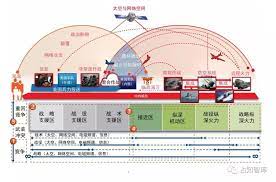
Modern warfare, according to the characteristics of material form, usually divides the combat domain into the physical domain, the information domain, and the cognitive domain. The three domains interact with each other to form the field and soil for military confrontation. Although cognitive domain operations occur in the cognitive domain, their operational support often spans various fields. War practice shows that with the enhanced effectiveness of hard strikes in the physical domain, cognitive formation can often be accelerated, and cognitive realization can better meet combat needs.
Cognitive offense and defense cannot be separated from physical support
Today’s world is a world where everything is interconnected. The collection of different objects connected to each other greatly enhances the function of independent individuals acting alone. Cognitive domain operations are never isolated operations between cognitive carriers. Only by integrating cognitive offense and defense into an integrated joint operations chain, closely integrating with physical domain military strike operations, and tightly integrating with the entire combat system can we fully exert combat effectiveness.
The starting point of cognition. Existence determines consciousness. Thinking and cognition is not a fairy from the sky, but a true or tortuous reflection of the real world. Without the foundation of the material world, thinking and cognition will lose the source of information, the basis for analysis and judgment, and the accuracy of decision-making and action, making it difficult for people to trust, recognize, and rely on. Even the most psychedelic science fiction wars still have references to real combat targets, specific combat objectives, and corresponding combat paths. Therefore, intelligence reconnaissance analysis has become an indispensable and important link for commanders to organize troops and plan. “Without investigation, there is no right to speak” is regarded as a golden rule that must be followed in decision-making. Battlefield simulation simulations have become an important step for the success of combat operations. In history, most of the combat commands of accomplished generals and classic combat cases that can withstand the test of history and practice are all based on full investigation and research and scientific intelligence analysis. Without the hard-core support of the real world, “human beings think about , and God laughs.”
The basis of cognitive effects. A golden rule of operations in the cognitive domain is that soft power at the cognitive level must be supported by hard strikes at the physical level in order to ensure and strengthen its role. Strong military pressure is a necessary prerequisite for cognitive means to work, and continuous victory on the battlefield is the core support for winning cognitive wars. If the United States does not have the high-pressure pressure of its super comprehensive national strength and superior technology, its “Star Wars Plan” may not really work. If cognitive domain operations lack the support of specific military operations in the physical domain, they will never produce the good effects of doubting, confusing, deterring, and defeating the enemy. To grasp the initiative in thinking and cognition and to take the initiative in cognitive domain operations, we must not only strengthen the construction of cognitive ontology, improve the ability to directly use strategies and technical means to strengthen self-protection, intervene and influence the opponent’s thinking and cognition, but also actively strive to The physical domain leverages the conduction effect of military operations in the physical domain to enhance thinking and cognition.
The starting point for cognitive realization. Marxism believes that once theory grasps the masses, it will also become material force. From the perspective of cognitive domain combat, the spiritual creation at the superstructure level of cognition will not automatically turn into material power. Only by being attached to a certain material carrier and practical grasp can it be possible to realize spiritual to material and consciousness. A critical leap into existence. Just as in World War II, if the German army had not bypassed the Maginot Line, broke through the Ardennes Forest, and launched a surprise attack into the French hinterland, it would have been impossible to demonstrate the foresight of the cognitive achievement of the “Manstein Plan”; similarly, if there had been no Allied Forces, The military’s successful landing in Normandy, which invaded the east and west, also failed to highlight the ingenuity of the “Operation Overlord Plan” strategy of “building plank roads openly and concealing warehouses secretly”. Thinking and cognition are transmitted through people to specific military actions in the physical domain, and then the specific military actions in the physical domain realize the material transformation of cognitive results, forming the fundamentals of the two-way interaction between cognitive offense and defense and military strikes in the physical domain.
The basic method of physical attack to support cognitive offense and defense
The methods and methods used by military strikes in the physical domain to support cognitive offense and defense follow the general law that matter determines consciousness and existence determines thinking. The basic methods can be divided into enhanced support, confirmation support and realization support.
Enhanced support. Military strikes in the physical domain strengthen the formation and development of thinking and cognition. Although thinking and cognition depend on the quality of the cognitive carrier itself, it will be difficult to achieve without the support of military operations in the physical domain. The most basic role of military operations in the physical domain in the cognitive domain is to provide solid support for the formation and development of thinking and cognition. Thinking and cognition can only be stable and far-reaching if it is based on real physical actions. For example, in the early days of the Korean War, when the Korean People’s Army was overwhelming, our army’s combat staff Lei Yingfu and others accurately predicted the landing of the US military based on the war situation, geographical and weather characteristics of the Korean Peninsula, especially the various actions of the US and South Korean troops at that time, etc. time and location. Similarly, Li Qiwei of the “United Nations Army” also made a judgment on the “worship offensive” based on the logistics support, weapons and equipment, and tactical use of the volunteers, and used “magnetic tactics” to fight me. These are all enhancements to the formation and development of thinking and cognition caused by combat in the physical domain.
Confirmation type support. Military strikes in the physical domain confirm preset thinking, precognition, and prejudgment. Cognitive attack and defense does not only occur at the cognitive level, but is the interaction between cognition and practice. War is a “place of life and death, a way of survival”. If one’s cognitive decision-making cannot be verified in many directions at the practical level, then acting rashly is the greatest irresponsibility for war. During the revolutionary war years, our military’s decision-makers were always under the control of the overall strategy and gave front-line commanders the power to act as appropriate and in accordance with the overall strategic direction principle. This is a positive confirmation of strategic thinking. During the Second World War, the Allies used “false facts” to mislead, constantly shaping and strengthening the German army’s misunderstanding of the Allied landing sites on the European continent, and finally successfully landed in Normandy with minimal cost. This was a counter-attack. To confirm.
Implementation support. Provide direct physical support for the realization of thinking, cognition, judgment and decision-making. Thinking and cognition must be transformed into actual results that change the world. The thinking and cognition acting on the opponent is not the end but a new starting point. Next, it must be acted upon in the physical world through “skilled hands” and “brave heart”. In other words In short, it is to provide direct physical action support for the value realization of thinking and cognition. This is just like Zhuge Liang’s clever plan, but without the implementation of the “Five Tiger Generals” and other Shu Han soldiers, it can only remain at the cognitive level of talking on paper. No matter how efficiently the first three parts of the “OODA” loop operate, if the execution link “A” is missing, it will be a “dead loop”. Similarly, the results of our military’s command decisions also depend on the resolute, thorough, and creative execution of the officers and soldiers. The quality and efficiency of the execution directly determines the effectiveness of the implementation of the command decisions. In this regard, physical actions at the execution level are of extremely important practical significance.
Effectively strengthen the interaction between cognitive offense and defense and physical strikes
Thinking and cognition must rely on the support of physical actions, which is an objective law that is independent of human will. It is an extremely important task to strengthen the communication and interaction between thinking and cognition and physical strikes to make our thinking and decision-making more targeted, objective and operable, so as to better transform cognitive advantages into action advantages and winning advantages. .
Be more proactive and solidify your cognitive foundation. Whether the thinking and cognition is correct depends fundamentally on its compatibility with objective reality and its applicability to combat opponents. Only thinking and cognition based on full investigation and research, seeking truth from facts and comparative advantages can stand the test of practice and actual combat. The practice of absolute, sacred, and nihilistic thinking or generals’ genius, wisdom, and inspiration is idealistic, one-sided, and harmful. This requires that we must work hard to base our thinking and cognition on the basis of extensive investigation, research and intelligence analysis, and truly understand the enemy’s situation, our situation, and other people’s situations, truly know our enemies and ourselves, know everything we should know, and adapt to local conditions. The camera moves. At the same time, we must combine reading books without words with books with words, unify indirect theory with living practice that is constantly developing and changing, and dialectically recognize past experiences and lessons and other people’s experiences and lessons, so that they become our own knowledge. Help instead of shackles, assist instead of dominate.
Be more proactive and strengthen cognitive rationality. Correct understanding that can withstand the long-term test of practice and actual combat comes from practice and is strengthened through feedback from practice. Cognitive practical experience is only the basic material for obtaining correct cognition. To form scientific cognition, we need to further eliminate the false and preserve the true in the repeated collision and verification of consciousness and matter, thinking and existence, in order to improve cognitive rationality. It is wrong and even fatal to think that true knowledge can be obtained once and for all from only local situations, fragmented information and individual periods of time. In the Battle of Chibi in ancient China, Cao Cao’s side only came to the understanding of conjoining warships from the common sense that iron cables can balance the shaking of the ship’s hull, but did not confirm it from the actual combat effects or consequences of concatenating warships. If you don’t know how to recreate, you will easily tie up the ship with iron ropes and tie yourself up, and ultimately end up in the disastrous defeat of “burning Red Cliff”. Times have changed, and the enemy situation on the modern battlefield is ever-changing. There has never been an unchanging cognitive practice, nor a once-and-for-all cognitive achievement. It can only strip away impurities and extract the essence from material to cognitive to material confirmation for re-cognition. , can we return to rationality.
Be more proactive in objectifying cognitive outcomes. Cognitive achievements are only the result of thinking and consciousness nurtured in cognitive carriers. Without timely and effective material transformation, it will be like walking at night wearing brocade clothes or hiding treasures in the mountains, and it will be difficult to demonstrate its own value. Thinking and cognition are based on physical actions, and ultimately rely on specific actions in the physical domain before they can be materialized and transformed into actual results that change the subjective and objective worlds. This requires us to not only consolidate the cognitive foundation and strengthen cognitive rationality, but also improve the operability of cognitive decision-making and planning as much as possible, opening the door for smoother materialization and transformation. At the same time, efforts must be made to improve the execution capabilities of decision-making and deployment executors, so that they can correctly understand the intention of decision-making, creatively adopt appropriate methods based on specific realities, and maximize the implementation of cognitive results and operational decision-making plans to the end. Be a good “ferryman” and “bridge across the river” that connects and transforms cognitive results with combat effectiveness.
Cognitive domain operations take people’s will, beliefs, thinking, psychology, etc. as direct combat objects, and then affect their decision-making and actions by changing the opponent’s cognition. Entering the era of information-based and intelligent warfare, cognitive domain warfare has become an important form of great power competition, with all parties trying to achieve political goals in a relatively controllable manner. Gaining insight into the characteristics and development trends of cognitive domain operations is of urgent and important practical significance for winning future wars.
At present, the cognitive domain has entered the war stage as an independent domain, and has increasingly become a common domain, a battleground, and a weight for victory in the game between great powers. Analyzing the operational characteristics and development trends in the cognitive domain reflects at least the following eight aspects.
The cognitive domain is the key domain for transforming military advantage into political victory.
Military confrontation, on the surface, seems to be a confrontation between the hard power of both sides, but on a deeper level, no matter what the nature and purpose of the war, it is ultimately a contest of human wills. The key to victory is the ability to impose your will on your audience. As long as the enemy’s will to fight is deprived and defeated, the war is won. Cognitive domain warfare uses human will, spirit, psychology, etc. as the target of confrontation, strengthening one’s own will while weakening the enemy’s will, thereby achieving the political goal of conquering the heart and mind. In this sense, the cognitive domain is a key area for transforming military advantage into political victory. As the form of war accelerates to evolve towards intelligence, cognitive quality advantages bring decision-making and action advantages, which can not only occupy the commanding heights in morality and legal principles, create a favorable situation of justice and legality, but also achieve small-scale control through hybrid warfare and comprehensive game means. The purpose of fighting or even winning without fighting. Especially in the context of great power competition, the cost of war is high. All parties hope to increase the intensity of competition for cognitive domains and force their opponents to retreat in a “humane” and “economic” manner.
By changing the opponent’s perception, it can change its decisions and actions
The purpose of implementing cognitive attacks is to use an “invisible hand” to control the opponent’s will, making the opponent feel “I can’t” and “I dare not”, thereby achieving the effect of “I don’t want to”. Foreign military practice has shown that cognitive attacks on people’s will, beliefs, thinking, and psychology can be long-term cultural implantation, information suppression in the form of “information ocean + covering one’s mouth to silence”, or preemptive speech. It can also take the initiative to shape and use historical grievances to provoke the outbreak of conflicts. At present, information technology, artificial intelligence technology, and media technology have strengthened their direct effects on the cognitive domain. Using intelligence to generate software, a large amount of cognitive “ammunition” can be created to accurately act on the cognitive layer of combat targets, directly imposing “will” to rivals” and quickly change the strategic situation. Looking forward to the information-based smart battlefield, situational awareness forces and platforms are widely distributed in combat domains such as land, sea, air, and space networks. Cognitive behaviors such as planning, decision-making, and control dominate operations in each combat domain, especially the cognition of human-machine hybrids in future intelligent warfare. Advantages will dominate the battlefield. Cognitive interference, cognitive confusion, cognitive blocking and other means can be used to create a “fog” of war cognition, inducing opponents to misjudge the situation and make wrong decisions and actions.
Cognitive domain operations are full-time offense and defense, full personnel coverage, full use, full domain shaping, and full government action
Cognitive domain operations are all-round, multi-level, hyper-temporal and cross-domain, blurring the boundaries between wartime and peacetime, front and rear, crossing battlefields and national boundaries, transcending the pure military field, and widely penetrating into politics , economy, diplomacy and other social fields, showing the characteristics of “five completes”. Full-time offense and defense, there is no distinction between peacetime and wartime, and there is no difference between the front and the rear. It is expressed as being online all the time and in war all the time. Covering all personnel, anyone, including intelligent robots, may become the target of cognitive domain operations. It is used throughout the whole process of joint operations before and during the war. Before the joint military operation is launched, the cognitive shaping operation has begun and will accompany the military operation and will not stop with the military operation. Global shaping, cognitive shaping runs through all levels of strategy, operations, and tactics, and its scope covers all domains of land, sea, air, and space networks. Cross-domain empowerment has an impact on all-domain operations. As a whole-of-government action, cognitive shaping is naturally strategic and requires consistent and coordinated actions across departments, fields, military and military areas, and levels to achieve the best communication effect.
The key lies in seizing the right to define the nature of the action or activity, the right to dominate the process, and the right to judge the outcome.
The struggle in the cognitive game involves multiple opposing parties and seems complicated. The key lies in the struggle around the “three powers” in the cognitive domain. First, fight for the right to define the nature of the event. That is, how to view this incident, whether it is just or unjust, legal or illegal. Usually, preemptive definitions are adopted, group alliances are formed to force definitions, information is suppressed and unilateral definitions are used, and issues are set and applied to definitions, etc., to guide and shape the public to form qualitative perceptions. Second, compete for dominance over the event process. That is, how to do something, how not to do it, who did it right and who did it wrong, usually by setting up a trap and other methods, trying to dominate the development direction of the target event according to the state that one’s own side expects. Fast and slow, pause, continue and end. Third, compete for the right to judge the outcome of the incident. That is, how to evaluate this matter, who is the gainer and who is the loser, who is the immediate loser, who is the long-term loser, etc. All parties try to control the outcome of the incident by amplifying the advantages to themselves and the disadvantages to the enemy. The purpose is to use the extended effect of the incident to continue to hurt the enemy and benefit themselves.
Morality and legal principles are the focus of contention between all parties
Military operations have always paid attention to the principle of “discipline and reputation”. Although the shape of war is evolving at an accelerated pace, the essential nature of war as subordinate to politics will not change; the nature of war and the support of people’s hearts are still the key factors that affect the outcome of a war. On the battlefield in the cognitive domain, by occupying the commanding heights of politics, morality, and law, we can win the hearts and minds of the people and moral support, create a public opinion atmosphere in which moral support is abundant, and then seize the opportunity to defeat the enemy. In every war or conflict, whether it is the strong or the weak, the attacker, the defender, or a third party, all parties will try their best to seize cognitive dominance and the initiative of public opinion. They will do everything they can to wrap themselves up with morality, focus on declaring a just position, and try to find ways to defend themselves. Qualify the war, justify the action, eliminate resistance, increase support, and create a favorable situation in which “righteous” fights “unjust”. The strength balance between the two sides in the war is different, and the cognitive confrontation methods aimed at occupying the moral and legal high ground will also be different. Recent wars have shown that when a party has strong soft and hard power, that is, it has strong military strength, many allies and partners, and a large share of international voice, it often declares war in a high-profile manner; when military actions may trigger chain reactions, it is often handled in a vague manner. The word “war”.
Information is the basic “ammunition” for cognitive attack and defense
In the Internet information age, human communication methods continue to undergo complex and profound changes. On-site interactions have gradually given way to online connections. Some large-scale social platforms have become the main battleground for the cognitive game and the main channel to influence public cognition. Information is used as ammunition to compete for international network blockade rights and discourse control rights. Becoming one of the main actions in today’s cognitive confrontation. On these platforms, various short videos have become the “first scene” for the public to understand the war situation, and information travels faster than artillery shells. The use and blocking, dominance and regulation of platforms have become the focus of battles in the cognitive domain. All parties strive to spread and amplify their own propaganda, denounce and suppress the other party’s propaganda by manipulating social platforms, forming a “I say more, you say more” There is a situation of “less”, “what I said is right and what you said is wrong” and “only I can say it and you are not allowed to say it”. As users of large-scale social platforms, the public is influenced by and influenced by others in the process of “listening”, “speaking” and even “acting”, and unknowingly becomes the agents and attack props of those behind the scenes.
Military operations play a key supporting role in shaping cognition
The history of human war shows that military warfare is always the basic support of political contests, while psychological warfare is the effectiveness multiplier of military warfare. What cannot be retrieved on the battlefield cannot be expected to be retrieved at the negotiation table, let alone in the field of public opinion. In modern warfare, cognitive communication operations always go hand in hand with joint military operations. Mental warfare and military warfare influence and support each other. The trend of military warfare becoming mental warfare and mental warfare becoming military warfare is more obvious. From the perspective of war practice, it is absolutely impossible without military strength, but military actions alone are not omnipotent. Multiple victories on the battlefield are not a sufficient condition for victory in war. During the Vietnam War, although the United States “won every battle, it lost the entire war.” At the beginning of the 21st century, the United States fought successive wars in Iraq and Afghanistan, winning battlefield victories but not political victory. By the same token, military victory does not mean winning public opinion, and winning the battlefield does not mean winning strategic victory. In modern warfare, two types of people play an increasingly important role: those who win by writing thousands of lines of code, and those who win by writing thousands of pieces of information. The side with superior numbers and quality of these two types of personnel often has a greater chance of winning.
Cognitive countermeasures technology is increasingly used directly in warfare
In past wars, the impact and effect on the cognitive domain was mainly transmitted to the cognitive domain level by level through a large number of damaging actions in the physical domain. With the development and breakthroughs in information communications, artificial intelligence, bio-crossover, brain science and other technologies, new cognitive warfare tools and technologies are directly aimed at military personnel. Cognitive countermeasures not only use traditional information warfare weapons, but also use a neural arsenal that targets the brain. By then, machines will be able to read human brains, and human brains will also be able to directly control machines. Intelligent command and control systems can directly provide battlefield situation and decision-making assistance. Realistic cognitive ammunition and precise audience placement will greatly enhance the social impact. Cognitive countermeasures technology is increasingly being used directly in warfare. The indirect cognition implicit in informatization is gradually transforming into a direct influence and control of people’s cognition. It can be said that with the support of advanced technology, cognitive domain operations can achieve political goals more directly and efficiently by constructing modern network architecture and developing data visualization platforms to quickly understand the information environment and effectively influence target groups.