The nature of warfare is rapidly evolving towards intelligence. The intelligent transformation of the military is not merely a simple accumulation of technologies, but a systemic change supported by data, algorithms, and computing power. These three elements mutually empower and organically integrate, forming the technological foundation for generating new combat capabilities. To accelerate the intelligent development of the military, we must deeply grasp the technological logic of intelligent transformation, solidify the data foundation, activate the algorithm engine, and strengthen computing power support to provide a solid guarantee for winning future intelligent wars.
Operational data: the “digital cornerstone” of intelligent transformation
Data is the “lifeblood” of intelligence. Without the accumulation of high-quality, large-scale, and multi-dimensional operational data, the transformation of military intelligence will be like water without a source or a tree without roots. In intelligent warfare, all activities across the entire chain, including battlefield perception, command and decision-making, and combat operations, are essentially processes of data generation, flow, processing, and application. The completeness, accuracy, and timeliness of operational data directly determine the perception precision, decision-making speed, and strike accuracy of intelligent systems, and are an indispensable cornerstone for the intelligent transformation of the military field.
The core value of operational data lies in breaking through the “fog of war” and enabling a shift from experience-driven to data-driven approaches. In traditional warfare, commanders primarily rely on battlefield reconnaissance, intelligence analysis, and combat experience to make decisions. Limited by the breadth and depth of information acquisition, these decisions often carry a degree of subjectivity and limitation. However, in the era of intelligent warfare, a single reconnaissance drone can transmit 5GB of image data per second, and satellite networks constantly track tens of thousands of ground targets, resulting in a geometrical increase in the rate of battlefield data generation. This operational data, originating from multiple domains including land, sea, air, space, cyber, electronic, and psychological domains, can, after standardized processing and in-depth analysis, construct a transparent battlefield situation across all domains, providing commanders with precise decision-making support.
Building a comprehensive operational data resource system requires focusing on key aspects of the entire lifecycle governance. In the data acquisition phase, it’s essential to base data acquisition on the needs of all-domain operations, broaden data source channels, and achieve full coverage of data in both traditional and new domains. Traditional domains should focus on land, sea, and air battlefields, accurately collecting data on troop deployments, equipment performance, and terrain. New domains should extend to outer space, deep sea, polar regions, and cyberspace, prioritizing the collection of data on space target trajectories, deep-sea environmental parameters, and cyberspace situational awareness. In the data fusion and processing phase, a unified data standard system must be established to address prominent issues such as multiple values for a single data point and inconsistent formats, achieving interconnectivity between data from different sources and of different types. In the data sharing phase, a sound cross-domain sharing mechanism must be established, along with tiered and categorized sharing rules, breaking down service-specific barriers, departmental boundaries, and network isolation to build a ubiquitous, all-encompassing, and interconnected data sharing environment, maximizing the utilization of data resources.
To fully leverage the multiplier effect of combat data, the key lies in cultivating data-driven thinking and building a strong professional team. Data-driven thinking is the prerequisite for activating data value. It is essential to guide officers and soldiers to develop the habit of “thinking with data, speaking with data, managing with data, and making decisions with data,” abandoning traditional thinking patterns based on experience and intuition. In operational planning, quantitative analysis should be based on data; in training evaluation, precise measurement should be based on data standards; and in equipment development, iterative optimization should be supported by data. Simultaneously, efforts should be focused on building a professional data talent team, clarifying the responsibilities of each position, and connecting the entire process from data generation to data application. Through various means such as academic training, on-the-job experience, and specialized training, the professional skills of officers and soldiers in data collection, processing, analysis, and application should be improved, creating a composite talent team that understands both military operations and data technology, providing talent support for releasing the value of data.
Specialized Algorithms: The “Digital Engine” of Intelligent Transformation
If data is the “fuel” of intelligence, then algorithms are the “engine” that transforms fuel into power. Specialized algorithms, as the core driving force of military intelligence, are the key link in realizing the transformation of data into knowledge, knowledge into decision-making, and decision-making into combat effectiveness. In intelligent warfare, the quality of algorithms directly determines the reaction speed, decision-making accuracy, and combat effectiveness of the combat system, becoming the engine of intelligent transformation in the military field.
The core advantage of algorithms lies in reconstructing the operational chain and achieving rapid iteration of the OODA loop. In traditional warfare, the chain of observation, judgment, decision-making, and action is lengthy and often struggles to adapt to rapidly changing battlefield situations due to limitations in human processing capabilities. Intelligent algorithms, however, can leverage machine learning, deep learning, and other technologies to process massive amounts of operational data in seconds, perform real-time analysis, and uncover patterns, significantly shortening the decision-making cycle. In simulation tests, foreign military AI command systems generated multiple complete operational plans in a very short time, demonstrating response speed and decision-making efficiency far exceeding that of human command teams, fully showcasing the enormous advantages of algorithms in accelerating the decision-making process. In combat operations, algorithms can span the entire chain, from reconnaissance and perception, command and decision-making, fire strikes, and effect assessment, constructing an autonomous, closed-loop “kill chain.” From target identification to threat ranking, from plan generation to fire allocation, from strike implementation to damage assessment, algorithms can autonomously complete a series of complex tasks, achieving a “detect and destroy” operational effect.
Enhancing the practical application effectiveness of algorithms requires strengthening technological innovation and scenario empowerment. In terms of technological innovation, it is essential to keep pace with the development trends of artificial intelligence and accelerate the military application transformation of cutting-edge algorithms. Focusing on emerging technologies such as generative AI, neuromorphic computing, and brain-computer interfaces, we should explore pathways for the deep integration of algorithms with military needs. Regarding scenario empowerment, we must build diverse typical scenarios for algorithms based on actual combat requirements, develop specialized algorithms for target recognition, situational assessment, and virtual training, overcome bottlenecks in information processing in complex electromagnetic environments, promote the modularization and lightweight transformation of algorithms, and rapidly integrate them with command and control systems and unmanned equipment systems. This will allow algorithms to continuously iterate and optimize in specific tasks within typical scenarios, transforming algorithmic advantages into practical combat capabilities.
Strengthening algorithm security is crucial for ensuring the steady and sustainable development of intelligent transformation. While algorithms enhance combat effectiveness, they also face security risks such as tampering, deception, and misuse, potentially leading to serious consequences like “algorithmic runaway.” It is essential to establish an algorithm security review mechanism to conduct full-process security assessments of algorithm models in military intelligent systems, focusing on their reliability, transparency, and controllability to prevent algorithmic bias and logical vulnerabilities. Strengthening the research and development of algorithmic countermeasures technologies is also vital. This involves improving the anti-interference and anti-attack capabilities of our own algorithms while mastering techniques to interfere with and deceive enemy algorithms, thus gaining the initiative in algorithmic confrontation. Simultaneously, it is crucial to emphasize algorithmic ethics, clearly defining the boundaries and rules of algorithm application to ensure that algorithm development and use comply with international laws and ethical standards, avoiding any violations of war ethics.
Supercomputing Power: The “Digital Energy” for Intelligent Transformation
Computing power is the fundamental capability supporting data processing and algorithm execution, much like the “energy support” for intelligent systems. In the transformation towards military intelligence, the explosive growth of data and the increasing complexity of algorithms have placed unprecedented demands on computing power. The scale, speed, and reliability of supercomputing power directly determine the operational efficiency and combat effectiveness of military intelligent systems, becoming the driving force behind the intelligent transformation of the military field.
The core role of computing power lies in overcoming performance bottlenecks and supporting the efficient operation of complex intelligent tasks. The demand for computing power in intelligent warfare exhibits an “exponential growth” characteristic: an advanced AI command system needs to run thousands of algorithm models simultaneously when processing battlefield data across the entire domain; a swarm of drones performing collaborative combat missions requires real-time interaction and decision-making calculations involving massive amounts of data; a large-scale virtual combat training exercise needs to simulate the interactive behaviors of tens or even hundreds of thousands of combat units. The completion of these complex tasks is inseparable from powerful computing power. Without sufficient computing power, even the highest quality data cannot be processed quickly, and even the most advanced algorithms cannot operate effectively. Currently, computing power has become a crucial indicator for measuring the level of military intelligence; whoever possesses stronger computing power holds the initiative in intelligent warfare.
Building a computing power system adapted to the needs of intelligent transformation requires creating a collaborative computing power layout across the cloud, edge, and terminal. In the cloud, distributed cloud computing centers need to be constructed to build a computing power foundation that covers the entire domain and is elastically scalable. Relying on infrastructure such as big data centers and supercomputing centers, various computing resources should be integrated to form a large-scale, intensive computing power supply capability. At the edge, computing power should be deployed more readily, enhancing the autonomous computing capabilities of the battlefield. For special scenarios such as forward positions, naval vessels, and air platforms, miniaturized, low-power, and highly reliable edge computing nodes should be developed to transfer some computing tasks from the cloud to the edge. This reduces reliance on communication links and data transmission latency, and ensures that combat units can autonomously complete basic tasks such as target identification, path planning, and coordination even in extreme environments such as communication interruptions or signal blackouts, thus improving the system’s survivability. At the terminal, the built-in computing power of equipment should be strengthened to improve the intelligence level of individual combat platforms. By embedding high-performance AI chips into platforms such as drones, unmanned vehicles, and missile weapons, equipment is endowed with the ability to autonomously perceive, make decisions, and act, making it an intelligent unit with independent combat capabilities and laying the foundation for cluster collaboration and system-on-system confrontation.
Enhancing the combat readiness of computing power support requires strengthening technological innovation and security protection. In terms of technological innovation, it is crucial to keep pace with the development trends of computing power technology and accelerate the military application of new computing technologies. Focusing on cutting-edge areas such as quantum computing, photonic computing, and neuromorphic computing, we must break through the performance bottlenecks of traditional computing architectures and develop disruptive new computing power equipment. Simultaneously, we must strengthen the construction of computing power networks, building high-bandwidth, low-latency, and interference-resistant computing power transmission networks. By integrating technologies such as 5G, 6G, and satellite communication, we can ensure computing power collaboration and data interaction between the cloud, edge, and terminals, achieving seamless connection and efficient scheduling of computing power resources. In terms of security protection, we must establish a computing power security system to prevent the risks of attacks, hijacking, and misuse of computing power resources. By adopting technologies such as encrypted computing and trusted computing, we can ensure the security and privacy of data during the computing process; strengthen the physical and network protection of computing power facilities, and build a multi-layered, all-round protective barrier to ensure that the computing power system can operate stably in wartime and is not subject to enemy interference or damage.
“Order Dispatch”: Precise Targeting of New Patterns
introduction
As Lenin said, “Without understanding the times, one cannot understand war.” In recent years, the widespread application of information and intelligent technologies in the military field has promoted the deep integration of technology and tactics. Relying on intelligent network information systems, it has given rise to “order-based” precision strikes. Commanders and command organs can generate strike requirements in a formatted manner according to combat missions. The decision-making system intelligently matches strike platforms, autonomously plans action paths, and scientifically selects strike methods based on personalized requirements such as strike time, operational space, and damage indicators, thereby rapidly and accurately releasing strike effectiveness.
The operational characteristics of “order dispatch” type precision strike
As the informatization and intelligence of weapons and ammunition continue to improve, the cost of modern warfare is also constantly increasing. How to achieve the highest cost-effectiveness ratio with limited strike resources and maximize combat effectiveness has become a central issue for commanders and command organs in operational planning. “Order-based” precision strikes can provide a “feasible solution” for this.
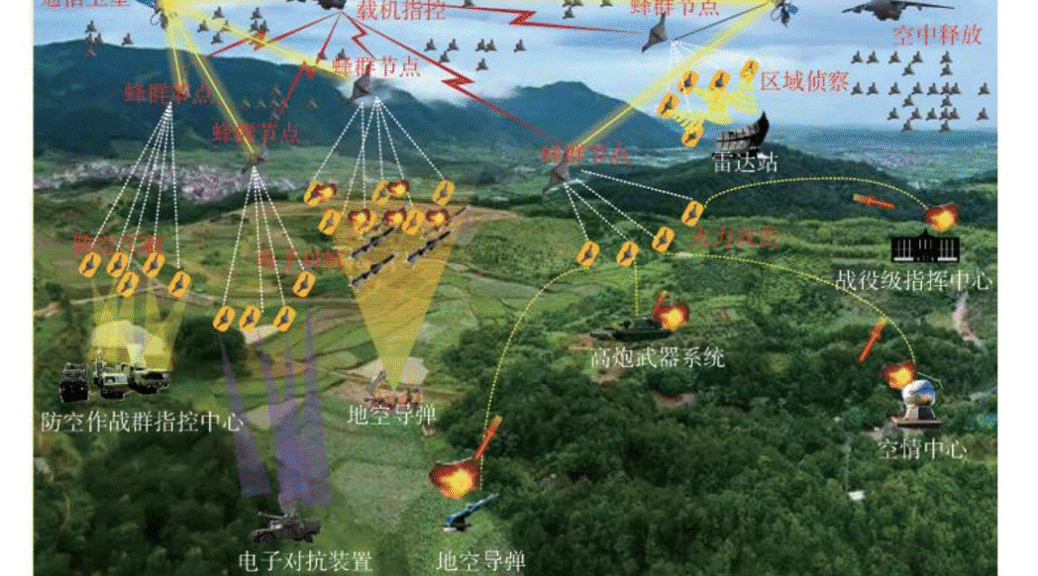
Real-time, precise, and targeted strikes. Modern warfare places greater emphasis on structurally disrupting enemy operational systems, achieving operational objectives through the rapid and precise release of combat effectiveness. This requires commanders and command organs to seize fleeting “windows of opportunity” to strike high-value, nodal, and critical targets within an enemy’s operational system before the enemy can react. The traditional “detection-guided-strike-assessment” operational loop is time-consuming and ineffective. Therefore, “order-based” precision strikes rely on advanced intelligent network information systems, without pre-determining strike platforms. Target lists are released in real-time, and auxiliary decision-making systems rapidly assess the strike performance of various weapon platforms and the expected damage to targets. Tasks are autonomously allocated to strike platforms, rapidly linking and controlling multi-domain firepower, autonomously closing the kill chain, and conducting rapid strikes against key targets.
Multi-domain coordinated strike. The advantage of modern precision strike over traditional firepower lies in its information-based and intelligent combat system. It requires no human intervention and autonomously completes tasks such as reconnaissance, control, strike, and assessment based on a closed strike chain. This not only saves strike costs and reduces resource waste but also enables adaptive coordination based on unified operational standards. Therefore, “order-based” precision strikes require firepower forces distributed across various operational domains to establish a unified standard grid. Once a demand is issued from one point, multiple points can respond and coordinate globally, flexibly concentrating forces and firepower, using multiple means to rapidly and multi-domain convergence, and determining the strike direction, sequence, and method for each strike platform while on the move. Through system integration, time is effectively saved, enabling multi-domain precision strikes against key enemy nodes and critical parts of core targets, fully leveraging the combined power of the integrated combat effectiveness of various operational units.
The key to victory lies in swift and decisive action. Modern warfare is a “hybrid war” conducted simultaneously across multiple domains, where the interplay and confrontation of new domains and new types of forces, such as information, aerospace, and artificial intelligence, are becoming increasingly pronounced. This necessitates that both sides be able to detect and act faster than the enemy, crippling their operational systems and reducing their operational efficiency. On the one hand, it is crucial to pinpoint key nodes in the enemy’s system and launch timely and precise strikes; on the other hand, it is essential to conceal one’s own intentions and strike forces, striking swiftly and unexpectedly. “Order-based” precision strikes perfectly meet these two requirements. Supported by network information systems, they intelligently integrate firepower from various domains, achieving multi-source information perception, data interconnection, and multi-domain coordinated strikes. This enables seamless and high-speed operation of “target perception—decision and command—firepower strike—damage assessment,” resulting in a high degree of information and firepower integration and the rapid achievement of operational objectives.
The system of “order dispatch” type precision strike
”Order dispatch” precision strikes compress action time and improve strike effectiveness by building an efficient closed strike chain, enabling various fire strike platforms to better integrate into the joint fire strike system and provide rapid and accurate battlefield fire support. Its key lies in the “network” and its focus is on the “four” systems.
Multi-domain platform access network. Supported by information and intelligent technologies, an integrated information network system with satellite communication as the backbone is established. Firepower strike platforms distributed across multiple domain battlefields are integrated into the combat network to create a battlefield “cloud.” Different combat modules are distinguished, and “sub-network clouds” such as “reconnaissance, control, strike, and assessment” are established. Relying on an integrated communication network, the “sub-network clouds” are linked to the “cloud.” This can enhance the firepower strike platform’s capabilities in all domains, all times, on the move, autonomous networking, and spectrum planning, and realize network interconnection between firepower platforms, domain combat systems, and joint combat systems, as well as the interconnection and interoperability of internal strike forces.
Joint reconnaissance and sensing system. This system leverages various reconnaissance and surveillance forces within the joint operations system to achieve all-weather, multi-directional, and high-precision battlefield awareness of the operational area. This requires constructing a ubiquitous, multi-dimensional reconnaissance and sensing force system encompassing physical and logical spaces, tangible and intangible spaces. It involves widely deploying intelligent sensing devices to form an intelligence data “cloud.” Through this intelligence data “cloud,” the system analyzes the enemy situation, identifies key points in the enemy’s operational system and time-sensitive targets, updates reconnaissance information in real time, and displays target dynamics.
Intelligent Command and Decision-Making System. Relying on a new command and control system with certain intelligent control capabilities, this system constructs various planning and analysis models, expands functions such as intelligent intelligence processing, intelligent mission planning, automatic command generation, and precise action control, and expands and improves databases such as target feature database, decision-making knowledge base, and action plan database. It strengthens the system support capabilities for mission planning, action decision-making, and control during combat organization and implementation, enhances planning and decision-making and combat action control capabilities, clarifies “how to fight, where to fight, and who will fight,” and achieves precise “order dispatch.”
Distributed fire strike system. Relying on intelligent network information systems, on the one hand, it integrates multi-dimensional fire strike platforms across land, sea, air, and space, enhancing functions such as intelligent target identification and remote-controlled strike, enabling various combat modes such as remote-controlled operations, manned-unmanned collaborative operations, and flexible mobile operations; on the other hand, it can construct a low-cost fire strike platform mainly composed of low-altitude and ultra-low-altitude unmanned strike platforms such as racing drones and loitering munitions. By adding different functional combat payloads, it can closely coordinate with high-end fire strike platforms to carry out tasks such as battlefield guidance, precision strikes, and fire assessment, efficiently completing “orders”.
Autonomous Damage Assessment System. This system, built upon reconnaissance and surveillance capabilities within the joint operations system, autonomously assesses the effectiveness of attacks on targets after the firepower platform has completed its strike. It conducts real-time, dynamic, objective, and systematic analysis and evaluation of the target’s external condition and degree of functional loss, and promptly transmits relevant information back to decision-making and command centers at all levels via video images. The assessment centers then determine “how well it went” and whether the expected damage requirements were met. If not, operational actions can be adjusted in a timely manner for supplementary strikes, providing strong support for maximizing operational effectiveness.
The planning and implementation of “order dispatch” style precision strikes
The “order dispatch” style of precision strike is similar to the operation of ride-hailing services. Through a series of processes such as formatted “order” generation, intelligent target matching, and autonomous route planning, it autonomously completes the “OODA” combat cycle, making its actions more efficient, its strikes more precise, and its collaboration closer.
Real-time reporting of firepower requirements allows combat units to submit orders on demand. Reconnaissance elements distributed across different operational areas and multi-dimensional battlefield spaces are acquired through radar, optical, infrared, and technical reconnaissance methods, forming battlefield target intelligence information across a wide area and multiple sources. This information is transmitted to the battlefield information network via intelligence links, and is constantly relayed to combat units. Combat units then perform correlation processing, multi-source comparison and verification, and comprehensively compile battlefield target information to generate precise mission orders. Combat units analyze target value and connect to the decision-making platform as needed, constructing a closed-loop strike chain based on these orders, and submitting mission orders in real time, achieving dynamic optimization and precise adaptation.
The decision-making center intelligently “dispatches” fire support missions, differentiating them from actual fire strike missions. Through the battlefield information network and relying on an intelligent mission planning system, the center can automatically analyze the mission “order” information data submitted by combat units. Based on the nature, coordinates, movement status, and threat level of battlefield targets, it automatically generates mission requirements such as the type and quantity of ammunition needed for fire strike operations, the strike method, and damage indicators, forming a fire support mission “order.” By intelligently matching the optimal fire support platform and connecting link nodes as needed, the center conducts intelligent command-based “order dispatch,” delivering the orders instantly to the standby fire support platforms.
Optimal target matching is performed continuously, and firepower platforms swiftly “accept orders.” Multiple firepower platforms distributed across the battlefield respond rapidly to these orders via the battlefield information network. The platforms autonomously establish links with combat units, mutually verifying their identities before directly establishing a guided strike chain. They coordinate firepower strikes, adjusting strike methods and firing parameters in a timely manner based on target damage and battlefield target dynamics before conducting further strikes until the assigned mission is completed. Firepower platforms consistently adhere to the principle of “strike-relocate-strike-relocate,” completing strike missions and rapidly relocating to new positions, maintaining a state of constant readiness and receiving orders online in real time. After the mission concludes, the guided strike chain between the firepower platform and the combat unit is automatically terminated.
Multi-source damage information acquisition and real-time assessment by the evaluation center. Utilizing a comprehensive range of long-range, intelligent, and information-based reconnaissance methods, including satellite, radar, and drone reconnaissance, multi-domain, three-dimensional reconnaissance is conducted to acquire real-time target fire damage information, providing accurate assessments for precision fire strikes. A comprehensive assessment of damage effects is performed, quantitatively and qualitatively evaluating the strike results, distinguishing between physical, functional, and systemic damage states, and promptly feeding back to the decision-making center. Based on the damage assessment results, timely adjustment suggestions are made to modify fire strike plans, optimize operational actions, and achieve precise control of fire strikes. This facilitates commanders’ accurate control of the operational process and efficient command and control of fire strike effectiveness.
Operational coordination is a key element in modern warfare for achieving system-of-systems operations, unleashing overall effectiveness, and achieving operational objectives. In recent years, with breakthroughs in military science and technology, particularly artificial intelligence, the empowering and efficiency-enhancing role of technology has become increasingly prominent. While profoundly changing the nature of warfare and operational styles, it has also given rise to a new operational coordination model—autonomous coordination. Currently, we should scientifically grasp the opportunities and challenges of the new military revolution, dynamically coordinate the development of autonomous coordination, and thus accelerate the transformation and upgrading of operational methods.
Transforming towards intelligent empowerment and autonomous collaboration
Future warfare will be a comprehensive confrontation between opposing sides employing “human + intelligent equipment.” Limited by military technology, system platforms, and combat capabilities, traditional combat coordination, with its fixed cycles and low fault tolerance, is no longer suitable for the rapidly changing modern battlefield. With the powerful support of advanced technologies such as artificial intelligence and big data, the autonomy and automation of combat coordination will be greatly enhanced, and intelligently empowered autonomous coordination will become key to victory.
Wide-area ubiquitous collaboration. In recent years, the profound development of communication and intelligent technologies, along with the accumulation and superposition of data, algorithms, and computing power, has promoted the interconnection and aggregation of people, machines, things, and energy. This has extended the military Internet of Things (IoT) to many fields such as situational awareness, command and control, information and fire strikes, and logistical support. While promoting the iterative upgrading of combat capabilities, it has also provided more options for modern combat collaboration. It is foreseeable that the military IoT will shine on the future battlefield, serving not only as a key infrastructure supporting combat operations but also as a crucial hub for maintaining combat collaboration. Based on this, ubiquitous warfare characterized by wide-area dispersion of forces, modular organizational structures, and highly coordinated actions will emerge, characterized by being omnipresent, ubiquitous, and autonomous without control.
Deep human-machine collaboration. In the Nagorno-Karabakh conflict, the Azerbaijani army leveraged its drone advantage to build a strong battlefield advantage, marking the beginning of “robot warfare.” In future warfare, unmanned combat forces such as drones, unmanned vehicles, and unmanned ships are rapidly moving from back-end support to the front lines, becoming the “protagonists” of the battlefield. Compared to traditional combat collaboration, manned-unmanned intelligent collaboration exhibits characteristics such as decentralized command, de-division of labor in combat processes, advanced skill operation, and blurred lines between the front and rear, placing greater emphasis on human-machine collaboration and algorithmic victory. Especially in recent years, intelligent unmanned swarms have emerged as a powerful force, strongly impacting the modern battlefield. Faced with these new situations and changes, we should comprehensively utilize swarm formation algorithms, formation control algorithms, and complex scenario optimization algorithms to promote networked communication and intelligent collaboration between unmanned and manned systems, facilitating the integrated operation of the intelligence chain, command chain, mobility chain, strike chain, and support chain, and accelerating the generation of comprehensive precision-based combat capabilities.
Data-driven collaboration. The traditional operational collaboration model under hierarchical command is no longer suitable for the multi-dimensional and fast-paced nature of modern warfare. In future warfare, intelligence is key, and data is king. The deep integration of big data, cloud computing, and artificial intelligence enables the storage, analysis, fusion, and application of massive amounts of battlefield data, making command and control more scientific and operational collaboration more efficient. Leveraging powerful resource integration, computing power, and data analysis capabilities, battlefield intelligence can be rapidly integrated, battlefield situation awareness can be achieved in real time, collaborative plans can be efficiently formulated, and threat levels can be assessed instantly. This allows for the integrated planning of predicting combat actions, analyzing typical scenarios, deploying combat forces, and allocating combat resources, thereby comprehensively improving the overall effectiveness of command and control, firepower strikes, and integrated support, and driving a revolutionary change in operational collaboration.
Towards Multi-Domain Collaborative Autonomous Evolution
Future warfare will feature complex and diverse participating forces, a mix of advanced and less sophisticated weaponry, and a hybrid application of combat methods. It will exhibit distinct characteristics such as intelligent, dynamically decentralized command and control, intelligent and wide-area deployment of combat forces, and intelligent allocation and dynamic differentiation of combat missions. It is foreseeable that multi-domain联动 (interconnected and autonomous) collaboration will become a crucial component of operational coordination.
System self-restructuring and collaboration. Future warfare will involve a multi-domain battlefield space that combines virtual and real elements, with diverse military operations interacting and constraints and collaboration shifting randomly. Only an engineered and systematic organizational model can adapt to the complex needs of multi-domain collaboration. The essence of this collaboration model is to form a wide-area holographic support architecture for system self-restructuring and collaboration. Specifically, this means emphasizing the concept of system-of-systems warfare, comprehensively resolving practical contradictions in organizational system construction, institutional mechanism establishment, and collaborative rule formulation; focusing more on the system integration effect, achieving beyond-visual-range and cross-domain collaborative operations for combat units across a wide area; emphasizing efficient and flexible command, refining command relationships and clarifying command responsibilities from multiple dimensions; and paying more attention to data-driven precision, integrating network system platforms at all levels to establish a dynamic optimization network for reconnaissance, control, strike, assessment, and support missions. Once this collaboration model is formed, it will undoubtedly be able to analyze and predict typical confrontation scenarios based on the operational environment, adversaries, and missions, dynamically select action collaboration links, and plan operational actions across various domains in an integrated manner.
Tactical Adaptive Collaboration. Recent local wars have repeatedly demonstrated that the complexity and systemic nature of operational collaboration have increased exponentially due to the extension of operational data and information sharing to the tactical level. Only by achieving efficient processing, integration, and sharing of operational data and information can adaptive and autonomous collaboration among operational users be guaranteed. This collaborative model places greater emphasis on scientific planning and innovative methods to form a universal battlefield situation map with full-dimensional coverage. It supports hierarchical, cross-level, and cross-domain sharing and collaboration among users deployed across a wide area, enabling command elements and operational units to jointly perceive the battlefield situation and ensuring self-synchronous operations within a unified strategic intent, operational guidance, and collaborative planning framework. This collaborative model further emphasizes vertical integration of strategy, operations, and tactics, and horizontal integration of land, sea, air, space, and cyberspace. It provides powerful information sharing services in detection, early warning, and surveillance, and promotes the extension of operational-level joint operations to tactical-level joint operations through information media. This collaborative model further highlights the standardized operation of command and control, and the use of cutting-edge technologies such as big data and cloud computing to promote the connection of operational command levels, cross-domain linkage, element interaction, and situational awareness sharing. It achieves intelligent collaboration among command systems, weapon platforms, and sensors, and implements the key to victory through speed.
Complementary and Synergistic Advantages. In future warfare, operations in space, cyberspace, and other domains will be deeply integrated into the traditional battlefield, requiring higher standards and more stringent planning and design for the overall operation. Only by clarifying the complementary relationships and proportions of input and output across different operational domains, and then outlining the operational relationships for cross-domain collaboration, can we bridge the gaps in domain operations and achieve multi-dimensional battlefield complementarity. Essentially, this is also a concentrated reflection of the concept of war effectiveness. From another perspective, in a war, when local battlefield advantages are not obvious or harbor hidden dangers, overall victory can still be achieved by gaining local advantages in other domains to compensate and achieve comprehensive superiority. In future informationized and intelligent warfare, this will be even more prominent and complex, requiring comprehensive strategies targeting military, political, public opinion, legal, psychological, and diplomatic fields, leveraging each other to fully unleash maximum operational effectiveness; requiring close cooperation between traditional and new-type forces, building an integrated operational system based on network information systems, and maximizing overall effectiveness through synergistic advantages.
Towards Dynamic Coupling and Autonomous Collaborative Transition
In the era of artificial intelligence, with the profound changes in information technology and weaponry, combat operations place greater emphasis on breaking down traditional force formations, integrating the functions of traditional platforms, and dismantling traditional offensive and defensive boundaries, so as to achieve all-weather dynamic control of combat operations through dynamic coupling and autonomous collaboration.
Dynamic convergence and coordination. Future warfare will see more intense adversarial confrontations and more volatile battlefield situations, rendering the static, extensive, and methodical coordination methods of the past inadequate. It is imperative to pay close attention to key operational nodes, closely monitoring the overall situation, anchoring operational tasks, and focusing on operational objectives. This requires assessing the situation, seizing opportunities, and swiftly changing coordination partners, flexibly adjusting coordination strategies, and autonomously negotiating coordinated actions based on predetermined coordination rules. It is important to note that this coordination method based on key operational nodes particularly emphasizes the ability of combat forces to overcome structural barriers and organically aggregate operational effectiveness. Through the flexible structure of the coordination organization, conflicts can be self-coupled and autonomously resolved, gaps in cooperation can be bridged, and the precise release of the combined forces of the operational system can be promoted.
Dynamic control and coordination. The battlefield situation in future warfare is constantly changing, and the course of operations often deviates from the predetermined plan, resulting in significant uncertainty. This implicitly requires us to break through traditional operational thinking and closely monitor changes in the battlefield situation to implement real-time, flexible, and autonomous coordination of the operational process. This coordination method, through real-time assessment of changes in the battlefield situation, the extent of damage to enemy targets, and the scale and effectiveness of operational operations, enables rapid command and control and precise coordination in areas such as force projection, fire support, and comprehensive support, ensuring that we always maintain the initiative on the battlefield. This coordination method requires relying on advanced intelligent auxiliary means to quickly divide the operational phases, predict the duration of operational operations, analyze the overall deployment of operational forces, calculate the allocation of operational resources, and accordingly precisely control the decision-making cycle and operational rhythm, accurately coordinating troop actions and the operational process to ensure effective response to various randomness and uncertainties in combat.
Dynamic Response and Coordination. The unpredictable nature of future warfare, coupled with the profound effects of asymmetric warfare, hybrid games, and system emergence, means that planned operations will inevitably encounter various unforeseen circumstances during execution. Therefore, dynamic coordination in response to unforeseen situations is an effective strategy for resolving these contradictions. This coordination method emphasizes dynamically adjusting actions based on different situations. When unforeseen circumstances arise in a local battlefield or operation, with minimal impact on the overall operation and sufficient time, the operational system automatically responds, partially adjusting operational deployments and actions to ensure the achievement of expected operational objectives. When multiple urgent and non-urgent situations coexist on the battlefield and partially affect the overall situation, operations are dynamically and instantly coordinated according to the principle of prioritizing urgent matters, pushing the battle situation in our favor. When multiple major unexpected situations or unforeseen changes occur in the overall battle situation, coordination is carried out according to the principle of prioritizing primary directions and then secondary directions, rapidly generating new coordinated response measures to effectively address various unforeseen battlefield situations. (Wu Siliang, Jia Chunjie, Hou Yonghong)
System “Gathering Excellent War” It is “systematic warfare in information warfare. It does not necessarily refer to a certain combat style, but is composed of multiple combat styles and tactics” “combination boxing”, or combat style group . Emphasizes that, depending on the combat mission, combat opponent and the changing battlefield situation, any appropriate means and style of combat can be used flexibly to form combat advantages as long as it is conducive to forming comparative advantages and achieving system victory. In the specific implementation process of “system-based superior warfare”, these specific combat styles and operational tactics can not only be organized and implemented separately as part of joint all-domain operations, but also emphasize fighting “combination boxing”, using multiple strategies simultaneously, and winning as a whole.
In order to better understand its core connotation, this article lists Nine typical combat styles including overall deterrence warfare, electromagnetic disturbance warfare, network penetration warfare, and cognitive control disturbance warfare And analyze . System “Juyouzhan” ――combination boxing that flexibly uses multiple combat styles“ 1. Overall deterrence war: Emphasis on multi-domain joint deterrence; Three elements should be present in the implementation of an overall deterrent war ; Strong overall strength is central to achieving effective deterrence 2. Electromagnetic Disturbance Warfare : The key to competing for information advantage; On the combined means approach, information empowerment is achieved through “connection + sharing” ; Crack down on effective tactics for unmanned cluster operations 3. Cyber-sabotage: Soft “kill” is the main focus, combining soft and hard, focusing on breaking the net and reducing energy failure 4. Cognitive scrambling: Control the cognitive power of situational awareness and compete for information advantage; control the decision-making power of command and compete for decision-making advantage; control “brain” power and seize the advantage of brain control 5. Agile mobile warfare: High-efficiency and rapid decision-making; high-efficiency formation of a favorable combat situation; high-efficiency and instant gathering of combat forces; agile mobile warfare is an innovative development of traditional mobile warfare 6. Swarm autonomous warfare: It is conducive to forming a system advantage to suppress the enemy; it is conducive to enhancing the combat effect; it is conducive to falling into the enemy’s combat dilemma 7. Point-and-kill War: Achieving an efficient cost ratio for operations; targeting key nodes is an important option; large-scale system support is a basic condition; it is inseparable from precise intelligence support 8. Supply-breaking: The supply guarantee chain has a huge impact on the overall combat situation; the center of gravity of the attack is a key node in cutting off the enemy’s supply guarantee chain; the focus is on choosing the right time and making full use of tactics 9. System “paralysis battle:” The objectives of the operation are to make the enemy combat system run out of order; to strike the key nodes of the combat system with heavy blows; and to carry out soft strikes against the enemy combat system For learning reference only, welcome to communicate and correct! Article views do not represent the position of this body The concept of combat was first proposed as a new combat style. Innovative combat styles are a core element in the development of combat concepts. It can be said that system-gathering battle is a general term for a series of specific tactics. The following nine typical combat styles constitute the tactical system of system-gathering and superior warfare. They are: One is Overall deterrence warfare, actively organize static power display and deterrence actions in system excellence battles, and strive to defeat others without fighting or small battles; Two is Electromagnetic disturbance warfare uses various combat methods and action styles such as electronic detection, attack and defense to disrupt, prevent and destroy the enemy’s electromagnetic capabilities, actively compete for the advantages of the electromagnetic spectrum, seize the right to control information, and then win the initiative in combat; Three is In cyber attack warfare, various means such as soft strikes and hard destruction are used to defeat the enemy’s command network, intelligence network, communication network, logistics supply network, and disrupt the enemy’s command and support; Four is Cognitively Controlled Disturbance. Form a controlling advantage in the cognitive space through information attacks, public opinion attacks, and brain attacks; Five is Agile mobile warfare. Quickly adjust the deployment of troops and weapons, quickly gather capabilities on the battlefield, and seize combat opportunities; Six is Swarm autonomous warfare. Extensively use unmanned combat methods such as “bee swarms”, “wolf swarms”, and “fish swarms” to independently organize actions and distributed attacks to achieve joint human-machine victory; Seven is Pointkill. Accurately obtain intelligence, carry out multi-domain precision strikes, strive to shake the overall situation with one point, and maximize combat benefits; Eight is Supply-breaking. Organize an elite force to attack enemy logistics supplies and equipment supply supply chains, supply lines and supply bases, defeat the enemy and lose supplies and withdraw from the battle; Nine is System “paralysis battle”. A variety of means, such as breaking the net, exercising, and hitting nodes, are used to interfere with, delay, destroy, or even paralyze the effective operation of the enemy’s combat system and weaken its functions.
1. Overall deterrence Overall deterrence warfare refers to actively organizing static power display and deterrence actions in the system’s battle for excellence, and striving to defeat others without fighting or small battles. Sun Tzu said: “Subduing one’s troops without fighting is a good thing.” Deterrence and war are the two main forms of military activity. And “deterrence” is mainly the act of showing determination and will to potential opponents by showing strength or threatening to use strong strength to deter opponents from action. It can be said that the overall deterrence war in the system-based battle of excellence is an important means or tactic to achieve the goal of “stopping” human troops without fighting. Clausewitz emphasized that the first rule of strategy is to be as strong as possible, first in general, and then in key locations. Modern warfare is system-to-system confrontation. The overall deterrence war under informationized local warfare requires not only traditional deterrence methods and capabilities on land, sea, air and space, but also new deterrence methods and capabilities such as space deterrence, electromagnetic deterrence, and network deterrence. It also requires an overall deterrence that shows the overall strength of the country. Especially with the rapid development of advanced technologies such as information technology, the technological revolution, industrial revolution, and military revolution have accelerated their integration, and strategic competitiveness, social productivity, and military combat effectiveness have become more closely coupled. Winning the information war is to a greater extent a contest between the will of the country and the overall strength of the country. To contain the war, we must first act as a deterrent to our opponents in terms of overall strength.
1.1 Emphasis on multi-domain joint deterrence Means of deterrence typically include both nuclear and conventional deterrence. In the “system-based battle for excellence”, the overall deterrence war is implemented, aiming to comprehensively use conventional deterrence methods across the land, sea, air and space power grids to achieve the purpose of deterrence. Especially with the application of information network technology and space and directed energy technology in the military, space, networks, electromagnetic weapons, etc. have become new means of deterrence. Space deterrence, It mainly uses equipment such as rapid response electromagnetic orbit weapons, space-to-ground networked anti-navigation and positioning service systems, large elliptical orbit laser weapons, and high-power microwave weapons to threaten and attack the opponent’s space targets and form a deterrent against enemy space information “interference blocking”. Cyber deterrence mainly uses cyberspace situational awareness and attack equipment to threaten and attack the opponent’s military network and other critical information infrastructure to achieve deterrence against the enemy. Electromagnetic deterrence mainly uses electromagnetic spectrum combat systems to threaten and attack enemy detection, navigation, communications and other information weapons and equipment systems to achieve deafening and blinding deterrence against the enemy.
1.2 The implementation of overall deterrence should have three major elements Implementing an overall deterrent war and achieving the desired effect of deterrence usually requires three main elements: One is strength. The deterrent must have the reliable ability or strength to frighten and fear the opponent; the second is determination and will. The deterrent party must dare to use this capability when necessary; third, to transmit information clearly. The deterring party must make the ability to act and the determination clearly known to the other party accurately and effectively.
Historically, the criteria for judging deterrent strength have varied in three main ways: First, the active military force; second, the combined national strength or war potential; and third, the total number of main battle weapons and equipment. For quite a long period of history, the number of troops was deterrence, and the strength of military strength depended directly on the size of the active military, the amount of vital weapons and equipment, and non-material factors such as the morale of the army’s training organization. After the twentieth century, with the expansion of the scale of warfare, deterrence power has become less limited to the strength of the military and the quantity of vital weapons and equipment, but is determined by the nation’s war potential, which includes economic power, scientific and technological power, energy resources, and even population size, among others. The overall deterrence war in the system’s “gathering and excellence war”, the formation of its deterrence strength is mainly based on the network information system, as well as the joint global deterrence capability formed under the integration of the system.
1.3 Strong overall strength is the core of achieving effective deterrence The development of information technology and its widespread penetration and application in the military sector provide favourable conditions for building overall strength and achieving overall deterrence. System “Juyouzhan” is supported by the network information system, making full use of the permeability and connectivity of information technology, not only integrating various combat forces, combat elements, and combat units into an organic whole, realizing the military system combat advantages, but also integrating Various fields related to war and national mobilization, such as national politics, economy, diplomacy, finance, transportation, and energy, are connected and integrated into the national war mobilization system Gather all forces and resources to form an overall synergy, realize the emergence effect of system capabilities, show the overall strength advantage, and form a powerful invisible deterrent of united efforts and sharing the same hatred Create a situation that makes the enemy “powerful but unable to act ”“able to act but ineffective”, and play a role in containing and winning the war. In the “overall deterrence war”, the scope of national war mobilization will be wider, not limited to a certain direction or region, but throughout the country and even the relevant regions of the world; mobilization time will be faster, and using networks and information systems, mobilization and action information can be quickly transmitted to everyone and every node at the first time; action coordination and synergy will be more consistent, and all forces distributed in various regions can be based on the same situation Under the same order, the operation is unified at almost the same time, which greatly improves the efficiency of operational synergy; resources are more fully utilized, and various war resources based on the Internet can quickly realize the conversion between peacetime and wartime, military-civilian conversion, and achieve integrated front and rear guarantees and precise guarantees.
2. Electromagnetic Disturbance Warfare Electromagnetic disturbance warfare refers to the flexible use of electronic detection, attack and defense and other combat methods and action styles to disrupt, prevent and destroy the enemy’s electromagnetic capabilities, actively compete for the advantages of the electromagnetic spectrum, seize information control rights, and then win operational initiative.
2.1 The key to competing for information advantage Informatization local warfare is highly dependent on the electromagnetic spectrum, the Control and counter-control of electromagnetic space have become the focus of competition for information rights. Organize and carry out electromagnetic obstruction warfare, mainly to destroy the enemy’s electromagnetic spectrum and protect one’s own side from destruction. The electromagnetic spectrum is the main carrier for transmitting information. The use of electromagnetic means to disrupt the enemy’s electromagnetic spectrum will effectively reduce the enemy’s information combat capabilities and enable our own side to ensure the rapid and effective flow of information in the scenario of ownership of information rights, driving command flow, action flow, and material flow through information flow, energy flow, and then have the dominance and initiative in combat.
2.2 The basic focus is to implement electromagnetic disturbance warfare in the battle to deactivate the enemy’s combat system. It is mainly aimed at the enemy’s dependence on electromagnetic space. At the same time, in order to ensure its own effective use of electromagnetic space, it organizes various electronic reconnaissance and interference, attack, defense and support forces to attack enemy communication networks, radar networks, computer networks and command centers, communication hubs, radar stations, etc Computer network nodes, global navigation and positioning systems, space link systems such as the “Heaven and Earth Integrated Internet”, and various other frequency-using weapons and equipment carry out interference and attacks, block and destroy their communication and data transmission, and destroy the enemy’s combat system. “Connection” and “sharing” structural center of gravity provide support for seizing information control and electromagnetic control from the root, thereby weakening the enemy’s command and control capabilities Deactivating and disabling the enemy’s entire combat system.
2.3 Crack effective tactics for unmanned cluster operations “Unmanned autonomous group operations such as swarms ”“wolves ”“fishes” are important features of information-based local warfare with intelligent characteristics. The various unmanned autonomous clusters are large in number, diverse in type, and complex in characteristics, and each individual can complement each other and play a role in replacing each other. It will be very difficult to intercept and damage the entire unmanned cluster. However, from a technical point of view, for unmanned combat clusters to achieve effective synergy, each individual must share and interact with each other. Once the communication coordination between unmanned clusters is interfered with, it will be impossible to share battlefield posture and information, and will not be able to coordinate actions with each other, making it difficult to achieve the combat effectiveness it deserves. This gives the other party an opportunity to implement interception of communications and electromagnetic interference. Therefore, the implementation of electromagnetic spectrum warfare, interference and attacks on the information and communication networks of unmanned clusters, and the destruction of their information sharing and interaction will make it impossible for each individual in the unmanned cluster to achieve effective synergy and thus lose its operational capabilities.
3. Cyber-sabotage Cyber-blowout, It refers to military confrontation operations that comprehensively use technologies such as networks and computers and other effective means to control information and information networks. It is a major combat style of cyberspace operations and competition for network control. Its main combat operations are both soft-kill and hard-destroy, focusing on soft and combining soft and hard. Among them, soft kill is mainly a cyber attack, that is, it comprehensively uses blocking attacks, virus attacks and other means to block and attack enemy information networks, command systems, weapon platforms, etc., making it difficult for enemy networks, command information systems, etc. to operate effectively or even paralyze; hard destruction mainly uses precision fire strikes, high-energy microwaves, electromagnetic pulses, and anti-radiation attacks to paralyze and destroy enemy information network physical facilities Destroy enemy combat and weapons and equipment entities. The important thing is to “break the net and reduce energy failure”. Organizing a cyber attack in a “system-based battle of excellence” is to target the weaknesses of the combat opponent’s military information network, use the advantages of the system to organize various cyber attack forces, and conduct combat command networks, reconnaissance intelligence networks, communication networks and even logistics throughout the entire operation. Supply networks, etc., continue to carry out soft killing and hard destruction operations to destroy the enemy’s network system The overall function of the enemy’s combat system is reduced or even disabled. It mainly targets core targets such as the enemy’s basic information network, intelligence network, command network, and support network, and implements a series of combat operations such as network-to-electronics coordinated attacks, deception and confusion, link blocking, and takeover control, so that the enemy’s intelligent combat network system becomes incapacitated and ineffective, achieving a critical victory that paralyzes the enemy system.
4. Cognitively Controlled Disturbance Warfare Cognitive interference control war refers to interfering with, destroying or controlling the enemy’s thinking and cognition through information attacks, public opinion attacks, and brain attacks in the system optimization war, so that the enemy cannot make correct judgments and decisions, thereby controlling the enemy in cognitive space. form a controlling advantage. Cognitive domains, That is, “human thinking space and consciousness space are areas that have a critical impact on combat decision-making and judgment”. The development of information technology, especially artificial intelligence technology, and its widespread application in the military field have expanded the battle of war from physical space and information space to cognitive space, making cognitive space a completely new combat domain. With the development of information and intelligent technology and its widespread and in-depth application in the military field, the Human-machine intelligence tends to converge This has made the status of cognition in intelligent warfare more prominent, and the cognitive field has gradually become an important battlefield. The right to control cognition has become a key element of future battlefield control. Fighting for cognitive control has become an important combat style for winning information-based local warfare operations with intelligent characteristics.
4.1 Control the cognitive rights of situational awareness and compete for information advantages In the system’s “excellence battle”, information flow drives the flow of matter and energy, and information advantage determines decision-making advantage. Rapid and accurate knowledge of intelligence information and battlefield situations has an important impact on seizing command and decision-making advantages. Therefore, when organizing and implementing system-based battle gathering, we must make full use of intelligent technology and big data technology to conduct comprehensive analysis and judgment on massive intelligence information data, mine and extract the required intelligence information, and achieve more accurate and faster understanding of battlefield situations and combat environments. Cognition ensures that the enemy is discovered first and the enemy is recognized first from the source. While removing one’s own side “the fog of war”, create “the fog” for the opponent. Therefore, in order to compete for cognitive rights, we must not only control and process information before the enemy, but also take measures such as online public opinion attacks and high virtual reality chaos to actively create and spread false information, disrupt and disrupt the perception and cognition of hostile battlefield situations, maximize confusion and increase uncertainty, interfere with the opponent’s combat decisions, and delay its combat operations.
4.2 Control and command decision-making power and compete for decision-making advantages Decision strengths determine action strengths. Quick decision-making by the commander is the key to shortening “the command cycle” and achieving quick wins. The organizational system focuses on excellent combat, and the success or failure of combat operations depends largely on the speed of the commander’s decision-making. It is necessary to “use intelligent auxiliary decision-making systems, select the best combat plans, scientifically and rationally allocate combat resources, and maximize combat effectiveness; use ubiquitous intelligent networks to access required combat nodes and combat platforms at any time to build and form an integrated combat system.” Achieve decentralized deployment of power, information, and capabilities, cross-domain linkage, form advantages at locations and times required for operations, gather energy to release energy, and gather advantages to win; Implementation “core attack”, Errors or deviations in the enemy’s command decisions are caused by hacking into the other party “chip”, tampering with its programs, and command and decision system algorithms.
4.3 Control “brain” power and seize the advantage of brain control Cognitive interference control warfare in the system’s “gathering excellence war” emphasizes “attacking the heart and seizing the will”, that is, using network warfare, electromagnetic warfare and other methods to control the enemy’s human brain and consciousness cognition as well as the control system of the unmanned autonomous platform “attacking the heart Cognitive control warfare to control the brain and seize ambitions” Replace “destroy” with “control”, To achieve the goal of stopping and winning the war at the minimum cost. Attacking the heart and controlling the brain is different from traditional strategic deterrence. It places more emphasis on active attack. It is an active attack operation that mainly uses advanced information combat technology, brain control technology, etc. to attack the enemy’s decision-making leader, as well as intelligent unmanned autonomous combat platforms, auxiliary decision-making systems, etc., carry out controlled “brain” attacks, directly control and disrupt the opponent “brain”, influence and control the enemy’s decision-making, or disable it Enable stealth control of enemy combat operations. For example, “Targeting human cognitive thinking, using brain reading and brain control technology, and using mental guidance and control methods to directly carry out “inject ”“invasive” attacks on the brains of enemy personnel, interfering with, controlling or destroying the cognitive system of enemy commanders.”, deeply control it from the perspective of consciousness, thinking and psychology, seize “control intellectual power”, disrupt the enemy’s decision-making, destroy the enemy’s morale, and force the enemy to disarm.
5. Agile Mobile Warfare Agile mobile warfare refers to the efficient decision-making, efficient adjustment of troop deployment and high-efficiency real-time gathering of combat forces in systematic battle, efficient gathering of capabilities on the existing battlefield, and seizing combat opportunities. Agility is the ability to respond quickly and timely to changes in the battlefield environment. It has the characteristics of responsiveness, robustness, flexibility, elasticity, innovation and adaptability.
Table 1 Connotation of the concept of agile warfare
5.1 Efficient and fast decision-making To implement agile and mobile warfare, we must first make efficient and rapid decisions to win operational opportunities. Therefore, it is necessary to comprehensively use various means of reconnaissance, detection, perception and surveillance to obtain battlefield posture and target information in a timely manner, especially characteristic information, activity trajectories and real-time position information of time-sensitive targets, so as to ensure precise intelligence support for rapid decision-making. Efficient decision-making is also reflected in the speed of intelligence processing. It takes less time to screen effective intelligence information, formulate action plans at a faster speed according to changes in circumstances, and seize the initiative and seize the opportunity with one step ahead. High-efficiency decision-making focuses on shortening the decision-making cycle, taking the target time window as the central point, and integrating decision-making command with combat units and weapon platforms, rapid response, and overall linkage to improve combat efficiency.
5.2 High efficiency forms a favorable combat situation It is necessary to “keep abreast of changes in the battlefield situation at any time, rely on the support of information networks, and achieve dynamic reorganization of combat forces and integration during movement through cross-domain, cross-dimensional, and diversified three-dimensional maneuvers. Combat resources flow efficiently throughout the region and gather during movement to achieve mobility and excellence.”, forming a favorable battlefield situation. Agile mobile warfare relies on data fusion processing, intelligent assisted decision-making and other means to quickly form combat plans, quickly project combat forces at a high frequency according to the case, organize troops to quickly form favorable combat deployments, and realize enemy discovery, enemy decision-making, and enemy fire, first enemy assessment, change the balance of power in the shortest time and fastest speed, form combat advantages, and improve the efficiency of combat operations.
5.3 Efficient and instant gathering of combat power To organize agile mobile warfare, the key is to select the right combat force within a limited time, coordinate the entire battle situation, and form an overall synergy to ensure a fatal blow. Therefore, in response to changes in battlefield posture, especially target situations, it is necessary to draw up groups to form a joint mobile combat system formed by multi-domain combat forces, gather combat forces in real time, deploy quickly and mobilely to a favorable battlefield, and carry out real-time strikes against the enemy. For deep space, deep sea, etc. to become a new combat space, an intelligent unmanned autonomous combat platform can be organized Rapid mobility is deployed to lurk near key targets or important passages that are difficult for humans to reach due to physiological limitations, and ambush operations are carried out on standby, creating new cross-domain checks and balances.
5.4 Agile mobile warfare is an innovative development of traditional mobile warfare In the history of both ancient and modern warfare at home and abroad, there have been numerous examples of successful battles that relied on rapid covert maneuvers to achieve combat objectives. However, the combat process of information-based local warfare has been greatly compressed, the combat rhythm has accelerated rapidly, and fighter aircraft are fleeting. It has put forward higher requirements for fast mobile capture fighters. It is difficult to meet the requirements of joint operations and all-area operations under information conditions alone “fast pace, high speed”. requirements, so agile mobility must be implemented.
6. Unmanned cluster autonomous warfare Unmanned cluster autonomous warfare refers to the widespread use of unmanned combat methods such as “bees”“ wolves ”“fishes” in system optimization warfare to independently organize actions and distributed attacks to achieve joint human-machine victory. With unmanned autonomous equipment becoming the main combat force on the battlefield, defeating the enemy with unmanned autonomous equipment clusters and numerical superiority has become an important combat style in information warfare.
6.1 It is conducive to forming a system advantage to suppress the enemy Unmanned cluster independent warfare gives full play to the special advantages of unmanned combat weapons such as all-weather, unlimited, difficult to defend, and low consumption, and builds and forms large-scale unmanned combat clusters or formations such as unmanned “bee swarms”“ wolves ”“fish swarms”, and organizes independently, mutual coordination, can implement close-range and full-coverage reconnaissance, or act as bait to interfere or deceive, or cooperate with main battle weapons to implement distributed coordinated attacks Enable overall mobility and joint control of the enemy.
6.2 Conducive to enhancing combat effectiveness In “unmanned cluster autonomous operations”, different combat units within the unmanned cluster organization are responsible for different functions and different tasks, including those responsible for reconnaissance, those carrying out electromagnetic interference and fire strikes, and those playing “decoy” roles. Clusters transmit and share battlefield information through inter-group networks, perform their respective duties according to the division of labor, and collaborate in real-time, independently, and dynamically according to battlefield changes. They not only give full play to their advantages in quantity and scale, but also use information networks and intelligent integration technology to achieve integration effects, using cluster advantages to consume enemy defense detection, tracking and interception capabilities, rapidly saturating and paralyzing the enemy’s defense system.
6.3 Conducive to getting into enemy combat difficulties Unmanned cluster autonomous warfare uses a large number of autonomous unmanned combat platforms with different functions to form an unmanned combat cluster integrating reconnaissance and detection, electronic interference, cyber attacks, and fire strikes. It can carry out multi-directional and multi-directional operations against the same target or target group. Multiple, continuous attacks will make it difficult for the enemy to make effective counterattacks.
7. Pointkill Battle “Precise point-killing warfare” refers to accurately obtaining intelligence in system-based battles, implementing multi-domain precision strikes, striving to shake the overall situation with one point, and maximizing combat benefits. Informationized local warfare is an overall confrontation between systems. Implementing precise point-killing warfare and precise strikes on important nodes and key links of the enemy’s combat system will destroy the enemy’s combat system and reduce enemy combat capabilities, which will achieve twice the result with half the effort. Combat effect.
7.1 Achieve efficient combat cost ratio Achieving maximum combat effectiveness at the minimum cost is a goal pursued by both sides of the war. With the widespread application of information technology in the military field and the advent of information warfare, precision-guided weapons, intelligent kinetic energy weapons, integrated surveillance and attack drones, and laser weapons are widely equipped with troops; through the use of big data, artificial intelligence and other technologies, it has become possible to accurately calculate the required troops and weapons. These all provide material and technical conditions for achieving precision point kill warfare, achieving operational objectives at a lesser cost, and achieving operationally efficient fee ratios.
7.2 Targeting key nodes is an important option The key to precise point-killing battles is to hit the key points and nodes. If you don’t hit, it will be enough. If you hit, it will be painful. If you hit, you will win. If you hit a point, you will break the enemy’s system and shake the overall situation. The target of the strike is not limited to the enemy’s dispersed deployment of ships and aircraft, but should also be targeted at local, dynamic, time-sensitive targets or independent targets such as enemy command centers, important hubs, and even major generals and commanders, in pursuit of deterrence, shock and enemy-breaking system effects. It will also be an effective countermeasure to use precision strike fire to carry out “point-kill” strikes in response to the distributed tactic of decomposing expensive large-scale equipment functions into a large number of small platforms and implementing decentralized deployment of forces.
7.3 Large-scale system support is the basic condition The implementation of precise point-kill warfare cannot be separated from the support of a large-scale system. Focusing on achieving combat goals, the required troops and weapons are transferred from each operational domain that is dispersed and deployed. With the support of the network information system, they are dynamically integrated to form a precision strike system to achieve overall linkage and system energy gathering. Through reasonable and sufficient firepower, the target is concentrated. Strike to achieve precise use of troops and precise release of energy. To implement precise point-and-kill operations to be precise, all links within the entire combat system need to be closely connected without any mistakes. The U.S. military’s killing of bin Laden in 2011 can be said to be a typical strategic precision killing operation supported by the strategic system.
7.4 It is inseparable from precise intelligence support In precision point kill warfare, precise intelligence support is always the key to achieving operational goals. Therefore, before the war, various means should be used to collect various enemy intelligence information, especially accurate analysis and judgment of enemy targets. During combat operations, various sensors and intelligence reconnaissance methods should be used to accurately grasp enemy target changes and dynamic target situations in a timely manner, so as to provide powerful and effective intelligence support for the implementation of precise point-kill warfare. The U.S. military’s targeted killing operation against Soleimani was a typical precise point-killing battle supported by an efficient intelligence system.
8. Supply-breaking Supply chain-breaking warfare refers to organizing elite forces in a system-gathering battle to attack the enemy’s logistics supplies and equipment supply supply chain, supply lines and supply bases, defeat the enemy and lose supplies and withdraw from the battle. In response to weaknesses such as the enemy’s long logistics supply line and large equipment support stalls, the organization of elite forces to build “chain-breaking warfare” combat systems, and to carry out sustained, precise and devastating strikes against enemy logistics supplies and equipment supply chains, supply lines and supply bases, will make it unsustainable due to the loss of supplies and will have to withdraw from the battle.
8.1 The supply guarantee chain has a huge impact on the overall combat situation Logistics equipment support is an important basis for operations. The constant supply of logistical supplies and weapons and equipment ultimately determines the size of an army’s combat troops, whether they can fight, in what season, where they can fight, how far they can leave their rear bases, how long they can fight, how fast they can maneuver, and so on. In information warfare, the consumption of battlefield materials has increased exponentially. Not only has the dependence on logistics equipment support for operations not decreased, but it has become larger and larger. Moreover, the requirements for the specialization of support have also become higher and higher In particular, modern combat equipment is available in a wide variety of models and specifications, with huge volumes of mixed transport, more dispersed troop deployment and very high requirements for transport capacity, which makes bases, communication lines and transport more important than ever. The stable and efficient operation of the supply guarantee chain and continuous and uninterrupted supply guarantee are the key to operational victory and have a huge impact on the overall operational situation.
8.2 The center of gravity of the attack is a key node in cutting off the enemy’s supply guarantee chain The operational center of gravity of supply chain-breaking warfare is a key link in attacking the enemy’s supply support chain, and its continuous support capability is lost through chain-breaking. Therefore, the organization of supply chain-breaking warfare should mainly target enemy ground railway and road transport lines, maritime supply convoys, military requisitioned merchant ships and combat support ships, large and medium-sized air transport aircraft, and rear supply bases. For example, striking the enemy’s maritime supply support chain and cutting off the enemy’s fuel, ammunition, fresh water, and food supplies will make the enemy aircraft carrier battle group lose its ability to continue fighting, which in turn will even affect the outcome of a battle.
8.3 The key is to choose the right time and make full use of tactics It is crucial to organize the implementation of supply chain-breaking warfare and to choose a favorable time to strike. The timing of strikes in supply chain-breaking warfare should be organized and implemented when the enemy’s supply maneuvers are selected, so as to surprise and attack unprepared concealed tactics, carry out sudden strikes on enemy supply vehicles, ships and transport aircraft, and terminate their supply operations. Specific tactics usually include covert ambush warfare, organizing capable forces to ambush the routes and routes that enemy transportation must pass through, waiting for opportunities to carry out covert surprise attacks; stealth surprise warfare, using submarines, stealth fighters, etc. to covertly move forward to carry out attacks on enemy transportation targets, and win by surprise; long-range precision warfare, using long-range conventional surface-to-surface missile forces to attack enemy supply bases and airports Long-range precision strikes are carried out at the departure points of supplies such as docks.
9. System “paralysis battle” System destruction and paralysis war refers to the comprehensive use of various means such as breaking the network, breaking the chain, and defeating nodes in the system optimization war to interfere with, delay, destroy, or even paralyze the effective operation of the enemy’s combat system and weaken the functions of the enemy’s combat system. The essence of system destruction and paralysis warfare is to weaken the correlation and structural power between the elements of the enemy’s combat system, degrade the functions of the system, and fail to play a role in doubling capabilities.
9.1 The combat goal is to disorderly operate the enemy’s combat system In information warfare, the combat systems of both warring parties have their own internal order, and this order is the key to maintaining and supporting the operation of the combat system. The side that can maintain and navigate the internal order of the combat system will gain an advantage and, conversely, a disadvantage. Therefore, the goal of “disrupting the enemy’s winning mechanism and causing the enemy’s combat system to become disordered” should be established in system destruction and paralysis warfare. This requires that the system be fully utilized in the battle of paralysis Information technology in particular intelligent algorithms The “powerful enabling effect” can quickly adjust and reconstruct one’s own combat system, quickly generate and release powerful combat power, and implement agile and precise strikes on the enemy’s combat system, causing the enemy’s combat system to lose normal operating order and become disordered. The system functions are destroyed and the overall combat capabilities are significantly reduced.
9.2 A key node in the heavy strike combat system Systematic confrontation is a major feature of information warfare. System is an important foundation and support for system confrontation, and is also the key to effectively exerting combat effectiveness by integrating various combat forces, weapon platforms and weapon systems on the battlefield. Whether the system can be kept robust and run smoothly has a decisive influence on the achievement of war and campaign victories. In the battle to destroy and paralyze the system, the key is to focus on the enemy’s integrated combat system of land, sea, air and space power grids, breaking the network, breaking the chain, and attacking nodes. By attacking key node targets, the operating mechanism of the enemy’s combat system will be out of order, and it may even be severely damaged or destroyed. Paralysis. Therefore, the basic direction of system destruction and paralysis warfare is to select key units, key nodes, and key elements of the enemy’s combat system to carry out strikes, attack one point, destroy one part, and paralyze the whole, so as to achieve the goal of defeating the enemy.
9.3 Implement soft strikes against the enemy’s combat system When organizing and implementing system breaking and hard destruction, it simultaneously organizes soft-kill combat operations such as electronic warfare, cyber warfare, psychological warfare, and public opinion warfare, and carries out soft strikes on the information domain and cognitive domain of the enemy’s combat system. Electronic warfare uses the power of electronic warfare to carry out strong electromagnetic interference against the enemy, causing its information to malfunction and fall into the fog of war; cyber warfare uses the power of cyber attack to attack the enemy’s network information system, causing the enemy’s command and communication system and computer network to be severely damaged, causing its command to malfunction and fall into information islands or even war islands; psychological warfare and public opinion warfare, using psychological warfare and public opinion warfare methods It carries out psychological strikes and public opinion guidance against the enemy, severely damaging his will to fight and inducing his cognitive disorientation. Organizing “people’s livelihood wars” to attack the opponent’s major national economy and people’s livelihood facilities can also play a role in the enemy’s combat system “drawing fuel from the bottom of the cauldron”. In the 1999 Kosovo War, the US military did not attack the Yugoslav army, but attacked its war potential target system, causing the Yugoslav soldiers and civilians to lose their will to fight and lead to defeat.
Artificial Intelligence ( AI ) technology has advanced by leaps and bounds in recent years . All major powers have developed advanced AI capabilities and attempted to effectively integrate AI into their armed forces. Beijing has also released an ambitious plan to make China a global leader in advanced artificial intelligence by 2030. Chinese Communist Party leader Xi Jinping also reiterated at the 20th Party Congress that China should attach equal importance to the development of artificial intelligence and “intelligent warfare.”
Although China’s strategic goals in the field of artificial intelligence are clear, how it will integrate artificial intelligence into the People’s Liberation Army remains opaque. But at least the recently established PLA Strategic Support Force (SSF) provides some clues: the organization has been given an innovative mission and is responsible for integrating multiple “strategic functions.” To effectively understand the Strategic Support Force, we need to explore whether it will have a “game-changing” impact in future conflicts, where mastery of the information domain and effective integration of artificial intelligence may determine victory or defeat.
The PLA’s “Joint Operationality”: Strategic Support Force
The PLA underwent major reforms in 2015, partly motivated by the need to shift the PLA’s force focus from land territorial defense to extended force projection to ensure China’s strategic interests in areas such as space, cyber warfare and the far seas. A key element of these reforms is the creation of the Strategic Support Force, which concentrates tasks in these broad areas.
The Strategic Support Force (SSF) is tasked with integrating many “strategic” functions and capabilities previously dispersed across the PLA, including space, cyber, information, and psychological warfare. Today, the Strategic Support Force consists of two departments covering these functions: the Space Systems Department, which is responsible for all space-related missions; and the Cyber Systems Department, which undertakes the PLA’s broad information warfare activities.
The ultimate goal of the Strategic Support Force is to gain information advantage, achieve decision-making advantage, and thus achieve ultimate victory. Analysts recently concluded that its mission is likely to support the pursuit of information superiority and can be divided into two categories: providing strategic information superiority and support capabilities to the PLA’s top leadership, including counter-space operations and offensive cyber warfare, and providing information support services to theater military commands.
The Strategic Support Force appears to be designed to enhance the PLA’s “jointness,” or its ability to conduct joint operations. Historically, the PLA has faced challenges integrating joint operations due to the difficulty in innovating and implementing new command and control and intelligence, surveillance, and reconnaissance capabilities. Because the information support provided by the Strategic Support Force is likely to include “intelligence, surveillance and reconnaissance to achieve operational and strategic objectives”, some experts believe that the Strategic Support Force plays a key role in improving the overall joint combat effectiveness of the PLA.
The SSF also appears to have several mechanisms in place to develop or acquire technology in order to carry out its mission effectively. While the SSF is not the only agency within the PLA with this function, the SSF is responsible for more AI-related equipment contracts than any other service in the PLA. For example, the Strategic Support Force has made significant investments in artificial intelligence innovation, leveraging citizen partnerships to acquire new technologies such as intelligence, surveillance and reconnaissance, autonomous vehicles, information and electronic warfare, simulation and training, and target identification.
On December 31, 2015, the founding ceremony of the leadership bodies of the People’s Liberation Army (PLA) Ground Force, the PLA Rocket Force, and the PLA Strategic Support Force was grandly held at the Bayi Building in Beijing. Xi Jinping awarded military flags to the Army, Rocket Force and Strategic Support Force and delivered a speech. Photo/Xinhua News Agency
PLA Artificial Intelligence Innovation
The U.S. National Security Council pointed out in its 2022 final report that “while artificial intelligence will be widely used in all fields, the large amount of data associated with space, cyber, and information operations makes these application cases particularly suitable for priority integration of AI technology in war simulations, exercises, and experiments.” This is exactly the area where the Strategic Support Force operates.
Many of the Strategic Support Force’s functions involve processing a variety of diverse, large volumes of rapidly changing information flows at speeds exceeding human capacity, making them excellent candidates for the application of artificial intelligence. For example, AI can help create and maintain situational awareness and can be used for prediction by collecting, integrating and analyzing information. AI can also be used to analyze the consequences and planning of potential actions and conduct war simulations.
However, actual command decisions are made by the theater military command or the Joint Chiefs of Staff. At the same time, the development of AI for decision-support applications may be the responsibility of other PLA components, such as the National University of Defense Technology and the Academy of Military Sciences, rather than the Strategic Support Force. Nevertheless, in providing information support to these decision makers, the Strategic Support Force is likely to play an important role in human-machine interface interaction with such artificial intelligence systems, thereby effectively supporting decision making.
At the same time, of the twelve major military applications currently being developed by the PLA, at least five are closely related to the missions of the Strategic Support Force, namely smart satellites, intelligence, surveillance and reconnaissance software, automated cyber attack software, cognitive electronic software, and possible automated vehicles, including:
Space Battle
Cyber Warfare
Electronic warfare
While many applications of AI within the SSU mission area can be identified today, the most important long-term impacts may be difficult to predict. Furthermore, the AI plans proposed in China’s national white paper are not consistent with actual innovation progress.
In fact, most of China’s major investments in AI appear to be business-related and have little to do with military missions. Some assessments suggest that previous estimates of China’s current AI capabilities may be overstated. This means that it is not possible to immediately see the effective integration of artificial intelligence into the PLA’s mission areas, but the Strategic Support Force does have the mission of gaining information advantages to achieve decision-making advantages and ultimate victory.
As for artificial intelligence, it means that the Strategic Support Force must integrate artificial intelligence applications to make up for the PLA’s weaknesses in ensuring and utilizing information advantages. But this does not mean that the Strategic Support Force will become the focus of the PLA’s overall artificial intelligence innovation.
While many of the SSF’s missions are amenable to AI and there may be synergies between missions for applying AI, it is unclear which applications the SSF will use, whether these synergies are feasible, and whether the SSF has the capability to execute them. There will inevitably be a certain degree of prioritization in innovation for specific AI applications that are differentiated across different tasks.
China is determined to become a global leader in artificial intelligence and apply its technology to military missions to suppress U.S. advantages in the Indo-Pacific region. In many ways, the SSF has the advantages to achieve these goals, including a relaxed policy environment that promotes innovation, the SSF’s clear innovation responsibilities, and senior leadership support for “smartness.” The SSF also builds partnerships with China’s high-tech commercial sector and academia. These efforts are consistent with China’s military-civil fusion agenda, which aims to overcome barriers that prevent the People’s Liberation Army from acquiring resources from the commercial sector.
Schematic diagram. Photo/Associated Press
Obstacles to the Strategic Support Force’s Implementation of the PLA’s Innovation Plan
However, the Strategic Support Force also faces huge obstacles in implementing the People’s Liberation Army’s innovation-driven plan. The SSF and the PLA as a whole will face several challenges in AI applications, including attracting and retaining high-quality high-tech talent and mainland China’s inability to domestically develop and manufacture advanced logic and memory chips that are critical to developing cutting-edge AI—a clear weakness now that the United States has disrupted its supply of high-end semiconductors. In addition, research institutions in the United States and other Western countries are now increasingly cautious about collaborating with Chinese researchers in fields such as artificial intelligence, which have significant military potential.
The PLA’s limited combat experience has led to a lack of relevant “real and empirical” data, which may hinder the development of decision-making support artificial intelligence systems. More importantly, unless the PLA focuses on understandable, trustworthy AI, the use of AI systems with opaque operations, uncertain effective areas, and uncertain failure modes could cause serious damage.
For the national army , although there may be some limitations and uncertainties in the military application of artificial intelligence, with the continuous development and maturity of artificial intelligence technology, its application potential in the military field is still huge. As technology advances, we can expect to see more artificial intelligence systems introduced into military applications to improve operational efficiency and combat effectiveness.
However, to ensure that artificial intelligence technology can be robustly applied to military missions, it is necessary to strengthen technology research and development and testing, ensure the safety and reliability of the system, and rationally plan and manage the use of artificial intelligence technology. Only in this way can we better utilize artificial intelligence technology to enhance the information-based combat effectiveness of our military and achieve stronger and more robust combat capabilities.
雖然中國大陸於人工智能領域的戰略目標明確,但其如何將人工智能融入解放軍仍然是不透明的。但至少,最近成立的解放軍戰略支援部隊(Strategic Support Force, SSF)提供了一些線索:該組織賦予了創新任務,負責整合多種「戰略功能」。為了有效理解戰略支援部隊,探究它是否將在未來衝突中產生「改變遊戲規則」的影響,其中掌握資訊領域和有效整合人工智能可能決定勝負。
Wars in different eras have different characteristics, and the “fog of war” that accompanies them is constantly changing. Often when people feel that they have basically seen the way to win through multi-faceted exploration, the next war presents new uncertainties. Local wars such as the Syrian War and the India-Azerbaijan conflict have demonstrated the multifaceted and complex nature of modern warfare from different perspectives. It can be seen that although traditional firepower warfare is still on the stage, the characteristics of intelligence have already emerged; although the combat type is still an offensive and defensive struggle, the combat guidance, environmental conditions, and specific methods of play have undergone profound changes. Wars are accelerating their evolution towards intelligence. The battlefield space has expanded from land, sea, air, space, electricity, and the Internet to space, polar regions, deep sea, and cognitive confrontations. The game competition has changed from military confrontation to multi-dimensional competitions such as politics, economy, science and technology, and public opinion. The participating forces have developed from the two warring parties to global attention and multi-dimensional intervention. Information intelligence has moved from auxiliary support to comprehensive dominance, full penetration, and full coverage. The combat unit has evolved from scale optimization to small, micro, and sophisticated, and the form is scattered and capable. Intelligence and hybrid have become basic trends. In the face of evolving wars and new uncertainties, we need to be sensitive to change and respond proactively, accumulate momentum and forge ahead in the midst of change, so as to achieve leadership and surpass others and seize the opportunity to win.
Enhance the hybrid nature of war based on the “pan-variability”. War is the continuation of politics and has never been a simple military confrontation. In the era of intelligence, visible struggles and invisible struggles coexist, battlefields with gunpowder smoke and silent battles coexist, and gray areas, hybrid warfare, and marginal conflicts coexist. In the face of fierce and complex competitive game situations, it is necessary to accelerate the construction of a hybrid warfare system with military as the cornerstone. First, enrich strategic options. Closely follow the characteristics of the times, strengthen the exploration of the characteristics and laws of non-military confrontation and the construction of power means, implement relevant preparations, and form comprehensive advantages. Secondly, enhance invisible strength. Attach importance to geopolitical, cultural, psychological and other aspects of research, and form an effective discourse system through think tank exchanges, academic promotion, cultural integration, legal construction, media propaganda and other means to influence the other party’s cognition in a silent way. Thirdly, unite the forces of peace. Take the construction of a united front in the new era as an important means of hybrid confrontation, unite all forces that can be united, and enhance international influence and appeal.
Enhance the flexibility of tactics based on the “smart change” of the battlefield. Looking at recent local wars and conflicts, due to factors such as the regional dimension and the strength of both sides, the traces of traditional warfare are still relatively obvious, but intelligent and unmanned warfare has irreversibly come to the fore. It can be foreseen that comprehensive intelligent warfare is not far away, the extension range of weapons and equipment will be farther and wider, the combat perspectives of the opposing sides will be larger and wider, and the degree of hinge fusion between the physical domain, network domain, and cognitive domain will be deeper. The battlefield with deep “smart change” calls for concepts and tactics that are adapted to it. We should accelerate the promotion of intelligent thinking, intelligent technology, and intelligent network aggregation and empowerment to form a flexible closed link with fast perception, fast decision-making, fast judgment, fast action, and fast feedback, based on “OODA” and the kill chain to beat the slow with the fast and change with change. Relying on intelligent computing power and intelligent algorithms, we design wars in advance, build various models, and innovate tactics and training methods in peacetime. In wartime, we analyze the battle situation in real time, keenly seize opportunities, and make precise decisions and actions. We use “military + technology”, “theory + experiment”, and “algorithm + tactics” to integrate the art of strategy with intelligent technology to achieve a combination of the strange and the orthodox, take the lead in rapid changes, and win by intelligence.
Enhance the plasticity of forces based on the “micro-change” of units. One of the important characteristics of modern warfare is that large systems support elite combat, and combat units are becoming increasingly miniaturized, integrated, and modular. We must focus on the combat unit, the end of combat effectiveness, and forge a “sharp knife” and “sharp blade” that is small, fine, micro, and strong to adapt to intelligent warfare. On the one hand, strengthen its ability to integrate into the system and connect all parties, rely on ubiquitous access to information networks, and achieve decentralized combat and energy concentration through flexible matching and rapid reorganization; on the other hand, strengthen its independent decision-making and improvisation capabilities, improve robustness and self-recovery, and be able to survive, respond to emergencies, and fight in extreme situations. It is possible to explore the formation of a “micro-unit” concept force, implement a flexible organization, do not fix the number of personnel, and do not restrict the field. Advanced combat theories, new combat formations, and new weapons and equipment can be tested and verified in advance, so as to explore ways to achieve cloud combat, cloud joint, cloud energy gathering, and self-combination at the end of the strike chain.
Enhance strategic bottom line based on deterrence “evolution”. Deterrence has a long history like war. With the in-depth application of intelligent technology and weapons and equipment, the connotation and extension, force means, form and effect of deterrence are changing. Although traditional nuclear deterrence is still the cornerstone of bottom line, new deterrence capabilities have been quietly formed, requiring higher determination, strength, wisdom, and strategy. Focusing on the role of deterrence in blocking the enemy invisibly in peacetime, controlling the situation at the key in times of crisis, and winning the final victory in wartime, we should focus on strengthening the strong and making up for the weak, opening up new areas, and long-term strategy to maximize the strategic value of deterrence. First, we should give equal importance to conventional and unconventional, accelerate the development of new weapons and new forces, and achieve the predetermined deterrence intention through actual combat training and actual combat deployment, supplemented by the expression and transmission of strategic will. Secondly, we should continue to study new combat concepts and new combat theories, and promote the transformation of theories from “soft” to “hard” through academic exchanges, think tank collisions, and multi-track and multi-layer confrontations, and transform them into real deterrence. Thirdly, accelerate the transformation of science and technology into the military field, increase research efforts in cloud computing, blockchain, quantum technology, etc., and strive to form a potential deterrent to opponents.
The Fifth Plenary Session of the 19th CPC Central Committee made new and comprehensive arrangements for national defense and military construction, aimed at achieving the goal of the centenary of the founding of the army, and clearly put forward the contemporary requirements and strategic measures for accelerating the integrated development of mechanization, informatization and intelligence. Forging ahead on a new journey, focusing on accelerating the integrated development of mechanization, informatization and intelligence, seizing opportunities, responding to challenges, and taking advantage of the situation are of great significance for accelerating the modernization of national defense and the army and comprehensively improving the ability to prepare for war in the new era.
Recognize the necessity of accelerating the integration of mechanization, informatization and intelligence
Those who follow the trend will win, and those who control the trend will prevail. At present, the new round of scientific and technological revolution is showing a strong trend of intelligent technology leading the way, pushing the world’s new military revolution to develop in depth. The trend of intelligent weapons and equipment is obvious, and the superposition and aggregation effect with mechanization and informatization is prominent. The war form is accelerating from mechanization to informatization, entering the stage of giving birth to intelligent warfare. It is the development and change of the times that has made the acceleration of the integrated development of mechanization, informatization and intelligence become the general trend and powerful driving force for promoting the in-depth development of military transformation, and the inevitable choice to ensure winning the initiative, winning advantages and winning the future.
Comply with the trend of the world’s military revolution. At present, the rapid development of artificial intelligence technology is increasingly having a subversive impact on the field of war and combat. Seizing the strategic commanding heights of artificial intelligence and accelerating the development of artificial intelligence militarization and practical combat have become the strategic frontiers of military competition among major countries in the world. Increasing the intensity of military application of artificial intelligence technology, realizing the deep transformation and comprehensive upgrading of mechanized and informationized combat equipment, embedding artificial intelligence systems into the informationized combat command chain and action chain, and making the combat force organization more modular and integrated through intelligent transformation are the common practices of the world’s military powers in seeking new military advantages. Whether it is possible to accelerate the integrated development of mechanization, informatization and intelligence, especially to fully release the efficiency expansion of intelligence on mechanization and informatization, so that platform operations, system operations and precision operations can obtain higher quality and efficient intelligent support, is undoubtedly a key to whether the strategic initiative of military competition can be firmly grasped.
The need to comprehensively improve the level of modernization. Modernization has a distinct timeliness, and the requirements of the times are the key measure to measure the degree of modernization of a country and an army. Today, we are entering a stage where intelligence is the core driving force of change. The integrated development of mechanization, informatization and intelligence is not only an important symbol of the level of modernization of the country and the army, but also a fundamental measure to promote the modernization of national defense and the army. To accelerate the modernization of military theory, military organizational form, military personnel and weapons and equipment, we need to obtain a powerful engine and support for reform and innovation, transformation and upgrading, quality improvement and efficiency increase from the integrated development of mechanization, informatization and intelligence, and in a certain sense, it plays an important role in determining the direction, mode and path of modernization. Only by accelerating the integrated development of mechanization, informatization and intelligence, and making it run through all aspects of the whole process of promoting modernization, and promoting quality change, efficiency change and power change from a high starting point, can we comprehensively improve the level of national defense and military modernization.
The need to accelerate the transformation of combat effectiveness generation mode. The generation of combat effectiveness, from the combination of people and weapons to the element structure and the way of force release, has its mandatory era orientation and positioning. With the advent of the era of intelligent warfare, unmanned intelligent warfare has become a key factor affecting the direction of the war and even the outcome of the war. Intelligent technology and equipment have become a multiplier of mechanized and informationized combat effectiveness. Accelerating the development of military intelligence has become the strategic focus of improving the combat capability of the system and building new domains and new qualities of combat forces, making the generation and improvement of combat effectiveness increasingly dependent on the level of integrated development of mechanization, informatization and intelligence. Only by incorporating the transformation of combat effectiveness generation mode into the track of integrated development of mechanization, informatization and intelligence, building an intelligent and networked combat command platform, forming a human-machine efficient collaborative combat force use method, and making “smart victory” the core direction of combat theory innovation and combat method transformation, can combat effectiveness construction achieve substantial breakthroughs and overall leaps.
Grasp the requirements of the times to accelerate the integrated development of mechanization, informatization and intelligence
Accelerating the integrated development of mechanization, informatization and intelligence is a new proposition of the times. Grasping its requirements of the times from the perspective of its essential connotation, mode of action and basic laws is an important prerequisite for ensuring that the integrated development has a clear direction, accurate positioning, clear ideas and practical measures.
Grasp the essential connotation of integrated development. Mechanization, informatization and intelligentization are integrated and developed, with mechanization as the foundation, informatization as the leading factor and intelligence as the direction. The so-called integrated development is to form an integrated and unified promotion pattern, build an integrated design, and gather the best and release the energy operation mode, and produce an overall effect of superposition aggregation and quality and efficiency doubling. This deep integrated development is mainly reflected in: taking cognitive integration as the guide, having a scientific understanding of the advantages of firepower, mobility, information power and intellectual value, and establishing the operational concept of comprehensive control, comprehensive integration and comprehensive victory; relying on platform integration, building a combat platform integrating main combat equipment, information network and artificial intelligence, and improving the comprehensive combat capability of full-domain, precise and unmanned; taking system integration as the core, through the embedded transformation of weapon equipment system and information network system by artificial intelligence system, the overall potential of combat force and combat elements is demonstrated with higher quality and level of system integration; with system integration as the support, coordinating the construction of mechanization, informatization and intelligence, coordinating the construction of combat force and support guarantee force, and creating an integrated joint combat system that adapts to the needs of actual combat.
Grasp the role of integrated development. The integrated development of mechanization, informatization and intelligence is a process of showing their strengths, interacting with each other and promoting each other. It is a process of aggregating equipment advantages, information advantages and intelligence advantages. Its role is mainly reflected in: strengthening the leading role of intelligence, focusing on accelerating the development of military intelligence, insisting on using intelligence to drive the leapfrog development of mechanization and informatization, taking intelligence as the core direction of the development of weapons and equipment and information network construction, increasing the research and development of unmanned and autonomous weapons and equipment, and improving the intelligent application, intelligent management and control, and intelligent operation level of information networks, and giving full play to the maximum effect of controlling energy with intelligence, gathering excellence with intelligence, and winning with intelligence; strengthening the leading role of informatization, grasping the information network system as a handle, accelerating the construction of command information systems and information combat systems, using the advantages of information technology to upgrade and transform existing weapons and equipment, and developing precise, intelligent, integrated, and efficient informationized weapons and equipment, and maximizing the adhesion and integration of information networks on combat systems and effectiveness; strengthening the basic role of mechanization, insisting on taking the mechanization of weapons and equipment as the material basis and carrier for the development of intelligence and informatization, strengthening the construction of weapons and equipment systems, and working hard to fill the gaps in the system and make up for the shortcomings and weaknesses, greatly improving the application level of information technology and intelligent technology in weapons and equipment, and enhancing the scientificity, pertinence, and cutting-edge nature of equipment construction and development.
Grasp the basic laws of integrated development. Mechanization, informatization and intelligence are inevitably closely linked, and together they constitute the key support for the generation and improvement of combat effectiveness. The basic laws of integrated development are mainly manifested in: the progressive nature of development and change, which reflects the different historical stages of the evolution of war forms, changes in combat methods, and the development of weapons and equipment in the time sequence; in terms of interaction, the former is the premise and foundation of the latter (for example, mechanization is the foundation and premise of informatization, and informatization is the foundation and premise of intelligence), and the latter is the development trend and higher potential of the former. With the long-term nature of overlapping and coexisting, the former will produce a marginal diminishing effect when it develops to a certain stage, and the latter needs to inject new momentum and vitality into it, but the latter is not a negation or end of the former, but a repositioning and orientation of the former. What needs to be achieved is the “three-in-one” inclusiveness, rather than the “three-choice” mutual exclusion. It has inclusive complementarity. Mechanization focuses on entities, informatization focuses on data, and intelligence focuses on algorithms. The stronger the foundation of the former, the greater the degree of realization of the latter; the stronger the traction of the latter, the faster the upgrading of the former. It has the empowerment of improving quality and efficiency. Weapon platforms need information networks to empower them, and weapon platforms and information networks need artificial intelligence to empower them. This is a process of optimization and upgrading, improving quality and efficiency, and achieving a new leap in combat effectiveness, quality and efficiency.
Tighten the strategic grasp to accelerate the integrated development of mechanization, informatization and intelligence
To accelerate the integrated development of mechanization, informatization and intelligence, we should plan, act and follow the trend, focus on combat effectiveness as the only fundamental standard, continuously promote the modernization of national defense and the armed forces, and realize the party’s goal of building a strong military in the new era.
We should focus on preparing for war. Wars change with the times, and victory changes with the times. We should take accelerating the integrated development of mechanization, informatization and intelligence as an important mission topic to comprehensively improve the ability to prepare for war in the new era. Focus on mission tasks, focus on the new requirements for winning modern wars, conduct in-depth research on the winning mechanism and changes in combat methods brought about by the evolution of war forms, grasp the new characteristics of the informationized and intelligent battlefield, actively explore new tactics for using and responding to intelligent weapons, and improve the informationized and intelligent combat capabilities; focus on transformation and construction, accelerate the transformation of combat effectiveness generation to informatization and intelligence, take military intelligent construction and combat as the main line, accelerate the construction of new domains and new types of combat forces, increase the training of informationized and intelligent talents, and strive to achieve the overall reshaping of combat forces and combat systems; focus on training with war, actively explore new ways of informationized and intelligent training, examine future battlefields and combat opponents from the perspective of “smart war” and “smart victory”, enhance the pertinence of mission topics and emergency response training, use intelligent technology to improve the level of science and technology training, and promote practical training to a higher quality level.
We must focus on deepening reform. Reform is a key move to strengthen the army and win the future. We must accelerate the integrated development of mechanization, informationization, and intelligence as an important focus of deepening national defense and military reform. We must insist on seeking combat effectiveness from reform, focus on the prominent characteristics of the army’s lean, integrated, miniaturized, modular, and multi-functional nature in the intelligent era, design reforms with a forward-looking, innovative, and open mind, establish a smooth and efficient leadership, command, and support mechanism, further integrate force resources, streamline the construction and management mechanism, and optimize the organizational structure. Adapting to the requirements of being able to fight and win battles, we must build a strategic and campaign command system that is integrated in peacetime and wartime, operates normally, specializes in the main business, is lean and efficient, and build a joint combat force system with elite combat forces as the main body, promote the development of the force organization in the direction of enrichment, synthesis, multi-functionality, and flexibility, implement modular organization, building block combination, and task-based joint, build a force with multiple capabilities and broad adaptability, and promote the overall leap in combat effectiveness through system structure optimization and reconstruction.
We should stick to the support point of innovation-driven development. Innovation is the core support for the development of combat effectiveness. We should accelerate the integrated development of mechanization, informatization and intelligence as the focus of implementing the innovation-driven development strategy. We should seek breakthroughs in the innovation of combat theory, closely follow the development trend of military revolution and the recent wars in the world, study the development and application of high-tech, especially intelligent technology and its impact on war, study the new characteristics, new styles and new mechanisms of intelligent warfare, study the winning strategies of intelligent warfare and combat, and accelerate the construction of a combat theory system with the characteristics of our army and in line with the laws of modern warfare. We should seek breakthroughs in scientific and technological innovation, focus on independent innovation and original innovation in national defense science and technology, take the military application of high-tech, especially artificial intelligence technology, as the main direction, accelerate the implementation of major strategic projects in national defense science and technology and weapons and equipment, accelerate the development of strategic, cutting-edge and disruptive technologies, accelerate the upgrading and replacement of weapons and equipment and the development of intelligent weapons and equipment, strive to achieve the transformation from following and running side by side to running side by side and leading, and provide stronger scientific and technological support for the transformation and construction of our army’s combat effectiveness.
(Author’s unit: Joint Operations College of National Defense University)
2024-05-02 09:xx | Source: Peopke’s Liberation Army Daily
Artificial intelligence technology is an important support for improving strategic capabilities in emerging fields. In recent years, it has developed rapidly and has been widely used in the military field, constantly giving rise to new asymmetric advantages, and profoundly changing the basic form, combat methods and winning mechanisms of future wars. We should have a deep understanding of artificial intelligence as a revolutionary technological driving force, accurately identify changes, respond scientifically, and actively seek changes, strive to explore ways to win future wars, and gain the initiative in the accelerating intelligent war.
Information Mechanism
Knowing yourself and the enemy will ensure victory in every battle. Quickly and effectively mastering all-round information is the primary prerequisite for winning a war. Artificial intelligence can realize intelligent perception of battlefield situation, intelligent analysis of massive data, and intelligent processing of multiple information, which can form a “transparent” advantage on the battlefield.
Autonomous implementation of battlefield perception. By embedding intelligent modules into the wartime reconnaissance system, various reconnaissance node units can achieve random networking, on-the-spot coordination, and organic integration, and can autonomously capture battlefield information in all directions and dimensions, build a relatively “transparent” digital battlefield environment and combat situation, and then dispel the “fog” of war and present a panoramic view of the combat scene.
Accurately identify massive amounts of data. Relying on intelligent technologies such as precise sensing technology and analytical recognition technology, it accurately interprets, analyzes, compares, and integrates diversified voice, text, pictures, videos, and other data to obtain faster, more complete, more accurate, and deeper battlefield situation results, far exceeding the speed and accuracy of human brain processing.
Efficient response to key information. Based on intelligent technologies such as combat cloud, big data, and the Internet of Things, it is able to quickly discover large quantities of non-standardized, heterogeneous intelligence data, autonomously discover symptoms, identify intentions, analyze trends, find patterns, and respond to commanders’ needs for key information in real time and accurately.
Synchronous sharing of integrated situation. The intelligent control system can optimize and integrate various reconnaissance and surveillance systems distributed in different spaces and frequency domains such as land, sea, air, space, and power grids, and play an important hub role in sharing information and unified cognition, building a situation based on “one picture”, “one network”, and “one chain”, so that all combat units can synchronously share the required information from different spaces, distances, and frequencies in all domains and at all times, and realize intelligent sharing.
Decision-making mechanism
Those who win before the battle have made more calculations. Scientific and accurate decision-making is a prerequisite for winning a war. Artificial intelligence can simulate and deduce dynamic battlefields, quickly make feasible decisions, greatly shorten the operational planning and decision-making cycle, and form a decision-making advantage.
Intelligent strategic situation analysis. The decision-making support system that incorporates artificial intelligence technology has functions such as information collection, query management, data processing, and correlation analysis. It can effectively break through the limitations of human analytical capabilities, maximize the separation of false and true, correlation verification, and link thinking, automatically conduct big data analysis such as enemy situation, our situation, and battlefield environment, and form comparative data on related forces and weapons. It can efficiently assist combat command and help commanders quickly make combat decisions.
Intelligent optimization of combat plans. Relying on the intelligent combat simulation system, according to the pre-input combat missions and strike target information, it automatically generates multiple sets of intuitive plans and programs, comprehensively evaluates their advantages and disadvantages and potential risks, and selects the plan that is most conducive to achieving the commander’s intention for the commander to make the final decision. After receiving the combat missions and target requirements from the superior, each combat unit further screens the battlefield target information in combination with the tasks and requirements of this level, and independently formulates the best plan and program at this level to maximize combat effectiveness.
Intelligent prediction of decision-making effectiveness. The intelligent decision-making support system relies on intelligent technologies such as big data, high-performance computing, and neural network algorithms to give the command and control system more advanced “brain-like” capabilities, allowing it to think more rationally about unexpected situations on the battlefield and quickly come to relatively objective results of the engagement.
Power control mechanism
Power is the right to control based on benefits. Seizing control is the key factor in winning a war. Artificial intelligence can “transplant” part of human intelligence to weapons, making the combination of humans and weapon systems closer and closer. The deep interaction between man and machine has changed the traditional elements of control, endowed it with new connotations, and can help gain new control advantages.
The right to control the domain is expanding to the high frontier. In the future, highly intelligent unmanned systems will be able to carry out a variety of combat missions even under harsh conditions such as high temperature, extreme cold, high pressure, lack of oxygen, toxicity, radiation, and in extreme environments such as extremely high, extremely far, extremely deep, extremely microscopic, extremely dark, and extremely bright. The competition for control of the combat domain and combat space will extend to the high frontier, the far frontier, and the deep frontier.
The right to control information is expanding to multiple means. Traditionally, the right to control information is achieved by attacking the enemy’s reconnaissance and early warning system, destroying its command and control system, and other means to control the acquisition, processing, and distribution of information. However, information warfare dominated by artificial intelligence uses information itself as “ammunition”, and the means to seize the right to control information are more diverse.
The network control power is expanding to distributed. The network information system built based on intelligent technology provides a ubiquitous network “cloud” to aggregate battlefield resources of various terminals and provide services, which can realize modular organization and automated reorganization of combat forces. The traditional purpose of breaking the network and destroying the chain by attacking key nodes will no longer be achieved. It is inevitable to respond to the “decentralized” battlefield with an intelligent distributed attack mode.
The power to control the brain is expanding to new domains. Brain-like technology and simulation technology are gradually militarized, forming new areas of competition and confrontation. The focus has shifted from focusing on confrontation in the physical and information domains to focusing more on influencing and controlling the opponent’s psychology. Technologies such as virtual reality and audio-visual synthesis can be indistinguishable from the real thing. “Core attack” can quietly change the enemy’s command and control system algorithm. “Brain control” can directly control the enemy’s decision-making. By controlling and influencing the enemy’s psychology, thinking, will, etc., the goal of stopping and winning the war can be achieved at the lowest cost.
Mechanism of action
The key to victory in war is to take advantage of the enemy’s unpreparedness and to take actions that the enemy does not expect. Artificial intelligence can improve the intelligence of weapons and equipment, command and control systems, and action decision-making, making the mobile response capability faster and the joint strike capability more accurate, creating a super action advantage.
The speed of action is “instant kill”. The intelligent combat system can see, understand, learn and think, effectively shortening the “OODA” cycle. Once an “opportunity” is found, it will use intelligently controlled hypersonic weapons, kinetic weapons, laser weapons, etc. to quickly “instant kill” the target at a long distance.
Action style is “unmanned”. “Unmanned + intelligent” is the future development direction of weapons and equipment. Low-cost unmanned vehicles, drones, unmanned submarines and other unmanned autonomous equipment, with the support of cluster autonomous decision-making systems, can plan the task division of each unit according to combat objectives, accurately dock with each other, autonomously combine, covertly penetrate, and carry out cluster saturation attacks on the enemy.
“Blurred” action space. In future wars, using interference to carry out soft strikes on the enemy’s intelligent combat systems and intelligent weapons, and using intelligent weapons to delay or influence the enemy’s decision-making and psychology will become the key to victory. Most of these actions are completed unconsciously or silently, presenting a “blurred” state where the enemy and us are invisible, the boundaries between the front and the rear are unclear, and the visible and invisible are difficult to distinguish.
The action deployment is “stealth”. The intelligent command system and weapon equipment have bionic and stealth properties. As long as they are deployed in advance in possible combat areas during peacetime preparations or training exercises, they can be pre-positioned and dormant in preparation for war. Once they are activated in time during wartime, they can launch a sudden attack on the enemy, which will help to quickly seize the initiative in the war.
System Mechanism
Five factors and seven strategies determine victory or defeat. Future wars will be full-domain, full-system, full-element, full-process system confrontations, and a stable and efficient combat system is the basic support for winning the war. As the application of artificial intelligence in the military field continues to expand, the combat system is becoming more and more intelligent, and the full-domain integrated combat system will produce a strong system advantage.
There are more means of “reconnaissance”. Intelligent combat clusters rely on network information systems to connect with various large sensors, electronic warfare systems and other human-machine interaction platforms, use the detection and perception equipment of each combat unit to obtain battlefield data, give full play to the self-organizing characteristics of intelligent groups, strengthen real-time reconnaissance and monitoring support for joint combat systems and back-end intelligence analysis, and achieve full-domain reconnaissance, joint early warning, and coordinated verification, forming a multi-dimensional, full-domain coverage of large-area joint reconnaissance intelligence system.
The scope of “control” is wider. The use of intelligent unmanned combat platforms can break through the logical limits of human thinking, the physiological limits of senses and the physical limits of existence, and replace humans to enter traditional life-forbidden areas such as the deep sea, space, polar regions, and areas with strong radiation, and stay there for a long time to carry out “unconventional warfare”, thereby further expanding the combat space and having the ability to continuously deter opponents in a wider range of fields.
The speed of “fighting” is faster. Supported by the intelligent network information system, the intelligence chain, command chain, and kill chain are seamlessly connected, the speed of information transmission, decision-making speed, and action speed are simultaneously accelerated, and the intelligent combat units can be flexibly organized, autonomously coordinated, and quickly strike. All of these make the time utilization efficiency extremely high and the battlefield response speed extremely fast.
The “evaluation” is more accurate. Using intelligent technologies such as experiential interactive learning and brain-like behavior systems, the intelligent combat evaluation system can independently complete the collection, aggregation, and classification of multi-means action effect evaluation information, accurately perceive battlefield actions based on big data and panoramic images, dynamically identify combat progress and correct defects, predict complex battlefield changes, and make comprehensive plans and respond flexibly.
The “maintenance” is more efficient. The widespread application of intelligent comprehensive support systems represented by equipment maintenance expert systems and intelligent sensing equipment can efficiently respond to the support needs of various domains, intelligently plan support resources, ensure that the “cloud” aggregates various battlefield resources, and effectively improve the comprehensive support capabilities of the networked battlefield.
(Zeng Haiqing’s unit: Henan Provincial Military Region)
Defeating dozens of top Go players in a man-machine battle, defeating a retired US Air Force pilot in a simulated air combat… In recent years, artificial intelligence has been like an omnipotent “magician”, creating endless miracles, shocking many people and constantly refreshing people’s imagination.
As a technical science dedicated to simulating, extending and expanding human intelligence, artificial intelligence has long surpassed scientists’ initial imagination and entered a “booming period” of rapid development. It is profoundly changing the way humans produce and live, and promoting the social form to accelerate from digitalization and networking to intelligence. At the same time, the widespread use of artificial intelligence technology in the military field will fundamentally change the winning mechanism and combat methods of modern warfare, give birth to new combat means and combat ideas, and promote the war form to accelerate into the intelligent era.
In intelligent warfare, intelligent equipment, intelligent command, intelligent maintenance, and intelligent combat methods are all conceivable – “fake news” created by artificial intelligence is everywhere in the entire process of war preparation, conduct and conclusion, and it is “false and true”; the role of inanimate intelligent entities and robot fighters in intelligent warfare is prominent, and artificial intelligence combat forces such as “cloud brain”, “digital staff” and “virtual warehouse” used for information support, command and control, effect evaluation and logistics support will play an increasingly important role in future wars. Intelligent machines and intelligent weapons will become the main force on future battlefields; remote and precise Specific, miniaturized, and large-scale unmanned attacks will become the main form of attack. “Man-to-man” warfare will expand to “machine autonomous warfare” warfare; intelligent swarm attrition warfare, cross-domain mobile warfare, and cognitive control warfare will become basic combat types; decentralized deployment of humans and machines, autonomous coordination, and concentrated energy offensive and defensive operations will become the basic principles of cross-domain integration and global operations; the “observation-judgment-decision-action” link will be greatly shortened, the combat rhythm will be faster, the actions will be more precise, and the efficiency will be higher; upgrading and training artificial intelligence systems and various unmanned combat platforms through continuous confrontation exercises will become an important way to enhance combat effectiveness. Intelligence will surpass firepower, mobility, and information power and become the most critical factor in determining the outcome of a war. As a result, the meaning of battlefield control will need to be redefined, new topics will be added to international arms negotiations, and textbooks on intimidation theory will need to be rewritten.
The world’s military powers, represented by the United States, have foreseen the broad application prospects of artificial intelligence technology in the military field. They believe that future wars will be intelligent wars and future arms competitions will be intelligent competitions. They have also laid out a series of research plans in advance, hoping to seize the initiative in the military application of artificial intelligence and strive to open up a “generation gap” with potential opponents. In recent years, NASA, the Department of Defense and various military services have deployed a series of artificial intelligence technology research projects in the military field. The U.S. Department of Defense has also proposed the establishment of a “Joint Artificial Intelligence Center” to jointly promote artificial intelligence projects with the U.S. military and 17 intelligence agencies, and coordinate the planning and construction of an intelligent military system supported by military technology and military applications. Russia also sees artificial intelligence as the commanding heights of future military competition. The Russian military is stepping up the development of humanoid robots that can drive vehicles and build robot troops that can fight side by side with human soldiers. Russian President Vladimir Putin said: “Artificial intelligence is not only the future of Russia, but also the future of all mankind. It contains huge opportunities and threats that are difficult to predict today.” Countries such as the United Kingdom, Japan, Australia, South Korea, and India are also increasingly paying attention to the development and application of artificial intelligence in the military field.
Today, the pace of military application of artificial intelligence may be difficult to stop. Faced with the new situation, we need to firmly grasp the major historical opportunities for the development of artificial intelligence, judge the general trend, take the initiative to plan, grasp the direction, seize the initiative, and effectively safeguard national security. At the same time, from the perspective of the future and destiny of mankind, the international community should establish a mechanism to prevent the excessive military application of artificial intelligence as soon as possible. After all, the power of human beings to create civilization should not become a tool to destroy civilization, and scientific and technological progress should be a blessing for the benefit of mankind, rather than a death knell that threatens human survival and development.
Adapt to the general trend of technological development and seize the commanding heights of future wars——
Artificial intelligence is a general term for cutting-edge technologies such as big data, automated decision-making, machine learning, image recognition, and space situational awareness. It can liberate the “cognitive burden” of human intelligence and physical energy, and enable technology users to gain the advantages of foresight, preemption, and preemptive decision-making and action. As a “force multiplier” and “the foundation of future battles”, artificial intelligence will fundamentally reshape the future form of war, change the country’s traditional security territory, impact the existing military technology development pattern, reconstruct the future combat system and military force system, and become an important dominant force on the future battlefield.
With the rapid development of technology and the accelerating competition, major countries have launched their own artificial intelligence development plans, and accelerated the reform of organizational mechanisms, scientific and technological research and development, and innovation of tactics and strategies, promoting the military use of artificial intelligence and seizing the commanding heights of future wars.
Accelerate organizational innovation
Promoting technology transformation and application
Unlike traditional technologies, the development and transformation of artificial intelligence has its own characteristics. The institutional setup and operation mode of the traditional national defense system are difficult to adapt to the needs of the rapid development of artificial intelligence. To this end, the armed forces of relevant countries have vigorously carried out organizational system reform and innovation, removed the institutional barriers in the process of artificial intelligence technology development, and accelerated the transformation and application of related technologies.
Emphasis on “connecting the near and the far”. The UK, with the “Defense Data Office” and the “Digital Integration and Defense Artificial Intelligence Center” as the main body, integrates route planning, specification setting, technology governance and asset development, and removes administrative obstacles that restrict the development and application of artificial intelligence technology. The United States, relying on the “Strategic Capabilities Office” and the “Chief Digital and Artificial Intelligence Officer”, uses the Army Futures Command as a pilot to integrate decentralized functions such as theoretical development, technology research and development, and equipment procurement, focusing on strengthening the innovative use of existing platforms in a “potential tapping and efficiency increasing” manner, while buying time for the Defense Advanced Research Projects Agency’s medium- and long-term technological innovation, thereby effectively balancing actual needs and long-term development.
Attach importance to “research-use conversion”. The application of artificial intelligence in the military field will have a profound impact on battlefield combat methods, tactical and combat method selection, etc. Russia has established institutions such as the “Advanced Research Foundation” and the “National Robotics Technology Research and Development Center” to guide the design, research and development and application of artificial intelligence technology in the Russian military to improve the practical conversion rate of scientific research results. The United States has established the “Joint Artificial Intelligence Center” and relied on the “National Mission Plan” and “Service Mission Plan” to coordinate military-civilian collaborative innovation and scientific and technological achievements. The transformation promotes the widespread application of artificial intelligence in the US Department of Defense and various services.
Focus on “military-civilian integration”. Russia has established institutions such as the “Times Science and Technology City” in Anapa and other places, relying on the “Advanced Research Foundation” to fully absorb military and civilian talents, actively build scientific and technological production clusters and research clusters, and effectively expand the two-way exchange mechanism of military and civilian talents. The United States has established institutions such as the “Defense Innovation Experimental Group” in Silicon Valley and other places, relying on the “Defense Innovation Board”, so that the latest achievements in technological innovation and theoretical development in the field of artificial intelligence can directly enter high-level decision-making. France has established innovative defense laboratories, defense innovation offices and other technical research and development institutions in the Ministry of National Defense, aiming to solicit private capital investment and defense project cooperation to improve scientific research efficiency.
Highlight the “integration of science and technology”. The Israel Defense Forces has established a digital transformation system architecture department. According to the specific effects of the organic integration of various systems into various military services, new technologies, new theories, and new concepts are fully demonstrated to determine the corresponding technology research and development priorities and strategic development directions. The United States has enhanced the overall management of defense technology innovation and application by re-establishing positions such as the Deputy Secretary of Defense for Research and Engineering and creating the Chief Digital and Artificial Intelligence Officer. It has also relied on theoretical methods such as red-blue confrontation, simulation and deduction, and net assessment analysis to conduct practical tests on various new ideas, new concepts, and new methods, so as to select various technology research and development focuses and strategic and tactical research directions, and achieve a virtuous interaction between technological development and theoretical innovation.
Project establishment for military needs
Seize the opportunity for future development
In recent years, various military powers have targeted the research and development of cutting-edge artificial intelligence technologies, and have launched extensive projects in the fields of situational awareness, data analysis, intelligence reconnaissance, unmanned combat, etc., with the intention of seizing the initiative in future development.
Situational awareness. In the traditional sense, situational awareness refers to the collection and acquisition of battlefield information through satellites, radars, and electronic reconnaissance. However, under the conditions of “hybrid warfare” where peacetime and wartime are blurred, soldiers and civilians are integrated, internal and external links are linked, and the entire domain is integrated, the role of situational awareness in non-traditional domains such as the human domain, social domain, and cognitive domain has received unprecedented attention. The U.S. “Computable Cultural Understanding” project aims to process multi-source data through natural language processing technology to achieve cross-cultural communication; the “Compass” project aims to extract cases from unstructured data sources, integrate key information, and respond to different types of “gray zone” operations. The French “Scorpion” combat system project aims to use an intelligent information analysis and data sharing platform to enhance the firepower support effectiveness of the French army’s existing front-line mobile combat platforms to ensure the safety of operational personnel.
Data analysis. Relying on artificial intelligence technology to improve intelligent data collection, identification analysis and decision-making support capabilities can transform information advantages into cognitive and action advantages. Russia’s “Battle Command Information System” aims to use artificial intelligence and big data technology to analyze the battlefield environment and provide commanders with a variety of action plans. The UK’s “THEIA Project” and France’s “The Forge” digital decision support engine are both aimed at enhancing information processing capabilities in command and control, intelligence collection, etc., and improving commanders’ ability to control complex battlefields and command effectiveness.
Intelligence reconnaissance field. Compared with traditional intelligence reconnaissance, the use of artificial intelligence algorithms to collect and process intelligence has the advantages of fast information acquisition, wide content sources, and high processing efficiency. The Japanese Self-Defense Forces’ satellite intelligent monitoring system is designed to identify and track foreign ships that may “infringe” its territorial waters near key waters. The U.S. military’s “Causal Exploration of Complex Combat Environments” project aims to use artificial intelligence and machine learning tools to process multi-source information and assist commanders in understanding the cultural motivations, root causes of events, and relationships between various factors behind the war; the “Marvin” project uses machine learning algorithms, face recognition technology, etc. to screen and arrange various suspicious targets from full-motion videos, providing technical support for counter-terrorism and other operations.
Unmanned combat field. In some technologically advanced countries, the unmanned combat system is becoming more mature and the spectrum of equipment types is becoming more complete. The Israeli military’s M-RCV unmanned combat vehicle can perform a variety of tasks such as unmanned reconnaissance, firepower strikes, and the transportation and recovery of drones under all-terrain and all-time conditions. The Russian military’s “Sentinel-R” drone system, which has the ability to detect, track, and strike military targets in real time, also has certain anti-reconnaissance and anti-interference capabilities, and has been tested on the battlefield. The U.S. military’s “Future Tactical Unmanned Aerial Vehicle System” project aims to comprehensively improve the U.S. Army’s ability to perform reconnaissance and surveillance, auxiliary aiming, battle damage assessment, and communication relay missions.
Adapting to future battlefield changes
Constantly exploring new tactics
In order to adapt to the tremendous changes in the battlefield environment in the intelligent era, relevant countries have explored a series of new tactics by improving the efficiency of artificial intelligence’s participation in key military decisions and operations.
Algorithmic warfare, that is, relying on big data and artificial intelligence technology, gives full play to the powerful potential of combat networks, human-machine collaboration, and autonomous and semi-autonomous weapons, so that the “observation-adjustment-decision-action” cycle of the side is always ahead of the opponent, thereby destroying the enemy’s combat plan and achieving preemptive strike. In December 2015, the Russian army relied on unmanned reconnaissance and intelligent command information systems to guide ground unmanned combat platforms to cooperate with Syrian government forces, and quickly eliminated 77 militants within the target range at the cost of 4 minor injuries. In 2021, the US Air Force conducted a test flight of the first intelligent drone “Air Borg”, marking the US military’s algorithmic warfare further moving towards actual combat.
Unmanned warfare is guided by low-cost attrition warfare with saturated quantity attacks and system offensive and defensive operations, and strives to achieve all-round situation tracking, dynamic deterrence and tactical suppression of the enemy’s defense system through human-machine collaboration and group combat modes. In May 2021, the Israeli army used artificial intelligence-assisted drone swarms in the conflict with the Hamas armed group, which played an important role in determining the enemy’s position, destroying enemy targets, and monitoring enemy dynamics. In October 2021 and July 2022, the US military launched drone targeted air strikes in northwestern Syria, killing Abdul Hamid Matar, a senior leader of al-Qaeda, and Aguer, the leader of the extremist organization “Islamic State”, respectively.
Distributed warfare, relying on the unlimited command and control capabilities of artificial intelligence and new electronic warfare means, uses special forces and other shallow-footprint, low-signature, fast-paced forces to form small groups of multi-group mobile formations, infiltrating the combat area in a multi-directional and multi-domain manner, continuously breaking the enemy’s system weaknesses and chain dependence, and increasing the difficulty of its firepower saturation attack. In this process, “people are in command and machines are in control”. In recent years, the US military has successively launched a number of “distributed combat” scientific research projects such as “Golden Tribe” and “Elastic Network Distributed Mosaic Communication”.
Fusion warfare relies on network quantum communications and other means to build an anti-interference, high-speed “combat cloud” to eliminate technical barriers to data link intercommunication, interconnection and interoperability among military services and achieve deep integration of combat forces. In 2021, the joint common basic platform developed by the US Joint Artificial Intelligence Center officially has initial operational capabilities, which will help the US military break down data barriers and significantly improve data sharing capabilities. During the NATO “Spring Storm” exercise held in Estonia in 2021, the British Army used artificial intelligence technology to conduct intelligent analysis and automated processing of battlefield information from various services, improving the integration between services and enhancing the effectiveness of joint command and control.
(Author’s unit: National University of Defense Technology)