Category Archives: #網路戰爭

Chinese Military Accelerating Construction of Advanced Combat Capabilities to Effectively Fulfilling Missions and Tasks

中國軍隊加快建立先進作戰能力,以有效完成任務

現代英語:

Auspicious snow welcomes spring, and flowers bloom. The Great Hall of the People once again welcomes the grand event of spring.

Delegates and members of the National People’s Congress and the Chinese People’s Political Consultative Conference shouldered heavy responsibilities and gathered together to discuss national affairs. This year marks the beginning of the “15th Five-Year Plan”. Faced with the turbulent international situation and the profoundly evolving war pattern, the proposal put forward at the Fourth Plenary Session of the 20th CPC Central Committee “accelerating the construction of advanced combat capabilities” has become an important topic of concern to military representatives and members.

“Advanced combat capability represents the most advantageous combat capability in information-based and intelligent warfare, and is the ‘weather vane’ of military construction and the ‘controlling high ground’ of military competition. Only by accelerating the development of advanced combat capabilities with a sense of urgency and responsibility that is outdated can we seize the strategic initiative on future battlefields and effectively fulfill the mission and tasks of the new era.” This is a strong consensus among the military representatives and commissioners. With their personal practice from the front lines of exercises and training, border outposts, and scientific research positions, they demonstrated the high morale and spirit of the People’s Army to anchor its goals, shift gears and speed up, and move towards world-class status.

★ System integration and iron fist

When interviewing Representative Qi Weiguang, he showed reporters two charts: one was the training plan of each military branch in the past “with chimneys”, with the color blocks split and shaped like “isolated islands”; the other was the joint exercise and training blueprint of today “building blocks put together”, with the modules interlocking and seamlessly integrated.

“1+1=1, this is the essence of joint operations! ” Qi Weiguang represents a broken word.

He used a joint long-sea cruise as an example to explain how the system “weather vane” reshapes the battlefield. During the entire operation, the “10,000-ton large-wheel drive” no longer “fights alone”, but has transformed into a “maritime information hub” and a “firepower fulcrum”, sharing data in real time with the Air Force’s early warning aircraft, the Navy’s observation station, and the Army’s long-range firepower, weaving precision “Skynet”.

“Any advanced platform will become an ‘information island’ if it is separated from the system. The ‘contingent’ we must seize is system integration and cross-border collaboration! ” Representative Qi Weiguang said.

Representative Chen Song from a synthetic brigade of the Army felt the same way: “In the past, during exercises, we often encountered the embarrassment of‘ the airspace not being open ’‘the frequency band not being connected’. Now, ‘United’ is engraved with combat instinct!” As one of the Army’s first digital unit commanders, he has a particularly deep understanding of systems “weather vanes”. He opened a thick, already slightly curled-edge book he had with him and said: “Before the attack was launched, the army and aviation opened up access roads and covered artillery firepower, each doing their job and cooperating closely. It used to be better than ‘running fast, playing accurately’, but now it looks like ‘connecting well, counting fast’. In one exercise, we achieved ‘discovery is destruction’ under the guidance of a drone, which was unimaginable in the past.”

“Advanced combat capabilities are generated through practical training. We must prioritize ‘battle’, focus on combat, and strive for practical combat! ” Many military representatives and deputies said that the training plans of the troops are no longer divided by “year”, but by “mission cycle”; the assessment standards are no longer “meter-second ring”, but “contribution rate” and “damage value”. When “discovery means destruction” becomes the norm, whoever can move one step faster in system integration will take the initiative on the battlefield.

From “a single military branch” to “a global vision”, from “physical superposition” to “chemical reactions”, the system-integrated “weather vane” is leading the three armies to clench their fingers into a fist and forge advanced combat capabilities that are both strong and sharp.

★ Challenge the extreme and sharpen the blade

The computer screensaver of Representative Wang Wenyi from the Air Force is a photo of a flight jacket armband. This badly worn armband silently tells the story of his blue-sky powerhouse’s pursuit of pushing boundaries and flying into battle.

“Future wars will be decided quickly. The flight scale must be pushed from the ‘pass line’ to the ‘limit value’, in line with actual combat standards! ” Representative Wang Wenyi showed reporters the achievements of the past year: high-intensity cross-day and night confrontation along the coast, with the number of daily flight hours per aircraft reaching new highs; in complex electromagnetic environments, the third generation of aircraft successfully completed the verification of the extreme penetration of new weapons..

“At first, some people questioned: Will it be too risky? My answer is: There is no ‘safe’ on the battlefield.” Representative Wang Wenyi recalled a scene of a dawn attack. That day, clouds were low, visibility was extremely low, and ground guidance was severely limited.“‘ In blind flight’, you must rely on instruments to maintain the formation and resist strong electromagnetic interference. If you only dare to draw a route in ‘10,000 meters of clear sky’ in peacetime, you will be hit in ‘low clouds and thick fog’ in wartime and your head will be bloodied!” Representative Wang Wenyi said firmly.

“‘Liftoff is combat, takeoff is assault’—— This is the iron rule we set. Not only do we need to take our fighter jets to new heights, but we also need to hone our combat effectiveness in extreme environments!” Representative Wang Wenyi’s words expressed the common voice of military representatives and deputies: Only by seamlessly connecting the training ground to the battlefield can we transform “the limit” into “the extreme” and truly seize the winning heights of the future battlefield.

“The countdown has begun to achieve the goals of the 100th anniversary of the founding of the People’s Liberation Army as scheduled. Time is of the essence and the task is arduous, so we must make every effort to overcome it!” When talking about extreme training, Representative Hou Changling from the Rocket Force has a bright eye.

That year, his unit quickly transitioned to “wartime status” as new and old equipment changed.“ Loading, testing, lighting, everything is done as it should be!” Representative Hou Changling still remembers vividly the scene when he encountered a severe sandstorm for decades during his cross-regional training. That time, they overcame environmental factors and operated accurately, setting a record for shooting accuracy in bad weather!

“Missiles must not only ‘hit out’, but also ‘hit accurately, hit hard, and win’. ” Representative Hou Changling’s tone was sonorous. “Please rest assured, Party and people, the ‘Heavenly Sword’ in our hands can be unsheathed at any time!”

“War does not allow us to choose our opponents, and the battlefield does not allow us to choose the weather and environment. ” Representative Luo Yu from the front line of the border defense told reporters that “Snowland Plateau, the temperature sometimes drops to more than -40 degrees Celsius. In the past, there have been cases of playing in the face of severe cold ‘retreating’ and lowering standards; now, we stipulate that all tactical courses must truly set the battlefield as real, the opponent as strong, the environment as dangerous, and the difficulties as sufficient!”

From “training what to take” to “filling in what is missing”, from “wandering at a low level” to “making new strides every year”, extreme training “weather vane” is forging a strong steel team that can win battles.

★ New domain and new quality plan for breakthroughs

Representative Xu Fengcan from the Army has a wonderful video of an ultra-low-altitude penetration saved on his work computer——

Several attack helicopters used terrain cover to launch raids, launching missiles to accurately destroy the “enemy” armor center, and the group immediately approached the ground and hid in the radar blind spot.

“This is not only a breakthrough in equipment capabilities, but also a breakthrough in the concept of breaking through the flat battlefield and forging ‘three-dimensional iron fist’. ” Representative Xu Fengcan introduced that in the past it was “play whatever you want”, and now it is “develop whatever abilities you play”. In recent years, they have paid close attention to cutting-edge technologies such as drone swarm networks, helicopter laser anti-missile, and manned and unmanned coordination, and have continuously deeply integrated new technologies into the force’s combat system. The goal is to achieve combat effectiveness in ultra-low-altitude penetration, promote the transformation of land and aviation forces from support and support to main combat assault, and ensure that they become a “three-dimensional iron fist” that tears apart the defense line on the future battlefield.

“Silent victory is the submariner’s mission! ” Representative Zhang Hongxing from the Navy’s submarine force gave a vivid picture of his understanding of new-quality combat capabilities.

During a drill, “Blue Army” deployed “dragnet” and “Red Army” submarines, using the thermocline as cover, ghostly crossed the anti-submarine network. At a critical moment, saturation attacks severely damaged “enemy” ship formations..

Representative Zhang Hongxing said: “This drill is an innovation in combat concepts, concealment and damage capabilities. It used to be said ‘to be able to go out and come back’, but now it is even more important ‘to be able to hide, play accurately, and run fast’. Our pursuit is to silently demand combat effectiveness to the limit and make the weapons in our hands become the deep sea ‘the magic needle of the sea’!”

“In modern warfare, whoever masters advanced technology masters the ‘life gate’ on the battlefield. ” A committee member from the Information Support Force and a reporter shared a personal story: a new piece of equipment was once “bottlenecked”. At that time, the Party member commando team “challenged and led” fought day and night and finally broke through the barriers, doubling the performance of the equipment.

“To seize ‘the commanding heights’, one must dare to venture ‘no man’s land’ and be willing to sit ‘cold bench’. Over the years, seeing the new equipment bring back combat power, the joy in my heart is unparalleled!” The Commissioner’s pride is palpable.

As a key force in winning future battlefields, new-quality combat effectiveness is related to the direction of war, construction transformation, and combat victory or defeat. Military representatives and deputies said that in order to seize the commanding heights of new territory and new quality and forge sharp swords to defeat the battlefield in the future, the People’s Army is leading the changes in war with changes in science and technology, and seeking opportunities to win battles with new capabilities, laying a solid foundation for winning the future.

Think about change and prepare for construction

■Guo Fengkuan

At the beginning of the Two Sessions, “accelerating the construction of advanced combat capabilities” became a hot topic among military representatives and deputies. Everyone held discussions and exchanges around the themes of “what will be needed on the battlefield in the future, what will be relied upon to win the war, and what will be practiced based on the current situation”. The construction of advanced combat capabilities plays an important role in changing the winning mechanism of war, enriching combat styles and scenarios, and traction of high-tech weapon manufacturing. To continuously improve the strategic ability to defend national sovereignty, security, and development interests, we need to deeply grasp the internal logic of the generation of advanced combat capabilities, systematically sort out the specific methods and paths to accelerate the construction of advanced combat capabilities, and focus on thinking about changes, construction, and preparations for advanced combat capabilities.

In today’s world, a new round of scientific and technological revolution and industrial transformation is accelerating breakthroughs, and the world’s new military revolution is accelerating. Strategic high-tech technologies such as artificial intelligence, big data, blockchain, and quantum technology are competing to burst forth. The widespread use of science and technology in the military field has caused profound changes in the form of war and combat methods, and is increasingly becoming an important factor in determining the victory or defeat of war.

At present, the evolution of war forms is showing many new trends, and intelligent features are more prominent. Some new technical equipment has formed a dimensionality reduction strike posture against traditional equipment. New-quality combat forces represented by strategic early warning, information control, algorithmic attack and defense, unmanned intelligence, etc. are increasingly becoming an important factor influencing the trend of modern warfare. Under the guidance of military intelligence, new-quality combat forces continue to give birth to combat types with higher efficiency and better quality. Advanced combat capabilities are increasingly becoming a powerful force driving the world’s new military revolution.

Accelerating the construction of advanced combat capabilities is not only an integral part of promoting high-quality national defense and military modernization, but also an important means to achieve the goals of the centenary of the founding of the People’s Liberation Army as scheduled. Only by adjusting and optimizing the military force system, accelerating the development of new combat forces, increasing the training of new military talents, and solidly promoting practical military training, and focusing all work on being able to fight and win battles, can the vitality of combat effectiveness elements burst forth and promote the construction of advanced combat effectiveness to a new level.

現代國語:

瑞雪迎春,鲜花吐蕊。人民大会堂再次迎来春天的盛会。

参加全国两会的代表委员肩负重托,齐聚一堂,共商国是。今年是“十五五”开局之年,面对风高浪急的国际形势和深刻演变的战争形态,党的二十届四中全会提出的“加快先进战斗力建设”,成为军队代表委员关注的重要课题。

“先进战斗力代表了信息化智能化战争最具优势的作战能力,是军队建设的‘风向标’和军事竞争的‘制高点’。唯有以时不我待的紧迫感责任感,加快先进战斗力建设,才能在未来战场赢得战略主动,有效履行新时代使命任务。”这是军队代表委员的强烈共识。他们以来自演训一线、边防哨所、科研战位的亲身实践,展现出人民军队锚定目标、换挡提速,向世界一流迈进的昂扬斗志和精神风貌。

体系融合攥铁拳

采访祁伟光代表时,他向记者展示了两张图表:一张是过去各军种“烟囱林立”的训练计划,色块割裂,形同“孤岛”;另一张是如今“积木拼合”的联合演训蓝图,模块咬合,浑然一体。

“1+1=1,这才是联合作战的精髓!”祁伟光代表一语破的。

他以一次远海联合巡航为例,阐释体系“风向标”如何重塑战场形态。在整个行动期间,“万吨大驱”不再“单打独斗”,而是化身为“海上信息枢纽”与“火力支点”,与空军预警机、海军观通站、陆军远程火力实时共享数据,织就精密“天网”。

“任何先进平台,脱离体系即沦为‘信息孤岛’。我们要抢占的‘制高点’,正是体系融合、跨界协同!”祁伟光代表说。

来自陆军某合成旅的陈松代表对此感同身受:“过去演习,常遇到‘空域未开’‘频段不通’的尴尬。如今,‘联合’已刻入战斗本能!”作为陆军首批数字化部队指挥员,他对体系“风向标”的理解尤为深刻。他翻开随身携带、已经有些卷边的一本厚厚资料说:“进攻发起前,陆航开辟通路、炮兵火力覆盖,各司其职、密切配合。过去比‘跑得快、打得准’,现在看‘联得好、算得快’。一次演习中,我们在无人机引导下实现‘发现即摧毁’,这在过去难以想象。”

“先进战斗力是在实战化训练中生成的,要‘战’字当头,一切向打仗聚焦、一切向实战用劲!”很多军队代表委员表示,现在部队的训练计划,不再按“年度”划分,而是按“任务周期”划分;考核标准,不再是“米秒环”,而是“贡献率”和“毁伤值”。当“发现即摧毁”成为常态,谁能在体系融合中快人一步,谁就掌握了战场的主动权。

从“单一军种”到“全域视野”,从“物理叠加”到“化学反应”,体系融合的“风向标”,正引领三军攥指成拳,锻造披坚执锐的先进战斗力。

挑战极限砺刀锋

来自空军的王文毅代表的电脑屏保,是一张飞行夹克臂章照片。这个磨损严重的臂章无声诉说着他所在的这支蓝天劲旅突破极限、向战而飞的追求。

“未来战争瞬息决胜,飞行标尺须从‘及格线’推向‘极限值’,向实战标准看齐!”王文毅代表向记者展示了过去一年的成绩:沿海高强度跨昼夜对抗,单机日飞行时数屡创新高;复杂电磁环境下,三代机成功完成新型武器极限突防验证……

“刚开始,也有人质疑:会不会太冒险?我的回答是:战场没有‘保险箱’。”王文毅代表忆及一次拂晓出击的场景。那天,云层低垂,能见度极低,地面引导严重受限。“‘盲飞’中,既要靠仪表保持编队,又要抗强电磁干扰。如果平时只敢在‘万米晴空’上画航线,战时就会在‘低云浓雾’里撞得头破血流!”王文毅代表坚定地说。

“‘升空即作战、起飞即突击’——这是我们立的铁规。不仅要让战机飞出新高度,更要锤炼极限环境下的过硬战斗力!”王文毅代表的话,道出军队代表委员的共同心声:训练场无缝对接战场,方能化“极限”为“极致”,真正抢占未来战场的制胜高点。

“如期实现建军一百年奋斗目标,已进入倒计时。时间紧迫、任务艰巨,唯有全力攻坚!”谈起极限训练,来自火箭军的侯长岭代表目光炯炯。

当年,他所在部队在新老装备更替之际快速转入“战时状态”。“装载、测试、点火,一切皆如实战!”回忆跨区驻训遭遇数十年不遇特大沙尘暴的情景,侯长岭代表记忆犹新。那次,他们克服环境因素精准操作,一举创造恶劣天气射击精度纪录!

“导弹不仅要‘打出去’,更要‘打得准、打得狠、打得赢’。”侯长岭代表语气铿锵,“请党和人民放心,我们手中的‘倚天长剑’,随时能听令出鞘!”

“战争不会让我们选择对手,战场也不会让我们选择天气和环境。”来自边防一线的罗宇代表告诉记者,“雪域高原,气温有时低至零下40多摄氏度。曾经,出现过在严寒面前打‘退堂鼓’、降低标准的情况;现在,我们规定,所有战术课目必须真正做到把战场设真、把对手设强,把环境设险、把困难设足!”

从“考什么练什么”到“缺什么补什么”,从“低层次徘徊”到“岁岁新跨越”,极限训练的“风向标”,正锻造出一支支能打胜仗的钢铁劲旅。

新域新质谋突破

来自陆军的徐枫灿代表的工作电脑上,保存着一段超低空突防的精彩视频——

数架武装直升机凭借地形掩护突袭,发射导弹精准摧毁“敌”装甲中枢,机群旋即贴近地面隐入雷达盲区。

“这不仅是装备能力的突破,更是打破平面战场、锻造‘立体铁拳’的理念突围。”徐枫灿代表介绍,过去是“有什么打什么”,现在是“打什么就发展什么能力”。这几年,他们密切关注无人机蜂群组网、直升机激光反导、有人无人协同等前沿技术,不断将新技术深度融入部队作战体系,目标就是要向超低空突防要战斗力,推动陆航力量从支援保障转向主战突击,确保在未来战场上成为撕开防线的“立体铁拳”。

“决胜无声,是潜艇兵的使命!”来自海军潜艇部队的张洪星代表对新质战斗力的理解生动形象。

在一次演练中,“蓝军”布下“天罗地网”,“红军”潜艇借温跃层掩护,幽灵般穿越反潜网,关键时刻饱和攻击重创“敌”舰艇编队……

张洪星代表说:“这次演练,是作战理念、隐蔽与毁伤能力的革新。过去讲‘出得去、回得来’,现在更要‘藏得住、打得准、跑得快’。我们的追求,就是向极限静默要战斗力,让手中的武器成为深海‘定海神针’!”

“现代战争,谁掌握了先进技术,谁就掌握了战场的‘命门’。”来自信息支援部队的一名委员和记者分享了一个亲身经历的故事:某新装备曾受“卡脖子”之困。当时,党员突击队“揭榜挂帅”,昼夜奋战,终于突破壁垒,装备性能倍增。

“抢占‘制高点’,要敢闯‘无人区’、甘坐‘冷板凳’。这些年,眼见着新装备焕发战力,内心的喜悦无与伦比!”这位委员的自豪感溢于言表。

作为制胜未来战场的关键力量,新质战斗力关乎战争走向、关乎建设转型、关乎作战胜负。军队代表委员表示,抢占新域新质制高点,锻造决胜未来战场的尖刀利刃,人民军队正以科技之变引领战争之变,以能力之新谋取胜战之机,为制胜未来夯实根基。

思变革 抓建设 做准备

■郭丰宽

两会伊始,“加快先进战斗力建设”成为军队代表委员热议的话题。大家围绕“未来战场要什么、打赢战争靠什么、立足当前练什么”主题,开展讨论交流。先进战斗力建设具有改变战争制胜机理、丰富作战样式场景、牵引高新武器制造等重要作用。不断提高捍卫国家主权、安全、发展利益的战略能力,需要深刻把握先进战斗力生成的内在逻辑,系统梳理加快先进战斗力建设的具体方法路径,聚焦先进战斗力思变革、抓建设、做准备。

当今世界,新一轮科技革命和产业变革加速突破,世界新军事革命加速推进,人工智能、大数据、区块链、量子科技等战略高新技术竞相迸发,科学技术在军事领域的广泛运用引起战争形态和作战方式深刻变化,日益成为决定战争胜负的重要因素。

当前,战争形态演变呈现很多新趋势,智能化特征更加突出,一些新的技术装备对传统装备形成降维打击态势,以战略预警、信息控制、算法攻防、无人智能等为代表的新质作战力量愈发成为左右现代战争趋势的重要因素。新质作战力量在军事智能牵引下,不断孕育出效能更高、质态更优的战斗力类型,先进战斗力愈益成为驱动世界新军事革命的强劲力量。

加快推进先进战斗力建设,既是高质量推进国防和军队现代化的题中应有之义,也是如期实现建军一百年奋斗目标的重要抓手。调整优化军事力量体系,加快新型作战力量发展,加大新型军事人才培养力度,扎实推进实战化军事训练,各项工作向能打仗、打胜仗聚焦,方能让战斗力要素的活力竞相迸发,推动先进战斗力建设不断迈上新台阶。

来源:解放军报 作者:钱晓虎 郭丰宽 彭冰洁 责任编辑:徐占虎 2026-03-05

解放军报记者 钱晓虎 郭丰宽 彭冰洁

中國原創軍事資源:http://www.mod.gov.cn/

Chinese Military Exploring the Path to Unleash and Develop New-Quality Combat Capabilities

中國軍隊正在探索釋放和發展新型高品質作戰能力的途徑

現代英語:

Introduction

The combat effectiveness factor is the decisive factor in the rise and fall of the army, and the combat effectiveness standard is the only fundamental standard for army construction. New-quality combat effectiveness is the product of revolutionary breakthroughs, innovative configurations, and creative application of innovation-driven combat effectiveness elements. It represents the development direction of advanced combat effectiveness and is the “sword” and “tip” that wins future wars. We must grasp the characteristics and laws of the generation of new-quality combat effectiveness, adhere to the principle of self-reliance, start from reality, vigorously promote independent innovation and original innovation, create a new-quality combat effectiveness growth pole, and provide strong strategic support for achieving the goals of the 100th anniversary of the founding of the People’s Liberation Army as scheduled and accelerating the construction of the People’s Army into a world-class army.

Emerging fields are fertile ground for incubation

Science and technology are the most dynamic and revolutionary factors in military development. Emerging fields are new strategic spaces and key technology fields that emerge with the advancement of science and technology and the expansion of the scope of human activities. They naturally have extremely strong value attributes such as timeliness, strategy, cutting-edge, and disruption. This also determines that emerging fields have many special advantages that traditional fields do not have. Technology is the core combat power, and new-quality combat power fundamentally comes from the innovation and application of technology. The continued advancement of the materialization and embodiment of key core technologies in emerging fields will have a profound impact on the construction of weapons and equipment, innovation in combat styles, adjustment of organizational systems, and the evolution of war forms. It will achieve innovative configuration and optimized combination of weapons and equipment, combat styles, and personnel, and promote new development and breakthroughs in combat effectiveness construction It provides good conditions and soil for liberating and developing new-quality combat capabilities, becomes an important incubator, accelerator, and multiplier for new-quality combat capabilities, and promotes the evolution of combat capabilities to a new quality state that is higher, more advanced, and has greater comparative advantages. Therefore, we must comprehensively enhance strategic capabilities in emerging fields, coordinate the development of forward-looking strategic emerging industries, place scientific and technological innovation in a more prominent position, open up a direct channel for the transformation of new quality productivity into new quality combat effectiveness, and build a new quality combat effectiveness innovation chain, growth chain, and killing chain that is compatible with the development of emerging fields Create a good ecology that relies on strategic emerging industries to liberate and develop new-quality combat effectiveness, continuously improve the contribution rate of scientific and technological innovation to the development of new-quality combat effectiveness, and achieve efficient integration and two-way promotion of new-quality productivity and new-quality combat effectiveness.

Military innovation is kernel driven

“Those who fly far away should replace their feathers.” To focus on innovation is to focus on development, and to seek innovation is to seek the future. Innovation is the primary driving force leading development and an accelerator for generating and improving combat effectiveness. For an army, only by daring to change and reshape itself, and bravely fighting against the current and chasing the tide can it win the future battlefield. World-class armies need to achieve material and technological casting and reshaping in construction and reform, and even more so, they need to achieve ideological sublimation and transformation in the practice of war and preparation for war. Military innovation has become an important strategy for many countries and militaries to seek competitive advantages. It has become a key variable in the success or failure of the game between major powers and the life and death of the military, and a powerful driving force for the liberation and development of new-quality combat capabilities. Therefore, we must promote innovation culture, optimize the innovation environment, create an innovation atmosphere, vigorously promote and encourage the pursuit of excellence, leading trends, and unremitting exploration, promote the innovative spirit that keeps pace with the times, strive to stimulate the innovative potential and innovative vitality of the vast number of officers and soldiers, make military innovation a value orientation, a way of thinking, and a living habit, and build an innovative army. We must resolutely overcome all forms of adherence to the norm, adherence to established ideas, and conservative practices, actively promote innovation in military theory, military technology, military organization, and military management, and vigorously promote all-round innovation from weapons and equipment to combat training, from theoretical research to the application of tactics, from systems and mechanisms to talent training, so that military innovation can be ahead of war and ahead of the adversary Use innovation to drive combat effectiveness from “quantity” value-added to “quality” leap.

Scientific theory is the leader in development

Scientific military theory is combat effectiveness. The generation of new-quality combat capabilities undoubtedly depends on advanced science and technology. However, new quality combat effectiveness is essentially the product of advanced military technology and advanced military theory “marriage”. In future wars, the realization of the potential of new-quality combat effectiveness will depend on whether there are new breakthroughs in the corresponding military theories and whether the corresponding combat theory system can be effectively established. On the one hand, new-quality combat effectiveness has shifted from the past “technology-driven” based solely on scientific and technological progress to a new track that pays more attention to “design-driven” based on the traction of military theoretical innovation. Only in this way can new vitality and vigor be injected into the liberation and development of new-quality combat capabilities. On the other hand, the generation and development of new-quality combat power is the product of the innovative development of material power. To make good use of this product and occupy the commanding heights of future wars, we must rely on ideological leaps to promote innovation in combat methods and elevate the application of new-quality combat power to a higher level. Just as mechanization encounters “blitzkrieg” and its power multiplies, the organic unity of material and ideological forces can constitute the king of victory. Therefore, we must grasp the general trend of world development and military development, proactively respond to national security risks and threats of war, continuously adapt to new situations, respond to new challenges, and solve new problems, boldly explore in practice, dare to break through in theory, give military theory scientific and technological wings, capture the “singularity ”“ inflection point” of cutting-edge strategic technological development, and accelerate the modernization of military theory Form a military theoretical system that is contemporary, leading and unique, and provide scientific theoretical support for the liberation and development of new-quality combat capabilities.

The talent pool is the determining factor

The way to strengthen the army is to gain people. Strong talent leads to strong new-quality combat effectiveness, and prosperous talent leads to prosperous new-quality combat effectiveness. The talent team is a valuable strategic resource for liberating and developing new-quality combat effectiveness. People, weapons and the way people and weapons are combined are the basic forms of the composition of combat effectiveness elements. The factor that determines the victory or defeat of a war is that people are not things. People are the most active and decisive factor in combat effectiveness, and new-quality combat effectiveness places higher demands on the thinking, knowledge and skills of military talents. When the capabilities and qualities of personnel and the overall structure of personnel cannot adapt well to the changes in combat effectiveness connotation and the requirements of the transformation of combat effectiveness generation mode, shortcomings will be formed in the combat effectiveness system and combat effectiveness activity will be reduced. Today, information-based and intelligent talents have become an important resource and determining factor in leading the development of new-quality combat effectiveness. Therefore, we must adapt to the accelerated evolution of modern warfare towards intelligence, face the world’s military frontier, face the major needs of national security, face national defense and military modernization, and face the formation of integrated joint combat capabilities. We must thoroughly implement the strategy of strengthening the military with talents in the new era, firmly establish the concept that talent resources are the first strategic resource, build a new type of military talent system, accelerate the modernization of military personnel, and promote the capabilities, quality, structural layout, We will comprehensively transform and upgrade development and management, forge high-quality, professional new military talents with both moral integrity and talent, build a strong talent team in various aspects such as joint combat command talents, new combat force talents, high-level scientific and technological innovation talents, and high-level strategic management talents, and better play the leading and supporting role of talents in liberating and developing new-quality combat capabilities.

Weapons and equipment are the material basis

“Pistol Battle Victory Sword”, this is the universal law of war. Weapons and equipment are the main symbol of the division of war forms, an important symbol of the modernization of the army, the material and technical basis of combat capabilities, and directly affect the level of combat effectiveness. In modern warfare, the influence of weapons and equipment on the outcome of war is becoming increasingly prominent. When the scientific and technological revolution comes, especially when a large number of scientific and technological innovation results emerge and are widely used in the military field, the emergence of new weapons and equipment based on these scientific and technological innovation results will bring about a revolutionary transformation of the weapons and equipment system. A new quality combat capability based on this new weapons and equipment system will also be generated, leading to the overall transformation and upgrading of combat capability Achieve a leap in combat effectiveness. It can be said that new-quality combat capability is the combat capability generated by the combined effect of various new types of weapons and equipment. Therefore, designing weapons and equipment means designing future wars, and weapons and equipment construction is a systematic project that integrates technology, funding, and management. Therefore, we must deeply understand and grasp the characteristics and laws of modern warfare, deeply grasp the contemporary connotation and characteristics and requirements of weapons and equipment construction, actively adapt to changes in the world, the times, and history, actively adapt to changes in science and technology, war, and adversaries, accurately identify changes, respond scientifically, and actively seek changes, accelerate the modernization of weapons and equipment, accumulate advantages in innovative breakthroughs, and compete with strong enemies in catching up Accelerate the development of new weapons and equipment to provide strong material and technical support for the liberation and development of new-quality combat capabilities.

Structural formation is the key bearing

Structure determines function, and function determines success or failure. The organic combination of war resources is the power source and amplifier for the exercise of power; whoever can combine combat elements into a whole that is more adapted to the new war environment can exert stronger combat effectiveness. Without the advantages of military organization, even with the most advanced technology and weapons, it is difficult to gain an overwhelming winning advantage. Especially driven by the collective explosion of contemporary science and technology, the liberation and development of new-quality combat effectiveness urgently requires profound changes and adjustments in the organizational form of the military, and promotes the integrated design, coordinated development, convenient flow, networked sharing, systematic integration, and efficient utilization of military talents, equipment, theory, technology, data, management and other factors, thereby greatly improving the efficiency of resource allocation. The main form of new-quality combat power is formed through the integration of network information systems. Moreover, the contribution of each combat element is no longer a simple linear superposition relationship. Comprehensive perception is the prerequisite, like a human eye; real-time accusations are the key, like a human head; precision strikes are the center of gravity, like a human fist; and full-dimensional protection is the foundation It is like a person’s self-defense; focusing on protection is the lifeblood, like a person’s energy supplement. Therefore, to promote the modernization of organizational forms and realize the scientificization of combat organization, we must shift from organizing according to the functions of the military services to integrating according to combat functions, and transform the combat system from integrating unit functions to aggregating factor energy. We must get rid of the model of simple superposition and mechanical coordination of combat forces “physical”, and instead pursue organic integration and efficient aggregation “chemical” Thus creating a new combination with new quality combat capabilities.

Education and training are the basic path

Dynamic evolution is the basic law for the generation of new-quality combat effectiveness. Without strict education and training, there will be no new-quality combat effectiveness. Education and training are the basic path for generating and improving combat effectiveness. They are the basic way to transform the potential combat effectiveness formed by personnel quality and weapons and equipment into real combat effectiveness. They are also the central link in liberating and developing new-quality combat effectiveness. When new combat equipment is put into service, people often only have a preliminary understanding of its new functions. Greater use value and stronger combat effectiveness must be discovered and explored in actual combat confrontation exercises. Compared with traditional combat forces, new-domain and new-quality combat forces have more complex combat platforms, more special energy release mechanisms, and more regulatory relationships involved in battlefield operations, requiring the mastery of new control techniques. Only when each position has skilled weapons and equipment control skills can it be skilled and courageous and maximize the effectiveness of the weapon system; only when each command personnel truly masters the method of close connection and smooth coordination of various systems and elements can they command and control with ease. Science and technology provide effective means of education and training, especially contemporary scientific and technological innovation, which promotes the closer integration of the two elements of people and weapons. Therefore, we must strengthen scientific and technological training, explore ways to empower military training methods such as “intelligence+”“network+”, strengthen simulation, combat testing, etc., and explore and understand the widest scope of battlefield application, the best formation and focusing method, and the greatest confrontation ability effect in adapting to the battlefield “game rules” from breaking to reconstruction Shorten the generation cycle of new quality combat power.

Strategic management is an important guarantee

“Hold the position and set your sights on it; hold the foundation and set your sights on it. ” The liberation and development of new-quality combat capabilities is a complex systematic project and an era project “starting with technology and achieving success through management”. Only by strengthening strategic management and grasping its inherent systematicity, correlation and coordination can we advance it as a whole, cultivate “one-finger Zen” into “iron fist”, and achieve twice the result with half the effort. On the one hand, liberating and developing new-quality combat capabilities involves many aspects, including military theory, organization system, weapons and equipment, talent construction, comprehensive support, etc. It requires integrating the wisdom and achievements of many related fields such as strategic experts, military experts, technical experts and engineering experts, so as to ensure the integrity of the multi-dimensional perspective and top-level design of problem research. On the other hand, the construction of new-quality combat capabilities has many types, a large time span, and wide resource requirements. It is necessary to properly handle the relationship between military demand and resource supply, near-term emergency response and long-term development, and local adjustment and overall advancement. In addition, the continuous emergence of new needs, new knowledge, new experience and new technologies will inevitably affect our understanding of new quality combat effectiveness. To this end, we must strengthen strategic management, follow the laws of technological development, and pay more attention to intensive and efficient development. Focus on improving top-level design, starting from different types of forces, tasks at different stages, and contradictions and problems, refine the specific development plan one by one, formulate and improve a clear development roadmap, and achieve precise planning, precise planning, precise deployment, precise implementation, and precise testing to avoid directional errors, structural chaos, and process loss of control; focus on making good use of incremental resources, integrating existing resources, and revitalizing idle resources, Improve the efficiency of resource utilization, transform resources into combat effectiveness to the greatest extent possible, prevent and put an end to inefficient, low-quality and low-level repeated construction, and ensure that the construction of new-quality combat effectiveness advances rapidly along the right direction and path.

現代國語:

引言

戰鬥力因素是軍隊興衰成敗的決定性因素,戰鬥力標準是軍隊建立唯一的根本的標準。新質戰鬥力是創新驅動戰鬥力要素革命性突破、創新配置、創意運用的產物,代表先進戰鬥力的發展方向,是贏得未來戰爭的「利劍」和「刀尖」。我們要掌握新質戰鬥力生成的特點規律,堅持以我為主,從實際出發,大力推進自主創新、原始創新,打造新質戰鬥力增長極,為如期實現建軍一百年奮鬥目標,加快把人民軍隊建成世界一流軍隊提供強大的戰略支撐。

新興領域是孵化沃土

科學技術是軍事發展中最活躍、最具革命性的因素。新興領域是隨著科學技術進步和人類活動範圍拓展,而出現的新型戰略空間和關鍵技術領域,天然擁有極強的時代性、戰略性、前沿性、顛覆性等價值屬性。這也決定新興領域在許多方面具有傳統領域所不具備的特殊優勢。科技是核心戰鬥力,新質戰鬥力從根本上看源自於科技的創新與應用。新興領域關鍵核心技術物化具化過程的持續推進,將對武器裝備建設、作戰樣式創新、編制體制調整和戰爭形態演進產生深刻影響,實現武器裝備、作戰樣式及人員的創新性配置和優化組合,推動戰鬥力建設取得新發展、新突破,為解放和發展新質戰鬥力提供了良好的速度因此,要全面提升新興領域戰略能力,統籌佈局前瞻性戰略性新興產業發展,把科技創新擺在更加突出的位置,打通新質生產力向新質戰鬥力直達轉化通道,構建同新興領域發展相適應的新質戰鬥力創新鏈、成長鏈、殺傷鏈,營造生產力向新戰略性新興產業解放與發展新質戰鬥力的良好生態力,不高效創新

軍事創新是內核驅動

「遠飛者當換其新羽。」抓創新​​就是抓發展,謀創新就是謀未來。創新是引領發展的第一動力,也是產生和提升戰鬥力的加速器。對一支軍隊來說,敢於自我變革、自我重塑,勇於擊水中流、逐浪潮頭,才能致勝未來戰場。世界一流軍隊需要在建設和改革中實現物質技術上的鑄造和重塑,更需要在戰爭和準備戰爭的實踐中實現思想觀念上的昇華與蛻變。軍事創新已成為許多國家和軍隊尋求競爭優勢的重要策略,成為攸關大國博弈成敗、軍隊生死興衰的關鍵變量,成為解放和發展新質戰鬥力的強大動力。因此,要弘揚創新文化,優化創新環境,營造創新氛圍,大力提倡並鼓勵追求卓越、引領潮流、不懈探索,弘揚與時俱進的創新精神,努力激發廣大官兵的創新潛能和創新活力,使軍事創新成為一種價值導向、一種思維方式、一種生活習慣,打造創新型軍隊。要堅決克服各種守常心理、守成思想和守舊做法,積極推進軍事理論、軍事技術、軍事組織、軍事管理創新,大力推進從武器裝備到作戰訓練、從理論研究到戰法運用、從體制機製到人才培養的全方位創新,讓軍事創新走在戰爭前面、走在對手前面,以創新戰鬥力由「質」的增值邁向「質」的增值邁向。

科學理論是發展先導

科學的軍事理論就是戰鬥力。新質戰鬥力的生成,無疑有賴先進科學技術。然而,新質戰鬥力本質上是先進軍事科技和先進軍事理論「聯姻」的產物。未來戰爭中,新質戰鬥力潛力的發揮,將依賴相應軍事理論是否有新突破,依賴相應作戰理論體系能否有效建立。一方面,新質戰鬥力已由過去的單純基於科技進步的「技術推動」轉向更加註重基於軍事理論創新牽引的「設計驅動」的新軌道。這樣才能為解放和發展新質戰鬥力注入新的活力和活力。另一方面,新質戰鬥力的生成發展,是物質力創新發展的產物,而要用好這一產物,佔據未來戰爭的製高點,則必須靠思想力飛躍推進戰法創新,使新質戰鬥力的運用躍升到更高的境界。正如機械化遇到了「閃擊戰」威力才倍增一樣,物質力與思想力的有機統一,方可構成製勝的王道。因此,要把握世界發展大勢和軍事發展潮流,前瞻應對國家安全風險和戰爭威脅,不斷適應新形勢、應對新挑戰、解決新問題,在實踐上大膽探索,在理論上勇於突破,給軍事理論插上科技的翅膀,捕捉前沿性戰略性技術發展的“奇點”“戰點”,加快軍事理論的現代化,形成具有現代性戰略性技術發展的“奇點”“戰點”,加快軍事理論發展,形成具有現代性理論,引領性支持性理論,支持性運動理論,形成具有獨特性的現代性理論和領導性理論,支持性運動理論。

人才隊伍是決定因素

強軍之道,要在得人。人才強則新質戰鬥力強,人才興則新質戰鬥力興,人才隊伍是解放和發展新質戰鬥力的寶貴戰略資源。人、武器以及人與武器的結合方式,是戰鬥力要素構成的基本形態。決定戰爭勝敗的因素是人不是物。人是戰鬥力中最活躍、最具決定意義的因素,新質戰鬥力對軍事人才的思維、知識和技能提出更高要求。當人員的能力素質與人員的整體結構都無法較好適應戰鬥力內涵變化與戰鬥力生成模式轉變要求時,就會在戰鬥力系統中形成短板,降低戰鬥力活性。今天,資訊化智能化人才已成為引領新質戰鬥力發展的重要資源和決定因素。因此,要適應現代戰爭加速向智慧化演變趨勢,面向世界軍事前沿、面向國家安全重大需求、面向國防和軍隊現代化、面向形成一體化聯合作戰能力,深入實施新時代人才強軍戰略,牢固樹立人才資源是第一戰略資源的理念,構建新型軍事人才體系,加快軍事人員現代化,推動軍事人員能力素質、結構佈局、開發管理全面轉型升級,鍛造德才兼備的高素質、專業化新型軍事人才,建強聯合作戰指揮人才、新型作戰力量人才、高層次科技創新人才、高水平戰略管理人才等各方面人才隊伍,更好發揮人才對解放和發展新質戰鬥力的引領和支撐作用。

武器裝備是物質基礎

“手槍戰勝利劍”,這是戰爭的普遍法則。武器裝備是戰爭形態劃分的主要標誌,也是軍隊現代化的重要標誌,也是作戰能力的物質技術基礎,直接影響戰鬥力水準。現代戰爭中,武器裝備對戰爭勝負的影響愈加凸顯。當科技革命來臨,特別是大量科技創新成果的湧現並廣泛運用於軍事領域時,以這些科技創新成果為基礎的新型武器裝備的出現,帶來武器裝備體系的革命性轉變,以這種新型武器裝備體系為基礎的新質戰鬥力就會隨之產生,從而導致戰鬥力的整體轉型升級,實現戰鬥力形態的躍升。可以說,新質戰鬥力就是各種新型武器裝備綜合作用而產生的作戰能力。因此,設計武器裝備就是設計未來戰爭,而武器裝備建設是集技術、資金、管理等於一體的系統工程。因此,要深刻認識和掌握現代戰爭的特點規律,深刻把握武器裝備建設時代內涵、特點要求,積極順應世界之變、時代之變、歷史之變,積極適應科技之變、戰爭之變、對手之變,準確識變、科學應變、主動求變,加快武器裝備現代化,在創新戰鬥中累積優勢,在緊緊抓住武器中推動力量發展力量,在創新中推動力量強大,在力量中推動力量強大,在力量中推動力量強大,在創新中推動力量,在力量中推動力量強大,在力量中推動力量力量,在新事物中推動力量強大,在力量中推動力量強大,在力量中推動力量力量,在新事物中推動力量強大,在力量中推動力量強大,在力量中推動力量力量,在新事物中推動力量強大,在力量中推動力量力量,在新事物中推動力量強大,在力量中推動力量強大,在力量中推動力量力量,在新事物中推動力量強大,在力量中推動力量,在力量中推動力量強大,在力量中推動力量,在力量中推動力量,在力量中推動力量強大,在新事物中推動力量發展為新力量。

結構編成是關鍵承載

結構決定功能,功能決定成敗。戰爭資源的有機組合,是力量發揮的動力來源、擴大機;誰能使作戰要素組合為一個更適應新的戰爭環境的整體,誰就能發揮出更強大的作戰效能。沒有軍隊組織形態優勢,即便技術、武器再先進,也很難獲得壓倒性制勝優勢。特別是在當代科學技術群體式爆發驅動下,解放和發展新質戰鬥力迫切需要軍隊組織形態深刻變革調整,推動軍事人才、裝備、理論、技術、數據、管理等要素整合設計、協同化開發、便利化流動、網路化共享、系統化整合、高效利用,進而大幅提升資源配置效率。新質戰鬥力的主體形態,是透過網路資訊系統的融合而形成的,而且每個作戰要素的貢獻已不再是簡單線性疊加關係,綜合感知是前提,猶如人的眼睛;實時指控是關鍵,猶如人的腦袋;精確打擊是重心,猶如人的拳頭;全維防護是基礎,猶如人的腦袋;精確打擊是重心,猶如人的拳頭;全維防護是基礎,猶如人的自我防衛補充。因此,推進組織形態現代化,實現作戰編組科學化,就要由按軍種職能編組向按作戰功能融合轉變,作戰體係由單元功能融合向要素能量聚合轉變,擺脫將作戰力量「物理式」簡單疊加、機械協同的模式,轉而追求「化學式」的有機融合、高效聚合,從而打造全新質戰鬥力的具備組合體。

教育訓練是基本途徑

動態演進是新質戰鬥力生成的基本規律,沒有嚴格教育訓練就沒有新質戰鬥力。教育訓練是戰鬥力生成和提升的基本路徑,是把由人員素質、武器裝備所形成的潛在戰鬥力轉化為現實戰鬥力的基本途徑,更是解放和發展新質戰鬥力的中心環節。新型作戰裝備入列,人們往往只是對其新異功能有了初步把握,更大的使用價值、更強大的作戰效能,必須在實戰化的對抗演練中發現和挖掘。新域新質作戰力量與傳統作戰力量相比,作戰平台更加複雜,能量釋放機制更為特殊,戰場行動涉及的調控關係更多,需要掌握新的駕馭之術。每個崗位人員只有具備熟練的武器裝備操控技能,才能藝高人膽大,將武器系統的效能發揮到極致;每位指揮人員只有切實掌握各系統、各要素緊密銜接、流暢配合的方法,才能指揮控制得游刃有餘。科技提供了有效的教育訓練手段,尤其是當代科技創新推動人和武器兩大要素結合得越來越緊密。因此,要加強科技練兵,探索「智慧+」網路+」等賦能軍事訓練方法路徑,強化模擬模擬、作戰試驗等方式,在對戰場「遊戲規則」從適應到打破再到重建中,探索摸清最廣的戰場適用範圍、最佳的編成聚力方式、最大的對抗能力效應,縮短新質戰鬥力生成週期。

策略管理是重要保證

「秉綱而目自張,執本而末自從。」解放和發展新質戰鬥力是個複雜的系統工程,也是一個「始於技術、成於管理」的時代工程。只有加強策略管理,掌握其內在的系統性、關聯性、協同性,才能整體推進,將“一指禪”練成“鐵拳頭”,收到事半功倍之效。一方面,解放和發展新質戰鬥力涉及許多方面,包括軍事理論、編制體制、武器裝備、人才建設、綜合保障等,需要集納戰略專家、軍事專家、技術專家和工程專家等眾多相關領域的智慧和成果,從而確保問題研究多維視角和頂層設計的完整性。另一方面,新質戰鬥力建設類型多、時間跨度大、資源需求廣,需要妥善處理軍事需求與資源供給、近期應急與長遠發展、局部調整與整體推進的關係。加之,新需求、新知識、新經驗、新技術不斷湧現,也必然影響我們對新質戰鬥力的認知。為此,要強化策略管理,遵循技術發展規律,更重視集約高效。專注於提升頂層設計,從不同類型力量、不同階段任務、不同矛盾問題入手,把具體的發展規劃逐一細化,制訂完善明晰的發展路線圖,做到精準規劃、精準規劃、精準部署、精準落實、精準檢驗,避免出現方向性錯誤、結構性混亂和過程性失控;注重用好增量資源、整合存量資源、盤活閒置資源,提高資源利用效益,最大限度地把資源轉化為戰鬥力,防止和杜絕低效低質低水平重複建設,確保新質戰鬥力建設沿著正確的方向、路徑快速推進。

来源:中国军网-解放军报 作者:许三飞 责任编辑:孙智英 发布:2024-06-20 00

许三飞

中國原創軍事資源:http://www.81.cn/

Analyzing the Chinese Military New Changes in Winning Methods of Intelligent Warfare

分析中國軍隊在情報戰制勝方式上的新變化

現代英語:

From war of attrition to war of dissipation—

Analyzing the New Changes in the Winning Methods of Intelligent Warfare

President Xi Jinping pointed out that the core of studying combat issues is to understand the characteristics, laws, and winning mechanisms of modern warfare. From the clash of bronze swords to the roar of tank engines and the saturation attack of unmanned “swarms,” ​​each leap in the form of warfare has profoundly changed the way wars are won. In the long era of cold weapons, firearms, and mechanized warfare, wars of attrition were waged by offsetting the deficit of national wealth and resources to exhaust the opponent’s will to resist. However, the new military revolution, led by the information technology revolution and accelerating towards the intelligent era, is pushing the way wars are won to a completely new dimension—wars of attrition. This transforms the traditional method of warfare, which is mainly based on the consumption of materials and energy, into a comprehensive method of warfare that integrates the consumption of materials, the offsetting of energy, and information confrontation.

The war of attrition is an ironclad rule of traditional warfare.

In the long period before and during the industrial age, wars were primarily based on the struggle for material and energy resources, and the balance of power often tilted toward the side that could withstand greater material and energy losses.

War of attrition is a primary method of victory in traditional warfare. In cold weapon warfare, the focus of confrontation lies in the number of troops, physical endurance, metal weapons, and food reserves. Victory often depends on who has a larger troop size and a stronger logistical chain. For example, the siege warfare commonly seen in ancient times was essentially a war of attrition between the defender’s material reserves and the attacker’s manpower and equipment. In firearms warfare, the use of gunpowder did not reduce the attrition of war; on the contrary, it pushed it to new heights. The dense charges of line infantry in the Napoleonic Wars and the brutal trench warfare of the Battle of Verdun and the Battle of the Somme in World War I all exemplify the essence of war of attrition: “trading space for steel and flesh.” In mechanized warfare, the advent of platforms such as tanks, airplanes, and aircraft carriers pushed the scale of material and energy consumption to its peak. In World War II, the Battle of Kursk on the Eastern Front and the brutal Battle of Iwo Jima in the Pacific were the ultimate clash between national industrial capacity and the military’s ability to withstand casualties.

The war of attrition is essentially a contest of material and energy resources. It’s a contest of size and reserves, involving static or slowly accumulating factors such as population size, resource reserves, industrial capacity, and troop strength. Its primary objective is to destroy the enemy’s manpower, war materials, and deprive them of territory and resources; in essence, it’s a contest of material and energy resources between the opposing sides. Clausewitz’s assertion that “war is an act of violence that compels the enemy to submit to our will” is based on the underlying logic of violent attrition. The winning mechanism of a war of attrition is that victory belongs to the side that can more sustainably convert material resources into battlefield lethality and can withstand greater losses.

The war of attrition has revealed significant historical limitations in practice. From the long-term experience of traditional warfare, the fundamental limitations of attrition warfare manifest in the enormous loss of life and material wealth, the prohibitively high costs to society, and the waste of vast amounts of energy and resources on non-critical targets, indiscriminate artillery bombardment, and large-scale but inefficient assaults. When the strength of both sides is nearly equal and their will is firm, the outcome is difficult to predict, leading to repeated back-and-forth battles and easily resulting in a protracted quagmire like that of the Western Front in World War I. Faced with increasingly networked and information-based modern warfare systems, the attrition model relying on large-scale firepower coverage is insufficient for accurately striking the opponent’s key nodes and functional connections, resulting in diminishing returns.

The information technology revolution gave rise to the prototype of dissipation warfare

The information technology revolution in the second half of the 20th century injected disruptive variables into the form of warfare. Information began to surpass matter and energy, becoming the core element of victory, and information warfare took center stage in history.

The focus of information warfare has shifted. The Gulf War is considered a milestone in information warfare, where multinational forces, leveraging reconnaissance aircraft, early warning aircraft, electronic warfare systems, precision-guided weapons, and C4ISR systems, achieved overwhelming information superiority, realizing “one-way transparency” on the battlefield. The focus of this war was no longer on completely annihilating the opponent’s massive ground forces, but rather on systematically destroying their command and control systems, air defense systems, communication hubs, and logistical supply lines, leading to the rapid collapse of the opponent’s overall combat capability and plunging them into a chaotic state of disorganized warfare and command failure. This marks the beginning of a shift in the focus of warfare from “hard destruction” in the physical domain to “system disruption” and functional paralysis in the information domain.

The methods of winning in information warfare are changing. Information warfare alters the way and objectives of material and energy utilization through information superiority. The winning strategy is no longer simply about “consuming” the opponent’s materials and energy, but rather about guiding the flow of materials and energy through efficient information flow, precisely targeting the “critical chains” of the enemy’s operational system. This aims to achieve maximum chaos, disorder, functional collapse, and overall effectiveness reduction in the enemy system with minimal material and energy input. Therefore, information warfare is beginning to pursue “entropy increase,” or increased disorder, in the enemy’s operational system, causing it to move from order to disorder. This indicates that dissipative warfare, reflecting the complex systemic confrontation of intelligent warfare, is beginning to emerge.

Dissipation warfare is a typical form of intelligent warfare.

With the rapid development of intelligent technology and its widespread application in the military, intelligent warfare is becoming a new form of warfare after information warfare, and dissipation warfare is becoming a typical mode of intelligent warfare.

Dissipation warfare has adapted to the demands of the modern world security landscape. In the era of intelligent technology, technologies and applications such as broadband networks, big data, cloud computing, brain-computer interfaces, intelligent chips, and deep learning are rapidly developing. Connections between nations and ethnic groups are becoming more extensive, non-traditional security threats are emerging and intertwining with traditional security threats, the subjects and scope of intelligent warfare are constantly expanding, and the time and space of warfare are continuously extending. Warfare systems are shifting from relatively closed to more open, forming higher-level and broader-ranging confrontations. Dissipation warfare, a winning strategy in the intelligent era, is becoming increasingly prominent.

Dissipation warfare reflects the historical development of methods for winning wars. Dissipation warfare has always existed, but before the emergence of intelligent warfare, due to technological limitations, it remained in a relatively rudimentary and simple form, with combat primarily manifesting as a confrontation between one of the elements: matter, energy, or information. Cold weapon warfare was mainly characterized by a material-centric, human-centered confrontation; firearms and mechanized warfare were mainly characterized by an energy-centric, platform-centered confrontation; and information warfare was mainly characterized by an information-centric, network-based confrontation. In the intelligent era, intelligent technology highly unifies the cognitive, decision-making, and operational advantages in adversarial confrontation. Essentially, it unifies matter, energy, and information, forming an intelligent warfare form dominated by intelligent elements and centered on intelligent algorithms through intelligent empowerment, energy aggregation, energy drive, and energy release. Its typical form is dissipation warfare, reflecting the complex systemic confrontation of intelligent warfare.

Dissipation warfare embodies the resilience of complex warfare systems. From the perspective of its winning mechanism, to gain an advantage in a confrontation, it is necessary to construct a rapid “perception, decision-making, action, and assessment” dissipation warfare closed loop based on the principles of “negative entropy infusion, threshold identification, phase transition triggering, and victory control.” This continuously increases the enemy’s entropy value in a dynamic hybrid game, causing the enemy to lose its overall combat capability. From the perspective of its winning path, dissipation warfare emphasizes the comprehensive use of material attrition, energy counter-attack, and information confrontation. Internally, it “establishes order,” achieving logical concentration, immediate enrichment, complementary advantages, and integrated superiority to form comprehensive combat power. Externally, it “increases entropy” through the continuous operation of military, political, economic, technological, cultural, and diplomatic components until the accumulated effectiveness reaches a certain level, forming a “fluctuation,” achieving a sudden change in combat power and the emergence of system effectiveness. In terms of its basic characteristics, dissipative warfare is characterized by comprehensive confrontation and competition, multiple subjects across domains, complex and diverse forms, integrated and concentrated forces, and the cumulative emergence of effectiveness. The core of the confrontation has shifted from the destruction of the physical domain and the control of the information domain to a game of disrupting and maintaining the inherent “orderliness” of the complex system of intelligent warfare.

Dissipation warfare encompasses various forms of intelligent warfare. Beyond the traditional attrition warfare across land, sea, air, space, cyberspace, and electronic domains, it also includes forms of struggle employed by one or more nations against their adversaries in multiple social domains. These include political isolation and encirclement, economic and financial blockades, disruption of technological supply chains, cultural strategic exports, authoritative media campaigns to seize the initiative in discourse, creation of trending events to guide public perception, AI-assisted social media information cocoons, and the use of proxies to establish multilateral battlefields. The diverse forms of dissipation warfare allow it to be conducted both in wartime and peacetime. The principle of “victorious armies first secure victory and then seek battle,” as taught in Sun Tzu’s *Art of War*, takes on new meaning in the context of war preparations in the intelligent age.

The shift in winning strategies from war of attrition to war of dissipation

Dissipative warfare manifests itself in the comprehensive confrontation across multiple domains, including the physical and information domains, in the intelligent era. It embodies a high degree of unity among political contests, economic competition, military offense and defense, cultural conflicts, and diplomatic checks and balances, reflecting the openness, complexity, and emergent nature of intelligent warfare systems.

The evolution from attrition warfare to dissipation warfare represents a comprehensive and profound transformation. The basis for victory has shifted from relying on resource reserves such as population, mineral deposits, and industrial bases to relying on information superiority, intelligent algorithm superiority, network structure superiority, and the ability to dynamically control energy and information flows. The target has shifted from focusing on destroying physical entities such as soldiers, tanks, and factories to focusing on dismantling the “function” and “order” of the war system. The pursuit of effectiveness has shifted from the absolute destruction and annihilation of manpower to the pursuit of highly efficient “asymmetric paralysis,” that is, inducing maximum chaos and incompetence in the enemy’s combat system at the lowest possible cost, aiming to “paralyze” rather than “destroy.” The focus of war has shifted from confrontation primarily in the physical domains of land, sea, and air to a comprehensive game involving multiple domains, including the physical and information domains. While confrontation in the physical domain still exists, it is often determined by advantages in higher-dimensional domains.

The evolution from attrition warfare to dissipation warfare reflects a shift in the decisive advantage. In the era of intelligent warfare, victory will no longer simply belong to the side with the largest steel army, but will inevitably belong to the side that can more efficiently “establish order” and “induce entropy”—that is, the side that can maintain a highly ordered and efficient operation of its own war system while precisely and intelligently dismantling the order of the enemy’s system, forcing it into irreversible “entropy increase” and chaos. To gain a decisive advantage in war, it is necessary to adapt to the openness, complexity, and emergent nature of intelligent warfare systems, shifting from the extensive consumption and application of single materials, energy, and information to using intelligent advantages to dominate the dissipation of the war system, striving to gain the initiative and advantage in comprehensive multi-domain competition.

The evolution from attrition warfare to dissipation warfare is an inevitable trend driven by the tide of technological revolution. Technology is the core combat capability and the most active and revolutionary factor in military development. Currently, intelligent technology is developing rapidly. Only by proactively embracing the wave of intelligence and firmly grasping the key to victory in the precise understanding, intelligent control, and efficient dissipation of the complex system of warfare can we remain invincible in the ever-changing landscape of future global competition and the profound transformation of warfare.

現代國語:

從消耗戰到耗散戰——

試析智能化戰爭制勝方式新變革

習主席指出,研究作戰問題,核心是要把現代戰爭的特點規律和制勝機理搞清楚。從青銅劍的碰撞到坦克發動機的轟鳴再到無人“蜂群”的飽和攻擊,戰爭形態的每一次躍遷都深刻改變著戰爭制勝方式。在漫長的冷兵器、熱兵器和機械化戰爭時代,消耗戰以國家財富資源的對沖抵消來耗盡對手的抵抗意志。然而,以信息技術革命為先導,並加速向智能化時代邁進的新軍事革命,正將戰爭制勝方式推向全新的維度——耗散戰,即將傳統的以物質、能量消耗為主,轉變為集物質對耗、能量對沖和信息對抗綜合一體的戰爭方式。

消耗戰是傳統戰爭形態的鐵律

在工業時代及其之前的漫長歲月裡,戰爭主要是基於物質與能量要素的對抗,勝負的天平往往向能夠承受更大物質與能量損耗的一方傾斜。

消耗戰是傳統戰爭形態的主要制勝方式。冷兵器戰爭,對抗重心在於兵員數量、體能耐力、金屬兵器與糧秣儲備的比拼,戰爭勝負往往取決於誰的兵員數量規模大,誰的後勤鏈條更牢固。如古代比較多見的圍城戰本質就是守城方物資儲備與攻城方兵力器械的消耗戰;熱兵器戰爭,火藥的運用並未削弱戰爭消耗,反而將其推至新高度。拿破侖戰爭線列步兵的密集沖鋒,第一次世界大戰的凡爾登、索姆河戰役戰壕對峙的殘酷絞殺,無不體現著“以鋼鐵和血肉換取空間”的消耗戰本質;機械化戰爭,坦克、飛機、航母等平台的登場,將物質與能量的消耗規模推向巔峰。第二次世界大戰中,蘇德戰場的庫爾斯克坦克大會戰、太平洋戰場慘烈的硫磺島爭奪戰,都是國家工業產能與軍隊承受傷亡能力的終極對撞。

消耗戰實質是基於物質與能量要素的比拼。消耗戰比拼的是體量和存量,是人口基數、資源儲備、工業產能、兵力規模等靜態或可緩慢累積的要素,主要目標是摧毀敵方有生力量、戰爭物資、剝奪其領土和資源,實質上是對抗雙方物質與能量要素的比拼。克勞塞維茨“戰爭是迫使敵人服從我們意志的一種暴力行為”的論斷,底層邏輯正是暴力消耗。消耗戰的制勝機理是:勝利屬於能更持久地將物質資源轉化為戰場殺傷力,並能承受更大損失的一方。

消耗戰在實踐中暴露出重大歷史局限性。從傳統戰爭的長期實踐看,消耗戰的根本局限性體現為巨大的生命、物質財富損失,社會難以承受的高昂成本,以及大量能量與資源被浪費在非關鍵目標或盲目炮擊、大規模但低效的沖鋒等無效對抗上。當對抗雙方實力接近且意志堅定時,勝負難分,反復拉鋸,極易陷入如第一次世界大戰西線戰場般的長期消耗泥潭。面對日益網絡化、信息化的現代作戰體系,依靠大規模火力覆蓋的消耗模式,難以精准打擊對手關鍵節點與功能連接,效果事倍功半。

信息技術革命催生耗散戰雛形

20世紀下半葉的信息技術革命,為戰爭形態注入了顛覆性變量,信息開始超越物質與能量,成為核心制勝要素,信息化戰爭形態登上歷史舞台。

信息化戰爭的重心發生轉移。海灣戰爭被視為信息化戰爭的裡程碑,多國部隊憑借偵察機、預警機、電子戰系統、精確制導武器和C4ISR系統,形成壓倒性信息優勢,實現了戰場“單向透明”。這場戰爭的重點不再是徹底殲滅對手龐大的地面部隊,而是轉向系統性摧毀其指揮控制系統、防空體系、通信樞紐和後勤補給線,導致對手整體作戰能力迅速瓦解,陷入各自為戰、指揮失靈的混亂狀態。這標志著戰爭重心開始從物理域的“硬摧毀”,向信息域的“體系破擊”和功能癱瘓轉移。

信息化戰爭的制勝方式發生變化。信息化戰爭通過信息優勢改變物質、能量運用的方式與目標。制勝方式不再是單純追求“消耗”對手的物質與能量,而是通過高效的信息流引導物質流與能量流,精確作用於敵作戰體系的“關鍵鏈”,以最小的物質與能量投入,達成敵方體系最大程度的混亂失序、功能瓦解和整體效能塌縮。由此可見,信息化戰爭開始追求敵方作戰體系的“熵增”即混亂度增加,使其從有序走向無序,表明反映智能化戰爭復雜體系對抗的耗散戰已經初露端倪。

耗散戰是智能化戰爭的典型方式

隨著智能化技術快速發展及其在軍事上的廣泛應用,智能化戰爭正成為信息化戰爭後的新戰爭形態,而耗散戰則成為智能化戰爭的典型方式。

耗散戰適應了世界安全形勢的時代要求。進入智能化時代,寬網絡、大數據、雲計算、腦機連接、智能芯片、深度學習等智能技術及其應用快速發展,各國家、民族之間的聯系更加廣泛,非傳統安全威脅興起並與傳統安全威脅交織,智能化戰爭主體和范疇不斷拓展,戰爭時間與空間不斷外延,戰爭體系從相對封閉走向更加開放,形成更高層次和更大范圍的對抗,耗散戰這一智能化時代的戰爭制勝方式日益凸顯。

耗散戰反映了戰爭制勝方式的歷史發展。耗散戰實際上始終存在,只不過在智能化戰爭形態出現之前,由於技術的制約,一直處於較為低級的形式和簡單狀態,戰爭對抗只能突出體現為物質、能量和信息某一種要素間的對抗。冷兵器戰爭主要表現為以物質要素為主導的以人體為中心的對抗,熱兵器和機械化戰爭主要表現為以能量要素為主導的以平台為中心的對抗,信息化戰爭主要表現為以信息要素為主導的以網絡信息體系為中心的對抗。進入智能時代,智能化技術將敵我對抗中的認知優勢、決策優勢和行動優勢高度統一起來,實質是將物質、能量和信息三者高度統一,通過以智賦能、以智聚能、以智驅能、以智釋能,形成了以智能要素為主導的、以智能算法為中心的智能化戰爭形態,其典型方式即為反映智能化戰爭復雜體系對抗的耗散戰。

耗散戰體現了戰爭復雜體系的韌性比拼。從制勝機理看,要取得對抗優勢,必須以“負熵灌注、閾值認定、相變觸發、勝勢控制”為基本原理,構建自身快速“感知、決策、行動、評估”耗散戰閉環,在動態混合博弈中持續增加敵方熵值,致敵喪失整體作戰能力。從制勝路徑看,耗散戰強調綜合運用物質對耗、能量對沖、信息對抗等形式,對內“制序”,達成邏輯集中、即時富聚,優勢互補、一體聚優,形成綜合戰力;對外“致熵”,通過軍事、政治、經濟、科技、文化、外交等組分系統持續發揮作用,至效能累積達到某一程度形成“漲落”,實現戰力突變和體系效能湧現。從基本特征看,耗散戰表現為對抗綜合博弈、主體跨域多元、形式復雜多樣、力量一體富聚、效能累積湧現,對抗的核心從物理域的摧毀、信息域的掌控,躍升為對智能化戰爭復雜體系內在“有序性”的破壞與維持的博弈。

耗散戰涵蓋了智能化戰爭的多種形式。除了戰爭對抗雙方在傳統的陸、海、空、天、網、電等空間的消耗對抗,耗散戰更包括了一國或者多國對作戰對手在多類社會域所采取的政治孤立圍困、經貿金融封鎖、科技產業斷鏈、文化戰略輸出、權威媒體造勢搶佔話語主動、制造熱點事件導控大眾認知、AI助力社交媒體編織信息繭房、利用代理人開設多邊戰場等斗爭形式。耗散戰的多樣化呈現形式使其在戰時和平時均可進行,《孫子兵法》講的“勝兵先勝而後求戰”,在智能化時代的戰爭准備中被賦予新的涵義。

從消耗戰到耗散戰的制勝方式之變

耗散戰表現在智能時代中物理域、信息域等多域的綜合對抗,體現出政治較量、經濟比拼、軍事攻防、文化沖突和外交制衡等形式的高度統一,反映了智能化戰爭體系所具有的開放性、復雜性和湧現性。

從消耗戰到耗散戰的演進是一次全方位深層次的變革。制勝基礎從依賴人口、礦藏、工業基礎等資源存量的比拼,轉向依賴信息優勢、智能算法優勢、網絡結構優勢以及對能量流、信息流的動態調控能力;作用對象從聚焦摧毀士兵、坦克、工廠等物質實體,轉向聚焦瓦解戰爭體系的“功能”與“有序性”;效能追求從對有生力量的絕對摧毀與殲滅,轉向追求高效能的“非對稱癱瘓”,即以己方最小代價,引發敵方作戰體系的最大混亂與失能,追求“打癱”而非“打爛”;戰爭重心從主要在陸地、海洋、天空等物理域的對抗,轉向物理域、信息域等多域的綜合博弈。物理域的對抗雖然依舊存在,但往往由更高維域的優勢所決定。

從消耗戰到耗散戰的演進反映了制勝優勢的變化。智能化戰爭時代,勝利將不再簡單歸屬於擁有最龐大鋼鐵洪流的一方,而必然歸屬於能更高效地“制序”與“致熵”的一方——即能夠維系己方戰爭體系高度有序、高效運轉,同時精准智能地瓦解敵方體系有序性,迫使其陷入不可逆“熵增”和混亂的一方。要贏得戰爭制勝優勢,必須適應智能化戰爭體系的開放性、復雜性和湧現性要求,從單一物質、能量和信息的粗放式消耗和運用轉變到以智能優勢主導戰爭體系的耗散,力爭在多領域的綜合博弈中贏得主動和優勢。

從消耗戰向耗散戰的演進是科技革命洪流裹挾下的必然趨勢。科技是核心戰斗力,是軍事發展中最活躍、最具革命性的因素。當前,智能化科技迅猛發展,只有主動擁抱智能化浪潮,將制勝之鑰牢牢掌握在對戰爭復雜體系有序性的精確認知、智能調控與高效耗散之中,才能在未來世界博弈的風雲變幻與戰爭方式的深刻變革中立於不敗之地。

來源:中國軍網-解放軍報 作者:王榮輝 責任編輯:王韻
2025-09-10 06:xx

中國原創軍事資源:http://www.81.cn/yw_208727/1640888718.html

Functional Orientation of the Modern Combat System with Chinese Characteristics

中國特色現代作戰體系的功能定位

2018年08月14日 xx:xx 来源:解放军报

現代英語:

Functional Orientation of the Modern Combat System with Chinese Characteristics

  Key Points

  ● The coexistence, iterative development, dynamic evolution, and integrated development of multiple generations of mechanization, informatization, and intelligentization constitute the historical context of national defense and military construction in the new era, and also represent the historical position of building a modern combat system with Chinese characteristics.

  ● Traditional and non-traditional security threats are intertwined, and various strategic directions and security fields face diverse real and potential threats of local wars. This requires our military to abandon old models such as linear warfare, traditional ground warfare, and homeland defense warfare, and accelerate the transformation to joint operations and all-domain operations.

  The report to the 19th National Congress of the Communist Party of China proposed that, standing at a new historical starting point and facing the demands of building a strong country and a strong military, “we should build a modern combat system with Chinese characteristics.” This is a strategic choice to adapt to the rapidly evolving nature of warfare, to thoroughly implement Xi Jinping’s thought on strengthening the military, to comprehensively advance the modernization of national defense and the armed forces, and to aim at building a world-class military. Among these choices, the grasp of the functional orientation of the modern combat system with Chinese characteristics greatly influences the goals, direction, and quality of its construction.

  Seize the opportunities of the times and take the integrated development of mechanization, informatization and intelligentization as the historical orientation.

  The combat system is the material foundation of war and is closely related to the form of warfare. In today’s world, a new round of technological and industrial revolution is brewing and emerging. Original and disruptive breakthroughs in some major scientific problems are opening up new frontiers and directions, prompting human society to rapidly transform towards intelligence, and accelerating the evolution of warfare towards intelligence. Currently, our military is in a stage of integrated mechanization and informatization development. Mechanization is not yet complete, informatization is being deeply advanced, and we are facing both opportunities and challenges brought about by the intelligent military revolution. The new era provides us with a rare historical opportunity to achieve innovative breakthroughs and rapid development, and also provides a rare historical opportunity for our military’s combat system construction to achieve generational leaps and leapfrog development.

  A new era and a new starting point require establishing a new coordinate system. The coexistence, iterative development, dynamic evolution, and integrated development of multiple generations of mechanization, informatization, and intelligentization constitute the historical context of national defense and military construction in the new era, and also the historical position of building a modern combat system with Chinese characteristics. We should accurately grasp the historical process of the evolution of warfare, the historical stage of the combined development of mechanization and informatization, and the historical opportunities brought about by intelligent warfare. We must prioritize the development of military intelligence, using intelligence to lead and drive mechanization and informatization, coordinating mechanization and informatization within the overall framework of intelligent construction, and completing the tasks of mechanization and informatization development within the process of intelligentization. We must focus on top-level design for military intelligence development, researching and formulating a strategic outline and roadmap for military intelligence development, clarifying key areas, core technologies, key projects, and steps for intelligent development, and accelerating the construction of a military intelligent combat system. We must achieve significant progress as soon as possible in key technologies such as deep learning, cross-domain integration, human-machine collaboration, autonomous control, and neural networks, improving the ability to materialize advanced scientific and technological forces into advanced weaponry and equipment, and providing material conditions for building a modern combat system.

  Emphasizing system-on-system confrontation, with the development of joint operations and all-domain operations capabilities as the core indicators.

  Information-based local wars are characterized by integrated joint operations as their basic form, with network support, information dominance, and system-on-system confrontation as their main features. The combat capability generation model is shifting towards a network-based information system. Currently and for some time to come, my country’s geostrategic environment remains complex, with traditional and non-traditional security threats intertwined. Various strategic directions and security domains face diverse real and potential threats of local wars. Simultaneously, with the expansion of national interests, the security of overseas interests is becoming increasingly prominent, requiring the PLA to abandon old models such as linear warfare, traditional ground warfare, and territorial defense warfare, and accelerate its transformation towards joint operations and all-domain operations.

  The report of the 19th CPC National Congress pointed out that “enhancing joint operational capabilities and all-domain operational capabilities based on network information systems” is a new summary of the PLA’s operational capabilities in the new era and a core indicator for building a modern operational system with Chinese characteristics. We should actively explore the characteristics, laws, and winning mechanisms of modern warfare, and proactively design future operational models, force application methods, and command and coordination procedures to provide advanced theoretical support for building a modern operational system with Chinese characteristics. Following the new pattern of the Central Military Commission exercising overall command, theater commands focusing on combat operations, and services focusing on force development, we should adapt to the new joint operational command system, the reform of the military’s size, structure, and force composition, highlighting the network information system as the core support, and building an operational system capable of generating powerful joint operational capabilities to fully leverage the overall power of the various services and branches. With a view to properly addressing various strategic directions and traditional and non-traditional security threats, ensuring the PLA can reliably carry out various operational missions, we should build an operational system capable of generating powerful all-domain operational capabilities, achieving overall linkage across multiple battlefields and domains, including land, sea, air, space, and cyberspace.

  Focusing on real threats, the strategic objective is to gain an asymmetric advantage over the enemy.

  The world today is at a new turning point in the international situation, with strategic competition among major powers taking on new forms and the struggle for dominance in the international and regional order becoming unprecedentedly fierce. The specter of hegemonism and power politics lingers, and some countries are intensifying their efforts to guard against and contain China. my country’s geostrategic environment is becoming increasingly complex, with multiple destabilizing factors, facing multi-directional security pressures, and an increasingly complex maritime security environment. All of these factors contribute to increasing the dangers and challenges to national security.

  Effectively responding to real military security threats is a crucial strategic task in our military preparedness and a strategic direction for building a modern combat system with Chinese characteristics. We should focus on keeping up with technological advancements, vigorously developing advanced equipment, and striving to avoid creating new technological gaps with potential adversaries. This will provide solid material support for the construction of our combat system. Simultaneously, we must emphasize leveraging the PLA’s long-standing principles of flexibility, mobility, and independent operation, capitalizing on our strengths and avoiding weaknesses, targeting the enemy’s vulnerabilities and weaknesses. We should not simply compete with the best in high-tech fields, but rather focus on deterring the enemy and preventing war. We must accelerate the development of asymmetric counterbalancing mechanisms, strengthen the construction of conventional strategic means, new concepts and mechanisms, and strategic deterrence in new domains, supporting the formation of a new combat system with new deterrent and combat capabilities. We must not fear direct confrontation, preparing for the most complex and difficult situations, and building a combat system capable of providing multiple means, forces, and methods to address diverse war threats. This will ensure that, in the event of conflict, the comprehensive effectiveness of the combat system is fully utilized, guaranteeing victory in battle and deterring further war through war.

  Promoting military-civilian integration and using the national strategic system to support winning the people’s war in the new era is a fundamental requirement.

  The deepest roots of the power of war lie within the people. The concept of people’s war is the magic weapon for our army to defeat the enemy. Modern warfare is a comprehensive confrontation of the combined strength of opposing sides, involving political, economic, military, technological, and cultural fronts. Various armed forces are closely integrated, and various forms of struggle are coordinated with each other. The role and status of civilian technology and civilian forces in war are increasingly important, which further requires integrating the national defense system into the national economic and social system and striving to win the people’s war in the new era.

  Leveraging the power of military-civilian integration to support the fight against people’s war in the new era with the national strategic system is a fundamental requirement for building a modern combat system with Chinese characteristics. We must deeply implement the national strategy of military-civilian integration, deeply integrate the construction of our military’s combat system into the national strategic system, utilize national resources and overall strength to achieve a continuous leap in combat effectiveness, and maximize the overall power of people’s war. We must focus on strengthening military-civilian integration in emerging strategic fields, actively seize the commanding heights of future military competition, and continuously create new advantages in people’s war. We must incorporate the military innovation system into the national innovation system, strengthen demand alignment and collaborative innovation, enhance independent innovation, original innovation, and integrated innovation capabilities, and proactively discover, cultivate, and utilize strategic, disruptive, and cutting-edge technologies to provide advanced technological support for building a modern combat system. We must also focus on the in-depth exploitation of civilian resources, strengthen the integration of various resources that can serve national defense and military construction, prevent duplication and waste, self-contained systems, and closed operations, and maximize the incubation effect of civilian resources on the construction of a modern combat system.

  (Author’s affiliation: Institute of War Studies, Academy of Military Sciences)

Zhang Qianyi

現代國語:

中國特色現代作戰體系的功能取向

要點提示

●機械化信息化智能化多代並存、迭代孕育、動態演進、融合發展,是新時代國防和軍隊建設的時代背景,也是中國特色現代作戰體系建設的歷史方位。

●傳統和非傳統安全威脅相互交織,各戰略方向、各安全領域面臨多樣化現實和潛在的局部戰爭威脅,要求我軍必須摒棄平麵線式戰、傳統地面戰、國土防禦戰等舊模式,加快向聯合作戰、全域作戰轉變。

黨的十九大報告提出,站在新的歷史起點上,面對強國強軍的時代要求,“構建中國特色現代作戰體系”。這是適應戰爭形態加速演變的時代要求,深入貫徹習近平強軍思想、全面推進國防和軍隊現代化、瞄準建設世界一流軍隊的戰略抉擇。其中,對中國特色現代作戰體系功能取向的把握,極大影響著體系構建的目標、方向和質量。

抓住時代機遇,以機械化信息化智能化融合發展為歷史方位

作戰體係是戰爭的物質基礎,與戰爭形態緊密關聯。當今世界,新一輪科技革命和產業革命正在孕育興起,一些重大科學問題的原創性顛覆性突破正在開闢新前沿新方向,促使人類社會向智能化快速轉型,戰爭形態向智能化加速演變。當前,我軍正處於機械化信息化複合發展階段,機械化尚未完成、信息化深入推進,又面臨智能化軍事革命帶來的機遇和挑戰。新時代為我們實現創新超越、快速發展提供了難得歷史機遇,也為我軍作戰體系建設實現跨代超越、彎道超車提供了難得歷史機遇。

新時代新起點,需要確立新的坐標系。機械化信息化智能化多代並存、迭代孕育、動態演進、融合發展,是新時代國防和軍隊建設的時代背景,也是中國特色現代作戰體系建設的歷史方位。應準確把握戰爭形態演變的歷史進程,準確把握機械化信息化複合發展的歷史階段,準確把握智能化戰爭帶來的歷史機遇,堅持把軍事智能化建設擺在優先發展位置,以智能化引領帶動機械化信息化,在智能化建設全局中統籌機械化信息化,在智能化進程中完成機械化信息化發展的任務;注重搞好軍事智能化發展的頂層設計,研究制定軍事智能化發展戰略綱要和路線圖,明確智能化發展的關鍵領域、核心技術、重點項目和步驟措施等,加快軍事智能化作戰體系建設進程;盡快在深度學習、跨界融合、人機協同、自主操控、神經網絡等關鍵技術上取得重大進展,提高先進科技力物化為先進武器裝備的能力,為構建現代作戰體系提供物質條件。

突出體係對抗,以打造聯合作戰和全域作戰能力為核心指標

信息化局部戰爭,一體化聯合作戰成為基本形式,網絡支撐、信息主導、體係對抗成為主要特徵,戰鬥力生成模式向基於網絡信息體系轉變。當前及今後一個時期,我國地緣戰略環境仍然複雜,傳統和非傳統安全威脅相互交織,各戰略方向、各安全領域面臨多樣化現實和潛在的局部戰爭威脅,同時隨著國家利益的拓展,海外利益安全問題日益凸顯,要求我軍必須摒棄平麵線式戰、傳統地面戰、國土防禦戰等舊模式,加快向聯合作戰、全域作戰轉變。

黨的十九大報告指出,“提高基於網絡信息體系的聯合作戰能力、全域作戰能力”,這是對新時代我軍作戰能力的新概括,也是中國特色現代作戰體系建設的核心指標。應積極探索現代戰爭特點規律和製勝機理,前瞻設計未來作戰行動模式、力量運用方式、指揮協同程式等,為構建中國特色現代作戰體系提供先進理論支撐;按照軍委管總、戰區主戰、軍種主建的新格局,適應聯合作戰指揮新體制、軍隊規模結構和力量編成改革,突出網絡信息體系這個核心支撐,打造能夠生成強大聯合作戰能力的作戰體系,充分發揮諸軍兵種作戰力量整體威力;著眼妥善應對各戰略方向、傳統和非傳統安全威脅,確保我軍可靠遂行各種作戰任務,打造能夠生成強大全域作戰能力的作戰體系,實現陸海空天電網多維戰場、多域戰場的整體聯動。

著眼現實威脅,以形成對敵非對稱作戰優勢為戰略指向

當今世界,國際形勢正處在新的轉折點上,大國戰略博弈呈現新態勢,圍繞國際和地區秩序主導權的鬥爭空前激烈。霸權主義和強權政治陰魂不散,一些國家加緊對華防範和遏制。我國地緣戰略環境日趨複雜,存在多重不穩定因素,面對多方向安全壓力,我海上安全環境日趨複雜等,這些都使得國家安全面臨的危險和挑戰增多。

有效應對現實軍事安全威脅,是我軍事鬥爭準備的重要戰略任務,也是中國特色現代作戰體系建設的戰略指向。應注重技術跟進,大力研發先進裝備,力避與潛在對手拉開新的技術代差,為作戰體系建設提供堅實物質支撐,同時注重發揮我軍歷來堅持的靈活機動、自主作戰原則,揚長避短,擊敵弱項、軟肋,不單純在高科技領域“與龍王比寶”,著眼懾敵止戰,加快發展非對稱制衡手段,加強常規戰略手段、新概念新機理和新型領域戰略威懾手段建設,支撐形成具有新質威懾與實戰能力的新型作戰體系;不懼直面過招,立足最複雜最困難情況,構建能夠提供多種手段、多種力量、多種方式應對多樣化戰爭威脅的作戰體系,確保一旦有事,充分發揮作戰體係綜合效能,確保戰而勝之、以戰止戰。

推進軍民融合,以國家戰略體系支撐打贏新時代人民戰爭為根本要求

戰爭偉力之最深厚根源存在於民眾之中。人民戰爭思想是我軍克敵制勝的法寶。現代戰爭是敵對雙方綜合實力的整體對抗,涉及政治、經濟、軍事、科技、文化等各條戰線,各種武裝力量緊密結合、各種鬥爭形式相互配合,民用技術和民間力量在戰爭中的地位作用日益提升,更加要求把國防體系融入國家經濟社會體系,努力打贏新時代人民戰爭。

發揮軍民融合時代偉力,以國家戰略體系支撐打贏新時代人民戰爭,是中國特色現代作戰體系建設的根本要求。要深入實施軍民融合發展國家戰略,推動我軍作戰體系建設深度融入國家戰略體系,利用國家資源和整體力量實現戰鬥力的持續躍升,最大限度發揮人民戰爭的整體威力;注重加強在新興戰略領域的軍民融合發展,積極搶占未來軍事競爭的製高點,不斷創造人民戰爭的新優勢;把軍事創新體系納入國家創新體系之中,加強需求對接、協同創新,增強自主創新、原始創新、集成創新能力,主動發現、培育和運用戰略性顛覆性前沿性技術,為構建現代作戰體系提供先進技術支撐;抓好民用資源深度挖掘,強化可服務於國防和軍隊建設的各種資源整合力度,防止重複浪費、自成體系、封閉運行,最大限度發揮民用資源對現代作戰體系構建的孵化效應。

(作者單位:軍事科學院戰爭研究院)

張謙一

中國原創軍事資源:https://www.chinanews.com.cn/mil/2018/08-14/8599617888.shtml

Chinese Military Intelligence Drives Accelerated Development of Cyberspace Warfare

中國軍事情報推動網絡空間戰爭加速發展

現代英語:

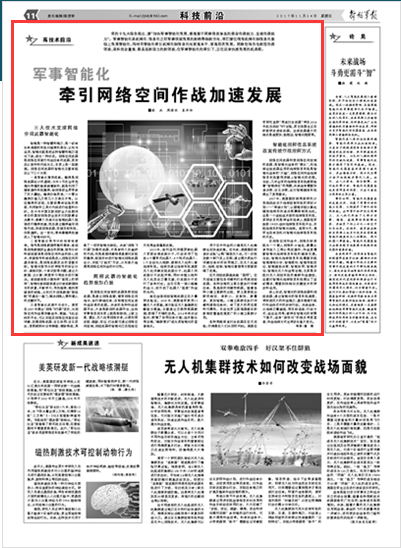
The report to the 19th National Congress of the Communist Party of China pointed out that it is necessary to “accelerate the development of military intelligence and improve joint operational capabilities and all-domain operational capabilities based on network information systems.” Today’s *PLA Daily* published an article stating that military intelligence is a new trend and direction in the development of the military field after mechanization and informatization. We must develop intelligence on the basis of existing mechanization and informatization, while using intelligence to drive mechanization and informatization to a higher level and a higher standard. Cyberspace, as a new operational domain, is a new field with high technological content and the greatest innovative vitality. Under the impetus of military intelligence, it is ushering in a period of rapid development opportunities.Illustration: Lei Yu

Military intelligence is driving the accelerated development of cyberspace operations.

■ Respected soldiers Zhou Dewang Huang Anwei

Three key technologies support the intelligentization of cyberspace weapons.

Intelligence is a kind of wisdom and capability; it is the perception, cognition, and application of laws by all systems with life cycles. Intelligentization is the solidification of this wisdom and capability into a state. Cyberspace weapons are weapons used to carry out combat missions in cyberspace. Their form is primarily software and code, essentially a piece of data. The intelligence of cyberspace weapons is mainly reflected in the following three aspects:

First, there’s intelligent vulnerability discovery. Vulnerabilities are the foundation of cyber weapon design. The ransomware that spread globally this May exploited a vulnerability in the Microsoft operating system, causing a huge shock in the cybersecurity community. Vulnerabilities are expensive, with a single zero-day vulnerability costing tens to hundreds of thousands of dollars. Previously, vulnerability discovery relied mainly on experienced hackers using software tools to inspect and analyze code. However, at the International Cybersecurity Technology Competition finals held during this year’s China Internet Security Conference, participants demonstrated how intelligent robots could discover vulnerabilities on-site, then use these vulnerabilities to write network code, creating cyber weapons to breach target systems and capture the flag. This change signifies that vulnerability discovery has entered the era of intelligent technology.

Second, intelligent signal analysis and cryptography. Signals are the carriers of network data transmission, and cryptography is the last line of defense for network data security. Signal analysis and cryptography are core technologies for cyberspace warfare. Breaking through signals and cryptography is the fundamental path to entering cyberspace and a primary target of cyber weapons attacks. Intelligent signal analysis solves problems such as signal protocol analysis, modulation identification, and individual identification through technologies such as big data, cloud computing, and deep learning. Cryptography is the “crown jewel” of computational science. Intelligent cryptography, through the accumulation of cryptographic data samples, continuously learns and searches for patterns to find the key to decryption, thereby opening the last door of the network data “safe” and solving the critical links of network intrusion and access.

Thirdly, there is the design of intelligent weapon platforms. In 2009, the U.S. military proposed the “Cyber ​​Aircraft” project, providing platforms similar to armored vehicles, ships, and aircraft for cyberspace operations. These platforms can automatically conduct reconnaissance, load cyber weapons, autonomously coordinate, and autonomously attack in cyberspace. When threatened, they can self-destruct and erase traces, exhibiting a certain degree of intelligence. In the future, the weapons loaded onto “Cyber ​​Aircraft” will not be pre-written code by software engineers, but rather intelligent cyber weapons will be designed in real-time based on discovered vulnerabilities, enabling “order-based” development and significantly improving the targeting of cyberspace operations.

The trend of intelligentization in network-controlled weapons is becoming increasingly prominent.

Weapons controlled by cyberspace, or cyber-controlled weapons, are weapons that connect to a network, receive commands from cyberspace, execute cross-domain missions, and achieve combat effects in physical space. Most future combat weapon platforms will be networked, making military information networks essentially the Internet of Things (IoT). These networks connect to satellites, radars, drones, and other network entities, enabling control from perception and detection to tracking, positioning, and strike. The intelligence of cyber-controlled weapons is rapidly developing across land, sea, air, space, and cyber domains.

In 2015, Syria used a Russian robotic force to defeat militants. The operation employed six tracked robots, four wheeled robots, an automated artillery corps, several drones, and a command system. Commanders used the command system to direct drones to locate militants, and the robots then charged, supported by artillery and drone fire, inflicting heavy casualties. This small-scale battle marked the beginning of robotic “team” operations.

Network-controlled intelligent weapons for naval and air battlefields are under extensive research and development and verification. In 2014, the U.S. Navy used 13 unmanned surface vessels to demonstrate and verify the interception of enemy ships by unmanned surface vessel swarms, mainly by exchanging sensor data, and achieved good results. When tested again in 2016, functions such as collaborative task allocation and tactical coordination were added, and “swarm awareness” became its prominent feature of intelligence.

The development of swarms of small, micro-sized drones for aerial combat is also rapid. In recent years, the U.S. Department of Defense has conducted multiple tests of the Partridge micro-drone, capable of deploying dozens or even hundreds at a time. By enhancing its coordination capabilities during reconnaissance missions, progress has been made in drone formation, command, control, and intelligent management.

Space-based cyber-control weapons are becoming increasingly “intelligent.” The space-based cyber-control domain primarily comprises two categories of weapons: reconnaissance and strike weapons. Satellites of various functions mainly perform reconnaissance missions and are typical reconnaissance sensors. With the emergence of various microsatellite constellations, satellites are exhibiting new characteristics: small size, rapid launch, large numbers, and greater intelligence. Microsatellite constellations offer greater flexibility and reliability in performing reconnaissance and communication missions, and currently, the world’s leading satellite powers are actively developing microsatellite constellation plans with broader coverage.

Various hypersonic strike weapons are cruising in the air, like a sword of Damocles hanging over people’s heads. The U.S. Air Force Research Laboratory stated that the “hypersonic strike weapon” will begin flight testing around 2018, and other countries are also actively developing similar weapons. The most prominent features of these weapons are their high speed, long range, and high level of intelligence.

Intelligent command information systems are changing traditional combat command methods.

Cyber ​​weapons and weapons controlled by cyberspace constitute the “fist” of intelligent warfare, while the command information systems that direct the use of these weapons are the “brain” of intelligent warfare. Cyberspace operational command information systems must keep pace with the process of intelligentization. Currently, almost all global command information systems face the challenge of “intelligent lag.” Future warfare requires rapid and autonomous decision-making, which places higher demands on intelligent support systems.

In 2007, the U.S. Defense Advanced Research Projects Agency (DARPA) launched the “Deep Green Program,” a research and development program for command and control systems, aiming to enable computer-aided commanders to make rapid decisions and gain a decisive advantage. This is a campaign-level command information system, developed to be embedded into the U.S. Army’s brigade-level C4ISR wartime command information system, enabling intelligent command by commanders. Even today, the U.S. military has not relaxed its development of intelligent command information systems.

In cyberspace warfare, network targets are represented by a single IP address accessing the network. Their sheer number makes efficient manual operation difficult, necessitating the support of intelligent command and information systems. Currently, intelligent command and information systems need to achieve functions such as intelligent intelligence analysis, intelligent sensing, intelligent navigation and positioning, intelligent decision support, intelligent collaboration, intelligent assessment, and intelligent unmanned combat. In particular, they must enable swarm operational control of unmanned network control systems. All of these requirements urgently demand intelligent command and information systems, necessitating accelerated research and development and application of relevant key technologies.

In conclusion, intelligent cyber weapons and network control weapons, coordinated through intelligent information systems, will form enormous combat capabilities, essentially enabling them to carry out all actions in current combat scenarios. Future warfare, from command force organization to target selection, action methods, and tactical applications, will all unfold within an intelligent context. The “gamification” of warfare will become more pronounced, and operational command methods will undergo significant changes.

In future battlefields, combat will require not only courage but also intelligence.

■ Yang Jian, Zhao Lu

Currently, artificial intelligence is entering a new stage of development and is rapidly penetrating various fields. Influenced by this process, military competition among nations surrounding intelligent technologies has begun. Our army has always been a brave and tenacious people’s army, determined to fight and win. On the future battlefield, we should continue to carry forward our glorious traditions while more broadly mastering and utilizing the latest technological achievements to develop more intelligent weapons and equipment, thereby gaining a decisive advantage on the future battlefield.

Intelligentization is a trend in human societal development, and intelligent warfare is rapidly approaching. The development of military intelligence has a solid foundation thanks to successful innovations that transcend existing computational models, the gradual popularization of nanotechnology, and breakthroughs in research on the mechanisms of the human brain. Consequently, intelligent weaponry is increasingly prominent, surpassing and even replacing human capabilities in areas such as intelligence analysis and combat response. Furthermore, intelligent weaponry offers significant advantages in terms of manpower requirements, comprehensive support, and operating costs, and is increasingly becoming the dominant force in warfare.

The development and application of intelligent weaponry have proven to expand the scope of military operations and significantly enhance the combat effectiveness of troops. In the battlefields of Afghanistan and Iraq, drones have undertaken most of the reconnaissance, intelligence, and surveillance support missions, and have been responsible for approximately one-third of the air strike missions. In the past two years, Russia has also repeatedly used highly intelligent unmanned reconnaissance aircraft and combat robots in the Syrian theater. Intelligent weaponry is increasingly demonstrating its significant value, surpassing that of traditional weapons.

In future wars, the contest of intelligent combat systems will be the key to victory in high-level competition and ultimate showdowns. As the development of technology-supported military means becomes increasingly uneven, whoever first acquires the capability to conduct intelligent warfare will be better positioned to seize the initiative on the battlefield. Those with a technological advantage will minimize the costs of war, while the weaker will inevitably suffer enormous losses and pay a heavy price. We must not only accelerate innovation in core technologies and the development of weaponry, but also research and explore organizational structures, command methods, and operational models adapted to the development of intelligent military operations. Furthermore, we must cultivate a talent pool capable of promoting intelligent military development and forging intelligent combat capabilities, fully leveraging the overall effectiveness of our military’s combat system, and winning wars in a more “intelligent” manner against our adversaries.

現代國語:

党的十九大报告指出,要“加快军事智能化发展,提高基于网络信息体系的联合作战能力、全域作战能力”。今天的《解放军报》刊发文章指出,军事智能化是机械化、信息化之后军事领域发展的新趋势和新方向,我们要在现有机械化和信息化基础上发展智能化,同时用智能化牵引机械化和信息化向更高水平、更高层次发展。网络空间作为新型作战领域,是科技含量高、最具创新活力的新领域,在军事智能化的牵引下,正在迎来快速发展的机遇期。制图:雷 煜

军事智能化牵引网络空间作战加速发展

■敬兵 周德旺 皇安伟

三大技术支撑网络空间武器智能化

智能是一种智慧和能力,是一切有生命周期的系统对规律的感应、认知与运用,智能化就是把这种智慧和能力固化下来,成为一种状态。网络空间武器是网络空间遂行作战任务的武器,其形态以软件和代码为主,本质上是一段数据。网络空间武器的智能化主要体现在以下三个方面:

一是智能化漏洞挖掘。漏洞是网络武器设计的基础,今年5月在全球范围内传播的勒索病毒软件,就是利用了微软操作系统漏洞,给网络安全界带来了巨大震动。漏洞价格昂贵,一个零日漏洞价值几万到几十万美元不等。以往漏洞的发现,主要依靠有经验的黑客,利用软件工具对代码进行检查和分析。在今年中国互联网安全大会期间举办的国际网络安全技术对抗联赛总决赛中,参赛人员演示由智能机器人现场进行漏洞挖掘,然后通过漏洞编写网络代码,形成网络武器,攻破目标系统,夺取旗帜。这一变化,意味着漏洞挖掘进入了智能化时代。

二是智能化信号分析和密码破译。信号是网络数据传输的载体,密码是网络数据安全最后的屏障,信号分析和密码破译是网络空间作战的核心技术,突破信号和密码是进入网络空间的基本路径,是网络武器攻击的首要目标。智能化信号分析将信号的协议分析、调制识别、个体识别等问题,通过大数据、云计算、深度学习等技术进行解决。密码破译是计算科学“皇冠上的明珠”,智能化密码破译通过对密码数据样本的积累,不断学习、寻找规律,能找到破译的钥匙,从而打开网络数据“保险柜”的最后一道门,解决网络入侵和接入的关键环节。

三是智能化武器平台设计。美军在2009年提出“网络飞行器”项目,为网络空间作战提供像战车、舰艇、飞机这样的平台,可以实现在网络空间里自动侦察、加载网络武器、自主协同、自主攻击,受到威胁时自我销毁、清除痕迹,具备了一定的智能化特征。未来“网络飞行器”加载的武器,不是软件人员编好的代码,而是根据侦察结果直接对发现的漏洞,现场实时进行智能化网络武器设计,实现“订购式”开发,从而极大地提高网络空间作战的针对性。

网控武器的智能化趋势愈加凸显

受网络空间控制的武器简称网控武器,是通过网络连接,接受网络空间指令,执行跨域任务,在物理空间达成作战效果的武器。未来的各种作战武器平台,大多是联网的武器平台,这样军事信息网本质上就是物联网,上联卫星、雷达、无人机等网络实体,从感知到发现、跟踪、定位、打击都可通过网络空间控制,网控武器的智能化已在陆海空天电等战场蓬勃发展。

2015年,叙利亚利用俄罗斯机器人军团击溃武装分子,行动采用了包括6个履带式机器人、4个轮式机器人、1个自动化火炮群、数架无人机和1套指挥系统。指挥员通过指挥系统调度无人机侦察发现武装分子,机器人向武装分子发起冲锋,同时伴随火炮和无人机攻击力量支援,对武装分子进行了致命打击。这仅仅是一场小规模的战斗,却开启了机器人“组团”作战的先河。

海空战场网控智能武器正在大量研发验证。2014年,美国海军使用13艘无人水面艇,演示验证无人艇集群拦截敌方舰艇,主要通过交换传感器数据,取得了不错的效果。2016年再次试验时,新增了协同任务分配、战术配合等功能,“蜂群意识”成为其智能化的显著特点。

用于空中作战的小微型无人机蜂群也在快速发展。近年来,美国国防部多次试验“山鹑”微型无人机,可一次投放数十架乃至上百架,通过提升其执行侦察任务时的协同能力,在无人机编队、指挥、控制、智能化管理等方面都取得了进展。

空天网控武器越来越“聪明”。空天领域主要包含侦察和打击两类网控武器,各种功能的卫星主要执行侦察任务,是典型的侦察传感器。随着各种小微卫星群的出现,使卫星表现出新的特征:体积小、发射快、数量多、更加智能。小微卫星群在执行侦察和通信任务时,有了更大的灵活度和可靠性,目前世界卫星强国都在积极制定覆盖范围更广的小微卫星群计划。

各种高超音速打击武器在空天巡航,仿佛悬在人们头顶的利剑。美国空军研究室称“高速打击武器”将在2018年前后启动飞行试验,其它各国也正在积极研发类似武器。这类武器最大的特点是速度快、航程远、智能化程度高。

智能化指挥信息系统改变传统作战指挥方式

网络空间武器和受网络空间控制的武器,是智能化战争的“拳头”,而指挥这些武器运用的指挥信息系统是智能化战争的“大脑”,网络空间作战指挥信息系统要同步跟上智能化的进程。当前,几乎全球的指挥信息系统都面临着“智能滞后”的难题,未来战争需要快速决策、自主决策,这对智能辅助系统提出了更高要求。

2007年,美国国防部高级研究计划局启动关于指挥控制系统的研发计划——“深绿计划”,以期能实现计算机辅助指挥员快速决策赢得制胜先机。这是一个战役战术级的指挥信息系统,其研发目的是将该系统嵌入美国陆军旅级C4ISR战时指挥信息系统中去,实现指挥员的智能化指挥。直到今天,美军也没有放松对智能化指挥信息系统的开发。

在网络空间作战中,网络目标表现为一个接入网络的IP地址,数量众多导致人工难以高效操作,作战更需要智能化指挥信息系统的辅助支撑。当前,智能化指挥信息系统需要实现智能情报分析、智能感知、智能导航定位、智能辅助决策、智能协同、智能评估、智能化无人作战等功能,尤其是实现对无人网控系统的集群作战操控,这都对智能化指挥信息系统提出了迫切需求,需要加快相应关键技术的研发和运用。

综上所述,智能化的网络武器和网控武器,通过智能化的信息系统调度,将形成巨大的作战能力,基本能遂行现行作战样式中的所有行动。未来战争,从指挥力量编组、到目标选择、行动方式、战法运用等,都将在智能化的背景下展开,战争“游戏化”的特点将更显著,作战指挥方式也将发生重大变化。

未来战场 斗勇更需斗“智”

■杨建 赵璐

当前,人工智能发展进入崭新阶段,并开始向各个领域加速渗透。受这一进程的影响,各国围绕智能化的军事竞争已拉开帷幕。我军历来是一支英勇顽强、敢打必胜的人民军队,未来战场上应继续发扬光荣传统,同时要更加广泛地掌握和利用最新的科技成果,研制出更多智能化的武器装备,在未来战场上掌握制胜先机。

智能化是人类社会发展的趋势,智能化战争正在加速到来。正是由于超越原有体系结构计算模型的成功创新、纳米制造技术的逐步普及,以及对人脑机理研究的突破性进展,军事智能化发展才拥有了坚实的基础。因此,智能化武器装备的表现日益突出,并在情报分析、战斗反应等方面开始超越并替代人类。此外,在人力需求、综合保障、运行成本等方面,智能化武器装备也具有明显的优势,正在日益成为战争的主导力量。

事实证明,智能化武器装备的发展应用,拓展了军事行动的能力范围,大幅提升了部队的作战效能。在阿富汗和伊拉克战场上,无人机已承担了大部分侦察、情报、监视等作战保障任务,并担负了约三分之一的空中打击任务。近两年,俄罗斯在叙利亚战场上也多次使用具有较高智能化程度的无人侦察机、战斗机器人等装备。智能化武器装备正在愈来愈多地展现出超越传统武器的重要价值。

未来战争中,作战体系智能化的较量将是高手过招、巅峰对决的制胜关键。随着以科技为支撑的军事手段发展的不平衡性越来越大,谁先具备实施智能化作战的能力,谁就更能掌握战场的主动权,拥有技术代差优势的强者会尽可能将战争成本降到最低,而弱者必然遭受巨大损失,付出惨重代价。我们不仅要加紧核心技术创新、武器装备研制,还要研究探索适应军事智能化发展的组织结构、指挥方式和运用模式,更要培养一支能够担起推进军事智能化发展、锻造智能化作战能力的人才队伍,充分发挥我军作战体系的整体效能,在与对手的较量中,以更加“智慧”的方式赢得战争。

中國原創軍事資源:http://www.81.cn/jwzl/2017-11/24/content_7841898885.htm

Chinese Military Operational Transition “Cyber Warfare” to “Mosaic Warfare”

中國軍事行動從「網路戰」轉型為「馬賽克戰」

現代英語:

Theory is the precursor of action. Strengthening innovation in combat concepts and promoting innovation in combat guidance have always been important ways for militaries around the world to develop military advantages. In recent years, the U.S. military has successively proposed cutting-edge combat theories such as “cyber warfare”“ and mosaic warfare”, in order to realize that the combat model “production relationship” can be more adapted to the development of combat capabilities “productivity”. Through comparative analysis of these two combat theories, the world can get a glimpse of the changes in the thinking of building the US military’s combat capabilities, especially the understanding of the winning mechanism “mosaic warfare”, so as to find targeted and effective checks and balances.

● From threat response to war design——

Active shaping and improvement of traction combat capability

“Threat-based ”or “capability-based” are two basic ways to build military combat capabilities.“ Threat-based ”reflecting demand traction and focusing on solving real-life problems in the near and medium term are the basic rules that the military should follow in building combat capabilities; “based on capabilities” embodying goal traction, aiming at future strategic missions, and supporting strategic concepts with new combat theories are the key to military combat capabilities. The only way to innovate and surpass. The development from “cyber warfare” to “mosaic warfare” reflects the differences and evolution of the internal laws of the above two approaches, and also reflects the changes in the thinking and concepts of the US military in promoting combat capability construction in recent years.

New changes in concept origin. Cyberspace was originally born to solve human communication needs. Later, it gradually evolved into a new combat domain independent of land, sea, air, and space. From this, a “cyber war” with the struggle for cyberspace control as the core was derived. In comparison, “mosaic warfare” is a new combat concept actively developed and designed by the US military in order to continue to maintain its strategic advantage and directly target competitors. Its formation process reflects the integration of demand traction and capability traction, and its strategy, initiative, and traction Sex is more prominent.

New ideas for the use of technology.“ Cyber warfare ”emphasis on supporting the transformation and implementation of combat concepts through the development of new generation technologies.“ Mosaic Warfare” breaks out of this model and does not place too much emphasis on the development of a new generation of equipment technology. It pays more attention to the rapid transformation of general military and civilian technologies and the incremental iteration of mature technologies. The basic idea is to build on existing equipment and follow the application concepts of service platforms such as online ride-hailing and crowdfunding development. Through module upgrades and intelligent transformation, various combat system units “mosaicization” will be transformed into single-function, flexible Assemble and replaceable “building blocks” or “pixels” to build a dynamically coordinated, highly autonomous, and seamlessly integrated combat system Embodied new technology-driven ideas.

Path Development New Design.“ Cyber warfare ”as a companion concept to the network space, wherever the network space develops, “cyber warfare” will follow suit. Generally speaking, “objective” material conditions will be considered first, and then “subjective” conceptual design will be carried out. It has strong dependence on path development.“ Mosaic warfare ”first from “subjective” to “objective”, by developing a force design model that can dynamically adjust the functional structure, it can adapt to different combat needs and changes in the battlefield environment.

It can be seen that “mosaic warfare” has clearer goals, more mature technology, and more reliable paths than previous combat concepts such as “cyber warfare”, reflecting the change in thinking actively shaped by the US military.

● From network center to decision center——

Group intelligence to achieve optimal system energy release

AI technology is a key variable in the information age and a core increment in the development of the “mosaic warfare” system.“ Cyber warfare ”emphasis on “network center”, “mosaic warfare” closely focuses on the core of artificial intelligence technology, adjusts the key to victory from “network center” to “decision-making center”, and changes the combat system structure from system level and platform level Joint transformation to functional level and factor level integration, seeking to fully gather energy in the network The “group intelligence technology” realizes the optimal release of the system and gives new connotation to the war winning mechanism in the intelligent era.

Use “fast” to control “slow” to seize the cognitive lead. In future wars, the battlefield situation will change rapidly, and the weight of time factors will continue to increase. “Fast” versus “Slow” can form a combat strike effect that is approximately dimensionally reduced.“ Mosaic War ” By using data information technology and artificial intelligence technology, we can improve the single-ring decision-making speed of our own “OODA” ring, expand the breadth of parallel decision-making, reduce the granularity of group decision-making, accelerate the progress of system operations, and create an overall one-step faster “First move” situation, aiming to firmly control the dominance of cognitive decision-making on the battlefield.

With “low” system “high”, we accumulate cost advantages. Different from the traditional combat concept of pursuing high-end weapon platforms, “mosaic warfare” focuses on using artificial intelligence technology to tap the potential and increase efficiency of existing weapon platforms and combat resources. By loading and operating intelligent algorithms and specific functional modules on many mid-to-low-end weapon platforms, it can achieve combat performance comparable to high-end weapon platforms, overall improving the cost-effectiveness ratio of the input and output of the weapon platform, thereby accumulating cost advantages.

To “disperse” control “gather” and seek sustainable survival. “ Mosaic Warfare ” emphasizes the adoption of decentralized ideas and asymmetric checks and balances, using an open system architecture, and decentralized configuration of various functions such as reconnaissance, positioning, communication, and strike on various manned/unmanned platforms to achieve power. Distributed deployment. At the same time, relying on intelligent algorithms to improve the self-organization, self-coordination, and independent attack capabilities of each platform to achieve dispersion and concentration of firepower. When some combat platforms are eliminated, interfered with or stripped away, the entire combat system can still operate normally, thereby enhancing the continued viability of the battlefield of the force cluster.

Use “movement” to control “stillness” to improve system flexibility. “ Mosaic warfare ” emphasizes further breaking through the barriers of various combat areas. By turning the fixed “kill chain” in different combat domains into a dynamically reconfigurable “kill net”, the “OODA” large ring is disassembled into small rings, and the single ring is differentiated into multiple rings. According to changes in combat processes and combat requirements, intelligent networking is relied on to realize the split-in-movement, call-in-movement and combination of combat forces. In this way, on the one hand, it can enhance the flexibility and adaptability of the combat system; on the other hand, it can also hedge and offset the node aggregation effect of complex networks, making it difficult for opponents to find key nodes to defeat their own systems.

“Mosaic warfare” provides a reference prototype for intelligent operations. But at the same time, as an idealized force design and application framework, “mosaic warfare” still needs closely related technical, doctrinal, policy and other supporting support. There is still a long way to go before it is fully realized, and it is consistent with traditional combat systems. The coexistence situation will exist for a long time.

● From factor integration to system restructuring——

Dynamic structure to enhance combat system flexibility

Structure and relationships often determine function and nature.“ Cyber warfare ”and “mosaic warfare” are built on the common material foundation of the information age and follow the same evolutionary paradigm, but the principles and effects of system construction are different.“ The system structure formed by cyber warfare” is statically deconstructable, while “mosaic warfare” dynamically combines functional units according to certain construction rules to form a flexible system structure with self-organizing and adaptive characteristics, similar to a “dynamic black box”, which is difficult to follow with conventional means. predict. And this flexible structure often “emerges” new capabilities to empower and increase effectiveness in the combat system.

The integrated development of network and cloud makes combat time and space more dynamic and malleable. The Internet and the cloud are the basic environment for the operation of the information combat system. They reshape the process elements of intelligence, accusation, strike, and support in traditional operations, and at the same time derive new combat time and space.“ Cyber warfare ”mainly focusing on network space, its combat time and space are relatively static.“ Mosaic warfare ” is not limited to a single combat space. Under the development trend of information infrastructure network following cloud movement and cloud network integration, tangible and intangible spaces can be further deep-linked. The boundaries between combat time and space are more flexible, and the allocation of combat resources is more flexible, the combat system structure is more dynamic.

Data flows across domains, making operational control more seamlessly coordinated. In the “Command and Control” link, “cyber warfare” focuses on the command and control of combat units by joint combat command agencies. Cross-domain exchange and flow of data is mainly concentrated on the theater battlefield.“ Mosaic warfare ”further sinks the level of joint operations to the tactical end. Through the autonomous cross-domain exchange and seamless flow of data at the tactical level, various data islands can be clustered into data clusters on demand, thereby producing a significant “spillover” effect, making the dynamic, discrete, agile, and parallel characteristics of the combat command control loop more obvious, and more conducive to achieving agile connection of each combat unit on demand Efficiently act in concert.

Algorithm full-dimensional penetration makes system operation more autonomous and efficient. Algorithms are the mapping of human consciousness in cyberspace, forming two basic forms: compilation codes transformed by intention and neural networks transformed by knowledge. In “cyber warfare”, compiled code is widely used, and neural networks are only used locally. In “Mosaic Warfare”, the algorithm expands the two key functions of shaping rules and providing engines, and the breadth and depth of application are more prominent. Shaping rules is mainly based on compilation code, supplemented by neural networks, to construct the process framework and operating logic of the “mosaic warfare” system, laying a structural foundation for its uncertainty, adaptability and ability “emergence”; the provision engine mainly integrates intelligent algorithms The model is distributed to the edge elements to operate, forming a knowledge diffusion effect, thereby comprehensively improving the intelligent autonomous combat capabilities of the “mosaic warfare” system.

The side end releases energy independently, making the combat style more flexible and polymorphic. The edge is an abstract model of various manned/unmanned combat functional units and a direct source of systemic capabilities “emergence”.“ Cyber warfare ”in a system where edge elements are closely coupled with superior and subordinate accusation processes and are in a state of precise control.“ In the mosaic warfare” system, the perception, interaction, reasoning, and decision-making capabilities of edge-end elements are greatly improved. Its “OODA” ring does not need to be linked back to the superior command structure, which is conducive to supporting the formation of a decentralized combat cluster with high and low matching and manned/unmanned combination. form, which can give edge-end elements more self-organizing authority and significantly enhance the battlefield confrontation advantage.

It can be seen that if “cyber warfare” is called a sophisticated war machine, “mosaic warfare” can be regarded as a complex “ecology” that can stimulate the dynamic growth of combat capabilities. New changes in network clouds, data, algorithms, and edges have contributed to The formation of a dynamically complex “system structure”. This structure in turn reversely regulates elements, platforms and systems, and new capabilities continue to emerge, playing an important role in enhancing and evolving the combat system.

● From “system breaking to compound confrontation——”

To analyse the advantages and disadvantages and seek effective checks and balances

“Mosaic warfare” represents to a certain extent the possible direction of the future development of joint operations. It is necessary to fully analyze and grasp the winning mechanism of “mosaic warfare”, shape the field of information and communication as a new quality and new domain that breaks the traditional boundaries of war time and space, create a new concept of network cloud-enabled combat, build and strengthen the support and support capabilities of national defense information infrastructure, and highlight military information network security defense capabilities, enhance the minimum support capabilities for the operation of strategic campaign command organizations, and continuously improve the network information system.

On the other hand, the emergence of the “mosaic warfare” theory makes it difficult for traditional combat methods to attack target nodes with limited capture and control to achieve the system-breaking effect of breaking points and breaking chains. But it should be noted that any system has its inherent contradictions, and the seemingly “impeccable” decentralized structure of “mosaic warfare” can still find ways to effectively crack it. For example, grasp its system complexity characteristics, use its correlation dependence, highlight the functional suppression of communication networks, construct network-electrical composite attack paths, and achieve disassembly and isolation of various units of the combat system; grasp its structural dissipation characteristics, and use Its external information dependence highlights the disguise and misleading of information data, prompting the combat system to transform into abnormal states such as information closure and information overload; Grasp its group autonomy characteristics, use its key technology dependence, highlight the confrontation and efficiency reduction of intelligent algorithms, and suppress the intelligent internal drive of each combat unit; grasp its functional non-linear characteristics, use its unknown vulnerabilities, and highlight battlefield differentiation Strike assessment, test and discover operational system imbalances with higher efficiency and faster speed, and find key weaknesses in system attack.

(Author’s unit: Unit 61001)

現代國語:

編者按

理論是行動的先導。加強作戰概念創新、推動作戰指導革新,歷來是世界各國軍隊培塑軍事優勢的重要途徑。近年來,美軍先後提出「賽博戰」「馬賽克戰」等前線作戰理論,以期實現作戰模式這一「生產關系」能夠更加適應作戰能力這一「生產力」的發展。透過對比分析這兩種作戰理論,世人可以一窺美軍作戰能力建設思路的變化,特別是認清「馬賽克戰」的製勝機理,從而有的放矢,找到有效制衡之策。

●從威脅應對到戰爭設計——

主動塑造,牽引作戰能力提升

「基於威脅」或「基於能力」是軍隊作戰能力建設的兩條基本途徑。 「基於威脅」體現需求牽引,聚焦解決近中期現實問題,是軍隊作戰能力建設應遵循的基本規律;「基於能力」體現目標牽引,瞄準未來戰略使命,以新作戰理論支撐戰略構想,是軍隊作戰能力創新超越的必由之路。從「賽博戰」向「馬賽克戰」的發展,體現了上述兩種途徑內在規律的差異與演進,也反映出美軍近年來推進作戰能力建設思維理念的變化。

概念發端新變化。網絡空間,最初為解決人類的通訊需求而生,後來逐漸演變為一個獨立於陸、海、空、天之外的新作戰域,由此衍生出以爭奪網絡空間制權為核心的「賽博戰」。與之相比,「馬賽克戰」是美軍為繼續保持戰略優勢地位,直接瞄準競爭對手而主動開發設計的新作戰概念,其形成過程體現了需求牽引與能力牽引的融合,戰略性、主動性、牽引性更加突顯。

技術運用新思路。 「賽博戰」強調,透過研發新世代技術支撐作戰概念轉化落地。 「馬賽克戰」則跳出這個模式,不過分強調研發新一代裝備技術,更加關注對軍民通用技術的快速轉化,對成熟技術的漸進迭代。其基本想法是立足現有裝備,按照類似網約車、眾籌開發等服務類平台的運用理念,通過模塊升級和智能化改造,將各類作戰系統單元“馬賽克化”為功能單一、靈活拼裝、便於替換的“積木”或“像素”,構建形成動態協調、高度自主、無縫融合的作戰體系,體現了新的技術驅動。

路徑發展新設計。 「賽博戰」作為網電空間的伴生概念,網電空間發展到哪裡,「賽博戰」就跟進到哪裡,總體上先考慮「客觀」的物質條件,再進行「主觀」的概念設計,在路徑發展上具有較強的依附性。 「馬賽克戰」則先由「主觀」再到「客觀」,透過開發可動態調整功能結構的兵力設計模型,使其能夠適應不同作戰需求及戰場環境變化。

由此可見,「馬賽克戰」相比「賽博戰」等過去作戰概念,其目標更加明確、技術更加成熟、路徑更加可靠,體現出美軍主動塑造的思路轉變。

●從網絡中心到決策中心—

群體智能,實現體系最優釋能

人工智慧技術是資訊時代的關鍵變量,也是「馬賽克戰」體系發展的核心增量。 《賽博戰》強調“網絡中心”,“馬賽克戰”則緊緊扭住人工智能技術這一核心,將製勝關鍵從“網絡中心”調整為“決策中心”,將作戰體系架構由系統級、平台級聯合轉變為功能級、要素級融合,謀求在網絡充分聚能的前提下,以群體性智能技術實現體系最優釋能,為勝理的戰爭賦予新涵機時代。

以“快”制“慢”,奪取認知先手。未來戰爭,戰場形勢瞬息萬變,時間要素的權重不斷上升,「快」對「慢」可以形成近似降維的作戰打擊效果。 「馬賽克戰」透過運用數據資訊技術與人工智慧技術,提升己方「OODA」環的單環決策速度,拓展並行決策廣度,降低組環決策粒度,加快體係作戰進度,在整體上塑造始終快人一步的「先手棋」態勢,旨在牢牢控制戰場認知決策的主導權。

以“低”制“高”,積累成本優勢。與追求高端武器平台的傳統作戰概念不同,「馬賽克戰」著重於利用人工智慧技術對現有武器平台及作戰資源的挖潛增效。透過在眾多中低階武器平台上加載運行智慧演算法和特定功能模塊,使其達到媲美高端武器平台的作戰性能,整體上提高了武器平台投入產出的效費比,進而積累形成成本優勢。

以“散”制“聚”,謀求持續生存。 「馬賽克戰」強調採用化整為零的去中心化思路和非對稱制衡理念,使用開放系統架構,在各類有人/無人平台上分散配置偵察、定位、通信、打擊等各類功能,實現力量的分佈式部署。同時,依托智能演算法提升各平台的自組織、自協同、自主攻擊能力,實現形散神聚、火力集中。當部分作戰平台被消滅、幹擾或剝離後,整個作戰體系仍能正常運轉,從而增強兵力集群的戰場持續生存能力。

以“動”制“靜”,提升體系彈性。 「馬賽克戰」強調進一步突破各作戰域壁壘。通過把不同作戰域中固定的“殺傷鏈”變成可動態重構的“殺傷網”,將“OODA”大環拆解為小環,單環分化為多環。根據作戰進程和作戰需求的變化,依托智能組網實現作戰力量的動中拆分、動中調用、動中組合。如此,一方面可增強作戰體系的靈活性、適應性;另一方面還可對沖抵消複雜網絡的節點聚集效應,使對手難以找到破擊己方體系的關鍵節點。

「馬賽克戰」為智慧化作戰提供了一種可藉鑑的參考原型。但同時,作為一種理想化的兵力設計和運用框架,「馬賽克戰」還需要與之緊密相關的技術、條令、政策等配套支持,距離完全實現還有很長的路要走,與傳統作戰體系共存的局面將長期存在。

●從要素整合到體系重組—

動態結構,增強作戰體係彈性

結構和關系往往決定功能和性質。 「賽博戰」與「馬賽克戰」建構於資訊時代共同的物質基礎,遵循相同的演進範式,但體系建構的原理和效果有所不同。 「賽博戰」形成的體系結構靜態可解構,而「馬賽克戰」則按照一定構建規則動態組合功能單元,形成具有自組織、自適應特徵的彈性體系結構,類似一種“動態黑箱”,常規手段難以跟踪預測。而這一彈性結構常會「湧現」出新的能力,為作戰體系賦能增效。

網雲融合發展,使作戰時空更動態可塑。網和雲是資訊化作戰體系運作的基礎環境,重塑了傳統作戰中情報、指控、打擊、保障的流程要素,同時衍生出新的作戰時空。 「賽博戰」主要聚焦網電空間,其作戰時空相對靜態。 「馬賽克戰」則不限於單一作戰空間,在資訊基礎設施網隨雲動、雲網一體的發展趨勢下,可進一步深度鉸鏈有形無形空間,作戰時空邊界更有彈性,作戰資源配置更加靈活,作戰體系結構更具動態。

數據跨域流轉,使作戰控制更加無縫協同。在指揮控制環節,「賽博戰」關注的重點是聯合作戰指揮機構對作戰單元的指揮控制,數據跨域交換流轉主要集中在戰區戰場。 「馬賽克戰」則進一步將聯合作戰的層級下沉至戰術末端,通過數據在戰術層面的自主跨域交換和無縫流轉,實現各類數據孤島按需集聚為數據集群,進而產生顯著的「溢出」效應,讓作戰指揮控制環路動態、離散、敏捷、並行的特徵更為明顯,更加有利於實現各作戰單元按需銜接、高效協同行動。

演算法全維滲透,使體系運作更加自主高效。演算法是人的意識在網絡空間的映射,形成了由意圖轉化的編譯代碼和由知識轉化的神經網絡兩種基本形態。在「賽博戰」中,編譯代碼大量應用,神經網絡只在局部應用。在「馬賽克戰」中,演算法擴展出塑造規則、提供引擎兩項關鍵職能,運用的廣度深度更加突出。塑造規則以編譯代碼為主,輔以神經網絡,構造「馬賽克戰」體系的流程框架和運行邏輯,為其不確定性、適應性和能力「湧現」性奠定結構基礎;提供引擎則主要將智能演算法模型分發至邊端要素運行,形成知識擴散效應,從而全面提升「馬賽克戰」體系的智能自主作戰能力。

邊端自主釋能,使作戰樣式更靈活多態。邊端是各類有人/無人作戰功能單元的抽像模型,也是體系能力「湧現」的直接來源。 「賽博戰」體系中,邊端要素與上下級指控流程緊密耦合,處於精確受控狀態。 「馬賽克戰」體系中,邊端要素的感知、交互、推理、決策能力大大提升,其「OODA」環不必回鏈至上級指揮機構,有利於支撐形成高低搭配、有人/無人結合的去中心化作戰集群形態,可以賦予邊端要素更多自組織權限,明顯增強了戰場對抗優勢。

可見,如果稱“賽博戰”為精密的戰爭機器,“馬賽克戰”則可以視為一種能夠激發作戰能力動態生長的復雜“生態”,網雲、數據、算法、邊端所產生的新變化,促進形成了動態復雜的“體系結構”。這一結構又反向調控要素、平台和系統,不斷湧現新的能力,為作戰體系增能、演變發揮重要作用。

●從體系破擊到復合對抗——

辨析優劣,尋求有效制衡之策

「馬賽克戰」某種程度上代表著未來聯合作戰形態發展的可能方向。應當充分研析把握「馬賽克戰」的製勝機理,將資訊通信領域作為打破傳統戰爭時空界限的新質新域加以塑造,打造網雲賦能作戰新概念,建強國防資訊基礎設施支撐保障能力,突顯軍事資訊網安全防禦能力,增強戰略戰役指揮機構運行的保底支撐能力,不斷完善網絡資訊體系。

另一方面,「馬賽克戰」理論的出現,使得打擊奪控有限目標節點的傳統作戰手段,難以達成毀點斷鏈的體系破擊效果。但應當看到,任何體係都有其固有矛盾,「馬賽克戰」看似「無懈可擊」的去中心化結構,仍可以找到有效破解的方法路徑。例如,掌握其體系複雜性特徵,利用其關聯關係依賴性,突出針對通信網絡的功能抑制,構建網電復合攻擊路徑,實現對作戰體系各單元的拆解孤立;把握其結構耗散性特徵,利用其外部信息依賴性,突出針對信息數據的偽裝誤導,促使作戰體係向信息封閉、信息過載等非正常狀態轉化;掌握其群體自主性特徵,利用其關鍵技術依賴性,突出針對智能算法的對抗降效,抑制各作戰單元的智能內驅力;把握其功能非線性特徵,利用其未知脆弱性,突出戰場差異化打擊評估,以更高的效率和更快的速度失衡、發現作戰體系擊點,尋找體系破擊的關鍵弱點。

(作者單位:61001部隊

中國原創軍事資源:http://www.mod.gov.cn/gfbw/jmsd/4894734888.html?big=fan