Category Archives: #Artificial #Intelligence

Future Proofing China’s National Defense & Military An Important Aspect of Chinese-style Modernization

面向未來的中國國防和軍隊是中國式現代化的重要面向

現代英語:
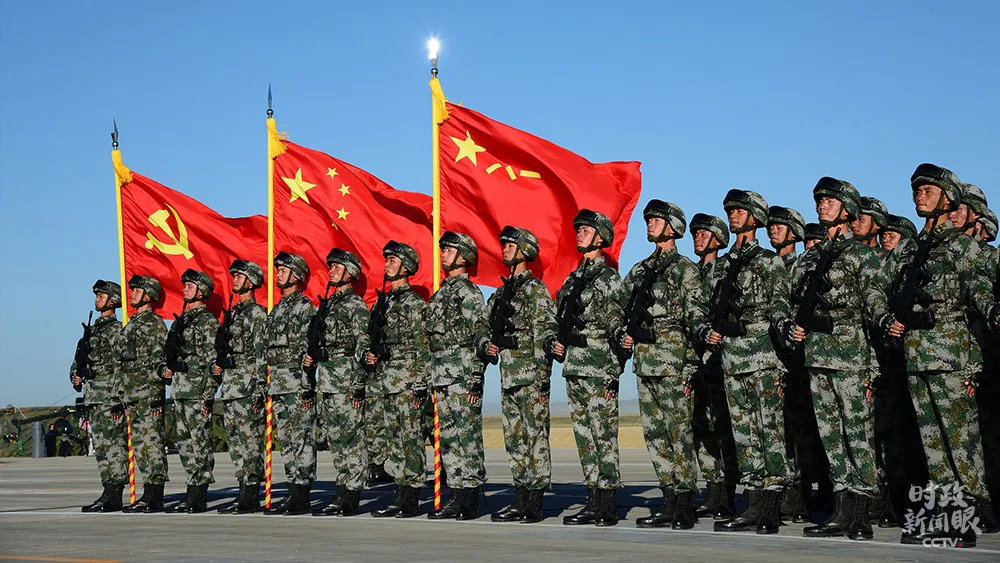
Soldiers are a major event for the country. In the great journey of “building a powerful country and rejuvenating the nation, and against the background of the accelerated evolution of major changes unseen in the world in a century, building and consolidating national defense and a strong people’s army are directly related to the future and destiny of the country and the nation”. The Third Plenary Session of the 20th Central Committee of the Communist Party of China pointed out that “national defense and military modernization are important components of Chinese-style modernization”, which fully reflects the great importance that the Party Central Committee with Comrade Xi Jinping as the core attaches to national defense and military construction, and provides guidance for national defense and military modernization on the new journey. Modernization points out the direction.

  The modernization of the national defense and military is the security guarantee and strategic support for Chinese-style modernization

  ”If you fall behind, you will be beaten. Only when the army is strong can the country be safe”. Without a strong army, there can be no strong state. After the Opium War in 1840, modern China was repeatedly defeated in its battles with Western powers. The vast country gradually became a semi-colonial and semi-feudal society, with the country humiliated, the people in trouble, and civilization in dust. History has inspired us that the Chinese nation’s emergence from suffering and the liberation of the Chinese people depend on a heroic people’s army; to comprehensively promote the great cause of building a powerful country and national rejuvenation with Chinese-style modernization, we must place national defense and military modernization as a barrier to national security, plan and deploy in strategic positions based on career development, and accelerate the construction and consolidation of national defense and a strong people’s army.

  The modernization of the national defense and military is closely linked and internally unified with Chinese-style modernization. Without the modernization of national defense and the military, there would be no Chinese-style modernization. Comrade Mao Zedong once profoundly pointed out “the original requirements for building socialism were industrial modernization, agricultural modernization, scientific and cultural modernization, and now we must add national defense modernization”; Comrade Deng Xiaoping also emphasized “four modernizations, one of which is national defense modernization”, these all reflect the great importance our party attaches to national defense and military construction.

  Since the 18th National Congress of the Communist Party of China, President Xi has always adhered to the integrated operation of strengthening the country and the military, put national defense and military modernization in the chess game of Chinese-style modernization, and opened up the road to strengthening the military with Chinese characteristics, forming a new strategy for national defense and military modernization by 2027, 2035, and the middle of this century, a new “three-step” strategy for national defense and military modernization that connects near, medium and long-term goals Created a new situation in the cause of strengthening the military. Guided by the party’s goal of strengthening the military in the new era, we will comprehensively implement the strategy of reforming and strengthening the military, promote the reform of the leadership and command system, the reform of scale structure and force organization, and the reform of military policies and systems. Our military’s organizational structure will achieve historic changes, and the force system will achieve revolutionary changes. Reshaping, the basic framework of the socialist military policy system with Chinese characteristics has been constructed and formed. Our military system has been completely new, its structure has been completely new, its pattern has been completely new, and its appearance has been completely new It has laid a solid foundation for the modernization of national defence and the army.

  Military means, as a means of guaranteeing the realization of great dreams, can only stop a war if it can be fought. The current and future periods are critical periods for comprehensively promoting the great cause of building a powerful country and rejuvenating the nation through Chinese-style modernization, and will inevitably encounter various risks, challenges and even turbulent waves. We must comprehensively modernize our national defense and military, build the People’s Army into a world-class military, effectively guarantee Chinese-style modernization, and safeguard national sovereignty, security, and development interests.

   Comprehensive and accurate grasp of the scientific connotation of national defense and military modernization

  Since the 18th National Congress of the Communist Party of China, President Xi has issued a series of important expositions around “Chinese-style modernization”, summarizing the Chinese characteristics, essential requirements and major principles for the formation of Chinese-style modernization, building a theoretical system for Chinese-style modernization, and promoting the new era and new journey. Chinese-style modernization provides scientific guidance and also carries out strategic design and scientific deployment for national defense and military modernization.

  The most fundamental thing about modernizing the national defense and military is to uphold the absolute leadership of the party over the military. The leadership of the Party is the fundamental guarantee of Chinese-style modernization, which determines the fundamental nature of Chinese-style modernization, and it must also determine the fundamental nature of national defense and military modernization. To promote the modernization of national defense and the military on the new journey, we must fully implement a series of fundamental principles and systems for the party to lead the people’s army, comprehensively and thoroughly implement the chairman’s responsibility system of the Military Commission, and effectively unify thoughts and actions into the decisions and arrangements of the Party Central Committee and President Xi; Adhere to the party’s management of cadres and talents, and highlight political standards and combat capabilities Ensure that the barrel of the gun is always in the hands of those who are loyal and reliable to the party; improve the comprehensive and strict governance of the party system, enhance the political and organizational functions of party organizations at all levels, and integrate the party’s leadership throughout the entire process of continuing to deepen national defense and military reforms in all aspects.
  To modernize national defense and the military is to modernize military doctrine, military organization, military personnel, and weapons and equipment. This reflects the inherent requirements for the construction of military forces resulting from changes in the concept of victory in modern warfare, elements of victory and methods of victory, and clarifies the main signs of the basic realization of national defence and military modernization. To realize the modernization of military theory is to keep pace with the times, innovate war and strategic guidance, and form a military theoretical system that is contemporary, leading, and unique; to realize the modernization of organizational form is to deepen the reform of national defense and the military, and the military force structure layout is scientific and reasonable, strategic deterrence capabilities are consolidated and improved, new areas and new quality combat forces continue to grow, and elite operations, system support, and joint victory have become the basic application models; To realize the modernization of military personnel is to deeply implement the strategy of strengthening the military with talents in the new era, promote the comprehensive transformation and upgrading of military personnel’s capabilities, structural layout, and development management, and forge high-quality, professional new military talents with both ability and political integrity; to realize the modernization of weapons and equipment, It is necessary to focus on strengthening national defense scientific and technological innovation and accelerating the development of strategic, cutting-edge and disruptive technologies Accelerate the upgrading of weapons and equipment and the development of intelligent weapons and equipment.

  For the modernization of national defence and the military, we must adhere to the integrated development of mechanization, informatization and intelligence. The military conflicts and local wars that have taken place in recent years have shown that new qualitative combat capabilities generated based on intelligent combat systems are increasingly becoming core military capabilities. Based on mechanization, dominated by informatization, and oriented by intelligence, the three superimpose, penetrate, and support each other, jointly giving rise to new forms of warfare and methods of warfare. Only by accelerating the integrated development of mechanization, informatization and intelligence and keeping up with the new military revolutionary trends in the world can we seize the opportunity and take the initiative in seizing the commanding heights of the military struggle.

  The modernization of national defence and the army is a guarantee of security for insisting on the path of peaceful development. Since ancient times, soldiers have not been warlike. Chinese-style modernization is modernization on the path of peaceful development. Building a consolidated national defense and a strong military commensurate with international status and national security and development interests is a strategic task of China’s socialist modernization drive and an insistence on taking the path of peaceful development. Safety guarantee is an inevitable choice for summarizing historical experience. China has always pursued a defensive defence policy and adhered to the strategic idea of active defence, and no matter how far it develops, China will never seek hegemony or engage in expansion. To promote the modernization of national defense and the military on the “new journey”, we must faithfully implement the concept of a community with a shared future for mankind, resolutely oppose all forms of hegemony and bullying, and contribute China’s strength to building a beautiful world of lasting peace and universal security.

   Advancing the modernization of national defence and the military at a new historical starting point

  The Third Plenary Session of the 20th Central Committee of the Communist Party of China included “continuous deepening of national defense and military reforms into the overall plan for further comprehensive deepening of reforms, and made a series of major strategic arrangements for improving the leadership and management system and mechanism of the people’s army, deepening the reform of the joint operations system, and deepening cross-military and civilian reforms”. On the new journey, we must deeply understand and grasp the themes, major principles, major measures, and fundamental guarantees for further comprehensively deepening reforms, resolutely implement the new “three-step” strategy for national defense and military modernization, and accelerate the modernization of military theory, military organizational form, and military personnel. Modernize and modernize weapons and equipment, and lead the modernization of national defense and the military to move forward with better strategies, higher efficiency, and faster speed.

  Strengthening the Party’s theoretical and scientific leadership in military guidance. Our party insists on combining the basic principles of Marxism with the practice of building the people’s army, absorbing the essence of China’s excellent traditional military culture, and constantly exploring new realms in the development of contemporary Chinese Marxist military theory and military practice. As an important part of Xi Jinping Thought on Socialism with Chinese Characteristics for a New Era, Xi Jinping Thought on Strengthening the Military has achieved a new leap forward in the Sinicization and modernization of Marxist military theory. It is the fundamental guiding ideology of our party building and military governance in the new era. We must unremittingly arm our minds with Xi Jinping Thought on Socialism with Chinese Characteristics for a New Era, further firmly establish the guiding position of Xi Jinping Thought on Strengthening the Military in national defense and military construction, and build and consolidate national defense and a strong people’s army under the guidance of Xi Jinping Thought on Strengthening the Military. Take new and greater steps on the road to strengthening the military with Chinese characteristics.

  Efforts should be made to make the main responsibility and business of war preparation more solid and effective. The People’s Army is an armed group that performs the party’s political tasks. It must be both politically strong and capable. In the final analysis, this ability can win wars. To accelerate the modernization of national defense and the military, we must firmly grasp the fundamental direction of winning wars, establish the only fundamental standard of combat effectiveness, focus all our energy on fighting wars, and work hard on fighting wars. Conscientiously implement the military strategic policy for the new era, operate war preparation and cessation, deterrence and actual combat, war operations and the use of military forces in peacetime as a whole, innovate strategies, tactics and tactics, effectively shape the situation, manage crises, contain wars, and win wars. Adhere to the principle of “training troops as they fight, and comprehensively improve the actual combat level of military training and the ability to perform missions and tasks”.

  Promote high-quality development of national defense and military construction through “reform and innovation”. Reform is a key move that will determine the growth of our army and its future. On the new journey, we must put innovation at the core of the overall military construction and development, transform development concepts, innovate development models, enhance development momentum, and promote the transformation of national defense and military modernization from quantitative growth to qualitative improvement. Focus on integrating national defense and military construction into the national economic and social development system on a wider scale, at a higher level, and to a deeper extent, continuously improve the quality and efficiency of national defense and military modernization, promote the simultaneous improvement of national defense strength and economic strength, and consolidate and improve the integration National strategic system and capabilities, and constantly write a new chapter of strengthening the country and the military.

現代國語:

時間:2024年11月15日 08:20 來源:解放軍報
兵者,國之大事。在強國建設、民族復興偉大征程中,在世界百年未有之大變局加速演進的背景下,建構鞏固國防和強大人民軍隊直接關係國家和民族的前途命運。黨的二十屆三中全會指出,“國防和軍隊現代化是中國式現代化的重要組成部分”,充分體現了以習近平同志為核心的黨中央對國防和軍隊建設的高度重視,為新征程上國防和軍隊現代化建設指明了方向。

國防與軍隊現代化是中國式現代化的安全保障與戰略支撐

落後就要挨打,軍強才能國安。沒有一支強大的軍隊,就不可能有強大的國家。 1840年鴉片戰爭以後,近代中國在與西方列強的較量中屢屢戰敗,泱泱大國逐步淪為半殖民地半封建社會,國家蒙辱、人民蒙難、文明蒙塵。歷史啟示我們,中華民族走出苦難、中國人民實現解放,有賴於一支英雄的人民軍隊;以中國式現代化全面推進強國建設、民族復興偉業,必須把國防和軍隊現代化擺在國家安全之屏障、事業發展之依託的戰略位置來策劃和部署,加快建設鞏固國防和強大人民軍隊。

國防與軍隊現代化與中國式現代化緊密聯繫、內在統一。沒有國防和軍隊的現代化,就沒有中國式現代化。毛澤東同誌曾深刻指出“建設社會主義,原來要求是工業現代化,農業現代化,科學文化現代化,現在要加上國防現代化”;鄧小平同志也曾強調“四個現代化,其中就有一個國防現代化”,這些都體現了我們黨對國防和軍隊建設的高度重視。

黨的十八大以來,習主席始終堅持強國強軍一體運籌,把國防和軍隊現代化放在中國式現代化大棋局中謀劃推進,開闢出中國特色強軍之路,形成了到2027年、2035年、本世紀中葉,近、中、遠目標梯次行動」,開創三步和現代化軍階的國防和軍事戰略。以黨在新時代的強軍目標為引領,全面實施改革強軍戰略,推進領導指揮體制改革、規模結構和力量編成改革、軍事政策制度改革,我軍組織架構實現歷史性變革,力量體系實現革命性重塑,中國特色社會主義軍事政策制度體系基本框架構建形成,我軍體制一新、結構一新、一新、一現代化新格局新化,為國防和軍事基礎一化。

軍事手段作為實現偉大夢想的保底手段,能戰方能止戰。當前和今後一個時期,是以中國式現代化全面推進強國建設、民族復興偉業的關鍵時期,必然會遇到各種風險挑戰甚至驚濤駭浪。我們必須全面推動國防和軍隊現代化,把人民軍隊建設成為世界一流軍隊,有力保障中國式現代化建設,保障國家主權、安全、發展利益。

全面準確掌握國防與軍隊現代化的科學內涵

黨的十八大以來,習主席圍繞中國式現代化發表一系列重要論述,概括形成中國式現代化的中國特色、本質要求和重大原則,構建起中國式現代化的理論體系,為新時代新征程推進中國式現代化提供了科學指引,也為國防和軍隊現代化進行了戰略設計和科學部署。

國防與軍事現代化,最根本的是堅持黨對軍隊絕對領導。黨的領導是中國式現代化的根本保證,決定了中國式現代化的根本性質,也必然決定了國防和軍隊現代化的根本性質。新征程上推動國防和軍隊現代化,必須全面貫徹黨領導人民軍隊的一系列根本原則和製度,全面深入貫徹軍委主席負責制,切實把思想和行動統一到黨中央、習主席決策部署上來;堅持黨管幹部、黨管人才,突顯政治標準和打仗能力,確保槍桿子始終掌握在對黨忠誠可靠的人手中;健全全面從嚴治黨體系,增強各級黨組織政治功能和組織功能,把黨的領導貫穿持續深化國防和軍事改革各方面全過程。

國防與軍隊現代化,就是要實現軍事理論、軍隊組織形態、軍事人員、武器裝備的現代化。這反映了現代戰爭制勝觀念、制勝要素、制勝方式變化對軍事力量建設的內在要求,明確了基本實現國防和軍隊現代化的主要標誌。實現軍事理論現代化,就是要與時俱進創新戰爭和戰略指導,形成具有時代性、引領性、獨特性的軍事理論體系;實現組織形態現代化,就是要深化國防和軍事改革,軍隊力量結構佈局科學合理,戰略威懾能力鞏固提高,新域新質作戰力量不斷壯大,精製作戰、體系支撐、聯合戰略威懾成為基本運作模式;實現軍事人員現代化,就是要深入實施新時代人才強軍戰略,推動軍事人員能力素質、結構佈局、開發管理全面轉型升級,鍛造德才兼備的高素質、專業化新型軍事人才;實現武器裝備現代化,就是要聚力加強國防科技創新,加速戰略性、前沿性、顛覆性技術發展,加速武器裝備升級和智能化武器裝備升級。

國防與軍隊現代化,必須堅持機械化資訊化智慧化融合發展。近年來發生的軍事衝突和局部戰爭表明,基於智慧化作戰體系所產生的新質作戰能力越來越成為核心軍事能力。以機械化為基礎,以資訊化為主導,以智慧化為方向,三者相互疊加、相互滲透、相互支撐,共同催生新的戰爭形態和作戰方式。只有加速機械化資訊化智慧化融合發展,跟上世界新軍事革命潮流,才能在搶佔軍事鬥爭制高點中占得先機、贏得主動。

國防與軍隊現代化,是堅持走和平發展道路的安全保障。自古知兵非好戰。中國式現代化是走和平發展道路的現代化,建立同國際地位相稱、同國家安全和發展利益相適應的鞏固國防和強大軍隊,是中國社會主義現代化建設的戰略任務,是堅持走和平發展道路的安全保障,是總結歷史經驗的必然選擇。中國始終奉行防禦性國防政策,堅持積極防禦戰略思想,無論發展到什麼程度,中國永遠不稱霸、永遠不搞擴張。在新征程上推動國防和軍隊現代化,必須忠實踐行人類命運共同體理念,堅決反對一切形式的霸權霸道欺凌,為建設持久和平、普遍安全的美好世界貢獻中國力量。

在新的歷史起點上推進國防和軍隊現代化

黨的二十屆三中全會將持續深化國防和軍事改革納入進一步全面深化改革的大盤子,對完善人民軍隊領導管理體制機制、深化聯合作戰體系改革、深化跨軍地改革作出一系列重大戰略部署。新旅程上,要深刻領會和把握進一步全面深化改革的主題、重大原則、重大舉措、根本保證,堅決貫徹國防和軍隊現代化新「三步走」戰略,加快軍事理論現代化、軍隊組織形態現代化、軍事人員現代化、武器裝備現代化,引領國防和軍事現代化以更優策略、更高效益、更快速度向前推進。

強化黨的軍事指導理論科學領導。我們黨堅持把馬克思主義基本原理同人民軍隊建設實踐結合,汲取中華優秀傳統軍事文化精華,不斷拓拓當代中國馬克思主義軍事理論和軍事實踐發展新境界。習近平強軍思想作為習近平新時代中國特色社會主義思想的重要組成部分,實現了馬克思主義軍事理論中國化時代化的新飛躍,是新時代我們黨建軍治軍強軍的根本指導思想。我們必須堅持不懈用習近平新時代中國特色社會主義思想武裝頭腦,進一步牢固確立習近平強軍思想在國防和軍隊建設中的指導地位,在習近平強軍思想引領下建設鞏固國防和強大人民軍隊,在中國特色強軍之路上邁出新的更大步伐。

著力把備戰打仗的主責主業抓得更加紮實有效。人民軍隊是執行黨的政治任務的武裝集團,既要政治過硬,也要本領高強,這個本領說到底就是能打勝仗。加快推進國防和軍隊現代化,必須緊緊扭住能打勝仗的根本指向,樹牢戰鬥力這個唯一的根本的標準,全部精力向打仗聚焦,全部工作向打仗用勁。認真貫徹新時代軍事戰略方針,把備戰與止戰、威懾與實戰、戰爭行動與和平時期軍事力量運用作為一個整體加以運籌,創新戰略戰術與戰法打法,有效塑造態勢、管控危機、遏制戰爭、打贏戰爭。堅持仗怎麼打兵就怎麼練,全面提升部隊軍事訓練實戰化水準和履行使命任務的能力。

以改革創新推動國防和軍隊建設高品質發展。改革是決定我軍發展壯大、制勝未來的關鍵一招。新征程上,要把創新擺在軍隊建設發展全局的核心位置,轉變發展理念、創新發展模式、增強發展動能,推動國防和軍隊現代化由量的成長轉向質的提升。著力在更廣範圍、更高層次、更深程度上將國防和軍隊建設融入國家經濟社會發展體系之中,不斷提高國防和軍隊現代化質量效益,促進國防實力和經濟實力同步提升,鞏固提高一體化國家戰略體系和能力,不斷書寫強國強軍新篇章。

中國原創軍事資源:https://www.mva.gov.cn/sy/zt/zt1/xxgcddsjdjs/qwjd/202411/t20241120_453942888.html
Chinese Military Adhering to Integrated Development of Mechanization, Informatization & Intelligence

中國軍隊堅持機械化、資訊化、智慧化融合發展

現代英語:

Adhere to the integrated development of mechanized informatization and intelligence

——Seriously study, publicize and implement the spirit of the 20th National Congress of the Communist Party of China

The report to the 20th CPC National Congress emphasized “upholding the integrated development of mechanization, informatization, and intelligence,” elevating the requirement for the integrated development of mechanization, informatization, and intelligence (hereinafter referred to as the “three modernizations”) to a new strategic level. To thoroughly study, publicize, and implement the spirit of the 20th CPC National Congress and strive to achieve the goals of the PLA’s centenary, we must focus on understanding and grasping the primary characteristics, profound mechanisms, basic principles, and strategic measures of the integrated development of the “three modernizations,” and effectively promote their implementation.

Recognize the main characteristics of the integrated development of the “three transformations”

Mechanization, informatization, and intelligence are progressive and interdependent. From a chronological perspective, the three transformations did not originate simultaneously. Without the prerequisites and foundations of the previous transformations, the subsequent transformations could not occur and develop. For example, without mechanization, there would be no informatization. Informatization requires the physical substance provided by mechanization. Without mechanized combat platforms and ammunition as carriers of information nodes, the “connectivity” of informatization would be lost. Informatization is the nucleus of intelligence. Without the sufficient computing power and data provided by advanced informatization, the next generation of artificial intelligence cannot achieve the chain breakthroughs it promises. Without a solid foundation of mechanization, a military cannot advance informatization, and without a solid foundation of mechanization and informatization, it cannot effectively advance intelligence.

Based on this understanding, it’s difficult to leapfrog mechanization and informatization to embrace intelligence. Generally speaking, the latter can only replace the former in specific areas, not completely replace or surpass it. If the foundation of the former’s core technologies, foundational areas, and key stages is not solid, bottlenecks and shortcomings will be difficult to address quickly. Not only will these bottlenecks be difficult to address with the latter, but their weak foundation will also hinder the latter’s development, hindering overall development. If we skip mechanization and informatization and shift our focus entirely to intelligence, haste may lead to failure.

Mechanization, informatization, and intelligence will overlap and coexist for a long time. The term “basic mechanization” generally refers to the fact that mechanization has reached a late stage of development, with its contribution to combat effectiveness having already experienced diminishing returns. Further investment in mechanization will significantly reduce the cost-effectiveness. This does not mean that there will be no more mechanization construction tasks; it simply means that the proportion of investment in informatization and intelligence will gradually decrease compared to informatization and intelligence. Informatization is not the end of mechanization; a certain degree of mechanization will continue during the informatization process. Similarly, intelligence is not the end of mechanization and informatization; a certain degree of informatization and mechanization will continue during the intelligence process. Each of the “three transformations” is only a construction focus for a specific historical period; no one “transformation” is exclusive to any given period.

Based on this understanding, we cannot pursue a “starting from scratch” approach, overthrowing mechanization and informatization in favor of intelligentization. The “three transformations” cannot be viewed in isolation. They are meant to be inclusive, integrated, and mutually exclusive, not selective. The subsequent transformation does not negate or terminate the previous one, nor does it mean discarding the achievements of the previous one and starting over with a new one. We must ensure a smooth transition and gradual upgrade of the combat system from mechanization to informatization and then to intelligentization. Taking intelligentization as an example, intelligentization does not mean completely overthrowing the existing informatized combat system and establishing a completely new, independent intelligent combat system.

Intelligent informationization uses the virtual to control the real, empowering and increasing efficiency in mechanization. The “real” here primarily refers to “hardware,” represented by physical entities such as combat platforms and ammunition, while the “virtual” primarily refers to “software,” centered around combat data and algorithms. While mechanization primarily relies on hardware development, informationization and intelligentization primarily rely on software development, optimizing and upgrading hardware and increasing its efficiency through software. In terms of development priorities, payloads surpass platforms, software surpasses payloads, and algorithms surpass software. Software costs in informationization and intelligentization far exceed hardware costs.

Based on this understanding, we must not pursue development that prioritizes hardware over software or creates a disconnect between the virtual and the real. In the era of intelligence, if the supporting software and core algorithms that serve as the “brains” of weapons and equipment lag behind, even the highest hardware performance indicators will be merely “inflated,” and it will be difficult to realize its combat potential in actual combat. Military combat practice demonstrates that in the era of intelligence, we should prioritize the development of general-purpose chips and core algorithms for military intelligence technology from the outset to avoid being caught in a passive position.

Clarify the profound mechanism of the integrated development of the “three transformations”

The integrated development of the “three transformations” is not a simple mixing, combination, or compounding of the “three transformations,” but rather a process of mutual inclusion, mutual penetration, and mutual promotion. From “you are you, I am me” to “you are in me, I am in you,” and then to “you are me, I am you,” achieving a seamless blend and unity, generating cumulative, aggregate, and multiplier effects, and achieving a qualitative leap in overall combat effectiveness. The integrated development of the “three transformations” primarily follows the following mechanisms:

Advantage-overlaying mechanism. Whether mechanization, informatization, or intelligentization, the supporting technology clusters for each “transformation” will give rise to a series of new weaponry and equipment, generate new combat forces, and ultimately form new combat capabilities with different operational mechanisms. The combined advantages of these new combat capabilities with existing combat capabilities can produce a systemic emergence effect, greatly enhancing the overall combat capability of the military; it can enrich one’s own combat means, methods, and approaches, and put the enemy in a dilemma of multiple difficulties.

Upgrade and expansion mechanism. Informatization, through the digital transformation and networking of various mechanized combat platforms, aggregates and upgrades mechanized combat systems into informationized combat systems, resulting in a qualitative leap in combat effectiveness. Intelligence can also be integrated with mechanization and informatization through upgrades and expansions. On the one hand, intelligent technologies are used to upgrade the control systems of mechanized combat platforms, continuously enhancing the autonomous combat capabilities of individual weapons and equipment. On the other hand, intelligent technologies are used to optimize and upgrade informationized combat systems, significantly enhancing their capabilities in information acquisition, transmission, processing, sharing, and security, and comprehensively improving the combat capabilities of the system.

A mechanism for addressing shortcomings and replacing them. The history of military development shows that as a particular “industry” develops, it often encounters bottlenecks that are difficult to resolve with its own technological system alone. This necessitates the urgent need for innovative solutions using the technical means and development strategies of other “industries.” Currently, machinery is becoming increasingly sophisticated and complex, making its design and control increasingly difficult. Informatization has led to an “information explosion,” making it increasingly difficult to quickly translate this information into decision-making information. These problems are difficult to effectively address within the technological systems of mechanization and informatization alone. However, the application of intelligent technology can effectively overcome bottlenecks in mechanical control and information processing capabilities. Furthermore, technological breakthroughs in the first “industry” can offset the shortcomings of the second. For example, hypersonic missiles can outpace the response capabilities of networked and informationized defense systems, enabling rapid penetration, which to some extent offsets an adversary’s information advantage.

Grasp the basic principles of the integrated development of the “three transformations”

In promoting the integrated development of the “three transformations”, we should focus on the following basic principles:

The principle of mutual promotion and symbiosis. Each “transformation” differs fundamentally in its combat effectiveness generation mechanisms and development goals. The simultaneous and parallel development of the three transformations presents both favorable conditions for mutual enhancement, mutual promotion, and mutual support, but also unfavorable factors such as competition over development areas, resource allocation, and investment volume. We must ensure that the three transformations form a healthy symbiotic relationship within the overall development process, avoiding conflicts, frictions, and constraints that could lead to a situation where 1+1+1 is less than 3, and strive to achieve systemic emergence and synergistic effects.

The principle of overall coordination. The importance of the “three transformations” is not ranked in order of importance. We should not emphasize one at the expense of the others. Instead, the three transformations should be considered as a system, coordinated and advanced as a whole. While informatization and intelligentization appear more advanced and complex, we should not assume that mechanization is low-end, simple, and easy to implement, or that the importance of mechanization can be ignored with the advent of informatization and intelligentization. On the one hand, if mechanization is not fully implemented, it will hinder progress and become a bottleneck restricting overall development. Similarly, without the sufficient computing power and data provided by full informatization, the next generation of artificial intelligence cannot achieve a series of breakthroughs. On the other hand, mechanization also has high-end cutting-edge fields such as hypersonic aircraft and deep-sea submersibles that can have a disruptive effect.

The principle of prioritizing key areas. Total investment in national defense and military development is limited. Given a relatively fixed overall budget, investing more in one area will inevitably result in less investment in others. We should accurately assess the contribution of each area to combat effectiveness over the coming period, identify the area that will most significantly increase combat effectiveness as the priority for development, rationally allocate resources in a prioritized manner, and scientifically determine the direction and amount of investment. Failure to prioritize the development of the “three areas” and applying a “sprinkle pepper” approach to each area can easily result in a low input-output ratio and may even cause military development to stray from its correct trajectory.

Strengthening strategic measures for the integrated development of “three transformations”

In practice, we should strive to change the inertial thinking of relying on latecomer advantages and unconsciously falling into the habit of following development, strive to get out of the passive catch-up development model, and turn to the pursuit of concurrent advantages and first-mover advantages. We should develop intelligence on the basis of existing mechanization and informatization, and at the same time use intelligence to drive mechanization and informatization to a higher level. We should use the integrated development of the “three transformations” as a powerful engine to promote the transformation and development of the military and achieve a comprehensive leap in the overall construction level.

We must effectively strengthen top-level design and overall coordination for the integrated development of the “three transformations.” We must fully recognize the long-term, complex, and arduous nature of the integrated development of the “three transformations,” adhere to the unity of technological and conceptual integration, and avoid simply applying the existing mechanization and informatization construction model to the integrated development of the “three transformations.” We must also avoid generalization and labeling of the “three transformations.” We must strengthen top-level design and overall coordination with strong organizational leadership, streamline multiple relationships, pool the strengths of all parties, and create a positive synergy.

Proactively plan key areas for the integrated development of the three transformations. First, address areas where one transformation affects and constrains the development of others. Quickly identify technical bottlenecks within each transformation, compile a list of these bottlenecks, and increase investment in focused research to address these shortcomings as quickly as possible. Second, address areas where one transformation could potentially offset the achievements of others. During the integrated development of the three transformations, even after one has become dominant, we should still prioritize developing new operational mechanisms within the others, potentially disrupting the strategic balance and generating disruptive impacts, potentially even offsetting the achievements of the others. Third, address areas where the three transformations intersect and intersect. The “edge zones, intersections, and junctions” of the three transformations are also crucial for rapidly generating new qualitative combat capabilities. Currently, we should particularly proactively plan for areas such as “ubiquitous network plus” and “artificial intelligence plus.”

(Author’s unit: Academy of Military Science, Institute of War Studies)

中國軍網 國防部網
2022年11月10日 星期四

現代國語:

黨的二十大報告強調“堅持機械化信息化智能化融合發展”,把機械化信息化智能化(以下簡稱“三化”)融合發展要求提升到新的戰略高度。深入學習宣傳貫徹黨的二十大精神,奮力實現建軍一百年奮鬥目標,應著力認清把握「三化」融合發展的主要特徵、深刻機理、基本原則和戰略舉措,切實推動「三化」融合發展落地落實。

認清「三化」融合發展的主要特徵

機械化資訊化智能化逐次遞進有序依存。從時序來看,「三化」不是同時起源的,沒有前一「化」作為前提和基礎,就沒有後一「化」的發生和發展。例如,沒有機械化就沒有資訊化。資訊化建設需要機械化建設提供物理實體,沒有機械化作戰平台和彈藥作為資訊節點的載體,資訊化的「聯」就失去了物件。資訊化是智慧化的孕育母體。沒有高度資訊化提供足夠的算力和數據,新一代人工智慧也不可能產生鍊式突破。一支軍隊沒有一定的機械化基礎,就無法推進資訊化,沒有一定的機械化資訊化基礎,也無法很好地推進智慧化。

基於這個認識,我們難以跨越機械化資訊化直接擁抱智慧化。通常說來,後一「化」對前一「化」只有在個別領域可以替代,而不可能全局替代或全面跨越。如果前一「化」的核心技術、基礎領域和關鍵階段的「底子」打得不牢,出現瓶頸和短板時將無法在短時間內彌補,不但難以被後一「化」解決,反而會因基礎不牢影響後一「化」發展,進而拖累整體發展。如果跳過機械化、資訊化,把建設重點全面轉向智慧化,可能欲速則不達。

機械化資訊化智能化相互​​交疊長期並存。通常所說的基本實現機械化,意思是機械化發展到後期,其戰鬥力貢獻已經產生了邊際遞減效應,繼續加大機械化投入,效費比將大大降低。但這並不意味著此後就沒有任何機械化建設任務了,只是與資訊化、智慧化相比對其投入比重將逐步降低。資訊化不是機械化的終結,資訊化過程中還有一定的機械化,智能化也不是機械化、資訊化的終結,智能化過程中還有一定的資訊化、機械化。 「三化」中的每一「化」都只是某一歷史時期的建設重點,不存在某一時期被某一「化」排他性獨佔的情況。

基於這個認識,我們不能搞推翻機械化資訊化,專搞智慧化的「另起爐灶」式發展。不能以割裂的觀點看待“三化”,“三化”是“三合一”式的兼容並蓄,不是“三選一”式的互斥排他。後一「化」不是對前一「化」的否定和終結,不是摒棄前一「化」所取得的發展成果推倒重來另搞一套,必須確保作戰體係由機械化到資訊化再到智能化的平滑過渡和漸進升級。以智慧化為例,智慧化絕不是顛覆性地推倒原有資訊化作戰體系,另建一個全新的獨立的智慧化作戰體系。

智慧化資訊化對機械化以虛控實、賦能增效。這裡所說的“實”主要是指以作戰平台、彈藥等物理實體為代表的“硬體”,“虛”主要是指以作戰數據、演算法等為核心的“軟體”。機械化以硬體建置為主,資訊化和智慧化則以軟體建置為主,透過軟體對硬體進行最佳化升級和賦能增效。在建置優先順序上,載重超越平台、軟體超越載重、演算法超越軟體,資訊化和智慧化建設中的軟體成本遠超硬體成本。

基於這個認識,我們不能搞「重硬輕軟」或「虛實脫節」式發展。進入智能化時代,如果作為武器裝備“大腦”的配套軟體和核心演算法落後,其硬體性能指標再高都只是“虛高”,實戰中很難發揮出作戰潛能。軍事鬥爭實踐表明,進入智慧化時代,應在一開始就注重軍事智慧技術的通用晶片和核心演算法研發,避免陷入被動。

明晰「三化」融合發展的深刻機理

「三化」融合發展,不是「三化」簡單的混合、化合或複合,而是相互包容、相互滲透、相互促進。從“你是你、我是我”變成“你中有我、我中有你”,進而變成“你就是我、我就是你”,達到水乳交融、合而為一的程度,並產生疊加效應、聚合效應和倍增效應,實現整體戰鬥力質的躍升。 「三化」融合發展主要遵循以下機制:

優勢疊加機理。不管是機械化、資訊化或智慧化,每一「化」的支援技術群都會催生出一系列新型武器裝備,產生新型作戰力量,最終形成具有不同作戰機理的新質作戰能力。這些新質作戰能力與原有作戰能力綜合運用優勢疊加,能夠產生系統湧現效應,大大提升軍隊整體作戰能力;能夠豐富己方作戰手段、作戰方式和方法,使敵方陷入顧此失彼的多重困境。

升級拓展機理。資訊化透過對各類機械化作戰平台進行數位化改造和網路化鏈接,將機械化作戰體系聚合升級為資訊化作戰體系,催生戰鬥力產生質的飛躍。智慧化也可透過升級拓展方式,與機械化、資訊化融為一體。一方面,運用智慧技術升級機械化作戰平台的操控系統,不斷提升其單件武器裝備的自主作戰能力。另一方面,運用智慧技術優化升級資訊化作戰體系,使其資訊取得、傳輸、處理、共享、安全等能力均大幅增強,體係作戰能力全面提升。

補短替代機理。從軍隊建設歷史來看,某一「化」在深化發展過程中,往往會出現僅靠自身技術體系難以解決的瓶頸問題,迫切需要其他「化」的技術手段和發展思路另闢蹊徑來解決。目前,機械越來越精密複雜,設計和控制難度越來越大;資訊化導致“資訊爆炸”,快速轉化為決策資訊的難度越來越大,這些問題在機械化、資訊化自身技術體系內難以得到有效解決,而運用智慧技術可有效突破機械操控能力、資訊處理能力的瓶頸。此外,前一「化」所產生的技術突破也可能抵消後一「化」的不​​足。如高超音波飛彈速度可以超出網路化資訊化防禦體系的反應能力實現快速突防,這在一定程度上抵消了對手的資訊優勢。

掌握「三化」融合發展的基本原則

在推動「三化」融合發展過程中,應著重於以下基本原則:

互促共生原則。各「化」在戰鬥力生成機制、建設發展目標等方面有著本質不同,「三化」同時並行發展,既存在著相互提升、相互促進、相互支撐的有利條件,也可能存在著發展領域方向、資源投向投量之爭等不利因素。應確保「三化」在建設全局形成良性共生關係,避免相互衝突、摩擦、掣肘造成1+1+1<3的不良後果,力求產生系統湧現及協同效應。

整體協調原則。 “三化”的重要性並不分高下,不能只強調某一“化”,而忽視其他“化”,應把“三化”視為一個體系整體協調推進。雖然資訊化、智慧化似乎更為高級和複雜,但不能認為機械化就是低端、簡單和易於實現的,或者說有了資訊化和智慧化,機械化的重要性就可以忽略。一方面,如果機械化完成度不高,就會拖後腿,成為限制整體發展的瓶頸。同樣,沒有充分資訊化後提供的足夠算力和數據,新一代人工智慧也不可能產生鍊式突破。另一方面,機械化也存在高超音波速飛行器、深海潛水器等可產生顛覆性效果的高端前緣領域。

突出重點原則。國防和軍隊建設的總投入是有限的,在「大盤子」相對固定的情況下,在某一「化」上投入得多,必然在其他「化」上投入得少。應準確評估今後一段時期每一「化」對戰力的貢獻率,把最能提升戰鬥力增量的一「化」確定為建設重點,有主有次地合理分配資源,科學確定投向投量。 「三化」建設重點不突出,對各「化」建設採取「撒胡椒麵」式平均用力,容易造成投入產出比不高,甚至可能導致軍隊建設偏離正確的發展方向。

強化「三化」融合發展的策略性舉措

實踐中,應努力轉變依賴後發優勢、不自覺陷入跟隨發展的慣性思維,努力走出被動追趕的發展模式,轉向追求並發優勢、先發優勢,在現有機械化和信息化基礎上來發展智能化,同時用智能化牽引機械化和信息化向更高層次發展,把“三化”集成發展作為軍隊發展的強躍水平,實現整體建設的整體水平的全面建設。

切實加強「三化」融合發展的頂層設計和統籌協調。應充分認識「三化」融合發展的長期性複雜性艱鉅性,堅持技術融合與理念融合相統一,防止簡單套用機械化資訊化原有建設模式抓「三化」融合發展,避免「三化」融合被「泛化」和「貼標籤」。應以強而有力的組織領導加強頂層設計和統籌協調,理順多重關係,匯聚各方力量,形成正向合力。

前瞻佈局「三化」融合發展重點領域。一是某一「化」影響限制其他「化」發展的短板弱項領域。盡快整理各「化」中的技術瓶頸,拉出「卡脖子」技術清單,並加大投入集中攻關,盡快補齊短板。二是某一「化」可能抵銷其他「化」建設成果的質變顛覆領域。在「三化」融合發展過程中,當某一「化」成為主導後,仍應高度注重發展其他「化」中採用新的作戰機理,可能打破戰略平衡並產生顛覆性影響,甚至可能在一定程度上抵消其他「化」建設成果的技術領域。三是「三化」相互交叉鄰接領域。 「三化」的「邊緣帶、交叉點、接合部”,同樣也是快速催生新質戰鬥力的重要領域,當前尤其應前瞻佈局「泛在網路+」和「人工智慧+」等領域。

(作者單位:軍事科學學院戰爭研究院)

中國軍網 國防部網
2022年11月10日 星期四

中國原創軍事資源:http://www.mod.gov.cn/gfbw/jmsd/4926673.html

Advantages, Prospects of Multi-domain Integration & Cross-domain Attack and Defense

多域融合與跨域攻防的優勢與前景

現代英語:

“Multi-domain fusion operations” and “cross-domain collaborative operations” are the latest operational ideas proposed by the US military in recent years, guiding the gradual upgrade and evolution of the US military’s combat concepts to joint concepts, and building a new war style based on this, covering all combat fields such as “land, sea, air, space, and network”, and integrating various capabilities such as space, network, deterrence, transportation, electromagnetic spectrum, and missile defense. Through this new combat idea, we can compete with competitors such as Russia in various fields, develop asymmetric advantages, and ensure the leading position of our country’s military strength. What advantages do multi-domain fusion operations and cross-domain offense and defense have in actual combat, and what are their development prospects?

The evolution of the concept of global warfare

After the mid-1970s, the U.S. Army successively proposed combat concepts such as “central combat”, “expanded battlefield” and “integrated battlefield”, forming the “air-ground integrated combat” combat theory. Air-ground integrated combat requires the coordination and unity of ground forces and the air force, and conducts deep operations on the basis of the air force’s battlefield air interdiction and offensive air support. For the first time, the combat concept of multi-service coordinated operations appeared, and this combat theory was also tested in actual combat in the Gulf War. This is the starting point for the birth of the concept of multi-domain warfare and even global warfare.

On October 3, 2016, at the annual meeting of the Association of the United States Army, General David G. Perkins, then commander of the U.S. Army Training and Doctrine Command, delivered a public speech in which he used the word “domain” for the first time to accurately summarize the new form of international warfare, and put forward the view that “all domains of the United States are challenged” and “advantages in a single domain cannot win the war”, and then introduced the concept of “multi-domain combat”. The operational concept of “multi-domain combat” requires close cooperation between the combat forces of various services, abandoning the inertia of the service thinking of pursuing control in a single domain, and providing a “multi-domain solution” for the national command authorities.

In October 2018, the U.S. Army Training and Doctrine Command issued the 1.5 version of the concept of “U.S. Army Multi-Domain Operations 2028”. As the most mature version of the concept, it replaced the original word “battle” with “operation” and extended the concept of “multi-domain combat”. The concept of “multi-domain combat” is only applicable to the conflict stage, but in the case that the competition between nation states has become a new factor in the world situation, simply winning the actual conflict has very limited significance for the overall combat background, so the concept of “multi-domain” must be extended and deepened. The concept of “multi-domain combat” introduces relevant cross-government and cross-institutional elements into the “competition continuum” of “competition, armed conflict and return to competition”, and puts forward the three core concepts of “calibrating force posture, using multi-domain formations, and achieving multi-domain aggregation” in “multi-domain warfare”, clarifies the specific needs of “multi-domain formations”, and refines the corresponding combat capabilities that troops at different levels need to have in “multi-domain warfare”.

“Cross-domain coordination” refers to the mutual cooperation of various services to make up for the deficiencies of other forces in combat, thereby achieving complementary efficiency in various fields and successfully completing combat missions. Guided by the basic ideas of multi-domain integration and cross-domain coordination, the US military has formed the concept of “full-domain warfare”, that is, to develop the joint combat capabilities of various services throughout the entire process of combat and training, and realize the transformation of the army into a joint combat force.

The advantages of all-domain operations are obvious

Judging from the current international military development situation, countries will face an increasingly complex, deadly, extremely active, and urbanized battlefield. The combat environment is becoming increasingly fragile, and the combat mode of the traditional battlefield is no longer applicable to contemporary warfare. Against this background, the US military has proposed the concept of full-domain warfare in order to cope with the increasingly complex international environment. What are the advantages of multi-domain warfare and cross-domain attack and defense on the modern battlefield?

Multi-domain integration enables the advantages of different arms to overlap and their disadvantages to complement each other. The predecessor of multi-domain warfare, “Air-Land Integrated Warfare”, was a combat style of joint operations between the Air Force and the Army that the U.S. military attempted to establish in the early 1980s in response to the huge threat posed by Soviet tank clusters to NATO on the European plains. This combat mode requires a high degree of coordination between ground forces and air forces. Ground forces conduct offensive mobile defense operations on the front line, while the Air Force blocks the replenishment of front-line forces by striking the enemy’s rear, thereby providing tactical support to the front-line army. This is also the first time in the history of the U.S. military that the Air Force and the Army have conducted in-depth cooperation, which has increased the complexity and flexibility of the U.S. military’s operations, made the U.S. military’s tactical options richer and more dynamic, and posed a greater strategic deterrence to the enemy.

On the other hand, cross-domain attack and defense can expand asymmetric advantages and impose greater restrictions on the enemy’s power. Since the concept of cross-domain attack and defense emphasizes the coordination of offensive and defensive forces in different fields, during the battle, the army can exert greater pressure on the enemy through its own advantageous fields, making it difficult for the enemy’s power to be maximized, thereby expanding the asymmetric advantage, maximizing its own strength and weakening the enemy’s power. In recent years, all countries have attached great importance to the technical development and research in the field of network electromagnetics. To some extent, this is because the field of network electromagnetics is a new product that came with the information age. Emerging powers that try to catch up with old powers can establish their own advantages through the development of this field, while old powers do not want to be overtaken and have fields that can be used as weaknesses by the enemy. Therefore, all countries have unanimously regarded the research and development of the field of network electromagnetics as one of their current key areas of development, which also reflects the great power of cross-domain attack and defense in modern information-based intelligent warfare.

Global war has broad prospects for development

At present, the concept of “global warfare” only has a theoretical basis, and it still takes a lot of effort to convert theory into practice. The vice chairman of the US Joint Chiefs of Staff clearly stated in an interview: “The seamless integration of various fields and effective command and control are still a daunting challenge. We are not sure how to do it, and no one has a ready-made answer.”

In the process of achieving true joint operations, there are obstacles in various aspects, including culture, economy, and politics. These problems will affect the establishment of truly joint combat forces and joint combat modes. First, each service has formed its own unique combat style and combat culture in the long-term development process. The differences in the culture of different services may lead to different concepts of combat focus on the construction of joint combat forces, which in turn leads to unclear directions and goals for force construction. Secondly, the budget for military construction is limited, and each service will try its best to use it for the update and research and development of its own weapons and equipment, resulting in the budget giving priority to meeting the needs of each service rather than joint combat needs. Finally, it is difficult for the Ministry of National Defense to obtain the power of integrated government and allies. “Cross-domain coordination” is a game of national comprehensive power, which includes politics, economy, diplomacy, intelligence and other aspects. It requires the coordination and coordination of government agencies in various fields of the country, and relying solely on the Ministry of National Defense does not have enough power to achieve the integration of various forces.

These issues all affect the development of “all-domain warfare”, but in any case, as a new combat concept, “all-domain warfare” will surely become an important mode of future combat. The United States released the “Joint All-Domain Combat Software” in April this year, aiming to develop theater-level joint all-domain combat software to allocate combat resources and achieve coordinated killing in the fields of land, sea, air, space, and electromagnetic fields. This action also shows the United States’ determination to achieve “all-domain warfare.” (Zhang Haoyue, Shen Qiyou, Ma Jianguang)

(Editors: Huang Zijuan, Chen Yu)

現代國語:

“多域融合作戰”與“跨域協同作戰”是美軍近年來最新提出的作戰思想,指導著美國軍種作戰概念逐步向聯合概念升級演進,並以此為基礎打造全新戰爭樣式,建設涵蓋“陸、海、空、天、網”等全部作戰領域,融合太空、網絡、威懾、運輸、電磁頻譜、導彈防禦等各種能力的聯合作戰部隊。透過這種全新的作戰思想與俄羅斯等競爭對手在各領域內角力較量,發展不對稱優勢,確保本國軍事實力的領先地位。多域融合作戰與跨域攻防在實戰中有著怎樣的優勢,發展前景又如何呢?

全局戰概念演變過程

1970年代中期後,美國陸軍先後提出了「中心戰」、「擴大的戰場」和「一體化戰場」等作戰思想,形成了「空地一體戰」作戰理論。空地一體作戰要求地面部隊與空軍協調統一,在空軍實施戰場空中遮斷和進攻性空中支援的基礎上進行縱深作戰,首次出現了多兵種協同作戰的作戰思想,這一作戰理論也在海灣戰爭中得到了實戰檢驗。這就是多域戰乃至全局戰思想誕生的起點。

2016年10月3日,美陸軍協會年會上,時任美國陸軍訓練與條令司令部司令的大衛·G·珀金斯將軍發表公開演講,首次使用“域”一詞精確概括出了國際戰爭的新形式,提出美國“所有領域均受到挑戰”、“單一領域的優勢 無法贏得戰爭”等觀點,進而推出了“多域戰鬥”的概念。 「多域戰鬥」的作戰思想要求各軍種作戰力量之間密切合作,摒棄追求各自單一領域制權的軍種思維慣性,為國家指揮當局提供一種「多域方案」。

2018年10月,美國陸軍訓練與條令司令部頒布了《美國陸軍多域作戰2028》概念1.5版本,作為目前最為成熟的一版概念,它以“作戰”一詞替換了原有的“戰鬥”,對“多域戰鬥”概念進行了延伸拓展。 「多域戰鬥」的概念僅適用於衝突階段,但在民族國家競爭成為世界局勢新要素的情況下,僅僅贏得實戰衝突的勝利對於作戰大背景的意義是非常有限的,因此必須將「多域」概念延拓深化。 「多域作戰」這個概念就是在「競爭、武裝衝突和重回競爭」這個「競爭連續體」中引入了跨政府、跨機構的相關要素,提出「多域戰」中的「校準力量態勢、運用多域編隊、達成多域聚合」三項核心理念,明確了「多域編隊」的具體需求,細化了不同層級部隊在「多域作戰」中具備的具體領域作戰能力」。

「跨域協同」指的是各軍種透過相互合作彌補其他部隊在戰鬥中存在的不足進而實現各領域的互補增效,最終成功完成戰鬥任務。在多域融合與跨域協同的基本思想指引下,美軍形成了「全域戰」的概念,即在戰訓的全過程中發展各兵種聯合作戰的能力,實現軍隊向聯合作戰部隊轉型。

全局作戰優勢顯著

就目前國際軍事發展情勢來看,各國面對的將是一個日益複雜、致命、極度活躍、都市化的戰場,作戰環境越來越脆弱,傳統戰場的作戰模式已經不再適用於當代戰爭。在這種背景下,美軍提出了全域戰的理念,以期應對日益複雜的國際環境。多域作戰與跨域攻防在現代化戰場上究竟有何優勢呢?

多域融合能使不同兵種力量優勢疊加,劣勢互補。多域戰的前身「空地一體戰」就是20世紀80年代初,美軍為應對蘇聯坦克集群在歐洲平原對北約造成的巨大威脅而試圖建立的空軍與陸軍協同作戰的作戰樣式。這種作戰模式要求地面部隊與空中力量高度協同,地面部隊進行前線進攻性機動防禦作戰,空軍則透過打擊敵軍後方阻滯其對前線兵力的充實,進而為前線陸軍提供戰術支援。這也是美軍歷史上 首次進行空軍與陸軍的深度協作,提高了美軍軍隊作戰的複雜度與靈活性,使美軍戰術選擇更加豐富且具有活力,對敵人造成更大了戰略威懾。

另一方面,跨域攻防能擴大不對稱優勢,對敵軍力量發揮產生更大限制。由於跨域攻防的概念強調不同領域攻防力量相互配合,因此,在戰鬥過程中,軍隊可以透過自己的優勢領域向敵軍施加更大壓力,使敵人的力量難以得到最大程度的發揮,進而擴大不對稱優勢,最大程度展現自身實力而削弱敵軍力量。各國近年都來非常重視網路電磁領域的技術開發研究,某種程度上就是因為網路電磁領域是隨著資訊時代而來的新產物,試圖趕超老牌強國的新興大國能夠透過這個領域的發展建立自身優勢,而老牌強國不希望被追趕,出現能夠被敵軍當作弱點打擊的領域。因此各國都不約而同地將網路電磁領域的研究發展作為了自己目前發展的重點領域之一,這也體現了跨域攻防在現代資訊化智慧戰爭中的巨大力量。

全局戰發展前景廣闊

目前,「全局戰」這一理念只是擁有了理論基礎,要將理論轉換為實踐仍需許多努力,美軍參聯會副主席在接受采訪時明確表示:“各領域的無縫融合和有效 指揮控制仍是一項艱鉅的挑戰,我們還不清楚究竟要如何做到,沒人有現成的答案。”

在實現真正的聯合作戰過程中,存在著包括文化、經濟、政治等各方面的阻礙,這些問題都會影響真正意義上的聯合作戰部隊、聯合作戰模式的建立。首先,各軍種在長期發展過程中都形成了本軍種特有的作戰樣式與戰鬥文化,不同軍種文化的分歧可能導致對聯合作戰部隊建設的作戰重點觀念不同,進而造成部隊建設的方向模糊,目標不明確。其次,軍隊建設預算有限,各軍種都會盡力爭取用於自身武器裝備更新研發,導致預算優先滿足各軍種需求而非聯合作戰需求。最後,國防部難以獲取整合政府與盟國力量,「跨域協同」是國家綜合力量的博弈,包含了政治、經濟、外交、情報等各個方面,需要國家各領域政府機構力量的配合協同,而僅依靠國防部是沒有足夠的權力實現各力量的整合。

這些問題都影響著“全局戰”的發展進程,但無論如何,作為新型作戰理念的“全局戰”都必將成為未來作戰的重要模式,美國更是在今年4月發布了“聯合全局作戰軟體”,旨在開發戰區級聯合全局作戰軟體,以編配作戰資源,實現陸、海、空、天、電磁等領域的協同殺傷。這項行動也昭示了美國實現「全域戰」的決心。 (張顴月、申起有、馬建光)

(編按:黃子娟、陳羽)

中國原創軍事資源:https://military.people.com.cn/n1/2020/0817/c1011-31824792888.html

Chinese Military’s Brief Analysis of Multi-dimensional Central Warfare

中國軍隊多維中心戰淺析

現代英語:

2023-09-27 11:58:xx

Source: Guangming Military

Since the 1990s, the concepts of multi-dimensional central warfare, such as network-centric warfare, personnel-centric warfare, action-centric warfare, and decision-centric warfare, have been proposed one after another. The evolution of the concept of multi-dimensional central warfare reflects the overall goal of seeking advantages such as platform effectiveness, information empowerment, and decision-making intelligence by relying on military science and technology advantages, and also reflects the contradictory and unified relationship between people and equipment, strategy and skills, and the strange and the normal. Dialectically understanding these contradictory and unified relationships with centralized structured thinking makes it easier to grasp the essential connotation of its tactics and its methodological significance.

Strengthen the integration of the “human” dimension in the combination of people and equipment

The concepts of personnel-centric warfare and platform-centric warfare largely reflect the relationship between people and weapons and equipment. Some have specially formulated human dimension strategies, emphasizing continuous investment in the human dimension of combat effectiveness, which is the most reliable guarantee for dealing with an uncertain future. Since the beginning of the 21st century, with the rapid development of intelligent weapons and equipment, unmanned combat has emerged, and voices questioning the status and role of people have arisen one after another. It is imperative to strengthen the integration of the human dimension and enhance the synergy of the human dimension.

First, we need to enhance spiritual cohesion. Marxism believes that consciousness is the reflection of objective matter in the human mind. Tactics are the expression and summary of combat experience, and they themselves have spiritual or conscious forms. When studying tactics, we naturally need to put spiritual factors first. Some scholars believe that war is still fundamentally a contest of human will. In the information age, people’s spirits are richer and more complex, and enhancing the spiritual cohesion of the human dimension is more challenging and difficult. To enhance people’s spiritual cohesion, we need to coordinate the cultivation of collective spirit and individual spirit, maximize the satisfaction of individual spiritual needs in leading the collective spirit, realize individual spiritual pursuits in shaping the value of collective spirit, and empower people’s spirit with all available and useful information; we need to coordinate the cultivation of critical spirit and innovative spirit, adhere to the tactical epistemology of dialectical materialism, resolutely oppose idealism and mechanism in tactical cognition, and constantly inherit and innovate in criticism; we need to coordinate the cultivation of fighting spirit and scientific spirit, and promote the revolutionary spirit of facing death with courage and winning, and promote the spirit of winning by science and technology.

The second is to enhance the organizational structure. Organizations are the organs of the military, and people are the cells of the organization. The settings of military organizations in different countries have their own characteristics and commonalities. For example, the Ministry of National Defense is generally set up to distinguish between the structure of military branches, hierarchical structures and regional structures, and to distinguish between peacetime and wartime organizations. Although the purpose of construction and war is the same, the requirements for the unity of construction and the flexibility of war are different. To enhance the organizational structure and promote the consistency of war and construction, it is necessary to smooth the vertical command chain, reasonably define the command power and leadership power, command power and control power, so that the government and orders complement each other, and enhance the vertical structural strength of the organization; it is necessary to open up horizontal coordination channels, explore the establishment of normalized cross-domain (organizations, institutions, departments) coordination channels, change the simple task-based coordination model, and enhance the horizontal structural strength of the organization; it is necessary to improve the peace-war conversion mechanism, focus on the organization connection, adjustment and improvement in the change of leadership or command power of the troops, and maintain the stability and reliability of the organizational structure network.

The third is to enhance material support. The spiritual strength of people in combat can be transformed into material strength, but spiritual strength cannot be separated from the support of material strength. To enhance material support and thus realize the organic unity of material and spirit, it is necessary to ensure combat equipment, bedding, food, and medical care, build good learning venues, training facilities, and re-education channels, provide good technical services in combat regulations, physiological medicine, etc., help design diversified and personalized capacity improvement plans and career development plans, and provide strong material and technical support for the development of people’s physical fitness, skills, and intelligence, and thus comprehensively improve people’s adaptability and combat effectiveness in the uncertain battlefield environment of the future.
             

Deepen the practice of the “skill” dimension in the combination of combat and skills

The combination of combat skills is an important principle of tactical application. The technology includes not only the technology at the practical operation level (such as shooting technology), but also the technology at the theoretical application level (such as information technology). It can be said that tactics, technology, art and procedures together constitute its “combat methodology”. Scientific and technological development and scientific technology are important characteristics of scientific and technological development. To deepen the combination of combat skills, it is necessary to correctly grasp the relationship between technology and tactics, art and procedures, and continuously deepen the practice of the “skill” dimension.

First, promote the tacticalization of advanced technology. Technology determines tactics, which is the basic view of dialectical materialism’s tactical theory. The evolution of the concept of multi-dimensional central warfare is also an example of technology driving the development and change of tactics. Engels once pointed out: “The entire organization and combat methods of the army and the related victory or defeat… depend on the quality and quantity of the population and on technology.” However, technology-driven tactics have a “lag effect”, especially in the absence of actual combat traction. This requires actively promoting the military transformation of advanced civilian technologies and the tactical application of advanced military technologies. On the one hand, we must actively introduce advanced civilian technologies, especially accelerate the introduction and absorption of cutting-edge technologies such as deep neural networks and quantum communication computing; on the other hand, we must strengthen tactical training of advanced technology equipment, closely combine technical training with tactical training, and promote the formation of new tactics and new combat capabilities with new equipment as soon as possible.

Second, promote the technicalization of command art. “Art” is a highly subjective concept. Some Chinese and foreign scholars believe that “the art of command is rooted in the commander’s ability to implement leadership to maximize performance”, while others believe that “the art of command is the way and method for commanders to implement flexible, clever and creative command”. Chinese and foreign scholars generally regard command as an art. The main reason is that although command has objective basis and support such as combat regulations, superior orders and technical support, the more critical factor lies in the commander’s subjective initiative and creativity, which is difficult to quantify by technical means. With the development of disciplines and technologies such as cognitive psychology and cognitive neuroscience, the cognitive structure and mechanism of command will become more explicit, the mysterious veil of “command art” will gradually fade, and the technicalization of command art will become an inevitable trend. This requires continuous strengthening of technical thinking, continuous deepening of the construction of artificial intelligence-assisted command decision-making means, continuous deepening of the application of human brain decision-making mechanisms, practical use of technology to deconstruct art, and continuous promotion of the technicalization of command art.

The third is to promote the regulation of combat technology. Many scholars place technology on a position that is almost as important as tactics. This insistence on the integrated development of tactical regulation and the regulation of specialized military technology and special combat technology is an important way to promote the systematic and standardized construction of combat regulations and further achieve the integration and unification of tactics and technology at the legal level.
              

Seeking the advantage of the “odd” dimension in combining the odd and the regular

The odd and the even are a basic contradictory structure of tactics, with inherent identity. Without the odd, there is no even, and without the even, there is no odd; either the odd or the even, ever-changing. The choice of the odd and the even is the category of decision-centered warfare, and the application of the odd and the even is the category of action-centered warfare. In the 1990s, the theories of asymmetric warfare, non-contact warfare, and non-linear warfare were proposed. If “symmetric warfare, contact warfare, and linear warfare” are even, then “asymmetric warfare, non-contact warfare, and non-linear warfare” can be called odd. From the perspective of natural science, “symmetry, contact, and linear” are general, and “asymmetry, non-contact, and non-linear” are detailed. It is an inevitable requirement to grasp the dimension of “odd” in the combination of odd, odd, and even, and to seek the advantages of the “three nons”.

First, seek “asymmetric” advantages. “Symmetry” and “asymmetry” originally refer to the morphological characteristics of things or space. Symmetrical warfare is a battle between two troops of the same type, and asymmetric warfare is a battle between two different types of troops. The theory of asymmetric warfare requires the scientific and reasonable organization of troops, combat forces and weapon systems of different military services, deployment in a wide area, and the concentration of superior forces to deal a fatal blow to the enemy at the best combat opportunity, and then quickly redeploy the forces. Due to the limited combat power, the troops have positive asymmetric advantages and negative asymmetric disadvantages. Seeking asymmetric advantages and avoiding asymmetric disadvantages is the common expectation of the warring parties, which will lead to such a situation that the warring parties cycle back and forth between symmetry and asymmetry. Therefore, to seek “asymmetric” advantages, it is necessary to seek asymmetry in combat power, combat capability, combat command and other aspects, adhere to and carry forward “avoid the strong and attack the weak, avoid the real and attack the virtual”, “you fight yours, I fight mine”, and effectively play advantages and avoid disadvantages in asymmetry. For example, when weapons and equipment are symmetrical, strive to gain an asymmetric advantage in personnel capabilities; when forces are symmetrical, strive to gain an asymmetric advantage in command art.

The second is to seek “non-contact” advantages. “Contact” and “non-contact” are a description of the distance between different things. Contact in the military field is usually defined by the projection distance of weapons. The concept of “non-contact combat” originated from World War II and was created during the Cold War. The connotation of contact combat and non-contact combat changes with the change of the striking distance of weapons and equipment. The warring parties always seek to attack each other at a farther distance or in a wider space without being threatened. Since the 1990s, the theory of “non-contact combat” has been used in many local wars. Non-contact combat is a combat action style that implements long-range precision strikes outside the defense zone while being far away from the opponent. Non-contact combat embodies the idea of winning by technology, flexible mobility, and center of gravity strikes. With the rapid development of military science and technology, the armies of major countries in the world will have the ability to perceive and strike globally, and the connotation of “non-contact” will be further compressed to space, cognitive domain and other space fields. To this end, on the one hand, we must base ourselves on the reality of “contact combat”, learn from each other’s strengths and overcome our weaknesses in contact, and continuously accumulate advantages; on the other hand, we must expand the space for “non-contact combat”, seize the initiative and seize the opportunity in non-contact, and continuously expand our advantages.

The third is to seek “nonlinear” advantages. “Linear” and “nonlinear” usually refer to people’s thinking or behavior patterns. The movement of all things in the universe is complex and mostly nonlinear, while human cognition always tends to be simple, abstract, and linear, and has invented concepts such as logic lines, time lines, and linear mathematics. In military science, the transition from linear operations to nonlinear operations reflects the development and progress of military technology theory. Since the second half of the 20th century, nonlinear operations have been on the historical stage. Some scholars have pointed out that in linear operations, each unit mainly acts in a coordinated manner along a clear front line of its own side. The key is to maintain the relative position between its own units to enhance the safety of the units; in nonlinear operations, each unit simultaneously carries out combat operations from multiple selected bases along multiple combat lines. The key is to create specific effects at multiple decision points against the target. Linear operations mainly reflect the action-centered warfare idea, while nonlinear operations mainly reflect the target-centered warfare idea. To this end, on the one hand, we must deepen the use of linear warfare and make full use of its practical value in facilitating command, coordination and support; on the other hand, we must boldly try non-linear warfare and maximize its potential advantages of extensive mobility and full-dimensional jointness. (Yin Tao, Deng Yunsheng, Sun Dongya)

現代國語:

2023-09-27 11:58:xx

來源:光明軍事
自1990年代以來,網路中心戰、人員中心戰、行動中心戰、決策中心戰等多維度的中心戰概念先後被提出。多維度中心戰概念的演變,反映了依靠軍事科技優勢尋求平台效能、資訊賦能、決策智能等優勢的總體目標,更反映了人與裝、謀與技、奇與正等方面的對立統一關係。以中心式結構化思維辯證地認識這些對立統一關係,更便於掌握其戰術的本質內涵及其方法論意義。
強化人裝結合中「人」維度融合
人員中心戰與平台中心戰概念很大程度上反映的是人與武器裝備的關係。有的專門制定人維度策略,強調在戰鬥力的人維度進行持續投入,對於應對不確定的未來是最可靠的保障。進入21世紀以來,隨著智慧化武器裝備的快速發展,無人作戰異軍突起,對人的地位作用的質疑聲音此起彼伏,強化人維度的融合、增強人維度的合力勢在必行。
一是增強精神凝聚力。馬克思主義認為,意識是客觀物質在人腦中的反映。戰術是戰鬥經驗的表現與概括,本身俱有精神或意識上的形態,研究戰術自然要把精神因素放在第一位。有學者認為,戰爭從根本上來說仍然是人類意志的較量。在資訊化時代,人的精神更加豐富複雜,增強人維度精神上的凝聚力,挑戰和難度更高。增強人的精神凝聚力,需要統籌培養集體精神與個體精神,在引領集體精神中最大限度滿足個體精神需求,在培塑集體精神價值中實現個體精神追求,用一切可用、有用的信息賦能人的精神;需要統籌培養批判精神與創新精神,堅持辯證唯物論的戰術知識論,堅決反對戰術認識上的唯心論和機械論,不斷在批判中繼承、在繼承中創新;需要統籌培養戰鬥精神與科學精神,既要弘揚視死如歸、敢打必勝的革命精神,又要發揚科學制勝、技術制勝的精神。


二是增強組織結構力。組織是軍隊的器官,人是組織的細胞。不同國家軍事組織的設置有其特性,也有其共通性。例如普遍設有國防部,區分軍種結構、層級結構與區域結構,區分平時編制與戰時編成。儘管建與戰在目的上是一致的,但是建的統一性與戰的彈性在要求上不盡相同。增強組織結構力進而促進戰建一致,需要暢通縱向指揮鏈路,合理界定指揮權與領導權、指揮權與控制權,做到政令相長,增強組織的縱向結構力;需要打通橫向協同管道,探索建立常態化的跨領域(組織、機構、部門)協同途徑,改變單純的任務式協同模式,增強組織的橫向結構力;需要健全平戰轉換機制,重點關注部隊領導權或指揮權變更中組織銜接、調整和健全等工作,保持組織結構網絡的穩定性、可靠性。
三是增強物質保障力。戰鬥中人的精神力量可以轉化為物質力量,但精神力量也離不開物質力量的支撐。增強物質保障力進而實現物質與精神的有機統一,需要像為決策保障情報、為槍砲保障彈藥、為車輛保障油料一樣,保障好戰鬥裝具、被裝、伙食、醫療,建設好學習場地、訓練設施和再教育渠道,提供好戰條令、生理醫學等方面技術服務,幫助設計多樣化個人化的能力提升計劃、職業發展規劃,為發展人的體能、技能和智能,進而全面提高人在未來不確定性戰場環境中的適應性和戰鬥力,提供堅強的物質和技術支撐。

深化戰技結合中「技」維度實踐
戰技結合是戰術運用的重要原則。其中的技術不僅包括實務操作層面的技術(如射擊技術),也包括理論應用層面的技術(如資訊科技)。可以認為,戰術、技術、藝術和程序共同構成了其「戰鬥方法論」。科學技術化和技術科學化是科學技術發展的重要特徵。深化戰技結合,需要正確掌握技術與戰術、藝術、程序的關係,不斷深化「技」維度實踐。


一是推動先進技術戰術化。技術決定戰術,是辯證唯物論戰術論的基本觀點。多維度中心戰概念的演變,也是技術推動戰術發展變革的例子。恩格斯曾指出:“軍隊的全部組織和作戰方式以及與之有關的勝負……,取決於居民的質與量和取決於技術。”然而,技術推動戰術具有“滯後效應”,尤其在缺少實戰牽引的情況下。這就需要主動推進先進民用技術的軍事轉化和先進軍事技術的戰術應用。一方面,要積極引進民用先進技術,尤其要加速推進深度神經網路、量子通訊運算等尖端技術的引進吸收;另一方面,要加強先進技術裝備戰術訓練,把練技術與練戰術緊密結合起來,推動新裝備盡快形成新戰術和新戰力。
二是推動指揮藝術技術化。 「藝術」是一個具有較強主體性的概念。中外學者有的認為“指揮藝術根植於指揮官實施領導以最大限度提高績效的能力”,有的認為“指揮藝術是指揮官實施靈活巧妙和富有創造性指揮的方式與方法”。中外學者普遍將指揮視為藝術,主要原因在於:指揮儘管有作戰條令、上級命令和技術保障等客觀方面的依據和支撐,但更關鍵的因素在於指揮員的主觀能動性和創造性,而這是比較難以用技術手段加以量化的。隨著認知心理學、認知神經科學等學科和技術的發展,指揮的認知結構和作用機制將更加顯性化,「指揮藝術」的神秘面紗將逐漸退去,指揮藝術技術化將會成為必然趨勢。這需要不斷強化技術思維,持續深化人工智慧輔助指揮決策手段建設,持續深化人類大腦決策機理運用,切實用技術解構藝術,不斷推動指揮藝術技術化。


三是推動戰鬥技術條令化。不少學者把技術置於與戰術近乎同等重要的地位。這種堅持戰術條令化與兵種專業技術和專門戰鬥技術條令化的融合發展,是推動戰鬥條令體系化規範化建設,進而實現戰術與技術在法規層面融合統一的重要途徑。

謀求奇正結合中「奇」維度優勢
奇與正是戰術的一種基本矛盾結構,具有內在同一性。無奇便無正,無正也無奇;或奇或正,千變萬化。奇與正的選擇是決策中心戰的範疇,奇與正的運用是行動中心戰的範疇。 1990年代,非對稱作戰、非接觸作戰、非線式作戰理論被提出。若稱「對稱作戰、接觸作戰、線式作戰」為正,則可稱「非對稱作戰、非接觸作戰、非線式作戰」為奇。從自然科學角度來看,「對稱、接觸、線式」是概述的,「非對稱、非接觸、非線式」是詳實的。把握好奇正結合中「奇」的維度,謀取「三非」優勢是必然要求。
一是謀取「非對稱」優勢。 「對稱」與「非對稱」本來是對事物或空間的形態特徵的指稱。對稱作戰是兩種相同類型部隊之間的交戰,非對稱作戰是兩種不同類型部隊之間的交戰。非對稱作戰理論要求對不同軍兵種部隊、作戰力量和武器系統進行科學合理編組,在寬廣的地域展開部署,在最佳的作戰時機集中優勢力量給敵人以致命的打擊,然後迅速重新部署力量。由於作戰力量的有限性,部隊有正面的非對稱優勢,就有負面的非對稱劣勢。謀取非對稱優勢、規避非對稱劣勢是交戰雙方的共同期望,進而造成這樣一種局面──交戰雙方在對稱與非對稱之間往復循環。因此,謀取“非對稱”優勢,要謀取作戰力量、作戰能力、作戰指揮等多方面上的非對稱,堅持和發揚“避強擊弱、避實擊虛”“你打你的,我打我的”,在非對稱中有效發揮優勢、規避劣勢。例如,在武器裝備對稱時爭取佔據人員能力上的非對稱優勢,在力量對稱時爭取佔據指揮藝術上的非對稱優勢。
二是謀取「非接觸」優勢。 「接觸」與「非接觸」是對不同事物之間距離狀態的一種描述。軍事領域的接觸通常是以武器的投射距離來界定的。 「非接觸作戰」的概念起源於二戰,產生於冷戰時期。接觸作戰與非接觸作戰的內涵是隨著武器裝備打擊距離的改變而改變的。交戰雙方也總是謀求在免受威脅的更遠距離或更廣空間攻擊對方。自1990年代以來,「非接觸作戰」理論在多場局部戰爭中被運用。非接觸作戰是在遠離對方的情況下實施防區外遠程精確打擊的作戰行動樣式。非接觸作戰體現了技術制勝、靈活機動、重心打擊的思想。隨著軍事科技的快速發展,世界主要國家軍隊將具備全球感知和全球打擊的能力,「非接觸」的內涵將進一步壓縮至太空、認知域等太空領域。為此,一方面要立足「接觸作戰」實際,在接觸中取長補短、固強補弱,不斷積蓄勝勢;另一方面要拓展「非接觸作戰」空間,在非接觸中搶抓先手、搶佔先機,不斷拓展優勢。
三是謀取「非線式」優勢。 「線式」與「非線式」通常是指人的思維或行為模式。宇宙萬物運動是複雜的,大抵是非線式的,而人類的認知總是傾向於簡單的、抽象的、線式的,並發明了邏輯線、時間線以及線性數學等概念。軍事學中,從線式作戰到非線式作戰,反映了軍事技術理論的發展進步。 20世紀下半葉起,非線作戰就登上歷史舞台。有學者指出,線式作戰中各部隊主要沿著明確的己方前沿協調一致行動,關鍵是保持己方部隊之間的相對位置,以增強部隊的安全性;非線式作戰中各部隊從選定的多個基地沿多條作戰線同時實施作戰行動,關鍵是針對目標在多個決定點製造特定效果。線式作戰體現的主要是行動中心戰思想,非線式作戰體現的主要是目標中心戰思想。為此,一方面要深化運用線式作戰,充分利用其便於指揮、協同和保障的實用價值;另一方面要大膽嘗試非線式作戰,最大限度地發揮其廣泛機動、全維聯合的潛在優勢。 (殷濤、鄧雲生、孫東亞)

中國原創軍事資源:http://www.81it.com/2023/0927/14581888.html

A Comprehensive Look at Chinese Military Intelligent Warfare

全面檢視中國軍事智能化戰爭

現代英語:

Source: China Military Network-People’s Liberation Army Daily Author: Gao Kai and Chen Liang Editor-in-charge: Zhao Leixiang

2025-01-23 06:50:x

“Order dispatch”: a new style of precision strike

■Gao Kai, Chen Liang

Lenin once said, “If you don’t understand the times, you can’t understand war.” In recent years, the widespread use of information and intelligent technology in the military field has promoted the deep integration of technology and tactics, and has given birth to “order-based” precision strikes based on intelligent network information systems. Commanders and command agencies can generate strike list requirements based on combat missions. The decision-making system can intelligently match strike platforms, autonomously plan action paths, and scientifically select strike methods based on personalized needs such as strike time, combat space, and damage indicators, thereby quickly and accurately releasing strike effectiveness.

The operational characteristics of “order-to-order” precision strikes

As the informationization and intelligence of weapons and ammunition continue to improve, the cost of modern warfare is also increasing. How to use limited strike resources to achieve the best cost-effectiveness and maximize combat effectiveness has become a central issue for commanders and command agencies in combat planning. “Order-based” precision strikes can provide a “feasible solution” for this.

Instant optimization and precise energy release. Modern warfare places more emphasis on structural strikes and destruction of the enemy’s combat system, and achieves combat objectives by quickly and accurately releasing combat effectiveness. This requires commanders and command agencies to seize the fleeting “window” of opportunity and strike high-value, nodal, and key targets in the enemy’s combat system before the enemy responds. The traditional “discovery-guidance-strike-assessment” combat loop is time-consuming and has poor combat effectiveness. Therefore, “order-dispatching” precision strikes need to rely on advanced intelligent network information systems, do not pre-determine the strike platform, and publish a list of strike targets in real time. The auxiliary decision-making system quickly evaluates the strike performance of various weapon platforms and the expected damage to the target, autonomously assigns strike platform tasks, quickly links and regulates multi-domain firepower strike forces, and autonomously closes the kill chain to quickly strike key targets.

Multi-domain energy gathering and coordinated strike. The advantage of modern combat precision strikes over previous firepower strikes lies in the information-based and intelligent combat system, which does not require human intervention and relies on a closed strike chain to autonomously complete tasks such as “detection, control, attack, and evaluation”. It can not only save the cost of strikes and reduce resource waste, but also achieve adaptive coordination based on unified combat standards. Therefore, the “order-to-order” precision strike requires the firepower strike forces distributed in various combat fields to establish a unified standard grid. As long as a demand is issued at one point, multiple points can respond and the overall linkage can be achieved. Forces and firepower can be flexibly concentrated, and multiple means and rapid multi-domain energy gathering can be used to determine the strike direction, strike order, and strike method of each strike platform on the move. Through system integration, time can be effectively saved, and multi-domain precision strikes can be carried out on key node targets and key parts of core targets of the enemy, giving full play to the overall power of the superposition and integration of the combat effectiveness of each combat unit.

The attack must break the enemy’s system and be quick and decisive. Modern warfare is a “hybrid war” implemented simultaneously in multiple fields. The interweaving influence and confrontation of new domains and new qualities such as information, aerospace, and intelligence are more obvious. This requires both sides of the war to be able to discover and act one step faster than the enemy, destroy and paralyze the enemy’s combat system, and reduce the efficiency of the enemy’s system. On the one hand, it is necessary to accurately identify the nodes of the enemy system and instantly optimize and accurately strike; on the other hand, it is necessary to conceal one’s own intentions and strike forces, and strike quickly when the enemy is unprepared. “Order dispatch” type precision strikes can well meet these two requirements. With the support of network information systems, intelligent integration of firepower strike forces in various fields can be achieved, and multi-source information perception, data cross-linking, and multi-domain coordinated strikes can be achieved. The seamless and high-speed operation of “target perception-decision-making command-firepower strike-damage assessment” is realized, and information and firepower are highly integrated to quickly achieve combat objectives.

The system composition of “order dispatch” type precision strike

The “order-based dispatch” precision strike builds an efficient closed strike chain, compresses action time, improves strike effectiveness, enables various firepower strike platforms to better integrate into the joint firepower strike system, and provides fast and accurate battlefield firepower support. The key lies in the “network” and the focus is on the “four” systems.

Multi-domain platform access network. With the support of information and intelligent technology, an integrated information network system with satellite communication as the backbone will be established, and the firepower strike platforms distributed in the multi-dimensional battlefield will be integrated into the combat network to establish a battlefield “cloud”. Different combat modules will be distinguished, and “subnet clouds” such as “detection, control, attack, and evaluation” will be established. Relying on the integrated communication network chain, the “subnet cloud” will be linked to the “cloud”, which can enhance the firepower strike platform’s full-domain, full-time, on-the-go access, autonomous networking, and spectrum planning capabilities, and realize the network interconnection of firepower platforms, domain-based combat systems, and joint combat systems, as well as the interconnection of internal strike forces.

Joint reconnaissance and perception system. Relying on various reconnaissance and surveillance forces within the joint combat system, conduct all-weather, multi-directional, and high-precision battlefield perception of the combat area. This requires the construction of a full-dimensional reconnaissance and perception force system that exists in physical and logical spaces, tangible and intangible spaces, and the deployment of intelligent perception equipment over a wide area to form an intelligence data “cloud”. Through the intelligence data “cloud”, the enemy situation is analyzed, the key points of the enemy combat system and time-sensitive targets are found, and the reconnaissance information is updated in real time to show the dynamics of the target.

Intelligent command and decision-making system. Relying on a new command and control system with certain intelligent control capabilities, various planning and analysis models are constructed to expand functions such as intelligent intelligence processing, intelligent task planning, automatic command generation, and precise action control. Databases such as the target feature library, decision-making knowledge base, and action plan library are expanded and improved to strengthen the system support capabilities for task planning, action decision-making, and control in the process of combat organization and implementation, improve planning and decision-making and combat action control capabilities, clarify “how to fight, where to fight, and who will fight”, and achieve accurate “order dispatching”.

Distributed firepower strike system. Relying on the intelligent network information system, on the one hand, it integrates land, sea, air, space and other multi-dimensional firepower strike platforms, strengthens the functions of intelligent target identification and remote control strike, and realizes various combat methods such as remote control combat of combat units, manned and unmanned coordinated combat, and flexible and mobile combat; on the other hand, it can build a low-cost firepower strike platform mainly composed of low-altitude and ultra-low-altitude unmanned strike platforms such as crossing aircraft and cruise missiles. By adding different functional combat payloads, it can work closely with high-end firepower strike platforms to implement battlefield guidance, precision strikes, firepower assessment and other tasks, and efficiently complete the “order”.

Autonomous damage assessment system. Relying on the reconnaissance and surveillance forces within the joint combat system to build a damage assessment system, after the firepower platform completes the strike, it will autonomously conduct strike effect verification on the target. It mainly conducts real-time, dynamic, objective, and systematic analysis and evaluation of the target’s appearance, degree of functional loss, etc., and promptly transmits relevant information to decision-making and command centers at all levels through video images. The evaluation center will judge “how well the strike was” and whether it meets the expected damage requirements. If it does not meet the requirements, the combat operations can be adjusted in a timely manner and supplementary strikes can be carried out to provide strong support for maximizing combat effectiveness.

Planning and implementation of “order-based” precision strikes

The “order dispatch” type of precision strike is just like the way online ride-hailing services operate. Through a series of processes such as formatted “order” generation, intelligent object matching, and autonomous path planning, it independently completes the “OODA” combat cycle. Its actions are more efficient, the strikes are more precise, and the coordination is closer.

Firepower requirements are reported in real time, and combat units “submit orders” on demand. Reconnaissance elements distributed in different combat areas and multi-dimensional battlefield spaces use radar, optical, infrared and technical reconnaissance methods to form battlefield target intelligence information through wide-area multi-source detection. This information is connected to the battlefield information network through intelligence links and is transmitted to combat units anytime and anywhere. The combat units will perform correlation processing, multi-party comparison and verification, and comprehensively compile battlefield target information to generate accurate task “orders”. The combat unit analyzes the target value and connects to the decision-making platform on demand, builds an “order”-style closed strike chain, and submits task “orders” in real time to achieve in-motion optimization and precise adaptation.

Differentiate fire strike tasks, and the decision center intelligently “dispatches orders”. Through the battlefield information network and relying on the intelligent task planning system, the decision center can automatically parse the task “order” information data submitted by the combat unit, and automatically generate the task requirements such as the type and quantity of ammunition, strike method and damage index required for the fire strike action according to the nature, coordinate position, movement status, threat level, etc. of the battlefield target, and form a fire support task “order”. Through intelligent matching of the best firepower platform, link nodes are connected as needed, and intelligent command-based “dispatching” is carried out, which is immediately delivered to the firepower platform waiting for combat.

The firepower platform can “accept orders” immediately by matching the best targets at all times. The firepower platforms distributed at multiple points in the battlefield area can respond to “accept orders” immediately through the battlefield information network. The firepower platform and the combat unit can establish a chain autonomously, and directly establish a guided strike chain after mutual “identity” verification, coordinate and cooperate with the firepower strike operation, and adjust the strike method and shooting parameters in time according to the damage to the target after the strike and the dynamics of the battlefield target, and then carry out firepower strikes again until the “dispatching” task is completed. The firepower platform always follows the principle of “strike-transfer-strike-transfer”, completes the strike task, quickly moves the position, stays in a combat state at all times, and receives “orders” online in real time. After the task is completed, the guided strike chain between the firepower platform and the combat unit will be automatically cancelled.

Acquire damage information from multiple sources, and the assessment center will “evaluate” in real time. Comprehensively use long-distance information-based intelligent reconnaissance methods such as satellite reconnaissance, radar reconnaissance, and drone reconnaissance to implement multi-domain three-dimensional reconnaissance, obtain the target’s fire damage information in real time, and provide accurate assessments for precision fire strikes. Comprehensively determine the damage effect, conduct quantitative and qualitative evaluations of the strike effect, distinguish the three damage states of the target’s physical, functional, and system, and provide timely feedback to the decision-making center. According to the damage assessment results of the strike target, timely put forward control suggestions, adjust the fire strike plan, optimize combat operations, and achieve precise control of fire strikes, so that commanders can accurately control the combat process and achieve efficient command and control of the effectiveness of fire strikes.

現代國語:

「訂單派單」:精確打擊新樣式

■高 凱 陳 良

引言

列寧說過,「不理解時代,就不能理解戰爭」。近年來,資訊化智慧化技術在軍事領域的廣泛運用,促進了技術與戰術深度融合,依托智能化網絡資訊體系,催生出「訂單派單」式精確打擊。指揮員及指揮機關可依據作戰任務格式化產生打擊清單需求,決策系統依據打擊時間、作戰空間、毀傷指標等個性化需求智慧匹配打擊平台、自主規劃行動路徑、科學選擇打擊方式,進而快速精準釋放打擊效能。

「訂單派單」式精確打擊的作戰特點

隨著武器彈藥資訊化智慧化程度不斷提升,現代作戰成本也不斷提高。如何運用有限打擊資源打出最高效費比,實現作戰效能最大化,已成為指揮員及指揮機關作戰籌劃的中心問題,「訂單派單」式精確打擊可為此提供「可行解」。

即時聚優精確釋能。現代作戰更強調對敵作戰體系進行結構性打擊破壞,透過快速且精準地釋放作戰效能實現作戰目的。這就要求指揮員及指揮機關能夠抓住稍縱即逝時機的“窗口”,在敵未做出反應之時對其作戰體系內高價值、節點性、關鍵性目標實施打擊。傳統的「發現—引導—打擊—評估」的作戰環路耗時長,作戰效果不佳。因此,「訂單派單」式精確打擊,需要依托先進的智能化網絡信息體系,不預先確定打擊平台,實時發布打擊目標清單,由輔助決策系統對各種武器平台的打擊性能與目標打擊毀傷預期等進行快速評估,自主分配打擊平台任務,快速鏈接調節多領域火力打擊力量,自主閉合殺傷鏈,對關鍵目標實施快速打擊。

多域聚能協同打擊。現代作戰精確打擊較以往火力打擊的優勢在於資訊化智能化的作戰體系,無需人工介入,依托閉合打擊鏈自主完成「偵、控、打、評」等任務,不僅能夠節省打擊成本,減少資源浪費,還能夠實現基於統一作戰標準的自適應協同。因此,「訂單派單」式精確打擊,需要分佈在各作戰領域的火力打擊力量能夠建立統一標準網格,只要一點發出需求,就能夠多點響應、全局聯動,靈活集中兵力、火力,多手段、快速多域聚能,動中確定各打擊平台打擊方向、打擊次序以及打擊方式。透過體系整合有效節約時間,對敵關鍵節點目標以及核心目標的關鍵部位實施多域精確打擊,充分發揮各作戰單元作戰效能疊加融合的整體威力。

擊要破體速戰速決。現代作戰是在多領域同步實施的“混合戰爭”,資訊、空天、智慧等新域新質力量交織影響、對抗更加明顯。這就需要作戰雙方能夠快敵一秒發現、快敵一步行動,毀癱敵作戰體系、降低敵體系運作效率。一方面,要透過找準敵體系節點,即時聚優精準打擊;另一方面,要隱蔽己方企圖及打擊力量,乘敵不備快速打擊。 「訂單派單」式精確打擊能夠很好地契合這兩點需求,在網絡資訊系統的支撐下,智慧融合各領域火力打擊力量,實現資訊多源感知、數據相互交鏈、多域協同打擊,實現「目標感知—決策指揮—火力打擊—毀傷評估」無縫高速運轉,資訊火力高度融合,快速達成作戰目的。

「訂單派單」式精確打擊的體系構成

「訂單派單」式精確打擊通過構建高效閉合打擊鏈,壓縮行動時間,提高打擊效果,使各火力打擊平台能夠更好地融入聯合火力打擊體系,並提供快速精準的戰場火力支援,其關鍵在“網”,重點在“四個”系統。

多領域平台接取網。在資訊化智慧化技術支撐下,建立以衛星通訊為骨幹的一體化資訊網系,將分佈在多維域戰場的火力打擊平台融入作戰網絡建立戰場“雲”,區分不同作戰模塊,建立“偵、控、打、評”等“子網雲”,並依託一體化的通訊網鏈將“子網雲”鏈入“雲”,能夠提升火力打擊平台全局全時、動中接入、自主組網、頻譜規劃的能力,實現火力平台、分域作戰體係與聯合作戰體系的網絡互聯,以及內部打擊力量的互聯互通。

聯合偵察感知系統。依托聯合作戰體系內的各種偵察監視力量對作戰地域進行全天候、多方位、高精度戰場感知。這就要建立物理空間和邏輯空間、有形空間和無形空間泛在存在的全維域偵察感知力量系統,廣域佈設智能感知設備,形成情報數據“雲”,通過情報數據“雲”分析敵情態勢,找出敵作戰體系關鍵點以及時敏性目標,實時更新偵察信息,展現目標動態。

智慧指揮決策系統。依托具備一定智能控制能力的新型指控系統,構建各類籌劃分析模型,擴展情報智能處理、任務智能規劃、指令自動生成、行動精確控制等功能,擴充完善目標特徵庫、決策知識庫、行動預案庫等數據庫,強化戰鬥組織與實施過程中的任務規劃、行動決策和控制的系統支撐能力,提升行動籌劃決策和明確行動能力,誰來打」

分佈火力打擊系統。依托智能網絡資訊系統,一方面,融入陸、海、空、天等多維域火力打擊平台,強化目標智能識別、遠程遙控打擊等功能,實現作戰單元遠程遙控作戰、有人無人協同作戰、靈活機動作戰等多種作戰方式;另一方面,可構建以穿越機、巡導彈等低空超低空無人打擊平台為主的低成本火力打擊平台,通過加掛不同功能作戰載荷,與高端火力打擊平台密切協同來實施戰場引導、精確打擊、火力評估等任務,高效完成“訂單”。

自主毀傷評估系統。依托聯合作戰體系內的偵察監視力量建構毀傷評估系統,在火力平台打擊完畢後,自主對目標實施打擊效果核查。主要就目標的外觀狀態、功能喪失程度等進行實時、動態、客觀、系統的分析和評估,並及時通過視頻圖像的方式將相關信息返回至各級決策指揮中心,由評估中心判斷“打得怎麼樣”,是否達到預期毀傷要求。如不符合,可適時調控作戰行動,進行補充打擊,為最大限度釋放作戰效能提供強力支撐。

「訂單派單」式精確打擊的規劃實施

「訂單派單」式精確打擊就如同網約車的運作方式一樣,透過格式化「訂單」生成、智能化對象匹配、自主化路徑規劃等一系列流程,自主完成「OODA」作戰循環,其行動更為高效、打擊更為精準、協同更為密切。

實時提報火力需求,作戰單元按需「提單」。分佈在不同作戰地域、多維戰場空間的偵察要素,通過雷達、光學、紅外和技術偵察等方式,廣域多源偵獲形成戰場目標情報資訊。這些資訊依托情報鏈路接入戰場資訊網,隨時隨地被傳至作戰單元,由作戰單元進行關聯處理、多方對比印證,綜合整編戰場目標訊息,產生精確的任務「訂單」。作戰單元分析目標價值按需連通決策平台,建立“訂單”式閉合打擊鏈,實時提報任務“訂單”,實現動中集優、精準適配。

區分火力打擊任務,決策中心智能「派單」。決策中心通過戰場資訊網,依托智能任務規劃系統,能夠自動解析作戰單元提報的任務“訂單”信息數據,根據戰場目標性質、坐標方位、移動狀態、威脅程度等,自動生成火力打擊行動所需彈種彈量、打擊方式和毀傷指標等任務要求,形成火力支援任務“訂單”,通過智能匹配最佳火力平台,連通式鏈路節點,按需送飛機服務“訂單”。

全時匹配最優目標,火力平台快速即時「接單」。多點分佈在戰場區域內的火力平台,通過戰場信息網迅即響應“接單”,火力平台與作戰單元之間自主建鏈,相互核驗“身份”後直接建立引導打擊鏈,協同配合火力打擊行動,並根據打擊後目標毀傷情況以及戰場目標動態,及時調整打擊方式、射擊參數等,而後再次實施火力打擊,直至完成“派單”任務。火力平台始終遵循「打擊—轉移—打擊—轉移」的原則,完成打擊任務,迅即轉移陣地,全時保持待戰狀態,實時在線接收「訂單」。任務結束後,火力平台與作戰單元之間的引導打擊鏈會自動取消。

多源獲取毀傷訊息,評估中心即時「評單」。綜合運用衛星偵察、雷達偵察、無人機偵察等遠距離資訊化智能化偵察手段,實施多域立體偵察,實時獲取目標的火力毀傷訊息,為開展精確火力打擊提供準確評估。綜合判定毀傷效果,對打擊效果進行定量和定性評估,區分目標物理、功能和系統三種毀傷狀態,及時回饋至決策中心。根據打擊目標的毀傷評估結果,適時提出調控建議,調整火力打擊計畫,優化作戰行動,實現對火力打擊的精確控制,便於指揮員精準把控作戰進程,達成對火力打擊效能的高效指揮控制。

資料來源:中國軍網-解放軍報 作者:高凱 陳亮 責任編輯:趙雷翔
2025-01-23 06:50:xx

中國原創軍事資源:http://www.81.cn/ll_208543/16365873888.html

What strategic risks will military artificial intelligence bring to the game between China and the United States?


軍事人工智慧將為中美博弈帶來哪些戰略風險?

現代英語:

2023-10-24 10:21:32Source: Military High-Tech Online
In July 2023, the Center for a New American Security (CNAS) released a report titled US-China Competition and Military AI: US-China Competition and Military AI, which explores how the United States can effectively manage a series of strategic risks caused by the militarization of artificial intelligence in Sino-US relations against the backdrop of intensified Sino-US competition and rapid development of artificial intelligence technology. It also conducts an in-depth analysis of the possible paths by which military artificial intelligence can intensify the strategic risks between China and the United States, the options for the United States to manage the strategic risks of military artificial intelligence, and the related measures and recommendations. The report has great reference value, so the original content is compiled as follows for readers to learn and communicate.

Five ways military AI exacerbates strategic risks between China and the United States


How will emerging military artificial intelligence exacerbate strategic risks between China and the United States? The report discusses five possible impact paths and attempts to analyze and predict this issue.

1. Reshaping the Sino-US Military Balance
The report points out that in the process of militarized application of artificial intelligence, the imbalance of military strength between the competing parties caused by the unilateral improvement of military strength is most likely to aggravate the strategic risks between China and the United States. In the short term, military artificial intelligence will still be mainly used to improve the equipment maintenance, military logistics, personnel training and decision support of the military, and play an auxiliary and beneficial role, but these “behind-the-scenes” tasks, like front-line troops and weapons, constitute the basis of military strength. In addition, some emerging military artificial intelligence systems will also improve the combat capabilities of the troops. For example, the “loyal wingman” system based on human-machine collaboration can help improve the pilot’s mission, although this improvement may be incremental rather than revolutionary, and compared with fully autonomous unmanned aerial vehicles, the “loyal wingman” has limited effect on the transformation of the air combat paradigm. But there is no doubt that the military strength of the party that takes the lead in the military application of artificial intelligence will develop rapidly, and the rise and fall of this may push the military balance between China and the United States into a new stage, causing panic and concern for the lagging party.

2. Profound impact on information acquisition and strategic decision-making
The report believes that military artificial intelligence may increase strategic risks in the decision-making and information fields in three main ways: first, compressing decision-making time. If artificial intelligence can help one party make decisions faster, the other party may make hasty decisions in order to keep up with the opponent’s actions. This time pressure may exacerbate tensions and even create a new crisis; second, inducing decision makers to make wrong decisions. The decision-making process of the artificial intelligence system is in a technical “black box”. If there is a lack of clear understanding of the operating mechanism and defects of the artificial intelligence system, major strategic decisions may ultimately be based on the analysis of maliciously fabricated, distorted information or other low-quality information; third, influencing the opponent’s cognition through large-scale information activities, using artificial intelligence to generate massive amounts of directional text, audio, images or videos, undermining political stability, confusing high-level decision-making, creating alliance rifts, and triggering or aggravating political crises.

3. Autonomous weapon systems
First, if autonomous weapon systems provide greater military capabilities, decision makers may be more inclined to use force because they believe they have a higher chance of winning. Second, military operations using autonomous weapon systems have lower expected risks in terms of casualties, which may make leaders on both sides more likely to take action. Third, autonomous weapon technology will greatly enhance the combat capabilities of existing weapon systems, such as enabling hypersonic weapons to have the autonomy to maneuver and change their trajectories, making it more difficult for the enemy to intercept; or using machine learning to improve the predictive capabilities of air defense systems, making it possible to deploy anti-hypersonic and other high-end missile defense systems, and empowering users with greater military strength. Finally, autonomous drone swarms can theoretically provide new options for conventional counterattacks against an opponent’s nuclear arsenal. This potential capability may disrupt the strategic balance and increase the risk of strategic misjudgments.

4. Intelligence, Surveillance and Reconnaissance (ISR)
Military AI has already provided new tools for completing intelligence, surveillance, and reconnaissance missions, and may play an even greater role in the future. The combination of military AI and existing technologies can greatly improve the efficiency and cost-effectiveness of completing ISR missions. For example, AI can be combined with balloons or microsatellite constellations to conduct surveillance in “near-Earth space” or enable clustering of reconnaissance drones. AI systems can also process data from a variety of sensors on a large scale to track mobile missile systems on land and even submarines in the ocean. If these capabilities become a reality, they will provide military leaders with one-way transparency that can undermine strategic stability, thereby completely undermining the survivability of the opponent’s triad nuclear forces, and greatly increase the possibility and necessity of the weaker party to take a “preemptive” strike.


5. Command, Control, and Communications (C3)
AI can make cyber and electromagnetic warfare (EW) attacks more threatening and destructive. As big data inputs become increasingly important in AI training, both sides may intentionally degrade system performance by modifying or fine-tuning data sets to “poison” their opponents, which may lead to uncertainties or predictable failures in AI command, control, and communication systems that can be exploited by opponents. Another specific concern is that military AI may affect the C3 systems of nuclear weapons. Nuclear early warning systems will increasingly rely on AI technology to quickly analyze data from various sensors, but the system may misinterpret the data and generate false alarms, which may result in a brutal nuclear war that will hurt both sides.

II. Three options for the United States to manage strategic risks of military artificial intelligence

The report points out that the United States needs to take a series of measures to guard against the various potential dangers that military artificial intelligence brings to the bilateral security relations between China and the United States. These sources of risk may overlap in reality, and risk portfolio management aims to reduce a variety of different drivers of instability. The report discusses three options for managing and controlling the strategic risks of military artificial intelligence.

1. Restricting the development of China’s military AI technology
The report emphasizes that one way that artificial intelligence may exacerbate the risk of escalation is that it provides a large enough military advantage for one party to convince the country that it can wage war and achieve its goals at an acceptable cost. Therefore, the United States needs to try to prevent China’s artificial intelligence technology from developing and avoid the balance of military power from tilting in favor of China. At the same time, vigorously develop the United States’ artificial intelligence capabilities so that it always stays in a leading position and forms a technological advantage deterrence. At present, the United States focuses on preventing China’s military artificial intelligence development, mainly on advanced semiconductors, an important hardware that supports artificial intelligence systems, while restricting data, algorithms and talents in a targeted manner. For example, the U.S. government’s crackdown on TikTok (the overseas version of Douyin) is partly due to concerns that Americans’ data may be used to promote China’s artificial intelligence technology. The United States will also strictly regulate the source code of artificial intelligence algorithms used for geospatial analysis, and further restrict the output or disclosure of general algorithms such as facial recognition software and large language models. In terms of talent policy, the U.S. government will take further measures to prevent Chinese students from studying artificial intelligence technology in the United States.

2. Strengthen unilateral responsibility management and responsibly control military artificial intelligence
The report points out that minimizing civilian casualties should be a key design principle for military AI, and the best way to reduce the risks of military AI is to place the safety and reliability of the system on an equal footing with its lethality or efficiency, and to strictly implement testing and evaluation, verification and validation. To minimize uncertainty, China and the United States need to adopt safe design principles. The United States has formulated a series of unilateral declarative policies on the development and use of military AI. The U.S. Department of Defense’s “Artificial Intelligence Principles: Several Recommendations on the Ethics of the Department of Defense’s Artificial Intelligence Applications” requires the U.S. military to be “responsible, fair, traceable, reliable and controllable” when using AI. These core principles have been reiterated and supplemented in subsequent documents, such as the “Responsible Artificial Intelligence Practice Guide”, “Responsible Artificial Intelligence Strategy and Implementation Pathway”, and the “Autonomous Weapon System Directive” (DoD Directive 3000.09) issued in January 2023, which stipulate how to use AI and integrate it into the entire life cycle of defense projects.


3. Conduct bilateral and multilateral diplomacy to reduce strategic risks
Another way to prevent dangerous power imbalances, costly arms races, or miscalculations is to engage in bilateral and multilateral diplomacy. By negotiating arms control agreements or confidence-building measures, countries can try to set boundaries for the development or use of specific military technologies and then verify compliance. China and the United States should discuss limits on risky applications of AI, such as regulating its use in nuclear command and control or offensive cyber operations. The U.S. and Chinese governments can use bilateral and multilateral channels to exchange views on the impact of AI on national security. The U.S. and Chinese militaries can also engage in dialogues in which both sides raise questions about the military capabilities of AI and its uses, and communicate on rules of engagement, operational conflicts, and other topics to fully express their respective demands and expectations. In addition to official channels, the two countries can also use 1.5-track and 2-track dialogues to enhance understanding and consensus.

III. Nine recommendations for U.S. policymakers in the report
The emergence of military artificial intelligence may intensify competition between China and the United States and increase strategic risks. In order to effectively respond to this trend, the report believes that US policymakers should make efforts in nine aspects.

1. Restricting the development of artificial intelligence in relevant countries
The report recommends that U.S. policymakers continue to restrict the export of semiconductor production equipment and technology, advanced chips and other terminal products to China, hindering relevant countries from advancing military artificial intelligence. In addition, it is recommended that the United States find or develop creative tools to regulate artificial intelligence and its data, algorithms, and manpower. It is also recommended that the United States clearly develop military and dual-use artificial intelligence technologies, and continuously improve its policies to ensure effectiveness, while being vigilant against policies that restrict technological development.

2. Maintaining America’s Lead in Military AI
The report points out that the United States must act quickly to keep up with the development of China’s military artificial intelligence. This requires reforms in many areas, such as making “resilience” a key attribute of military systems. To succeed in this regard, not only the Department of Defense must make efforts, but also update immigration and education policies to attract, train and retain the best scientists and engineers from around the world.

3. Develop, promulgate, and implement responsible military AI norms or regulations
The United States should position itself as the leading global driver of military AI technology development, operational norms, and best practices. Key U.S. priorities in the near term should include further fleshing out the operational details of norms for conducting cyber attacks (including AI) on nuclear C3 infrastructure and fulfilling the commitments of the 2022 Nuclear Posture Review (NPR). In short, U.S. actions must match its rhetoric on the responsible use of military AI.


4. Proactively engage with allies, partners, and multilateral institutions
Regional and global partnerships play a vital role in achieving U.S. strategic goals. The United States should actively integrate consultations on relevant issues into its alliances and partnerships, expand the scope of discussion in the G7, NATO, AUKUS, and bilateral relations with Japan and South Korea, and actively promote and advocate the U.S. position in multilateral forums.

5. Consult with China on reducing risks and building trust related to military AI
The report suggests that the United States could try to expand negotiation channels with China on military artificial intelligence, such as developing a vocabulary of military artificial intelligence terms between China and the United States to ensure that both sides have common definitions of key concepts and reduce misunderstandings caused by language and cultural barriers. The two sides can also formulate risk levels based on artificial intelligence capabilities, such as defining artificial intelligence related to logistics support as a low risk level and autonomous nuclear weapon artificial intelligence as a high risk level. Further discuss the application areas of artificial intelligence and stipulate the use of artificial intelligence in lethal weapons. Even if the negotiations between the two sides do not achieve the expected results, exploring these issues will help enhance mutual understanding.

6. Continue to seek to establish a strategic risk and crisis management mechanism between China and the United States
Establishing effective diplomatic channels between China and the United States, especially maintaining contacts at the summit level, is crucial to reducing strategic risks and managing potential crises. The report recommends that the United States continue to explore the establishment of a strategic risk and crisis management mechanism between China and the United States. Even if it works intermittently, it is better than having no mechanism at all.

7. Make military AI a fundamental pillar of diplomacy with China related to nuclear weapons and strategic stability
Military artificial intelligence plays an increasingly important role in the balance between nuclear capabilities and other strategic capabilities. The report recommends that the United States initiate discussions on “strategic stability” at the level of the five permanent members of the United Nations Security Council and include military artificial intelligence in the negotiations.

8. Reducing strategic risks in other areas
The report believes that the United States should take measures as soon as possible to reduce strategic risks in other related areas and take unilateral actions with caution, such as postponing intercontinental ballistic missile tests when tensions escalate, especially when immediate testing is not required to ensure a safe, reliable and effective nuclear deterrence.

9. Strengthening Intelligence Collection, Analysis and Assessment
The direction of the development of military artificial intelligence depends not only on itself, but also on its interaction with nuclear weapons, military infrastructure, communication capabilities and other factors. Therefore, it is urgent to deepen the understanding of the overall strategic stability related to military artificial intelligence. The report recommends that the United States instruct relevant organizations to improve or, when necessary, establish multidisciplinary offices and expert backbones to pay close attention to China’s civilian and military artificial intelligence activities, monitor and analyze intelligence related to the issue, and provide recommendations.

IV. Conclusion
The military application of artificial intelligence may increase strategic risks, and countries need to work together to explore and regulate the development of artificial intelligence technology. In the face of the opportunities and challenges that artificial intelligence technology brings to human society, countries should use dialogue to dispel suspicion, replace confrontation with cooperation, and work together to promote good laws and good governance in the field of artificial intelligence, so that artificial intelligence technology can truly benefit mankind.

Text | Wen Lihao, Chen Lin (National University of Defense Technology)

現代國語:

2023年7月,新美國安全中心(CNAS)推出報告《中美關係與軍事人工智慧:美國如何在與中國的競爭中管控風險》(U.S.-China Competition and Military AI: U.S.-China Competition and Military AI),探討在中美博弈加劇和人工智慧技術迅速發展背景下,美國如何在中美關係中有效管控由人工智慧軍事化引發的一系列戰略風險,就軍事人工智慧加劇中美戰略風險的可能路徑、美國管控軍事人工智慧戰略風險的可選方案和相關措施建議展開了深入分析。報告具有較大參考價值,故將原文內容編譯如下,供讀者學習交流。

圖1:原報告封面
一、軍事人工智慧加劇中美間戰略風險的五條路徑
新興軍事人工智慧究竟會以何種方式加劇中美間的戰略風險?報告討論了五種可能的影響路徑,試圖對此問題進行分析和預測。
(一)重塑中美軍事平衡
報告指出,在人工智慧軍事化應用過程中,由於軍事實力單方面提高而造成的競爭雙方軍事實力失衡最有可能加劇中美戰略風險軍事人工智慧短期內仍將主要用於改善軍隊的裝備維護、軍事後勤、人員培訓和決策支援等過程,發揮輔助性增益性作用,但這些「幕後」任務與前線部隊和武器一樣,構成了軍事實力的基礎。此外,一些新興軍事人工智慧系統也將提高部隊的作戰能力,例如基於人機協同的「忠誠僚機」系統能夠幫助提高飛行員的任務度,儘管這種改進可能是漸進式而非革命性的,且相比完全自主的無人駕駛飛行器,「忠誠僚機」對空戰範式的變革作用有限。但毫無疑問的是,率先進行人工智慧軍事應用的一方,其軍事實力將快速發展,此消彼長間可能推動中美軍事平衡進入新階段,引發落後方的恐慌和擔憂。
(二)深刻影響資訊取得與策略決策
報告認為,軍事人工智慧或將主要以三種方式增加決策和資訊領域產生的戰略風險:一是壓縮決策時間,如果人工智慧可以幫助一方更快決策,那麼另一方可能會為了跟上對手的行動而倉促決策,這種時間壓力可能會加劇緊張局勢甚至製造一場新的危機;二是誘導決策者做出錯誤決策,人工智慧系統的決策過程處於技術「黑箱」中,如果對人工智慧系統的運作機制和缺陷缺乏清晰認知,重大戰略決策最終可能會建立在對被惡意捏造、扭曲的信息或其他劣質信息的分析的基礎上;三是通過大規模信息活動影響對手認知,借助人工智能生成海量含有指向性的文本、音頻、圖像或視頻,破壞政治穩定、混淆高層決策、製造同盟痕痕,引發或加劇同盟痕痕,引發政治危機。

圖2:基於人工智慧的「深度偽造」技術已經能夠快速產生海量的偽造訊息
(三)自主武器系統
首先,如果自主武器系統提供了更強的軍事能力,決策者將可能更傾向於使用武力,因為他們相信獲勝的機會會更高。其次,使用自主武器系統的軍事行動在人員傷亡方面的預期風險較低,這可能會讓雙方領導人更有可能採取行動。再一次,自主武器技術將極大增強現有武器系統的作戰能力,例如使高超音波速武器具備機動變軌的自主性,令敵更難攔截;或藉助機器學習提高防空系統的預測能力,使反高超音波速和其他高端飛彈防禦系統的部署成為可能,為使用方賦能更強的軍事實力。最後,具備自主性的無人機群理論上可以為針對對手核武庫的常規反擊提供新的選擇,這種潛在能力將可能打破戰略平衡,加劇戰略誤判的風險。
(四)情報、監視與偵察(ISR)
軍事人工智慧已經為完成情報、監視和偵察任務提供了新的工具,並且在未來可能會發揮更大作用。軍事人工智慧與現有技術的結合,可以大幅提高完成ISR任務的效率和性價比。例如將人工智慧與氣球或微衛星星座結合,以在「近地空間」進行監視,或為偵察無人機賦能群集性。人工智慧系統還可以大規模處理來自各種感測器的數據,以追蹤陸地上的移動飛彈系統甚至大洋中的潛艇。如果這些能力成為現實,它們將為軍事實力領導者提供能夠破壞戰略穩定性的單向透明度,進而徹底損害對手三位一體核力量的生存能力,也能極大增加弱勢方採取「先發製人」打擊的可能性和必要性。

圖3:自主武器系統應該掌握「開火權」嗎?
(五)指揮、控制與通信(C3)
人工智慧可以使網路和電磁戰(EW)攻擊更具威脅性和破壞性。隨著大數據輸入在人工智慧訓練中變得越來越重要,雙方都可能會透過修改或微調資料集來故意降低系統性能進而達到「毒害」對手的目的,這可能導致人工智慧指揮、控制和通訊系統的不確定性或可預測故障,被對手利用。另一個具體擔憂是,軍事人工智慧可能會影響核武的C3系統。核子預警系統將越來越依賴人工智慧技術來快速分析來自各種感測器的數據,但該系統可能會錯誤解讀數據,產生誤報,其結果可能引發兩敗俱傷的殘酷核戰。
二、美國管控軍事人工智慧戰略風險的三種方案
報告指出,美國需要採取一系列措施來防範軍事人工智慧對中美雙邊安全關係帶來的各種潛在危險,這些風險來源在現實中可能重疊,風險組合管理旨在減少多種不同的不穩定驅動因素,報告在此討論了管控軍事人工智慧戰略風險的三種方案。
(一) 限制中國軍事人工智慧技術發展
報告強調,人工智慧可能加劇風險升級的一種途徑是它為一方提供足夠大的軍事優勢,使該國相信它可以以可接受的成本發動戰爭並實現其目標。因此,美國需要設法阻止中國人工智慧技術發展,避免軍事力量平衡向有利於中國的方向傾斜。同時,大力發展美國的人工智慧能力,使其始終處於領先地位,形成技術優勢威懾。目前,美國阻止中國軍事人工智慧發展的重點主要集中在支援人工智慧系統的重要硬體——先進半導體上,同時有針對性地從數據、演算法和人才方面加以限制。例如美國政府對TikTok(海外版抖音)的打壓,部分原因是擔心美國人的數據可能被用來推動中國人工智慧技術進步。美國也將對用於地理空間分析的人工智慧演算法原始碼進行嚴格監管,並進一步限制臉部辨識軟體、大型語言模型等通用演算法的輸出或揭露。在人才政策方面,美國政府會採取進一步措施,阻止中國學生在美國學習人工智慧技術。

圖4:美國藉口「國家安全」打壓TikTok
(二) 加強單邊責任管理,負責任管控軍事人工智慧
報告指出,最小化平民傷亡應作為軍事人工智慧的關鍵設計原則,降低軍事人工智慧風險的最佳方法是將系統的安全性和可靠性與其殺傷力或效率放在同等重要的位置,並嚴格執行測試和評估、驗證和確認。為了最大限度地減少不確定性,中國和美國需要採用安全的設計原則。美國就軍事人工智慧的開發和使用制定了一系列單方面的宣言性政策。美國國防部《人工智慧原則:國防部人工智慧應用倫理的若干建議》要求美軍在使用人工智慧時做到「負責、公平、可追溯、可靠和可控」。這些核心原則在後續發布的文件中得到了重申和補充,如《負責任的人工智慧實踐指南》、《負責任的人工智慧戰略和實施途徑》以及2023年1月發布的《自主武器系統指令》(DoD Directive 3000.09 ),這些文件規定瞭如何使用人工智慧並將其融入國防專案的整個生命週期。
(三)進行雙邊與多邊外交,降低戰略風險
防止危險的力量失衡、代價高昂的軍備競賽或誤判的另一種方式是進行雙邊和多邊外交。透過談判達成軍備控制協議或建立信任措施,各國可以嘗試為特定軍事技術的開發或使用設定界限,然後核查遵守情況。中國和美國應該討論對人工智慧風險應用的限制,例如規範其在核指揮與控製或進攻性網路行動中的使用。美國和中國政府可以利用雙邊和多邊管道,就人工智慧對國家安全的影響交換意見。中美兩軍也可以展開對話,雙方就人工智慧的軍事能力及其用途提出問題,並就交戰規則、行動衝突和其他主題進行溝通,充分錶達各自訴求和期望。除官方管道外,兩國還可利用1.5軌與2軌對話,增進理解與共識。
三、報告為美國決策層提供的九項措施建議
軍事人工智慧的出現可能會加劇中美競爭,增加戰略風險。為了有效因應這一趨勢,報告認為美國的政策制定者應該從9個面向進行努力。
(一)限制相關國家人工智慧的發展
報告建議美國政策制定者繼續限制半導體生產設備和技術、先進晶片等終端產品的對華出口,阻礙相關國家推動軍事人工智慧。此外,也建議美國尋找或開發監管人工智慧和其數據、演算法、人力的創意工具。明確發展人工智慧軍用和軍民兩用技術,並不斷改善其政策,確保有效性,同時警惕政策為技術發展帶來限制。
(二) 維持美國軍事人工智慧的領先地位
報告指出,美國必須迅速採取行動,跟上中國軍事人工智慧的發展速度。這需要在許多領域進行改革,例如,將「韌性」作為軍事系統的關鍵屬性。要想在這方面取得成功,不僅國防部要做出努力,還需要更新移民和教育政策,吸引、訓練和留住世界各地最優秀的科學家和工程師。
(三) 制定、頒布、實施負責任的軍事人工智慧規範或法規
美國應將自己定位為軍事人工智慧技術開發、操作規範制定和最佳實踐的全球主要推動者。美國近期的主要優先事項應包括進一步充實在核C3基礎設施上實施網路攻擊(包括人工智慧)規範的操作細節,並履行2022年《核態勢評估報告》(Nuclear Posture Review,NPR)的承諾。簡而言之,美國的行動必須與其在負責任地使用軍事人工智慧的言論相符。

圖5:美國自2018年起對華為展開全方位打壓
(四) 主動與盟友、夥伴以及多邊機構接觸
區域和全球夥伴關係在促成美國戰略目標完成方面發揮著至關重要的作用。美國應積極將相關議題的磋商納入其同盟和夥伴關係,擴大G7、北約、AUKUS及與日本和韓國雙邊關係的討論範圍,積極推進、倡導美國在多邊論壇中的立場。
(五)與中國就降低軍事人工智慧相關風險和建立信任進行磋商
報告建議,美國可以嘗試拓展與中國建立軍事人工智慧的談判管道,如開發中美軍事人工智慧術語詞彙表,保證雙方對關鍵概念有共同的定義,減少語言和文化障礙造成的誤解。雙方還可以基於人工智慧能力製定風險等級,例如將後勤保障相關的人工智慧確定為低風險等級,將自主核武人工智慧確定為高風險等級。進一步討論人工智慧應用領域,同時規定人工智慧在致命武器中的使用規範。即使雙方的談判不會達成預期結果,探討這些問題也有助於增進對彼此的理解。
(六) 持續尋求建立中美策略風險與危機管理機制
建立有效的中美外交管道,尤其是保持首腦層級的聯繫,對降低策略風險、管理潛在的危機至關重要。報告建議美國要持續探索建立中美戰略風險和危機管理機制,即使是間歇性發揮作用,也勝過沒有機制。
(七) 使軍事人工智慧成為與核武和戰略穩定相關的對華外交基本支柱
軍事人工智慧在核子能力與其他戰略能力的平衡方面發揮著越來越重要的作用。報告建議,由美國在聯合國五個常任理事國層級發起推動「戰略穩定」的討論,並將軍事人工智慧納入談判。
(八)降低其他領域的策略風險
報告認為,美國應盡快採取措施,減低其他相關領域的戰略風險,謹慎採取單邊行動。例如在局勢緊張加劇時推遲洲際彈道飛彈試射,特別是在不需要立即進行試驗來確保安全、可靠和有效的核威懾的情況下。
(九)強化情報蒐集、分析與評估
軍事人工智慧的發展走向不僅取決於它本身,還取決於它與核武、軍事基礎設施、通訊能力等因素之間的相互作用,因此迫切需要加深對軍事人工智慧相關的整體戰略穩定性的理解。報告建議美國責成相關組織完善或在需要時建立多學科辦公室和專家骨幹,密切關注中國的民用及軍事人工智慧活動,監測、分析與該問題相關的情報,並給予建議。
四、結 語
人工智慧軍事應用可能加劇戰略風險,需要各國攜手對人工智慧技術發展加以探索和規制。面對人工智慧技術為人類社會帶來的機會與挑戰,各國應以對話打消猜忌,以合作取代對立,並攜手推動人工智慧領域依良法、促善治,使人工智慧技術真正造福人類。

文 | 文力浩、陳琳(國防科技大學)

中國原創軍事資源:http://www.81it.com/2023/1024/14640888.html

Artificial Intelligence Unlocks New Areas of Smart Defense for China’s Ministry of Defense

人工智慧協助中國國防部開啟智慧防禦新領域

現代英語:

As one of the important representatives of the new round of scientific and technological revolution, artificial intelligence is the most cutting-edge topic in today’s scientific and technological field. AlphaGo Zero crushed its “AI predecessor” AlphaGo through self-learning, Baidu’s driverless car hit the road, and Apple’s mobile phone launched a new face recognition method… In recent years, the practical application of artificial intelligence has shown its huge driving force.

With the continuous advancement of artificial intelligence technology, how is artificial intelligence currently developing in the field of national defense? What role can artificial intelligence play in the field of national defense? How should artificial intelligence be developed in the future to better serve the field of national defense? Around these questions, the reporter interviewed Zhu Qichao, a researcher at the National University of Defense Technology.

Artificial intelligence has become a new focus of international competition——

Military powers are rushing to deploy

“From the perspective of the world situation, countries around the world, especially military powers, are rushing to deploy artificial intelligence. Government departments of the United States, Russia and other countries have all issued artificial intelligence-related strategies or plans, demonstrating that the country attaches great importance to artificial intelligence,” said Zhu Qichao.

Data shows that Russia’s “New Look Reform” that began in 2008 has made artificial intelligence a key investment area. In addition, Russia has also issued the “Concept of Developing a Military Science Complex by 2025”, emphasizing that artificial intelligence systems will become a key factor in determining the success or failure of future wars. In 2013, the European Union proposed a 10-year “Human Brain Project” to invest 1.2 billion euros in human brain research. In October 2016, the White House of the United States issued the “National Artificial Intelligence Research and Development Strategic Plan” to build an implementation framework for the development of artificial intelligence in the United States.

In Zhu Qichao’s view, many countries are promoting the development and application of artificial intelligence in the field of national defense. From the initial drones to intelligent information processing systems, bionic robots, etc., artificial intelligence has gradually penetrated into various fields of national defense and the military.

In recent years, the United States has used a large number of drones and logistics robots in the wars in Afghanistan and Iraq. Since 2014, the U.S. military has focused on investing in intelligent unmanned systems as a disruptive technology field of the “Third Offset Strategy”. In April last year, the U.S. Department of Defense announced the establishment of an algorithmic warfare cross-functional team to apply artificial intelligence to defense intelligence collection and analysis. According to reports, the U.S. Department of Defense recently officially ordered the establishment of a new artificial intelligence research center to integrate all artificial intelligence-related work of the Department of Defense.

Other countries are also accelerating their pace in this field and promoting the intelligentization of their armies. The Russian Military Industrial Committee plans to achieve 30% robotization of Russian military equipment by 2025, and its army’s wheeled and tracked ground combat robots have been deployed in the Syrian battlefield. South Korea and Israel have developed and used border patrol machines with automatic surveillance and autonomous firing capabilities. Israel has deployed highly autonomous “Harpy” drones in its territory. The South Korean Ministry of Defense also recently stated that it will invest 7.5 billion won by 2020 to promote the use of artificial intelligence in intelligence reconnaissance, command and control and other fields.

“It can be foreseen that various types of intelligent unmanned systems and combat platforms will be increasingly used on the ground, in the air, on the surface, underwater, in space, in cyberspace, and in human cognitive space, profoundly changing the technical proportion of artificial intelligence in future wars,” said Zhu Qichao.

The application of artificial intelligence in the field of national defense is an inevitable trend——

The demand for national defense applications has broad prospects

Judging from the historical development trend and the needs of future wars, artificial intelligence is increasingly becoming the core driving force for a new round of military revolution, and the needs of future wars are increasingly calling for the military application of artificial intelligence. Gregory Allen, a researcher at the Center for a New American Security, emphasized in a report titled “Artificial Intelligence and National Security” that “the impact of artificial intelligence on the field of national security will be revolutionary, not just unique. Governments around the world will consider formulating extraordinary policies, perhaps as radical as when nuclear weapons first appeared.”

Throughout history, the world’s military changes have gone through the development process from the cold weapon era, the hot weapon era, the mechanization era to the information era. From smelting technology to gunpowder technology, mechanization technology, atomic energy technology, and then to information technology, the occurrence of the four military revolutions has been permeated with the core role of technological revolution. “Artificial intelligence is gradually moving towards the battlefield, which is bound to cause significant updates in weapons and equipment, combat styles, troop system organization and combat power generation mode, and thus trigger a profound military revolution.” Facing the development trend of artificial intelligence in the field of national defense, Zhu Qichao said.

In Zhu Qichao’s view, the demand for the use of artificial intelligence in national defense is very broad. At present, the trend of war transformation from mechanization and informatization to intelligence is becoming more and more obvious. The victory of future wars depends more and more on the information advantage, intellectual resources and decision-making speed of the army. Artificial intelligence has great potential in reducing the number of battlefield personnel, obtaining and analyzing intelligence information, and making quick decisions and responses. In 2016, the artificial intelligence program “Alpha” developed by the University of Cincinnati in the United States defeated senior US military pilots in a simulated air battle. The subversive significance of artificial intelligence technology for the military revolution has initially emerged.

“Artificial intelligence is increasingly becoming an important driving force for promoting the informatization of national defense and the military, and is constantly improving the information processing capabilities, command and control efficiency, precision strike capabilities, and precise management and support capabilities in the defense field.” Zhu Qichao is very much looking forward to the use of artificial intelligence to enhance the intelligent application of national defense. He said that with the implementation of the military-civilian integration development strategy, new-generation information technologies such as artificial intelligence technology, big data technology, and cloud computing technology will play an increasingly important role in the defense field, promoting the continuous improvement of the level of national defense and military intelligence.

Beware of artificial intelligence becoming a “war poison”——

Humans are the leaders in the human-machine relationship

In recent years, with the development of artificial intelligence technology, various artificial intelligence-related combat concepts and equipment technology projects have emerged in the military field. However, Zhu Qichao believes that artificial intelligence-related technologies and applications are still in the early stages of rapid development, and the limitations of artificial intelligence military applications should not be ignored.

“First of all, artificial intelligence cannot replace human intelligence. When solving war problems outside the scope of programming, artificial intelligence requires human rational analysis ability, flexible adaptability, moral discernment, etc. Therefore, artificial intelligence research should be carried out under the premise of following the mechanism of winning wars.” He analyzed.

Zhu Qichao further explained that in the long run, we still need to be vigilant about the many security, legal, ethical and other issues that artificial intelligence may bring.

In terms of security, in a military confrontation environment, once the artificial intelligence system or weapons and equipment are attacked by the opponent through malicious code, virus implantation, command tampering and other means, it will lead to tactical failure or even catastrophic consequences; factors such as human error, machine failure, and environmental disturbances may also cause the system to lose its combat effectiveness.

In terms of law, the core principles of international armed conflict law – necessity, distinction, proportionality and humanity – will all face the problem of how to apply and adjust them. For example, battlefield robots cannot distinguish between soldiers and civilians, resulting in indiscriminate killing of innocent people, which poses a challenge to the principle of distinction.

In terms of ethics, due to the application of intelligent assessment and decision-making technology, drones, robots, etc., life and dignity, which are regarded as the highest value by humans, may be ignored or even trampled upon, while the commanders of wars are far away from the battlefield to enjoy the fruits of victory. Wars may become “video games” on the battlefield, which will impact the bottom line of human morality. Should human moral standards be embedded in increasingly intelligent machines, what kind of moral standards should be embedded, and how to embed them? These issues require extensive research and discussion by countries around the world.

In response to the security, legal, ethical and other issues that may arise in the application of artificial intelligence in the field of national defense, Zhu Qichao suggested that social security supervision and control should be strengthened to form a social governance model that adapts to the era of artificial intelligence; actively participate in international arms control discussions and negotiations on artificial intelligence, and contribute Chinese wisdom and solutions to address the security, legal and ethical issues brought about by artificial intelligence; firmly establish the idea that humans are the dominant force in the relationship between man and machine, achieve safe and effective control of artificial intelligence, and let it serve the peace and well-being of mankind, rather than making artificial intelligence an “accomplice of the devil.”

Related links

Unmanned underwater vehicle

Unmanned submersibles, also known as unmanned underwater vehicles and unmanned underwater vehicles, are devices that travel underwater without a human operator and rely on remote control or automatic control. With the development of unmanned submersibles and related technologies, unmanned submersibles have been used to perform tasks such as minesweeping, reconnaissance, intelligence gathering, and ocean exploration. In future naval battles, they can also be used as underwater weapon platforms, logistics support platforms, and other equipment.

Advantages: Compared with submarines, unmanned underwater vehicles are unmanned combat platforms, so they can greatly reduce casualties in wars; they are small in size, and the application of other stealth high technologies makes their stealth performance higher than that of submarines; they are multifunctional and multi-purpose.

Limitations: Poor endurance limits the use of unmanned underwater vehicles; the lithium batteries used have technical defects such as easy catching fire; the navigation function still needs to be improved.

It can be foreseen that in the near future, underwater unmanned submersibles will play a huge role in future wars and will change the specific mode of future ocean warfare.

Battle Robot

Military combat robots are an emerging force on the battlefield, and they are used to assist human soldiers in combat. According to the different combat fields of military robots, they are mainly divided into underwater military robots, ground military robots, aerial military robots, and space military robots.

Advantages: Combat robots can greatly reduce the burden and casualties of human soldiers when performing low-intensity combat and dangerous tasks. In addition, they also have advantages such as high intelligence, all-round combat capabilities, strong battlefield survivability, and absolute obedience to orders.

Limitations: Combat robots do not have the ability to fight under complex conditions; today’s combat robots’ intelligence and environmental adaptability have not yet reached the level of being able to fight alone, and they rely heavily on the operation and command of human soldiers.

In the long run, as intelligence drives mechanization and informatization to a higher level and a higher level, combat robots have great development potential. They will be more intelligent, their weapon platforms will be more complex, their environmental adaptability and survivability will be stronger, and they will be able to participate in a variety of warfare modes.

Drone swarm

A drone swarm consists of a number of low-cost small drones equipped with multiple mission payloads. They follow the collective action patterns of insects such as bees and work together to complete specific combat missions under human command or supervision.

Advantages: During combat, drone swarms can be specialized and divided into different tasks, so they can perform a variety of tasks; each drone has a relatively single function, which can greatly reduce R&D and procurement costs; drone swarms can increase the number of battlefield sensors and attack weapons, allowing the army to have an advantage in the number of air equipment on local battlefields; a large number of drones can paralyze enemy air defense radars and consume the enemy’s limited number of high-cost air defense ammunition.

Limitations: As drone swarms have higher requirements for coordination and autonomy, a new command and control model needs to be established to manage large-scale swarms. Therefore, it faces the challenges of mastering key technologies such as collaborative combat algorithms, communication between swarm individuals, and remote command and control.

In the future, drone swarms will drive future air combat equipment to present characteristics such as cheaper airframes, autonomous platforms, and smaller payloads, which may have a revolutionary impact on the development ideas of future aviation equipment systems.

現代國語:

作為新一輪科技革命的重要代表之一,人工智慧是當今科技領域最前線的課題。 AlphaGo Zero透過自我學習碾壓「AI前輩」AlphaGo、百度無人汽車上路、蘋果手機開啟新的刷臉認證方式…近年來,人工智慧的實際應用顯示其技術巨大的驅動力。

在人工智慧技術不斷進步的背景下,人工智慧在國防領域目前發展如何?人工智慧在國防領域能發揮什麼作用?未來應如何發展人工智慧使其更好地服務國防領域?圍繞著這些問題,記者採訪了國防科技大學研究員朱啟超。

人工智慧成為國際競爭新焦點——

軍事強國紛紛搶灘部署

「從世界局勢來看,世界各國尤其是軍事強國都在搶先佈局人工智慧,美、俄等國家政府部門均發布了人工智慧相關戰略或規劃,彰顯國家層面對人工智慧的高度重視。」朱啟超表示。

資料顯示,俄羅斯始於2008年的「新面貌改革」將人工智慧作為重點投資領域。此外,俄羅斯也發布《2025年前發展軍事科學綜合體構想》,強調人工智慧系統將成為決定未來戰爭成敗的關鍵要素。歐盟在2013年提出為​​期10年的“人腦計畫”,擬斥資12億歐元進行人類大腦研究。 2016年10月,美國白宮發布《國家人工智慧研究與發展策略規劃》,建構美國人工智慧發展的實施架構。

在朱啟超看來,不少國家都在推動人工智慧在國防領域的發展運用,從最初的無人機到智慧化資訊處理系統、仿生機器人等,人工智慧逐步滲透到國防和軍隊各個領域。

近年來,美國曾在阿富汗戰爭、伊拉克戰爭中大量運用無人機和後勤作業機器人。自2014年以來,美軍已將智慧化無人系統作為「第三次抵銷戰略」的顛覆性技術領域給予重點投資。去年4月,美國國防部宣布成立演算法戰跨職能小組,旨在將人工智慧用於國防情報蒐集和分析領域。據報道,日前美國國防部正式下令成立一個新的人工智慧研究中心,整合國防部所有的人工智慧相關工作。

其他國家也在這個領域加快步伐,推動軍隊智慧化建設。俄羅斯軍事工業委員會計畫在2025年之前實現俄軍裝備30%的機器人化,其軍隊輪式和履帶式地面作戰機器人已經投入敘利亞戰場。韓國和以色列開發和使用具有自動監視和自主決定開火能力的邊境巡邏機器,以色列已在其境內部署自主性很高的「哈比」無人機,韓國國防部也在近期表示將在2020年之前投入75億韓元用於推動人工智慧在情報偵察、指揮控制等領域的運用。

「可以預見,各類智慧化無人系統與作戰平台將在地面、空中、水面、水下、太空、網路空間以及人的認知空間獲得越來越多的應用,深刻改變著未來戰爭人工智慧的技術比重。」朱啟超說。

人工智慧運用於國防領域是大勢所趨——

國防運用需求前景廣闊

從歷史發展趨勢和未來戰爭需求來看,人工智慧越來越成為推動新一輪軍事革命的核心驅動力,未來戰爭需求也越來越呼喚人工智慧的軍事應用。新美國安全中心研究員格雷戈里·艾倫在其主筆的一份題為《人工智能與國家安全》的報告中強調:“人工智能對國家安全領域帶來的影響將是革命性的,而不僅僅是與眾不同的。世界各國政府將會考慮制定非凡的政策,可能會像核武器剛出現時一樣徹底。”

縱觀歷史,世界歷次軍事變革經歷了從冷兵器時代、熱兵器時代、機械化時代到資訊化時代的發展歷程,從冶煉技術到火藥技術、機械化技術、原子能技術,再到資訊技術,四次軍事革命的發生都貫穿著技術革命的核心作用。 「人工智慧逐步走向戰場,勢必會引起武器裝備、作戰樣式、部隊體制編制和戰鬥力生成模式顯著更新,進而引發一場深刻的軍事革命。」面對人工智慧在國防領域的發展態勢,朱啟超表示。

在朱啟超看來,人工智慧的國防運用需求非常廣闊。當下,戰爭形態由機械化、資訊化轉型為智慧化的趨勢愈發明顯,奪取未來戰爭的勝利越來越取決於軍隊的資訊優勢、智力資源和決策速度。而人工智慧在減少戰場人員數量、獲取和分析情報資訊、快速決策和反應等方面具有巨大的潛力。 2016年,美國辛辛那提大學研發的人工智慧程式「阿爾法」在模擬空戰中擊敗了美軍資深飛行員,人工智慧技術對於軍事革命的顛覆性意義已初步顯現。

「人工智慧越來越成為推動國防和軍事資訊化建設的重要驅動力,不斷提升國防領域的資訊處理能力、指揮控制效率、精確打擊能力和精準管理保障能力。」朱啟超對人工智慧提升國防領域智慧化運用非常期待,他表示,隨著軍民融合發展戰略的實施推進,人工智慧技術、大企業數據將不斷提昇軍事化數據等新一代資訊技術將越來越重要在國防領域推動國防和電力提升。

警惕人工智慧成為「戰爭毒藥」——

人類是人機關係主導者

近年來,隨著人工智慧技術的發展,軍事領域湧現出各種人工智慧相關作戰概念和裝備技術項目,但朱啟超認為,目前人工智慧相關技術與應用還處於快速發展的初級階段,不應忽視人工智慧軍事應用的限制。

「首先,人工智慧並不能取代人類智慧。人工智慧在解決可程式範圍外的戰爭問題時,需要人類的理性分析能力、靈活應變能力、道德分辨能力等,因此,要在遵循戰爭制勝機理的前提下進行人工智慧研究。」他分析道。

朱啟超進一步說明,長期來看,還需要警惕人工智慧可能帶來的安全、法律、倫理等諸多問題。

安全方面,軍事對抗環境下,人工智慧系統或武器裝備一旦被對手透過惡意程式碼、病毒植入、指令篡改等手段攻擊,將帶來戰術失利甚至災難性後果;人為錯誤、機器故障、環境擾動等因素也可能使得系統失去戰鬥效力。

在法律方面,國際武裝衝突法中的核心原則——必要性、區別性、相稱性和人道性都將面臨如何適用和調整的問題。例如,戰場機器人無法區分軍人與平民而造成濫殺無辜給區別性原則構成挑戰。

倫理方面,由於智能化評估決策技術、無人機、機器人等的應用,人類奉為最高價值的生命和尊嚴可能受到漠視甚至踐踏,而戰爭的指揮者卻遠離戰場享受戰爭勝利的果實,戰爭或將成為搬上戰場的“電子遊戲”,這將衝擊人類的道德底線。是否應該將人類的道德標準嵌入日益智慧化的機器、嵌入什麼樣的道德標準、如何嵌入?這些問題需要世界各國的廣泛研究與探討。

針對人工智慧在國防領域運用過程中可能出現的安全、法律、倫理等問題,朱啟超建議,應加強社會安全監督管控,形成適應人工智能時代的社會治理模式;積極參與人工智能國際軍備控制討論與談判,為應對人工智能帶來的安全、法律與倫理問題貢獻中國智能和中國;牢固幫助

相關連結

無人潛航器

無人潛航器,也可稱為無人水下航行器和無人水下運載器等,是沒有人駕駛、靠遙控或自動控制在水下航行的器具。隨著無人潛航器及相關技術的發展,無人潛航器已被用於執行掃雷、偵察、情報蒐集及海洋探測等任務,在未來海戰中還可作為水下武器平台、後勤支援平台等裝備使用。

優點:與潛水艇相比,無人潛航器是無人作戰平台,因此可以大大降低戰爭的傷亡;體形小,加上其他隱身高科技的應用使其隱身性能高於潛艇;多功能,多用途。

限制:續航性差限制無人潛航器使用範圍;所用鋰電池有易著火等技術缺陷;目前導航功能尚需完善。

可以預見,在不久的將來,水下無人潛航器必將在未來戰爭中發揮巨大作用,並將改變未來海洋作戰的具體模式。

戰鬥機器人

軍用戰鬥機器人作為戰場上的新興力量,是配合人類士兵作戰的角色。依軍用機器人作戰領域不同主要分為水下軍用機器人、地面軍用機器人、空中軍用機器人和太空軍用機器人等。

優點:戰鬥機器人在執行低強度作戰和危險任務時可以大大減輕人類士兵的負擔和傷亡。此外,其還具有較高智能、全方位作戰能力、較強戰場生存能力、絕對服從命令等優勢。

限制:戰鬥機器人不具備複雜條件下的作戰能力;如今戰鬥機器人的智慧化和環境適應能力還未達到單獨作戰程度,很大程度依賴人類士兵的操作和指揮。

從長遠來看,隨著智慧化牽引機械化和資訊化向更高層次、更高層次發展,戰鬥機器人發展潛力巨大,其智慧化程度將更高、武器平台將更複雜、環境適應和生存能力也將更強,能夠參與的戰爭模式也將多種多樣。

無人機蜂群

無人機蜂群由若干配備多種任務負荷的低成本小型無人機組成,它們參考蜜蜂等昆蟲的集體行動模式,在人類指揮或監管下共同完成特定作戰任務。

優點:作戰時無人機蜂群可專業化分工,因此能執行多種任務;每架無人機功能相對單一,可大幅降低研發和採購成本;無人機蜂群可增加戰場感測器和攻擊武器數量,使軍隊在局部戰場擁有空中裝備數量優勢;大量無人機可癱瘓敵人防空雷達,消耗敵人有限數量的高成本防空彈藥。

限制:由於無人機蜂群對協同和自主的要求更高,需要建立管理大規模蜂群的全新指揮控制模式,因此面臨攻克協同作戰演算法、群集個體間通訊、遠端指揮控制等關鍵技術的挑戰。

未來,無人機蜂群將牽引未來空中作戰裝備呈現機體廉價化、平台自主化、載重小型化等特點,可能對未來航空裝備體系的發展思維產生變革性影響。

中國國防報記者 潘 娣 通訊員 孫 清 高旭堯

中國軍網 國防部網
2018年7月11日 星期三

中國原創軍事資源:http://www.81.cn/jfjbmap/content/2018-07/11/content_210708888.htm

Viewing Chinese Military Intelligent Warfare from a Multi-dimensional Perspective

多維視角檢視中國軍事智能化戰爭

現代英語:

Intelligent warfare is an advanced stage in the development of human warfare. The increasing maturity of artificial intelligence technology is driving human society from an information society to an intelligent society, and intelligent warfare has emerged. In comparison, mechanized warfare enhances the functions of “hands and feet” based on mass-energy exchange, information warfare enhances the functions of “ears and eyes” based on electromagnetic induction, and intelligent warfare extends and develops the functions of “brain” based on brain-computer interaction, which will also be presented to the world in a brand new style.

Intelligent warfare involves both military affairs and mixed games in the fields of economy, diplomacy, public opinion, culture, etc. In the military field, intelligent warfare has gradually subverted the traditional form, presenting the characteristics of algorithmic combat command, unmanned combat forces, and diversified combat styles with the core of seizing “intelligence control”. However, at the war level, the scope of intelligent warfare has been further expanded, and the violence of war has been greatly reduced. The war process is the process of using intelligent algorithms to gradually replace the competitive games in various fields of human beings and gain advantages. On the one hand, the competitive games in various fields of national security gradually realize the auxiliary decision-making of artificial intelligence. Intelligent political warfare, diplomatic warfare, legal warfare, public opinion warfare, psychological warfare, financial warfare, and even more resource warfare, energy warfare, ecological warfare, etc. with intelligent characteristics will gradually step onto the stage of human warfare. For example, once artificial intelligence technology is applied to the financial field, the subsequent intelligent financial game will appear on the list of intelligent warfare. On the other hand, the advanced stage of information warfare has already presented the form of hybrid warfare. The military boundaries of war have been broken, and the hybrid nature will become increasingly prominent, becoming a kind of all-domain linkage confrontation involving national security. With the assistance of intelligent systems, one of the two hostile parties can easily create and use “accidental” events in the opponent’s society, triggering the “butterfly effect” in various fields such as ideology, diplomacy, economy, culture and technology, and then use intelligent military means when necessary to accelerate the process of destroying the enemy country. The high complexity of the future hybrid warfare environment, the strong confrontation of the game, the incompleteness of information and the uncertainty of boundaries provide a broader space for the application of artificial intelligence technology.

Virtual space has become an important battlefield in intelligent warfare, and the proportion of violent confrontation in physical space has declined. Intelligent warfare is carried out in the entire domain around the competition for intelligence advantage. Intelligence, as an abstract concept, mainly exists in the cognitive space of the human brain and computer chips. Whoever can win the intelligence advantage in virtual space can win the intelligent warfare. This advantage can surpass and subvert the information and energy advantages in traditional information and mechanized warfare. Some people even compare it to “in the face of intelligent warfare, information warfare is like a group of clumsy earthworms facing intelligent humans, and they will definitely lose.” This is just like what Comrade Mao Zedong once said about turning enemy commanders into “blind, deaf, and crazy people.” To win the intelligent war, we must turn our opponents into “fools.” It is not difficult to predict that with the trend of the increasing prosperity of human virtual space in the future, the intelligent confrontation in virtual space will determine the outcome of intelligent warfare to a certain extent. For example, the virtual war with intelligent characteristics between the enemy and us in the metaverse can even partially replace the violent and bloody war in the physical space, and the results of virtual combat can also be used as the basis for judging victory or defeat. The intelligent warfare system can “learn without a teacher”, “play against itself” and “learn by itself” in the metaverse, becoming a “strategist” and “good general” for people to conquer the virtual cognitive space.

The victory or defeat of intelligent warfare depends on the active shaping and full control of potential fighters, and the collapse of the combat process can even be ignored. Intelligent warfare is an opportunistic game between the intelligent systems of both sides in the process of dynamic evolution. Both sides are constantly analyzing and looking for each other’s weak links. Once a fighter appears, they will not give the opponent any chance to turn the tables. Controlling the fighter means winning, and the moment the fighter appears is the decisive moment for both sides. This is just like the battle between martial arts masters. The victory or defeat is often only a moment. The local defeat caused by the instantaneous confrontation may be seized by the opponent to drive the overall situation into a passive state, which will lead to a complete loss. Therefore, both sides of the intelligent war are doing two things around the fighter: one is to actively evolve a more complete war system to avoid omissions and mistakes, especially in order to prevent the opponent from discovering potential fighters, and even not to take the initiative to reveal flaws and use static braking. For example, artificial intelligence reinforcement learning can be used to repeatedly conduct virtual confrontations based on basic combat game rules, automatically generate war experience and lessons, self-innovate and optimize and upgrade its own security defense system; second, do everything possible to recognize and identify the weaknesses of the opponent’s system, find the immediate advantage window of war, so as to expand local advantages and create opportunities. In particular, in order to tap into potential opportunities, it will even actively shape the situation and induce the opponent to enter an unfavorable situation or process. For example, with the help of intelligent war games “fighting left and right, confrontation evolution”, “future fighters” can be discovered in virtual wars, so as to simultaneously guide the current physical space combat preparations. Therefore, the process of intelligent warfare is shorter. If the informationized war is planned before action, then the process of intelligent warfare is planned before victory. The hostile parties have long-term games in the high-dimensional strategic cognitive domain around the appearance of fighters. After the fighters appear and the victory is deduced, they immediately enter the low-dimensional tangible space physical domain to implement joint operations. The time process of the war shows the characteristics of long preparation time and short combat time.

現代國語:

智能化战争是人类战争形态发展的高级阶段。人工智能技术的日益成熟,正推动人类社会由信息化社会逐步进入智能化社会,智能化战争随之产生。相比较而言,机械化战争基于质能互换增强了“手足”功能,信息化战争基于电磁感应提升了“耳目”功能,智能化战争基于脑机交互延伸发展了“大脑”功能,也将以全新的样式呈现在世人眼前。

智能化战争既涉及军事,又更多体现在经济、外交、舆论、文化等领域的混合博弈上。在军事领域中,智能化作战已逐步颠覆了传统形态,呈现出以夺取“制智权”为核心的作战指挥算法化、作战力量无人化、作战样式多样化等特点。但是在战争层面,智能化战争的领域更加拓展,战争的暴力性大幅降低,战争过程就是运用智能算法逐步代替人类各个领域的竞争博弈并赢得优势的过程。一方面,国家安全各个领域中的竞争博弈逐步实现人工智能的辅助决策,智能化政治战、外交战、法律战、舆论战、心理战、金融战,甚至更多具有智能化特征的资源战、能源战、生态战等,都将逐步迈上人类战争的舞台。例如,人工智能技术一经运用于金融领域当中,随之而来的智能化金融博弈就将出现在智能化战争的清单之上。另一方面,信息化战争的高级阶段已经呈现出了混合战争的形态,战争的军事界限被打破,混合性将日益凸显,成为一种涉及国家安全的全领域联动对抗。在智能化系统的辅助决策下,敌对双方中的一方很容易制造和利用对手社会“偶发”事件,在意识形态、外交经济、文化科技等各个领域触发“蝴蝶效应”,必要时再借助智能化军事手段,以加速敌国毁瘫进程。未来混合战争环境的高复杂性、博弈的强对抗性、信息的不完备性和边界的不确定性等特点,为人工智能技术的应用提供了更加广阔空间。

虚拟空间成为智能化战争的重要战场,实体空间的暴力对抗比例有所下降。智能化战争围绕着智能优势的争夺而在全域展开,作为抽象概念的智能,则主要存在于人类大脑和计算机芯片的认知空间中。谁能在虚拟空间中赢得智能优势,谁就能取得智能化战争的胜势。这种优势可以超越并颠覆传统信息化、机械化战争中的信息与能量优势,甚至有人将其比喻成“在智能化战争面前,信息化战争就像一群笨拙的蚯蚓面对智慧的人类一样必败无疑”。这就如同毛泽东同志曾谈到的我们要将敌方指挥员变成“瞎子、聋子、疯子”一样,打赢智能化战争就要把对手变成“傻子”。不难预测,在未来人类虚拟空间日渐繁盛的趋势下,虚拟空间中的智能对抗将一定程度上决定智能化战争胜负。例如,敌我双方在元宇宙当中进行带有智能化特征的虚拟战争,甚至可以部分取代实体空间的暴力和流血战争,虚拟交战成果也可以作为胜负的判定依据。而智能化战争系统可以“无师自通”,在元宇宙中“自我对弈”“自学成才”,成为人们征服虚拟认知空间的“谋臣”“良将”。

智能化战争的胜负取决于对潜在战机的主动塑造和充分把控,作战进程坍缩甚至可以忽略不计。智能化战争是双方智能化体系在动态演化过程中的伺机博弈,双方都在时时刻刻分析并寻找着对方的薄弱环节,一旦出现战机将不会给对手任何翻盘的机会。把控战机即获胜,战机出现之时即双方决胜时刻。这就如同武侠高手间过招,胜负往往只在一瞬之间,瞬间的争锋所产生的局部失利,就有可能被对手抓住机会带动全局落入被动,进而导致满盘皆输。因此,智能化战争双方都在围绕战机做好两方面工作:一是积极进化出更加完备的战争体系,避免出现缺漏与过失,尤其是为了不让对手发现潜在战机,甚至不会主动出招露出破绽而以静制动。例如,可运用人工智能的强化学习,反复进行基于基本交战博弈规则的虚拟对抗,自动产生战争经验教训,自我创新并优化升级自身安全防御体系;二是千方百计地认知与识别对手体系弱点,找到战争的即时优势窗口,以此扩大局部优势并创造战机。尤其是为了挖掘潜在战机,甚至会积极主动塑局并诱导对手进入不利境地或进程。例如,可借助智能化兵棋“左右互搏、对抗演化”,在虚拟战争中发现“未来战机”,以此同步指导当下实体空间作战准备。因此,智能化作战的进程更加短暂,如果说信息化战争是谋定而后动的话,那么智能化战争的进程则是谋胜而后定。敌对双方围绕战机的出现,在高维的谋略认知域长期博弈,待战机出现并推演决胜后,随即就进入低维有形空间物理域实施联动作战,战争时间进程呈现准备时间长而作战时间短的特点。

智 韬

中国军网 国防部网

2022年7月7日 星期四

中國原創軍事資源:http://www.81.cn/jfjbmap/content/2022-07/07/content_319277888.htm

United States Continuing Promoting Use of Artificial Intelligence During Combat Operations

美國繼續推動在作戰行動中使用人工智慧

現代英語:

The US military is accelerating the application of artificial intelligence technology in actual combat.

According to foreign media reports, the US Department of Defense recently released a strategic planning document on artificial intelligence technology to strengthen top-level design and promote the rapid development of related technologies. At the same time, the US military has also continued to strengthen its combat use of artificial intelligence technology.

Release of strategic planning documents

Recently, U.S. Deputy Secretary of Defense Hicks signed the strategic document “Responsible Artificial Intelligence Strategy and Implementation Approach”, which clarified the basic principles and main framework for the U.S. Department of Defense to implement the artificial intelligence strategy. The main contents include the following two aspects.

Sort out the “demand side”. First, adjust the management structure and process, and continue to follow up on the development of artificial intelligence technology in the Ministry of National Defense. Second, pay attention to the research and development and procurement of artificial intelligence products, and adjust the speed of artificial intelligence technology development in a timely manner. Third, use the demand verification procedure to ensure that artificial intelligence capabilities are consistent with operational requirements.

Optimize the “R&D end”. First, create a trustworthy AI system and AI-enabled system. Second, promote a common understanding of the concept of “responsible AI” through domestic and international cooperation. Third, improve the theoretical and operational level of AI-related personnel in the Ministry of National Defense.

In addition to the military’s strategic planning report, American think tanks have recently made recommendations on the cooperation between the United States and its allies in the application of artificial intelligence technology. The Center for Security and Emerging Technologies at Georgetown University in the United States released a report stating that the U.S. government, universities, research institutions and the private sector should promote artificial intelligence technology research cooperation with Australia, India and Japan in various ways to achieve an open, accessible and secure technology ecosystem and improve the performance of relevant U.S. military weapons and equipment.

Accelerate the pace of technology application

In addition to formulating a “roadmap” for the development of artificial intelligence technology in top-level design, the US military has also taken a number of measures recently to try to apply relevant mature technologies to military practice.

From the perspective of military construction, the Army’s “Integration Plan”, the Navy’s “Winning Plan” and the Air Force’s “Advanced Combat Management System” are the three major artificial intelligence programs of the US military. All three programs are being promoted simultaneously. Recently, the US Army Contracting Command awarded a US military contractor Engineering and Computer Simulation a contract totaling $63.28 million to design and develop new artificial intelligence algorithms. Kitchener, commander of the US Navy’s surface forces, said that the US Navy’s surface forces will focus on integrating capabilities such as artificial intelligence and machine learning in the near future to significantly enhance their combat advantages. The US Air Force recently successfully demonstrated an artificial intelligence algorithm called Artuu, which can automatically manipulate U-2 reconnaissance aircraft to search for enemy missile launchers and generate real-time combat maps of cross-domain threats.

From the perspective of combat power generation, the U.S. military is accelerating the application of artificial intelligence technology in actual combat. The U.S. National Interest bimonthly website recently published an article saying that the U.S. Navy and Air Force are developing a new generation of training systems to help their fighters better deal with new air threats. This intelligent technology, called the “P5 Combat Training System,” can help U.S. military pilots conduct virtual training in high-threat, high-confrontation combat scenarios.

The Defense Advanced Research Projects Agency (DARPA) is busy verifying an “autonomous cyber attack system based on artificial intelligence chips”. It is reported that the system can generate a set of attack codes every 24 hours and dynamically adjust the attack program according to the real-time network environment. Since the attack code is newly generated, it is difficult for antivirus systems that rely on existing virus libraries and behavior recognition to identify it, and the code is highly concealed and destructive. The Defense Advanced Research Projects Agency (DARPA) believes that the system has extremely high application potential and can help the US military gain technological advantages in future cyber operations.

Triggering a cutting-edge military competition

Overall, the US military has been active in the development of artificial intelligence recently, and related developments may trigger a new round of global cutting-edge military competition.

On the one hand, the US military is promoting the idea of ​​”everything can be intelligent” internally. The US military claims that fighter jets, tanks, ground control stations and surface ships can not only serve as entities with combat capabilities, but also as nodes for monitoring battlefields and obtaining war information. To achieve this goal, artificial intelligence will play an irreplaceable role. Combined with the US military’s strategic planning documents, it is not difficult to see that in order to create more nodes, the US military will give full play to the enabling role of artificial intelligence in the next step to help various weapon platforms find and strike targets faster.

On the other hand, it will have an external impact on the global military development pattern. The US military and its allies are vigorously promoting the development of artificial intelligence technology, mainly to use these advanced technologies to suppress rival countries, and the backlash effect of related practices may be immediate. At present, many countries in the world are vigorously developing related technologies. It can be foreseen that with the rapid development and support of technologies such as artificial intelligence, the future battlefield will accelerate the transition to an intelligent and unmanned battlefield. Cross-domain collaborative operations such as land, sea, air, space, and the Internet will become the main combat style of future wars, driving the development and application of equipment technology, and promoting major changes in the global military development pattern.

現代國語:

據外媒報道,近期,美國國防部發布人工智能技術戰略規劃文件,強化頂層設計,推動相關技術快速發展。與此同時,美軍也持續加強對人工智能技術的作戰運用。

出台戰略規劃文件

近期,美國防部常務副部長希克斯簽署《負責任的人工智能戰略和實施途徑》戰略文件,明確美國防部實施人工智能戰略的基本原則和主體框架,主要內容包括以下兩個方面。

理順“需求端”。一是調整管理結構和流程,持續跟進國防部人工智能技術發展。二是關注人工智能產品的研發和采購,適時調整人工智能技術開發速度。三是使用需求驗證程序,確保人工智能能力與作戰需求保持一致。

優化“研發端”。一是創建可信的人工智能系統和人工智能賦能系統。二是通過國內、國際合作,促進對“負責任的人工智能”概念的共同理解。三是提高國防部人工智能相關人員的理論和操作水平。

除軍方的戰略規劃報告外,近期,美國智庫也對美國與盟友的人工智能技術應用合作提出建議。美國喬治城大學安全和新興技術中心發布報告稱,美國政府、大學、研究機構和私營部門應通過多種方式,促進與澳大利亞、印度和日本3國的人工智能技術研究合作,以實現開放、可訪問和安全的技術生態系統,提升美軍相關武器裝備性能。

加快技術應用步伐

除在頂層設計上為人工智能技術發展制定“路線圖”外,美軍近期還多措並舉,試圖將相關成熟技術運用於軍事實踐。

從軍種建設層面看,陸軍的“融合計劃”、海軍的“制勝計劃”和空軍的“先進作戰管理系統”是美軍當前三大人工智能計劃。三大計劃均在同步推進。近期,美陸軍合同司令部授予美軍事承包商工程與計算機模擬公司一份總金額6328萬美元的合同,以設計和開發新的人工智能算法。美海軍水面部隊指揮官基奇納表示,美海軍水面部隊近期將重點整合人工智能與機器學習等能力,以大幅提升作戰優勢。美空軍近期成功演示了一種名為Artuu的人工智能算法,能自動操縱U-2偵察機尋找敵方的導彈發射器,生成跨域威脅實時作戰圖。

從戰力生成層面看,美軍正在加速人工智能技術在實戰方面的應用。美國《國家利益》雙月刊網站近日刊文稱,美海軍和空軍正在研發新一代訓練系統,幫助其戰斗機更好地應對新的空中威脅。這種名為“P5作戰訓練系統”的智能技術,可幫助美軍飛行員進行高威脅、高對抗作戰場景下的虛擬訓練。

美國防高級研究計劃局則在忙於驗證一款“基於人工智能芯片的自主網絡攻擊系統”。據悉,該系統每24小時可生成一套攻擊代碼,並能根據網絡實時環境,對攻擊程序進行動態調整。由於攻擊代碼是全新生成的,因此,依托現有病毒庫和行為識別的防病毒系統難以識別,代碼的隱蔽性和破壞性強。美國防高級研究計劃局認為,該系統具有極高的應用潛力,能夠在未來的網絡作戰中幫助美軍獲得技術優勢。

引發前沿軍事競賽

總體來看,近期美軍在人工智能建設方面動作頻頻。相關動向或將引發新一輪全球前沿軍事競賽。

一方面,對內推動“萬物皆可智能”。美軍宣稱,無論是戰斗機、坦克、地面控制站還是水面艦船,不僅可作為一個具有作戰能力的實體,還可作為一個監視戰場和獲取戰爭信息的節點。要實現這個目標,人工智能將發揮不可替代的作用。結合美軍戰略規劃文件不難看出,為打造更多節點,美軍下一步將充分發揮人工智能的賦能作用,助力各類武器平台更快地發現和打擊目標。

另一方面,對外影響全球軍事發展格局。美軍及其盟友大力推動人工智能技術發展的做法,主要目的是利用這些先進技術打壓對手國家,相關做法的反噬效應或將立竿見影。目前,世界多國都在大力發展相關技術。可以預見,在人工智能等技術的快速發展和支撐下,未來戰場將加速向智能化、無人化戰場過渡,陸、海、空、天、網等跨域協同作戰,將成為未來戰爭的主要作戰樣式,牽引裝備技術發展和運用轉化,推動全球軍事發展格局發生重大變化。

來源:中國軍網-中國國防報 作者:傅 波 責任編輯:尚曉敏

中國原創軍事資源:http://www.81.cn/wj_208604/10169848888.html

People’s Liberation Army Artificial Intelligence Innovation Will Profoundly Change the Face of Warfare for China

解放軍人工智慧創新將深刻改變中國戰爭面貌

現代英語:

Defeating dozens of top Go players in man-machine battles, defeating retired U.S. Air Force pilots in simulated air combat… In recent years, artificial intelligence has been like an omnipotent “magician”, creating endless miracles, which not only surprises many people, but also constantly refreshes people’s imagination.

As a technical science dedicated to simulating, extending and expanding human intelligence, artificial intelligence has long surpassed scientists’ initial imagination and entered a “blowout period” of rapid development. It is profoundly changing human production and lifestyle, and promoting the social form to accelerate the leap from digitalization and networking to intelligence. At the same time, the widespread use of artificial intelligence technology in the military field will fundamentally change the winning mechanism and combat methods of modern warfare, give birth to new combat means and combat ideas, and promote the war form to accelerate into the intelligent era.

In intelligent warfare, intelligent equipment, intelligent command, intelligent maintenance, and intelligent combat methods are all conceivable – “fake news” created by artificial intelligence is everywhere in the entire process of war preparation, conduct and end, and it is “indistinguishable from the real thing”; the role of inanimate intelligent bodies and robot combatants in intelligent warfare is highlighted, and artificial intelligence combat forces such as “cloud brain”, “digital staff” and “virtual warehouse” used for information support, command and control, effect evaluation and logistics support will play an increasingly important role in future wars, and intelligent machines and intelligent weapons will become the main force on the battlefield of the future; long-range, precise, miniaturized and large-scale unmanned attacks will become the main form of attack, and the “man-to-man” war will expand to the war of “machine autonomous combat”; intelligent swarm attrition warfare, cross-domain mobile warfare, and cognitive control warfare will become the basic combat types; dispersed deployment of man and machine, autonomous coordination, and concentrated energy offensive and defensive operations will become the basic principles of cross-domain integration and full-domain operations; the “observation-judgment-decision-action” link will be greatly shortened, the combat rhythm will be faster, the actions will be more precise, and the efficiency will be higher; upgrading and training of artificial intelligence systems and various unmanned combat platforms through continuous confrontation exercises will become an important way to enhance combat effectiveness. Intelligence will surpass firepower, mobility and information power to become the most critical factor in determining the outcome of a war. As a result, the connotation of battlefield control will need to be redefined, new topics will be added to international arms negotiations, and textbooks on deterrence theory will also be rewritten.

The world’s military powers, represented by the United States, have foreseen the broad application prospects of artificial intelligence technology in the military field. They believe that future wars will be intelligent wars and future arms races will be intelligent competitions. They have already laid out a series of research plans in advance, hoping to seize the initiative in the militarization of artificial intelligence and strive to open up a “generation gap” with potential opponents. In recent years, NASA, the Department of Defense and various military services have deployed a series of artificial intelligence technology research projects in the military field. The US Department of Defense has also proposed the establishment of a “Joint Artificial Intelligence Center” to jointly promote artificial intelligence projects with the US military and 17 intelligence agencies, and coordinate the planning and construction of an intelligent military system supported by military technology and military applications. Russia also regards artificial intelligence as the commanding heights of future military competition. The Russian army is stepping up the development of humanoid robots that can drive vehicles and forming robot troops that can fight side by side with human soldiers. Russian President Putin said: “Artificial intelligence is not only the future of Russia, but also the future of all mankind. This contains huge opportunities and unpredictable threats today.” Countries such as the United Kingdom, Japan, Australia, South Korea, and India are also increasingly paying attention to the development and application of artificial intelligence in the military field.

Today, the pace of militarized application of artificial intelligence may be difficult to stop. Faced with the new situation, we need to firmly grasp the major historical opportunities for the development of artificial intelligence, analyze the general trend, take the initiative to plan, grasp the direction, seize the initiative, and effectively safeguard national security. At the same time, based on the future and destiny of mankind, the international community should establish a mechanism to prevent the excessive military application of artificial intelligence as soon as possible. After all, the power of mankind to create civilization should not become a tool to destroy civilization, and scientific and technological progress should be a blessing for the benefit of mankind, rather than a death knell that threatens human survival and development.

(Author’s unit: Academy of Military Science)

現代國語:

游光荣

在人机大战中击败数十名顶级围棋高手、在模拟空战中击败美国空军退役飞行员……近年来,人工智能犹如万能的“魔法师”,创造了层出不穷的奇迹,在惊掉不少人下巴的同时,也不断刷新着人们的想象。

作为一门致力于模拟、延伸和扩展人的智能的技术科学,人工智能早已超越了科学家最初的想象,进入了一个高速发展的“井喷期”,正在深刻改变人类的生产生活方式,推动社会形态从数字化、网络化向智能化加速跃升。同时,人工智能技术在军事领域的广泛运用,将从根本上改变现代战争制胜机理和作战方式,催生新的作战手段和作战思想,推动战争形态加速迈入智能化时代。

在智能化战争中,智能化装备、智能化指挥、智能化维修、智能化作战方式都是可以想象的——人工智能制造的“虚假新闻”在战争准备、进行和结束的全过程中无处不在,而且“以假乱真”;无生命智能体、机器人战斗员在智能化战争中的作用凸显,用于信息支援、指挥控制、效果评估、后勤保障的“云端大脑”“数字参谋”“虚拟仓储”等人工智能作战力量将在未来战争中发挥越来越重要的作用,智能机器和智能武器将成为未来战场的主力军;远程化、精确化、小型化、大规模无人攻击将成为主要进攻形式,“人对人”的战争将向“机器自主作战”的战争拓展;智能化的蜂群消耗战、跨域机动战、认知控制战将成为基本作战类型;人机分散部署、自主协同、集中能量攻防作战,成为跨域融合、全域作战的基本准则;“观察-判断-决策-行动”链路大大缩短,作战节奏更加快捷、行动更加精准、效率更高;通过持续的对抗演习对人工智能系统和各类无人化作战平台的升级训练,将成为战斗力提升的重要方式。智能将超越火力、机动力和信息力,成为决定战争胜负的最关键因素。随之而来的是,战场控制权的内涵将需要重新界定,国际军备谈判将增加新主题,威慑理论的教科书也将改写。

以美国为代表的世界军事强国,预见到人工智能技术在军事领域的广阔应用前景,认为未来的战争将是智能化战争、未来的军备竞赛将是智能化竞赛,并已提前布局了一系列研究计划,希望抢占人工智能军事化应用先机,力求与潜在对手拉开“代差”。近年来,美国国家航空航天局、国防部和各军种在军事领域部署了一系列人工智能技术研究项目,美国国防部还提出建立“联合人工智能中心”,计划联合美军和17家情报机构共同推进人工智能项目,统筹规划建设以军事技术和军事应用为支撑的智能化军事体系。俄罗斯也视人工智能为未来军事竞争的制高点,俄军正加紧研制可以驾驶车辆的类人机器人、组建可与人类战士并肩战斗的机器人部队。俄总统普京提出:“人工智能不仅仅是俄罗斯的未来,也是全人类的未来。这包含着巨大的机遇和当今难以预测的威胁。”英国、日本、澳大利亚、韩国、印度等国家也日益重视人工智能在军事领域的发展和应用。

如今,人工智能军事化应用步伐或许已难以阻止,面对新形势,我们需要牢牢把握人工智能发展的重大历史机遇,研判大势、主动谋划、把握方向、抢占先机,有效维护国家安全。与此同时,从人类自身前途命运出发,国际社会应该早日建立防止人工智能在军事上过度应用的机制。毕竟,人类创造文明的力量不应该成为毁灭文明的工具,科技进步应该成为造福人类的福音,而不是成为威胁人类生存与发展的丧钟。

(作者单位:军事科学院)

中國原創軍事資源:http://www.mod.gov.cn/gfbw/jmsd/4826892888.html