The principle of training troops to fight future battles is a fundamental tenet of military strategy throughout history. An army that does not study and predict warfare is a foolish army, destined to fail when war strikes.
To date, there have been four major military transformations in the world: the first was the shift from primarily using wooden and stone weapons to primarily using metal weapons; the second was the shift from primarily using cold weapons (metal weapons) to primarily using firearms (gunpowder weapons); the third was the shift from firearms to mechanized weapons; and the fourth occurred after the 1990 Gulf War, when warfare shifted from primarily using mechanized weapons to primarily using precision-guided weapons, driving the transformation of military development from mechanization to informatization.
The fourth military revolution, also known as the new military revolution by academics, involves the world’s major military powers engaging in comprehensive competition in areas such as information technology, network technology, precision-guided technology, aerospace technology, new energy technology, biotechnology, and stealth technology. This competition has now culminated in the pursuit of advantages in big data, cloud computing, and intelligent robots, aiming to create real-life versions of “Iron Man,” “Batman,” and “Terminator.” The revolution is actively promoting the transformation of military construction from informatization and networking to intelligentization and unmanned aerial vehicle (UAV) deployment. The military is developing towards a lean, small, efficient, intelligent, and integrated “human-machine (robot/UAV)” model, seeking to enable robot soldiers, UAVs, and human soldiers to fight together.
According to statistics, the militaries of more than 60 countries worldwide have already equipped themselves with military robots, encompassing over 150 different types. It is projected that by 2040, half of the world’s major military powers may be comprised of robots. In addition to the US, Russia, the UK, France, Japan, Israel, Turkey, and Iran, which have already launched their own robot warriors and drones, other countries are also investing in the research and development of unmanned weapons, which will inevitably give rise to unmanned combat forces.
The term “unmanned combat force” is a general term for combat robots or battlefield killing robot systems. With the development of various information-based, precision-based, and data-driven weapons and equipment, intelligent platforms have become the driving force for pre-designed battlefields, combat robots have become the main force on the battlefield, and the combination of “human and machine” confrontation has become the key to defeating the enemy. In the future, the battlefield space forces will highlight the development trend of three-dimensional unmanned operation and human-machine integration across land, sea, and air.
In combat command and control, AI can automatically and rapidly generate combat plans. War is fought, but it is also designed. With the emergence of various information-based, precision, and intelligent weapons and equipment, and the widespread application of artificial intelligence, big data, and 5G networks, the future battlefield will essentially achieve integrated “human-machine” collaborative combat, inevitably revolutionizing traditional combat methods. Intelligent platforms, leveraging the advantages of big data, will become the behind-the-scenes directors of pre-designed battlefields, providing more accurate predictions and technical parameters, making future battlefield design more precise and efficient. Using AI technology, by inputting elements such as the deployment of enemy and friendly forces, equipment performance, personnel numbers, and battlefield environment into the combat command information system template, AI-based combat plans can be quickly generated for commanders’ operational decision-making. If commanders feel something is amiss and want to fight a battle they are confident of winning, they can also use intelligent simulated combat laboratories, employing artificial intelligence, big data, 5G networks, and simulation equipment and materials, to simulate the technical performance of enemy and friendly weapons and equipment, battlefield conditions, personnel quality, and combat actions, to test and refine the scientific and rational nature of the war design scheme, striving to find the optimal combat plan. 5G’s massive machine-to-machine communication capabilities can be combined with artificial intelligence to accelerate the comprehensive analysis and systematic research of combat effectiveness elements and combat processes using new intelligent algorithms, and to quickly derive combat capability assessment indices. This provides technical means for the large-scale use of unmanned weapons.
AI-generated combat plans differ from traditional automated combat command systems, though they share some similarities, they also have fundamental differences. In a sense, both are automated systems, but combat command automation, by inputting various combat elements, aims to output combat command decisions—these are essentially fixed. AI-generated combat plans, however, are different. The input combat elements can be fixed or variable, but the output is invariably unpredictable, almost entirely unpredictable. For example, even with the same total number of elements and parameters, different input orders will generate different results, potentially producing unexpected outcomes—this is the essence of artificial intelligence.
In terms of surprise in warfare, the coordinated operations of drones or manned aircraft have ushered in a new era. Night warfare, whether in the past or modern, has been a more effective way to achieve tactical and operational surprise. Today, night warfare is even more favored by informationized and intelligent armies. At night and in the early morning, people are in a state of sleep or semi-awakeness, and are relatively tired or complacent. Therefore, launching a war at this time makes it easier to achieve surprise. In the Kosovo War, the US launched its airstrikes at 8 PM. In the Afghan War, the US launched its airstrikes late at night. In the Iraq War, after launching its airstrikes at 5:36 AM, the US extensively used various means, including space reconnaissance satellites, aerial reconnaissance aircraft, and ground reconnaissance, to build a comprehensive information reconnaissance network system covering the air, space, and ground, firmly controlling “information superiority” and ensuring the smooth conduct of air strikes and nighttime ground military operations. With the development of night vision equipment and the increasing sophistication of night warfare methods, night and early morning have become common means of achieving surprise in air strikes. Seizing the favorable opportunities of darkness and early morning to launch surprise air strikes is the spark that will ignite future wars. Before the outbreak of future wars, unmanned reconnaissance aircraft will cooperate with manned high-altitude reconnaissance aircraft and space satellites to conduct reconnaissance of enemy forward and deep-space targets. In particular, once a drone detects a target, it can quickly transmit image information such as the target’s location and size to its own command center, drone operator, or manned aircraft pilot for decision-making reference and to issue long-range strike orders. During the Gulf War, multinational forces deployed drones to conduct day and night reconnaissance over Iraqi front-line positions, providing real-time images and guiding ground troops to destroy Iraqi positions. During the conflict between Armenia and Azerbaijan last year, Armenian media released a video showing the Armenian army using the Seahawk-10 drone to guide ground artillery attacks on Azerbaijani infantry units. In the video, the Armenian army’s Seahawk-10 drone transmitted information about a group of soldiers advancing in skirmish lines detected at high altitude to the drone operator. After several zoom-in confirmations, the drone operator used the drone to collect data on the target and transmit it to the artillery at the rear. After receiving the target coordinates, the Armenian artillery first conducted multiple single-shot test firings. The Seahawk-10 UAV then conducted real-time assessments of the test firing results in the air and promptly adjusted the target coordinate parameters to transmit to the Armenian artillery for concentrated and precise firing.
In future wars, drones are poised to replace conventional fighter jets, becoming one of the mainstays of aerial warfare. Their ability to execute precise, real-time strikes will revolutionize the traditional manned aircraft-based surprise attack methods employed in the dark or early morning. Currently, the UK is developing a new high-tech unmanned stealth fighter with stealth capabilities. It can test and drop munitions over multiple targets and defend itself against attacks from other manned and unmanned aircraft. Even without ground command, it can communicate with command centers via satellite and operate autonomously, executing precision strikes against long-range targets. Thus, drones, as a rapidly emerging force, have evolved from “reconnaissance and support” to “offensive protagonists.” They not only effectively supplement satellite reconnaissance but also perform diverse combat missions such as long-range reconnaissance, border patrol, target identification, electromagnetic interference, supply delivery, precision strikes, autonomous strikes, integrated reconnaissance and strike operations, and damage assessment. They are destined to become the vanguard in future wars.
On the land battlefield, unmanned tanks, unmanned armored vehicles, and combat robots are charging to the front lines, forming mixed formations with ground soldiers to fight collaboratively. To execute battlefield missions more efficiently and reduce casualties, future battlefields may see a large number of unmanned vehicles such as tanks, armored vehicles, and logistics transport vehicles. Leveraging the high speed, low latency, and interconnectivity of 5G networks, these vehicles can autonomously traverse various complex terrains and obstacles without human intervention, making instantaneous decisions to effectively ensure safety and reliability. Land robots can not only perform offensive and defensive combat missions but also deliver ammunition, medical supplies, and food, conduct patrols, and carry out reconnaissance and surveillance. Unmanned tanks allow soldiers to remotely control them, automatically load ammunition, and autonomously conduct indirect precision strikes. In 2019, Russia tested a robotic system called “Wooden Boat” to unify the command of several military robots. The Russian military and robotics research institutions also conducted collaborative exercises with newly developed combat robots, achieving good results and summarizing training methods in practice. According to Russian media reports, Russia is preparing to establish a combat robot force, a completely new type of military unit. These robots can achieve maximum automation, requiring minimal human intervention and essentially completing battlefield combat missions independently. Russian military-industrial complexes will begin developing the “Comrade” and “Assault” robot systems, composed of medium and heavy robots respectively, starting in 2020. They are currently working to improve the performance of some robots to better enable them to perform tasks in urban and coastal environments. In August 2015, on the Syrian battlefield, in addition to deploying traditional combat forces, the Russian military deployed for the first time a fully-fledged robot combat company, primarily composed of unmanned combat platforms, to conduct positional assault operations. Employing a new combat model of mixed manned and unmanned formations, they captured a high ground that Russian soldiers would find difficult to conquer in just 20 minutes, achieving a victory with zero casualties and 77 enemy kills. On April 21, 2018, the Russian Federal Security Service (FSB) special forces launched a raid against extremist terrorist groups, publicly deploying armed unmanned combat vehicles equipped with machine guns as the vanguard for the first time. Following large-scale testing of combat robots at an event called “Autonomous Warrior 2018,” the British Army has unified drones, unmanned vehicles, and combat personnel as a common practice for world-class militaries in the coming decades. The US Army, having formally established unmanned platoons, plans to form unmanned combat brigades and has already developed a standardized set of hardware and software. Once installed on vehicles, these can be remotely controlled, even semi-autonomously, automatically following predetermined routes or choosing the smoothest, most direct path, or driven by a human driver. One emerging project, the “optional manned tank,” aims to propel the Army into a new generation of joint operations. It may be capable of firing lasers, controlling drones, high-speed maneuvering, destroying enemy helicopters, penetrating enemy armored formations, and performing highly lethal robotic combat missions against enemy fire. The US Army has also made rapid progress in manned-unmanned combined arms operations. This means that robotic systems will increasingly operate with greater autonomy, while still being commanded and controlled by human decision-makers. Robotic vehicles deployed at the front lines can directly attack enemy mechanized formations at close range, launch weapons, perform high-risk surveillance missions, and deliver munitions when necessary. The U.S. Marine Corps tested its unmanned combat vehicle, nicknamed “Hunter Wolf,” in Arizona. Equipped with a 30mm M230LF “short-barreled” chain gun, the vehicle conducted a rapid-fire live-fire demonstration, achieving a perfect 6-for-6 hit. The “Hunter Wolf” is 2.3 meters long, 1.4 meters wide, and 1.17 meters high, weighing only 1.1 tons, yet capable of carrying a 450-kilogram modular combat payload. It uses a hybrid electric system, offering a maximum range of 100 kilometers without refueling, a top speed of 32 kilometers per hour, a maximum endurance of 72 hours, and the ability to climb slopes with a gradient of 30 degrees.
In the naval battlefield, unmanned ghost fleets, composed of unmanned surface and underwater vessels, are mixed with manned fleets and operate in coordinated formations. Since the 1990s, the increasing application of artificial intelligence and big data in the military field has ushered in a true golden age for unmanned surface and underwater vessels, giving rise to underwater robots (AUVs) and surface robots (ASVs). Various unmanned submarines and unmanned underwater vehicles perform a variety of tasks such as underwater search, reconnaissance, and mine clearance. Unmanned warships can travel thousands of miles and perform various maritime combat missions without onboard personnel. After the Iraq War in 2003, countries around the world saw the great potential and broad prospects of unmanned marine systems, which also reduce manpower and improve combat effectiveness, thus initiating a competition to build unmanned ghost fleets. Israel, as a country that places particular emphasis on reducing soldier casualties, took the lead in launching the development of modern “Protector” unmanned surface vessels, which are used to patrol the Lebanese coast and monitor Hezbollah activities and deployments. France and Russia already possess manned submersible research vessels capable of diving to depths of 6,000 meters. Japan has proposed a concept for the “Shinkai 12000,” a new manned submersible research vessel capable of diving to the world’s deepest point. Following its “Future Maritime Aviation Acceleration Day” event, the UK continues to develop a “plug-and-play” autonomous maritime platform development system. This system, once integrated into Royal Navy vessels, will simplify the acquisition and use of automation and unmanned technologies.
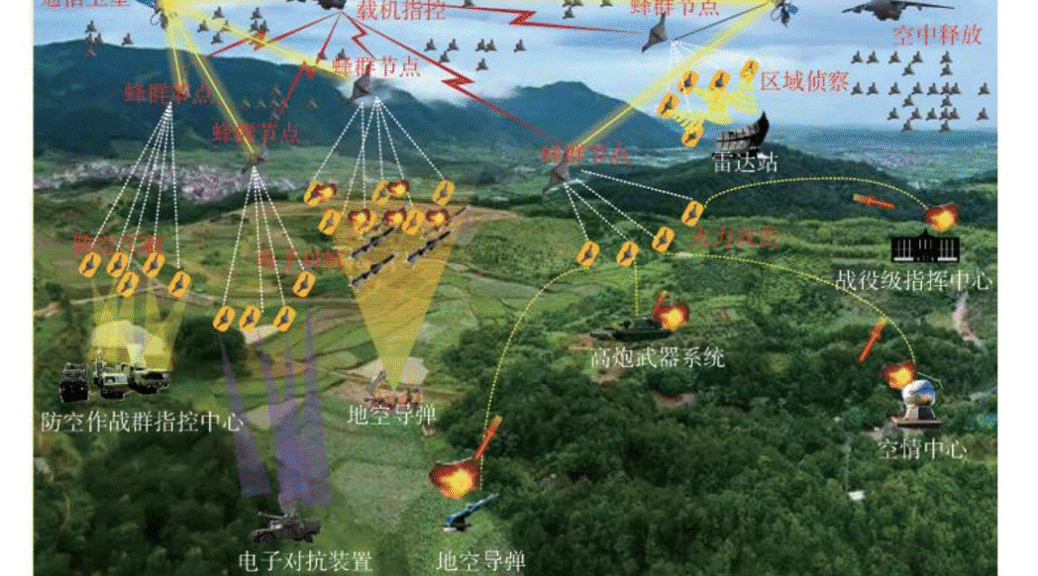
In the aerial battlefield, drones and manned aircraft are mixed in formation and cooperate in combat. In 2019, approximately 30 countries worldwide had developed over 50 types of drones, and more than 50 countries had deployed drones. The main types include: cryptographic drones, multi-functional drones, AI-powered drones, long-endurance drones, anti-missile drones, early warning drones, stealth drones, micro drones, air combat drones, mapping drones, aerial photography drones, armed drones, and drone wingmen. With the widespread application of advanced technologies such as artificial intelligence and big data in the military field, the performance of equipment on drones is constantly improving. They will integrate multiple functions such as reconnaissance, fire correction, surveillance, battle result assessment, target identification, attack guidance, radio relay, and ground attack. They can conduct electronic jamming and deception at long distances from the enemy, and can also autonomously attack important ground targets when necessary. The future aerial battlefield will essentially realize unmanned or human-machine (drone) cooperative air strikes, or autonomous drone air strikes, which will inevitably revolutionize traditional air combat methods. In the future, fighter pilots will control unmanned attack aircraft or bombers from their cockpits to evade enemy air defense systems, while offensive forces will receive real-time intelligence data more quickly—all thanks to the rapid advancements in artificial intelligence technology. In future air strikes, swarms of drones will swarm in, using sophisticated instruments for detection, reconnaissance, and counter-reconnaissance. Once they lock onto targets, they will calmly launch missiles, possessing integrated reconnaissance and strike capabilities, autonomous attack, and human-machine collaborative strike capabilities. The Russian Aerospace Forces will equip themselves with heavy attack drones capable of maneuvering around enemy air defense systems without command, autonomously searching for and striking the most important targets, and then retreating safely back to base. This aircraft will be equipped with artificial intelligence components and can be remotely controlled by Su-57 fighter jets. According to RIA Novosti, the Russian S-70 “Hunter” heavy attack drone can attack targets according to instructions issued from Su-57 stealth fighter jets. Currently, the control station where the “Hunter” ground operators are located is equipped with joysticks, keyboards, and several multi-function LCD screens, similar to those used in manned fighter jets. These screens display various information transmitted from the “Hunter’s” onboard systems and sensors. In the near future, this ground-based remote control equipment may achieve full automation. The S-70 “Hunter” UAV, developed by the Sukhoi Design Bureau, is designed and manufactured based on a flying wing aerodynamic layout. According to public information, the “Hunter” is 14 meters long, has a wingspan of 19 meters, and a takeoff weight of 20 tons. The “Hunter” has a maximum speed of 1000 kilometers per hour and uses stealth materials to reduce its radar cross-section (detection signal). The “Hunter’s” first flight was on August 3, 2019. Reportedly, as part of the flight test program, the first prototype of the “Hunter” has begun weapons testing: including test flights with a functional simulator carrying air-to-air missiles, and bombing ground targets at the Ashuluk test range. Currently, the Novosibirsk Chkalov Aircraft Plant is building three more “Hunter” UAV prototypes. Russia has completed combat formation flights of its multi-role fifth-generation Su-57 fighter jets and heavy “Hunter” reconnaissance and combat drones. These drones will be organized into multiple air regiments, likely joining Su-57 air regiments. The plan is for 2-3 Su-57 squadrons to each have a drone squadron, operating together and employing new strategies and artificial intelligence elements. The UK also plans to enable a single manned aircraft to simultaneously command five drones, while France plans to achieve mixed formation operations of Rafale fighter jets and Neuron drones.
The use of drones for military reconnaissance began in the 1960s and has been widely applied in various wars. During the Vietnam War, the US military deployed over 3,000 drone sorties for reconnaissance, with over 1,000 failing to return safely and disappearing without a trace. In the Gulf War, multinational forces deployed drones day and night to reconnoiter Iraqi frontline positions, providing real-time imagery and guiding ground troops to destroy Iraqi positions. In the Bosnian War, the US military used Predator drones to monitor the withdrawal of Serbian heavy weapons from Sarajevo and provided a wealth of target data for aircraft participating in airstrikes. In the Kosovo War, the US military deployed over 100 drones for battlefield reconnaissance and surveillance, contributing significantly to the 78-day air campaign. In the US operations against the Taliban, the US military used unmanned attack aircraft, carrying weapons, for the first time in actual combat. On September 14, 2019, after an attack on a Saudi Aramco oil company’s “world’s largest oil processing facility” and oil field, the Houthi rebels in Yemen claimed responsibility, stating they used 10 drones to attack the facility. On January 3, 2020, Qassem Soleimani, commander of the Quds Force of Iran’s Islamic Revolutionary Guard Corps, was killed in a US drone strike on Baghdad International Airport in the early morning. In late 2020, drones played a significant role in the conflict between Armenia and Azerbaijan in Nagorno-Karabakh. Many military experts were particularly impressed by the videos released by the Azerbaijani Ministry of Defense showing TB-2 “Standard” drones, recently purchased from Turkey, and Harop suicide drones, purchased from Israel, attacking Armenian armored vehicles, artillery, cars, and even infantry positions. While the videos clearly show the targets destroyed by the drones, the visual impact of the attacks was undeniably striking. The localized conflicts that occurred in the Middle East and the South Caucasus last December demonstrate the growing role of drones. No wonder some military strategists have even predicted that the 21st century will be the “golden age” for drone development, with drones inevitably replacing manned fighter jets and becoming the “protagonists of the battlefield” in the 21st century.
It can be predicted that future wars will inevitably see unmanned land, sea and air weapons replacing soldiers in performing high-risk missions, and the future battlefield will inevitably be a joint operation combining “human” and “machine”.
Combat-driven training means building an army based on how battles are fought. Future military equipment, whether tanks, robots, or drones, will likely take many forms. Future military personnel must be proficient in intelligent technologies, big data applications, and cloud computing, and master the programming methods for controlling intelligent robots and drones. The future army will inevitably be a “human-machine” integrated force, establishing “human-machine” integrated platoons, companies, combat simulation centers, adversary units, special forces, intelligent command headquarters, and unmanned battalions, regiments, and brigades. At that time, military commanders may have one human and one robot as assistants or deputies. Platoon and company commanders will gradually be replaced by robots, and robots will gradually transition from human control to autonomous decision-making or mind control via human brain cells. As early as the 2014 Brazil World Cup, a paralyzed teenager wearing a “mechanical exoskeleton armor” kicked the first ball through mind control. Today, the technology of mind control over objects or experimental animals is becoming increasingly sophisticated.
In future warfare, it will become possible for a small number of soldiers to lead a massive swarm of unmanned robots, such as bees, ants, or schools of fish, to carry out combat missions. Through thought-based group control, soldiers’ mission comprehension and battlefield control capabilities can be greatly enhanced, enabling efficient identification of friend or foe, remote real-time command, intelligent mission planning, and efficient autonomous collaboration. The Russian Foundation for Future Research states that they have mastered brain-computer interface technology for controlling machines through thought. Previously, British researchers developed a brain-computer interface device for controlling a spacecraft simulator; when worn on a test subject, it successfully controlled the flight of a model spacecraft. However, there is still a long way to go before soldiers can effectively control complex unmanned combat swarms using this technology. Military camps may also see further changes. Troop management may involve one or a few military commanders leading teams of multiple or even dozens of intelligent robots with different tasks to complete tasks previously performed manually. Alternatively, military training may involve a single military commander in a command and control center, using video to control all intelligent robots in the training field for adversarial training, or remotely controlling robot commanders to issue new training instructions, adjust mission deployments, and change training grounds in real time.
As a high-intensity, targeted training closely aligned with actual combat, realistic combat training plays a crucial role in enhancing the combat effectiveness of the armed forces and is an inevitable choice for adapting to the evolving nature of warfare and responding to complex security threats. In the intelligent era, the deep integration of military technology, the suddenness of war outbreaks, and the rapid pace of offensive and defensive transitions are becoming increasingly prominent, posing systemic challenges to realistic combat training in areas such as demand guidance, environment construction, tactical innovation, and technological empowerment. To this end, we should focus on building a new training management model that accurately maps needs, deeply embeds adversaries, makes tactics flexible and effective, and deeply integrates technology, so as to achieve resonance between training scenarios and combat environments, dynamic coupling between training content and combat actions, and precise alignment between training results and actual combat needs, thereby comprehensively improving the overall quality and efficiency of combat-oriented training.
The need to meet the demands of “combat” necessitates intensive training based on specific plans.
In the intelligent era, the diversification of weapons, equipment, and combat methods has brought more variables to combat operations. Realistic training must be aligned with actual combat needs, calibrate training objectives through testing in real scenarios, continuously enhance the flexibility of combat plans, and improve the adaptability of troops.
Operational guidance calibrates training targets. As a form of training closely aligned with actual combat, realistic training can only achieve maximum effectiveness by closely adhering to the needs of intelligent warfare, transforming abstract operational concepts into concrete training topics, and deconstructing strategic and operational requirements into quantifiable and assessable tactical indicators. Emphasis should be placed on battlefield adaptability training in complex and ever-changing battlefield environments, strengthening training on challenging issues such as cyber and electronic warfare, autonomous coordination, and the integration of new technologies, to ensure that a proactive battlefield advantage is always maintained. Training content should be dynamically optimized by closely monitoring cutting-edge operational concepts, continuously promoting the interaction and coupling of actual combat and training, and consistently maintaining a high level of combat readiness training.
Practice refines and strengthens the resilience of operational plans. Intelligent warfare is fast-paced and rapidly changing; only through repeated verification and refinement in realistic training can the feasibility and adaptability of operational plans be guaranteed. A multi-functional, intelligent, and professional training ground system should be constructed to continuously refine key aspects such as command and decision-making, force deployment, and operational coordination in scenario-based training, constantly testing the resilience of the command chain, the robustness of coordination mechanisms, and the sustainability of the support system. In fact, testing and improving operational plans through realistic training is timeless. Prior to the Normandy landings, the Allied forces conducted Exercise Tiger at Slapton Beach to improve combat skills, enhance combat experience, and test coordination efficiency. Despite a series of oversights and errors, serious deficiencies in command and communication, landing and unloading were also discovered. By revising and improving the combat plan and addressing the shortcomings, the actual combat casualty rate was greatly reduced, laying a solid foundation for the successful implementation of the final landing operation.
Mission-driven training strengthens capabilities. High-intensity, near-real combat training effectively exposes weaknesses and deficiencies, forcing units to develop targeted measures and ultimately boosting combat capabilities. Close attention should be paid to the specific tasks undertaken by the troops, such as reconnaissance and surveillance, information warfare, force projection, and unmanned operations. Problems should be identified during exercises and practical training, and countermeasures should be developed according to local conditions to address weaknesses in combat capabilities. Before the Hundred Regiments Offensive during the War of Resistance Against Japan, a unit of the Eighth Route Army, recognizing its weak railway sabotage capabilities, conducted targeted intensive training focusing on reconnaissance and surveillance, explosives demolition, and dismantling and transportation. This significantly improved the unit’s railway sabotage capabilities, laying a crucial foundation for victory.
Based on the standard of “war”, we insist on independent confrontation.
In the intelligent era, intelligent unmanned equipment is being used extensively, new combat forces with new characteristics are constantly emerging, and the features of hybrid games and system confrontation are becoming more prominent. This requires that combat-oriented training must be based on actual combat standards and targeted confrontation training must be carried out against strong adversaries.
Reconstructing cognitive benchmarks through re-enactment of enemy situations. Accurate understanding of the operational target system and the adversary’s combat capabilities is not only a prerequisite for winning intelligent warfare but also the foundation for planning and organizing effective combat-oriented training. We must closely monitor the adversary, comprehensively, accurately, and systematically grasp the latest military intelligence dynamics regarding their operational theories, command methods, tactics, operational deployments, and the performance of key weapons and equipment. Furthermore, we must deeply study countermeasures, cultivate the ability to win, and ensure that we anticipate the enemy’s moves and achieve surprise victories in wartime. We should systematically deconstruct the future battlefield environment, starting from multiple dimensions such as the strategic domain, physical domain, network domain, and electromagnetic domain, and use multiple methods to construct a training environment that matches information-based and intelligent warfare, providing strong support for key training subjects and seeking winning strategies.
Red-Blue competition drives a qualitative leap in capabilities. In the context of intelligent warfare, combat-oriented training places greater emphasis on targeted and intense confrontation, requiring the creation of simulated “Blue Force” forces to higher standards, the design of appropriate training content, and the effective implementation of adversarial red-Blue confrontation training. It is essential to focus on tactical confrontation training, operational confrontation exercises, and in-depth strategic game-based confrontation simulations, ensuring their effective implementation at all levels of combat-oriented training. Emphasis should be placed on both virtual simulation confrontation exercises and live-fire confrontation exercises, combining virtual and real elements to provide strong support for combat-oriented training. The training should not only present the size and weaponry of the adversary but also reflect their tactical applications and systemic operations, providing a reliable and credible “touchstone” for combat-oriented training.
Extreme training is essential for honing systemic capabilities. Only by benchmarking against actual combat and organizing realistic training with the standards and intensity of “war” can we objectively assess the combat effectiveness of the troops and promote the improvement of their systemic capabilities. Based on specific enemy situations and complex battlefields, we must deeply anticipate unforeseen circumstances, starting with the most difficult, complex, and passive situations. We should create numerous dangerous, stalemate, difficult, critical, and dire situations to cultivate the confidence and courage to fight and win, and the ability to adapt and achieve victory in perilous circumstances, thereby comprehensively testing and refining the troops’ combat capabilities.
Anchoring “Battle” Effectiveness Innovations in Tactics and Combat Methods
Combat operations in the intelligent era exhibit some new characteristics, emphasizing information dominance and system integration, as well as precise control and accurate energy release. This also requires combat-oriented training to focus on combat effectiveness and seek more effective methods and measures for innovative tactics and maneuvers.
Training and research should be integrated to drive tactical innovation. Effective tactics are often gradually refined and formed through actual combat training. By leveraging the “tempering” process of realistic combat training, weaknesses in tactical application can be exposed to the greatest extent, prompting the innovation and improvement of tactics and methods. Based on the fundamental orientation of practicality and effectiveness, we should strengthen the innovative application of tactics and training methods, deeply analyze combat patterns, capability chains, key nodes, force organization, and tactical means in theoretical research and practical exercises, accelerate the integration of new domains and new quality systems, and ensure the effective implementation of new combat concepts, tailoring “trump cards” and “tactical sets” for countering and defeating the enemy.
Realistic combat training drives the testing of tactics. Tactics that remain at the theoretical level have no vitality; only tactics that have undergone repeated testing in realistic combat can quickly adapt to the future battlefield. Therefore, realistic combat training places greater emphasis on tactics originating from practice, being tested in practice, and being applied to practice. Through repeated simulation training, deduction exercises, and live-fire drills, scientific and applicable command principles, action points, and support essentials should be formed. Tactics should be tested, enriched, and improved in practice to fully adapt to future informationized and intelligent warfare.
Advancing the evolution of tactics in accordance with the times. No matter how times change, surprise and flexibility remain the “soul” of tactical application and the prerequisite for gaining the initiative on the battlefield. In the intelligent era, new equipment and tactics supported by model algorithms are constantly emerging. Only by keeping pace with the trends of military reform, proactively analyzing the laws of war and the mechanisms of victory, and being one step ahead in discovering and updating tactics, can we ensure that we can deploy our forces and exert our strength one step ahead of the enemy in wartime. Recent local conflicts have repeatedly demonstrated to us the practical application of new operational concepts and the continuous emergence of new tactics and methods. We should focus on strong enemy targets, confront threats and challenges head-on, actively adapt to changes, and proactively seek changes. Based on operational concepts such as flexible mobility and asymmetric enemy control, we should develop and design strategies and tactics to defeat the enemy and comprehensively improve our battlefield adaptability.
Strengthen technological capabilities in line with the trends of “warfare”.
In the intelligent era, the extensive and in-depth application of new-generation military technologies has not only accelerated the pace of warfare, changed the form of war, and given rise to new threats, but also provided more options for combat-oriented training.
Knowledge reshaping elevates cognitive thinking. Cognitive thinking reflects the depth of understanding of warfare and the degree of adaptability to the battlefield. Therefore, some consider cognitive thinking a key foundational element of command ability. In the intelligent era, only those with keen technological awareness and battlefield perception can accurately grasp the battlefield situation, precisely control forces, and flexibly manage actions to gain a combat advantage. It is crucial to strengthen the learning of the latest technologies such as big data, the Internet of Things, cloud computing, and blockchain, and through targeted training, systematically master the characteristics and laws of informationized and intelligent warfare, establish a systemic warfare mindset, and enhance technological effectiveness for realistic combat training.
Simulation interaction optimizes environmental conditions. Virtual simulation technology not only has advantages in reducing material input and lowering safety risks, but also in constructing intelligent warfare scenarios to improve training quality. Emphasis should be placed on utilizing virtual reality, augmented reality, and mixed reality technologies to construct highly immersive and interactive virtual battlefield spaces, providing trainees with realistic visual, auditory, and tactile experiences. Emphasis should also be placed on leveraging intelligent wearable devices, sensor arrays, and virtual simulation systems to construct training scenarios that closely resemble actual combat, supporting trainees in battlefield awareness and action simulation training, and comprehensively improving the quality of combat-oriented training.
Intelligent empowerment revitalizes data and information. In the intelligent era, the multidimensionality of the environment, the diversity of force equipment, and the variety of offensive and defensive confrontations have led to a massive surge of combat training data, making its management and application a major challenge in training practice. Data mining technology should be fully utilized, leveraging big data, algorithms, and large models to transform the vast amounts of scattered behavioral, physiological, and environmental data generated in training practice into quantifiable, traceable, and optimizable digital resources. This will enable the centralized delivery and innovative application of training information. Based on this, a closed-loop management system for training information—”decision-planning-collection-processing-evaluation”—can be established to drive the transformation of combat training from generalized, extensive management to intelligent, precise management.
Since the beginning of the new century, the rapid development of intelligent technologies, with artificial intelligence (AI) at its core, has accelerated the process of a new round of military revolution, and competition in the military field is rapidly moving towards an era of intellectual dominance. Combat elements represented by “AI, cloud, network, cluster, and terminal,” combined in diverse ways, constitute a new battlefield ecosystem, completely altering the mechanisms of victory in warfare. AI systems based on models and algorithms will be the core combat capability, permeating all aspects and stages, playing a multiplicative, transcendent, and proactive role. Platforms are controlled by AI, clusters are guided by AI, and systems are made to decision by AI. Traditional human-centric tactics are being replaced by AI models and algorithms, making intellectual dominance the core control in future warfare. The stronger the intelligent combat capability, the greater the hope of subduing the enemy without fighting.
[Author Biography] Wu Mingxi is the Chief Scientist and Researcher of China Ordnance Industry Group, Deputy Secretary-General of the Science and Technology Committee of China Ordnance Industry Group, and Deputy Director of the Science and Technology Committee of China Ordnance Science Research Institute. His research focuses on national defense science and technology and weaponry development strategies and planning, policies and theories, management and reform research. His major works include “Intelligent Warfare – AI Military Vision,” etc.
Competition in the Age of Intellectual Property
The history of human civilization is a history of understanding and transforming nature, and also a history of understanding and liberating oneself. Through the development of science and technology and the creation and application of tools, humanity has continuously enhanced its capabilities, reduced its burdens, freed itself from constraints, and liberated itself. The control of war has also constantly changed, enriched, and evolved with technological progress, the expansion of human activity space, and the development of the times. Since the 19th century, humanity has successively experienced the control and struggle for land power, sea power, air power, space power, and information power. With the rapid development of intelligent technologies such as artificial intelligence (AI), big data, cloud computing, bio-interdisciplinary technologies, unmanned systems, and parallel simulation, and their deep integration with traditional technologies, humanity’s ability to understand and transform nature has been transformed in terms of epistemology, methodology, and operational mechanisms. This is accelerating the major technological revolutions in machine intelligence, bionic intelligence, swarm intelligence, human-machine integrated intelligence, and intelligent perception, intelligent decision-making, intelligent action, intelligent support, as well as intelligent design, research and development, testing, and manufacturing, thus accelerating the evolution of warfare towards the control and struggle for intellectual power.
The rapid development of intelligent technology has garnered significant attention from major countries worldwide, becoming a powerful driving force for the leapfrog development of military capabilities. The United States and Russia have placed intelligent technology at the core of maintaining their strategic status as global military powers, and significant changes have occurred in their development concepts, models, organizational methods, and innovative applications. They have also carried out substantive applications and practices of military intelligence (see Figure 1).
In August 2017, the U.S. Department of Defense stated that future AI warfare was inevitable and that the U.S. needed to “take immediate action” to accelerate the development of AI warfare technologies. The U.S. military’s “Third Offset Strategy” posits that a military revolution, characterized by intelligent armies, autonomous equipment, and unmanned warfare, is underway; therefore, they have identified intelligent technologies such as autonomous systems, big data analytics, and automation as key development directions. In June 2018, the U.S. Department of Defense announced the establishment of the Joint Artificial Intelligence Center, which, guided by the national AI development strategy, coordinates the planning and construction of the U.S. military’s intelligent military system. In February 2019, then-President Trump signed the “American Artificial Intelligence Initiative” executive order, emphasizing that maintaining U.S. leadership in AI is crucial for safeguarding U.S. economic and national security, and requiring the federal government to invest all resources in promoting innovation in the U.S. AI field. In March 2021, the U.S. National Security Council on Artificial Intelligence released a research report stating that, “For the first time since World War II, the technological advantage that has been the backbone of U.S. economic and military power is under threat. If current trends do not change, China possesses the power, talent, and ambition to surpass the United States as the global leader in artificial intelligence within the next decade.” The report argues that the United States must use artificial intelligence swiftly and responsibly to prepare for these threats in order to safeguard national security and enhance defense capabilities. The report concludes that artificial intelligence will transform the world, and the United States must take a leading role.
Russia also attaches great importance to the technological development and military application of artificial intelligence. The Russian military generally believes that artificial intelligence will trigger the third revolution in the military field, following gunpowder and nuclear weapons. In September 2017, Russian President Vladimir Putin publicly stated that artificial intelligence is the future of Russia, and whoever becomes the leader in this field will dominate the world. In October 2019, Putin approved the “Russian National Strategy for the Development of Artificial Intelligence until 2030,” aiming to accelerate the development and application of artificial intelligence in Russia and seek a world-leading position in the field.
In July 2017, the State Council of China issued the “New Generation Artificial Intelligence Development Plan,” which put forward the guiding ideology, strategic goals, key tasks and safeguard measures for the development of new generation artificial intelligence towards 2030, and deployed efforts to build a first-mover advantage in the development of artificial intelligence and accelerate the construction of an innovative country and a world-class science and technology power.
Other major countries and military powers around the world have also launched their own artificial intelligence development plans, indicating that the global struggle for “intellectual power” has fully unfolded. Land power, sea power, air power, space power, information power, and intellectual power are all results of technological progress and products of their time, each with its own advantages and disadvantages, and some theories are constantly expanding with the changing times. From the development trend of control over warfare since modern times, it can be seen that information power and intellectual power involve the overall situation, carrying greater weight and influence. In the future, with the accelerated pace of intelligent development, intellectual power will become a rapidly growing new type of battlefield control with greater strategic influence on the overall combat situation.
The essence of military intelligence lies in leveraging intelligent technologies to establish diverse identification, decision-making, and control models for the war system. These models constitute artificial intelligence (AI), the core of the new era’s intellectual power struggle. The war system encompasses: equipment systems such as individual units, clusters, manned/unmanned collaborative operations, and multi-domain and cross-domain warfare; combat forces such as individual soldiers, squads, detachments, combined arms units, and theater command; operational links such as networked perception, mission planning and command, force coordination, and comprehensive support; specialized systems such as network attack and defense, electronic warfare, public opinion control, and infrastructure management; and military industrial capabilities such as intelligent design, research and development, production, mobilization, and support. AI, in the form of chips, algorithms, and software, is embedded in every system, level, and link of the war system, forming a systematic brain. Although AI is only a part of the war system, its increasingly powerful “brain-like” functions and capabilities “surpassing human limits” will inevitably dominate the overall situation of future warfare.
Battlefield Ecosystem Reconstruction
Traditional warfare involves relatively independent and separate combat elements, resulting in a relatively simple battlefield ecosystem, primarily consisting of personnel, equipment, and tactics. In the intelligent era, warfare is characterized by significant integration, correlation, and interaction among various combat elements. This will lead to substantial changes in the battlefield ecosystem, forming a combat system, cluster system, and human-machine system comprised of an AI brain, distributed cloud, communication networks, collaborative groups, and various virtual and physical terminals—collectively known as the “AI, Cloud, Network, Cluster, Terminal” intelligent ecosystem (see Figure 2). Among these, AI plays a dominant role.
AI Brain System. The AI brain system of the intelligent battlefield is a networked and distributed system that is inseparable from and interdependent with combat platforms and missions. It can be classified in several ways. Based on function and computing power, it mainly includes cerebellum, swarm brain, midbrain, hybrid brain, and cerebrum; based on combat missions and stages, it mainly includes sensor AI, combat mission planning and decision-making AI, precision strike and controllable destruction AI, network attack and defense AI, electronic warfare AI, intelligent defense AI, and integrated support AI; based on form, it mainly includes embedded AI, cloud AI, and parallel system AI.
The cerebellum mainly refers to the embedded AI in sensor platforms, combat platforms, and support platforms, which mainly performs tasks such as battlefield environment detection, target recognition, rapid maneuver, precision strike, controlled destruction, equipment support, maintenance support, and logistical support.
“Swarm brain” mainly refers to the AI that enables intelligent control of unmanned swarm platforms on the ground, in the air, at sea, in the water, and in space. It mainly performs tasks such as collaborative perception of the battlefield environment, swarm maneuver, swarm attack, and swarm defense. The key components include algorithms for homogeneous swarm systems and algorithms for heterogeneous systems such as manned-unmanned collaboration.
The midbrain mainly refers to the AI system of the command center, data center, and edge computing of the front-line units on the battlefield. It mainly performs dynamic planning, autonomous decision-making, and auxiliary decision-making for tactical unit combat missions under online and offline conditions.
Hybrid brain mainly refers to a hybrid decision-making system in which commanders and machine AI collaborate in combat operations of organized units. Before the battle, it mainly performs human-based combat mission planning; during the battle, it mainly performs adaptive dynamic mission planning and adjustment based on machine AI; and after the battle, it mainly performs hybrid decision-making tasks oriented towards counter-terrorism and defense.
The “brain” primarily refers to the model, algorithm, and tactical libraries of the theater command center and data center, playing a key supporting role in campaign and strategic decision-making. Due to the abundant data, various battlefield AI systems can be trained and modeled here, and then loaded into different mission systems once mature.
In future battlefields, there will be other AIs of different functions, types, and sizes, such as sensor AI, which mainly includes image recognition, electromagnetic spectrum recognition, sound recognition, speech recognition, and human activity behavior recognition. With the rapid development and widespread application of intelligence, AIs of all sizes will exist throughout society, serving the public and society in peacetime, and potentially serving the military in wartime.
Distributed cloud. Military cloud differs from civilian cloud. Generally speaking, a military cloud platform is a distributed resource management system that uses communication networks to search, collect, aggregate, analyze, calculate, store, and distribute operational information and data. By constructing a distributed system and a multi-point fault-tolerant backup mechanism, a military cloud platform possesses powerful intelligence sharing capabilities, data processing capabilities, resilience, and self-healing capabilities. It can provide fixed and mobile, public and private cloud services, achieving “one-point collection, everyone sharing,” greatly reducing information flow links, making command processes flatter and faster, and avoiding redundant and decentralized construction at all levels.
From the perspective of future intelligent warfare needs, military cloud needs to construct at least a four-tiered system: tactical front-end cloud, troop cloud, theater cloud, and strategic cloud. Based on operational elements, it can also be divided into specialized cloud systems such as intelligence cloud, situational awareness cloud, firepower cloud, information warfare cloud, support cloud, and nebula.
1. Front-end cloud primarily refers to computing services provided by units, squads, and platforms, including information perception, target identification, battlefield environment analysis, autonomous and assisted decision-making, and operational process and effect evaluation. The role of front-end cloud is mainly reflected in two aspects. First, it facilitates the sharing and collaboration of computing and storage resources among platforms, and the interactive integration of intelligent combat information. For example, if a platform or terminal is attacked, relevant perception information, damage status, and historical data will be automatically backed up, replaced, and updated through a networked cloud platform, and the relevant information will be uploaded to the higher command post. Second, it provides online information services and intelligent software upgrades for offline terminals.
2. Military cloud primarily refers to the cloud systems built at the battalion and brigade level for operations. Its focus is on providing computing services such as intelligent perception, intelligent decision-making, autonomous action, and intelligent support in response to different threats and environments. The goal of military cloud construction is to establish a networked, automatically backed-up, distributed cloud system connected to multiple links with higher-level units. This system should meet the computing needs of different forces, including reconnaissance and perception, mobile assault, command and control, firepower strikes, and logistical support, as well as the computing needs of various combat missions such as tactical joint operations, manned/unmanned collaboration, and swarm offense and defense.
3. Theater Cloud primarily provides battlefield weather, geographical, electromagnetic, human, and social environmental factors and information data for the entire operational area. It offers comprehensive information on troop deployments, weaponry, movement changes, and combat losses for both sides, as well as relevant information from higher command, friendly forces, and civilian support. Theater Cloud should possess networked, customized, and intelligent information service capabilities. It should interconnect with various operational units through military communication networks (space-based, airborne, ground-based, maritime, and underwater) and civilian communication networks (under secure measures) to ensure efficient, timely, and accurate information services.
4. Strategic cloud is mainly established by a country’s defense system and military command organs. It is primarily based on military information and covers comprehensive information and data related to defense technology, defense industry, mobilization support, economic and social support capabilities, as well as politics, diplomacy, and public opinion. It provides core information, assessments, analyses, and suggestions such as war preparation, operational planning, operational schemes, operational progress, battlefield situation, and battle situation analysis; and provides supporting data such as strategic intelligence, the military strength of adversaries, and war mobilization potential.
The various clouds mentioned above are interconnected, exhibiting both hierarchical and horizontal relationships of collaboration, mutual support, and mutual service. The core tasks of the military cloud platform are twofold: first, to provide data and computing support for building an AI-powered intelligent warfare system; and second, to provide operational information, computing, and data support for various combat personnel and weapon platforms. Furthermore, considering the needs of terminals and group operations, it is necessary to pre-process some cloud computing results, models, and algorithms into intelligent chips and embed them into weapon platforms and group terminals, enabling online upgrades or offline updates.
Communication networks. Military communication and network information constitute a complex super-network system. Since military forces primarily operate in land, sea, air, space, field maneuver, and urban environments, their communication networks encompass strategic and tactical communications, wired and wireless communications, secure communications, and civilian communications. Among these, wireless, mobile, and free-space communication networks are the most crucial components of the military network system, and related integrated electronic information systems are gradually established based on these communication networks.
Military communications in the mechanized era primarily followed the platform, terminal, and user, satisfying specific needs but resulting in numerous silos and extremely poor interconnectivity. In the information age, this situation is beginning to change. Currently, military communication networks are adopting new technological systems and development models, characterized by two main features: first, “network-data separation,” where information transmission does not depend on any specific network transmission method—”network access is all that matters”—any information can be delivered as long as the network link is unobstructed; second, internet-based architecture, utilizing IP addresses, routers, and servers to achieve “all roads lead to Beijing,” i.e., military networking or grid-based systems. Of course, military communication networks differ from civilian networks. Strategic and specialized communication needs exist at all times, such as nuclear button communications for nuclear weapons and command and control of strategic weapons, information transmission for satellite reconnaissance, remote sensing, and strategic early warning, and even specialized communications in individual soldier rooms and special operations conditions. These may still adopt a mission-driven communication model. Even so, standardization and internet connectivity are undoubtedly the future trends in military communication network development. Otherwise, not only will the number of battlefield communication frequency bands, radios, and information exchange methods increase, leading to self-interference, mutual interference, and electromagnetic compatibility difficulties, but radio spectrum management will also become increasingly complex. More importantly, it will be difficult for platform users to achieve automatic communication based on IP addresses and routing structures, unlike email on the internet where a single command can be sent to multiple users. Future combat platforms will certainly be both communication user terminals and also function as routers and servers.
Military communication network systems mainly include space-based communication networks, military mobile communication networks, data links, new communication networks, and civilian communication networks.
1. Space-Based Information Networks. The United States leads in the construction and utilization of space-based information networks. This is because more than half of the thousands of orbiting platforms and payloads in space are American-owned. Following the Gulf War, and especially during the Iraq War, the US military accelerated the application and advancement of space-based information networks through wartime experience. After the Iraq War, through the utilization of space-based information and the establishment of IP-based interconnection, nearly 140 vertical “chimneys” from the Gulf War period were completely interconnected horizontally, significantly shortening the “Out-of-Target-Action” (OODA) loop time. The time from space-based sensors to the shooter has been reduced from tens of hours during the Gulf War to approximately 20 seconds currently using artificial intelligence for identification.
With the rapid development of small satellite technology, low-cost, multi-functional small satellites are becoming increasingly common. As competition intensifies in commercial launches, costs are dropping dramatically, and a single launch can carry several, a dozen, or even dozens of small satellites. If miniaturized electronic reconnaissance, visible light and infrared imaging, and even quantum dot micro-spectroscopy instruments are integrated onto these satellites, achieving integrated reconnaissance, communication, navigation, meteorological, and mapping functions, the future world and battlefield will become much more transparent.
2. Military Mobile Communication Networks. Military mobile communication networks have three main uses. First, command and control between various branches of the armed forces and combat units in joint operations; this type of communication requires a high level of confidentiality, reliability, and security. Second, communication between platforms and clusters, requiring anti-jamming capabilities and high reliability. Third, command and control of weapon systems, mostly handled through data links.
Traditional military mobile communication networks are mostly “centralized, vertically focused, and tree-like structures.” With the acceleration of informatization, the trend towards “decentralized, self-organizing networks, and internet-based” is becoming increasingly apparent. As cognitive radio technology matures and is widely adopted (see Figure 3), future network communication systems will be able to automatically identify electromagnetic interference and communication obstacles on the battlefield, quickly locate available spectrum resources, and conduct real-time communication through frequency hopping and other methods. Simultaneously, software and cognitive radio technology can be compatible with different communication frequency bands and waveforms, facilitating seamless transitions from older to newer systems.
3. Data Links. A data link is a specialized communication technology that uses time division, frequency division, and code division to transmit pre-agreed, periodic, or irregular, regular or irregular critical information between various combat platforms. Unless fully understood or deciphered by the enemy, it is very difficult to interfere with. Data links are mainly divided into two categories: dedicated and general-purpose. Joint operations, formation coordination, and swarm operations primarily utilize general-purpose data links. Satellite data links, UAV data links, missile-borne data links, and weapon fire control data links are currently mostly dedicated. In the future, generalization will be a trend, and specialization will decrease. Furthermore, from the perspective of the relationship between platforms and communication, the information transmission and reception of platform sensors and internal information processing generally follow the mission system, exhibiting strong specialization characteristics, while communication and data transmission between platforms are becoming increasingly general-purpose.
4. New Communication Technologies. Traditional military communication primarily relies on microwave communication. Due to its large divergence angle and numerous application platforms, corresponding electronic jamming and microwave attack methods have developed rapidly, making it easy to carry out long-range interference and damage. Therefore, new communication technologies such as millimeter waves, terahertz waves, laser communication, and free-space optical communication have become important choices that are both anti-jamming and easy to implement high-speed, high-capacity, and high-bandwidth communication. Although high-frequency electromagnetic waves have good anti-jamming performance due to their smaller divergence angle, achieving precise point-to-point aiming and omnidirectional communication still presents certain challenges, especially under conditions of high-speed maneuvering and rapid trajectory changes of combat platforms. How to achieve alignment and omnidirectional communication is still under technological exploration.
5. Civilian Communication Resources. The effective utilization of civilian communication resources is a strategic issue that must be considered and cannot be avoided in the era of intelligentization. In the future, leveraging civilian communication networks, especially 5G/6G mobile communications, for open-source information mining and data correlation analysis to provide battlefield environment, target, and situational information will be crucial for both combat and non-combat military operations. In non-combat military operations, especially overseas peacekeeping, rescue, counter-terrorism, and disaster relief, the military’s dedicated communication networks can only be used within limited areas and regions, raising the question of how to communicate and connect with the outside world. There are two main ways to utilize civilian communication resources: one is to utilize civilian satellite communication resources, especially small satellite communication resources; the other is to utilize civilian mobile communication and internet resources.
The core issue in the interactive utilization of military and civilian communication resources is addressing security and confidentiality. One approach is to employ firewalls and encryption, directly utilizing civilian satellite communications and global mobile communication infrastructure for command and communication; however, the risks of hacking and cyberattacks remain. Another approach is to utilize emerging technologies such as virtualization, intranets, semi-physical isolation, one-way transmission, mimicry defense, and blockchain to address these challenges.
Collaborative swarms. By simulating the behavior of bee colonies, ant colonies, flocks of birds, and schools of fish in nature, this research studies the autonomous collaborative mechanisms of swarm systems such as drones and smart munitions to accomplish combat missions such as attacking or defending against enemy targets. This can achieve strike effects that are difficult to achieve with traditional combat methods and approaches. Collaborative swarms are an inevitable trend in intelligent development and a major direction and key area of intelligent construction. No matter how advanced the combat performance or how powerful the functions of a single combat platform, it cannot form a collective or scalable advantage. Simply accumulating quantity and expanding scale, without autonomous, collaborative, and orderly intelligent elements, is just a disorganized mess.
Collaborative swarms mainly comprise three aspects: first, manned/unmanned collaborative swarms formed by the intelligent transformation of existing platforms, primarily constructed from large and medium-sized combat platforms; second, low-cost, homogeneous, single-function, and diverse combat swarms, primarily constructed from small unmanned combat platforms and munitions; and third, biomimetic swarms integrating human and machine intelligence, possessing both biological and machine intelligence, primarily constructed from highly autonomous humanoid, reptile-like, avian-like, and marine-like organisms. Utilizing collaborative swarm systems for cluster warfare, especially swarm warfare, offers numerous advantages and characteristics.
1. Scale Advantage. A large unmanned system can disperse combat forces, increasing the number of targets the enemy can attack and forcing them to expend more weapons and ammunition. The survivability of a swarm, due to its sheer number, is highly resilient and resilient; the survivability of a single platform becomes less important, while the overall advantage becomes more pronounced. The sheer scale prevents drastic fluctuations in combat effectiveness, because unlike high-value manned combat platforms and complex weapon systems such as the B-2 strategic bomber and advanced F-22 and F-35 fighter jets, the loss of a low-cost unmanned platform, once attacked or destroyed, results in a sharp decline in combat effectiveness. Swarm operations can launch simultaneous attacks, overwhelming enemy defenses. Most defensive systems have limited capabilities, able to handle only a limited number of threats at a time. Even with dense artillery defenses, a single salvo can only hit a limited number of targets, leaving some to escape. Therefore, swarm systems possess extremely strong penetration capabilities.
2. Cost Advantage. Swarm warfare, especially bee warfare, primarily utilizes small and medium-sized UAVs, unmanned platforms, and munitions. These have simple product lines, are produced in large quantities, and have consistent quality and performance requirements, facilitating low-cost mass production. While the pace of upgrades and replacements for modern weapons and combat platforms has accelerated significantly, the cost increases have also been staggering. Since World War II, weapons development and procurement prices have shown that equipment costs and prices have risen much faster than performance improvements. Main battle tanks during the Gulf War cost 40 times more than those during World War II, while combat aircraft and aircraft carriers cost as much as 500 times more. From the Gulf War to 2020, the prices of various main battle weapons and equipment increased several times, tens of times, or even hundreds of times. In comparison, small and medium-sized UAVs, unmanned platforms, and munitions with simple product lines have a clear cost advantage.
3. Autonomous Advantage. Under a unified spatiotemporal reference platform, through networked active and passive communication and intelligent perception of battlefield targets, individual platforms in the group can accurately perceive the distance, speed, and positional relationships between each other. They can also quickly identify the nature, size, priority, and distance of target threats, as well as their own distance from neighboring platforms. With pre-defined operational rules, one or more platforms can conduct simultaneous or wave-based attacks according to the priority of target threats, or they can attack in groups simultaneously or in multiple waves (see Figure 4). Furthermore, the priority order for subsequent platforms to replace a damaged platform can be clearly defined, ultimately achieving autonomous decision-making and action according to pre-agreed operational rules. This intelligent combat operation, depending on the level of human involvement and the difficulty of controlling key nodes, can be either completely autonomous, or semi-autonomous, with human intervention.
4. Decision-making advantage. The future battlefield environment is becoming increasingly complex, with combatants vying for dominance in intense strategic maneuvering and confrontation. Therefore, relying on humans to make decisions in a high-intensity confrontation environment is neither timely nor reliable. Thus, only by entrusting automated environmental adaptation, automatic target and threat identification, autonomous decision-making, and coordinated action to collaborative groups can adversaries be rapidly attacked or effective defenses implemented, thereby gaining battlefield advantage and initiative.
The coordination group brings new challenges to command and control. How to implement command and control of the cluster is a new strategic issue. Control can be implemented in a hierarchical and task-based manner, which can be roughly divided into centralized control mode, hierarchical control mode, consistent coordination mode, and spontaneous coordination mode. [1] Various forms can be adopted to achieve human control and participation. Generally speaking, the smaller the tactical unit, the more autonomous action and unmanned intervention should be adopted; at the level of organized unit operations, since the control of multiple combat groups is involved, centralized planning and hierarchical control are required, and human participation should be limited; at the higher strategic and operational levels, the cluster is only used as a platform weapon and combat style, which requires unified planning and layout, and the degree of human participation will be higher. From the perspective of mission nature, the operation and use of strategic weapons, such as nuclear counterattacks, requires human operation and is not suitable for autonomous handling by weapon systems. When conducting offensive and defensive operations against important or high-value targets, such as decapitation strikes, full human participation and control are necessary, while simultaneously leveraging the autonomous functions of the weapon systems. For offensive operations against tactical targets, if the mission requires lethal strikes and destruction, limited human participation is permissible, or, after human confirmation, the coordinated group can execute the operation automatically. When performing non-strike missions such as reconnaissance, surveillance, target identification, and clearance, or short-duration missions such as air defense and missile defense where human involvement is difficult, the coordinated group should primarily execute these tasks automatically, without human involvement. Furthermore, countermeasures for swarm operations must be carefully studied. Key research should focus on countermeasures against electronic deception, electromagnetic interference, cyberattacks, and high-power microwave weapons, electromagnetic pulse bombs, and artillery-missile systems, as their effects are relatively significant. Simultaneously, research should be conducted on countermeasures such as laser weapons and swarm-to-swarm tactics, gradually establishing a “firewall” that humans can effectively control against coordinated groups.
Virtual and physical terminals. Virtual and physical terminals mainly refer to various terminals linked to the cloud and network, including sensors with pre-embedded intelligent modules, command and control platforms, weapon platforms, support platforms, related equipment and facilities, and combat personnel. Future equipment and platforms will be cyber-physical systems (CPS) and human-computer interaction systems with diverse front-end functions, cloud-based back-end support, virtual-physical interaction, and online-offline integration. Simple environmental perception, path planning, platform maneuverability, and weapon operation will primarily rely on front-end intelligence such as bionic intelligence and machine intelligence. Complex battlefield target identification, combat mission planning, networked collaborative strikes, combat situation analysis, and advanced human-computer interaction will require information, data, and algorithm support from back-end cloud platforms and cloud-based AI. The front-end intelligence and back-end cloud intelligence of each equipment platform should be combined for unified planning and design, forming a comprehensive advantage of integrated front-end and back-end intelligence. Simultaneously, virtual soldiers, virtual staff officers, virtual commanders, and their intelligent and efficient interaction with humans are also key areas and challenges for future research and development.
Qualitative change in the form of warfare
Since modern times, human society has mainly experienced large-scale mechanized warfare and smaller-scale informationized local wars. The two world wars that occurred in the first half of the 20th century were typical examples of mechanized warfare. The Gulf War, the Kosovo War, the Afghanistan War, the Iraq War, and the Syrian War since the 1990s fully demonstrate the form and characteristics of informationized warfare. In the new century and new stage, with the rapid development and widespread application of intelligent technologies, the era of intelligent warfare, characterized by data and computing, models and algorithms, is about to arrive (see Figure 5).
Mechanization is a product of the industrial age, focusing on mechanical power and electrical technology. Its weaponry primarily manifests as tanks, armored vehicles, artillery, aircraft, and ships, corresponding to mechanized warfare. Mechanized warfare is mainly based on classical physics, represented by Newton’s laws, and large-scale socialized production. It is characterized by large-scale, linear, and contact warfare. Tactically, it typically involves on-site reconnaissance, terrain surveys, understanding the opponent’s forward and rear deployments, making decisions based on one’s own capabilities, implementing offensive or defensive maneuvers, and assigning tasks, coordinating operations, and ensuring logistical support. It exhibits clear characteristics such as hierarchical command and control and sequential temporal and spatial operations.
Information technology, a product of the information age, focuses on information technologies such as computers and network communications. Its equipment primarily manifests as radar, radios, satellites, missiles, computers, military software, command and control systems, cyber and electronic warfare systems, and integrated electronic information systems, corresponding to the form of information warfare. Information warfare is mainly based on the three laws of computers and networks (Moore’s Law, Gilder’s Law, and Metcalfe’s Law), emphasizing integrated, precise, and three-dimensional operations. It establishes a seamless and rapid information link from sensor to shooter, seizing information dominance and achieving preemptive detection and strike. Tactically, it requires detailed identification and cataloging of the battlefield and targets, highlighting the role of networked perception and command and control systems, and placing new demands on the interconnectivity and other information functions of platforms. Due to the development of global information systems and diversified network communications, information warfare blurs the lines between front and rear lines, emphasizing horizontal integration of reconnaissance, control, strike, assessment, and support, as well as the integration and flattening of strategy, campaign, and tactics.
Intelligentization is a product of the knowledge economy era. Technologically, it focuses on intelligent technologies such as artificial intelligence, big data, cloud computing, cognitive communication, the Internet of Things, biological cross-disciplinary, hybrid enhancement, swarm intelligence, autonomous navigation and collaboration. In terms of equipment, it mainly manifests as unmanned platforms, intelligent munitions, swarm systems, intelligent sensing and database systems, adaptive mission planning and decision-making systems, combat simulation and parallel training systems, military cloud platforms and service systems, public opinion early warning and guidance systems, and intelligent wearable systems, which correspond to the form of intelligent warfare.
Intelligent warfare, primarily based on biomimetic, brain-like principles, and AI-driven battlefield ecosystems, is a new combat form characterized by “energy mobility and information interconnection,” supported by “network communication and distributed cloud,” centered on “data computing and model algorithms,” and focused on “cognitive confrontation.” It features multi-domain integration, cross-domain offense and defense, unmanned operation, cluster confrontation, and integrated interaction between virtual and physical spaces.
Intelligent warfare aims to meet the needs of nuclear and conventional deterrence, joint operations, all-domain operations, and non-war military operations. It focuses on multi-domain integrated operations encompassing cognitive, informational, physical, social, and biological domains, exhibiting characteristics such as distributed deployment, networked links, flattened structures, modular combinations, adaptive reconfiguration, parallel interaction, focused energy release, and nonlinear effects. Its winning mechanisms overturn traditions, its organizational forms undergo qualitative changes, its operational efficiency is unprecedentedly improved, and its combat power generation mechanisms are transformed. These substantial changes are mainly reflected in the following ten aspects.
The Winning Mechanism Dominated by AI. Under intelligent conditions, new combat elements represented by “AI, cloud, network, cluster, and terminal” will reshape the battlefield ecosystem, completely changing the winning mechanism of war. Among them, AI systems based on models and algorithms are the core combat capability, permeating all aspects and links, playing a multiplicative, transcendent, and proactive role. Platforms are controlled by AI, clusters are guided by AI, and systems are made by AI. The traditional human-based combat methods are being replaced by AI models and algorithms. Algorithmic warfare will play a decisive role in war, and the combat system and process will ultimately be dominated by AI. The right to intelligence will become the core control in future warfare.
Different eras and different forms of warfare result in different battlefield ecosystems, with entirely different compositions of combat elements and winning mechanisms. Mechanized warfare is platform-centric warfare, with “movement” as its core and firepower and mobility as its dominant forces, pursuing energy delivery and release through equipment. Combat elements mainly include: personnel + mechanized equipment + tactics. The winning mechanism is based on human-led decision-making in the operational use of mechanized equipment, achieving victory with superior numbers, overwhelming smaller forces, and controlling slower forces, with comprehensive, efficient, and sustainable mobilization capabilities playing decisive or important roles. Informationized warfare is network-centric warfare, with “connectivity” as its core and information power as its dominant force, pursuing energy aggregation and release through networks. Combat elements and their interrelationships mainly consist of “personnel + informationized equipment + tactics” based on network information. Information permeates personnel, equipment, and tactics, establishing seamless information connections “from sensor to shooter,” achieving system-wide and networked combat capabilities, using systems against localized forces, networks against discrete forces, and speed against slow forces, becoming a crucial mechanism for achieving victory in war. Information plays a multiplier role in equipment and combat systems, but the platform remains human-centric. Information assists in decision-making, but most decisions are still made by humans. Intelligent warfare is cognitive-centric warfare, with “computation” at its core and intelligence as the dominant force. Intelligence will carry more weight than firepower, mobility, and information power, pursuing the use of intelligence to control and dominate capabilities, using the virtual to overcome the real, and achieving victory through superiority. The side with more AI and whose AI is smarter will have greater initiative on the battlefield. The main combat elements and their interrelationships are: AI × (cloud + network + swarm + human + equipment + tactics), which can be simplified to an interconnected and integrated battlefield ecosystem composed of “AI, cloud, network, swarm, and terminal” elements. In the future, AI’s role in warfare will become increasingly significant and powerful, ultimately playing a decisive and dominant role.
Emphasizing the leading role of AI does not deny the role of humans in warfare. On the one hand, human intelligence has been pre-emptively utilized and endowed into AI; on the other hand, at the pre-war, post-war, and strategic levels, for a considerable period of time and in the foreseeable future, AI cannot replace humans.
Modern warfare is becoming increasingly complex, with combat operations moving at ever faster paces. The ability to quickly identify and process massive amounts of information, respond rapidly to battlefield situations, and formulate decisive strategies is far beyond human capability and exceeds the limits of current technology (see Tables 1 and 2). As AI becomes more widely applied and plays a more significant role in warfare, operational processes will be reshaped, and the military kill chain will be accelerated and made more efficient. Rapid perception, decision-making, action, and support will become crucial factors for victory in future intelligent warfare.
In the future, intelligent recognition and pattern recognition of images, videos, electromagnetic spectrum, and voice will enable rapid and accurate target identification from complex battlefield information gathered by air, land, and sea sensor networks. Utilizing big data technology, through multi-source, multi-dimensional directional search and intelligent correlation analysis, not only can various targets be accurately located, but also human behavior, social activities, military operations, and public opinion trends can be precisely modeled, gradually improving the accuracy of early warning and prediction. Based on precise battlefield information, each theater and battlefield can adaptively implement mission planning, autonomous decision-making, and operational process control through extensive parallel modeling and simulation training in virtual space. AI on various combat platforms and cluster systems can autonomously and collaboratively execute tasks around operational objectives according to mission planning, and proactively adjust to changes that may occur at any time. By establishing a distributed, networked, intelligent, and multi-modal support system and pre-positioned deployment, rapid and precise logistics distribution, material supply, and intelligent maintenance can be implemented. In summary, through the widespread application of intelligent technologies and the proactive and evolving capabilities of various AI systems, the entire operational process—including planning, prediction, perception, decision-making, implementation, control, and support—can be re-engineered to achieve a “simple, fast, efficient, and controllable” operational workflow. This will gradually free humanity from the burdens of arduous combat tasks. Operational workflow re-engineering will accelerate the pace, compress time, and shorten processes on the future battlefield.
The winning mechanism dominated by AI is mainly manifested in combat capabilities, methods, strategies, and measures. It fully integrates human intelligence, approaches human intelligence, surpasses human limits, leverages the advantages of machines, and embodies advancement, disruption, and innovation. This advancement and innovation is not a simple extension or increase in quantity in previous wars, but a qualitative change and leap, a higher-level characteristic. This higher-level characteristic is reflected in intelligent warfare possessing “brain-like” functions and many “capabilities that surpass human limits” that traditional warfare lacks. As AI continues to optimize and iterate, it will one day surpass ordinary soldiers, staff officers, commanders, and even elite and expert groups, becoming a “super brain” and a “super brain group.” This is the core and key of intelligent warfare, a technological revolution in the fields of epistemology and methodology, and a high-level combat capability that humanity can currently foresee, achieve, and evolve.
The role of cyberspace is rising. With the progress of the times and the development of technology, the operational space has gradually expanded from physical space to virtual space. The role and importance of virtual space in the operational system are gradually rising and becoming increasingly important, and it is increasingly deeply integrated with physical space and other fields. Virtual space is an information space based on network electromagnetics constructed by humans. It can reflect human society and the material world from multiple perspectives, and can be utilized by transcending many limitations of the objective world. It is constructed by the information domain, connected by the physical domain, reflected by the social domain, and utilized by the cognitive domain. In a narrow sense, virtual space mainly refers to the civilian Internet; in a broad sense, virtual space mainly refers to cyberspace, including various Internet of Things, military networks, and dedicated networks. Cyberspace is characterized by being easy to attack but difficult to defend, using software to fight hard, integrating peacetime and wartime, and blurring the lines between military and civilian sectors. It has become an important battlefield for conducting military operations, strategic deterrence, and cognitive confrontation.
The importance of cyberspace is mainly reflected in three aspects: First, through network information systems, it connects dispersed combat forces and elements into a whole, forming a systematic and networked combat capability, which becomes the foundation of information warfare; second, it becomes the main battlefield and basic support for cognitive confrontation such as cyberspace, intelligence, public opinion, psychology, and consciousness; and third, it establishes virtual battlefields, conducts combat experiments, realizes virtual-real interaction, and forms the core and key to parallel operations and the ability to use the virtual to defeat the real.
In the future, with the accelerated upgrading of global interconnection and the Internet of Things, and with the establishment, improvement and widespread application of systems such as space-based networked reconnaissance, communication, navigation, mobile internet, Wi-Fi, high-precision global spatiotemporal reference platforms, digital maps, and industry big data, human society and global military activities will become increasingly “transparent,” increasingly networked, perceived, analyzed, correlated, and controlled (see Figure 6). This will have a profound, all-round, and ubiquitous impact on military construction and operations. The combat system in the intelligent era will gradually expand from closed to open, and from military-led to a “source-open and ubiquitous” direction that integrates military and civilian sectors.
In the era of intelligentization, information and data from the physical, informational, cognitive, social, and biological fields will gradually flow freely. Combat elements will achieve deep interconnection and the Internet of Things. Various combat systems will evolve from basic “capability combinations” to advanced “information fusion, data linking, and integrated behavioral interaction,” possessing powerful all-domain perception, multi-domain fusion, and cross-domain combat capabilities, and the ability to effectively control important targets, sensitive groups, and critical infrastructure anytime, anywhere. A report from the U.S. Army Joint Arms Center argues that the world is entering an era of “ubiquitous global surveillance.” Even if the world cannot track all activities, the proliferation of technology will undoubtedly cause the potential sources of information to grow exponentially.
Currently, network-based software attacks have acquired the capability to cause physical damage, and cyberattacks by militarily advanced countries possess operational capabilities such as intrusion, deception, interference, and sabotage. Cyberspace has become another important battlefield for military operations and strategic deterrence. The United States has already used cyberattacks in actual combat. Ben Ali of Tunisia, Gaddafi of Libya, and Saddam Hussein of Iraq were all influenced by US cyberattacks and WikiLeaks, causing shifts in public opinion, psychological breakdowns, and social unrest, leading to the rapid collapse of their regimes and having a disruptive impact on traditional warfare. Through the Snowden revelations, a list of 49 cyber reconnaissance projects across 11 categories used by the United States was gradually exposed. Incidents such as the Stuxnet virus’s sabotage of Iranian nuclear facilities, the Gauss virus’s mass intrusion into Middle Eastern countries, and the Cuban Twitter account’s control of public opinion demonstrate that the United States possesses powerful monitoring capabilities, as well as soft and hard attack and psychological warfare capabilities over the internet, closed networks, and mobile wireless networks.
The war began with virtual space experiments. The US military began exploring combat simulation, operational experiments, and simulation training in the 1980s. Later, the US military pioneered the use of virtual reality, wargaming, and digital twin technologies in virtual battlefields and combat experiments. Analysis shows that the US military conducted combat simulations in military operations such as the Gulf War, the Kosovo War, the Afghanistan War, and the Iraq War, striving to find the optimal operational and action plans. It has been reported that before Russia intervened militarily in Syria, it conducted pre-war exercises in its war labs. Based on the experimental simulations, it formulated the “Center-2015” strategic exercise plan, practicing “mobility and accessibility in unfamiliar areas” for combat in Syria. After the exercise, Russian Chief of the General Staff Gerasimov emphasized that the primary means would be political, economic, and psychological warfare, supplemented by long-range precision air strikes and special operations, ultimately achieving political and strategic objectives. Practice shows that the process of Russia’s intervention in Syria was largely consistent with these experiments and exercises.
In the future, with the application and development of virtual simulation, mixed reality, big data, and intelligent software, a parallel military artificial system can be established, allowing physical forces in the physical space to map and iterate with virtual forces in the virtual space. This will enable rapid, high-intensity adversarial training and supercomputing that are difficult to achieve in the physical space. It can also engage in combat and games against highly realistic “blue force systems,” continuously accumulating data, building models and algorithms, and ultimately using the optimal solutions to guide the construction and combat of physical forces, achieving the goal of virtual-real interaction, using the virtual to control the real, and winning with the virtual. On January 25, 2019, DeepMind, Google’s AI team, and Blizzard Entertainment, the developer of StarCraft, announced the results of the December 2018 match between AlphaSTAR and professional players TLO and MANA. In the best-of-five series, AlphaSTAR won both matches 5-0. AlphaSTAR completed the training workload that would take human players 200 years in just two weeks, demonstrating the enormous advantages and bright prospects of simulated adversarial training in virtual space.
The combat style is dominated by unmanned operations. In the era of intelligentization, unmanned warfare will become the basic form, and the integration and development of artificial intelligence and related technologies will gradually push this form to an advanced stage. Unmanned systems represent the full pre-positioning of human intelligence in the combat system and are a concentrated manifestation of the integrated development of intelligence, informatization, and mechanization. Unmanned equipment first appeared in the field of drones. In 1917, Britain built the world’s first drone, but it was not used in actual combat. With the development of technology, drones were gradually used in target drones, reconnaissance, and reconnaissance-strike integrated operations. Since the beginning of the 21st century, unmanned technologies and equipment have achieved tremendous leaps and major breakthroughs in exploration and application due to their advantages such as mission-centric design, no need to consider crew requirements, and high cost-effectiveness. They have shown a rapid and comprehensive development trend, and their application scope has expanded rapidly, covering various fields such as air, surface, underwater, ground, and space.
In recent years, technologies such as artificial intelligence, bionic intelligence, human-machine integrated intelligence, and swarm intelligence have developed rapidly. With the help of satellite communication and navigation, and autonomous navigation, unmanned combat platforms can effectively achieve remote control, formation flight, and swarm collaboration. Currently, unmanned combat aerial vehicles, underwater unmanned platforms, and space-based unmanned autonomous robots have emerged one after another. Bipedal, quadrupedal, multi-legged, and cloud-based intelligent robots are developing rapidly and have entered the fast lane of engineering and practical application, with military applications not far off.
Overall, unmanned warfare in the era of intelligentization will enter three stages of development. The first stage is the initial stage, characterized by manned dominance and unmanned support, where “unmanned warfare under manned leadership” means that combat behavior is completely controlled and dominated by humans before, during, and after the operation. The second stage is the intermediate stage, characterized by manned support and unmanned dominance, where “unmanned warfare under limited control” means that human control is limited, auxiliary, but crucial throughout the entire combat process, and in most cases, the autonomous action capabilities of the platform can be relied upon. The third stage is the advanced stage, characterized by manned rules and unmanned action, where “unmanned warfare with manned design and minimal control” means that humans conduct overall design in advance, clarifying autonomous behavior and rules of the game under various combat environments, and the execution phase is mainly entrusted to unmanned platforms and unmanned forces for autonomous execution.
Autonomous behavior or autonomy is the essence of unmanned warfare and a common and prominent feature of intelligent warfare, manifested in many aspects.
First, the autonomy of combat platforms, mainly including the autonomous capabilities and intelligence level of unmanned aerial vehicles, ground unmanned platforms, precision-guided weapons, underwater and space robots.
Second, the detection system is autonomous, which mainly includes automatic search, tracking, association, aiming, and intelligent recognition of information such as images, voice, video, and electronic signals.
Thirdly, there is autonomous decision-making, the core of which is AI-based autonomous decision-making within the combat system. This mainly includes automatic analysis of the battlefield situation, automatic planning of combat missions, automated command and control, and intelligent human-machine interaction.
Fourthly, autonomous coordination in combat operations, which initially includes autonomous coordination between manned and unmanned systems, and later includes autonomous unmanned swarms, such as various combat formations, bee swarms, ant swarms, fish swarms, and other combat behaviors.
Fifth, autonomous network attack and defense behaviors, including automatic identification, automatic tracing, automatic protection, and autonomous counterattack against various viruses and network attacks.
Sixth, cognitive electronic warfare, which automatically identifies the power, frequency band, and direction of electronic interference, automatically hops frequencies and autonomously forms networks, and engages in active and automatic electronic interference against adversaries.
Seventh, other autonomous behaviors, including intelligent diagnosis, automatic repair, and self-protection.
In the future, with the continuous upgrading of the integration and development of artificial intelligence and related technologies, unmanned operations will rapidly develop towards autonomy, biomimicry, swarming, and distributed collaboration, gradually pushing unmanned warfare to an advanced stage and significantly reducing direct confrontation between human forces on the battlefield. Although manned platforms will continue to exist in the future, biomimetic robots, humanoid robots, swarm weapons, robot armies, and unmanned system warfare will become the norm in the intelligent era. Since unmanned systems can replace human beings in many combat domains and can accomplish tasks autonomously, unmanned combat systems will always be there to protect humans before they suffer physical attacks or injuries. Therefore, unmanned combat systems in the intelligent era are humanity’s main protective barrier, its shield and shield.
All-domain operations and cross-domain offense and defense. In the era of intelligent warfare, all-domain operations and cross-domain offense and defense are also a fundamental style of combat, manifested in many combat scenarios and aspects. From land, sea, air, and space to multiple domains including physical, information, cognitive, social, and biological domains, as well as the integration and interaction of virtual and physical elements, from peacetime strategic deterrence to wartime high-confrontation, high-dynamic, and high-response operations, the time and space span is enormous. It involves not only physical space operations and cyberspace cyber offense and defense, information warfare, public opinion guidance, and psychological warfare, but also tasks such as global security governance, regional security cooperation, counter-terrorism, and rescue, and the control of critical infrastructure such as networks, communications, power, transportation, finance, and logistics.
Since 2010, supported by advancements in information and intelligent technologies, the U.S. military has proposed concepts such as operational cloud, distributed lethality, multi-domain warfare, algorithmic warfare, mosaic warfare, and joint all-domain operations. The aim is to maintain battlefield and military superiority by using system-wide systems against localized ones, multi-functional systems against simpler ones, multi-domain systems against single-domain ones, integrated systems against discrete ones, and intelligent systems against non-intelligent ones. The U.S. military proposed the concept of multi-domain warfare in 2016 and joint all-domain operations in 2020, aiming to develop cross-service and cross-domain joint operational capabilities, ensuring that each service’s operations are supported by all three services, and possessing all-domain capabilities against multi-domain and single-domain ones.
In the future, with breakthroughs in key technologies for the cross-disciplinary integration of artificial intelligence and multidisciplinary collaboration, multi-domain integration and cross-domain offense and defense based on AI and human-machine hybrid intelligence will become a distinctive feature of intelligent warfare. This will be achieved across functional domains such as physics, information, cognition, society, and biology, as well as geographical domains such as land, sea, air, and space.
In the intelligent era, multi-domain and cross-domain operations will expand from mission planning, physical collaboration, and loose coordination to heterogeneous integration, data linking, tactical interoperability, and cross-domain offensive and defensive integration.
First, multi-domain integration. Based on different battlefields and adversaries in a multi-domain environment, different combat styles, combat procedures and missions are planned in accordance with the requirements of joint operations, and unified as much as possible. This achieves the overall planning and integration of information, firepower, defense, support and command and control, and the integration of combat capabilities at the strategic, operational and tactical levels, forming the capability of one-domain operations and multi-domain joint rapid support.
Second, cross-domain offense and defense. Supported by a unified network information system, and through a unified battlefield situation and data information exchange based on unified standards, the information links for cross-domain joint operations reconnaissance, control, strike, and assessment are completely opened up, enabling seamless integration of operational elements and capabilities at the tactical and fire control levels, as well as collaborative actions between services, cross-domain command and interoperability.
Third, the entire process is interconnected. Multi-domain integration and cross-domain offense and defense are treated as a whole, with coordinated design and interconnectedness throughout. Before the war, intelligence gathering and analysis are conducted, along with public opinion warfare, psychological warfare, propaganda warfare, and necessary cyber and electronic warfare attacks. During the war, special operations and cross-domain actions are used to carry out decapitation strikes, key point raids, and precise and controllable strikes (see Figure 7). After the war, defense against cyberattacks on information systems, elimination of negative public opinion’s impact on the public, and prevention of enemy damage to infrastructure are addressed through post-war governance, public opinion control, and the restoration of social order across multiple areas.
Fourth, AI support. Through combat experiments, simulation training, and necessary test verification and real-world testing, we continuously accumulate data, optimize models, and establish AI combat models and algorithms for different combat styles and adversaries, forming an intelligent brain system to better support joint operations, multi-domain operations, and cross-domain offense and defense.
Human-AI hybrid decision-making. The continuous improvement, optimization, upgrading, and perfection of the AI brain system in intelligent battlefields will enable it to surpass humans in many aspects. The human-dominated command, control, and decision-making model of human warfare for thousands of years will be completely transformed. Humans commanding AI, AI commanding humans, and AI commanding AI are all possible scenarios in warfare.
Distributed, networked, flattened, and parallel structures are key characteristics of intelligent combat systems. The centralized, human-centric single-decision-making model is gradually being replaced by decentralized or weakly centralized models based on AI, such as unmanned systems, autonomous swarms, and manned-unmanned collaboration. Hybrid compatibility among these models is becoming a development trend. The lower the operational level and the simpler the mission, the more prominent the role of unmanned and decentralized systems; the higher the level and the more complex the mission, the more important human decision-making and centralized systems become. Pre-war decision-making is primarily human, supplemented by AI; during war, AI is primarily AI, supplemented by human; post-war, both are used, with hybrid decision-making becoming the dominant approach (see Table 3).
In the future battlefield, combat situations will be highly complex, rapidly changing, and exceptionally intense. The convergence of various information sources will generate massive amounts of data, which cannot be processed quickly and accurately by the human brain alone. Only by achieving a collaborative operation mode of “human brain + AI,” based on technologies such as combat cloud, databases, network communication, and the Internet of Things, can “commanders” cope with the ever-changing battlefield and complete command and control tasks. With the increasing autonomy of unmanned systems and the enhancement of swarm and system-wide AI functions, autonomous decision-making is gradually emerging. Once command and control achieve different levels of intelligence, the Out-of-Loop (OODA) loop time will be significantly reduced, and efficiency will be significantly improved. In particular, pattern recognition for network sensor image processing, “optimization” algorithms for combat decision-making, and particle swarm optimization and bee swarm optimization algorithms for autonomous swarms will endow command and control systems with more advanced and comprehensive decision-making capabilities, gradually realizing a combat cycle where “humans are outside the loop.”
Nonlinear amplification and rapid convergence. Future intelligent warfare will no longer be a gradual release of energy and a linear superposition of combat effects, but rather a rapid amplification of multiple effects such as nonlinearity, emergence, self-growth, and self-focusing, and a rapid convergence of results.
Emergence primarily refers to the process by which each individual within a complex system, following local rules and continuously interacting, generates a qualitative change in the overall system through self-organization. In the future, while battlefield information will be complex and ever-changing, intelligent recognition of images, voice, and video, along with processing by military cloud systems, will enable “one-point collection, multi-user sharing.” Through big data technology, it will be rapidly linked with relevant information and integrated with various weapon fire control systems to implement distributed strikes, swarm strikes, and cyber psychological warfare. This will allow for “detection and destruction,” “aggressive attacks at the first sign of trouble,” and “numerical superiority generating psychological panic”—these phenomena constitute the emergence effect.
The emergent effects of intelligent warfare are mainly reflected in three aspects: first, the acceleration of the kill chain caused by the speed of AI decision-making chain; second, the combat effect caused by the numerical advantage of manned and unmanned collaborative systems, especially swarm systems; and third, the rapid swarm emergence behavior based on network interconnection.
As military intelligence develops to a certain stage, the combined effects of advanced AI, quantum computing, IPv6, and hypersonic technologies will result in combat systems exhibiting nonlinear, asymmetric, self-growing, rapid-response, and uncontrollable amplification and operational effects. This is particularly evident in unmanned, swarm, cyber warfare, and cognitive confrontation. The emergence of intelligence from collective ignorance, increased efficiency through sheer numbers, nonlinear amplification, and other emergent effects will become increasingly prominent. AI-driven cognitive, informational, and energy confrontations will intertwine and rapidly converge around a target, with time becoming increasingly compressed and the speed of confrontation accelerating. This will manifest as a dramatic amplification of multiple effects and a rapid convergence of outcomes. Energy shockwaves, rapid-fire combat, AI terminators, public opinion reversals, social unrest, psychological breakdowns, and the chain reaction of the Internet of Things will become prominent characteristics of intelligent warfare.
In unmanned swarm attacks, assuming roughly the same platform performance, the Lanchester equation applies: combat effectiveness is proportional to the square of the number of units; quantity advantage translates to quality advantage. Network attack and defense, and psychological and public opinion effects, follow Metcalfe’s Law, being proportional to the square of the number of interconnected users, with nonlinear and emergent effects becoming more pronounced. The quantity and intelligence of battlefield AI determine the overall level of intelligence in the combat system, impacting battlefield intelligence control and influencing the outcome of war. In the era of intelligent warfare, how to manage the interrelationships between energy, information, cognition, quantity, quality, virtuality, and physicality, and how to skillfully design, control, utilize, and evaluate nonlinear effects, are major new challenges and requirements for future warfare.
In the future, whether it is a reversal of public opinion, psychological panic, swarm attacks, mass operations, or autonomous combat by humans outside the ring, their emergence effects and strike effects will become relatively common phenomena and easy-to-implement actions, forming a capability that is compatible with deterrence and actual combat. It is also a form of warfare that human society must strictly manage and control.
An organically symbiotic relationship between humans and equipment. In the era of intelligence, the relationship between humans and weapons will undergo fundamental changes, becoming increasingly distant physically but increasingly closer in thought. The form of equipment and its development and management models will be completely transformed. Human thought and wisdom will be deeply integrated with weaponry through AI, fully integrated in the early stages of equipment development, optimized and iterated during the use and training phase, and further upgraded and improved after combat verification, in a continuous cycle of progress.
First, with the rapid development of technologies such as network communication, mobile internet, cloud computing, big data, machine learning, and bionics, and their widespread application in the military field, the structure and form of traditional weapons and equipment will be completely changed, exhibiting diverse functions such as front-end and back-end division of labor and cooperation, efficient interaction, and adaptive adjustment. They will be complex entities integrating mechanics, information, networks, data, and cognition.
Secondly, while humans and weapons are gradually becoming physically detached, they are also becoming increasingly integrated into an organic symbiotic entity in terms of mindset. The gradual maturation of drones and robots is shifting their focus from assisting humans in combat to replacing them, with humans taking a more backseat. The integration of humans and weapons will take on entirely new forms. Human thought and wisdom will participate in the entire lifecycle of design, research and development, production, training, use, and support. Unmanned combat systems will perfectly combine human creativity and intellect with the precision, speed, reliability, and fatigue resistance of machines.
Third, profound changes are taking place in equipment development and management models. Mechanized equipment becomes increasingly outdated with use, while information technology software becomes increasingly new, and intelligent algorithms become increasingly sophisticated with use. Traditional mechanized equipment is delivered to the troops using a “pre-research—development—finalization” model, resulting in a decline in combat performance over time and vehicle hours. Information technology equipment is a product of the combined development of mechanization and informatization; the platform remains the same, but the information system is constantly iterated and updated with the development of computer CPUs and storage devices, exhibiting a step-by-step development characteristic of “information-led, software-driven hardware, rapid replacement, and spiral ascent.” Intelligent equipment, based on mechanization and informatization, continuously optimizes and improves training models and algorithms with the accumulation of data and experience, showing an upward curve of becoming stronger and better with use over time and frequency. Therefore, the development, construction, use, training, and support models for intelligent equipment will undergo fundamental changes.
Evolving through learning and confrontation. Evolution will undoubtedly be a defining characteristic of future intelligent warfare and combat systems, and a commanding height in future strategic competition. Combat systems in the intelligent era will gradually acquire adaptive, self-learning, self-confrontational, self-repairing, and self-evolving capabilities, becoming an evolvable ecosystem and game-theoretic system.
The most distinctive and unique feature of intelligent combat systems lies in the combination of human-like and human-like intelligence with the advantages of machines, achieving “superhuman” combat capabilities. The core of this capability is that numerous models and algorithms improve and refine with use, possessing an evolutionary function. If future combat systems resemble the human body, with the brain as the command and control center, the nervous system as the network, and the limbs as weapons and equipment controlled by the brain, like a living organism, possessing self-adaptive, self-learning, self-defense, self-repair, and self-evolutionary capabilities, then we believe it possesses the ability and function of evolution. Because intelligent combat systems are not entirely the same as living organisms, while a single intelligent system is similar to a living organism, a multi-system combat system is more like an “ecosystem + adversarial game system,” more complex than a single living organism, and more adversarial, social, collective, and emergent.
Preliminary analysis suggests that with the development and application of technologies such as combat simulation, virtual reality, digital twins, parallel training, intelligent software, brain-inspired chips, brain-like systems, bionic systems, natural energy harvesting, and novel machine learning, future combat systems can gradually evolve from single-function, partial-system evolution to multi-functional, multi-element, multi-domain, and multi-system evolution. Each system will be able to rapidly formulate response strategies and take action based on changes in the battlefield environment, different threats, different adversaries, and its own strengths and capabilities, drawing upon accumulated experience, extensive simulated adversarial training, and models and algorithms built through reinforcement learning. These strategies will then be continuously revised, optimized, and self-improved through practical warfare. Single-mission systems will possess characteristics and functions similar to living organisms, while multi-mission systems, like species in a forest, will have a cyclical function and evolutionary mechanism of mutual restraint and survival of the fittest, possessing the ability to engage in game-theoretic confrontation and competition under complex environmental conditions, forming an evolvable ecological and game-theoretic system.
The evolution of combat systems mainly manifests in four aspects: First, the evolution of AI. With the accumulation of data and experience, it will inevitably be continuously optimized, upgraded, and improved. This is relatively easy to understand. Second, the evolution of combat platforms and cluster systems, mainly moving from manned control to semi-autonomous and autonomous control. Because it involves not only the evolution of platform and cluster control AI, but also the optimization and improvement of related mechanical and information systems, it is relatively more complex. Third, the evolution of mission systems, such as detection systems, strike systems, defense systems, and support systems. Because it involves multiple platforms and multiple missions, the factors and elements involved in the evolution are much more complex, and some may evolve quickly, while others may evolve slowly. Fourth, the evolution of the combat system itself. Because it involves all elements, multiple missions, cross-domain operations, and confrontations at various levels, its evolutionary process is extremely complex. Whether a combat system can evolve cannot rely entirely on its own growth; it requires the proactive design of certain environments and conditions, and must follow the principles of biomimicry, survival of the fittest, mutual restraint, and full-system lifecycle management to possess the function and capability for continuous evolution.
Intelligent design and manufacturing. In the era of intelligentization, the defense industry will shift from a relatively closed, physical-based, and time-consuming research and manufacturing model to an open-source, intelligent design and manufacturing model that can rapidly meet military needs.
The defense industry is a strategic industry of the nation, a powerful pillar of national security and defense construction. In peacetime, it primarily provides the military with advanced, high-quality, and reasonably priced weaponry and equipment. In wartime, it is a crucial force for operational support and a core pillar for ensuring victory. The defense industry is a high-tech intensive sector. The research and development and manufacturing of modern weaponry and equipment are technology-intensive, knowledge-intensive, systemically complex, and highly integrated. The development of weapons and equipment such as large aircraft carriers, fighter jets, ballistic missiles, satellite systems, and main battle tanks typically takes ten, twenty, or even more years before finalization and delivery to the armed forces, involving large investments, long cycles, and high costs. From the post-World War II period to the end of the last century, the defense industrial system and capability structure were products of the mechanized era and warfare. Its research, testing, manufacturing, and support were primarily geared towards the needs of the military branches and industry systems, mainly including weaponry, shipbuilding, aviation, aerospace, nuclear, and electronics industries, as well as civilian supporting and basic industries. After the Cold War, the US defense industry underwent strategic adjustments and mergers and reorganizations, generally forming a defense industrial structure and layout adapted to the requirements of informationized warfare. The top six defense contractors in the United States can provide specialized combat platforms and systems for relevant branches of the armed forces, as well as overall solutions for joint operations, making them cross-service and cross-domain system integrators. Since the beginning of the 21st century, with the changing demands of system-of-systems and information-based warfare and the development of digital, networked, and intelligent manufacturing technologies, the traditional development model and research and production capabilities of weapons and equipment have begun to gradually change, urgently requiring reshaping and adjustment in accordance with the requirements of informationized warfare, especially intelligent warfare.
In the future, the defense science and technology industry will, in accordance with the requirements of joint operations, all-domain operations, and the integrated development of mechanization, informatization, and intelligence, shift from the traditional focus on service branches and platform construction to cross-service and cross-domain system integration. It will also shift from relatively closed, self-contained, independent, fragmented, physical-based, and long-cycle research, design, and manufacturing to open-source, democratic crowdsourcing, virtual design and integration verification, adaptive manufacturing, and rapid fulfillment of military needs (see Figure 8). This will gradually form a new innovation system and intelligent manufacturing system that combines hardware and software, virtual and real interaction, intelligent human-machine-object-environment interaction, effective vertical industrial chain connection, horizontal distributed collaboration, and military-civilian integration. Joint design and demonstration by multiple military and civilian parties, joint research and development by supply and demand sides for construction and use, iterative optimization based on parallel military systems in both virtual and real environments, and improvement through combat training and real-world verification—a model of simultaneous research, testing, use, and construction—is the basic mode for the development and construction of intelligent combat systems and the generation of combat power.
Wu Mingxi 8
The risk of spiraling out of control. Since intelligent warfare systems theoretically possess the ability to self-evolve and reach “superhuman” levels, if humans do not pre-design control programs, control nodes, and a “stop button,” the result could very well be destruction and disaster. A critical concern is that numerous hackers and malicious warmongers may exploit intelligent technology to design uncontrollable warfare programs and combat methods, allowing numerous machine brains (AIs) and swarms of robots to fight adaptively and self-evolving according to pre-set combat rules, becoming invincible and relentlessly advancing, ultimately leading to an uncontrollable situation and irreparable damage. This is a major challenge facing humanity in the process of intelligent warfare and a crucial issue requiring research and resolution. This problem needs to be recognized and prioritized from the perspective of a shared future for all humanity and the sustainable development of human civilization. It requires designing rules of war, formulating international conventions, and regulating these systems technically, procedurally, ethically, and legally, implementing mandatory constraints, checks, and management.
The above ten transformations and leaps constitute the main content of the new form of intelligent warfare. Of course, the development and maturity of intelligent warfare is not a castle in the air or a tree without roots, but is built upon mechanization and informatization. Without mechanization and informatization, there is no intelligence. Mechanization, informatization, and intelligence form an organic whole, interconnected and mutually reinforcing, iteratively optimizing and leapfrog developing. Currently, mechanization is the foundation, informatization is the guiding principle, and intelligence is the direction. Looking to the future, mechanization will remain the foundation, informatization will provide support, and intelligence will be the guiding principle.
A Bright Future
In the time tunnel of the new century, we see the train of intelligent warfare speeding along. Will humanity’s greed and technological might lead us into a more brutal darkness, or will it propel us towards a more civilized and enlightened future? This is a major philosophical question that humanity needs to ponder. Intelligentization is the future, but it is not everything. Intelligentization can handle diverse military tasks, but it is not omnipotent. Faced with sharp contradictions between civilizations, religions, nations, and social classes, and with extreme events such as thugs wielding knives, suicide bombings, and mass riots, the role of intelligentization remains limited. Without resolving global political imbalances, unequal rights, unfair trade, and social contradictions, war and conflict will be inevitable. Ultimately, the world is determined by strength, and technological, economic, and military strength are extremely important. While military strength cannot determine politics, it can influence it; it cannot determine the economy, but it can bring security for economic development. The stronger the intelligent warfare capabilities, the stronger its deterrent and war-preventing function, and the greater the hope for peace. Like nuclear deterrence, it plays a crucial role in preventing large-scale wars to avoid terrible consequences and uncontrolled disasters.
The level of intelligence in warfare, in a sense, reflects the progress of civilization in warfare. The history of human warfare, initially a struggle between groups for food and habitation, has evolved into land occupation, resource plunder, expansion of political power, and domination of the spiritual world—all fraught with bloodshed, violence, and repression. As the ultimate solution to irreconcilable contradictions in human society, war’s ideal goal is civilization: subjugation without fighting, minimal resource input, minimal casualties, and minimal damage to society… However, past wars have often failed to achieve this due to political struggles, ethnic conflicts, competition for economic interests, and the brutality of technological destructive methods, frequently resulting in the utter destruction of nations, cities, and homes. Past wars have failed to achieve these ideals, but future intelligent warfare, due to technological breakthroughs, increased transparency, and deeper mutual sharing of economic benefits, especially as the confrontation of human forces gradually gives way to confrontation between robots and AI, will see decreasing casualties, material consumption, and collateral damage. This presents a significant possibility of achieving civilization, offering humanity hope. We envision future warfare gradually transitioning from the mutual slaughter of human societies and the immense destruction of the material world to wars between unmanned systems and robots. This will evolve into deterrence and checks and balances limited to combat capabilities and overall strength, AI confrontations in the virtual world, and highly realistic war games… The energy expenditure of human warfare will be limited to a certain scale of unmanned systems, simulated confrontations and experiments, or even merely the energy needed to wage a war game. Humanity will transform from the planners, designers, participants, leaders, and victims of war into rational thinkers, organizers, controllers, observers, and adjudicators. Human bodies will no longer suffer trauma, minds will no longer be frightened, wealth will no longer be destroyed, and homes will no longer be devastated. Although this beautiful ideal and aspiration may always fall short of harsh reality, we sincerely hope that this day will arrive, and arrive as soon as possible. This is the highest stage of intelligent warfare development, the author’s greatest wish, and humanity’s beautiful vision!
(Thanks to my colleague, Researcher Zhou Xumang, for his support and assistance in writing this paper. He has unique thoughts and insights into the development and construction of intelligent systems.)
Notes
[1] Robert O. Walker et al., 20YY: War in the Age of Robots, translated by Zou Hui et al., Beijing: National Defense Industry Press, 2016, p. 148.
The Era of Intelligent War Is Coming Rapidly
Wu Mingxi
Abstract: Since the entry into the new century, the rapid development of intelligent technology with artificial intelligence (AI) at the core has accelerated the process of a new round of military revolution. The competition in the military field is going rapidly to the era of intelligent power. The operational elements represented by “AI, cloud, network, group and end” and their diverse combinations constitute a new battlefield ecosystem, and the winning mechanism of war has changed completely. multiplier, transcendence and active role. The platform has AI control, the cluster has AI guidance, and the system has AI decision-making. The traditional human-based combat method is replaced by AI models and algorithms, and intelligent dominance becomes the core of future war. The stronger the intelligent combat capability, the more hopeful the soldiers may win the war without firing a shot.
Abstract: Since the entry into the new century, the rapid development of intelligent technology with artificial intelligence (AI) at the core has accelerated the process of a new round of military revolution. The competition in the military field is going rapidly to the era of intelligent power. The operational elements represented by “AI, cloud, network, group and end” and their diverse combinations constitute a new battlefield ecosystem, and the winning mechanism of war has changed completely. The AI system based on models and algorithms will be the core combat capability, running through all aspects and links and playing a multiplier, transcendence and active role. The platform has AI control, the cluster has AI guidance, and the system has AI decision-making. The traditional human-based combat method is replaced by AI models and algorithms, and intelligent dominance becomes the core of future war. The stronger the intelligent combat capability, the more hopeful the soldiers may win the war without firing a shot.
The nature of warfare is rapidly evolving towards intelligence. The intelligent transformation of the military is not merely a simple accumulation of technologies, but a systemic change supported by data, algorithms, and computing power. These three elements mutually empower and organically integrate, forming the technological foundation for generating new combat capabilities. To accelerate the intelligent development of the military, we must deeply grasp the technological logic of intelligent transformation, solidify the data foundation, activate the algorithm engine, and strengthen computing power support to provide a solid guarantee for winning future intelligent wars.
Operational data: the “digital cornerstone” of intelligent transformation
Data is the “lifeblood” of intelligence. Without the accumulation of high-quality, large-scale, and multi-dimensional operational data, the transformation of military intelligence will be like water without a source or a tree without roots. In intelligent warfare, all activities across the entire chain, including battlefield perception, command and decision-making, and combat operations, are essentially processes of data generation, flow, processing, and application. The completeness, accuracy, and timeliness of operational data directly determine the perception precision, decision-making speed, and strike accuracy of intelligent systems, and are an indispensable cornerstone for the intelligent transformation of the military field.
The core value of operational data lies in breaking through the “fog of war” and enabling a shift from experience-driven to data-driven approaches. In traditional warfare, commanders primarily rely on battlefield reconnaissance, intelligence analysis, and combat experience to make decisions. Limited by the breadth and depth of information acquisition, these decisions often carry a degree of subjectivity and limitation. However, in the era of intelligent warfare, a single reconnaissance drone can transmit 5GB of image data per second, and satellite networks constantly track tens of thousands of ground targets, resulting in a geometrical increase in the rate of battlefield data generation. This operational data, originating from multiple domains including land, sea, air, space, cyber, electronic, and psychological domains, can, after standardized processing and in-depth analysis, construct a transparent battlefield situation across all domains, providing commanders with precise decision-making support.
Building a comprehensive operational data resource system requires focusing on key aspects of the entire lifecycle governance. In the data acquisition phase, it’s essential to base data acquisition on the needs of all-domain operations, broaden data source channels, and achieve full coverage of data in both traditional and new domains. Traditional domains should focus on land, sea, and air battlefields, accurately collecting data on troop deployments, equipment performance, and terrain. New domains should extend to outer space, deep sea, polar regions, and cyberspace, prioritizing the collection of data on space target trajectories, deep-sea environmental parameters, and cyberspace situational awareness. In the data fusion and processing phase, a unified data standard system must be established to address prominent issues such as multiple values for a single data point and inconsistent formats, achieving interconnectivity between data from different sources and of different types. In the data sharing phase, a sound cross-domain sharing mechanism must be established, along with tiered and categorized sharing rules, breaking down service-specific barriers, departmental boundaries, and network isolation to build a ubiquitous, all-encompassing, and interconnected data sharing environment, maximizing the utilization of data resources.
To fully leverage the multiplier effect of combat data, the key lies in cultivating data-driven thinking and building a strong professional team. Data-driven thinking is the prerequisite for activating data value. It is essential to guide officers and soldiers to develop the habit of “thinking with data, speaking with data, managing with data, and making decisions with data,” abandoning traditional thinking patterns based on experience and intuition. In operational planning, quantitative analysis should be based on data; in training evaluation, precise measurement should be based on data standards; and in equipment development, iterative optimization should be supported by data. Simultaneously, efforts should be focused on building a professional data talent team, clarifying the responsibilities of each position, and connecting the entire process from data generation to data application. Through various means such as academic training, on-the-job experience, and specialized training, the professional skills of officers and soldiers in data collection, processing, analysis, and application should be improved, creating a composite talent team that understands both military operations and data technology, providing talent support for releasing the value of data.
Specialized Algorithms: The “Digital Engine” of Intelligent Transformation
If data is the “fuel” of intelligence, then algorithms are the “engine” that transforms fuel into power. Specialized algorithms, as the core driving force of military intelligence, are the key link in realizing the transformation of data into knowledge, knowledge into decision-making, and decision-making into combat effectiveness. In intelligent warfare, the quality of algorithms directly determines the reaction speed, decision-making accuracy, and combat effectiveness of the combat system, becoming the engine of intelligent transformation in the military field.
The core advantage of algorithms lies in reconstructing the operational chain and achieving rapid iteration of the OODA loop. In traditional warfare, the chain of observation, judgment, decision-making, and action is lengthy and often struggles to adapt to rapidly changing battlefield situations due to limitations in human processing capabilities. Intelligent algorithms, however, can leverage machine learning, deep learning, and other technologies to process massive amounts of operational data in seconds, perform real-time analysis, and uncover patterns, significantly shortening the decision-making cycle. In simulation tests, foreign military AI command systems generated multiple complete operational plans in a very short time, demonstrating response speed and decision-making efficiency far exceeding that of human command teams, fully showcasing the enormous advantages of algorithms in accelerating the decision-making process. In combat operations, algorithms can span the entire chain, from reconnaissance and perception, command and decision-making, fire strikes, and effect assessment, constructing an autonomous, closed-loop “kill chain.” From target identification to threat ranking, from plan generation to fire allocation, from strike implementation to damage assessment, algorithms can autonomously complete a series of complex tasks, achieving a “detect and destroy” operational effect.
Enhancing the practical application effectiveness of algorithms requires strengthening technological innovation and scenario empowerment. In terms of technological innovation, it is essential to keep pace with the development trends of artificial intelligence and accelerate the military application transformation of cutting-edge algorithms. Focusing on emerging technologies such as generative AI, neuromorphic computing, and brain-computer interfaces, we should explore pathways for the deep integration of algorithms with military needs. Regarding scenario empowerment, we must build diverse typical scenarios for algorithms based on actual combat requirements, develop specialized algorithms for target recognition, situational assessment, and virtual training, overcome bottlenecks in information processing in complex electromagnetic environments, promote the modularization and lightweight transformation of algorithms, and rapidly integrate them with command and control systems and unmanned equipment systems. This will allow algorithms to continuously iterate and optimize in specific tasks within typical scenarios, transforming algorithmic advantages into practical combat capabilities.
Strengthening algorithm security is crucial for ensuring the steady and sustainable development of intelligent transformation. While algorithms enhance combat effectiveness, they also face security risks such as tampering, deception, and misuse, potentially leading to serious consequences like “algorithmic runaway.” It is essential to establish an algorithm security review mechanism to conduct full-process security assessments of algorithm models in military intelligent systems, focusing on their reliability, transparency, and controllability to prevent algorithmic bias and logical vulnerabilities. Strengthening the research and development of algorithmic countermeasures technologies is also vital. This involves improving the anti-interference and anti-attack capabilities of our own algorithms while mastering techniques to interfere with and deceive enemy algorithms, thus gaining the initiative in algorithmic confrontation. Simultaneously, it is crucial to emphasize algorithmic ethics, clearly defining the boundaries and rules of algorithm application to ensure that algorithm development and use comply with international laws and ethical standards, avoiding any violations of war ethics.
Supercomputing Power: The “Digital Energy” for Intelligent Transformation
Computing power is the fundamental capability supporting data processing and algorithm execution, much like the “energy support” for intelligent systems. In the transformation towards military intelligence, the explosive growth of data and the increasing complexity of algorithms have placed unprecedented demands on computing power. The scale, speed, and reliability of supercomputing power directly determine the operational efficiency and combat effectiveness of military intelligent systems, becoming the driving force behind the intelligent transformation of the military field.
The core role of computing power lies in overcoming performance bottlenecks and supporting the efficient operation of complex intelligent tasks. The demand for computing power in intelligent warfare exhibits an “exponential growth” characteristic: an advanced AI command system needs to run thousands of algorithm models simultaneously when processing battlefield data across the entire domain; a swarm of drones performing collaborative combat missions requires real-time interaction and decision-making calculations involving massive amounts of data; a large-scale virtual combat training exercise needs to simulate the interactive behaviors of tens or even hundreds of thousands of combat units. The completion of these complex tasks is inseparable from powerful computing power. Without sufficient computing power, even the highest quality data cannot be processed quickly, and even the most advanced algorithms cannot operate effectively. Currently, computing power has become a crucial indicator for measuring the level of military intelligence; whoever possesses stronger computing power holds the initiative in intelligent warfare.
Building a computing power system adapted to the needs of intelligent transformation requires creating a collaborative computing power layout across the cloud, edge, and terminal. In the cloud, distributed cloud computing centers need to be constructed to build a computing power foundation that covers the entire domain and is elastically scalable. Relying on infrastructure such as big data centers and supercomputing centers, various computing resources should be integrated to form a large-scale, intensive computing power supply capability. At the edge, computing power should be deployed more readily, enhancing the autonomous computing capabilities of the battlefield. For special scenarios such as forward positions, naval vessels, and air platforms, miniaturized, low-power, and highly reliable edge computing nodes should be developed to transfer some computing tasks from the cloud to the edge. This reduces reliance on communication links and data transmission latency, and ensures that combat units can autonomously complete basic tasks such as target identification, path planning, and coordination even in extreme environments such as communication interruptions or signal blackouts, thus improving the system’s survivability. At the terminal, the built-in computing power of equipment should be strengthened to improve the intelligence level of individual combat platforms. By embedding high-performance AI chips into platforms such as drones, unmanned vehicles, and missile weapons, equipment is endowed with the ability to autonomously perceive, make decisions, and act, making it an intelligent unit with independent combat capabilities and laying the foundation for cluster collaboration and system-on-system confrontation.
Enhancing the combat readiness of computing power support requires strengthening technological innovation and security protection. In terms of technological innovation, it is crucial to keep pace with the development trends of computing power technology and accelerate the military application of new computing technologies. Focusing on cutting-edge areas such as quantum computing, photonic computing, and neuromorphic computing, we must break through the performance bottlenecks of traditional computing architectures and develop disruptive new computing power equipment. Simultaneously, we must strengthen the construction of computing power networks, building high-bandwidth, low-latency, and interference-resistant computing power transmission networks. By integrating technologies such as 5G, 6G, and satellite communication, we can ensure computing power collaboration and data interaction between the cloud, edge, and terminals, achieving seamless connection and efficient scheduling of computing power resources. In terms of security protection, we must establish a computing power security system to prevent the risks of attacks, hijacking, and misuse of computing power resources. By adopting technologies such as encrypted computing and trusted computing, we can ensure the security and privacy of data during the computing process; strengthen the physical and network protection of computing power facilities, and build a multi-layered, all-round protective barrier to ensure that the computing power system can operate stably in wartime and is not subject to enemy interference or damage.
“Order Dispatch”: Precise Targeting of New Patterns
introduction
As Lenin said, “Without understanding the times, one cannot understand war.” In recent years, the widespread application of information and intelligent technologies in the military field has promoted the deep integration of technology and tactics. Relying on intelligent network information systems, it has given rise to “order-based” precision strikes. Commanders and command organs can generate strike requirements in a formatted manner according to combat missions. The decision-making system intelligently matches strike platforms, autonomously plans action paths, and scientifically selects strike methods based on personalized requirements such as strike time, operational space, and damage indicators, thereby rapidly and accurately releasing strike effectiveness.
The operational characteristics of “order dispatch” type precision strike
As the informatization and intelligence of weapons and ammunition continue to improve, the cost of modern warfare is also constantly increasing. How to achieve the highest cost-effectiveness ratio with limited strike resources and maximize combat effectiveness has become a central issue for commanders and command organs in operational planning. “Order-based” precision strikes can provide a “feasible solution” for this.
Real-time, precise, and targeted strikes. Modern warfare places greater emphasis on structurally disrupting enemy operational systems, achieving operational objectives through the rapid and precise release of combat effectiveness. This requires commanders and command organs to seize fleeting “windows of opportunity” to strike high-value, nodal, and critical targets within an enemy’s operational system before the enemy can react. The traditional “detection-guided-strike-assessment” operational loop is time-consuming and ineffective. Therefore, “order-based” precision strikes rely on advanced intelligent network information systems, without pre-determining strike platforms. Target lists are released in real-time, and auxiliary decision-making systems rapidly assess the strike performance of various weapon platforms and the expected damage to targets. Tasks are autonomously allocated to strike platforms, rapidly linking and controlling multi-domain firepower, autonomously closing the kill chain, and conducting rapid strikes against key targets.
Multi-domain coordinated strike. The advantage of modern precision strike over traditional firepower lies in its information-based and intelligent combat system. It requires no human intervention and autonomously completes tasks such as reconnaissance, control, strike, and assessment based on a closed strike chain. This not only saves strike costs and reduces resource waste but also enables adaptive coordination based on unified operational standards. Therefore, “order-based” precision strikes require firepower forces distributed across various operational domains to establish a unified standard grid. Once a demand is issued from one point, multiple points can respond and coordinate globally, flexibly concentrating forces and firepower, using multiple means to rapidly and multi-domain convergence, and determining the strike direction, sequence, and method for each strike platform while on the move. Through system integration, time is effectively saved, enabling multi-domain precision strikes against key enemy nodes and critical parts of core targets, fully leveraging the combined power of the integrated combat effectiveness of various operational units.
The key to victory lies in swift and decisive action. Modern warfare is a “hybrid war” conducted simultaneously across multiple domains, where the interplay and confrontation of new domains and new types of forces, such as information, aerospace, and artificial intelligence, are becoming increasingly pronounced. This necessitates that both sides be able to detect and act faster than the enemy, crippling their operational systems and reducing their operational efficiency. On the one hand, it is crucial to pinpoint key nodes in the enemy’s system and launch timely and precise strikes; on the other hand, it is essential to conceal one’s own intentions and strike forces, striking swiftly and unexpectedly. “Order-based” precision strikes perfectly meet these two requirements. Supported by network information systems, they intelligently integrate firepower from various domains, achieving multi-source information perception, data interconnection, and multi-domain coordinated strikes. This enables seamless and high-speed operation of “target perception—decision and command—firepower strike—damage assessment,” resulting in a high degree of information and firepower integration and the rapid achievement of operational objectives.
The system of “order dispatch” type precision strike
”Order dispatch” precision strikes compress action time and improve strike effectiveness by building an efficient closed strike chain, enabling various fire strike platforms to better integrate into the joint fire strike system and provide rapid and accurate battlefield fire support. Its key lies in the “network” and its focus is on the “four” systems.
Multi-domain platform access network. Supported by information and intelligent technologies, an integrated information network system with satellite communication as the backbone is established. Firepower strike platforms distributed across multiple domain battlefields are integrated into the combat network to create a battlefield “cloud.” Different combat modules are distinguished, and “sub-network clouds” such as “reconnaissance, control, strike, and assessment” are established. Relying on an integrated communication network, the “sub-network clouds” are linked to the “cloud.” This can enhance the firepower strike platform’s capabilities in all domains, all times, on the move, autonomous networking, and spectrum planning, and realize network interconnection between firepower platforms, domain combat systems, and joint combat systems, as well as the interconnection and interoperability of internal strike forces.
Joint reconnaissance and sensing system. This system leverages various reconnaissance and surveillance forces within the joint operations system to achieve all-weather, multi-directional, and high-precision battlefield awareness of the operational area. This requires constructing a ubiquitous, multi-dimensional reconnaissance and sensing force system encompassing physical and logical spaces, tangible and intangible spaces. It involves widely deploying intelligent sensing devices to form an intelligence data “cloud.” Through this intelligence data “cloud,” the system analyzes the enemy situation, identifies key points in the enemy’s operational system and time-sensitive targets, updates reconnaissance information in real time, and displays target dynamics.
Intelligent Command and Decision-Making System. Relying on a new command and control system with certain intelligent control capabilities, this system constructs various planning and analysis models, expands functions such as intelligent intelligence processing, intelligent mission planning, automatic command generation, and precise action control, and expands and improves databases such as target feature database, decision-making knowledge base, and action plan database. It strengthens the system support capabilities for mission planning, action decision-making, and control during combat organization and implementation, enhances planning and decision-making and combat action control capabilities, clarifies “how to fight, where to fight, and who will fight,” and achieves precise “order dispatch.”
Distributed fire strike system. Relying on intelligent network information systems, on the one hand, it integrates multi-dimensional fire strike platforms across land, sea, air, and space, enhancing functions such as intelligent target identification and remote-controlled strike, enabling various combat modes such as remote-controlled operations, manned-unmanned collaborative operations, and flexible mobile operations; on the other hand, it can construct a low-cost fire strike platform mainly composed of low-altitude and ultra-low-altitude unmanned strike platforms such as racing drones and loitering munitions. By adding different functional combat payloads, it can closely coordinate with high-end fire strike platforms to carry out tasks such as battlefield guidance, precision strikes, and fire assessment, efficiently completing “orders”.
Autonomous Damage Assessment System. This system, built upon reconnaissance and surveillance capabilities within the joint operations system, autonomously assesses the effectiveness of attacks on targets after the firepower platform has completed its strike. It conducts real-time, dynamic, objective, and systematic analysis and evaluation of the target’s external condition and degree of functional loss, and promptly transmits relevant information back to decision-making and command centers at all levels via video images. The assessment centers then determine “how well it went” and whether the expected damage requirements were met. If not, operational actions can be adjusted in a timely manner for supplementary strikes, providing strong support for maximizing operational effectiveness.
The planning and implementation of “order dispatch” style precision strikes
The “order dispatch” style of precision strike is similar to the operation of ride-hailing services. Through a series of processes such as formatted “order” generation, intelligent target matching, and autonomous route planning, it autonomously completes the “OODA” combat cycle, making its actions more efficient, its strikes more precise, and its collaboration closer.
Real-time reporting of firepower requirements allows combat units to submit orders on demand. Reconnaissance elements distributed across different operational areas and multi-dimensional battlefield spaces are acquired through radar, optical, infrared, and technical reconnaissance methods, forming battlefield target intelligence information across a wide area and multiple sources. This information is transmitted to the battlefield information network via intelligence links, and is constantly relayed to combat units. Combat units then perform correlation processing, multi-source comparison and verification, and comprehensively compile battlefield target information to generate precise mission orders. Combat units analyze target value and connect to the decision-making platform as needed, constructing a closed-loop strike chain based on these orders, and submitting mission orders in real time, achieving dynamic optimization and precise adaptation.
The decision-making center intelligently “dispatches” fire support missions, differentiating them from actual fire strike missions. Through the battlefield information network and relying on an intelligent mission planning system, the center can automatically analyze the mission “order” information data submitted by combat units. Based on the nature, coordinates, movement status, and threat level of battlefield targets, it automatically generates mission requirements such as the type and quantity of ammunition needed for fire strike operations, the strike method, and damage indicators, forming a fire support mission “order.” By intelligently matching the optimal fire support platform and connecting link nodes as needed, the center conducts intelligent command-based “order dispatch,” delivering the orders instantly to the standby fire support platforms.
Optimal target matching is performed continuously, and firepower platforms swiftly “accept orders.” Multiple firepower platforms distributed across the battlefield respond rapidly to these orders via the battlefield information network. The platforms autonomously establish links with combat units, mutually verifying their identities before directly establishing a guided strike chain. They coordinate firepower strikes, adjusting strike methods and firing parameters in a timely manner based on target damage and battlefield target dynamics before conducting further strikes until the assigned mission is completed. Firepower platforms consistently adhere to the principle of “strike-relocate-strike-relocate,” completing strike missions and rapidly relocating to new positions, maintaining a state of constant readiness and receiving orders online in real time. After the mission concludes, the guided strike chain between the firepower platform and the combat unit is automatically terminated.
Multi-source damage information acquisition and real-time assessment by the evaluation center. Utilizing a comprehensive range of long-range, intelligent, and information-based reconnaissance methods, including satellite, radar, and drone reconnaissance, multi-domain, three-dimensional reconnaissance is conducted to acquire real-time target fire damage information, providing accurate assessments for precision fire strikes. A comprehensive assessment of damage effects is performed, quantitatively and qualitatively evaluating the strike results, distinguishing between physical, functional, and systemic damage states, and promptly feeding back to the decision-making center. Based on the damage assessment results, timely adjustment suggestions are made to modify fire strike plans, optimize operational actions, and achieve precise control of fire strikes. This facilitates commanders’ accurate control of the operational process and efficient command and control of fire strike effectiveness.
The era of intelligent warfare has begun. Intelligent command and information systems will become the “central nervous system” of future intelligent combat command and control, serving as a supporting means for intelligent combat command and control. Accelerating the construction of intelligent command and information systems is an inherent requirement for the development of military intelligence. Only by clarifying the essence of intelligent command and information system development, grasping the key points of intelligent command and information system research and development, and exploring the essentials of intelligent command and information system development can we better promote the construction and development of intelligent command and information systems and gain a competitive advantage in future intelligent warfare.
Clarify the key points of the development of intelligent command and information systems
Intelligent command and information systems are an inevitable choice in the development of warfare towards informationized and intelligent warfare, a natural outcome of the technological revolution, and a contemporary demand for the intelligent development of the military. Clarifying the key points of intelligent command and information system development helps to grasp the direction of its construction and establish long-term goals.
Promoting the intelligent evolution of warfare. In future intelligent warfare, the battlefield situation will change rapidly and the battlefield environment will be complex and harsh. In order to gain the initiative on the battlefield, “intellectual superiority” will become the new commanding height. Intelligent command and information systems are undoubtedly an important support for future combat command and operations. Their intelligent development can help promote the intelligent evolution of warfare and is an important foundation for gaining the initiative and seeking victory in intelligent warfare.
Supporting Intelligent Innovation in Combat Concepts. Future intelligent warfare requires corresponding combat command concepts, and intelligent command information systems are a crucial foundation for the practical application of these concepts, serving as the fertile ground for their innovation and development. New intelligent combat command concepts such as human-machine hybrid command formations, data-driven command activities, open development command models, and intelligent convergence command processes all rely on the support of intelligent command information systems. These systems will act as an extension of the human brain, breaking through the physiological limits of the human body and achieving the organic integration of the art of combat command and intelligent technology.
Promoting the intelligent transformation of combat methods. The widespread application of artificial intelligence technology in the military field has brought about significant changes in the mechanisms of combat victory. Intelligence has surpassed firepower and information power to become the primary factor determining the outcome of war. The development and construction of intelligent command and control information systems will promote the transformation of combat methods towards intelligence, shifting combat methods from the “combat network + precision-guided weapons” of the information age to the “intelligent Internet of Things + manned/unmanned combat platforms” of the intelligent age. Correspondingly, the basic combat style is evolving from “network-centric warfare” to “cognition-centric warfare”.
Focus on the key points of intelligent command and information system research and development
Command and information systems are a product of the information warfare era. With the rapid development of military intelligence and the research and practical application of intelligent warfare mechanisms, the intelligent upgrading and construction of command and information systems is urgently needed. Emphasis should be placed on key functional development aspects to create a completely new intelligent command and information system.
“Super-brain-based” decision-making. In future intelligent warfare, the battlefield information data is massive and complex, and commanders are easily overwhelmed by the “sea of information,” leading to confusion and affecting command and decision-making. With the emergence of intelligent decision-making technology and “cloud brains” and “digital advisors,” a new decision-making model based on the collaboration of “human brain + artificial intelligence” is quietly taking shape. Intelligent command information systems will break through the limits of human intelligence, acting as an extension of the human brain to assist commanders in their work, transforming war decision-making from purely human brain-based decision-making to super-brain-based command and decision-making combining “human brain + artificial intelligence.”
“All-dimensional” situational awareness. Future intelligent warfare will be characterized by multi-dimensional space, diverse forces, varied tactics, and accelerated pace. A comprehensive and flexible grasp of the battlefield situation will be fundamental to commanders’ decision-making. The integrated, intelligent, and dynamic presentation of the all-dimensional battlefield situation across multiple domains is an inevitable requirement for the development of command information systems. Command information systems are expanding their perception, understanding, integration, and prediction of battlefield situations, such as target identification, threat level assessment, operational action prediction, and future battle trajectory forecasting, from land, sea, air, space, electromagnetic, and cyberspace to the cognitive and social domains, achieving “all-dimensional” situational awareness.
“Intelligent connectivity” is crucial for future intelligent warfare. This will involve numerous intelligent command and control platforms and intelligent weapon platforms, connected by intelligent information and communication systems. Like the nerves and blood vessels of the human body, intelligent information and communication systems act as a link and lubricant in intelligent warfare. Therefore, it is essential to establish a comprehensive, uninterrupted intelligent information network to support the connectivity and control of intelligent equipment, enabling intelligent optimization of the network structure, intelligent reorganization to withstand network damage, and intelligent anti-interference capabilities. This will ensure intelligent collaborative operations between platforms and maximize overall combat effectiveness.
“Unmanned” Autonomous Collaboration. The extensive use of drones in recent local conflicts worldwide, playing a crucial role in determining the course of war, has attracted widespread attention. Unmanned weaponry is the material foundation of intelligent warfare, leading to disruptive combat styles such as intrusive lone-wolf operations, manned/unmanned collaborative system sabotage operations, independent operations by unmanned system formations, and drone swarm operations. While unmanned warfare is human-led, with machines granted a degree of autonomy from the backend, enabling unmanned operations on the front lines, the unmanned battlefield is constantly evolving. Disruptions to human-machine collaboration will become commonplace. Therefore, the command and control systems of unmanned intelligent equipment platforms must be more intelligent, capable of autonomous collaborative operations based on operational objectives.
“Proactive” information defense. Intelligent warfare will inevitably face diverse and multi-dimensional information attacks from powerful adversaries. The level of information security protection capabilities directly affects the outcome of the battle for “intellectual dominance” on the battlefield and is a key aspect of the construction of intelligent command information systems. Therefore, proactive measures should be taken to actively formulate and improve network protection strategies, enrich intrusion detection capabilities and authentication and identification methods, strengthen the application of advanced information security technologies, enhance the anti-interference and anti-interference capabilities of various wireless transmission methods, and build strong intelligent traceability and countermeasure capabilities to effectively curb information attacks.
Exploring the key points of intelligent command and information system development
The development of intelligent command and information systems is not merely a matter of technological innovation; it also requires further liberating our thinking and updating our concepts. To advance the development of intelligent command and information systems, we must change the traditional approach of simply adding hardware, building large networks, and collecting and storing various types of data. We must break through existing hierarchical structures, create open and service-oriented systems, and target the needs of intelligent combat command and action, exploring and researching the key aspects of intelligent command and information system development.
Innovation Concept. Guided by innovative thinking, and drawing on the development strategies of intelligent command and information systems for building a strong military, we will explore a development path with our own characteristics, tailored to actual needs. We must break away from traditional “chimney” approaches, adhere to top-level design and overall planning of the command and information system, unify interfaces, protocols, and standards, and form an open and sustainable system architecture. We must adhere to a system development approach that combines research, development, and application, formulating short-term, medium-term, and long-term development strategies to standardize the direction of system construction and development. We must adhere to iterative upgrades and optimization strategies to continuously improve the intelligence level of various subsystems, including command and control, intelligence reconnaissance, communication, information warfare, and comprehensive support, ensuring the continuous and healthy development of the intelligent command and information system.
Focusing on Key Capabilities. Concentrating on building key capabilities of intelligent command and information systems is crucial for intelligent warfare to leverage intelligence to achieve victory, and is key to gaining the “right to win” in intelligent warfare. Algorithms, computing power, and data are not only the intrinsic driving force and support for the development of artificial intelligence, but also the core capability requirements and advantages of intelligent command and information systems. The development of intelligent command and information systems must adhere to algorithmic innovation research to improve the system’s cognitive, speed, and decision-making advantages; accelerate the research and development of next-generation computers, such as quantum computers, to provide stronger computing power support for intelligent command and information systems; and deeply mine the deeper and broader information value from massive combat data resources to seek the initiative in victory.
Collective Efforts to Overcome Challenges. The construction and development of intelligent command and information systems is one of the major projects in military intelligence. It is a complex and collaborative project involving multiple fields, disciplines, departments, and units. The construction and development of intelligent command and information systems must adhere to the spirit of collective wisdom, collaborative problem-solving, and pioneering innovation. It should target strategic and forward-looking fields such as sensors, quantum information, network communication, integrated circuits, key software, big data, artificial intelligence, and blockchain. It should be driven by high-tech advancements and the demands of intelligent warfare, conducting in-depth research and exchanges across multiple fields, levels, and forms to continuously break through, innovate, and upgrade, making the functions of intelligent command and information systems more complete and intelligent.
Collaborative Development. To deeply promote the construction and development of intelligent command and information systems, it is essential to fully absorb advanced local technological achievements and integrate into the global trend of artificial intelligence innovation. Currently, artificial intelligence technology is booming worldwide, accumulating strong development momentum and technological advantages. Artificial intelligence technology has strong versatility in application, and its technological achievements have broad prospects for transformation and application, making it an important pathway to the construction and development of intelligent command and information systems. It is necessary to research and formulate general technical standards, break down barriers, overcome obstacles, and facilitate military-civilian cooperation to achieve the sharing and linkage of technological achievements. Through collaboration, it is also crucial to cultivate and shape new types of military personnel, enabling them to continuously adapt to the needs of various positions under intelligent conditions and fully leverage the effectiveness of intelligent command and information systems.
In today’s world, the new military revolution has entered a critical qualitative change stage. Intelligent warfare with ubiquitous intelligence, interconnectedness, human-machine integration, and full-domain collaboration is accelerating. In order to consolidate its position as the world’s hegemon, the United States actively promotes the third “offset strategy” to “change the future war situation”, formulates an artificial intelligence development strategy, accelerates the actual combat testing and exercises of artificial intelligence, and regards intelligent technology as the core of a “disruptive technology group” that can change the “rules of the game”. Military powers such as Russia, Britain, and Israel are unwilling to lag behind and are also stepping up to improve their respective strategic layouts in the field of artificial intelligence. As competition among major powers intensifies, military intelligence will become the new commanding heights of the arms race.
【Key words】military conflict, artificial intelligence strategy, AI war 【Chinese Library Classification Number】D81 【Document Identification Code】A
In 2017, Master, known as the evolved version of “AlphaGo”, swept the top Go players on the online Go platform and won 60 consecutive games; in 2019, in the StarCraft II man-machine competition, two top human players were defeated with a score of 1:10; in 2020, in the “Alpha” air combat competition held by the Defense Advanced Research Projects Agency of the United States Department of Defense, the F-16 piloted by the US military ace pilot was completely defeated by the artificial intelligence fighter with a score of 0:5. These events show that the era of artificial intelligence that humans both look forward to and fear has quietly arrived.
Engels said, “Once technological advances can be used for military purposes and have been used for military purposes, they will immediately and almost forcibly, and often against the will of the commander, cause reforms or even changes in the way of warfare.” At present, the militarized application of artificial intelligence has caused “the winning mechanism of war to undergo an unprecedented transformation, and the center of gravity of combat power generation is undergoing a historic shift.” A new round of scientific and technological revolution, industrial revolution and military revolution provides support for the intelligent era of “controlling energy with intelligence.”
Military artificial intelligence demonstrates its powerful power in modern warfare
The drive of the arms race among the major powers is triggering a chain of changes in the military field. In recent years, the world situation has been in a turbulent period, which has triggered a series of geopolitical crises. The concept of “hybrid warfare” has entered the war stage, and military artificial intelligence has entered a new stage of development. The rapid development and comprehensive integration of technologies such as artificial intelligence, big data, cloud computing, and reconnaissance and strike drones have demonstrated their powerful power in modern warfare. Whether it is the physical domain of firepower strikes, the interest domain of economic sanctions, or the cognitive domain of public opinion and psychological control, it makes people deeply feel that military artificial intelligence is becoming popular.
Assassinating senior Iranian officials, AI becomes a “killing tool” for the US military. On January 3, 2020, then-US President Trump ordered the US military to launch an airstrike on Baghdad International Airport in Iraq without the consent of the US Congress. This airstrike directly killed Iranian senior official Soleimani. Soleimani is the top commander of the “Quds Brigade” of the Iranian Revolutionary Guard. Why was he successfully assassinated by the United States in the capital of Iraq? It is reported that the “Reaper” drone carried out this mission, which “targeted and eliminated” Soleimani by projecting “Hellfire” missiles. The operation was very secretive and could not be detected by radar. Even the US spy satellites did not know the location of the “Reaper” at the time. It should be emphasized that the assassination of Soleimani was an illegal and brutal act of the United States using terrorist means, “one of the war crimes committed by the United States by abusing force”, and its so-called “rules-based international order” is a pure whitewash, and its essence is a true manifestation of hegemony.
In the Israeli-Palestinian conflict, Israel launched the “first AI war”. In May 2021, Israel launched “Operation Rampart” against Hamas. During the 11-day battle in the Gaza Strip, Israel relied on advanced information collection technology, analytical algorithms and AI-led decision support systems to quickly and effectively select attack targets and use the most appropriate ammunition as needed. Through hundreds of intensive and precise strikes from multiple combat platforms, it paralyzed Hamas and the Palestinian Islamic Jihad Organization’s rocket positions, rocket manufacturing plants, ammunition depots, military intelligence agencies, senior commanders’ residences and other key facilities, destroyed several autonomous GPS-guided submarines of the Hamas Maritime Commando, and killed Bassem Issa and other Hamas senior commanders and senior agents.
It has been disclosed that the artificial intelligence system used in the war is an algorithm system developed by an elite team code-named 8200. The three systems “Alchemist”, “Gospel” and “Deep Wisdom” hatched by the team were all used in this military operation. The “Alchemist” system can analyze the enemy’s attempt to launch an attack and provide real-time warnings through the communication device carried by individual soldiers. The information fed back by the soldiers will also be collected again and evaluated for the next attack; the “Gospel” system can generate target strike suggestions and mark target information in real time. Commanders can flexibly select important targets and implement strikes based on battlefield conditions; the “Deep Wisdom” system can accurately draw a map of the tunnel network of Hamas armed organizations in the Gaza Strip through intelligence collection and big data fusion such as signal intelligence, visual intelligence, personnel intelligence, and geographic intelligence, forming a situation map that fully reflects the conflict area scenario. The use of these technologies has greatly enhanced the Israeli army’s battlefield situation awareness capabilities. A senior intelligence official of the Israel Defense Forces said that this is “the first time that AI has become a key component and combat power amplifier in fighting the enemy.” The Israeli military believes that the use of AI has brought “super cognitive ability” and even directly calls it “the first artificial intelligence war.”
In order to seize the technological commanding heights, countries are stepping up their strategic layout of military intelligence
Artificial intelligence is regarded as a key strategic technology in the Fourth Industrial Revolution. In order to gain the upper hand in the new round of disruptive technology competition, the world’s military and technological powers, led by the United States, have stepped up their strategic layout around military intelligence, and are working intensively and spare no effort.
The United States attempts to rely on artificial intelligence to maintain its military hegemony. Since 2016, the U.S. Department of Defense has successively issued documents such as “Preparing for the Future of Artificial Intelligence”, “National Artificial Intelligence Research and Development Strategic Plan”, and “Department of Defense Artificial Intelligence Strategy”, which have elevated the development of artificial intelligence to the national strategic level. In order to establish its own “rules of war”, the Pentagon has successively formulated artificial intelligence technology research and development plans, key project concepts, and technical standards and specifications, and focused on building a research and development production and combat application system. In summary, the U.S. military’s layout for the future development of artificial intelligence can be roughly divided into three stages: near, medium, and long. In the first stage, before 2025, with unmanned, stealth, and remote combat platforms as the development focus, a “global surveillance and strike system” will be built, and unmanned systems will become the main means of military intervention by the U.S. military. In the second stage, before 2035, with intelligent combat platforms, information systems, and command and decision-making systems as the development focus, an intelligent combat system will be initially established, and unmanned systems will surpass manned systems and occupy a dominant position in combat. The third stage, before 2050, will focus on the development of technologies such as strong artificial intelligence, nanorobots, and brain networking, fully realize the intelligence of combat platforms, information systems, and command and control, promote the expansion of combat space to biospace, nanospace, and intelligent space, and strive to seek the intelligent combat system to enter the advanced stage.
The various branches of the U.S. military have also launched and continuously updated their artificial intelligence development plans. The ground unmanned autonomous system has the “U.S. Ground Unmanned System Roadmap” and the “U.S. Robot Development Roadmap”, etc., and plans to achieve intelligent formations and coordinated actions of manned and unmanned by 2030, and realize the mobility of synthetic forces by 2040. The aerial unmanned autonomous system has a special drone development plan, and the long-term goal is to form a complete aerial unmanned equipment system covering high, medium and low altitudes, large, medium, small and micro, ordinary and long flight time. The maritime unmanned autonomous system is divided into two directions. One is to create a new underwater combat system, using multiple unmanned submarines to form a mobile integrated reconnaissance, detection, and strike network, and form an “advanced underwater unmanned fleet”; the other is to accelerate the development of surface unmanned ships and make breakthroughs in the “human-machine cooperation” of surface unmanned ships. In addition, the U.S. Department of Defense has also established partnerships with industry, academia and allies to ensure access to the most advanced artificial intelligence technology support.
Russia has also put forward its own strategic plan in the field of artificial intelligence. In recent years, Russian President Vladimir Putin has attached great importance to the development of artificial intelligence. He proposed that artificial intelligence is the future for both Russia and all mankind. Whoever becomes a leader in this field will stand out and gain a huge competitive advantage. Artificial intelligence is related to the future of the country. Russian Chief of General Staff Gerasimov said that the Russian army is “developing non-nuclear strategic deterrence forces” through artificial intelligence equipment. Russian Defense Minister Sergei Shoigu said that the Russian army is stepping up the research and development and deployment of military robots, and combat robots will be put into mass production.
As early as November 2014, Russia adopted a plan to develop combat robots by 2025, proposing that robot systems will account for 30% of the entire weapons and military technology system by 2025. In December 2015, Putin signed a presidential decree to “establish a national robotics technology development center”, providing institutional support for the development of artificial intelligence from a strategic level. In recent years, Russia has successively issued strategic plans such as “Future Russian Military Robot Application Concept”, “National Artificial Intelligence Development Strategy by 2030”, and “Russian Federation Defense Plan 2021-2025”, carried out war games in various complex combat environments, studied the impact of artificial intelligence on various levels such as strategy, campaign and tactics, and strived to build a multi-level and multi-dimensional unmanned intelligent combat system that is interconnected.
From the perspective of medium- and long-term goals, attacking unmanned equipment is the focus of Russia’s development. In 2019, Russian President Vladimir Putin proposed at the Russian Federation Security Conference that in the next 10 years, the Russian army will vigorously develop combat robot systems that can perform tasks on the battlefield. The short-term goal is to build a multifunctional combat robot force with certain autonomous control capabilities by 2025. According to information, the force will be composed of 5 types of robots, each of which can be independently divided into combat units and can basically complete battlefield combat tasks without or with very little human intervention. At present, the Russian army has started the experimental design work of the heavy and light robot “assault” and “comrade” systems. Some experts analyzed that the combat robot force may become an independent and brand-new branch of the Russian army.
The United States is wooing its allies to prepare for AI wars, and the AI arms race is intensifying. In recent years, in order to maintain its absolute leading position in the field of artificial intelligence, the United States has stepped up its own AI militarization construction while trying to win over its allies to jointly develop a joint operation AI system in the name of serving the alliance combat system. According to the U.S. “Defense News” website, in September 2020, the U.S. Joint Artificial Intelligence Center has launched the “Defense Partnership Program”, which covers the United Kingdom, France, Israel, Japan, South Korea, Australia, Canada, Finland, Norway, Sweden and other countries. It aims to develop an AI system that is interconnected with the above-mentioned allies and lay the foundation for joint operations in intelligent warfare. It is reported that relevant defense representatives of the United States and its allies have held several meetings around this plan. The United States also claimed that this defense cooperation will “open the door” to more interested U.S. allies.
The United States’s push will undoubtedly intensify the AI arms race among the world’s major military powers. Among the United States’ many allies, Israel’s AI level is the best. Israel is the world’s largest exporter of military drones; it has the world’s first controllable autonomous unmanned vehicle, the Guardian, which has been equipped to the troops; it is the only country in the world, except the United States, equipped with unmanned surface vessels, and has many types of unmanned surface vessels such as the Protector, Stingray, and Seagull.
Other major countries are also stepping up their layout in the field of artificial intelligence. The United Kingdom has formulated an artificial intelligence development path of “universities as the source, military-civilian integration”, and issued the “National Artificial Intelligence Strategy” and the “Robots and Artificial Intelligence” strategic plan. France has formulated the “French Artificial Intelligence Strategy” and the “French Artificial Intelligence Plan”. Since 2018, it has increased its defense budget year by year and continuously increased investment in the research and development of artificial intelligence weapons. Germany has the world’s largest artificial intelligence research center. In 2018, it issued the “Artificial Intelligence Strategy” and planned to create an “Artificial Intelligence Made in Germany” brand by 2025. Japan has successively issued the “Artificial Intelligence Strategy”, “New Robot Strategy” and “Comprehensive Science and Technology Innovation Strategy”, and established the “Innovative Intelligence Comprehensive Research Center” to focus on the development of artificial intelligence-related technologies. In January 2021, the Australian Department of Defense issued the “Fighting the Artificial Intelligence War: Operational Concepts for Future Intelligent Warfare”. This document focuses on how to apply artificial intelligence to land, sea and air combat.
As some experts have said, “Intelligent technology is a double-edged sword. While it promotes the evolution of warfare to intelligent warfare, it also brings about a series of new war ethics issues and dilemmas in the law of war.” What changes will artificial intelligence bring to human society? This issue deserves in-depth thinking and continued attention.
(The author is the director of the News Research Department of Guangming Daily)
【References】
①Wu Mingxi: Intelligent Warfare—AI Military Vision, Beijing: National Defense Industry Press, January 2020.
③ Ding Ning and Zhang Bing: “Development of Intelligent Weapons and Equipment of Major Military Powers in the World”, “Military Digest”, Issue 1, 2019.
④ Ge Yan and Jia Zhenzhen: “Future Combat Concepts and Combat Styles under Military Transformation”, “Military Digest”, Issue 15, 2020.
⑤He Fuchu: “The Future Direction of the New World Military Revolution”, Reference News, August 23, 2017.
⑥Ma Junyang: “Russian-made unmanned intelligent weapons debut in Syria”, People’s Liberation Army Daily, December 30, 2019.
Geng HaijunPeople’s Forum (July 1, 2022, Issue 03)
In mid-July 2021 World Internet of Things Expo held a press conference and revealed that the expo is scheduled to be held in Wuxi in early September. At that time, the expo will be themed “Intelligently Connecting Everything and Leading the Future with Digital”, focusing on showcasing the latest achievements in the global Internet of Things field.
The Internet of Things is changing people’s daily lives, quietly changing the form of modern warfare, and promoting the development of intelligent warfare.
Professor Chen Yingwen from the National University of Defense Technology tells you about the military Internet of Things——
Everything is connected, winning thousands of miles away
■Feng Zijian, Qu Shenghui, Qi Xucong
Schematic diagram of military Internet of Things technology simulation.
A “bridge” connecting the virtual world and the real world
The so-called Internet of Things can be simply understood as an Internet that connects everything. If the Internet is a “dialogue” in the virtual world, then the Internet of Things is a “bridge” connecting the virtual world and the real world.
The application of the Internet of Things had already appeared in wars under the name of “sensor networks” more than half a century before it attracted people’s attention.
In the 1960s, the “Ho Chi Minh Trail” on the Vietnam battlefield was covered with tens of thousands of “tropical tree” vibration sensors. These sensors are like a dense “spider web”, waiting for the “prey” to arrive. Whenever a person or vehicle passes by, the sensor detects the vibration generated by the target and records data such as its direction and speed.
At this time, tens of thousands of kilometers away, in an infiltration surveillance center code-named “Task Force Alpha”, US military technicians were receiving and processing relevant information sent back by the “sensor network”. Once a Vietnamese military convoy was discovered passing by, the command center would send instructions to the US troops stationed in Vietnam, instructing fighter planes to fly over the target and carry out bombing.
Due to the limited technology at the time, the sensors could only work for a few weeks. The “spider web” carefully built by the US military ultimately failed to prevent the Vietnamese army from transporting troops and supplies.
Although this “cooperative” combat method between humans and objects did not achieve any good results in history, it has prompted Western countries led by the United States to conduct in-depth research on Internet technology and continuously explore the interconnection between humans and objects, and objects and objects. Its highly informationized advantages are highlighted in many areas of military applications.
After decades of development, some military powers have successively developed a series of military sensor network systems, including the “Smart Dust” system for collecting battlefield information, the “Lumbas” system for remotely monitoring the battlefield environment, the “Sand Straight Line” system for monitoring the movement of weapon platforms, and the “Wolf Pack” system specifically for detecting electromagnetic signals.
Among them, the detection element of the “smart dust” system is only the size of a grain of sand, but it can realize all functions such as information collection, processing and sending, thereby enhancing the ability to control information during combat.
No combat entity will become an “island”
In the world of the Internet of Things, every grain of “sand” will have its network address. For the military Internet of Things, no operational entity will become an “island”.
During the first Gulf War, many weapons and equipment transported by the US military could not be found, resulting in a large waste of war resources. The reason is that the containers transporting weapons and equipment were not clearly marked, and personnel were unable to track the location of the transported weapons and equipment, which led to the loss of a large number of weapons and equipment.
Twelve years later, during the Iraq War, the US military installed radio frequency microchips on every container shipped to the Gulf region, and placed readers and writers according to transportation and storage needs, thereby achieving full tracking of personnel, equipment, and materials, greatly improving the effectiveness of military logistics support.
Foreign research data revealed that compared with the Gulf War, the Iraq War’s sea transport volume decreased by 87%, air transport volume decreased by 88.6%, combat equipment reserves decreased by 75%, and strategic support equipment mobilization decreased by 89%.
In fact, from the moment the electronic tags are attached and the sensing systems are installed, the originally silent equipment becomes like an organic life form that can sense and communicate with each other. Through the transformation of the Internet of Things technology, each combat entity such as combat personnel and combat equipment has become a “network node”. Through perception and communication with each other, the battlefield situation is clearer and combat operations are more efficient.
Take the personnel assessment network established by the Australian Department of Defense as an example: during combat, commanders can assess the physical functions and conditions of soldiers through sensors worn by soldiers, and then combine them with satellite positioning information to obtain the physical function status of all personnel. Commanders can use this as a basis for allocating troops, which can greatly improve the efficiency of battlefield decision-making.
Military IoT technology will play a big role in future battlefields
In today’s world, there are more and more similar military news——
In June 2016, the US military launched an airstrike using drones, killing 16 Taliban members; in September of the same year, Turkish security forces killed 6 terrorists under the guidance of their domestically produced drones.
In the Nagorno-Karabakh conflict in the Middle East in 2020, a video released by Azerbaijan made many people feel the power of networked and intelligent weapons: after the drone discovered the enemy tank, it aimed and fired…
From sensing the battlefield situation to locking onto the target and then launching an attack on the target, the reason behind unmanned equipment becoming the main offensive entity is the huge support of military Internet of Things technology. This huge intelligent information network is like the “clairvoyance” and “super hearing” on the battlefield, allowing combat personnel to sit firmly in the “central military camp” and win the battle thousands of miles away.
“Everything is connected, and victory can be won thousands of miles away.” This is the development trend of military Internet of Things technology and an important feature of future intelligent warfare. In the era of the Internet of Everything, the military Internet of Things will connect several individual combat entities into intelligent combat groups and generate a smart combat system. In the future, it will only be necessary to give the smart combat system clear combat objectives, and military combat personnel will not have to participate in its execution process.
At present, the development of military Internet of Things technology still has a long way to go before it can realize the Internet of Everything, but we should be aware that when smart nodes reach a certain scale, the military Internet of Things will achieve a qualitative leap.
In future battlefields, military Internet of Things technology will surely play a big role in achieving victory through “connection”.
The metaverse is an artificial online virtual world that is born out of, parallel to, and independent of the real world. It is parallel to the real world, reacts to the real world, and integrates a variety of high technologies. These are the three major characteristics of the future metaverse. The operation of the metaverse conforms to the natural laws of human understanding and transformation of the world, and provides a new way of thinking to understand and discover the operating behavior, state, and laws of complex real systems, as well as a new means to explore objective laws and transform nature and society. Researching the application of the metaverse in the field of foreign military training and analyzing the opportunities and challenges that the metaverse brings to the field of military training have important theoretical and practical value in solving the key problems that need to be solved in military training in the intelligent era, promoting scientific and technological training, and promoting the innovative development of military training models.
Background of Cognitive Metaverse Empowered Military Training
The scientific and technological revolution has given rise to a new ecology of military training. Driven by the new scientific and technological revolution and the industrial revolution, cutting-edge technologies such as artificial intelligence, big data, cloud computing, and the Internet of Things have accelerated their development. Technology giants have laid out the metaverse, and human real life has migrated to the virtual world more rapidly. The metaverse integrates a variety of emerging technologies, thus generating new Internet applications and new social forms that integrate the virtual and the real. Perception technology supports the integration of the virtual and the real in the metaverse, “AI+” technology supports the social nature of the metaverse, data transmission technology supports the real-time nature of the metaverse, electronic game technology supports the diversity of the metaverse, digital twin technology supports the sustainability of the metaverse, and blockchain technology supports the security of the metaverse. The future metaverse, where virtual and real are highly interconnected, is born out of, parallel to, and independent of the real world. It integrates all elements such as the Internet, virtual reality, immersive experience, blockchain, and digital twins to build a new basic ecology for intelligent military training.
The evolution of war has dominated the transformation and upgrading of military training. With the advent of the intelligent era, the war situation has accelerated its evolution towards informationization and intelligence. The informationized warfare system with “information acquisition and utilization as the core” will gradually transition to the intelligent warfare system with “intelligent simulation and expansion as the core”. The trend of long-range precision, intelligence, stealth, and unmanned weapons and equipment has become more obvious, and intelligent warfare has surfaced. At the same time, combat elements represented by artificial intelligence such as “AI, cloud, network, group, and terminal” and their diversified combinations have formed a new battlefield ecology. The metaverse has constructed a new battlefield space where virtual and real are integrated and parallel interactions occur. The traditional war winning mechanism is being profoundly changed. The development and changes in the form of intelligent warfare have compulsorily driven the transformation and reshaping of the military’s thinking and concepts, requiring the accelerated transformation and upgrading of military training, greater attention to the impact of technological development and changes on warfare, and the use of the “new engine” of training and warfare to achieve “accelerated” preparations.
Foreign militaries explore breakthroughs in military training models. In order to seize the strategic commanding heights of military intelligence, the world’s military powers attach great importance to the innovation of military training models. Some countries have begun to try to apply the metaverse and related technologies to military training. For example, the United States has successively released the National Security Strategy, the National Defense Strategy and the Department of Defense Transformation Plan, focusing on building an “all-round army” and forming a “full spectrum advantage”. It has also simultaneously formulated the Training Transformation Strategic Plan and the Training Transformation Implementation Plan, and proposed the concept of a comprehensive training environment (STE), the core of which is immersive and integrated virtual training, which intends to integrate real-time, virtual, constructive and gaming environments into a comprehensive training environment. Russia also attaches great importance to the development of virtual training systems. Almost all of its advanced weapons and equipment are equipped with corresponding virtual training systems, and are moving towards universalization and embedding. The United Kingdom, Germany, South Korea, etc. are also actively developing various professional military training virtual environments. Intelligent training supported by technologies such as artificial intelligence, virtual reality and augmented reality is gradually becoming the mainstream of military training research in powerful countries.
Clarifying the Advantages of Metaverse-Enabled Military Training
The emergence of new concepts in military training. Only by leading the opponent in thought can we gain the upper hand in action. The emergence of disruptive technologies will inevitably rewrite the current military training rules and systems, and will also innovate the existing military training thinking concepts. On the one hand, the metaverse has set off a hurricane-like “brainstorm”, and the training thinking led by “intelligence” has organically connected training with actual combat, and upgraded to intelligent military training thinking. On the other hand, new technologies and new means represented by the metaverse empower military training, strengthen the concept of winning by science and technology and intelligent drive, and greatly improve the scientific and technological content of military training, in order to control the initiative in future wars. In the future, the metaverse will create more impossible possibilities by constructing a virtual battlefield space, designing wars and evolving wars.
Innovate new theories of military training. War is the area that needs innovation the most. Military training must adapt to the development of intelligent warfare, and theoretical innovation and training practice must be driven by both. Training transformation will not happen automatically. It requires not only a sharp and profound foresight to grasp the general trend, but also a scientific, powerful and solid theory to drive forward. On the one hand, by keeping up with the development of the times and starting from new concepts and new cognition, we can build a scientific theoretical system for metaverse-enabled military training. On the other hand, by following the laws of combat-training coupling, we can establish an innovative model of intelligent military training theory with the characteristics of the times, allowing the metaverse to empower and improve the efficiency of promoting the iterative development of military training transformation.
Transform the new military training model. The combat style determines the training mode, and intelligent warfare changes the “rules of the game”. Military training for the next war must adapt to the requirements of future wars by changing the training mode. First, it can build an intelligent blue army with “both form and spirit”. With the help of optimized AI technology, powerful computing power support, and realistic performance simulation, the Metaverse follows the evolutionary process of “knowing the enemy, imitating the enemy, surpassing the enemy, and defeating the enemy” to create an intelligent blue army with platform support and data empowerment, and carry out “real” confrontation training and effect evaluation in the Metaverse space. Second, it can carry out new domain and new quality combat training. The metaverse expands the practical application path with new domains and new types of combat forces as the leading elements, highlights the research and development of training methods and tactics that are compatible with advanced combat concepts and winning mechanisms, and creates new forms of training such as unmanned and seamless human-machine collaboration, becoming a new point of combat power growth. Third, it can cultivate new types of military talents. At present, the educational metaverse has led the intelligent transformation of education. In the future, the military metaverse will accelerate the realization of intelligent interaction between people and equipment, deep integration between people and systems, and adaptive evolution between people and the environment, and promote the integrated development of “commanders” and “fighters” into “scientists” and “technicians.”
Reshape the new ecology of military training. The multi-dimensional perception, virtual-real integration, free creativity, and open development of the metaverse will make the future metaverse a fully immersive, time-transcending, self-creating and developing space. First, create a digital twin “battlefield metaverse”. The “battlefield metaverse” will be a typical manifestation of the metaverse in the military field, with stricter security and confidentiality standards, stronger simulation computing capabilities, and more real-time and detailed interaction requirements. Secondly, create a full-dimensional three-dimensional metaverse training environment. The metaverse uses technologies such as virtual reality, augmented reality, and mixed reality to create an immersive and complex scene environment; using powerful data and network support, it builds a full-dimensional space such as land, sea, air, space, electricity, and the Internet. Furthermore, a Metaverse verification platform for weapons and equipment will be built. The platform will have functions such as new weapon and equipment design demonstration, weapon and equipment performance test, weapon and equipment compatibility test, and weapon system combat effectiveness test. In the future, the Metaverse will greatly shorten the timeline for weapons and equipment to go from “weak intelligence” to “strong intelligence” and then to “super intelligence”, realizing the intelligence multiplication effect of weapons and equipment.
Grasping the Key Points of Metaverse-Enabled Military Training
Focus on top-level design. From the perspective of the development of things, the metaverse is a new thing, and its maturity has yet to be verified. Intelligent military training is also a complex, arduous and long-term system engineering, which requires strengthening strategic planning and top-level layout. We should pay close attention to the development trends and technological trends of the metaverse, and scientifically formulate the development plan of the “training metaverse”. In the context of the integration of intelligence, informatization and mechanization, we should give full play to the outstanding advantages of the metaverse, such as enabling trainees to undergo immersive experiential training, so that the metaverse can not only be a display platform for virtual technology, but also a practical platform for improving the effectiveness of military training.
Strengthen technology research and development. From a technical perspective, the Metaverse has reintegrated existing technologies in the information and intelligent technology group, proposed an overall innovative concept, and provided comprehensive application scenarios, thereby giving birth to new vitality. To accelerate the development of the “training Metaverse”, we must speed up the research on basic software and hardware technologies such as algorithm engines and network communications, strengthen the research and development capabilities of core technologies such as artificial intelligence, digital twins, blockchain, and the Internet of Things, and at the same time strengthen the overall technical design and research and development of the Metaverse, such as immersion, sociality, openness, collaboration, and decentralization.
Create training types. From the perspective of time and space, the metaverse may create a vast virtual war space, recreate the war environment, present the war process, and virtualize the future of war. An intelligent military training operation system based on the metaverse should be built, military training concepts should be updated in a timely manner, and innovations in military training models, management support, and legal mechanisms should be deepened. A dynamic and high-level combat-oriented military training environment based on the metaverse should be built to fully support strategic, campaign, and tactical training as well as war simulations. At the same time, in the process of “intelligent adaptation” of military training, we will achieve the expansion of wisdom and intelligent evolution towards the unknown space of military training with “innovation, openness, diversified iteration, and new intelligent ecology”.
Attach importance to risk prevention and control. From the perspective of safety and controllability, the concept and technology of the Metaverse brings innovative opportunities to intelligent military training, but the potential risks associated with the technology itself cannot be ignored. The Metaverse is a huge technology group, and its system architecture, key technologies, and application environment are still in the development and implementation stage. The supporting protection system, safety technology, and management standards will bring security risks. In addition, the integrated application of various emerging technologies in the construction process, the complexity and confidentiality in the application process will be the unknown factors for the key prevention and risk challenges of the Metaverse in military training.
Artificial Intelligence ( AI ) technology has advanced by leaps and bounds in recent years . All major powers have developed advanced AI capabilities and attempted to effectively integrate AI into their armed forces. Beijing has also released an ambitious plan to make China a global leader in advanced artificial intelligence by 2030. Chinese Communist Party leader Xi Jinping also reiterated at the 20th Party Congress that China should attach equal importance to the development of artificial intelligence and “intelligent warfare.”
Although China’s strategic goals in the field of artificial intelligence are clear, how it will integrate artificial intelligence into the People’s Liberation Army remains opaque. But at least the recently established PLA Strategic Support Force (SSF) provides some clues: the organization has been given an innovative mission and is responsible for integrating multiple “strategic functions.” To effectively understand the Strategic Support Force, we need to explore whether it will have a “game-changing” impact in future conflicts, where mastery of the information domain and effective integration of artificial intelligence may determine victory or defeat.
The PLA’s “Joint Operationality”: Strategic Support Force
The PLA underwent major reforms in 2015, partly motivated by the need to shift the PLA’s force focus from land territorial defense to extended force projection to ensure China’s strategic interests in areas such as space, cyber warfare and the far seas. A key element of these reforms is the creation of the Strategic Support Force, which concentrates tasks in these broad areas.
The Strategic Support Force (SSF) is tasked with integrating many “strategic” functions and capabilities previously dispersed across the PLA, including space, cyber, information, and psychological warfare. Today, the Strategic Support Force consists of two departments covering these functions: the Space Systems Department, which is responsible for all space-related missions; and the Cyber Systems Department, which undertakes the PLA’s broad information warfare activities.
The ultimate goal of the Strategic Support Force is to gain information advantage, achieve decision-making advantage, and thus achieve ultimate victory. Analysts recently concluded that its mission is likely to support the pursuit of information superiority and can be divided into two categories: providing strategic information superiority and support capabilities to the PLA’s top leadership, including counter-space operations and offensive cyber warfare, and providing information support services to theater military commands.
The Strategic Support Force appears to be designed to enhance the PLA’s “jointness,” or its ability to conduct joint operations. Historically, the PLA has faced challenges integrating joint operations due to the difficulty in innovating and implementing new command and control and intelligence, surveillance, and reconnaissance capabilities. Because the information support provided by the Strategic Support Force is likely to include “intelligence, surveillance and reconnaissance to achieve operational and strategic objectives”, some experts believe that the Strategic Support Force plays a key role in improving the overall joint combat effectiveness of the PLA.
The SSF also appears to have several mechanisms in place to develop or acquire technology in order to carry out its mission effectively. While the SSF is not the only agency within the PLA with this function, the SSF is responsible for more AI-related equipment contracts than any other service in the PLA. For example, the Strategic Support Force has made significant investments in artificial intelligence innovation, leveraging citizen partnerships to acquire new technologies such as intelligence, surveillance and reconnaissance, autonomous vehicles, information and electronic warfare, simulation and training, and target identification.
On December 31, 2015, the founding ceremony of the leadership bodies of the People’s Liberation Army (PLA) Ground Force, the PLA Rocket Force, and the PLA Strategic Support Force was grandly held at the Bayi Building in Beijing. Xi Jinping awarded military flags to the Army, Rocket Force and Strategic Support Force and delivered a speech. Photo/Xinhua News Agency
PLA Artificial Intelligence Innovation
The U.S. National Security Council pointed out in its 2022 final report that “while artificial intelligence will be widely used in all fields, the large amount of data associated with space, cyber, and information operations makes these application cases particularly suitable for priority integration of AI technology in war simulations, exercises, and experiments.” This is exactly the area where the Strategic Support Force operates.
Many of the Strategic Support Force’s functions involve processing a variety of diverse, large volumes of rapidly changing information flows at speeds exceeding human capacity, making them excellent candidates for the application of artificial intelligence. For example, AI can help create and maintain situational awareness and can be used for prediction by collecting, integrating and analyzing information. AI can also be used to analyze the consequences and planning of potential actions and conduct war simulations.
However, actual command decisions are made by the theater military command or the Joint Chiefs of Staff. At the same time, the development of AI for decision-support applications may be the responsibility of other PLA components, such as the National University of Defense Technology and the Academy of Military Sciences, rather than the Strategic Support Force. Nevertheless, in providing information support to these decision makers, the Strategic Support Force is likely to play an important role in human-machine interface interaction with such artificial intelligence systems, thereby effectively supporting decision making.
At the same time, of the twelve major military applications currently being developed by the PLA, at least five are closely related to the missions of the Strategic Support Force, namely smart satellites, intelligence, surveillance and reconnaissance software, automated cyber attack software, cognitive electronic software, and possible automated vehicles, including:
Space Battle
Cyber Warfare
Electronic warfare
While many applications of AI within the SSU mission area can be identified today, the most important long-term impacts may be difficult to predict. Furthermore, the AI plans proposed in China’s national white paper are not consistent with actual innovation progress.
In fact, most of China’s major investments in AI appear to be business-related and have little to do with military missions. Some assessments suggest that previous estimates of China’s current AI capabilities may be overstated. This means that it is not possible to immediately see the effective integration of artificial intelligence into the PLA’s mission areas, but the Strategic Support Force does have the mission of gaining information advantages to achieve decision-making advantages and ultimate victory.
As for artificial intelligence, it means that the Strategic Support Force must integrate artificial intelligence applications to make up for the PLA’s weaknesses in ensuring and utilizing information advantages. But this does not mean that the Strategic Support Force will become the focus of the PLA’s overall artificial intelligence innovation.
While many of the SSF’s missions are amenable to AI and there may be synergies between missions for applying AI, it is unclear which applications the SSF will use, whether these synergies are feasible, and whether the SSF has the capability to execute them. There will inevitably be a certain degree of prioritization in innovation for specific AI applications that are differentiated across different tasks.
China is determined to become a global leader in artificial intelligence and apply its technology to military missions to suppress U.S. advantages in the Indo-Pacific region. In many ways, the SSF has the advantages to achieve these goals, including a relaxed policy environment that promotes innovation, the SSF’s clear innovation responsibilities, and senior leadership support for “smartness.” The SSF also builds partnerships with China’s high-tech commercial sector and academia. These efforts are consistent with China’s military-civil fusion agenda, which aims to overcome barriers that prevent the People’s Liberation Army from acquiring resources from the commercial sector.
Schematic diagram. Photo/Associated Press
Obstacles to the Strategic Support Force’s Implementation of the PLA’s Innovation Plan
However, the Strategic Support Force also faces huge obstacles in implementing the People’s Liberation Army’s innovation-driven plan. The SSF and the PLA as a whole will face several challenges in AI applications, including attracting and retaining high-quality high-tech talent and mainland China’s inability to domestically develop and manufacture advanced logic and memory chips that are critical to developing cutting-edge AI—a clear weakness now that the United States has disrupted its supply of high-end semiconductors. In addition, research institutions in the United States and other Western countries are now increasingly cautious about collaborating with Chinese researchers in fields such as artificial intelligence, which have significant military potential.
The PLA’s limited combat experience has led to a lack of relevant “real and empirical” data, which may hinder the development of decision-making support artificial intelligence systems. More importantly, unless the PLA focuses on understandable, trustworthy AI, the use of AI systems with opaque operations, uncertain effective areas, and uncertain failure modes could cause serious damage.
For the national army , although there may be some limitations and uncertainties in the military application of artificial intelligence, with the continuous development and maturity of artificial intelligence technology, its application potential in the military field is still huge. As technology advances, we can expect to see more artificial intelligence systems introduced into military applications to improve operational efficiency and combat effectiveness.
However, to ensure that artificial intelligence technology can be robustly applied to military missions, it is necessary to strengthen technology research and development and testing, ensure the safety and reliability of the system, and rationally plan and manage the use of artificial intelligence technology. Only in this way can we better utilize artificial intelligence technology to enhance the information-based combat effectiveness of our military and achieve stronger and more robust combat capabilities.
雖然中國大陸於人工智能領域的戰略目標明確,但其如何將人工智能融入解放軍仍然是不透明的。但至少,最近成立的解放軍戰略支援部隊(Strategic Support Force, SSF)提供了一些線索:該組織賦予了創新任務,負責整合多種「戰略功能」。為了有效理解戰略支援部隊,探究它是否將在未來衝突中產生「改變遊戲規則」的影響,其中掌握資訊領域和有效整合人工智能可能決定勝負。