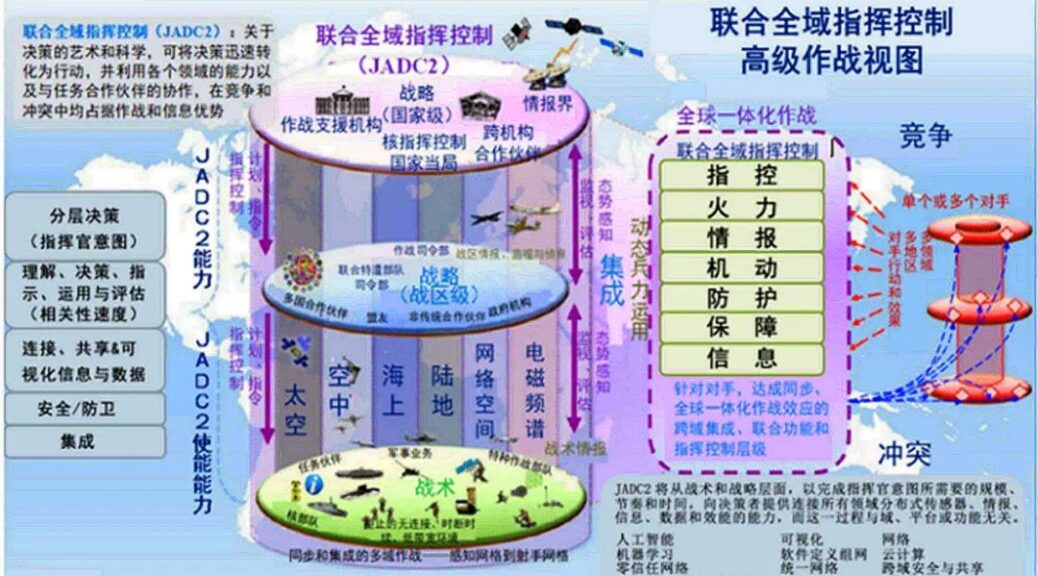
Joint operations, as a fundamental form of modern warfare, have evolved in their winning mechanisms along with advancements in military technology and changes in the nature of warfare. From the coordinated formations of the cold weapon era to the combined arms operations of infantry and artillery in the era of firearms, from joint operations of various services and branches in the era of mechanized warfare to multi-domain joint operations in the era of informationized warfare, each military revolution has brought about fundamental changes in the winning mechanisms of warfare.
Currently, emerging technologies such as artificial intelligence, big data, cloud computing, and the Internet of Things are driving the evolution of warfare towards informatization and intelligence at an unprecedented pace. The connotation and extension of joint operations are constantly expanding, and the mechanisms of victory are also showing a series of new development trends. In-depth research into the development trends of the mechanisms of victory in joint operations, based on a multi-perspective analysis framework, systematically exploring the historical evolution and future development direction of these mechanisms from five dimensions—operation time, operation space, operation force, operation actions, and operation command and control—is of vital importance for accurately grasping the changes in future warfare, scientifically establishing the direction of military force development, and effectively enhancing joint operations capabilities.
From a combat time perspective: the strategy has evolved from step-by-step progression to instantaneous enemy destruction.
Time is one of the fundamental elements of war, and the art of utilizing operational time is key to victory in joint operations. In the era of mechanized warfare, limited by intelligence gathering methods, command and control capabilities, and weapon performance, joint operational operations are typically organized and implemented under strict time constraints, unfolding sequentially in stages: reconnaissance and early warning, fire preparation, forward breakthrough, deep attack, and fortification. Each branch of the armed forces carries out its operational mission according to a predetermined plan at each stage. This operational model results in a relatively slow pace of combat and inefficient use of time, often requiring several days or even months to complete a single operational phase. With the development of information technology and precision-guided weapons, the time-dimensional winning mechanism of modern joint operations is shifting towards “instantaneous enemy destruction.” The pace of combat operations has accelerated significantly, and the division of combat phases has become increasingly blurred. The traditional step-by-step approach is gradually being replaced by “instantaneous” warfare characterized by real-time perception, real-time decision-making, and real-time action. Real-time information sharing and rapid flow have drastically shortened the combat command and decision-making cycle, achieving the “detect and destroy” combat effect. The widespread application of precision-guided weapons has greatly improved the speed and accuracy of firepower strikes, enabling combat forces to carry out devastating strikes against key targets in an instant. In the future, with the development and application of artificial intelligence technology, the speed of combat decision-making and action will be further improved, and the instantaneous nature of joint operations will become more prominent.
From the perspective of operational space: expanding from the tangible battlefield to the intangible space
The operational space is the arena for joint combat forces, and its constantly evolving form and scope directly influence the mechanisms of victory in joint operations. In industrial-era warfare, the operational space was primarily confined to tangible physical spaces such as land, sea, and air. Operations mainly revolved around seizing and controlling key geographical points, transportation lines, and strategic locations, and the deployment of combat forces and the evaluation of operational effectiveness were also primarily based on the tangible spatial scope. Entering the information age, the operational space is undergoing revolutionary changes. In addition to the traditional tangible physical spaces of land, sea, air, and space, intangible spaces such as information space, cyberspace, and psychological space are increasingly becoming important battlefields for joint operations, even determining the outcome of combat to some extent. The struggle for information space has become a primary aspect of joint operations, the battle in cyberspace is intensifying, and the psychological warfare is constantly evolving. The battlefield of modern joint operations is characterized by a fusion of tangible and intangible spaces, and an equal emphasis on the physical and information domains. In the future, with the development of emerging technologies such as quantum technology, biotechnology, and artificial intelligence, the space for joint operations will further expand, potentially giving rise to new operational domains such as quantum space and biological space. The mechanisms for winning in joint operations will also undergo profound changes.
From the perspective of combat power: a shift from human-machine integration to human-machine collaboration.
Combat forces are the material foundation of joint operations, and their composition and deployment directly affect the outcome of such operations. In the era of mechanized warfare, the composition of joint combat forces was primarily a human-equipment integration model, with personnel as the main body and weapons and equipment as the tools. The effectiveness of combat forces depended mainly on the number and quality of personnel, the performance and quantity of weapons and equipment, and the degree of integration between personnel and equipment. Armies around the world emphasize improving the level of personnel-equipment integration through rigorous training to fully leverage the combat effectiveness of weapons and equipment. With the development of emerging technologies such as artificial intelligence, robotics, and big data, the composition and deployment of modern joint combat forces are undergoing profound changes, and human-machine collaboration is becoming a new logic for winning joint combat operations. Unmanned aerial vehicles (UAVs), unmanned ships, unmanned combat vehicles, and unmanned underwater vehicles have become an important component of joint combat forces. They are capable of performing reconnaissance, surveillance, strike, and interference missions in high-risk environments, significantly improving the survivability and combat effectiveness of combat forces. The application of artificial intelligence technology has also endowed weaponry with a certain degree of autonomous action, enabling them to autonomously collaborate with humans to complete complex tasks. Machine intelligence has not only changed the composition of combat forces but also their operational methods. In the future, with the continuous advancement of human-machine integration technology, the boundaries between humans and machines will become increasingly blurred, and human-machine collaboration will reach an even higher level.
From a combat operations perspective: The shift from segmented cooperation to cross-domain integration.
Joint operations are the concrete practice of joint warfare, and their organizational form and implementation methods directly affect the overall effectiveness of joint operations. In traditional joint operations, limited by command and control capabilities and coordination mechanisms between various services and branches, forces from each service and branch can only carry out missions within their respective operational domains and conduct limited cooperation through pre-established coordination plans. This domain-specific cooperation model is prone to problems such as coordination failures and operational disconnects. In the information age, with the improvement of all-domain awareness capabilities and the refinement of command and control methods, joint operations are gradually developing towards cross-domain integration. Cross-domain integration emphasizes breaking down the boundaries between different operational domains, achieving seamless connection and deep integration of operational forces across multiple domains such as land, sea, air, space, electromagnetic, and cyberspace, forming a coordinated overall operational effect. Operational forces in each domain can share battlefield information in real time, dynamically adjust operational actions, rapidly transcend geographical and domain boundaries, and conduct operations simultaneously in multiple domains. Through the integration and sharing of multi-domain information, a high degree of coordination and precise cooperation in operational actions across domains is achieved, forming a synergistic and effective overall operational effect. In the future, with the continuous development of information technology, the degree of cross-domain integration in joint operations will further deepen, becoming a key to victory in joint operations.
From the perspective of combat command and control: Evolution from central radiation to flexible periphery
Operational command and control is the “brain” and “nerve center” of joint operations; its mode selection and effectiveness directly determine the success or failure of joint operations. In the era of mechanized warfare, due to limited command and control technology, joint operational command and control typically adopted a centralized, hierarchical, tree-like organizational model. This model, centered on the highest command organization, implements operational command and control by transmitting orders downwards and feeding back information upwards, possessing significant advantages in centralized and unified action. However, it also suffers from drawbacks such as multiple command levels, slow information transmission, and poor responsiveness. With the development of information network technology and artificial intelligence technology, modern joint operational command and control is evolving towards greater flexibility. A modular and reconfigurable command structure enables the entire combat system to flexibly adjust command relationships and processes according to changes in combat missions and battlefield environments. While maintaining a centralized and unified strategic intent, it grants greater autonomy to tactical nodes at the system’s periphery, thereby enhancing the system’s flexibility and responsiveness, and better adapting to the rapidly changing challenges of future battlefields. In the future, with the development of technologies such as brain-computer interfaces and quantum communication, the real-time nature, accuracy, and flexibility of joint operations command and control will reach new heights.
In conclusion, with the development of emerging technologies such as information technology and artificial intelligence and their widespread application in the military field, the form of joint operations is undergoing continuous evolution, and the mechanisms for winning joint operations are also undergoing profound changes. This not only reshapes traditional operational concepts and methods but also poses new and higher requirements for the development of future joint operational capabilities. Therefore, we must maintain strategic clarity and innovative vitality, closely monitor global military development trends, conduct in-depth research on the mechanisms for winning joint operations, and continuously promote innovation in joint operational theory and practice to lay a solid foundation for winning informationized and intelligent warfare.
Functional Orientation of the Modern Combat System with Chinese Characteristics
Key Points
● The coexistence, iterative development, dynamic evolution, and integrated development of multiple generations of mechanization, informatization, and intelligentization constitute the historical context of national defense and military construction in the new era, and also represent the historical position of building a modern combat system with Chinese characteristics.
● Traditional and non-traditional security threats are intertwined, and various strategic directions and security fields face diverse real and potential threats of local wars. This requires our military to abandon old models such as linear warfare, traditional ground warfare, and homeland defense warfare, and accelerate the transformation to joint operations and all-domain operations.
The report to the 19th National Congress of the Communist Party of China proposed that, standing at a new historical starting point and facing the demands of building a strong country and a strong military, “we should build a modern combat system with Chinese characteristics.” This is a strategic choice to adapt to the rapidly evolving nature of warfare, to thoroughly implement Xi Jinping’s thought on strengthening the military, to comprehensively advance the modernization of national defense and the armed forces, and to aim at building a world-class military. Among these choices, the grasp of the functional orientation of the modern combat system with Chinese characteristics greatly influences the goals, direction, and quality of its construction.
Seize the opportunities of the times and take the integrated development of mechanization, informatization and intelligentization as the historical orientation.
The combat system is the material foundation of war and is closely related to the form of warfare. In today’s world, a new round of technological and industrial revolution is brewing and emerging. Original and disruptive breakthroughs in some major scientific problems are opening up new frontiers and directions, prompting human society to rapidly transform towards intelligence, and accelerating the evolution of warfare towards intelligence. Currently, our military is in a stage of integrated mechanization and informatization development. Mechanization is not yet complete, informatization is being deeply advanced, and we are facing both opportunities and challenges brought about by the intelligent military revolution. The new era provides us with a rare historical opportunity to achieve innovative breakthroughs and rapid development, and also provides a rare historical opportunity for our military’s combat system construction to achieve generational leaps and leapfrog development.
A new era and a new starting point require establishing a new coordinate system. The coexistence, iterative development, dynamic evolution, and integrated development of multiple generations of mechanization, informatization, and intelligentization constitute the historical context of national defense and military construction in the new era, and also the historical position of building a modern combat system with Chinese characteristics. We should accurately grasp the historical process of the evolution of warfare, the historical stage of the combined development of mechanization and informatization, and the historical opportunities brought about by intelligent warfare. We must prioritize the development of military intelligence, using intelligence to lead and drive mechanization and informatization, coordinating mechanization and informatization within the overall framework of intelligent construction, and completing the tasks of mechanization and informatization development within the process of intelligentization. We must focus on top-level design for military intelligence development, researching and formulating a strategic outline and roadmap for military intelligence development, clarifying key areas, core technologies, key projects, and steps for intelligent development, and accelerating the construction of a military intelligent combat system. We must achieve significant progress as soon as possible in key technologies such as deep learning, cross-domain integration, human-machine collaboration, autonomous control, and neural networks, improving the ability to materialize advanced scientific and technological forces into advanced weaponry and equipment, and providing material conditions for building a modern combat system.
Emphasizing system-on-system confrontation, with the development of joint operations and all-domain operations capabilities as the core indicators.
Information-based local wars are characterized by integrated joint operations as their basic form, with network support, information dominance, and system-on-system confrontation as their main features. The combat capability generation model is shifting towards a network-based information system. Currently and for some time to come, my country’s geostrategic environment remains complex, with traditional and non-traditional security threats intertwined. Various strategic directions and security domains face diverse real and potential threats of local wars. Simultaneously, with the expansion of national interests, the security of overseas interests is becoming increasingly prominent, requiring the PLA to abandon old models such as linear warfare, traditional ground warfare, and territorial defense warfare, and accelerate its transformation towards joint operations and all-domain operations.
The report of the 19th CPC National Congress pointed out that “enhancing joint operational capabilities and all-domain operational capabilities based on network information systems” is a new summary of the PLA’s operational capabilities in the new era and a core indicator for building a modern operational system with Chinese characteristics. We should actively explore the characteristics, laws, and winning mechanisms of modern warfare, and proactively design future operational models, force application methods, and command and coordination procedures to provide advanced theoretical support for building a modern operational system with Chinese characteristics. Following the new pattern of the Central Military Commission exercising overall command, theater commands focusing on combat operations, and services focusing on force development, we should adapt to the new joint operational command system, the reform of the military’s size, structure, and force composition, highlighting the network information system as the core support, and building an operational system capable of generating powerful joint operational capabilities to fully leverage the overall power of the various services and branches. With a view to properly addressing various strategic directions and traditional and non-traditional security threats, ensuring the PLA can reliably carry out various operational missions, we should build an operational system capable of generating powerful all-domain operational capabilities, achieving overall linkage across multiple battlefields and domains, including land, sea, air, space, and cyberspace.
Focusing on real threats, the strategic objective is to gain an asymmetric advantage over the enemy.
The world today is at a new turning point in the international situation, with strategic competition among major powers taking on new forms and the struggle for dominance in the international and regional order becoming unprecedentedly fierce. The specter of hegemonism and power politics lingers, and some countries are intensifying their efforts to guard against and contain China. my country’s geostrategic environment is becoming increasingly complex, with multiple destabilizing factors, facing multi-directional security pressures, and an increasingly complex maritime security environment. All of these factors contribute to increasing the dangers and challenges to national security.
Effectively responding to real military security threats is a crucial strategic task in our military preparedness and a strategic direction for building a modern combat system with Chinese characteristics. We should focus on keeping up with technological advancements, vigorously developing advanced equipment, and striving to avoid creating new technological gaps with potential adversaries. This will provide solid material support for the construction of our combat system. Simultaneously, we must emphasize leveraging the PLA’s long-standing principles of flexibility, mobility, and independent operation, capitalizing on our strengths and avoiding weaknesses, targeting the enemy’s vulnerabilities and weaknesses. We should not simply compete with the best in high-tech fields, but rather focus on deterring the enemy and preventing war. We must accelerate the development of asymmetric counterbalancing mechanisms, strengthen the construction of conventional strategic means, new concepts and mechanisms, and strategic deterrence in new domains, supporting the formation of a new combat system with new deterrent and combat capabilities. We must not fear direct confrontation, preparing for the most complex and difficult situations, and building a combat system capable of providing multiple means, forces, and methods to address diverse war threats. This will ensure that, in the event of conflict, the comprehensive effectiveness of the combat system is fully utilized, guaranteeing victory in battle and deterring further war through war.
Promoting military-civilian integration and using the national strategic system to support winning the people’s war in the new era is a fundamental requirement.
The deepest roots of the power of war lie within the people. The concept of people’s war is the magic weapon for our army to defeat the enemy. Modern warfare is a comprehensive confrontation of the combined strength of opposing sides, involving political, economic, military, technological, and cultural fronts. Various armed forces are closely integrated, and various forms of struggle are coordinated with each other. The role and status of civilian technology and civilian forces in war are increasingly important, which further requires integrating the national defense system into the national economic and social system and striving to win the people’s war in the new era.
Leveraging the power of military-civilian integration to support the fight against people’s war in the new era with the national strategic system is a fundamental requirement for building a modern combat system with Chinese characteristics. We must deeply implement the national strategy of military-civilian integration, deeply integrate the construction of our military’s combat system into the national strategic system, utilize national resources and overall strength to achieve a continuous leap in combat effectiveness, and maximize the overall power of people’s war. We must focus on strengthening military-civilian integration in emerging strategic fields, actively seize the commanding heights of future military competition, and continuously create new advantages in people’s war. We must incorporate the military innovation system into the national innovation system, strengthen demand alignment and collaborative innovation, enhance independent innovation, original innovation, and integrated innovation capabilities, and proactively discover, cultivate, and utilize strategic, disruptive, and cutting-edge technologies to provide advanced technological support for building a modern combat system. We must also focus on the in-depth exploitation of civilian resources, strengthen the integration of various resources that can serve national defense and military construction, prevent duplication and waste, self-contained systems, and closed operations, and maximize the incubation effect of civilian resources on the construction of a modern combat system.
(Author’s affiliation: Institute of War Studies, Academy of Military Sciences)
The report to the 19th National Congress of the Communist Party of China pointed out that it is necessary to “accelerate the development of military intelligence and improve joint operational capabilities and all-domain operational capabilities based on network information systems.” Today’s *PLA Daily* published an article stating that military intelligence is a new trend and direction in the development of the military field after mechanization and informatization. We must develop intelligence on the basis of existing mechanization and informatization, while using intelligence to drive mechanization and informatization to a higher level and a higher standard. Cyberspace, as a new operational domain, is a new field with high technological content and the greatest innovative vitality. Under the impetus of military intelligence, it is ushering in a period of rapid development opportunities.Illustration: Lei Yu
Military intelligence is driving the accelerated development of cyberspace operations.
■ Respected soldiers Zhou Dewang Huang Anwei
Three key technologies support the intelligentization of cyberspace weapons.
Intelligence is a kind of wisdom and capability; it is the perception, cognition, and application of laws by all systems with life cycles. Intelligentization is the solidification of this wisdom and capability into a state. Cyberspace weapons are weapons used to carry out combat missions in cyberspace. Their form is primarily software and code, essentially a piece of data. The intelligence of cyberspace weapons is mainly reflected in the following three aspects:
First, there’s intelligent vulnerability discovery. Vulnerabilities are the foundation of cyber weapon design. The ransomware that spread globally this May exploited a vulnerability in the Microsoft operating system, causing a huge shock in the cybersecurity community. Vulnerabilities are expensive, with a single zero-day vulnerability costing tens to hundreds of thousands of dollars. Previously, vulnerability discovery relied mainly on experienced hackers using software tools to inspect and analyze code. However, at the International Cybersecurity Technology Competition finals held during this year’s China Internet Security Conference, participants demonstrated how intelligent robots could discover vulnerabilities on-site, then use these vulnerabilities to write network code, creating cyber weapons to breach target systems and capture the flag. This change signifies that vulnerability discovery has entered the era of intelligent technology.
Second, intelligent signal analysis and cryptography. Signals are the carriers of network data transmission, and cryptography is the last line of defense for network data security. Signal analysis and cryptography are core technologies for cyberspace warfare. Breaking through signals and cryptography is the fundamental path to entering cyberspace and a primary target of cyber weapons attacks. Intelligent signal analysis solves problems such as signal protocol analysis, modulation identification, and individual identification through technologies such as big data, cloud computing, and deep learning. Cryptography is the “crown jewel” of computational science. Intelligent cryptography, through the accumulation of cryptographic data samples, continuously learns and searches for patterns to find the key to decryption, thereby opening the last door of the network data “safe” and solving the critical links of network intrusion and access.
Thirdly, there is the design of intelligent weapon platforms. In 2009, the U.S. military proposed the “Cyber Aircraft” project, providing platforms similar to armored vehicles, ships, and aircraft for cyberspace operations. These platforms can automatically conduct reconnaissance, load cyber weapons, autonomously coordinate, and autonomously attack in cyberspace. When threatened, they can self-destruct and erase traces, exhibiting a certain degree of intelligence. In the future, the weapons loaded onto “Cyber Aircraft” will not be pre-written code by software engineers, but rather intelligent cyber weapons will be designed in real-time based on discovered vulnerabilities, enabling “order-based” development and significantly improving the targeting of cyberspace operations.
The trend of intelligentization in network-controlled weapons is becoming increasingly prominent.
Weapons controlled by cyberspace, or cyber-controlled weapons, are weapons that connect to a network, receive commands from cyberspace, execute cross-domain missions, and achieve combat effects in physical space. Most future combat weapon platforms will be networked, making military information networks essentially the Internet of Things (IoT). These networks connect to satellites, radars, drones, and other network entities, enabling control from perception and detection to tracking, positioning, and strike. The intelligence of cyber-controlled weapons is rapidly developing across land, sea, air, space, and cyber domains.
In 2015, Syria used a Russian robotic force to defeat militants. The operation employed six tracked robots, four wheeled robots, an automated artillery corps, several drones, and a command system. Commanders used the command system to direct drones to locate militants, and the robots then charged, supported by artillery and drone fire, inflicting heavy casualties. This small-scale battle marked the beginning of robotic “team” operations.
Network-controlled intelligent weapons for naval and air battlefields are under extensive research and development and verification. In 2014, the U.S. Navy used 13 unmanned surface vessels to demonstrate and verify the interception of enemy ships by unmanned surface vessel swarms, mainly by exchanging sensor data, and achieved good results. When tested again in 2016, functions such as collaborative task allocation and tactical coordination were added, and “swarm awareness” became its prominent feature of intelligence.
The development of swarms of small, micro-sized drones for aerial combat is also rapid. In recent years, the U.S. Department of Defense has conducted multiple tests of the Partridge micro-drone, capable of deploying dozens or even hundreds at a time. By enhancing its coordination capabilities during reconnaissance missions, progress has been made in drone formation, command, control, and intelligent management.
Space-based cyber-control weapons are becoming increasingly “intelligent.” The space-based cyber-control domain primarily comprises two categories of weapons: reconnaissance and strike weapons. Satellites of various functions mainly perform reconnaissance missions and are typical reconnaissance sensors. With the emergence of various microsatellite constellations, satellites are exhibiting new characteristics: small size, rapid launch, large numbers, and greater intelligence. Microsatellite constellations offer greater flexibility and reliability in performing reconnaissance and communication missions, and currently, the world’s leading satellite powers are actively developing microsatellite constellation plans with broader coverage.
Various hypersonic strike weapons are cruising in the air, like a sword of Damocles hanging over people’s heads. The U.S. Air Force Research Laboratory stated that the “hypersonic strike weapon” will begin flight testing around 2018, and other countries are also actively developing similar weapons. The most prominent features of these weapons are their high speed, long range, and high level of intelligence.
Intelligent command information systems are changing traditional combat command methods.
Cyber weapons and weapons controlled by cyberspace constitute the “fist” of intelligent warfare, while the command information systems that direct the use of these weapons are the “brain” of intelligent warfare. Cyberspace operational command information systems must keep pace with the process of intelligentization. Currently, almost all global command information systems face the challenge of “intelligent lag.” Future warfare requires rapid and autonomous decision-making, which places higher demands on intelligent support systems.
In 2007, the U.S. Defense Advanced Research Projects Agency (DARPA) launched the “Deep Green Program,” a research and development program for command and control systems, aiming to enable computer-aided commanders to make rapid decisions and gain a decisive advantage. This is a campaign-level command information system, developed to be embedded into the U.S. Army’s brigade-level C4ISR wartime command information system, enabling intelligent command by commanders. Even today, the U.S. military has not relaxed its development of intelligent command information systems.
In cyberspace warfare, network targets are represented by a single IP address accessing the network. Their sheer number makes efficient manual operation difficult, necessitating the support of intelligent command and information systems. Currently, intelligent command and information systems need to achieve functions such as intelligent intelligence analysis, intelligent sensing, intelligent navigation and positioning, intelligent decision support, intelligent collaboration, intelligent assessment, and intelligent unmanned combat. In particular, they must enable swarm operational control of unmanned network control systems. All of these requirements urgently demand intelligent command and information systems, necessitating accelerated research and development and application of relevant key technologies.
In conclusion, intelligent cyber weapons and network control weapons, coordinated through intelligent information systems, will form enormous combat capabilities, essentially enabling them to carry out all actions in current combat scenarios. Future warfare, from command force organization to target selection, action methods, and tactical applications, will all unfold within an intelligent context. The “gamification” of warfare will become more pronounced, and operational command methods will undergo significant changes.
In future battlefields, combat will require not only courage but also intelligence.
■ Yang Jian, Zhao Lu
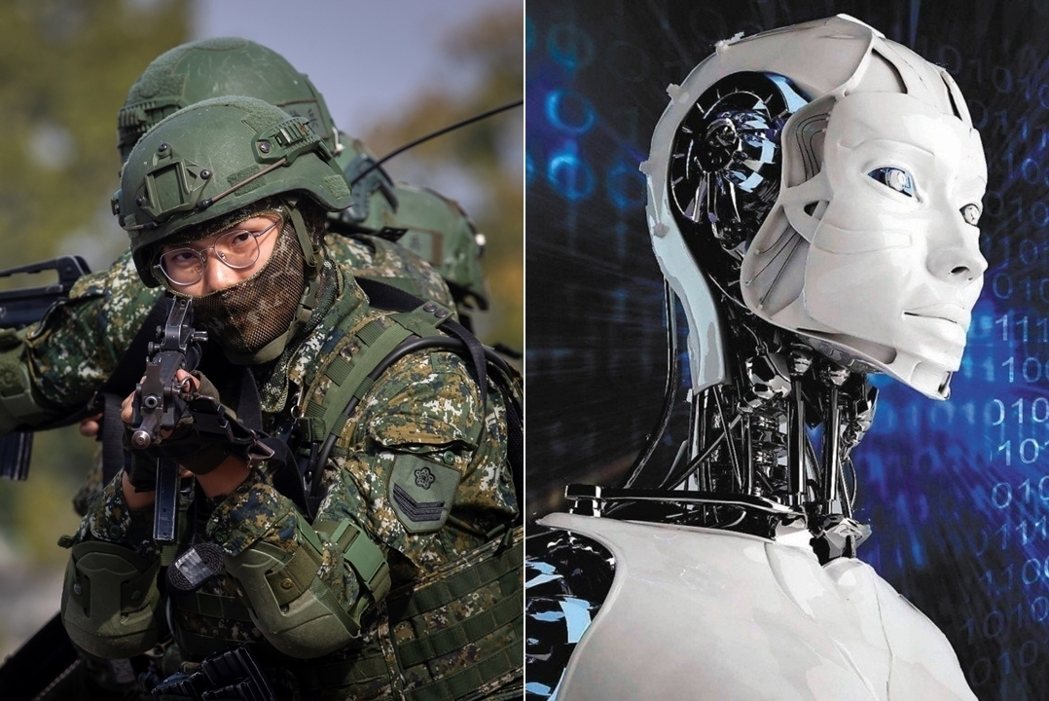
Currently, artificial intelligence is entering a new stage of development and is rapidly penetrating various fields. Influenced by this process, military competition among nations surrounding intelligent technologies has begun. Our army has always been a brave and tenacious people’s army, determined to fight and win. On the future battlefield, we should continue to carry forward our glorious traditions while more broadly mastering and utilizing the latest technological achievements to develop more intelligent weapons and equipment, thereby gaining a decisive advantage on the future battlefield.
Intelligentization is a trend in human societal development, and intelligent warfare is rapidly approaching. The development of military intelligence has a solid foundation thanks to successful innovations that transcend existing computational models, the gradual popularization of nanotechnology, and breakthroughs in research on the mechanisms of the human brain. Consequently, intelligent weaponry is increasingly prominent, surpassing and even replacing human capabilities in areas such as intelligence analysis and combat response. Furthermore, intelligent weaponry offers significant advantages in terms of manpower requirements, comprehensive support, and operating costs, and is increasingly becoming the dominant force in warfare.
The development and application of intelligent weaponry have proven to expand the scope of military operations and significantly enhance the combat effectiveness of troops. In the battlefields of Afghanistan and Iraq, drones have undertaken most of the reconnaissance, intelligence, and surveillance support missions, and have been responsible for approximately one-third of the air strike missions. In the past two years, Russia has also repeatedly used highly intelligent unmanned reconnaissance aircraft and combat robots in the Syrian theater. Intelligent weaponry is increasingly demonstrating its significant value, surpassing that of traditional weapons.
In future wars, the contest of intelligent combat systems will be the key to victory in high-level competition and ultimate showdowns. As the development of technology-supported military means becomes increasingly uneven, whoever first acquires the capability to conduct intelligent warfare will be better positioned to seize the initiative on the battlefield. Those with a technological advantage will minimize the costs of war, while the weaker will inevitably suffer enormous losses and pay a heavy price. We must not only accelerate innovation in core technologies and the development of weaponry, but also research and explore organizational structures, command methods, and operational models adapted to the development of intelligent military operations. Furthermore, we must cultivate a talent pool capable of promoting intelligent military development and forging intelligent combat capabilities, fully leveraging the overall effectiveness of our military’s combat system, and winning wars in a more “intelligent” manner against our adversaries.
Since the beginning of the new century, the rapid development of intelligent technologies, with artificial intelligence (AI) at its core, has accelerated the process of a new round of military revolution, and competition in the military field is rapidly moving towards an era of intellectual dominance. Combat elements represented by “AI, cloud, network, cluster, and terminal,” combined in diverse ways, constitute a new battlefield ecosystem, completely altering the mechanisms of victory in warfare. AI systems based on models and algorithms will be the core combat capability, permeating all aspects and stages, playing a multiplicative, transcendent, and proactive role. Platforms are controlled by AI, clusters are guided by AI, and systems are made to decision by AI. Traditional human-centric tactics are being replaced by AI models and algorithms, making intellectual dominance the core control in future warfare. The stronger the intelligent combat capability, the greater the hope of subduing the enemy without fighting.
[Author Biography] Wu Mingxi is the Chief Scientist and Researcher of China Ordnance Industry Group, Deputy Secretary-General of the Science and Technology Committee of China Ordnance Industry Group, and Deputy Director of the Science and Technology Committee of China Ordnance Science Research Institute. His research focuses on national defense science and technology and weaponry development strategies and planning, policies and theories, management and reform research. His major works include “Intelligent Warfare – AI Military Vision,” etc.
Competition in the Age of Intellectual Property
The history of human civilization is a history of understanding and transforming nature, and also a history of understanding and liberating oneself. Through the development of science and technology and the creation and application of tools, humanity has continuously enhanced its capabilities, reduced its burdens, freed itself from constraints, and liberated itself. The control of war has also constantly changed, enriched, and evolved with technological progress, the expansion of human activity space, and the development of the times. Since the 19th century, humanity has successively experienced the control and struggle for land power, sea power, air power, space power, and information power. With the rapid development of intelligent technologies such as artificial intelligence (AI), big data, cloud computing, bio-interdisciplinary technologies, unmanned systems, and parallel simulation, and their deep integration with traditional technologies, humanity’s ability to understand and transform nature has been transformed in terms of epistemology, methodology, and operational mechanisms. This is accelerating the major technological revolutions in machine intelligence, bionic intelligence, swarm intelligence, human-machine integrated intelligence, and intelligent perception, intelligent decision-making, intelligent action, intelligent support, as well as intelligent design, research and development, testing, and manufacturing, thus accelerating the evolution of warfare towards the control and struggle for intellectual power.
The rapid development of intelligent technology has garnered significant attention from major countries worldwide, becoming a powerful driving force for the leapfrog development of military capabilities. The United States and Russia have placed intelligent technology at the core of maintaining their strategic status as global military powers, and significant changes have occurred in their development concepts, models, organizational methods, and innovative applications. They have also carried out substantive applications and practices of military intelligence (see Figure 1).
In August 2017, the U.S. Department of Defense stated that future AI warfare was inevitable and that the U.S. needed to “take immediate action” to accelerate the development of AI warfare technologies. The U.S. military’s “Third Offset Strategy” posits that a military revolution, characterized by intelligent armies, autonomous equipment, and unmanned warfare, is underway; therefore, they have identified intelligent technologies such as autonomous systems, big data analytics, and automation as key development directions. In June 2018, the U.S. Department of Defense announced the establishment of the Joint Artificial Intelligence Center, which, guided by the national AI development strategy, coordinates the planning and construction of the U.S. military’s intelligent military system. In February 2019, then-President Trump signed the “American Artificial Intelligence Initiative” executive order, emphasizing that maintaining U.S. leadership in AI is crucial for safeguarding U.S. economic and national security, and requiring the federal government to invest all resources in promoting innovation in the U.S. AI field. In March 2021, the U.S. National Security Council on Artificial Intelligence released a research report stating that, “For the first time since World War II, the technological advantage that has been the backbone of U.S. economic and military power is under threat. If current trends do not change, China possesses the power, talent, and ambition to surpass the United States as the global leader in artificial intelligence within the next decade.” The report argues that the United States must use artificial intelligence swiftly and responsibly to prepare for these threats in order to safeguard national security and enhance defense capabilities. The report concludes that artificial intelligence will transform the world, and the United States must take a leading role.
Russia also attaches great importance to the technological development and military application of artificial intelligence. The Russian military generally believes that artificial intelligence will trigger the third revolution in the military field, following gunpowder and nuclear weapons. In September 2017, Russian President Vladimir Putin publicly stated that artificial intelligence is the future of Russia, and whoever becomes the leader in this field will dominate the world. In October 2019, Putin approved the “Russian National Strategy for the Development of Artificial Intelligence until 2030,” aiming to accelerate the development and application of artificial intelligence in Russia and seek a world-leading position in the field.
In July 2017, the State Council of China issued the “New Generation Artificial Intelligence Development Plan,” which put forward the guiding ideology, strategic goals, key tasks and safeguard measures for the development of new generation artificial intelligence towards 2030, and deployed efforts to build a first-mover advantage in the development of artificial intelligence and accelerate the construction of an innovative country and a world-class science and technology power.
Other major countries and military powers around the world have also launched their own artificial intelligence development plans, indicating that the global struggle for “intellectual power” has fully unfolded. Land power, sea power, air power, space power, information power, and intellectual power are all results of technological progress and products of their time, each with its own advantages and disadvantages, and some theories are constantly expanding with the changing times. From the development trend of control over warfare since modern times, it can be seen that information power and intellectual power involve the overall situation, carrying greater weight and influence. In the future, with the accelerated pace of intelligent development, intellectual power will become a rapidly growing new type of battlefield control with greater strategic influence on the overall combat situation.
The essence of military intelligence lies in leveraging intelligent technologies to establish diverse identification, decision-making, and control models for the war system. These models constitute artificial intelligence (AI), the core of the new era’s intellectual power struggle. The war system encompasses: equipment systems such as individual units, clusters, manned/unmanned collaborative operations, and multi-domain and cross-domain warfare; combat forces such as individual soldiers, squads, detachments, combined arms units, and theater command; operational links such as networked perception, mission planning and command, force coordination, and comprehensive support; specialized systems such as network attack and defense, electronic warfare, public opinion control, and infrastructure management; and military industrial capabilities such as intelligent design, research and development, production, mobilization, and support. AI, in the form of chips, algorithms, and software, is embedded in every system, level, and link of the war system, forming a systematic brain. Although AI is only a part of the war system, its increasingly powerful “brain-like” functions and capabilities “surpassing human limits” will inevitably dominate the overall situation of future warfare.
Battlefield Ecosystem Reconstruction
Traditional warfare involves relatively independent and separate combat elements, resulting in a relatively simple battlefield ecosystem, primarily consisting of personnel, equipment, and tactics. In the intelligent era, warfare is characterized by significant integration, correlation, and interaction among various combat elements. This will lead to substantial changes in the battlefield ecosystem, forming a combat system, cluster system, and human-machine system comprised of an AI brain, distributed cloud, communication networks, collaborative groups, and various virtual and physical terminals—collectively known as the “AI, Cloud, Network, Cluster, Terminal” intelligent ecosystem (see Figure 2). Among these, AI plays a dominant role.
AI Brain System. The AI brain system of the intelligent battlefield is a networked and distributed system that is inseparable from and interdependent with combat platforms and missions. It can be classified in several ways. Based on function and computing power, it mainly includes cerebellum, swarm brain, midbrain, hybrid brain, and cerebrum; based on combat missions and stages, it mainly includes sensor AI, combat mission planning and decision-making AI, precision strike and controllable destruction AI, network attack and defense AI, electronic warfare AI, intelligent defense AI, and integrated support AI; based on form, it mainly includes embedded AI, cloud AI, and parallel system AI.
The cerebellum mainly refers to the embedded AI in sensor platforms, combat platforms, and support platforms, which mainly performs tasks such as battlefield environment detection, target recognition, rapid maneuver, precision strike, controlled destruction, equipment support, maintenance support, and logistical support.
“Swarm brain” mainly refers to the AI that enables intelligent control of unmanned swarm platforms on the ground, in the air, at sea, in the water, and in space. It mainly performs tasks such as collaborative perception of the battlefield environment, swarm maneuver, swarm attack, and swarm defense. The key components include algorithms for homogeneous swarm systems and algorithms for heterogeneous systems such as manned-unmanned collaboration.
The midbrain mainly refers to the AI system of the command center, data center, and edge computing of the front-line units on the battlefield. It mainly performs dynamic planning, autonomous decision-making, and auxiliary decision-making for tactical unit combat missions under online and offline conditions.
Hybrid brain mainly refers to a hybrid decision-making system in which commanders and machine AI collaborate in combat operations of organized units. Before the battle, it mainly performs human-based combat mission planning; during the battle, it mainly performs adaptive dynamic mission planning and adjustment based on machine AI; and after the battle, it mainly performs hybrid decision-making tasks oriented towards counter-terrorism and defense.
The “brain” primarily refers to the model, algorithm, and tactical libraries of the theater command center and data center, playing a key supporting role in campaign and strategic decision-making. Due to the abundant data, various battlefield AI systems can be trained and modeled here, and then loaded into different mission systems once mature.
In future battlefields, there will be other AIs of different functions, types, and sizes, such as sensor AI, which mainly includes image recognition, electromagnetic spectrum recognition, sound recognition, speech recognition, and human activity behavior recognition. With the rapid development and widespread application of intelligence, AIs of all sizes will exist throughout society, serving the public and society in peacetime, and potentially serving the military in wartime.
Distributed cloud. Military cloud differs from civilian cloud. Generally speaking, a military cloud platform is a distributed resource management system that uses communication networks to search, collect, aggregate, analyze, calculate, store, and distribute operational information and data. By constructing a distributed system and a multi-point fault-tolerant backup mechanism, a military cloud platform possesses powerful intelligence sharing capabilities, data processing capabilities, resilience, and self-healing capabilities. It can provide fixed and mobile, public and private cloud services, achieving “one-point collection, everyone sharing,” greatly reducing information flow links, making command processes flatter and faster, and avoiding redundant and decentralized construction at all levels.
From the perspective of future intelligent warfare needs, military cloud needs to construct at least a four-tiered system: tactical front-end cloud, troop cloud, theater cloud, and strategic cloud. Based on operational elements, it can also be divided into specialized cloud systems such as intelligence cloud, situational awareness cloud, firepower cloud, information warfare cloud, support cloud, and nebula.
1. Front-end cloud primarily refers to computing services provided by units, squads, and platforms, including information perception, target identification, battlefield environment analysis, autonomous and assisted decision-making, and operational process and effect evaluation. The role of front-end cloud is mainly reflected in two aspects. First, it facilitates the sharing and collaboration of computing and storage resources among platforms, and the interactive integration of intelligent combat information. For example, if a platform or terminal is attacked, relevant perception information, damage status, and historical data will be automatically backed up, replaced, and updated through a networked cloud platform, and the relevant information will be uploaded to the higher command post. Second, it provides online information services and intelligent software upgrades for offline terminals.
2. Military cloud primarily refers to the cloud systems built at the battalion and brigade level for operations. Its focus is on providing computing services such as intelligent perception, intelligent decision-making, autonomous action, and intelligent support in response to different threats and environments. The goal of military cloud construction is to establish a networked, automatically backed-up, distributed cloud system connected to multiple links with higher-level units. This system should meet the computing needs of different forces, including reconnaissance and perception, mobile assault, command and control, firepower strikes, and logistical support, as well as the computing needs of various combat missions such as tactical joint operations, manned/unmanned collaboration, and swarm offense and defense.
3. Theater Cloud primarily provides battlefield weather, geographical, electromagnetic, human, and social environmental factors and information data for the entire operational area. It offers comprehensive information on troop deployments, weaponry, movement changes, and combat losses for both sides, as well as relevant information from higher command, friendly forces, and civilian support. Theater Cloud should possess networked, customized, and intelligent information service capabilities. It should interconnect with various operational units through military communication networks (space-based, airborne, ground-based, maritime, and underwater) and civilian communication networks (under secure measures) to ensure efficient, timely, and accurate information services.
4. Strategic cloud is mainly established by a country’s defense system and military command organs. It is primarily based on military information and covers comprehensive information and data related to defense technology, defense industry, mobilization support, economic and social support capabilities, as well as politics, diplomacy, and public opinion. It provides core information, assessments, analyses, and suggestions such as war preparation, operational planning, operational schemes, operational progress, battlefield situation, and battle situation analysis; and provides supporting data such as strategic intelligence, the military strength of adversaries, and war mobilization potential.
The various clouds mentioned above are interconnected, exhibiting both hierarchical and horizontal relationships of collaboration, mutual support, and mutual service. The core tasks of the military cloud platform are twofold: first, to provide data and computing support for building an AI-powered intelligent warfare system; and second, to provide operational information, computing, and data support for various combat personnel and weapon platforms. Furthermore, considering the needs of terminals and group operations, it is necessary to pre-process some cloud computing results, models, and algorithms into intelligent chips and embed them into weapon platforms and group terminals, enabling online upgrades or offline updates.
Communication networks. Military communication and network information constitute a complex super-network system. Since military forces primarily operate in land, sea, air, space, field maneuver, and urban environments, their communication networks encompass strategic and tactical communications, wired and wireless communications, secure communications, and civilian communications. Among these, wireless, mobile, and free-space communication networks are the most crucial components of the military network system, and related integrated electronic information systems are gradually established based on these communication networks.
Military communications in the mechanized era primarily followed the platform, terminal, and user, satisfying specific needs but resulting in numerous silos and extremely poor interconnectivity. In the information age, this situation is beginning to change. Currently, military communication networks are adopting new technological systems and development models, characterized by two main features: first, “network-data separation,” where information transmission does not depend on any specific network transmission method—”network access is all that matters”—any information can be delivered as long as the network link is unobstructed; second, internet-based architecture, utilizing IP addresses, routers, and servers to achieve “all roads lead to Beijing,” i.e., military networking or grid-based systems. Of course, military communication networks differ from civilian networks. Strategic and specialized communication needs exist at all times, such as nuclear button communications for nuclear weapons and command and control of strategic weapons, information transmission for satellite reconnaissance, remote sensing, and strategic early warning, and even specialized communications in individual soldier rooms and special operations conditions. These may still adopt a mission-driven communication model. Even so, standardization and internet connectivity are undoubtedly the future trends in military communication network development. Otherwise, not only will the number of battlefield communication frequency bands, radios, and information exchange methods increase, leading to self-interference, mutual interference, and electromagnetic compatibility difficulties, but radio spectrum management will also become increasingly complex. More importantly, it will be difficult for platform users to achieve automatic communication based on IP addresses and routing structures, unlike email on the internet where a single command can be sent to multiple users. Future combat platforms will certainly be both communication user terminals and also function as routers and servers.
Military communication network systems mainly include space-based communication networks, military mobile communication networks, data links, new communication networks, and civilian communication networks.
1. Space-Based Information Networks. The United States leads in the construction and utilization of space-based information networks. This is because more than half of the thousands of orbiting platforms and payloads in space are American-owned. Following the Gulf War, and especially during the Iraq War, the US military accelerated the application and advancement of space-based information networks through wartime experience. After the Iraq War, through the utilization of space-based information and the establishment of IP-based interconnection, nearly 140 vertical “chimneys” from the Gulf War period were completely interconnected horizontally, significantly shortening the “Out-of-Target-Action” (OODA) loop time. The time from space-based sensors to the shooter has been reduced from tens of hours during the Gulf War to approximately 20 seconds currently using artificial intelligence for identification.
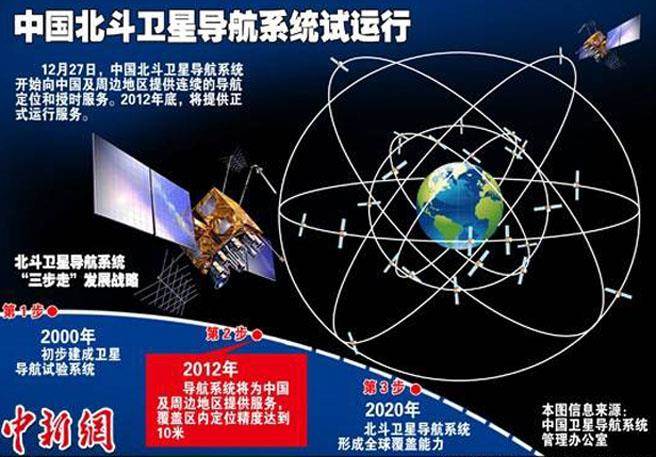
With the rapid development of small satellite technology, low-cost, multi-functional small satellites are becoming increasingly common. As competition intensifies in commercial launches, costs are dropping dramatically, and a single launch can carry several, a dozen, or even dozens of small satellites. If miniaturized electronic reconnaissance, visible light and infrared imaging, and even quantum dot micro-spectroscopy instruments are integrated onto these satellites, achieving integrated reconnaissance, communication, navigation, meteorological, and mapping functions, the future world and battlefield will become much more transparent.
2. Military Mobile Communication Networks. Military mobile communication networks have three main uses. First, command and control between various branches of the armed forces and combat units in joint operations; this type of communication requires a high level of confidentiality, reliability, and security. Second, communication between platforms and clusters, requiring anti-jamming capabilities and high reliability. Third, command and control of weapon systems, mostly handled through data links.
Traditional military mobile communication networks are mostly “centralized, vertically focused, and tree-like structures.” With the acceleration of informatization, the trend towards “decentralized, self-organizing networks, and internet-based” is becoming increasingly apparent. As cognitive radio technology matures and is widely adopted (see Figure 3), future network communication systems will be able to automatically identify electromagnetic interference and communication obstacles on the battlefield, quickly locate available spectrum resources, and conduct real-time communication through frequency hopping and other methods. Simultaneously, software and cognitive radio technology can be compatible with different communication frequency bands and waveforms, facilitating seamless transitions from older to newer systems.
3. Data Links. A data link is a specialized communication technology that uses time division, frequency division, and code division to transmit pre-agreed, periodic, or irregular, regular or irregular critical information between various combat platforms. Unless fully understood or deciphered by the enemy, it is very difficult to interfere with. Data links are mainly divided into two categories: dedicated and general-purpose. Joint operations, formation coordination, and swarm operations primarily utilize general-purpose data links. Satellite data links, UAV data links, missile-borne data links, and weapon fire control data links are currently mostly dedicated. In the future, generalization will be a trend, and specialization will decrease. Furthermore, from the perspective of the relationship between platforms and communication, the information transmission and reception of platform sensors and internal information processing generally follow the mission system, exhibiting strong specialization characteristics, while communication and data transmission between platforms are becoming increasingly general-purpose.
4. New Communication Technologies. Traditional military communication primarily relies on microwave communication. Due to its large divergence angle and numerous application platforms, corresponding electronic jamming and microwave attack methods have developed rapidly, making it easy to carry out long-range interference and damage. Therefore, new communication technologies such as millimeter waves, terahertz waves, laser communication, and free-space optical communication have become important choices that are both anti-jamming and easy to implement high-speed, high-capacity, and high-bandwidth communication. Although high-frequency electromagnetic waves have good anti-jamming performance due to their smaller divergence angle, achieving precise point-to-point aiming and omnidirectional communication still presents certain challenges, especially under conditions of high-speed maneuvering and rapid trajectory changes of combat platforms. How to achieve alignment and omnidirectional communication is still under technological exploration.
5. Civilian Communication Resources. The effective utilization of civilian communication resources is a strategic issue that must be considered and cannot be avoided in the era of intelligentization. In the future, leveraging civilian communication networks, especially 5G/6G mobile communications, for open-source information mining and data correlation analysis to provide battlefield environment, target, and situational information will be crucial for both combat and non-combat military operations. In non-combat military operations, especially overseas peacekeeping, rescue, counter-terrorism, and disaster relief, the military’s dedicated communication networks can only be used within limited areas and regions, raising the question of how to communicate and connect with the outside world. There are two main ways to utilize civilian communication resources: one is to utilize civilian satellite communication resources, especially small satellite communication resources; the other is to utilize civilian mobile communication and internet resources.
The core issue in the interactive utilization of military and civilian communication resources is addressing security and confidentiality. One approach is to employ firewalls and encryption, directly utilizing civilian satellite communications and global mobile communication infrastructure for command and communication; however, the risks of hacking and cyberattacks remain. Another approach is to utilize emerging technologies such as virtualization, intranets, semi-physical isolation, one-way transmission, mimicry defense, and blockchain to address these challenges.
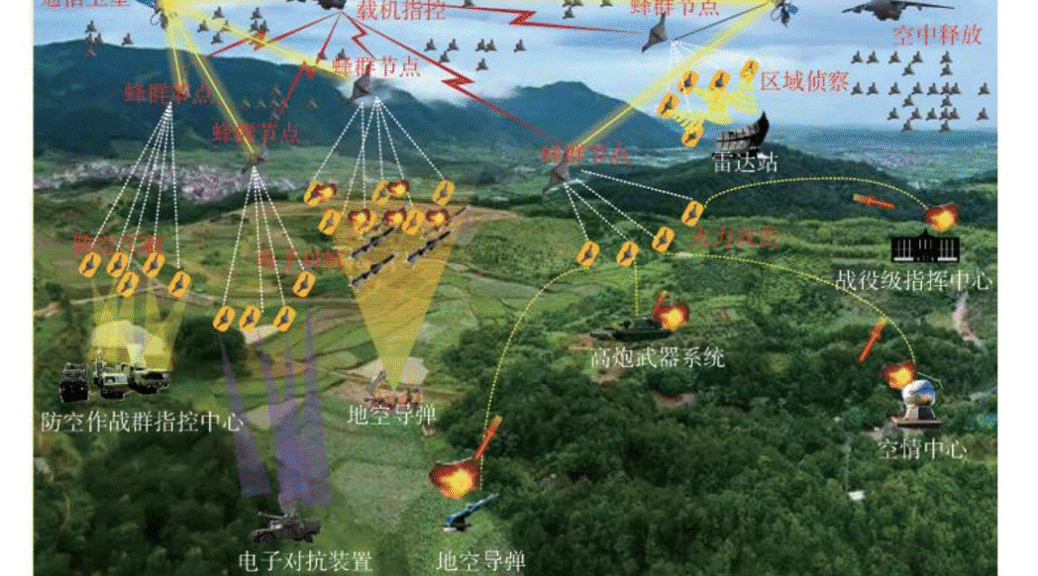
Collaborative swarms. By simulating the behavior of bee colonies, ant colonies, flocks of birds, and schools of fish in nature, this research studies the autonomous collaborative mechanisms of swarm systems such as drones and smart munitions to accomplish combat missions such as attacking or defending against enemy targets. This can achieve strike effects that are difficult to achieve with traditional combat methods and approaches. Collaborative swarms are an inevitable trend in intelligent development and a major direction and key area of intelligent construction. No matter how advanced the combat performance or how powerful the functions of a single combat platform, it cannot form a collective or scalable advantage. Simply accumulating quantity and expanding scale, without autonomous, collaborative, and orderly intelligent elements, is just a disorganized mess.
Collaborative swarms mainly comprise three aspects: first, manned/unmanned collaborative swarms formed by the intelligent transformation of existing platforms, primarily constructed from large and medium-sized combat platforms; second, low-cost, homogeneous, single-function, and diverse combat swarms, primarily constructed from small unmanned combat platforms and munitions; and third, biomimetic swarms integrating human and machine intelligence, possessing both biological and machine intelligence, primarily constructed from highly autonomous humanoid, reptile-like, avian-like, and marine-like organisms. Utilizing collaborative swarm systems for cluster warfare, especially swarm warfare, offers numerous advantages and characteristics.
1. Scale Advantage. A large unmanned system can disperse combat forces, increasing the number of targets the enemy can attack and forcing them to expend more weapons and ammunition. The survivability of a swarm, due to its sheer number, is highly resilient and resilient; the survivability of a single platform becomes less important, while the overall advantage becomes more pronounced. The sheer scale prevents drastic fluctuations in combat effectiveness, because unlike high-value manned combat platforms and complex weapon systems such as the B-2 strategic bomber and advanced F-22 and F-35 fighter jets, the loss of a low-cost unmanned platform, once attacked or destroyed, results in a sharp decline in combat effectiveness. Swarm operations can launch simultaneous attacks, overwhelming enemy defenses. Most defensive systems have limited capabilities, able to handle only a limited number of threats at a time. Even with dense artillery defenses, a single salvo can only hit a limited number of targets, leaving some to escape. Therefore, swarm systems possess extremely strong penetration capabilities.
2. Cost Advantage. Swarm warfare, especially bee warfare, primarily utilizes small and medium-sized UAVs, unmanned platforms, and munitions. These have simple product lines, are produced in large quantities, and have consistent quality and performance requirements, facilitating low-cost mass production. While the pace of upgrades and replacements for modern weapons and combat platforms has accelerated significantly, the cost increases have also been staggering. Since World War II, weapons development and procurement prices have shown that equipment costs and prices have risen much faster than performance improvements. Main battle tanks during the Gulf War cost 40 times more than those during World War II, while combat aircraft and aircraft carriers cost as much as 500 times more. From the Gulf War to 2020, the prices of various main battle weapons and equipment increased several times, tens of times, or even hundreds of times. In comparison, small and medium-sized UAVs, unmanned platforms, and munitions with simple product lines have a clear cost advantage.
3. Autonomous Advantage. Under a unified spatiotemporal reference platform, through networked active and passive communication and intelligent perception of battlefield targets, individual platforms in the group can accurately perceive the distance, speed, and positional relationships between each other. They can also quickly identify the nature, size, priority, and distance of target threats, as well as their own distance from neighboring platforms. With pre-defined operational rules, one or more platforms can conduct simultaneous or wave-based attacks according to the priority of target threats, or they can attack in groups simultaneously or in multiple waves (see Figure 4). Furthermore, the priority order for subsequent platforms to replace a damaged platform can be clearly defined, ultimately achieving autonomous decision-making and action according to pre-agreed operational rules. This intelligent combat operation, depending on the level of human involvement and the difficulty of controlling key nodes, can be either completely autonomous, or semi-autonomous, with human intervention.
4. Decision-making advantage. The future battlefield environment is becoming increasingly complex, with combatants vying for dominance in intense strategic maneuvering and confrontation. Therefore, relying on humans to make decisions in a high-intensity confrontation environment is neither timely nor reliable. Thus, only by entrusting automated environmental adaptation, automatic target and threat identification, autonomous decision-making, and coordinated action to collaborative groups can adversaries be rapidly attacked or effective defenses implemented, thereby gaining battlefield advantage and initiative.
The coordination group brings new challenges to command and control. How to implement command and control of the cluster is a new strategic issue. Control can be implemented in a hierarchical and task-based manner, which can be roughly divided into centralized control mode, hierarchical control mode, consistent coordination mode, and spontaneous coordination mode. [1] Various forms can be adopted to achieve human control and participation. Generally speaking, the smaller the tactical unit, the more autonomous action and unmanned intervention should be adopted; at the level of organized unit operations, since the control of multiple combat groups is involved, centralized planning and hierarchical control are required, and human participation should be limited; at the higher strategic and operational levels, the cluster is only used as a platform weapon and combat style, which requires unified planning and layout, and the degree of human participation will be higher. From the perspective of mission nature, the operation and use of strategic weapons, such as nuclear counterattacks, requires human operation and is not suitable for autonomous handling by weapon systems. When conducting offensive and defensive operations against important or high-value targets, such as decapitation strikes, full human participation and control are necessary, while simultaneously leveraging the autonomous functions of the weapon systems. For offensive operations against tactical targets, if the mission requires lethal strikes and destruction, limited human participation is permissible, or, after human confirmation, the coordinated group can execute the operation automatically. When performing non-strike missions such as reconnaissance, surveillance, target identification, and clearance, or short-duration missions such as air defense and missile defense where human involvement is difficult, the coordinated group should primarily execute these tasks automatically, without human involvement. Furthermore, countermeasures for swarm operations must be carefully studied. Key research should focus on countermeasures against electronic deception, electromagnetic interference, cyberattacks, and high-power microwave weapons, electromagnetic pulse bombs, and artillery-missile systems, as their effects are relatively significant. Simultaneously, research should be conducted on countermeasures such as laser weapons and swarm-to-swarm tactics, gradually establishing a “firewall” that humans can effectively control against coordinated groups.
Virtual and physical terminals. Virtual and physical terminals mainly refer to various terminals linked to the cloud and network, including sensors with pre-embedded intelligent modules, command and control platforms, weapon platforms, support platforms, related equipment and facilities, and combat personnel. Future equipment and platforms will be cyber-physical systems (CPS) and human-computer interaction systems with diverse front-end functions, cloud-based back-end support, virtual-physical interaction, and online-offline integration. Simple environmental perception, path planning, platform maneuverability, and weapon operation will primarily rely on front-end intelligence such as bionic intelligence and machine intelligence. Complex battlefield target identification, combat mission planning, networked collaborative strikes, combat situation analysis, and advanced human-computer interaction will require information, data, and algorithm support from back-end cloud platforms and cloud-based AI. The front-end intelligence and back-end cloud intelligence of each equipment platform should be combined for unified planning and design, forming a comprehensive advantage of integrated front-end and back-end intelligence. Simultaneously, virtual soldiers, virtual staff officers, virtual commanders, and their intelligent and efficient interaction with humans are also key areas and challenges for future research and development.
Qualitative change in the form of warfare
Since modern times, human society has mainly experienced large-scale mechanized warfare and smaller-scale informationized local wars. The two world wars that occurred in the first half of the 20th century were typical examples of mechanized warfare. The Gulf War, the Kosovo War, the Afghanistan War, the Iraq War, and the Syrian War since the 1990s fully demonstrate the form and characteristics of informationized warfare. In the new century and new stage, with the rapid development and widespread application of intelligent technologies, the era of intelligent warfare, characterized by data and computing, models and algorithms, is about to arrive (see Figure 5).
Mechanization is a product of the industrial age, focusing on mechanical power and electrical technology. Its weaponry primarily manifests as tanks, armored vehicles, artillery, aircraft, and ships, corresponding to mechanized warfare. Mechanized warfare is mainly based on classical physics, represented by Newton’s laws, and large-scale socialized production. It is characterized by large-scale, linear, and contact warfare. Tactically, it typically involves on-site reconnaissance, terrain surveys, understanding the opponent’s forward and rear deployments, making decisions based on one’s own capabilities, implementing offensive or defensive maneuvers, and assigning tasks, coordinating operations, and ensuring logistical support. It exhibits clear characteristics such as hierarchical command and control and sequential temporal and spatial operations.
Information technology, a product of the information age, focuses on information technologies such as computers and network communications. Its equipment primarily manifests as radar, radios, satellites, missiles, computers, military software, command and control systems, cyber and electronic warfare systems, and integrated electronic information systems, corresponding to the form of information warfare. Information warfare is mainly based on the three laws of computers and networks (Moore’s Law, Gilder’s Law, and Metcalfe’s Law), emphasizing integrated, precise, and three-dimensional operations. It establishes a seamless and rapid information link from sensor to shooter, seizing information dominance and achieving preemptive detection and strike. Tactically, it requires detailed identification and cataloging of the battlefield and targets, highlighting the role of networked perception and command and control systems, and placing new demands on the interconnectivity and other information functions of platforms. Due to the development of global information systems and diversified network communications, information warfare blurs the lines between front and rear lines, emphasizing horizontal integration of reconnaissance, control, strike, assessment, and support, as well as the integration and flattening of strategy, campaign, and tactics.
Intelligentization is a product of the knowledge economy era. Technologically, it focuses on intelligent technologies such as artificial intelligence, big data, cloud computing, cognitive communication, the Internet of Things, biological cross-disciplinary, hybrid enhancement, swarm intelligence, autonomous navigation and collaboration. In terms of equipment, it mainly manifests as unmanned platforms, intelligent munitions, swarm systems, intelligent sensing and database systems, adaptive mission planning and decision-making systems, combat simulation and parallel training systems, military cloud platforms and service systems, public opinion early warning and guidance systems, and intelligent wearable systems, which correspond to the form of intelligent warfare.
Intelligent warfare, primarily based on biomimetic, brain-like principles, and AI-driven battlefield ecosystems, is a new combat form characterized by “energy mobility and information interconnection,” supported by “network communication and distributed cloud,” centered on “data computing and model algorithms,” and focused on “cognitive confrontation.” It features multi-domain integration, cross-domain offense and defense, unmanned operation, cluster confrontation, and integrated interaction between virtual and physical spaces.
Intelligent warfare aims to meet the needs of nuclear and conventional deterrence, joint operations, all-domain operations, and non-war military operations. It focuses on multi-domain integrated operations encompassing cognitive, informational, physical, social, and biological domains, exhibiting characteristics such as distributed deployment, networked links, flattened structures, modular combinations, adaptive reconfiguration, parallel interaction, focused energy release, and nonlinear effects. Its winning mechanisms overturn traditions, its organizational forms undergo qualitative changes, its operational efficiency is unprecedentedly improved, and its combat power generation mechanisms are transformed. These substantial changes are mainly reflected in the following ten aspects.
The Winning Mechanism Dominated by AI. Under intelligent conditions, new combat elements represented by “AI, cloud, network, cluster, and terminal” will reshape the battlefield ecosystem, completely changing the winning mechanism of war. Among them, AI systems based on models and algorithms are the core combat capability, permeating all aspects and links, playing a multiplicative, transcendent, and proactive role. Platforms are controlled by AI, clusters are guided by AI, and systems are made by AI. The traditional human-based combat methods are being replaced by AI models and algorithms. Algorithmic warfare will play a decisive role in war, and the combat system and process will ultimately be dominated by AI. The right to intelligence will become the core control in future warfare.
Different eras and different forms of warfare result in different battlefield ecosystems, with entirely different compositions of combat elements and winning mechanisms. Mechanized warfare is platform-centric warfare, with “movement” as its core and firepower and mobility as its dominant forces, pursuing energy delivery and release through equipment. Combat elements mainly include: personnel + mechanized equipment + tactics. The winning mechanism is based on human-led decision-making in the operational use of mechanized equipment, achieving victory with superior numbers, overwhelming smaller forces, and controlling slower forces, with comprehensive, efficient, and sustainable mobilization capabilities playing decisive or important roles. Informationized warfare is network-centric warfare, with “connectivity” as its core and information power as its dominant force, pursuing energy aggregation and release through networks. Combat elements and their interrelationships mainly consist of “personnel + informationized equipment + tactics” based on network information. Information permeates personnel, equipment, and tactics, establishing seamless information connections “from sensor to shooter,” achieving system-wide and networked combat capabilities, using systems against localized forces, networks against discrete forces, and speed against slow forces, becoming a crucial mechanism for achieving victory in war. Information plays a multiplier role in equipment and combat systems, but the platform remains human-centric. Information assists in decision-making, but most decisions are still made by humans. Intelligent warfare is cognitive-centric warfare, with “computation” at its core and intelligence as the dominant force. Intelligence will carry more weight than firepower, mobility, and information power, pursuing the use of intelligence to control and dominate capabilities, using the virtual to overcome the real, and achieving victory through superiority. The side with more AI and whose AI is smarter will have greater initiative on the battlefield. The main combat elements and their interrelationships are: AI × (cloud + network + swarm + human + equipment + tactics), which can be simplified to an interconnected and integrated battlefield ecosystem composed of “AI, cloud, network, swarm, and terminal” elements. In the future, AI’s role in warfare will become increasingly significant and powerful, ultimately playing a decisive and dominant role.
Emphasizing the leading role of AI does not deny the role of humans in warfare. On the one hand, human intelligence has been pre-emptively utilized and endowed into AI; on the other hand, at the pre-war, post-war, and strategic levels, for a considerable period of time and in the foreseeable future, AI cannot replace humans.
Modern warfare is becoming increasingly complex, with combat operations moving at ever faster paces. The ability to quickly identify and process massive amounts of information, respond rapidly to battlefield situations, and formulate decisive strategies is far beyond human capability and exceeds the limits of current technology (see Tables 1 and 2). As AI becomes more widely applied and plays a more significant role in warfare, operational processes will be reshaped, and the military kill chain will be accelerated and made more efficient. Rapid perception, decision-making, action, and support will become crucial factors for victory in future intelligent warfare.
In the future, intelligent recognition and pattern recognition of images, videos, electromagnetic spectrum, and voice will enable rapid and accurate target identification from complex battlefield information gathered by air, land, and sea sensor networks. Utilizing big data technology, through multi-source, multi-dimensional directional search and intelligent correlation analysis, not only can various targets be accurately located, but also human behavior, social activities, military operations, and public opinion trends can be precisely modeled, gradually improving the accuracy of early warning and prediction. Based on precise battlefield information, each theater and battlefield can adaptively implement mission planning, autonomous decision-making, and operational process control through extensive parallel modeling and simulation training in virtual space. AI on various combat platforms and cluster systems can autonomously and collaboratively execute tasks around operational objectives according to mission planning, and proactively adjust to changes that may occur at any time. By establishing a distributed, networked, intelligent, and multi-modal support system and pre-positioned deployment, rapid and precise logistics distribution, material supply, and intelligent maintenance can be implemented. In summary, through the widespread application of intelligent technologies and the proactive and evolving capabilities of various AI systems, the entire operational process—including planning, prediction, perception, decision-making, implementation, control, and support—can be re-engineered to achieve a “simple, fast, efficient, and controllable” operational workflow. This will gradually free humanity from the burdens of arduous combat tasks. Operational workflow re-engineering will accelerate the pace, compress time, and shorten processes on the future battlefield.
The winning mechanism dominated by AI is mainly manifested in combat capabilities, methods, strategies, and measures. It fully integrates human intelligence, approaches human intelligence, surpasses human limits, leverages the advantages of machines, and embodies advancement, disruption, and innovation. This advancement and innovation is not a simple extension or increase in quantity in previous wars, but a qualitative change and leap, a higher-level characteristic. This higher-level characteristic is reflected in intelligent warfare possessing “brain-like” functions and many “capabilities that surpass human limits” that traditional warfare lacks. As AI continues to optimize and iterate, it will one day surpass ordinary soldiers, staff officers, commanders, and even elite and expert groups, becoming a “super brain” and a “super brain group.” This is the core and key of intelligent warfare, a technological revolution in the fields of epistemology and methodology, and a high-level combat capability that humanity can currently foresee, achieve, and evolve.
The role of cyberspace is rising. With the progress of the times and the development of technology, the operational space has gradually expanded from physical space to virtual space. The role and importance of virtual space in the operational system are gradually rising and becoming increasingly important, and it is increasingly deeply integrated with physical space and other fields. Virtual space is an information space based on network electromagnetics constructed by humans. It can reflect human society and the material world from multiple perspectives, and can be utilized by transcending many limitations of the objective world. It is constructed by the information domain, connected by the physical domain, reflected by the social domain, and utilized by the cognitive domain. In a narrow sense, virtual space mainly refers to the civilian Internet; in a broad sense, virtual space mainly refers to cyberspace, including various Internet of Things, military networks, and dedicated networks. Cyberspace is characterized by being easy to attack but difficult to defend, using software to fight hard, integrating peacetime and wartime, and blurring the lines between military and civilian sectors. It has become an important battlefield for conducting military operations, strategic deterrence, and cognitive confrontation.
The importance of cyberspace is mainly reflected in three aspects: First, through network information systems, it connects dispersed combat forces and elements into a whole, forming a systematic and networked combat capability, which becomes the foundation of information warfare; second, it becomes the main battlefield and basic support for cognitive confrontation such as cyberspace, intelligence, public opinion, psychology, and consciousness; and third, it establishes virtual battlefields, conducts combat experiments, realizes virtual-real interaction, and forms the core and key to parallel operations and the ability to use the virtual to defeat the real.
In the future, with the accelerated upgrading of global interconnection and the Internet of Things, and with the establishment, improvement and widespread application of systems such as space-based networked reconnaissance, communication, navigation, mobile internet, Wi-Fi, high-precision global spatiotemporal reference platforms, digital maps, and industry big data, human society and global military activities will become increasingly “transparent,” increasingly networked, perceived, analyzed, correlated, and controlled (see Figure 6). This will have a profound, all-round, and ubiquitous impact on military construction and operations. The combat system in the intelligent era will gradually expand from closed to open, and from military-led to a “source-open and ubiquitous” direction that integrates military and civilian sectors.
In the era of intelligentization, information and data from the physical, informational, cognitive, social, and biological fields will gradually flow freely. Combat elements will achieve deep interconnection and the Internet of Things. Various combat systems will evolve from basic “capability combinations” to advanced “information fusion, data linking, and integrated behavioral interaction,” possessing powerful all-domain perception, multi-domain fusion, and cross-domain combat capabilities, and the ability to effectively control important targets, sensitive groups, and critical infrastructure anytime, anywhere. A report from the U.S. Army Joint Arms Center argues that the world is entering an era of “ubiquitous global surveillance.” Even if the world cannot track all activities, the proliferation of technology will undoubtedly cause the potential sources of information to grow exponentially.
Currently, network-based software attacks have acquired the capability to cause physical damage, and cyberattacks by militarily advanced countries possess operational capabilities such as intrusion, deception, interference, and sabotage. Cyberspace has become another important battlefield for military operations and strategic deterrence. The United States has already used cyberattacks in actual combat. Ben Ali of Tunisia, Gaddafi of Libya, and Saddam Hussein of Iraq were all influenced by US cyberattacks and WikiLeaks, causing shifts in public opinion, psychological breakdowns, and social unrest, leading to the rapid collapse of their regimes and having a disruptive impact on traditional warfare. Through the Snowden revelations, a list of 49 cyber reconnaissance projects across 11 categories used by the United States was gradually exposed. Incidents such as the Stuxnet virus’s sabotage of Iranian nuclear facilities, the Gauss virus’s mass intrusion into Middle Eastern countries, and the Cuban Twitter account’s control of public opinion demonstrate that the United States possesses powerful monitoring capabilities, as well as soft and hard attack and psychological warfare capabilities over the internet, closed networks, and mobile wireless networks.
The war began with virtual space experiments. The US military began exploring combat simulation, operational experiments, and simulation training in the 1980s. Later, the US military pioneered the use of virtual reality, wargaming, and digital twin technologies in virtual battlefields and combat experiments. Analysis shows that the US military conducted combat simulations in military operations such as the Gulf War, the Kosovo War, the Afghanistan War, and the Iraq War, striving to find the optimal operational and action plans. It has been reported that before Russia intervened militarily in Syria, it conducted pre-war exercises in its war labs. Based on the experimental simulations, it formulated the “Center-2015” strategic exercise plan, practicing “mobility and accessibility in unfamiliar areas” for combat in Syria. After the exercise, Russian Chief of the General Staff Gerasimov emphasized that the primary means would be political, economic, and psychological warfare, supplemented by long-range precision air strikes and special operations, ultimately achieving political and strategic objectives. Practice shows that the process of Russia’s intervention in Syria was largely consistent with these experiments and exercises.
In the future, with the application and development of virtual simulation, mixed reality, big data, and intelligent software, a parallel military artificial system can be established, allowing physical forces in the physical space to map and iterate with virtual forces in the virtual space. This will enable rapid, high-intensity adversarial training and supercomputing that are difficult to achieve in the physical space. It can also engage in combat and games against highly realistic “blue force systems,” continuously accumulating data, building models and algorithms, and ultimately using the optimal solutions to guide the construction and combat of physical forces, achieving the goal of virtual-real interaction, using the virtual to control the real, and winning with the virtual. On January 25, 2019, DeepMind, Google’s AI team, and Blizzard Entertainment, the developer of StarCraft, announced the results of the December 2018 match between AlphaSTAR and professional players TLO and MANA. In the best-of-five series, AlphaSTAR won both matches 5-0. AlphaSTAR completed the training workload that would take human players 200 years in just two weeks, demonstrating the enormous advantages and bright prospects of simulated adversarial training in virtual space.
The combat style is dominated by unmanned operations. In the era of intelligentization, unmanned warfare will become the basic form, and the integration and development of artificial intelligence and related technologies will gradually push this form to an advanced stage. Unmanned systems represent the full pre-positioning of human intelligence in the combat system and are a concentrated manifestation of the integrated development of intelligence, informatization, and mechanization. Unmanned equipment first appeared in the field of drones. In 1917, Britain built the world’s first drone, but it was not used in actual combat. With the development of technology, drones were gradually used in target drones, reconnaissance, and reconnaissance-strike integrated operations. Since the beginning of the 21st century, unmanned technologies and equipment have achieved tremendous leaps and major breakthroughs in exploration and application due to their advantages such as mission-centric design, no need to consider crew requirements, and high cost-effectiveness. They have shown a rapid and comprehensive development trend, and their application scope has expanded rapidly, covering various fields such as air, surface, underwater, ground, and space.
In recent years, technologies such as artificial intelligence, bionic intelligence, human-machine integrated intelligence, and swarm intelligence have developed rapidly. With the help of satellite communication and navigation, and autonomous navigation, unmanned combat platforms can effectively achieve remote control, formation flight, and swarm collaboration. Currently, unmanned combat aerial vehicles, underwater unmanned platforms, and space-based unmanned autonomous robots have emerged one after another. Bipedal, quadrupedal, multi-legged, and cloud-based intelligent robots are developing rapidly and have entered the fast lane of engineering and practical application, with military applications not far off.
Overall, unmanned warfare in the era of intelligentization will enter three stages of development. The first stage is the initial stage, characterized by manned dominance and unmanned support, where “unmanned warfare under manned leadership” means that combat behavior is completely controlled and dominated by humans before, during, and after the operation. The second stage is the intermediate stage, characterized by manned support and unmanned dominance, where “unmanned warfare under limited control” means that human control is limited, auxiliary, but crucial throughout the entire combat process, and in most cases, the autonomous action capabilities of the platform can be relied upon. The third stage is the advanced stage, characterized by manned rules and unmanned action, where “unmanned warfare with manned design and minimal control” means that humans conduct overall design in advance, clarifying autonomous behavior and rules of the game under various combat environments, and the execution phase is mainly entrusted to unmanned platforms and unmanned forces for autonomous execution.
Autonomous behavior or autonomy is the essence of unmanned warfare and a common and prominent feature of intelligent warfare, manifested in many aspects.
First, the autonomy of combat platforms, mainly including the autonomous capabilities and intelligence level of unmanned aerial vehicles, ground unmanned platforms, precision-guided weapons, underwater and space robots.
Second, the detection system is autonomous, which mainly includes automatic search, tracking, association, aiming, and intelligent recognition of information such as images, voice, video, and electronic signals.
Thirdly, there is autonomous decision-making, the core of which is AI-based autonomous decision-making within the combat system. This mainly includes automatic analysis of the battlefield situation, automatic planning of combat missions, automated command and control, and intelligent human-machine interaction.
Fourthly, autonomous coordination in combat operations, which initially includes autonomous coordination between manned and unmanned systems, and later includes autonomous unmanned swarms, such as various combat formations, bee swarms, ant swarms, fish swarms, and other combat behaviors.
Fifth, autonomous network attack and defense behaviors, including automatic identification, automatic tracing, automatic protection, and autonomous counterattack against various viruses and network attacks.
Sixth, cognitive electronic warfare, which automatically identifies the power, frequency band, and direction of electronic interference, automatically hops frequencies and autonomously forms networks, and engages in active and automatic electronic interference against adversaries.
Seventh, other autonomous behaviors, including intelligent diagnosis, automatic repair, and self-protection.
In the future, with the continuous upgrading of the integration and development of artificial intelligence and related technologies, unmanned operations will rapidly develop towards autonomy, biomimicry, swarming, and distributed collaboration, gradually pushing unmanned warfare to an advanced stage and significantly reducing direct confrontation between human forces on the battlefield. Although manned platforms will continue to exist in the future, biomimetic robots, humanoid robots, swarm weapons, robot armies, and unmanned system warfare will become the norm in the intelligent era. Since unmanned systems can replace human beings in many combat domains and can accomplish tasks autonomously, unmanned combat systems will always be there to protect humans before they suffer physical attacks or injuries. Therefore, unmanned combat systems in the intelligent era are humanity’s main protective barrier, its shield and shield.
All-domain operations and cross-domain offense and defense. In the era of intelligent warfare, all-domain operations and cross-domain offense and defense are also a fundamental style of combat, manifested in many combat scenarios and aspects. From land, sea, air, and space to multiple domains including physical, information, cognitive, social, and biological domains, as well as the integration and interaction of virtual and physical elements, from peacetime strategic deterrence to wartime high-confrontation, high-dynamic, and high-response operations, the time and space span is enormous. It involves not only physical space operations and cyberspace cyber offense and defense, information warfare, public opinion guidance, and psychological warfare, but also tasks such as global security governance, regional security cooperation, counter-terrorism, and rescue, and the control of critical infrastructure such as networks, communications, power, transportation, finance, and logistics.
Since 2010, supported by advancements in information and intelligent technologies, the U.S. military has proposed concepts such as operational cloud, distributed lethality, multi-domain warfare, algorithmic warfare, mosaic warfare, and joint all-domain operations. The aim is to maintain battlefield and military superiority by using system-wide systems against localized ones, multi-functional systems against simpler ones, multi-domain systems against single-domain ones, integrated systems against discrete ones, and intelligent systems against non-intelligent ones. The U.S. military proposed the concept of multi-domain warfare in 2016 and joint all-domain operations in 2020, aiming to develop cross-service and cross-domain joint operational capabilities, ensuring that each service’s operations are supported by all three services, and possessing all-domain capabilities against multi-domain and single-domain ones.
In the future, with breakthroughs in key technologies for the cross-disciplinary integration of artificial intelligence and multidisciplinary collaboration, multi-domain integration and cross-domain offense and defense based on AI and human-machine hybrid intelligence will become a distinctive feature of intelligent warfare. This will be achieved across functional domains such as physics, information, cognition, society, and biology, as well as geographical domains such as land, sea, air, and space.
In the intelligent era, multi-domain and cross-domain operations will expand from mission planning, physical collaboration, and loose coordination to heterogeneous integration, data linking, tactical interoperability, and cross-domain offensive and defensive integration.
First, multi-domain integration. Based on different battlefields and adversaries in a multi-domain environment, different combat styles, combat procedures and missions are planned in accordance with the requirements of joint operations, and unified as much as possible. This achieves the overall planning and integration of information, firepower, defense, support and command and control, and the integration of combat capabilities at the strategic, operational and tactical levels, forming the capability of one-domain operations and multi-domain joint rapid support.
Second, cross-domain offense and defense. Supported by a unified network information system, and through a unified battlefield situation and data information exchange based on unified standards, the information links for cross-domain joint operations reconnaissance, control, strike, and assessment are completely opened up, enabling seamless integration of operational elements and capabilities at the tactical and fire control levels, as well as collaborative actions between services, cross-domain command and interoperability.
Third, the entire process is interconnected. Multi-domain integration and cross-domain offense and defense are treated as a whole, with coordinated design and interconnectedness throughout. Before the war, intelligence gathering and analysis are conducted, along with public opinion warfare, psychological warfare, propaganda warfare, and necessary cyber and electronic warfare attacks. During the war, special operations and cross-domain actions are used to carry out decapitation strikes, key point raids, and precise and controllable strikes (see Figure 7). After the war, defense against cyberattacks on information systems, elimination of negative public opinion’s impact on the public, and prevention of enemy damage to infrastructure are addressed through post-war governance, public opinion control, and the restoration of social order across multiple areas.
Fourth, AI support. Through combat experiments, simulation training, and necessary test verification and real-world testing, we continuously accumulate data, optimize models, and establish AI combat models and algorithms for different combat styles and adversaries, forming an intelligent brain system to better support joint operations, multi-domain operations, and cross-domain offense and defense.
Human-AI hybrid decision-making. The continuous improvement, optimization, upgrading, and perfection of the AI brain system in intelligent battlefields will enable it to surpass humans in many aspects. The human-dominated command, control, and decision-making model of human warfare for thousands of years will be completely transformed. Humans commanding AI, AI commanding humans, and AI commanding AI are all possible scenarios in warfare.
Distributed, networked, flattened, and parallel structures are key characteristics of intelligent combat systems. The centralized, human-centric single-decision-making model is gradually being replaced by decentralized or weakly centralized models based on AI, such as unmanned systems, autonomous swarms, and manned-unmanned collaboration. Hybrid compatibility among these models is becoming a development trend. The lower the operational level and the simpler the mission, the more prominent the role of unmanned and decentralized systems; the higher the level and the more complex the mission, the more important human decision-making and centralized systems become. Pre-war decision-making is primarily human, supplemented by AI; during war, AI is primarily AI, supplemented by human; post-war, both are used, with hybrid decision-making becoming the dominant approach (see Table 3).
In the future battlefield, combat situations will be highly complex, rapidly changing, and exceptionally intense. The convergence of various information sources will generate massive amounts of data, which cannot be processed quickly and accurately by the human brain alone. Only by achieving a collaborative operation mode of “human brain + AI,” based on technologies such as combat cloud, databases, network communication, and the Internet of Things, can “commanders” cope with the ever-changing battlefield and complete command and control tasks. With the increasing autonomy of unmanned systems and the enhancement of swarm and system-wide AI functions, autonomous decision-making is gradually emerging. Once command and control achieve different levels of intelligence, the Out-of-Loop (OODA) loop time will be significantly reduced, and efficiency will be significantly improved. In particular, pattern recognition for network sensor image processing, “optimization” algorithms for combat decision-making, and particle swarm optimization and bee swarm optimization algorithms for autonomous swarms will endow command and control systems with more advanced and comprehensive decision-making capabilities, gradually realizing a combat cycle where “humans are outside the loop.”
Nonlinear amplification and rapid convergence. Future intelligent warfare will no longer be a gradual release of energy and a linear superposition of combat effects, but rather a rapid amplification of multiple effects such as nonlinearity, emergence, self-growth, and self-focusing, and a rapid convergence of results.
Emergence primarily refers to the process by which each individual within a complex system, following local rules and continuously interacting, generates a qualitative change in the overall system through self-organization. In the future, while battlefield information will be complex and ever-changing, intelligent recognition of images, voice, and video, along with processing by military cloud systems, will enable “one-point collection, multi-user sharing.” Through big data technology, it will be rapidly linked with relevant information and integrated with various weapon fire control systems to implement distributed strikes, swarm strikes, and cyber psychological warfare. This will allow for “detection and destruction,” “aggressive attacks at the first sign of trouble,” and “numerical superiority generating psychological panic”—these phenomena constitute the emergence effect.
The emergent effects of intelligent warfare are mainly reflected in three aspects: first, the acceleration of the kill chain caused by the speed of AI decision-making chain; second, the combat effect caused by the numerical advantage of manned and unmanned collaborative systems, especially swarm systems; and third, the rapid swarm emergence behavior based on network interconnection.
As military intelligence develops to a certain stage, the combined effects of advanced AI, quantum computing, IPv6, and hypersonic technologies will result in combat systems exhibiting nonlinear, asymmetric, self-growing, rapid-response, and uncontrollable amplification and operational effects. This is particularly evident in unmanned, swarm, cyber warfare, and cognitive confrontation. The emergence of intelligence from collective ignorance, increased efficiency through sheer numbers, nonlinear amplification, and other emergent effects will become increasingly prominent. AI-driven cognitive, informational, and energy confrontations will intertwine and rapidly converge around a target, with time becoming increasingly compressed and the speed of confrontation accelerating. This will manifest as a dramatic amplification of multiple effects and a rapid convergence of outcomes. Energy shockwaves, rapid-fire combat, AI terminators, public opinion reversals, social unrest, psychological breakdowns, and the chain reaction of the Internet of Things will become prominent characteristics of intelligent warfare.
In unmanned swarm attacks, assuming roughly the same platform performance, the Lanchester equation applies: combat effectiveness is proportional to the square of the number of units; quantity advantage translates to quality advantage. Network attack and defense, and psychological and public opinion effects, follow Metcalfe’s Law, being proportional to the square of the number of interconnected users, with nonlinear and emergent effects becoming more pronounced. The quantity and intelligence of battlefield AI determine the overall level of intelligence in the combat system, impacting battlefield intelligence control and influencing the outcome of war. In the era of intelligent warfare, how to manage the interrelationships between energy, information, cognition, quantity, quality, virtuality, and physicality, and how to skillfully design, control, utilize, and evaluate nonlinear effects, are major new challenges and requirements for future warfare.
In the future, whether it is a reversal of public opinion, psychological panic, swarm attacks, mass operations, or autonomous combat by humans outside the ring, their emergence effects and strike effects will become relatively common phenomena and easy-to-implement actions, forming a capability that is compatible with deterrence and actual combat. It is also a form of warfare that human society must strictly manage and control.
An organically symbiotic relationship between humans and equipment. In the era of intelligence, the relationship between humans and weapons will undergo fundamental changes, becoming increasingly distant physically but increasingly closer in thought. The form of equipment and its development and management models will be completely transformed. Human thought and wisdom will be deeply integrated with weaponry through AI, fully integrated in the early stages of equipment development, optimized and iterated during the use and training phase, and further upgraded and improved after combat verification, in a continuous cycle of progress.
First, with the rapid development of technologies such as network communication, mobile internet, cloud computing, big data, machine learning, and bionics, and their widespread application in the military field, the structure and form of traditional weapons and equipment will be completely changed, exhibiting diverse functions such as front-end and back-end division of labor and cooperation, efficient interaction, and adaptive adjustment. They will be complex entities integrating mechanics, information, networks, data, and cognition.
Secondly, while humans and weapons are gradually becoming physically detached, they are also becoming increasingly integrated into an organic symbiotic entity in terms of mindset. The gradual maturation of drones and robots is shifting their focus from assisting humans in combat to replacing them, with humans taking a more backseat. The integration of humans and weapons will take on entirely new forms. Human thought and wisdom will participate in the entire lifecycle of design, research and development, production, training, use, and support. Unmanned combat systems will perfectly combine human creativity and intellect with the precision, speed, reliability, and fatigue resistance of machines.
Third, profound changes are taking place in equipment development and management models. Mechanized equipment becomes increasingly outdated with use, while information technology software becomes increasingly new, and intelligent algorithms become increasingly sophisticated with use. Traditional mechanized equipment is delivered to the troops using a “pre-research—development—finalization” model, resulting in a decline in combat performance over time and vehicle hours. Information technology equipment is a product of the combined development of mechanization and informatization; the platform remains the same, but the information system is constantly iterated and updated with the development of computer CPUs and storage devices, exhibiting a step-by-step development characteristic of “information-led, software-driven hardware, rapid replacement, and spiral ascent.” Intelligent equipment, based on mechanization and informatization, continuously optimizes and improves training models and algorithms with the accumulation of data and experience, showing an upward curve of becoming stronger and better with use over time and frequency. Therefore, the development, construction, use, training, and support models for intelligent equipment will undergo fundamental changes.
Evolving through learning and confrontation. Evolution will undoubtedly be a defining characteristic of future intelligent warfare and combat systems, and a commanding height in future strategic competition. Combat systems in the intelligent era will gradually acquire adaptive, self-learning, self-confrontational, self-repairing, and self-evolving capabilities, becoming an evolvable ecosystem and game-theoretic system.
The most distinctive and unique feature of intelligent combat systems lies in the combination of human-like and human-like intelligence with the advantages of machines, achieving “superhuman” combat capabilities. The core of this capability is that numerous models and algorithms improve and refine with use, possessing an evolutionary function. If future combat systems resemble the human body, with the brain as the command and control center, the nervous system as the network, and the limbs as weapons and equipment controlled by the brain, like a living organism, possessing self-adaptive, self-learning, self-defense, self-repair, and self-evolutionary capabilities, then we believe it possesses the ability and function of evolution. Because intelligent combat systems are not entirely the same as living organisms, while a single intelligent system is similar to a living organism, a multi-system combat system is more like an “ecosystem + adversarial game system,” more complex than a single living organism, and more adversarial, social, collective, and emergent.
Preliminary analysis suggests that with the development and application of technologies such as combat simulation, virtual reality, digital twins, parallel training, intelligent software, brain-inspired chips, brain-like systems, bionic systems, natural energy harvesting, and novel machine learning, future combat systems can gradually evolve from single-function, partial-system evolution to multi-functional, multi-element, multi-domain, and multi-system evolution. Each system will be able to rapidly formulate response strategies and take action based on changes in the battlefield environment, different threats, different adversaries, and its own strengths and capabilities, drawing upon accumulated experience, extensive simulated adversarial training, and models and algorithms built through reinforcement learning. These strategies will then be continuously revised, optimized, and self-improved through practical warfare. Single-mission systems will possess characteristics and functions similar to living organisms, while multi-mission systems, like species in a forest, will have a cyclical function and evolutionary mechanism of mutual restraint and survival of the fittest, possessing the ability to engage in game-theoretic confrontation and competition under complex environmental conditions, forming an evolvable ecological and game-theoretic system.
The evolution of combat systems mainly manifests in four aspects: First, the evolution of AI. With the accumulation of data and experience, it will inevitably be continuously optimized, upgraded, and improved. This is relatively easy to understand. Second, the evolution of combat platforms and cluster systems, mainly moving from manned control to semi-autonomous and autonomous control. Because it involves not only the evolution of platform and cluster control AI, but also the optimization and improvement of related mechanical and information systems, it is relatively more complex. Third, the evolution of mission systems, such as detection systems, strike systems, defense systems, and support systems. Because it involves multiple platforms and multiple missions, the factors and elements involved in the evolution are much more complex, and some may evolve quickly, while others may evolve slowly. Fourth, the evolution of the combat system itself. Because it involves all elements, multiple missions, cross-domain operations, and confrontations at various levels, its evolutionary process is extremely complex. Whether a combat system can evolve cannot rely entirely on its own growth; it requires the proactive design of certain environments and conditions, and must follow the principles of biomimicry, survival of the fittest, mutual restraint, and full-system lifecycle management to possess the function and capability for continuous evolution.
Intelligent design and manufacturing. In the era of intelligentization, the defense industry will shift from a relatively closed, physical-based, and time-consuming research and manufacturing model to an open-source, intelligent design and manufacturing model that can rapidly meet military needs.
The defense industry is a strategic industry of the nation, a powerful pillar of national security and defense construction. In peacetime, it primarily provides the military with advanced, high-quality, and reasonably priced weaponry and equipment. In wartime, it is a crucial force for operational support and a core pillar for ensuring victory. The defense industry is a high-tech intensive sector. The research and development and manufacturing of modern weaponry and equipment are technology-intensive, knowledge-intensive, systemically complex, and highly integrated. The development of weapons and equipment such as large aircraft carriers, fighter jets, ballistic missiles, satellite systems, and main battle tanks typically takes ten, twenty, or even more years before finalization and delivery to the armed forces, involving large investments, long cycles, and high costs. From the post-World War II period to the end of the last century, the defense industrial system and capability structure were products of the mechanized era and warfare. Its research, testing, manufacturing, and support were primarily geared towards the needs of the military branches and industry systems, mainly including weaponry, shipbuilding, aviation, aerospace, nuclear, and electronics industries, as well as civilian supporting and basic industries. After the Cold War, the US defense industry underwent strategic adjustments and mergers and reorganizations, generally forming a defense industrial structure and layout adapted to the requirements of informationized warfare. The top six defense contractors in the United States can provide specialized combat platforms and systems for relevant branches of the armed forces, as well as overall solutions for joint operations, making them cross-service and cross-domain system integrators. Since the beginning of the 21st century, with the changing demands of system-of-systems and information-based warfare and the development of digital, networked, and intelligent manufacturing technologies, the traditional development model and research and production capabilities of weapons and equipment have begun to gradually change, urgently requiring reshaping and adjustment in accordance with the requirements of informationized warfare, especially intelligent warfare.
In the future, the defense science and technology industry will, in accordance with the requirements of joint operations, all-domain operations, and the integrated development of mechanization, informatization, and intelligence, shift from the traditional focus on service branches and platform construction to cross-service and cross-domain system integration. It will also shift from relatively closed, self-contained, independent, fragmented, physical-based, and long-cycle research, design, and manufacturing to open-source, democratic crowdsourcing, virtual design and integration verification, adaptive manufacturing, and rapid fulfillment of military needs (see Figure 8). This will gradually form a new innovation system and intelligent manufacturing system that combines hardware and software, virtual and real interaction, intelligent human-machine-object-environment interaction, effective vertical industrial chain connection, horizontal distributed collaboration, and military-civilian integration. Joint design and demonstration by multiple military and civilian parties, joint research and development by supply and demand sides for construction and use, iterative optimization based on parallel military systems in both virtual and real environments, and improvement through combat training and real-world verification—a model of simultaneous research, testing, use, and construction—is the basic mode for the development and construction of intelligent combat systems and the generation of combat power.
Wu Mingxi 8
The risk of spiraling out of control. Since intelligent warfare systems theoretically possess the ability to self-evolve and reach “superhuman” levels, if humans do not pre-design control programs, control nodes, and a “stop button,” the result could very well be destruction and disaster. A critical concern is that numerous hackers and malicious warmongers may exploit intelligent technology to design uncontrollable warfare programs and combat methods, allowing numerous machine brains (AIs) and swarms of robots to fight adaptively and self-evolving according to pre-set combat rules, becoming invincible and relentlessly advancing, ultimately leading to an uncontrollable situation and irreparable damage. This is a major challenge facing humanity in the process of intelligent warfare and a crucial issue requiring research and resolution. This problem needs to be recognized and prioritized from the perspective of a shared future for all humanity and the sustainable development of human civilization. It requires designing rules of war, formulating international conventions, and regulating these systems technically, procedurally, ethically, and legally, implementing mandatory constraints, checks, and management.
The above ten transformations and leaps constitute the main content of the new form of intelligent warfare. Of course, the development and maturity of intelligent warfare is not a castle in the air or a tree without roots, but is built upon mechanization and informatization. Without mechanization and informatization, there is no intelligence. Mechanization, informatization, and intelligence form an organic whole, interconnected and mutually reinforcing, iteratively optimizing and leapfrog developing. Currently, mechanization is the foundation, informatization is the guiding principle, and intelligence is the direction. Looking to the future, mechanization will remain the foundation, informatization will provide support, and intelligence will be the guiding principle.
A Bright Future
In the time tunnel of the new century, we see the train of intelligent warfare speeding along. Will humanity’s greed and technological might lead us into a more brutal darkness, or will it propel us towards a more civilized and enlightened future? This is a major philosophical question that humanity needs to ponder. Intelligentization is the future, but it is not everything. Intelligentization can handle diverse military tasks, but it is not omnipotent. Faced with sharp contradictions between civilizations, religions, nations, and social classes, and with extreme events such as thugs wielding knives, suicide bombings, and mass riots, the role of intelligentization remains limited. Without resolving global political imbalances, unequal rights, unfair trade, and social contradictions, war and conflict will be inevitable. Ultimately, the world is determined by strength, and technological, economic, and military strength are extremely important. While military strength cannot determine politics, it can influence it; it cannot determine the economy, but it can bring security for economic development. The stronger the intelligent warfare capabilities, the stronger its deterrent and war-preventing function, and the greater the hope for peace. Like nuclear deterrence, it plays a crucial role in preventing large-scale wars to avoid terrible consequences and uncontrolled disasters.
The level of intelligence in warfare, in a sense, reflects the progress of civilization in warfare. The history of human warfare, initially a struggle between groups for food and habitation, has evolved into land occupation, resource plunder, expansion of political power, and domination of the spiritual world—all fraught with bloodshed, violence, and repression. As the ultimate solution to irreconcilable contradictions in human society, war’s ideal goal is civilization: subjugation without fighting, minimal resource input, minimal casualties, and minimal damage to society… However, past wars have often failed to achieve this due to political struggles, ethnic conflicts, competition for economic interests, and the brutality of technological destructive methods, frequently resulting in the utter destruction of nations, cities, and homes. Past wars have failed to achieve these ideals, but future intelligent warfare, due to technological breakthroughs, increased transparency, and deeper mutual sharing of economic benefits, especially as the confrontation of human forces gradually gives way to confrontation between robots and AI, will see decreasing casualties, material consumption, and collateral damage. This presents a significant possibility of achieving civilization, offering humanity hope. We envision future warfare gradually transitioning from the mutual slaughter of human societies and the immense destruction of the material world to wars between unmanned systems and robots. This will evolve into deterrence and checks and balances limited to combat capabilities and overall strength, AI confrontations in the virtual world, and highly realistic war games… The energy expenditure of human warfare will be limited to a certain scale of unmanned systems, simulated confrontations and experiments, or even merely the energy needed to wage a war game. Humanity will transform from the planners, designers, participants, leaders, and victims of war into rational thinkers, organizers, controllers, observers, and adjudicators. Human bodies will no longer suffer trauma, minds will no longer be frightened, wealth will no longer be destroyed, and homes will no longer be devastated. Although this beautiful ideal and aspiration may always fall short of harsh reality, we sincerely hope that this day will arrive, and arrive as soon as possible. This is the highest stage of intelligent warfare development, the author’s greatest wish, and humanity’s beautiful vision!
(Thanks to my colleague, Researcher Zhou Xumang, for his support and assistance in writing this paper. He has unique thoughts and insights into the development and construction of intelligent systems.)
Notes
[1] Robert O. Walker et al., 20YY: War in the Age of Robots, translated by Zou Hui et al., Beijing: National Defense Industry Press, 2016, p. 148.
The Era of Intelligent War Is Coming Rapidly
Wu Mingxi
Abstract: Since the entry into the new century, the rapid development of intelligent technology with artificial intelligence (AI) at the core has accelerated the process of a new round of military revolution. The competition in the military field is going rapidly to the era of intelligent power. The operational elements represented by “AI, cloud, network, group and end” and their diverse combinations constitute a new battlefield ecosystem, and the winning mechanism of war has changed completely. multiplier, transcendence and active role. The platform has AI control, the cluster has AI guidance, and the system has AI decision-making. The traditional human-based combat method is replaced by AI models and algorithms, and intelligent dominance becomes the core of future war. The stronger the intelligent combat capability, the more hopeful the soldiers may win the war without firing a shot.
Abstract: Since the entry into the new century, the rapid development of intelligent technology with artificial intelligence (AI) at the core has accelerated the process of a new round of military revolution. The competition in the military field is going rapidly to the era of intelligent power. The operational elements represented by “AI, cloud, network, group and end” and their diverse combinations constitute a new battlefield ecosystem, and the winning mechanism of war has changed completely. The AI system based on models and algorithms will be the core combat capability, running through all aspects and links and playing a multiplier, transcendence and active role. The platform has AI control, the cluster has AI guidance, and the system has AI decision-making. The traditional human-based combat method is replaced by AI models and algorithms, and intelligent dominance becomes the core of future war. The stronger the intelligent combat capability, the more hopeful the soldiers may win the war without firing a shot.
An Analysis of the New Changes in the Ways to Win in Intelligent Warfare
■Wang Ronghui
President Xi Jinping pointed out that the core of studying warfare is to understand the characteristics, laws, and winning mechanisms of modern warfare. From the clash of bronze swords to the roar of tank engines and the saturation attacks of unmanned “swarms,” each leap in the form of warfare has profoundly changed the way wars are won. In the long era of cold weapons, firearms, and mechanized warfare, attrition warfare used the offsetting of national wealth and resources to exhaust the opponent’s will to resist. However, the new military revolution, led by the information technology revolution and accelerating towards the intelligent era, is pushing the way wars are won to a completely new dimension—dissipation warfare, which transforms the traditional method of war, which is mainly based on the consumption of materials and energy, into a comprehensive method of war that integrates the offsetting of materials, the offsetting of energy, and the confrontation of information.
The war of attrition is an iron law of traditional warfare.
In the long years before and during the Industrial Age, wars were primarily based on the struggle for material and energy resources, and the balance of power often tipped in favor of the side that could withstand greater material and energy losses.
The war of attrition is a major winning tactic in traditional warfare. In cold weapon warfare, the focus of confrontation lies in the number of soldiers, their physical endurance, and the competition of metal weapons and food reserves. The outcome of the war often depends on the size of the army and the strength of the logistical chain. For example, the siege warfare that was common in ancient times was essentially a war of attrition between the defender’s supplies and the attacker’s manpower and equipment. In firearms warfare, the use of gunpowder did not reduce the attrition of war; on the contrary, it pushed it to a new level. The dense charges of line infantry in the Napoleonic Wars, and the brutal trench warfare of Verdun and the Somme in World War I, all exemplified the nature of attrition warfare—trading space for steel and flesh. Mechanized warfare, with the advent of tanks, airplanes, and aircraft carriers, pushed the scale of material and energy consumption to its peak. In World War II, the Battle of Kursk on the Soviet-German front and the brutal Battle of Iwo Jima in the Pacific were the ultimate clashes between a nation’s industrial capacity and its military’s ability to withstand casualties.
The war of attrition is essentially a contest of material and energy resources. It’s a contest of size and reserves—static or slowly accumulating factors such as population size, resource reserves, industrial capacity, and troop strength. Its primary objective is to destroy the enemy’s manpower, war materials, and seize their territory and resources; essentially, it’s a contest of material and energy resources between the opposing sides. Klausewitz’s assertion that “war is a violent act that forces the enemy to submit to our will” is fundamentally based on the logic of violent attrition. The winning mechanism of a war of attrition is that victory belongs to the side that can more sustainably convert material resources into battlefield lethality and can withstand greater losses.
The war of attrition has revealed significant historical limitations in practice. From the long-term experience of traditional warfare, the fundamental limitations of the war of attrition manifest in the enormous loss of life and material wealth, the unbearable high costs to society, and the waste of vast amounts of energy and resources on non-critical targets, indiscriminate bombardment, and large-scale but inefficient charges. When both sides are evenly matched in strength and determined, the outcome is difficult to predict, leading to repeated back-and-forth battles and easily resulting in a protracted quagmire of attrition, as seen on the Western Front of World War I. Faced with increasingly networked and information-based modern warfare systems, the attrition model relying on large-scale firepower coverage is insufficient for accurately targeting the opponent’s key nodes and functional connections, resulting in diminishing returns.
The information technology revolution gave rise to the prototype of dissipative warfare
The information technology revolution in the second half of the 20th century injected a disruptive variable into the form of warfare. Information began to surpass matter and energy, becoming the core element of victory, and information warfare took center stage in history.
The focus of information warfare has shifted. The Gulf War is considered a milestone in information warfare, where multinational forces, relying on reconnaissance aircraft, early warning aircraft, electronic warfare systems, precision-guided weapons, and C4ISR systems, achieved overwhelming information superiority, realizing “one-way transparency” on the battlefield. The focus of this war was no longer on the complete annihilation of the opponent’s massive ground forces, but rather on the systematic destruction of its command and control systems, air defense systems, communication hubs, and logistical supply lines, leading to the rapid collapse of the opponent’s overall combat capability and plunging them into a chaotic state of fragmented operations and command failure. This marks a shift in the focus of warfare from “hard destruction” in the physical domain to “system disruption” and functional paralysis in the information domain.
The methods of winning in informationized warfare have changed. Informationized warfare alters the way and objectives of material and energy utilization through information superiority. The winning strategy is no longer simply about “consuming” the opponent’s materials and energy, but rather about guiding the flow of materials and energy through efficient information flow, precisely targeting the “key links” of the enemy’s operational system. This aims to achieve maximum chaos, disorder, functional collapse, and overall effectiveness reduction in the enemy system with minimal material and energy input. Therefore, informationized warfare is beginning to pursue “entropy increase,” or increased disorder, in the enemy’s operational system, causing it to move from order to disorder. This indicates that dissipative warfare, reflecting the complex system confrontation of intelligent warfare, is beginning to emerge.
Dissipation warfare is a typical form of intelligent warfare.
With the rapid development of intelligent technology and its widespread application in the military, intelligent warfare is becoming a new form of warfare after information warfare, and dissipation warfare is becoming a typical mode of intelligent warfare.
Dissipation warfare has adapted to the demands of the modern world security landscape. In the era of intelligence, the rapid development and application of intelligent technologies such as broadband networks, big data, cloud computing, brain-computer interfaces, intelligent chips, and deep learning have broadened connections between countries and nations. Non-traditional security threats have emerged and intertwined with traditional security threats, leading to a continuous expansion of the subject and scope of intelligent warfare. The time and space of warfare are constantly extending, and the warfare system is shifting from relatively closed to more open, forming a higher-level and broader-ranging confrontation. Dissipation warfare, as a winning strategy in the intelligent era, is becoming increasingly prominent.
Dissipation warfare reflects the historical development of methods for winning wars. Dissipation warfare has always existed, but before the advent of intelligent warfare, due to technological constraints, it remained in a relatively rudimentary and simple form, where the confrontation could only be manifested as a confrontation between one of the elements of matter, energy, or information. Cold weapon warfare was primarily a confrontation centered on the human body and dominated by material elements; firearms and mechanized warfare was primarily a confrontation centered on platforms and dominated by energy elements; and information warfare is primarily a confrontation centered on network information systems and dominated by information elements. Entering the intelligent era, intelligent technology highly unifies the cognitive, decision-making, and action advantages in the confrontation between enemies and ourselves. In essence, it highly unifies matter, energy, and information. By empowering, gathering, driving, and releasing energy with intelligence, it forms an intelligent warfare form dominated by intelligent elements and centered on intelligent algorithms. Its typical form is dissipation warfare, which reflects the complex system confrontation of intelligent warfare.
Dissipation warfare embodies the resilience of complex warfare systems. From the perspective of the winning mechanism, to gain a competitive advantage, it is necessary to construct a closed loop of dissipation warfare that enables rapid “perception, decision-making, action, and evaluation” based on the fundamental principles of “negative entropy infusion, threshold determination, phase transition triggering, and victory control.” This continuously increases the enemy’s entropy value in a dynamic hybrid game, causing the enemy to lose its overall combat capability. From the perspective of the path to victory, dissipation warfare emphasizes the comprehensive use of material attrition, energy confrontation, and information confrontation. Internally, it “establishes order” to achieve logical concentration, immediate accumulation, complementary advantages, and integrated strengths to form comprehensive combat power. Externally, it “increases entropy” by continuously exerting its effects through military, political, economic, technological, cultural, and diplomatic components until the effectiveness accumulates to a certain level, resulting in “rise and fall” and achieving a sudden change in combat power and the emergence of systemic effectiveness. In terms of its basic characteristics, dissipative warfare is characterized by comprehensive confrontation and competition, multiple subjects across domains, complex and diverse forms, integrated and concentrated forces, and the emergence of accumulated effectiveness. The core of the confrontation has evolved from the destruction of the physical domain and the control of the information domain to a game of disrupting and maintaining the “orderliness” inherent in the complex system of intelligent warfare.
Dissipation warfare encompasses various forms of intelligent warfare. Beyond the traditional attrition warfare across land, sea, air, space, cyberspace, and electronic domains, dissipation warfare also includes various forms of conflict employed by one or more countries against their adversaries in multiple social spheres. These include political isolation and encirclement, economic and financial blockades, disruption of technological supply chains, cultural strategic export, authoritative media campaigns to seize the initiative in discourse, manipulation of public opinion through trending events, AI-assisted social media information warfare, and the use of proxies to establish multilateral battlefields. The diverse forms of dissipation warfare allow it to be conducted in both war and peacetime. Sun Tzu’s Art of War principle, “Victorious armies first secure victory and then seek battle,” takes on new meaning in the context of war preparation in the intelligent age.
The shift in winning strategies from war of attrition to war of dissipation
Dissipative warfare manifests itself in the comprehensive confrontation across multiple domains, including the physical and information domains, in the intelligent era. It embodies a high degree of unity among political contests, economic competition, military offense and defense, cultural conflicts, and diplomatic checks and balances, reflecting the openness, complexity, and emergence of intelligent warfare systems.
The evolution from a war of attrition to a war of dissipation represents a comprehensive and profound transformation. The basis for victory has shifted from relying on the stock of resources such as population, mineral deposits, and industrial base to relying on information superiority, intelligent algorithm superiority, network structure superiority, and the ability to dynamically control the flow of energy and information. The target of action has shifted from focusing on destroying physical entities such as soldiers, tanks, and factories to focusing on dismantling the “function” and “order” of the war system. The pursuit of effectiveness has shifted from the absolute destruction and annihilation of manpower to the pursuit of highly efficient “asymmetric paralysis,” that is, inducing the greatest chaos and incompetence of the enemy’s combat system at the lowest cost on one’s own side, pursuing “paralysis” rather than “destruction.” The focus of war has shifted from confrontation mainly in the physical domains such as land, sea, and air to a comprehensive game in multiple domains such as the physical domain and the information domain. While the physical domain still exists, it is often determined by the advantages of higher-dimensional domains.
The evolution from war of attrition to war of dissipation reflects a change in the decisive advantage. In the era of intelligent warfare, victory will no longer simply belong to the side with the largest steel torrent, but will inevitably belong to the side that can more efficiently “establish order” and “induce entropy”—that is, the side that can maintain a highly ordered and efficient operation of its own war system, while precisely and intelligently dismantling the order of the enemy’s system, forcing it into irreversible “entropy increase” and chaos. To gain a decisive advantage in war, we must adapt to the openness, complexity, and emergence of intelligent warfare systems, shifting from the extensive consumption and utilization of single materials, energy, and information to a war system where intelligent advantages dominate dissipation, and striving to gain the initiative and advantage in comprehensive multi-domain games.
The evolution from war of attrition to war of dissipation is an inevitable trend driven by the tide of technological revolution. Technology is the core combat capability and the most active and revolutionary factor in military development. Currently, intelligent technology is developing rapidly. Only by proactively embracing the wave of intelligence and firmly grasping the key to victory in the accurate understanding, intelligent control, and efficient dissipation of the complex system of warfare can we remain invincible in the ever-changing landscape of future global competition and the profound transformation of warfare.
Quantum technology is considered one of the world-changing technologies of the 21st century and is a cutting-edge field of scientific and technological development, encompassing multiple aspects such as quantum communication, quantum computing, and quantum detection. In recent years, significant progress has been made in the preparation of quantum entangled states, the realization of quantum communication, and quantum computing. The latest advancements in quantum technology have brought revolutionary changes to the military field, and major military forces worldwide are paying close attention to its development and application. To this end, the National Strategy Research Institute of Shanghai Jiao Tong University has conducted a special study on the application of quantum technology in the military field. Excerpts of some of the research results are presented below:
I. Some major applications of quantum technology in the military field
1. Encrypted communication
Quantum communication technology utilizes the quantum entanglement effect for information transmission, offering unparalleled confidentiality compared to traditional communication methods. Quantum key distribution (QKD) is a secure communication technology based on the principles of quantum mechanics, ensuring the security of information during transmission. The U.S. military has been operating an experimental quantum key distribution network since 2003, and the White House and the Pentagon have also installed and are using quantum communication systems.
2. Navigation and Positioning
Quantum positioning technology is an emerging navigation and positioning technology that utilizes quantum accelerators and quantum gyroscopes to provide high-precision, lightweight navigation devices. These devices do not require periodic position correction via navigation satellites, significantly improving the autonomous navigation capabilities of military platforms. For example, the Royal Navy found that its submarine’s quantum navigation system had a positioning error of only 1 meter over 24 hours during testing.
Scientists are testing quantum gyroscopes.
3. Intelligence reconnaissance
Quantum imaging technology has important applications in military intelligence reconnaissance. It can simultaneously detect and identify multiple targets, offering advantages such as high imaging speed, anti-jamming capabilities, and anti-radiation properties. Furthermore, quantum imaging can precisely track and monitor moving targets, improving the efficiency and accuracy of intelligence gathering.
4. Data Processing
Quantum computing boasts the advantage of parallel processing, enabling the rapid aggregation and analysis of massive amounts of battlefield data. Following the laws of quantum mechanics, quantum computers utilize physical properties such as quantum superposition and entanglement, using qubits (quantum bits) composed of microscopic particles as their basic units, and achieving computational processing through the controlled evolution of quantum states. This will drive the real-time and efficient connection of battlefield IoT and various information terminals, realizing the intelligent and networked upgrade of the battlefield.
5. Battlefield decision support
Quantum technology can enhance the confidentiality of military network information, improve the accuracy of military navigation and positioning, and enable the efficient processing of massive amounts of intelligence, thus providing strong support for battlefield decision-making. The ultrafast computing power of quantum computers can help analyze complex battlefield situations, provide more accurate battlefield simulations and predictions, and assist commanders in making more informed strategic decisions.
The application of quantum technology in the military field will have a significant impact on the future form of warfare and combat methods. As quantum technology continues to develop and mature, its application in the military will become increasingly widespread, providing strong technical support for improving military operational efficiency, ensuring information security, and enhancing battlefield command capabilities.
II. Application Prospects of Quantum Technology in the Civilian Field
1. Quantum communication
Quantum communication is an important application area of quantum technology, utilizing quantum entanglement and the no-cloning principle to achieve secure information transmission. Quantum key distribution (QKD) is a secure communication technology based on quantum mechanics principles, ensuring the security of information during transmission. Through quantum communication, metropolitan quantum communication networks, intercity quantum networks, and even long-distance quantum communication via satellite relay can be realized, providing secure data and information transmission for fields such as finance and government.
2. Quantum computing
Quantum computing leverages the superposition and entanglement properties of qubits to significantly surpass the computational capabilities of traditional computers for specific problems. Quantum computers have potential applications in areas such as cryptography, optimization problems, drug discovery, and materials science. For example, quantum factorization algorithms can break the widely used RSA encryption system, while quantum search algorithms can provide exponential speedups in areas such as database queries.
The same superconducting quantum computer as the “Zu Chongzhi” series
3. Quantum precision measurement
Quantum precision measurement leverages the hypersensitivity of quantum states to achieve measurement accuracy surpassing classical methods. This can be applied to gravitational wave detection, geophysics, biology, and other scientific fields, as well as improving the accuracy and reliability of navigation systems. For example, new approaches to gravitational wave detection can be achieved through quantum entangled light sources and precise optical clocks, or quantum mechanical nonlocality tests can be conducted over distances on the order of light seconds between the Earth and the Moon.
4. Quantum Simulation
Quantum simulators can simulate complex quantum systems, providing new tools for research in fields such as physics, chemistry, and materials science. Through quantum simulators, scientists can explore complex phenomena such as high-temperature superconductivity and quantum phase transitions, accelerating the development of new materials and drugs.
5. Quantum Networks
Quantum networks combine quantum communication and quantum computing, enabling the efficient transmission and processing of quantum information. The development of quantum networks will drive the formation of a quantum internet, providing a new platform for applications such as information security, telemedicine, and intelligent transportation.
6. Quantum Imaging
Quantum imaging technology utilizes the principles of quantum entanglement and quantum interference to achieve high-resolution imaging in low-light or high-noise environments. This has important applications in fields such as medical imaging, night vision systems, and remote sensing.
7. Quantum Sensing
Quantum sensors utilize the properties of quantum states to achieve extremely high-precision measurements of physical quantities. Quantum sensing technology can be applied to fields such as precision measurement, environmental monitoring, and geological exploration, improving the accuracy and reliability of measurements.
Recent global regional wars and military conflicts demonstrate that modern warfare practice is gradually evolving toward an information-based, intelligent form. Facing a new wave of military revolution, to fully explore the evolutionary laws of intelligent warfare practice, we need to further clarify the fundamental underpinnings of this evolution, fully assess the technological advantages of warfare practice, and identify the key challenges driving the current evolution of warfare practice.
The evolution of intelligent warfare practice requires the support of social practice foundation
As an important part of social activities, military activities have a very close relationship with social activities. Similarly, as a specific form of military activities, war practice cannot be examined in isolation from the larger system of social practice.
The level of development of productive forces determines the height of practical evolution. Warfare is part of human social practice and always aligns with the level of social production. How humans conduct material production often determines how they organize war; the way humans conduct warfare reflects their mode of production. Engels argued that victory through violence is based on the production of weapons, which in turn is based on the entire production system. Therefore, with the development of productive forces, the means of warfare are also constantly evolving. Just as it was impossible to find a weapon from the information age in the cold weapon age, it is difficult to use typical cold weaponry on the battlefields of the information age. Even daggers produced in the information age differ from those of the cold weapon age. From the alloy composition to the forging and molding technology, they embody the technological advancements of the information age and are weapons of the information age.
Changes in the production relations system influence the outcomes of practical evolution. As a special form of social practice, the development and changes in war practice closely revolve around the direction and speed of social practice evolution. In other words, behind every transformation in war practice, a similar social transformation is also taking place simultaneously, and success requires the completion of a systemic transformation of production relations as a whole. Marx insightfully pointed out that in all social forms, a certain type of production determines the status and influence of all other types of production, and thus its relations also determine the status and influence of all other relations. This is a pervasive light that obscures all other colors and alters their characteristics. Concepts of war practice that are too far ahead of their time often struggle to succeed due to a lack of hardware and software support that aligns with the development of contemporary social practice. For example, the concept of joint operations was unlikely to emerge in the era of cold weapons. Even if military theorists had anticipated this concept a priori, they would have been unable to apply it in practice. Modern joint operations, however, are in fact a microcosm of large-scale socialized joint production in military practice. Therefore, the design of war should return to social practice itself, seeking inspiration and reflection from it. Ignoring the overall level of development in production relations and prematurely designing war scenarios for the intelligent era can lead to scenarios and objectives that become sci-fi, game-like, and fictional.
The winning effect of intelligent warfare practice requires further testing in war
The goal of the evolution of warfare practice is always to enhance operational superiority and achieve victory. However, this does not mean that the evolutionary process will naturally lead to this goal. Sometimes, in the early stages of a change in warfare practice, the effectiveness of victory is not obvious, and the effectiveness of various combat methods must be continuously evaluated during the development process.
A first-mover advantage does not guarantee victory on the battlefield. While it’s undeniable that whoever first masters the latest winning strategies will be able to seize the initiative on the battlefield through technical and tactical advantages, this first-mover advantage does not necessarily lead to ultimate victory. While a first-mover advantage does have a significant impact on winning wars, the history of warfare demonstrates that technical and tactical advantages can be offset by mistakes or disadvantages in other areas. In World War II, the German army, which was the first to master the winning strategies of mechanized warfare, gained an advantage in the initial battles on the Western Front in Europe and the Eastern Front between the Soviet Union and Germany. However, this initial advantage was quickly eroded by strategic errors and overall disadvantages.
First-mover advantage rarely creates an absolutely overwhelming advantage. In the era of globalization, human social practices are closely interconnected, and technological innovations from one country or region quickly spread abroad. Therefore, technological and tactical advantages in the intelligent era are often short-term and localized, making it difficult for a single country or region to establish a long-term, global, monopolistic lead. Currently, the rapid development of network communications technology is bringing humans closer than ever before. Similarly, in the practice of intelligent warfare, various advanced reconnaissance methods will continue to penetrate the secrecy of both sides. Sometimes, after the emergence of a new weapon, countervailing weapons or methods will quickly be invented.
The advantages of intelligence don’t necessarily create optimal combat situations. Currently, the intelligence content of war practice has yet to become a decisive factor in determining victory or defeat. Currently, the practice of intelligent warfare is still in its infancy. The mechanisms of victory in war require in-depth research, many equipment require further development and verification, and various experimental pre-war practices require further testing and improvement. In comparison, the practice of informationized warfare is relatively mature, with various types of weapons and equipment, as well as supporting operational and tactical means, becoming more stable. This leaves much room for the application of informationized warfare methods. Therefore, as war practice evolves, we must continuously innovate the means of intelligent warfare practice while fully tapping the operational potential of informationized warfare practice.
The development and transformation of intelligent warfare practice requires the integrated promotion of people and technology
There are many factors that drive the evolution of intelligent practice. On the premise of clarifying development support and evaluating the effectiveness of combat methods, it is necessary to comprehensively analyze various contradictions, grasp the key points, distinguish the main points, and highlight the leading role of people.
Technological change is the most dynamic factor. Science and technology are core combat capabilities. As the most revolutionary factor in the development of war practice, every major scientific and technological innovation has a profound impact on the nature of warfare. Engels once pointed out that once technological advances can be applied to military purposes and have already been applied to military purposes, they immediately and almost forcibly, and often against the will of the commander, lead to changes or even revolutions in combat methods. However, equating the intelligent military revolution with the high-tech revolution, leading to an overemphasis on intelligent technology and an excessive pursuit of the development of various intelligent weapons, undoubtedly fails to correctly grasp the essence of the evolution of intelligent warfare practice. While technology plays an important role, it is not the only decisive factor; culture, politics, and individuals themselves also play a role. In his book A History of World Wars, British historian Jeremy Black repeatedly reminds readers not to fall into the trap of technological determinism and simply attribute all major changes in military history to technological innovation.
Institutional innovation is a challenge. To fully leverage the combat effectiveness of equipment in the evolution of intelligent warfare, all operational elements must be integrated into a unified system, integrating ideology, combat methods, organizational structures, education and training, and military technology. Renowned military theorist Dupuy argued in his book The Evolution of Weapons and Warfare that no matter how much a weapon’s lethality improves, its compatibility with military tactics and organizational structure is far more important than its invention and adoption. Only when the advantages of equipment are integrated into scientific organizational structures can optimal combat effectiveness be achieved. Historically, Britain was the first country to possess aircraft carriers and tanks, but it was not the country that successfully led the mechanized warfare revolution. While the most easily achieved transformation in warfare practice is the upgrading of weaponry and equipment, comprehensive innovation in warfare practice requires holistic innovation at the institutional level to achieve a comprehensive effect. A military that only upgrades equipment without institutional reform will struggle to develop sustained and effective combat effectiveness and cannot truly lead a revolution in warfare practice.
The integration of people and weapons is crucial. People are the primary actors in the practice of warfare. In the era of intelligent warfare, the decisive role of people in warfare remains unchanged and remains the driving force behind its evolution. From the perspective of the two major categories of people and weapons, military technology falls more heavily on the “weapons” side, while other elements of warfare, such as military strategy, organizational structure, strategic tactics, and combat methods, fall more heavily on the “people” side. The more advanced high-tech equipment becomes, the more it requires human expertise to master and utilize it. In the era of intelligent warfare, greater emphasis must be placed on the importance of wisdom and strategy, relying more heavily on individuals equipped with the concepts and thinking of the intelligent era to direct and design operations. Therefore, promoting the evolution of warfare requires focusing on people as the decisive factor, fully integrating “people” and “weapons,” vigorously developing joint education within the context of intelligent warfare, and focusing on cultivating scientific and technical personnel and command personnel who meet the requirements of intelligent warfare.
With the continuous advancement of space technology and the rapid spread of the Internet world, space and the Internet have almost become a battleground for military strategists. America Establish a space force Japan A Space Operations Team was established, the Russian Air Force was renamed the Aerospace Forces, and the French Air Force followed suit and incorporated into the mission establishment of space operations. And China Then established Strategic Support Force , and after the Rocket Force, it became the fifth largest service branch of the Chinese People’s Liberation Army.
Simply put, the Strategic Support Force has jurisdiction over new areas such as space, electromagnetism, and the Internet that are not part of the traditional land, sea, and air battlefields. In addition to focusing on the development of space combat capabilities, it also brings together electronic combat units, cyber offensive and defensive units and intelligence reconnaissance systems scattered across various services in the past to establish a unified command system and integrate these different fields. Its most important purpose is to use this new non-traditional combat method to support front-line troops and gain future battlefield advantages.
Since China is an opaque country and the People’s Liberation Army has always been mysterious, the outside world’s understanding of strategic support forces is still very limited. However, judging from the publicly available information, the Strategic Support Force has several main components, including the “Space Systems Department”, “Cyber Systems Department”, “Political Work Department” and related administrative units, which are responsible for “space development”, “electronic confrontation”, “cyber offensive and defensive”, “cognitive operations”, and “intelligence reconnaissance” respectively.
The PLA’s Strategic Support Force: Space Development Contending with the United States
The “Aerospace Systems Department” responsible for “space development” has jurisdiction over the past satellite research, production, launch, and ground control centers, and is currently the backbone of China’s development of space combat capabilities. It is mainly divided into three major directions, covering space image reconnaissance, anti-satellite operations, and the construction and maintenance of navigation and communication satellite systems. It also uses a large number of “military-civilian integration” strategies, uses civilian use as cover, and introduces, steals or imitates space technology from European and American countries. For military purposes. For example, general civilian communication satellites are also of great help to the People’s Liberation Army’s drone development or combat communications.
The best examples are Beidou satellite This space navigation system independently developed by China has now developed into the third generation, and its signal service scope covers the world. Although the Beidou satellite has high commercial value, it is widely used in automobile navigation, maritime shipping, land surveying, etc. But more importantly, in the military field, it can significantly increase the PLA’s missile accuracy, assist troops and military unmanned vehicles in positioning and navigation, and become the basis for information-based joint operations together with communication satellites. Leaving the strategic support force responsible for maintaining and operating these satellite systems will undoubtedly further coordinate with the People’s Liberation Army’s combat tasks and development direction, and can also ensure the safety of these satellites.
In addition, China has frequently launched various resource detection and scientific research satellites in recent years, many of which are suspected to be related to military purposes. Like Ocean Satellite Series , ostensibly used for ocean research, but because this series of satellites has the ability to monitor, identify and track maritime targets, it is also a powerful weapon for the People’s Liberation Army to carry out anti-access operations at sea in the future, and will have a great impact on China’s control of disputed waters such as the South China Sea and the East China Sea. Great help. Another series High-score satellite It has reconnaissance capabilities. Although it is euphemistically used for resource protection and improving land planning efficiency, it is actually an out-and-out spy satellite. More than 20 have been launched into space.
China’s strategic support forces not only operate and protect their own satellites, but are also actively studying how to attack other countries’ satellites. For example, China’s long-term development of kinetic energy series anti-satellite weapons has successfully shot down abandoned Chinese satellites. In recent years, China has continuously tested new anti-ballistic missile systems and is also considered to have the ability to attack space satellites. The recently launched Shijian-21 satellite was also found in space orbit, directly grabbing a retired Beidou navigation satellite with a robotic arm, towing it to a higher orbit and discarding it, which attracted the attention of foreign media. Beautiful National Army General Fang has long stated in his testimony before Congress that China has the ability to use these technologies to destroy American satellites during wartime and compete with the United States on the space battlefield.
PLA’s Strategic Support Force: Capturing the Advantage of the Cyber Area
The “Network Systems Department” responsible for “electronic operations” and “cyber offensive and defensive” was restructured from the electronic listening and electronic warfare units of the past, and integrated the network forces established in recent years to specialize in electromagnetic space and virtual space. offensive and defensive. In terms of electronic warfare, it is divided into two parts: passive electronic signal interception and analysis, and active interference destruction. The two are actually two sides of the same coin. For example, the J-16D and J-15D electric fighters of the Chinese Air Force are equipped with electronic warfare systems that rely on electronic reconnaissance aircraft and electronic signal intelligence collected by spy ships on weekdays. Because this information will be analyzed by the “Network Systems Department” to develop countermeasures and interference methods, it has become a key basis for electronic warfare systems to launch attacks.
Cyber warfare is the latest and hottest field, and China is also developing very vigorously in this regard. On more than one occasion, the United States has directly accused hackers related to the People’s Liberation Army of hacking into sensitive units to steal data. In this information age, it has long been common to use the far-reaching characteristics of the Internet to carry out theft, destruction and psychological warfare. The theft of data online is not limited to military secrets, but is more about business technology and even personal privacy. It is not news that China systematically steals foreign information on a large scale to assist domestic technological development. It is a common method to use stealing the privacy of overseas dissidents or officials to achieve the purpose of threatening and inducing.
In addition to stealing information in peacetime, in wartime, you can directly attack the enemy’s infrastructure through the Internet. Such as electricity, communications, water supply and transportation networks, etc., to create chaos, slow down the enemy’s response speed and counterattack ability, and even supplement it with psychological warfare to disintegrate the enemy’s will to resist. Take the recent conflict between Armenia and Azerbaijan as an example. After the war broke out, the two countries continued to publish videos of destroying each other’s fighter planes or armored vehicles on the Internet, supplemented by news that it was difficult to distinguish between true and false, in order to boost each other’s morale. This new model of “cognitive warfare” has received more and more attention as the Internet spreads pervasively.
The use of psychological warfare to achieve military or political goals has been a common tactic since ancient times, and China is particularly good at using united front methods. It can even be said to be one of the keys to the People’s Liberation Army’s victory in the civil war between the Kuomintang and the Communist Party. In recent years, the tactic of integrating public opinion warfare, psychological warfare, and legal warfare has been developed, referred to as the “Three Wars”, and is also written into the political and labor regulations of the People’s Liberation Army. Its highest command unit is the “Political Work Department” of the Central Military Commission. The “Political Work Department” of the Strategic Support Force accepts orders from superiors to monitor the troops internally and ensure the loyalty of personnel. To the outside world, it uses its own satellite communication channels and electronic warfare. Interference and destruction technology, online public opinion guidance skills, etc. to support the “Three Wars”. Various infiltrations were carried out at the same time to carry out “intelligence reconnaissance” work.
Increase alertness to new combat modes
This new war, which combines information gathering, destruction and theft, public opinion infiltration, and cognitive warfare, is something we have never seen before. From state-of-the-art space and electronics to the oldest gossip, everything is used to help frontline combat forces gain an advantage. At the same time, the Strategic Support Force also has jurisdiction over the “Strategic Support Force Aerospace Engineering University” and the “Strategic Support Force Information Engineering University”, merging many colleges and universities in the past to cultivate talents for the “Aerospace Systems Department” and “Network Systems Department”. And use these academic units to develop the latest tactics and tactics. The threat to Taiwan cannot be underestimated.
Such as a few that have been exposed Strategic Support Force Base 311 Fuzhou City, located in Fujian Province, is responsible for conducting the People’s Liberation Army’s “Three Wars”. It is only separated from Taiwan by one water, and the targets it targets are self-evident. In addition to preventing regular military attacks, Taiwan must also be more vigilant against this new form of aggression. In recent years, the National Army has also actively developed this invisible combat power and established the “Information and Telecommunications Army”, which is responsible for operations in the fields of network, communications, electronic warfare and other fields, and is positioned as the fourth service. However, due to national strength, it has not been able to invest significantly in the space field. In addition, Taiwan is a democratic country, and the military is unable to use the Internet to develop public opinion warfare and psychological warfare, which puts Taiwan at a great disadvantage in this competition.
China’s strategic support forces support front-line combat forces from various fields. This concept is worth learning from Taiwan, because although the government’s slogan of “National Defense for All” is often shouted at sky-high prices, ministries other than the Ministry of National Defense often lack the concept of enemy situation and fail to think about whether it will have an impact on national security when formulating policies.
Hybrid warfare in the new era is a battlefield everywhere and is no longer something that the Ministry of National Defense can deal with or deal with alone. Taiwanese society faces a huge threat from the enemy, but its failure to establish a universal national defense concept is really frustrating, let alone integrate resources and provide strategic support to the national army.
An analysis of new changes in the way of winning intelligent warfare
President Xi pointed out that the core of studying combat issues is to clarify the characteristics, laws and winning mechanisms of modern warfare. From the collision of a bronze sword to the roar of a tank’s engine to the saturation attack of no one “the swarm”, every leap in the shape of war profoundly changes the way it is won. In the long era of cold, hot and mechanized warfare, attrition warfare depletes the opponent’s will to resist by offsetting the hedging of the country’s wealth and resources. However, the new military revolution, spearheaded by the information technology revolution and accelerating towards the intelligent era, is pushing the method of winning war to a whole new dimension —— dissipative warfare, that is, the traditional method of focusing on material and energy consumption is transformed into a comprehensive war method that integrates material versus consumption, energy hedging and information confrontation.
War of attrition is the iron law of traditional forms of warfare
In the industrial age and the long years before it, warfare was based mainly on the confrontation of material and energy elements, and the balance of victory and defeat tended to tilt towards the side that could withstand greater material and energy depletion.
War of attrition is the main winning method for traditional forms of warfare. In cold weapons warfare, the focus of confrontation lies in the number of soldiers, physical endurance, and the competition between metal weapons and grain reserves. The outcome of the war often depends on whose number and scale of soldiers are large and whose logistics chain is stronger. For example, “The essence of siege warfare that was relatively common in ancient times was a war of attrition between the defenders’ material reserves and the siege’s troops and equipment; in a war of hot weapons, the use of gunpowder did not weaken the war consumption, but pushed it to a new height”. The intensive charging of line infantry in the Napoleonic Wars, the brutal strangulation in the trench confrontations at Verdun and the Battle of the Somme in the First World War all reflect the nature of war of attrition “exchanging steel and flesh for space”; mechanized warfare, tanks, aircraft, aircraft carriers and other platforms have appeared, pushing the scale of material and energy consumption to its peak. In World War II, the Battle of the Kursk Tanks on the Soviet-German battlefield and the brutal Battle of Iwo Jima on the Pacific battlefield were the ultimate collision between the country’s industrial capacity and the army’s ability to bear casualties.
The essence of the war of attrition is based on the competition between material and energy elements. The war of attrition competes with volume and stock, which are static or slowly accumulating factors such as population base, resource reserves, industrial production capacity, and force size. The main goal is to destroy the enemy’s effective forces, war materials, and deprive it of its territory and resources. In essence, it is a competition between material and energy elements of both sides. Clausewitz’s “war is a violent act that forces the enemy to obey our will” assertion, the underlying logic is precisely the consumption of violence. The winning mechanism of the war of attrition is: victory belongs to the party that can convert material resources into battlefield lethality more sustainably and can withstand greater losses.
The war of attrition has revealed significant historical limitations in practice. From the long-standing practice of traditional warfare, the fundamental limitations of attrition warfare are reflected in the huge loss of life and material wealth, the unbearable high cost to society, and the large amounts of energy and resources being wasted on non-critical targets or blind shelling, large-scale but inefficient charges and other ineffective confrontations. When the opposing sides are close in strength and determined, the winner is indistinguishable, seesawing repeatedly, and can easily fall into a quagmire of long-term attrition like the battlefields of the Western Front in World War I. In the face of an increasingly networked and information-based modern combat system, relying on a consumption pattern of large-scale fire coverage, it is difficult to accurately attack the opponent’s key nodes and functional connections, achieving twice the result with half the effort.
The information technology revolution gave rise to the prototype of dissipative warfare
The information technology revolution in the second half of the 20th century injected subversive variables into the form of war. Information began to transcend matter and energy and became the core winning factor. The form of information-based war entered the stage of history.
The centre of gravity of the information war shifted. The Gulf War is regarded as a milestone in information warfare, and the Multinational Force has achieved battlefield “one-way transparency” with the help of reconnaissance aircraft, early warning aircraft, electronic warfare systems, precision-guided weapons and C4ISR systems to form an overwhelming information advantage. Instead of completely annihilating the opponent’s massive ground forces, the focus of this war shifted to the systematic destruction of its command and control systems, air defense systems, communication hubs, and logistics supply lines, resulting in the rapid disintegration of the opponent’s overall combat capabilities and a state of disorganization and command failure. This marked the beginning of the shift in the center of gravity of the war from “hard destruction” in the physical domain, to “system breaking” and functional paralysis in the information domain.
Changes in how information warfare is won. Information warfare changes the ways and objectives of the use of matter and energy through information superiority. The way to win is no longer to simply pursue “consume” the opponent’s materials and energy, but to guide the material flow and energy flow through efficient information flow, accurately acting on the “key chain” of the enemy’s combat system, and with minimal material and energy investment, Achieve the greatest degree of chaos and disorder, functional disintegration and overall effectiveness collapse of the enemy system. Thus, it can be seen that information warfare begins to pursue the “entropy increase” of the enemy’s combat system, that is, the increase of chaos, which moves it from order to disorder, indicating that dissipative warfare reflecting the confrontation of complex systems of intelligent warfare has begun to take shape.
Dissipation warfare is a typical way of intelligent warfare
With the rapid development of intelligent technology and its widespread military application, intelligent warfare is becoming a new form of warfare after information warfare, while dissipative warfare has become a typical way of intelligent warfare.
Dissipation warfare has adapted to the requirements of the times of the world security situation. Entering the era of intelligence, intelligent technologies and their applications such as wide networks, big data, cloud computing, brain-computer connections, smart chips, and deep learning are developing rapidly, and the connections between countries and ethnic groups are becoming more extensive. Non-traditional security threats are emerging and Intertwined with traditional security threats, the main body and scope of intelligent warfare continue to expand, war time and space continue to extend, and the war system moves from relatively closed to more open Forming higher-level and larger-scale confrontations, dissipative warfare, the winning method of warfare in the intelligent era, has become increasingly prominent.
Dissipation warfare reflects the historical development of the way in which war was won. Dissipative warfare actually always exists, but before the emergence of intelligent warfare forms, due to technological constraints, it was always in a relatively low-level form and simple state. War confrontation can only be highlighted as a confrontation between certain elements of matter, energy and information. Cold weapon warfare is mainly manifested as human body-centered confrontation led by material elements, hot weapon and mechanized warfare is mainly manifested as platform-centered confrontation led by energy elements, and information warfare is mainly manifested as information element-led confrontation. Network information system-centered confrontation. Entering the intelligent era, intelligent technology highly unifies the cognitive advantages, decision-making advantages and action advantages in the confrontation between ourselves and the enemy. In essence, it highly unifies matter, energy and information. Through intelligent empowerment, intelligent energy gathering, Intelligent energy is driven by intelligence and released by intelligence, forming an intelligent war form dominated by intelligent elements and centered on intelligent algorithms Its typical method is dissipative warfare that reflects the confrontation of complex systems of intelligent warfare.
Dissipative warfare exemplifies the resilience competition of the complex systems of warfare. From the perspective of the “winning mechanism”, in order to obtain a confrontation advantage, we must use “negative entropy perfusion, threshold determination, phase change triggering, victory control” as the basic principle to build our own fast “perception, decision-making, action, evaluation” dissipative warfare closed loop, in the dynamic hybrid game Continuously increase the enemy’s entropy value, causing the enemy to lose its overall combat capability. From the perspective of “winning path”, dissipation warfare emphasizes the comprehensive use of material consumption, energy hedging, information confrontation and other forms, internally “sequence”, to achieve logical concentration, instant enrichment, complementary advantages, integration and excellence, and form comprehensive combat capabilities; externally “To entropy”, it continues to play a role through military, political, economic, scientific and technological, cultural, diplomatic and other component systems, until the accumulation of efficiency reaches a certain level “up and down” Achieve sudden change in combat power and emergence of system effectiveness. From the perspective of basic characteristics, dissipative warfare manifests itself as a comprehensive game of confrontation, diverse subjects across domains, complex and diverse forms, rich integration of forces, and cumulative emergence of performance. The core of confrontation jumps from the destruction of the physical domain and the control of the information domain to the control of intelligence. A game of destruction and maintenance of the inherent “orderliness” of a complex system of warfare.
Dissipation warfare encompasses many forms of intelligent warfare. In addition to the war and confrontation between the two sides in traditional land, sea, air, space, Internet, electricity and other spaces, dissipative warfare also includes the political isolation and siege adopted by one country or multiple countries against combat opponents in various social areas, economic, trade and financial blockade, technology industry chain interruption, cultural strategy export, authoritative media building momentum to seize discourse initiative, creating hot events to guide public awareness, AI helps social media weave information cocoons and use agents to open multilateral battlefields and other forms of struggle. The diverse presentation forms of dissipative warfare make it possible to conduct it in wartime and peacetime. What “Sun Tzu’s Art of War” talks about “the victorious soldier wins first and then seeks war” has been given a new meaning in war preparation in the intelligent era.
The change in winning methods from attrition to dissipation
Dissipative warfare is manifested in the comprehensive confrontation of multiple domains such as physical domain and information domain in the intelligent era. It reflects the high degree of unity in the form of political competition, economic competition, military attack and defense, cultural conflict and diplomatic checks and balances, and reflects the characteristics of intelligent warfare systems. Openness, complexity and emergence.
The evolution from war of attrition to war of dissipation is an all-round and deep-seated transformation. The basis for winning has shifted from relying on the competition of resource stocks such as population, mineral deposits, and industrial base to relying on information advantages, intelligent algorithm advantages, network structure advantages, and the ability to dynamically regulate energy flow and information flow; the target of action has shifted from focusing on destroying soldiers, tanks, Factories and other material entities have shifted to focus on the “function” and “orderliness” of disintegrating the war system; the pursuit of effectiveness has shifted from the absolute destruction and annihilation of living forces Shift to the pursuit of high-efficiency “asymmetric paralysis”, that is, to trigger the greatest chaos and incapacitation of the enemy’s combat system at one’s own minimum cost, and pursue “paralysis” rather than “messing”; the focus of the war has shifted from the main focus on land, sea, The confrontation in physical domains such as the sky has shifted to a comprehensive game in multiple domains such as the physical domain and the information domain. Confrontations of physical domains, though still present, are often dictated by the advantages of higher-dimensional domains.
The evolution from attrition to dissipation warfare reflects the changing advantage of winning. In the era of intelligent warfare, victory will no longer simply belong to the party with the largest torrent of steel, but will inevitably belong to the party that can “order” and “entropy” more efficiently ——that is, it can maintain the highly orderly and efficient operation of its own war system, while accurately and intelligently disintegrating the orderliness of the enemy’s system The party that forces it into irreversibility “entropy increase” and chaos. To win the advantage of winning a war, we must adapt to the openness, complexity and emergence requirements of an intelligent war system, transform from the extensive consumption and use of a single substance, energy and information to the dissipation of a war system dominated by intelligent advantages, and strive to win the initiative and advantage in a comprehensive game in multiple fields.
The evolution from a war of attrition to a war of dissipation is an inevitable trend under the influence of the torrent of the technological revolution. Science and technology are the core combat force and the most active and revolutionary factor in military development. At present, intelligent technology is developing rapidly. Only by actively embracing the wave of intelligence and firmly grasping the key to victory in the precise knowledge, intelligent regulation and efficient dissipation of the orderliness of complex war systems can we achieve the future world game. We are invincible in the ever-changing situation and profound changes in the way of war.
Theory is the precursor of action. Strengthening innovation in combat concepts and promoting innovation in combat guidance have always been important ways for militaries around the world to develop military advantages. In recent years, the U.S. military has successively proposed cutting-edge combat theories such as “cyber warfare”“ and mosaic warfare”, in order to realize that the combat model “production relationship” can be more adapted to the development of combat capabilities “productivity”. Through comparative analysis of these two combat theories, the world can get a glimpse of the changes in the thinking of building the US military’s combat capabilities, especially the understanding of the winning mechanism “mosaic warfare”, so as to find targeted and effective checks and balances.
● From threat response to war design——
Active shaping and improvement of traction combat capability
“Threat-based ”or “capability-based” are two basic ways to build military combat capabilities.“ Threat-based ”reflecting demand traction and focusing on solving real-life problems in the near and medium term are the basic rules that the military should follow in building combat capabilities; “based on capabilities” embodying goal traction, aiming at future strategic missions, and supporting strategic concepts with new combat theories are the key to military combat capabilities. The only way to innovate and surpass. The development from “cyber warfare” to “mosaic warfare” reflects the differences and evolution of the internal laws of the above two approaches, and also reflects the changes in the thinking and concepts of the US military in promoting combat capability construction in recent years.
New changes in concept origin. Cyberspace was originally born to solve human communication needs. Later, it gradually evolved into a new combat domain independent of land, sea, air, and space. From this, a “cyber war” with the struggle for cyberspace control as the core was derived. In comparison, “mosaic warfare” is a new combat concept actively developed and designed by the US military in order to continue to maintain its strategic advantage and directly target competitors. Its formation process reflects the integration of demand traction and capability traction, and its strategy, initiative, and traction Sex is more prominent.
New ideas for the use of technology.“ Cyber warfare ”emphasis on supporting the transformation and implementation of combat concepts through the development of new generation technologies.“ Mosaic Warfare” breaks out of this model and does not place too much emphasis on the development of a new generation of equipment technology. It pays more attention to the rapid transformation of general military and civilian technologies and the incremental iteration of mature technologies. The basic idea is to build on existing equipment and follow the application concepts of service platforms such as online ride-hailing and crowdfunding development. Through module upgrades and intelligent transformation, various combat system units “mosaicization” will be transformed into single-function, flexible Assemble and replaceable “building blocks” or “pixels” to build a dynamically coordinated, highly autonomous, and seamlessly integrated combat system Embodied new technology-driven ideas.
Path Development New Design.“ Cyber warfare ”as a companion concept to the network space, wherever the network space develops, “cyber warfare” will follow suit. Generally speaking, “objective” material conditions will be considered first, and then “subjective” conceptual design will be carried out. It has strong dependence on path development.“ Mosaic warfare ”first from “subjective” to “objective”, by developing a force design model that can dynamically adjust the functional structure, it can adapt to different combat needs and changes in the battlefield environment.
It can be seen that “mosaic warfare” has clearer goals, more mature technology, and more reliable paths than previous combat concepts such as “cyber warfare”, reflecting the change in thinking actively shaped by the US military.
● From network center to decision center——
Group intelligence to achieve optimal system energy release
AI technology is a key variable in the information age and a core increment in the development of the “mosaic warfare” system.“ Cyber warfare ”emphasis on “network center”, “mosaic warfare” closely focuses on the core of artificial intelligence technology, adjusts the key to victory from “network center” to “decision-making center”, and changes the combat system structure from system level and platform level Joint transformation to functional level and factor level integration, seeking to fully gather energy in the network The “group intelligence technology” realizes the optimal release of the system and gives new connotation to the war winning mechanism in the intelligent era.
Use “fast” to control “slow” to seize the cognitive lead. In future wars, the battlefield situation will change rapidly, and the weight of time factors will continue to increase. “Fast” versus “Slow” can form a combat strike effect that is approximately dimensionally reduced.“ Mosaic War ” By using data information technology and artificial intelligence technology, we can improve the single-ring decision-making speed of our own “OODA” ring, expand the breadth of parallel decision-making, reduce the granularity of group decision-making, accelerate the progress of system operations, and create an overall one-step faster “First move” situation, aiming to firmly control the dominance of cognitive decision-making on the battlefield.
With “low” system “high”, we accumulate cost advantages. Different from the traditional combat concept of pursuing high-end weapon platforms, “mosaic warfare” focuses on using artificial intelligence technology to tap the potential and increase efficiency of existing weapon platforms and combat resources. By loading and operating intelligent algorithms and specific functional modules on many mid-to-low-end weapon platforms, it can achieve combat performance comparable to high-end weapon platforms, overall improving the cost-effectiveness ratio of the input and output of the weapon platform, thereby accumulating cost advantages.
To “disperse” control “gather” and seek sustainable survival. “ Mosaic Warfare ” emphasizes the adoption of decentralized ideas and asymmetric checks and balances, using an open system architecture, and decentralized configuration of various functions such as reconnaissance, positioning, communication, and strike on various manned/unmanned platforms to achieve power. Distributed deployment. At the same time, relying on intelligent algorithms to improve the self-organization, self-coordination, and independent attack capabilities of each platform to achieve dispersion and concentration of firepower. When some combat platforms are eliminated, interfered with or stripped away, the entire combat system can still operate normally, thereby enhancing the continued viability of the battlefield of the force cluster.
Use “movement” to control “stillness” to improve system flexibility. “ Mosaic warfare ” emphasizes further breaking through the barriers of various combat areas. By turning the fixed “kill chain” in different combat domains into a dynamically reconfigurable “kill net”, the “OODA” large ring is disassembled into small rings, and the single ring is differentiated into multiple rings. According to changes in combat processes and combat requirements, intelligent networking is relied on to realize the split-in-movement, call-in-movement and combination of combat forces. In this way, on the one hand, it can enhance the flexibility and adaptability of the combat system; on the other hand, it can also hedge and offset the node aggregation effect of complex networks, making it difficult for opponents to find key nodes to defeat their own systems.
“Mosaic warfare” provides a reference prototype for intelligent operations. But at the same time, as an idealized force design and application framework, “mosaic warfare” still needs closely related technical, doctrinal, policy and other supporting support. There is still a long way to go before it is fully realized, and it is consistent with traditional combat systems. The coexistence situation will exist for a long time.
● From factor integration to system restructuring——
Dynamic structure to enhance combat system flexibility
Structure and relationships often determine function and nature.“ Cyber warfare ”and “mosaic warfare” are built on the common material foundation of the information age and follow the same evolutionary paradigm, but the principles and effects of system construction are different.“ The system structure formed by cyber warfare” is statically deconstructable, while “mosaic warfare” dynamically combines functional units according to certain construction rules to form a flexible system structure with self-organizing and adaptive characteristics, similar to a “dynamic black box”, which is difficult to follow with conventional means. predict. And this flexible structure often “emerges” new capabilities to empower and increase effectiveness in the combat system.
The integrated development of network and cloud makes combat time and space more dynamic and malleable. The Internet and the cloud are the basic environment for the operation of the information combat system. They reshape the process elements of intelligence, accusation, strike, and support in traditional operations, and at the same time derive new combat time and space.“ Cyber warfare ”mainly focusing on network space, its combat time and space are relatively static.“ Mosaic warfare ” is not limited to a single combat space. Under the development trend of information infrastructure network following cloud movement and cloud network integration, tangible and intangible spaces can be further deep-linked. The boundaries between combat time and space are more flexible, and the allocation of combat resources is more flexible, the combat system structure is more dynamic.
Data flows across domains, making operational control more seamlessly coordinated. In the “Command and Control” link, “cyber warfare” focuses on the command and control of combat units by joint combat command agencies. Cross-domain exchange and flow of data is mainly concentrated on the theater battlefield.“ Mosaic warfare ”further sinks the level of joint operations to the tactical end. Through the autonomous cross-domain exchange and seamless flow of data at the tactical level, various data islands can be clustered into data clusters on demand, thereby producing a significant “spillover” effect, making the dynamic, discrete, agile, and parallel characteristics of the combat command control loop more obvious, and more conducive to achieving agile connection of each combat unit on demand Efficiently act in concert.
Algorithm full-dimensional penetration makes system operation more autonomous and efficient. Algorithms are the mapping of human consciousness in cyberspace, forming two basic forms: compilation codes transformed by intention and neural networks transformed by knowledge. In “cyber warfare”, compiled code is widely used, and neural networks are only used locally. In “Mosaic Warfare”, the algorithm expands the two key functions of shaping rules and providing engines, and the breadth and depth of application are more prominent. Shaping rules is mainly based on compilation code, supplemented by neural networks, to construct the process framework and operating logic of the “mosaic warfare” system, laying a structural foundation for its uncertainty, adaptability and ability “emergence”; the provision engine mainly integrates intelligent algorithms The model is distributed to the edge elements to operate, forming a knowledge diffusion effect, thereby comprehensively improving the intelligent autonomous combat capabilities of the “mosaic warfare” system.
The side end releases energy independently, making the combat style more flexible and polymorphic. The edge is an abstract model of various manned/unmanned combat functional units and a direct source of systemic capabilities “emergence”.“ Cyber warfare ”in a system where edge elements are closely coupled with superior and subordinate accusation processes and are in a state of precise control.“ In the mosaic warfare” system, the perception, interaction, reasoning, and decision-making capabilities of edge-end elements are greatly improved. Its “OODA” ring does not need to be linked back to the superior command structure, which is conducive to supporting the formation of a decentralized combat cluster with high and low matching and manned/unmanned combination. form, which can give edge-end elements more self-organizing authority and significantly enhance the battlefield confrontation advantage.
It can be seen that if “cyber warfare” is called a sophisticated war machine, “mosaic warfare” can be regarded as a complex “ecology” that can stimulate the dynamic growth of combat capabilities. New changes in network clouds, data, algorithms, and edges have contributed to The formation of a dynamically complex “system structure”. This structure in turn reversely regulates elements, platforms and systems, and new capabilities continue to emerge, playing an important role in enhancing and evolving the combat system.
● From “system breaking to compound confrontation——”
To analyse the advantages and disadvantages and seek effective checks and balances
“Mosaic warfare” represents to a certain extent the possible direction of the future development of joint operations. It is necessary to fully analyze and grasp the winning mechanism of “mosaic warfare”, shape the field of information and communication as a new quality and new domain that breaks the traditional boundaries of war time and space, create a new concept of network cloud-enabled combat, build and strengthen the support and support capabilities of national defense information infrastructure, and highlight military information network security defense capabilities, enhance the minimum support capabilities for the operation of strategic campaign command organizations, and continuously improve the network information system.
On the other hand, the emergence of the “mosaic warfare” theory makes it difficult for traditional combat methods to attack target nodes with limited capture and control to achieve the system-breaking effect of breaking points and breaking chains. But it should be noted that any system has its inherent contradictions, and the seemingly “impeccable” decentralized structure of “mosaic warfare” can still find ways to effectively crack it. For example, grasp its system complexity characteristics, use its correlation dependence, highlight the functional suppression of communication networks, construct network-electrical composite attack paths, and achieve disassembly and isolation of various units of the combat system; grasp its structural dissipation characteristics, and use Its external information dependence highlights the disguise and misleading of information data, prompting the combat system to transform into abnormal states such as information closure and information overload; Grasp its group autonomy characteristics, use its key technology dependence, highlight the confrontation and efficiency reduction of intelligent algorithms, and suppress the intelligent internal drive of each combat unit; grasp its functional non-linear characteristics, use its unknown vulnerabilities, and highlight battlefield differentiation Strike assessment, test and discover operational system imbalances with higher efficiency and faster speed, and find key weaknesses in system attack.