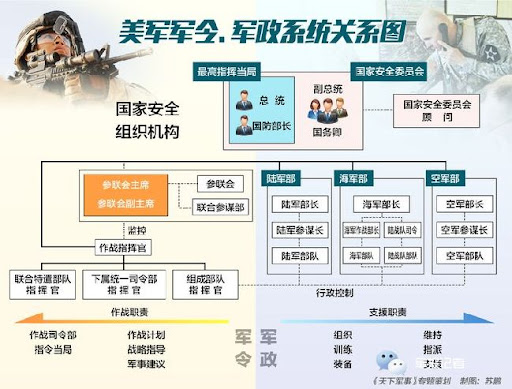
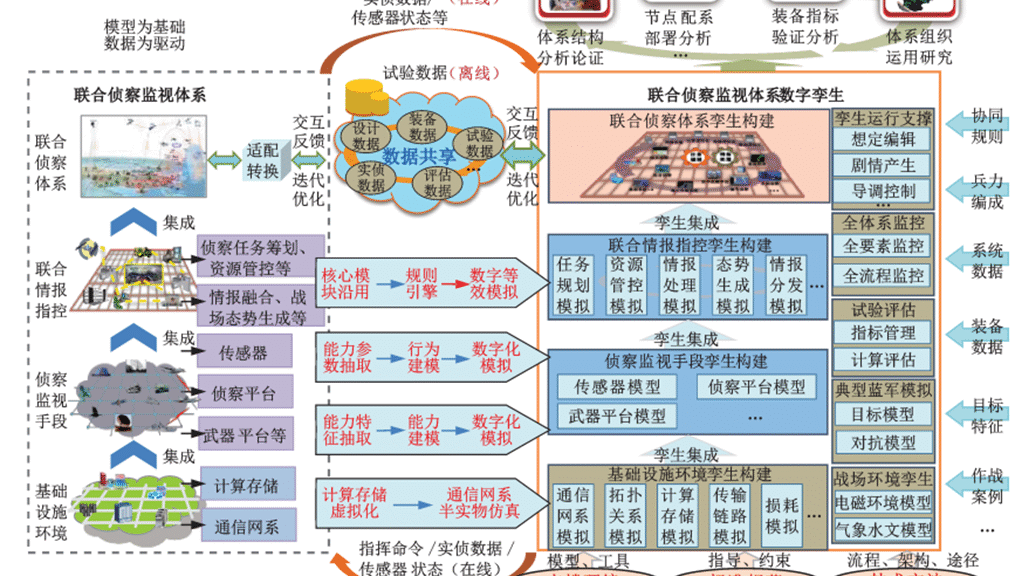
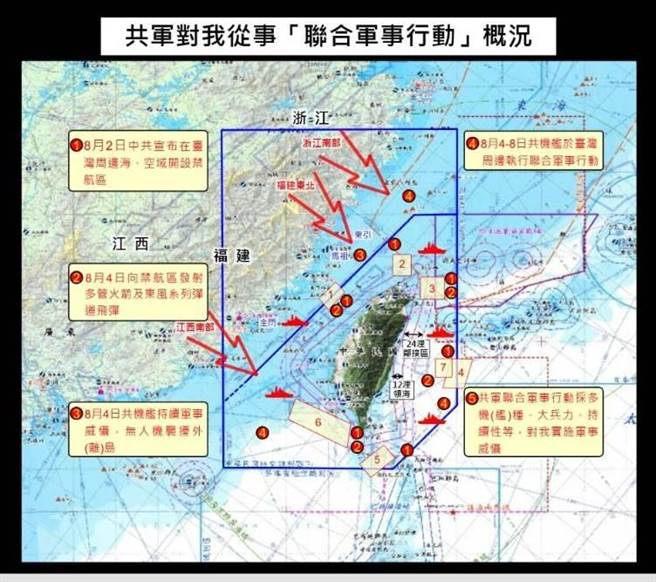
Joint operations are the basic form of combat in modern warfare. They emphasize the strength of more than two services and arms and other participating forces, and jointly implement operations in multi-domain space under unified command. “Single domain” and “multidomain” interdependence and interaction in joint operations are a pair of important military categories. Grasping the relationship between single domain and multi-domain is the core content and key to solving the “internal interface” problem in the construction and application of joint combat forces. The relationship between the two should be viewed dialectically and correctly handled, and the winning mechanism of joint operations should be continuously enriched to promote joint operations. Really achieve cross-domain integration, energy gathering and efficiency improvement.
“Single domain” is the constituent element and development basis of “multi-domain”
Joint operations emphasize the formation of advantageous multi-domains based on advantageous single domains, and place higher demands on the coupling relationship between each single domain that makes up the multi-domain. The development of a single domain can provide a solid foundation for the development of multiple domains and create prerequisites for achieving cross-domain integration.
In terms of historical process, single domain to multi-domain is the process of domain expansion. Throughout human history, the wars of each era have applied the techniques of their own era, imprinted the imprint of their own era, and developed with the time and space of the war. War in the agricultural era, with cold weapons as the main military equipment, battlefield fighting is mainly limited to land and offshore waters. It is a lower-level “full contact” war, and the combat domain is relatively single, making early operations “loose” Joint characteristics.
Entering the industrial era, with the invention and use of steam engines and internal combustion engines, air combat weapons represented by combat aircraft appeared on the battlefield. The combat space broke through the limitations of land and sea areas, forming a three-dimensional battlefield between land, sea and air. The war turned “semi-contact”, making joint operations take on “cooperative” joint characteristics. Entering the information age, the combat space breaks through the three-dimensional geographical space and forms a multi-domain integration of land, sea, air, space, electricity, network, and cognitive fields, making joint operations present multi-domain “integrated” characteristics. With the development of single domain to multi-domain, single-domain control rights such as land control, sea control, air control, heaven control, and information control have continued to appear, and the subsequent importance of single-domain control has continued to increase, promoting the connotation of multi-domain control. Expanding and changing, the competition for comprehensive control has become the first priority in the confrontation between ourselves and the enemy.
In terms of development form, single domain to multi-domain is a process of clustering into a network. Restricted by technical conditions and other constraints, combat activities before the information age, whether in terms of battlefield time, battlefield space, or the deployment and use of combat forces, have clear sections between single domains and clear levels of action at all levels, showing a strong Sequential and progressive, showing a single-domain chain development form.
Entering the information age, under the full “adhesion” of the network system, the multi-domain force formation develops from “combination” to “convergence”, forming an elastic structure with spatial dispersion and deployment, time coordination, and multi-dimensional energy release. According to the battlefield situation and changes in the situation, combat activities use the network information system as a “link” to connect the “links” of the combat single domain into a “network” shape, forming the focus of similar strong points and complementary advantages, and realizing each single domain “shape and spirit gathering” and “gathering fingers into fists”, The transition from single-domain chain to multi-domain network was achieved.
In terms of performance index, single domain to multi-domain is a process of energy aggregation and efficiency. Both opposing sides in the war tried to exert their overall combat power in order to achieve combat victory. However, due to the clear boundaries and loose connections of each single domain in the past, improving the overall combat power can only be achieved through the linearity “superposition” of each combat domain. With the development of information technology and intelligent technology, especially the widespread application of information systems in the military, the network information system realizes the command and control of each single domain force and can seamlessly link each combat domain. Each combat force maximizes The advantages of spatial multidimensionality and power diversity have been realized, and the strength and strength of each single domain and each level have been realized The high degree of integration, multi-dimensional cohesion, overall linkage and integrated energy release in terms of means and actions has achieved the effect of complementary advantages, synergy and cohesion, which is conducive to achieving a comprehensive advantage or local overwhelming advantage over the enemy.
“Multi-domain” is the direction-dominant and powerful dominance of “single-domain”
The essence of the winning mechanism of joint operations lies in cross-domain integration to achieve excellence and efficiency, which requires that single domain and multi-domain must be functionally “unified in the same direction”. “Multi-domain” stipulates the status and role of each single domain in combat. Each single domain must start from the overall functional needs of joint operations, focus on providing the ultimate contribution rate to the combat system, and achieve synchronous cross-domain maneuvering, cross-domain coordination, and cross-domain strike, to achieve system advantages in overall confrontation. Currently, the multi-domain dominates and dominates the single-domain in the direction of forming a resultant force with the system mainly from the following aspects.
Transition of multidomain operational requirements to hybrid war threats. At present, conventional threats are expanding and unconventional threats are becoming new and present threats, with the boundaries between regular and irregular battlefields tending to be blurred, between combatants and non-combatants and between physical and virtual dimensions. Joint operations are still the basic form of operations, but specific combat styles show a trend towards combining multiple styles. Various threats from traditional or non-traditional, formal or informal, high-intensity or low-intensity exist on land, sea, air, space, electricity, network, cognition and other multi-domains. These threats add a new dimension to the concept of war. Therefore, it is necessary not only to do a good job in the fight against a single threat, but also to develop the ability to integrate into multi-domain operations to deal with hybrid warfare.
The focus of multi-domain operations shifts to the network information system. Several informatization local wars that have broken out in recent years have shown that no war, no alliance, no alliance, no victory, the network information system that condenses various single-domain combat elements has become the focus of operations, and the combat command information system that gathers the combat power of the network information system has become the main basis for military operations “nerve center” and has become the key point for opponents to attack. The degree of integration of command and information systems is getting higher and higher, and the command systems of each single domain must converge and move closer to the overall command system, so as to achieve system integration of various services and combat units and deep coupling of various combat elements. In line with this, the information domain, the cognitive domain, and the electromagnetic domain, as emerging fields of warfare, have increased in their core status and importance, and have increasingly become the core operational domains for opposing sides to compete for control, becoming capable of causing enemy “blind, incapacitated, and mentally retarded” key operational domains. Therefore, each single domain must strengthen its ability to organically integrate into the network information system within the framework of a unified standard system and achieve interconnection and interoperability between each single domain, so as to ensure that it provides basic support in multi-domain precision warfare and thus wins overall advantages.
Transformation of multi-domain combat forces into joint combat units. Integrated joint operations have the characteristics of platform operations, system support and tactical operations, and strategic support. Strategic-level planning, campaign-level command, and tactical-level operations will become the norm in future wars. Large-scale corps operations may become increasingly rare and will be replaced by joint battles more often on multi-domain battlefields. The joint combat unit will bring together various single-domain combat forces and cover various combat elements. The level of the joint is reflected in the tactical level, presenting an independent combat capability that includes early warning and reconnaissance, information support, combat command, multi-domain attack and defense, combat support and other elements. Joint tactical unit form. Each “single-domain combat force” has a closer coupling relationship, and its own characteristics and advantages will become more prominent.
Accelerate the expansion of “single-domain advantages” to “multi-domain advantages”
For the dialectical unity of a single domain and a multi-domain, we must not only see the unity of a multi-domain, but also respect the independence of a single domain; we must neither completely oppose the two, nor erase the connection between them. In view of the actual situation of combat opponents, combat environment, own strength, etc., and taking into account various political, economic, technological, cultural and other factors, we should accelerate the expansion of “single-domain advantage” to “multi-domain advantage”, so as to form an information advantage, decision-making advantage and operational advantage against the enemy.
First, we must consolidate and expand the advantages of single domain.“ Metcalfe’s law ” tells us that increasing a network entity is capable of producing nonlinear exponential convergence of the combat power of the system. Multi-domain operations are deeply integrated system operations. As the basic element of multi-domain existence, the strength of each single domain’s construction will definitely affect the effectiveness of multi-domain integration. The essence of forming a multi-domain advantage is to deeply aggregate the advantages of each single domain. It is necessary to continuously strengthen the construction of single domain capabilities to form a single domain advantage and limit the opponent’s strength advantage to the limit. In fact, consolidating and expanding the advantages of single domains is not only to enhance single domain performance, but also to serve the purpose of multi-domain convergence. Single-domain construction requires strengthening top-level design, formulating standards and specifications, and striving to overcome conflicts caused by different combat construction concepts formed by the unique combat styles and combat culture of different services. At the same time, it is necessary to coordinate all military construction resources and focus on the development of multi-domain combat weapon platforms to meet the overall needs of joint operations, rather than just the needs of each single domain itself.
Second, we must promote the achievement of cross-domain synergy. Cross-domain synergy emphasizes breaking the boundaries between services and arms and integrating combat forces across services, arms and institutions. Based on the network information system, the combat forces in each domain are distributed in a wide area, and the multiple domains are linked as a whole to complement each other’s advantages and increase efficiency, and quickly gather energy step by step, promoting the expansion of single-domain advantages into multi-domain integration advantages and system advantages, and forming a concentrated energy strike against important enemy targets. In “joint operations”, combat forces in various fields must not only have the ability to independently perform a variety of combat missions, but also need to use their own cross-domain perception, target recognition and strike capabilities to support or even directly participate in other combat domain operations.
3. “Flexible mobile combat application is required!”. The winning mechanism of joint operations lies in the rapid and continuous integration of multi-domain combat forces to form multiple advantages and immediate advantages in specific time windows, forcing the enemy into passivity, disadvantage and dilemma. For the use of single-domain and multi-domain forces, such as the use of fingers and fists, whether it is “pointing points with hands” or “clenching fingers into fists”, or even the mutual transformation and use in combat, we must adhere to seeking truth from facts and comprehensively consider the efficiency of combat effects. Scientifically make decisions based on factors such as efficiency and contribution to the victory of war, and effectively use troops according to circumstances, location, and situation. If the single-domain combat force can solve the problem well, it is no longer necessary to use multi-domain combat forces, thereby improving operational effectiveness.
Theory is the precursor of action. Strengthening innovation in combat concepts and promoting innovation in combat guidance have always been important ways for militaries around the world to develop military advantages. In recent years, the U.S. military has successively proposed cutting-edge combat theories such as “cyber warfare”“ and mosaic warfare”, in order to realize that the combat model “production relationship” can be more adapted to the development of combat capabilities “productivity”. Through comparative analysis of these two combat theories, the world can get a glimpse of the changes in the thinking of building the US military’s combat capabilities, especially the understanding of the winning mechanism “mosaic warfare”, so as to find targeted and effective checks and balances.
● From threat response to war design——
Active shaping and improvement of traction combat capability
“Threat-based ”or “capability-based” are two basic ways to build military combat capabilities.“ Threat-based ”reflecting demand traction and focusing on solving real-life problems in the near and medium term are the basic rules that the military should follow in building combat capabilities; “based on capabilities” embodying goal traction, aiming at future strategic missions, and supporting strategic concepts with new combat theories are the key to military combat capabilities. The only way to innovate and surpass. The development from “cyber warfare” to “mosaic warfare” reflects the differences and evolution of the internal laws of the above two approaches, and also reflects the changes in the thinking and concepts of the US military in promoting combat capability construction in recent years.
New changes in concept origin. Cyberspace was originally born to solve human communication needs. Later, it gradually evolved into a new combat domain independent of land, sea, air, and space. From this, a “cyber war” with the struggle for cyberspace control as the core was derived. In comparison, “mosaic warfare” is a new combat concept actively developed and designed by the US military in order to continue to maintain its strategic advantage and directly target competitors. Its formation process reflects the integration of demand traction and capability traction, and its strategy, initiative, and traction Sex is more prominent.
New ideas for the use of technology.“ Cyber warfare ”emphasis on supporting the transformation and implementation of combat concepts through the development of new generation technologies.“ Mosaic Warfare” breaks out of this model and does not place too much emphasis on the development of a new generation of equipment technology. It pays more attention to the rapid transformation of general military and civilian technologies and the incremental iteration of mature technologies. The basic idea is to build on existing equipment and follow the application concepts of service platforms such as online ride-hailing and crowdfunding development. Through module upgrades and intelligent transformation, various combat system units “mosaicization” will be transformed into single-function, flexible Assemble and replaceable “building blocks” or “pixels” to build a dynamically coordinated, highly autonomous, and seamlessly integrated combat system Embodied new technology-driven ideas.
Path Development New Design.“ Cyber warfare ”as a companion concept to the network space, wherever the network space develops, “cyber warfare” will follow suit. Generally speaking, “objective” material conditions will be considered first, and then “subjective” conceptual design will be carried out. It has strong dependence on path development.“ Mosaic warfare ”first from “subjective” to “objective”, by developing a force design model that can dynamically adjust the functional structure, it can adapt to different combat needs and changes in the battlefield environment.
It can be seen that “mosaic warfare” has clearer goals, more mature technology, and more reliable paths than previous combat concepts such as “cyber warfare”, reflecting the change in thinking actively shaped by the US military.
● From network center to decision center——
Group intelligence to achieve optimal system energy release
AI technology is a key variable in the information age and a core increment in the development of the “mosaic warfare” system.“ Cyber warfare ”emphasis on “network center”, “mosaic warfare” closely focuses on the core of artificial intelligence technology, adjusts the key to victory from “network center” to “decision-making center”, and changes the combat system structure from system level and platform level Joint transformation to functional level and factor level integration, seeking to fully gather energy in the network The “group intelligence technology” realizes the optimal release of the system and gives new connotation to the war winning mechanism in the intelligent era.
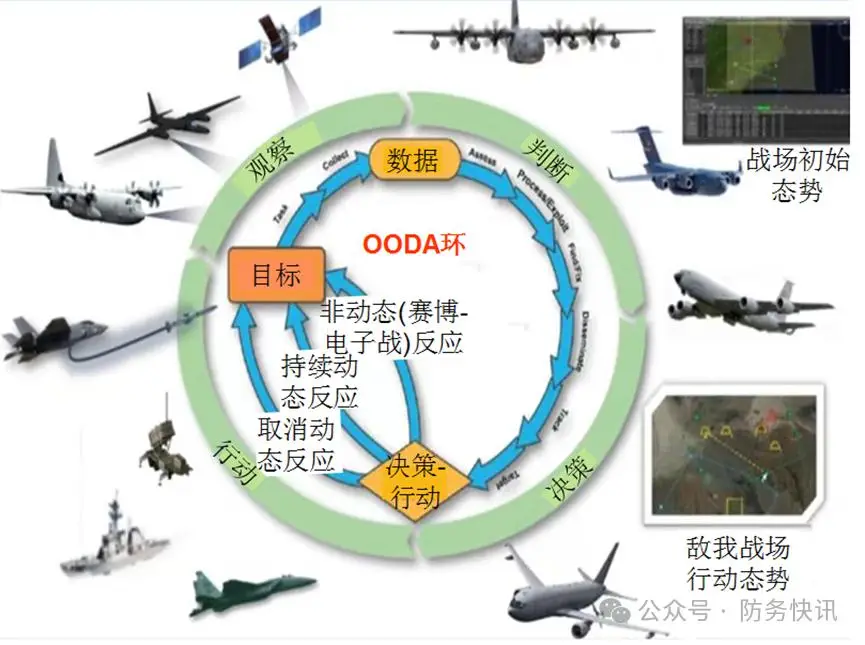
Use “fast” to control “slow” to seize the cognitive lead. In future wars, the battlefield situation will change rapidly, and the weight of time factors will continue to increase. “Fast” versus “Slow” can form a combat strike effect that is approximately dimensionally reduced.“ Mosaic War ” By using data information technology and artificial intelligence technology, we can improve the single-ring decision-making speed of our own “OODA” ring, expand the breadth of parallel decision-making, reduce the granularity of group decision-making, accelerate the progress of system operations, and create an overall one-step faster “First move” situation, aiming to firmly control the dominance of cognitive decision-making on the battlefield.
With “low” system “high”, we accumulate cost advantages. Different from the traditional combat concept of pursuing high-end weapon platforms, “mosaic warfare” focuses on using artificial intelligence technology to tap the potential and increase efficiency of existing weapon platforms and combat resources. By loading and operating intelligent algorithms and specific functional modules on many mid-to-low-end weapon platforms, it can achieve combat performance comparable to high-end weapon platforms, overall improving the cost-effectiveness ratio of the input and output of the weapon platform, thereby accumulating cost advantages.
To “disperse” control “gather” and seek sustainable survival. “ Mosaic Warfare ” emphasizes the adoption of decentralized ideas and asymmetric checks and balances, using an open system architecture, and decentralized configuration of various functions such as reconnaissance, positioning, communication, and strike on various manned/unmanned platforms to achieve power. Distributed deployment. At the same time, relying on intelligent algorithms to improve the self-organization, self-coordination, and independent attack capabilities of each platform to achieve dispersion and concentration of firepower. When some combat platforms are eliminated, interfered with or stripped away, the entire combat system can still operate normally, thereby enhancing the continued viability of the battlefield of the force cluster.
Use “movement” to control “stillness” to improve system flexibility. “ Mosaic warfare ” emphasizes further breaking through the barriers of various combat areas. By turning the fixed “kill chain” in different combat domains into a dynamically reconfigurable “kill net”, the “OODA” large ring is disassembled into small rings, and the single ring is differentiated into multiple rings. According to changes in combat processes and combat requirements, intelligent networking is relied on to realize the split-in-movement, call-in-movement and combination of combat forces. In this way, on the one hand, it can enhance the flexibility and adaptability of the combat system; on the other hand, it can also hedge and offset the node aggregation effect of complex networks, making it difficult for opponents to find key nodes to defeat their own systems.
“Mosaic warfare” provides a reference prototype for intelligent operations. But at the same time, as an idealized force design and application framework, “mosaic warfare” still needs closely related technical, doctrinal, policy and other supporting support. There is still a long way to go before it is fully realized, and it is consistent with traditional combat systems. The coexistence situation will exist for a long time.
● From factor integration to system restructuring——
Dynamic structure to enhance combat system flexibility
Structure and relationships often determine function and nature.“ Cyber warfare ”and “mosaic warfare” are built on the common material foundation of the information age and follow the same evolutionary paradigm, but the principles and effects of system construction are different.“ The system structure formed by cyber warfare” is statically deconstructable, while “mosaic warfare” dynamically combines functional units according to certain construction rules to form a flexible system structure with self-organizing and adaptive characteristics, similar to a “dynamic black box”, which is difficult to follow with conventional means. predict. And this flexible structure often “emerges” new capabilities to empower and increase effectiveness in the combat system.
The integrated development of network and cloud makes combat time and space more dynamic and malleable. The Internet and the cloud are the basic environment for the operation of the information combat system. They reshape the process elements of intelligence, accusation, strike, and support in traditional operations, and at the same time derive new combat time and space.“ Cyber warfare ”mainly focusing on network space, its combat time and space are relatively static.“ Mosaic warfare ” is not limited to a single combat space. Under the development trend of information infrastructure network following cloud movement and cloud network integration, tangible and intangible spaces can be further deep-linked. The boundaries between combat time and space are more flexible, and the allocation of combat resources is more flexible, the combat system structure is more dynamic.
Data flows across domains, making operational control more seamlessly coordinated. In the “Command and Control” link, “cyber warfare” focuses on the command and control of combat units by joint combat command agencies. Cross-domain exchange and flow of data is mainly concentrated on the theater battlefield.“ Mosaic warfare ”further sinks the level of joint operations to the tactical end. Through the autonomous cross-domain exchange and seamless flow of data at the tactical level, various data islands can be clustered into data clusters on demand, thereby producing a significant “spillover” effect, making the dynamic, discrete, agile, and parallel characteristics of the combat command control loop more obvious, and more conducive to achieving agile connection of each combat unit on demand Efficiently act in concert.
Algorithm full-dimensional penetration makes system operation more autonomous and efficient. Algorithms are the mapping of human consciousness in cyberspace, forming two basic forms: compilation codes transformed by intention and neural networks transformed by knowledge. In “cyber warfare”, compiled code is widely used, and neural networks are only used locally. In “Mosaic Warfare”, the algorithm expands the two key functions of shaping rules and providing engines, and the breadth and depth of application are more prominent. Shaping rules is mainly based on compilation code, supplemented by neural networks, to construct the process framework and operating logic of the “mosaic warfare” system, laying a structural foundation for its uncertainty, adaptability and ability “emergence”; the provision engine mainly integrates intelligent algorithms The model is distributed to the edge elements to operate, forming a knowledge diffusion effect, thereby comprehensively improving the intelligent autonomous combat capabilities of the “mosaic warfare” system.
The side end releases energy independently, making the combat style more flexible and polymorphic. The edge is an abstract model of various manned/unmanned combat functional units and a direct source of systemic capabilities “emergence”.“ Cyber warfare ”in a system where edge elements are closely coupled with superior and subordinate accusation processes and are in a state of precise control.“ In the mosaic warfare” system, the perception, interaction, reasoning, and decision-making capabilities of edge-end elements are greatly improved. Its “OODA” ring does not need to be linked back to the superior command structure, which is conducive to supporting the formation of a decentralized combat cluster with high and low matching and manned/unmanned combination. form, which can give edge-end elements more self-organizing authority and significantly enhance the battlefield confrontation advantage.
It can be seen that if “cyber warfare” is called a sophisticated war machine, “mosaic warfare” can be regarded as a complex “ecology” that can stimulate the dynamic growth of combat capabilities. New changes in network clouds, data, algorithms, and edges have contributed to The formation of a dynamically complex “system structure”. This structure in turn reversely regulates elements, platforms and systems, and new capabilities continue to emerge, playing an important role in enhancing and evolving the combat system.
● From “system breaking to compound confrontation——”
To analyse the advantages and disadvantages and seek effective checks and balances
“Mosaic warfare” represents to a certain extent the possible direction of the future development of joint operations. It is necessary to fully analyze and grasp the winning mechanism of “mosaic warfare”, shape the field of information and communication as a new quality and new domain that breaks the traditional boundaries of war time and space, create a new concept of network cloud-enabled combat, build and strengthen the support and support capabilities of national defense information infrastructure, and highlight military information network security defense capabilities, enhance the minimum support capabilities for the operation of strategic campaign command organizations, and continuously improve the network information system.
On the other hand, the emergence of the “mosaic warfare” theory makes it difficult for traditional combat methods to attack target nodes with limited capture and control to achieve the system-breaking effect of breaking points and breaking chains. But it should be noted that any system has its inherent contradictions, and the seemingly “impeccable” decentralized structure of “mosaic warfare” can still find ways to effectively crack it. For example, grasp its system complexity characteristics, use its correlation dependence, highlight the functional suppression of communication networks, construct network-electrical composite attack paths, and achieve disassembly and isolation of various units of the combat system; grasp its structural dissipation characteristics, and use Its external information dependence highlights the disguise and misleading of information data, prompting the combat system to transform into abnormal states such as information closure and information overload; Grasp its group autonomy characteristics, use its key technology dependence, highlight the confrontation and efficiency reduction of intelligent algorithms, and suppress the intelligent internal drive of each combat unit; grasp its functional non-linear characteristics, use its unknown vulnerabilities, and highlight battlefield differentiation Strike assessment, test and discover operational system imbalances with higher efficiency and faster speed, and find key weaknesses in system attack.
President Xi pointed out that the core of studying combat issues is to clarify the characteristic rules and winning mechanisms of modern warfare. In today’s world, major changes unseen in a century are accelerating. Disruptive technologies represented by artificial intelligence are developing rapidly and widely used in the military field, accelerating the evolution of war forms towards intelligence. The corresponding war winning mechanism is also changing. “ Victory tends to smile at those who can foresee changes in the characteristics of war, rather than at those who wait for changes to occur before adapting”. Only by discovering changes in a timely manner, proactively responding to changes, and actively adapting to changes can we better grasp the initiative in future wars and remain invincible in future wars.
Outwitted
In the “intelligent warfare confrontation”, human intelligence has widely penetrated into the combat field and been transplanted into weapon systems. Global multi-dimensional and various types of intelligent combat platforms can quickly couple combat forces, build combat systems according to mission requirements, and independently implement coordinated operations, the mission ends and quickly returns to a state of readiness for war, showing a trend of intelligent autonomy. Whoever possesses the empowerment and gain advantage of intelligent technology in the combat system can design wars, lead the development of the battlefield, master battlefield initiative, and achieve “using wisdom to defeat clumsiness”. First, algorithms, computing power, and data determine system operational capabilities. Relying on intelligent algorithms and powerful computing power, it can quickly and efficiently analyze targets and match resource means, solve high-frequency cross-domain collaboration problems, achieve coordinated planning, parallel actions, and real-time evaluation, and greatly improve system operating speed and strike efficiency. Second, intelligent networks support cross-domain all-in-one action. The intelligent network information system provides basic support and link links for the combat system. Combat units and combat elements in different combat domains can be integrated into the entire combat system at any time “plug and play” to achieve rapid information transmission and sharing. Again, an intelligent weapon platform enables autonomous and flexible strikes. Intelligent technology achieves the organic combination of human strategy and machine’s autonomous perception, autonomous decision-making, and autonomous action by empowering weapon platforms, elements, and forces. Through “software defines the combat system structure and functions, and uses software to empower weapon platforms and ammunition, the platform can independently select and attack targets, and flexibly build a kill chain”.
Gathering is better than scattering
With the support of the “intelligent network information system”, the combat system has become an organic whole with a high degree of autonomous coordination, allowing the overall linkage of combat operations and the operational effectiveness index to be magnified, relying on the overall power of the system to win. First, the multiple elements of information, firepower, military power and cognition are linked together to release energy. With the injection of intelligent factors into the combat system, information, firepower, force and cognition will be given new quality capabilities, and based on the support of intelligent network information systems, software and hardware capabilities will be organically combined and physical and intangible means will be closely integrated to achieve combat effectiveness. maximize. Secondly, the multi-spatial multi-directional linkage of land, sea, air, space, network, electricity and other forces gathers forces to release energy. The seizure and control of battlefield control will rely more on the integrated linkage and cross-domain coordination of multi-domain space operations. By dispersing various combat forces deployed in a vast space, they will immediately gather advantages, forming a multi-domain, multi-directional energy release advantage for dimensionality reduction attacks in one domain, thereby taking control of battlefield initiative. Again, the multi-link linkage of detection, control, and evaluation gathers strength to release energy. Through the “ubiquitous Internet network”, cross-domain response to combat operations, cross-domain sharing of combat information, and cross-domain complementation of combat functions can be realized, and anti-virus networks can be dynamically adjusted or constructed according to the enemy’s circumstances and circumstances to achieve rapid system operation and concentrated energy release.
“Exquisite” is better than coarse
Intelligent warfare must be reasonably invested, effectively regulate combat forces, and be used as a means of warfare to achieve the goal of “refining the rough” and winning at the lowest cost. First, a precise target-information-driven system operates efficiently. Relying on various intelligent sensing platforms covering multi-dimensional and wide-area deployment, it detects and locates obstacles or targets in the battlefield environment. Precisely control the flow, flow, and velocity of information to achieve rational allocation of combat resources, coordinated and orderly combat operations, and precise release of combat energy. Second, precise breaching operations achieve a rapid transition between good and bad. The application of big data, big model analysis algorithms and other technologies can accurately analyze and judge combat systems “weak spots ”“ Achilles’ heel”, accurately guide the use of weapons and high-energy weapons such as lasers and hypersonic speeds, make the choice of precise strike methods more diverse, and can make the enemy Combat systems are instantly disabled. Again, precise strike evaluation supports the optimal superposition of combat effects. The target damage effect is accurately obtained through intelligent channels and means, and the conclusion is revised based on the human-computer interaction evaluation system. The commander can compare, interact, feedback, and correct the damage effect assessment conclusions with the information stored in the system knowledge base and his or her own professional knowledge to achieve the purpose of accurately assessing the impact effect of the target.
Faster than Slow
“The main speed of military intelligence”, the rapid development of military intelligence has greatly improved the speed of information transmission and the accuracy of weapon strikes, greatly reduced the time for reconnaissance and early warning, intelligence processing, command and decision-making, fire strike, and damage assessment, and accelerated “OODA” kill chain Cycle, new rapid-fire weapons such as hypersonic missiles, laser weapons, microwave weapons, and electromagnetic pulse weapons further push the rhythm of war to “instant kill”. Hybrid human-machine decision-making becomes the key to enemy action first. On the one hand, the new model of human-machine hybrid cloud-brain decision-making is based on the intelligent “network, cloud, terminal” system and integrates intelligent battlefield perception, decision-making and weapon control systems to quickly select combat plans and achieve instant decision-making advantages. On the other hand, the speed at which the kill chain is constructed becomes the basic yardstick for system confrontation. Under the empowerment of “intelligent technology”, the acquisition, processing and transmission time of battlefield information is greatly shortened. The intelligent platform uses algorithms to analyze battlefield spatial situations and target information in real time, and the time of the kill chain is shortened to seconds, thus achieving “destroy upon discovery”.
Toughness is better than crispness
War is not only a military contest, but also a competition between the country’s human, material and financial resources. Maintaining the lasting resilience of the combat system has become a key factor affecting the outcome of the operation. First, the large-scale use of low-cost unmanned intelligence platforms has become a completely new way of fighting. Unmanned intelligence platforms, micro-intelligent robot autonomous combat clusters, etc., dispersed to more small and low-cost combat platforms, can enhance the recovery speed and overall penetration of the combat system after damage, and achieve maximum combat benefits at a smaller cost. Secondly, the continued guarantee of intelligent resources becomes the key to the operation of the combat system. Various new weapons and new means such as unmanned combat platforms, intelligent algorithms, and cyber attacks are constantly emerging. Powerful computing power, advanced algorithms, and accurate data support have become the guarantee for the continued and stable operation of the system, and intelligent resources “timely, appropriately, applicable, and appropriately” continue to be effective. Guarantee has become an important influencing factor in the victory of intelligent warfare. Again, the operational system’s requirements for balance of offensive and defensive capabilities are getting higher and higher. The local area network, wide area network and even brain network behind the network and digitalization of the combat system leave room for opponents to launch attacks; the “cloud— network —end” structure of the combat system intelligent network information system, its data center, supercomputing center and other network infrastructure It will also be an important hub for opponents to focus on attacking and destroying.
Heart is better than things
Intelligent warfare is different from traditional warfare in which the main purpose is to eliminate the enemy’s effective power. It will pay more attention to weakening the enemy’s morale, disintegrating the enemy’s will, and destroying the enemy’s psychology. Smart technology has become a new way to influence the minds of all employees at all times. First of all, intelligent new media, new technologies and new means have created new ways for the psychological influence of public opinion. Enhanced consciousness and the development of information editing and other technologies have made the methods of conscious attack and defense more diverse, the methods of confrontation more varied, and the technological content higher. Use “intelligent weapons, intelligent technology and intelligent information struggle methods to carry out information attacks on the enemy, thereby forming psychological deterrence”. Secondly, intelligent and deep interaction makes obtaining data richer and more complete. Technologies such as AI face-changing, holographic projection, and audio-visual synthesis provide new means to implement intelligent manufacturing and confuse facts. Again, smart models, massive amounts of data, and high-performance servers provide new tools for quickly concocting information ammunition. Mental guidance and control can be closely coordinated with military, economic, and diplomatic forces to amplify the deterrent effect, constantly create pressure from public opinion to force the enemy to compromise, form psychological deterrence and make them hesitate to give in, change the enemy’s cognition through differentiation of value identity, and achieve subjugation without fighting.
More than single
The rapid development of science and technology has opened up new space for activities and interests for human society, but new security threats and challenges have followed suit, promoting the corresponding expansion of battlefield space and confrontation fields. Currently, wars are constrained and influenced by many factors such as politics, economy, diplomacy, military, technology, geography, and psychology. Unconventional mixed wars supported by military capabilities have become more intense. The competition space for hybrid warfare has extended to various fields such as politics, economy, diplomacy, culture, and military. It emphasizes the comprehensive use of national strategic resources and strategic tools to achieve traditional war goals and transcend traditional war methods. It has a special status and role. As intelligent technology matures, the threshold for intelligent warfare will show a downward trend. Participating parties may adopt an undeclared war approach to launch a variety of integrated economic warfare, diplomatic warfare, cyber warfare, public opinion warfare, psychological warfare, legal warfare, etc. Mixed warfare, mixed victory means giving priority to politics, economy, diplomacy, etc. on the basis of comparing the advantages and disadvantages of the opponent and one’s own side in all aspects Public opinion and other non-military tools and means that can use strengths and avoid weaknesses, use four taels to move a thousand pounds, pursue “no war” or “less war ”“small war” and subjugate others. As long as we deeply understand and accurately grasp the characteristic rules and operating mechanisms of future hybrid warfare, and creatively use clever and efficient strategic techniques, we can fully achieve the expected strategic results.
The report of the 19th National Congress of the Communist Party of China pointed out that it is necessary to “accelerate the development of military intelligence and improve joint combat capabilities and all-region combat capabilities based on network information systems”. Today’s “Liberation Army Daily” published an article pointing out that military intelligence is a new trend and new direction in the development of the military field after mechanization and informatization. We must develop intelligence on the basis of existing mechanization and informatization, and at the same time use intelligence to Traction mechanization and informatization to develop to a higher level and at a higher level. As a new combat field, cyberspace is a new field with high technological content and the most innovative vitality. Driven by military intelligence, it is ushering in a period of rapid development opportunities.
Military intelligence leads to accelerated development of cyberspace operations
■Respect the soldiers Zhou Dewang and Huang Anwei
Three major technologies support the intelligence of cyberspace weapons
Intelligence is a kind of wisdom and ability. It is the induction, cognition and application of laws by all systems with a life cycle. Intelligence is to solidify this wisdom and ability and become a state. A cyberspace weapon is a weapon used in cyberspace to carry out combat missions. Its form is dominated by software and code, and it is essentially a piece of data. The intelligence of cyberspace weapons is mainly reflected in the following three aspects:
First, intelligent vulnerability mining. Vulnerabilities are the basis for the design of cyber weapons. The ransomware that spread around the world in May this year took advantage of vulnerabilities in Microsoft’s operating system and caused a huge shock to the cybersecurity community. Vulnerabilities are expensive, ranging from tens to hundreds of thousands of dollars for a zero-day. The discovery of previous vulnerabilities mainly relied on experienced hackers, who used software tools to check and analyze the code. In the finals of the International Cybersecurity Technology Competition League held during this year’s China Internet Security Conference, participants demonstrated that intelligent robots conduct vulnerability mining on site, and then write network code through vulnerabilities to form cyber weapons, break through target systems, and seize flags. This change means that vulnerability mining has entered an era of intelligence.
Second, intelligent signal analysis and password deciphering. Signals are the carrier of network data transmission, and passwords are the last barrier to network data security. Signal analysis and password deciphering are core technologies for cyberspace operations. Breaking through signals and passwords is the basic path into cyberspace and the primary target of cyber weapon attacks. Intelligent signal analysis solves problems such as protocol analysis, modulation recognition, and individual recognition of signals through big data, cloud computing, deep learning and other technologies. Code-breaking is computational science “the crown jewel”. Through the accumulation of password data samples, intelligent code-breaking can continuously learn and find patterns, and can find the key to deciphering, thereby opening the last door of network data “safe” and solving network problems. Key links of intrusion and access.
Third, the design of an intelligent weapons platform. The U.S. military proposed the “Cyber Aircraft” project in 2009 to provide platforms such as tanks, ships, and aircraft for cyberspace operations. It can realize automatic reconnaissance, loading of cyber weapons, autonomous coordination, and autonomous attacks in cyberspace. When threatened, Self-destruction and removal of traces have certain intelligent characteristics. The weapons loaded by future “cyber aircraft” are not code compiled by software personnel, but directly based on the reconnaissance results to design intelligent cyber weapons on site in real time and achieve “ordered” development, thus greatly improving cyberspace operations. Targeted.
The intelligent trend of network-controlled weapons has become increasingly prominent
Weapons controlled by cyberspace are referred to as cyber-controlled weapons. They are weapons that connect through the network, accept cyberspace instructions, perform cross-domain tasks, and achieve combat effects in physical space. Most of the various combat weapons platforms in the future will be networked weapons platforms. In this way, the military information network is essentially the Internet of Things. Network entities such as uplink satellites, radars, and drones can detect, track, locate, and strike through the Internet. Space control, the intelligence of network-controlled weapons has flourished in battlefields such as land, sea, air, space and electricity.
In 2015, Syria used the Russian Robot Corps to defeat militants. The operation used 6 tracked robots, 4 wheeled robots, 1 automated artillery group, several drones and 1 command system. The commander dispatches drone reconnaissance through the chain of command to spot the militants, and the robots charge the militants, while accompanied by artillery and drone attack force support, delivering a fatal blow to the militants. It was only a small-scale battle, but it set the precedent for robot “group” operations.
Network-controlled intelligent weapons for sea and air battlefields are being developed and verified in large quantities. In 2014, the U.S. Navy used 13 unmanned surface boats to demonstrate and verify that unmanned boat groups intercepted enemy ships and achieved good results mainly by exchanging sensor data. When it was tested again in 2016, functions such as collaborative task allocation and tactical coordination were added, and “swarm awareness” became a distinctive feature of its intelligence.
Swarms of small and micro UAVs for aerial combat are also growing rapidly. In recent years, the U.S. Department of Defense has repeatedly tested the “Quail” micro-drone, which can drop dozens or even hundreds at a time. By improving its coordination capabilities when performing reconnaissance missions, it has made great progress in drone formation, command, control, and intelligence. Progress has been made in management and other aspects.
Space-based cyber-controlled weapons are becoming more and more “smart”. The air and space field mainly contains two types of network-controlled weapons: reconnaissance and strike. Satellites with various functions mainly perform reconnaissance missions and are typical reconnaissance sensors. With the emergence of various small and microsatellite groups, satellites have been made to exhibit new characteristics: small size, fast launch, large number, and greater intelligence. Small and microsatellite groups have greater flexibility and reliability when performing reconnaissance and communication missions, and currently the world’s satellite powers are actively developing plans for small and microsatellite groups with wider coverage.
Hypersonic strike weapons of all kinds cruised in the air and space, as if sharp swords were hanging over people’s heads. The U.S. Air Force Research Office stated that “high-speed strike weapons” will launch flight tests around 2018, and other countries are also actively developing similar weapons. The biggest features of this type of weapon are their high speed, long range, and high intelligence.
Intelligent command information system changes traditional combat command methods
Cyberspace weapons and weapons controlled by cyberspace are the “fist” of intelligent warfare, and the command information system that directs the use of these weapons is the “brain” of intelligent warfare. Cyberspace combat command information systems must keep up with intelligence simultaneously. process. At present, almost all command information systems in the world are facing the difficult problem of “intelligent lag”. In future wars, rapid decision-making and autonomous decision-making are required, which places higher requirements on intelligent auxiliary systems.
In 2007, the U.S. Department of Defense’s Advanced Research Projects Agency launched a research and development program on command and control systems ——“Project Dark Green” in order to enable computer-aided commanders to make rapid decisions and win opportunities. This is a campaign tactical-level command information system. Its research and development purpose is to embed the system into the U.S. Army brigade-level C4ISR wartime command information system to achieve intelligent command of commanders. To this day, the U.S. military has not relaxed its development of intelligent command information systems.
In cyberspace operations, the network target appears as an IP address connected to the network. The large number makes it difficult for manual operations to operate efficiently, and operations require the auxiliary support of intelligent command information systems. Currently, intelligent command information systems need to realize functions such as intelligent intelligence analysis, intelligent perception, intelligent navigation and positioning, intelligent assisted decision-making, intelligent collaboration, intelligent evaluation, and intelligent unmanned combat, especially to realize cluster combat control of unmanned network control systems, which has put forward urgent needs for intelligent command information systems and requires accelerating the research and development and application of corresponding key technologies.
To sum up, intelligent cyber weapons and cyber-controlled weapons, through intelligent information system scheduling, will form huge combat capabilities and can basically carry out all actions in the current combat style. In future wars, from the formation of command forces, to target selection, mode of action, use of tactics, etc., will all be carried out in an intelligent context. The characteristics of war “gamification” will be more significant, and the combat command method will also undergo major changes.
In the future battlefield, fighting courage requires more fighting “wisdom”
■Yang Jian and Zhao Lu
At present, the development of artificial intelligence has entered a new stage, and its penetration into various fields has begun to accelerate. As a result of this process, military competition among nations around intelligence has begun. Our army has always been a heroic and tenacious people’s army that dares to fight and win. In the future, we should continue to carry forward the glorious tradition on the battlefield. At the same time, we must more extensively master and utilize the latest scientific and technological achievements, develop more intelligent weapons and equipment, and develop more intelligent weapons and equipment. Take advantage of the opportunity to win on the battlefield.
Intelligence is a trend in the development of human society, and the war on intelligence is accelerating. It is thanks to successful innovations that go beyond the original architectural computing models, the gradual popularization of nanofabrication technologies, and breakthrough advances in the study of human brain mechanisms that the development of military intelligence has acquired a solid foundation. As a result, intelligent weapons and equipment have become increasingly prominent and are beginning to surpass and replace humans in intelligence analysis, combat response, and more. In addition, in terms of manpower requirements, comprehensive support and operating costs, intelligent weapons and equipment also have obvious advantages and are increasingly becoming the dominant force in warfare.
It has been proven that the development and application of intelligent weapons and equipment has expanded the scope of capabilities for military operations and greatly improved the combat effectiveness of the troops. On the battlefields of Afghanistan and Iraq, UAVs have taken on most of the operational support tasks of reconnaissance, intelligence, surveillance, and about one-third of the air strike tasks. In the past two years, Russia has also repeatedly used unmanned reconnaissance aircraft, combat robots and other equipment with a high degree of intelligence on the Syrian battlefield. Intelligent weapons and equipment are increasingly demonstrating important values that go beyond traditional weapons.
In future wars, the competition for intelligent combat systems will be the key to victory in master battles and peak duels. With the increasing imbalance in the development of military means supported by science and technology, whoever has the ability to implement intelligent operations first will be better able to take the initiative on the battlefield. The strong with the advantage of technological generation will try their best to The cost of war is minimized, while the weak will inevitably suffer huge losses and pay heavy prices. We must not only step up core technological innovation and weapons and equipment development, but also study and explore organizational structures, command methods and application models that adapt to the intelligent development of the military. We must also cultivate a team that can take on the responsibility of promoting the intelligent development of the military and forging intelligent combat capabilities. Talent team, give full play to the overall effectiveness of our military’s combat system, and compete with our opponents Win wars in a more “intelligent” way.
“Military academies were born and built for war”. At the opening ceremony of the 2019 military academy principals training camp, President Xi proposed a new era of military education policy, pointing out the direction for the military academies to cultivate high-quality, professional new military talents. At present, the form of war is accelerating towards informatization and intelligence. What kind of soldiers are needed to win future intelligent wars, and how military higher education can cultivate talents to adapt to intelligent wars are major issues before us.
The war form is accelerating towards intelligence
The form of war is a staged expression and state of war history that is mainly marked by the technical attributes of main battle weapons. So far, after experiencing cold weapon wars, hot weapon wars, and mechanized wars, war forms are accelerating their development towards information-based and intelligent wars. The increasingly widespread application of advanced technologies such as big data, the Internet of Things, artificial intelligence, biotechnology, and brain science in the military field is becoming an important driver of the new military revolution, giving birth to new unmanned, autonomous, and intelligent warfare forms, and changing the traditional The winning mechanism of war. In 2014, a foreign military think tank released a research report titled “War in the 20YY∶ Robot Era”, believing that a storm of military change marked by intelligent armies, autonomous equipment, and unmanned warfare is coming, and it will develop intelligent combat platforms, information systems and decision-making support systems, as well as new weapons such as directional energy, hypersonic speed, bionic, genetic, and nanometer By 2035, an intelligent combat system will be initially built, and by 2050, it will develop to an advanced stage, fully realizing intelligent or even unmanned combat platforms, information systems, and command and control. New weapons such as bionics, genes, and nanometers will enter the battlefield, and combat space will be further expanded. Expand to biological space, nanospatial space, and intelligent space.
In recent years, as people’s research on the human brain continues to deepen, brain-computer interface technology is becoming increasingly mature. In the future, the exchange of information between humans and the external world will no longer be limited to the senses. Direct information exchange between the brain and the outside world can also be achieved through chips. People and people, people and things are fully interconnected, and humans may transcend the Internet and the Internet of Things and enter the intelligent era supported by the Internet of Things. In the era of brain networking, soldiers’ brains are directly connected to combat platforms, information systems, and decision-making support systems. With the assistance of technologies such as quantum computing and cloud platforms, decisions will be made. The targets of attack will expand to human thoughts and actions, matter, energy, information and The mind is integrated. Some domestic experts believe that under the influence of artificial intelligence technology, the winning mechanism of future wars will shift from information-based warfare “information-led, system confrontation, precise strike, joint victory” to intelligent warfare “intelligent-led, autonomous confrontation, traceability Strike, cloud brain victory” transformation, following matter, energy, and information, cloud intelligence that integrates humans and machines becomes the key to determining the outcome of a war. The transformation of this “intelligent war form” is accelerating, and any hesitation may have unimaginable consequences.
However, it should be noted that man is always the most fundamental element, no matter how the war develops. The intelligent war form will promote changes in the functional role of military personnel, and will put forward higher requirements for military personnel’s ability quality. Cognitive ability may surpass knowledge and skills and become the core ability of military personnel.
Intelligent warfare requires military personnel to upgrade and reconstruct their comprehensive quality
According to the “talent growth cycle”, soldiers who are currently receiving higher education will become the main force in military combat training in more than 10 years, and will also become the first main force to meet the challenges of intelligent warfare. At present, our military’s higher education still has some shortcomings in the design of talent training goals. It does not pay enough attention to the ability to adapt to future changes in the intelligent battlefield. There is still a certain gap between talent training goals and the demand for intelligent warfare. On July 23, 2020, when President Xi inspected the Air Force Aviation University, he emphasized the need to adhere to cultivating people with moral integrity, educating people for war, strengthening military spirit education, strengthening the fighting spirit, and comprehensively laying a solid foundation for the ideological and political, military professional, scientific and cultural, and physical and psychological qualities of pilot students. Base. Implementing President Xi’s important instructions and benchmarking against the needs of future intelligent warfare, there is an urgent need to build a higher-level military talent training goal with thinking as the core, and accelerate the upgrading and reconstruction of the comprehensive quality of military personnel.
Intelligent warfare is a complex giant system that integrates multiple fields. Its intelligence-based characteristics and iterative and changeable development trends are changing the role of soldiers in war. Soldiers may gradually move from the front desk of the war to the backstage, from direct face-to-face combat to human-machine coordinated combat, and from front-line charging to back-end planning and design of the war. To be competent in functional roles such as human-machine collaboration, planning and designing wars, in addition to ideological, political and physical psychology requirements, in terms of military profession and science and culture, soldiers should focus on improving their knowledge and ability in the following five aspects: First, multi-disciplinary Integrate the knowledge structure, master the core principles of multiple intelligent war-related disciplines such as nature, military, cognitive psychology, and network intelligence, and be able to integrate knowledge across disciplines Guide military practice; the second is strong cognitive ability, with logical thinking, critical thinking, and systematic thinking abilities, and the ability to use scientific methods to analyze and infer combat problems; the third is human-machine collaboration ability, deeply grasp the characteristics and rules of intelligent warfare, and be proficient in operating Combat platforms, command and control systems, and decision-making support systems can control a variety of intelligent weapons and equipment to achieve efficient human-machine collaboration; fourth, innovative capabilities Have keen scientific and technological perception and strong creativity, and be able to grasp the forefront of science and technology, innovate combat styles, and master the laws of war development; fifth, self-growth ability, be able to accurately recognize oneself, reasonably plan military career, and freely use information means to acquire new knowledge, new technologies, new methods, constantly improve the knowledge structure, improve cognitive abilities, and better adapt to the complex and ever-changing development of military revolutions.
Find the focus of “paramilitary higher education reform”
At present, the superimposed advancement of informatization and intelligence has brought greater complexity to the talent training work of military academies. It is necessary to not only meet the needs of real-life information operations, but also lay the foundation for adapting to intelligent warfare. The following should be focused on Work.
Reconstructing the curriculum system. The curriculum system supports the formation of the talent knowledge structure. In order to “cultivate military talents that meet the needs of intelligent warfare and achieve the training goals of military major, science and culture, we should break the practice of designing curriculum systems with a single major as the background and establish a “general + direction” curriculum system”. General courses are based on existing natural science and public courses, adding courses such as mathematical logic, mathematical modeling, critical thinking, network basics, artificial intelligence, cognitive neuroscience, systems engineering, etc., and establishing a cross-field and cross-disciplinary horizontal course system, expand students’ knowledge, build the knowledge structure urgently needed for intelligent warfare, and lay a broad knowledge foundation for their lifelong growth. Direction courses are to establish a subject professional direction, set up a vertical course system of mathematical science, professional foundation, and professional positions, build a solid professional background, and cultivate students’ ability to use professional theories to solve complex combat training problems.“ The general knowledge +direction” curriculum system helps build a “T”-shaped knowledge structure to meet the needs of military talents to adapt to diverse and intelligent warfare.
Deepen classroom reform. Educational neuroscience believes that education is the reshaping of students’ brains, and classrooms are the main position for reshaping students’ neural networks. They play an irreplaceable role in the formation of high-level cognitive abilities required for intelligent warfare. Continuously deepening classroom reform is The current key task of military higher education. You have to see that a classroom with only knowledge understanding is far from a good classroom. All human behaviors, thoughts and emotions are controlled by the brain, and every knowledge, thought and emotion corresponds to the specific neural network of the brain. Therefore, classroom reform should focus on students’ learning and follow the cognitive laws of the human brain to attract and maintain attention as the starting point, establish a scientific thinking framework, and mobilize students to think proactively. Usually, the teaching method pointing to higher-order abilities has a general model —— problem-driven inspired teaching. Commonly used problem teaching methods, project teaching methods, and inquiry teaching methods all belong to this model. Therefore, the main way to promote classroom reform is to develop unknown, novel and questions and stories that students are interested in, design a thinking framework that points to logical reasoning, critical thinking, reflective ability, creative ability and learning ability, and inspire students to be guided by the framework. Actively think, supplemented by the output process of speaking and writing, and finally achieve the goal of internalizing knowledge understanding and forming high-level abilities.
Promoting comprehensive education. Modern educational theory not only regards the classroom as an important position in education, but also regards all time and space outside the classroom as an important resource for cultivating students. The time and space outside these classes not only support classroom teaching and promote the formation of intellectual abilities, but are also important places for cultivating non-intellectual abilities. Colleges and universities should make full use of these times and spaces, clarify specific training goals, and scientifically design education and training plans with a focus on going deep into the army, being close to actual combat, and highlighting practicality and creativity. Pay attention to giving full play to the management and education advantages of military academies, explore the establishment of student management models, and promote the cultivation of students’ leadership and management capabilities; continuously enrich the second classroom, build an innovation platform, create more independent practice opportunities, and enhance students’ innovative abilities; make full use of various large-scale activities, cultivate students’ competitive awareness and team collaboration capabilities; strengthen the construction of management cadre teams, improve scientific management and training capabilities, and be able to effectively guide students in time management and goal management Emotional management, psychological adjustment, habit development, etc., help students improve their self-management and independent learning abilities.
In short, education is a systematic project. The above are only three aspects that break through the shortcomings of talent training in the intelligent era. To truly solve the problem, military academies need to carry out systematic reforms in strategic planning, quality management, personnel quality, and teaching conditions. It can effectively support the achievement of talent training goals in all aspects, and this requires us to continue to explore and innovate, and continuously improve the level of running schools and educating people Efforts have been made to create a new situation in the construction and development of military academies.
With the accelerated evolution of the new round of scientific and technological revolution, military revolution and industrial revolution, the form of war has made great strides towards intelligence, and the field of national defense mobilization has undergone profound changes. In-depth analysis of the new characteristics of national defense mobilization in the intelligent era, exploration of intelligent national defense mobilization methods, and promotion of digital intelligence of national defense mobilization are urgent practical issues facing national defense mobilization work.
Digital intelligence technology is widely used in social production and life, and the target areas, means, training exercises, etc. of national defense mobilization have also undergone profound changes, showing many new characteristics. First, the targets of national defense mobilization have expanded from traditional fields to emerging areas of intelligence. Currently, the world’s major military powers have stepped up efforts to tap and utilize the country’s smart resources. The U.S. military has launched a flagship project for the application of artificial intelligence technology “Project Mavin”, and many U.S. private technology companies such as Parantil and Amazon have participated in research and development. It is worth noting that as the role of digital intelligence technology in seizing and maintaining multi-domain competitive advantages becomes increasingly prominent, the global battle for artificial intelligence talents is intensifying, and defense mobilization is focusing on advantageous universities and key institutions engaged in artificial intelligence research. The second is the in-depth transformation of defense mobilization methods from multi-chain decentralization to intelligent dynamic matching. Through the use of intelligent means such as large models, the docking of national defense mobilization potential will be automatically matched according to professional mobilization algorithm rules. The efficiency of the transformation of national defense mobilization potential will be greatly improved. The docking of supply and demand will be changed from “offline to online”, and the transportation of mobilization materials will be handed over. It will be quickly transported to the front through intelligent dispatch, which can be achieved “direct access from the factory to the battlefield”. Under the integration of the “intelligent charging platform”, the mobilization and command method that integrates network, information and intelligence, and integrates air, space and earth allows “command chain” and “mobilization chain” to be accurately connected, agile and efficient, and can achieve plan generation “one-click” and test evaluation “Modelization”, command control “visualization”, comprehensive management “platformization”. Third, defense mobilization training has developed in depth from simple and inefficient to digital and intellectual empowerment. By using augmented reality and virtual reality technologies to construct a practical simulation confrontation environment, it can not only enhance the sense of technology, interactivity, and fun of teaching and training, but also help enhance the practicality of training, allowing trainees to “immersive” Improve training effectiveness and speed up training progress. For example, foreign military forces use interactive virtual courses in the metaverse to help soldiers master equipment maintenance and repair skills, and use augmented reality equipment to assist in the repair of some equipment. At the same time, the training and evaluation system constructed using digital twin technology will minimize the factors of human interference, squeeze the training water, provide real and objective evaluation conclusions for the training level of trainees, and promote military training from empirical management to scientific management.
To promote the digital intelligence of national defense mobilization, we must aim to win future wars, adhere to innovation-driven and technological victory, and gather superior resources in all aspects. 1. “We must focus on gathering excellence in wisdom and building new areas and new quality forces!”. Find out the high-end digital intelligence potential of national defense mobilization, tap out high-end talents, high-tech and other new resources in new fields and new fields hidden in the public and enterprises, deepen cooperation with artificial intelligence specialized new enterprises and related scientific research institutes and universities, and update them in a timely manner Potential catalog opens up new space for high-end potential support. Focusing on the expansion of support and support objects into multi-dimensional battlefields, focusing on the joint combat system “to make up for weaknesses” and multi-dimensional space “to make up for blindness”, relying on digital and intellectual potential resources to build a strong new domain and new quality defense mobilization team to provide strong support for the joint combat system. Second, we must focus on digital intelligence empowerment and improve efficient institutional mechanisms. Improve the military demand reporting and docking mechanism, unify the military demand indicator system, build a “clearly” demand reporting catalog list for both military and civilian parties, and consolidate the data foundation for collaboration and linkage. Improve the potential information system to realize functions such as intelligent matching of demand and potential, real-time statistics of stock and consumption, and form a close collaboration model between supply and demand that is data-driven, accurately matched, and trusted to interact. Third, we must focus on intellectual and brain assistance and build a strong command and coordination platform. Open up data barriers between systems to achieve information sharing, data interaction, and intelligent office. Accelerate the construction of a national defense mobilization command platform that integrates and connects combat command systems, connects grassroots defense mobilization units, and horizontally connects different types of mobilization units, using “big data + big model + cloud platform” technology to establish a relationship between “command chain” and “implementation chain” A human-machine collaborative decision-making model that presents situations, handles needs, assists planning, and regulates actions Improving the quality and effectiveness of defence mobilization command. Fourth, we must focus on outsmarting the future and accelerating technological innovation and transformation. Improve the mechanism to support joint military-civilian scientific and technological innovation, expand participation channels for local scientific and technological enterprises, universities and institutes, and achieve two-way promotion and efficient integration of new quality productivity and new quality combat effectiveness. Improve the agile response and rapid transformation mechanism of advanced technology, accelerate the development of new combat capabilities, and enhance the victory contribution rate of digital intelligence in national defense mobilization.
Cognition is the basis for operational decisions and operations. Cognitive warfare is a confrontation activity carried out in the cognitive domain. The purpose is to attack the enemy’s knowledge system, social consciousness, people’s morale, etc., disrupt its judgment and decision-making, and cause it to lose its decision-making advantage and action advantage. To deepen the research on cognitive warfare and decipher the cognitive warfare code, the key is to embed the combat decision-making chain and explore how to influence and interfere with the cognitive activities of the enemy’s decision-making chain, causing the enemy to form false observations, wrong judgments and poor decisions, so as to fully control Cognitive initiative.
Seeing is false, changing the facts
Observation is the starting point of cognition. No matter what kind of war, when facing any opponent, the first step is observation. The observation here is a broad concept and is about all activities to obtain all relevant information about the hostile party. Just as people perceive external things through sensory organs, observation relies on the battlefield perception system to obtain relevant data and information from the battlefield environment according to the needs of the subject, providing “ source material ” for judgment and decision-making. Observation uses intelligence, reconnaissance, surveillance and other activities to obtain as much factual information and materials from all aspects of the enemy as possible and convert them into text, images, audio, video and sensor signals.
The history of war at home and abroad in ancient and modern times shows that the essence of command is the endless pursuit of certainty, including the status and intentions of enemy troops, various factors affecting the combat environment such as weather and terrain, as well as the status and actions of one’s own troops. Therefore, efficient command consists in clarifying each element and then coordinating it as a whole to achieve the best combat effect. Human judgment and decision-making are easily disturbed by information uncertainty. In the observation stage, the key to cognitive warfare is to make the enemy unable to clearly observe, incompletely observe, and distort the information of their own combat elements, and lack real information or accurate understanding, thereby weakening the enemy’s decision-making on combat at the source. The pursuit of certainty.
Measures for observing cognitive warfare, in addition to common information warfare methods, such as disguise, interference, deception, silence, etc., should also pay attention to the following aspects: First, create complex situations. War is inherently full of complexity. By creating complexity, it increases the fog and resistance on the battlefield, making it impossible for the enemy to observe the real specific situation. For example, by creating various events and operations in multi-dimensional combat areas such as land, sea, air, sky, and network, and making irregular changes, it can effectively increase the difficulty of enemy observation. The second is to interfere with observation and cognition. Observation is not aimless. It is carried out based on a certain cognition. Cognition determines what information needs to be observed, what kind of reconnaissance activities need to be carried out, etc. For example, during observation activities, by interfering with operations, the enemy’s attention in observation activities is affected, causing it to lose the ability to focus on essential issues and key issues, thereby making it unable to obtain key information. The third is to shape the factual narrative. Shaping factual narratives is to reformulate, combine, arrange, and reconstruct facts according to the needs of cognitive warfare. These facts are either created out of nothing, highlight certain details in the facts, or are difficult to verify and test, making their observation materials Mixed with fictional facts, the observed facts are far from objective facts. The fourth is to protect specific knowledge. Knowledge protection is an important aspect of cognitive warfare. The main contents include: commander’s decision-making style, combat theory reasoning process, premises and assumptions, key tactical ideas and combat principles, key decision-making procedures, mechanisms and methods, information analysis methods, especially some algorithms, passwords, etc.
Targeting the judgment, misleading the judgment
On the battlefield, simple observation and data collection do not make much sense. Only by analyzing these data “ by looking at the essence of the phenomenon, and then drawing various judgments, will we promote the formation of operational decisions. For example, during the Battle of Moscow in World War II, the Soviet Union had a lot of and messy information about the Japanese Kwantung Army. Finally, after careful analysis, it was concluded that “ the Soviet Union could be considered safe in the Far East, and the threat from Japan had been ruled out ” After the judgment, it was decided to transfer troops from the Far East to Moscow to participate in the Battle of Moscow. Judgment is the corresponding conclusion reached by analyzing and reasoning the observation results, which mainly includes: first, factual judgment, usually expressed in descriptive language, such as the current situation, enemy battlefield deployment, battlefield posture, etc.; second, value and relationship judgment, usually Expressed in evaluative language, such as threat assessment, correlation analysis, trend prediction, etc.
Judgment cognitive warfare is actually a game surrounding judgment. Normally, judgments arise on the basis of a judgment, without which there would be no conclusion of judgment. Whether a person has high blood pressure or diabetes is often based on some medical indicators, and these indicators are the criteria. The premises and assumptions of reasoning are actually based on judgments. “ Persian cat story ” circulated in World War I. Judging from the location of the command post from a Persian cat, it contains a series of judgments: there is no village around, and it cannot be a cat raised by ordinary civilians; the sound of artillery on the battlefield is rumbling, and it cannot be It is a wild cat that is cautious and avoids people; Persian cats are a valuable breed, and the position of cat owners is not low; cats appear at fixed times every day, and the command post should be near cats. Therefore, interfering with judgment is to target the judgment to design and produce information products so that the facts obtained do not match the judgment, or to minimize the leakage of information related to the judgment, so that the enemy cannot judge or make wrong judgments.
The main contents of the interference criterion are: First, the interference is based on experience. Based on enemy experience, create “ virtual facts ” to make errors in judgment. For example, in the Battle of Maling, Sun Bin halved the stove to lure Pang Juan, which is a typical example. Because according to experience, the number of stoves is directly proportional to the number of troops. Halving the number of stoves every day means that the number of people is decreasing. The possibility of reduction is that the soldiers have suffered greater casualties, which leads to the judgment of weakening combat power. The second is to interfere with the judgment based on the knowledge system. Such knowledge includes the enemy’s common sense, concepts, principles and some assumptions. For example, in the Fourth Middle East War that broke out in October 1973, Israel’s initial defeat was a misjudgment of the war situation. It believed that as long as its air force was still in an advantageous position, the other side would never dare to attack. However, Egypt began to adopt new military technology and used mobile surface-to-air missiles to support an air defense network, partially offsetting Israel’s air superiority. The third is to interfere with judgments based on universal culture. That is, design corresponding information and actions based on the enemy’s cultural characteristics so that they can be misjudged due to cultural differences. According to foreign information, during the Cold War, the United States studied the root causes of “ Soviet behavior, so it started from culture and behavior to induce the Soviet Union to make strategic misjudgments. The fourth is to interfere with methodological-based judgments. Generalizations, analogies, etc. are the basic methods of judgment. Cognitive interference based on methodology makes it difficult for the other party to understand facts and cannot be compared with known facts; complicating the causal relationship and confusing factual cause and effect, psychological cause and effect, conditional cause and effect, social cause and effect, etc., making it impossible to implement causal judgment; reducing possible signs and phenomena, making it impossible to see through the essence and make accurate judgments.
Focus on the process and influence decision-making
Operational decision-making is based on combat purposes and intentions. After observation and judgment, various factors are combined to derive the optimal solution to the problem. War or conflict behavior has game, competition and confrontation attributes, so decision-making is a game. Decisions address key issues such as whether to do it, how to do it, what purpose to achieve, or the state of termination. In information-based local wars, action-centeredness gradually replaces planning-centeredness, requiring an increase from data center warfare, information center warfare, and knowledge center warfare to decision-making center warfare. Combat decision-making has become one of the main areas of competition between the enemy and ourselves.
Decision-making cognitive warfare is to target enemy cognition and interfere with the decision-making process to affect the quality and efficiency of decision-making. Decision-making is affected by the knowledge structure of the decision-maker himself. If cognition is paranoid or the knowledge reserve is outdated, even if the judgment is correct, good decisions will still not be made. The decision-making process includes the application and change process of knowledge structure, which mainly involves procedural knowledge and conceptual principled knowledge. The former includes decision-making procedures and methods, decision-making mechanisms and evaluation methods, etc., while the latter includes understanding of battlefield posture, winning mechanism, combat concepts, combat rules, and weapons and equipment performance. Therefore, cognitive attacks on the decision-making process will greatly affect its decision-making speed and quality.
The main ways to influence cognitive warfare in decision-making are: First, squeezing the cognitive decision-making space. When watching tennis matches, commentary on non-forced errors and forced mistakes are often heard, with forced mistakes being those caused by putting pressure on the opponent. Interfering with the cognitive decision-making environment is to put pressure on the enemy’s cognitive decisions, thereby squeezing the cognitive space and weakening cognition to force the enemy to make mistakes in decision-making. For example, through virtual and real decision-making activities and actions, the opponent is trapped in decision-making difficulties, which increases the probability of low-level decision-making. The second is to attack rational cognition. Including: First, interfering with the understanding of threats and opportunities. Many examples of failures in military history are caused by misjudgment of threats and opportunities on the battlefield. Whether you despise the enemy or overestimate the enemy, you will form decision-making expectations that are different from objective reality, leading to adverse action results. Second, attack combat theory and doctrine. For example, by proposing the theory of mutual restraint, deliberately exaggerating the loopholes in the enemy’s doctrine, and amplifying the adverse effects of the enemy’s combat operations, the enemy can arouse doubts about its own theory and doctrine. Third, for procedural knowledge. Including decision-making mechanisms, procedures and methods, plan evaluation and combat evaluation methods, auxiliary decision-making systems, algorithms, thinking, etc. Attacking the weaknesses present will also cause decision-making errors. The third is to interfere with irrational factors. The use of irrational factors often creates decision-making traps, such as groupthink traps, conceit traps, etc., which have a significant impact on decision-making. The strategic deception successfully implemented by the Allied forces many times during World War II was to use the enemy’s ambiguous and misleading analysis to increase the probability that the wrong decision would win.
System “Gathering Excellent War” It is “systematic warfare in information warfare. It does not necessarily refer to a certain combat style, but is composed of multiple combat styles and tactics” “combination boxing”, or combat style group . Emphasizes that, depending on the combat mission, combat opponent and the changing battlefield situation, any appropriate means and style of combat can be used flexibly to form combat advantages as long as it is conducive to forming comparative advantages and achieving system victory. In the specific implementation process of “system-based superior warfare”, these specific combat styles and operational tactics can not only be organized and implemented separately as part of joint all-domain operations, but also emphasize fighting “combination boxing”, using multiple strategies simultaneously, and winning as a whole.
In order to better understand its core connotation, this article lists Nine typical combat styles including overall deterrence warfare, electromagnetic disturbance warfare, network penetration warfare, and cognitive control disturbance warfare And analyze . System “Juyouzhan” ――combination boxing that flexibly uses multiple combat styles“ 1. Overall deterrence war: Emphasis on multi-domain joint deterrence; Three elements should be present in the implementation of an overall deterrent war ; Strong overall strength is central to achieving effective deterrence 2. Electromagnetic Disturbance Warfare : The key to competing for information advantage; On the combined means approach, information empowerment is achieved through “connection + sharing” ; Crack down on effective tactics for unmanned cluster operations 3. Cyber-sabotage: Soft “kill” is the main focus, combining soft and hard, focusing on breaking the net and reducing energy failure 4. Cognitive scrambling: Control the cognitive power of situational awareness and compete for information advantage; control the decision-making power of command and compete for decision-making advantage; control “brain” power and seize the advantage of brain control 5. Agile mobile warfare: High-efficiency and rapid decision-making; high-efficiency formation of a favorable combat situation; high-efficiency and instant gathering of combat forces; agile mobile warfare is an innovative development of traditional mobile warfare 6. Swarm autonomous warfare: It is conducive to forming a system advantage to suppress the enemy; it is conducive to enhancing the combat effect; it is conducive to falling into the enemy’s combat dilemma 7. Point-and-kill War: Achieving an efficient cost ratio for operations; targeting key nodes is an important option; large-scale system support is a basic condition; it is inseparable from precise intelligence support 8. Supply-breaking: The supply guarantee chain has a huge impact on the overall combat situation; the center of gravity of the attack is a key node in cutting off the enemy’s supply guarantee chain; the focus is on choosing the right time and making full use of tactics 9. System “paralysis battle:” The objectives of the operation are to make the enemy combat system run out of order; to strike the key nodes of the combat system with heavy blows; and to carry out soft strikes against the enemy combat system For learning reference only, welcome to communicate and correct! Article views do not represent the position of this body The concept of combat was first proposed as a new combat style. Innovative combat styles are a core element in the development of combat concepts. It can be said that system-gathering battle is a general term for a series of specific tactics. The following nine typical combat styles constitute the tactical system of system-gathering and superior warfare. They are: One is Overall deterrence warfare, actively organize static power display and deterrence actions in system excellence battles, and strive to defeat others without fighting or small battles; Two is Electromagnetic disturbance warfare uses various combat methods and action styles such as electronic detection, attack and defense to disrupt, prevent and destroy the enemy’s electromagnetic capabilities, actively compete for the advantages of the electromagnetic spectrum, seize the right to control information, and then win the initiative in combat; Three is In cyber attack warfare, various means such as soft strikes and hard destruction are used to defeat the enemy’s command network, intelligence network, communication network, logistics supply network, and disrupt the enemy’s command and support; Four is Cognitively Controlled Disturbance. Form a controlling advantage in the cognitive space through information attacks, public opinion attacks, and brain attacks; Five is Agile mobile warfare. Quickly adjust the deployment of troops and weapons, quickly gather capabilities on the battlefield, and seize combat opportunities; Six is Swarm autonomous warfare. Extensively use unmanned combat methods such as “bee swarms”, “wolf swarms”, and “fish swarms” to independently organize actions and distributed attacks to achieve joint human-machine victory; Seven is Pointkill. Accurately obtain intelligence, carry out multi-domain precision strikes, strive to shake the overall situation with one point, and maximize combat benefits; Eight is Supply-breaking. Organize an elite force to attack enemy logistics supplies and equipment supply supply chains, supply lines and supply bases, defeat the enemy and lose supplies and withdraw from the battle; Nine is System “paralysis battle”. A variety of means, such as breaking the net, exercising, and hitting nodes, are used to interfere with, delay, destroy, or even paralyze the effective operation of the enemy’s combat system and weaken its functions.
1. Overall deterrence Overall deterrence warfare refers to actively organizing static power display and deterrence actions in the system’s battle for excellence, and striving to defeat others without fighting or small battles. Sun Tzu said: “Subduing one’s troops without fighting is a good thing.” Deterrence and war are the two main forms of military activity. And “deterrence” is mainly the act of showing determination and will to potential opponents by showing strength or threatening to use strong strength to deter opponents from action. It can be said that the overall deterrence war in the system-based battle of excellence is an important means or tactic to achieve the goal of “stopping” human troops without fighting. Clausewitz emphasized that the first rule of strategy is to be as strong as possible, first in general, and then in key locations. Modern warfare is system-to-system confrontation. The overall deterrence war under informationized local warfare requires not only traditional deterrence methods and capabilities on land, sea, air and space, but also new deterrence methods and capabilities such as space deterrence, electromagnetic deterrence, and network deterrence. It also requires an overall deterrence that shows the overall strength of the country. Especially with the rapid development of advanced technologies such as information technology, the technological revolution, industrial revolution, and military revolution have accelerated their integration, and strategic competitiveness, social productivity, and military combat effectiveness have become more closely coupled. Winning the information war is to a greater extent a contest between the will of the country and the overall strength of the country. To contain the war, we must first act as a deterrent to our opponents in terms of overall strength.
1.1 Emphasis on multi-domain joint deterrence Means of deterrence typically include both nuclear and conventional deterrence. In the “system-based battle for excellence”, the overall deterrence war is implemented, aiming to comprehensively use conventional deterrence methods across the land, sea, air and space power grids to achieve the purpose of deterrence. Especially with the application of information network technology and space and directed energy technology in the military, space, networks, electromagnetic weapons, etc. have become new means of deterrence. Space deterrence, It mainly uses equipment such as rapid response electromagnetic orbit weapons, space-to-ground networked anti-navigation and positioning service systems, large elliptical orbit laser weapons, and high-power microwave weapons to threaten and attack the opponent’s space targets and form a deterrent against enemy space information “interference blocking”. Cyber deterrence mainly uses cyberspace situational awareness and attack equipment to threaten and attack the opponent’s military network and other critical information infrastructure to achieve deterrence against the enemy. Electromagnetic deterrence mainly uses electromagnetic spectrum combat systems to threaten and attack enemy detection, navigation, communications and other information weapons and equipment systems to achieve deafening and blinding deterrence against the enemy.
1.2 The implementation of overall deterrence should have three major elements Implementing an overall deterrent war and achieving the desired effect of deterrence usually requires three main elements: One is strength. The deterrent must have the reliable ability or strength to frighten and fear the opponent; the second is determination and will. The deterrent party must dare to use this capability when necessary; third, to transmit information clearly. The deterring party must make the ability to act and the determination clearly known to the other party accurately and effectively.
Historically, the criteria for judging deterrent strength have varied in three main ways: First, the active military force; second, the combined national strength or war potential; and third, the total number of main battle weapons and equipment. For quite a long period of history, the number of troops was deterrence, and the strength of military strength depended directly on the size of the active military, the amount of vital weapons and equipment, and non-material factors such as the morale of the army’s training organization. After the twentieth century, with the expansion of the scale of warfare, deterrence power has become less limited to the strength of the military and the quantity of vital weapons and equipment, but is determined by the nation’s war potential, which includes economic power, scientific and technological power, energy resources, and even population size, among others. The overall deterrence war in the system’s “gathering and excellence war”, the formation of its deterrence strength is mainly based on the network information system, as well as the joint global deterrence capability formed under the integration of the system.
1.3 Strong overall strength is the core of achieving effective deterrence The development of information technology and its widespread penetration and application in the military sector provide favourable conditions for building overall strength and achieving overall deterrence. System “Juyouzhan” is supported by the network information system, making full use of the permeability and connectivity of information technology, not only integrating various combat forces, combat elements, and combat units into an organic whole, realizing the military system combat advantages, but also integrating Various fields related to war and national mobilization, such as national politics, economy, diplomacy, finance, transportation, and energy, are connected and integrated into the national war mobilization system Gather all forces and resources to form an overall synergy, realize the emergence effect of system capabilities, show the overall strength advantage, and form a powerful invisible deterrent of united efforts and sharing the same hatred Create a situation that makes the enemy “powerful but unable to act ”“able to act but ineffective”, and play a role in containing and winning the war. In the “overall deterrence war”, the scope of national war mobilization will be wider, not limited to a certain direction or region, but throughout the country and even the relevant regions of the world; mobilization time will be faster, and using networks and information systems, mobilization and action information can be quickly transmitted to everyone and every node at the first time; action coordination and synergy will be more consistent, and all forces distributed in various regions can be based on the same situation Under the same order, the operation is unified at almost the same time, which greatly improves the efficiency of operational synergy; resources are more fully utilized, and various war resources based on the Internet can quickly realize the conversion between peacetime and wartime, military-civilian conversion, and achieve integrated front and rear guarantees and precise guarantees.
2. Electromagnetic Disturbance Warfare Electromagnetic disturbance warfare refers to the flexible use of electronic detection, attack and defense and other combat methods and action styles to disrupt, prevent and destroy the enemy’s electromagnetic capabilities, actively compete for the advantages of the electromagnetic spectrum, seize information control rights, and then win operational initiative.
2.1 The key to competing for information advantage Informatization local warfare is highly dependent on the electromagnetic spectrum, the Control and counter-control of electromagnetic space have become the focus of competition for information rights. Organize and carry out electromagnetic obstruction warfare, mainly to destroy the enemy’s electromagnetic spectrum and protect one’s own side from destruction. The electromagnetic spectrum is the main carrier for transmitting information. The use of electromagnetic means to disrupt the enemy’s electromagnetic spectrum will effectively reduce the enemy’s information combat capabilities and enable our own side to ensure the rapid and effective flow of information in the scenario of ownership of information rights, driving command flow, action flow, and material flow through information flow, energy flow, and then have the dominance and initiative in combat.
2.2 The basic focus is to implement electromagnetic disturbance warfare in the battle to deactivate the enemy’s combat system. It is mainly aimed at the enemy’s dependence on electromagnetic space. At the same time, in order to ensure its own effective use of electromagnetic space, it organizes various electronic reconnaissance and interference, attack, defense and support forces to attack enemy communication networks, radar networks, computer networks and command centers, communication hubs, radar stations, etc Computer network nodes, global navigation and positioning systems, space link systems such as the “Heaven and Earth Integrated Internet”, and various other frequency-using weapons and equipment carry out interference and attacks, block and destroy their communication and data transmission, and destroy the enemy’s combat system. “Connection” and “sharing” structural center of gravity provide support for seizing information control and electromagnetic control from the root, thereby weakening the enemy’s command and control capabilities Deactivating and disabling the enemy’s entire combat system.
2.3 Crack effective tactics for unmanned cluster operations “Unmanned autonomous group operations such as swarms ”“wolves ”“fishes” are important features of information-based local warfare with intelligent characteristics. The various unmanned autonomous clusters are large in number, diverse in type, and complex in characteristics, and each individual can complement each other and play a role in replacing each other. It will be very difficult to intercept and damage the entire unmanned cluster. However, from a technical point of view, for unmanned combat clusters to achieve effective synergy, each individual must share and interact with each other. Once the communication coordination between unmanned clusters is interfered with, it will be impossible to share battlefield posture and information, and will not be able to coordinate actions with each other, making it difficult to achieve the combat effectiveness it deserves. This gives the other party an opportunity to implement interception of communications and electromagnetic interference. Therefore, the implementation of electromagnetic spectrum warfare, interference and attacks on the information and communication networks of unmanned clusters, and the destruction of their information sharing and interaction will make it impossible for each individual in the unmanned cluster to achieve effective synergy and thus lose its operational capabilities.
3. Cyber-sabotage Cyber-blowout, It refers to military confrontation operations that comprehensively use technologies such as networks and computers and other effective means to control information and information networks. It is a major combat style of cyberspace operations and competition for network control. Its main combat operations are both soft-kill and hard-destroy, focusing on soft and combining soft and hard. Among them, soft kill is mainly a cyber attack, that is, it comprehensively uses blocking attacks, virus attacks and other means to block and attack enemy information networks, command systems, weapon platforms, etc., making it difficult for enemy networks, command information systems, etc. to operate effectively or even paralyze; hard destruction mainly uses precision fire strikes, high-energy microwaves, electromagnetic pulses, and anti-radiation attacks to paralyze and destroy enemy information network physical facilities Destroy enemy combat and weapons and equipment entities. The important thing is to “break the net and reduce energy failure”. Organizing a cyber attack in a “system-based battle of excellence” is to target the weaknesses of the combat opponent’s military information network, use the advantages of the system to organize various cyber attack forces, and conduct combat command networks, reconnaissance intelligence networks, communication networks and even logistics throughout the entire operation. Supply networks, etc., continue to carry out soft killing and hard destruction operations to destroy the enemy’s network system The overall function of the enemy’s combat system is reduced or even disabled. It mainly targets core targets such as the enemy’s basic information network, intelligence network, command network, and support network, and implements a series of combat operations such as network-to-electronics coordinated attacks, deception and confusion, link blocking, and takeover control, so that the enemy’s intelligent combat network system becomes incapacitated and ineffective, achieving a critical victory that paralyzes the enemy system.
4. Cognitively Controlled Disturbance Warfare Cognitive interference control war refers to interfering with, destroying or controlling the enemy’s thinking and cognition through information attacks, public opinion attacks, and brain attacks in the system optimization war, so that the enemy cannot make correct judgments and decisions, thereby controlling the enemy in cognitive space. form a controlling advantage. Cognitive domains, That is, “human thinking space and consciousness space are areas that have a critical impact on combat decision-making and judgment”. The development of information technology, especially artificial intelligence technology, and its widespread application in the military field have expanded the battle of war from physical space and information space to cognitive space, making cognitive space a completely new combat domain. With the development of information and intelligent technology and its widespread and in-depth application in the military field, the Human-machine intelligence tends to converge This has made the status of cognition in intelligent warfare more prominent, and the cognitive field has gradually become an important battlefield. The right to control cognition has become a key element of future battlefield control. Fighting for cognitive control has become an important combat style for winning information-based local warfare operations with intelligent characteristics.
4.1 Control the cognitive rights of situational awareness and compete for information advantages In the system’s “excellence battle”, information flow drives the flow of matter and energy, and information advantage determines decision-making advantage. Rapid and accurate knowledge of intelligence information and battlefield situations has an important impact on seizing command and decision-making advantages. Therefore, when organizing and implementing system-based battle gathering, we must make full use of intelligent technology and big data technology to conduct comprehensive analysis and judgment on massive intelligence information data, mine and extract the required intelligence information, and achieve more accurate and faster understanding of battlefield situations and combat environments. Cognition ensures that the enemy is discovered first and the enemy is recognized first from the source. While removing one’s own side “the fog of war”, create “the fog” for the opponent. Therefore, in order to compete for cognitive rights, we must not only control and process information before the enemy, but also take measures such as online public opinion attacks and high virtual reality chaos to actively create and spread false information, disrupt and disrupt the perception and cognition of hostile battlefield situations, maximize confusion and increase uncertainty, interfere with the opponent’s combat decisions, and delay its combat operations.
4.2 Control and command decision-making power and compete for decision-making advantages Decision strengths determine action strengths. Quick decision-making by the commander is the key to shortening “the command cycle” and achieving quick wins. The organizational system focuses on excellent combat, and the success or failure of combat operations depends largely on the speed of the commander’s decision-making. It is necessary to “use intelligent auxiliary decision-making systems, select the best combat plans, scientifically and rationally allocate combat resources, and maximize combat effectiveness; use ubiquitous intelligent networks to access required combat nodes and combat platforms at any time to build and form an integrated combat system.” Achieve decentralized deployment of power, information, and capabilities, cross-domain linkage, form advantages at locations and times required for operations, gather energy to release energy, and gather advantages to win; Implementation “core attack”, Errors or deviations in the enemy’s command decisions are caused by hacking into the other party “chip”, tampering with its programs, and command and decision system algorithms.
4.3 Control “brain” power and seize the advantage of brain control Cognitive interference control warfare in the system’s “gathering excellence war” emphasizes “attacking the heart and seizing the will”, that is, using network warfare, electromagnetic warfare and other methods to control the enemy’s human brain and consciousness cognition as well as the control system of the unmanned autonomous platform “attacking the heart Cognitive control warfare to control the brain and seize ambitions” Replace “destroy” with “control”, To achieve the goal of stopping and winning the war at the minimum cost. Attacking the heart and controlling the brain is different from traditional strategic deterrence. It places more emphasis on active attack. It is an active attack operation that mainly uses advanced information combat technology, brain control technology, etc. to attack the enemy’s decision-making leader, as well as intelligent unmanned autonomous combat platforms, auxiliary decision-making systems, etc., carry out controlled “brain” attacks, directly control and disrupt the opponent “brain”, influence and control the enemy’s decision-making, or disable it Enable stealth control of enemy combat operations. For example, “Targeting human cognitive thinking, using brain reading and brain control technology, and using mental guidance and control methods to directly carry out “inject ”“invasive” attacks on the brains of enemy personnel, interfering with, controlling or destroying the cognitive system of enemy commanders.”, deeply control it from the perspective of consciousness, thinking and psychology, seize “control intellectual power”, disrupt the enemy’s decision-making, destroy the enemy’s morale, and force the enemy to disarm.
5. Agile Mobile Warfare Agile mobile warfare refers to the efficient decision-making, efficient adjustment of troop deployment and high-efficiency real-time gathering of combat forces in systematic battle, efficient gathering of capabilities on the existing battlefield, and seizing combat opportunities. Agility is the ability to respond quickly and timely to changes in the battlefield environment. It has the characteristics of responsiveness, robustness, flexibility, elasticity, innovation and adaptability.
Table 1 Connotation of the concept of agile warfare
5.1 Efficient and fast decision-making To implement agile and mobile warfare, we must first make efficient and rapid decisions to win operational opportunities. Therefore, it is necessary to comprehensively use various means of reconnaissance, detection, perception and surveillance to obtain battlefield posture and target information in a timely manner, especially characteristic information, activity trajectories and real-time position information of time-sensitive targets, so as to ensure precise intelligence support for rapid decision-making. Efficient decision-making is also reflected in the speed of intelligence processing. It takes less time to screen effective intelligence information, formulate action plans at a faster speed according to changes in circumstances, and seize the initiative and seize the opportunity with one step ahead. High-efficiency decision-making focuses on shortening the decision-making cycle, taking the target time window as the central point, and integrating decision-making command with combat units and weapon platforms, rapid response, and overall linkage to improve combat efficiency.
5.2 High efficiency forms a favorable combat situation It is necessary to “keep abreast of changes in the battlefield situation at any time, rely on the support of information networks, and achieve dynamic reorganization of combat forces and integration during movement through cross-domain, cross-dimensional, and diversified three-dimensional maneuvers. Combat resources flow efficiently throughout the region and gather during movement to achieve mobility and excellence.”, forming a favorable battlefield situation. Agile mobile warfare relies on data fusion processing, intelligent assisted decision-making and other means to quickly form combat plans, quickly project combat forces at a high frequency according to the case, organize troops to quickly form favorable combat deployments, and realize enemy discovery, enemy decision-making, and enemy fire, first enemy assessment, change the balance of power in the shortest time and fastest speed, form combat advantages, and improve the efficiency of combat operations.
5.3 Efficient and instant gathering of combat power To organize agile mobile warfare, the key is to select the right combat force within a limited time, coordinate the entire battle situation, and form an overall synergy to ensure a fatal blow. Therefore, in response to changes in battlefield posture, especially target situations, it is necessary to draw up groups to form a joint mobile combat system formed by multi-domain combat forces, gather combat forces in real time, deploy quickly and mobilely to a favorable battlefield, and carry out real-time strikes against the enemy. For deep space, deep sea, etc. to become a new combat space, an intelligent unmanned autonomous combat platform can be organized Rapid mobility is deployed to lurk near key targets or important passages that are difficult for humans to reach due to physiological limitations, and ambush operations are carried out on standby, creating new cross-domain checks and balances.
5.4 Agile mobile warfare is an innovative development of traditional mobile warfare In the history of both ancient and modern warfare at home and abroad, there have been numerous examples of successful battles that relied on rapid covert maneuvers to achieve combat objectives. However, the combat process of information-based local warfare has been greatly compressed, the combat rhythm has accelerated rapidly, and fighter aircraft are fleeting. It has put forward higher requirements for fast mobile capture fighters. It is difficult to meet the requirements of joint operations and all-area operations under information conditions alone “fast pace, high speed”. requirements, so agile mobility must be implemented.
6. Unmanned cluster autonomous warfare Unmanned cluster autonomous warfare refers to the widespread use of unmanned combat methods such as “bees”“ wolves ”“fishes” in system optimization warfare to independently organize actions and distributed attacks to achieve joint human-machine victory. With unmanned autonomous equipment becoming the main combat force on the battlefield, defeating the enemy with unmanned autonomous equipment clusters and numerical superiority has become an important combat style in information warfare.
6.1 It is conducive to forming a system advantage to suppress the enemy Unmanned cluster independent warfare gives full play to the special advantages of unmanned combat weapons such as all-weather, unlimited, difficult to defend, and low consumption, and builds and forms large-scale unmanned combat clusters or formations such as unmanned “bee swarms”“ wolves ”“fish swarms”, and organizes independently, mutual coordination, can implement close-range and full-coverage reconnaissance, or act as bait to interfere or deceive, or cooperate with main battle weapons to implement distributed coordinated attacks Enable overall mobility and joint control of the enemy.
6.2 Conducive to enhancing combat effectiveness In “unmanned cluster autonomous operations”, different combat units within the unmanned cluster organization are responsible for different functions and different tasks, including those responsible for reconnaissance, those carrying out electromagnetic interference and fire strikes, and those playing “decoy” roles. Clusters transmit and share battlefield information through inter-group networks, perform their respective duties according to the division of labor, and collaborate in real-time, independently, and dynamically according to battlefield changes. They not only give full play to their advantages in quantity and scale, but also use information networks and intelligent integration technology to achieve integration effects, using cluster advantages to consume enemy defense detection, tracking and interception capabilities, rapidly saturating and paralyzing the enemy’s defense system.
6.3 Conducive to getting into enemy combat difficulties Unmanned cluster autonomous warfare uses a large number of autonomous unmanned combat platforms with different functions to form an unmanned combat cluster integrating reconnaissance and detection, electronic interference, cyber attacks, and fire strikes. It can carry out multi-directional and multi-directional operations against the same target or target group. Multiple, continuous attacks will make it difficult for the enemy to make effective counterattacks.
7. Pointkill Battle “Precise point-killing warfare” refers to accurately obtaining intelligence in system-based battles, implementing multi-domain precision strikes, striving to shake the overall situation with one point, and maximizing combat benefits. Informationized local warfare is an overall confrontation between systems. Implementing precise point-killing warfare and precise strikes on important nodes and key links of the enemy’s combat system will destroy the enemy’s combat system and reduce enemy combat capabilities, which will achieve twice the result with half the effort. Combat effect.
7.1 Achieve efficient combat cost ratio Achieving maximum combat effectiveness at the minimum cost is a goal pursued by both sides of the war. With the widespread application of information technology in the military field and the advent of information warfare, precision-guided weapons, intelligent kinetic energy weapons, integrated surveillance and attack drones, and laser weapons are widely equipped with troops; through the use of big data, artificial intelligence and other technologies, it has become possible to accurately calculate the required troops and weapons. These all provide material and technical conditions for achieving precision point kill warfare, achieving operational objectives at a lesser cost, and achieving operationally efficient fee ratios.
7.2 Targeting key nodes is an important option The key to precise point-killing battles is to hit the key points and nodes. If you don’t hit, it will be enough. If you hit, it will be painful. If you hit, you will win. If you hit a point, you will break the enemy’s system and shake the overall situation. The target of the strike is not limited to the enemy’s dispersed deployment of ships and aircraft, but should also be targeted at local, dynamic, time-sensitive targets or independent targets such as enemy command centers, important hubs, and even major generals and commanders, in pursuit of deterrence, shock and enemy-breaking system effects. It will also be an effective countermeasure to use precision strike fire to carry out “point-kill” strikes in response to the distributed tactic of decomposing expensive large-scale equipment functions into a large number of small platforms and implementing decentralized deployment of forces.
7.3 Large-scale system support is the basic condition The implementation of precise point-kill warfare cannot be separated from the support of a large-scale system. Focusing on achieving combat goals, the required troops and weapons are transferred from each operational domain that is dispersed and deployed. With the support of the network information system, they are dynamically integrated to form a precision strike system to achieve overall linkage and system energy gathering. Through reasonable and sufficient firepower, the target is concentrated. Strike to achieve precise use of troops and precise release of energy. To implement precise point-and-kill operations to be precise, all links within the entire combat system need to be closely connected without any mistakes. The U.S. military’s killing of bin Laden in 2011 can be said to be a typical strategic precision killing operation supported by the strategic system.
7.4 It is inseparable from precise intelligence support In precision point kill warfare, precise intelligence support is always the key to achieving operational goals. Therefore, before the war, various means should be used to collect various enemy intelligence information, especially accurate analysis and judgment of enemy targets. During combat operations, various sensors and intelligence reconnaissance methods should be used to accurately grasp enemy target changes and dynamic target situations in a timely manner, so as to provide powerful and effective intelligence support for the implementation of precise point-kill warfare. The U.S. military’s targeted killing operation against Soleimani was a typical precise point-killing battle supported by an efficient intelligence system.
8. Supply-breaking Supply chain-breaking warfare refers to organizing elite forces in a system-gathering battle to attack the enemy’s logistics supplies and equipment supply supply chain, supply lines and supply bases, defeat the enemy and lose supplies and withdraw from the battle. In response to weaknesses such as the enemy’s long logistics supply line and large equipment support stalls, the organization of elite forces to build “chain-breaking warfare” combat systems, and to carry out sustained, precise and devastating strikes against enemy logistics supplies and equipment supply chains, supply lines and supply bases, will make it unsustainable due to the loss of supplies and will have to withdraw from the battle.
8.1 The supply guarantee chain has a huge impact on the overall combat situation Logistics equipment support is an important basis for operations. The constant supply of logistical supplies and weapons and equipment ultimately determines the size of an army’s combat troops, whether they can fight, in what season, where they can fight, how far they can leave their rear bases, how long they can fight, how fast they can maneuver, and so on. In information warfare, the consumption of battlefield materials has increased exponentially. Not only has the dependence on logistics equipment support for operations not decreased, but it has become larger and larger. Moreover, the requirements for the specialization of support have also become higher and higher In particular, modern combat equipment is available in a wide variety of models and specifications, with huge volumes of mixed transport, more dispersed troop deployment and very high requirements for transport capacity, which makes bases, communication lines and transport more important than ever. The stable and efficient operation of the supply guarantee chain and continuous and uninterrupted supply guarantee are the key to operational victory and have a huge impact on the overall operational situation.
8.2 The center of gravity of the attack is a key node in cutting off the enemy’s supply guarantee chain The operational center of gravity of supply chain-breaking warfare is a key link in attacking the enemy’s supply support chain, and its continuous support capability is lost through chain-breaking. Therefore, the organization of supply chain-breaking warfare should mainly target enemy ground railway and road transport lines, maritime supply convoys, military requisitioned merchant ships and combat support ships, large and medium-sized air transport aircraft, and rear supply bases. For example, striking the enemy’s maritime supply support chain and cutting off the enemy’s fuel, ammunition, fresh water, and food supplies will make the enemy aircraft carrier battle group lose its ability to continue fighting, which in turn will even affect the outcome of a battle.
8.3 The key is to choose the right time and make full use of tactics It is crucial to organize the implementation of supply chain-breaking warfare and to choose a favorable time to strike. The timing of strikes in supply chain-breaking warfare should be organized and implemented when the enemy’s supply maneuvers are selected, so as to surprise and attack unprepared concealed tactics, carry out sudden strikes on enemy supply vehicles, ships and transport aircraft, and terminate their supply operations. Specific tactics usually include covert ambush warfare, organizing capable forces to ambush the routes and routes that enemy transportation must pass through, waiting for opportunities to carry out covert surprise attacks; stealth surprise warfare, using submarines, stealth fighters, etc. to covertly move forward to carry out attacks on enemy transportation targets, and win by surprise; long-range precision warfare, using long-range conventional surface-to-surface missile forces to attack enemy supply bases and airports Long-range precision strikes are carried out at the departure points of supplies such as docks.
9. System “paralysis battle” System destruction and paralysis war refers to the comprehensive use of various means such as breaking the network, breaking the chain, and defeating nodes in the system optimization war to interfere with, delay, destroy, or even paralyze the effective operation of the enemy’s combat system and weaken the functions of the enemy’s combat system. The essence of system destruction and paralysis warfare is to weaken the correlation and structural power between the elements of the enemy’s combat system, degrade the functions of the system, and fail to play a role in doubling capabilities.
9.1 The combat goal is to disorderly operate the enemy’s combat system In information warfare, the combat systems of both warring parties have their own internal order, and this order is the key to maintaining and supporting the operation of the combat system. The side that can maintain and navigate the internal order of the combat system will gain an advantage and, conversely, a disadvantage. Therefore, the goal of “disrupting the enemy’s winning mechanism and causing the enemy’s combat system to become disordered” should be established in system destruction and paralysis warfare. This requires that the system be fully utilized in the battle of paralysis Information technology in particular intelligent algorithms The “powerful enabling effect” can quickly adjust and reconstruct one’s own combat system, quickly generate and release powerful combat power, and implement agile and precise strikes on the enemy’s combat system, causing the enemy’s combat system to lose normal operating order and become disordered. The system functions are destroyed and the overall combat capabilities are significantly reduced.
9.2 A key node in the heavy strike combat system Systematic confrontation is a major feature of information warfare. System is an important foundation and support for system confrontation, and is also the key to effectively exerting combat effectiveness by integrating various combat forces, weapon platforms and weapon systems on the battlefield. Whether the system can be kept robust and run smoothly has a decisive influence on the achievement of war and campaign victories. In the battle to destroy and paralyze the system, the key is to focus on the enemy’s integrated combat system of land, sea, air and space power grids, breaking the network, breaking the chain, and attacking nodes. By attacking key node targets, the operating mechanism of the enemy’s combat system will be out of order, and it may even be severely damaged or destroyed. Paralysis. Therefore, the basic direction of system destruction and paralysis warfare is to select key units, key nodes, and key elements of the enemy’s combat system to carry out strikes, attack one point, destroy one part, and paralyze the whole, so as to achieve the goal of defeating the enemy.
9.3 Implement soft strikes against the enemy’s combat system When organizing and implementing system breaking and hard destruction, it simultaneously organizes soft-kill combat operations such as electronic warfare, cyber warfare, psychological warfare, and public opinion warfare, and carries out soft strikes on the information domain and cognitive domain of the enemy’s combat system. Electronic warfare uses the power of electronic warfare to carry out strong electromagnetic interference against the enemy, causing its information to malfunction and fall into the fog of war; cyber warfare uses the power of cyber attack to attack the enemy’s network information system, causing the enemy’s command and communication system and computer network to be severely damaged, causing its command to malfunction and fall into information islands or even war islands; psychological warfare and public opinion warfare, using psychological warfare and public opinion warfare methods It carries out psychological strikes and public opinion guidance against the enemy, severely damaging his will to fight and inducing his cognitive disorientation. Organizing “people’s livelihood wars” to attack the opponent’s major national economy and people’s livelihood facilities can also play a role in the enemy’s combat system “drawing fuel from the bottom of the cauldron”. In the 1999 Kosovo War, the US military did not attack the Yugoslav army, but attacked its war potential target system, causing the Yugoslav soldiers and civilians to lose their will to fight and lead to defeat.
Soldiers are a major event for the country. In the great journey of “building a powerful country and rejuvenating the nation, and against the background of the accelerated evolution of major changes unseen in the world in a century, building and consolidating national defense and a strong people’s army are directly related to the future and destiny of the country and the nation”. The Third Plenary Session of the 20th Central Committee of the Communist Party of China pointed out that “national defense and military modernization are important components of Chinese-style modernization”, which fully reflects the great importance that the Party Central Committee with Comrade Xi Jinping as the core attaches to national defense and military construction, and provides guidance for national defense and military modernization on the new journey. Modernization points out the direction.
The modernization of the national defense and military is the security guarantee and strategic support for Chinese-style modernization
”If you fall behind, you will be beaten. Only when the army is strong can the country be safe”. Without a strong army, there can be no strong state. After the Opium War in 1840, modern China was repeatedly defeated in its battles with Western powers. The vast country gradually became a semi-colonial and semi-feudal society, with the country humiliated, the people in trouble, and civilization in dust. History has inspired us that the Chinese nation’s emergence from suffering and the liberation of the Chinese people depend on a heroic people’s army; to comprehensively promote the great cause of building a powerful country and national rejuvenation with Chinese-style modernization, we must place national defense and military modernization as a barrier to national security, plan and deploy in strategic positions based on career development, and accelerate the construction and consolidation of national defense and a strong people’s army.
The modernization of the national defense and military is closely linked and internally unified with Chinese-style modernization. Without the modernization of national defense and the military, there would be no Chinese-style modernization. Comrade Mao Zedong once profoundly pointed out “the original requirements for building socialism were industrial modernization, agricultural modernization, scientific and cultural modernization, and now we must add national defense modernization”; Comrade Deng Xiaoping also emphasized “four modernizations, one of which is national defense modernization”, these all reflect the great importance our party attaches to national defense and military construction.
Since the 18th National Congress of the Communist Party of China, President Xi has always adhered to the integrated operation of strengthening the country and the military, put national defense and military modernization in the chess game of Chinese-style modernization, and opened up the road to strengthening the military with Chinese characteristics, forming a new strategy for national defense and military modernization by 2027, 2035, and the middle of this century, a new “three-step” strategy for national defense and military modernization that connects near, medium and long-term goals Created a new situation in the cause of strengthening the military. Guided by the party’s goal of strengthening the military in the new era, we will comprehensively implement the strategy of reforming and strengthening the military, promote the reform of the leadership and command system, the reform of scale structure and force organization, and the reform of military policies and systems. Our military’s organizational structure will achieve historic changes, and the force system will achieve revolutionary changes. Reshaping, the basic framework of the socialist military policy system with Chinese characteristics has been constructed and formed. Our military system has been completely new, its structure has been completely new, its pattern has been completely new, and its appearance has been completely new It has laid a solid foundation for the modernization of national defence and the army.
Military means, as a means of guaranteeing the realization of great dreams, can only stop a war if it can be fought. The current and future periods are critical periods for comprehensively promoting the great cause of building a powerful country and rejuvenating the nation through Chinese-style modernization, and will inevitably encounter various risks, challenges and even turbulent waves. We must comprehensively modernize our national defense and military, build the People’s Army into a world-class military, effectively guarantee Chinese-style modernization, and safeguard national sovereignty, security, and development interests.
Comprehensive and accurate grasp of the scientific connotation of national defense and military modernization
Since the 18th National Congress of the Communist Party of China, President Xi has issued a series of important expositions around “Chinese-style modernization”, summarizing the Chinese characteristics, essential requirements and major principles for the formation of Chinese-style modernization, building a theoretical system for Chinese-style modernization, and promoting the new era and new journey. Chinese-style modernization provides scientific guidance and also carries out strategic design and scientific deployment for national defense and military modernization.
The most fundamental thing about modernizing the national defense and military is to uphold the absolute leadership of the party over the military. The leadership of the Party is the fundamental guarantee of Chinese-style modernization, which determines the fundamental nature of Chinese-style modernization, and it must also determine the fundamental nature of national defense and military modernization. To promote the modernization of national defense and the military on the new journey, we must fully implement a series of fundamental principles and systems for the party to lead the people’s army, comprehensively and thoroughly implement the chairman’s responsibility system of the Military Commission, and effectively unify thoughts and actions into the decisions and arrangements of the Party Central Committee and President Xi; Adhere to the party’s management of cadres and talents, and highlight political standards and combat capabilities Ensure that the barrel of the gun is always in the hands of those who are loyal and reliable to the party; improve the comprehensive and strict governance of the party system, enhance the political and organizational functions of party organizations at all levels, and integrate the party’s leadership throughout the entire process of continuing to deepen national defense and military reforms in all aspects.
To modernize national defense and the military is to modernize military doctrine, military organization, military personnel, and weapons and equipment. This reflects the inherent requirements for the construction of military forces resulting from changes in the concept of victory in modern warfare, elements of victory and methods of victory, and clarifies the main signs of the basic realization of national defence and military modernization. To realize the modernization of military theory is to keep pace with the times, innovate war and strategic guidance, and form a military theoretical system that is contemporary, leading, and unique; to realize the modernization of organizational form is to deepen the reform of national defense and the military, and the military force structure layout is scientific and reasonable, strategic deterrence capabilities are consolidated and improved, new areas and new quality combat forces continue to grow, and elite operations, system support, and joint victory have become the basic application models; To realize the modernization of military personnel is to deeply implement the strategy of strengthening the military with talents in the new era, promote the comprehensive transformation and upgrading of military personnel’s capabilities, structural layout, and development management, and forge high-quality, professional new military talents with both ability and political integrity; to realize the modernization of weapons and equipment, It is necessary to focus on strengthening national defense scientific and technological innovation and accelerating the development of strategic, cutting-edge and disruptive technologies Accelerate the upgrading of weapons and equipment and the development of intelligent weapons and equipment.
For the modernization of national defence and the military, we must adhere to the integrated development of mechanization, informatization and intelligence. The military conflicts and local wars that have taken place in recent years have shown that new qualitative combat capabilities generated based on intelligent combat systems are increasingly becoming core military capabilities. Based on mechanization, dominated by informatization, and oriented by intelligence, the three superimpose, penetrate, and support each other, jointly giving rise to new forms of warfare and methods of warfare. Only by accelerating the integrated development of mechanization, informatization and intelligence and keeping up with the new military revolutionary trends in the world can we seize the opportunity and take the initiative in seizing the commanding heights of the military struggle.
The modernization of national defence and the army is a guarantee of security for insisting on the path of peaceful development. Since ancient times, soldiers have not been warlike. Chinese-style modernization is modernization on the path of peaceful development. Building a consolidated national defense and a strong military commensurate with international status and national security and development interests is a strategic task of China’s socialist modernization drive and an insistence on taking the path of peaceful development. Safety guarantee is an inevitable choice for summarizing historical experience. China has always pursued a defensive defence policy and adhered to the strategic idea of active defence, and no matter how far it develops, China will never seek hegemony or engage in expansion. To promote the modernization of national defense and the military on the “new journey”, we must faithfully implement the concept of a community with a shared future for mankind, resolutely oppose all forms of hegemony and bullying, and contribute China’s strength to building a beautiful world of lasting peace and universal security.
Advancing the modernization of national defence and the military at a new historical starting point
The Third Plenary Session of the 20th Central Committee of the Communist Party of China included “continuous deepening of national defense and military reforms into the overall plan for further comprehensive deepening of reforms, and made a series of major strategic arrangements for improving the leadership and management system and mechanism of the people’s army, deepening the reform of the joint operations system, and deepening cross-military and civilian reforms”. On the new journey, we must deeply understand and grasp the themes, major principles, major measures, and fundamental guarantees for further comprehensively deepening reforms, resolutely implement the new “three-step” strategy for national defense and military modernization, and accelerate the modernization of military theory, military organizational form, and military personnel. Modernize and modernize weapons and equipment, and lead the modernization of national defense and the military to move forward with better strategies, higher efficiency, and faster speed.
Strengthening the Party’s theoretical and scientific leadership in military guidance. Our party insists on combining the basic principles of Marxism with the practice of building the people’s army, absorbing the essence of China’s excellent traditional military culture, and constantly exploring new realms in the development of contemporary Chinese Marxist military theory and military practice. As an important part of Xi Jinping Thought on Socialism with Chinese Characteristics for a New Era, Xi Jinping Thought on Strengthening the Military has achieved a new leap forward in the Sinicization and modernization of Marxist military theory. It is the fundamental guiding ideology of our party building and military governance in the new era. We must unremittingly arm our minds with Xi Jinping Thought on Socialism with Chinese Characteristics for a New Era, further firmly establish the guiding position of Xi Jinping Thought on Strengthening the Military in national defense and military construction, and build and consolidate national defense and a strong people’s army under the guidance of Xi Jinping Thought on Strengthening the Military. Take new and greater steps on the road to strengthening the military with Chinese characteristics.
Efforts should be made to make the main responsibility and business of war preparation more solid and effective. The People’s Army is an armed group that performs the party’s political tasks. It must be both politically strong and capable. In the final analysis, this ability can win wars. To accelerate the modernization of national defense and the military, we must firmly grasp the fundamental direction of winning wars, establish the only fundamental standard of combat effectiveness, focus all our energy on fighting wars, and work hard on fighting wars. Conscientiously implement the military strategic policy for the new era, operate war preparation and cessation, deterrence and actual combat, war operations and the use of military forces in peacetime as a whole, innovate strategies, tactics and tactics, effectively shape the situation, manage crises, contain wars, and win wars. Adhere to the principle of “training troops as they fight, and comprehensively improve the actual combat level of military training and the ability to perform missions and tasks”.
Promote high-quality development of national defense and military construction through “reform and innovation”. Reform is a key move that will determine the growth of our army and its future. On the new journey, we must put innovation at the core of the overall military construction and development, transform development concepts, innovate development models, enhance development momentum, and promote the transformation of national defense and military modernization from quantitative growth to qualitative improvement. Focus on integrating national defense and military construction into the national economic and social development system on a wider scale, at a higher level, and to a deeper extent, continuously improve the quality and efficiency of national defense and military modernization, promote the simultaneous improvement of national defense strength and economic strength, and consolidate and improve the integration National strategic system and capabilities, and constantly write a new chapter of strengthening the country and the military.
Adhere to the integrated development of mechanized informatization and intelligence
——Seriously study, publicize and implement the spirit of the 20th National Congress of the Communist Party of China
The report to the 20th CPC National Congress emphasized “upholding the integrated development of mechanization, informatization, and intelligence,” elevating the requirement for the integrated development of mechanization, informatization, and intelligence (hereinafter referred to as the “three modernizations”) to a new strategic level. To thoroughly study, publicize, and implement the spirit of the 20th CPC National Congress and strive to achieve the goals of the PLA’s centenary, we must focus on understanding and grasping the primary characteristics, profound mechanisms, basic principles, and strategic measures of the integrated development of the “three modernizations,” and effectively promote their implementation.
Recognize the main characteristics of the integrated development of the “three transformations”
Mechanization, informatization, and intelligence are progressive and interdependent. From a chronological perspective, the three transformations did not originate simultaneously. Without the prerequisites and foundations of the previous transformations, the subsequent transformations could not occur and develop. For example, without mechanization, there would be no informatization. Informatization requires the physical substance provided by mechanization. Without mechanized combat platforms and ammunition as carriers of information nodes, the “connectivity” of informatization would be lost. Informatization is the nucleus of intelligence. Without the sufficient computing power and data provided by advanced informatization, the next generation of artificial intelligence cannot achieve the chain breakthroughs it promises. Without a solid foundation of mechanization, a military cannot advance informatization, and without a solid foundation of mechanization and informatization, it cannot effectively advance intelligence.
Based on this understanding, it’s difficult to leapfrog mechanization and informatization to embrace intelligence. Generally speaking, the latter can only replace the former in specific areas, not completely replace or surpass it. If the foundation of the former’s core technologies, foundational areas, and key stages is not solid, bottlenecks and shortcomings will be difficult to address quickly. Not only will these bottlenecks be difficult to address with the latter, but their weak foundation will also hinder the latter’s development, hindering overall development. If we skip mechanization and informatization and shift our focus entirely to intelligence, haste may lead to failure.
Mechanization, informatization, and intelligence will overlap and coexist for a long time. The term “basic mechanization” generally refers to the fact that mechanization has reached a late stage of development, with its contribution to combat effectiveness having already experienced diminishing returns. Further investment in mechanization will significantly reduce the cost-effectiveness. This does not mean that there will be no more mechanization construction tasks; it simply means that the proportion of investment in informatization and intelligence will gradually decrease compared to informatization and intelligence. Informatization is not the end of mechanization; a certain degree of mechanization will continue during the informatization process. Similarly, intelligence is not the end of mechanization and informatization; a certain degree of informatization and mechanization will continue during the intelligence process. Each of the “three transformations” is only a construction focus for a specific historical period; no one “transformation” is exclusive to any given period.
Based on this understanding, we cannot pursue a “starting from scratch” approach, overthrowing mechanization and informatization in favor of intelligentization. The “three transformations” cannot be viewed in isolation. They are meant to be inclusive, integrated, and mutually exclusive, not selective. The subsequent transformation does not negate or terminate the previous one, nor does it mean discarding the achievements of the previous one and starting over with a new one. We must ensure a smooth transition and gradual upgrade of the combat system from mechanization to informatization and then to intelligentization. Taking intelligentization as an example, intelligentization does not mean completely overthrowing the existing informatized combat system and establishing a completely new, independent intelligent combat system.
Intelligent informationization uses the virtual to control the real, empowering and increasing efficiency in mechanization. The “real” here primarily refers to “hardware,” represented by physical entities such as combat platforms and ammunition, while the “virtual” primarily refers to “software,” centered around combat data and algorithms. While mechanization primarily relies on hardware development, informationization and intelligentization primarily rely on software development, optimizing and upgrading hardware and increasing its efficiency through software. In terms of development priorities, payloads surpass platforms, software surpasses payloads, and algorithms surpass software. Software costs in informationization and intelligentization far exceed hardware costs.
Based on this understanding, we must not pursue development that prioritizes hardware over software or creates a disconnect between the virtual and the real. In the era of intelligence, if the supporting software and core algorithms that serve as the “brains” of weapons and equipment lag behind, even the highest hardware performance indicators will be merely “inflated,” and it will be difficult to realize its combat potential in actual combat. Military combat practice demonstrates that in the era of intelligence, we should prioritize the development of general-purpose chips and core algorithms for military intelligence technology from the outset to avoid being caught in a passive position.
Clarify the profound mechanism of the integrated development of the “three transformations”
The integrated development of the “three transformations” is not a simple mixing, combination, or compounding of the “three transformations,” but rather a process of mutual inclusion, mutual penetration, and mutual promotion. From “you are you, I am me” to “you are in me, I am in you,” and then to “you are me, I am you,” achieving a seamless blend and unity, generating cumulative, aggregate, and multiplier effects, and achieving a qualitative leap in overall combat effectiveness. The integrated development of the “three transformations” primarily follows the following mechanisms:
Advantage-overlaying mechanism. Whether mechanization, informatization, or intelligentization, the supporting technology clusters for each “transformation” will give rise to a series of new weaponry and equipment, generate new combat forces, and ultimately form new combat capabilities with different operational mechanisms. The combined advantages of these new combat capabilities with existing combat capabilities can produce a systemic emergence effect, greatly enhancing the overall combat capability of the military; it can enrich one’s own combat means, methods, and approaches, and put the enemy in a dilemma of multiple difficulties.
Upgrade and expansion mechanism. Informatization, through the digital transformation and networking of various mechanized combat platforms, aggregates and upgrades mechanized combat systems into informationized combat systems, resulting in a qualitative leap in combat effectiveness. Intelligence can also be integrated with mechanization and informatization through upgrades and expansions. On the one hand, intelligent technologies are used to upgrade the control systems of mechanized combat platforms, continuously enhancing the autonomous combat capabilities of individual weapons and equipment. On the other hand, intelligent technologies are used to optimize and upgrade informationized combat systems, significantly enhancing their capabilities in information acquisition, transmission, processing, sharing, and security, and comprehensively improving the combat capabilities of the system.
A mechanism for addressing shortcomings and replacing them. The history of military development shows that as a particular “industry” develops, it often encounters bottlenecks that are difficult to resolve with its own technological system alone. This necessitates the urgent need for innovative solutions using the technical means and development strategies of other “industries.” Currently, machinery is becoming increasingly sophisticated and complex, making its design and control increasingly difficult. Informatization has led to an “information explosion,” making it increasingly difficult to quickly translate this information into decision-making information. These problems are difficult to effectively address within the technological systems of mechanization and informatization alone. However, the application of intelligent technology can effectively overcome bottlenecks in mechanical control and information processing capabilities. Furthermore, technological breakthroughs in the first “industry” can offset the shortcomings of the second. For example, hypersonic missiles can outpace the response capabilities of networked and informationized defense systems, enabling rapid penetration, which to some extent offsets an adversary’s information advantage.
Grasp the basic principles of the integrated development of the “three transformations”
In promoting the integrated development of the “three transformations”, we should focus on the following basic principles:
The principle of mutual promotion and symbiosis. Each “transformation” differs fundamentally in its combat effectiveness generation mechanisms and development goals. The simultaneous and parallel development of the three transformations presents both favorable conditions for mutual enhancement, mutual promotion, and mutual support, but also unfavorable factors such as competition over development areas, resource allocation, and investment volume. We must ensure that the three transformations form a healthy symbiotic relationship within the overall development process, avoiding conflicts, frictions, and constraints that could lead to a situation where 1+1+1 is less than 3, and strive to achieve systemic emergence and synergistic effects.
The principle of overall coordination. The importance of the “three transformations” is not ranked in order of importance. We should not emphasize one at the expense of the others. Instead, the three transformations should be considered as a system, coordinated and advanced as a whole. While informatization and intelligentization appear more advanced and complex, we should not assume that mechanization is low-end, simple, and easy to implement, or that the importance of mechanization can be ignored with the advent of informatization and intelligentization. On the one hand, if mechanization is not fully implemented, it will hinder progress and become a bottleneck restricting overall development. Similarly, without the sufficient computing power and data provided by full informatization, the next generation of artificial intelligence cannot achieve a series of breakthroughs. On the other hand, mechanization also has high-end cutting-edge fields such as hypersonic aircraft and deep-sea submersibles that can have a disruptive effect.
The principle of prioritizing key areas. Total investment in national defense and military development is limited. Given a relatively fixed overall budget, investing more in one area will inevitably result in less investment in others. We should accurately assess the contribution of each area to combat effectiveness over the coming period, identify the area that will most significantly increase combat effectiveness as the priority for development, rationally allocate resources in a prioritized manner, and scientifically determine the direction and amount of investment. Failure to prioritize the development of the “three areas” and applying a “sprinkle pepper” approach to each area can easily result in a low input-output ratio and may even cause military development to stray from its correct trajectory.
Strengthening strategic measures for the integrated development of “three transformations”
In practice, we should strive to change the inertial thinking of relying on latecomer advantages and unconsciously falling into the habit of following development, strive to get out of the passive catch-up development model, and turn to the pursuit of concurrent advantages and first-mover advantages. We should develop intelligence on the basis of existing mechanization and informatization, and at the same time use intelligence to drive mechanization and informatization to a higher level. We should use the integrated development of the “three transformations” as a powerful engine to promote the transformation and development of the military and achieve a comprehensive leap in the overall construction level.
We must effectively strengthen top-level design and overall coordination for the integrated development of the “three transformations.” We must fully recognize the long-term, complex, and arduous nature of the integrated development of the “three transformations,” adhere to the unity of technological and conceptual integration, and avoid simply applying the existing mechanization and informatization construction model to the integrated development of the “three transformations.” We must also avoid generalization and labeling of the “three transformations.” We must strengthen top-level design and overall coordination with strong organizational leadership, streamline multiple relationships, pool the strengths of all parties, and create a positive synergy.
Proactively plan key areas for the integrated development of the three transformations. First, address areas where one transformation affects and constrains the development of others. Quickly identify technical bottlenecks within each transformation, compile a list of these bottlenecks, and increase investment in focused research to address these shortcomings as quickly as possible. Second, address areas where one transformation could potentially offset the achievements of others. During the integrated development of the three transformations, even after one has become dominant, we should still prioritize developing new operational mechanisms within the others, potentially disrupting the strategic balance and generating disruptive impacts, potentially even offsetting the achievements of the others. Third, address areas where the three transformations intersect and intersect. The “edge zones, intersections, and junctions” of the three transformations are also crucial for rapidly generating new qualitative combat capabilities. Currently, we should particularly proactively plan for areas such as “ubiquitous network plus” and “artificial intelligence plus.”
(Author’s unit: Academy of Military Science, Institute of War Studies)