Tag Archives: #Quantum #technology #quantum

Chinese Military & the Emerging Potential of Quantum Computing in Unconventional Warfare

中國軍事與量子運算在非常規戰爭中的新興潛力

現代英語:

The following article is from Zhuanzhi Intelligent Defense , authored by Zhuanzhi Defense.

Quantum computing represents a paradigm shift in computing technology, promising to revolutionize various industries, including national security and defense. While the capabilities of quantum computing remain largely theoretical, significant progress is underway. Experiments by companies like Google and IBM have demonstrated early instances of quantum supremacy, where quantum computers outperform classical systems in specific tasks. These breakthroughs suggest that quantum computing is not only imminent but is considered an inevitable advancement, and stakeholders should prepare now.

Unlike classical computers, which rely on binary bits (1s and 0s) to process information in a linear or symmetric manner, quantum computers utilize qubits, or “qubits,” which can exist in multiple states simultaneously. This may be a difficult concept to grasp, but this capability enables quantum computers to perform complex calculations at unprecedented speeds, solving problems that even the most powerful supercomputers currently cannot. As irregular warfare and gray-zone conflicts increasingly rely on advanced technologies, the application of quantum computing in these areas has the potential to pose new threats, but also new strategic advantages. Quantum computing may fundamentally change the way conflicts are managed and resolved in the 21st century.

Understanding Quantum Computing

Classical computing, the backbone of today’s digital infrastructure, operates on a binary system where data is represented by “bits” of “0” or “1”. These bits are processed sequentially, and classical computers execute tasks step by step. While powerful, this approach faces significant limitations when dealing with complex problems requiring vast amounts of computational resources. Quantum computing, however, utilizes the principles of quantum mechanics, allowing qubits (also known as “qubits”) to exist in multiple states simultaneously through a phenomenon called superposition. Essentially, classical bits must choose between 0 and 1, while qubits can represent both states at the same time. Entanglement, another quantum property, connects qubits so that the state of one qubit directly influences the state of another, regardless of distance.

To better understand the power of quantum computing, it’s helpful to intuitively see how it solves problems compared to classical computing. The podcast “Ask A Spaceman” uses a very relatable analogy to illustrate this. Imagine you have a complex task that requires searching through a vast number of possibilities, like finding a mouse hiding somewhere in a huge mansion. What better way to find the mouse than with a cat? In this scenario, a classical computer is like a cat, methodically searching room by room. The cat can only stay in one room at a time, and it must explore each room sequentially until it finds the mouse. If the mansion is large, this process is extremely time-consuming. Now imagine a quantum computer as a cat with a unique ability: it can be in every room of the mansion simultaneously. You could call it a “q cat.” This “q cat” doesn’t need to search room by room; instead, it can examine every possible location in the mansion at the same time. The mouse’s location can be found almost instantly, without the need for methodical exploration of each room. This analogy captures the essence of quantum computing: the ability to perform multiple computations simultaneously. By utilizing the principles of superposition and entanglement, quantum computers can solve problems several times faster than classical computers.

The impact of quantum computing on irregular warfare

As quantum computing moves from theoretical research into practical applications, it has the potential to dramatically alter the landscape of irregular warfare and gray-zone conflicts. For example, adversaries possessing quantum-enhanced decryption capabilities could intercept and decrypt military communications, weakening security operations and exposing critical intelligence. Similarly, quantum-based data processing allows adversaries to analyze massive amounts of intercepted data in real time, uncovering patterns of action or vulnerabilities. With the continued development of quantum computing, the ability to rapidly process and analyze massive amounts of data could shift the balance of power, introducing previously unimaginable new methods of conflict. The promise of quantum computing lies not only in strengthening existing strategies but also in its potential to create new methods of engagement, forcing state and non-state actors to rethink their modus operandi. Understanding the potential applications of quantum computing in irregular warfare is crucial for predicting future threats and developing effective countermeasures, especially when adversaries attempt to exploit these technologies for their own strategic gain.

Feasible applications of quantum computing in irregular warfare

The following section explores some of the most viable applications of quantum computing in irregular warfare, highlighting how this emerging technology can enhance strategic capabilities and provide a competitive advantage in increasingly complex and unpredictable conflict environments.

  • Enhanced cryptographic capabilities

One of the most anticipated applications of quantum computing is its ability to break traditional cryptographic systems. Classical encryption, the foundation for secure communications and intelligence, relies on the computational difficulty of factoring large prime numbers, a method easily cracked by quantum algorithms like the Shor algorithm. This will have profound implications, as state and non-state actors could potentially intercept and decrypt sensitive communications, disrupting operations on multiple levels. This emerging threat has sparked a global race in “post-quantum cryptography” to develop encryption methods resistant to quantum attacks. This arms race between offensive quantum decryption capabilities and defensive quantum-resistant encryption is expected to be a decisive aspect of the future conflict landscape. As the U.S. and our adversaries develop increasingly sophisticated tools, the stakes for national security, espionage, and the protection of critical infrastructure are higher than ever.

  • Optimize actions and decisions

The potential of quantum computing in optimizing complex operations is particularly relevant to the logistical and decision-making needs of irregular warfare. Quantum algorithms can process massive datasets simultaneously, thus simplifying logistics, resource allocation, and strategic planning. Just as the advent of radar during World War II revolutionized military operations, providing near real-time intelligence on enemy movements and fundamentally altering the nature and outcome of battles, quantum computing could also transform modern conflict by enabling predictive conflict management. This involves simultaneously analyzing geopolitical, economic, and social variables to predict potential conflict zones or flashpoints. A study published in *Stability* within the *International Journal of Security and Development* demonstrates the feasibility and added value of machine learning in conflict prediction, primarily using classical computational methods. However, the principles explored in this study can be directly applied to quantum computing, offering a glimpse into how advanced quantum algorithms can enhance predictive conflict management. This capability will enable military and intelligence agencies to preemptively deploy resources and personnel, reducing reaction time and managing conflict in a more proactive manner. As these technologies advance, quantum-enhanced decision-making processes could allow operators to navigate the unpredictability of conflicts with greater confidence and precision.

  • Simulation and Modeling: The ability to simulate and model complex battlefield environments is another key area where quantum computing promises to have a significant impact. Traditional simulation methods often struggle to capture the unpredictability inherent in conflicts employing decentralized and variable tactics. Quantum-enhanced war games can revolutionize this process, enabling military strategists to run countless potential scenarios in parallel, exploring not only known strategies but also new and unforeseen outcomes. These simulations will provide unprecedented insights into adversary behavior, operational risks, and tactical opportunities, leading to more effective strategic planning. Beyond battlefield tactics, quantum computing can also simulate highly interconnected cyber-physical systems, such as power grids, transportation networks, and communication infrastructure. This helps identify vulnerabilities caused by unconventional threats like cyberattacks or sabotage and predict cascading failures. This ability to test the resilience of critical infrastructure in real time will provide decision-makers with actionable insights to mitigate risks and strengthen defenses, ensuring operational stability even under mixed or gray zone pressures.
  • Influence operations and information warfare

Quantum computing’s unparalleled data processing capabilities can significantly enhance influence operations and information warfare, which are central to modern irregular warfare and gray-zone conflicts. Quantum computing can analyze massive amounts of social media and information network data to identify patterns, trends, and anomalies that may indicate an adversary’s attempts to manipulate public opinion or spread disinformation. Beyond identifying these activities, quantum-enhanced disinformation countermeasures can go even further. By simulating how disinformation spreads in networks, quantum computers can generate counter-narratives on a massive scale in real time, dismantling adversary influence operations before they gain traction. This would mark a significant advancement in countering cognitive warfare tactics and information manipulation.

  • Addressing hybrid threats

Hybrid threats, often combining conventional warfare, cyberattacks, misinformation, and irregular tactics, are particularly challenging to address due to their multifaceted nature. Quantum computing offers a powerful solution through quantum-enhanced human topography mapping—a capability distinct from battlefield simulation. Unlike simulations that primarily focus on operational and tactical scenarios, human topography mapping centers on the socio-political and economic environment at the time of conflict. This speculative yet feasible application can rapidly analyze large datasets, such as demographic sentiment, resource distribution, and political instability, to identify patterns and trends indicating social unrest, insurgency, or emerging cross-regional conflicts.

For example, quantum-enhanced systems can integrate data from social media, economic reports, and historical conflict patterns to map areas of escalating tensions and predict where hybrid threats are most likely to occur. By providing a nuanced understanding of the human environment, military and intelligence organizations can develop tailored strategies to mitigate risks before they escalate. This capability will complement battlefield simulations, addressing the broader contextual factors driving conflict and providing a more comprehensive approach to addressing hybrid threats. These advances in human topography mapping, along with the continued development of quantum computing, could transform how policymakers navigate the complexities of gray zone conflicts, where the lines between peace and war are intentionally blurred.

Future Applications

While many of the potential uses of quantum computing in irregular warfare are near-term viability, some speculative ideas push the boundaries of current technology. These unconventional concepts offer glimpses into how quantum computing could radically alter future conflicts, introducing capabilities currently unattainable but potentially becoming a reality as technology advances.

  • Quantum autonomous systems

One of the most intriguing yet fascinating applications of quantum computing in irregular warfare is the development of quantum-driven artificial intelligence (AI)-controlled autonomous systems. Unlike current AI models that rely on the limitations of classical computing, quantum AI can process and adapt to massive amounts of battlefield data in real time. This will enable autonomous drones or ground systems to operate with unprecedented agility, making decisions faster and more accurately in highly dynamic and unpredictable operational environments. These systems can evolve and learn in ways that current machine learning models cannot match, leading to a new generation of adaptive warfare technologies. Such quantum-driven autonomous systems could alter the balance of power in conflict zones, creating advantages where rapid adaptability is crucial. Furthermore, these systems can operate across decentralized networks, coordinating seamlessly without continuous human intervention, further enhancing their effectiveness in conflict scenarios.

  • Quantum-supported surveillance evasion

A more speculative yet equally transformative application may involve quantum entanglement to develop untraceable communication networks. Quantum-supported surveillance evasion would leverage the principles of quantum mechanics to create detection systems that can evade traditional surveillance methods. By using entangled particles, information can be transmitted in such a way that any attempt to intercept or observe the communication alters its state, effectively rendering the transmission undetectable. This would provide a game-changing stealth capability, enabling agents or military assets to communicate and maneuver without fear of detection. This would have profound potential implications for covert operations, intelligence gathering, and reconnaissance missions. If fully realized, this technology would render traditional surveillance methods obsolete, requiring adversaries to develop entirely new methods to counter these stealthy quantum systems.

  • Strategic deception at the quantum levelQuantum mechanics elevates the concepts of false alarms and deception to a whole new level. It allows for the creation of false alarms or decoy signals that appear legitimate before being observed—a phenomenon deeply rooted in quantum mechanics itself. This will revolutionize deception operations. By exploiting the unique property of quantum superposition, quantum-based deception can simultaneously present multiple layers of false information, making it nearly impossible for the adversary to distinguish between real and fabricated data. Quantum-level strategic deception will provide a tactical advantage, forcing the adversary to waste resources and time on misleading targets. Furthermore, quantum-based deception can be used to manipulate decision-making processes, creating confusion or hesitation within enemy ranks. In an era where perception is often as important as reality, quantum mechanics can provide a powerful tool to shape the information environment in unpredictable and deceptive ways.

Quantum Limitations and Challenges

While quantum computing holds great promise, several major technical challenges must be addressed to fully realize its potential, particularly in military applications. The most significant of these is scalability. Current quantum computers remain experimental, with most systems capable of handling only a limited number of qubits. This limitation restricts their ability to handle the large-scale computations required for complex defense scenarios. Furthermore, quantum systems are highly sensitive to environmental factors such as temperature and electromagnetic interference, which can cause qubits to lose their quantum states during decoherence. This instability severely impacts the reliability of quantum computers, posing a significant obstacle to their widespread adoption.

Error correction is another key challenge. While error correction techniques in classical computing are quite mature, the situation is different for quantum systems. Due to the inherent fragility of qubits, quantum systems require much more complex methods. However, significant progress is being made in this area, and researchers are developing new quantum error correction techniques to mitigate these challenges. Although these advances show promise, creating scalable, stable quantum systems capable of real-time error correction remains crucial for deploying quantum systems in future warfare environments.

Beyond the technological challenges, the application of quantum computing in warfare raises significant strategic questions, particularly the potential for a quantum arms race. As nations strive to develop advanced quantum capabilities, the rapid pace of technological innovation risks escalating into a competition for quantum dominance. This competition could lead to instability, as nations prioritize offensive quantum technologies such as encryption breaking systems and autonomous combat capabilities, while others rush to build defensive systems to counter these emerging threats. The ability to decrypt secure communications, manipulate information on an unprecedented scale, or deploy autonomous quantum systems could disrupt the balance of power, putting pressure on nations to outpace each other technologically. Furthermore, quantum technologies could be misused for disinformation campaigns, elusive surveillance, or sabotage of critical infrastructure, further complicating the global security landscape. As quantum computing continues to advance, establishing an international framework to regulate its use in conflict is crucial to mitigating the risks posed by the unchecked development of quantum technologies.

in conclusion

As quantum computing continues its transition from theoretical exploration to practical applications, a comprehensive understanding of its potential and risks is crucial to shaping the future of irregular warfare. Integrating quantum technology into conflict scenarios will not only redefine strategic capabilities but also necessitate the establishment of robust international norms, regulatory frameworks, and multilateral agreements. These structures are essential to ensuring that the rapid development of quantum computing does not trigger an out-of-control arms race, exacerbate global tensions, or undermine geopolitical stability. While the full impact of quantum computing on irregular warfare remains to be seen, its disruptive potential is undeniable. As nations grapple with the opportunities and challenges presented by this revolutionary technology, quantum computing is poised to become a central element in the ongoing evolution of conflict dynamics in the 21st century.

Reference source: irregular warfare center

Reprinted from: Zhuanzhi Intelligent Defense

現代國語:

以下文章來自專知智能國防 ,作者專知國防

量子運算代表著運算技術的典範轉移,有望徹底改變包括國家安全和國防在內的各行各業。儘管量子運算的能力在很大程度上仍停留在理論層面,但它正在取得重大進展。谷歌和 IBM 等公司的實驗已經展示了量子優越性的早期實例,即量子電腦在特定任務中的表現優於經典系統。這些突破表明,量子計算不僅即將到來,而且被認為是一種不可避免的進步,而利益相關者現在就應該做好準備。

與依靠二進位位元(1 和 0)以線性或對稱方式處理資訊的經典電腦不同,量子電腦利用的是量子位元或 “量子位元”,它們可以同時以多種狀態存在。這可能是一個很難理解的概念,但這種能力使量子電腦能夠以前所未有的速度進行複雜計算,解決目前即使是最強大的超級電腦也無法解決的問題。隨著非正規戰爭和灰色地帶衝突越來越依賴先進技術,量子運算在這些領域的應用有可能帶來新的威脅,同時也有可能帶來新的戰略優勢。量子運算可能從根本上改變 21 世紀管理和解決衝突的方式。

了解量子計算
經典計算是當今數位基礎設施的支柱,它在二進位系統上運行,數據的 “比特 ”以 “0 ”或 “1 ”表示。這些比特按順序處理,經典計算機按部就班地執行任務。這種方法雖然功能強大,但在面對需要大量運算資源的複雜問題時,卻面臨很大的限制。然而,量子運算利用量子力學原理,透過一種稱為疊加的現象,允許量子位元(也稱為 “量子位元”)同時存在於多種狀態中。從本質上講,經典位元必須在 0 或 1 之間做出選擇,而量子位元則可以同時代表這兩種狀態。糾纏是量子的另一個特性,它使量子位元相互連接,使一個量子位元的狀態直接影響另一個量子位元的狀態,而不受距離的影響。

要更理解量子計算的威力,直觀地了解它與經典計算相比是如何解決問題的,會很有幫助。播客 「Ask A Spaceman 」使用了一個非常貼近生活的比喻來說明這一點。想像一下,你有一項複雜的任務,需要在大量的可能性中進行搜索,就像在一座巨大的豪宅中尋找一隻藏在某處的小老鼠。有什麼辦法比用一隻貓在大宅裡找到老鼠更好呢?在這種情況下,經典計算機就像一隻貓,有條不紊地一個房間一個房間地搜索。貓一次只能待在一個房間裡,它必須按順序探索每個房間,直到找到老鼠為止。如果豪宅面積很大,這個過程就會非常耗時。現在把量子電腦想像成一隻具有獨特能力的貓:它可以同時出現在大宅的每個房間裡。可以說是一隻 “q 貓”。這隻 「q 貓 」不需要一個房間一個房間地搜索,而是可以同時檢查大宅中每一個可能的位置。老鼠的位置幾乎可以瞬間找到,而不需要有條不紊地探索每個房間。這個比喻抓住了量子計算的精髓:同時執行多項計算的能力。利用疊加和糾纏原理,量子電腦解決問題的速度是經典電腦的數倍。

量子計算對非正規戰爭的影響
隨著量子計算開始從理論研究進入實際應用,它有​​可能極大地改變非正規戰爭和灰色地帶衝突的模式。例如,擁有量子增強解密能力的敵對國家可以攔截和解密軍事通信,使安全行動變得脆弱,並揭露關鍵情報。同樣,量子化數據處理可以讓對手即時分析大量截獲的數據,發現行動模式或漏洞。隨著量子運算的不斷發展,快速處理和分析大量資料的能力可能會改變力量平衡,為衝突引入以前無法想像的全新方法。量子運算的前景不僅在於加強現有策略,還在於有可能創造新的交戰方法,迫使國家和非國家行為者重新考慮他們的行動方式。了解量子運算在非正規戰爭中的可能應用,對於預測未來威脅和製定有效對策至關重要,尤其是在對手試圖利用這些技術為自己謀取戰略利益的時候。

量子計算在非正規戰爭中的可行應用
下文探討了量子運算在非正規戰爭中的一些最可行的應用,重點介紹了這項新興技術如何在日益複雜和不可預測的衝突環境中增強戰略能力並提供競爭優勢。

增強密碼能力

量子運算最受期待的應用之一是其破解傳統密碼系統的能力。經典加密方法是確保通訊和情報安全的基礎,它依賴大素數因式分解的計算難度,而像肖爾這樣的量子演算法可以輕鬆破解這種方法。這將產生深遠的影響,因為國家和非國家行為者有可能攔截和解密敏感的通信,從而在多個層面上破壞行動。這種新出現的威脅引發了一場全球性的 “後量子密碼學 ”競賽,旨在開發能夠抵禦量子攻擊的加密方法。這種進攻性量子解密能力與防禦性抗量子加密技術之間的軍備競賽預計將成為未來衝突格局的決定性面向。隨著美國和我們的對手開發出越來越複雜的工具,國家安全、間諜活動和關鍵基礎設施保護的利害關係比以往任何時候都要大。

優化行動和決策

量子運算在優化複雜行動的潛力與非正規戰爭的後勤和決策需求特別相關。量子演算法能夠同時處理龐大的資料集,因此可以簡化後勤、資源分配和策略規劃。二戰期間雷達的出現徹底改變了軍事行動,它提供了關於敵機動向的近乎即時的情報,從根本上改變了戰鬥的方式和勝負。同樣,量子計算也可以透過實現預測性衝突管理,對地緣政治、經濟和社會變數進行同步分析,預測潛在的衝突地區或爆發點,從而徹底改變現代衝突。國際安全與發展期刊》(International Journal of Security and Development)在《穩定》(Stability:國際安全與發展期刊》(International Journal of Security and Development)上發表的一項研究證明了機器學習在衝突預測中的可行性和附加價值,該研究主要使用經典計算方法。突管理。

模擬和建模 模擬和建模複雜戰場環境的能力是量子運算有望產生重大影響的另一個關鍵領域。傳統的模擬方法往往難以捕捉到採用分散和多變戰術的衝突所固有的不可預測性。量子增強的戰爭博弈可以徹底改變這個過程,使軍事戰略家能夠並行運行無數潛在的場景,不僅探索已知的戰略,而且探索新的、不可預見的結果。這些模擬將為了解對手行為、作戰風險和戰術機會提供前所未有的洞察力,從而製定更有效的戰略計劃。除戰場戰術外,量子運算還能模擬高度互聯的網路實體系統,如電網、交通網路和通訊基礎設施,這有助於識別網路攻擊或破壞等非常規威脅造成的漏洞並預測連鎖故障。這種即時測試關鍵基礎設施復原力的能力將為決策者提供可操作的見解,以降低風險並加強防禦措施,確保即使在混合或灰色地帶壓力下也能保持行動穩定。

影響力行動與資訊戰

量子運算無與倫比的資料處理能力可以大大增強影響行動和資訊戰,而影響行動和資訊戰是現代非正規戰爭和灰色地帶衝突的核心。量子運算可以分析大量社群媒體和資訊網路數據,識別可能表明對手試圖左右公眾輿論或傳播虛假訊息的模式、趨勢和異常現象。除了辨識這些活動,量子增強的假訊息反制措施還能更進一步。透過模擬假訊息在網路中的傳播方式,量子電腦可以即時大規模地產生反擊敘事,在對手的影響行動獲得牽引力之前就將其瓦解。這將標誌著在抵禦認知戰戰術和資訊操縱方面取得了重大進展。

應對混合威脅

混合威脅往往融合了常規戰爭、網路攻擊、錯誤訊息和非正規戰術,由於其多面性,應對起來尤其具有挑戰性。量子運算可以透過量子增強的人體地形圖繪製提供強大的解決方案–這種能力有別於戰場模擬。與主要關注作戰和戰術場景的模擬不同,人類地形測繪以衝突發生時的社會政治和經濟環境為中心。這種推測性但可行的應用可以快速分析大量資料集,如人口情緒、資源分佈和政治不穩定性,以確定顯示社會動盪、叛亂活動或跨地區新興衝突的模式和趨勢。

例如,量子增強系統可以整合來自社群媒體、經濟報告和歷史衝突模式的數據,繪製緊張局勢加劇地區的地圖,並預測混合威脅最有可能在哪些地方發生。透過提供對人類環境的細緻入微的了解,軍事和情報組織可以製定量身定制的策略,在風險升級之前將其降低。這種能力將補充戰場模擬,解決驅動衝突的更廣泛的背景因素,為應對混合威脅提供更全面的方法。隨著量子運算的不斷發展,人類地形測繪的這些進步可能會改變決策者駕馭灰色地帶衝突複雜性的方式,因為在灰色地帶衝突中,和平與戰爭的界限被有意地模糊了。

未來應用
雖然量子計算在非正規戰爭中的許多潛在用途都具有近期可行性,但也有一些推測性想法突破了當前技術的界限。這些突破常規的概念讓我們得以一窺量子運算如何徹底改變未來的衝突,引入目前無法企及的能力,但隨著技術的發展,這些能力可能很快就會成為現實。

量子自主系統

量子運算在非正規戰爭中的一個最令人猜測但最引人入勝的應用是開發由量子驅動的人工智慧(AI)控制自主系統。與目前依賴經典運算限制的人工智慧模型不同,量子人工智慧可以即時快速處理和適應大量戰場數據。這將使自主無人機或地面系統以前所未有的敏捷性運行,在高度動態和不可預測的作戰環境中更快更準確地做出決策。這些系統可以以當前機器學習模型無法比擬的方式進化和學習,從而產生新一代自適應戰爭技術。這種量子驅動的自主系統可以改變衝突地區的力量平衡,在快速適應性至關重要的情況下創造優勢。此外,這些系統還可以在分散的網路中運行,無需人類持續幹預即可無縫協調,進一步提高其在衝突場景中的有效性。

量子支援的監控規避

一種更具猜測性但同樣具有變革性的應用可能涉及量子糾纏,以開發不可追蹤的通訊網路。量子支援的監控規避將利用量子力學原理來創建可​​規避傳統監控方法的探測系統。透過使用糾纏粒子,訊息可以這樣的方式傳輸,即任何試圖攔截或觀察通訊的嘗試都會改變其狀態,從而有效地使傳輸變得無法檢測。這將提供一種改變遊戲規則的隱形能力,使特工或軍事資產能夠在不擔心被發現的情況下進行通訊和機動。這將對秘密行動、情報收集和偵察任務產生深遠的潛在影響。如果完全實現,這項技術將使傳統的監視手段變得過時,這就要求對手開發全新的方法來對抗這些隱身的量子化系統。

量子層面的戰略欺騙

量子力學將誤報和欺騙的概念提升到了一個全新的高度,可以利用量子力學製造誤報或誘餌訊號,這些訊號在被觀察到之前看起來是合法的,這種現象深深植根於量子力學本身。這將徹底改變欺騙行動。透過利用量子疊加的特殊性質,基於量子的欺騙行動可以同時呈現多層次的虛假訊息,使對手幾乎無法區分真實數據和偽造數據。量子層面的戰略欺騙將提供戰術優勢,迫使對手將資源和時間浪費在誤導目標上。此外,基於量子的欺騙還可用於操縱決策過程,在敵方隊伍中製造混亂或猶豫。在這個感知往往與現實同等重要的時代,量子力學可以提供一個強大的工具,以不可預測和迷惑性的方式塑造資訊環境。
量子限制與挑戰
雖然量子運算前景廣闊,但要充分發揮其潛力,特別是在軍事應用方面,還必須解決幾個重大的技術挑戰。其中最主要的是可擴展性。目前的量子電腦仍處於實驗階段,大多數系統只能處理有限數量的量子位元。這種限制限制了它們處理複雜防禦場景所需的大規模計算的能力。此外,量子系統對溫度和電磁幹擾等環境因素高度敏感,會導致量子位元在退相干過程中失去量子態。這種不穩定性嚴重影響了量子電腦的可靠性,對其廣泛應用構成了巨大障礙。

糾錯是另一個關鍵挑戰。經典計算的糾錯技術已經非常成熟,而量子系統則不同,由於量子位元本身的脆弱性,量子系統需要更複雜的方法。不過,這一領域正在取得顯著進展,研究人員正在開發新的量子糾錯技術,以減輕這些挑戰。雖然這些進展顯示了前景,但創建可擴展、穩定且能即時糾錯的量子系統對於未來在戰爭環境中部署量子系統仍然至關重要。

除了技術挑戰,量子運算在戰爭中的應用也引發了重要的戰略問題,特別是量子軍備競賽的可能性。隨著各國努力發展先進的量子能力,技術創新的快速步伐有可能升級為量子主導地位的競爭,這種風險越來越大。這種競爭可能會導致不穩定,因為各國會優先發展進攻性量子技術,如加密破解系統和自主作戰能力,而其他國家則急於建立防禦系統,以應對這些新興威脅。解密安全通訊、以前

中國原創軍事資源:https://www.c2.org.cn/h-nd-1667.html

China’s first optical quantum computer shows off its computing power comparable to top “supercomputers”

我國首台光量子電腦展現媲美頂級「超級電腦」的運算能力

現代英語:

In today’s era of rapid technological development, the technological competition between China and the United States is like a war without gunpowder, especially in cutting-edge technology fields such as lithography machines and chips. The United States has relied on its technological advantages to blockade and suppress my country, trying to curb the pace of my country’s technological rise. However, things suddenly turned around, and pressure can often be transformed into motivation. my country’s technology companies did not retreat, but instead accelerated the pace of independent research and development. Recently, the first appearance of a new generation of domestic optical quantum computers is undoubtedly a shining star in my country’s science and technology field, illuminating the road to future technological development.

Stunning debut, showing strength

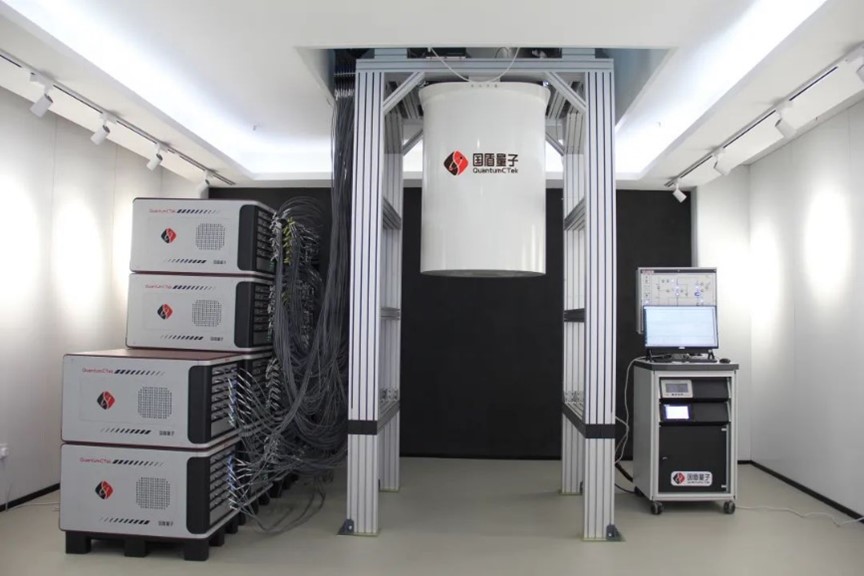
This device, called “TurningQ Gen2 Large-Scale Programmable Optical Quantum Computing System”, attracted countless eyes. It looks like a double-door refrigerator, seemingly ordinary, but contains huge scientific and technological energy. The device is mainly composed of three core components: quantum light source unit, quantum computing unit, and detection unit. Each component embodies the hard work and wisdom of scientific researchers.

According to relevant persons in charge of Turing Quantum, this optical quantum computer has a quantum superiority level of 56 photons. When solving certain specific problems, its computing power is almost comparable to that of the top supercomputer, Tianhe-2. As an outstanding representative of my country’s supercomputers, Tianhe-2 has been ranked among the top in the global supercomputer rankings many times. Its powerful computing power has provided strong support for many scientific research and engineering fields. Today, the computing power of domestic optical quantum computers on specific problems is comparable to that of Tianhe-2, which is undoubtedly a major breakthrough in my country’s quantum computing field.

What is even more surprising is that compared with Tianhe-2, this optical quantum computer has obvious advantages in terms of floor space and energy consumption. Supercomputers usually require huge computer rooms and a large amount of energy supply to maintain operation, while optical quantum computers are only the size of a refrigerator, which greatly saves space and energy. This not only reduces the cost of use, but also makes it possible for the widespread application of quantum computers.

Key components, simultaneously unveiled

At the exhibition, the key device for the industrialization of this quantum computer, the photonic chip based on 110 nanometer technology, was also unveiled. The photonic chip is one of the core components of the optical quantum computer. It uses photons to transmit and process information and has the advantages of high speed and low energy consumption. The emergence of the photonic chip based on 110 nanometer technology marks that my country has made important progress in photonic chip manufacturing technology.

The development and production of photonic chips require high-precision manufacturing processes and advanced equipment. Through unremitting efforts, Chinese researchers have overcome technical difficulties one after another and successfully developed photonic chips based on 110-nanometer technology. This achievement not only lays a solid foundation for the industrialization of my country’s optical quantum computers, but also wins my country an advantage in the development of photonic chips.

Future prospects, unlimited potential

With the continuous advancement of quantum computing technology, the further optimization of CPO optoelectronic co-packaging and related micro-nano processing technologies, quantum computers are expected to significantly improve computing power while reducing their size to the size of a laptop computer. This prospect is exciting and will bring revolutionary changes to the popularization and application of quantum computers.

In the field of scientific research, quantum computers will provide powerful tools for solving complex scientific problems. For example, in the fields of quantum chemistry, materials science, biomedicine, etc., quantum computers can simulate the structure and properties of molecules and accelerate the process of new drug development and material design. In the financial field, quantum computers can be used for risk assessment, portfolio optimization, etc. to improve the accuracy and efficiency of financial decision-making. In the field of artificial intelligence, quantum computers can accelerate the training of machine learning and deep learning algorithms and promote the development of artificial intelligence technology.

In addition, the widespread application of quantum computers will also drive the development of related industries. From the manufacture of photon chips to the assembly and debugging of quantum computers, to the development and application of quantum computing software, a huge industrial chain will be formed. This will inject new impetus into my country’s economic development and create a large number of employment opportunities.

Independent innovation, forging ahead

The debut of the new generation of domestic optical quantum computers is another major achievement of my country’s independent scientific and technological innovation. In the face of the blockade and suppression of the United States, my country’s technology companies did not choose to rely on imports, but firmly embarked on the path of independent research and development. This spirit of independent innovation is the core driving force of my country’s scientific and technological development.

However, we must also be aware that there is still a certain gap between my country and the world’s advanced level in the field of quantum computing. In future development, we need to continue to increase investment in scientific research, cultivate more scientific and technological talents, strengthen international cooperation and exchanges, and continuously enhance my country’s core competitiveness in the field of quantum computing.

The debut of the new generation of domestic optical quantum computers is an important milestone in the history of my country’s scientific and technological development. It allows us to see the huge potential and broad prospects of my country in the field of quantum computing. I believe that in the near future, quantum computers will enter our lives and bring more surprises and changes to the development of human society. Let us look forward to the arrival of this day and work hard for the brilliant future of my country’s science and technology!

現代國語:

在當今科技快速發展的時代,中美之間的科技競爭猶如一場沒有硝煙的戰爭,在光刻機、晶片等前沿科技領域尤為激烈。美國憑藉其技術優勢對我國進行封鎖和打壓,試圖遏制我國科技崛起的腳步。然而,事情突然反轉了,壓力往往能轉化為動力,我國科技企業並未因此退縮,反而加快了自主研發的腳步。近日,國產新一代光量子電腦首次亮相,無疑是我國科技領域的璀璨明星,照亮了未來科技發展的道路。

驚艷首秀,實力彰顯

這台名為「TurningQ Gen2大規模可程式光量子計算系統」的設備吸引了無數目光。它外觀猶如一台對開門冰箱,看似普通,卻蘊含著巨大的科技能量。該設備主要由量子光源單元、量子計算單元、探測單元三大核心組件所構成,每個組件都凝聚著科研人員的心血與智慧。

據圖靈量子相關負責人介紹,這台光量子電腦具備56光子的量子優越性等級規模。在求解某些特定問題時,其運算能力幾乎可媲美頂尖超級電腦——天河二號。天河二號作為我國超算的傑出代表,曾多次在全球超算排行榜上名列前茅,其強大的運算能力為許多科學研究和工程領域提供了有力支持。而如今,國產光量子電腦在特定議題上的運算能力與之相當,這無疑是我國在量子運算領域的重大突破。

更令人驚訝的是,與天河二號相比,這台光量子電腦在佔地面積和能耗方面具有明顯優勢。超算通常需要龐大的機房和大量的能源供應來維持運行,而光量子電腦僅相當於一台冰箱的大小,大大節省了空間和能源。這不僅降低了使用成本,也為量子電腦的廣泛應用提供了可能。

關鍵裝置,同步亮相

在展會現場,與這台量子電腦實現產業化的關鍵裝置-基於110奈米製程的光子晶片也同步亮相。光子晶片是光量子電腦的核心元件之一,它利用光子進行資訊傳輸和處理,具有高速、低能耗等優點。基於110奈米製程的光子晶片的出現,標誌著我國在光子晶片製造技術上取得了重要進展。

光子晶片的研發和生產需要高精度的製造流程和先進的設備。我國科學研究人員經過不懈努力,攻克了一個又一個技術難題,成功研發了基於110奈米製程的光子晶片。這項成果不僅為我國光量子電腦的產業化奠定了堅實基礎,也為我國在光子晶片領域的發展贏得了先機。

未來展望,潛力無限

隨著量子運算技術的不斷進步,CPO光電共封裝以及相關微納加工製程的進一步優化,量子電腦有望在大幅提升運算能力的同時,將尺寸縮小到筆記型電腦大小。這一前景令人振奮,它將為量子電腦的普及和應用帶來革命性的變化。

在科學研究領域,量子電腦將為複雜科學問題的求解提供強大的工具。例如,在量子化學、材料科學、生物醫學等領域,量子電腦可以模擬分子的結構和性質,加速新藥研發和材料設計的進程。在金融領域,量子電腦可以用於風險評估、投資組合最佳化等,提高財務決策的準確性和效率。在人工智慧領域,量子電腦可以加速機器學習和深度學習演算法的訓練,推動人工智慧技術的發展。

此外,量子電腦的廣泛應用也將帶動相關產業的發展。從光子晶片的製造到量子電腦的組裝和調試,再到量子運算軟體的開發和應用,都將形成一個龐大的產業鏈。這將為我國經濟發展注入新的動力,創造大量的就業機會。

自主創新,砥礪前行

國產新一代光量子電腦的首秀,是我國科技自主創新的另一個重大成果。在面對美國的封鎖和打壓時,我國科技企業並沒有選擇依賴進口,而是堅定地走上了自主研發的道路。這種自主創新的精神是我國科技發展的核心動力。

然而,我們也要清醒地體認到,我國在量子運算領域與世界先進水準仍有一定的差距。在未來的發展中,我們需要持續加大科研投入,培養更多的科技人才,加強國際合作與交流,不斷提升我國在量子運算領域的核心競爭力。

國產新一代光量子電腦的首秀,是我國科技發展史上的重要里程碑。它讓我們看到了我國在量子運算領域的巨大潛力和廣闊前景。相信在不久的將來,量子電腦將走進我們的生活,為人類社會的發展帶來更多的驚喜和改變。讓我們共同期待這一天的到來,為我國科技的輝煌未來而奮鬥!

中國原創軍事資源:https://www.163.com/dy/article/K2OHRN700540MBP1888.html

Quantum Technology Has Great Potential For Future Chinese Warfare Success

量子科技對中國未來戰爭的成功有巨大潛力

現代英語:

On October 16, the Political Bureau of the CPC Central Committee held a collective study on the research and application prospects of quantum technology. General Secretary Xi Jinping emphasized that we must fully recognize the importance and urgency of promoting the development of quantum technology, strengthen the strategic planning and systematic layout of quantum technology development, grasp the general trend, and take the initiative.

As the mystery of quantum is unveiled, people are increasingly aware that quantum technology represents the future of human society, is a strategic field that concerns national security and high-quality social and economic development, is a major disruptive technological innovation that impacts and reconstructs the traditional technological system, and will lead a new round of scientific and technological revolution and industrial transformation. It has a bright future.

The United States, the European Union, Australia, Russia and other world powers and regional organizations have been conducting research on quantum technology for many years and have done a lot of preliminary work in the field of quantum information. my country has also pressed the “accelerator” in the development of quantum technology.

Quantum thinking opens up your mind

Do you think quantum technology is very high-end, sounds vague, and even a bit illusory? Not only do you think so, but even Niels Bohr, the founder of quantum physics, once said: “If someone is not confused by quantum mechanics, he does not understand it.”

In fact, we live in the quantum world every day. Quantum is the basic unit of matter: if you divide the physical quantity piece by piece until it is small enough that it cannot be divided any further, it is a quantum. For example, a photon is the basic unit of light energy and it is impossible to divide it into half a photon.

So why can’t we feel its existence at all, and even find it difficult to understand the phenomena of the quantum world? This is because the scale we are familiar with is too different from the quantum scale. For example, a table is on the meter scale, a hair is on the millimeter scale, and the object of quantum physics is tens of millions or even hundreds of millions times smaller than the scale of a hair. If a person is reduced to a size of tens of millions of times the diameter of a hair, then the world in which humans live will follow a completely different set of rules.

In the Newtonian classical thinking model that we are familiar with, “the world is accurately measurable”, everything is an objective, precise, mechanically connected, describable and quantifiable mathematical model, just like you can calculate and analyze the whole process of a wooden block sliding down a slope with a pen. However, several key words of quantum thinking may subvert all this:

Keyword 1: “Probability”. The world is jumpy, unpredictable, and uncertain, or in other words, it is extremely complex and interconnected like the butterfly effect.

Keyword 2: “Overlap”. The world is “plural”. Before we make a choice, the choices are infinite and changing. Only when we finally make a choice, other possibilities “collapse”. At the same time, this choice provides us with infinite options for the next choice.

Keyword three: “Observer”. This is even weirder – if you observe a quantum system, it changes immediately! In other words, the state of the quantum depends on the observer.

Einstein described the quantum world as “ghost-like”. There, many natural laws that people firmly believe in will become invalid, and the perspective of understanding the universe will be completely changed. Before opening the door to the quantum world, you need to abandon all the common sense you have acquired in the macroscopic world, replace it with quantum thinking, keep your mind open, and be ready to exclaim: “How is this possible?!”

A tiny quantum has brought about two revolutions

With quantum thinking, you may understand the two “unique skills” of quantum: one is “clone” – quantum superposition, a quantum can exist in several states at the same time; the other is “remote telepathy” – quantum entanglement, a pair of entangled quantum is like a pair of twins with telepathy. At the same time, quantum is also very “weird” – indivisible and non-cloneable.

It is precisely these magical properties that enable such tiny quantum to burst out with huge energy, setting off two technological waves in human history.

As early as 1900, German physicist Planck proposed the concept of quantum, which split the “hard core” of the real world and ushered in the quantum era. A group of talented scientists such as Heisenberg, Schrödinger, and Bohr basically completed the theoretical framework of quantum mechanics.

Quantum mechanics is one of the greatest scientific discoveries of the last century. Based on quantum mechanics, modern technologies such as transistors, lasers, nuclear fusion, mobile communications, and global positioning systems have emerged, allowing humans to enter the information age, and then developed into the ubiquitous computers and the Internet, creating further prosperity for society. This is the first quantum revolution.

In the 1980s, quantum information technology was born in the information field based on quantum mechanics. For example, quantum computers, quantum cryptography, quantum sensors, etc., not only are based on quantum mechanics, but the devices themselves also have quantum world characteristics such as superposition, entanglement, non-locality, and non-cloning, breaking through the physical limits of classical technology and finding new research directions. The birth of quantum information technology is called the second quantum revolution.

Quantum technology is one of the most cutting-edge technologies at present. It is moving out of the laboratory and achieving unprecedented leapfrog development in various fields. Some even predict that, like steam engines, electricity and computers, quantum technology will become the symbol of the fourth technological revolution.

“A pair of twin stars rises”

Academician Guo Guangcan of the University of Science and Technology of China once said vividly: “The computing power of quantum computers compared with electronic computers is equivalent to the computing power of electronic computers compared with abacus.” The computers we use use the two states of bits 0 and 1 as information processing units, and can only process a single state bit that is either 0 or 1 at a time; while the quantum computing processing unit is a quantum bit, which can process 0 and 1 at the same time due to the superposition effect, just like Sun Wukong can split into dozens of bodies to fight monsters. If a light quantum computer is made using quantum technology, the computing time of a classical computer that takes hundreds of thousands of years will be shortened to a few seconds.

Therefore, as the number of quantum bits continues to increase, the more “clones” there are, the faster the calculation will be. When the number of quantum bits reaches 50, that is, 250 states exist simultaneously, how huge is this number? Converted into the thickness of a 0.1 mm A4 paper folded in half 50 times, this number is 100 million kilometers, which is close to 3/4 of the distance from the earth to the sun. When a quantum computer can reach 100 bits, it may be 100 billion times faster than a supercomputer in some directions.

How should we use such powerful computing power?

First, large-scale, high-dimensional computing problems that were difficult or impossible to solve in the past can now be quickly solved, such as typical search problems and combinatorial optimization problems, such as optimal route selection, code cracking, network threat prediction, urban traffic planning, and so on.

Secondly, artificial quantum systems can be used to simulate natural quantum systems to explore the dynamic properties of molecules. For example, once we simulate and analyze the mechanism of high-temperature superconductivity, we can design some new superconducting materials. This will open a new door for drug design, new material exploration, weather forecasting, space exploration, chemical engineering and other fields, and has great economic and social value.

What is particularly worth looking forward to is that artificial intelligence and quantum technology will coexist and evolve at the same time, “rising like a pair of twin stars.”

Gordon Moore, the founder of Intel, proposed the famous Moore’s Law: Computer computing speed doubles every 18 months or so. Without the exponential growth of silicon transistors in chips and the increasing computing power, artificial intelligence would not have achieved such remarkable results in recent years. However, today, the size of a transistor is much smaller than a flu virus, approaching the physical limit, and computer computing speed is about to reach a “bottleneck”, and artificial intelligence may face a “cold winter”.

Scientists are convinced that only quantum computing, which goes beyond classical computing, can be a strong backing for artificial intelligence to break through its limits. In particular, machine learning technology, which relies on large-scale data processing, will benefit greatly from quantum computing and generate unlimited possibilities; at the same time, artificial intelligence technology can realize self-calibration and evaluation of quantum computing, and evolve with it.

In a foreseeable period, quantum computing will gradually transition from solving optimization problems, quantum encryption communications, and molecular structure research to integrating artificial intelligence, and infiltrating various industries such as smart manufacturing, smart logistics and smart retail, and smart finance. Cloud services will be a new form of service that quantum computing can provide.

Quantum communication “weaves” quantum internet

This is the most amazing phenomenon in the quantum world: independent particles can be completely “entangled” together. Even if the two particles are at the two ends of the universe, both sides can “sense” each other’s state; as long as the state of one of the particles changes, the state of the other particle will also change instantly.

At the same time, quantum is in multiple possible superposition states, and its true state cannot be determined before it is observed. We can achieve absolutely secure communication with subversive significance by constructing particles with quantum entanglement.

With the help of the magical properties of quantum, scientists have found an unbreakable code, the only unconditionally secure encryption method currently available to humans, and the most critical link in quantum communication – quantum key distribution.

Quantum keys use single photons as carriers. Once an eavesdropper takes action, the first layer of “firewall” will be triggered – the quantum state of particles will change. The eavesdropping behavior will be immediately discovered by the user transmitting the information, and the sender and receiver will immediately stop using the key to encrypt the information content. As a “spy”, since quantum state particles cannot be copied, can’t you just intercept and measure them directly? Sorry, doing so will trigger the second layer of “firewall” – the uncertainty principle. Even if you are intercepted by an eavesdropper, there is no way to get the correct information. Quantum satellites are the most promising way to achieve ultra-long-distance quantum communication. In August 2016, the world’s first quantum science experimental satellite “Mozi” was successfully launched in China.

Quantum communication technology and quantum resources have given rise to a new functional network – quantum Internet. It will bring about a leap forward in network security, computing and science, and has broad application prospects: in addition to achieving unconditional secure communication, it can also connect multiple quantum computers to build a distributed quantum computing system, forming a large-scale computing capability that a single quantum computer cannot achieve; forming a sensor network to increase the accuracy of navigation networks such as the global positioning system from the meter level to the millimeter level; connecting optical telescopes thousands of kilometers apart to obtain a resolution equivalent to that of a monocular telescope of the same diameter, and so on.

In May 2020, the European Union stated that it would promote the integration of quantum communications with traditional network infrastructure and applications, develop satellite-based quantum cryptography that can be used for global secure key distribution, and lay the foundation for the future “quantum internet” vision.

China Military Network Ministry of National Defense Network
Friday , November 13, 2020

現代國語:

10月16日,中共中央政治局就量子科技研究和應用前景舉行集體學習。習近平總書記強調,要充分認識推動量子科技發展的重要性和迫切性,加強量子科技發展戰略規劃和系統佈局,把握大趨勢,下好先手棋。

揭開量子的神秘面紗,人們愈來愈認識到,量子科技代表著人類社會未來,是事關國家安全和社會經濟高品質發展的戰略領域,是對傳統技術體系產生衝擊、進行重構的重大顛覆性技術創新,將引領新一輪科技革命和產業變革,可謂「前途」無量。

對於量子科技的研究,美國、歐盟、澳洲、俄羅斯等世界大國和區域組織已持續多年,在量子資訊領域都做了大量前期部署工作。我國在發展量子科技上,也按下了「加速鍵」。

量子思維讓腦洞大開

您是不是覺得量子科技非常高冷,聽起來似懂非懂,甚至有點亦真亦幻?不光您這麼想,連量子物理奠基人尼爾斯·玻爾都曾說過:“如果誰不對量子力學感到困惑,他就沒有理解它。”

其實,我們每天都生活在量子世界裡。量子是物質的基本單元:如果把物理量一份一份往下分,分到無法再分的小塊,就是量子。例如,光量子就是光能量的基本單元,不可能再分成半個光量子。

那麼,我們為何完全感覺不到它的存在,甚至很難理解量子世界的現象?這是因為我們熟悉的尺度和量子尺度相差太大。例如,一張桌子是米尺度,一根頭髮絲是毫米尺度,而量子物理學的研究對像比頭髮絲的尺度還小幾千萬倍甚至幾億倍。如果人類縮小成頭髮直徑的幾千萬分之一大小,那麼人類生活的世界將完全遵循另一套規則。

在我們熟知的牛頓經典思維模式下,“世界是測得準的”,一切都是客觀的、精準的、機械聯繫的、可描述可量化的數學模型,好比您提起筆就能計算分析出一個木塊從斜坡滑落的全過程。但量子思維的幾大關鍵字,可能顛覆這一切——

關鍵字一:「機率」。世界是跳躍的、不可預測的、測不準的,或者說是像蝴蝶效應那樣異常複雜關聯的。

關鍵字二:「重疊」。世界是「複數」的,在我們選定之前,選擇是無限的和變化的。直到最終選定了,其他可能性才「崩塌」。同時,這個選擇為我們下一次選擇又提供了無限的選項。

關鍵字三:「觀測者」。這個就更加詭異了——如果您去觀測測量子系統,它立刻就變了!換句話說,量子的狀態取決於觀測者。

愛因斯坦形容量子世界「如幽靈一般」。在那裡,人們堅信不疑的許多自然法則都會失效,理解宇宙的角度會徹底改變。在推開量子世界大門前,您需要拋棄在宏觀世界所獲得的一切常識,換上量子思維,保持腦洞大開狀態,並隨時準備驚呼:“這怎麼可能?!”

小小量子掀起兩次革命

有了量子思維,也許您就好理解量子所擁有的兩個「絕技」了:一是「分身術」——量子疊加,一個量子可同時存在好幾種狀態;另一個是「遠程心靈感應」——量子糾纏,一對糾纏的量子就好像一對有心靈感應的雙胞胎一樣。同時,量子還很「古怪」——不可分割和不可複製。

正是具備這些神奇特性,使如此微小的量子爆發出巨大能量,在人類歷史上掀起兩波科技浪潮。

早在1900年,德國物理學家普朗克提出量子概念,現實世界的「硬核」就此被劈開,隨之開啟量子時代。海森堡、薛丁格、玻爾等一群天才科學家基本上完成了量子力學的理論架構。

量子力學是上世紀最偉大的科學發現之一。基於量子力學,才有了晶體管、雷射、核融合、行動通訊、全球定位系統等現代技術,使人類進入資訊時代,繼而發展產生了當下無處不在的電腦和互聯網, 造就了社會進一步繁榮。這便是第一次量子革命。

在1980年代,基於量子力學,在資訊領域誕生了量子資訊技術。例如量子電腦、量子密碼、量子感測等,不僅其原理是量子力學,裝置本身也具備了疊加、糾纏、非局域性、不可複製性等量子世界特性,突破了經典技術的物理極限,找到了新的研究方向。量子資訊科技的誕生稱為第二次量子革命。

量子科技是目前最前沿的科技之一,它正走出實驗室,在各個領域實現前所未有的跨越式發展。甚至有人預言,就像蒸汽機、電力和電腦一樣,量子科技將成為第四次科技革命的象徵。

“升起一對雙子星”

中國科技大學郭光燦院士曾經形像地說:「量子電腦的運算能力同電子計算機相比,等同於電子計算機的運算能力同算盤相比。」我們所使用的計算機,是以比特0和1兩個狀態作為資訊處理單元,一次只能處理一個非0即1的單一狀態比特;而量子計算處理單元是量子比特,由於疊加效應,一次只能處理一個非0即1的單一狀態比特;而一個量子計算如果利用量子技術製造一台光量子計算機,那麼經典計算機幾十萬年的運算時間將縮短為幾秒鐘。

所以,當量子位元數不斷增加,「分身」就越多,運算速度就會呈指數級成長。當量子位元達到50個,也就是250種狀態同時存在時,這個數字究竟巨大到什麼程度?換算成一張0.1毫米的A4紙對折50次的厚度,這個數字是1億公里,接近從地球到太陽距離的3/4。當量子電腦能達到100個位元時,在某些方向就可能比超級電腦快百億億倍了。

這麼強大的算力我們該怎麼使用?

首先,過去很難或無法解決的大規模、高維度計算難題,這下可以快速解決了。例如典型的搜尋問題、組合最佳化問題,諸如最優路線選擇、密碼破解、網路威脅預測、城市交通規劃,等等。

其次,可利用人造量子系統模擬自然量子系統,進而探索分子的動力學性質。例如高溫超導現象,一旦我們把高溫超導的機制模擬分析出來,就能設計出一些超導新材料。這將為藥物設計、新材料探索、天氣預測、太空探索、化學等領域打開一扇新的大門,具有重大經濟和社會價值。

特別值得期待的是,人工智慧與量子科技將相生相伴、同時進化,「升起一對雙子星」。

英特爾的創辦人戈登·摩爾提出了著名的摩爾定律:每18個月左右,電腦的運算速度就會增加一倍。如果沒有晶片中矽電晶體的指數級成長、實現算力越來越強,近年來人工智慧不可能成績斐然。然而今天,一枚晶體管的尺寸已遠小於一個流感病毒,逼近物理極限,計算機計算速度即將陷入“瓶頸”,人工智能或將面臨“寒冬”。

科學家確信,只有超越經典計算的量子運算,才能成為人工智慧突破極限的強大後盾。特別是依賴大規模資料處理的機器學習技術,將大大受益於量子運算,產生無限可能;同時人工智慧技術可實現對量子計算的自校準評估,相伴進化發展。

在一個可預測的期間,量子運算將逐步從解決最佳化問題、量子加密通訊、分子結構研究,過渡到融入人工智慧,滲透進智慧製造、智慧物流與智慧零售、智慧金融等各產業。而雲端服務將是量子運算可提供的服務新形態。

量子通訊「編織」量子互聯網

這是量子世界最奇妙的現象:相互獨立的粒子可以完全「糾纏」在一起,就算這兩個粒子分別處於宇宙的兩端,雙方都能「感應」到對方的狀態;只要其中一個粒子的狀態發生變化,另一個粒子也會瞬間發生狀態改變。

同時,量子處於多種可能的疊加狀態,在對其觀測前,無法確定其真實狀態。我們可透過建構有著量子糾纏態的粒子,實現具有顛覆意義的絕對安全通訊。

借助量子的神奇特性,科學家們已尋找到無法被破解的密碼、人類目前唯一無條件安全的加密方式、量子通訊中最關鍵的一環——量子金鑰分發。

量子金鑰採用單光子作為載體,竊密者一旦行動,就會觸發第一層「防火牆」——量子態的粒子改變。竊聽行為馬上會被傳遞訊息的用戶發覺,收發雙方立即不再使用該金鑰來加密訊息內容。作為“竊取者”,既然量子態的粒子不能被複製,截取後直接測量不就可以了嗎?對不起,這麼做會觸發第二層「防火牆」——測不準原理。就算是被竊聽者截住,也沒有辦法得到正確資訊。量子衛星是實現超遠距離量子通訊最有希望的途徑。 2016年8月,世界首顆量子科學實驗衛星「墨子號」在中國發射成功。

量子通訊技術和量子資源,催生了新型功能網路—量子網路。它將帶來網路安全、計算以及科學上的飛躍,應用前景廣闊:除了可實現無條件安全通信外,還可連接多個量子計算機,構建分佈式量子計算系統,形成單個量子計算機無法實現的規模計算能力;形成傳感器網絡,將全球定位系統等導航網絡的精度從米級提高到毫米級;連接相距數千公里的光學望遠鏡,將全球定位系統等導航網絡的精度從米級提高到毫米級;連接相距數千公里的光學遠鏡,可獲得遠分辨率距,可獲得一個同等的望遠鏡等;連接相距數千公里的光學遠鏡,可獲得遠分辨率,可獲得遠1分辨率。

2020年5月,歐盟表示,將推動量子通訊與傳統網路基礎設施和應用結合,開發可用於全球安全金鑰分發、基於衛星的量子密碼,為未來「量子網路」遠景奠定基礎。

中國軍網 國防部網
2020年11月13日 星期五

中國原創軍事資源:http://www.81.cn/jfjbmap/content/2020-11/13/content_275729888.htm