Chinese Military to focus on the integration and development of mechanization, informationization and intelligence
Adhere to the integration and development of mechanization, informationization and intelligence
——Conscientiously study, publicize and implement the spirit of the 20th National Congress of the Communist Party of China
■Chinese People’s Liberation Army Unit 66011
The report of the 20th National Congress of the Communist Party of China emphasized that we should adhere to the integrated development of mechanization, informationization and intelligence. This important exposition endows the modernization of national defense and the armed forces with new connotations of the times, and further points out the development direction and path for accelerating the modernization of national defense and the armed forces. We must seize the opportunity, based on the status quo, insist on promoting the integrated development of mechanization, informationization and intelligence with systematic thinking, coordinate the development of various fields, especially key areas, realize the positive interaction of the three, and promote the overall improvement of national defense and military modernization.
Engels pointed out: “Human beings fight in the same way as they produce.” At present, the new military revolution in the world is developing rapidly, the degree of informatization in modern warfare is constantly improving, and the characteristics of intelligence are becoming increasingly apparent. Especially under the influence of the new round of scientific and technological revolution, the concepts, elements and methods of winning war are undergoing major changes. Judging from the recent local wars and armed conflicts in the world, a large number of high-tech weapons and equipment have been used in actual combat, and intelligent technology, unmanned equipment, and data information have become new growth points for combat effectiveness. In the face of increasingly fierce military competition, only by standing at the forefront of war and technology, and adhering to the integration of mechanization, information, and intelligence, can we seize the opportunity and win the initiative in military strategic competition.
“Everything must come, and it is a matter of course.” Mechanization, informatization, and intelligence are superimposed, interpenetrated, and mutually supported. Among them, mechanization is the material basis and carrier for the development of informatization and intelligence; informatization plays a connecting role between mechanization and intelligence; intelligence represents advanced combat effectiveness and is the development direction of future military construction. Without the previous “transformation” as the premise and foundation, there would be no emergence and development of the latter “transformation”.
Adhering to the integration and development of mechanization, informationization and intelligence is in line with the reality of our military construction and development, and is the only way for the modernization of national defense and the military in the future. Our army has basically achieved mechanization, and the construction of informatization has made significant progress but has not yet been completed. If the intelligentization is carried out after completing the informatization step by step, it will open up a new generation gap with the armed forces of developed countries; if the construction focus is fully shifted to intelligentization, it is unrealistic to expect to be in place in one step.
Science and technology are the core combat capability and the most active and revolutionary factor in military development. The key to adhering to the integrated development of mechanization, informationization and intelligence lies in promoting technological innovation. We should vigorously implement the strategy of strengthening the army through science and technology, actively promote self-reliance and self-improvement in high-level science and technology, accelerate the breakthrough of key core technologies, accelerate the development of strategic, cutting-edge, and disruptive technologies, and realize the transformation from following and running to leading and running as soon as possible. Persist in seeking combat effectiveness from scientific and technological innovation, improve scientific and technological cognition, innovation, and application capabilities, speed up the resolution of “stuck neck” problems, and firmly grasp the lifeline of our army’s development in our own hands.
Wars change with the times, and preparations for wars should not be conservative or rigid. To promote war preparations in the new era, we must focus on winning the new requirements of information-based and intelligent warfare. The construction of our army’s combat effectiveness has accelerated transformation, overall reshaping, and leapfrog development to ensure that it can attack and defend freely and win opportunities in future wars.
Chinese Spying Operations – Games Chinese Spooks Play
From 國家安全部 ‘Guójiā ānquán bù’ to 新華社 ‘Xinhua’, how China’s espionage network operates in shadows.
China has systemically set up one of the quietest but most lethal espionage networks across the world.
As the world continues to debate over the spy balloons allegedly sent by China for espionage in the United States, probably it is missing the big picture. The real threat to global security comes from China’s spy network which is a complex web of many agencies, most of whom have successfully remained in the shadows. This multipart series would unravel the lesser known as well the unknown details about the Chinese espionage network.
The Chinese spy network has successfully remained in the shadows for decades. The Chinese Communist Party had built its spy network much before it came to power in China in 1949 turning a republic into a communist dictatorship. Since then, China has systematically set up one of the quietest but one of the most lethal espionage networks across the world.
The information regarding the Chinese spy network is scant and so scattered that it makes it difficult for even keen China watchers to paint the big and the real picture.
Ministry of State for Security
Ministry of State for Security (MSS) is China’s premier intelligence agency. It is also known as 國家安全部 ‘Guójiā ānquán bù’. MSS is largely responsible for operations outside China. The domestic intelligence and surveillance is looked after by the Ministry of Public Security (MPS). In addition, Chinese defence forces have their own intelligence agencies which conduct operations all over the globe.
Peter Mattis, one of the foremost authorities on Chinese intelligence operations, explains the Chinese military intelligence network (A Guide to Chinese Intelligence Operations, August 18, 2015), “Within the People’s Liberation Army (PLA), intelligence organizations fall under the General Staff Department (the Second and Third Departments, or, respectively, China’s DIA and NSA equivalents); the General Political Department for intelligence and covert influence operations; the PLA Navy, Air Force, and Second Artillery headquarters; and technical reconnaissance bureaus in the military regions. Much of the military intelligence infrastructure is based in China, but defence attachés and clandestine collectors do operate abroad, including from the service intelligence elements.”
New China News Agency (Xinhua)
Founded in 1931 by the Chinese Communist Party, Xinhua is the official news agency of China and a major facilitator for China’s intelligence gathering. According to an investigative report in Greek media outlet Pentapostagma published in April 2021, “Xinhua is primarily the eyes, ears, and voice of China. It is one of the important arms of the Chinese Intelligence agency in gathering information. Its prime objective is to promote positive news/narrative about CCP leadership/Chinese government and to marginalize, demonize, or entirely suppress anti-CCP voices, incisive political commentary and exposes that present the Chinese Government/CCP leadership in a negative light. It owns more than 20 newspapers and a dozen magazines and prints in eight languages: Chinese, English, Spanish, French, Russian, Portuguese, Arabic and Japanese It has established 107 bureaus in foreign countries including eight sub offices or editorial offices in Hong Kong, New York, Mexico, Nairobi, Cairo, Paris, Moscow, and Rio de Janeiro and currently employs more than 10,000 people.”
The report explained the standard operating procedure of gathering intelligence by this Chinese agency which has been operating in India also for several years, “Xinhua covers all news and developments/events in foreign countries which have meaning, or which could be of any significance for China. It then forwards reports/articles to China’s Ministry of State Security which directly handles the information inflow from Xinhua. The reports/articles are uploaded in a secured web system. Those that contain intelligence value are treated as classified and forwarded to CCP leadership for their consumption. Xinhua journalists are trained to be able to identify news/articles that are suitable for the CCP leaders and not for the public.”
According to this investigative report, “The agency (Xinhua) maintains a huge database of experts across the world and contacts favorable pro-Chinese contacts/assets in foreign countries and forwards their articles/reports to concerned departments back in Beijing.”
United Front Work Department (UFWD)
Set up in 1942, UFWD is the blue-eyed boy of the Communist Party Chinese (CPC). President Xi Jinping has further strengthened it ever since he came to power in 2012 and now it plays a significant role in China’s overall espionage network as well foreign policy framework. According to a research report published in August 2018 by the US-China Economic and Security Review Commission, “The United Front strategy uses a range of methods to influence overseas Chinese communities, foreign governments, and other actors to take actions or adopt positions supportive of Beijing’s preferred policies.”
‘Several official and quasi-official entities conduct overseas activities guided or funded by the United Front including Chinese government and military organizations, cultural and “friendship” associations, and overseas academic groups such as Chinese Students and Scholars Associations (CSSAs) and Confucius Institutes. The UFWD also oversees influence operations targeting Taiwan, Hong Kong, and Macau that aim to suppress independence movements, undermine local identity, and promote support for Beijing’s political system.
In all these cases, United Front work serves to promote Beijing’s preferred global narrative, pressure individuals living in free and open societies to self-censor and avoid discussing issues unfavorable to the CPC and harass or undermine groups critical of Beijing’s policies.’
Ryan Fedasiuk, a research Analyst at Georgetown University’s Center for Security and Emerging Technology (CSET) meticulously calculated the budget for UFWD in his essay ‘How China Mobilizes Funding for United Front Work (China Brief Volume: 20 Issue: 16). This indicates the priority given to this agency by the Chinese government and the CCP.
There is no direct budget for UFWD but there are several government and quasi-government bodies which fund it. That include Chinese People’s Political Consultative Conference, State Ethnic Affairs Commission, State Administration of Religious Affairs, Overseas Chinese Affairs Office of the State Council and All-China Federation of Industry and Commerce. The current annual budget for UFWD allocated through these bodies stands at not less than $1.4 billion.
“Chinese officials maintain that the United Front system is a benign network of administrative organizations, and that the PRC’s foreign policy is based on “mutual respect and non-interference in each other’s internal affairs” (PRC Embassy in Sweden, August 2019; ABC, June 2020). If this really were the case, regional governments probably would not classify their united front spending as secret 秘密資助 (Mìmì zīzhù) or refuse to disclose the structure of government offices ostensibly reserved for public diplomacy,” says Fedasiuk.
He further adds, “That regional governments in China budget nearly as much for united front work ($1.3 billion annually) as they do for CPC propaganda indicates how highly the Party values the united front as a tool for both domestic and foreign influence’.”
Overseas Chinese Affairs Office (OCAO)
This department /office is a front for keeping tabs on the Chinese communities abroad. It works closely with the Chinese Ministry of Education. According to Mattis, “The Overseas Chinese Affairs Office and the Ministry of Education… keep tabs on Chinese who live outside of China. The former office maintains ties to overseas Chinese communities and sponsors a variety of Chinese professional associations. The Ministry of Education keeps tabs on Chinese students abroad and helps support students’ and scholars’ associations. Both assist in mobilizing Chinese expats and émigrés for visible displays of support when Beijing wants, such as during the 2008 Olympic torch relay.”
According to the official website of ‘Overseas Chinese Office’, its major responsibilities include, “To study and formulate the guidelines, policies and regulations concerning overseas Chinese affairs, as well as to supervise and check their implementation; and to conduct research and study on the development of overseas Chinese affairs both domestically and abroad, to provide the information to the Central Committee of the CPC and the State Council.
Institute of Scientific and Technical Information of China (ISTIC)
Established in 1956, the ISTIC is officially a premier scientific research institute of China. But that is a façade. Its real task is to collect technologies and related information from all over the world in whichever manner it is possible. If one can read between the lines, the official website of ISTIC gives ample indications about the real work it does. The website says, “ISTIC has established long-term and stable business cooperation relations with relevant research institutions in the United States, Canada, Japan and other countries and regions, and has become an important platform for international cooperation and exchange in the field of science and technology information in China.”
George Soros and Chinese spy agency worked together as comrades.
George Soros’ history with the Chinese reveals his hypocrisy as he presents himself as a champion of democracy.
George Soros, the US-based controversial billionaire, and the Chinese premier spy agency Ministry of State Security (MSS) have worked hand in glove in the 1980s where Soros provided substantial funding to MSS through Economic System Reform Institute (ESRI) and China International Culture Exchange Center (CICEC).
It appears that Soros was playing a ‘double game’ by pursuing the Western interests to infiltrate China while also forging a close partnership with Chinese intelligence network and top bosses of the Chinese Communist Party. The apparent reason was an opportunity that he must have seen to benefit from China’s economic growth in the 1980s.
But this partnership fell apart with the change in the Chinese regime after 1989. Several representatives of Soros’ entity ‘China Fund’ were arrested by the Chinese authorities post- Tiananmen square massacre in 1989. The Chinese authorities accused them of working for the US’ Central Intelligence Agency (CIA).
Soros’ China Fund and the Ministry of State Security
Soros started making overtures to China in the 1980s. He first identified and handpicked Liang Heng, a bestselling author in 1984 to set up his shop in China. Heng had become famous after publishing his memoir Son of the Revolution’ that was a personal account of how China was opening to the West and the purges carried out at regular intervals by the Communist Party China (CPC).
Liang connected Soros with important people in the Chinese establishment. The façade kept for this whole initiative was that Soros wanted to help China to carry out reforms.
By that time, he had already set up ‘Open Society Foundations’, a funding arm known for instigating coups, political upheavals, and chaos in various countries through a web of well-funded non-Governmental organizations (NGOs). But given the fact that bets were very high in China, Soros decided to set up a separate entity which would work only in China.
In 1986, Soros set up ‘China Fund’ with a $1 million endowment. Through Liang’s network, the China Fund initially partnered with a Chinese think tank Economic System Reform Institute (ESRI).
In October 1986, Soros opened the China Fund formally in a signing ceremony at Beijing’s Diaoyutai State Guesthouse. This was his first trip to China.
Soros struck gold by roping ESRI as it was close to the premier Zhao Ziyang, who became the Party’s general secretary the next year. Zhao’s personal secretary, Bao Tong, was also known for helping the China Fund-ESRI joint venture whenever they needed to get through the Chinese bureaucracy.
Behind the façade of helping China to shape reformist economic policies, the China Fund started spreading its tentacles very fast. Within a year of its establishment, it set up an artists’ club in Beijing and an academic unit at Nankai University in Tianjin. Within the first two years of arriving in China, Soros’ China Fund gave hefty grants for at least 200 proposals. However, as the Fund started pushing the envelope too far by funding research on sensitive topics like the notorious ‘Cultural Revolution’ that had resulted in torture and deaths of millions of Chinese in 1960s, alarm bells started ringing in Chinese official circles and Zhao Ziyang had to step in despite his support for Soros and China Fund.
Alex Joske says in Spies and Lies: How China’s Greatest Covert Operations Fooled the World, “In the face of complaints from Party elders about the China Fund, Zhao Ziyang ceded its control to new management. It wasn’t a fight he wanted to pick, nor one he could dare to. Zhao agreed to sever ties between the ESRI and the China Fund, bringing in the China International Culture Exchange Center (CICEC), a group under the Ministry of Culture, as its new partner institution.
Things weren’t all bad, or so it seemed. CICEC had the backing of senior Party leaders, including (present Chinese president) Xi Jinping’s father, and served as one of the only official channels for cultural exchanges with the outside world. Its strong ties to officialdom could insulate Zhao and the China Fund.”
Soros travelled to China in February 1988 to sign a revised agreement with Yu Enguang, a Chinese spy master who was a high-ranking official of the MSS. CICEC itself was a front for the MSS. It would be too naïve to accept that Soros didn’t know about this ‘open secret’ though he tried to defend himself later by pleading ignorance about this fact.
Soros got along well with Yu Enguang at a personal level. The latter secured Soros a rare meeting with the top leadership of CCP in Beijing. Soros, reconfirmed his commitment to bankroll joint operations of China Fund and CICEC. The new Chinese co-chair of this project Yu Enguang.
According to Joske, Yu Enguang was the pseudonym of the Chinese spy master Yu Fang. ‘Among his comrades in the MSS, Yu Fang was just as respected as ‘Yu Enguang’ was by the targets he cultivated. At some point in his career, he headed the agency’s important central administrative office, and in the early nineties helped secure the passage of China’s first National Security Law, which expanded and codified MSS powers. The authors of several MSS publications, marked for internal distribution only, thank him for advising on and improving their drafts. He also oversaw MSS production and censorship of histories, TV dramas and movies about spies, which were designed to build public awareness and support for the MSS’s mission.’
Joske adds, “Ironically for a man who helped bring Chinese intelligence history into the public sphere, Yu’s true legacy is an official secret. Official references to his achievements are brief and elliptical. The authoritative People’s Daily eulogized him in 2013, an honor only a handful of intelligence officers receive: ‘In his sixty years of life in the revolution, Comrade Yu Fang was loyal to the Party, scrupulously carried out his duties and selflessly offered himself to the Party’s endeavors, making important contributions to the Party’s state security endeavor.’ The article also noted that he’d been a member of the National People’s Congress, China’s national legislature.”
Thus, Soros was dealing with a top-ranking Chinese intelligence official. Initially, this partnership was going off well. In fact, MSS was using Soros’ money to fund its operations under the garb of cultural exchange programs carried out by CICEC.
Incidentally, the official website of the CICEC, when accessed currently, doesn’t show any link it had in the past with Soros and the China Fund. It talks about its focus on ‘cultural exchange programs, which is a common phrase used frequently by the Chinese intelligence agencies to give legitimacy to their spy operations. The CICEC holds cultural festivals across the world and officially claims to be working to create support for China’s ‘One belt, one road’ initiative. Incidentally, CICEC was set up in 1984, a year after MSS came into existence and it was just a couple of years old when Soros’ China Fund forged a partnership with it. It was well-known to China watchers right since its inception that CICEC was a front for the MSS. It is difficult to apprehend that Soros didn’t know about this!
Post-Tiananmen Square
Everything was going well for Soros’ China Fund till Tiananmen square happened in 1989. Chinese authorities suspected that the China Fund played an active role in fueling demonstrations at Tiananmen square that ended in a massacre of thousands of people by Chinese authorities. Meanwhile the Tiananmen square massacre also led to a purge within the party as CCP’s general secretary Zhao Ziyang was not only replaced but was also put under house arrest.
With the arrest of Zhao as well as his secretary Bao Tong, both of whom backed Soros and his China Fund, the Chinese authorities began their crackdown. Soros immediately shut the shop leaving many of his Chinese associates in the lurch and at the mercy of Chinese authorities.
MSS, in its updates to the top party bosses, days before the Tiananmen massacre happened gave details about the role of China Fund as a CIA front in fueling these demonstrations.
According to The Tiananmen Papers, a huge cache of internal CCP reports related to the massacre, that was leaked later, the MSS told the party bosses, “Our investigations have revealed that Liang Heng, the personal representative of the (China Fund) chairman George Soros, was a suspected US spy. Moreover, four American members of the foundation’s advisory committee had CIA connections.”
“According to the MSS’s narrative, Soros showed his ‘true colors’ by asking Yu to close the fund in May 1989 once he realized that supporters of reform were being purged,” observed Joske.
Soros co-chaired the China Fund-CICEC partnership with a top-level Chinese spy master Yu Enguang (also known as Yu Fang). The MSS used the funds provided by Soros’ China Fund to finance many of its operations. Had there not been an internal turmoil in the Chinese Communist Party throwing Soros’ supporters in the Chinese establishment out of power, Soros would have been working closely with an authoritarian Chinese government and continued to play the ‘double game’ ultimately benefiting his business interests from both sides. This history of Soros with the Chinese also exposes his double speak as he claims to be the champion of democracy!
What a Chinese spy agency the Ministry of State Security disrupts the world
MSS was set up in 1983 to bring together multiple agencies which were already functional so that Chinese spy networks could work more cohesively as well as ruthlessly.
China’s premier spy agency Ministry for State Security (MSS) has been on the forefront of setting up and running a ruthless global espionage and counter-espionage network.
MSS was set up in 1983 to bring together multiple agencies which were already functional so that Chinese spy networks could work more cohesively as well as ruthlessly.
Officially the proposal to set up this agency was brought by Zhao Ziyang at the first session of the sixth National People’s Congress (NPC) on June 20, 1983. The NPC can be broadly termed as the Parliament of China.
Ziyang proposed the establishment of a state security ministry “to protect the security of the state and strengthen China’s counterespionage work.” The NPC approved it and voted to appoint Ling Yun as the first minister.
The inaugural meeting of the MSS was held on 1 July 1983 to announce the formal establishment of the. The opening speech was delivered by chairman Chen Pixian of the ‘Central Political-Legal Commission’ one of the key bodies of CCP. He categorically said, “Doing state security work well will effectively promote socialist modernization and the cause of realizing the unification of the motherland opposing hegemonism and defending world peace.” The Chinese intent was clear: MSS would be its ace espionage and counter-intelligence agency.
Since President Xi Jinping took over the reins of the Communist Party of China (CCP) and the Chinese establishment in 2012, MSS has been endowed with even greater authority and its sphere of influence has increased significantly. In Xi Jinping’s scheme of things, Chinese espionage agencies, especially MSS, lead from the front to change the existing world order.
Since the remit of China’s intelligence agencies is much broader than those of Western nations, they need more resources, and Xi Jinping has made sure they receive them, say Clive Hamilton and Mareike Ohlberg in Hidden Hand: Exposing How the Chinese Communist Party is Reshaping the World.
Roger Faligot (Chinese Spies: From Chairman Mao to Xi Jinping) has written, there has been a “formidable increase in the authority of the Chinese intelligence apparatus, specifically since 2017”.
The MSS indulges in all kinds of dubious clandestine activities including sabotage, industrial espionage, theft of technology. It has created several fronts in the form of think tanks and trade and cultural bodies to carry out such activities. The prominent among them are China Institute of Contemporary International Relations, China Reform Forum and Chinese Association for the Promotion of Cultural Exchange and Cooperation.
Structure of MSS
Last known, MSS has 18 bureaus spread over at least four compounds in Beijing serving as their headquarters and then they have provincial and other local networks within China as well as a global network. The functions of many of them are not yet known. China Institute of Contemporary International Relations is the public façade of 11th bureau of MSS. Peter Mattis and Matthew Brazil have painstakingly gathered some details about these bureaus in ‘Chinese Communist Espionage: A Primer’ such as:
“ • First Bureau: “secret line” operations by MSS officers not under covers associated with Chinese government organizations.
Second Bureau: “open line” operations by MSS officers using diplomatic, journalistic, or other government-related covers.
Fourth Bureau: Taiwan, Hong Kong, and Macau.
Fifth Bureau: Report Analysis and Dissemination.
Seventh Bureau: Counterespionage Intelligence Bureau, gathers information and develops intelligence on hostile intelligence services inside and outside China.
Eighth Bureau: Counterespionage Investigation, runs investigations to detect and apprehend foreign spies in China.
Ninth Bureau: Internal Protection and Reconnaissance Bureau, supervises and monitors foreign entities and reactionary organizations in China to prevent espionage.
Tenth Bureau: Foreign Security and Reconnaissance Bureau, manages Chinese student organizations and other entities overseas and investigates the activities of reactionary organizations abroad.
Eleventh Bureau: China Institutes of Contemporary International Relations, performs open-source research, translation, and analysis. Its analysts also meet regularly with foreign delegations and spend time abroad as visiting fellows.
Twelfth Bureau: Social Affairs or Social Investigation Bureau, handles MSS contributions to the CCP’s united front work System (also known as United Front Works Department-UFWD, which is another major espionage network of Chinese government and CPC).
Thirteenth Bureau: Network Security and Exploitation (also known as the China Information Technology Evaluation Center, manages the research and development of other investigative equipment.
Fourteenth Bureau: Technical Reconnaissance Bureau, conducts mail inspection and telecommunications inspection and control.
Fifteenth Bureau: Taiwan operations linked to the broader Taiwan Affairs work system. Its public face is the Institute of Taiwan Studies at the China Academy of Social Sciences.
Eighteenth Bureau: US Operations Bureau for conducting and managing clandestine intelligence operations against the United States.”
There is hardly any information about the real work done by the third, sixth, sixteenth and seventeenth bureau of the MSS.
According to an online report by China Digital published in 2015, the MSS had a strength of 100,000 ‘spies’. Around 60,000 of them worked within China while 40,000 of them were working in other countries for China.
Explaining this mammoth size and the massive expansion of MSS, Mattis and Brazil elaborated, “The expansion occurred in four waves. The original departments (or those created within the first year) appeared to be the municipal bureaus or provincial departments of state security for Beijing, Fujian, Guangdong, Guangxi, Heilongjiang, Jiangsu, Liaoning, and Shanghai. A second wave appeared shortly thereafter between 1985 and 1988, including Chongqing, Gansu, Hainan, Henan, Shaanxi, Tianjin, and Zhejiang. The third wave from 1990 to 1995 completed the expansion of the ministry across the country at provincial levels, bringing in Anhui, Hunan, Qinghai, and Sichuan provinces.161 The fourth wave of MSS expansion was vertical. The provincial-level departments either took over local public security bureaus or established subordinate municipal or county bureaus. For many local PSB officers, they were police one day and state security the next. When MSS minister Jia left in 1998 for the MPS, the MSS was a nationwide organization at every level.”
“From the national level to the local levels, the MSS and its subordinate departments and bureaus report to a system of leading small groups, coordinating offices, and commissions to guide security work while lessening the risk of politicization on behalf of CCP leaders. At present, the two most important of these are the Political-Legal Commission and the Central State Security Commission.”
Clive Hamilton and Mareike Ohlberg have mentioned in Hidden Hand: Exposing How the Chinese Communist Party is Reshaping the World, “It was reported in 2005 that the FBI believed the MSS had set up around 3000 front companies to conceal its activities. The MSS has various arms engaged in economic espionage and it has ‘embedded itself deep in major financial and commercial organizations, particularly in Shanghai and Hong Kong’. Not all economic espionage is state directed. Chinese nationals are known to set up firms that take orders from companies in China to obtain and supply specific pieces of intellectual property from their competitors in the West, usually by identifying an employee willing to provide such secrets.”
Bloody Purge within MSS
While MSS has successfully infiltrated many spy agencies of other countries, it also suffered a major setback when in 2010, it was revealed that there are several Central Intelligence Agency (CIA) moles working in China and MSS for the American agency.
This led to a bloody purge within MSS. The CIA assets were exposed because of a botched-up communication system of the US spy agency. It reportedly used the same equipment in China which it was using to communicate with its operatives in the middle east. But the Chinese spy agency was much more efficient than the middle east and the CIA underestimated its tech capability. MSS was able to crack this communication network. According to various reports, anywhere between one dozen to two dozen operatives of the CIA were rounded up and executed over a period of two years by the MSS. The CIA did manage to take out many of its ‘assets’ but it had to suffer a major loss.
According to a report published in the journal Foreign Policy in 2018, “It was considered one of the CIA’s worst failures in decades: Over a two-year period starting in late 2010, Chinese authorities systematically dismantled the agency’s network of agents across the country, executing dozens of suspected US spies.”
Recruitment and working pattern.
One of the key methods deployed by MSS is to use the Chinese diaspora to create assets in other countries. Its first bureau plays a significant role in this regard. A survey done by the US-based Centre for Strategic Studies gives an indication about MSS’ approach towards espionage. This survey listed 160 publicly reported instances of Chinese espionage directed at the United States since 2000. According to the survey report:
42% of actors were Chinese military or government employees.
32% were private Chinese citizens.
26% were non-Chinese actors (usually U.S. persons recruited by Chinese officials)
34% of incidents sought to acquire military technology.
51% of incidents sought to acquire commercial technologies.
16% of incidents sought to acquire information on U.S. civilian agencies or politicians.
41% of incidents involved cyber espionage, usually by State-affiliated actors.
According to Hamilton and Ohlberg, “Ego, sex, ideology, patriotism, and especially money is all exploited by China’s intelligence services to recruit spies. In 2017 an FBI employee, Kun Shan Chun (Joey Chun), was convicted of supplying information about the bureau’s organization and operations to Chinese agents, in exchange for free international travel and visits to prostitutes. Among those who spy for China, ideology is a factor mainly for people of Chinese heritage (unlike during the Cold War, when Westerners spied for the USSR for ideological reasons). Beijing also deploys the threat of punishment of family members in China if a target refuses to cooperate.
UFWD: ‘Magic weapon’ in China’s espionage arsenal
The UFWD’s work is inspired by the Leninist theory of uniting with lesser enemies to defeat greater ones
Chinese President Xi Jinping
One of the key constituents of the global Chinese Spy Network is the United Front Work Department (UFWD). It is entrusted with coordination and operational aspects of ‘united front’ activities. The Chinese initially defined ‘united front’ more as a concept. Later it set up UFWD to carry out these activities as the nodal agency.
Background
The UFWD’s work is inspired by the Leninist theory of uniting with lesser enemies to defeat greater ones. Since its founding, this has been a key element of the Chinese Communist Party’s (CCP) strategy to consolidate its hold on power, both domestically and internationally.
The UFWD’s first deployment was to join and subvert the then ruling Nationalist government, the Kuomintang, in the early 1920s. A 2018 research report by US-China Economic and Security Review Commission explained it further, “The CCP then formed an alliance of convenience with the Kuomintang to discourage it from trying to wipe out the fledgling CCP while uniting their efforts against Japan.”
According to Gerry Groot, senior lecturer at the University of Adelaide and renowned expert on the United Front, this campaign evolved into a systematic effort to recruit “fellow travelers,” mostly “famous intellectuals, writers, teachers, students, publishers, and businesspeople who were not necessarily Communists.”
Modus Operandi
The modus operandi of the UFWD is one of the least discussed issues in the public domain when it comes to Chinese covert operations. It is not surprising as UFWD operates through a complex web of organizations which act as a front for united front work.
There are thousands of organizations which work for UFWD under the garb of cultural, educational, commercial, and philanthropic organizations. Alex Joske explains the philosophy behind UFWD in his groundbreaking expose of Chinese intelligence operations Spies and Lies, “Party leaders since Mao Zedong have referred to the united front as one of their three ‘magic weapons’. Together with armed struggle and efforts to strengthen Party organization, the two other magic weapons, the CCP credits the united front work with major contributions to its victory in 1949, China’s modernization and subsequent economic development.”
The key task of UFWD is to build a global network of influencers and ‘operators’ who manipulate the global narrative by hook or crook. The UFWD specifically brings into its spy net intellectuals, local community leaders, religious and ethnic figures, journalists, academia, and business magnates.
According to Joske, recent cases from around the world have shown, the (Chinese Communist) Party seeks to insert itself into segments of diaspora communities and then mobilize them as political influence. Co-optees can be used to suppress dissidents, make political donations, mentor political candidates and staffers, and otherwise apply pressure in support of Beijing’s interests.
In a 2020 research paper on UFWD, ASPI said, “There’s no clear distinction between domestic and overseas united front work: all bureaus of the UFWD and all areas of united front work involve overseas activities. This is because the key distinction underlying the United Front is not between domestic and overseas groups, but between the CCP and everyone else. For example, the UFWD’s Xinjiang Bureau plays a central role in policy on Xinjiang but is also involved in worldwide efforts to whitewash the CCP’s internment of an estimated 1.5 million people in Xinjiang, primarily ethnic Uyghur Muslims, as an anti-terrorism and vocational training effort.”
Structure
The UFWD follows the directions given by an important CCP body known as the Chinese People’s Political Consultative Conference (CPPCC). The latter is led by a member of the CCP’s Politburo Standing Committee.
According to the latest information available, UFWD has a presence across all provinces in China, in all its embassies abroad, in foreign universities and in various international trade organizations as well as in civil society also. According to the ASPI report, “Internally, the department has 10 leaders, at least six of whom hold ministerial rank or higher. It has 12 bureaus, half of which were created after 2015. Bureaucratic changes in 2018 that brought overseas Chinese affairs under the UFWD’s ‘unified management’ also injected dozens if not hundreds of officials with substantial overseas experience into the department. Jinan University, Huaqiao University and the Central Institute of Socialism in Beijing are all subordinate to the UFWD and carry out research and training to support its efforts. Additionally, the UFWD runs dedicated training facilities, such as the Jixian Mountain Estate, which is a complex in the outskirts of Beijing used for training China Overseas Friendship Association cadres.”
Organizations such as the China Overseas Friendship Association, are part of the ‘united front system’. At least two such organizations held special consultative status as non-governmental organizations in the UN Economic and Social Council. According to an ASPI report, “In 2014, an official from one of them, the China Association for Preservation and Development of Tibetan Culture, was barred from a UN human rights hearing after he intimidated a woman testifying about her father, political prisoner Wang Bingzhang.”
The 12 bureaus of UFWD
UFWD’s 12 bureaus deal with separate tasks. Here is how the work has been distributed to them:
First Bureau: Minor Parties Work Bureau (Oversees China’s eight democratic parties) Second Bureau: Deals with Ethnic Affairs Third Bureau: Deals with Hong Kong, Macau and Taiwan Fourth Bureau: Deals with business persons and private companies Fifth Bureau: Non-Affiliated and Minor Party Intellectuals related work Sixth Bureau: Targets urban professionals such as employees of foreign companies Seventh Bureau: Handles Tibet related issues Eighth Bureau: Handles issues related to Xinjiang province Ninth Bureau: Overseas Chinese affairs (regional responsibilities) Tenth Bureau: Overseas Chinese Affairs (Media, Cultural and educational activities) Eleventh Bureau and Twelfth Bureau: Issues related to religion
Xi Jinping and UFWD
Though UFWD has always been used by the CCP as a key element of its spy network, Xi Jinping pushed it to a new high after he took over as Chinese President in 2012. In 2015, Xi declared in an important central united front work meeting, “The United Front … is an important magic weapon for strengthening the party’s ruling position … and an important magic weapon for realizing the China Dream of the Great Rejuvenation of the Chinese Nation.”
More than 40,000 new personnel were recruited for different wings of UFWD within a few years of Xi taking over the reins of CCP. Xi’s specific focus on UFWD shouldn’t surprise those who know his background. Xi Jinping’s father Xi Zhongxun was known for carrying out UFWD missions in Tibet. One of his key assignments was to influence the Dalai Lama and Panchen Lama. As a Politburo member he supervised the UFWD work in the 1980s. Xi rose in the party by climbing through CCP ranks in Fujian province which is known to be a hotbed of united front activities targeting Taiwan. In 1995, he wrote a paper on united front work in the Chinese diaspora. He advocated several new ideas in this paper regarding UFWD which he started implementing in 2012 and expedited it further after the 2015 conference of united front work.
The result is evident. Countries like Australia, US, Canada have exposed how Chinese have been using their spying arms like UFWD to create a deep Chinese state in their countries especially in their political and policy making sphere.
What Jamie Watt, a contributing Columnist to The Toronto Star, wrote in his column on 23 February 2023, would aptly explain the lethalness of Chinese ‘magic weapons’ such as UFWD. Commenting on how incriminating evidence has come out regarding Chinese interference in Canadian elections benefitting Justin Trudeau’s party, Watt wrote: “Just this past week, the Globe and Mail reported news from CSIS that Canadian politicians, government officials, business executives and Chinese Canadians all have been prime targets of Chinese government espionage. This espionage has deployed blackmail, bribery, and sexual seduction. The range and nature of the tactics used are usually reserved for spy novels, but national security experts now deem China’s espionage infrastructure to go far deeper than even the Soviet’s efforts at the height of the Cold War.”
Watt sounds an alarm bell about Canada which explains how Chinese espionage works through organs like UFWD, “It is time that we understand our politicians have proven incapable of addressing Chinese state influence. Chinese aren’t just at our gates, they own them. And they’re standing idly by flipping us the bird.”
A US State Department report on China’s Coercive Activities Abroad specifically highlights the role of UFWD as it says, “The CCP’s United Front Work Department (UFWD) is responsible for coordinating domestic and foreign influence operations, through propaganda and manipulation of susceptible audiences and individuals. The CCP’s United Front permeates every aspect of its extensive engagements with the international community. It targets the highest levels of Western democracies; creates a permanent class of China lobbyists whose primary job is to sell access to high level Chinese leaders to corporate America. The United Front has also penetrated deeply into state, local and municipal governments through a myriad of front organizations such as the CCP’s sister-cities programs, trade commissions, and friendship associations.”
This report also reiterates that China considers UFWD to be its ‘magic weapon’ used by China to dominate the world and manipulate the global narrative.
Chinese Military intelligence: How a mammoth war machine plays spy games across the globe.
India remains one of the primary targets of the Chinese espionage network. And Chinese military has a significant role to play in this game of cloak and dagger.
One of the key elements of the Chinese espionage network is the military intelligence that it has been able to keep under wraps. What we are witnessing is a new avatar of Chinese Military intelligence under President Xi Jinping who as a head of the Central Military Commission directly controls the Chinese military.
He started restructuring the Chinese military in 2015-16 and that also included revamping of the Chinese military intelligence network. Peter Mattis explained the importance and implications of this exercise of Chinese espionage network in China reorients strategic military intelligence (Janes, 2017), “On 26 November 2015, Chinese president Xi Jinping announced the first significant revision of the People’s Liberation Army (PLA) since its reorganization during the 1950s, when the PLA transformed from an army fighting a civil war to one capable of protecting a nation-state. The reforms removed the Soviet-inspired system of general departments, established a new division of labour, and realigned the PLA organizationally to better fulfil the Military Strategic Guidelines that state the goal of winning informationized local wars.”
“Many elements of the PLA’s modernization effort in the past 25 years have had strictly military implications, but this round of reforms reaches far beyond the Chinese military to reshape how the leadership receives information. To reinforce the Central Military Commission’s (CMC’s) control over operational forces and provide better battlefield intelligence support, the PLA created the Strategic Support Force (PLASSF). The new force consolidated much of the PLA’s technical collection capabilities to direct them towards supporting military operations.”
Chinese Military Intelligence Arm: Joint Staff Department
The Chinese military intelligence arm has been innocuously named as Joint Staff Department (JSD). Earlier it was known as 2PLA or second department of the PLA (People’s Liberation Army) General Staff Department. The JSD came into existence around seven years ago.
According to Clive Hamilton and Mareike Ohlberg (Hidden Hand: Exposing How the Chinese Communist Party is Reshaping the World), “The Intelligence Bureau of the CMC Joint Staff Department is not only responsible for military intelligence but also has a history of extensive activity in civilian domains. It draws on military attachés and signals intelligence to gather intelligence. The Joint Staff Department has its own think tanks — the China Institute for International Strategic Studies, which focuses on research, and the China Foundation for International and Strategic Studies, which engages in academic and policy exchanges. Its Institute of International Relations (now part of the National University of Defense Technology) trains military attachés and secret agents.”
Structure of Chinese Military Intelligence Apparatus
The Chinese Communist Party (CCP) controls the PLA through its Central Military Commission. President Xi Jinping has been the chairman of the CMC ever since he came to power in 2012.
According to a US Congressional Research Report published in June 2021, China’s current military modernization push began in 1978 and accelerated in the 1990s. Xi Jinping, the General Secretary and “core leader” of the CCP, Chairman of the CCP’s Central Military Commission, and State President, has continued to make military modernization a priority and has linked military modernization to his signature issue: the “China Dream” of a modern, strong, and prosperous country.
‘In 2017, Xi formalized three broad goals for the PLA: (1) to achieve mechanization of the armed forces and to make significant progress toward what the United States would call a “networked” force by 2020; (2) to “basically complete” China’s military modernization process by 2035; and (3) to have a “world-class” military by 2049, the centenary of the establishment of the PRC. Xi has initiated the most ambitious reform and reorganization of the PLA since the 1950s, to transform the military into a capable joint force as well as to further consolidate control of the PLA in the hands of Xi and the CCP.’
Institute for Critical Infrastructure Technology (ICIT), a Washington-based think tank has worked extensively on detailing the structure of Chinese military intelligence through their senior fellow James Drew and Researcher Scott Spaniel. According to Scott and Spaniel, “The People’s Liberation Army (PLA) Joint Staff Department (JSD) replaced the General Staff Department on January 11, 2016, as part of Xi Jinping’s military reforms. It manages most military and covert operations. The JSD, as a division of the PLA, is dedicated to warfare. The duties of the PLA JSD include PLA Operations Command, Recruitment, Mobilization, Formation, Training, and Administration.”
Second and Third Department
The JSD has three departments which work in coordination to conduct various intelligence operations. These departments deal respectively with electronic intelligence, human intelligence, and signal intelligence. The section within the PLA’s Joint Staff Department that deals with conventional human intelligence (HUMINT) is known as ‘Second Department’.
James Scott and Drew Spaniel estimated in their 2016 book, China’s Espionage Dynasty, that this department had around 30,000–50,000 agents around the world. Their primary task is to collect useful, relevant, and confidential information and send it back to China.
‘A common misconception is that agents of the Chinese government are “sloppy”; however, agents of the second department who serve as high level spies or handlers are rarely caught. Rather, low-level assets, often belonging to the overt structure, are more often detected by foreign intelligence agencies.’
The Third Department which is entrusted with the task of signals intelligence (SIGNIT). According to Drew and Spaniel, “The Third Department is the largest intelligence agency in the Chinese government, consisting of an estimated 250,000- 300,000 linguists, technical staff, and cyber soldiers. There are at least four known Research Institutes (56, 57, 58, and 61) under the Third Department. Within the 61 Research Institute are approximately 20 bureaus that launch cyberattacks. The Third Department intercepts phone calls, launches cyberattacks, and monitors communications. Much of its efforts involve hacking devices and exfiltrating targeted data. The Third Department may launch obvious cyberattacks, such as DDoS or ransomware attacks, against target systems to mask the activity of Second Department operatives.”
Fourth Department
The Fourth Department is responsible for electronic intelligence (ELINT) operations. Its prime focus is on intercepting satellite and radar data. The operatives of Fourth Department are experts in altering, jamming, or spoofing of signals.
“It is believed that the Fourth Department research direct methods of disabling enemy communication networks. State-Sponsored APTs (i.e., Chinese state sponsored advanced persistent threats) can be identified based on their choice of targets, their proclivity for cyberespionage, and the language settings on the keyboards used to develop the malware, and their connections to other campaigns. Some groups, such as APT 1 (Unit 61398), APT 2 (Unit 61486) and APT 30 (Unit 78020) can be linked to specific units within the Third Department. Other APTs remain less defined.”
PLA Unit 61398
In May 2014, five officers of the PLA who belonged to its unit ‘61398’ commonly known for cyber espionage and cyberattacks were indicted by a US court. Several cyber security firms have reported about the clandestine operations of this unit which is one of the key parts of the Chinese Military Intelligence apparatus. This unit primarily targets countries with flourishing democracies as they are a perfect antidote to the Chinese authoritarian system. Hence along with several other countries, India has also been one of their targets. Several cyberattacks on the Indian establishment are believed to have been carried out by this unit. It is reportedly headquartered in Datong Avenue of Pudong district in Shanghai. There has been a consistent spurt in its activities.
Conclusion
The Chinese military intelligence is committed to pursue the so-called vision of Xi Jinping and peddle a pro-China global narrative. China Institute of International Studies (CIIS), a front form the Chinese military intelligence network, carried a detailed comment on India. Authored by Lan Jianxue, Director of the Department for Asia-Pacific Studies at CIIS, this is what Chinese military intelligence conveyed, “Noticeably, the connotation of the so-called Asian Century, as understood by the United States, is not quite the same as that understood by the Chinese. The expression “Asian Century” was coined by former Chinese leader Deng Xiaoping in 1988. Deng pointed out that no genuine Asian Century can come until China, India and other neighboring countries are developed.
It is clear the United States remains one of the primary targets of the Chinese espionage network. And the Chinese military has a significant role to play in this game of cloak and dagger.
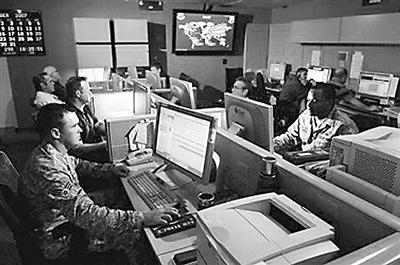
The cyberspace was born in the military field. For example, the first computer, the APA network and the GPS navigation system all originated from the military. Today, cyberspace security has been closely related to national security, and the military has once again become the protagonist of maintaining national cyberspace security. Whether facing normalized network penetration or large-scale cyberattacks, it is urgent for the military to move from guarding the “network camp gate” to guarding the “network country gate”, breaking through the traditional military missions and missions, and breaking through the traditional war preparation mode. With a new network of national defense thinking, the founding of the network era of the country’s strong shield.
From the “network camp door” to the “network country door”, the new era brings a new trend of military mission
Cyberspace is not only related to the maintenance of national strategic interests, but also directly affects political, economic, cultural security and social development. It has also become the blood and link of modern battlefield joint operations. The Chinese military cannot be limited to maintaining the internal network security of the military camp. It must also actively adapt to the trend of the times and take the responsibility of the country that guards the “network country.” Network strong army is an important part of the construction of a network powerhouse. From the “network camp door” to the “network country door” is the inevitable trend of the development of the domestic and international situation in the information age.
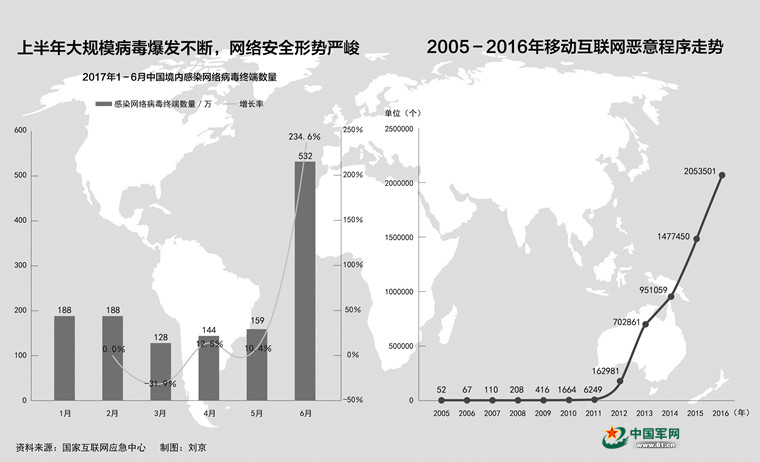
Guarding the “network country door” is forced by the cyberspace security situation. As the first big Internet country, China’s security situation is not optimistic, and strategic opponents have never stopped preparing for our network operations. The United States, Britain, France and other countries are actively preparing for cyberspace, giving military functions through cyberspace security legislation, developing cyber warfare forces, developing cyber warfare weapons and equipment, and advancing war to the “fifth space” of mankind, especially in China. In the historical process of the rise, under the leadership of the Cold War mentality and the containment subversion strategy, Western countries have used network technology and communication methods to implement uninterrupted harassment, subversion and cyberattacks, seriously affecting China’s national security and social development, and China has gradually become The hardest hit by cybersecurity threats, the test sites for virus attacks, and the destinations of conscious penetration, national security faces enormous risks.
In the coming period, as a new emerging country, China’s conflicts of interest with other parties will intensify. Firmly promoting the network defense strategy and strengthening the operational preparation of cyberspace are the inevitable ways to actively strive for the dominance and discourse power of cyberspace, and also the rise of China. The only way to go. As the main force of national security and stability, the military must adapt to the characteristics of cyberspace characteristics, become the backbone and main force to resist network intrusion and network subversion, and safeguard national security and social stability.
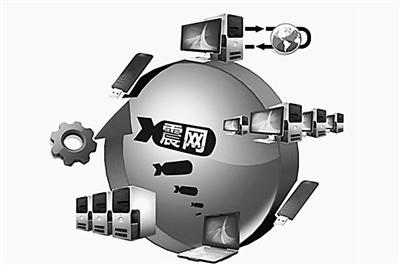
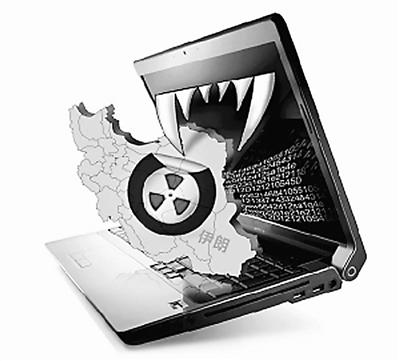
Winning cyber warfare is the trend of new military revolution in the information age. As one of the most advanced productivity in the information age, network technology has made cyberspace warfare a leading factor in guiding the evolution of modern warfare and affecting the overall situation of war. In recent years, from the “seismic net” attack in Iran, the cyber warfare in the Russian-Georgian conflict, the large-scale obstruction of the Ukrainian power grid, and the cyberattack of the US military against IS, the huge role played by cyberspace in actual combat has gradually emerged, indicating that cyber warfare Has become an important style of future joint operations.
The US military attaches great importance to the construction of cyberspace armaments, the establishment of the cyberspace command, the launch of cyberspace joint operations, the extensive expansion of cyber warfare forces, the maintenance of its cyberspace hegemony, and the formation of cyberspace control capabilities as a “third offset strategy”. “Absolute advantage is the most important competitive content.
Many countries in the world have followed suit, and the trend of militarization of cyberspace is obvious. The rigorous cyberspace military struggle situation requires the Chinese military to focus on the changes in the network battlefield space, adapt to the requirements of the information war era, and achieve the strong military goal of smashing and winning in cyberspace.
Effective network warfare is an intrinsic need to accelerate the construction of a network powerhouse. In the process of China’s development from a network power to a network power, it is inseparable from the strong cyberspace military power as a guarantee. The international competition in cyberspace is a comprehensive game of the country’s comprehensive strength. Among them, the quality of network military capacity building is directly related to national security and stability, and it is the core element of the entire national security field.
At present, the interests of countries in the world in the cyberspace are mutually infiltrated, and there is a situation in which you have me, I have you, cooperate with each other, and develop together. However, this kind of common development is not equal. The US and Western powers have taken advantage of the cyberspace dominance and have already achieved certain network warfare advantages, which has made my network development and interests subject to people. How can the military fulfill its mission of defending the earth in the construction of a network-strength country? The premise is to form a network environment that can contain the crisis and control the opponent’s network attack and defense capabilities and ensure peaceful development.
Therefore, the military needs to establish a deterrent strategic goal of effective warfare, form a strategic check and balance ability that can “destroy each other” with the enemy, thereby enhancing strategic competitiveness, ending cyberspace aggression, and ensuring the smooth advancement of the network power strategy.
From “keeping the soil to the responsibility” to “protecting the net and defending the country”, the new situation requires the military to undertake new tasks.
The military is the main force and pillar of national security, and cyberspace is no exception. The National Security Law, which was enacted on July 1, 2015, stipulates: “Citizens of the People’s Republic of China, all state organs and armed forces, political parties and people’s organizations, enterprises and institutions, and other social organizations have the responsibility to safeguard national security. And obligations.” The Cyber Security Law, promulgated in November 2016, emphasizes the need to maintain cyberspace sovereignty and national security.
On the basis of the laws of these two countries, on December 27, 2016, the National Cyberspace Security Strategy (hereinafter referred to as the “Strategy”) was officially launched, providing overall guidance for creating a new pattern of network powers at a new starting point. Basically follow, clearly put forward nine strategic tasks, further embodying the mission of the military in the process of building a network power.
With the national mission of protecting the network, the military must be a strong pillar to defend the cyberspace sovereignty. The first of the nine strategic tasks listed in the “Strategy” is “firmly defending the cyberspace sovereignty” and clearly proposes to “take all measures including economic, administrative, scientific, technological, legal, diplomatic, military, etc., and unswervingly maintain our network.” Space sovereignty.” It can be seen that the military must assume the military mission of using physical space and defend the national mission of the sovereign security and interests of virtual cyberspace.
Cyberspace sovereignty is the core interest of the state and an important component of national sovereignty. It indicates the independence, equal, self-defense and management power of the state in cyberspace. Once the hostile forces violated my cyberspace sovereignty, it would be equivalent to infringing on the national sovereignty of the physical space such as land, sea and air. China will have the right to take all measures including military means to give a firm response.
Internationally, the United States has long proposed a cyberspace deterrence strategy, declaring that attacks on US network information facilities are equivalent to war acts, and the United States will take military strikes to retaliate. Military means are the means of safeguarding national sovereignty and play a vital role in safeguarding national cyberspace security. Therefore, the military, air, sea and air military forces have been given the historical mission of protecting the cyberspace sovereignty. They must rely on the powerful physical space to defend the national interests of cyberspace and effectively deter the hostile forces from cyber-damaging attempts.
In accordance with the era of the Internet, the military must be the ballast stone to defend national security. The second item of the “Strategy” mission emphasizes the need to resolutely safeguard national security, prevent, deter and punish any use of the Internet for treason, secession, sedition, subversion or incitement to subvert the people’s democratic dictatorship.
In the era of information network, the military of all countries in the world has become an important participant in cyberspace. The level of cyberspace capability has become the main indicator for assessing the modernization of a country’s military. It is one of the main duties of the informationized military to carry out cyberspace missions and maintain national security.
Judging from the historical process of China’s development, it is necessary to be highly vigilant against the danger of the country being invaded, subverted, and divided in cyberspace in order to adapt to the national security strategy needs of building a well-off society in an all-round way. Highly alert to the reform caused by cyberspace. The danger of developing the overall situation is destroyed, and we are highly wary of the danger of interference and destruction in the development of socialism with Chinese characteristics.
Preventing problems before they occur requires the state to have the means to cope with and deal with these risks, and to have the powerful force to prevent, stop and legally punish cyberspace violations. Defending the country has always been an unshirkable historical responsibility of the military. The inherent mission and mission have determined that the Chinese military must assume the role of taking various measures in the cyberspace to safeguard the country’s political, economic, cultural security and social stability.
The strategic mission of both offensive and defensive, the military must be a strong backing to enhance the ability of cyberspace protection. The third and eighth items of the Nine Major Tasks in the Strategy clearly state that all necessary measures must be taken to protect key information infrastructure and its important data from attack and destruction, and that technology and management should be adhered to, protected and shocked; We will build a network space protection force that is commensurate with China’s international status and adapts to the network power. We will vigorously develop network security defense methods, timely discover and resist network intrusion, and build a strong backing for national security. Among all the political, diplomatic, military, and scientific and technological capabilities of the country to maintain security, military power has always been the foundation and support for all capabilities, the fundamental guarantee for all capabilities, and the ultimate support for national security.
Therefore, the military must undertake the strategic task of strengthening the national cyberspace protection capability. In the real society, the military is the reassurance of safeguarding national security, and it should also become the security dependence and guarantee of the people in cyberspace. As an important part of the national cyberspace protection capability, the military must achieve both offensive and defensive capabilities and a unified warfare. It has the ability to resolutely safeguard the interests and security of the country and the people in cyberspace, and effectively eliminate the various crises caused by cybersecurity threats. The turbulence of thoughts enables the people to truly feel that production and life are effectively protected and become the confidence of the people of the whole country in their confidence in the national network protection capabilities.
With the global responsibility of UNPROFOR, the military must be an important support for maintaining global cybersecurity. The last item of the “Strategy” mission clearly proposes to strengthen international cooperation in cyberspace, support the United Nations in playing a leading role, promote the development of universally accepted international rules on cyberspace, international anti-terrorism conventions on cyberspace, and improve the judicial assistance mechanism against cybercrime. International cooperation in the areas of policy and law, technological innovation, standards and regulations, emergency response, and protection of key information infrastructure.
Cyber terrorism and cybercrime are new forms of global threat catalyzed by information network fermentation. They pose a huge threat to the political, economic, military and cultural security of all countries in the world. It is not enough to rely solely on the power of the government and the people. Western countries have given the military the responsibility to protect cybersecurity and the power to fight cyber terrorism. Maintaining the security and stability of global cyberspace is in the fundamental interests of China and the rest of the world. The military should become an important defender of global cyberspace security and an important force in combating global cyber terrorism and cybercrime.
The globalization and unbounded nature of the Internet determine the international demand for combating cyber terrorism and transnational cybercrime. The military should promote military cooperation in network governance between countries under the framework of the UN Security Council, and use the strategies and technologies of the network era to establish joint defense and joint defense. Mechanism to effectively safeguard the security of the national and world cyberspace.
From “field training” to “network preparation”, new areas require new preparations for the military
Under the new historical situation, cyberspace puts forward new requirements for the military training and preparation mode. It should adapt to the new characteristics of cyberspace and the new mission of the military to carry out innovative reforms on the traditional model, and take the goal of strengthening the country and strengthening the military as the overall plan, and strengthen macro-coordination. Focusing on the legal needs of military operations in cyberspace, it closely follows the natural attributes of the “military and civilian integration” of cyberspace, builds a network security attack and defense system that combines peacetime and warfare, and builds a network defense force of “military and land use”.
Legislation empowerment provides a legal basis for the military to carry out its functional mission. The countries of the world, especially the western developed countries, attach great importance to the issue of network defense in cyber security legislation. The United States has successively issued a series of policies and regulations such as “National Security No. 16 Presidential Decree”, “Network Space Action Strategy”, and has continuously deepened and standardized on how to protect national network security in the field of network defense.
At present, it is necessary to clarify the duties and responsibilities of the cyberspace military from the legal level. It should be based on the National Security Law and the Cyber Security Law, and introduce the network defense law and related cyberspace military operational regulations, for the construction of the network defense field and the military. The action provides regulatory support and a program of action to make the military’s responsibilities and mission in cyberspace more specific and specific.
First, through network defense legislation to further define network sovereignty and network frontiers, clear the scope of the military’s responsibilities.
The second is to establish the operational authority of the military to defend the national cyberspace security through the construction of cyber warfare laws and regulations, and to distinguish military means against network intrusion and network destruction. Third, through the cyberspace international cooperation policy, the military will coordinate with other countries and civilian forces to combat international cyber terrorism and cybercrime.
The integration of military and civilian provides an innovative driving force for the construction of a network powerhouse. The integration of military and civilian is the main practice for the world powers to enhance the competitiveness of cyberspace. For the construction of China’s network powerhouses, building a military-civilian network security attack and defense system and developing a military-land dual-use defense information infrastructure is to inspire the innovation of military cyberspace combat capability. Source.
The first is to coordinate the military, civilian, and functional departments of the state, the military, and various levels of government, set up special command and coordination agencies, mobilize all national network forces, and build a network security attack and defense system that combines “military and civilian integration” and “peace and war.”
The second is to issue guidance on the in-depth development of cybersecurity military-civilian integration as soon as possible, and gradually carry out basic legal research and demonstration of military-civilian integration to guide the development of medium- and long-term military-civil integration.
Third, relying on the country’s existing public mobile communication network, optical fiber communication network and satellite system, the military and civilians will jointly build an information infrastructure covering the entire army of the whole country, and realize the unified construction and sharing of military and civilian.
The fourth is to establish an emergency response mechanism for military-civilian joints, increase the ability to train military authorities to control events, strengthen experts and emergency professional strength, and enhance the ability to quickly recover damaged networks or information systems.
Military-civilian joint training provides a practical environment for the generation of cyberspace military capabilities. The military-civilian sharing characteristics of cyberspace make military-civilian joint training an important means of military training in cyberspace around the world. The United States and NATO countries and other cyberspace joint military and civilian exercises have formed a series of, “network storm” and “network guards” and other exercises have attracted the participation of the government, enterprises, research institutions and even civilian hackers. Our military cyberspace military strength training also needs to attract a wide range of civil forces to participate.
First, do a good job in military and political cooperation, establish a military-civilian joint offensive and defensive drill mechanism, learn from the red-blue confrontation training methods in cyber warfare drills in developed countries such as the United States, actively build a “national network shooting range”, plan a series of joint exercises of the government and non-government organizations, and enhance the integration of military and civilian. The level of attack and defense of the network of the government and the people.
The second is to do a good job in military-enterprise cooperation, relying on net-based enterprises to set up a training field on the Internet, to promote the ability of the military and civilians to attack and defend, and jointly improve the ability to prevent unknown risks.
The third is to organize private network security companies and hacker talents, carry out network security competitions and other activities, and verify each other to jointly improve the level of network security protection technology and tactics.
The network reserve service provides a source of strength for building a powerful network army. As a backup supplement to the national defense force, reserve service has both military and civilian characteristics and is a powerful measure to realize the organic unification of cyberspace economic development and national defense construction.
First, it is led by the national security department, and overall planning is carried out according to national interests. A series of laws and regulations conducive to the construction of the network national defense reserve are introduced. From the top level, the main division of labor, promotion strategy, interest coordination, etc. of the military and civilian construction in the network defense reserve construction are solved. problem.
The second is to innovate the reserve organization and comprehensive coordination mechanism, and plan to integrate the reserve construction into all levels and fields of national network information development.
The third is to focus on the reform of the military and local management modes. Based on the management mechanisms of the provincial and municipal governments, the military, and local enterprises and institutions, establish a network of national defense reserve personnel to jointly cultivate and use the mechanism, improve the national emergency mobilization mechanism, and establish a national network defense special talent. The database will include the construction of network militia and reserve forces into the scope of mobilization of the people’s armed forces. In normal times, they will be incorporated into the militia emergency detachment for training. In an emergency, select the capable personnel to participate in the non-war military operations missions, and the wartime will be recruited according to the requirements. To transform the national defense potential into national defense strength.
Strategic support forces are not logistical support or more powerful than the Rockets. Three tears on, how effective has China’s SSF become in the realm of cyber warfare?
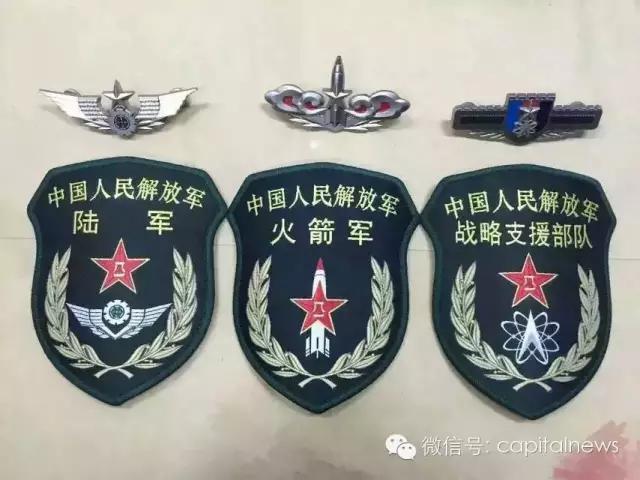
Abstract: On December 31, 2015, the PLA Army Leadership, Rocket Army, and Strategic Support Forces were established. Xi Jinping, General Secretary of the CPC Central Committee, President of the State Council, and Chairman of the Central Military Commission, awarded the newly established three major units. The major steps marking the reform of the PLA’s army are beginning to be gradually implemented. Among the three new units, the strategic support force is definitely a brand new name, which naturally raises many questions. What kind of force is this?
Strategic support is not logistical support
The newly established three units, the Army’s leading body is also the Army’s headquarters. The former PLA has always been the army’s boss. The mainland’s thinking is deeply rooted. Therefore, only the navy and air force headquarters, and no army command, the top leaders of the army are all from The army, the head of the navy and air force ranks among the members of the Central Military Commission, and it is more symbolic. The establishment of the Army Headquarters now means that the status of the Army will gradually be lowered and will be consistent with other services. This will lay the foundation for the model of the highest military leadership in the rotation of the heads of the Western military in the future, and further strengthen the synergy for the various services. The conditions.
The Rockets are no strangers to military fans. They are the former Second Artillery Corps, which is essentially a strategic missile force. The strategic missile unit of the former Soviet Union was called the Strategic Rocket Army. When the PLA established the strategic missile force, the international situation was surging. For the sake of low-key restraint, Zhou Enlai proposed the name of the Second Artillery. Now renamed the Rocket Army, the name is more prestige, more directly strengthen the significance of strategic deterrence.
Relative to the above two units, for those concerned about national defense construction, the strategic support force will be much more strange. When many people hear this name, the first reaction is the logistics support force, which is a big mistake! The strategic support force is actually a genuine combat force. It is nominally supportive. In many cases, it is the first open-minded pioneer to fight, even to enter the battlefield earlier than the land, sea, air force and rocket forces. According to the spokesman of the Ministry of National Defense, the strategic support force is a new type of combat force for safeguarding national security and an important growth point for our military’s new combat capability. It is mainly a strategic, basic, and supportive type. The support force is formed after the functional integration.
Specifically, the strategic support force will include five parts: intelligence reconnaissance, satellite management, electronic countermeasures, cyber offense and defense, and psychological warfare. It is a combination of the most advanced corps, the net army, and other battlefields on the battlefield. More specifically, it is a combat force dedicated to the soft kill mission.
This is also the adjustment of the military reform at the military level. The PLA is divided into the traditional land, sea and air force, the strategic deterrent and the attacking rocket army and the most modern “sky-net” army. The three levels of division of labor are clear, and they can strengthen each other. The synergy between the two, to maximize the advantages of the overall war, is undoubtedly the highlight of this military reform.
Five major parts highlight high-tech content
Let’s take a closer look at the five major components of the Strategic Support Army. First, intelligence reconnaissance. This is not a spy war in the traditional sense. It is not like the old movie “The Crossing River Scout”, which disguise itself as a deep enemy. More is technical reconnaissance. With the increasing popularity of modern equipment, the leakage of various technical information is difficult to avoid, such as radio signals, electromagnetic signals, infrared signals, etc., through the collection and analysis of these signals, a large amount of valuable information can be obtained, strategic support forces The reconnaissance is mainly the technical reconnaissance in this respect, which can be carried out through modern equipment such as reconnaissance satellites, reconnaissance planes, drones, and sensors.
Satellite management is the so-called “Heavenly Army”. This is a new type of force that has emerged with the rapid development of space technology, especially satellite information reconnaissance, tracking and surveillance, guided navigation and aerospace weapons. The United States established the National Space Command in 1985, marking the birth of the world’s first heavenly army. Russia subsequently separated the military space force and the space missile defense force from the strategic rocket army and established a space force with a total strength of about 90,000 people. Then with the military reform of the People’s Liberation Army, the “Heavenly Army” under the strategic support force was formally formed and became a force dedicated to space operations in the future. The significance is significant.
The history of electronic confrontation is much longer than that of the Tianjun. As early as in the First World War, both sides have had the information of the other party and the communication of the other party. To the Second World War, the means of electronic confrontation. Both the scale and the scale have been greatly developed. In July 1943, the British army used metal foil strips to interfere with the German radar in the bombing of Hamburg, Germany, which was considered the beginning of modern electronic confrontation. During the Middle East War in the 1960s, electronic confrontation played a decisive role. Under today’s technical conditions, there is no need to spend more on electronic countermeasures.
Network attack and defense is also called cyber warfare. It is the rise of the network, exploiting the loopholes and security flaws of the network to attack and destroy the data in the hardware, software and systems of the network system. In 2001, there was a large-scale civil hacking incident between China and the United States, which stimulated the United States to a certain extent. By 2009, the world’s first cyber command was established. Through the opportunity of military reform, China has set up a specialized cyber warfare force and began systematically investing and developing in the fields of information construction and network attack and defense. This is a milestone for the future war, which is bound to spread to the network. meaningful.
In the end, it is psychological warfare, that is, by applying the principle principle of psychology, taking human psychology as the battlefield, and systematically adopting various means, including the means of communication, such as the Internet, television, and broadcasting, which cannot be separated from modern life. Cognitive, emotional, and will exert influence, mentally disintegrating enemy military and civilian fighting spirits or eliminating the influence of enemy propaganda, thus combating the enemy’s mind, in exchange for the greatest victory and benefits at the least cost. Psychological warfare sounds very mysterious. In fact, as mentioned in “Sun Tzu’s Art of War·The Tactics”: “It is the victorious battle, the good ones who are not good, the soldiers who do not fight and the good, and the good ones.” The “war without a war” is the ultimate goal of today’s psychological war. In the Battle of Normandy in the Second World War, the Allies used a large number of psychological warfare methods, which seriously affected the judgment of the German commander-in-chief and made great contributions to the victory of the battle. Since then, from the Korean War, the Vietnam War, to today’s Iraq War and the Afghan War, the US military has had professional psychological warfare troops to participate in the war. Therefore, this is the most easily overlooked military means, but it is a high level of military struggle, and even more efficient and effective than advanced aircraft cannons.
Therefore, it can be said that the strategic support force is the highest in the five major services after the reform of the PLA’s army. It can even be said to be completely different from the traditional war style of the past, and it is more characterized by ultra-modern flow.
Soft killing
According to the strategy disclosed on the network, the armbands are supported on the network. The above is the eight-and-five-pointed star. Below is the triangular arrow and the electronic cloud orbit. Surrounded by the surrounding wheat ears, it can be seen from this pattern that the strategic support force is not a traditional one. In the sense of steel contest, you can’t see the scene of the smoke, and there is no such thing as a nuclear weapon to destroy the horror of the sea, but the soft kill of the soldiers. In a sense, soft killing is no less inferior than hard killing, and even playing a role is more important than hard killing.
In contrast, until today, the US military has only independent scattered Tianjun, Net Army and psychological warfare units, but the PLA Strategic Support Forces have integrated these units directly in the preparation, and they are able to cooperate and play the greatest combat effectiveness. . It can be said that this major reform of the military, especially the establishment of the strategic support force, is definitely a major improvement in the system.
Imagine that without the strategic support force’s satellites accurately positioned and navigated, without the electronic escaping forces and cyber warfare forces escorting, the Rocket’s strategic missiles will be difficult to function; if there is no strategic support for the technical reconnaissance intelligence support, Satellite communication links, then the land, sea and air forces on the vast battlefield are blind and deaf, and the combat effectiveness is greatly reduced. Therefore, the strategic support forces will play a major role in the invisible four-dimensional and five-dimensional battlefield space.
US Army issued the “cyberspace and electronic warfare operations” doctrine// 中國軍事評論美國陸軍頒布《網絡空間與電子戰行動》條令
The field command FM3-12 provides instructions and guidance for the Army to implement cyberspace and electronic warfare operations using cyberspace electromagnetic activity in joint ground operations. The Fields Act FM3-12 defines the Army’s cyberspace operations, electronic warfare, roles, relationships, responsibilities, and capabilities, and provides an understanding of this to support Army and joint operations. It details how Army forces protect Army networks and data, and explains when commanders must integrate custom cyberspace and electronic warfare capabilities within military operations.
”
On the basis of the 2006 National Cyberspace Operations Military Strategy (NMS-CO), the US Joint Chiefs of Staff announced the joint publication JP 3-12 in February 2013 as an internal document. October 21, 2014 The published document for public release is Joint Publication JP 3-12(R). The order states that “the global reliance on cyberspace is increasing, and careful control of offensive cyberspace operations is required, requiring national-level approval.” This requires commanders to recognize changes in national network policies that are mandated by operations. Potential impact. On April 11, 2017, the US Army issued the field command FM3-12 “Network Space and Electronic Warfare Action” on this basis. The field war said that in the past decade of conflict, the US Army has deployed the most powerful communication system in its history. In Afghanistan and Iraq, enemies lacking technological capabilities challenge the US military’s advantages in cyberspace, and the US military has taken the lead in cyberspace and electromagnetic spectrum (EMS) operations. However, regional rivals have demonstrated impressive capabilities in a mixed-operational environment that threatens the US Army’s dominance in cyberspace and the electromagnetic spectrum. Therefore, the Order states that the integration of cyberspace electromagnetic activity at all stages of combat operations is the key to acquiring and maintaining freedom of maneuver in the cyberspace and electromagnetic spectrum, while preventing the enemy from doing so. Cyberspace electromagnetic activity can synchronize capabilities across a variety of domains and operational functions, and maximize synergies within and through the cyberspace and electromagnetic spectrum. Intelligence, signal, information operations (IO), cyberspace, space and firepower operations are critical to planning, synchronizing, and implementing cyberspace and electronic warfare operations.
The Fields Order FM3-12 supports the Joint Cyberspace and Electronic Warfare Act and the Army Doctrine Reference Publication ADRP3-0, Combat, and provides a background to define the Army’s doctrine reference publication ADRP5-0 “Operational Process” and Cyberspace and The relationship between electronic warfare operations. In order to understand the basic principles of integration and synchronization of cyberspace and electronic warfare operations, you must first read the Army’s doctrine publication ADP2-0, the Army’s doctrine reference publication ADRP2-0, the Army doctrine publication ADP3-0, and the Army doctrine reference publication ADRP3. -0, Army doctrine publication ADP5-0, Army doctrine reference publication ADRP5-0, Army doctrine publication ADP6-0, Army doctrine reference publication ADRP6-0, Army technical publication ATP2-01.3, field bar FM3-13 And FM6-0. By planning, integrating, and synchronizing cyberspace and electronic warfare operations, cyberspace electromagnetic activities can integrate functions and capabilities across operational functions, defend networks, and provide critical capabilities to commanders at all levels during joint ground operations. Cyberspace and electronic warfare operations affect all combat functions and are also affected by them.
Network space visualization operating environment of electromagnetic spectrum
The field battles present detailed tactics and procedures for Army cyberspace and electronic warfare operations. The field command replaced the field title FM3-38 dated February 2014. The Fields Order FM3-12 is an Army cyberspace and electronic warfare campaign advocacy publication. The field battles contain the basic principles and guiding principles of cyberspace operations, electronic warfare, and cyberspace electromagnetic activities in a single publication. It provides a comprehensive account of how they support and achieve action, and how to support the missions and functions of the various levels of force. The field battles laid the foundation for subordinate Army technical publications.
Cyberspace and e-war operations incorporate established joint and Army processes into operations such as intelligence processes, targeting processes, and military decision-making processes (MDMPs). The field battles explain the basic ideas of the Army’s cyberspace and electronic warfare operations. Content includes staff responsibilities, contributions to military decision-making processes, cyberspace and target work in the electromagnetic spectrum, and reliance on intelligence and operational environment readiness (OPE) in cyberspace.
The field battles describe the relationship between cyberspace operations, missions, operations, electronic warfare, electromagnetic spectrum, and each other’s actions. This elaboration also includes cyberspace electromagnetic activity, providing compliance for military forces and the following combat forces planning, integration, and simultaneous electromagnetic activities.
Schematic diagram of electromagnetic spectrum
The first chapter provides an understanding of cyberspace, cyberspace operations, missions, actions, and effects. It describes cyberspace and situational understanding, situational awareness, threats, risks, vulnerabilities, and their relationship to information and operational environments. The level and characteristics of cyberspace confirm the legal authorization applicable to cyberspace and cyberspace operations, and discuss the basic information and spectrum management functions of electronic warfare related to cyberspace and electronic warfare operations.
Chapter 2 provides information on the use of cyberspace operations and tasks, rather than day-to-day operations, pointing out that information operations, intelligence, space operations, and targeted work can affect cyberspace, electromagnetic spectrum, cyberspace operations, and electronic warfare operations. Commanders and staff officers have integrated and synchronized all of these aspects of cyberspace and electronic warfare operations.
The third chapter expounds the Army’s cyberspace electromagnetic activity and mission-style command, the role of the commander, the cyberspace with combat functions and the electronic warfare action, and discusses how to incorporate the planning elements of cyberspace and electronic warfare operations into the operational process. This includes planning, preparation, implementation, evaluation, and targeting. The discussion of the operational environment is combined with the military decision-making process, followed by an overview of the preparation requirements, implementation tactics, and how to assess cyberspace and electronic warfare operations.
Appendix A discusses cyberspace operations and various joint operations partners.
Appendix B highlights the location of cyberspace operational information in the Combat Command and Appendix 12 to Annex C. This appendix includes an example of Appendix 12 to Annex C, which describes the types of information contained in this appendix and sections.
Appendix C contains the procedures for handling cyberspace operations requests from military, military, and military units, as well as fields and information for the Cyber Operations Application Form (CERF). Blank copies of the cyber operations application form and field explanations are all part of the process.
Appendix D includes fields and information for the Electronic Attack Request Form (EARF). A blank copy of the electronic attack application form and a five-line brief with field interpretation are part of the program.
Cyberspace and Electronic Warfare Actions Directory
Preface
preface
Chapter 1 Network Space and the Basic Principles of Electronic Warfare Action
Section 1 Overview of Cyberspace and Electromagnetic Spectrum
First, the network space domain
Second, combat operations and cyberspace domain
Third, cyberspace tasks and actions
Section 2 Understanding Network Space and Environment
1. Network space and electromagnetic spectrum
Second, cyberspace and information environment
Third, the network space level
Fourth, the characteristics of cyberspace
5. Cyberspace as part of the operational environment
Sixth, risk in cyberspace
Seven, authorization
Section III Electronic Warfare Action
First, the electromagnetic spectrum action
Second, electronic warfare
Third, the application of matters needing attention
Fourth, spectrum management
Chapter 2 Relationship with Cyberspace and Electromagnetic Spectrum
I. Interdependence
Second, information operations
Third, intelligence
Fourth, space operations
V. Target determination
Chapter III Electromagnetic Activities in Cyberspace in Operation
First, the basic principle
Second, matters needing attention
Third, the role of the commander
Fourth, empower resources
V. Planning work and cyberspace electromagnetic activities
Sixth, network effect application form and target determination activities
Appendix A Integration with Unified Action Partners
Appendix B Cyberspace in Combat Commands
Appendix C Network Effect Application Form
Appendix D Electronic Attack Application Form
Thanks for compiling/reviewing: Shen Song
Article source: Zhiyuan Strategy and Defense Research Institute
Chinese Military Review: From Army Information Construction to Construction of Information Army //
中國軍事評論:從軍隊信息建設到建設信息化軍隊
2006年04月20日 22:00
From the Army Information Construction to the Construction of Informatized Army——Opening the Eyes to See the New Military Revolution in the World
Li Bingyan
A few years ago, there was a curtain factory abroad that was on the verge of bankruptcy and turned to the consulting company. The consulting company only asked them to change the curtain factory to a shading technology factory, and the factory would survive.
A name change has broadened the horizon of development; a concept change has opened up the mind shackles. Updating the concept is inseparable from the concept of renewal. In the new military revolution, we need to adopt new concepts in a timely manner to show new development ideas.
Although the ongoing new military revolution still does not see the other side, it is clear that the change has entered a new stage.
This new military revolution was triggered by a new technological revolution centered on information technology. In the 1990s, the revolutionary impact of information technology on the military mainly remained at the stage of “construction”, that is, information technology embedding, networking, networking, and integration within the framework of the mechanized military organization. Technology strengthens mechanization and enhances mechanization. The theoretical community often refers to this stage of change as a revolution in the military field, which is to promote the army.
Information construction. At that time, the digital division and the digital army to be built by the US Army were carried out within the structure of the original mechanized army. Later, the US military learned from the experience of informatization of some large enterprises and multinational corporations in the society and changed the way of thinking.
In the past, military changes were first to change military technology, weapons and equipment, and finally to complete the transformation of the military organizational system to adapt to the new methods of warfare. The new military revolution, characterized by informatization, especially the post-launch army, should be reversed. The experience of the business community is also “first rationalization of organizational structure, re-automation, informationization.”
Before the 1990s, the US business community carried out informatization construction, focusing only on improving work efficiency. Although effective, it still cannot be changed. Ford Motor Company has spent a lot of money on automation, and its office efficiency has improved significantly. For example, the financial department of the North American branch has reduced the number of employees from 500 to 400 after office automation. The company leaders think it is good. Later, they learned about Japan.
Mazda Motor Company did the same job and used only five people. In contrast, Ford’s leadership was shocked. After in-depth investigation, they found that Mazda started to adjust the organizational structure, first change the workflow, and then engage in office automation. Ford’s financial system, organizational structure or traditional model has caused a lot of useless work. Later, Ford Company optimized its structure, re-engineered its business processes, and started office automation on this basis. The company’s financial staff was compressed to a quarter.
In the development of human society, there is a phenomenon of “path dependence”. After a social system is formed, it will continue to strengthen itself in the actual operation, so that people will not be able to get rid of the influence of the original ideas afterwards.
In addition, the organizational structure does not change, it is difficult to make the right decision in information. Usually, people are standing in their own units and planning work in this department, forming a “professional syndrome.” The research informatization is first of all the informationization of the unit, beyond the scope of construction of the unit, the leadership vision will not be achieved. This has led to the emergence of new “isomorphic diseases” – large and complete, small and complete, you have me, can not be interconnected, interoperable, interoperable. In this regard, some people call it the “potato effect”: a sack of potatoes, all sprouting, each self-contained system, self-enclosed, and not connected. Building these systems may be reasonable from a local perspective, but it may not be scientific or irrational from the overall perspective of informatization.
In the practice, the foreign military realized that if informationization is not detoured, it should start with rationalizing the system and adjusting the command system. Otherwise, all levels and departments are busy with informationization. It is likely that the faster and the more the action is now, the greater the losses will be caused once reworked in the future.
The rationalization of the organizational structure, the consideration of informationization, or the rationalization of organizational structure and informationization, and the simultaneous development have become a new consensus on the new military revolution. After entering the 21st century, the US military proposed a military transformation, marking a new stage in military transformation. At this stage, information technology has shifted from a “construction” role to a “deconstruction” role. That is: instead of strengthening mechanization, it is reorganizing mechanization. As a result, the army’s informatization construction has turned to the construction of an information-based army; the changes in the military field have turned to real military changes.
In the theoretical preparation stage of the US military, the future army that was designed was: the sensor army, the precision strike army, the dominant mobile army, and the logistics army. In the transition, after a new argument, the future goals of the US military reorganization are proposed: the full-dimensional battlefield perception army, the precision firepower strike army, the efficient command and control army, and the intelligent logistics support army.
In 2005, Germany proposed the idea of building a “new three armed forces”, namely: rapid reaction forces, standing combat troops, and logistics support forces.
At the end of last year, the Russian General Staff Department completed the reform of the armed forces. The Russian military’s new round of structural reforms eliminated the arms, military regions and fleets and re-established three functional headquarters and three regional headquarters. The three functional commands are: Strategic Nuclear Power Command, Transportation Command, and Aerospace Defense Command. The three regional commands are: Western European Command, Central Asian Command and Far East Command.
Generally speaking, although the structural changes of the military have their own characteristics, the common point is that they tend to be integrated and tend to be integrated, and the boundaries between the traditional arms and services are increasingly blurred. The informationized army is not just a technology, but a new structure that is linked to new technologies – ultimately, a structural decision function.
Chinese Military Information Warfare Attacks on Mind and Spirit //
中國軍隊信息戰隊思想和精神的攻擊
June 01, 2004 08:58
If the 1991 Gulf War was the first time that the United States brought information warfare from the research report to the actual battlefield, then the Iraq war that ended last year may be the further development of information warfare in actual combat. Information warfare, as the focus of the new military revolution in the 21st century, has increasingly attracted people’s attention. However, through the information campaign to study the lively scenes, we will find that quite a few people only understand information warfare from the perspective of military and technology alone, but information warfare is not so simple.
Information warfare is a new emergence of human beings entering the information age. a phenomenon of war. It is not a simple style of warfare, but a new form of warfare relative to firepower. The emergence of information warfare has formed a major breakthrough in many traditional war concepts such as the object of war, the boundaries of war, and the content of war. Among them, the focus should be on the ideological and spiritual side of information warfare.
What you see is only the tip of the iceberg
. There are dozens of concepts about information warfare in the world. However, many of them only understand information warfare from the military and technical perspectives. Even the United States, which is in the leading position of information warfare, is only from the last It was only at the end of the century that this issue was considered from a strategic and social point of view. This is not comprehensive. An important prerequisite for understanding information warfare is that information warfare should not be viewed simply with the war view of the industrial age. In the information age, computers and networks have dramatically changed the shape of war in the past. In the information war, the army and the society, the military and civilians, the war and the crime, the state and the individual have been intertwined in many cases, and they are unclear and unreasonable.
Information warfare broadly refers to the war against the information space and the competition for information resources in the military (including political, economic, cultural, scientific, and social fields). It mainly refers to the use of information to achieve the national strategic goals; narrowly Refers to the confrontation between the warring parties in the armed field in the field of information, and seizes the right to control the information. It should be emphasized that information warfare is not a simple military technical issue and should not be understood as a combat style. Information warfare is actually a form of war.
The term “information” is understood relative to the times, and corresponds to the agricultural and industrial eras; in terms of social forms, it is also in line with agricultural and industrial societies. At the same time, it is one of the three major resources that human beings must compare with matter and energy. Investigating information warfare, only by knowing at this level can we reveal information warfare in the true sense.
The rise of information warfare lies not in what kind of nouns it uses, nor in the war nouns. It is as simple as the buzzwords of “information,” “information,” “information age,” and “digitalization.” It is the inevitable result of the development of society and science and technology, with revolutionary and epoch-making significance. The information wars that emerged at the end of the 20th century, or the information wars we have seen, are only the tip of the iceberg, and are only partial and limited information wars embodied in the military field. Only when the world reaches full network and the earth becomes a small village in the true sense can we see the broad and real information war.
Information warfare is not just about the military. When it comes to information warfare, people often think of the army first. Indeed, in the traditional war, the army is the protagonist of the war, and the battlefield is also the stage of the military. Under the conditions of information warfare, the situation is very different. The scope of the battlefield has greatly expanded, and the war has become far more than just military affairs, but has developed into a national war under high-tech conditions. Information warfare is not only carried out through the military, but also through the entire social network. With the construction of the world information highway, information warfare has been difficult to define boundaries. Any social NGO or even an individual who has ordinary computer equipment and masters computer communication technology may use a globally connected computer and communication system to participate in an information war.
The information warfare is not only the main manifestation of the army: First, the participants in the information war are no longer limited to military personnel, but also include ordinary people. Information warfare combatants can be either regular soldiers or teenage hackers. Second, many of the weapons and equipment used in information warfare, such as computers and optical instruments, can no longer be military supplies, and are available in the civilian goods market. Take the United States, an information war powerhouse, as an example. The US military’s information warfare system relies heavily on civilian information infrastructure. Senior US military personnel referred to the informationization of the US military’s military as “buy from the market.” Third, information warfare is not only on the battlefield, but on the entire society. “The battlefield is only where the soldiers are killed. It no longer covers information warfare.”
Information warfare is not only played in wartime.
Since the war, the attackers launched wars, and the defenders resisted aggression, and they must be prepared for war. In particular, mechanized warfare has shown obvious phase and proceduralization. In the war of information age, the boundaries between war preparation and implementation are increasingly blurred and even mixed. Looking around the world, it is not difficult to find that information powers are fighting almost every day: public opinion, intelligence confrontation, network reconnaissance, and so on. These are actually information wars that have transformed form, and can be called public opinion warfare, intelligence warfare, and cyber warfare.
In the Iraq war, the power of public opinion wars opened the eyes of the world. It has been said that the “discussion war”, one of the forms of information warfare, has been going on since the war. Earlier cases of “public opinion wars” can be traced back to the “Oath of the Oath” of China’s Xia Dynasty and later “Looking for Cao Yuwen” and “Discussing Wushu”. The “discussion of public opinion” has no boundaries between wartime and peace. It controls, manipulates, plans, and utilizes various public opinion tools to systematically deliver selected information to the audience, affecting the audience’s emotions, motivations, judgments, and choices, thus having a major and direct impact on the outcome of the war. As for the information warfare and cyber warfare in the information war, it is even more ignoring the difference between wartime and peacetime. At that time, the US Clinton Administration put forward the idea of building an information highway and promoting global informationization. This move has made the world believe that the United States is leading the human society into the information age. However, the strategic intention of the United States is actually that when the informationization of human society is still in a blank, it will expand the information territory of the United States in order to occupy the opportunity of informationization. As a result, the future development of global informationization will follow the US road map. The United States can integrate the countries of the world into the informatization map of the United States. Looking at it now, this strategic attempt by the United States is far more effective than winning a war of blood and hurricanes.
When information warfare is not only a battle, this is not only manifested in the blurring of the preparation and implementation of information warfare, especially in the attack of information warfare on people’s thoughts and spirit. The formation of thoughts and spirits is a subtle process. Through the information superiority, we can achieve the goal of “no war and defeated soldiers” or “less war and defeated soldiers”. The general approach is to use information superiority to create contrast between the enemy and the enemy, use psychological warfare and strategic deception to shake, frustrate the enemy’s military, people’s hearts and government beliefs, and destroy the enemy’s normal political and economic operation system. Means can put the enemy in a state of paralysis, curb the will of the hostile country to wage war, or deprive it of its ability to war.
In the 1980s, the scenes of the US-Soviet confrontation were very interesting. Reagan, the US president who is good at acting, has proposed an aggressive “Star Wars” plan, claiming to make all the strategic nuclear missiles of the Soviet Union useless. As soon as the plan was announced, the United States started to promote all the propaganda machines and caused a great sensation in the world. The Soviet leaders convened an emergency meeting in succession and decided to resolutely respond to the blood and establish a strategic defense shield of the Soviet Union. In fact, the “Star Wars” program in the United States only carried out a little bit of technical experimentation. It didn’t cost much at all, but a movie of the same name “Star Ball” was popular in the world. However, the Soviets were very hardworking and hard work. When the national economy was on the verge of collapse, the vast ruble was still thrown into the arms race. The Soviet Union, which had been unable to do so, ran out of the last drop of blood after seven years. It cannot be said that the collapse of the Soviet economy and the collapse of the regime were not dragged down by the US information war.
Paying attention to the people’s war that defends the boundaries of
information. Under the conditions of information warfare, national sovereignty has a new content. The extension of national security has expanded and its connotation has become more abundant. The influence of information warfare is no longer limited to the military field, but radiates to the whole. Human society. Under the conditions of information warfare, the important magic weapon for a weak country to defeat a powerful country is the people’s war. Only by insisting on the people’s war under the conditions of information warfare can we effectively defend the national information territory and safeguard national information sovereignty. In addition to information technology and tactics, the most important thing is to grasp the construction of the information talent team and build the two lines of the national spirit defense line in the information age.
Those who have talents are in the world. The outcome of the information warfare depends to a large extent on human factors, and must be supported by a large number of high-tech information warfare personnel.
In the information warfare, a small number of top information talents can often play a key role in the outcome of the war. During the Second World War, in order to grab a German atomic physicist, the US military changed the direction of the attack of the three Army divisions. After the end of World War II, the history of “the wise man grabbed the people, the fools took the device” was even more intriguing. In the East, the Soviets were busy carrying the seized tanks and cannons; in the West, Americans hurriedly transported more than 3,000 German scientists back home. More than half a century has passed, and the country that grabbed talents is still continuing to write a history of robbing people, and its economy, technology and military are incomprehensible. The country that robbed the weapon was now facing the reality of being robbed. After the disintegration, the Soviet Union had tens of thousands of outstanding scientific and technological talents to change their positions to serve the opponents of the year. As a commanding height of military struggle, the struggle for talents is more decisive in the military contest of the information age.
Compared with the “hard killing” brought about by information warfare, the “soft killing” of information warfare is even more terrible. The spiritual realm is the most “window of vulnerability” under the conditions of information warfare.
As information technology becomes more developed, channels become more and more fluent, and information sources are more extensive. People will get more and more information and get information faster and faster. The means of modernization have transmitted the information to be transmitted to the countries of the world effectively without any restrictions. At present, developed countries pay great attention to using their advanced information technology to establish a global network of radio, television, and computer networks, thereby exporting their political opinions and values on a large scale and expanding the information frontier. As a result, countries with backward informationization have been subjected to a strong spiritual impact. Therefore, in order to win the people’s war under the conditions of information warfare, from the individual, the media, the army to the whole country, we must comprehensively enhance the awareness of information and national defense, establish the concept of defending the national information territory and information boundary, and consciously build an invisible spiritual defense line.
Related Links
Scanning the overall situation of the world information war It
can be said that the development of the world information warfare has gone through three stages.
The first stage: the period of information warfare before the Gulf War in 1991; the
second stage: the implementation and maturity of the information war after the Gulf War to 1998; the
third stage: the development period of the information warfare after 1998 .
At present, the new military revolution triggered by information warfare is still going on around the world. The transformation of mechanized warfare into information warfare has been fully carried out in the world. The armed forces of major countries around the world are adjusting their strategies and tactics, preparing equipment, and combat training in accordance with the information warfare, in preparation for winning information warfare. All the wars after the Gulf War have been marked with traces of information warfare. The power of information warfare is impacting all areas of society.
Information warfare techniques and techniques click
Currently, the world’s countries in the application and development of information warfare technology are mainly:
1. Reconnaissance and surveillance technology. Various means of reconnaissance, surveillance, early warning and navigation, including space-based, space-based, sea-based and foundation.
2. Platform integrated information warfare system. Realize radar warning, missile launch and attack alarm, information support, information interference and avoidance, and synergistic integration, and integrate with other information equipment on the platform to achieve information sharing.
3. Network command and control warfare technology. 4. Computer virus technology.
5. Attacking weapons technology. Including electromagnetic pulse weapons, ultrasonic weapons and infrasound weapons. 6. Advanced electronic countermeasures technology.
The latest information warfare equipment glimpse
In the development of information warfare weapons, in recent years, the following equipments have been developed or put into active service in various countries.
1. The Joint Surveillance and Target Attack Radar System is a battlefield information processing system that accurately detects moving and fixed targets to cope with the implementation of long-range precision strikes, and provides commanders with important information about combat development and combat management.
2. The Joint Tactical Air-to-Ground Information Station is a weapon support system that processes the vital information needed for space-based sensor data and operational capabilities for early warning missile launches.
3. A beam-energy weapon can penetrate targets hundreds of kilometers or even thousands of kilometers in an instant without leaving a “hard injury”, especially for the direct destruction of high-precision guided high-tech weapons. Therefore, it is considered to be tactical air defense and anti-armor. Optoelectronic countermeasures and even strategic anti-missile, anti-satellite, anti-satellite, multi-purpose ideal weapon for all spacecraft.
4. Smart warfare, woven with a fiber optic network and a conductive polymer network, and a miniature measurement system that monitors the soldier’s physical condition. In the future battlefield, a soldier was injured. At the moment of his fall, the medical staff at the ambulance center can accurately determine whether it is a bullet or a knife wound, where the injured part is, and other basic injuries.
In addition, there are military robots, shipboard electronic warfare systems, high-power RF amplifier technology, advanced antenna technology and signal processing technology.
The information
warfare is fiercely competitive. Looking at the world, more than 20 countries including Britain, France, Israel, and Russia have conducted in-depth research on information warfare. The development of information warfare in the United States is at the forefront of the world, mainly in technology, equipment, and theory.
United States: The information war strategy was changed from defense to attack. In order to improve the US military’s information warfare technical capabilities, the US Department of Defense has a specialized information system processing agency responsible for maintaining the 2.5 million computers used by the US military. It is also studying how to improve the attack capabilities of computers and create communication networks and financial systems that destroy hostile countries. And the intrusion of the power system. As early as the fall of 2000, the US Space Command Center began to develop aggressive computer weapons. This means a major adjustment in the US military’s information war strategy—from strategic defense to strategic attack.
Russia: The focus of information warfare is on “Heavenly Soldiers.” The development of information warfare in Russia has concentrated on the development of “Heavenly Soldiers” — the astronauts. In 2002, Russia invested about 31.6 billion rubles for space research, 5.4 billion rubles for the development of global navigation systems, and strengthened the development of lasers, high-power microwaves and anti-satellite weapons.
Japan: Accelerate the formation of information warfare units. The Japanese Defense Agency is forming an information warfare force of 5,000 people, focusing on the development of cyber weapons as the focus of future defense plans, and speeding up the construction of the Japanese Army’s digital forces.
EU and other Western countries: embarking on the construction of digital troops. Countries such as France, Germany, Britain, Canada, Australia, the Netherlands and Sweden are also developing platforms and individual C4I systems. More than 10 countries, including France, Britain, Germany, Australia, Canada, Italy, and Israel, are embarking on the implementation of digital military and digital battlefield construction plans. Among them, most countries are concentrating human and financial resources to develop the equipment needed for digital units, and a few countries in the past have conducted several digital force test exercises. In the future, while the above-mentioned countries continue to develop the digital “hardware” of the battlefield, they will begin to consider the composition of the digital units, and more countries will join the ranks of the digital construction of the troops.
Chinese Military Intent to Defeat US Military Cyber Forces Using the “Thirty-Six” Strategy of Cyber Warfare //
中國軍事意圖利用“三十六”網絡戰策略擊敗美國軍事網絡部隊
■ cyberspace is easy to attack and defend, traditional passive defense is difficult to effectively deal with organized high-intensity attacks
■ Improve network security, the defense side can not rely solely on the technology game, but also need to win the counterattack on the concept
The new “Thirty-six” of network security
■Chen Sen
Fisher
News reason
In the information age, cybersecurity has taken the lead in national security. The Outline of the National Informatization Development Strategy emphasizes that it should actively adapt to the new changes in the national security situation, new trends in information technology development, and new requirements for strong military objectives, build an information security defense system, and comprehensively improve the ability to win localized information warfare. Cyberspace has become a new field that affects national security, social stability, economic development and cultural communication. Cyberspace security has become an important topic of increasing concern to the international community.
The United States has clearly declared that cyberspace is a new field of operations, and has significantly expanded its network command and combat forces to continue to focus on cyberspace weapons development. Since entering the summer, the US military network exercises have been one after another, and the invisible wars are filled with smoke. At the beginning of March, “Network Storm 5” took the lead in kicking off the drill; in April, “Network Aegis 2016” completed the fifth-generation upgrade; in June, “Network Defense” and “Network Capture” as the core re-installation of the annual joint exercise Debut.
The essence of network security lies in the ability to attack and defend both ends. Currently, static, isolated, passive defenses such as firewalls, intrusion detection technologies, and anti-virus software are difficult to effectively deal with organized high-intensity network attacks. To build a cyberspace security defense line, we need to get rid of the idea of falling behind and win the counterattack on the defensive concept.
New “Thirty-six” mobile target defense
Increase the difficulty of attack by building a dynamic network
Network attacks require a certain amount of time to scan and research the target network, detect and utilize system “vulnerabilities” to achieve intrusion control purposes. In theory, the attacker has unlimited time to start the scanning and detecting work, and always find the weak point of defense, and finally achieve the purpose of the invasion. To this end, the network pioneer USA is committed to planning and deploying security defense transformation work, striving to break through the traditional defense concept and develop revolutionary technology that can “change the rules of the game”. Mobile target defense is one of them.
Mobile target defense is called the new paradigm of cyberspace security defense. The technical strategy is to construct a dynamic network through the processing and control of the protection target itself, increasing randomness and reducing predictability to improve the difficulty of attack. If the static cyberspace is likened to a constant “city defense deployment”, it is difficult to stick to it; and the dynamic network configuration can be called the ever-changing “eight squad”, which is difficult to crack. At present, mobile target defense technology has priority in various US government and military research, covering dynamic platform technology, dynamic operating environment technology, dynamic software and data technology. In August 2012, the US Army awarded Raytheon’s “Deformation Network Facility” project to study the dynamic adjustment and configuration of networks, hosts and applications in case the enemy could not detect and predict, thus preventing, delaying or blocking the network. attack.
As a new idea in the field of cyberspace security, mobile target defense reflects the technological development trend of future network defenses to turn “dead” networks into “live” networks.
The new “Thirty-six” honey cans deceive defense
Reduce cyberattack threats by consuming attacker resources
Conventional network security protection is mainly to defend against cyber attacks from the front. Although the defensive measures have made great progress, they have not changed the basic situation of cyberspace “easy to attack and defend”. In recent years, the development of “Honeypot Deception Defense” has proposed a new concept of “bypass guidance”, which is to reduce the threat of cyber attacks to the real protection target by absorbing network intrusion and consuming the resources of attackers, thereby winning time. Strengthen protection measures to make up for the shortcomings of the traditional cyberspace defense system.
Similar to the intentional setting of false positions on the battlefield, honeypot deception defense is to actively use the computer network with lower security defense level to lure all kinds of network attacks, monitor its attack means and attributes, and set corresponding defenses on the target system that needs to be protected. System to stop similar attacks. Honeypots can be divided into two types, product-type honeypots and research-type honeypots. The main purpose of the former is to “attract firepower” and reduce the pressure of defense. The latter is designed for research and acquisition of attack information. It is an intelligence gathering system that not only needs network attack resistance but also strives to monitor powerfully to capture the attack behavior data to the maximum extent.
In addition to the establishment of a virtual network environment attack and defense laboratory consisting of four sub-networks of gray, yellow, black and green, the US military has also carefully deployed a honeypot decoy system on the Internet. What is certain is that the network defense idea based on deception will be further emphasized, and the technical means to achieve deception will be more and more.
New “Thirty-six Meters” linkage synergy defense
Integrate multiple defense technologies to “reject enemy from outside the country”
At present, most of the security protection devices and defense technologies are “individually fighting”. The data between network protection nodes is difficult to share, and the protection technologies are not related. As a result, the current defense system is isolated and static, which cannot meet the increasingly complex network security situation. need. The original motivation of the US “Einstein Plan” was that all federal agencies had exclusive access to the Internet, making overall security difficult to guarantee. Through the collaborative linkage mechanism, the relatively independent security protection devices and technologies in the network are organically combined to complement each other and cooperate with each other to defend against various attacks. It has become an inevitable choice for the future development of cyberspace security defense.
Collaborative collaborative defense refers to the use of existing security technologies, measures and equipment to organically organize multiple security systems that are separated in time, spatially distributed, and work and interdependent, so that the entire security system can maximize its effectiveness. Vertically, it is the coordinated defense of multiple security technologies, that is, one security technology directly includes or links to another security technology through some communication method. For example, the “deep defense” mechanism adopted by the US Navy network defense system targets the core deployment layer protection measures, including flag-based attack detection, WAN security audit, vulnerability alert, etc., and the attacker must break through multiple defense layers to enter the system. Thereby reducing its attack success rate. When a node in the system is threatened, it can forward the threat information to other nodes in time and take corresponding protective measures to adjust and deploy the protection strategy.
In the past, individual combat operations have been unable to meet the needs of today’s network security defenses, and coordinated collaborative defense will leap into the mainstream of network security. Integrate a variety of defense technologies, establish an organized defense system, and “reject the enemy outside the country” to effectively prevent problems before they occur.
The optimal strategy defense of the new “Thirty-six”
Seeking a balance between cybersecurity risks and investments
The attacks in cyberspace are more and more complicated. The ideal network security protection is to protect all the weak or attack behaviors. However, from the perspective of defense resources limitation, it is obviously unrealistic to pursue absolute security defense. Based on the concept of “moderate security”, the optimal strategy defense is on the horizon.
Optimal policy defense can be understood as seeking a balance between cyber security risks and inputs, and using limited resources to make the most reasonable decision defense. As far as investment is concerned, even the strong United States is trying to build a collective defense system for cyberspace. The United States and Australia cyberspace defense alliance agreement, as well as the Japan-US network defense cooperation joint statement, its “share of results” behind the “cost sharing” shadow. From the perspective of risk, the pursuit of absolute security will adhere to the principle of safety supremacy. When formulating relevant strategic objectives and responding to threats, it is easy to ignore the limited and legitimacy of the resources and means available, and it is difficult to grasp the advance and retreat.
The optimal strategy defense is mainly focused on the “optimal” strategy of game theory, focusing on the research direction of cyberspace security assessment, cost analysis, security defense model construction and evolution. Applying the idea of game theory to cyber attacks and defenses provides a new way to solve the problem of optimal defense decision-making.
The new “Thirty-six” intrusion tolerance defense
Create a “last line of defense” for cyberspace security
The threats to cyberspace are unpredictable, irresistible, and unpredictable. Protection can’t completely avoid system failure or even collapse. Traditional reliability theory and fault-tolerant computing technology are difficult to meet the actual needs, which has to consider more comprehensive and deeper problems than pure protection. In this context, a new generation of intrusion-tolerance defenses has received increasing attention.
Intrusion tolerance is the third-generation network security technology, which belongs to the category of information survival technology and is called the “last line of defense” for cyberspace security defense. Unlike traditional cybersecurity defenses, intrusion-tolerant defenses recognize the existence of vulnerabilities and assume that some of them may be exploited by attackers to attack the system. When the target of protection is attacked or even some parts have been destroyed or manipulated, the target system can “kill the tail” like a gecko to complete the healing and regeneration of the target system.
Intrusion-tolerance technology is no longer based on “defense”, but on how to reduce losses and recover as soon as the system has been damaged. However, intrusion tolerance is an emerging research field. Its cost, cost and benefit will be the next research direction.
Related Links–
Network attack and defense
“Shenzhen”: the pioneer of network physics warfare
In August 2010, Iran built the Bushehr nuclear power plant with the help of Russia. However, the nuclear power plant, which was scheduled to be put into operation in October of that year, was postponed several times. A year later, according to media reports, it was caused by a computer network virus attack of unknown source. More than 30,000 computers were “in the middle”. Thousands of centrifuges in Natans were scrapped. The newly capped Bushehr nuclear power plant had to be taken out. Nuclear fuel was delayed and the Iranian nuclear development plan was forced to shelve. This virus, later named “Shenzhen”, pioneered the control and destruction of entities through the network.
“Flame”: the most powerful spy in history
Network intelligence activities are the most active part of the cyberspace strategy game and security struggle. In 2012, a large amount of data from the Iranian oil sector was stolen and cleared, making it impossible for oil production and exports to function properly. In order to avoid continuing to create hazards, Iran was urgently disconnected from the network of the oil facilities on the Halk Island near the Gulf. After a large-scale investigation, a new virus emerged, which later appeared in the “flame” virus in Israel, Palestine and other Middle Eastern countries. The “Flame” virus combines the three characteristics of worms, backdoors and Trojans. It combines the interception of screen images, recording audio dialogues, intercepting keyboard input, and stealing Bluetooth devices. It has become a new type of electronic company that steals secret information from other countries. spy”.
“Shut”: System breaks
In 2007, in order to kill the Syrian nuclear program in the bud, 18 F-16 fighters of the 69th Fighter Squadron of the Israeli Air Force quietly broke through the advanced Russian “Dor”-M1 air defense deployed by Syria on the Syrian-Israeli border. The system carried out precise bombing of a nuclear facility about 100 kilometers west of the Syrian-Israeli border and about 400 kilometers northeast of Damascus, and returned safely from the original road.
According to the disclosure, the “Orchard Action” has made the US “Shuter” attack system shine. “Shut” invaded by remote radio, 瘫痪 radar, radio communication system, is the “behind the scenes” to make the Syrian air defense system in a state of failure. As a new type of network power attack system for networked weapon platforms and networked information systems, “Shut” represents the development trend of military technology and combat methods, and is bound to bring a new war landscape.
“Shadow Network”: Invisible Internet
The complicated situation of ideological struggle caused by the Internet has created an alternative channel for information penetration and “colonization” of thought. In the “Jasmine Revolution” in North Africa and the “Arab Spring” in the Middle East, there are “shadow networks”.
A ghost-like “shadow network” can bypass the traditionally regulated Internet, form an invisible and independent wireless local area network, realize mutual information communication, and access the Internet at any time as needed, and access the network resources “unrestricted”. The New York Times disclosed that the US State Department and the Pentagon have invested heavily in building an independent system in Afghanistan and using a launch tower located in the military camp to transmit signals to protect them from Taliban militants. Subsequently, an “invisible communication system” was established in Iran, Syria and Libya to help local anti-government organizations to communicate with each other or with the outside world.
“X Plan”: To control the network battlefield
Foreign media revealed that the Pentagon is building a 22nd century war plan, the “X Plan.” The “X Plan” is dedicated to building an advanced global computer map. With this “network map” that can be continuously updated and updated, the US military can easily lock the target and make it embarrassing. “If this plan is completed, the US military will be able to control the network battlefield as it controls the traditional battlefield.”
It is not difficult to foresee that after the deployment of the “X Plan”, it is definitely not just “get rid of the constraints of the keyboard”, but also enables situational awareness and cyber attacks on a global scale.
Maintaining Chinese Cyber & Network Security Launching the People’s Fifth Space War
//维护中國网络安全,打响第五空间人民战争
President Xi clearly pointed out at the symposium on cybersecurity and informatization: “Network security is for the people, network security depends on the people, and maintaining network security is the common responsibility of the whole society. It requires the government, enterprises, social organizations, and the majority of netizens to participate together. Network security defense. ” Maintening China’s network security is an important measure to coordinate and promote the comprehensive construction of a well-off society, comprehensively deepen reforms, comprehensively govern the country according to law, and comprehensively and strictly manage the party’s strategic layout. It is to achieve the goal of “two hundred years” and achieve The important guarantee for the great rejuvenation of the Chinese dream of the Chinese nation.Please pay attention to the report of the “Liberation Army Daily” today –
Breaking through the online and offline boundaries, the security situation is severe and complicated
An inconspicuous “worm” has caused an uproar in the world – in May this year, cyberattacks initiated by criminals through tampering with the “eternal blue” program in the National Security Agency arsenal made most of Europe Countries and regions have successively recruited and affected important infrastructures including government, banks, power systems, communication systems, energy companies, airports, and other computer systems in many hospitals in the United Kingdom, resulting in some patients not being able to undergo surgery in time.
Behind this ransomware incident is the escalating confrontational conflict in cyberspace. Zhao Zhiguo, director of the Network Security Administration of the Ministry of Industry and Information Technology, said that only this year, the Ministry of Industry and Information Technology organized the industry forces and coordinated the handling of many attacks against the network and important systems, covering viruses, Trojans, vulnerabilities, traffic attacks and other types, involving network infrastructure public. Systems, important information systems and terminals. “It can be said that cyberattacks are still in a high-risk situation, showing that the threshold is constantly decreasing, the objects are more extensive, and the means are more diverse.”
The data shows that as of the first half of this year, the number of Internet users in China reached 751 million, and the Internet penetration rate reached 54.3%. “When the scale of the Internet is getting bigger and bigger, the challenges facing network security are becoming more and more serious.” In the view of Wu Jianping, an academician of the Chinese Academy of Engineering and a professor at Tsinghua University, the field of network security is constantly expanding. From a global perspective, the threat of cyberattacks is infiltrating into the industrial Internet sector, and industrial Internet security incidents are frequent. In December 2015, a large-scale organized and premeditated directed cyber attack in Ukraine caused a continuous power outage in nearly one-third of the territory. At present, the key infrastructure of various countries has become the target of cyber attacks. Once attacked, it will cause immeasurable damage to national security and social stability.
“The tentacles of cyber attacks extend to all aspects of society, and they are highly integrated online and offline. Network security is becoming the core issue of global security.” Zhou Hongyi, chairman of Qihoo 360, believes that after more than 20 years of development, the Internet is no longer An industry that is increasingly integrated with society as a whole. Coupled with the development of the Internet of Things, the Internet of Vehicles, and the Industrial Internet, the boundaries between the real physical world and the virtual world of the Internet are broken, and the online and offline are integrated. In this context, the attacks in the online world begin to spread to our real world. .
To be sure, the forms of cyber attacks are diverse and complex, and the cyber security situation is still grim. Global cybersecurity has gradually entered a era of security involving national security, national defense security, social security, industrial security, infrastructure security and even personal security.
There is no battlefield for smoke, and cyber war has never died.
There is a term in the software development industry called “Thousand Line Code Defect Rate”, which means the vulnerability rate in a thousand lines of code. There is probably a vulnerability in every thousand lines of code in most software companies. According to calculations, the code size of the most commonly used Windows operating system is about 50 million lines, and the Android system is about 12 million lines. The loopholes can be imagined.
“There are only two systems in the world, one is a system that has been known to be broken, and the other is a system that has been broken but not yet known.” The first US Army commander Alexander at the 2015 China Internet Security Conference The speech was impressive, and his point was that there was no safe system in front of the attackers.
“Any network system in the real world, even if the design is more sophisticated, the structure is more complicated, there will be loopholes without exception.” Zhou Hongyi pointed out that the 360 community patching vulnerability response platform discovered more than 80,000 holes a year. These vulnerabilities may become the soft underbelly of the system suffering from cyber attacks.
The 360 Threat Intelligence Center found that among the many advanced sustainable threats they monitored, the attackers had mostly infiltrated or lurked for a long time and concealed themselves through various means.
There are examples to prove. The Bushehr nuclear power plant, located 100 kilometers south of the Iranian capital Tehran, was a secret target guarded by the National Defence Force. In July 2010, it was attacked by a new type of network virus called “Seismic Network”. The 8000 centrifuges working in the nuclear power plant suddenly In the event of a failure, computer data was lost in a large area, and thousands of units were physically damaged. In 2014, internal documents of two nuclear power plants in South Korea were leaked, including personal information of nearly 10,000 employees of nuclear power plants, operating instructions for nuclear power plants, air conditioning and cooling systems. Design drawings, valve design drawings, etc. A US government report said that since May this year, hackers have been infiltrating the computer networks of US nuclear power plants and other energy equipment companies.
Unlike traditional warfare, which has a clear beginning and end, cyber warfare is constantly being declared. In this sense, the world has entered the era of cyber warfare. On the battlefield where there is no smoke, the planes and artillery that people paid attention to in the past have disappeared, and the new network virus has already appeared on the scene.
“The cyberattacks on critical infrastructure can even surpass the war in the traditional sense. It is almost impossible for nuclear states to use nuclear weapons, but cyber attacks are currently close to being unconstrained.” Cyberspace Security and Security Liu Weijun, a professor at the Center for Rule of Law, said that even worse than the destruction of the Ukrainian power system, nuclear power plants were attacked, directly threatening national security.
Relying on the people is the key path to building a network power
In September this year, with the theme of “Network Security for the People, Network Security Relying on the People”, a feature film “Fifth Space” became popular.
“People are always the most important factor. Network security is not a matter of purchasing and deploying a batch of network security equipment and stacking some products. It also requires a large number of professionals to analyze, judge, respond and dispose of.” Zhou Hongyi said It is necessary to play every network user so that everyone can actively play their role.
It is understood that since 2014, China has continuously held national network security publicity activities, popularized network security knowledge, strengthened network security education, and promoted a good atmosphere in which the whole society attaches importance to network security. “National cybersecurity propaganda should enhance the awareness of cyber security among all people, pay attention to the improvement of cyber security prevention capabilities, and let the broad masses of people have the awareness and ability to maintain their own network security. They can use the network like water, electricity, and fire. Qin An, director of the China Cyberspace Strategy Institute and director of the Internet Policy and Law Research Center of Tianjin University, said that cybersecurity depends on the people. Only relying on the people is the key path to building a network power.
“To maintain network sovereignty, it is necessary to strengthen the construction of defense forces in cyberspace and enhance the self-defense capabilities of cyberspace.” Qin An pointed out that the “Network Security Law” was officially implemented on June 1 this year, and one of its core objectives is to maintain cyber sovereignty. At the same time, the “International Cooperation Strategy for Cyberspace” promulgated on March 1 this year, in the third chapter of the strategic objectives to maintain sovereignty and security, for the first time to define the national definition of defensive forces in cyberspace, the construction of cyberspace defense forces as China’s national defense and military modernization Important content of construction.
The national defense white paper “China’s Military Strategy” clearly states that it is necessary to speed up the construction of cyberspace forces, improve the cyberspace situational awareness, cyber defense, support national cyberspace struggles and participate in international cooperation, curb major cyberspace crisis, and safeguard national networks and Information security, safeguarding national security and social stability.
Safety is the premise of development, and development is the guarantee of security. Building a network power, the nation’s awareness of improving network security is the foundation. At present, China is accelerating its march from a big network country to a network power. More than 1.3 billion Chinese people really enjoy the new achievements brought about by the development of the Internet. For the realization of the goal of “two hundred years”, the strategy of network power will play a role. More and more important support.
Construct an unbreakable security line
■ Li Yang
In the report of the 19th National Congress of the Communist Party of China, President Xi proposed to strengthen the application of basic research, expand the implementation of major national science and technology projects, highlight key common technologies, leading-edge technologies, modern engineering techniques, and subversiveness. Technological innovation provides strong support for building a strong country in science and technology, a country with strong quality, a strong country in space, a network power, a powerhouse, a digital China, and a smart society. Among them, the strategy of network power is once again mentioned, exciting and inspiring. In line with the development trend of the times, comprehensive maintenance of cyberspace security is the only way to build a network power.
The Cong listened to the silence, and the Ming was seen in the shape. With the rapid development of the information revolution, the network space consisting of the Internet, communication networks, computer systems, automation control systems, digital devices and their applications, services and data has profoundly affected the historical development of human society and comprehensively changed people’s production. lifestyle. Especially in the current global economic integration and internationalization of professional division of labor, cyberspace security is characterized by soft activity, border flexibility, diversification of means, domain widening and diversification of power, and is increasingly expanding to The mixed complex confrontation between the state, the military, and various purpose-oriented organizations and individuals implies a mixed risk of defamation of productivity, culture, and combat effectiveness.
The person in charge of the relevant department of the Central Network Office said that the five years since the 18th National Congress of the Communist Party of China was the fastest five years of cyberspace security development and five years of brilliant achievements in the field of cyberspace security. The “China Internet Station Development Status and Safety Report (2017)” shows that the tampering websites and government websites in China fell by 31.7% and 47.9% respectively last year. The overall level of government website security protection has been greatly improved; DDoS attacks of more than 1G have dropped by 60%.
The results are gratifying, but they should also be soberly aware that there are still many problems in the actual work that cannot keep up with the ideological concepts, and that there are consensuses that are difficult to implement. The implementation of cyberspace security measures is not in place or even “hanging the gap”. Cyberspace security is a holistic security. If a link is broken, it may lead to the collapse of the entire network. We can’t be lucky and slack, we must start from the various aspects of technology, equipment, personnel, management, etc., and build and deploy according to the road map of “laying up positions, deploying capabilities, and forming systems”. Practice, actively discover vulnerabilities, eliminate potential threats, continuously improve the security of cyberspace, and achieve new developments at a new starting point.
The construction of cyberspace security is a long-term, complex system engineering, which is not easy to beat and drum. To achieve this goal, there is not only a slap in the face, but also the tenacity of “do not relax”. It must be step by step, gradually promoted and implemented. Only in this way can we build an unbreakable security line.
Chinese Military Cyber Warfare Capacity Building Achieving Situational Awareness in Cyberspace //
中國軍事網絡戰能力建設在網絡空間實現態勢感知
2017/05/20
Cyberspace has become a new territory alongside land, sea, air and space, and it is also the most extensive territory. Since the birth of the computer, computer and network-based information systems have gradually developed, and the software and resources on it have been continuously enriched, eventually forming a network space.
With the continuous development of the US military’s weapons and equipment and combat theory, the “cyberspace warfare” began to move from reality to reality. Compared with the traditional “platform center warfare”, the role of the command and control system “combat multiplier” in “cyberspace warfare” will be more prominent, and the impact on combat will be even greater. In the future modern war, in cyberspace Command and control should have its own characteristics and concerns.
In theory, cyberspace is synonymous with the digital society of all available electronic information and networks. The United States “National Security Presidential Decree No. 45 and General Homeland Security Order No. 23” defines cyberspace as: information technology infrastructure and interdependent networks, including the Internet, telecommunications networks, computer systems, and processors in key industries. And the controller, usually also includes the information virtual environment and the interaction between people.
Cyberspace has four elements: communication devices and lines; computers; software; data communication and resource sharing. Communication equipment and lines: It is one of the infrastructures of network space, including routing/switching equipment, wired/wireless communication equipment, cables, and so on. Computer: One of the infrastructures of cyberspace with computing, storage, and data processing capabilities. Software: It is the core supporting part of cyberspace, and software systems running various functions in communication devices and computers. Data communication and resource sharing: It is the basic capability of cyberspace, providing the required information for users at all levels.
Commanding operations in the vast new territory of cyberspace will inevitably require the linkage of multiple arms and services. First, it should have security protection capabilities, provide multiple levels of security, and secondly must master the battlefield situation. In addition, it must have resource scheduling capabilities, etc. Provide support for integrated joint operations.
Security protection refers to the protection of data in the hardware, software and systems of network systems by using various technologies and management measures so that they are not damaged, falsified or leaked due to accidental or malicious reasons, so that the system can continue Reliable and normal operation, network services are not interrupted.
In the cyberspace command operation, the whole process of generating, storing, transmitting and using all kinds of allegations is faced with one or the other security threats. The traditional form of conflict has been extended to cyberspace.
Security protection technology and attack technology have been developing together. The contest between “spear” and “shield” has existed since ancient times. Although the US military has consistently expressed its position through various channels, it claims that the “core of the US military’s cyberspace operations is to defend against cyberattacks, and defensive capabilities are the basis of all other combat capabilities.” However, a little analysis shows that the US military must achieve this in cyberspace. The goal is to combine attack and defense, build a network deterrent system, and consolidate its own “networking rights” in the military. US Deputy Defense Secretary Lynn has made it clear that the US will retain the right to respond to serious cyber attacks and will make a commensurate and legitimate military response at the time and place we choose. Former Defense Secretary Panetta has pointed out: “Now we live in a completely different world and face the cyberspace attack that can be compared with Pearl Harbor.” “We must be prepared to deal with it. In cyberspace, we have to Have a good network attack and network defense capabilities.” These speeches fully demonstrate that the US military pays attention to the deterrent effect of cyberspace, emphasizes the combination of attack and defense in cyberspace, and takes the initiative to launch cyberattacks when necessary. Its military goal is not only to ensure its own network security, but to discourage by improving its cyber attack capabilities. And deterrence all cyberattacks that are not conducive to oneself, to achieve its absolute freedom, absolute superiority and absolute security in cyberspace.
In the cyberspace, the offensive and defensive drills between the state and the country have never stopped. In July 2008, Russia used a covert injection of attack software to launch a comprehensive cyberattack against Georgia, causing the network to collapse. In December 2011, Iran declared that its “electronic warfare force” used a “hacker hijacking” method to cause an American RQ-170 stealth drone to leave the route and land in Iran. The “super flame” virus discovered in May 2012 spread widely in the Middle East, hiding in the computer and stealing data. In March 2014, the official website of the Russian president suffered a cyber attack. From the previous cyberattacks, the cyber attack is as good as the fire of conventional weapons. The security of cyberspace is the security of the country, and cyberspace has become a space in the field of national sovereignty.
Security protection in cyberspace should employ multiple levels of security mechanisms. At the national strategic level, it is a national-level network security protection; in key areas, there are network security protections in the military, government, and economic fields; in large enterprises, there are network security protections of state-owned and private enterprises and institutions; There are network security protections for individuals and families. Among them, the national level of security protection mainly includes border network security and backbone network security; enterprise-level (and military) security protection mainly includes border network security and intranet security; personal computer security protection mainly includes computer terminal security, terminal software security and terminal Data Security. At different levels of security, the content of protected information varies from national strategic planning to development routes to personal privacy and bank passwords. The leakage of information will undoubtedly have a blow and negative impact on the survival and development of the country, enterprises and individuals, and even undermine the security and stability of the country.
Situational awareness is the perception, understanding and prediction of environmental factors under certain time and space conditions. In 1988, Endsley divided situational awareness into three levels of information processing: perception, understanding, and prediction. In 1999, TimBass first proposed the concept of network situational awareness, and pointed out that “convergence-based network situational awareness” will become the development direction of network management.
“Know yourself and know each other, there is no war.” In the new battle space of cyberspace, how can we be confidant and know each other? It is necessary to grasp the situation of the battlefield and have the ability to sense the situation, that is, to acquire, understand and present the key factors that can cause changes in the state of the enemy and the enemy, and to predict the future development trend.
The battlefield situation in cyberspace has the characteristics of wide coverage, huge amount of information, and extremely complicated conditions. For all levels of commanders, they hope to clearly understand and master the current cyberspace operations from the situation map, so that they can make decisions quickly and issue correct command orders.
To gain insight into the state and situation of cyberspace battlefield development, it must have the ability to collect, transmit, store, monitor, analyze, and present state data. In the key position of the network space, the detection points are laid, the network running status is detected, and the state data is collected. Based on various state data, network posture, security situation, spectrum situation, etc. are formed. Then, it is transmitted to the node with data analysis and processing capability through various communication means to analyze the situation data, including situational integration, situation assessment and situation prediction. The results of the analysis and processing are transmitted to the command posts at all levels, and the battlefield situation is presented to the commanders at all levels in a layered, multi-dimensional, on-demand manner. The basic process of situational awareness is consistent with the traditional approach, but each process is different.
The battlefield situation of cyberspace should be layered, global, and partial, which puts higher demands on the situation. With the continuous development of rendering technology, simple planar situational maps can no longer meet the operational needs, especially in the cyberspace combat environment, the demand for stereoscopic and multidimensional situations is prominent. Even if you are in the command post, the commander should be able to understand the battlefield situation and face the real opponent through the situation map. In the American war movie, you can often see the stereoscopic, touchable electronic sandbox, and the multi-dimensional display of the real-time battlefield situation enables the commanding function to make quick and accurate decisions and improve command and control capabilities. The battlefield environment of cyberspace is extremely complex, network environment, equipment operation, software operation… Many places need to have clear and intuitive display. In order to improve the user experience and shorten the decision time, the cyberspace situation should have multi-dimensional dynamic characteristics, and can support multi-screen display, multi-screen linkage and so on. From the top-level situation map, you can understand the whole picture of the war. From the local situation map, you can understand the status of the combat units at all levels. The commanders at different levels can view different situation maps as needed based on their own authority.
As a new type of combat space, cyberspace has objective differences with traditional physical space, and there are special requirements for command and control of cyberspace. However, cyberspace command and control still faces many other problems, such as how to integrate cyberspace command and control with traditional physical space command and control systems, and how to conduct cyberspace command and control effectiveness evaluation.