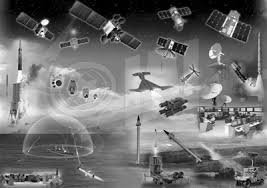
In today’s era, military intelligence is becoming a powerful driving force for a new round of military reforms after mechanization and informatization, profoundly affecting the future combat victory mechanism, combat rules, and combat methods, and increasingly pushing war into the era of intelligence. The impact of military intelligence on future combat is mainly reflected in four aspects.
First, “intelligence” will become the dominant factor in determining the outcome of future operations. Mechanized warfare can be seen as platform-centric warfare, where energy is the dominant force. Energy is used to achieve the mobility of combat platforms and firepower strikes on targets, to achieve the combat purpose of destroying the enemy, and to pursue the use of objects to carry energy and release energy. Informationized warfare can be seen as network-centric warfare, where information is the dominant force. Information does not replace energy, but through precise positioning of time and space, it multiplies the combat effectiveness of energy, thus becoming the dominant force in war, and pursues the use of networks to gather energy and release energy. Intelligent warfare can be seen as cognitive-centric warfare, in which the dominant force is “intelligence”. The combat space is further extended from the physical domain and information domain to the cognitive domain, social domain, and biological domain. The battlefield situation is more complex. War is a systemic confrontation across domains, and it pursues more empowerment and release of power with intelligence.
Second, intelligent unmanned equipment will become the main combat equipment in future operations. The development of intelligent technology has gradually separated people from weapons and equipment. Unmanned systems have shifted from assisting people in combat to replacing people in combat, completing many high-risk combat operations that are not suitable for people to perform. Intelligent combat has increasingly distinctive characteristics of “unmanned platforms, manned systems, unmanned combat, and manned command”. On the Syrian battlefield, the Russian military remotely controlled 10 combat robots to kill more than 70 Islamic State militants with “zero casualties” and seize the 754.5 high ground, becoming the first ground combat operation in military history with robots as the main force. It is expected that by 2025, the proportion of intelligent unmanned equipment in the Russian military’s weapons and equipment will reach more than 30%. The U.S. military predicts that by 2030, intelligent unmanned equipment will be able to perform tasks autonomously, and 60% of ground combat platforms will achieve unmanned intelligence. A large number of drones, unmanned ships/boats, and unmanned vehicles will become the main equipment for both sides on the intelligent battlefield, carrying out various traditional/untraditional military tasks and implementing self-organized and systematic operations.
Third, human-machine collaborative combat will become the main mode of action in future combat. Human-machine collaborative combat is a mode of combat in which manned and unmanned equipment joint formations implement coordinated attacks in a networked confrontation environment. Among them, human soldiers with battlefield decision-making and tactical control capabilities serve as the “command back end”, and intelligent unmanned equipment carrying guided weapons or various intelligence, reconnaissance and surveillance sensors serve as the “weapon front end”. With the support of information networks, human soldiers and intelligent unmanned equipment work closely together to complete actions such as situation perception, tactical decision-making, firepower guidance, weapon launch and damage assessment. According to the U.S. Army Research Laboratory, before 2035, human-machine collaborative combat will mainly take the form of autonomous combat with humans in the loop; before 2050, authorized autonomous or fully autonomous combat with humans outside the loop will be achieved, officially kicking off intelligent warfare dominated by machines.
Fourth, autonomous swarm combat will become an important attack style in future combat. The technical inspiration of swarm combat comes from the bionics research on bees. The division of labor within the bee colony is clear, there is a rich and interesting information exchange language between individuals, and the social behavior is rich, so the cluster is also called a “bee colony.” Swarm combat is an intelligent combat style that relies on artificial intelligence, data chain integration, cloud computing and other technical support, and launches dozens or even hundreds of drones at the same time. They form precise formations and precise division of labor, and perform multiple tasks and multi-target strikes at the same time. Compared with traditional combat, swarm combat has incomparable advantages and is a subversion of traditional combat styles and combat rules. After hundreds of simulation tests, the U.S. Navy found that even an advanced air defense system like the Aegis air defense system has difficulty in allocating firepower when dealing with drone swarm attacks, resulting in some drones being able to avoid interception and successfully launch attacks on ships. Data shows that when a swarm of 8 drones is used to attack ships, an average of 2.8 drones can avoid the Aegis interception system; when the number of drones increases to dozens, the number of drones that successfully avoid the interception system and achieve penetration is greater. These simulation tests fully prove that the effect of drone swarm operations is significant and poses a huge threat to the current defense system. At the same time, it also indicates that swarm-type autonomous operations will inevitably become an important offensive combat style on the future intelligent battlefield.
System-based superior warfare is a system-based warfare in information warfare. It is not limited to a specific combat style, but a “combination punch” or a group of combat styles composed of multiple combat styles and tactics. It emphasizes that according to the changes in combat missions, combat opponents and battlefield situations, as long as it is conducive to forming relative advantages and achieving system victory, any appropriate combat means and styles can be flexibly used to form combat advantages. In the specific implementation of system-based superior warfare, these specific combat styles and action tactics can be organized and implemented separately as part of joint full-domain operations, and more emphasis is placed on “combination punches”, multiple strategies, and overall victory. In order to better understand its core connotation, this article lists nine typical combat styles, including overall deterrence warfare, electromagnetic interference warfare, network attack warfare, cognitive control and interference warfare, and analyzes them.
System concentration warfare – a “combination punch” that flexibly uses a variety of combat styles. Author: Academic Plus Senior Observer Dong Zhou The main content and keywords of this article
Overall deterrence warfare: emphasize multi-domain joint deterrence; the implementation of overall deterrence warfare should have three major elements; strong overall strength is the core of achieving effective deterrence
Electromagnetic interference warfare: the key to competing for information advantage; in terms of combined means and methods, information empowerment is achieved through “connection + sharing”; an effective method to crack unmanned cluster warfare
Network attack warfare: mainly soft killing, combining soft and hard, focusing on breaking the network and reducing energy
Cognitive control and interference warfare: control the cognitive right of situational awareness, compete for information advantage; control the right to command and decision-making, compete for decision-making advantage; control the “brain” right, and seize the brain control advantage
Agile mobile warfare: high-efficiency and rapid decision-making; high-efficiency formation of a favorable combat situation; high-efficiency and instant aggregation of combat forces; agile mobile warfare is an innovative development of traditional mobile warfare
Swarm autonomous warfare: conducive to forming a system advantage to suppress the enemy; conducive to enhancing combat effectiveness; conducive to trapping the enemy in combat difficulties
Precision point killing war: achieve high efficiency and cost-effectiveness in operations; hitting key node targets is an important option; large-scale system support is a basic condition; it is inseparable from accurate intelligence support
Supply chain disruption war: the supply guarantee chain has a huge impact on the overall operation; the focus of attack is the key node of the enemy’s supply guarantee chain; the key is to choose the right time to use tactics
System destruction and paralysis war: the combat goal is to make the enemy’s combat system disordered; hit the key nodes of the combat system with a heavy punch; implement a soft attack on the enemy’s combat system
For learning reference only, welcome to communicate and correct! The views of the article do not represent the position of this organization The concept of operation is first proposed as a new combat style. Innovative combat style is the core content of the development of combat concepts. It can be said that system-based optimization warfare is a general term for a series of specific tactics. The following nine typical combat styles constitute the combat method system of system-based optimization warfare. They are: First, overall deterrence warfare, actively organizing static power demonstrations and deterrence actions in the system-based superiority warfare, striving to win the battle without fighting or with a small battle; second, electromagnetic interference warfare, using a variety of combat means and action styles such as electronic reconnaissance, attack and defense to disrupt, prevent and destroy the enemy’s electromagnetic capabilities, actively compete for electromagnetic spectrum advantages, seize information control, and thus win the initiative in combat; third, network attack warfare, using a variety of means such as soft strikes and hard destruction to break the enemy’s command network, intelligence network, communication network, and logistics supply network, and disrupt the enemy’s command and support; fourth, cognitive control and interference warfare. Through information attacks, public opinion attacks, and brain attacks, control advantages are formed in cognitive space; fifth, agile mobile warfare. Rapidly adjust the deployment of troops and weapons, quickly gather capabilities on the battlefield, and seize combat opportunities; sixth, swarm autonomous warfare. Widely use unmanned combat means such as “swarms”, “wolf packs”, and “fish schools” to autonomously organize actions and distributed attacks to achieve human-machine joint victory; seventh, precision point killing warfare. Accurately obtain intelligence, implement multi-domain precision strikes, strive to hit one point to shake the overall situation, and maximize combat effectiveness; Eighth, supply chain disruption warfare. Organize elite forces to attack the enemy’s logistics and equipment supply chain, supply lines and supply bases, and destroy the enemy’s loss of supply and withdrawal from the battle; Ninth, system destruction and paralysis warfare. Comprehensively adopt a variety of means such as breaking the network, training, and hitting nodes to interfere with, delay, destroy or even paralyze the effective operation of the enemy’s combat system and weaken the function of the enemy’s combat system.
Overall deterrence warfare Overall deterrence warfare refers to actively organizing static power displays and deterrence actions in system-based superior warfare, striving to defeat the enemy without fighting or fighting a small battle. Sun Tzu said: “To defeat the enemy without fighting is the best of the best.” Deterrence and war are two main forms of military activities. Deterrence is mainly to show determination and will to potential opponents by showing strength or threatening to use strong strength to deter the opponent’s actions. It can be said that the overall deterrence warfare in the system-based superior warfare is an important means or tactics to achieve “stopping” the enemy’s troops without fighting. Clausewitz emphasized that the first rule of strategy is to be as strong as possible, first of all, strong in general, and then strong in key parts. Modern warfare is a confrontation between systems. The overall deterrence war under the informationized local war requires not only the traditional deterrence means and capabilities of land, sea, air and space, but also new deterrence means and capabilities such as space deterrence, electromagnetic deterrence, and network deterrence, and more importantly, the overall deterrence that demonstrates the overall strength of the country. In particular, with the rapid development of advanced technologies such as information technology, the scientific and technological revolution, industrial revolution, and military revolution are accelerating integration, and the coupling relationship between strategic competitiveness, social productivity, and military combat effectiveness is closer. Winning the informationized war is more of a contest of national will and national overall strength. If you want to contain the war, you must first deter your opponent from the overall strength. 1.1 Emphasize multi-domain joint deterrence Deterrence means usually include nuclear deterrence and conventional deterrence. In the system-based superiority war, the overall deterrence war is implemented, aiming to comprehensively use the conventional deterrence means of the land, sea, air, space, and power grid in the whole domain to achieve the purpose of deterrence. In particular, with the application of information network technology and space and directed energy technology in the military, space, network, and electromagnetic weapons have become new means of deterrence. Space deterrence mainly uses rapid response electromagnetic orbital weapons, space-ground networked anti-navigation and positioning service systems, large elliptical orbit laser weapons, high-power microwave weapons and other equipment to threaten and attack the opponent’s space targets, forming an “interference and blocking” deterrence against the enemy’s space information. Network deterrence mainly uses cyberspace situational awareness and attack equipment to threaten and attack the opponent’s military network and other key information infrastructure to achieve deterrence against the enemy. Electromagnetic deterrence mainly uses electromagnetic spectrum combat systems to threaten and attack enemy detection, navigation, communication and other informationized weapon equipment systems to achieve deafening and blinding deterrence against the enemy. 1.2 Three elements should be possessed in the implementation of overall deterrence warfare To implement overall deterrence warfare and achieve the expected deterrence effect, three elements are usually required: one is strength. The deterrent party must have reliable capabilities or strength that make the opponent feel daunted and fearful; the second is determination and will. The deterrent party must dare to use this capability when necessary; the third is clear information transmission. The deterrent party must accurately and effectively let the other party know its action capability and determination. Historically, there are three main changes in the criteria for judging deterrence strength: first, active military strength; second, comprehensive national strength or war potential; third, the total number of main combat weapons and equipment. For a long period of history, the number of troops was deterrence, and the strength of military strength directly depended on the size of the active army, the number of important weapons and equipment, and non-material factors such as military training and organization morale. After the 20th century, with the expansion of the scale of war, deterrence strength is no longer limited to the number of troops and important weapons and equipment, but is determined by the country’s war potential, including economic strength, scientific and technological strength, energy resources, and even population size, etc. The overall deterrence war in the system-based superiority war, the formation of its deterrence strength is mainly based on the network information system, and the joint full-domain deterrence capability formed under the integration of the system. 1.3 Strong overall strength is the core of achieving effective deterrence The development of information technology and its extensive penetration and application in the military field have provided favorable conditions for building overall strength and achieving overall deterrence. System-based superior warfare is supported by the network information system and makes full use of the penetration and connectivity of information technology. It not only integrates various combat forces, combat elements, and combat units into an organic whole to achieve military system combat advantages, but also connects and integrates various fields related to war and national mobilization, such as national politics, economy, diplomacy, finance, transportation, and energy, into the national war mobilization system, gathers various forces and resources to form an overall force, realizes the emergence effect of system capabilities, and shows the overall strength advantage. It forms a powerful invisible deterrent of unity and common hatred of the enemy, and creates a situation where the enemy “has power but cannot act” and “can act but has no effect”, which plays a role in containing and winning the war. In the overall deterrence war, the scope of national war mobilization will be wider, not limited to a certain direction or region, but throughout the country and even relevant regions of the world; the mobilization time will be faster, and the mobilization and action information can be quickly transmitted to everyone and every node at the first time by using the network and information system; the action coordination and collaboration will be more consistent, and the forces distributed in various regions can act in a unified manner almost at the same time based on the same situation and the same order, greatly improving the efficiency of action coordination; the resource utilization will be more sufficient, and various war resources based on the network can quickly realize the transition from peace to war and from military to civilian, and realize the integrated and precise guarantee of the front and rear.
Electromagnetic interference warfare Electromagnetic interference warfare refers to the flexible use of various combat means and action styles such as electronic reconnaissance, attack and defense to disrupt, prevent and destroy the enemy’s electromagnetic capabilities, actively compete for the advantage of the electromagnetic spectrum, seize the right to control information, and then win the initiative in combat. 2.1 The key to competing for information advantage Local information warfare is highly dependent on the electromagnetic spectrum, and the control and counter-control of electromagnetic space have become the focus of competing for the right to control information. Organizing and implementing electromagnetic interference warfare is mainly to destroy the enemy’s electromagnetic spectrum and protect one’s own side from destruction. The electromagnetic spectrum is the main carrier for transmitting information. Using electromagnetic means to disrupt and destroy the enemy’s electromagnetic spectrum will effectively reduce the enemy’s information combat capability, and enable the enemy to ensure the rapid and effective flow of information in the scenario where the enemy has the right to control information, and drive the command flow, action flow, material flow, and energy flow through the information flow, thereby gaining the dominance and initiative of the operation. 2.2 The basic focus is to disable and invalidate the enemy’s combat system. The implementation of electromagnetic interference warfare in the system-based superior warfare is mainly aimed at the enemy’s dependence on electromagnetic space. At the same time, in order to ensure the effective use of electromagnetic space by the enemy, various electronic reconnaissance, interference, attack, defense and support forces are organized to interfere with and attack the enemy’s communication network, radar network, computer network and command center, communication hub, radar station, computer network node, global navigation positioning system, space-ground integrated Internet and other space link systems, and other various frequency-using weapons and equipment, block and destroy their communication and data transmission, and destroy the “connection” and “sharing” structural center of gravity of the enemy’s combat system, and provide support for the seizure of information control and electromagnetic control from the root, thereby weakening the enemy’s command and control capabilities and disabling the enemy’s entire combat system. 2.3 Effective tactics to crack unmanned swarm warfare Unmanned autonomous swarm warfare such as “bee swarm”, “wolf pack” and “fish pack” is an important feature of information-based local warfare with intelligent characteristics. There are a large number of various unmanned autonomous clusters, with various types and complex characteristics, and each individual can complement each other and replace each other to play a role. It will be very difficult to intercept and destroy the entire unmanned cluster. However, from a technical perspective, in order to achieve effective coordination in unmanned combat clusters, each individual must share and interact with each other. Once the communication coordination between unmanned clusters is interfered with, it will be impossible to share battlefield situation and information, and it will be difficult to coordinate actions with each other, and it will be difficult to play its due combat effectiveness. This provides an opportunity for the other party to implement communication interception and electromagnetic interference. Therefore, the implementation of electromagnetic spectrum warfare, interference and attack on the information and communication network of unmanned clusters, and destruction of their information sharing and interaction will make it impossible for each individual in the unmanned cluster to achieve effective coordination, thereby losing combat capability.
Network attack warfare Network attack warfare refers to the comprehensive use of network and computer technologies and other effective means to conduct military confrontation actions around the control of information and information networks. It is a major combat style for cyberspace operations and the struggle for network control. Its main combat operations include both soft killing and hard destruction, mainly soft and hard. Among them, soft kill is mainly network attack, that is, the comprehensive use of blocking attack, virus attack and other means to block and attack the enemy’s information network, command system, weapon platform, etc., making it difficult for the enemy’s network, command information system, etc. to operate effectively or even paralyzed; hard destruction mainly uses precision firepower strikes, high-energy microwaves, electromagnetic pulses and anti-radiation attacks to paralyze the enemy’s information network physical facilities and destroy the enemy’s combat and weapon equipment entities. The focus is on breaking the network and reducing the ability to fail. Organizing network attack in the system concentration war is to target the weaknesses of the opponent’s military information network, take advantage of the system, organize various network attack forces, and continuously implement soft kill and hard destruction actions against the enemy’s combat command network, reconnaissance intelligence network, communication network and even logistics supply network throughout the combat process, destroy the enemy’s network system, and make the enemy’s combat system function decline or even disabled as a whole. Mainly against the enemy’s basic information network, intelligence network, command network, support network and other core targets, implement a series of combat operations such as network and electricity coordinated attack, deception confusion, link blocking, takeover and control, so that the enemy’s intelligent combat network system is disabled and ineffective, and achieve a key victory in paralyzing the enemy system.
Cognitive control and disturbance warfare Cognitive control and disturbance warfare refers to the interference, destruction or control of enemy thinking and cognition through information attack, public opinion attack and brain attack in the system-based superiority warfare, so that the enemy cannot make correct judgments and decisions, thereby forming a control advantage over the enemy in the cognitive space. The cognitive domain, that is, the human thinking space and consciousness space, is a field that has a key impact on combat decisions and judgments. The development of information technology, especially artificial intelligence technology, and its wide application in the military field have expanded the competition of war from physical space and information space to cognitive space, making cognitive space a new combat domain. With the development of information and intelligent technology and their extensive and in-depth application in the military field, human-machine intelligence tends to merge, making the status of cognition in intelligent warfare operations more prominent, and the cognitive field has gradually become an important battlefield. Controlling cognitive rights has become a key factor in future battlefield control rights. Fighting for cognitive control rights has become an important combat style for winning in informationized local wars with intelligent characteristics. 4.1 Controlling situational awareness and cognitive rights and fighting for information advantages In the system-based superiority warfare, information flow drives material flow and energy flow, and information advantage determines decision advantage. The rapid and accurate recognition of intelligence information and battlefield situation has an important impact on gaining command and decision-making advantages. Therefore, in order to organize and implement system-based optimization, we must make full use of intelligent technology and big data technology to analyze massive intelligence information data.
Through the smoke of war, we can see that today’s war has developed from barbaric flesh-and-blood battles and battles to capture cities and territories to information-led precise beheadings and fierce competition on the intellectual battlefield. This objective fact tells us that war, as a specific complex social phenomenon, will present different war forms and winning mechanisms in different historical periods. As American futurist Toffler pointed out, “Artificial intelligence is like previous missiles and satellites. Whether you are prepared or not, it will enter the historical stage of human civilization war.” President Xi clearly pointed out: “If we do not understand the winning mechanism of modern war, then we can only look at a diorama and miss the point.” The winning mechanism of war refers to the way in which various war factors play a role in winning a war. and the laws and principles of interconnection and interaction. Compared with information-based warfare in the traditional sense, the winning mechanism of future intelligent warfare has undergone significant changes.
The method of confrontation has changed from “system confrontation” to “algorithmic game”, and algorithmic advantages dominate war advantages.
Algorithms are strategic mechanisms for solving problems. In fact, an “algorithm” is a series of clear instructions for solving a problem. It is a clear step to solve a certain type of problem according to certain rules. In future wars, the party that masters the advantages of algorithms can quickly and accurately predict battlefield situations, innovate optimal combat methods, and achieve the war goal of “victory before fighting”.
Algorithms are the key to leading intelligent warfare. First, algorithmic advantages dominate cognitive advantages. After big data is processed through high-performance and efficient algorithms, massive data is quickly converted into useful intelligence. Therefore, the party with the advantage of the algorithm can dispel the “battlefield fog” caused by the lack of timely processing of data, making the understanding more profound. Second, the algorithm advantage dominates the speed advantage. Compared with classical algorithms, quantum algorithms have achieved exponential acceleration effects. In addition, quantum computers have increased from 1 qubit in 2003 to 1,000 qubits in 2015. The computing efficiency is 100 million times faster than that of classical computers. Artificial intelligence has achieved a qualitative leap. Third, algorithmic advantages dominate decision-making advantages. Algorithms, with their high-speed and precise calculations, replace people’s “meditation” and repeated exploration, thereby accelerating knowledge iteration. Mastering super powerful algorithms can quickly propose flexible and diverse combat plans and countermeasures in response to changes in the enemy’s situation, constantly disrupting the enemy’s established intentions and deployment.
Algorithms are at the heart of the jump in war effectiveness. First, war is more efficient. With the support of algorithms, artificial intelligence can react hundreds to thousands of times faster than humans. In 2016, the “Alpha” intelligent software developed by the United States has a reaction speed 250 times faster than humans. It controlled a third-generation aircraft to defeat a manned fourth-generation aircraft in a simulated air battle. Second, the war endurance is stronger. Artificial intelligence is not limited by physiological functions and can continuously perform repetitive and mechanical tasks. In September 2016, an F-16 fighter jet reached 8 times gravity during training, causing the pilot to lose consciousness. However, before the plane hit the ground, the onboard “automatic anti-collision system” automatically pulled the plane up, avoiding the tragedy. occur. Third, the outcome of the war is better. With the support of massive data and supercomputing capabilities, artificial intelligence judgment and prediction results are more accurate. The combined use of manned and unmanned equipment in the U.S. military’s search and hunt for bin Laden is a successful example.
Combat elements are changing from “information-led” to “machine-based warfare”, and machine-based warfare reshapes the combat process
In the future, intelligent technology will penetrate into all elements and processes of war. The Internet of Things, the Internet of Intelligence, and the Internet of Brains have become the basis of war. The four domains of physical domain, information domain, cognitive domain, and social domain are deeply integrated, making the battlefield holographically transparent. There are people to control the war and no one to fight on the battlefield. Intelligent weapons and equipment will reshape the combat process “from sensor to shooter”.
“Detection” with a keen eye. “Reconnaissance” refers to intelligent intelligence reconnaissance. It can use multi-dimensional sensors such as land, sea, air, space, and electricity for virtualized collaborative networking, self-organized dynamic scheduling, automatic mining of multi-source intelligence, and order-based on-demand use to maximize information shortage or information redundancy. The “fog of war” brought about by the epidemic has opened up the “eyes” to see through intelligent warfare.
Loop “control”. “Control” refers to intelligent command and control. Focusing on the core of decision-making advantages, we use the human-machine collaboration technology of “human in the loop” and adopt three decision-making and control methods of “human in the loop”, “human in the loop” and “human outside the loop” according to the autonomous authority of the machine. , forming a comprehensive advantage with superior decision-making quality and action speed.
Smart “hit”. “Strike” refers to intelligent offensive and defensive operations. Relying on the advantages of system structure and algorithm, it mobilizes all-domain multi-dimensional, manned and unmanned combat platforms in real time, quickly couples combat forces, builds combat systems on demand, focuses on targets, independently implements “distributed” and “swarm” collaborative operations, and quickly resolves battles after they are completed. Couple and wait for the battle, so that the troops can gather and disperse randomly. At the end of 2015, Russia invested 6 tracked unmanned combat vehicles, 4 wheeled unmanned combat vehicles and 1 drone to support the Syrian government forces in storming Islamic extremist strongholds and achieved the world’s first unmanned combat victory. Victory in the tough battle dominated by cars. During the battle, about 70 extremist militants were killed, while only four Syrian government troops were injured.
The decision-making method changes from “human brain decision-making” to “intelligent decision-making”, and intelligent decision-making optimizes combat operations
With the emergence of intelligent auxiliary decision-making technology and “cloud brain”, “digital staff” and “virtual warehousing”, war decision-making has evolved from pure human brain decision-making to human-machine hybrid decision-making, cloud-brain intelligent decision-making and neural network decision-making.
Human-machine hybrid decision-making. Reasonable division of labor and interaction and collaboration between humans and machines are the best solutions to explore and solve problems. The advantages of the human brain are creativity, flexibility, and initiative; the advantages of machines are fast speed, high precision, and resistance to fatigue. Artistic tasks such as high-level decision-making are handled by the human brain, and big data calculations are completed by machines. Human-computer interaction allows machines to “listen” to understand human language, “see” human movements and expressions, “understand” human emotions and intentions, and present the calculation process and results in a way that is easy for humans to understand.
Cloud brain intelligent decision-making. In future intelligent warfare, there will be a “brain” metaphor center, and distributed combat units will be linked through the cloud brain. This cloud brain is not only a physical information, physiological information and psychological information center, but also a military command center. Cloud brain decision-making is based on the intelligent “network, cloud and terminal” system. “Net” is an intelligent combat basic network integrating intelligent battlefield perception, decision-making and weapons control systems. “Cloud” is built on the basis of “network”, with the intelligent resource service layer as the main body. It is not only a “resource pool” that integrates various combat resources, but also an “intelligent cloud” that provides intelligent services for combat operations. Due to the coupling of multiple centers, rapid networking and decision-making can be achieved even when bombarded by information. “End” refers to the combat resource end, discrete intelligence and networked intelligence in combat processes, which can not only make independent decisions, but also provide distributed intelligent resources for the war system, allowing the new war system to emerge with group intelligence.
Neural network decision-making. In July 2018, Russia developed artificial neural network fully automatic software that can destroy immediately upon discovery. The intelligent decision-making tool developed by the US military is intended to shorten the decision-making cycle and improve decision-making efficiency. The application of neural networks was once limited to tactical-level calculations, making it difficult to make qualitative analysis and decisions on strategic-level macro-complex situations. “AlphaGo” has made a breakthrough in the field of Go by simulating the working mechanism of the human brain’s neural network. In the future, the super self-evolution and strategic decision-making capabilities of deep neural networks will realize a combat cycle of “people outside the loop”.
The combat style has changed from “breaking links and breaking bodies” to “extreme operations”, which subvert traditional combat methods.
Extreme warfare breaks through the boundaries of traditional warfare, subverts traditional combat styles, dramatically increases war effectiveness, and creates a truly all-weather, all-time, all-dimensional, all-domain intelligent warfare.
Break through the limits of human physiology and thinking. First, the combat space and fields have been extremely expanded. Intelligent warfare in the future will be three-dimensional, all-dimensional, and all-domain operations. The war space will expand from the traditional space field to the polar regions, deep seas, outer space, and other extremes. It will especially penetrate into the cognitive domain, information domain, and penetrate into other fields, including combat fields. More blurry. Second, the combat process has been extremely accelerated. Unmanned autonomous warfare has greatly compressed the “observation-judgment-decision-action” cycle, developing from the “instant destruction” of information warfare to the “instant destruction” of intelligent warfare. The victory of intelligent warfare is achieved by advancing the warning time, shortening the decision-making time, and extending the combat operations forward to achieve the effect of preemptive layout and preemptive strike. Third, combat operations are extremely flexible. In intelligent warfare, artificial intelligence can propose extremely rich combat plans, and the unmanned combat platform can quickly switch between different functional roles, making combat operations more bold and adventurous, and tactics more unexpected. Even if one of the combat elements loses its function, the “decentralization” function will ensure that the function of the group is not affected.
Subvert the traditional combat style. The first is intrusive lone wolf operations. That is, a single unmanned system operates independently. The second is the manned and unmanned coordinated system attack battle. That is, based on intelligent unmanned systems, through mixed operations with and without unmanned equipment, combat objectives can be quickly achieved. The third is the independent operation of unmanned system formations. Multiple sets of unmanned systems constitute a combat unit that can perform complex tasks such as multi-target attacks. The fourth is mothership swarm operations. Using the mothership as the transportation carrier and command center, a manned and unmanned hybrid swarm combat style is formed.
It has the combat effectiveness of “nuclear power”. Intelligent warfare maximizes the characteristics and potential of intelligent robots, leading to combat effectiveness approaching the limit. First, the target is small and difficult to find. For example, miniaturized stealth robots are difficult to detect with radar and sonar. The U.S. hybrid UAV with an Optode chip embedded in the Dragonfly is smaller, lighter and more stealthy, with a battery life of up to several months. Second, confrontation is difficult and costly. For example, as long as a beetle-sized micro-drone scans a human face, it can directly hit the target’s head after data analysis and determination, and it can carry enough ammunition to penetrate the brain. Third, the cost is low and the damage is great. In the future, the use of intelligent weapons in extreme operations will have the power of nuclear weapons, especially extremely large-scale intelligent weapons and equipment, extremely low-cost robot automatic production, and extremely flexible robot swarm operations, which may exceed the maximum explosion power of nuclear weapons.
認知域作戰有一個非常重要的支撐,即主要依靠語言媒介發揮作用,主要通過語篇層面發揮影響,主要通過語篇的敘事性對認知域形成隱性效應,主要 externing influence on the cognitive domain through cultural models 通過跨文化交際所發揮的潛在作用,顯性或隱性作用。 主要體現在以下幾個方面:
Cognitive domain combat refers to the use of multi-domain means such as public opinion, psychology, and law, and the use of modern network, media, text, pictures, video, digital and other multi-dimensional technologies to carry out public opinion propaganda, psychological attack and defense, and The important forms of fighting for people’s hearts, subverting confidence, influencing beliefs, fighting for thinking, and ideological struggle are intended to compete for people’s initiative in thinking, beliefs, values, personal attitudes, emotions, identification, and judgmental tendencies. Cognitive domain warfare is a complex collection of multi-domain warfare such as traditional public opinion warfare, psychological warfare, legal warfare, trade war, diplomatic warfare, technological warfare, and ideological warfare.
At present, combat in the cognitive domain has become an important basis for military struggles and struggles in other fields between countries, and language confrontation driven by goals in the cognitive domain has become an important form of combat in the cognitive domain, which deserves great attention.
A New Frontier for Language Countermeasures to Influence on Objects of Operation
Cognitive domain combat is the accompanying result of the research and development of contemporary cognitive science. It is a new combat field created after people actively explore the cognitive activities of the brain to gain a more complex, abstract and thorough understanding of the brain. Advanced deep covert activities are the high-end form of influence on the object of action. Regardless of whether it is the object of information action, the producer of information, the content of information itself, or the channel of information, operations in the cognitive domain all run through the characteristics of cognition, and highlight actions from the cognitive level from beginning to end.
From the perspective of the recipients of the information, this cognition is aimed at the deep cognition of the opponent’s audience, including its people, the army, military commanders or important leaders, important figures in the political and business circles, and even directly including the leaders of the opponent’s country or the military. Specific important generals, etc., can also be specific groups of people or people. It can involve the cognitive preferences, cognitive shortcomings, cognitive habits, cognitive biases, cognitive misunderstandings of individuals or groups; it can also be the beliefs, values, political identity, ethnic identity, social and cultural identity and emotional attitudes of individuals and groups.
From the perspective of the information provider and content, it should be infused with the cognitive design and arrangement of the information producer, which includes the unique cognition of the text, such as the discourse mode of the text, the narrative mode of the text, the perspective of observation of things, the narrative Cognitive focus and depth, organizational form of sentences, tendencies such as value concepts of sentences, acceptability of concepts of sentences, etc.
In terms of channels for information distribution and dissemination, the form of text is closer to the multimedia multimodal form, closer to the needs of cyberspace, closer to the advantages of contemporary smartphones, and closer to the characteristics of the current emerging media era, that is, more in line with the audience The cognitive characteristics of acceptance are cognitive habits and cognitive tendencies. The form of dissemination of the text fully considers the cognitive effect in international communication, especially the cognitive communication across cultures, languages, media, and groups. In this way, the text will better influence the audience from the cognitive level.
Language confrontation responds to changes in combat styles and generates new tactics
Throughout human history, it is not difficult to find that the style of military struggle has been constantly changing. From the initial physical fight with the help of cold weapons, it has developed into a contest of mechanical power with hot weapons, and has also developed into a check and balance of information capabilities under the conditions of high-tech warfare. Every change brings about profound changes in tactics. In the current transitional stage of co-existence of mechanization, informationization and intelligence, people not only pay attention to the struggle for dominance in the physical domain and information domain of the battlefield, but also pay more attention to the control of the main body of war-human cognitive domain, that is, the way of thinking, Cognitive models and styles, values, emotional attitudes, cultural models, communication models, psychological strengths and weaknesses, cognitive preferences, cultural and knowledge maps, and ideological identity. The latter involves the basic situation of social personnel and social existence, that is, the emerging field of cognitive domain operations exerting influence, and its tactics have strong particularities.
Topic flexibility and mobility: Cognitive domain operations can select many topics in the cognitive domain to carry out flexible and mobile combat operations. According to the current situation and needs, the topic can be chosen to involve a relatively macro strategic level (such as the ideology and system of the other party’s entire society, etc.), or a medium-level campaign level (such as social issues in a local area or direction of the other party’s society: Social welfare policies or environmental protection policies, etc.), you can also choose to involve very microscopic tactical issues in society (such as the unfair, unjust, and not beautiful side of society reflected by a certain person or a specific event). The macro, meso, and micro cognitive domains are interconnected and transform into each other. It is very likely that a micro issue will also become a macro strategic issue. The question should be raised according to the relationship with the entire military operation, and the cognitive domain operation must be subordinated to the overall combat operation and serve the needs of the macro political and diplomatic situation. More importantly, the topics should be prepared in normal times, and the data of various topics should be collected in normal times, especially paying attention to various important data in the real society. Once needed, these data can be quickly transformed into arrows, bullets, and shells fired at the enemy’s cognitive domain, and even become strategic weapons that affect the overall situation.
Controllability at the combat level: The important design of cognitive warfare is that at the combat level, it is controllable and adjustable as a whole, and can be upgraded or reduced according to changes in the situation. If the strategic level is needed, the commander can enable the design and force input at the strategic level; if the campaign level is needed, it can also be controlled at the corresponding campaign level; if it is only needed at the specific small problem level, it can also be controlled at the corresponding The niche local level makes the whole operation serve the needs of the overall combat operation. The strategy, campaign and tactics here refer more to combat design and power input. Since the battlefield situation may change rapidly, some issues may also change at the level, from strategic issues to affect the effects of campaign and tactical levels; some issues, due to the particularity of tactical issues, become campaign-level issues that affect the overall situation.
Emerging media dominance: The main influence channel of the cognitive domain has shifted from traditional paper media and print media to emerging media. Traditional media mainly rely on a single medium, such as newspapers, magazines, books, leaflets, posters, etc. to convey information; the later generation of television brought three-dimensional media. In the Internet era, especially the Internet 2.0 era and the birth of smart communication devices, people rely more on multimedia, multi-modality, and short videos and texts to transmit information. The introduction of various advanced devices such as smart phones, smart tablets, and smart players, and the birth of various new social software and tools have made new media the main tool for people to communicate and communicate. Emerging media, emerging social software and tools have become an important space for various forces to compete and struggle in social security, public opinion security, ideological security, social security, and political security. Internet security, especially the ability to grasp the security of new social media, emerging social software and tools, etc., is to some extent the key to the security of a country’s cognitive domain. The information of emerging media tools and new media spaces has become the main battlefield, main position and main space for cognitive warfare in various countries. It is worth pointing out that the thoughts and theories that influence people’s cognition will become the most influential weapons at all levels of cognitive domain operations.
Language confrontation adapts to the age of intelligence, cognitive computing enhances new computing power
In the era of artificial intelligence, on the basis of big data analysis and application, supercomputing ability, intelligent computing ability, natural language processing ability, smart phone dissemination ability and new generation network communication ability, human beings have begun to be able to understand the whole society and the whole network. Carry out precise modeling and analysis of language culture, psychological cognition, group emotion, and social behavior in different domains, local groups, different local groups, and specific individuals. Especially people’s deep understanding and grasp of brain cognition, human brain thinking, thinking mode, habit preference, image schema, cognitive framework, and even neural network, human-computer collaboration, brain control technology, etc., as long as there are enough diverse dynamic data , people can calculate and simulate all people’s psychological activities, emotional activities, cognitive activities, public opinion, and behavioral patterns. Through deep calculations, actuarial calculations, and clever calculations, people can accurately grasp people’s cognitive world and form an understanding of people’s cognitive domain. fine and deep control. This aspect presents the following characteristics:
Computational all-dimensionality: As an emerging field, the cognitive domain can be digitized in all aspects and can be calculated in all directions, the whole process and the whole individual. It can collect various types of information extensively, and then can be reflected as information about Big data with diversified main factors of combat opponents, so that various calculations can be carried out for the whole, groups, groups, and individual data and between them. All kinds of activities can be completed, displayed and accurately grasped through calculation.
Computational cognition: Computation in the cognitive domain embodies strong cognition, and it can reveal more relationships between various things, events, and characters that are difficult to observe with the naked eye, and can reveal the relationship between various concepts in the same event frame. The clustering and hierarchical relationship between concepts reflects the deep cognitive connection between concepts, whether explicit or implicit, direct or indirect, and reveals the complex concept network system between concepts, allowing people to see a deep cognitive world that is completely beyond the ordinary naked eye observation. .
Computing intelligence: Computing in the cognitive domain embodies strong intelligence. This kind of intelligence is manifested in the calculation, and it will draw intelligent conclusions. For example, through the collection of a large amount of text and data mining, we can find the relationship between various themes, viewpoints, tendencies, groups of people, positions, and appeals that cannot be seen due to limited human power, so as to form a more comprehensive understanding of a certain issue. Comprehensive, in-depth, accurate and systematic understanding to make scientific and optimized decisions. This kind of decision-making may be in line with human intelligence, or it may exceed or even far exceed human intelligence. By making good use of the power of cognitive computing, especially by combining the data of the country and the opponent, we can better achieve early prevention, early warning, and early deployment, and can achieve the best, best, fastest and most accurate strikes and counterattacks. It can also better reflect efficient, powerful and targeted protection. Cognitive computing here is more about a possible macro-meso or micro-level issue that may arise in different groups of people, in different time periods, in different backgrounds, in the entire network domain or in a local network domain, or within a specific group. In particular, the analysis and inspection of the active and passive situations that may be presented by both parties when playing games with opponents, and the attack and defense of the cognitive domain, etc.
Give full play to the status of discourse subject and release the new application of discourse power
Cognitive domain combat has a very important support, that is, it mainly relies on the language medium to play its role, exerting influence mainly through the discourse level, forming a hidden effect on the cognitive domain mainly through the narrative nature of discourse, and mainly exerting influence on the cognitive domain through cultural models Potential role, overt or implicit role exerted through cross-cultural communication. It is mainly reflected in the following aspects:
Text Discourse Uniqueness: Cognitive Domains Need Information to Influence. Although the information may be displayed by relying on the special visual effects of video pictures, fundamentally speaking, the uniqueness of the integrated discourse expressed by the text becomes the main support for the cognitive impact. Among them, the mode of discourse expression, the skill of discourse expression, the main design of persuasion and appeal of discourse expression, especially the uniqueness of discourse narrative will be the key to affect people’s cognition. This may include narrative perspectives, narrative themes, styles, narrative story frameworks, narrative language innovations, narrative key sentences, narratives contain philosophy, humanities, religion, society, nature, etc., and the identities of different participants in the narrative , the diversified evaluation of narrative, the authenticity, depth and emotional temperature of narrative, the subtle influence of narrative on viewpoints, and the personal emotions, values, ideology, and position evaluation released by narrative. The uniqueness of text discourse is an important reliance on cognitive influence exerted by text in cognitive domain operations. Making full use of the complexity of texts, giving full play to the respective advantages of diverse texts, and giving full play to the implicit and explicit cognitive influences of text connotations have become the key to combat in the cognitive domain of text discourse. The most important thing is to innovate text discourse, to win readers with brand-new discourse, more novel expressions, and more unique expressions, so that readers can understand and feel the thoughts in the text subtly, and accept them silently. The thought of the text.
Potential of cultural models: To fight in the cognitive domain, we must deeply grasp the characteristics and models of different countries and national cultures. Different countries and different nationalities have different cultural models, philosophical thinking, traditional culture, religious beliefs, customs, and ways of thinking are obviously different; citizens of different cultures also have different national psychology and national cognition Models should also have typical cognitive preferences belonging to their own nation and culture, as well as corresponding shortcomings and weaknesses, and some of them obviously have a huge difference from other nationalities in their own country, and even have misunderstandings and hostility. Therefore, at the cultural level, combat in the cognitive domain is to grasp the overall cultural models of different countries, build cultural models for different groups in different countries, build different cognitive models for different things in different countries, and fully grasp a certain country’s cultural models in a series of things. The overall attitude and way of doing things on issues and issues, especially for some typical cases, cultural taboos, religious requirements, spiritual pursuits, general concepts, etc. It is necessary to use existing theories and findings to comprehensively construct the basic performance of different groups of people in the cognitive field on some typical, sensitive, and important issues, so as to provide important reference and guidance for the next step of cognitive operations. Strengthen the research on the cultural patterns of different personnel of the enemy, especially military personnel, personnel in key positions, including the research and construction of basic cultural characteristics and models of generals, officers, soldiers, etc., such as the psychological cognitive behavior of characters and cultural model portraits, It has become the core practice of cognitive domain operations. It is also of great value to analyze the cognitive patterns of ordinary people, especially ordinary citizens and citizens, as well as specific groups of people, including special NGO forces.
Cross-cultural strategic communication: Cognitive domain operations are international language and cultural communication, which need to follow the laws of international communication. To grasp the basic paradigm of international communication, to skillfully combine national stories with international expressions, to skillfully combine the other party’s language and culture with their own stories and ideas; to be good at combining different art forms, including words, pictures, paintings, music (Sound), video and other means or multi-modal means to achieve the international dissemination of information. At the same time, it is also necessary to coordinate multi-dimensional and macroscopic communication at the strategic level: use various means, rely on military-civilian integration, military-civilian coordination, and military-civilian integration to carry out communication; in addition to non-governmental organizations, especially rely on non-governmental forces, experts, opinion leaders, and ordinary people To help the military carry out cognitive domain operations; to set up issues in a unified way, to make multi-point, multi-person and multi-dimensional voices, to form a strategic communication situation, to form a good situation for emergency solutions for major actions, major issues, major crisis management and control, etc., to form a good atmosphere of public opinion, and to create Positive effects, eliminating adverse effects or extinguishing adverse effects. In particular, it is necessary to establish a capable team that is proficient in foreign languages, understands cross-cultural skills, understands the laws of international communication, and can skillfully speak out on international multi-dimensional platforms. These personnel can usually carry out extensive issue awareness, collection and discussion, establish personal connections and fan groups with the help of common or special issues; more importantly, at critical moments, through their fan groups, exert influence and complete strategic communication tasks .
At present, with the popularity of hybrid warfare, multi-domain warfare and global warfare, cognitive domain warfare has become a common method of hybridization and mixing. , The advanced stage of the development of legal warfare, the complex stage and the escalation stage. Its rise is more deceptive, ambiguous, concealed, embedded, implanted and unobservable, especially considering its deep integration with contemporary emerging media, and continuous learning and reference into multidisciplinary, Interdisciplinary and interdisciplinary new ideas, new technologies, and new methods. As a result, combat in the cognitive domain has become a form of combat that we must be highly vigilant against. (Liang Xiaobo, professor and doctoral supervisor of the College of Arts and Sciences, National University of Defense Technology)
[This article is a phased achievement of the National Social Science Fund’s major project “National Defense Language Capacity Building from the Perspective of National Defense and Military Reform”]
Original Chinese Military Source: https://military.people.com.cn/BIG5/n1/2022/0517/c1011-32423539.html
Chinese Military Perspective on the New Development Trends in Foreign Military Network Warfare
After decades of development, cyberspace has become an important field of production and life in human society, and has become the fifth-dimensional battlefield after “land, sea, air, and sky.” In recent years, the United States and other developed countries have rushed to introduce cyberspace strategies, build (expand) cyber warfare forces, and implement cyber offensive and defensive operations. The moves in the construction, development, and application of cyber warfare deserve the attention of the world.
Pay attention to cyberspace security, and accelerate the establishment of supporting strategies and regulations
Since cyberspace security is a security issue in an emerging field, most countries lack supporting strategies and systems of laws and regulations. In recent years, major countries in the world have positioned it as a major security field, and the pace of promulgating network security strategies and regulations has been significantly accelerated. For example, since the first national network security strategy was proposed in 2000, the United States has continuously formulated, expanded, and updated various policies, strategies, regulations, and regulations in the field of network security. The network strategy alone includes the “National Network Strategy”, “International Cyberspace Strategy”, ” The Cyber Strategy of the Ministry of National Defense and the cyber strategy of the military services, etc., are used to standardize and guide the development and application of cyber warfare. In October 2014, the U.S. military also issued the world’s first joint doctrine “Cyberspace Operations”, which elaborated and standardized the concepts, actions, and tasks of cyberspace operations. In response to cyber attacks by the United States and NATO, Russia announced the “Russian Federation Cyber Security Strategic Concept” in 2014, and promulgated a new version of the “Information Security Doctrine” in 2016, proposing to ensure network information security. In order to strengthen the overall guidance of network security affairs, India issued the “National Cyber Security Policy” in 2013 and plans to issue a “National Cyber Security Strategy”; the Indian military has formulated policies such as the “Army Cyber Security Policy” and “Navy Information Security Policy” regulations.
Strengthen the professional construction of cyber warfare forces, and pay attention to the use of non-governmental network forces
In recent years, the establishment, integration, and expansion of specialized cyber warfare forces have become a trend among foreign militaries. The United States was the first country to propose the concept of cyber warfare, and it was also the first country to form a professional cyber warfare force. The U.S. military established the Cyber Command in 2010, and upgraded it to a first-level joint operations command in 2018. The number of cyber task forces under its jurisdiction has reached 133, with about 6,200 personnel. Russia established a professional information warfare unit in 2013, and cyber warfare is an important function of it. The Japanese Self-Defense Force established the Cyber Defense Team in 2014, initially with more than 100 members, and has now increased to nearly 300, and plans to expand to a thousand in the future. The United Kingdom also announced in 2020 that it will soon create a national cyber force. On this basis, foreign militaries have generally carried out systematic design and layout of cyber warfare forces. In the field of cyber warfare, forces such as network attack, network defense, and network operation and maintenance are inseparable; externally, network warfare forces are integrated and integrated with information warfare forces such as signal reconnaissance and electronic warfare. For example, the commander of the U.S. Cyber Command also serves as the director of the National Security Agency, and the network attack and defense are integrated with signal intelligence and reconnaissance. The Japanese Self-Defense Force has set up a special first-level command to oversee space, network, and electronic warfare affairs.
It is worth noting that foreign military forces constitute the “regular army” of cyber warfare forces, and private cybersecurity companies, technology companies, hacker organizations, etc. have also become important cyber offensive and defensive forces and have attracted much attention. The notorious “Eye of Sauron” and “Equation Group” and other hacker organizations are inextricably linked to the US military. In recent years, Iran, Russia, and Venezuela have encountered cyber attacks, all of which have the shadow of “Equation Group”. The Indian Army is also considering absorbing its rich IT talents to form a cyber warfare reserve force to further strengthen its cyber warfare capabilities.
Actively develop and build a network arsenal, and intelligent weapon systems are beginning to emerge
Cyber weapons are special weapons used for network attack and defense. They can be viruses, loopholes, denial of service attacks, phishing attacks and other offensive and defensive technologies, or network attack and defense system platforms. Anatoly Smirnov, chairman of the International Information Security Association of the Russian Federation, disclosed in 2019 that many Western countries were developing cyber weapons; the United States, the United Kingdom, Germany, and Japan also made no secret of possessing cyber weapons. According to the disclosures of Snowden and WikiLeaks, U.S. intelligence agencies and the U.S. military have built a systematic offensive cyber arsenal, some of which can be called “weapons of mass destruction” in cyberspace. In 2020, Patrick Saunders, commander of the British Strategic Command, took the initiative to declare that the UK has developed a “destructive” cyber weapon, which can effectively kill the enemy’s power grid and other facilities and equipment.
In terms of network system platforms, the U.S. military has built the most complete network warfare system platform in the world, including accusation management systems such as joint network command and control and unified platform, basic systems for network warfare planning and execution such as the IKE project, and network warfare and network warfare systems such as “Shute”. A weapon system with integrated firepower. In terms of network monitoring and defense, India has developed and built system platforms such as a central monitoring system, network traffic analysis system, and network security monitoring and evaluation system.
Cyber weapons have a natural “kinship” with smart technology. At present, weapon systems in the fields of network situation monitoring, network attack and defense, and password deciphering have already taken shape in intelligentized countries in cyberspace dominant countries. With the development of artificial intelligence technology, the trend of intelligent network weapons will become more and more obvious.
Focus on enhancing the actual combat capabilities of network attack and defense, and innovate network training methods
In view of the reality and destructiveness of cyber threats, foreign militaries attach great importance to testing the security of information network systems and improving the cyber offensive and defensive capabilities of military and government agencies through cyber exercises and training activities in the context of actual combat.
In terms of participating forces, it covers the military, government agencies, reserves and civilian cyber forces. In the method mode, opponents are generally set to ensure the confrontation of the exercise. Some also innovatively use the method of offering rewards to attract hackers to “legally” attack specific target networks and help find network system defense loopholes. In terms of the training environment, actively build a network shooting range to simulate the information network environment of one’s own side and the opponent’s. The United States, Britain, Japan, Canada and NATO have all established professional cyber ranges. As the world’s largest multinational cyber exercise, NATO’s “Lock Shield” exercise simulated a country’s information network environment in 2019. The content of the drill includes responsiveness testing, defense vulnerability inspection, and election interference analysis. India regularly holds “Cyber Fortress” exercises. It is said that in the “Cyber Fortress-8” exercise organized in 2015, the Indian Army’s cyber brigade used remote penetration and other means to successfully obtain the administrator authority of a certain network system of the Indian Army, and found that 13 major categories of security vulnerabilities were identified. In addition, the U.S. military has begun to practice the integration of cyber warfare and operations in other fields. In the U.S. military’s “Schriever” exercise, the integration of space operations and cyber warfare is one of the important contents.
At present, some countries have regarded some serious cyber attacks as acts of war. As the international rules of conduct in cyberspace restrict and deter cyber attacks more and more, cyber exercises may replace real network operations and become foreign military training and upgrading. The primary path to network offensive and defensive capabilities.
Emphasis on pre-emptive offensive operations, actual combat tends to integrate deterrence and multi-domain integration
The hugeness, complexity, and fragility of the network system make network defense difficult and costly. For this reason, the United States and other countries have gradually changed their network security policy and operational thinking from the initial comprehensive defense to preemptive offensive operations, emphasizing Conduct pre-emptive offensive operations in hostile networks to eliminate potential or actual threats.
Driven by offensive thinking, cyber warfare is common in international conflicts, and the targets of attacks are no longer limited to military targets. The United States is the first country to apply cyber warfare to actual combat. In 2009, the U.S. military used the “Stuxnet” virus to carry out cyber attacks on Iran’s nuclear facilities, causing more than 1,500 centrifuges to be scrapped and the Iranian nuclear process to be paused. In 2020, after the assassination of Soleimani, the U.S. military launched cyber attacks on the command and control of the Iranian Revolutionary Guard Corps, missiles, and air defense systems to deter and prevent Iran from carrying out military retaliation. Of course, the idea of offensive cyber warfare does not require absolute cyber superiority. Some non-cyber powers have also proposed the idea of using asymmetric cyber capabilities to carry out preemptive attacks on the enemy’s weaknesses, and then achieve the goal of using the small to gain the big and the weak in the network game. Mandatory.
It is worth noting that in recent international conflicts, the trend of multi-domain integration in the fields of cyber warfare and firepower warfare, electromagnetic spectrum warfare, and cognitive domain warfare has become very obvious. For example, when armed conflicts broke out between Azerbaijan and Armenia in the Naka region in 2020, the two sides launched cyber offenses and defenses in cyberspace on the one hand, and on the other hand launched fierce confrontations in the cognitive domain around international and domestic public opinion, military morale, legal principles and morals.
At present, the low-intensity and ambiguous nature of cyber warfare attracts some international actors to frequently carry out cyberspace operations regardless of the consequences, and the risk of conflict escalation out of control is constantly accumulating. To this end, all countries in the world should start consultations and negotiations on international rules of conduct in cyberspace and cyber arms control as soon as possible, jointly restrict military activities in cyberspace, create a new pattern of cybersecurity, and build a community of shared future in cyberspace.
Chinese People’s Liberation Army Actively Responding to the Challenge of Intelligent Warfare
In recent years, the wave of intelligence has surged and has been widely used in the military field. Major countries in the world attach great importance to the construction and application of military intelligence, and various unmanned combat platforms and intelligent weapons and equipment continue to appear, and they are installed in troops and put into actual combat. In the face of the accelerated evolution of intelligent warfare, only by seizing development opportunities, actively responding to challenges, accelerating the development of military intelligence, and accelerating the forging of intelligent combat capabilities can we seize the strategic initiative of intelligent warfare and win future intelligent warfare.
Focusing on designing wars to create intelligent theory
Military theory comes from combat practice and is used to guide combat practice. Restricted by various conditions in the past, military theory research was mostly “looking backwards”, that is, summarizing battle examples to form combat guidance. With the rapid development of modern technology, especially big data, cloud computing and other disruptive technologies, the research on combat theory has got rid of the traditional follow-up and inductive reasoning mode, and has entered a new era of experimental warfare and design warfare. New disruptive technologies in the field of intelligence have opened up new space for military theory innovation. To this end, we should create a basic theory of intelligent warfare in accordance with the idea of ”proposing concepts-needs analysis-innovating theories”, and conduct in-depth research on the concept connotation, essential characteristics, war guidance, combat styles, offensive and defensive actions, winning mechanisms, etc. of intelligent warfare. Features and laws, etc.; innovate intelligent combat methods and methods, give full play to the overall effectiveness of the intelligent combat system, strengthen research on new intelligent combat methods and methods such as man-machine collaborative intelligent combat, intelligent robot combat, and intelligent unmanned swarm combat, as well as intelligent Combat command, the process and methods of intelligent combat support, etc.; focus on effectively responding to the threat of intelligent combat, and research strategies to defeat the enemy, such as intelligent interdiction warfare and intelligent disruption warfare. These theories are the cornerstone of the theoretical system of intelligent warfare. In the future, the theory of war centered on strengthening “controlling intellectual power” and competing for “algorithm-centric warfare” will most likely replace the theory of warfare centered on “network-centric warfare.”
Focus on cross-domain interconnection and explore intelligent forms
The military organization is the link connecting military technology and combat theory, and the lever to exert the overall combat effectiveness of the military. Modern combat places more emphasis on “elite combat under the support of a large system”, that is, supported by the joint combat system, “fine front and strong back”, according to the idea of ”integrated design, modular formation, and combined application”, the formation is more precise and more accurate. The powerful combat module enables the maximum release of combat energy. The organization of the future intelligent warfare system will be based on strategies, campaigns, and tactics at different levels and different arms and arms, and will form different types and purposes of small, multi-functional and intelligent new joint combat forces. According to the requirements of reconfigurability, scalability and self-adaptation, the intelligentized combat network can seamlessly link and flexibly organize individual weapon platforms according to changes in the enemy situation and battlefield environment, and then aggregate them to form System advantages, forming a combat module integrating offense and defense. The intelligent new combat force system is a comprehensive product of the development of artificial intelligence technology, the formation of new combat capabilities, and the evolution of war forms. new growth point.
Focus on the integration of man and machine to develop intelligent weapons With the development of information technology and intelligent technology, whoever can win in the field of artificial intelligence is expected to have the initiative in future military confrontation. We should focus on the dual needs of intelligent warfare system operations and intelligent weapon equipment system construction, do a good job in top-level design and overall planning, compile a road map for the development of intelligent weapon equipment systems, and develop high, medium, low-end, low-end, and Large, medium and small, long-range and short-range, covering space fields such as land, sea, air, space, electricity, and networks, and an intelligent unmanned combat equipment system that matches combat and support, and establishes a “human-led, machine-assisted, mixed formation, joint “Operation” manned-unmanned cooperation system, enhance the system integration of various military arms and various intelligent weapons and equipment such as operations and support. Intelligent unmanned combat system is a new trend in the development of future war equipment. Its core is to aim at the requirements of “zero casualties”, “full coverage” and “fast response” in future wars, and make full use of new theories, new materials, new processes, new energy, and new technology development achievements in two aspects: man-machine collaboration and autonomous action. Continuously make breakthroughs, build a three-level unmanned equipment sys
tem of strategy, campaign, and tactics, build a new type of intelligent unmanned division on a large scale, and realize the systematic and coordinated operations of unmanned combat systems. At the same time, we should focus on the needs of unmanned and anti-unmanned, intelligent and anti-intelligent operations, and focus on the development of anti-enemy intelligent unmanned combat weaponry systems to ensure effective intelligent unmanned offensive and defensive confrontation with the enemy.
Focus on ability compound innovation intelligent training
The professional division of labor in modern warfare is becoming more and more detailed, and the entire combat system is becoming more and more complex, which promotes the transition from manpower-intensive to technology-intensive operations, requiring combatants not only to have good physical fitness, but also to have good technical literacy and intellectual advantages , to meet the needs of different combat missions, combat environments, and combat opponents. Military intelligence puts forward higher requirements on the quality of people. Correspondingly, intelligent military talents should have the characteristics of group talents, sophisticated skills, complex knowledge, innovative thinking, and intelligent decision-making. Intelligent warfare will be a war carried out by the combination of man and machine, and the combat force with the intelligent unmanned combat system as the main body will play an increasingly important role. The effective combination of high-quality personnel and intelligent weapons can maximize combat effectiveness. It is necessary to adapt to the new characteristics of the intelligent warfare force system, innovate and develop the concept of intelligent training, and explore a new model for the generation of intelligent warfare combat power. At present, artificial intelligence technology can create a more “real” weapon operation experience and battlefield environment, and can realistically interpret the combat process, assist decision-making and command, and evaluate combat concepts. To this end, adapt to the new characteristics of the intelligent warfare force system, focus on the improvement of the self-command, self-control, and self-combat capabilities of the intelligent combat system, and make full use of the characteristics of the intelligent system that can self-game and self-growth, forming a special strategy for intelligent warfare. Combat system training system, training environment and training mechanism, strengthen “human” control of intelligent system training, and explore a new training mode with “machine” as the main object. In this way, the intelligent combat system can obtain a leap in combat capability after short-term self-intensive training, so as to cope with the test of disorder, complexity and uncertainty in the future combat environment.
Focusing on Accurate and Efficient Improvement of Guarantee Mode
Intelligent battlefields and the degree of realization of comprehensive support for joint operations are important factors that directly affect the generation of combat effectiveness of troops. The development of intelligent technology will surely trigger a revolutionary change in the construction of the joint combat support system and realize intelligent comprehensive support. Comprehensive support is the foundation of combat effectiveness and a bridge that transforms national economic strength into military combat capability. With the continuous maturity of the Internet of Things technology, intelligent warfare puts more emphasis on integrated guarantee, precise guarantee, and distribution guarantee, that is, the required amount is delivered to the required place at the required time. Relying on the integrated support system, the dispersedly deployed support forces and resources are grouped according to functional modules such as supplies, supplies, maintenance, ammunition, and management, so that they cover all areas of combat service support. Relying on visualization technology, the entire process of combat supply is tracked and mastered According to the current situation, according to the real-time development of the battle situation, information control, reception and distribution of personnel flow and material flow are carried out to achieve point-to-point direct support. Through the use of technologies such as the Internet of Things, drones, smart cars, remote surgery, and 3D printing, upgrade and build an intelligent after-installation support system covering intelligent warehousing, intelligent delivery, intelligent maintenance, and intelligent medical treatment, so as to realize automatic, fast and accurate supply of after-load materials on the battlefield , Rapid diagnosis and maintenance of equipment failures, timely rescue of battlefield personnel, changing passive support into active service, and improving the overall support efficiency and effectiveness of aftermarket.
Focus on both military and
civilian use and deepen intelligent integration
Breakthroughs in the core and key technologies of artificial intelligence are the “country’s most important weapon” to deal with the threats and challenges of intelligent warfare. The rapid development of intelligent technology has become an accelerator of military intelligence. In the information age, the boundary between military technology and civilian technology is becoming more and more blurred, and the transferability is becoming stronger and stronger. Actively establish a military-civilian collaborative innovation mechanism, continuously strengthen the driving force for the innovation and development of intelligent core technologies, build an open industry-university-research collaborative innovation system for the whole society, plan forward and support investment in core cutting-edge technologies such as artificial intelligence, and give full play to the innovation power of the entire society. Promote the rapid and sustainable development of military intelligence. Accelerate technological breakthroughs in key areas. It is necessary to focus on relevant key technical fields and break the technical bottleneck that restricts the development of military intelligence. Strengthen research on the basic support fields of military intelligence, such as military big data, military Internet of Things, etc.; start from combat requirements, strengthen research on intelligent application technologies in various operational elements, especially intelligent command and decision-making, intelligent weapon platforms, Research on intelligent battlefield perception and intelligent countermeasure technology. The research and development of the core key technology of military intelligence not only requires interdisciplinary and cross-field collaborative innovation, but also integrates the development of social intelligence and military intelligence. Intelligent technology is quickly embedded in operational elements and operational processes. To accelerate the development of military intelligence, we should explore the rules of cultivating relevant talents, make full use of military and local education resources, increase the intensity of training relevant talents, and provide solid intellectual support and talent guarantee for promoting the construction of military intelligence.
Chinese Military Higher Education in the Age of Intelligent Warfare
“Military academies are born for war and built for war.” At the opening ceremony of the 2019 military academy principal training, Chairman Xi proposed the military education policy for the new era, pointing out the direction for the military academies to cultivate high-quality, professional new military talents. At present, the form of war is accelerating towards informationization and intelligence. What kind of soldiers are needed to win future intelligent wars, and how military higher education can cultivate talents suitable for intelligent warfare are major issues before us.
The form of war is accelerating towards intelligent development
The form of war is the expression form and state of war history staged mainly marked by the technical attributes of the main battle weapon. So far, after experiencing cold weapon wars, hot weapon wars, and mechanized warfare, the form of warfare is accelerating its development towards informationized and intelligentized warfare. The increasingly widespread application of advanced technologies such as big data, the Internet of Things, artificial intelligence, biotechnology, and brain science in the military field is becoming an important driver of the new military revolution, giving rise to new forms of unmanned, autonomous, and intelligent warfare, changing the Traditional war winning mechanism. In 2014, a foreign military think tank released a research report titled “20YY: War in the Robot Era”, arguing that a storm of military transformation marked by intelligent armies, autonomous equipment, and unmanned warfare is approaching. Platforms, information systems and decision support systems, as well as new weapons such as directed energy, hypersonics, bionics, genes, and nanometers, will initially establish an intelligent combat system by 2035, and will develop to an advanced stage by 2050, fully realizing combat platforms, information Systems, command and control are intelligentized and even unmanned, new weapons such as bionics, genes, and nanometers are on the battlefield, and the combat space is further expanded to biological space, nanospace, and intelligent space.
In recent years, with the continuous deepening of research on the human brain, the brain-computer interface technology is becoming more and more mature. In the future, the information exchange between human beings and the outside world will no longer be limited to the senses, and the direct information exchange between the brain and the outside world can also be realized through chips. People and people, people and things are fully interconnected, and human beings may surpass the Internet and the Internet of Things and enter the era of intelligence supported by the Internet of Brains. In the era of the Internet of Brains, soldiers’ brains are directly connected to combat platforms, information systems, and decision-making support systems, and decisions are made with the assistance of technologies such as quantum computing and cloud platforms. Information and mind merge. Some domestic experts believe that under the influence of artificial intelligence technology, the winning mechanism of future wars will change from “information dominance, system confrontation, precise strikes, and joint victory” in information warfare to “intelligence dominance, independent confrontation, and traceability” in intelligent warfare. Following the transformation of “strike, cloud and brain winning”, following matter, energy, and information, cloud intelligence that integrates man and machine has become the key to determining the outcome of a war. This transformation of the form of intelligent warfare is accelerating, and any hesitation may bring unimaginable consequences.
But it should be noted that no matter how the war develops, people are always the most fundamental element. The form of intelligent warfare will lead to changes in the functions and roles of soldiers, and will put forward higher requirements for the ability and quality of soldiers. Cognitive ability may surpass knowledge and skills and become the core ability of soldiers.
Intelligent warfare requires the upgrading and reconstruction of the comprehensive quality of soldiers.
According to the talent growth cycle, soldiers who are currently receiving higher education will become the main force of combat training in more than 10 years, and will also become the first main force to meet the challenges of intelligent warfare. At present, there are still some deficiencies in the design of personnel training goals in our military’s higher education, and insufficient attention is paid to the ability to adapt to the ever-changing intelligent battlefield in the future. There is still a certain gap between the personnel training objectives and the needs of intelligent warfare. On July 23, 2020, when Chairman Xi inspected the Air Force Aviation University, he emphasized that we must persist in cultivating people with morality, educating people for war, strengthening m
ilitary spirit education, strengthening fighting spirit, and comprehensively strengthening the ideological and political, military, scientific and cultural aspects of pilot students. , Physical and psychological quality foundation. To implement President Xi’s important instructions and meet the needs of future intelligent warfare, it is urgent to build a higher-level military talent training goal with thinking as the core, and accelerate the upgrading and reconstruction of military personnel’s comprehensive quality.
Intelligent warfare is a complex giant system integrating multiple fields. Its intelligence-based characteristics and iterative and changeable development trend are changing the role of soldiers in warfare. Soldiers may gradually move from the foreground of the war to behind the scenes, from direct face-to-face combat to man-machine collaborative combat, from front-line charging to back-end planning and design of war. In order to be competent in man-machine coordination, planning and designing wars and other functional roles, in addition to ideological, political, physical and psychological requirements, in terms of military profession and scientific culture, soldiers should focus on improving the following five aspects of knowledge, ability and quality: First, multidisciplinary integration Master the core principles of multiple disciplines related to intelligent warfare, such as nature, military, cognitive psychology, and network intelligence, and be able to integrate knowledge across disciplines to guide military practice; the second is strong cognitive ability, with logical thinking, judgment Thinking and system thinking ability, able to use scientific methods to analyze and reason to solve combat problems; the third is human-machine collaboration ability, deeply grasp the characteristics and laws of intelligent warfare, skillfully use combat platforms, command and control systems, and decision support systems, and be able to control diversified intelligent weapons The fourth is the ability to innovate, with a keen sense of technology and strong creativity, able to grasp the frontiers of science and technology, innovate combat styles, and grasp the laws of war development; the fifth is the ability to self-growth, to be able to accurately recognize oneself , rationally plan military careers, freely use information means to acquire new knowledge, new technologies, and new methods, constantly improve the knowledge structure, enhance cognitive ability, and better adapt to the complex and changeable military revolution development.
Identifying the Emphasis Points of Military Higher Education Reform
At present, the superposition of informatization and intelligentization has brought greater complexity to the personnel training work of military academies. It is necessary to meet the actual needs of informatization operations and at the same time lay the foundation for adapting to intelligent warfare. We should focus on The following work.
Restructure the curriculum system. The curriculum system supports the formation of talent knowledge structure. In order to cultivate military talents that meet the needs of intelligent warfare and achieve the training goals of military majors, science and culture, it is necessary to break the practice of designing a curriculum system with a single major as the background and establish a curriculum system of “general education + direction”. The general education course is based on the existing natural science and public courses, adding courses such as mathematical logic, mathematical modeling, critical thinking, network foundation, artificial intelligence, cognitive neuroscience, system engineering, etc., to establish cross-field and interdisciplinary courses System, expand the knowledge of students, build a knowledge structure urgently needed for intelligent warfare, and lay a broad knowledge foundation for their lifelong growth. Orientation courses are to establish a discipline and professional direction, set up a vertical curriculum system of mathematical science, professional foundation, and professional positions, build a solid professional background, and cultivate students’ ability to use professional theories to solve complex combat training problems. The curriculum system of “General Education + Orientation” helps build a “T”-shaped knowledge structure and meets the needs of military personnel to adapt to diverse and intelligent warfare.
Deepen classroom reform. Educational neuroscience believes that education is the reshaping of students’ brains, and the classroom is the main position for reshaping students’ neural networks, especially for the formation of high-level cognitive abilities required for intelligent warfare. Continuously deepening classroom reform is the key to military Critical tasks for higher education today. It should be seen that a classroom with only knowledge and understanding is far from a good classroom. All human behaviors, though
ts and emotions are all controlled by the brain, and every knowledge, thought and emotion corresponds to a specific neural network of the brain. Therefore, classroom reform should center on students’ learning, follow the cognitive laws of the human brain, and Attract and maintain attention as the starting point, establish a scientific thinking framework, and mobilize students to think proactively. Usually, teaching methods aimed at higher-level abilities have a general model—problem-driven heuristic teaching, and the commonly used problem-based teaching methods, project-based teaching methods, and inquiry-based teaching methods all belong to this model. Therefore, the main path to promote classroom reform is to develop unknown, novel, and interesting questions and stories for students, design a thinking framework that points to logical reasoning, critical thinking, reflection, creativity, and learning ability, and inspire students under the guidance of the framework. Active thinking, supplemented by the output process of speaking and writing, finally achieves the goal of internalizing knowledge understanding and forming high-level abilities.
Promote comprehensive education. Modern educational theory not only regards the classroom as an important position of education, but also regards all time and space outside the classroom as an important resource for cultivating students. The time and space outside the classroom not only support classroom teaching and promote the formation of knowledge and ability, but also an important place to cultivate non-intellectual ability. Colleges and universities should make full use of these time and space, clarify specific training objectives, focus on going deep into the army, close to actual combat, highlighting practicality and creativity, and scientifically design education and training programs. Focus on giving full play to the advantages of military academies in management and education, explore the establishment of a student management model, and promote the cultivation of students’ leadership and management capabilities; continue to enrich the second classroom, build an innovative platform, create more opportunities for independent practice, and improve students’ innovation capabilities; make full use of various Large-scale activities to cultivate students’ competition awareness and teamwork ability; strengthen the construction of management cadres, improve scientific management and training capabilities, and effectively guide students to carry out time management, goal management, emotional management, psychological adjustment, habit formation, etc., to help students improve self-management and self-learning ability.
All in all, education is a systematic project. The above are only three aspects to break through the shortcomings of talent training in the era of intelligence. To truly solve the problem, military academies need to carry out systematic reforms, such as strategic planning, quality management, personnel quality, teaching conditions, etc. All aspects can effectively support the achievement of the goal of personnel training, and this requires us to continuously explore and innovate, continuously improve the level of running schools and educating people, and strive to create a new situation in the construction and development of military academies.
Chinese Military Perspective on the Evolution of the Winning Mechanisms of Intelligent Warfare
Military theorists have often said that victory tends to smile to those who can foresee changes in the character of warfare, rather than to those who wait for changes to occur before adapting. In recent years, disruptive technologies represented by artificial intelligence have developed rapidly and are widely used in the military field, accelerating the evolution of warfare to intelligence, and correspondingly, the concept of warfare is also undergoing changes. Only by discovering changes in time, actively responding to changes, and actively adapting to changes can we be invincible in future wars.
From “fighting the weak with the strong” to “controlling the clumsy with wisdom”
“The strong win the weak and the weak lose” is a law of victory in war with certain universality. Even those battles in which the weak defeated the strong often had to form a strength advantage against the enemy at a local and specific period of time in order to truly win. In the era of intelligent warfare, the contribution rate of intelligence superiority to combat effectiveness is much higher than that of other factors.
In the confrontation of intelligent warfare, human intelligence widely penetrates into the combat field and is transplanted into weapon systems. Global multi-dimensional and various types of intelligent combat platforms can quickly couple combat forces, build a combat system according to mission requirements, and independently implement coordinated operations. After the end, it quickly returned to the standby state, showing the trend of intelligence and autonomy. The side with a higher and stronger level of intelligence can better develop and use the mechanism of “controlling stupidity with wisdom”, and even design wars based on this, dominate the development of the battle situation, and win the final victory. It should also be noted that in the era of intelligent warfare, there are likely to be multiple stages of development from low to high. Try to keep yourself at an advanced stage, and attack your opponent so that it is at a low-dimensional stage. use.
From “destroying power” to “destroying cognition”
With the accelerated evolution of warfare to intelligence, the combat space has gradually expanded from the physical domain and the information domain to the cognitive domain, from the tangible battlefield to the invisible battlefield. The cognitive space composed of people’s spiritual and psychological activities has become a new combat space. Different from the main purpose of destroying the enemy’s vital forces in traditional warfare, intelligent warfare will pay more attention to weakening the enemy’s morale, disintegrating the enemy’s will, and destroying the enemy’s cognition.
Through the intelligent analysis of the opponent’s personality preferences, psychological characteristics, and decision-making habits, deterrent information can be “tailored” in a targeted manner, and the advantages of cutting-edge technologies such as intelligence can be used to show the opponent’s powerful strength in a vivid way, so that anxiety, suspicion, etc. , panic and other emotions continue to ferment inside it, which eventually leads to its self-defeating. Known as the “new oil”, big data not only enriches intelligence sources, but also becomes an important “weapon” that acts on the opponent’s cognition. By processing big data and deliberately “leaking” it to the opponent, it will create a new “fog of war” for it, and make it fall into a situation of cognitive confusion. In an intelligent war, the game of struggle will be more intense, and the party with a cognitive advantage will be ahead of the opponent, and it will be easier to grasp the initiative and opportunities.
From “people-oriented” to “human-machine collaboration”
In traditional warfare, the organization and use of military power are dominated by people. With the widespread application of intelligent technology, the proportion of unmanned equipment continues to increase. In intelligent warfare, combat tasks will be completed by man-machine collaboration, and the two will achieve organic integration and complement each other’s advantages. The third “offset strategy” proposed by the foreign military regards human-machine cooperation as a key technology for key development, and its successively proposed concepts such as “loyal wingman” are also aimed at exploring the realization of manned/unmanned coordinated operations. It is foreseeable that human-machine collaboration will play an important role in future warfare.
Using unmanned reconnaissance forces to carry out three-dimensional and multi-dimensional battlefield situational awareness can provide real-time intelligence support for manned combat forces; use unmanned platforms to carry relay loads to continuously provide communication relay support for manned combat forces; use
unmanned combat forces to go deep into the front battlefield, It can attract the enemy to attack, force the enemy to expose its position, and provide target guidance and fire support for manned combat forces; use unmanned transport equipment to provide supplies for the front line, which can improve the efficiency of logistics support, reduce transportation costs, and reduce unnecessary casualties. With the assistance of artificial intelligence, manned combat forces and unmanned combat forces will realize scientific division of labor and reasonable collocation in terms of quantity, scale and function, so as to maximize the overall effectiveness.
From “eat the small with the big” to “eat the slow with the fast”
In traditional warfare, it is often necessary to make up for shortcomings in equipment performance and other aspects by increasing the number of troops. The rapid development of military intelligence has greatly improved the speed of information transmission and the accuracy of weapon strikes, greatly reduced the time for reconnaissance and early warning, intelligence processing, command decision-making, firepower strikes, and damage assessment, and accelerated the OODA kill chain cycle. , making “find and destroy” possible.
Hypersonic missiles, laser weapons, microwave weapons, electromagnetic pulse weapons and other new rapid-kill weapons have further pushed the rhythm of war to “second kill”. In the Gulf War, the loop time of the OODA loop required 3 days; in the Iraq War, the loop time has been shortened to less than 10 minutes; and in the Syrian War, the loop has almost achieved near real-time. In intelligent warfare, the use of an unmanned platform for surveillance and attack to quickly target high-value targets such as the enemy’s core command post and high-level commanders will cause the opponent to suffer heavy losses before they can react, and even face the danger of paralysis. It can be seen that victory does not necessarily favor the side with a large military force, and the side that moves quickly and accurately will be more likely to win the battlefield. According to statistics, the reaction time required by artificial intelligence to respond to changes in the battlefield is more than 400 times faster than that of humans. In the face of the rapidly changing battlefield situation, people will be more inclined to use artificial intelligence technology to realize the adaptive planning and autonomous decision-making of the command and control system, so that the command and control mode will be changed from “people on the loop” to “people outside the loop”, so as to reduce the While shouldering the burden of commanding personnel, it can improve combat efficiency and the success rate of mission execution.
From “Integrated Winning” to “Cluster Winning”
The traditional concept of equipment development is to invest a lot of money in the research and development of highly integrated high-precision weapon platforms, in order to achieve dimensionality reduction strikes on the enemy by virtue of intergenerational advantages and performance advantages in war. However, developing and deploying a multi-functional high-end platform not only takes a lot of time and money, but when multiple software and hardware modules are integrated into a single weapon platform, there may be incompatibility among them. Once the platform is destroyed, it will cause heavy losses. The military application of disruptive technologies such as artificial intelligence has led to the rapid development of unmanned swarms. Unmanned swarms have the advantages of large scale, low comprehensive cost, and decentralization. Unmanned platforms coordinate with each other, divide labor and cooperate, and can make independent decisions and carry out combat tasks in an organized manner. Even if some unmanned platforms are destroyed, it will not affect the overall operation. efficacy. Combat concepts such as “decision-making center warfare” and “mosaic warfare” proposed by foreign militaries focus on the use of unmanned swarms to complete combat tasks. In intelligent warfare, by dispersing functions such as reconnaissance and surveillance, information communication, command and control, and fire strikes into a large number of single-function unmanned combat units, a highly robust and highly elastic “kill net” is constructed, and then Adjusting the combination method will make it emerge a powerful group intelligence, creating great uncertainty for the opponent, and then trap the opponent in the judgment link of the OODA loop, unable to make effective decisions. In addition, due to the large number of unmanned swarms, the opponent’s detection, tracking, and interception capabilities can be quickly saturated, and the opponent has to face the dilemma of fortification failure because it cannot destroy all unmanned platforms in the swarm.
From “Military Dominance” to “Multiple Mixture”
Traditional warfare mainly relies on violent means to make the enemy submit to one’s own will, and usually has a strong war intensity, with clear boundaries between peacetime and wartime. With the continuous expansion of the field of military struggle to new fields such as space, network, and intelligence, and the increasingly prominent role of economic, cultural, diplomatic, and legal means in warfare, intelligent warfare will be carried out in many fields represented by the “grey zone”. Developed in the form of “multi-pronged approach”. The intensity of war may be weakened, and the boundary between peace and war will become more blurred. Whether in 2019, half of Saudi Arabia’s oil fields were attacked by drones and half of its oil production was shut down, or in 2021, the largest oil pipeline in the United States was hit by cyber attacks and caused a large-scale oil shortage. The far-reaching impact of various new attack methods cannot be ignored underestimate.
With the development and maturity of intelligent technology, the comprehensive use of various means to attack opponents’ industrial, transportation, financial, communication, energy, medical and other facilities and networks will become more common. The threshold of intelligent warfare will show a downward trend, and the warring parties may adopt the method of undeclared war to launch a hybrid war that integrates economic warfare, diplomatic warfare, cyber warfare, public opinion warfare, psychological warfare, legal warfare, etc., so that the opponent is exhausted. Handle.
From “actual combat inspection” to “experimental exercise”
Under traditional conditions, due to the lack of scientific simulation and evaluation tools, the true capabilities of the army can only be tested in actual combat. Under intelligent conditions, using virtual reality technology can create a virtual scene with a strong sense of three-dimensional and realism based on the actual battlefield environment and task background. This scene can not only restore objective things such as weapons and equipment from multiple dimensions such as sound, appearance, and performance, but also simulate various severe weather such as heavy fog, heavy rain, and snowstorm, and display the terrain, meteorology, hydrology, etc. of the battlefield in a visualized form. Electromagnetic, nuclear and other information, close to the real situation of the battlefield.
Set the imaginary enemy in the virtual environment according to the characteristics of the enemy in reality, and carry out intelligent simulation of the possible trend of the battle situation, so that officers and soldiers can “experience” the war in virtual reality several times before the official war, so as to improve the equipment performance, The rhythm of the war and the situation of the enemy and the enemy are all clear, and it will be easier to perform realistic tasks. Before the outbreak of the Iraq War, the U.S. military secretly developed a computer game that simulated the combat environment in Baghdad. Among the personnel dispatched to Iraq to perform missions, the survival rate of those trained in the game was as high as 90%. With the continuous enrichment and improvement of data collected in reality, the construction of virtual battlefields will be more realistic, the prediction of the battlefield situation will be more accurate, and the comprehensive evaluation of exercises will be more credible. If the outcome of the war is known in advance, there may be a situation where “surrender the enemy” without a fight or a small fight.
Chinese Military to focus on the integration and development of mechanization, informationization and intelligence
Adhere to the integration and development of mechanization, informationization and intelligence
——Conscientiously study, publicize and implement the spirit of the 20th National Congress of the Communist Party of China
■Chinese People’s Liberation Army Unit 66011
The report of the 20th National Congress of the Communist Party of China emphasized that we should adhere to the integrated development of mechanization, informationization and intelligence. This important exposition endows the modernization of national defense and the armed forces with new connotations of the times, and further points out the development direction and path for accelerating the modernization of national defense and the armed forces. We must seize the opportunity, based on the status quo, insist on promoting the integrated development of mechanization, informationization and intelligence with systematic thinking, coordinate the development of various fields, especially key areas, realize the positive interaction of the three, and promote the overall improvement of national defense and military modernization.
Engels pointed out: “Human beings fight in the same way as they produce.” At present, the new military revolution in the world is developing rapidly, the degree of informatization in modern warfare is constantly improving, and the characteristics of intelligence are becoming increasingly apparent. Especially under the influence of the new round of scientific and technological revolution, the concepts, elements and methods of winning war are undergoing major changes. Judging from the recent local wars and armed conflicts in the world, a large number of high-tech weapons and equipment have been used in actual combat, and intelligent technology, unmanned equipment, and data information have become new growth points for combat effectiveness. In the face of increasingly fierce military competition, only by standing at the forefront of war and technology, and adhering to the integration of mechanization, information, and intelligence, can we seize the opportunity and win the initiative in military strategic competition.
“Everything must come, and it is a matter of course.” Mechanization, informatization, and intelligence are superimposed, interpenetrated, and mutually supported. Among them, mechanization is the material basis and carrier for the development of informatization and intelligence; informatization plays a connecting role between mechanization and intelligence; intelligence represents advanced combat effectiveness and is the development direction of future military construction. Without the previous “transformation” as the premise and foundation, there would be no emergence and development of the latter “transformation”.
Adhering to the integration and development of mechanization, informationization and intelligence is in line with the reality of our military construction and development, and is the only way for the modernization of national defense and the military in the future. Our army has basically achieved mechanization, and the construction of informatization has made significant progress but has not yet been completed. If the intelligentization is carried out after completing the informatization step by step, it will open up a new generation gap with the armed forces of developed countries; if the construction focus is fully shifted to intelligentization, it is unrealistic to expect to be in place in one step.
Science and technology are the core combat capability and the most active and revolutionary factor in military development. The key to adhering to the integrated development of mechanization, informationization and intelligence lies in promoting technological innovation. We should vigorously implement the strategy of strengthening the army through science and technology, actively promote self-reliance and self-improvement in high-level science and technology, accelerate the breakthrough of key core technologies, accelerate the development of strategic, cutting-edge, and disruptive technologies, and realize the transformation from following and running to leading and running as soon as possible. Persist in seeking combat effectiveness from scientific and technological innovation, improve scientific and technological cognition, innovation, and application capabilities, speed up the resolution of “stuck neck” problems, and firmly grasp the lifeline of our army’s development in our own hands.
Wars change with the times, and preparations for wars should not be conservative or rigid. To promote war preparations in the new era, we must focus on winning the new requirements of information-based and intelligent warfare. The construction of our army’s combat effectiveness has accelerated transformation, overall reshaping, and leapfrog development to ensure that it can attack and defend freely and win opportunities in future wars.
Chinese Spying Operations – Games Chinese Spooks Play
From 國家安全部 ‘Guójiā ānquán bù’ to 新華社 ‘Xinhua’, how China’s espionage network operates in shadows.
China has systemically set up one of the quietest but most lethal espionage networks across the world.
As the world continues to debate over the spy balloons allegedly sent by China for espionage in the United States, probably it is missing the big picture. The real threat to global security comes from China’s spy network which is a complex web of many agencies, most of whom have successfully remained in the shadows. This multipart series would unravel the lesser known as well the unknown details about the Chinese espionage network.
The Chinese spy network has successfully remained in the shadows for decades. The Chinese Communist Party had built its spy network much before it came to power in China in 1949 turning a republic into a communist dictatorship. Since then, China has systematically set up one of the quietest but one of the most lethal espionage networks across the world.
The information regarding the Chinese spy network is scant and so scattered that it makes it difficult for even keen China watchers to paint the big and the real picture.
Ministry of State for Security
Ministry of State for Security (MSS) is China’s premier intelligence agency. It is also known as 國家安全部 ‘Guójiā ānquán bù’. MSS is largely responsible for operations outside China. The domestic intelligence and surveillance is looked after by the Ministry of Public Security (MPS). In addition, Chinese defence forces have their own intelligence agencies which conduct operations all over the globe.
Peter Mattis, one of the foremost authorities on Chinese intelligence operations, explains the Chinese military intelligence network (A Guide to Chinese Intelligence Operations, August 18, 2015), “Within the People’s Liberation Army (PLA), intelligence organizations fall under the General Staff Department (the Second and Third Departments, or, respectively, China’s DIA and NSA equivalents); the General Political Department for intelligence and covert influence operations; the PLA Navy, Air Force, and Second Artillery headquarters; and technical reconnaissance bureaus in the military regions. Much of the military intelligence infrastructure is based in China, but defence attachés and clandestine collectors do operate abroad, including from the service intelligence elements.”
New China News Agency (Xinhua)
Founded in 1931 by the Chinese Communist Party, Xinhua is the official news agency of China and a major facilitator for China’s intelligence gathering. According to an investigative report in Greek media outlet Pentapostagma published in April 2021, “Xinhua is primarily the eyes, ears, and voice of China. It is one of the important arms of the Chinese Intelligence agency in gathering information. Its prime objective is to promote positive news/narrative about CCP leadership/Chinese government and to marginalize, demonize, or entirely suppress anti-CCP voices, incisive political commentary and exposes that present the Chinese Government/CCP leadership in a negative light. It owns more than 20 newspapers and a dozen magazines and prints in eight languages: Chinese, English, Spanish, French, Russian, Portuguese, Arabic and Japanese It has established 107 bureaus in foreign countries including eight sub offices or editorial offices in Hong Kong, New York, Mexico, Nairobi, Cairo, Paris, Moscow, and Rio de Janeiro and currently employs more than 10,000 people.”
The report explained the standard operating procedure of gathering intelligence by this Chinese agency which has been operating in India also for several years, “Xinhua covers all news and developments/events in foreign countries which have meaning, or which could be of any significance for China. It then forwards reports/articles to China’s Ministry of State Security which directly handles the information inflow from Xinhua. The reports/articles are uploaded in a secured web system. Those that contain intelligence value are treated as classified and forwarded to CCP leadership for their consumption. Xinhua journalists are trained to be able to identify news/articles that are suitable for the CCP leaders and not for the public.”
According to this investigative report, “The agency (Xinhua) maintains a huge database of experts across the world and contacts favorable pro-Chinese contacts/assets in foreign countries and forwards their articles/reports to concerned departments back in Beijing.”
United Front Work Department (UFWD)
Set up in 1942, UFWD is the blue-eyed boy of the Communist Party Chinese (CPC). President Xi Jinping has further strengthened it ever since he came to power in 2012 and now it plays a significant role in China’s overall espionage network as well foreign policy framework. According to a research report published in August 2018 by the US-China Economic and Security Review Commission, “The United Front strategy uses a range of methods to influence overseas Chinese communities, foreign governments, and other actors to take actions or adopt positions supportive of Beijing’s preferred policies.”
‘Several official and quasi-official entities conduct overseas activities guided or funded by the United Front including Chinese government and military organizations, cultural and “friendship” associations, and overseas academic groups such as Chinese Students and Scholars Associations (CSSAs) and Confucius Institutes. The UFWD also oversees influence operations targeting Taiwan, Hong Kong, and Macau that aim to suppress independence movements, undermine local identity, and promote support for Beijing’s political system.
In all these cases, United Front work serves to promote Beijing’s preferred global narrative, pressure individuals living in free and open societies to self-censor and avoid discussing issues unfavorable to the CPC and harass or undermine groups critical of Beijing’s policies.’
Ryan Fedasiuk, a research Analyst at Georgetown University’s Center for Security and Emerging Technology (CSET) meticulously calculated the budget for UFWD in his essay ‘How China Mobilizes Funding for United Front Work (China Brief Volume: 20 Issue: 16). This indicates the priority given to this agency by the Chinese government and the CCP.
There is no direct budget for UFWD but there are several government and quasi-government bodies which fund it. That include Chinese People’s Political Consultative Conference, State Ethnic Affairs Commission, State Administration of Religious Affairs, Overseas Chinese Affairs Office of the State Council and All-China Federation of Industry and Commerce. The current annual budget for UFWD allocated through these bodies stands at not less than $1.4 billion.
“Chinese officials maintain that the United Front system is a benign network of administrative organizations, and that the PRC’s foreign policy is based on “mutual respect and non-interference in each other’s internal affairs” (PRC Embassy in Sweden, August 2019; ABC, June 2020). If this really were the case, regional governments probably would not classify their united front spending as secret 秘密資助 (Mìmì zīzhù) or refuse to disclose the structure of government offices ostensibly reserved for public diplomacy,” says Fedasiuk.
He further adds, “That regional governments in China budget nearly as much for united front work ($1.3 billion annually) as they do for CPC propaganda indicates how highly the Party values the united front as a tool for both domestic and foreign influence’.”
Overseas Chinese Affairs Office (OCAO)
This department /office is a front for keeping tabs on the Chinese communities abroad. It works closely with the Chinese Ministry of Education. According to Mattis, “The Overseas Chinese Affairs Office and the Ministry of Education… keep tabs on Chinese who live outside of China. The former office maintains ties to overseas Chinese communities and sponsors a variety of Chinese professional associations. The Ministry of Education keeps tabs on Chinese students abroad and helps support students’ and scholars’ associations. Both assist in mobilizing Chinese expats and émigrés for visible displays of support when Beijing wants, such as during the 2008 Olympic torch relay.”
According to the official website of ‘Overseas Chinese Office’, its major responsibilities include, “To study and formulate the guidelines, policies and regulations concerning overseas Chinese affairs, as well as to supervise and check their implementation; and to conduct research and study on the development of overseas Chinese affairs both domestically and abroad, to provide the information to the Central Committee of the CPC and the State Council.
Institute of Scientific and Technical Information of China (ISTIC)
Established in 1956, the ISTIC is officially a premier scientific research institute of China. But that is a façade. Its real task is to collect technologies and related information from all over the world in whichever manner it is possible. If one can read between the lines, the official website of ISTIC gives ample indications about the real work it does. The website says, “ISTIC has established long-term and stable business cooperation relations with relevant research institutions in the United States, Canada, Japan and other countries and regions, and has become an important platform for international cooperation and exchange in the field of science and technology information in China.”
George Soros and Chinese spy agency worked together as comrades.
George Soros’ history with the Chinese reveals his hypocrisy as he presents himself as a champion of democracy.
George Soros, the US-based controversial billionaire, and the Chinese premier spy agency Ministry of State Security (MSS) have worked hand in glove in the 1980s where Soros provided substantial funding to MSS through Economic System Reform Institute (ESRI) and China International Culture Exchange Center (CICEC).
It appears that Soros was playing a ‘double game’ by pursuing the Western interests to infiltrate China while also forging a close partnership with Chinese intelligence network and top bosses of the Chinese Communist Party. The apparent reason was an opportunity that he must have seen to benefit from China’s economic growth in the 1980s.
But this partnership fell apart with the change in the Chinese regime after 1989. Several representatives of Soros’ entity ‘China Fund’ were arrested by the Chinese authorities post- Tiananmen square massacre in 1989. The Chinese authorities accused them of working for the US’ Central Intelligence Agency (CIA).
Soros’ China Fund and the Ministry of State Security
Soros started making overtures to China in the 1980s. He first identified and handpicked Liang Heng, a bestselling author in 1984 to set up his shop in China. Heng had become famous after publishing his memoir Son of the Revolution’ that was a personal account of how China was opening to the West and the purges carried out at regular intervals by the Communist Party China (CPC).
Liang connected Soros with important people in the Chinese establishment. The façade kept for this whole initiative was that Soros wanted to help China to carry out reforms.
By that time, he had already set up ‘Open Society Foundations’, a funding arm known for instigating coups, political upheavals, and chaos in various countries through a web of well-funded non-Governmental organizations (NGOs). But given the fact that bets were very high in China, Soros decided to set up a separate entity which would work only in China.
In 1986, Soros set up ‘China Fund’ with a $1 million endowment. Through Liang’s network, the China Fund initially partnered with a Chinese think tank Economic System Reform Institute (ESRI).
In October 1986, Soros opened the China Fund formally in a signing ceremony at Beijing’s Diaoyutai State Guesthouse. This was his first trip to China.
Soros struck gold by roping ESRI as it was close to the premier Zhao Ziyang, who became the Party’s general secretary the next year. Zhao’s personal secretary, Bao Tong, was also known for helping the China Fund-ESRI joint venture whenever they needed to get through the Chinese bureaucracy.
Behind the façade of helping China to shape reformist economic policies, the China Fund started spreading its tentacles very fast. Within a year of its establishment, it set up an artists’ club in Beijing and an academic unit at Nankai University in Tianjin. Within the first two years of arriving in China, Soros’ China Fund gave hefty grants for at least 200 proposals. However, as the Fund started pushing the envelope too far by funding research on sensitive topics like the notorious ‘Cultural Revolution’ that had resulted in torture and deaths of millions of Chinese in 1960s, alarm bells started ringing in Chinese official circles and Zhao Ziyang had to step in despite his support for Soros and China Fund.
Alex Joske says in Spies and Lies: How China’s Greatest Covert Operations Fooled the World, “In the face of complaints from Party elders about the China Fund, Zhao Ziyang ceded its control to new management. It wasn’t a fight he wanted to pick, nor one he could dare to. Zhao agreed to sever ties between the ESRI and the China Fund, bringing in the China International Culture Exchange Center (CICEC), a group under the Ministry of Culture, as its new partner institution.
Things weren’t all bad, or so it seemed. CICEC had the backing of senior Party leaders, including (present Chinese president) Xi Jinping’s father, and served as one of the only official channels for cultural exchanges with the outside world. Its strong ties to officialdom could insulate Zhao and the China Fund.”
Soros travelled to China in February 1988 to sign a revised agreement with Yu Enguang, a Chinese spy master who was a high-ranking official of the MSS. CICEC itself was a front for the MSS. It would be too naïve to accept that Soros didn’t know about this ‘open secret’ though he tried to defend himself later by pleading ignorance about this fact.
Soros got along well with Yu Enguang at a personal level. The latter secured Soros a rare meeting with the top leadership of CCP in Beijing. Soros, reconfirmed his commitment to bankroll joint operations of China Fund and CICEC. The new Chinese co-chair of this project Yu Enguang.
According to Joske, Yu Enguang was the pseudonym of the Chinese spy master Yu Fang. ‘Among his comrades in the MSS, Yu Fang was just as respected as ‘Yu Enguang’ was by the targets he cultivated. At some point in his career, he headed the agency’s important central administrative office, and in the early nineties helped secure the passage of China’s first National Security Law, which expanded and codified MSS powers. The authors of several MSS publications, marked for internal distribution only, thank him for advising on and improving their drafts. He also oversaw MSS production and censorship of histories, TV dramas and movies about spies, which were designed to build public awareness and support for the MSS’s mission.’
Joske adds, “Ironically for a man who helped bring Chinese intelligence history into the public sphere, Yu’s true legacy is an official secret. Official references to his achievements are brief and elliptical. The authoritative People’s Daily eulogized him in 2013, an honor only a handful of intelligence officers receive: ‘In his sixty years of life in the revolution, Comrade Yu Fang was loyal to the Party, scrupulously carried out his duties and selflessly offered himself to the Party’s endeavors, making important contributions to the Party’s state security endeavor.’ The article also noted that he’d been a member of the National People’s Congress, China’s national legislature.”
Thus, Soros was dealing with a top-ranking Chinese intelligence official. Initially, this partnership was going off well. In fact, MSS was using Soros’ money to fund its operations under the garb of cultural exchange programs carried out by CICEC.
Incidentally, the official website of the CICEC, when accessed currently, doesn’t show any link it had in the past with Soros and the China Fund. It talks about its focus on ‘cultural exchange programs, which is a common phrase used frequently by the Chinese intelligence agencies to give legitimacy to their spy operations. The CICEC holds cultural festivals across the world and officially claims to be working to create support for China’s ‘One belt, one road’ initiative. Incidentally, CICEC was set up in 1984, a year after MSS came into existence and it was just a couple of years old when Soros’ China Fund forged a partnership with it. It was well-known to China watchers right since its inception that CICEC was a front for the MSS. It is difficult to apprehend that Soros didn’t know about this!
Post-Tiananmen Square
Everything was going well for Soros’ China Fund till Tiananmen square happened in 1989. Chinese authorities suspected that the China Fund played an active role in fueling demonstrations at Tiananmen square that ended in a massacre of thousands of people by Chinese authorities. Meanwhile the Tiananmen square massacre also led to a purge within the party as CCP’s general secretary Zhao Ziyang was not only replaced but was also put under house arrest.
With the arrest of Zhao as well as his secretary Bao Tong, both of whom backed Soros and his China Fund, the Chinese authorities began their crackdown. Soros immediately shut the shop leaving many of his Chinese associates in the lurch and at the mercy of Chinese authorities.
MSS, in its updates to the top party bosses, days before the Tiananmen massacre happened gave details about the role of China Fund as a CIA front in fueling these demonstrations.
According to The Tiananmen Papers, a huge cache of internal CCP reports related to the massacre, that was leaked later, the MSS told the party bosses, “Our investigations have revealed that Liang Heng, the personal representative of the (China Fund) chairman George Soros, was a suspected US spy. Moreover, four American members of the foundation’s advisory committee had CIA connections.”
“According to the MSS’s narrative, Soros showed his ‘true colors’ by asking Yu to close the fund in May 1989 once he realized that supporters of reform were being purged,” observed Joske.
Soros co-chaired the China Fund-CICEC partnership with a top-level Chinese spy master Yu Enguang (also known as Yu Fang). The MSS used the funds provided by Soros’ China Fund to finance many of its operations. Had there not been an internal turmoil in the Chinese Communist Party throwing Soros’ supporters in the Chinese establishment out of power, Soros would have been working closely with an authoritarian Chinese government and continued to play the ‘double game’ ultimately benefiting his business interests from both sides. This history of Soros with the Chinese also exposes his double speak as he claims to be the champion of democracy!
What a Chinese spy agency the Ministry of State Security disrupts the world
MSS was set up in 1983 to bring together multiple agencies which were already functional so that Chinese spy networks could work more cohesively as well as ruthlessly.
China’s premier spy agency Ministry for State Security (MSS) has been on the forefront of setting up and running a ruthless global espionage and counter-espionage network.
MSS was set up in 1983 to bring together multiple agencies which were already functional so that Chinese spy networks could work more cohesively as well as ruthlessly.
Officially the proposal to set up this agency was brought by Zhao Ziyang at the first session of the sixth National People’s Congress (NPC) on June 20, 1983. The NPC can be broadly termed as the Parliament of China.
Ziyang proposed the establishment of a state security ministry “to protect the security of the state and strengthen China’s counterespionage work.” The NPC approved it and voted to appoint Ling Yun as the first minister.
The inaugural meeting of the MSS was held on 1 July 1983 to announce the formal establishment of the. The opening speech was delivered by chairman Chen Pixian of the ‘Central Political-Legal Commission’ one of the key bodies of CCP. He categorically said, “Doing state security work well will effectively promote socialist modernization and the cause of realizing the unification of the motherland opposing hegemonism and defending world peace.” The Chinese intent was clear: MSS would be its ace espionage and counter-intelligence agency.
Since President Xi Jinping took over the reins of the Communist Party of China (CCP) and the Chinese establishment in 2012, MSS has been endowed with even greater authority and its sphere of influence has increased significantly. In Xi Jinping’s scheme of things, Chinese espionage agencies, especially MSS, lead from the front to change the existing world order.
Since the remit of China’s intelligence agencies is much broader than those of Western nations, they need more resources, and Xi Jinping has made sure they receive them, say Clive Hamilton and Mareike Ohlberg in Hidden Hand: Exposing How the Chinese Communist Party is Reshaping the World.
Roger Faligot (Chinese Spies: From Chairman Mao to Xi Jinping) has written, there has been a “formidable increase in the authority of the Chinese intelligence apparatus, specifically since 2017”.
The MSS indulges in all kinds of dubious clandestine activities including sabotage, industrial espionage, theft of technology. It has created several fronts in the form of think tanks and trade and cultural bodies to carry out such activities. The prominent among them are China Institute of Contemporary International Relations, China Reform Forum and Chinese Association for the Promotion of Cultural Exchange and Cooperation.
Structure of MSS
Last known, MSS has 18 bureaus spread over at least four compounds in Beijing serving as their headquarters and then they have provincial and other local networks within China as well as a global network. The functions of many of them are not yet known. China Institute of Contemporary International Relations is the public façade of 11th bureau of MSS. Peter Mattis and Matthew Brazil have painstakingly gathered some details about these bureaus in ‘Chinese Communist Espionage: A Primer’ such as:
“ • First Bureau: “secret line” operations by MSS officers not under covers associated with Chinese government organizations.
Second Bureau: “open line” operations by MSS officers using diplomatic, journalistic, or other government-related covers.
Fourth Bureau: Taiwan, Hong Kong, and Macau.
Fifth Bureau: Report Analysis and Dissemination.
Seventh Bureau: Counterespionage Intelligence Bureau, gathers information and develops intelligence on hostile intelligence services inside and outside China.
Eighth Bureau: Counterespionage Investigation, runs investigations to detect and apprehend foreign spies in China.
Ninth Bureau: Internal Protection and Reconnaissance Bureau, supervises and monitors foreign entities and reactionary organizations in China to prevent espionage.
Tenth Bureau: Foreign Security and Reconnaissance Bureau, manages Chinese student organizations and other entities overseas and investigates the activities of reactionary organizations abroad.
Eleventh Bureau: China Institutes of Contemporary International Relations, performs open-source research, translation, and analysis. Its analysts also meet regularly with foreign delegations and spend time abroad as visiting fellows.
Twelfth Bureau: Social Affairs or Social Investigation Bureau, handles MSS contributions to the CCP’s united front work System (also known as United Front Works Department-UFWD, which is another major espionage network of Chinese government and CPC).
Thirteenth Bureau: Network Security and Exploitation (also known as the China Information Technology Evaluation Center, manages the research and development of other investigative equipment.
Fourteenth Bureau: Technical Reconnaissance Bureau, conducts mail inspection and telecommunications inspection and control.
Fifteenth Bureau: Taiwan operations linked to the broader Taiwan Affairs work system. Its public face is the Institute of Taiwan Studies at the China Academy of Social Sciences.
Eighteenth Bureau: US Operations Bureau for conducting and managing clandestine intelligence operations against the United States.”
There is hardly any information about the real work done by the third, sixth, sixteenth and seventeenth bureau of the MSS.
According to an online report by China Digital published in 2015, the MSS had a strength of 100,000 ‘spies’. Around 60,000 of them worked within China while 40,000 of them were working in other countries for China.
Explaining this mammoth size and the massive expansion of MSS, Mattis and Brazil elaborated, “The expansion occurred in four waves. The original departments (or those created within the first year) appeared to be the municipal bureaus or provincial departments of state security for Beijing, Fujian, Guangdong, Guangxi, Heilongjiang, Jiangsu, Liaoning, and Shanghai. A second wave appeared shortly thereafter between 1985 and 1988, including Chongqing, Gansu, Hainan, Henan, Shaanxi, Tianjin, and Zhejiang. The third wave from 1990 to 1995 completed the expansion of the ministry across the country at provincial levels, bringing in Anhui, Hunan, Qinghai, and Sichuan provinces.161 The fourth wave of MSS expansion was vertical. The provincial-level departments either took over local public security bureaus or established subordinate municipal or county bureaus. For many local PSB officers, they were police one day and state security the next. When MSS minister Jia left in 1998 for the MPS, the MSS was a nationwide organization at every level.”
“From the national level to the local levels, the MSS and its subordinate departments and bureaus report to a system of leading small groups, coordinating offices, and commissions to guide security work while lessening the risk of politicization on behalf of CCP leaders. At present, the two most important of these are the Political-Legal Commission and the Central State Security Commission.”
Clive Hamilton and Mareike Ohlberg have mentioned in Hidden Hand: Exposing How the Chinese Communist Party is Reshaping the World, “It was reported in 2005 that the FBI believed the MSS had set up around 3000 front companies to conceal its activities. The MSS has various arms engaged in economic espionage and it has ‘embedded itself deep in major financial and commercial organizations, particularly in Shanghai and Hong Kong’. Not all economic espionage is state directed. Chinese nationals are known to set up firms that take orders from companies in China to obtain and supply specific pieces of intellectual property from their competitors in the West, usually by identifying an employee willing to provide such secrets.”
Bloody Purge within MSS
While MSS has successfully infiltrated many spy agencies of other countries, it also suffered a major setback when in 2010, it was revealed that there are several Central Intelligence Agency (CIA) moles working in China and MSS for the American agency.
This led to a bloody purge within MSS. The CIA assets were exposed because of a botched-up communication system of the US spy agency. It reportedly used the same equipment in China which it was using to communicate with its operatives in the middle east. But the Chinese spy agency was much more efficient than the middle east and the CIA underestimated its tech capability. MSS was able to crack this communication network. According to various reports, anywhere between one dozen to two dozen operatives of the CIA were rounded up and executed over a period of two years by the MSS. The CIA did manage to take out many of its ‘assets’ but it had to suffer a major loss.
According to a report published in the journal Foreign Policy in 2018, “It was considered one of the CIA’s worst failures in decades: Over a two-year period starting in late 2010, Chinese authorities systematically dismantled the agency’s network of agents across the country, executing dozens of suspected US spies.”
Recruitment and working pattern.
One of the key methods deployed by MSS is to use the Chinese diaspora to create assets in other countries. Its first bureau plays a significant role in this regard. A survey done by the US-based Centre for Strategic Studies gives an indication about MSS’ approach towards espionage. This survey listed 160 publicly reported instances of Chinese espionage directed at the United States since 2000. According to the survey report:
42% of actors were Chinese military or government employees.
32% were private Chinese citizens.
26% were non-Chinese actors (usually U.S. persons recruited by Chinese officials)
34% of incidents sought to acquire military technology.
51% of incidents sought to acquire commercial technologies.
16% of incidents sought to acquire information on U.S. civilian agencies or politicians.
41% of incidents involved cyber espionage, usually by State-affiliated actors.
According to Hamilton and Ohlberg, “Ego, sex, ideology, patriotism, and especially money is all exploited by China’s intelligence services to recruit spies. In 2017 an FBI employee, Kun Shan Chun (Joey Chun), was convicted of supplying information about the bureau’s organization and operations to Chinese agents, in exchange for free international travel and visits to prostitutes. Among those who spy for China, ideology is a factor mainly for people of Chinese heritage (unlike during the Cold War, when Westerners spied for the USSR for ideological reasons). Beijing also deploys the threat of punishment of family members in China if a target refuses to cooperate.
UFWD: ‘Magic weapon’ in China’s espionage arsenal
The UFWD’s work is inspired by the Leninist theory of uniting with lesser enemies to defeat greater ones
Chinese President Xi Jinping
One of the key constituents of the global Chinese Spy Network is the United Front Work Department (UFWD). It is entrusted with coordination and operational aspects of ‘united front’ activities. The Chinese initially defined ‘united front’ more as a concept. Later it set up UFWD to carry out these activities as the nodal agency.
Background
The UFWD’s work is inspired by the Leninist theory of uniting with lesser enemies to defeat greater ones. Since its founding, this has been a key element of the Chinese Communist Party’s (CCP) strategy to consolidate its hold on power, both domestically and internationally.
The UFWD’s first deployment was to join and subvert the then ruling Nationalist government, the Kuomintang, in the early 1920s. A 2018 research report by US-China Economic and Security Review Commission explained it further, “The CCP then formed an alliance of convenience with the Kuomintang to discourage it from trying to wipe out the fledgling CCP while uniting their efforts against Japan.”
According to Gerry Groot, senior lecturer at the University of Adelaide and renowned expert on the United Front, this campaign evolved into a systematic effort to recruit “fellow travelers,” mostly “famous intellectuals, writers, teachers, students, publishers, and businesspeople who were not necessarily Communists.”
Modus Operandi
The modus operandi of the UFWD is one of the least discussed issues in the public domain when it comes to Chinese covert operations. It is not surprising as UFWD operates through a complex web of organizations which act as a front for united front work.
There are thousands of organizations which work for UFWD under the garb of cultural, educational, commercial, and philanthropic organizations. Alex Joske explains the philosophy behind UFWD in his groundbreaking expose of Chinese intelligence operations Spies and Lies, “Party leaders since Mao Zedong have referred to the united front as one of their three ‘magic weapons’. Together with armed struggle and efforts to strengthen Party organization, the two other magic weapons, the CCP credits the united front work with major contributions to its victory in 1949, China’s modernization and subsequent economic development.”
The key task of UFWD is to build a global network of influencers and ‘operators’ who manipulate the global narrative by hook or crook. The UFWD specifically brings into its spy net intellectuals, local community leaders, religious and ethnic figures, journalists, academia, and business magnates.
According to Joske, recent cases from around the world have shown, the (Chinese Communist) Party seeks to insert itself into segments of diaspora communities and then mobilize them as political influence. Co-optees can be used to suppress dissidents, make political donations, mentor political candidates and staffers, and otherwise apply pressure in support of Beijing’s interests.
In a 2020 research paper on UFWD, ASPI said, “There’s no clear distinction between domestic and overseas united front work: all bureaus of the UFWD and all areas of united front work involve overseas activities. This is because the key distinction underlying the United Front is not between domestic and overseas groups, but between the CCP and everyone else. For example, the UFWD’s Xinjiang Bureau plays a central role in policy on Xinjiang but is also involved in worldwide efforts to whitewash the CCP’s internment of an estimated 1.5 million people in Xinjiang, primarily ethnic Uyghur Muslims, as an anti-terrorism and vocational training effort.”
Structure
The UFWD follows the directions given by an important CCP body known as the Chinese People’s Political Consultative Conference (CPPCC). The latter is led by a member of the CCP’s Politburo Standing Committee.
According to the latest information available, UFWD has a presence across all provinces in China, in all its embassies abroad, in foreign universities and in various international trade organizations as well as in civil society also. According to the ASPI report, “Internally, the department has 10 leaders, at least six of whom hold ministerial rank or higher. It has 12 bureaus, half of which were created after 2015. Bureaucratic changes in 2018 that brought overseas Chinese affairs under the UFWD’s ‘unified management’ also injected dozens if not hundreds of officials with substantial overseas experience into the department. Jinan University, Huaqiao University and the Central Institute of Socialism in Beijing are all subordinate to the UFWD and carry out research and training to support its efforts. Additionally, the UFWD runs dedicated training facilities, such as the Jixian Mountain Estate, which is a complex in the outskirts of Beijing used for training China Overseas Friendship Association cadres.”
Organizations such as the China Overseas Friendship Association, are part of the ‘united front system’. At least two such organizations held special consultative status as non-governmental organizations in the UN Economic and Social Council. According to an ASPI report, “In 2014, an official from one of them, the China Association for Preservation and Development of Tibetan Culture, was barred from a UN human rights hearing after he intimidated a woman testifying about her father, political prisoner Wang Bingzhang.”
The 12 bureaus of UFWD
UFWD’s 12 bureaus deal with separate tasks. Here is how the work has been distributed to them:
First Bureau: Minor Parties Work Bureau (Oversees China’s eight democratic parties) Second Bureau: Deals with Ethnic Affairs Third Bureau: Deals with Hong Kong, Macau and Taiwan Fourth Bureau: Deals with business persons and private companies Fifth Bureau: Non-Affiliated and Minor Party Intellectuals related work Sixth Bureau: Targets urban professionals such as employees of foreign companies Seventh Bureau: Handles Tibet related issues Eighth Bureau: Handles issues related to Xinjiang province Ninth Bureau: Overseas Chinese affairs (regional responsibilities) Tenth Bureau: Overseas Chinese Affairs (Media, Cultural and educational activities) Eleventh Bureau and Twelfth Bureau: Issues related to religion
Xi Jinping and UFWD
Though UFWD has always been used by the CCP as a key element of its spy network, Xi Jinping pushed it to a new high after he took over as Chinese President in 2012. In 2015, Xi declared in an important central united front work meeting, “The United Front … is an important magic weapon for strengthening the party’s ruling position … and an important magic weapon for realizing the China Dream of the Great Rejuvenation of the Chinese Nation.”
More than 40,000 new personnel were recruited for different wings of UFWD within a few years of Xi taking over the reins of CCP. Xi’s specific focus on UFWD shouldn’t surprise those who know his background. Xi Jinping’s father Xi Zhongxun was known for carrying out UFWD missions in Tibet. One of his key assignments was to influence the Dalai Lama and Panchen Lama. As a Politburo member he supervised the UFWD work in the 1980s. Xi rose in the party by climbing through CCP ranks in Fujian province which is known to be a hotbed of united front activities targeting Taiwan. In 1995, he wrote a paper on united front work in the Chinese diaspora. He advocated several new ideas in this paper regarding UFWD which he started implementing in 2012 and expedited it further after the 2015 conference of united front work.
The result is evident. Countries like Australia, US, Canada have exposed how Chinese have been using their spying arms like UFWD to create a deep Chinese state in their countries especially in their political and policy making sphere.
What Jamie Watt, a contributing Columnist to The Toronto Star, wrote in his column on 23 February 2023, would aptly explain the lethalness of Chinese ‘magic weapons’ such as UFWD. Commenting on how incriminating evidence has come out regarding Chinese interference in Canadian elections benefitting Justin Trudeau’s party, Watt wrote: “Just this past week, the Globe and Mail reported news from CSIS that Canadian politicians, government officials, business executives and Chinese Canadians all have been prime targets of Chinese government espionage. This espionage has deployed blackmail, bribery, and sexual seduction. The range and nature of the tactics used are usually reserved for spy novels, but national security experts now deem China’s espionage infrastructure to go far deeper than even the Soviet’s efforts at the height of the Cold War.”
Watt sounds an alarm bell about Canada which explains how Chinese espionage works through organs like UFWD, “It is time that we understand our politicians have proven incapable of addressing Chinese state influence. Chinese aren’t just at our gates, they own them. And they’re standing idly by flipping us the bird.”
A US State Department report on China’s Coercive Activities Abroad specifically highlights the role of UFWD as it says, “The CCP’s United Front Work Department (UFWD) is responsible for coordinating domestic and foreign influence operations, through propaganda and manipulation of susceptible audiences and individuals. The CCP’s United Front permeates every aspect of its extensive engagements with the international community. It targets the highest levels of Western democracies; creates a permanent class of China lobbyists whose primary job is to sell access to high level Chinese leaders to corporate America. The United Front has also penetrated deeply into state, local and municipal governments through a myriad of front organizations such as the CCP’s sister-cities programs, trade commissions, and friendship associations.”
This report also reiterates that China considers UFWD to be its ‘magic weapon’ used by China to dominate the world and manipulate the global narrative.
Chinese Military intelligence: How a mammoth war machine plays spy games across the globe.
India remains one of the primary targets of the Chinese espionage network. And Chinese military has a significant role to play in this game of cloak and dagger.
One of the key elements of the Chinese espionage network is the military intelligence that it has been able to keep under wraps. What we are witnessing is a new avatar of Chinese Military intelligence under President Xi Jinping who as a head of the Central Military Commission directly controls the Chinese military.
He started restructuring the Chinese military in 2015-16 and that also included revamping of the Chinese military intelligence network. Peter Mattis explained the importance and implications of this exercise of Chinese espionage network in China reorients strategic military intelligence (Janes, 2017), “On 26 November 2015, Chinese president Xi Jinping announced the first significant revision of the People’s Liberation Army (PLA) since its reorganization during the 1950s, when the PLA transformed from an army fighting a civil war to one capable of protecting a nation-state. The reforms removed the Soviet-inspired system of general departments, established a new division of labour, and realigned the PLA organizationally to better fulfil the Military Strategic Guidelines that state the goal of winning informationized local wars.”
“Many elements of the PLA’s modernization effort in the past 25 years have had strictly military implications, but this round of reforms reaches far beyond the Chinese military to reshape how the leadership receives information. To reinforce the Central Military Commission’s (CMC’s) control over operational forces and provide better battlefield intelligence support, the PLA created the Strategic Support Force (PLASSF). The new force consolidated much of the PLA’s technical collection capabilities to direct them towards supporting military operations.”
Chinese Military Intelligence Arm: Joint Staff Department
The Chinese military intelligence arm has been innocuously named as Joint Staff Department (JSD). Earlier it was known as 2PLA or second department of the PLA (People’s Liberation Army) General Staff Department. The JSD came into existence around seven years ago.
According to Clive Hamilton and Mareike Ohlberg (Hidden Hand: Exposing How the Chinese Communist Party is Reshaping the World), “The Intelligence Bureau of the CMC Joint Staff Department is not only responsible for military intelligence but also has a history of extensive activity in civilian domains. It draws on military attachés and signals intelligence to gather intelligence. The Joint Staff Department has its own think tanks — the China Institute for International Strategic Studies, which focuses on research, and the China Foundation for International and Strategic Studies, which engages in academic and policy exchanges. Its Institute of International Relations (now part of the National University of Defense Technology) trains military attachés and secret agents.”
Structure of Chinese Military Intelligence Apparatus
The Chinese Communist Party (CCP) controls the PLA through its Central Military Commission. President Xi Jinping has been the chairman of the CMC ever since he came to power in 2012.
According to a US Congressional Research Report published in June 2021, China’s current military modernization push began in 1978 and accelerated in the 1990s. Xi Jinping, the General Secretary and “core leader” of the CCP, Chairman of the CCP’s Central Military Commission, and State President, has continued to make military modernization a priority and has linked military modernization to his signature issue: the “China Dream” of a modern, strong, and prosperous country.
‘In 2017, Xi formalized three broad goals for the PLA: (1) to achieve mechanization of the armed forces and to make significant progress toward what the United States would call a “networked” force by 2020; (2) to “basically complete” China’s military modernization process by 2035; and (3) to have a “world-class” military by 2049, the centenary of the establishment of the PRC. Xi has initiated the most ambitious reform and reorganization of the PLA since the 1950s, to transform the military into a capable joint force as well as to further consolidate control of the PLA in the hands of Xi and the CCP.’
Institute for Critical Infrastructure Technology (ICIT), a Washington-based think tank has worked extensively on detailing the structure of Chinese military intelligence through their senior fellow James Drew and Researcher Scott Spaniel. According to Scott and Spaniel, “The People’s Liberation Army (PLA) Joint Staff Department (JSD) replaced the General Staff Department on January 11, 2016, as part of Xi Jinping’s military reforms. It manages most military and covert operations. The JSD, as a division of the PLA, is dedicated to warfare. The duties of the PLA JSD include PLA Operations Command, Recruitment, Mobilization, Formation, Training, and Administration.”
Second and Third Department
The JSD has three departments which work in coordination to conduct various intelligence operations. These departments deal respectively with electronic intelligence, human intelligence, and signal intelligence. The section within the PLA’s Joint Staff Department that deals with conventional human intelligence (HUMINT) is known as ‘Second Department’.
James Scott and Drew Spaniel estimated in their 2016 book, China’s Espionage Dynasty, that this department had around 30,000–50,000 agents around the world. Their primary task is to collect useful, relevant, and confidential information and send it back to China.
‘A common misconception is that agents of the Chinese government are “sloppy”; however, agents of the second department who serve as high level spies or handlers are rarely caught. Rather, low-level assets, often belonging to the overt structure, are more often detected by foreign intelligence agencies.’
The Third Department which is entrusted with the task of signals intelligence (SIGNIT). According to Drew and Spaniel, “The Third Department is the largest intelligence agency in the Chinese government, consisting of an estimated 250,000- 300,000 linguists, technical staff, and cyber soldiers. There are at least four known Research Institutes (56, 57, 58, and 61) under the Third Department. Within the 61 Research Institute are approximately 20 bureaus that launch cyberattacks. The Third Department intercepts phone calls, launches cyberattacks, and monitors communications. Much of its efforts involve hacking devices and exfiltrating targeted data. The Third Department may launch obvious cyberattacks, such as DDoS or ransomware attacks, against target systems to mask the activity of Second Department operatives.”
Fourth Department
The Fourth Department is responsible for electronic intelligence (ELINT) operations. Its prime focus is on intercepting satellite and radar data. The operatives of Fourth Department are experts in altering, jamming, or spoofing of signals.
“It is believed that the Fourth Department research direct methods of disabling enemy communication networks. State-Sponsored APTs (i.e., Chinese state sponsored advanced persistent threats) can be identified based on their choice of targets, their proclivity for cyberespionage, and the language settings on the keyboards used to develop the malware, and their connections to other campaigns. Some groups, such as APT 1 (Unit 61398), APT 2 (Unit 61486) and APT 30 (Unit 78020) can be linked to specific units within the Third Department. Other APTs remain less defined.”
PLA Unit 61398
In May 2014, five officers of the PLA who belonged to its unit ‘61398’ commonly known for cyber espionage and cyberattacks were indicted by a US court. Several cyber security firms have reported about the clandestine operations of this unit which is one of the key parts of the Chinese Military Intelligence apparatus. This unit primarily targets countries with flourishing democracies as they are a perfect antidote to the Chinese authoritarian system. Hence along with several other countries, India has also been one of their targets. Several cyberattacks on the Indian establishment are believed to have been carried out by this unit. It is reportedly headquartered in Datong Avenue of Pudong district in Shanghai. There has been a consistent spurt in its activities.
Conclusion
The Chinese military intelligence is committed to pursue the so-called vision of Xi Jinping and peddle a pro-China global narrative. China Institute of International Studies (CIIS), a front form the Chinese military intelligence network, carried a detailed comment on India. Authored by Lan Jianxue, Director of the Department for Asia-Pacific Studies at CIIS, this is what Chinese military intelligence conveyed, “Noticeably, the connotation of the so-called Asian Century, as understood by the United States, is not quite the same as that understood by the Chinese. The expression “Asian Century” was coined by former Chinese leader Deng Xiaoping in 1988. Deng pointed out that no genuine Asian Century can come until China, India and other neighboring countries are developed.
It is clear the United States remains one of the primary targets of the Chinese espionage network. And the Chinese military has a significant role to play in this game of cloak and dagger.
中國網絡衝突討論,信息與研究 // Chinese Cyber Conflict Discussions, Information & Research