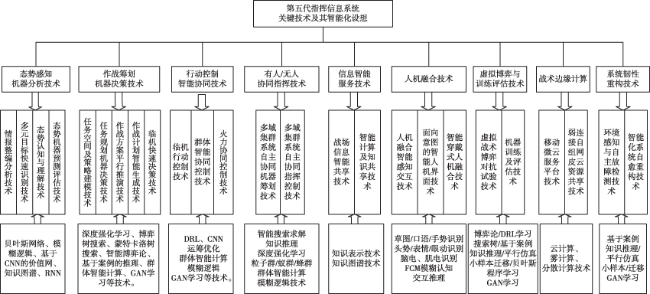
The prelude to the era of intelligent warfare has begun. Command information systems with intelligent characteristics will become the “central nerve” of future intelligent combat command and control, and are the supporting means of intelligent combat command and control. Accelerating the construction of intelligent command information systems is an inherent requirement for the development of military intelligence. Only by clarifying the development essentials of intelligent command information systems, grasping the key points of intelligent command information system research and development, and exploring the key points of intelligent command information system development can we better promote the construction and development of intelligent command information systems and gain the upper hand in future intelligent combat.
Clarify the key points of developing intelligent command information system
Intelligent command information system is the inevitable choice for the development of war form towards information-based intelligent warfare, the inevitable result of the development of scientific and technological revolution, and the era’s call for the development of military intelligence. Clarifying the development essentials of intelligent command information system will help to guide the construction direction of intelligent command information system and establish the long-term goal of system development.
Promote the intelligent evolution of war. In the future intelligent warfare, the battlefield situation is changing rapidly and the battlefield environment is complex and severe. In order to take the initiative on the battlefield, “control of intelligence” has become a new commanding height, and the intelligent command information system is undoubtedly an important means of supporting future combat command and action. Its intelligent development can promote the evolution of war to intelligence, and is an important support for intelligent warfare to gain the initiative and seek victory.
Support intelligent innovation of combat concepts. Future intelligent combat requires a combat command concept that is compatible with it, and the intelligent command information system is an important support for the practical application of the combat command concept, and is the soil for the innovation and development of the intelligent combat command concept. New intelligent combat command concepts such as human-machine hybrid command formation, data-driven command activities, open development command mode, and intelligent force-focused command process are inseparable from the support of the intelligent command information system. The intelligent command information system will serve as the extension of the human brain, breaking through the physiological limits of the human body and realizing the organic integration of combat command art and intelligent technology.
Promote the intelligent transformation of combat methods. The widespread application of artificial intelligence technology in the military field has brought about major changes in the combat victory mechanism. Intelligence has surpassed firepower and information power and has become the primary factor in determining the outcome of a war. The construction and development of intelligent command information systems will promote the transformation of combat methods to intelligence, making the combat methods change from “combat networks + precision-guided weapons” in the information age to “intelligent Internet of Things + manned/unmanned combat platforms” in the intelligent age, and the basic combat style will evolve from “network-centric warfare” to “cognitive-centric warfare” accordingly.
Grasp the key points of intelligent command information system research and development
The command information system is a product of the information warfare era. With the rapid development of military intelligence and the research and practical application of intelligent combat winning mechanisms, the intelligent upgrade of the command information system is imminent. We should highlight the key points of functional research and development and create a new intelligent command information system.
“Super-brainization” assists decision-making. In the future intelligent warfare, the amount of battlefield information data is huge and complex and changeable. Commanders are easily trapped in the “sea of information” during the command process, resulting in information confusion and affecting command decisions. With the emergence of intelligent decision-making technology and “cloud brain” and “digital staff”, a new decision-making model based on the collaboration of “human brain + artificial intelligence” is quietly taking shape. The intelligent command information system will break through the limits of human intelligence, as an extension of the human brain, assist the commander’s work, and develop war decisions from simple human brain decisions to “human brain + artificial intelligence” super-brainized command decisions.
“Full-dimensional” situational awareness. In future intelligent combat, the space will be multi-dimensional, the forces will be diversified, the styles will be diverse, and the pace will be accelerated. Comprehensive and flexible grasp of battlefield situations will become the basis for commanders to make decisions, and multi-domain integration and intelligent dynamic presentation of full-dimensional battlefield situations will become an inevitable requirement for the construction and development of command information systems. The command information system’s perception, understanding, integration and prediction of battlefield situations such as target identification, threat level estimation, combat action prediction and future war situation prediction are expanding from land, sea, air, space, electromagnetic, network and other spaces to cognitive and social domains, realizing “full-dimensional” situational awareness.
“Intelligent” network communication. In the future, intelligent warfare will use a large number of intelligent command and control platforms and intelligent weapon platforms, and the intelligent information and communication system must be connected to the command and control platform and the weapon platform. Like the nerves and blood vessels of the human body, the intelligent information and communication system plays a linking and lubricating role in intelligent warfare. Therefore, it is necessary to establish an intelligent information network with full-dimensional coverage and uninterrupted communication to support the connection and control of intelligent equipment, form intelligent optimization of network structure, intelligent reorganization of network anti-destruction, and intelligent anti-interference capabilities, so as to ensure intelligent collaborative operations between platforms and exert the best overall combat effectiveness.
“Unmanned” autonomous collaboration. In recent local conflicts around the world, drones have been used in large numbers and have played an important role in determining the direction of war, which has attracted widespread attention from all parties. Unmanned weapons and equipment are the material basis of intelligent warfare, and have formed disruptive combat styles based on this, such as invasive lone wolf warfare, manned/unmanned collaborative system sabotage warfare, unmanned system formation independent warfare, and drone swarm cluster warfare. Although unmanned warfare is led by humans, machines are given a certain degree of autonomous action authority in the background, thereby realizing unmanned combat operations on the front line. However, the unmanned battlefield is changing rapidly, and the destruction of human-machine collaboration will become the norm. The command and control system of the unmanned intelligent equipment platform must be more intelligent and be able to conduct autonomous and coordinated combat according to the purpose of the operation.
“Active” information defense. Intelligent warfare will inevitably face all-dimensional and diverse information attacks from powerful enemies. The level of information security protection capabilities directly affects the outcome of the “intellectual power” struggle on the battlefield and is a key link in the construction of intelligent command information systems. Therefore, we should take the initiative to actively formulate and improve network protection strategies, enrich intrusion detection capabilities and authentication and identification methods, strengthen the application of high-tech information security technologies, strengthen the anti-interference and anti-intervention capabilities of various wireless transmission methods, and strengthen intelligent traceability and countermeasure capabilities to effectively curb information attacks.
Exploring the key to the development of intelligent command information system
The development of intelligent command information system is not only a technological innovation, but also requires further emancipation of mind and updating of concepts. To promote the development of intelligent command information system, we must change the traditional idea of adding hardware, building a large “network”, collecting and storing various types of data, break through the inherent hierarchical settings, create an open and service-oriented system, aim at the needs of intelligent combat command and action, and explore and study the key points of the development of intelligent command information system.
Innovative concepts. Adhere to the guidance of innovative thinking concepts, learn from the development ideas of intelligent command information systems of military powers, combine actual needs, and explore a development path with its own characteristics. We must break the traditional “building chimneys” approach, adhere to the top-level design and overall planning of command information systems, unify interfaces, protocols and standards, and form an open and sustainable system architecture layout; adhere to the system development ideas that combine research, construction and use, formulate short-term, medium-term and long-term development strategies, and standardize the direction of system construction and development; adhere to iterative upgrades and optimization and improvement strategies, and continuously improve the intelligence level of various subsystems such as command control, intelligence reconnaissance, communications, information confrontation and comprehensive support, to ensure the continuous and healthy development of intelligent command information systems.
Focus on the key. Focusing on the construction of key capabilities of intelligent command information systems is an important support for intelligent warfare to gather intelligence and win with intelligence, and is the key to intelligent warfare to gain the “right to win”. Algorithms, computing power, and data are not only the internal driving force and support for the development of artificial intelligence, but also the core capability requirements and advantages of intelligent command information systems. The development of intelligent command information systems must adhere to algorithm innovation research to improve the system’s cognitive advantages, speed advantages, and decision-making advantages; accelerate the research and development of the next generation of computers represented by quantum computers to provide stronger computing power support for intelligent command information systems; deeply explore the deeper and wider dimensional information value in massive combat data resources to seek the initiative to win.
Gather wisdom to tackle key problems. The construction and development of intelligent command information systems is one of the main projects of military intelligence. It is a multi-domain, multi-disciplinary, multi-departmental and multi-unit integrated and coordinated project. The construction and development of intelligent command information systems must adhere to the spirit of collective wisdom, collective wisdom, pioneering and innovation, aiming at strategic forward-looking fields such as sensors, quantum information, network communications, integrated circuits, key software, big data, artificial intelligence, and blockchain, and insist on high-tech promotion and intelligent combat demand. Carry out in-depth research and exchanges in multiple fields, multiple levels, and multiple forms, continuously break through innovation, iterative upgrades, and make the intelligent command information system more complete and more intelligent.
Collaborative development. To further promote the construction and development of intelligent command information systems, we must fully absorb local advanced technological achievements and integrate into the era of innovation and development of artificial intelligence in the world. At present, the world’s artificial intelligence technology is booming, accumulating strong development momentum and technological advantages. Artificial intelligence technology has strong versatility in application and broad prospects for the transformation and application of technological achievements. It is an important way to achieve the construction and development of intelligent command information systems. We must study and formulate general technical standards, remove barriers, break the ice, facilitate military-civilian cooperation, and realize the sharing and linkage of technological achievements. We must cultivate and shape new military talents through collaboration, so that they can constantly adapt to the needs of various positions under intelligent conditions and give full play to the effectiveness of intelligent command information systems.
The basic form of information warfare is system confrontation. Different from any form of warfare in history, information warfare is not a discrete confrontation or local decentralized warfare with the simple superposition of various combat units and elements, but a holistic confrontation between systems. The system integration capability of war determines the effectiveness of combat and the achievement of war objectives; achieving effective integration of various systems is the fundamental way to win information warfare.
Multi-space fusion
The battlefield space is the stage for the war hostile parties to compete. Due to the widespread use of high-tech weapons, the battlefield space of informationized warfare has been greatly expanded, forming a multi-dimensional battlefield space of land, sea, air, space, and information. Under the strong “bonding” of information technology, each battlefield space is integrated around a unified combat purpose. First, the three-dimensional, all-round reconnaissance and surveillance network covers the battlefield. Under the conditions of informatization, the military reconnaissance and surveillance capabilities have been unprecedentedly improved. The large-scale, three-dimensional, multi-means, and automated intelligence reconnaissance and surveillance network connects outer space, high altitude, medium altitude, low altitude, ground (sea), and underground (underwater) into one, thereby obtaining battlefield intelligence information in multiple fields. Second, long-range, high-precision informationized weapons are densely distributed and threaten the battlefield. The extraordinary combat capability of the informationized weapon system to cover and strike targets in the entire battlefield space has realized that discovery means destruction, and promoted the high integration of various battlefield spaces. In addition, the development of space and air power has made strikes more precise, means more flexible, and combat efficiency higher, and the battlefield space has become an integrated battlefield of sea, land, air, and space. This integrated battlefield structure has a high degree of integration of multiple spaces, and multiple spaces and multiple fields restrict each other. Third, the battlefield is restricted by electromagnetic and information competition in all time and space and throughout the entire process. The development of military information technology not only realizes the integration of tangible battlefields on land, sea, air and space through reconnaissance and strikes, but also opens up the competition for invisible battlefields in the electromagnetic and information fields. Electromagnetic and information are the soul of informationized warfare and the link between the battlefields on land, sea, air and space. They exist in the entire time and space of combat, act on all elements of war, run through the entire process of combat, and deeply affect the tangible battlefields on land, sea, air and space.
It can be seen that the informationized battlefield is precisely through the increasingly mature information technology, centering on the purpose of war and combat needs, closely integrating the multi-dimensional space of land, sea, air, space, information, etc., forming an inseparable and interdependent organic unity. Leaving any dimension of the battlefield space, or losing control of any dimension, will directly affect the overall combat effectiveness, thus leading to the failure of the war.
Fusion of multiple forces
War power is the protagonist of the battle between the two opposing sides of a war. The “integrated joint combat force” of system integration is a prominent feature of information warfare. Various participating forces in information warfare are highly integrated. Regardless of their affiliation and combat mission, they will be equal users and resources of the entire combat system and integrated into a unified large system. First, the participating forces are united. Information warfare is a joint operation in which the army, navy, air force, aerospace, special operations, information operations and other forces participate. Each participating force has advantages that other participating forces do not have or cannot replace. They communicate and connect through information technology to achieve “seamless connection” and form a force system that can play to its strengths and avoid its weaknesses and complement each other’s advantages, becoming an organic whole that combines “soft” strike and “hard” destruction capabilities, combat and support capabilities, mobility and assault capabilities, and attack and defense capabilities. Second, the participants are diversified. With the development of information networks, wars in the information age no longer have a distinction between the front and the rear, and the networking of combat systems can also make home a “battlefield”. In the industrial age, wars were “over, go home”; in the information age, wars can also be “go home and fight”. Participants in war are not limited to the military forces of countries and political groups. Non-governmental and group-based people can join the “battlefield” as long as they have high-tech knowledge and are proficient in computer applications. Third, the support force is socialized. With the development of science and technology, the mutual tolerance, intercommunication and compatibility of military and civilian technologies have been greatly enhanced. A large number of combat facilities and platforms will rely more on local basic resources. Not only does the material support in combat need to be socialized, but also the technical support and information support need to be socialized.
It can be seen that the victory or defeat of the informationized battlefield depends on the overall strength of the warring parties. Various combat forces are both interrelated and mutually influential, but any single force is difficult to determine the outcome of the war. Only when multiple forces work closely together and learn from each other’s strengths and weaknesses can the overall combat system benefits be brought into play and victory be ultimately achieved.
Multi-level integration
The war level is the pattern of the war between the two hostile parties. In information warfare, the distinction between strategy, campaign and battle is no longer as clear as in traditional warfare. Instead, there is a mutual integration of you and me, and the distinction between levels has become relatively vague. First, the war path is simplified. With the centralized use of a large number of informationized weapons and equipment and their information systems, the precision strike capability of the troops has been unprecedentedly improved. A small-scale combat operation and a high-efficiency information offensive operation can effectively achieve certain strategic goals. A battle, a campaign or a carefully planned information operation may be a war. The path to achieve the purpose of war is becoming simpler and the convergence of war, campaign and even battle in purpose and time and space is prominent. Second, command and control is real-time. The widespread use of automated command and control systems on the battlefield has greatly enhanced the command and control function. Campaign commanders and even the highest political and military leadership of the country can plan and command and control all participating forces and specific combat operations in a unified manner, and directly intervene in campaigns, battles and even the actions of individual soldiers or combat platforms in near real time. Combat and campaign operations are similar to strategic engagements. Third, the combat process is fast-tracked. Quick victory and quick decision are important features of information warfare. The combat time is showing a trend of shortening. There is no concept of time for all combat operations. More often, the participating forces at all levels are carried out simultaneously in different fields. The beginning and the end are closely linked. The combat operations in various battlefield spaces penetrate each other, are closely linked, and gradually merge into an integrated and coordinated system, which is difficult to distinguish at the level.
It can be seen that information warfare has a strong overall nature. Campaigns, as a bridge for achieving strategic and even war objectives, are gradually integrated into battles. Combat, as the most basic combat activity in war, is also gradually sublimated into strategies and campaigns. All levels are intertwined and serve to achieve the purpose of war. Only by comprehensively exerting the combat capabilities of all levels and achieving overall effects can we seize the initiative in the war.
Fusion of various styles
The combat style is the carrier for the war hostile parties to compete. Informationized warfare is a process of confrontation between multiple forces and multiple fields, and is manifested in multiple combat actions and confrontation styles. Various combat actions are inseparable from the overall combat situation, and various actions are closely linked, mutually conditional, coordinated, and integrated to form an overall combat power. The first is the unity of combat actions. The victory or defeat of informationized warfare is the result of the system confrontation between the two warring parties. Isolated and single combat actions are often difficult to work. This requires multiple military services to adopt a variety of combat styles in different combat spaces and combat fields, while the combat style dominated by a single military service can only “live” in the overall joint action as a sub-combat action, and all combat actions are unified in the system confrontation. The second is the integration of combat actions. Informationized warfare is a form of war that pursues high efficiency. Objectively, it requires that multiple combat styles and actions must be highly “integrated” from the perspective of system effectiveness. Comprehensively use a variety of combat styles and tactics, combine tangible combat actions with intangible combat actions, combine non-linear combat with non-contact combat and asymmetric combat, combine psychological warfare with public opinion warfare and legal warfare, combine regular combat with irregular combat, and combine soft strikes with hard destruction to form an overall advantage. The third is the mutation of combat actions. In information warfare, while integrating various combat resources and exerting overall power, both hostile parties strive to find the “center of gravity” and “joint points” of the other side. Once the enemy’s weak points are found, all combat forces and actions are linked as a whole and autonomously coordinated, and various styles and means of destruction are adopted to cause a sudden change in the enemy’s combat capability and a comprehensive “collapse” of the combat system, so as to achieve combat initiative and advantage.
It can be seen that information warfare is a practical activity in which various forces use a variety of combat styles and means to compete in multiple battlefield spaces and combat fields. Only when multiple combat styles and means cooperate, support and complement each other can a multiplier effect be produced, thereby exerting the maximum combat effectiveness of the entire system.
Multi-method integration
The means of war are methods used to achieve the purpose of war. In addition to powerful military means, information warfare must also use all available ways and means to cooperate with each other, organically integrate, and form a whole to achieve a favorable situation. First, the use of war means is comprehensive. All wars have a distinct political nature and serve certain political purposes. With the influence of factors such as the globalization of the world economy and the multipolarization of international politics, information warfare is more based on military means, and military means are used in combination with various means such as economy, diplomacy, culture, and technology. Second, the use of war means is gradient. With the development of the times, war as a means of maintaining and seeking power and interests has been increasingly restricted by international law and international public opinion. In addition, resorting to war requires a high price. Therefore, in the information age, the use of war means presents a gradual development gradient, usually starting from retaliation, display of force, and violent retaliation (strike) in the sense of international law, and finally developing into local or even large-scale wars. Third, the use of war means is systematic. Information warfare is a contest of the comprehensive national strength of the hostile parties. The victory of the war depends on the comprehensive and systematic use of various war means. In specific combat operations, various means of warfare have different functions and natures, occupying different positions and playing different roles in the war. Only by closely combining various effective means of warfare into an organic whole can we form a combat system that fully utilizes our strengths and avoids our weaknesses, and maximize the overall combat effectiveness.
It can be seen that information warfare is subject to more restrictive factors, simpler war objectives, and newer combat styles. In the process of decision-making and action, only by coordinating and integrating with struggle actions in other fields such as politics, economy, culture, and diplomacy can the overall goal of the war be achieved efficiently.
Artificial intelligence is a general term for cutting-edge technology groups such as big data, automated decision-making, machine learning, image recognition and space situational awareness. It can liberate the “cognitive burden” of human intelligence and physical energy, and enable technology users to gain the advantages of foresight, preemption and preemptive decision-making and action. As a “force multiplier” and “the foundation of future battles”, artificial intelligence will fundamentally reshape the future war form, change the country’s traditional security territory, impact the existing military technology development pattern, reconstruct the future combat system and military force system, and become an important dominant force on the future battlefield.
With the rapid development of technology and the continuous acceleration of competition, major countries have launched their own artificial intelligence development plans, and accelerated the promotion of organizational mechanism reform, scientific and technological research and development, and tactical and combat innovation, promoting the military use of artificial intelligence and seizing the commanding heights of future wars.
Accelerate organizational form innovation
Promote technology transformation and application
Unlike traditional technologies, the research and development and transformation of artificial intelligence have their own characteristics. The institutional settings and operation methods of the traditional national defense system are difficult to adapt to the needs of the rapid development of artificial intelligence. To this end, the armed forces of relevant countries have vigorously carried out organizational system reform and innovation, breaking the institutional barriers in the process of artificial intelligence technology research and development, and accelerating the transformation and application of related technologies.
Emphasize “connection between the near and the far”. The United Kingdom, with the “Defense Data Office” and the “Digital Integration and Defense Artificial Intelligence Center” as the main body, integrates route planning, specification setting, technology governance and asset development, and removes administrative obstacles that restrict the development and application of artificial intelligence technology. The United States, relying on the “Strategic Capabilities Office” and the “Chief Digital and Artificial Intelligence Officer”, uses the Army Future Command as a pilot to integrate decentralized functions such as theoretical development, technology research and development, and equipment procurement, focusing on strengthening the innovative application of existing platforms in a “potential tapping and efficiency increase” manner, while buying time for the medium- and long-term technological innovation of the Defense Advanced Research Projects Agency, so as to effectively balance practical needs and long-term development.
Attach importance to “research and use conversion”. The application of artificial intelligence in the military field will have a profound impact on battlefield combat methods, tactical and combat selection, and other aspects. Russia has established institutions such as the “Advanced Research Foundation” and the “National Robotics Technology Research and Development Center” to guide the design, research and development and application of artificial intelligence technology in the Russian military to improve the practical conversion rate of scientific research results. The United States has established the “Joint Artificial Intelligence Center” and relied on the “National Mission Plan” and “Service Mission Plan” to coordinate military-civilian collaborative innovation and scientific and technological achievements transformation, and promote the widespread application of artificial intelligence in the U.S. Department of Defense and various services.
Focus on “military-civilian integration”. Russia has established institutions such as the “Times Science and Technology City” in Anapa and other places, relying on the “Advanced Research Foundation” to fully absorb military and civilian talents, actively build scientific and technological production clusters and research clusters, and effectively expand the two-way exchange mechanism of military and civilian talents. The United States has established institutions such as the “Defense Innovation Experimental Group” in Silicon Valley and other places, relying on the “Defense Innovation Committee”, so that the latest achievements in technological innovation and theoretical development in the field of artificial intelligence can directly enter high-level decision-making. France has established innovative defense laboratories, defense innovation offices and other technical research and development institutions in the Ministry of Defense, aiming to solicit private capital investment and defense project cooperation to improve scientific research efficiency.
Highlight the “combination of science and technology”. The Israel Defense Forces has established a digital transformation system architecture department, which fully demonstrates new technologies, new theories, and new concepts based on the specific effects of various systems organically integrated into various services and arms, so as to determine the corresponding technology research and development priorities and strategic development directions. The United States has enhanced the overall management of national defense technology innovation and application by re-establishing the position of Deputy Secretary of Defense for Research and Engineering and creating the Chief Digital and Artificial Intelligence Officer. It has also relied on theoretical methods such as red-blue confrontation, simulation and deduction, and net assessment analysis to conduct practical tests on various new ideas, concepts, and methods, so as to select the focus of various technology research and development and the direction of strategic and tactical research, and achieve a benign interaction between technology development and theoretical innovation.
Project establishment for military needs
Seize the opportunity for future development
In recent years, various military powers have aimed at the research and development of cutting-edge artificial intelligence technologies, and have widely established projects in the fields of situational awareness, data analysis, intelligence reconnaissance, and unmanned combat, intending to seize the opportunity for future development.
Situational awareness field. Situational awareness in the traditional sense refers to the collection and acquisition of battlefield information by means of satellites, radars, and electronic reconnaissance. However, under the conditions of “hybrid warfare” with blurred peace and war, integration of soldiers and civilians, internal and external linkage, and full-domain integration, the role of situational awareness in non-traditional fields such as human domain, social domain, and cognitive domain has received unprecedented attention. The US “Computable Cultural Understanding” project aims to process multi-source data through natural language processing technology to achieve cross-cultural communication; the “Compass” project aims to extract cases from unstructured data sources, integrate key information, and respond to different types of “gray zone” operations. The French “Scorpion” combat system project aims to use intelligent information analysis and data sharing platforms to improve the fire support effectiveness of the French army’s existing front-line mobile combat platforms to ensure the safety of operational personnel.
Data analysis field. Relying on artificial intelligence technology to improve intelligent data collection, identification analysis and auxiliary decision-making capabilities can transform information advantages into cognitive and operational advantages. Russia’s “Combat Command Information System” aims to use artificial intelligence and big data technology to analyze the battlefield environment and provide commanders with a variety of action plans. The UK’s “THEIA Project” and France’s “The Forge” digital decision support engine are both aimed at enhancing information processing capabilities in command and control, intelligence collection, and other aspects, and improving commanders’ ability to control complex battlefields and command effectiveness.
Intelligence reconnaissance field. Compared with traditional intelligence reconnaissance, using artificial intelligence algorithms to collect and process intelligence has the advantages of fast information acquisition, wide content sources, and high processing efficiency. The Japanese Self-Defense Forces’ satellite intelligent monitoring system is designed to identify and track foreign ships that may “infringe” its territorial waters near key waters. The U.S. military’s “Causal Exploration of Complex Combat Environments” project aims to use artificial intelligence and machine learning tools to process multi-source information and assist commanders in understanding the cultural motivations, event roots, and relationships behind the war; the “Marvin” project uses machine learning algorithms and face recognition technology to screen and sort out various suspicious targets from full-motion videos, providing technical support for counter-terrorism and other operations.
Unmanned combat field. In some technologically advanced countries, unmanned combat systems are becoming more mature and equipment types are becoming more complete. The Israeli military’s M-RCV unmanned combat vehicle can perform a variety of tasks such as unmanned reconnaissance, firepower strikes, and transport and recovery of drones in all-terrain and all-time conditions. The Russian military’s “Outpost-R” drone system, which has the ability to detect and strike in one, can detect, track, and strike military targets in real time. It also has certain anti-reconnaissance and anti-interference capabilities, and has been tested on the battlefield. The U.S. military’s “Future Tactical Unmanned Aerial Vehicle System” project aims to comprehensively improve the U.S. Army’s effectiveness in performing combat missions such as reconnaissance and surveillance, auxiliary targeting, battle damage assessment, and communication relay.
Adapting to the transformation of future battlefields
Continuously exploring new tactics
In order to adapt to the tremendous changes in the battlefield environment in the intelligent era, relevant countries have explored a series of new tactics by improving the participation efficiency of artificial intelligence in key military decisions and actions.
Algorithmic warfare, that is, relying on big data and artificial intelligence technology, fully utilizing the powerful potential of combat networks, human-machine collaboration, and autonomous and semi-autonomous weapons, so that the “observation-adjustment-decision-action” cycle of the side always leads the opponent, thereby destroying the enemy’s combat plan and achieving preemptive strike. In December 2015, the Russian army relied on unmanned reconnaissance and intelligent command information systems to guide ground unmanned combat platforms to cooperate with Syrian government forces, and quickly eliminated 77 militants within the target range at the cost of 4 minor injuries. In 2021, the U.S. Air Force conducted a test flight of the first intelligent drone “Air Borg”, marking the U.S. military’s algorithmic warfare further moving towards actual combat.
Unmanned warfare, guided by low-cost attrition warfare of saturated quantity attack and system attack and defense operations, strives to achieve all-round situation tracking, dynamic deterrence and tactical suppression of the enemy’s defense system through human-machine collaboration and group combat mode. In May 2021, the Israeli army used artificial intelligence-assisted drone swarms in the conflict with the Hamas armed group, which played an important role in determining the enemy’s position, destroying enemy targets, and monitoring enemy dynamics. In October 2021 and July 2022, the US military launched drone targeted air strikes in northwestern Syria, killing Abdul Hamid Matar, a senior leader of al-Qaeda, and Aguer, the leader of the extremist organization “Islamic State”.
Distributed warfare, relying on the unlimited command and control capabilities of artificial intelligence and new electronic warfare means, uses shallow footprints, low-feature, fast-paced forces such as special forces to form small groups of multi-group mobile formations, disperse and infiltrate the combat area in a multi-directional and multi-domain manner, continuously break the enemy’s system shortcomings and chain dependence, and increase the difficulty of its firepower saturation attack. In this process, “people are in command and machines are in control”. In recent years, the US military has successively launched a number of “distributed combat” scientific research projects such as “Golden Tribe” and “Elastic Network Distributed Mosaic Communication”.
Fusion warfare, relying on network quantum communication and other means, builds an anti-interference, high-speed “combat cloud” to eliminate the technical barriers of data link intercommunication, interconnection and interoperability between military services and achieve deep integration of combat forces. In 2021, the joint common basic platform developed by the US Joint Artificial Intelligence Center officially has initial operational capabilities, which will help the US military break data barriers and greatly improve data sharing capabilities. During the NATO “Spring Storm” exercise held in Estonia in 2021, the British Army used artificial intelligence technology to conduct intelligent analysis and automated processing of battlefield information of various services, which improved the integration between services and enhanced the effectiveness of joint command and control.
(Author’s unit: National University of Defense Technology)
The weaponization of artificial intelligence is an inevitable trend in the new round of military transformation. Local wars and conflicts in recent years have further stimulated relevant countries to promote the strategic deployment of artificial intelligence weaponization and seize the commanding heights of future wars. The potential risks of artificial intelligence weaponization cannot be ignored. It may intensify the arms race and break the strategic balance; empower the combat process and increase the risk of conflict; increase the difficulty of accountability and increase collateral casualties; lower the threshold of proliferation and lead to misuse and abuse. In this regard, we should strengthen international strategic communication to ensure consensus and cooperation among countries on the military application of artificial intelligence; promote dialogue and coordination on the construction of laws and regulations to form a unified and standardized legal framework; strengthen the ethical constraints of artificial intelligence to ensure that technological development meets ethical standards; actively participate in global security governance cooperation and jointly maintain peace and stability in the international community.
The weaponization of artificial intelligence is to apply artificial intelligence-related technologies, platforms and services to the military field, making it an important driving force for enabling military operations, thereby improving the efficiency, accuracy and autonomy of military operations. With the widespread application of artificial intelligence technology in the military field, major powers and military powers have increased their strategic and resource investment and accelerated the pace of research and development and application. The frequent regional wars and conflicts in recent years have further stimulated the battlefield application of artificial intelligence, and profoundly shaped the form of war and the future direction of military transformation.
It cannot be ignored that, as a rapidly developing technology, AI itself may have potential risks due to the immaturity of its inherent technology, inaccurate scene matching, and incomplete supporting conditions. It is also easy to bring various risks and challenges to the military field and even the international security field due to human misuse, abuse, or even malicious use. To conscientiously implement the global security initiative proposed by General Secretary Xi Jinping, we must face the development trend of weaponization of AI worldwide, conduct in-depth analysis of the security risks that may be brought about by the weaponization of AI, and think about scientific and feasible governance ideas and measures.
Current trends in the weaponization of artificial intelligence
In recent years, the application of artificial intelligence in the military field is fundamentally reshaping the future form of war, changing the future combat system, and affecting the future direction of military reform. Major military powers have regarded artificial intelligence as a subversive key technology that will change the rules of future wars, and have invested a lot of resources to promote the research and development and application of artificial intelligence weapons.
The weaponization of artificial intelligence is an inevitable trend in military transformation.
With the rapid development of science and technology, the necessity and urgency of military reform have become increasingly prominent. Artificial intelligence can simulate human thinking processes, extend human brainpower and physical strength, realize rapid information processing, analysis and decision-making, and develop increasingly complex unmanned weapon system platforms, thus providing unprecedented intelligent support for military operations.
First, it provides intelligent support for military intelligence reconnaissance and analysis. Traditional intelligence reconnaissance methods are constrained by multiple factors such as manpower and time, and it is difficult to effectively respond to large-scale, high-speed and high-complexity intelligence processing needs. The introduction of artificial intelligence technology has brought innovation and breakthroughs to the field of intelligence reconnaissance. In military infrastructure, the application of artificial intelligence technology can build an intelligent monitoring system to provide high-precision and real-time intelligence perception services. In the field of intelligence reconnaissance, artificial intelligence technology has the ability to process multiple “information flows” in real time, thereby greatly improving analysis efficiency. ① By using technical tools such as deep learning, it is also possible to “see the essence through the phenomenon”, dig out the deep context and causal relationship in various types of fragmented intelligence information, and quickly transform massive fragmented data into usable intelligence, thereby improving the quality and efficiency of intelligence analysis.
Second, provide data support for combat command and decision-making. Artificial intelligence provides strong support for combat command and military decision-making in terms of battlefield situation awareness. ② Its advantage lies in the ability to perform key tasks such as data mining, data fusion, and predictive analysis. In information-based and intelligent warfare, the battlefield environment changes rapidly, and the amount of intelligence information is huge, requiring rapid and accurate decision-making responses. Therefore, advanced computer systems have become an important tool to assist commanders in managing intelligence data, making enemy situation judgments, proposing combat plan suggestions, and formulating plans and orders. Taking the US military as an example, the ISTAR (Intelligence, Surveillance, Target Identification and Tracking) system developed by Raytheon Technologies Corporation of the United States covers intelligence collection, surveillance, target identification and tracking functions, and can gather data from multiple information sources such as satellites, ships, aircraft and ground stations, and conduct in-depth analysis and processing. This not only significantly improves the speed at which commanders obtain information, but also can provide data support with the help of intelligent analysis systems, making decisions faster, more efficient and more accurate.
Third, it provides important support for unmanned combat systems. Unmanned combat systems are a new type of weapon and equipment system that can independently complete military tasks without direct human manipulation. They mainly include intelligent unmanned combat platforms, intelligent ammunition, and intelligent combat command and control systems, and have significant autonomy and intelligent features. As a technical equipment that leads the transformation of future war forms, unmanned combat systems have become an important bargaining chip in military competition between countries. The system has achieved adaptability to different battlefield environments and combat spaces by using key technologies such as autonomous navigation, target recognition, and path planning. With the help of advanced algorithms such as deep learning and reinforcement learning, unmanned combat systems can independently complete navigation tasks and achieve precise strikes on targets. The design concept of this system is “unmanned platform, manned system”, and its essence is an intelligent extension of manned combat systems. For example, the “MQM-57 Falconer” drone developed by the US Department of Defense’s Advanced Research Projects Agency (DARPA) uses advanced artificial intelligence technology and has highly autonomous target recognition and tracking functions.
Fourth, provide technical support for military logistics and equipment support. In the context of information warfare, the war process has accelerated, mobility has improved, and combat consumption has increased significantly. The traditional “excessive pre-storage” support model can no longer adapt to the rapidly changing needs of the modern battlefield. Therefore, higher requirements are placed on combat troops to provide timely, appropriate, appropriate, appropriate, and appropriate rapid and accurate after-sales support. As a technology with spillover and cross-integration characteristics, artificial intelligence is integrated with cutting-edge technologies such as the Internet of Things, big data, and cloud computing, allowing artificial intelligence knowledge groups, technology groups, and industrial groups to fully penetrate the military after-sales field, significantly improving the logistics equipment support capabilities.
Major countries are planning to develop military applications of artificial intelligence.
In order to enhance their global competitiveness in the field of artificial intelligence, major powers such as the United States, Russia, and Japan have stepped up their strategic layout for the military application of artificial intelligence. First, by updating and adjusting the top-level strategic planning in the field of artificial intelligence, they provide clear guidance for future development; second, in response to future war needs, they accelerate the deep integration of artificial intelligence technology and the military field, and promote the intelligent, autonomous, and unmanned development of equipment systems; in addition, they actively innovate combat concepts to drive combat force innovation, thereby improving combat effectiveness and competitive advantages.
The first is to formulate a strategic plan. Based on the strategic paranoia of pursuing military hegemony, political hegemony, and economic hegemony with technological hegemony, the United States is accelerating its military intelligence process. In November 2023, the U.S. Department of Defense issued the “Data, Analysis and Artificial Intelligence Adoption Strategy”, which aims to expand the advanced capabilities of the entire Department of Defense system to gain lasting military decision-making advantages. The Russian military promulgated the “Russian Weapons and Equipment Development Outline from 2024 to 2033”, known as the “3.0 version”, which aims to provide guidance for the development of weapons and equipment in the next 10 years. The outline emphasizes the continued advancement of nuclear and conventional weapons construction, and focuses on the research of artificial intelligence and robotics technology, hypersonic weapons and other strike weapons based on new physical principles.
The second is to develop advanced equipment systems. Since 2005, the U.S. military has released a version of the “Unmanned System Roadmap” every few years to look forward to and design unmanned system platforms in various fields such as air, ground, surface/underwater, and connect the development chain of unmanned weapons and equipment such as research and development-production-testing-training-combat-support. At present, more than 70 countries in the world can develop unmanned system platforms, and various types of drones, unmanned vehicles, unmanned ships (boats), and unmanned submarines are springing up like mushrooms after rain. On July 15, 2024, Mark Milley, former chairman of the U.S. Joint Chiefs of Staff, said in an interview with U.S. Defense News that by 2039, one-third of the U.S. military will be composed of robots. The Platform-M combat robot, the “Lancet” suicide drone, and the S70 “Hunter” heavy drone developed by the Russian army have been put into actual combat testing.
The third is to innovate future combat concepts. The combat concept is a forward-looking study of future war styles and combat methods, which can often lead to the leapfrog development of new combat force formations and weapons and equipment. In recent years, the US military has successively proposed combat concepts such as “distributed lethality”, “multi-domain warfare” and “mosaic warfare” in an attempt to lead the development direction of military transformation. Taking “mosaic warfare” as an example, this combat concept regards various sensors, communication networks, command and control systems, weapon platforms, etc. as “mosaic fragments”. These “fragment” units, with the support of artificial intelligence technology, can be dynamically linked, autonomously planned, and collaboratively combined through network information systems to form an on-demand integrated, highly flexible, and flexible killing network. In March 2022, the US Department of Defense released the “Joint All-Domain Command and Control (JADC2) Strategic Implementation Plan”, which aims to expand multi-domain operations to all-domain operations concepts, connect sensors of various services to a unified “Internet of Things”, and use artificial intelligence algorithms to help improve combat command decisions. ③
War conflicts stimulate the weaponization of artificial intelligence.
In recent years, local conflicts such as the Libyan conflict, the Nagorno-Karabakh conflict, the Ukrainian crisis, and the Israeli-Kazakh conflict have continued, further stimulating the development of the weaponization of artificial intelligence.
In the Libyan conflict, the warring parties used various types of drones to perform reconnaissance and combat missions. According to a report released by the United Nations Panel of Experts on Libya, the Turkish-made Kargu-2 drone carried out a “hunt and engage remotely” operation in Libya in 2020, and could autonomously attack retreating enemy soldiers. This incident marked the first use of lethal autonomous weapon systems in actual combat. As American scholar Zachary Cullenborn said, if someone unfortunately died in such an autonomous attack, this would most likely be the first known example in history of artificial intelligence autonomous weapons being used for killing. In the 2020 Nagorno-Karabakh conflict, Azerbaijan used a formation of Turkish-made “Flagship” TB2 drones and Israeli-made “Harop” drones to successfully break through the Armenian air defense system and gain air superiority and initiative on the battlefield. ④ The remarkable results of the Azerbaijani army’s drone operations are largely due to the Armenian army’s “underestimation of the enemy” mentality and insufficient understanding of the importance and threat of drones in modern warfare. Secondly, from the perspective of offensive strategy, the Azerbaijani army has made bold innovations in drone warfare. They flexibly use advanced equipment such as reconnaissance and strike drones and cruise missiles, which not only improves combat efficiency, but also greatly enhances the suddenness and lethality of combat. ⑤
During the Ukrainian crisis that broke out in 2022, both Russia and Ukraine widely used military-grade and commercial drones to perform reconnaissance, surveillance, artillery targeting and strike missions. The Ukrainian army used the “Flagship” TB2 drone and the “Switchblade” series of suicide drones assisted by the United States to carry out precision strikes and efficient killings, becoming a “battlefield killer” that attracted worldwide attention. In the Israeli-Kazakhstan conflict, the Israeli military was accused of using an artificial intelligence system called “Lavender” to identify and lock bombing targets in Gaza. It once marked as many as 37,000 Palestinians in Gaza as suspected “militants” and identified them as targets that could be directly “assassinated”. The Israeli military’s actions have attracted widespread attention and condemnation from the international community. ⑥
Security risks posed by weaponization of artificial intelligence
From automated command systems to intelligent unmanned combat platforms, to intelligent decision-making systems in network defense, the application of artificial intelligence technology in the military field is becoming more and more common and has become an indispensable part of modern warfare. However, with the trend of weaponization of artificial intelligence, its misuse, abuse and even malicious use will also bring risks and challenges to international security that cannot be ignored.
Intensify the arms race and disrupt the strategic balance.
In the information and intelligent era, the disruptive potential of artificial intelligence is hard for major military powers to resist. They are all focusing on the development and application of artificial intelligence military capabilities, fearing that they will fall behind in this field and lose strategic opportunities. Deepening the military application of artificial intelligence can gain “asymmetric advantages” at a lower cost and with higher efficiency.
First, countries are scrambling to seize the “first mover advantage”. When a country achieves technological leadership in the development of intelligent weapon systems, it means that the country has more advanced artificial intelligence and related application capabilities, giving it a first-mover advantage in weapon system development, control, and emergency response. This advantage includes higher autonomy, intelligence, and adaptability, which increases the country’s military strength and strategic competitive advantage. At the same time, the military advantage of the first mover may become a security threat to competitors, leading to a scramble among countries in the military application of advanced technologies. ⑦ In August 2023, US Deputy Secretary of Defense Kathryn Hicks announced the “Replicator initiative”, which seeks to deploy thousands of “autonomous weapon systems” in the Indo-Pacific region in less than two years. ⑧
Second, the opacity of AI armament construction in various countries may intensify the arms race. There are two main reasons for this: First, AI technology is an “enabling technology” that can be used to design a variety of applications, which means that it is difficult to verify the specific situation of AI military applications. It is difficult to determine whether a country is developing or deploying nuclear weapons by monitoring uranium, centrifuges, weapons and delivery systems, as is the case with nuclear weapons. The difference between semi-autonomous and fully autonomous weapon systems is mainly due to different computer software algorithms, and it is difficult to verify the implementation of treaties by various countries through physical verification. Second, in order to maintain their strategic advantages, countries often take confidentiality measures for the details of the military application of advanced technologies, so that opponents cannot detect their strategic intentions. In the current international environment, this opacity not only intensifies the arms race, but also lays the groundwork for future escalation of conflicts.
Third, the uncertainty of the strategic intentions of various countries will also intensify the arms race. The impact of artificial intelligence on strategic stability, nuclear deterrence and war escalation depends largely on other countries’ perception of its capabilities rather than its actual capabilities. As American scholar Thomas Schelling pointed out, international relations often have the characteristics of risk competition, which is more of a test of courage than force. The relationship between major opponents is determined by which side is ultimately willing to invest more power, or make it look like it is about to invest more power. ⑨ An actor’s perception of the capabilities of others, whether true or false, will greatly affect the progress of the arms race. If a country vigorously develops intelligent weapon systems, competitors will become suspicious of their competitors’ armament capabilities and intentions to develop armaments without being sure of the other party’s intentions, and often take reciprocal measures, that is, to meet their own security needs by developing armaments. It is this ambiguity of intention that stimulates technological accumulation, exacerbates the instability of weapons deployment, and ultimately leads to a vicious cycle.
Empowering operational processes increases the risk of conflict.
Empowered by big data and artificial intelligence technologies, traditional combat processes will be rebuilt intelligently, that is, from “situational awareness – command decision-making – attack and defense coordination – comprehensive support” to “intelligent cognition of global situation – human-machine integrated hybrid decision-making – manned/unmanned autonomous coordination – proactive on-demand precise support”. However, although the intelligent reconstruction of combat processes has improved the efficiency and accuracy of operations, it has also increased the risk of conflict and misjudgment.
First, wars that break out at “machine speed” will increase the risk of hasty actions. Artificial intelligence weapon systems have demonstrated strong capabilities in accuracy and response speed, making future wars break out at “machine speed”. ⑩ However, too fast a war will also increase the risk of conflict. In areas such as missile defense, autonomous weapon systems, and cyberspace that value autonomy and response speed, faster response speeds will bring huge strategic advantages, but will also greatly compress the time window for the defender to respond to military actions, causing combat commanders and decision makers to be under tremendous “time pressure”, exacerbating the risk of “hasty action” and increasing the possibility of accidental escalation of crises.
Second, reliance on system autonomy may increase the chance of misjudgment under pressure. The U.S. Department of Defense believes that “highly autonomous artificial intelligence systems can autonomously select and execute corresponding operations based on the dynamic changes in mission parameters, and efficiently achieve human preset goals. The increase in autonomy not only greatly reduces dependence on manpower and improves overall operational efficiency, but is also regarded by defense planners as a key factor in maintaining tactical leadership and ensuring battlefield advantage.” ⑪ However, since human commanders cannot respond quickly enough, they may gradually delegate control to autonomous systems, increasing the chance of misjudgment. In March 2003, the U.S. Patriot missile system mistakenly marked a friendly Tornado fighter as an anti-radiation missile. The commander chose to launch the missile under the pressure of only a few seconds to react, resulting in the death of two pilots. ⑫
Third, it weakens the effectiveness of the crisis termination mechanism. During the Cold War, the United States and the Soviet Union led the construction of a series of restrictive measures to curb the escalation of crises and prevent them from evolving into large-scale nuclear wars. In these measures, humans play a vital role as “supervisors”. When risks may get out of control, they can initiate termination measures in sufficient time to avoid large-scale humanitarian disasters. However, with the improvement of the computing power of artificial intelligence systems and their deep integration with machine learning, combat responses have become faster, more precise and destructive, and humans’ termination intervention mechanism for crises may be weakened.
War accountability is difficult and collateral casualties increase.
Artificial intelligence weapon systems make it more difficult to define responsibility for war. In traditional combat modes, weapons systems are controlled by humans. Once errors or crises occur, human operators or developers of operating systems will bear corresponding responsibilities. Artificial intelligence technology itself weakens human initiative and control capabilities, making the attribution of responsibility for technical behavior unclear.
The first is the problem of the “black box” of artificial intelligence. Although artificial intelligence has significant advantages in processing and analyzing data, its internal operating rules and causal logic are often difficult for humans to understand and explain, which makes it difficult for programmers to correct errors in the algorithm. This problem is often referred to as the “black box” of the algorithm model. Once the artificial intelligence weapon system poses a safety hazard, the “algorithm black box” may become a rational excuse for the relevant responsible parties to shirk responsibility. Those who pursue responsibility can only face generalized shirking and shirking of responsibility, and point the finger of responsibility at the artificial intelligence weapon system. In practice, if the decision-making process of artificial intelligence cannot be understood and explained, it may cause a series of problems, such as decision-making errors, trust crises, and information abuse.
The second is the division of responsibilities between humans and machines in military operations. When an AI system fails or makes a wrong decision, should it be considered an independent entity to bear responsibility? Or should it be considered a tool, with human operators bearing all or part of the responsibility? The complexity of this division of responsibilities lies not only in the technical level, but also in the ethical and legal levels. On the one hand, although AI systems can make autonomous decisions, their decision-making process is still limited by human preset procedures and algorithms, so their responsibilities cannot be completely independent of humans. On the other hand, AI systems may go beyond the preset scope of humans and make independent decisions in some cases. How to define their responsibilities at this time has also become a difficult problem in the field of arms control.
The third is the issue of the allocation of decision-making power between humans and artificial intelligence weapon systems. According to the different autonomous powers of the machine, the artificial intelligence system can perform tasks in three decision-making and control modes: semi-autonomous, supervised autonomous, and fully autonomous. In a semi-autonomous system, the decision-making power of the action is controlled by humans; in supervised autonomous actions, humans supervise and intervene when necessary; in fully autonomous actions, humans do not participate in the action process. With the gradual deepening of the military application of artificial intelligence, the role of humans in the combat system is undergoing a gradual transformation from the traditional “man in the loop” mode to the “man on the loop”, and humans have evolved from direct operators inside the system to supervisors outside the system. However, this transformation has also raised new problems. How to ensure that artificial intelligence weapon systems can still follow human ethics and values when operating independently is a major challenge facing the current field of artificial intelligence weapon research and development.
Lowering the threshold for proliferation leads to misuse and abuse.
Traditional strategic competition usually involves large-scale research and development and procurement of weapons systems, which requires a lot of money and technical support. After AI technology matures and spreads, it has the advantages of being easy to obtain and inexpensive. Even small and medium-sized countries may have the ability to develop advanced intelligent weapon systems. At present, strategic competition in the field of military AI is mainly concentrated between major military powers such as the United States and Russia. However, in the long run, the spread of AI technology will expand the scope of strategic competition and pose a destructive threat to the existing strategic balance. Once smaller countries that master AI technology have relatively strong competitiveness, their willingness to initiate confrontation when facing threats from major powers may increase.
First, artificial intelligence helps develop some lightweight and agile means of warfare, thereby encouraging some small and medium-sized countries or non-state actors to use it to carry out small, opportunistic military adventures, achieving their strategic goals at a lower cost and with more abundant channels. Second, the rapid development of artificial intelligence has made new forms of warfare such as cyber warfare and electronic warfare increasingly prominent. In a highly competitive battlefield environment, malicious third-party actors can influence military planning and strategic deterrence by manipulating information, leading to an escalation of the situation. In the Ukrainian crisis that broke out in 2022, a lot of false information was spread on the Internet to confuse the public. Third, the widespread application of artificial intelligence technology has also reduced strategic transparency. Traditional military strategies often rely on a large amount of intelligence collection, analysis and prediction, and with the assistance of artificial intelligence technology, combat planning and decision-making processes have become more complex and unpredictable. This opacity may lead to misunderstandings and misjudgments, thereby increasing the risk of escalating conflicts.
Governance Path for Security Risks of Weaponized Artificial Intelligence
To ensure the safe development of artificial intelligence and avoid the potential harm caused by its weaponization, we should strengthen international communication on governance strategies, seek consensus and cooperation among countries on the military application of artificial intelligence; promote dialogue and coordination on laws and regulations to form a unified and standardized legal framework; strengthen the constraints on artificial intelligence ethics to ensure that technological development complies with ethical standards; and actively participate in global security governance cooperation to jointly maintain peace and stability in the international community.
Attach great importance to strategic communication at the international level.
AI governance is a global issue that requires the concerted efforts of all countries to solve. On the international stage, countries have both mixed and conflicting interests. Therefore, dealing with global issues through effective communication channels has become the key to maintaining world peace and development.
On the one hand, we need to accurately grasp the challenges of international governance of AI. We need to grasp the consensus of various countries on the development of weaponized AI, pay close attention to the policy differences among countries in the security governance of weaponized AI applications, and coordinate relevant initiatives with the UN agenda through consultation and cooperation, so as to effectively prevent the military abuse of AI and promote the use of AI for peaceful purposes.
On the other hand, governments should be encouraged to reach relevant agreements and establish strategic mutual trust through official or semi-official dialogues. Compared with the “Track 1 Dialogue” at the government level, the “Track 1.5 Dialogue” refers to dialogues between government officials and civilians, while the “Track 2 Dialogue” is a non-official dialogue between scholars, retired officials, etc. These two forms of dialogue have higher flexibility and are important supplements and auxiliary means to official dialogues between governments. Through a variety of dialogue and communication methods, officials and civilians can widely discuss possible paths to arms control, share experiences and expertise, and avoid the escalation of the arms race and the deterioration of tensions. These dialogue mechanisms will provide countries with a continuous communication and cooperation platform, help enhance mutual understanding, strengthen strategic mutual trust, and jointly respond to the challenges brought about by the militarization of artificial intelligence.
Scientifically formulate laws and ethical norms for artificial intelligence.
Artificial intelligence technology itself is neither right nor wrong, good nor evil, but there are differences in good and bad intentions in the design, development, manufacturing, use, operation and maintenance of artificial intelligence. The weaponization of artificial intelligence has aroused widespread ethical concerns. Under the framework of international law, can autonomous weapon systems accurately distinguish between combatants and civilians on a complex battlefield? In addition, if artificial intelligence weapon systems cause unexpected harm, how to define the responsibility? Is it in line with moral and ethical standards to give machines the decision-making power of life and death? These concerns highlight the need to strengthen the ethical constraints of artificial intelligence.
On the one hand, we must insist on ethics first and integrate the concept of “intelligent for good” from the source of technology. In the design process of artificial intelligence military systems, values such as people-oriented and intelligent for good will be embedded in the system. The purpose is to eliminate the indiscriminate killing and injury that may be caused by artificial intelligence from the source, control its excessive lethality, and prevent accidental damage, so as to limit the damage caused by artificial intelligence weapon systems to the smallest possible range. At present, nearly 100 institutions or government departments at home and abroad have issued various artificial intelligence ethical principle documents, and academia and industry have also reached a consensus on the basic ethical principles of artificial intelligence. In 2022, China’s “Position Paper on Strengthening the Ethical Governance of Artificial Intelligence” submitted to the United Nations provided an important reference for the development of global artificial intelligence ethical supervision. The document clearly emphasizes that artificial intelligence ethical supervision should be promoted through institutional construction, risk control, collaborative governance and other measures.
On the other hand, we need to improve relevant laws and regulations and clarify the boundaries of rights and responsibilities of AI entities. We need to formulate strict technical review standards to ensure the security and reliability of AI systems. We need to conduct comprehensive tests before AI systems go online to ensure that they do not have a negative impact on human life and social order. We need to clarify the legal responsibilities of developers, users, maintainers and other parties throughout the life cycle of AI systems, and establish corresponding accountability mechanisms.
Pragmatically participate in international cooperation on artificial intelligence security governance.
The strategic risks brought about by the military application of artificial intelligence further highlight the importance of pragmatic cooperation in international security. It is recommended to focus on three aspects:
First, promote the formulation of guidelines for the use of artificial intelligence in the military field. Formulating a code of conduct for the military application of artificial intelligence is an important responsibility of all countries to regulate the military application of artificial intelligence, and it is also a necessary measure to promote international consensus and comply with international laws and regulations. In 2021, the Chinese government submitted the “China’s Position Paper on Regulating the Military Application of Artificial Intelligence” to the United Nations Convention on Certain Conventional Weapons Conference, and issued the “Global Artificial Intelligence Governance Initiative” in 2023. These have provided constructive references for improving the code of conduct for regulating the military application of artificial intelligence.
The second is to establish an applicable regulatory framework. The dual-use nature of AI involves many stakeholders. Some non-state actors, such as non-governmental organizations, technology communities, and technology companies, will play a more prominent role in the global governance of AI and become an important force in the construction of a regulatory framework for the military application of AI. The technical regulatory measures that countries can take include: clarifying the scope of use of AI technology, responsible entities, and penalties for violations; strengthening technology research and development to improve the security and controllability of technology; establishing a regulatory mechanism to supervise the development and application of technology throughout the process, and promptly discover and solve problems.
Third, jointly develop AI security prevention technologies and solutions. Encourage bilateral or multilateral negotiations between governments and militaries to be included in the dialogue options for military AI applications, conduct extensive exchanges on military AI security prevention technologies, operating procedures and practical experience, promote the sharing and reference of relevant risk management technical standards and usage specifications, and continuously inject new stability factors into the international security mutual trust mechanism under the background of AI militarization.
(The author is the director, researcher, and doctoral supervisor of the National Defense Science and Technology Strategic Research Think Tank of the National University of Defense Technology; Liu Hujun, a master’s student at the School of Foreign Languages of the National University of Defense Technology, also contributed to this article)
三是創新未來作戰概念。作戰概念是對未來戰爭樣式與作戰方式進行的前瞻性研究,往往可牽引新的作戰力量編組及武器裝備跨越發展。美軍近年來提出「分散式殺傷」「多域戰」「馬賽克戰」等作戰概念,試圖引領軍事變革的發展方向。以“馬賽克戰”為例,該作戰概念將各種感測器、通訊網路、指揮控制系統、武器平台等視為“馬賽克碎片”,這些“碎片”單元在人工智慧技術賦能支援下,透過網路資訊系統可動態連結、自主規劃、協同組合,從而形成一個按需整合、極具彈性、靈活機動的殺傷網。 2022年3月,美國國防部發布《聯合全域指揮控制(JADC2)戰略實施計畫》,該計畫旨在將多域作戰向全局作戰概念拓展,將各軍種感測器連接到一個統一「物聯網」中,利用人工智慧演算法幫助改善作戰指揮決策。 ③
Modern war presents the explosive growth of battlefield information and new combat style. With the continuous emergence of new technologies such as artificial intelligence and edge computing, a new generation of command information system is coming. Based on the international fourth generation command information system, this paper imagines the overall architecture of the fifth generation command information system, expounds the technical characteristics of its knowledge center, intelligent enabling, cloud edge integration, independent evolution and resilience adaptation, analyze its key technologies, continuously improves the battlefield information advantage, and transforms to the battlefield cognitive advantage, decision-making advantage and action advantage.
Abstract
Modern war presents the explosive growth of battlefield information and new combat style. With the continuous emergence of new technologies such as artificial intelligence and edge computing, a new generation of command information system is coming. Based on the international fourth generation command information system, this paper imagines the overall architecture of the fifth generation command information system, expounds the technical characteristics of its knowledge center, intelligent enabling, cloud edge integration, independent evolution and resilience adaptation, analyze its key technologies, continuously improves the battlefield information advantage, and transforms to the battlefield cognitive advantage, decision-making advantage and action advantage.
Download CitationsZHANG Zhi-hua , WANG Fan . The Fifth Generation Command Information System and Its Intelligent Technology. Command Control and Simulation . 2021, 43(5): 1-7 https://doi.org/10.3969/j.issn.1673-3819.2021.05.001
Previous Article Next Article In his report to the 19th CPC National Congress, President Xi Jinping clearly pointed out that “we should accelerate the development of military intelligence and improve the joint combat capability and all-domain combat capability based on network information systems”
[ 1 ] . This statement indicates that future wars will be based on networked and intelligent system operations. The fifth-generation command information system will focus on intelligence, strengthen battlefield information advantages, and strive for battlefield cognitive advantages, decision-making advantages, and action advantages. According to relevant reports, the international command information system has gone through four stages of development
[ 2 ] and is evolving towards the fifth-generation command information system. The system architecture is developing towards intelligence, knowledge, cloud edge, and service. The fourth-generation system in the world mainly uses networking, service, and cloud to build an overall coordinated command information system
[ 2 ] , which meets the needs of coordinated operations to a certain extent and achieves information advantages. However, with the explosive growth of battlefield information, it is difficult to transform the system information advantage into the commander’s cognitive and decision-making advantages. With the emergence of new combat styles such as unmanned combat and cyber warfare, in order to adapt to the complexity and nonlinear characteristics of combat command, the command information system must break through cognitive technology and provide accurate battlefield situation cognition and planning and decision-making capabilities. The fifth-generation command information system is envisioned to be centered on artificial intelligence, edge computing, and cloud brain technology to enhance battlefield cognitive advantages, decision-making advantages, and action advantages, support combat command to move from the information domain to the cognitive domain, and realize capabilities such as information knowledge, intelligent decision-making, agile command and control, multi-domain collaboration, and edge services.
1 New Concept of Command and Control
1.1 Intelligent command and control
Intelligent command and control is to use artificial intelligence methods to achieve the transformation from “information-based, network-centric” to “intelligent, knowledge-centric”, and assist commanders in solving perception, understanding, and cognitive problems in the command field. The system architecture and technical architecture of the command information system will change. The system will apply corresponding intelligent technologies around functional domains such as situation, command, control, and support to improve the cognitive and decision-making efficiency of combat command. Foreign militaries pay great attention to the intelligent application of combat command. Since 2007, the US DARPA has published three white papers on national and military development strategies for artificial intelligence, and has launched plans such as “Deep Green”
[ 3 ⇓ – 5 ] , “The High-Tech Holy Grail of the Third Offset Strategy”, and “Commander’s Virtual Staff”. In the field of intelligence perception and tactical decision-making, it has launched artificial intelligence projects such as “Insight”, “Xdata”, “Deep Learning”, “Deep Text Search and Filtering”, “Distributed Battlefield Management”, “Human-Machine Collaboration”, “Mind’s Eye”, “Trace”, “Human-Machine Collaboration”, “X-Plan”, “Cognitive Electronic Warfare”, and “AlphaAI Air Combat”, realizing the ability to deeply understand battlefield intelligence, predict situation cognition, and automatically generate and deduce tactical plans. Since then, the U.S. military has also set up projects such as “Autonomous Negotiation Formation”, “Big Dog”, and “Hummingbird” to improve the manned and unmanned collaborative control capabilities. Overall, the U.S. military currently has the world’s leading level of intelligent combat command. In addition, Germany, France, Russia and other countries have also conducted extensive research in intelligent information perception and processing, intelligent autonomous unmanned combat platforms, etc., and have achieved fruitful research results
With the development of military technology, traditional large-scale cluster combat methods are gradually transformed into small-scale asymmetric combat. Combat activities at the tactical edge will play an important role in war. The tactical edge is also known as the “first tactical mile”
[ 9 ] . It is far away from the command center and has limited communication, computing, and service resources. It is usually composed of combat platforms, tactical units, and special forces. In order to gain information and decision-making advantages, command units at all levels use ubiquitous networks, micro-clouds, and other technologies to achieve information and resource sharing. Mobile computing devices at the tactical edge use fog computing methods to integrate into larger combat units and form micro-clouds under self-organizing networks. The large amount of situation information obtained by the tactical edge is calculated, stored, and shared in the tactical micro-cloud, which simplifies the scale of interaction with the command center, improves the timeliness of information interaction, and solves the problem of insufficient service capabilities at the tactical frontier in the past.
1.3 Multi-Domain Battle Command and Control
In 2016, the U.S. Army proposed the concept of “multi-domain warfare”
[ 10 ] , taking “synchronous cross-domain firepower” and “all-domain mobility” as core elements, promoting the high integration of combat elements, enhancing all-domain strike capabilities, and attempting to eliminate the “anti-access/area denial” capabilities of China, Russia and other countries. It mainly has the following three characteristics
[ 10 ] . First, the combat domain is expanded in multiple dimensions, enabling the U.S. Army to deploy forces from the ground to multiple combat domains such as sea, air, electricity, and the Internet, and has the ability to integrate with other services. Second, the combat elements are highly integrated, and the various services and combat functional domains can share information, coordinate tactics, and synchronize actions, which promotes the transformation of joint services to the integration of combat capability elements. Third, the command chain is developing in a flat direction, and the command mechanism is efficient and flexible. It is necessary to have centralized planning and decentralized execution, and to share information and instructions with various command nodes and individual soldiers, extend the tactical command chain, and realize rapid, multi-line, and multi-domain combat command.
1.4 Mosaic Combat Command and Control
In 2017, DARPA proposed the concept of “mosaic warfare”
[ 11-12 ] , which takes into account both ” threat-based” and “capability-based” equipment construction methods, and flexibly combines sensors, command and control nodes, combat platforms, and cooperative manned and unmanned systems in multiple combat domains on demand to form a mission system. System integration uses a building block approach to dynamically link dispersed fine-grained systems together to form a combat system similar to a “mosaic block”. “Mosaic warfare” uses intelligent decision-making tools to provide distributed situational awareness and adaptive planning and control, assist in combat mission planning, and implement distributed combat management. “Mosaic warfare” requires the replacement of fixed combat force composition with adaptive system reorganization, and the combat command has a resilient and adaptable information system that can customize physically dispersed mixed combat units on demand and meet various dynamic and collaborative combat requirements
2. Transformation of the Characteristics of the Fifth Generation Command Information System
1) The system shifts from network-centric to knowledge-centric. The network-centric approach brings battlefield information advantage, which is then transformed into cognitive advantage and decision-making advantage. The information sharing between systems shifts to knowledge-centric intelligence sharing, which promotes the transformation of the entire command system into decision-making and action advantage.2) The cloud architecture is transformed into cloud-edge-end integration. Expand the original cloud resource sharing capabilities
[ 2 ] and extend them to the platforms, teams, and individual soldiers at the tactical edge, realize the integrated hybrid service capabilities of the battlefield center cloud, mobile cloud, and edge micro-cloud in a mobile environment, and enhance the tactical frontier resource service capabilities.3) Transformation from scheduled integration to resilient adaptability. Currently, the system is deployed and operated according to preset rules. When the mission changes, it must be regulated according to the pre-planned plan. In the future, battlefield systems are vulnerable to attacks and paralysis, requiring the system to have the ability to self-reconstruct, resilient and adaptable when disturbances occur to ensure that the core mission is uninterrupted
[ 13-14 ] .4) Transformation from computational intelligence to cognitive intelligence. Intelligence is manifested in computational intelligence, perceptual intelligence, and cognitive intelligence. Currently, computational intelligence provides a tactical deterministic solution method. In the future battlefield, intelligent technology must be used to improve the accuracy and real-time degree of cognition in terms of massive intelligence processing, situational awareness, and decision-making reasoning.5) Performance changes from fixed fixed to autonomous learning evolution. The system’s algorithm and performance are generally determined and fixed during the design period, and performance improvement is achieved through upgrading and transformation. Intelligent systems have the ability of self-learning and self-evolution, and can learn algorithms for situational awareness and intelligent decision-making online to improve system performance.6) Construction shifts from capability-based to knowledge-based. Command information systems are generally constructed based on capability elements, and system integration is integrated based on capability elements. Intelligent systems pay more attention to the intellectual construction of the system, focusing on the construction of system knowledge, rules, algorithms, and data.7) The interaction mode will shift to human-machine fusion intelligent interaction. Human-machine fusion intelligent perception, anthropomorphic interaction, intention-oriented intelligent human-machine interface interaction, wearable human-machine fusion computing, and fusion and linkage interaction will become the main interaction mode of future systems, and the human-machine control system will progress towards human-machine fusion.8) The separation of combat and training has shifted to the integration of combat, training, exercise and research. The fifth-generation command information system tightly couples combat command and tactical training, and has parallel simulation and reasoning capabilities. It can not only update intelligent algorithms, but also conduct combat and tactics confrontation research, obtain tactical data, and promote algorithm learning. Exercise training has developed from war game simulation to battlefield virtual game.
3 Overall Architecture Concept
The overall architecture of the future fifth-generation command information system should be a command information system that is knowledge-centric, human-machine integrated, intelligently empowered, cloud-edge integrated, autonomously evolving, and resilient and adaptable. The following article mainly describes the overall system from the perspectives of system architecture, service architecture, and technical architecture
[ 15 ] . The system architecture mainly refers to the composition of the system’s logical elements and their relationships, the service architecture describes the integration model of information and computing resources between systems, and the technical architecture describes the system’s technical reference model.
3.1 System Architecture Concept
The system is changing from “information-based, network-centric” to “intelligent, knowledge-centric”, while extending to the tactical edge. Based on the original system integration, the system integrates knowledge and algorithms, applies intelligent technology in functional domains such as situation, command, control, and support, and improves the cognition and decision-making efficiency of combat command. The system architecture is envisioned as follows:
Figure 1 Conceptualization of the fifth-generation command information system architecture
第五代指揮資訊系統架構概念
The fifth-generation system expands the functional domain of parallel deduction and learning training on the basis of functional elements such as situational awareness, command decision-making, action control, support and guarantee, and information services to meet the needs of combat branch evaluation and algorithm learning. In terms of situational awareness, it covers computational intelligence, perceptual intelligence, and cognitive intelligence, mainly completing battlefield intelligence processing and target identification, understanding and predicting the situation, having state and momentum, and improving information advantage; in terms of command decision-making, it is mainly based on cognitive intelligence, which can machine tactical reasoning, generate plans and plans, and improve decision-making level; in terms of action control, it is mainly based on computational intelligence and cognitive intelligence, completing task monitoring and temporary tactical control, and providing action optimization strategies based on knowledge reasoning, such as command guidance, firepower coordination, and unmanned cluster intelligent control; in terms of comprehensive guarantee, it is mainly based on computational intelligence, completing the optimal allocation of battlefield resources under prior knowledge and rules; in terms of parallel deduction and learning training, it combines command and control with simulation training, trains personnel and algorithms in peacetime, and conducts parallel plan deduction in wartime.In addition, the fifth-generation system has an autonomous evolving learning mechanism: first, autonomous learning within the node to optimize the algorithm and knowledge base; second, the nodes share intelligent algorithms and knowledge through the command cloud to collaboratively complete the evolution. Each node can upload the learned algorithms and knowledge to the command cloud to update the algorithms and knowledge of the knowledge center; third, the system issues instructions to tactical nodes, weapon nodes, detection nodes, and combat support nodes, and collects execution feedback. These feedback results can be used to learn and evolve the algorithm.Between the fifth-generation systems, based on the original comprehensive integration based on the cloud/end architecture, an integrated sharing method for knowledge and intelligent algorithms has been added. Each command information system uploads intelligent algorithms and knowledge rules to the knowledge center for plug-and-play sharing by heterogeneous nodes such as battlefield detection, command, and weapons. The command information system can obtain existing intelligent knowledge from the knowledge center and conduct secondary learning and training in combination with its own battlefield data to improve algorithm capabilities. The command cloud will eventually form an intelligent knowledge center for the battlefield, and a battlefield knowledge network will be formed between the intelligent command information systems.
3.2 Concept of cloud-edge-device service architecture
In the future, ubiquitous network connections will extend from command units to various squads, individual soldiers, and platforms at the tactical edge. The fifth-generation command information system will use fog computing and distributed computing technologies to build tactical mobile clouds, squad micro-clouds (Cloudlet), and individual task group pico-clouds (Pico-Cloud) based on cloud architecture technology
[ 9 , 16 ] , forming tactical frontier mobile cloud service capabilities, realizing the hybrid service capabilities of battlefield centralized combat clouds, mobile tactical clouds, and edge micro-clouds and pico-clouds, forming an integrated resource service structure of “cloud, edge, and end”, and quickly building command chains and strike chains.
Concept of cloud-edge-end service architecture of the fifth-generation command information system
第五代指揮資訊系統雲端端服務架構構想
The cloud-edge-end integrated service capability supports the fifth-generation system to achieve dynamic aggregation and release of combat resources through “cloud deployment, cloud aggregation, cloud attack, and cloud dissipation”, thereby improving the combat effectiveness of the entire system
[ 17 ] . The centralized combat cloud is deployed in the command center in a fixed cloud manner
[ 16 ] to provide services for various combat nodes; air, land, and sea tactical clouds provide information, algorithms, computing, and storage services under mobile conditions for aircraft, ships, armored forces, and other forces at the tactical frontier, thereby improving the resource sharing level at the tactical frontier
[ 9 , 16 , 18-19 ] ; in tactical edge military operations, micro-clouds and pico – clouds are constructed. Micro-clouds are deployed in fog computing on vehicles, aircraft, and boats within one hop of the communication distance of the frontier contact unit, expanding the tactical information processing and sharing capabilities of the frontier unit personnel. When individual soldiers and units cannot access micro-clouds, mobile ad hoc networks and distributed computing technologies can be used to construct pico-clouds to support dynamic information aggregation and resource sharing end-to-end under weak connections at the tactical edge, thereby extending the command chain.
3.3 Technical Architecture Concept
The fifth-generation command information system will extend the war from the physical domain and information domain to the cognitive domain, and will change the way of command and control. Its technical architecture is as follows:
Technical architecture of the fifth-generation command information system
第五代指揮資訊系統技術架構
The fifth generation command information system adds tactical edge services and intelligent computing environments based on the networked computing environment of the fourth generation command information system, which is compatible with the system architecture and meets the intelligent requirements of the system. The tactical edge service computing environment provides micro-cloud and pico-cloud basic computing, storage, and information service platforms for weakly connected terminals; the intelligent computing environment provides intelligent services for situation, decision-making, control, and human-computer interaction.The intelligent technology environment layer includes the following five parts. The intelligent computing hardware platform is equipped with AI acceleration processors such as GPU, FPGA, and TPU to adapt to the computing power required by deep learning. Some algorithms use brain-like chips with neuron processing mechanisms or solidified dedicated intelligent computing chips; the intelligent data management platform mainly manages data, samples, cases, models, and knowledge; the deep learning framework integrates the runtime library and basic algorithm library of deep learning and reinforcement learning; the traditional artificial intelligence computing framework includes traditional algorithm support libraries such as spark and bigflow for search and solution, data mining, and parallel processing; intelligent services include application-oriented intelligent algorithm service libraries, such as intelligent interactive recognition, valuation network calculation, and strategy network calculation services, which provide solution interfaces for application development.The intelligent application layer mainly provides functional elements such as intelligent situational awareness, planning and decision-making, action control and information services, human-computer interaction, learning and training. It is the system’s main functional interface for users and the core problem that intelligence needs to solve.The fifth-generation system technology architecture model mentioned above mainly uses cloud computing and intelligent technology support services to achieve the sharing of situations, instructions, algorithms and knowledge between systems, and supports system autonomous evolution, algorithm upgrades and knowledge updates. System intelligence can be divided into levels 0 to 4
[ 20 ] . Level 0: full manual control; Level 1: computing intelligence, deterministic complex tactical calculations and information automation processing; Level 2: having certain perceptual intelligence, able to understand, evaluate and predict battlefield situations; Level 3: having cognitive intelligence, able to provide machine decision-making and decision-making deduction capabilities; Level 4: having human-machine integration and symbiosis capabilities, and the core algorithm can self-learn and self-evolve. At present, the intelligence level of the fourth-generation system is generally at level 1, and situation understanding and command decisions are still controlled by humans. The intelligence of the fifth-generation system can reach the fourth level through three stages. The first stage is to realize the ability to perceive, understand and evaluate the battlefield situation; the second stage is to build a knowledge base of tactics and enable machine decision-making based on rules, knowledge and algorithms; the third stage is to realize machine self-learning and self-evolution of core tasks, and have the function of autonomous decision-making, reaching a highly intelligent level of human-machine integration
4 Key technologies of the system and its intelligent concept
The key technologies of the fifth-generation command information system mainly solve the above – mentioned problems of intelligence, cloud – edge-end integration, and system resilience and adaptability. The key technologies of the system and its intelligent concept is the following
Key technologies of the system and its intelligent concept
系統關鍵技術及智慧化理念
The key technologies of the fifth-generation command information system cover all aspects of the command and control OODA loop, and can support the system’s intelligence, resilience, and edge command and control requirements in terms of detection, decision-making, control, and strike, thereby building a precise perception chain, rapid control chain, precise strike chain, and agile service chain, extending to the tactical edge and improving command effectiveness.
1) Situational Awareness Machine Analysis TechnologyIntelligence compilation and analysis technology.
Use big data, deep learning, knowledge graphs and other technologies to perform intelligent information correlation matching, text semantics intelligent analysis, and public opinion intelligent search and extraction to obtain valuable intelligence from massive, multi-source, and heterogeneous battlefield information.
Multiple target rapid recognition technology. Using deep learning methods, a multi-layer CNN convolutional neural network is constructed, and sample feature parameter learning is used to complete feature extraction and rapid target recognition of optical, infrared, electromagnetic, and acoustic information.Situation recognition and understanding technology. Analyze the enemy’s combat intentions and combat capabilities, use the reinforcement learning valuation network technology to simulate the commander’s situation recognition process, and combine the CNN nonlinear battlefield situation fitting ability to establish a mapping from situation images to situation understanding
Situation machine prediction and assessment technology. Based on situation understanding, the enemy’s tactical behavior is estimated. First, the strategy network is used to obtain the enemy’s activity rules, and then the parallel deduction method is used to perform multi-branch situation deduction. Finally, a prediction network is constructed to predict the situation.
Combat mission space and strategy modeling technology. Modeling the state and action strategy of the combat mission space and determining the description method of the mission state, strategy, and feedback are the basis for deep reinforcement learning to make decisions.Mission planning machine decision-making technology. Use operations optimization to complete target analysis and task allocation. Use deep reinforcement learning and swarm intelligence algorithms to machine plan force composition, firepower configuration, and collaborative paths. Tactical planning tends to be rule-based reasoning and easy to break through; campaign planning tends to be knowledge-based reasoning based on experience, involving the art of command, and is more difficult to break through.
Parallel simulation technology for combat plans. With reference to the parallel simulation technology of the “deep green” system the Monte Carlo search tree and game test method are used to simulate enemy combat behavior, rehearse and evaluate the action process, and accumulate feedback reward and punishment functions for learning, training, and decision optimization.
Intelligent generation technology of combat plans. Using intelligent perception algorithms such as natural language understanding, voice command recognition, and sketch recognition, combined with the extraction of elements from the task model, the knowledge graph is used to automatically extract the plan to generate combat plans and command sequences .
Rapid decision-making technology on the spot. Based on the current situation, using the learning data accumulated by the game platform, automatically matching the most appropriate plan adjustment, making dynamic decisions on the plan based on Monte Carlo tree search and transfer learning algorithms, reverse reinforcement learning, and enhancing the generalization ability of the plan.3) Intelligent motion control technologySituation-based improvisation control technology. According to the effects and deviations of combat operations, the resources, paths, and coordination modes of the mission are dynamically adjusted, and parallel simulation multi-branch deduction and reinforcement learning technology are used to correct the deviations, thus realizing tactical “feedforward” control .
Swarm intelligence collaborative control technology. Promote the maximization of the overall effectiveness of battlefield intelligent bodies in collaborative operations, use ant colony and bee colony control algorithms and deep reinforcement learning methods to build a global tactical value network, establish an effect feedback model, and perform strategic control based on the value network.Firepower collaborative control technology. Improve the speed and accuracy of friend-or-foe identification, firepower allocation, and collaborative dispatch, use swarm intelligence and deep reinforcement learning algorithms to automatically plan, coordinate and optimize the strike chain, and have a certain degree of autonomous decision-making ability.
Multi-domain cluster system autonomous collaborative machine planning technology. Use branch search solution, knowledge reasoning, and deep reinforcement learning to plan and allocate collaborative tasks for manned/unmanned systems, and use swarm intelligence optimization algorithms to plan collaborative trajectories for unmanned and manned platforms.Multi-domain cluster system autonomous collaborative command and control technology. It monitors the missions of unmanned clusters and provides autonomous collaborative command and guidance. It uses swarm intelligence algorithms to detect conflicts and avoid collisions among multiple unmanned platforms, and coordinates grouping, routing, and load.
5) Intelligent information service technology.
Intelligent battlefield information sharing technology uses reinforcement learning and semantic association technology to analyze users’ information needs and preferences, generate information needs based on users’ differentiated characteristics, and intelligently push tactical information to users.
Human-computer fusion intelligent perception interaction technology. Construct multi-channel human-computer interaction methods including sketches, spoken language, gestures, head postures, expressions, eye movements, etc., and provide natural, sensitive, accurate and anthropomorphic interaction strategies . Intention-oriented intelligent human-computer interface technology. Using FCM fuzzy cognitive interactive reasoning technology, infer the user’s interactive intention, and organize the interactive interface output by integrating different means such as spoken language, gestures, sketches, and natural language according to the user’s interface needs and interaction preferences.Smart wearable human-machine fusion technology. It uses edge computing technology and new human-machine interaction methods such as voice, gestures, eye movements, brain-computer interfaces, and augmented reality to provide soldiers with smart wearable devices that have a collaborative, integrated, and linked human-machine interaction mode.
7) Virtual gaming and training evaluation technology.
The combat virtual game technology builds a game confrontation test platform, conducts combat knowledge modeling, and uses parallel simulation, branch decision, differential confrontation and other technologies to conduct red-blue confrontation, which not only trains tactics and methods, but also collects tactical data.Machine training and evaluation technology uses the data accumulated by the game platform and the experience of personnel to model, adopts small sample transfer learning technology to train and optimize the algorithm, replays the real data afterwards, performs transfer learning optimization on the decision model, and updates the decision plan.
8) System resilience adaptive reconstruction technology.
Environmental perception and autonomous fault detection technology. Under soft and hard damage, it can detect the main faults and analyze abnormal correlations, predict the occurrence of faults that affect task execution, evaluate the impact of faults on tasks, and realize active perception and rapid location of system resources and faults.System self-healing and reconstruction intelligent technology. When key nodes of the system fail, an adaptive mechanism is used to reallocate resources, achieve capacity regeneration, and continuously ensure the completion of core tasks. The system changes from a fault repair method with preset rules and manual participation to an intelligent system reconstruction method.
9) Tactical edge computing technology.
Mobile micro-cloud service platform technology. Deployed in fog computing mode on vehicles, aircraft, and boats within one hop of the enemy, it provides shared processing capabilities for combat teams and expands the tactical information processing capabilities of team members.Pi-cloud resource sharing technology under weak connection ad hoc network. Based on the individual soldier ad hoc network, the Pi-cloud is constructed using distributed computing technology to support end-to-end autonomous collaborative information sharing and resource sharing between individual soldier mobile devices under weak connection to meet tactical edge needs.
5 Development ideas and ideas
1) Gradually progress in stages, starting with the easy and then moving on to the difficult. In the first stage, image, voice, gesture, face recognition, and natural language understanding are applied to intelligence analysis; in the second stage, deep learning and reinforcement learning are applied to situational awareness and command decision-making; in the third stage, cloud computing is used to realize a knowledge-centered, intelligently empowered system.
2) Select intelligent algorithms for application. Focusing on the application of deep learning in situation and deep reinforcement learning in planning and decision-making, select appropriate tactical backgrounds to verify intelligent algorithms. Tactical-level planning of paths, firepower, tasks, etc. can be used as breakthroughs.
3) Strengthen the construction of knowledge engineering in the field of combat command. Expert rules, military regulations, and actual combat data are the basis of intelligent command. The existing combat rules should be modeled and represented in a knowledge-based manner, and the input and output mapping relationship between knowledge representation and deep learning should be established. The research on knowledge learning and knowledge reasoning methods should be strengthened .
4) Establish a virtual confrontation game platform to accumulate data. Intelligent algorithms require a large number of learning samples. The ways to accumulate samples are: Establish a confrontation game platform to conduct war games, human-machine confrontation, and red-blue confrontation to accumulate data; Collect tactical data from actual combat exercises and build models as training samples.
6 Conclusion
This paper proposes the overall and intelligent concept of the fifth-generation command information system, constructs a new generation of command information system architecture with “intelligent empowerment, human-machine integration, cloud-edge integration, autonomous evolution, cloud-intelligence sharing, and resilience and adaptability”, analyzes its key technologies and capability characteristics, and attempts to achieve cognitive advantages, decision-making advantages, and action advantages based on the fourth-generation system in the world .
There are not many technical verifications for the fifth-generation system in the world, so we should not rush for quick success and still need to conduct sufficient research.
The Fifth Plenary Session of the 19th CPC Central Committee made strategic arrangements for my country’s economic and social development during the 14th Five-Year Plan period and the long-term goal of basically achieving socialist modernization by 2035. In terms of national defense and military construction, the plenary session communiqué emphasized accelerating the integrated development of mechanization, informationization, and intelligence. This strategic requirement is of great significance for improving the strategic capabilities of our military to defend national sovereignty, security, and development interests, and ensuring the realization of the struggle goal of the 100th anniversary of the founding of the army by 2027 and the basic realization of national defense and military modernization by 2035.
1. Fully understand the importance of accelerating the integrated development of the “three transformations”
Accelerating the integrated development of mechanization, informationization and intelligence is based on the understanding and implementation of Xi Jinping’s thoughts on strengthening the military. In his report to the 19th National Congress of the Communist Party of China, President Xi pointed out that “we should accelerate the development of military intelligence and improve the joint combat capability and all-domain combat capability based on the network information system”. On the eve of the August 1st Army Day this year, President Xi presided over the 22nd collective study of the Political Bureau of the CPC Central Committee on strengthening national defense and military modernization, and put forward the strategic idea of ”accelerating the integrated development of mechanization, informationization and intelligence”. The Fifth Plenary Session of the 19th CPC Central Committee further emphasized and deployed this, and incorporated it into the 14th Five-Year Plan and the 2035 Vision Goals for implementation, which will greatly accelerate the pace of our military modernization.
On April 8, 2020, soldiers from the Sarang Border Defense Company of a border defense regiment of the Ali Military Sub-district in Tibet used drones to scout the terrain. Photo by Liu Xiaodong/Guangming Photo
In today’s world, driven by a new round of scientific and technological revolution, a new wave of military revolution is coming. Artificial intelligence, quantum information, big data, cloud computing and other cutting-edge technologies are accelerating their application in the military field. Various unmanned combat platforms and intelligent weapon equipment systems have appeared in large numbers and put into modern battlefields. The form of war is rapidly evolving towards intelligent warfare after cold weapon war, hot weapon war, mechanized war and information war. Recently, the armed conflict between Azerbaijan and Armenia has presented the world with a textbook drone war. People have seen drones destroying chariots, tanks and artillery as easily as “roll calling” on the Internet. This may become another sign of the advent of intelligent warfare.
According to relevant data, at present, at least more than 70 countries in the world are developing unmanned intelligent military platforms, and some military powers are stepping up the intelligent upgrade of their armed forces. In 2019, the United States announced the “National Artificial Intelligence Strategy” and the “Department of Defense Artificial Intelligence Strategy”, and launched the implementation of intelligent strategies at the national, military, and service levels. Nearly 80% of its “Third Offset Strategy” against China and Russia is closely related to artificial intelligence technology. The United States has already developed or used a large number of smart bombs, smart missiles, drones, robot soldiers, etc. The US military plans to achieve unmanned intelligentization of 60% of its ground combat platforms by 2030.
If our army wants to achieve modernization and remain invincible, it must stand at the forefront of the new military revolution and accelerate the integrated development of mechanization, informationization and intelligence. The white paper “my country’s National Defense in the New Era” released by the Chinese government last year pointed out: “China’s military transformation with Chinese characteristics has made significant progress, but the task of mechanization construction has not been completed, the level of informationization needs to be improved urgently, and military security faces the risk of technological surprise and the widening of the technological gap. The level of military modernization is still far behind the national security needs and the world’s advanced military level.” At present, the intelligent development of our army has just started, and the development of mechanization and informationization is not sufficient. However, compared with the previous military revolutions led by the West, the technological gap of our army in the new round of military revolution is not large. We must seize the opportunities of the times, conform to the current development status of our army, and accelerate the integration of intelligence while promoting mechanization and informationization.
2. Correctly understand the connotation of accelerating the integrated development of the “three transformations”
From the perspective of the process of technology promoting combat effectiveness, mechanical technology amplifies human skills, information technology extends human perception, and artificial intelligence technology expands human intelligence. Mechanization, informationization, and intelligence are essentially amplification and efficiency enhancement of human ability to control war. Although these three empowerment methods are simple and complex, backward and advanced, and single-dimensional and multi-dimensional, they are inseparable from each other and are reflected as an inseparable unity in advanced equipment. Their development is like the first generation of jet fighters focusing on breakthroughs in engines, the second generation of fighters focusing on breakthroughs in aerodynamics, the third generation of fighters focusing on breakthroughs in system integration, and the fourth generation of fighters focusing on breakthroughs in intelligence. It is a process of mutual penetration, gradual progression, orderly dependence, and inclusiveness. Without the former “one transformation”, there would be no latter “two transformations”. Intelligence is a higher form of development and undoubtedly needs to be accelerated, but this does not mean that mechanization and informationization can be avoided, because if mechanization and informationization are skipped and the focus of construction is fully shifted to intelligence, intelligence will become a “castle in the air”, and haste makes waste.
In a certain sea area, multiple types of carrier-based aircraft of the Liaoning aircraft carrier are arrayed on the deck. Xinhua News Agency
Intelligence represents advanced combat effectiveness, is the development direction of future military construction and war, and is the leader in accelerating the integration of the “three transformations”. We must take advantage of the direction of intelligence to seek a generational advantage in military construction and future operations. Informatization is the leading factor. Informatization plays a connecting role between intelligence and mechanization, and is in a dominant position in the integration of the “three transformations”. At present, information capabilities still play a major role in the generation of combat effectiveness of our army, and the informatization of weapons and equipment is still in the main aspect. We should aim at intelligence to accelerate the upgrading and transformation of informatized weapons and equipment, form an equipment system with informatized weapons and equipment as the backbone, and improve the system combat capability based on information systems. Mechanization is the foundation. Mechanization is the material basis and carrier for the development of intelligence and informatization. Intelligent technology and information technology have greatly improved the accuracy and reaction speed of weapons, but to achieve “accurate, far and fast” is inseparable from a strong combat platform and power capability, and to “hit hard” depends on the improvement of weapon power. Our army’s mechanization foundation is not strong, and it still owes a “debt” for mechanization development in the information age. It is necessary to promote the construction of new mechanization at the same time.
To accelerate the integrated development of the “three transformations”, with the focus on accelerating intelligent development, we must have a strong sense of opportunity and urgency. We cannot wait until mechanization and informatization are fully developed and then advance intelligent development step by step. Instead, we must seize the opportunities of the scientific and technological revolution and take extraordinary measures to promote intelligence.
3. Find the focus of accelerating the integrated development of the “three transformations”
Among all the reasons for backwardness, backwardness in ideology is the most fundamental. After studying the success and failure of military reforms in history, British military expert Liddell Hart said that the only thing more difficult than instilling new ideas in a soldier is to remove his old ideas. Those who can successfully keep up with the pace of changes in the form of war and successfully push forward military reforms all regard changing old ideas and establishing new ideas as their top priority. To accelerate the integrated development of the “three transformations”, we must have a brainstorming and conceptual revolution. We must have the courage to break through the mindset of mechanized warfare and even information warfare, establish ideas and concepts that are compatible with intelligent warfare, strengthen system thinking, data thinking, and algorithmic thinking, break the mindset of “winning by quantity and scale”, and firmly establish the concept of “winning by quality and efficiency”; break the mindset of “labor-intensive development” and firmly establish the concept of “intelligence-intensive development”; break the mindset of “passive use of weapons and equipment” and firmly establish the concept of “machine autonomous dominance”; break the mindset of “relying only on manned platforms for combat”, and firmly establish the concept of “unmanned, human-machine integrated platform combat”, etc., use new ideas and concepts to open up ideas for integrated development and seek ways to accelerate development.
The core of accelerating the integrated development of the “three transformations” is to accelerate the development of intelligence, and the key factor is to promote scientific and technological innovation. Whether it is hardware represented by physical entities such as combat platforms, weapons and ammunition, or software centered on combat data, algorithms, and models, all require strong scientific and technological innovation to support. Science and technology are core combat power and the most active and revolutionary factor in military development. Under the great changes that have not been seen in a century, the United States has put pressure on us in all fields, especially in the field of high-tech, increasing its blockade and containment of us. Scientific and technological innovation has never had such a profound impact on the overall national and military strategy as it does today, and has never had such a profound impact on the construction and development of our army as it does today. We must vigorously implement the strategy of strengthening the army with science and technology, put national defense scientific and technological innovation in a more prominent position, insist on demanding combat power from scientific and technological innovation, and realize the transformation from following and running side by side to running side by side and leading.
The key to accelerating the integrated development of the “three transformations” is to strengthen the support of talents. Fundamentally speaking, it is a challenge of intelligence and cutting-edge technology. In particular, with the in-depth development of intelligence, the relationship between people and weapons will inevitably be reshaped, and there will inevitably be leapfrog requirements for people’s quality. The human factor in future wars will be concentrated in the talent factor. The strength of talents determines the success or failure of development. We must implement the strategy of strengthening the army with talents, highlight the construction of key talent teams such as joint combat command talents, new combat force talents, high-level scientific and technological innovation talents, and high-level strategic management talents. We must implement the “Decision on Accelerating the Construction of a Three-in-One New Military Talent Training System” recently issued by the Central Military Commission, give full play to the main channel role of military academy education, adhere to the battlefield and the troops, update the education concept, deepen the teaching reform, and take the connotation-based development path with improving the quality of talent training as the core. We must give full play to the melting pot role of the troops’ training practice, focus on promoting knowledge transformation and capability generation, and let officers and soldiers practice skills and talents in promoting the integrated development of the “three transformations” and military struggle preparation, and experience the wind and rain and be tempered in completing urgent, difficult and dangerous tasks. We must give full play to the role of military vocational education as a large classroom, focus on improving professional literacy, professional quality, and job skills, and expand and consolidate the knowledge and ability base of new military talents through continuous learning and in-depth specialized research.
Artificial Intelligence ( AI ) technology has advanced by leaps and bounds in recent years . All major powers have developed advanced AI capabilities and attempted to effectively integrate AI into their armed forces. Beijing has also released an ambitious plan to make China a global leader in advanced artificial intelligence by 2030. Chinese Communist Party leader Xi Jinping also reiterated at the 20th Party Congress that China should attach equal importance to the development of artificial intelligence and “intelligent warfare.”
Although China’s strategic goals in the field of artificial intelligence are clear, how it will integrate artificial intelligence into the People’s Liberation Army remains opaque. But at least the recently established PLA Strategic Support Force (SSF) provides some clues: the organization has been given an innovative mission and is responsible for integrating multiple “strategic functions.” To effectively understand the Strategic Support Force, we need to explore whether it will have a “game-changing” impact in future conflicts, where mastery of the information domain and effective integration of artificial intelligence may determine victory or defeat.
The PLA’s “Joint Operationality”: Strategic Support Force
The PLA underwent major reforms in 2015, partly motivated by the need to shift the PLA’s force focus from land territorial defense to extended force projection to ensure China’s strategic interests in areas such as space, cyber warfare and the far seas. A key element of these reforms is the creation of the Strategic Support Force, which concentrates tasks in these broad areas.
The Strategic Support Force (SSF) is tasked with integrating many “strategic” functions and capabilities previously dispersed across the PLA, including space, cyber, information, and psychological warfare. Today, the Strategic Support Force consists of two departments covering these functions: the Space Systems Department, which is responsible for all space-related missions; and the Cyber Systems Department, which undertakes the PLA’s broad information warfare activities.
The ultimate goal of the Strategic Support Force is to gain information advantage, achieve decision-making advantage, and thus achieve ultimate victory. Analysts recently concluded that its mission is likely to support the pursuit of information superiority and can be divided into two categories: providing strategic information superiority and support capabilities to the PLA’s top leadership, including counter-space operations and offensive cyber warfare, and providing information support services to theater military commands.
The Strategic Support Force appears to be designed to enhance the PLA’s “jointness,” or its ability to conduct joint operations. Historically, the PLA has faced challenges integrating joint operations due to the difficulty in innovating and implementing new command and control and intelligence, surveillance, and reconnaissance capabilities. Because the information support provided by the Strategic Support Force is likely to include “intelligence, surveillance and reconnaissance to achieve operational and strategic objectives”, some experts believe that the Strategic Support Force plays a key role in improving the overall joint combat effectiveness of the PLA.
The SSF also appears to have several mechanisms in place to develop or acquire technology in order to carry out its mission effectively. While the SSF is not the only agency within the PLA with this function, the SSF is responsible for more AI-related equipment contracts than any other service in the PLA. For example, the Strategic Support Force has made significant investments in artificial intelligence innovation, leveraging citizen partnerships to acquire new technologies such as intelligence, surveillance and reconnaissance, autonomous vehicles, information and electronic warfare, simulation and training, and target identification.
On December 31, 2015, the founding ceremony of the leadership bodies of the People’s Liberation Army (PLA) Ground Force, the PLA Rocket Force, and the PLA Strategic Support Force was grandly held at the Bayi Building in Beijing. Xi Jinping awarded military flags to the Army, Rocket Force and Strategic Support Force and delivered a speech. Photo/Xinhua News Agency
PLA Artificial Intelligence Innovation
The U.S. National Security Council pointed out in its 2022 final report that “while artificial intelligence will be widely used in all fields, the large amount of data associated with space, cyber, and information operations makes these application cases particularly suitable for priority integration of AI technology in war simulations, exercises, and experiments.” This is exactly the area where the Strategic Support Force operates.
Many of the Strategic Support Force’s functions involve processing a variety of diverse, large volumes of rapidly changing information flows at speeds exceeding human capacity, making them excellent candidates for the application of artificial intelligence. For example, AI can help create and maintain situational awareness and can be used for prediction by collecting, integrating and analyzing information. AI can also be used to analyze the consequences and planning of potential actions and conduct war simulations.
However, actual command decisions are made by the theater military command or the Joint Chiefs of Staff. At the same time, the development of AI for decision-support applications may be the responsibility of other PLA components, such as the National University of Defense Technology and the Academy of Military Sciences, rather than the Strategic Support Force. Nevertheless, in providing information support to these decision makers, the Strategic Support Force is likely to play an important role in human-machine interface interaction with such artificial intelligence systems, thereby effectively supporting decision making.
At the same time, of the twelve major military applications currently being developed by the PLA, at least five are closely related to the missions of the Strategic Support Force, namely smart satellites, intelligence, surveillance and reconnaissance software, automated cyber attack software, cognitive electronic software, and possible automated vehicles, including:
Space Battle
Cyber Warfare
Electronic warfare
While many applications of AI within the SSU mission area can be identified today, the most important long-term impacts may be difficult to predict. Furthermore, the AI plans proposed in China’s national white paper are not consistent with actual innovation progress.
In fact, most of China’s major investments in AI appear to be business-related and have little to do with military missions. Some assessments suggest that previous estimates of China’s current AI capabilities may be overstated. This means that it is not possible to immediately see the effective integration of artificial intelligence into the PLA’s mission areas, but the Strategic Support Force does have the mission of gaining information advantages to achieve decision-making advantages and ultimate victory.
As for artificial intelligence, it means that the Strategic Support Force must integrate artificial intelligence applications to make up for the PLA’s weaknesses in ensuring and utilizing information advantages. But this does not mean that the Strategic Support Force will become the focus of the PLA’s overall artificial intelligence innovation.
While many of the SSF’s missions are amenable to AI and there may be synergies between missions for applying AI, it is unclear which applications the SSF will use, whether these synergies are feasible, and whether the SSF has the capability to execute them. There will inevitably be a certain degree of prioritization in innovation for specific AI applications that are differentiated across different tasks.
China is determined to become a global leader in artificial intelligence and apply its technology to military missions to suppress U.S. advantages in the Indo-Pacific region. In many ways, the SSF has the advantages to achieve these goals, including a relaxed policy environment that promotes innovation, the SSF’s clear innovation responsibilities, and senior leadership support for “smartness.” The SSF also builds partnerships with China’s high-tech commercial sector and academia. These efforts are consistent with China’s military-civil fusion agenda, which aims to overcome barriers that prevent the People’s Liberation Army from acquiring resources from the commercial sector.
Schematic diagram. Photo/Associated Press
Obstacles to the Strategic Support Force’s Implementation of the PLA’s Innovation Plan
However, the Strategic Support Force also faces huge obstacles in implementing the People’s Liberation Army’s innovation-driven plan. The SSF and the PLA as a whole will face several challenges in AI applications, including attracting and retaining high-quality high-tech talent and mainland China’s inability to domestically develop and manufacture advanced logic and memory chips that are critical to developing cutting-edge AI—a clear weakness now that the United States has disrupted its supply of high-end semiconductors. In addition, research institutions in the United States and other Western countries are now increasingly cautious about collaborating with Chinese researchers in fields such as artificial intelligence, which have significant military potential.
The PLA’s limited combat experience has led to a lack of relevant “real and empirical” data, which may hinder the development of decision-making support artificial intelligence systems. More importantly, unless the PLA focuses on understandable, trustworthy AI, the use of AI systems with opaque operations, uncertain effective areas, and uncertain failure modes could cause serious damage.
For the national army , although there may be some limitations and uncertainties in the military application of artificial intelligence, with the continuous development and maturity of artificial intelligence technology, its application potential in the military field is still huge. As technology advances, we can expect to see more artificial intelligence systems introduced into military applications to improve operational efficiency and combat effectiveness.
However, to ensure that artificial intelligence technology can be robustly applied to military missions, it is necessary to strengthen technology research and development and testing, ensure the safety and reliability of the system, and rationally plan and manage the use of artificial intelligence technology. Only in this way can we better utilize artificial intelligence technology to enhance the information-based combat effectiveness of our military and achieve stronger and more robust combat capabilities.
雖然中國大陸於人工智能領域的戰略目標明確,但其如何將人工智能融入解放軍仍然是不透明的。但至少,最近成立的解放軍戰略支援部隊(Strategic Support Force, SSF)提供了一些線索:該組織賦予了創新任務,負責整合多種「戰略功能」。為了有效理解戰略支援部隊,探究它是否將在未來衝突中產生「改變遊戲規則」的影響,其中掌握資訊領域和有效整合人工智能可能決定勝負。
Wars in different eras have different characteristics, and the “fog of war” that accompanies them is constantly changing. Often when people feel that they have basically seen the way to win through multi-faceted exploration, the next war presents new uncertainties. Local wars such as the Syrian War and the India-Azerbaijan conflict have demonstrated the multifaceted and complex nature of modern warfare from different perspectives. It can be seen that although traditional firepower warfare is still on the stage, the characteristics of intelligence have already emerged; although the combat type is still an offensive and defensive struggle, the combat guidance, environmental conditions, and specific methods of play have undergone profound changes. Wars are accelerating their evolution towards intelligence. The battlefield space has expanded from land, sea, air, space, electricity, and the Internet to space, polar regions, deep sea, and cognitive confrontations. The game competition has changed from military confrontation to multi-dimensional competitions such as politics, economy, science and technology, and public opinion. The participating forces have developed from the two warring parties to global attention and multi-dimensional intervention. Information intelligence has moved from auxiliary support to comprehensive dominance, full penetration, and full coverage. The combat unit has evolved from scale optimization to small, micro, and sophisticated, and the form is scattered and capable. Intelligence and hybrid have become basic trends. In the face of evolving wars and new uncertainties, we need to be sensitive to change and respond proactively, accumulate momentum and forge ahead in the midst of change, so as to achieve leadership and surpass others and seize the opportunity to win.
Enhance the hybrid nature of war based on the “pan-variability”. War is the continuation of politics and has never been a simple military confrontation. In the era of intelligence, visible struggles and invisible struggles coexist, battlefields with gunpowder smoke and silent battles coexist, and gray areas, hybrid warfare, and marginal conflicts coexist. In the face of fierce and complex competitive game situations, it is necessary to accelerate the construction of a hybrid warfare system with military as the cornerstone. First, enrich strategic options. Closely follow the characteristics of the times, strengthen the exploration of the characteristics and laws of non-military confrontation and the construction of power means, implement relevant preparations, and form comprehensive advantages. Secondly, enhance invisible strength. Attach importance to geopolitical, cultural, psychological and other aspects of research, and form an effective discourse system through think tank exchanges, academic promotion, cultural integration, legal construction, media propaganda and other means to influence the other party’s cognition in a silent way. Thirdly, unite the forces of peace. Take the construction of a united front in the new era as an important means of hybrid confrontation, unite all forces that can be united, and enhance international influence and appeal.
Enhance the flexibility of tactics based on the “smart change” of the battlefield. Looking at recent local wars and conflicts, due to factors such as the regional dimension and the strength of both sides, the traces of traditional warfare are still relatively obvious, but intelligent and unmanned warfare has irreversibly come to the fore. It can be foreseen that comprehensive intelligent warfare is not far away, the extension range of weapons and equipment will be farther and wider, the combat perspectives of the opposing sides will be larger and wider, and the degree of hinge fusion between the physical domain, network domain, and cognitive domain will be deeper. The battlefield with deep “smart change” calls for concepts and tactics that are adapted to it. We should accelerate the promotion of intelligent thinking, intelligent technology, and intelligent network aggregation and empowerment to form a flexible closed link with fast perception, fast decision-making, fast judgment, fast action, and fast feedback, based on “OODA” and the kill chain to beat the slow with the fast and change with change. Relying on intelligent computing power and intelligent algorithms, we design wars in advance, build various models, and innovate tactics and training methods in peacetime. In wartime, we analyze the battle situation in real time, keenly seize opportunities, and make precise decisions and actions. We use “military + technology”, “theory + experiment”, and “algorithm + tactics” to integrate the art of strategy with intelligent technology to achieve a combination of the strange and the orthodox, take the lead in rapid changes, and win by intelligence.
Enhance the plasticity of forces based on the “micro-change” of units. One of the important characteristics of modern warfare is that large systems support elite combat, and combat units are becoming increasingly miniaturized, integrated, and modular. We must focus on the combat unit, the end of combat effectiveness, and forge a “sharp knife” and “sharp blade” that is small, fine, micro, and strong to adapt to intelligent warfare. On the one hand, strengthen its ability to integrate into the system and connect all parties, rely on ubiquitous access to information networks, and achieve decentralized combat and energy concentration through flexible matching and rapid reorganization; on the other hand, strengthen its independent decision-making and improvisation capabilities, improve robustness and self-recovery, and be able to survive, respond to emergencies, and fight in extreme situations. It is possible to explore the formation of a “micro-unit” concept force, implement a flexible organization, do not fix the number of personnel, and do not restrict the field. Advanced combat theories, new combat formations, and new weapons and equipment can be tested and verified in advance, so as to explore ways to achieve cloud combat, cloud joint, cloud energy gathering, and self-combination at the end of the strike chain.
Enhance strategic bottom line based on deterrence “evolution”. Deterrence has a long history like war. With the in-depth application of intelligent technology and weapons and equipment, the connotation and extension, force means, form and effect of deterrence are changing. Although traditional nuclear deterrence is still the cornerstone of bottom line, new deterrence capabilities have been quietly formed, requiring higher determination, strength, wisdom, and strategy. Focusing on the role of deterrence in blocking the enemy invisibly in peacetime, controlling the situation at the key in times of crisis, and winning the final victory in wartime, we should focus on strengthening the strong and making up for the weak, opening up new areas, and long-term strategy to maximize the strategic value of deterrence. First, we should give equal importance to conventional and unconventional, accelerate the development of new weapons and new forces, and achieve the predetermined deterrence intention through actual combat training and actual combat deployment, supplemented by the expression and transmission of strategic will. Secondly, we should continue to study new combat concepts and new combat theories, and promote the transformation of theories from “soft” to “hard” through academic exchanges, think tank collisions, and multi-track and multi-layer confrontations, and transform them into real deterrence. Thirdly, accelerate the transformation of science and technology into the military field, increase research efforts in cloud computing, blockchain, quantum technology, etc., and strive to form a potential deterrent to opponents.
National Defense University Research Center for Xi Jinping Thought on Socialism with Chinese Characteristics for a New Era
The Third Plenary Session of the 20th CPC Central Committee is a very important meeting held at a critical period of comprehensively promoting the great cause of building a strong country and national rejuvenation with Chinese-style modernization. It focuses on studying and deploying the issues of further comprehensively deepening reform and promoting Chinese-style modernization, and makes strategic deployments for continuously deepening national defense and military reforms, drawing a blueprint for the new journey of relaying reforms to strengthen the military and constantly creating a new situation in national defense and military modernization. All levels of the military should earnestly study and implement the spirit of the Third Plenary Session of the 20th CPC Central Committee, unify their thoughts, wills and actions, and thoroughly implement the strategy of reforming and strengthening the military, so as to provide strong guarantees for achieving the goal of building the army for 100 years as scheduled and basically realizing national defense and military modernization.
Reform is a key move in designing and shaping the future of the military
Reform and opening up are the most prominent features and the most magnificent aura of contemporary China. The military field is the field with the most intense competition and confrontation, and it is also the field with the most innovative vitality and the most need for reform and innovation. Whether a military can possess an unremitting spirit of reform and a pioneering and enterprising spirit of innovation is an important indicator of its ability to win. Deepening the reform of national defense and the military is the only way to strengthen the military. The driving force for strengthening the military lies in reform, the way out lies in reform, and the future also lies in reform.
The strength of the People’s Army comes from reform and innovation, and the victory of the People’s Army comes from reform and innovation. The history of the growth and development of the People’s Army is a history of reform and innovation. From the establishment of a complete set of principles and systems for building the army under the absolute leadership of the Party during the Agrarian Revolution, to the implementation of the policy of streamlining the military during the War of Resistance Against Japanese Aggression; from the establishment of five major field armies during the War of Liberation, to the repeated adjustments to the system and organization after the founding of New China, to the massive reduction of millions of troops in the new era of reform and opening up and socialist modernization… The People’s Army has been fighting and reforming, building and reforming, and has become stronger and stronger. From the “Sixteen-Character Formula” of the Red Army period, to the “Protracted War” of the Anti-Japanese War, from the “Ten Military Principles” of the Liberation War, to the “piecemeal” of the War to Resist U.S. Aggression and Aid Korea, to the continuous adjustment of military strategic policies after the founding of New China… The People’s Army learned war from war, explored laws from practice, and wrote a vivid chapter of continuous innovation in the art of war leadership in the history of world military. Along the way, reform and innovation have always been an important magic weapon for our army to grow from small to large, from weak to strong, and continuously from victory to victory. Deepening the reform of national defense and the military is the requirement of the times to realize the Chinese Dream and the dream of a strong military, the only way to strengthen the military, and a key move to determine the future of the military. At present, it is a period of hard struggle to achieve the goal of building the army for 100 years. In order to defend national sovereignty, security, and development interests with stronger capabilities and more reliable means, and to provide strategic support for comprehensively promoting the great rejuvenation of the Chinese nation with Chinese-style modernization, it is necessary to continue to deepen the reform of national defense and the military.
Only reformers can make progress, and only innovators can become strong. President Xi Jinping stressed that “the new military revolution has provided us with a golden opportunity. We must seize the opportunity and work hard to not only keep up with the trend and the times, but also strive to be at the forefront of the times.” In today’s world, the new military revolution is surging, the intelligent warfare form is gradually showing its true face in the practice of war, and the new military technology and weapons and equipment system are further affecting the rules of war. All these require us to maintain a keen sense of reform and cutting-edge innovative thinking, base ourselves on the actual development of our army, focus on the needs of preparing for war, think deeply about the new force structure and winning logic necessary to win modern wars, rely on reform to continuously optimize the military system, improve the effectiveness of military governance in line with actual combat requirements, and go all out to fight a tough battle to achieve the goal of building the army for the centenary.
Comprehensively deepening reform has achieved great changes in the People’s Army in the new era
Since the 18th CPC National Congress, the CPC Central Committee with Comrade Xi Jinping as its core has, with great political courage and wisdom, pushed forward the theory and practice of reform of socialism with Chinese characteristics to a new breadth and depth. In the new era and new journey, we must insist on deepening reform to gain creativity, cohesion and combat effectiveness, and insist on the unchanged direction, unswerving path and unreduced efforts, and continuously push forward the modernization of national defense and the army with better strategies, higher efficiency and faster speed, and resolutely complete the mission and tasks of the new era entrusted by the Party and the people.
Grasp the overall changes in deepening national defense and military reforms. Since the Third Plenary Session of the 18th CPC Central Committee, the People’s Army has adhered to the guidance of Xi Jinping Thought on Socialism with Chinese Characteristics for a New Era, thoroughly implemented Xi Jinping’s Thought on Strengthening the Army, and taken the Party’s goal of strengthening the army in the new era as its guide. It has comprehensively implemented the strategy of reform and strengthening the army, and has thoroughly resolved the institutional obstacles, structural contradictions, and policy issues that have long constrained national defense and army building, promoted the reform of the leadership and command system, the reform of the scale structure and force composition, and the reform of military policies and systems, and achieved historic achievements in deepening the reform of national defense and the army. The People’s Army has achieved an overall revolutionary reshaping; the new system, structure, pattern, and appearance have made our army’s winning advantage more prominent, its innovative vitality continuously released, and its morale more uplifting. Practice has fully proved that as long as we unswervingly continue to deepen the reform of national defense and the military, we will be able to create a new situation in the modernization of national defense and the military.
Adhere to the ideological guidance of deepening the reform of national defense and the military. President Xi’s series of important strategic thoughts on deepening the reform of national defense and the military, which are directional, fundamental, and overall, have profoundly clarified the contemporary significance, essential attributes, fundamental guidance, goals and tasks, core requirements, important directions, strategic measures, and scientific methods of deepening the reform of national defense and the military. To carry out the reform of national defense and the military to the end, we must adhere to Xi Jinping’s Thought on Strengthening the Military as the general guidance and general compliance, and consistently use Xi Jinping’s Thought on Strengthening the Military to arm the minds of officers and soldiers, further unify thoughts, deepen understanding, and use it to guide reform practice, further work on resolving deep-seated contradictions and problems, promote the implementation of reform arrangements, and realize the determination and intentions of the Party Central Committee, the Central Military Commission, and President Xi at a high standard.
Advancing national defense and military modernization requires continued reform
President Xi stressed: “On the road ahead, the People’s Army must be brave in reform and good at innovation, and never become rigid or stagnant at any time or under any circumstances.” The People’s Army is a strong backing for national security. The deeper the reform goes, the more it must take responsibility, move forward steadily and courageously, and there must be no slackness or rest. It is necessary to continue to deepen the reform of national defense and the army to provide security guarantees and strategic support for comprehensively promoting the construction of a strong country and the great cause of national rejuvenation with Chinese-style modernization.
The cause of strengthening the military is inspiring, and the goal of strengthening the military inspires fighting spirit. The Third Plenary Session of the 20th CPC Central Committee made strategic arrangements for deepening the implementation of the strategy of reform and strengthening the military. This is not only a call to action for continued reform and attack, but also a drumbeat for determination to strengthen the military. We must focus our efforts on implementing the strategy of reform and strengthening the military, and continuously push forward the cause of strengthening the military in the new era. The mission is imminent, and the goal calls. The goal of strengthening the military depicts the goal map, roadmap and development map for strengthening and revitalizing the military. It is the soul and main line that runs through the deepening of national defense and military reform. The promotion of reform must not deviate from the goal of strengthening the military for a moment or a single moment. The goal of strengthening the military must always be used to measure, regulate and correct, providing a strong impetus for advancing the modernization of national defense and the military.
A strong country must have a strong military, and a strong military must reform. National defense and military modernization are important components of China’s modernization. Further deepening reform and promoting China’s modernization will inevitably put forward new and higher requirements for deepening national defense and military reform. On the one hand, with the increase in the breadth and depth of the practice of China’s modernization, the new progress of comprehensively deepening reform requires our military construction to accelerate and build high quality in improving quality and efficiency. We must uphold the core position of innovation in our military construction and promote national defense and military modernization through reform and innovation. On the other hand, with the practice of modern warfare, especially the militarization of artificial intelligence, the profound changes in the internal mechanism of war and the mode of winning, etc., all require national defense and military reform to seize the opportunity and act in response to the times, and make greater efforts to enhance our military’s joint combat capability based on the network information system and the all-domain combat capability. The Third Plenary Session of the 20th CPC Central Committee made major strategic arrangements around the continued deepening of national defense and military reforms, and proposed a number of important reform measures involving the optimization and adjustment of systems, mechanisms, and institutions, which are highly contemporary, forward-looking, and targeted. All levels of the military must earnestly study and implement the spirit of the Third Plenary Session of the 20th CPC Central Committee, focus on improving the leadership and management system and mechanism of the People’s Army, deepen the reform of the joint combat system, deepen cross-military and local reforms, and constantly create a new situation in strengthening and revitalizing the army.
We should follow the general trend of reform and gather strong forces. To thoroughly implement the strategy of reform and strengthening the military, we need unity of purpose and unity of purpose. We should persist in using the Party’s innovative theories to unite our hearts and minds and strengthen our foundations, arm our heads with Xi Jinping’s thoughts on strengthening the military, unify our thoughts and actions with the decisions of the Party Central Committee, the Central Military Commission and Chairman Xi, and take on the responsibility of thoroughly implementing the strategy of reform and strengthening the military with a high degree of historical consciousness and a strong sense of mission, further consolidate the consensus on reform, strengthen the will to reform, and enhance the confidence in reform. We should focus on summarizing and applying the successful experience of national defense and military reform, deeply grasp the characteristics and laws of reform and strengthening the military, use reform to solve the problems encountered in development, and continuously promote the modernization of national defense and the military to break through obstacles. Party members and cadres in the military, especially leading cadres, must be good promoters and doers of reform, take the lead in tackling tough problems with practical actions, work hard and fast, and make great strides forward in the journey of building a world-class military in an all-round way.
●The application of artificial intelligence in the military field is a double-edged sword. On the one hand, it greatly improves combat effectiveness, but on the other hand, it also requires great attention to the potential weaknesses and loopholes of artificial intelligence.
●The use of intelligent weapons does not mean that the role of humans has declined, but rather that some of the functions of humans have been transferred and materialized into weapons. Weapons extend the human body and brain, and stimulate human creativity and initiative.
Accelerating the development of military intelligence is a strategic task proposed in the report of the 19th CPC National Congress. It is a powerful tool to promote the modernization of national defense and the army and realize the party’s goal of strengthening the army in the new era. It is also a major measure to aim at the future war situation and seize strategic opportunities. When conducting research on intelligent warfare, we should adhere to dialectical thinking, prevent research from “deviating from reality to virtuality”, “generalizing from a single case”, and “focusing on technology rather than theory”. Only by scientifically analyzing the characteristics and laws of intelligent warfare can we truly promote in-depth and practical research.
To prevent “decoupling from reality and turning to virtuality”, we need to use scientific methodology and epistemology to analyze the problem
Intelligent warfare is a highly informationized war conducted in the physical and cognitive domains through the extensive use of intelligent weapons and equipment and the corresponding combat styles and methods. It is essentially not out of the scope of informationized warfare. The trend of unmanned warfare in recent local wars only has some characteristics of intelligent warfare, and is far from being an intelligent war in the true sense. At present, there is a wave of research on artificial intelligence in all walks of life, but to some extent, there is also a phenomenon of exaggeration and exaggeration. Some people also believe that intelligent warfare will give rise to geopolitical changes, and the traditional physical space control will be replaced by “intelligence control” with artificial intelligence as the core. This view inevitably has a tendency to virtualize cognition. To this end, intelligent warfare should be rationally studied and understood using scientific methodology and epistemology.
System theory perspective. Intelligent warfare is an advanced stage of information warfare, and is essentially still a system confrontation based on information systems. Whether it is human-machine collaborative operations, real-time perception of the entire battlefield, or brain-machine integrated decision-making, the characteristics it exhibits are all conscious behaviors of the various elements of the military system with “winning the war” as the ultimate goal. The understanding of military intelligence cannot stop at “technology-only theory” and “weapon-only theory”, but should focus on the mutual connection and action characteristics between the various elements of the military system, and explore its triggering mechanism, internal laws and implementation path.
Global thinking. Qian Xuesen believes that war is an organic whole composed of many parts and cannot be separated. In all human social practices, there is no activity that emphasizes the global concept and the overall concept more than directing war, and emphasizes starting from the overall situation, using all forces rationally, and ultimately achieving the overall final effect. This is true for directing war and studying war. Intelligent warfare not only refers to the intelligence of weapons and equipment, but also includes a series of intelligence such as intelligence analysis, command and control, military training, and logistics support. Only by conducting all-round research and thinking on the relevant elements can we have a global understanding of intelligent warfare. Global thinking also requires us to consider military intelligence in the context of achieving the Party’s goal of strengthening the military in the new era and the overall national strategy, and to grasp the dialectical relationship between short-term and long-term, key and urgent needs, and actual military needs and overall military modernization.
Engineering design. To win future wars, we must have the ability to design future wars. We should use engineering thinking to classify and plan the operational concepts, operational styles, and force use of future intelligent warfare, and put forward practical military needs, phased development goals, and methods based on the current development stage of our army and targeting powerful enemies. We can follow the idea of ”proposing theories – developing concepts – experimental simulations – actual military exercises” to promote innovative breakthroughs in military theories based on intelligent warfare, incorporate them into operational regulations, and integrate them into actual combat training.
Avoid generalizing from a single example, and grasp the opposites of contradictions with the unity of opposites thinking
The ancients said: “The way to win or lose, to be safe or dangerous, is the way.” The “way” here includes not only the fundamental view of war, but also the speculative understanding of the laws of winning war. Intelligent warfare research should go beyond the limitations of one-sided descriptions such as “algorithmic warfare”, “unmanned warfare” and “self-adaptation”, and use dialectical thinking to fully understand and grasp the relationship between the various elements of future wars.
The relationship between people and weapons. With the widespread use of drones, unmanned combat vehicles, unmanned submarines, etc. in the military, “war between people” will be largely replaced by “war between machines”. The realization of combat means such as autonomous coordination and autonomous decision-making has reshaped the combat process, and the combat style with unmanned operations as a prominent feature has rewritten the rules of the battlefield. Despite this, the decisive role of people in war has not changed, but the way they act is significantly different from before. As Engels said, “It is people, not guns, who win the battle… Guns will not move by themselves, and they need a brave heart and a strong hand to use them.” Intelligent weapons undoubtedly play an important role in war, but the subject of war is still people, and people are always the most active factor in war. The use of intelligent weapons does not mean that the role of humans has declined, but rather that some of the functions of humans have been transferred and materialized into weapons. Weapons extend the human body and brain, and stimulate human creativity and initiative. Intelligent weapons cannot replace the important role of fighting spirit. The superposition of indestructible political beliefs, overwhelming heroism, the bloody spirit of daring to fight and win, as well as superb strategies and flexible strategies and tactics, these dynamic factors make it possible to win when the enemy and our strength are equal, and to have the possibility of defeating the strong with the weak when we are at a disadvantage.
The relationship between offense and defense. The application of artificial intelligence in the military field is a double-edged sword. On the one hand, it greatly improves combat effectiveness, but on the other hand, it is also necessary to pay great attention to the potential weaknesses and loopholes of artificial intelligence. Intelligent warfare mainly relies on powerful algorithms and interconnected networks. Once they are attacked, fatal errors occur, or they are reversely controlled, the advantage may turn into a disadvantage. The U.S. Department of Defense has now established a special agency to assess the potential risks of military intelligence and countermeasures. While promoting military intelligence, we should pay special attention to strengthening information protection and risk management, and simultaneously develop “anti-artificial intelligence technology” to establish a two-way advantage of both offense and defense.
The relationship between inheritance and innovation. Artificial intelligence has promoted major changes in the war situation, but it has not changed the general sense of the war guidance rules and war winning mechanism. No matter how the future war is fought, we must not abandon or deviate from the precious war experience and theoretical guidance accumulated by our army in long-term practice. We must still adhere to the principle of “you fight yours, I fight mine”, uphold the principle of asymmetric strategic checks and balances, and attach importance to giving full play to people’s subjective initiative. On the other hand, we must follow the general trend of military reform, keep a close eye on the forefront of war development, promote military innovation with a sense of urgency and accelerate the application and transformation of results.
To prevent “focusing on technology and neglecting science”, it is necessary to promote technological and theoretical innovation by integrating science and technology.
An advanced army needs advanced military theory to guide it. The emergence of intelligent warfare is first of all due to the promotion of the new scientific and technological revolution, but it is inseparable from the scientific guidance of advanced military theory, especially Marxist military theory. The report of the 19th National Congress of the Communist Party of China proposed to comprehensively promote the modernization of military theory, which is an inevitable requirement for realizing the party’s goal of strengthening the army in the new era, and is also the meaning of intelligent warfare research. To this end, we must conscientiously implement the development idea of integrating theory and technology, and promote the simultaneous innovation of technology and theory in deepening problem research.
Conceptual integration. Modern military theories are increasingly characterized by actual combat-driven, interdisciplinary, and systemic support. To promote the integration of science and technology, we must first break through the barriers of concepts and ideas. We should adhere to the complex research approach of overall planning, system design, and system integration, based on the evolution of war forms and the actual national and military conditions and development stages, and coordinate the promotion of technological breakthroughs, concept development, tactics innovation, combat power generation and other theoretical innovations to provide scientific guidance and theoretical support for winning future wars. We should strengthen research on the winning mechanism, combat guidance, and combat style of intelligent warfare, and conduct in-depth research on the military organization form caused by intelligent warfare, especially the series of changes in organizational system, scale structure, combat organization, tactical principles, combat support, and force application, so as to make ideological and theoretical preparations for a new round of military reforms.
Integration of disciplines. Intelligent warfare research not only involves the application of artificial intelligence in the military field, but also involves multiple fields such as algorithms and materials, and multiple disciplines such as physics, chemistry, electronics, and biology, and involves a wide range of fields such as war ethics and international law. In order to achieve the integration of science and technology, technical workers are required to break away from the shackles of pure engineering thinking, establish strategic thinking and global awareness, master scientific methodology and epistemology, and use dialectical thinking to lead technology research and development. Theoretical researchers should break the boundaries of disciplines, step out of the small circle of pure academic research, actively promote the interaction between scientific research institutions and colleges, troops, and technology research and development departments, strive to achieve original results in the basic field of artificial intelligence, and enrich the theory of intelligent warfare. Make good use of data, focus on actual combat, adhere to the “three aspects”, and effectively play the leading and guiding role of theory on technology.