In late April, the Institute of War Research of the Academy of Military Sciences successfully completed the submission of project demonstration proposals for two major combat issue research projects. This is a concrete practice of the institute focusing on fulfilling its core functions and always aiming at scientific research and preparation for war.
The War Research Institute is a scientific research institution specializing in the study and design of war in the entire military. As a newly established unit, the main characteristics of their scientific research work are many major tasks, many temporary tasks, and many demonstration and application tasks. At the beginning of the year, in response to the actual situation where there were few people and urgent tasks and scientific research tasks were being pushed forward, the party committee of the institute put the scientific research work aimed at strengthening the army and winning the war in an important position in accordance with the combat effectiveness standards. Based on the criteria of urgent need for war preparation, urgent need for war, and urgent need of troops, they adjusted and established key scientific research tasks in the research of war and combat issues, and the compilation of doctrines and regulations, etc., and reduced more than 10 topics that deviated from their main responsibilities and main business, and added new A batch of research on war forms, combat styles and other topics focusing on war preparation and combat were carried out. According to the leader of the institute, the party committee of the institute requires team members to both take command and go out on major scientific research tasks, so that the main energy should be devoted to key tasks, and force allocation and financial support should be tilted towards combat research.
At the same time, the institute continues to deepen the collaborative research of “small core and large periphery” and continuously innovates the scientific research organization model. They carry out “bundled” research by military theoretical personnel and military scientific and technological personnel within the institute to break down barriers to scientific research; they exchange experts with sister units such as the Military Medical Research Institute and the National Defense Engineering Research Institute to participate in major project research to achieve complementary advantages; organize scientific research Personnel participate in various major exercises and training activities to identify scientific research needs; multilateral military exchange activities are held to keep scientific researchers informed of the latest military science and technology trends. In addition, they also actively cooperate with local scientific research institutes to use local high-quality scientific research resources for their own use, forming a closed loop of researching war, designing war, operating war, and verifying war.
Since last year, the institute has completed more than 100 scientific research projects, made important breakthroughs in the development of core operational concepts and joint operational experiments, submitted more than 60 national high-end think tank research reports and important issue assessment reports, and launched a number of strategies. Innovative results that are highly innovative, original and forward-looking.
Following the F-16 unmanned wingman, X-58 “Valkyrie” and X-62 VISTA autonomous flight projects that can independently perform ground attacks, the US military launched the “Venom” project to widely apply artificial intelligence engines to current and future aircraft. On various types of aircraft, the intention is to allow them to obtain autonomous flight capabilities. At the same time, the emergence of ChatGPT makes people marvel at the power of artificial intelligence. So, in the future military where informatization and intelligence are important development directions, what role will the application of artificial intelligence play and what impact will it have?
Seeing the subtleties and knowing the work – looking at the future from today’s development
Artificial intelligence was first proposed in 1956. After more than 60 years of continuous development, it has become an extensive cross-cutting and cutting-edge science, and a major strategic means for countries to enhance national competitiveness and maintain national security.
The United States released a series of strategic deployments on artificial intelligence in 2019 to increase investment and development in artificial intelligence and related technologies; by the end of 2022, China’s national AI innovation application pilot zones will have increased to 11, covering major strategic regions and the Yangtze River Midstream city agglomeration: The artificial intelligence used in Russia’s economy accounts for about 20% of the overall management volume, and plans to increase it to 50% in 2024.
The Maritime Destroyer, launched by Israel’s Rafael Advanced Defense Systems, uses artificial intelligence and decision-making algorithms. It can use artificial intelligence to conduct deep learning cruise missiles to adapt to various scenarios. As the world’s first highly intelligent cruise missile, the missile can automatically identify targets and accurately hit targets autonomously even when GPS fails.
With the help of artificial intelligence, various types of unmanned equipment perform corresponding tasks to meet the functions of early warning, detection, reconnaissance, combat, etc., independently analyze the situation, obtain intelligence, and make intelligent decisions, command and control accordingly, and ultimately achieve adaptation Complex, high-intensity, high-uncertainty battlefield environment.
Sharp spears and sharp shields—promoting growth through offensive and defensive opposition
With the continuous development of informatization, the characteristics of modern warfare such as high intensity, high dynamics, and multiple fields have become more and more obvious. It is gradually evolving from informatization to intelligence. It is necessary to compress the OODA loop, give full play to the advantages of smart weapons, and continuously improve the battlefield situation. The ability to sense quickly and make quick and accurate decisions improves the equipment’s swarm combat capability.
In actual combat, the real battlefield situation is constantly changing, and there are many influencing factors such as weather, soldier status, and material conditions. The resulting data volume is large, and it is relatively difficult for artificial intelligence to process it. At the same time, if both sides use artificial intelligence to guide the war, the amount of data one side needs to process will increase exponentially with the amount of predictions, and the weak artificial intelligence currently used may not be able to handle such a huge amount of data. Moreover, artificial intelligence’s analysis of battlefield data has a black-box structure. Commanders cannot predict the logical judgment and expected effects of their decisions, which can easily be inconsistent with the real-time war situation and lead to serious decision-making errors.
At present, all countries in the world have realized the importance of artificial intelligence in warfare and are actively developing new and stable artificial intelligence. As early as 2018, the United States has invested US$5.1 billion to establish a specialized artificial intelligence research institution, and various countries are also continuing to cooperate with civilian artificial intelligence systems to continuously strengthen military artificial intelligence and use it for automated drones. , and equip this machine with weapons and equipment and a identification system for identifying friend and foe. At the same time, artificial intelligence’s encryption of communications and powerful and effective analysis of data images will cause satellites of various countries to receive close attention, which can easily trigger the sensitive nerves of various countries and break the strategic confrontation.
Observe the past and know the future – learn from traditional experience and good rules
The recently popular strong artificial intelligence ChatGPT has reached a level that can help humans write papers, and even makes the academic community lament that it is “erudite and professional”. With the development of the information age, countries have realized that traditional forms of warfare are no longer fully suitable for modern warfare. Under the influence of today’s high-intensity network information, artificial intelligence can be used to influence a country’s technological research and development, public opinion and even elections, producing higher benefits at lower costs.
Based on the current performance of artificial intelligence, it may gradually take over some matters to handle and provide reference opinions in future wars. However, the main body of the war is still human beings, so we should work together to strengthen the management of artificial intelligence and apply it to people’s livelihood. In the non-military field, we strive to improve human life in all aspects and work together to safeguard national security and human peace and well-being.
2021-06-24Source: People’s Political Consultative Conference
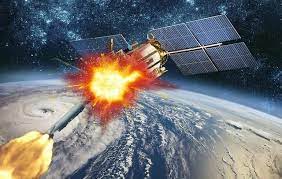
After the related picture of Shenzhou 12 extending its mechanical arm came out, the US media immediately carried out a new round of reports on the relevant information, and pointed out at the same time that “this may be the same as what the commander of the US space force said before. China can capture the US military. The same is true for satellites. As early as April this year, General James Dickinson, commander of the U.S. Space Force Command, publicly declared in front of media cameras that China has developed a satellite equipped with a large robotic arm, and China is trying to use this satellite for military purposes. Used to “grab and capture” US military satellites.
So, what is anti-satellite technology?
In theory, where there are satellites, there is anti-satellite technology. There are three types of artificial satellites, one is scientific satellites, the other is technology experiment satellites, and the third is application satellites. According to the purpose, it can be divided into civilian satellites and military satellites, and military satellites are divided into communication, meteorology, reconnaissance, navigation, geodetic, interception satellites, etc.
The reason for anti-satellite
In modern warfare, the sky has always maintained a huge combat advantage over the ground. The emergence of artificial satellites has extended this advantage to outer space. In future wars, whoever can control space will have the initiative in war. It has become the focus of military competition among various countries.
Artificial satellites, especially military artificial satellites, fly seven or eight kilometers per second because of their fast speed, and can circle the earth in 90 minutes; they have a wide field of vision and a wide field of vision, and the same viewing angle is tens of thousands of times that of aircraft observation; there are few restrictions and they can fly over freely Any area on the earth, while bringing great convenience to one’s own side, also brings huge potential threats to the enemy.
Therefore, since the 1960s, the world’s military powers represented by the United States and Russia have been committed to the development of anti-satellite weapons such as “anti-satellite with guides”, “anti-satellite with satellites” and “anti-satellite with energy”. Take it as an important weapon for controlling space, eliminating threats, and seizing control of the sky.
Anti-satellite technology
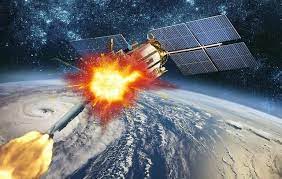
Anti-satellite technology refers to military technology that attacks enemy satellites from the ground, air or outer space. At present, anti-satellite technologies mainly include nuclear energy anti-satellite, direct-ascent kinetic energy anti-satellite, directed energy anti-satellite, and co-orbit anti-satellite technology. Nuclear energy anti-satellite technology has a large killing distance and low technical threshold, but because of the huge collateral damage it produces, its practical value is not great. The direct-ascent kinetic energy anti-satellite technology can be regarded as an extension of the anti-missile technology, and it is an anti-satellite method widely used by military powers with precision guidance technology.
The directed energy anti-satellite technology represented by laser weapons and the captive co-orbit anti-satellite technology are not easy to generate space debris, and can include all low-, medium-, and high-orbit satellites in the attack range, which has great potential for combat application and has been obtained. Countries all over the world are favored and competing for development. At the same time, hidden and invisible satellite soft-killing technologies such as electronic countermeasures and network attacks are also gradually showing their edge.
Anti-satellite tactics
Generally speaking, there are four types of anti-satellite tactics: co-orbit, direct ascent, directed energy, and electromagnetic interference. It is mainly realized by anti-satellite satellites and anti-satellite missiles and anti-satellite electronic jamming stations.
Co-orbital anti-satellite weapons are launched into the orbit of the target satellite, track it, and then use kinetic energy or nuclear explosion to destroy it. It has a long range of action and a large killing radius, and it can still destroy the target even when the guidance accuracy of the weapon itself is poor. But its disadvantages are low accuracy, slow response, and it takes several days from launch to destruction; in addition, the additional damage effect of nuclear bombs is large, and it is easy to pose a threat to one’s own satellite; and once used, there is a danger of triggering a nuclear war .
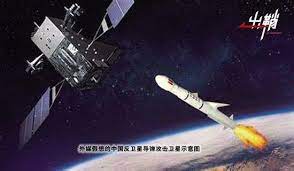
The direct-ascent anti-satellite missile means that the anti-satellite missile does not enter the orbit of the target satellite, but only relies on the small tracker on the missile to directly find the target satellite when the target satellite passes over the sky, and directly destroys it.
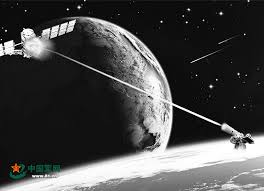
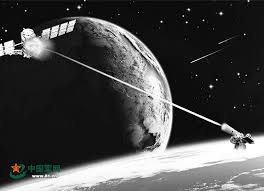
Directed energy anti-satellite refers to the use of weapons such as lasers, particle beams, and high-power microwave beams to irradiate target satellites with high-energy laser beams, particle beams, and microwave beams to completely destroy them or disable sensitive electronic components and lose their ability to work. .
Electromagnetic interference anti-satellite is the use of satellite electronic interference technology to prevent communication between satellites and ground stations, thereby achieving the purpose of invalidating satellites. This is the earliest, most common, and most basic anti-satellite tactic.
my country’s anti-satellite technology
The Soviet Union was the first country to develop satellite technology, and the United States was the first country to develop anti-satellite technology. The history of world anti-satellite technology is basically a battle between the two countries.
my country started to conduct anti-satellite tests in 2005. In the early stage, it mainly focused on testing the functions of weapons. Although it started late, it did not lag behind. Remarkable results have been achieved in anti-satellite missiles and satellites.
On January 11, 2007, my country launched an SC-19, also known as DN-1, at the Xichang Satellite Launch Center. The missile carried a kinetic energy warhead and destroyed the orbital altitude at a speed of 8 kilometers per second. The “Fengyun-1” meteorological satellite, which is 863 kilometers long and weighs 750 kilograms, has been scrapped. This is the first time that my country has successfully intercepted an artificial satellite. Since then, my country has officially entered the field of anti-satellite technology.
Afterwards, my country successively developed two new anti-satellite missiles, the second-generation DN-2 and the third-generation DN-3, and conducted two successful tests in May 2013 and July 23, 2017. The successful research and development of DN-1, DN-2 and DN-3 anti-satellite missiles have fully covered low, medium and high orbits, and artificial satellites are basically within the strike range of my country’s anti-satellite missiles. Technology has entered the world-class level.
In addition to anti-satellite missiles, my country has also developed a satellite for anti-satellite experiments. The satellite is equipped with a mechanical arm, which can change orbits and perform all-round detection of other satellites. It is convenient and flexible in application. The latest achievements in technological development.
Anti-satellite trends
In order to compete for space superiority and ensure national security, the struggle for anti-satellite weapons and satellite defense will intensify. At present, anti-satellite technology is mainly developed in the following aspects: the combination of anti-satellite and anti-missile, and the development of missile defense system to further improve the anti-satellite capability of kinetic energy weapons.
There is an inseparable relationship between ballistic missile defense systems and kinetic energy anti-satellite weapons, because weapons capable of intercepting ballistic missiles outside the atmosphere all have anti-satellite capabilities to a certain extent. The development of missile technology to promote the development of anti-satellite technology is one of the current international anti-satellite trends.
Develop micro-satellites and exert their anti-satellite capabilities. Modern micro-satellites have a short development cycle, low construction costs, low system investment, strong anti-destruction capabilities, and fast equipment updates. It can move to any position on the geosynchronous orbit, and can even perform close operations around other satellites and launch attacks. It has great potential.
At present, the military powers headed by the United States have changed from the idea of ”killer” satellites loaded with ordinary explosives and “miniature homing missiles” to new concept weapons in the development of anti-satellite weapons. Directed energy weapons have become anti-satellite weapons. Weapons are new sharp weapons, and among them, laser anti-satellite weapons are the most deterrent and most effective weapons. The development of laser anti-satellite weapons focuses on ground-based and space-based anti-satellite technologies. Combine soft and hard, and pay more attention to the use of electronic countermeasures and other soft killing methods. The innovation, development, and application of traditional electronic jamming and other soft-kill technologies, through the development of reversible non-physical anti-satellite weapons, can interfere with, deceive, or prevent target satellites from performing effective functions within a certain period of time. Countries attach great importance to and continue to develop field of.
At present, complex aerospace technologies such as autonomous approach and rendezvous and docking have been applied to anti-satellite weapons. Rendezvous and docking technology solves this problem.
(The author is a member of the National Committee of the Chinese People’s Political Consultative Conference and the chief engineer of a certain department in the northern theater)
Original Chinese Source: http://www.cppcc.gov.cn/zxww/2021/06/24/ARTI1624501659719410.shtml
認知域作戰有一個非常重要的支撐,即主要依靠語言媒介發揮作用,主要通過語篇層面發揮影響,主要通過語篇的敘事性對認知域形成隱性效應,主要 externing influence on the cognitive domain through cultural models 通過跨文化交際所發揮的潛在作用,顯性或隱性作用。 主要體現在以下幾個方面:
Cognitive domain combat refers to the use of multi-domain means such as public opinion, psychology, and law, and the use of modern network, media, text, pictures, video, digital and other multi-dimensional technologies to carry out public opinion propaganda, psychological attack and defense, and The important forms of fighting for people’s hearts, subverting confidence, influencing beliefs, fighting for thinking, and ideological struggle are intended to compete for people’s initiative in thinking, beliefs, values, personal attitudes, emotions, identification, and judgmental tendencies. Cognitive domain warfare is a complex collection of multi-domain warfare such as traditional public opinion warfare, psychological warfare, legal warfare, trade war, diplomatic warfare, technological warfare, and ideological warfare.
At present, combat in the cognitive domain has become an important basis for military struggles and struggles in other fields between countries, and language confrontation driven by goals in the cognitive domain has become an important form of combat in the cognitive domain, which deserves great attention.
A New Frontier for Language Countermeasures to Influence on Objects of Operation
Cognitive domain combat is the accompanying result of the research and development of contemporary cognitive science. It is a new combat field created after people actively explore the cognitive activities of the brain to gain a more complex, abstract and thorough understanding of the brain. Advanced deep covert activities are the high-end form of influence on the object of action. Regardless of whether it is the object of information action, the producer of information, the content of information itself, or the channel of information, operations in the cognitive domain all run through the characteristics of cognition, and highlight actions from the cognitive level from beginning to end.
From the perspective of the recipients of the information, this cognition is aimed at the deep cognition of the opponent’s audience, including its people, the army, military commanders or important leaders, important figures in the political and business circles, and even directly including the leaders of the opponent’s country or the military. Specific important generals, etc., can also be specific groups of people or people. It can involve the cognitive preferences, cognitive shortcomings, cognitive habits, cognitive biases, cognitive misunderstandings of individuals or groups; it can also be the beliefs, values, political identity, ethnic identity, social and cultural identity and emotional attitudes of individuals and groups.
From the perspective of the information provider and content, it should be infused with the cognitive design and arrangement of the information producer, which includes the unique cognition of the text, such as the discourse mode of the text, the narrative mode of the text, the perspective of observation of things, the narrative Cognitive focus and depth, organizational form of sentences, tendencies such as value concepts of sentences, acceptability of concepts of sentences, etc.
In terms of channels for information distribution and dissemination, the form of text is closer to the multimedia multimodal form, closer to the needs of cyberspace, closer to the advantages of contemporary smartphones, and closer to the characteristics of the current emerging media era, that is, more in line with the audience The cognitive characteristics of acceptance are cognitive habits and cognitive tendencies. The form of dissemination of the text fully considers the cognitive effect in international communication, especially the cognitive communication across cultures, languages, media, and groups. In this way, the text will better influence the audience from the cognitive level.
Language confrontation responds to changes in combat styles and generates new tactics
Throughout human history, it is not difficult to find that the style of military struggle has been constantly changing. From the initial physical fight with the help of cold weapons, it has developed into a contest of mechanical power with hot weapons, and has also developed into a check and balance of information capabilities under the conditions of high-tech warfare. Every change brings about profound changes in tactics. In the current transitional stage of co-existence of mechanization, informationization and intelligence, people not only pay attention to the struggle for dominance in the physical domain and information domain of the battlefield, but also pay more attention to the control of the main body of war-human cognitive domain, that is, the way of thinking, Cognitive models and styles, values, emotional attitudes, cultural models, communication models, psychological strengths and weaknesses, cognitive preferences, cultural and knowledge maps, and ideological identity. The latter involves the basic situation of social personnel and social existence, that is, the emerging field of cognitive domain operations exerting influence, and its tactics have strong particularities.
Topic flexibility and mobility: Cognitive domain operations can select many topics in the cognitive domain to carry out flexible and mobile combat operations. According to the current situation and needs, the topic can be chosen to involve a relatively macro strategic level (such as the ideology and system of the other party’s entire society, etc.), or a medium-level campaign level (such as social issues in a local area or direction of the other party’s society: Social welfare policies or environmental protection policies, etc.), you can also choose to involve very microscopic tactical issues in society (such as the unfair, unjust, and not beautiful side of society reflected by a certain person or a specific event). The macro, meso, and micro cognitive domains are interconnected and transform into each other. It is very likely that a micro issue will also become a macro strategic issue. The question should be raised according to the relationship with the entire military operation, and the cognitive domain operation must be subordinated to the overall combat operation and serve the needs of the macro political and diplomatic situation. More importantly, the topics should be prepared in normal times, and the data of various topics should be collected in normal times, especially paying attention to various important data in the real society. Once needed, these data can be quickly transformed into arrows, bullets, and shells fired at the enemy’s cognitive domain, and even become strategic weapons that affect the overall situation.
Controllability at the combat level: The important design of cognitive warfare is that at the combat level, it is controllable and adjustable as a whole, and can be upgraded or reduced according to changes in the situation. If the strategic level is needed, the commander can enable the design and force input at the strategic level; if the campaign level is needed, it can also be controlled at the corresponding campaign level; if it is only needed at the specific small problem level, it can also be controlled at the corresponding The niche local level makes the whole operation serve the needs of the overall combat operation. The strategy, campaign and tactics here refer more to combat design and power input. Since the battlefield situation may change rapidly, some issues may also change at the level, from strategic issues to affect the effects of campaign and tactical levels; some issues, due to the particularity of tactical issues, become campaign-level issues that affect the overall situation.
Emerging media dominance: The main influence channel of the cognitive domain has shifted from traditional paper media and print media to emerging media. Traditional media mainly rely on a single medium, such as newspapers, magazines, books, leaflets, posters, etc. to convey information; the later generation of television brought three-dimensional media. In the Internet era, especially the Internet 2.0 era and the birth of smart communication devices, people rely more on multimedia, multi-modality, and short videos and texts to transmit information. The introduction of various advanced devices such as smart phones, smart tablets, and smart players, and the birth of various new social software and tools have made new media the main tool for people to communicate and communicate. Emerging media, emerging social software and tools have become an important space for various forces to compete and struggle in social security, public opinion security, ideological security, social security, and political security. Internet security, especially the ability to grasp the security of new social media, emerging social software and tools, etc., is to some extent the key to the security of a country’s cognitive domain. The information of emerging media tools and new media spaces has become the main battlefield, main position and main space for cognitive warfare in various countries. It is worth pointing out that the thoughts and theories that influence people’s cognition will become the most influential weapons at all levels of cognitive domain operations.
Language confrontation adapts to the age of intelligence, cognitive computing enhances new computing power
In the era of artificial intelligence, on the basis of big data analysis and application, supercomputing ability, intelligent computing ability, natural language processing ability, smart phone dissemination ability and new generation network communication ability, human beings have begun to be able to understand the whole society and the whole network. Carry out precise modeling and analysis of language culture, psychological cognition, group emotion, and social behavior in different domains, local groups, different local groups, and specific individuals. Especially people’s deep understanding and grasp of brain cognition, human brain thinking, thinking mode, habit preference, image schema, cognitive framework, and even neural network, human-computer collaboration, brain control technology, etc., as long as there are enough diverse dynamic data , people can calculate and simulate all people’s psychological activities, emotional activities, cognitive activities, public opinion, and behavioral patterns. Through deep calculations, actuarial calculations, and clever calculations, people can accurately grasp people’s cognitive world and form an understanding of people’s cognitive domain. fine and deep control. This aspect presents the following characteristics:
Computational all-dimensionality: As an emerging field, the cognitive domain can be digitized in all aspects and can be calculated in all directions, the whole process and the whole individual. It can collect various types of information extensively, and then can be reflected as information about Big data with diversified main factors of combat opponents, so that various calculations can be carried out for the whole, groups, groups, and individual data and between them. All kinds of activities can be completed, displayed and accurately grasped through calculation.
Computational cognition: Computation in the cognitive domain embodies strong cognition, and it can reveal more relationships between various things, events, and characters that are difficult to observe with the naked eye, and can reveal the relationship between various concepts in the same event frame. The clustering and hierarchical relationship between concepts reflects the deep cognitive connection between concepts, whether explicit or implicit, direct or indirect, and reveals the complex concept network system between concepts, allowing people to see a deep cognitive world that is completely beyond the ordinary naked eye observation. .
Computing intelligence: Computing in the cognitive domain embodies strong intelligence. This kind of intelligence is manifested in the calculation, and it will draw intelligent conclusions. For example, through the collection of a large amount of text and data mining, we can find the relationship between various themes, viewpoints, tendencies, groups of people, positions, and appeals that cannot be seen due to limited human power, so as to form a more comprehensive understanding of a certain issue. Comprehensive, in-depth, accurate and systematic understanding to make scientific and optimized decisions. This kind of decision-making may be in line with human intelligence, or it may exceed or even far exceed human intelligence. By making good use of the power of cognitive computing, especially by combining the data of the country and the opponent, we can better achieve early prevention, early warning, and early deployment, and can achieve the best, best, fastest and most accurate strikes and counterattacks. It can also better reflect efficient, powerful and targeted protection. Cognitive computing here is more about a possible macro-meso or micro-level issue that may arise in different groups of people, in different time periods, in different backgrounds, in the entire network domain or in a local network domain, or within a specific group. In particular, the analysis and inspection of the active and passive situations that may be presented by both parties when playing games with opponents, and the attack and defense of the cognitive domain, etc.
Give full play to the status of discourse subject and release the new application of discourse power
Cognitive domain combat has a very important support, that is, it mainly relies on the language medium to play its role, exerting influence mainly through the discourse level, forming a hidden effect on the cognitive domain mainly through the narrative nature of discourse, and mainly exerting influence on the cognitive domain through cultural models Potential role, overt or implicit role exerted through cross-cultural communication. It is mainly reflected in the following aspects:
Text Discourse Uniqueness: Cognitive Domains Need Information to Influence. Although the information may be displayed by relying on the special visual effects of video pictures, fundamentally speaking, the uniqueness of the integrated discourse expressed by the text becomes the main support for the cognitive impact. Among them, the mode of discourse expression, the skill of discourse expression, the main design of persuasion and appeal of discourse expression, especially the uniqueness of discourse narrative will be the key to affect people’s cognition. This may include narrative perspectives, narrative themes, styles, narrative story frameworks, narrative language innovations, narrative key sentences, narratives contain philosophy, humanities, religion, society, nature, etc., and the identities of different participants in the narrative , the diversified evaluation of narrative, the authenticity, depth and emotional temperature of narrative, the subtle influence of narrative on viewpoints, and the personal emotions, values, ideology, and position evaluation released by narrative. The uniqueness of text discourse is an important reliance on cognitive influence exerted by text in cognitive domain operations. Making full use of the complexity of texts, giving full play to the respective advantages of diverse texts, and giving full play to the implicit and explicit cognitive influences of text connotations have become the key to combat in the cognitive domain of text discourse. The most important thing is to innovate text discourse, to win readers with brand-new discourse, more novel expressions, and more unique expressions, so that readers can understand and feel the thoughts in the text subtly, and accept them silently. The thought of the text.
Potential of cultural models: To fight in the cognitive domain, we must deeply grasp the characteristics and models of different countries and national cultures. Different countries and different nationalities have different cultural models, philosophical thinking, traditional culture, religious beliefs, customs, and ways of thinking are obviously different; citizens of different cultures also have different national psychology and national cognition Models should also have typical cognitive preferences belonging to their own nation and culture, as well as corresponding shortcomings and weaknesses, and some of them obviously have a huge difference from other nationalities in their own country, and even have misunderstandings and hostility. Therefore, at the cultural level, combat in the cognitive domain is to grasp the overall cultural models of different countries, build cultural models for different groups in different countries, build different cognitive models for different things in different countries, and fully grasp a certain country’s cultural models in a series of things. The overall attitude and way of doing things on issues and issues, especially for some typical cases, cultural taboos, religious requirements, spiritual pursuits, general concepts, etc. It is necessary to use existing theories and findings to comprehensively construct the basic performance of different groups of people in the cognitive field on some typical, sensitive, and important issues, so as to provide important reference and guidance for the next step of cognitive operations. Strengthen the research on the cultural patterns of different personnel of the enemy, especially military personnel, personnel in key positions, including the research and construction of basic cultural characteristics and models of generals, officers, soldiers, etc., such as the psychological cognitive behavior of characters and cultural model portraits, It has become the core practice of cognitive domain operations. It is also of great value to analyze the cognitive patterns of ordinary people, especially ordinary citizens and citizens, as well as specific groups of people, including special NGO forces.
Cross-cultural strategic communication: Cognitive domain operations are international language and cultural communication, which need to follow the laws of international communication. To grasp the basic paradigm of international communication, to skillfully combine national stories with international expressions, to skillfully combine the other party’s language and culture with their own stories and ideas; to be good at combining different art forms, including words, pictures, paintings, music (Sound), video and other means or multi-modal means to achieve the international dissemination of information. At the same time, it is also necessary to coordinate multi-dimensional and macroscopic communication at the strategic level: use various means, rely on military-civilian integration, military-civilian coordination, and military-civilian integration to carry out communication; in addition to non-governmental organizations, especially rely on non-governmental forces, experts, opinion leaders, and ordinary people To help the military carry out cognitive domain operations; to set up issues in a unified way, to make multi-point, multi-person and multi-dimensional voices, to form a strategic communication situation, to form a good situation for emergency solutions for major actions, major issues, major crisis management and control, etc., to form a good atmosphere of public opinion, and to create Positive effects, eliminating adverse effects or extinguishing adverse effects. In particular, it is necessary to establish a capable team that is proficient in foreign languages, understands cross-cultural skills, understands the laws of international communication, and can skillfully speak out on international multi-dimensional platforms. These personnel can usually carry out extensive issue awareness, collection and discussion, establish personal connections and fan groups with the help of common or special issues; more importantly, at critical moments, through their fan groups, exert influence and complete strategic communication tasks .
At present, with the popularity of hybrid warfare, multi-domain warfare and global warfare, cognitive domain warfare has become a common method of hybridization and mixing. , The advanced stage of the development of legal warfare, the complex stage and the escalation stage. Its rise is more deceptive, ambiguous, concealed, embedded, implanted and unobservable, especially considering its deep integration with contemporary emerging media, and continuous learning and reference into multidisciplinary, Interdisciplinary and interdisciplinary new ideas, new technologies, and new methods. As a result, combat in the cognitive domain has become a form of combat that we must be highly vigilant against. (Liang Xiaobo, professor and doctoral supervisor of the College of Arts and Sciences, National University of Defense Technology)
[This article is a phased achievement of the National Social Science Fund’s major project “National Defense Language Capacity Building from the Perspective of National Defense and Military Reform”]
Original Chinese Military Source: https://military.people.com.cn/BIG5/n1/2022/0517/c1011-32423539.html
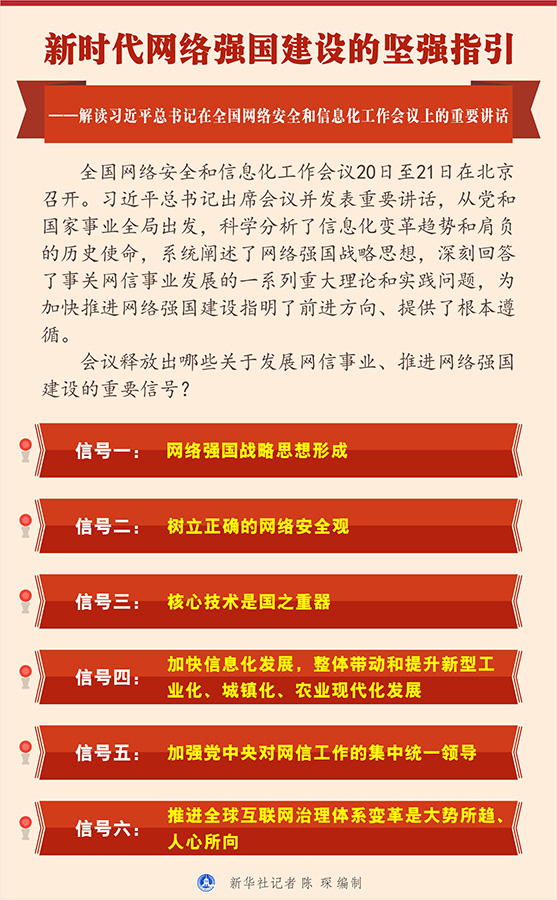
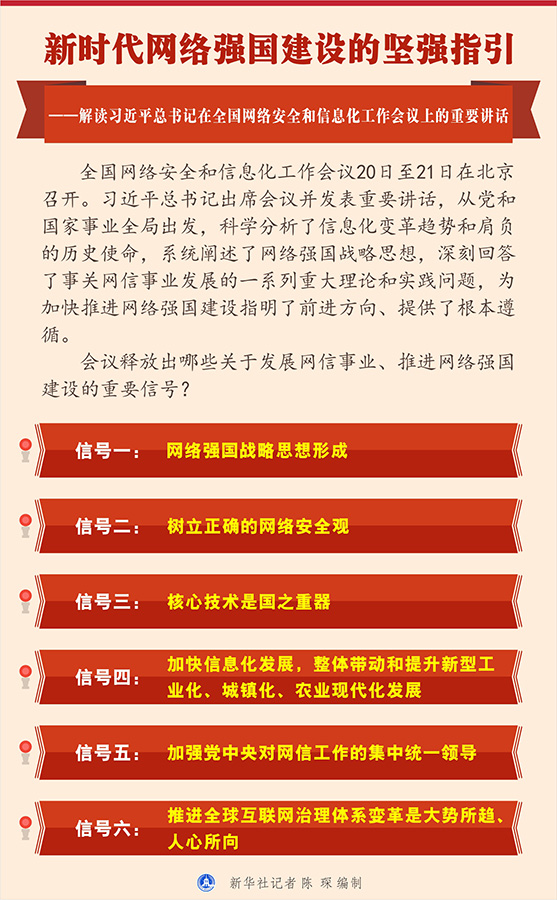
Network security and informatization are related to the long-term governance of the party, the long-term stability of the country, economic and social development and the well-being of the people. Comrade Xi Jinping stood at the political height of our party “If you can’t pass the hurdle of the Internet, you can’t pass the hurdle of long-term governance”, accurately grasped the opportunities and challenges brought about by the informatization revolution, and clearly stated that we should strive to build our country into a cyber power. The third part of the book “Excerpts of Xi Jinping’s Discussions on Internet Power” edited by the Central Academy of Party History and Documentation is titled “Strive to Build my country into a Cyber Power” and includes relevant expositions by Comrade Xi Jinping.
Looking at the history of world civilizations, humanity has successively undergone agricultural revolution, industrial revolution and information revolution. Every revolution in industrial technology has had a huge and profound impact on human production and life. Today, information technology represented by the Internet is changing with each passing day, leading new changes in social production, creating a new space for human life, expanding new areas of national governance, and greatly improving human ability to understand and transform the world. The Internet has turned the world into a global village where “the voices of chickens and dogs hear each other”, and people separated by thousands of miles no longer “do not communicate with each other”. The world is more colorful because of the Internet, and life is richer because of the Internet.
Human society is undergoing a great information revolution, and China is in the historical process of rapid development of informatization. The trend of the era of information revolution and the historical process of the great rejuvenation of the Chinese nation have had a historic intersection, which has brought great benefits to us in building a modern socialist country in an all-round way. New opportunities and challenges. Comrade Xi Jinping pointed out that informatization has brought golden opportunities to the Chinese nation. We are at the right time, and we must follow the trend, ride on the trend, and meet each other halfway.
With the rapid development of network information technology and its comprehensive integration into social production and life, it has also profoundly changed the global economic pattern, interest pattern, and security pattern. Major countries in the world regard the Internet as the focus of economic development and technological innovation, and regard the Internet as a strategic direction for seeking new competitive advantages. Whether it can adapt to and lead the development of the Internet has become a key to determining the rise and fall of a big country. Whoever controls the Internet will grasp the initiative of the times; whoever despises the Internet will be abandoned by the times. To a certain extent, it can be said that those who win the Internet win the world. Informatization provides a favorable opportunity for my country to seize the commanding heights of a new round of development and build new advantages in international competition.
China attaches great importance to the development of the Internet. Since its access to the international Internet, we have strengthened the construction of information infrastructure, developed the network economy, and promoted information to benefit the people in accordance with the ideas of active utilization, scientific development, law-based management, and security assurance. At the same time, we have carried out cyberspace governance in accordance with the law, and cyberspace has become increasingly clear. Although it started relatively late, after more than 20 years of hard work, it quickly narrowed the informatization gap with developed countries and became a network powerhouse that has attracted worldwide attention. At the same time, we must also see that although my country’s network information technology and network security have made great achievements, there is still a big gap compared with the world’s advanced level. We are still relatively backward in terms of independent innovation, the differences between regions and urban and rural areas are relatively obvious, and the bottleneck of domestic Internet development is still relatively prominent.
Since the 18th National Congress of the Communist Party of China, the Party Central Committee with Comrade Xi Jinping at its core has judged the situation, looked far ahead, followed the trend, and sounded the clarion call to march towards a cyber power. On February 27, 2014, at the first meeting of the Central Network Security and Informatization Leading Group, Comrade Xi Jinping proposed that we should proceed from the international and domestic trends, make an overall layout, coordinate all parties, innovate and develop, and strive to build my country into a cyber power .
Building a cyber power is a major decision made by the Party Central Committee based on the overall development of the Party and the country. After the 18th National Congress of the Communist Party of China, the Party Central Committee proceeded from the great struggle with many new historical characteristics, attached importance to the Internet, developed the Internet, and governed the Internet. sexual achievement.
We put forward the strategic goal of building a strong network country, basically established the top-level design and overall structure of network information work, issued the “Opinions on Strengthening Network Security and Informatization Work”, basically straightened out the Internet management leadership system and mechanism, and formed a national “one game of chess” work pattern; The security of Internet ideology has been effectively safeguarded, positive online propaganda has been made bigger and stronger, and heavy blows and sharp swords have been used to manage and control the Internet. A series of major struggles in the field of Internet ideology have been won, which has fundamentally reversed the past. In the situation of being occupied and passively beaten, the positive energy of cyberspace is stronger and the main theme is more high-spirited; the national network security barrier is further consolidated, the network security law is formulated and implemented, the construction of network security guarantee capabilities is strengthened, and the security protection of key information infrastructure is continuously strengthened. Activities have been effectively curbed, and the awareness of network security and protection capabilities of the whole society have been significantly enhanced; the military-civilian integration of network information has achieved phased results, and the network security deterrence and countermeasure capabilities have been continuously enhanced; attention has been paid to the driving and leading role of informatization in economic and social development, “Internet + “The action plan has been implemented in depth, the digital economy and the sharing economy have flourished; positive progress has been made in core technology innovation in the information field, breakthroughs have been made in the research of new-generation mobile communication (5G), high-performance computing, quantum communication and other technologies, and a number of network information enterprises have entered the world In the forefront; the international discourse power and influence of cyberspace have been significantly improved, holding high the banner of cyber sovereignty, promoting the construction of a community of shared future in cyberspace, actively participating in the process of global Internet governance, creating and successfully hosting the World Internet Conference, and winning More and more recognition and support; speed up the construction of network infrastructure and the popularization of information services, the widespread popularization of new technologies and new applications such as online transactions, mobile payment, and shared travel; the accelerated development of e-government affairs; The service level continues to improve, and the people have a greater sense of gain, happiness, and security. The achievement of these historic achievements fully proves that the Party Central Committee’s decision on strengthening the party’s centralized and unified leadership over cybersecurity and informatization work and a series of strategic deployments for cybersecurity and informatization work are completely correct.
The new era calls for new ideas, and new practices breed new theories. In the process of striving to build a strong network country, we have continuously promoted theoretical innovation and practical innovation, not only blazing a way to govern the network with Chinese characteristics, but also put forward a series of new ideas, new viewpoints and new conclusions, forming the strategic thinking of a strong network country. To sum up, there are mainly the following aspects.
First, clarify the important position of cybersecurity and informatization work in the overall situation of the party and the country. We propose that there will be no national security without network security, and no modernization without informatization. If we do not pass the hurdle of being in power for a long time, we must place cybersecurity and informatization work in the overall planning of the party and the country, and earnestly strengthen the party’s centralized and unified leadership.
Second, clarify the strategic goal of building a cyber power. We propose that we must accelerate the construction of a cyber power from the height of realizing the “two centenary” goals and the Chinese dream of the great rejuvenation of the Chinese nation. In accordance with the requirements of strong technology, strong content, strong foundation, strong talents, and strong international discourse power, we must move towards the basic popularization of network infrastructure, significant enhancement of independent innovation capabilities, comprehensive development of the digital economy, strong network security guarantees, and balanced network offensive and defensive capabilities. Keep moving forward, and finally achieve the goal of advanced technology, developed industry, both offensive and defensive capabilities, full control of network control, and indestructible network security.
Third, clarify the principles and requirements for building a cyber power. We propose that we must adhere to the principles of innovative development, governing by law, ensuring security, promoting benefits and eliminating disadvantages, and benefiting the people, adhere to innovation-driven development, cultivate new kinetic energy with informatization, and use new kinetic energy to promote new development; adhere to the rule of law, so that the Internet will always be under the rule of law. We will continue to operate healthily on track; adhere to the correct concept of network security, and build a national network security barrier; adhere to the principle of equal emphasis on preventing risks and promoting healthy development, and grasp opportunities and challenges, so that the Internet can better benefit the society; The people have a greater sense of gain in sharing the fruits of Internet development.
Fourth, clarify the international propositions for Internet development and governance. We propose to adhere to the four principles of global Internet governance: respecting Internet sovereignty, maintaining peace and security, promoting openness and cooperation, and building a good order. The five-point proposal for building a community of shared future in cyberspace, such as ensuring network security and building an Internet governance system, emphasizes joint advancement of development, joint maintenance of security, joint participation in governance, and joint sharing of achievements, and jointly build a peaceful, secure, open, and cooperative cyberspace.
Fifth, clarify the basic methods for doing a good job in cybersecurity and informatization work. We realize that cybersecurity and informatization work involves many fields, and it is necessary to strengthen overall planning and coordination, implement comprehensive management, and form a strong work force. It is necessary to grasp the dialectical relationship between security and development, freedom and order, openness and autonomy, management and service, and comprehensively promote various tasks such as network content construction, network security, informatization, and international governance of cyberspace.
General Secretary Xi Jinping’s important thoughts on the network power, adhere to the Marxist position, viewpoint and method, based on the new era background of human beings entering the information society, systematically summed up our party’s practical experience in network management and network governance, and profoundly answered why we should build a network power and how to build a network power. A series of major theoretical and practical issues such as building a powerful network country, with a high-level view, overall control, profound thinking, and rich connotations, have become the guide to action leading the development of my country’s Internet information industry, and are the fundamental principles for doing a good job in Internet information work. Continuously enrich and develop.
Focusing on the overall development of human society, Comrade Xi Jinping creatively put forward the concept of making the Internet better benefit the world and the people of all countries, and building a community with a shared future in cyberspace. He proposed a Chinese plan for global Internet development and governance, and contributed Chinese wisdom. The mind of a responsible big country and Comrade Xi Jinping’s broad mind of the leader of a big country to seek peace and development for the world and civilization and progress for mankind.
We must combine in-depth study of Comrade Xi Jinping’s important expositions on building a strong network country, strengthen the “four consciousnesses”, strengthen the “four self-confidence”, and achieve “two safeguards”, constantly explore new paths for building a strong network country, and open up a new realm of global network governance , Let the Internet become a powerful boost to realize the Chinese dream of the great rejuvenation of the Chinese nation.
(Author: Xu Shan, Director of the Second Division of the First Research Department of the Central Academy of Party History and Documentation, Deputy Editor)
4. Protect the legitimate rights and interests of citizens
5. Promoting Digital Economy Cooperation
6. Build an online cultural exchange platform
Chapter 4 Action Plan
1. Advocate and promote peace and stability in cyberspace
2. Promoting the construction of a rules-based cyberspace order
3. Continue to expand partnerships in cyberspace
4. Actively promote the reform of the global Internet governance system
V. Deepen international cooperation in combating cyber terrorism and cybercrime
6. Advocate the protection of citizens’ rights and interests such as the right to privacy
7. Promote the development of the digital economy and the sharing of digital dividends
8. Strengthen the construction and protection of global information infrastructure
9. Promoting Network Cultural Exchange and Mutual Learning
conclusion
preamble
”Cyberspace is a common space for human activities, and the future and destiny of cyberspace should be shared by all countries in the world. Countries should strengthen communication, expand consensus, and deepen cooperation to jointly build a community of shared future in cyberspace.”
Chinese President Xi Jinping, December 16, 2015 In today’s world, information technology represented by the Internet is changing with each passing day, leading new changes in social production, creating a new space for human life, expanding new areas of national governance, and greatly improving human beings’ ability to understand and transform the world. As a common wealth of human society, the Internet has turned the world into a “global village”. Countries are interconnected in cyberspace, their interests are intertwined, and they share weal and woe. Maintaining peace and security in cyberspace, promoting openness and cooperation, and jointly building a community with a shared future in cyberspace conform to the common interests of the international community and are also the common responsibility of the international community. The “Cyberspace International Cooperation Strategy” comprehensively declares China’s policy stance on international issues related to cyberspace, and systematically explains the basic principles, strategic goals and action points of China’s external work in the cyber field, aiming to guide China’s participation in cyberspace international cooperation in the future. Exchanges and cooperation, promote the joint efforts of the international community, strengthen dialogue and cooperation, jointly build a peaceful, secure, open, cooperative, and orderly cyberspace, and establish a multilateral, democratic, and transparent global Internet governance system.
Chapter 1 Opportunities and Challenges
Against the backdrop of multi-polarization of the world, economic globalization, cultural diversity, and profound changes in the global governance system, mankind has ushered in a new era of information revolution. The information and communication technology represented by the Internet is changing with each passing day, profoundly changing people’s production and lifestyle, and increasingly stimulating market innovation, promoting economic prosperity, and promoting social development. Cyberspace has increasingly become a new channel for information dissemination, a new space for production and life, a new engine for economic development, a new carrier for cultural prosperity, a new platform for social governance, a new link for exchanges and cooperation, and a new frontier for national sovereignty.
Cyberspace has brought great opportunities to mankind, but it has also brought many new issues and challenges. The security and stability of cyberspace has become a global concern that concerns the sovereignty, security and development interests of all countries. Problems such as unbalanced development, unsound rules, and irrational order in the Internet field have become increasingly prominent. The “digital divide” between countries and regions continues to widen. Critical information infrastructure has relatively large risks and hidden dangers. It is difficult for the global Internet basic resource management system to reflect the wishes and interests of most countries. Cyber terrorism has become a global public hazard, and cybercrime is spreading. Misuse of information and communication technologies to interfere in the internal affairs of other countries and engage in large-scale network surveillance occurs from time to time. Cyberspace lacks international rules that generally and effectively regulate the behavior of al
l parties, and its own development is constrained.
In the face of problems and challenges, no country can survive alone. The international community should conduct dialogue and cooperation in the spirit of mutual respect, mutual understanding and mutual accommodation, and realize global governance of cyberspace based on rules.
Chapter II Basic Principles
China has always been a builder of world peace, a contributor to global development, and a defender of international order. China unswervingly follows the path of peaceful development, adheres to the correct concept of justice and interests, and promotes the establishment of a new type of international relations featuring win-win cooperation. The theme of China’s cyberspace international cooperation strategy is peaceful development, with win-win cooperation as the core, and advocating peace, sovereignty, co-governance, and universal benefits as the basic principles of international exchanges and cooperation in cyberspace.
1. The principle of peace
Cyberspace is interconnected and the interests of all countries are increasingly intertwined. A safe, stable and prosperous cyberspace is of great significance to all countries and the world.
The international community must earnestly abide by the purposes and principles of the Charter of the United Nations, especially the principles of non-use or threat of use of force and peaceful settlement of disputes to ensure peace and security in cyberspace. All countries should jointly oppose the use of information and communication technologies to carry out hostile and aggressive acts, prevent cyber arms races, prevent conflicts in cyberspace, and insist on peacefully resolving disputes in cyberspace. We should abandon the Cold War mentality, zero-sum game and double standards, and seek peace through cooperation on the basis of fully respecting the security of other countries, and strive to realize our own security in common security.
Cyber terrorism is a new threat affecting international peace and security. The international community should take practical measures to prevent and cooperate in combating cyber terrorism. Prevent terrorists from using the Internet to spread terrorist extremist ideas, plan and implement terrorist activities.
2. Principle of Sovereignty
The principle of sovereign equality established in the Charter of the United Nations is the basic norm of contemporary international relations, covering all areas of state-to-state exchanges, and should also apply to cyberspace. Countries should respect each other’s right to independently choose the path of network development, network management model, Internet public policy, and equal participation in international cyberspace governance, and refrain from engaging in cyber hegemony, not interfering in the internal affairs of other countries, and not engaging in, condoning or supporting cyberspace that endangers the national security of other countries. Activity.
Clarifying the sovereignty of cyberspace can not only reflect the responsibilities and rights of governments to manage cyberspace in accordance with the law, but also help countries build a platform for positive interaction between governments, enterprises and social groups, and create a platform for the development of information technology and international exchanges and cooperation. A healthy ecological environment.
The governments of all countries have the right to manage the network according to law, have jurisdiction over the information and communication infrastructure, resources, and information and communication activities within their own borders, and have the right to protect their own information systems and information resources from threats, interference, attacks and destruction, and to ensure the security of citizens in cyberspace. legal interest. Governments of all countries have the right to formulate their own Internet public policies, laws and regulations without any external interference. While exercising their own rights in accordance with the principle of sovereign equality, countries also need to fulfill corresponding obligations. Countries must not use information and communication technology to interfere in other countries’ internal affairs, and must not use their own advantages to damage the security of other countries’ information and communication technology product and service supply chains.
3. The principle of co-governance
Cyberspace is a common activity space for mankind, and it needs to be jointly built and governed by all countries in the world. The international governance of cyberspace should first adhere to multilateral participation. Countries, regardless of size, strength, wealth or poverty, are equal members of the international community and have the right to equally participate in the construction of international order and rules in cyberspace through international network governance mechanisms and platforms, so as to en
sure that the future development of cyberspace is shared by people of all countries. master.
Second, multi-party participation should be adhered to. The role of the government, international organizations, Internet companies, technical communities, non-governmental organizations, and individual citizens should be brought into play to build an all-round and multi-level governance platform. Countries should strengthen communication and exchanges, improve dialogue and consultation mechanisms in cyberspace, and jointly formulate international rules in cyberspace. As an important channel, the United Nations should give full play to its coordinating role, coordinate the positions of all parties, and build international consensus. Other international mechanisms and platforms should also give play to their respective advantages and provide useful supplements. The international community should jointly manage and fairly distribute basic Internet resources, establish a multilateral, democratic, and transparent global Internet governance system, and realize Internet resource sharing, responsibility sharing, and cooperative governance.
4. The principle of inclusiveness
The integrated development of the Internet and various industries has had an overall and revolutionary impact on the economic structure, social form and innovation system of various countries, providing a strong impetus for world economic growth and the realization of sustainable development goals. Promoting the universal benefits of the Internet to benefit all regions and countries will provide assistance for the effective implementation of the 2030 Agenda for Sustainable Development.
The international community should continue to promote openness and cooperation in the Internet field, enrich the connotation of openness, improve the level of openness, build more platforms for communication and cooperation, promote complementary advantages and common development in cyberspace, ensure that everyone shares the fruits of Internet development, and realize the goals set by the United Nations World Summit on the Information Society. The goal of building a people-oriented, development-oriented and inclusive information society.
Countries should actively promote bilateral, regional and international development cooperation, especially increase financial and technical assistance to developing countries in network capacity building to help them seize digital opportunities and bridge the “digital divide”.
Chapter III Strategic Objectives
The strategic objectives of China’s participation in international cooperation in cyberspace are to firmly safeguard China’s cyber sovereignty, security and development interests, ensure the safe and orderly flow of Internet information, improve the level of international connectivity, maintain peace, security and stability in cyberspace, promote the international rule of law in cyberspace, and promote The development of the global digital economy will deepen cultural exchanges and mutual learning on the Internet, so that the achievements of Internet development will benefit the whole world and better benefit the people of all countries.
1. Safeguarding Sovereignty and Security
China is committed to maintaining peace and security in cyberspace, and building a fair and reasonable international order in cyberspace on the basis of national sovereignty, and is actively promoting and consolidating international consensus in this regard. China firmly opposes any country interfering in the internal affairs of other countries through the Internet, and maintains that all countries have the right and responsibility to maintain their own cyber security, and protect the legitimate rights and interests of all parties in cyberspace through national laws and policies. The tendency to strengthen armaments and strengthen deterrence in cyberspace is not conducive to international security and strategic mutual trust. China is committed to promoting all parties to effectively abide by the basic norms of international relations such as peaceful settlement of disputes and non-use or threat of use of force, establish consultation and mediation mechanisms, prevent and avoid conflicts, and prevent cyberspace from becoming a new battlefield.
The construction of national defense forces in cyberspace is an important part of China’s national defense and military modernization, and it follows the consistent military strategy of active defense. China will give full play to the important role of the military in safeguarding national cyberspace sovereignty, security and development interests, accelerate the construction of cyberspace forces, improve cyberspace situational awareness, network defense, support national cyberspace operations and participate in international cooperation capabilities, and curb and control cyberspace. A major crisis in space, to ensure national network security, maintain national security and social stability.
Building an international rule system As a new frontier, cyberspace urgently needs to formulate relevant rules and codes of conduct. China advocates the formulation of international rules and norms of national behavior in cyberspace that are generally accepted by all countries under the framework of the United Nations, establish the basic norms that countries and various actors should follow in cyberspace, regulate the behavior of all parties, and promote cooperation among countries to maintain cyberspace security. , stability and prosperity. China supports and actively participates in the international rule-making process, and will continue to strengthen dialogue and cooperation with the international community and make its own contribution. China is a staunch defender of cyber security. China is also a victim of hacker attacks. China opposes any form of hacker attacks. No matter what kind of hacker attacks are illegal and criminal, they should be cracked down in accordance with laws and relevant international conventions. Cyber attacks are usually transnational and difficult to trace. China advocates that all countries jointly maintain cyberspace security through constructive consultation and cooperation. 3. Promoting Fair Internet Governance China advocates building a multilateral, democratic and transparent global Internet governance system through equal participation and joint decision-making by the international community. All countries should enjoy equal rights to participate in Internet governance. Basic Internet resources should be allocated fairly, and key information infrastructure such as Internet root servers should be jointly managed. It is necessary to ensure the inclusiveness and openness of relevant international processes and strengthen the representation and voice of developing countries. China supports the strengthening of communication and cooperation among various stakeholders, including governments, international organizations, Internet companies, technical communities, non-governmental organizations, and individual citizens. All stakeholders should play a role that matches their own roles in the above-mentioned governance model, and the government should play a key leading role in Internet governance, especially public policy and security, to achieve joint participation, scientific management, and democratic decision-making. 4. Protect the legitimate rights and interests of citizens China supports the freedom and openness of the Internet, fully respects the rights and basic freedoms of citizens in cyberspace, protects the public’s right to know, participate, express, and supervise in cyberspace, and protects personal privacy in cyberspace. At the same time, cyberspace is not a “place outside the law”. Like the real society, cyberspace should not only promote freedom, but also maintain order. China is committed to promoting the effective governance of cyberspace and realizing the organic integration of free flow of information with national security and public interests. 5. Promoting Digital Economy Cooperation China vigorously implements the strategy of network power, national informatization strategy, national big data strategy, and “Internet +” action plan, vigorously develops e-commerce, strives to promote the deep integration of the Internet and the real economy, promotes the optimization of resource allocation, and promotes the improvement of total factor productivity. Play an active role in promoting innovative development, transforming the mode of economic growth, and adjusting the economic structure. China upholds the market concept of fairness, openness and competition, and while developing itself, adheres to the principles of cooperation and inclusiveness, promotes the development of investment and trade around the world, and promotes the development of the global digital economy. China advocates the promotion of fair and free trade in the international community, opposes trade barriers and trade protectionism, promotes the establishment of an open and secure digital economic environment, and ensures that the Internet serves economic development and innovation. China advocates further promoting the realization of fair, reasonable and universal Internet access, the popularization of Internet technology, and the diversity of Internet languages, strengthening exchanges and cooperation between China and other countries and regions in network security and information technology, and jointly promoting the development of Internet technology and innovation, to ensure that everyone can share the digital dividend equally, and to achieve sustainable development of cyberspace. China insists on ensuring development through security and promoting security through development. To maintain the healthy and strong development of the digital economy, we should neither pursue absolute security to hinder the vitality of development, restrict openness an
d interoperability, and imprison technological innovation, nor should we avoid necessary security supervision measures on the grounds of market liberalization and trade liberalization. Different countries and regions have different levels of Internet development and network security protection capabilities. We should provide assistance within our capabilities to developing countries to improve their network security capabilities, bridge the “digital divide” between developing countries and developed countries, and achieve mutual benefit and win-win digital economy. Make up for the shortcomings of global network security.
6. Build an online cultural exchange platform
The Internet is an important carrier for spreading the excellent culture of mankind and promoting positive energy. Cyberspace is the common spiritual home of mankind. All countries should strengthen cooperation, jointly shoulder the heavy responsibility of using the Internet to inherit excellent culture, cultivate and develop a positive Internet culture, give full play to the important role of culture in nourishing human beings, conserving society, and promoting economic development, and jointly promote the construction of Internet civilization and the prosperity and development of Internet culture .
China is willing to work with other countries to give full play to the advantages of the Internet communication platform, build a bridge of international exchanges through the Internet, and promote exchanges and mutual learning of excellent cultures of various countries. Strengthen the capacity building of network culture dissemination, promote the diversified development of international network culture, enrich people’s spiritual world, and promote the progress of human civilization.
Chapter 4 Action Plan
China will actively participate in relevant international processes in the cyber field, strengthen bilateral, regional and international dialogue and cooperation, enhance international mutual trust, seek common development, and jointly deal with threats, with a view to finally reaching international rules for cyberspace that are generally accepted by all parties, and building a fair and reasonable global Cyberspace Governance System.
1. Advocate and promote peace and stability in cyberspace
Participate in discussions on bilateral and multilateral confidence-building measures, take preventive diplomacy measures, and respond to various cyber security threats through dialogue and consultation.
Strengthen dialogue, study new threats in the cyber domain that affect international peace and security, jointly curb the abuse of information technology, and prevent an arms race in cyberspace.
Promote discussions in the international community on the peaceful nature of cyberspace, and study the application of international law to cyberspace from the perspective of maintaining international security and strategic mutual trust and preventing cyber conflicts.
2. Promoting the construction of a rules-based cyberspace order
Give full play to the important role of the United Nations in the formulation of international rules in cyberspace, support and promote the adoption of information and network security-related resolutions by the United Nations General Assembly, and actively promote and participate in processes such as the United Nations Group of Governmental Experts on Information Security.
The member states of the Shanghai Cooperation Organization submitted the updated text of the “International Code of Conduct for Information Security” to the UN General Assembly in January 2015. The “Code of Conduct” is the first document in the world that comprehensively and systematically expounds the code of conduct in cyberspace. It is an important public security product provided by China and other SCO member states to promote the international community to formulate a code of conduct in cyberspace. China will continue to strengthen international dialogue on this initiative and strive for broad international understanding and support for it.
Support the universal participation of the international community in international discussions and consultations on cyber issues on an equal basis.
3. Continue to expand partnerships in cyberspace
China is committed to establishing extensive cooperative partnerships with all parties in the international community, actively expanding dialogue mechanisms on cyber affairs with other countries, and extensively carrying out bilateral cyber foreign policy exchanges and practical cooperation.
Hold international conferences such as the World Internet Conference (Wuzhen Summit), continue to hold bilateral Internet forums with relevant countries, hold seminars on Internet issues under the framework of China, Japan, South Korea, the ASEAN Regional Forum, and the Boao Forum for Asia, etc., to expand the network dialogue and cooperation platform.
Promote and deepen practical cooperation in cyber s
ecurity between the SCO and BRICS countries. Promote the balanced development of the ASEAN Regional Forum cyber security process. Actively promote and support CICA, Forum on China-Africa Cooperation, China-Arab Cooperation Forum, China-CELAC Forum, Asian-African Legal Consultative Organization and other regional organizations to carry out cyber security cooperation. Promote the initiative of APEC, G20 and other organizations to cooperate in the fields of Internet and digital economy. Explore exchange dialogues with other regional organizations in the cyber arena.
4. Actively promote the reform of the global Internet governance system
Participate in the follow-up process of the implementation of the outcomes of the United Nations World Summit on the Information Society, promote the international community to consolidate and implement the consensus on the outcomes of the summit, and fairly share the results of the development of the information society.
Promote the mechanism reform of the United Nations Internet Governance Forum, and promote the forum to play a greater role in Internet governance. Strengthen the forum’s decision-making capabilities on Internet governance matters, promote the forum to obtain a stable source of funding, and develop open and transparent procedures for selecting relevant members and submitting reports.
Participate in international discussions aimed at promoting the fair distribution and management of key Internet resources, actively promote the international reform of ICANN, make it a truly independent international organization, and continuously improve its representativeness and openness in decision-making and operation transparent. Actively participate in and promote global Internet governance platform activities such as the “Future of the Internet” action initiative of the World Economic Forum.
V. Deepen international cooperation in combating cyber terrorism and cybercrime
Discuss the code of conduct and specific measures for the international community to cooperate in combating cyber terrorism, including exploring the formulation of an international convention against terrorism in cyberspace, to enhance the consensus of the international community on combating cybercrime and cyberterrorism, and provide a basis for countries to carry out specific law enforcement cooperation.
Support and promote the UN Security Council to play an important role in international cooperation against cyber terrorism.
Support and promote the work of the United Nations to combat cybercrime, participate in the work of the United Nations Commission on Crime Prevention and Criminal Justice, the United Nations Group of Governmental Experts on Cybercrime and other mechanisms, and promote the discussion and formulation of global international legal instruments against cybercrime within the framework of the United Nations.
Strengthen regional cooperation, rely on the Asia-Pacific region’s annual meeting and coordination mechanism to carry out cooperation in combating information technology crimes, actively participate in relevant cooperation with regional organizations such as the ASEAN Regional Forum, and promote the institutional arrangements for the BRICS countries to combat cybercrime and cyberterrorism.
Strengthen policy exchanges and law enforcement cooperation with other countries to combat cybercrime and cyberterrorism. Actively explore the establishment of an institutionalized dialogue and exchange platform for combating cyber terrorism, establish a bilateral police cooperation mechanism with the police of other countries, improve the judicial assistance mechanism for combating cybercrime, and strengthen the exchange of technical experience in combating cybercrime.
6. Advocate the protection of citizens’ rights and interests such as the right to privacy
Support the discussions of the United Nations General Assembly and the Human Rights Council on privacy protection issues, and promote the establishment of principles of personal privacy protection in cyberspace. Promote countries to take measures to stop the use of the Internet to infringe on personal privacy, and exchange practices and practices on respecting and protecting personal privacy in cyberspace.
Promote enterprises to raise awareness of data security protection, support enterprises to strengthen industry self-discipline, and discuss best practices in cyberspace personal information protection. Promote cooperation between the government and enterprises to jointly protect personal privacy in cyberspace.
7. Promote the development of the digital economy and the sharing of digital dividends
Promote the implementation of the goal of building a people-centered, development-oriented, and inclusive information society set by the United Nations World Summit on the Information Society, so as to promote the implementation of the 2030 Agenda for Sustainable Development.
Support Internet-based innovation and entrepreneurship, and promote the digital transformation of industry, agriculture, and service industries. Promote the informatization development of small, medium and micro enterprises. Promote investment in the ICT sector. Expand broadband access and improve broadband quality. Improve the digital skills of the public and increase digital inclusion. Enhance the availability, integrity, confidentiality and reliability of online transactions, and develop credible, stable and reliable Internet applications.
Support the provision of cyber security capacity building assistance to developing countries, including technology transfer, key information infrastructure construction and personnel training, etc., to transform the “digital divide” into digital opportunities, and allow more developing countries and their people to share the benefits brought by the Internet. Development Opportunities.
Promote the formulation of comprehensive cyberspace trade rules and promote the effective coordination of relevant policies of various countries. Carry out international cooperation in e-commerce, and improve the level of facilitation in customs clearance and logistics. Protect intellectual property rights, oppose trade protectionism, form a world network market, and promote the prosperity and development of the global network economy.
Strengthen Internet technology cooperation and sharing, promote technical cooperation among countries in the fields of network communications, mobile Internet, cloud computing, Internet of Things, and big data, jointly solve Internet technology development problems, and jointly promote the development of new industries and new formats. Strengthen talent exchanges and jointly cultivate innovative network talents.
Closely combined with the “Belt and Road” construction, promote and support China’s Internet companies in the joint manufacturing, finance, information and communication fields to take the lead in going out, participate in international competition in accordance with the principle of fairness, jointly explore the international market, and build a cross-border industrial chain system. Encourage Chinese enterprises to actively participate in the capacity building of other countries, help developing countries develop distance education, telemedicine, e-commerce and other industries, and promote the social development of these countries.
8. Strengthen the construction and protection of global information infrastructure
Jointly promote the construction of global information infrastructure and pave the way for smooth information flow. Promote the interconnection of information infrastructure with neighboring countries and other countries and the construction of the “Belt and Road”, so that more countries and people can share the development opportunities brought by the Internet.
Strengthen international cooperation, raise the awareness of protecting critical information infrastructure, promote the establishment of an orderly sharing mechanism for government, industry and enterprise network security information, and strengthen the security protection of critical information infrastructure and its important data.
Promote countries to reach a consensus on the protection of critical information infrastructure, formulate cooperation measures for the protection of critical information infrastructure, and strengthen legislation, experience and technical exchanges on the protection of critical information infrastructure.
Promote the strengthening of cooperation among countries in early warning and prevention, emergency response, technological innovation, standards and regulations, and information sharing, and improve the ability to prevent and respond to cyber risks.
9. Promoting Network Cultural Exchange and Mutual Learning
Promote the development of network cultural cooperation among countries, let the Internet fully display the achievements of civilizations of all countries and nations, become a platform for cultural exchanges and mutual learning, and enhance emotional exchanges and spiritual communication between people of all countries. Taking the animation and game industry as one of the key areas, pragmatically carry out cultural cooperation with countries along the “Belt and Road”, and encourage Chinese enterprises to fully rely on local cultural resources to provide differentiated online cultural products and services. Utilize domestic and foreign online culture expo trading platforms to promote Chinese online cultural products to go global. Support Chinese enterprises to participate in important international network cultural exhibitions. Promote the overseas landing of Internet cultural enterprises.
conclusion
The 21st century is the era of network and information technology. At a new historical starting point, China has proposed the grand goal of building a cyber power. This is an important measure to implement the “Four Comprehensives” strategi
The 21st century is the era of network and information technology. At a new historical starting point, China has proposed the grand goal of building a cyber power. This is an important measure to implement the “Four Comprehensives” strategi
c layout, and it is inevitable to realize the “Two Centenary” goals and the Chinese Dream of the great rejuvenation of the Chinese nation. choose. China has always been a builder, maintainer and contributor of cyberspace. The development of China’s Internet information industry will not only benefit the Chinese people, but also contribute to the security and development of the global Internet.
While promoting the strategic deployment of building a cyber power, China will uphold the concept of a new type of international relations centered on win-win cooperation, and is committed to joining hands with the international community to strengthen communication and exchanges, deepen mutually beneficial cooperation, build new partners for cooperation, and create A community with a shared future for mankind, making greater contributions to building a safe, stable, and prosperous cyberspace.
Chinese Military Perspective on the New Development Trends in Foreign Military Network Warfare
After decades of development, cyberspace has become an important field of production and life in human society, and has become the fifth-dimensional battlefield after “land, sea, air, and sky.” In recent years, the United States and other developed countries have rushed to introduce cyberspace strategies, build (expand) cyber warfare forces, and implement cyber offensive and defensive operations. The moves in the construction, development, and application of cyber warfare deserve the attention of the world.
Pay attention to cyberspace security, and accelerate the establishment of supporting strategies and regulations
Since cyberspace security is a security issue in an emerging field, most countries lack supporting strategies and systems of laws and regulations. In recent years, major countries in the world have positioned it as a major security field, and the pace of promulgating network security strategies and regulations has been significantly accelerated. For example, since the first national network security strategy was proposed in 2000, the United States has continuously formulated, expanded, and updated various policies, strategies, regulations, and regulations in the field of network security. The network strategy alone includes the “National Network Strategy”, “International Cyberspace Strategy”, ” The Cyber Strategy of the Ministry of National Defense and the cyber strategy of the military services, etc., are used to standardize and guide the development and application of cyber warfare. In October 2014, the U.S. military also issued the world’s first joint doctrine “Cyberspace Operations”, which elaborated and standardized the concepts, actions, and tasks of cyberspace operations. In response to cyber attacks by the United States and NATO, Russia announced the “Russian Federation Cyber Security Strategic Concept” in 2014, and promulgated a new version of the “Information Security Doctrine” in 2016, proposing to ensure network information security. In order to strengthen the overall guidance of network security affairs, India issued the “National Cyber Security Policy” in 2013 and plans to issue a “National Cyber Security Strategy”; the Indian military has formulated policies such as the “Army Cyber Security Policy” and “Navy Information Security Policy” regulations.
Strengthen the professional construction of cyber warfare forces, and pay attention to the use of non-governmental network forces
In recent years, the establishment, integration, and expansion of specialized cyber warfare forces have become a trend among foreign militaries. The United States was the first country to propose the concept of cyber warfare, and it was also the first country to form a professional cyber warfare force. The U.S. military established the Cyber Command in 2010, and upgraded it to a first-level joint operations command in 2018. The number of cyber task forces under its jurisdiction has reached 133, with about 6,200 personnel. Russia established a professional information warfare unit in 2013, and cyber warfare is an important function of it. The Japanese Self-Defense Force established the Cyber Defense Team in 2014, initially with more than 100 members, and has now increased to nearly 300, and plans to expand to a thousand in the future. The United Kingdom also announced in 2020 that it will soon create a national cyber force. On this basis, foreign militaries have generally carried out systematic design and layout of cyber warfare forces. In the field of cyber warfare, forces such as network attack, network defense, and network operation and maintenance are inseparable; externally, network warfare forces are integrated and integrated with information warfare forces such as signal reconnaissance and electronic warfare. For example, the commander of the U.S. Cyber Command also serves as the director of the National Security Agency, and the network attack and defense are integrated with signal intelligence and reconnaissance. The Japanese Self-Defense Force has set up a special first-level command to oversee space, network, and electronic warfare affairs.
It is worth noting that foreign military forces constitute the “regular army” of cyber warfare forces, and private cybersecurity companies, technology companies, hacker organizations, etc. have also become important cyber offensive and defensive forces and have attracted much attention. The notorious “Eye of Sauron” and “Equation Group” and other hacker organizations are inextricably linked to the US military. In recent years, Iran, Russia, and Venezuela have encountered cyber attacks, all of which have the shadow of “Equation Group”. The Indian Army is also considering absorbing its rich IT talents to form a cyber warfare reserve force to further strengthen its cyber warfare capabilities.
Actively develop and build a network arsenal, and intelligent weapon systems are beginning to emerge
Cyber weapons are special weapons used for network attack and defense. They can be viruses, loopholes, denial of service attacks, phishing attacks and other offensive and defensive technologies, or network attack and defense system platforms. Anatoly Smirnov, chairman of the International Information Security Association of the Russian Federation, disclosed in 2019 that many Western countries were developing cyber weapons; the United States, the United Kingdom, Germany, and Japan also made no secret of possessing cyber weapons. According to the disclosures of Snowden and WikiLeaks, U.S. intelligence agencies and the U.S. military have built a systematic offensive cyber arsenal, some of which can be called “weapons of mass destruction” in cyberspace. In 2020, Patrick Saunders, commander of the British Strategic Command, took the initiative to declare that the UK has developed a “destructive” cyber weapon, which can effectively kill the enemy’s power grid and other facilities and equipment.
In terms of network system platforms, the U.S. military has built the most complete network warfare system platform in the world, including accusation management systems such as joint network command and control and unified platform, basic systems for network warfare planning and execution such as the IKE project, and network warfare and network warfare systems such as “Shute”. A weapon system with integrated firepower. In terms of network monitoring and defense, India has developed and built system platforms such as a central monitoring system, network traffic analysis system, and network security monitoring and evaluation system.
Cyber weapons have a natural “kinship” with smart technology. At present, weapon systems in the fields of network situation monitoring, network attack and defense, and password deciphering have already taken shape in intelligentized countries in cyberspace dominant countries. With the development of artificial intelligence technology, the trend of intelligent network weapons will become more and more obvious.
Focus on enhancing the actual combat capabilities of network attack and defense, and innovate network training methods
In view of the reality and destructiveness of cyber threats, foreign militaries attach great importance to testing the security of information network systems and improving the cyber offensive and defensive capabilities of military and government agencies through cyber exercises and training activities in the context of actual combat.
In terms of participating forces, it covers the military, government agencies, reserves and civilian cyber forces. In the method mode, opponents are generally set to ensure the confrontation of the exercise. Some also innovatively use the method of offering rewards to attract hackers to “legally” attack specific target networks and help find network system defense loopholes. In terms of the training environment, actively build a network shooting range to simulate the information network environment of one’s own side and the opponent’s. The United States, Britain, Japan, Canada and NATO have all established professional cyber ranges. As the world’s largest multinational cyber exercise, NATO’s “Lock Shield” exercise simulated a country’s information network environment in 2019. The content of the drill includes responsiveness testing, defense vulnerability inspection, and election interference analysis. India regularly holds “Cyber Fortress” exercises. It is said that in the “Cyber Fortress-8” exercise organized in 2015, the Indian Army’s cyber brigade used remote penetration and other means to successfully obtain the administrator authority of a certain network system of the Indian Army, and found that 13 major categories of security vulnerabilities were identified. In addition, the U.S. military has begun to practice the integration of cyber warfare and operations in other fields. In the U.S. military’s “Schriever” exercise, the integration of space operations and cyber warfare is one of the important contents.
At present, some countries have regarded some serious cyber attacks as acts of war. As the international rules of conduct in cyberspace restrict and deter cyber attacks more and more, cyber exercises may replace real network operations and become foreign military training and upgrading. The primary path to network offensive and defensive capabilities.
Emphasis on pre-emptive offensive operations, actual combat tends to integrate deterrence and multi-domain integration
The hugeness, complexity, and fragility of the network system make network defense difficult and costly. For this reason, the United States and other countries have gradually changed their network security policy and operational thinking from the initial comprehensive defense to preemptive offensive operations, emphasizing Conduct pre-emptive offensive operations in hostile networks to eliminate potential or actual threats.
Driven by offensive thinking, cyber warfare is common in international conflicts, and the targets of attacks are no longer limited to military targets. The United States is the first country to apply cyber warfare to actual combat. In 2009, the U.S. military used the “Stuxnet” virus to carry out cyber attacks on Iran’s nuclear facilities, causing more than 1,500 centrifuges to be scrapped and the Iranian nuclear process to be paused. In 2020, after the assassination of Soleimani, the U.S. military launched cyber attacks on the command and control of the Iranian Revolutionary Guard Corps, missiles, and air defense systems to deter and prevent Iran from carrying out military retaliation. Of course, the idea of offensive cyber warfare does not require absolute cyber superiority. Some non-cyber powers have also proposed the idea of using asymmetric cyber capabilities to carry out preemptive attacks on the enemy’s weaknesses, and then achieve the goal of using the small to gain the big and the weak in the network game. Mandatory.
It is worth noting that in recent international conflicts, the trend of multi-domain integration in the fields of cyber warfare and firepower warfare, electromagnetic spectrum warfare, and cognitive domain warfare has become very obvious. For example, when armed conflicts broke out between Azerbaijan and Armenia in the Naka region in 2020, the two sides launched cyber offenses and defenses in cyberspace on the one hand, and on the other hand launched fierce confrontations in the cognitive domain around international and domestic public opinion, military morale, legal principles and morals.
At present, the low-intensity and ambiguous nature of cyber warfare attracts some international actors to frequently carry out cyberspace operations regardless of the consequences, and the risk of conflict escalation out of control is constantly accumulating. To this end, all countries in the world should start consultations and negotiations on international rules of conduct in cyberspace and cyber arms control as soon as possible, jointly restrict military activities in cyberspace, create a new pattern of cybersecurity, and build a community of shared future in cyberspace.
Chinese Military Exploring the Strategy of Winning Superiority in Information Warfare
來源:中國國防報
In the era of information warfare, due to changes in the mechanism of winning wars, the strategy of winning with the inferior to the superior has also changed accordingly. Under the new situation, exploring the new characteristics, new laws, and new strategies of informatization warfare to win the war with the inferior has very important practical significance for winning future wars.
Information has become the dominant factor in winning a war, and the victory of the inferior is concentrated in seizing information superiority
As information technology is widely used in the military field, informationized weapons and equipment have become the main weapons on the battlefield. Information flow will determine material flow, force flow and energy flow, and become the dominant element of combat effectiveness, penetrating every corner of the battlefield. Competing for information superiority and linking multidimensional forces such as land, sea, air, space, and electricity have become the focus of confrontation in informationized warfare. Taking the information combat system as the primary target of using troops, finding the weak parts of the opponent’s information system, concentrating on destroying them, and making the opponent’s intelligence information system and command and control system paralyzed or unable to operate normally has become an important way for the inferior equipment to defeat the strong enemy. By striking information targets, one hair can affect the whole body and even directly achieve the purpose of war.
The more the party has the advantage of information technology, the more afraid the disadvantaged party will adopt asymmetric means of confrontation. As someone pointed out: our practice of using information as the focus of operations can become our strength, but it is also easy to become a vulnerable weakness. Therefore, aim at the weaknesses and weaknesses of the powerful enemy’s informationized combat platform, concentrate elite weapons and trumpet weapons and equipment, avoid the enemy’s sharp edge, take a slanted sword, and attack its weak links, such as comprehensively using information attack, navigation countermeasures, photoelectric interference and other means to destroy enemy information Even if only one or two of the network system, reconnaissance and early warning system, command and control system, and navigation and positioning system are successful, it can disrupt its overall structure and combat order, effectively paralyze its combat system, and finally achieve the effect of four or two.
System confrontation has become the basic law of victory in war, and the superiority of the inferior is highlighted by the weakening and deprivation of the enemy’s systematic combat advantages
In informationized warfare, the integration, complementarity, and interdependence of the various services and arms have increased, and the confrontation between the combat systems of the two hostile parties has become increasingly prominent. War is no longer a confrontation of single functions between combat units, but a systemic confrontation based on the comprehensive integration of various combat units and combat elements. The overall function of the combat system has a major impact on the success or failure of a war. In the face of an enemy with systemic advantages, it is very difficult to rely on a single force and a single means to achieve victory over the superior. Whether it can weaken and deprive the combat advantages of a powerful enemy system has become a key link in information warfare to achieve victory over the superior.
The practice of several local wars in recent years has proved that the party with inferior equipment can effectively destroy the key targets of the enemy’s combat system by developing and using some advanced weapons and combining them with other weapons and equipment when there is a “generational difference” in the overall combat capability. It is entirely possible to cause a powerful enemy’s overall operational dysfunction or paralysis. The larger and more sophisticated the combat system of a strong enemy in information technology, the easier it is to expose its vulnerable side. Once it is destroyed, it will often cause serious consequences. During the Iraq war, the U.S. military was shocked by the fact that GPS precision-guided weapons lost their accuracy after being interfered by the Iraqi army’s GPS jammers. During the Kosovo War, the soldiers and civilians of Yugoslavia used flexible and diverse computer network warfare, which also caused NATO’s computer network system to be attacked and paralyzed many times.
Quick decision has become the basic requirement for winning a war, and more emphasis is placed on immediate linkage to form a local advantage over the enemy by using the inferior to win the superior
The depreciation of the space factor and the sharp increase in the value of the time factor in the informationized battlefield lead to the acceleration of the combat rhythm, the shortening of the duration of the war, and the significant enhancement of the quick decision of the war. Although the basic combat procedures and information flow have not undergone fundamental changes, the processes of discovering targets, making decisions, issuing orders, and troop actions are carried out almost simultaneously in real time. The U.S. military’s book “Awe and Fear–The Way to Quickly Conquer the Enemy” pointed out that when talking about the quick victory of information warfare: “From a technical point of view, the speed here includes the formulation of combat plans, combat determination, and deployment and use of troops. Everything requires the troops to respond quickly in the shortest possible time.” In the Afghan war, it took about 19 minutes for the U.S. military to go from the “discovery-location-aiming-attack-assessment” kill chain, while it only took 10 minutes in the 2003 Iraq war about.
At the same time, various information-based weapons can carry out rapid and deadly long-range precision strikes, making the disadvantaged party form a passive situation where they cannot be seen, relied on, grasped, or hit. In exchange for room for maneuver in battles and battles; through long-term local gathering of superior forces and annihilating the enemy, accumulating small victories into big victories, it becomes more difficult to finally realize the growth and decline of the enemy and our forces. We must pay attention to the function of network aggregation, select and deploy new quality and elite forces, adopt modular organization, building block combination, task combination and other force formation methods, use multi-dimensional distribution, network chain combat configuration, and use link cycle linkage and leapfrog Response methods such as direct linkage, synchronous parallel linkage, sequential connection linkage, etc., realize network aggregation efficiency, system linkage, and multi-dimensional response to obtain local strength advantages against the enemy.
Technological factors are becoming more and more important in war, and the victory of the inferior depends on the close integration of people and technology
Information technology, especially disruptive technology, has triggered revolutionary changes in weaponry, organizational structure, and combat styles, and has become a direct driving force for the transformation of information warfare. Information warfare relies on the combination and application advantages of weapon platforms to realize domain linkage and cross-domain control. The proportion of technology-intensive arms and new-quality combat forces continues to increase. The concept of inferior superiority is facing challenges. However, information-based weapons and equipment put forward higher requirements for the quality of personnel. The organic combination of information-based weapons and equipment and high-quality personnel has become a key factor in winning a war. When the disadvantaged party confronts a strong enemy, it is even more necessary to do more in terms of human subjective initiative. enough articles.
In the man-machine system composed of man and weapon, the scientific and technological content of weapons and equipment is increasing day by day, and the trend of intelligence is becoming more and more obvious. The political, theoretical, military and technological literacy of commanders has become the key factor for winning an information war. General Sullivan of the U.S. Army once said: “Even in the information age, it is still people who dominate war operations. Changes in technology, equipment, and force structure will not lead to the disappearance of courage, selflessness, camaraderie, and leadership. “Information warfare has not changed that people are the decisive factor in the outcome of a war. How to make full use of strengths and avoid weaknesses for the party with inferior weapons and equipment, give full play to the effective combination of people and technology, and make up for technological disadvantages has become a key factor in defeating an enemy with superior equipment.
The contest of intelligence and strategy has become an important aspect of winning a war, and the strategy of using the inferior to win the superior exists in the active role
If a weak army wants to defeat a strong enemy, simply competing in military strength is tantamount to hitting a rock with an egg – there is no advantage at all; simply competing in equipment technology is tantamount to using its own strengths to defeat the enemy’s strengths – always being passive; Competing with external support is tantamount to discarding the decisive role of internal factors-willing to seek defeat with inferiority. What ultimately depends on the inferior to the superior? Relying on the active role of self-consciousness, relying on intelligence and strategic competition, this is the fundamental factor to realize the transformation from weak to strong, and the inferior to the superior.
Subjective initiative is manifested in many aspects for “surviving the superior with the inferior”. Although the “potential” here has a certain relationship with the strength of the opposing sides, it still depends on the degree of the commander’s subjective initiative. Those who plan well gain power, and those who do not plan lose power. The second is to actively plan a series of strategies to actively seize the advantages of opportunities. War is a vigorous confrontation between two sides fighting wits and courage. If the weaker side can make a superior move and make a living in a row, it will surely win the first opportunity. The third is to actively create local advantages and actively establish overall victory. Global strength does not mean local overall superiority, and overall global weakness does not mean local overall inferiority. Concentrating forces to form local advantages will eventually break the comparison of advantages and disadvantages and lay the foundation for overall victory. The fourth is to make the best use of the situation and actively innovate and adapt tactics. Water is impermanent, and soldiers are impermanent. According to changes in the enemy’s situation, we can flexibly innovate and change our own tactics, and constantly change the situation of both the enemy and ourselves, so as to gradually provide conditions for our own side to change from weak to strong.
Chinese People’s Liberation Army Actively Responding to the Challenge of Intelligent Warfare
In recent years, the wave of intelligence has surged and has been widely used in the military field. Major countries in the world attach great importance to the construction and application of military intelligence, and various unmanned combat platforms and intelligent weapons and equipment continue to appear, and they are installed in troops and put into actual combat. In the face of the accelerated evolution of intelligent warfare, only by seizing development opportunities, actively responding to challenges, accelerating the development of military intelligence, and accelerating the forging of intelligent combat capabilities can we seize the strategic initiative of intelligent warfare and win future intelligent warfare.
Focusing on designing wars to create intelligent theory
Military theory comes from combat practice and is used to guide combat practice. Restricted by various conditions in the past, military theory research was mostly “looking backwards”, that is, summarizing battle examples to form combat guidance. With the rapid development of modern technology, especially big data, cloud computing and other disruptive technologies, the research on combat theory has got rid of the traditional follow-up and inductive reasoning mode, and has entered a new era of experimental warfare and design warfare. New disruptive technologies in the field of intelligence have opened up new space for military theory innovation. To this end, we should create a basic theory of intelligent warfare in accordance with the idea of ”proposing concepts-needs analysis-innovating theories”, and conduct in-depth research on the concept connotation, essential characteristics, war guidance, combat styles, offensive and defensive actions, winning mechanisms, etc. of intelligent warfare. Features and laws, etc.; innovate intelligent combat methods and methods, give full play to the overall effectiveness of the intelligent combat system, strengthen research on new intelligent combat methods and methods such as man-machine collaborative intelligent combat, intelligent robot combat, and intelligent unmanned swarm combat, as well as intelligent Combat command, the process and methods of intelligent combat support, etc.; focus on effectively responding to the threat of intelligent combat, and research strategies to defeat the enemy, such as intelligent interdiction warfare and intelligent disruption warfare. These theories are the cornerstone of the theoretical system of intelligent warfare. In the future, the theory of war centered on strengthening “controlling intellectual power” and competing for “algorithm-centric warfare” will most likely replace the theory of warfare centered on “network-centric warfare.”
Focus on cross-domain interconnection and explore intelligent forms
The military organization is the link connecting military technology and combat theory, and the lever to exert the overall combat effectiveness of the military. Modern combat places more emphasis on “elite combat under the support of a large system”, that is, supported by the joint combat system, “fine front and strong back”, according to the idea of ”integrated design, modular formation, and combined application”, the formation is more precise and more accurate. The powerful combat module enables the maximum release of combat energy. The organization of the future intelligent warfare system will be based on strategies, campaigns, and tactics at different levels and different arms and arms, and will form different types and purposes of small, multi-functional and intelligent new joint combat forces. According to the requirements of reconfigurability, scalability and self-adaptation, the intelligentized combat network can seamlessly link and flexibly organize individual weapon platforms according to changes in the enemy situation and battlefield environment, and then aggregate them to form System advantages, forming a combat module integrating offense and defense. The intelligent new combat force system is a comprehensive product of the development of artificial intelligence technology, the formation of new combat capabilities, and the evolution of war forms. new growth point.
Focus on the integration of man and machine to develop intelligent weapons With the development of information technology and intelligent technology, whoever can win in the field of artificial intelligence is expected to have the initiative in future military confrontation. We should focus on the dual needs of intelligent warfare system operations and intelligent weapon equipment system construction, do a good job in top-level design and overall planning, compile a road map for the development of intelligent weapon equipment systems, and develop high, medium, low-end, low-end, and Large, medium and small, long-range and short-range, covering space fields such as land, sea, air, space, electricity, and networks, and an intelligent unmanned combat equipment system that matches combat and support, and establishes a “human-led, machine-assisted, mixed formation, joint “Operation” manned-unmanned cooperation system, enhance the system integration of various military arms and various intelligent weapons and equipment such as operations and support. Intelligent unmanned combat system is a new trend in the development of future war equipment. Its core is to aim at the requirements of “zero casualties”, “full coverage” and “fast response” in future wars, and make full use of new theories, new materials, new processes, new energy, and new technology development achievements in two aspects: man-machine collaboration and autonomous action. Continuously make breakthroughs, build a three-level unmanned equipment sys
tem of strategy, campaign, and tactics, build a new type of intelligent unmanned division on a large scale, and realize the systematic and coordinated operations of unmanned combat systems. At the same time, we should focus on the needs of unmanned and anti-unmanned, intelligent and anti-intelligent operations, and focus on the development of anti-enemy intelligent unmanned combat weaponry systems to ensure effective intelligent unmanned offensive and defensive confrontation with the enemy.
Focus on ability compound innovation intelligent training
The professional division of labor in modern warfare is becoming more and more detailed, and the entire combat system is becoming more and more complex, which promotes the transition from manpower-intensive to technology-intensive operations, requiring combatants not only to have good physical fitness, but also to have good technical literacy and intellectual advantages , to meet the needs of different combat missions, combat environments, and combat opponents. Military intelligence puts forward higher requirements on the quality of people. Correspondingly, intelligent military talents should have the characteristics of group talents, sophisticated skills, complex knowledge, innovative thinking, and intelligent decision-making. Intelligent warfare will be a war carried out by the combination of man and machine, and the combat force with the intelligent unmanned combat system as the main body will play an increasingly important role. The effective combination of high-quality personnel and intelligent weapons can maximize combat effectiveness. It is necessary to adapt to the new characteristics of the intelligent warfare force system, innovate and develop the concept of intelligent training, and explore a new model for the generation of intelligent warfare combat power. At present, artificial intelligence technology can create a more “real” weapon operation experience and battlefield environment, and can realistically interpret the combat process, assist decision-making and command, and evaluate combat concepts. To this end, adapt to the new characteristics of the intelligent warfare force system, focus on the improvement of the self-command, self-control, and self-combat capabilities of the intelligent combat system, and make full use of the characteristics of the intelligent system that can self-game and self-growth, forming a special strategy for intelligent warfare. Combat system training system, training environment and training mechanism, strengthen “human” control of intelligent system training, and explore a new training mode with “machine” as the main object. In this way, the intelligent combat system can obtain a leap in combat capability after short-term self-intensive training, so as to cope with the test of disorder, complexity and uncertainty in the future combat environment.
Focusing on Accurate and Efficient Improvement of Guarantee Mode
Intelligent battlefields and the degree of realization of comprehensive support for joint operations are important factors that directly affect the generation of combat effectiveness of troops. The development of intelligent technology will surely trigger a revolutionary change in the construction of the joint combat support system and realize intelligent comprehensive support. Comprehensive support is the foundation of combat effectiveness and a bridge that transforms national economic strength into military combat capability. With the continuous maturity of the Internet of Things technology, intelligent warfare puts more emphasis on integrated guarantee, precise guarantee, and distribution guarantee, that is, the required amount is delivered to the required place at the required time. Relying on the integrated support system, the dispersedly deployed support forces and resources are grouped according to functional modules such as supplies, supplies, maintenance, ammunition, and management, so that they cover all areas of combat service support. Relying on visualization technology, the entire process of combat supply is tracked and mastered According to the current situation, according to the real-time development of the battle situation, information control, reception and distribution of personnel flow and material flow are carried out to achieve point-to-point direct support. Through the use of technologies such as the Internet of Things, drones, smart cars, remote surgery, and 3D printing, upgrade and build an intelligent after-installation support system covering intelligent warehousing, intelligent delivery, intelligent maintenance, and intelligent medical treatment, so as to realize automatic, fast and accurate supply of after-load materials on the battlefield , Rapid diagnosis and maintenance of equipment failures, timely rescue of battlefield personnel, changing passive support into active service, and improving the overall support efficiency and effectiveness of aftermarket.
Focus on both military and
civilian use and deepen intelligent integration
Breakthroughs in the core and key technologies of artificial intelligence are the “country’s most important weapon” to deal with the threats and challenges of intelligent warfare. The rapid development of intelligent technology has become an accelerator of military intelligence. In the information age, the boundary between military technology and civilian technology is becoming more and more blurred, and the transferability is becoming stronger and stronger. Actively establish a military-civilian collaborative innovation mechanism, continuously strengthen the driving force for the innovation and development of intelligent core technologies, build an open industry-university-research collaborative innovation system for the whole society, plan forward and support investment in core cutting-edge technologies such as artificial intelligence, and give full play to the innovation power of the entire society. Promote the rapid and sustainable development of military intelligence. Accelerate technological breakthroughs in key areas. It is necessary to focus on relevant key technical fields and break the technical bottleneck that restricts the development of military intelligence. Strengthen research on the basic support fields of military intelligence, such as military big data, military Internet of Things, etc.; start from combat requirements, strengthen research on intelligent application technologies in various operational elements, especially intelligent command and decision-making, intelligent weapon platforms, Research on intelligent battlefield perception and intelligent countermeasure technology. The research and development of the core key technology of military intelligence not only requires interdisciplinary and cross-field collaborative innovation, but also integrates the development of social intelligence and military intelligence. Intelligent technology is quickly embedded in operational elements and operational processes. To accelerate the development of military intelligence, we should explore the rules of cultivating relevant talents, make full use of military and local education resources, increase the intensity of training relevant talents, and provide solid intellectual support and talent guarantee for promoting the construction of military intelligence.
Chinese Military Higher Education in the Age of Intelligent Warfare
“Military academies are born for war and built for war.” At the opening ceremony of the 2019 military academy principal training, Chairman Xi proposed the military education policy for the new era, pointing out the direction for the military academies to cultivate high-quality, professional new military talents. At present, the form of war is accelerating towards informationization and intelligence. What kind of soldiers are needed to win future intelligent wars, and how military higher education can cultivate talents suitable for intelligent warfare are major issues before us.
The form of war is accelerating towards intelligent development
The form of war is the expression form and state of war history staged mainly marked by the technical attributes of the main battle weapon. So far, after experiencing cold weapon wars, hot weapon wars, and mechanized warfare, the form of warfare is accelerating its development towards informationized and intelligentized warfare. The increasingly widespread application of advanced technologies such as big data, the Internet of Things, artificial intelligence, biotechnology, and brain science in the military field is becoming an important driver of the new military revolution, giving rise to new forms of unmanned, autonomous, and intelligent warfare, changing the Traditional war winning mechanism. In 2014, a foreign military think tank released a research report titled “20YY: War in the Robot Era”, arguing that a storm of military transformation marked by intelligent armies, autonomous equipment, and unmanned warfare is approaching. Platforms, information systems and decision support systems, as well as new weapons such as directed energy, hypersonics, bionics, genes, and nanometers, will initially establish an intelligent combat system by 2035, and will develop to an advanced stage by 2050, fully realizing combat platforms, information Systems, command and control are intelligentized and even unmanned, new weapons such as bionics, genes, and nanometers are on the battlefield, and the combat space is further expanded to biological space, nanospace, and intelligent space.
In recent years, with the continuous deepening of research on the human brain, the brain-computer interface technology is becoming more and more mature. In the future, the information exchange between human beings and the outside world will no longer be limited to the senses, and the direct information exchange between the brain and the outside world can also be realized through chips. People and people, people and things are fully interconnected, and human beings may surpass the Internet and the Internet of Things and enter the era of intelligence supported by the Internet of Brains. In the era of the Internet of Brains, soldiers’ brains are directly connected to combat platforms, information systems, and decision-making support systems, and decisions are made with the assistance of technologies such as quantum computing and cloud platforms. Information and mind merge. Some domestic experts believe that under the influence of artificial intelligence technology, the winning mechanism of future wars will change from “information dominance, system confrontation, precise strikes, and joint victory” in information warfare to “intelligence dominance, independent confrontation, and traceability” in intelligent warfare. Following the transformation of “strike, cloud and brain winning”, following matter, energy, and information, cloud intelligence that integrates man and machine has become the key to determining the outcome of a war. This transformation of the form of intelligent warfare is accelerating, and any hesitation may bring unimaginable consequences.
But it should be noted that no matter how the war develops, people are always the most fundamental element. The form of intelligent warfare will lead to changes in the functions and roles of soldiers, and will put forward higher requirements for the ability and quality of soldiers. Cognitive ability may surpass knowledge and skills and become the core ability of soldiers.
Intelligent warfare requires the upgrading and reconstruction of the comprehensive quality of soldiers.
According to the talent growth cycle, soldiers who are currently receiving higher education will become the main force of combat training in more than 10 years, and will also become the first main force to meet the challenges of intelligent warfare. At present, there are still some deficiencies in the design of personnel training goals in our military’s higher education, and insufficient attention is paid to the ability to adapt to the ever-changing intelligent battlefield in the future. There is still a certain gap between the personnel training objectives and the needs of intelligent warfare. On July 23, 2020, when Chairman Xi inspected the Air Force Aviation University, he emphasized that we must persist in cultivating people with morality, educating people for war, strengthening m
ilitary spirit education, strengthening fighting spirit, and comprehensively strengthening the ideological and political, military, scientific and cultural aspects of pilot students. , Physical and psychological quality foundation. To implement President Xi’s important instructions and meet the needs of future intelligent warfare, it is urgent to build a higher-level military talent training goal with thinking as the core, and accelerate the upgrading and reconstruction of military personnel’s comprehensive quality.
Intelligent warfare is a complex giant system integrating multiple fields. Its intelligence-based characteristics and iterative and changeable development trend are changing the role of soldiers in warfare. Soldiers may gradually move from the foreground of the war to behind the scenes, from direct face-to-face combat to man-machine collaborative combat, from front-line charging to back-end planning and design of war. In order to be competent in man-machine coordination, planning and designing wars and other functional roles, in addition to ideological, political, physical and psychological requirements, in terms of military profession and scientific culture, soldiers should focus on improving the following five aspects of knowledge, ability and quality: First, multidisciplinary integration Master the core principles of multiple disciplines related to intelligent warfare, such as nature, military, cognitive psychology, and network intelligence, and be able to integrate knowledge across disciplines to guide military practice; the second is strong cognitive ability, with logical thinking, judgment Thinking and system thinking ability, able to use scientific methods to analyze and reason to solve combat problems; the third is human-machine collaboration ability, deeply grasp the characteristics and laws of intelligent warfare, skillfully use combat platforms, command and control systems, and decision support systems, and be able to control diversified intelligent weapons The fourth is the ability to innovate, with a keen sense of technology and strong creativity, able to grasp the frontiers of science and technology, innovate combat styles, and grasp the laws of war development; the fifth is the ability to self-growth, to be able to accurately recognize oneself , rationally plan military careers, freely use information means to acquire new knowledge, new technologies, and new methods, constantly improve the knowledge structure, enhance cognitive ability, and better adapt to the complex and changeable military revolution development.
Identifying the Emphasis Points of Military Higher Education Reform
At present, the superposition of informatization and intelligentization has brought greater complexity to the personnel training work of military academies. It is necessary to meet the actual needs of informatization operations and at the same time lay the foundation for adapting to intelligent warfare. We should focus on The following work.
Restructure the curriculum system. The curriculum system supports the formation of talent knowledge structure. In order to cultivate military talents that meet the needs of intelligent warfare and achieve the training goals of military majors, science and culture, it is necessary to break the practice of designing a curriculum system with a single major as the background and establish a curriculum system of “general education + direction”. The general education course is based on the existing natural science and public courses, adding courses such as mathematical logic, mathematical modeling, critical thinking, network foundation, artificial intelligence, cognitive neuroscience, system engineering, etc., to establish cross-field and interdisciplinary courses System, expand the knowledge of students, build a knowledge structure urgently needed for intelligent warfare, and lay a broad knowledge foundation for their lifelong growth. Orientation courses are to establish a discipline and professional direction, set up a vertical curriculum system of mathematical science, professional foundation, and professional positions, build a solid professional background, and cultivate students’ ability to use professional theories to solve complex combat training problems. The curriculum system of “General Education + Orientation” helps build a “T”-shaped knowledge structure and meets the needs of military personnel to adapt to diverse and intelligent warfare.
Deepen classroom reform. Educational neuroscience believes that education is the reshaping of students’ brains, and the classroom is the main position for reshaping students’ neural networks, especially for the formation of high-level cognitive abilities required for intelligent warfare. Continuously deepening classroom reform is the key to military Critical tasks for higher education today. It should be seen that a classroom with only knowledge and understanding is far from a good classroom. All human behaviors, though
ts and emotions are all controlled by the brain, and every knowledge, thought and emotion corresponds to a specific neural network of the brain. Therefore, classroom reform should center on students’ learning, follow the cognitive laws of the human brain, and Attract and maintain attention as the starting point, establish a scientific thinking framework, and mobilize students to think proactively. Usually, teaching methods aimed at higher-level abilities have a general model—problem-driven heuristic teaching, and the commonly used problem-based teaching methods, project-based teaching methods, and inquiry-based teaching methods all belong to this model. Therefore, the main path to promote classroom reform is to develop unknown, novel, and interesting questions and stories for students, design a thinking framework that points to logical reasoning, critical thinking, reflection, creativity, and learning ability, and inspire students under the guidance of the framework. Active thinking, supplemented by the output process of speaking and writing, finally achieves the goal of internalizing knowledge understanding and forming high-level abilities.
Promote comprehensive education. Modern educational theory not only regards the classroom as an important position of education, but also regards all time and space outside the classroom as an important resource for cultivating students. The time and space outside the classroom not only support classroom teaching and promote the formation of knowledge and ability, but also an important place to cultivate non-intellectual ability. Colleges and universities should make full use of these time and space, clarify specific training objectives, focus on going deep into the army, close to actual combat, highlighting practicality and creativity, and scientifically design education and training programs. Focus on giving full play to the advantages of military academies in management and education, explore the establishment of a student management model, and promote the cultivation of students’ leadership and management capabilities; continue to enrich the second classroom, build an innovative platform, create more opportunities for independent practice, and improve students’ innovation capabilities; make full use of various Large-scale activities to cultivate students’ competition awareness and teamwork ability; strengthen the construction of management cadres, improve scientific management and training capabilities, and effectively guide students to carry out time management, goal management, emotional management, psychological adjustment, habit formation, etc., to help students improve self-management and self-learning ability.
All in all, education is a systematic project. The above are only three aspects to break through the shortcomings of talent training in the era of intelligence. To truly solve the problem, military academies need to carry out systematic reforms, such as strategic planning, quality management, personnel quality, teaching conditions, etc. All aspects can effectively support the achievement of the goal of personnel training, and this requires us to continuously explore and innovate, continuously improve the level of running schools and educating people, and strive to create a new situation in the construction and development of military academies.