
中國軍方研究量子技術在戰爭中的應用
現代英語:
Quantum technology is considered one of the world-changing technologies of the 21st century and is a cutting-edge field of scientific and technological development, encompassing multiple aspects such as quantum communication, quantum computing, and quantum detection. In recent years, significant progress has been made in the preparation of quantum entangled states, the realization of quantum communication, and quantum computing. The latest advancements in quantum technology have brought revolutionary changes to the military field, and major military forces worldwide are paying close attention to its development and application. To this end, the National Strategy Research Institute of Shanghai Jiao Tong University has conducted a special study on the application of quantum technology in the military field. Excerpts of some of the research results are presented below:
I. Some major applications of quantum technology in the military field
1. Encrypted communication
Quantum communication technology utilizes the quantum entanglement effect for information transmission, offering unparalleled confidentiality compared to traditional communication methods. Quantum key distribution (QKD) is a secure communication technology based on the principles of quantum mechanics, ensuring the security of information during transmission. The U.S. military has been operating an experimental quantum key distribution network since 2003, and the White House and the Pentagon have also installed and are using quantum communication systems.
2. Navigation and Positioning
Quantum positioning technology is an emerging navigation and positioning technology that utilizes quantum accelerators and quantum gyroscopes to provide high-precision, lightweight navigation devices. These devices do not require periodic position correction via navigation satellites, significantly improving the autonomous navigation capabilities of military platforms. For example, the Royal Navy found that its submarine’s quantum navigation system had a positioning error of only 1 meter over 24 hours during testing.
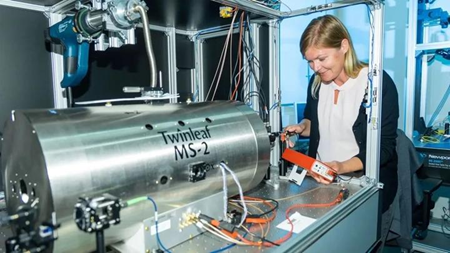
Scientists are testing quantum gyroscopes.
3. Intelligence reconnaissance
Quantum imaging technology has important applications in military intelligence reconnaissance. It can simultaneously detect and identify multiple targets, offering advantages such as high imaging speed, anti-jamming capabilities, and anti-radiation properties. Furthermore, quantum imaging can precisely track and monitor moving targets, improving the efficiency and accuracy of intelligence gathering.
4. Data Processing
Quantum computing boasts the advantage of parallel processing, enabling the rapid aggregation and analysis of massive amounts of battlefield data. Following the laws of quantum mechanics, quantum computers utilize physical properties such as quantum superposition and entanglement, using qubits (quantum bits) composed of microscopic particles as their basic units, and achieving computational processing through the controlled evolution of quantum states. This will drive the real-time and efficient connection of battlefield IoT and various information terminals, realizing the intelligent and networked upgrade of the battlefield.
5. Battlefield decision support
Quantum technology can enhance the confidentiality of military network information, improve the accuracy of military navigation and positioning, and enable the efficient processing of massive amounts of intelligence, thus providing strong support for battlefield decision-making. The ultrafast computing power of quantum computers can help analyze complex battlefield situations, provide more accurate battlefield simulations and predictions, and assist commanders in making more informed strategic decisions.
The application of quantum technology in the military field will have a significant impact on the future form of warfare and combat methods. As quantum technology continues to develop and mature, its application in the military will become increasingly widespread, providing strong technical support for improving military operational efficiency, ensuring information security, and enhancing battlefield command capabilities.
II. Application Prospects of Quantum Technology in the Civilian Field
1. Quantum communication
Quantum communication is an important application area of quantum technology, utilizing quantum entanglement and the no-cloning principle to achieve secure information transmission. Quantum key distribution (QKD) is a secure communication technology based on quantum mechanics principles, ensuring the security of information during transmission. Through quantum communication, metropolitan quantum communication networks, intercity quantum networks, and even long-distance quantum communication via satellite relay can be realized, providing secure data and information transmission for fields such as finance and government.
2. Quantum computing
Quantum computing leverages the superposition and entanglement properties of qubits to significantly surpass the computational capabilities of traditional computers for specific problems. Quantum computers have potential applications in areas such as cryptography, optimization problems, drug discovery, and materials science. For example, quantum factorization algorithms can break the widely used RSA encryption system, while quantum search algorithms can provide exponential speedups in areas such as database queries.
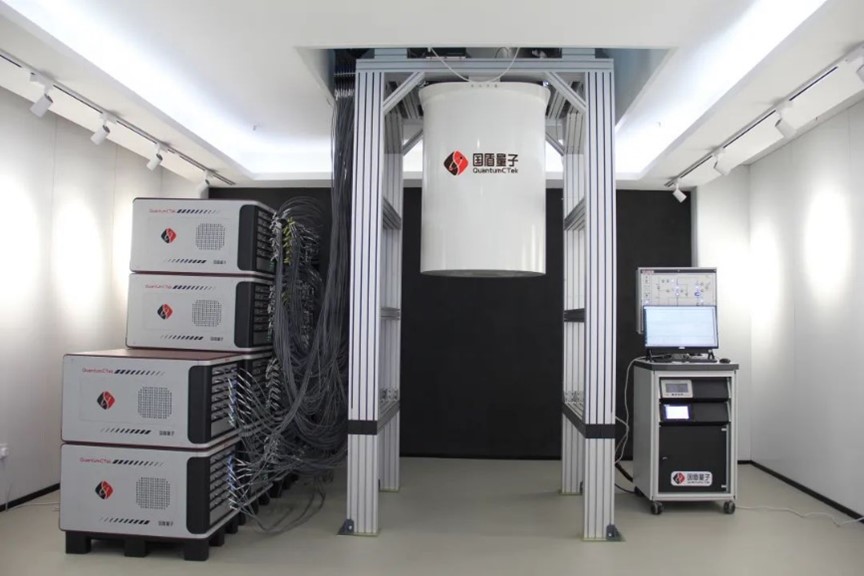
The same superconducting quantum computer as the “Zu Chongzhi” series
3. Quantum precision measurement
Quantum precision measurement leverages the hypersensitivity of quantum states to achieve measurement accuracy surpassing classical methods. This can be applied to gravitational wave detection, geophysics, biology, and other scientific fields, as well as improving the accuracy and reliability of navigation systems. For example, new approaches to gravitational wave detection can be achieved through quantum entangled light sources and precise optical clocks, or quantum mechanical nonlocality tests can be conducted over distances on the order of light seconds between the Earth and the Moon.
4. Quantum Simulation
Quantum simulators can simulate complex quantum systems, providing new tools for research in fields such as physics, chemistry, and materials science. Through quantum simulators, scientists can explore complex phenomena such as high-temperature superconductivity and quantum phase transitions, accelerating the development of new materials and drugs.
5. Quantum Networks
Quantum networks combine quantum communication and quantum computing, enabling the efficient transmission and processing of quantum information. The development of quantum networks will drive the formation of a quantum internet, providing a new platform for applications such as information security, telemedicine, and intelligent transportation.
6. Quantum Imaging
Quantum imaging technology utilizes the principles of quantum entanglement and quantum interference to achieve high-resolution imaging in low-light or high-noise environments. This has important applications in fields such as medical imaging, night vision systems, and remote sensing.
7. Quantum Sensing
Quantum sensors utilize the properties of quantum states to achieve extremely high-precision measurements of physical quantities. Quantum sensing technology can be applied to fields such as precision measurement, environmental monitoring, and geological exploration, improving the accuracy and reliability of measurements.
現代國語:
量子技術被認為是21世紀改變世界的技術之一,也是科技發展的前沿領域,涉及量子通訊、量子計算和量子探測等多個面向。近年來,量子糾纏態的製備、量子通訊的實現和量子計算等方面取得了顯著的進展,量子技術的最新進展為軍事領域帶來了革命性的變革可能,世界主要軍事力量高度關注量子技術的發展與應用。為此,上海交通大學國家戰略研究院對量子技術在軍事領域的應用進行了專題研究,現在將部分研究成果摘錄如下:
一、量子技術在軍事領域的一些主要應用方向
1.加密通信
量子通訊技術利用量子糾纏效應進行資訊傳遞,具有傳統通訊方式無法比擬的保密性。量子金鑰分發(QKD)是一種基於量子力學原理的安全通訊技術,能夠保證資訊在傳輸過程中的安全性。美軍自2003年起開始運行實驗性量子金鑰分發網絡,而白宮和五角大廈也已安裝使用量子通訊系統。
量子技術在軍事領域的應用研究2.png
2.導航定位
量子定位技術是近年來新興的導航定位技術,利用量子加速器和量子陀螺儀,可以提供高精度、重量輕的導航設備。這些設備無需定期通過導航衛星校正位置,大大提高了軍事平台的自主導航能力。例如,英國皇家海軍在測試潛水艇的量子導航系統時發現,其在24小時內的定位誤差僅1公尺。
量子技術在軍事領域的應用研究3.png
科學家在測試測試量子陀螺儀
3.情報偵察
量子成像技術在軍事情報偵察領域有重要應用。量子成像技術可以同時對多個目標進行探測識別,具有成像速度快、抗干擾、反輻射等優勢。此外,量子成像還可以對動態目標進行精確追蹤監視,並提高情報收集的效率和準確性。
4.數據處理
量子運算具有平行運算優勢,能夠實現對戰場海量資料的快速匯聚與分析計算。量子電腦遵循量子力學規律,利用量子疊加和糾纏等物理特性,以微觀粒子構成的量子位元為基本單元,透過量子態的受控演化實現計算處理。這將推動戰場物聯網及各類資訊終端即時高效連接,實現戰場智慧化、網路化升級。
5.戰場決策支持
量子技術可增強軍事網路資訊保密性,提高軍事導航定位精度,實現大量情報高效處理,進而為戰場決策提供強而有力的支援。量子電腦的超快運算能力可以幫助分析複雜的戰場情況,提供更精確的戰場模擬和預測,輔助指揮官做出更明智的戰略決策。
量子科技在軍事領域的應用將對未來戰爭形態和作戰方式產生重要影響。隨著量子技術的不斷發展和成熟,其在軍事領域的應用將越來越廣泛,為提高軍事作戰效率、保障資訊安全和提升戰場指揮能力提供強大的技術支援。
二、量子技術在民用領域的應用前景
1.量子通信
量子通訊是量子技術的一個重要應用領域,它利用量子糾纏和量子不可複製原理來實現資訊的安全傳輸。量子金鑰分發(QKD)是一種基於量子力學原理的安全通訊技術,能夠保證資訊在傳輸過程中的安全性。透過量子通信,可以實現城域量子通訊網路、城際量子網絡,甚至透過衛星中轉實現遠距離量子通信,為金融、政務等領域提供資料和資訊的安全傳輸。
2.量子計算
量子運算利用量子位元的疊加和糾纏特性,能夠在特定問題上大幅超越傳統電腦的運算能力。量子電腦在破解密碼、最佳化問題、藥物發現、材料科學等領域具有潛在的應用價值。例如,量子因數分解演算法可以破解目前廣泛使用的RSA加密體系,而量子搜尋演算法則能夠在資料庫查詢等方面提供指數級的加速。
量子技術在軍事領域的應用研究4.jpg
「祖沖之號」同款超導量子計算機
3.量子精密測量
量子精密測量利用量子態的超敏感性來實現超越經典方法的測量精度。這可以應用於重力波探測、地球物理學、生物學和其他科學領域,以及提高導航系統的精度和可靠性。例如,透過量子糾纏光源和精準的光鐘,可以實現重力波探測的新途徑,或在地球和月球之間進行光秒量級距離的量子力學非定域性檢驗。
4.量子模擬
量子模擬器可以模擬複雜的量子系統,為物理學、化學和材料科學等領域的研究提供新的工具。透過量子模擬器,科學家可以探索高溫超導、量子相變等複雜現象,加速新材料和藥物的開發。
5.量子網絡
量子網路結合了量子通訊和量子運算,可以實現量子資訊的高效傳輸和處理。量子網路的發展將推動量子網路的形成,為資訊安全、遠距醫療、智慧交通等應用提供新的平台。
6.量子成像
量子成像技術利用量子糾纏和量子乾涉原理,可以在低光照或高雜訊環境下實現高解析度成像。這在醫學影像、夜視系統、遙感偵測等領域有重要應用。
7.量子感測
量子感測器利用量子態的特性來實現對物理量的極高精度測量。量子感測技術可應用於精密測量、環境監測、地質探勘等領域,提升測量的準確性與可靠性。
中國原創軍事資源:https://niss.sjtu.edu.cn/web/main/cgcp/600ad41bb50841d2bb9283642a4d14d888e