中國共產黨在戰爭中應用量子技術
現代英語:
On November 1, 2022, Huawei, a major Chinese mobile phone manufacturer, announced its patent for a superconducting quantum chip, stating that the invention reduced crosstalk between quantum bits. Huawei has been investing in quantum chip research and development for more than 5 years and has published a number of quantum technology patents. In addition, it is rumored that the Chinese quantum computer “Wukong” will be unveiled soon, and the first quantum chip production line is being rushed to completion, using the “NDPT-100 non-destructive probe electrical measurement platform” developed by Origin Quantum in Hefei to improve yield. At the same time, the University of Science and Technology of China also announced on November 20 that it has achieved quantum storage of photons in the communication band, which can be directly connected to the existing fiber optic network, and may be able to build a long-distance, large-scale fiber optic quantum network in the future. [1]
On the other hand, the U.S. Department of Defense released the 2022 China Military Power Report on November 29, pointing out that the CCP discussed a new core operational concept in 2021—”Multi-Domain Precision Warfare”—using big data and artificial intelligence technologies to identify vulnerabilities in the opponent’s combat system and then carry out precise strikes. At the same time, the CCP has also acquired emerging technologies for both military and civilian use through its military-civilian integration strategy, such as artificial intelligence, autonomous systems, quantum technology, biotechnology, and advanced materials. [2]
Although quantum technology is still in the “proof of concept” (POC) stage and will take a considerable amount of time before it can be put into practical use, China’s quantum technology continues to make progress despite the strong technological blockade by the United States, and its application in combat may be prioritized, which deserves our special attention.II. Safety ImplicationsI. The CCP will take the lead in establishing a global quantum communication network.Quantum technology[3] is mainly divided into three major fields: quantum computing, quantum communication and quantum sensing.[4]
China’s quantum communication technology currently holds a leading position in the world and may be the first to complete industrialization.[5] Following the opening of the world’s first quantum communication network, the Hefei Metropolitan Area Quantum Communication Experimental Demonstration Network, in 2012, China successfully launched the world’s first quantum satellite, Micius, in 2016.
Subsequently, it achieved three major technological breakthroughs: quantum key distribution (QKD) between satellite and ground, quantum teleportation between ground and satellite, and quantum entanglement key distribution over a thousand kilometers. In 2017, the CCP opened the Beijing-Shanghai quantum communication line, which is more than 2,000 kilometers long. With the connection between the satellite “Micius” and the Beijing-Shanghai quantum communication line, the world’s first intercontinental (Beijing-Vienna) quantum communication video call was completed through the collaboration between Austrian scholar Anton Zeilinger[6] and Chinese quantum expert Pan Jianwei.The successful distribution of “space-to-ground quantum key” enables the CCP to use “low orbit satellites” (LEO) as relay stations to share keys between any two locations in the world.
If further combined with ground fiber optic quantum communication networks, a quantum communication network covering the whole world can be established. Currently, the CCP is planning to build a “national quantum internet” with a length of 35,000 kilometers, extending to Urumqi in Xinjiang and Lhasa in Tibet. In addition to ensuring that the content of messages is not intercepted or eavesdropped on, [7] “Quantum Digital Signature” (QDS) and “Quantum Secure Identification” (QSI) can also improve communication security. In military applications, in addition to ensuring the security of military communications, quantum communication networks can also be used as military 6G technology to assist quantum communication between space, special forces and different military branches, and solve the problem of underwater communication being susceptible to interference, thereby improving underwater combat capabilities. [8]
II. China’s quantum computing technology will accelerate the realization of unmanned intelligent warfare.The global quantum computing market is currently led by the United States and China, which are driving the development of related system software and algorithms. There are multiple technical approaches, with superconductivity and “ion trap” technology being the most advanced. On May 8, 2020, the CCP unveiled the superconducting quantum computer prototype “Zu Chongzhi”; on December 4 of the same year, it announced the successful construction of the photonic quantum computer prototype “Jiuzhang”. Currently, it is using ion trap technology to improve the computing power of photonic quantum chips. [9]
Quantum computers can combine artificial intelligence and big data analysis to process large amounts of information quickly, and are mainly used in chemical analogy, system optimization, password cracking, machine learning and other fields. In the military, in addition to being able to quickly crack public key cryptography and improve network combat capabilities,[10] quantum computing can also be used in battlefield simulation, wireless spectrum analysis, logistics management, energy management and other fields. It can also optimize existing combat command, deployment, decision-making, war game simulation, system verification, predictive analysis and other fields, and significantly shorten the time for weapon design and manufacturing, new material development and military battery research and development. Quantum edge computing can be applied to the collaborative operations of unmanned vehicles or unmanned weapons (see attached table). In addition, if the CCP can establish a battlefield “Internet of Military Things” (IoMT), it can realize precise, fast and highly complex unmanned intelligent operations in advance.
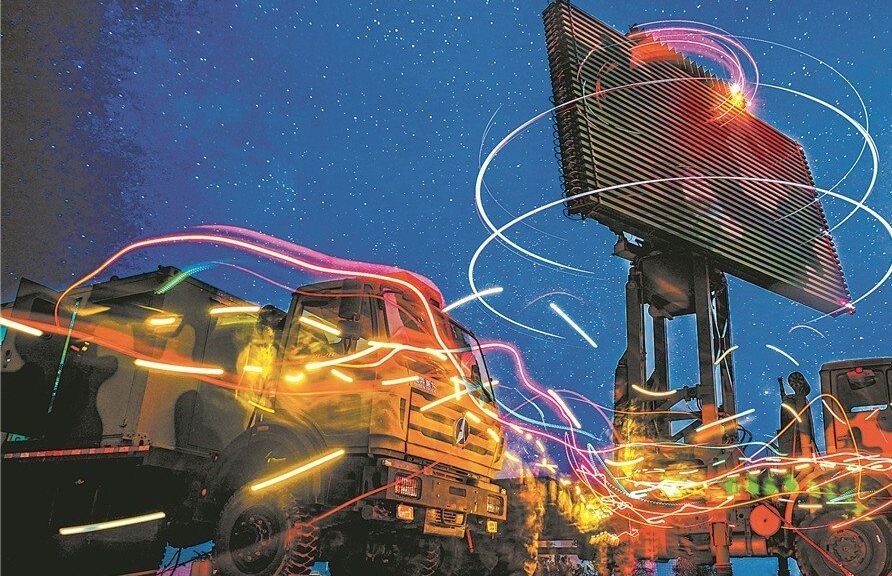
III. Quantum radar and quantum navigation capabilities will reverse the course of war.Quantum sensing technology uses quantum measurement of physical properties such as magnetic fields, electric fields, and gravity, which can greatly improve the accuracy of existing measurements. The main types include quantum radar, quantum navigation, and quantum imaging. Quantum sensing technology can identify targets in complex environments such as high noise, low light, and underwater, and the advantages of current ballistic missiles, stealth aircraft, and underwater nuclear submarines will no longer exist. [11]
In 2017, the CCP claimed that its “quantum imaging technology” (QI) could enable spy satellites to track US B-2 bombers and identify stealth fighters at night. [12]
China Electronics Technology Group Corporation (CETC) showcased the world’s first single-photon quantum radar prototype at the 2018 Zhuhai Airshow and recently claimed that it had completed a target detection test at a range of 100 kilometers in a real atmospheric environment, implying that its quantum radar was about to be launched. [13]
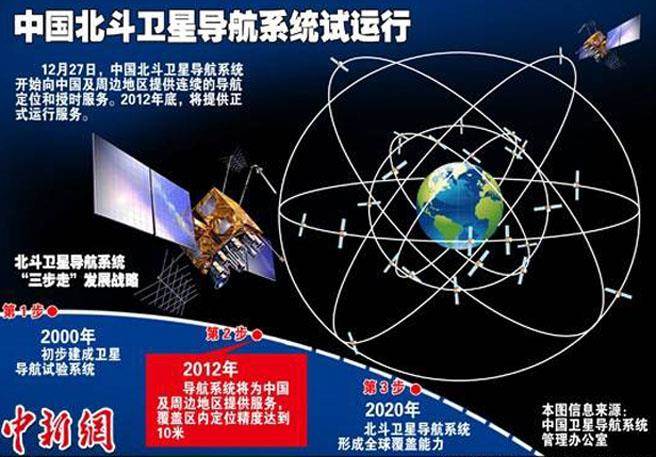
In addition, quantum positioning, timing and navigation (PNT) systems based on high-precision quantum clocks determine the coordinates of ground users by obtaining the time difference between the transmission of entangled photon pairs between the satellite and the ground through quantum satellites. [14]
Since it does not rely on the Global Positioning System (GPS), infrared or radar navigation, quantum navigation can not only greatly enhance the existing Global Navigation Satellite System (GNSS), but also function in environments where GPS cannot work, such as underwater, underground or in environments severely interfered with by electromagnetic waves. Once it is put into practical use, the CCP’s quantum navigation technology will improve the hit rate of its various weapons.
3. Trend Analysis
I. The CCP may be developing “quantum warfare”.Although the CCP acknowledges that its quantum technology still has many shortcomings and that it will take a considerable amount of time before it is commercialized, it has already identified quantum technology as a key technology for breaking through the US’s technological encirclement and establishing itself as a technologically powerful nation. The “second quantum revolution” will overturn existing technological, economic, and military models. It is conceivable that the CCP will continue to invest heavily in quantum technology development through a nationwide system. Under this general direction, the quantum industry and quantum military applications will be accelerated. In the future, as existing computers move towards miniaturization, cloud computing, and edge computing, quantum computers or quantum sensors may be deployed on smaller weapons and equipment, such as satellites, drones, or individual soldier mobile phones, and even for “quantum warfare” (see attached diagram).
II. Taiwan may need to develop quantum defense capabilities in advance.China’s quantum communication technology is currently ranked first in the world, and its quantum computing and quantum sensing technologies are ranked second in the world. Therefore, if China uses quantum technology to fight against us, our country may not have any ability to retaliate. In March 2022, China established a quantum national team, selected 17 industry-academia-research teams, and pointed out the development direction of quantum technology in the next 5 years. [15]
However, its plans are mostly biased towards the technological and economic aspects, and there are no defense measures against the Chinese Communist Party’s possible future attacks on us, such as password cracking, quantum navigation, quantum radar, and even quantum network warfare, quantum space warfare and quantum underwater warfare. Perhaps the Chinese Academy of Sciences should join the quantum national team in advance and cooperate with private industry-academia-research personnel to think about how to defend against the Chinese Communist Party’s future quantum warfare.Appendix: Examples of Military Applications of Quantum Technology
| field | Possible applications | |
| Quantum Communication | Quantum key distribution ( QKD ) | Quantum communication technology is the most mature and is already commercially available.Long -distance quantum communication can be achieved through repeaters such as satellites. |
| Post-quantum cryptography | Used to defend against attacks from quantum computersThe United States expects to complete standardization in 2023-2024. | |
| Quantum Communication Network | Quantum networks: quantum-secure direct communication in space, special forces, and between different military branches → military 6GQuantum digital signature ( QDS )Quantum Identity Recognition ( QSI )Quantum cryptography technology that requires specific locations to transmit and receive: military satellite communicationsQuantum clocks enable more precise time synchronization: C4ISR collaborative action | |
| Quantum computing | Quantum simulation | Battlefield simulation, weapon development, simulation and verification |
| Quantum optimization | Optimize current operational deployments, exercises, system verification, predictive analysis, etc.Cracking existing passwords | |
| Big Data Analytics/Machine Learning | Wireless spectrum analysis, logistics management, energy managementDecision Analysis and Reference | |
| Edge computing | Consistency of action of unmanned vehicles or unmanned weapons within the same time period Cooperative operations between different military branches | |
| Quantum sensing | Quantum positioning, navigation, and timing ( PNT ) | High -precision quantum clockQuantum inertial navigation and quantum-enhanced navigation can be deployed on autonomous unmanned vehicles or missiles.Quantum navigation that does not rely on a global satellite navigation system |
| Quantum intelligence surveillance | Surface and subsurface monitoring: Quantum sensing technology deployed on low-Earth orbit satellites and unmanned vehicles | |
| Quantum imaging: quantum 3D cameras, quantum gas sensors, low signal-to-noise ratio battlefield vision equipment, quantum rangefinders, quantum ghost imaging, etc. | ||
| Quantum Underwater Warfare | Quantum inertial navigation can be applied to large submarines and underwater vehicles.Quantum magnetometers can assist in mapping the seabed, detecting underwater mines, and, in conjunction with other sensors, perform underwater detection and analysis. | |
| Quantum radar and quantum laser radar, etc. | Quantum laser radar: Short-range target illumination, applicable to anti-drone surveillance, short-range air defense, and small satellite detection in space.Quantum -enhanced radar: A high-precision, low-noise quantum radar that can be used to detect small, slow-moving objects such as drones. | |
| otherCombat Applications | Quantum electronic warfare | Smaller general-purpose quantum antennas and array-type quantum radio frequency sensorsQuantum computing and quantum clocks can enhance the capabilities of existing electronic warfare systems.Quantum electronic warfare can interfere with, deceive, and obstruct the enemy. |
| Quantum Space Warfare | Deployment and development of technologies such as quantum radar, quantum electronic warfare, quantum sensing, and quantum communication on low-Earth orbit satellites | |
| Biochemical Simulation and Detection | At least 200 qubits and more logic bits are required for simulation.It can be installed on drones and ground vehicles for detecting biochemical toxins in the environment. | |
| quantum materials | Developing new military materials for camouflage, stealth, and high-temperature resistance by utilizing quantum properties such as superconductivity and topology. |
Source: Table compiled by author Wang Xiuwen based on the literature. Michal Krelina, “Quantum Technology for Military Application,” EPJ Quantum Technology, (2021) 8:24,
Wang Xu Wen
現代國語:
壹、新聞重點
2022年11月1日,中共手機大廠「華為」公司公布其「超導量子晶片」專利,指出該項發明降低了量子比特串擾。「華為」投入量子晶片研發超過5年,已公開多項量子技術專利。此外,據聞中共量子電腦「悟空」即將公開,第一條量子晶片產線正加緊趕工,並採用合肥「本源量子」公司研發的「NDPT-100無損探針電學測量平台」來提高良率。同時,中國科學技術大學也在11月20日宣布已實現通訊波段光子之量子存儲,可直接對接現行的光纖網路,未來可能建構出長距離、大尺度的光纖量子網。 [1]
另一方面,美國國防部11月29日公布《2022年中國軍力報告》(2022 China Military Power Report),指出中共在2021年曾討論新核心作戰概念──「多領域精確作戰」(Multi-Domain Precision Warfare),以大數據和人工智慧等技術,找出對手作戰系統之脆弱點後予以精準打擊。同時,中共也透過軍民融合戰略取得軍民兩用的新興技術,如:人工智慧、自主系統、量子技術、生物技術、先進材料等。[2]
儘管量子技術目前仍處於「概念驗證」(Proof of Concept, POC)階段,距離實用化尚需相當的時間,但是中共量子技術在美國強力的科技圍堵下仍持續進展,且作戰應用可能優先落實,值得我國特別注意。
貳、安全意涵
一、中共將率先建立全球量子通訊網
量子技術 [3]主要分為「量子計算」、「量子通訊」、「量子感測」三大領域,[4] 中共量子通訊技術目前持世界牛耳,且可能最先完成產業化。[5] 繼2012年開通全球第一個量子通訊網路「合肥城域量子通信試驗示範網」之後,中共2016年成功發射全球第一顆量子衛星「墨子號」,其後陸續達成「星地(衛星─地面)量子密鑰分發」(Quantum Key Distribution, QKD)、「地星(地面─衛星)量子隱形傳態」及「千公里級量子糾纏密鑰分發」三大技術突破。2017年,中共開通全長2,000餘公里的量子通訊線路「京滬幹線」,並在「墨子號」與「京滬幹線」之星地鏈結下,透過奧地利學者柴林格(Anton Zeilinger)[6] 和中國量子專家潘建偉之師徒合作,完成全球首次跨洲(北京─維也納)量子通訊之視訊通話。
「星地量子密鑰」分發成功,使中共能以「低軌衛星」(LEO)為中繼站,進行全球任意兩個地點之間的密鑰共享。若進一步結合地面光纖量子通訊網路,可建立覆蓋全球的量子通訊網。目前中共正計畫建構長達35,000公里的「全國量子互聯網」,範圍擴及新疆烏魯木齊和西藏拉薩。量子通訊除可確保訊息內容不被半途截取或竊聽之外,[7] 「量子數位簽名」(Quantum Digital Signature, QDS)和「量子身份識別」(Quantum Secure Identification, QSI)也可提高通訊安全。在軍事應用上,量子通訊網除了保障軍事通訊安全之外,也可作為軍用6G技術協助太空、特種部隊及不同軍種之間的量子通訊,並解決水下通訊易受到干擾之問題,提高水下作戰能力。 [8]
二、中共量子計算技術將加速無人智慧化戰爭之實現
全球量子計算市場目前以美國和中國為兩大領先者,推動相關系統軟體和演算法之發展,並有多種技術途徑,以超導和「離子陷阱」(Ion Trap)技術之發展較為超前。2020年5月8日,中共公開超導量子電腦原型機「祖沖之號」;同年12月4日又宣布光子量子電腦原型機「九章」建構成功,目前正運用離子陷阱技術提升光量子晶片之計算能力。 [9]
量子電腦可結合人工智慧和大數據分析,快速處理大量資訊,主要應用在化學類比、系統優化、密碼破解、機器學習等方面。在軍事上,量子計算除了可快速破解公鑰密碼、提高網路作戰能力之外,[10] 還可運用於戰場模擬、無線頻譜分析、後勤管理、能源管理等,也可優化現有的作戰指揮、部署、決策、兵棋推演、系統驗證、預測分析等,並大幅縮短武器設計製造、新材料開發、軍用電池研發之時間;量子邊緣運算則可應用於無人載具或無人武器之協同作戰(參見附表)。此外,中共若能建立戰場「軍事物聯網」(Internet of Military Things, IoMT),可提早實現精準快速且高度複雜的無人智慧化作戰。
三、量子雷達及量子導航等能力將扭轉戰爭態勢
量子感測技術是以量子測量磁場、電場、重力等物理性質,可大幅提昇現有測量之精度,主要有:量子雷達、量子導航、量子成像等。量子感測技術可在高噪音、光線微弱、水下等複雜環境中辨識出目標,現行彈道飛彈、隱形飛機、水下核潛艦等武器優勢將不復存在。[11]
中共2017年宣稱,其「量子成像技術」(Quantum Imaging,QI)已可使間諜衛星在夜間追蹤美國B-2轟炸機和辨識隱形戰機。[12] 「中國電科集團」則在2018年珠海航展中展示全球第一台單光子量子雷達樣機,最近更宣稱已在真實大氣環境下完成百公里級的目標探測試驗,暗指其量子雷達即將問世。 [13]
此外,以高精度量子時鐘為基礎的量子定位、授時和導航(PNT)系統,是透過量子衛星取得衛星與地面間傳遞糾纏光子對之時間差,來確定地面用戶座標。[14] 由於不依賴全球定位系統(GPS)、紅外線或雷達導航,量子導航除了可大幅增強現行全球衛星導航系統(GNSS)之外,在GPS無法作用之環境如:水下、地表下或被電磁波嚴重干擾之環境中也能發揮功能。一旦進入實用化,中共量子導航技術將提高其各種武器之命中率。
參、趨勢研判
一、中共或將發展出「量子戰爭」(Quantum Warfare)
雖然中共亦承認自身的量子技術仍有許多「短板」,且量子技術距離市場化仍需要不短的時間,但是量子技術已被中共視為突破美國科技圍堵、建立科技強國之關鍵技術。「第二次量子革命」將翻轉現有的科技、經濟和作戰模式,可以想見,中共未來仍將以舉國體制,加碼投入各種資源發展量子技術。在此大方向之下,量子產業及量子軍事應用都將加速落實。未來,隨著搭配現有電腦朝小型化、雲端化、邊緣運算方向發展,量子電腦或量子感測器可能部署在更小型的武器裝備上,如:衛星、無人機或單兵手機等,甚至進行「量子戰爭」(參見附圖)。
二、我國恐需預先發展量子防禦能力
中共量子通訊技術目前位居世界第一、量子計算和量子感測技術均居世界第二。因此,中共若將量子技術用於對我作戰,我國恐無任何還擊能力。我國在2022年3月成立量子國家隊,選出17個產學研團隊,並指出未來5年量子科技發展方向。[15] 但是,其規劃多半偏向科技面和經濟面,對於中共未來可能對我進行的密碼破解、量子導航、量子雷達,甚至量子網路戰、量子太空戰和量子水下戰等,沒有任何防禦對策。或許中科院應優先且早期加入量子國家隊,和民間產學研人士合作,共思如何防禦中共未來的量子作戰。
附表、量子技術軍事應用之例
| 領域 | 可能應用 | |
| 量子通訊 | 量子密鑰分發(QKD) | 是量子通訊技術中最為成熟者,已可商用 透過衛星等中繼器,可進行遠距離量子通訊 |
| 後量子密碼 | 用於防禦量子電腦之攻擊 美國預計2023-2024年完成標準化 | |
| 量子通訊網 | 量子網絡:太空、特種部隊、不同軍種間的量子安全直接通訊→軍用6G 量子數位簽名(QDS) 量子身份識別(QSI) 特定位置才能收發的量子密碼技術:軍事衛星通信 量子時鐘更精確的時間同步:C4ISR協同行動 | |
| 量子計算 | 量子模擬 | 戰場模擬、武器之開發、模擬和驗證 |
| 量子優化 | 優化現行作戰部署、演習、系統驗證、預測分析等 破解現有密碼 | |
| 大數據分析∕機器學習 | 無線頻譜分析、後勤管理、能源管理 決策分析及參考 | |
| 邊緣運算 | 無人載具或無人武器同一時間內之行動一致性 不同軍種之協同作戰 | |
| 量子感測 | 量子定位、導航及定時(PNT) | 高精度量子時鐘 量子慣性導航、量子增強導航,可部署在自主無人載具或飛彈上 不需要依賴全球衛星導航系統之量子導航 |
| 量子情監偵 | 地表與地下監測:部署於低軌衛星、無人載具之量子感測技術 | |
| 量子成像:量子3D相機、量子氣體感測器、低信噪比之戰場視覺裝備、量子測距儀、量子鬼成像等 | ||
| 量子水下作戰 | 量子慣性導航可應用於大型潛艦和水下載具 量子磁力計可協助繪製海底地圖、探測水下水雷,配合其他感測器進行水下探測和分析 | |
| 量子雷達與量子雷射雷達等 | 量子雷射雷達:短距離之目標照明,可運用於反無人機監視、短程防空、太空之小衛星探測 量子增強雷達:高精度低噪音量子雷達,可用於探測無人機等小型慢速移動物體 | |
| 其他作戰應用 | 量子電子戰 | 更小型的通用量子天線、陣列式量子射頻感測器 量子計算及量子時鐘可增強現有的電子戰系統能力 量子電子作戰可對敵進行干擾、欺騙和阻攔 |
| 量子太空戰 | 量子雷達、量子電子戰、量子感測、量子通訊等技術在低軌衛星之部署和研發 | |
| 生化模擬與檢測 | 至少需要200個以上的量子比特和更多的邏輯比特數量才可進行模擬 可安裝在無人機和地面車輛上,用於檢測環境中的生化毒物等 | |
| 量子材料 | 利用超導、拓樸等量子特性開發偽裝、隱形、耐高溫等新軍用材料 |
中國原創軍事資源:https://indsr.org.tw/respublicationcon?uid=12&resid=1928&pid=3582